From Doorstep to Deep Space: Finding the Heart

by Robert Vanderbei

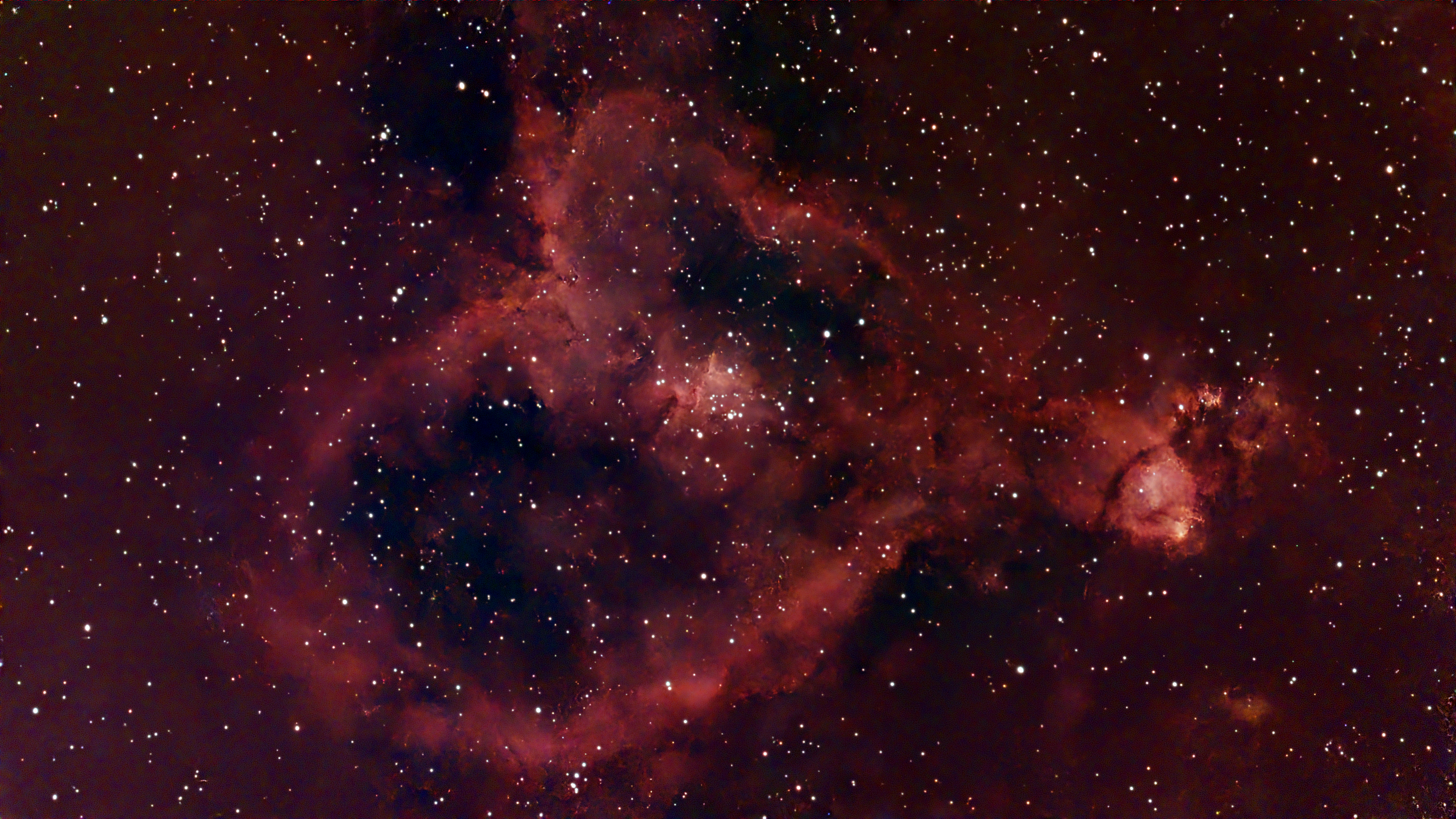
Here’s a picture I took of the Heart Nebula (aka IC 1805) on April 27.

The Heart Nebula is an emission nebula.  It resides in the constellation Cassiopeia. It is estimated to be about 7,500 light-years away from us here on Earth.

As you can see in the picture, there is a cluster of bright stars roughly at the center of the nebula.  It is called the Melotte 15 cluster. In absolute terms, these stars are very bright–some of them are about 100,000 times brighter than our Sun. But, these stars don’t appear very bright to us as we see them because they (and the nebula) are far away from us. In fact, at the visual level the brightest star in the Melotte 15 cluster is only about magnitude 8.5. The bright stars in the Melotte 15 cluster provide the energy which excites the atoms in the nearby interstellar medium. Most of those atoms are hydrogen at those energized hydrogen atoms produce the nebula’s red glow.

To take this picture, I used my Seestar S30 smart telescope sitting on the walkway just outside the front door of my house. The picture is a stack of 528 10-second exposures that were automatically aligned and stacked by the code built into the Seestar. That’s a total exposure time of 88 minutes.

The images were captured starting a little before 9pm and stopping a little before midnight. The Heart Nebula is circumpolar when viewed from here in NJ. When I took these pictures, it was low in the WNW part of the sky—only about 20 degrees above the horizon.

The Heart Nebula is a large nebula — about 2 degrees in diameter.  The Seestar S30’s camera provides a fairly large field of view but not large enough to capture the entire Heart.

Here’s the nice thing… the Seestar software has a “mosaic” option where it can build a wider field of view image. I used the mosaic feature to take this picture.   The field of view was upscaled by a factor of 1.5 from the non-mosaic size.
Posted in May 2026, Sidereal Times | Tagged , , , | Leave a comment

Artemis II: A Lunar Flyby with Modern Comforts

by S. Prasad Ganti

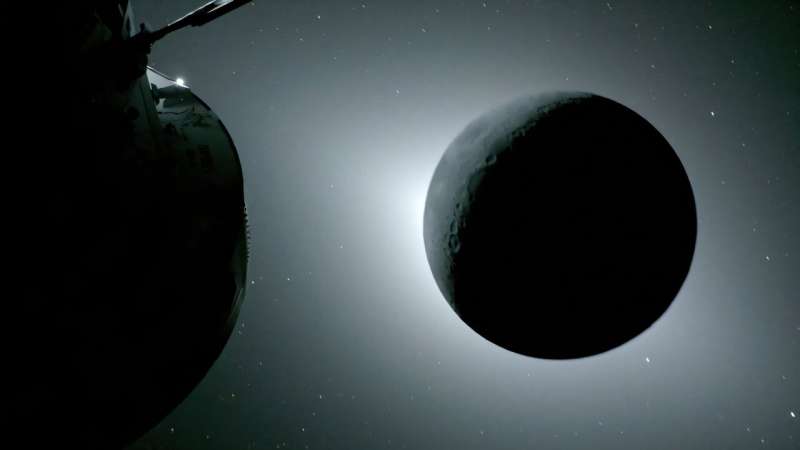
More than five decades after the last Apollo flight and three years after the unmanned Artemis I flight to the moon, Artemis II went to the moon along with four astronauts and came back successfully with a splash in the ocean. The spacecraft was not meant to land on the moon. Literally a “round trip” by slinging around the moon and heading towards the earth.   

The Artemis series is not a repeat of the Apollo missions. Although both are three stage rockets, Artemis differs vastly from its twin sister Apollo. It is comparatively newer technology. The rocket itself has 4 RS25 engines, compared to five F1 engines on Saturn 5 powered Apollo. The RS25 engines are from the space shuttle era. Two solid rocket boosters are added to the initial thrust. The electronics and computers are far more advanced.   

The life support systems are a key component differentiating a manned flight from an unmanned one. The living room in the Orion module for the astronauts is more spacious even with four astronauts instead of three for the Apollo. It even has a toilet ! One of the Astronauts, Christina Koch,  became the first plumber in space to fix the toilet which malfunctioned initially.   

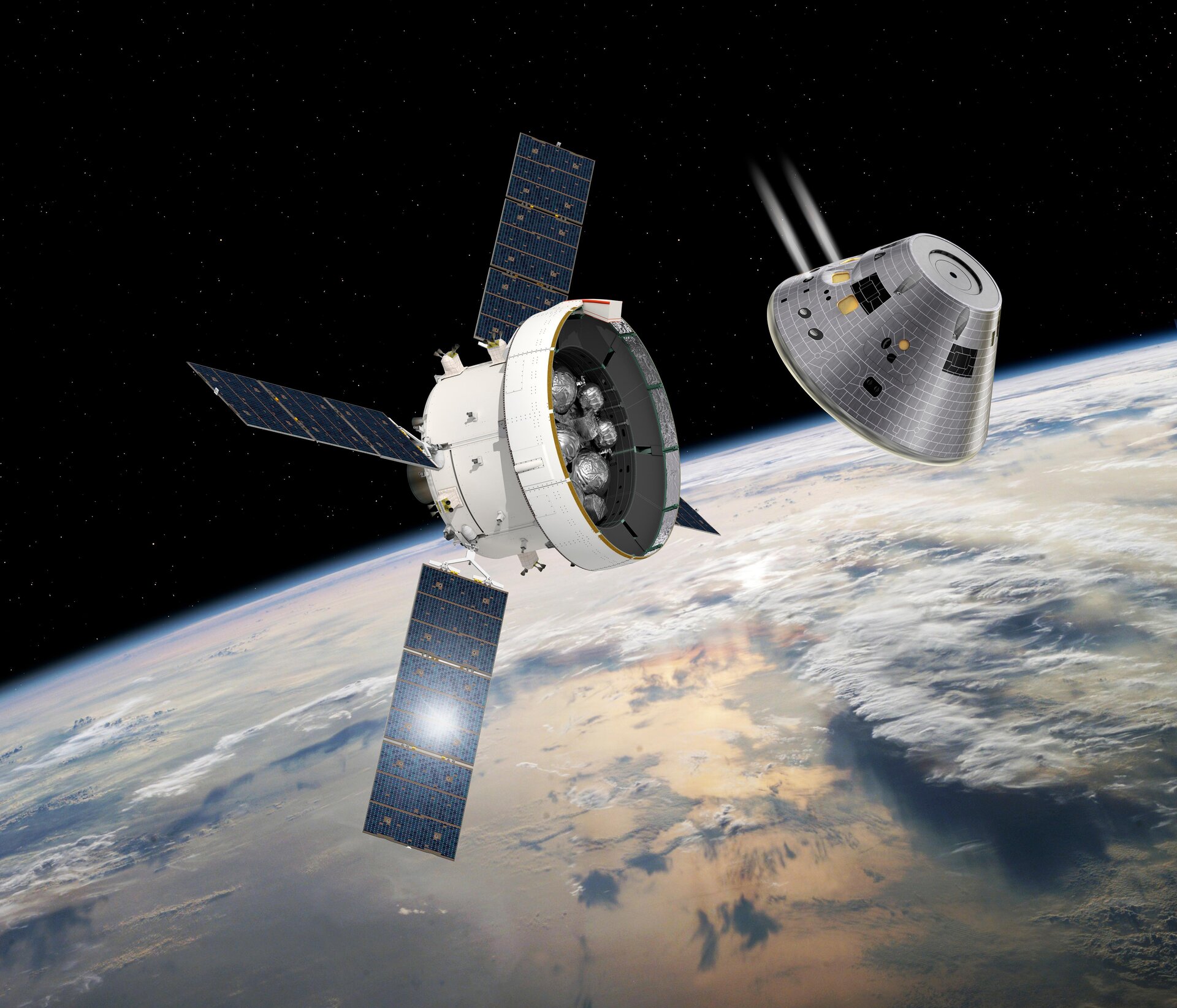
The propulsion and life-support systems in the Orion spacecraft were built by European aerospace company Airbus on behalf of ESA. The picture shown below courtesy ESA shows the components. On the left in the picture is the service module containing the propulsion and life support systems. It has four solar panels.  On the right is the Orion spacecraft built by Lockheed Martin. 

While Artemis I was a proof of concept unmanned flight before Artemis II could be launched with astronauts. Artemis I had an issue with reentry into the earth’s atmosphere while coming back. NASA tried a skipped reentry which involved a shallow reentry followed by a bounce and then another reentry. Something like an aircraft making a bounced landing on the runway. Landing and then briefly rising into the air and then landing back a second time. This was done to minimize the heat generated. Although the strategy worked, the heat shield could not work well in tandem and some hot gases disrupted the shield from the other side. 

Artemis II kept the same heat shield but ditched the skipped reentry. Instead a direct steeper reentry was used, which worked well in the past with the Apollo and the Space shuttle missions. The reentry and the consequent splashdown were uneventful as a result.      

Going into the future, Artemis III will demonstrate the docking between Orion spacecraft and the new lunar landers in low earth orbit. The two private lunar landers are being built by SpaceX and Blue Origin. 

Artemis IV will land with astronauts on the moon. With the Apollo missions, the space race was with the erstwhile Soviet Union. Now it is with China who is trying to land astronauts on the moon as well. We may end up winning this second space race as well. But, the cost of the program will be an issue again as it was with Apollo. 

This time around, the plan is to replace the rocket SLS (Space Launch System) with Space X’s Starship which is still under test. Starship will have a reusable first stage. The first stage will detach itself and come back to earth after pushing hard on the rest of the two rocket stages. This reuse will reduce the cost of the launches significantly. Besides, the newer Raptor engines on the Starship are a good replacement for the Space shuttle era RS25 engines. Along with the first stage, the engines will be reusable as well.   

For the future, the lunar program is on a solid footing compared to the Apollo era. 

Posted in May 2026, Sidereal Times | Tagged , , | Leave a comment

The velocity calculations using frequency shift are not accurate

by William H Davis

Why do the text books give different redshift equations for the observer stationary versus the observer in motion? Why do we use the equation for the observer stationary when the Earth is clearly moving through space at a high velocity?

An astronomer will observe redshift – ( fe – Δf) or blueshift + ( fe + Δf ) identically with no sign or equation change regardless whether the emitter is in motion or the observer is in motion. This indicates the position of the observer versus the emitter is determinative not which is in motion. Are we using the wrong equation to determine velocity from the frequency ratio? Could this explain the unexpected apparent acceleration of velocity at greater distances?

The correlation of frequency shift to relative velocity by a black box energy balance method:

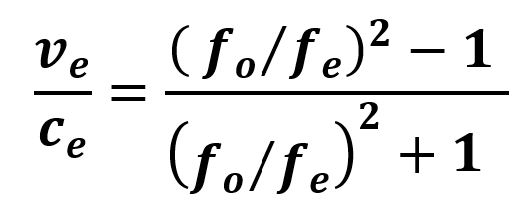
The effect of motion on the frequency shift observed is affected the relative motion. The system is defined by the fo = fe ± Δf , which results in two equations; blueshift, f(o=)+Δf (multiple of fe) and redshift, f(o=) – Δf ( fraction of f(e) ). There is no law for the conservation of wave length but there is a law for the conservation of energy. There is no direct solution using just wave length z for redshift to determine velocity. The only available energy in the observed system is fe (independent variable) with no external energy going in or out of the system. Velocity away reduces the energy of fo observed and toward increases the energy of fo. The observer’s position versus the emitter determines whether or not red or blueshift is observed, not which is in motion and defines the proper equation.

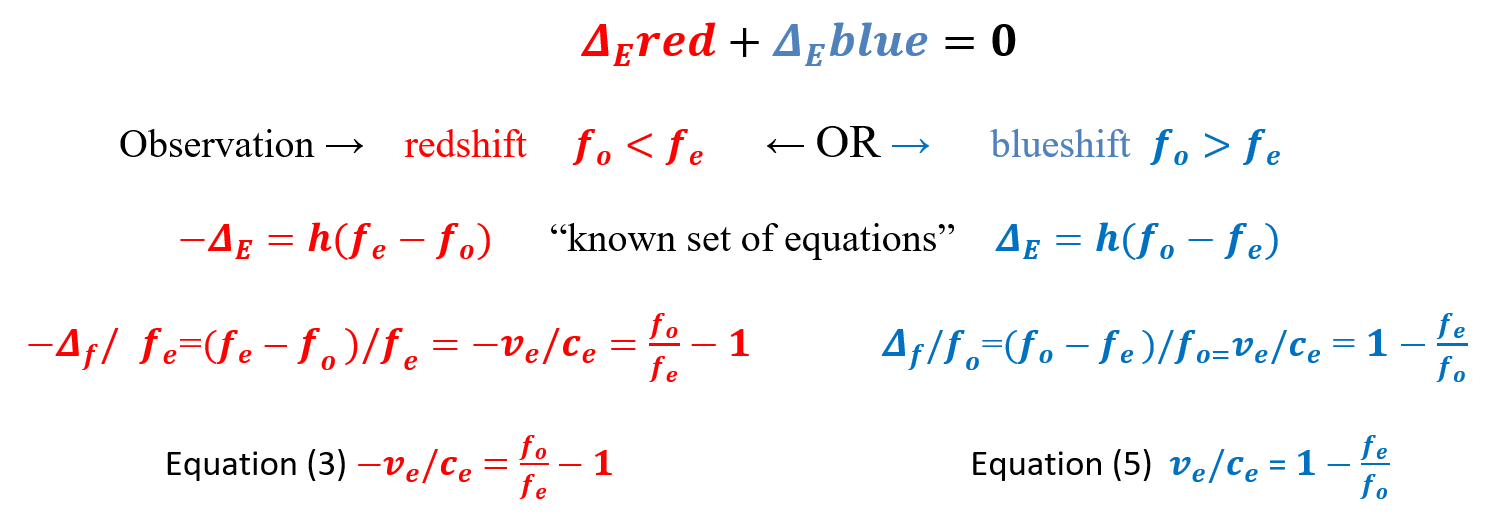
Non relativistic energy balance solution starting with Planck’s Equation:

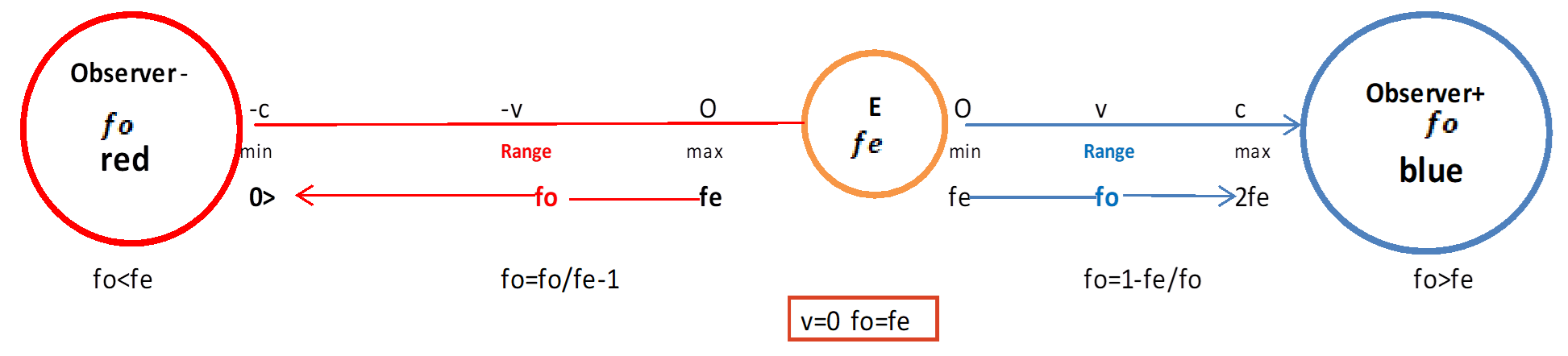
Energy balance solution observed emitter E by two opposite observers

The required denominator for redshift is fe and blueshift is fo with the range in the denominator.   

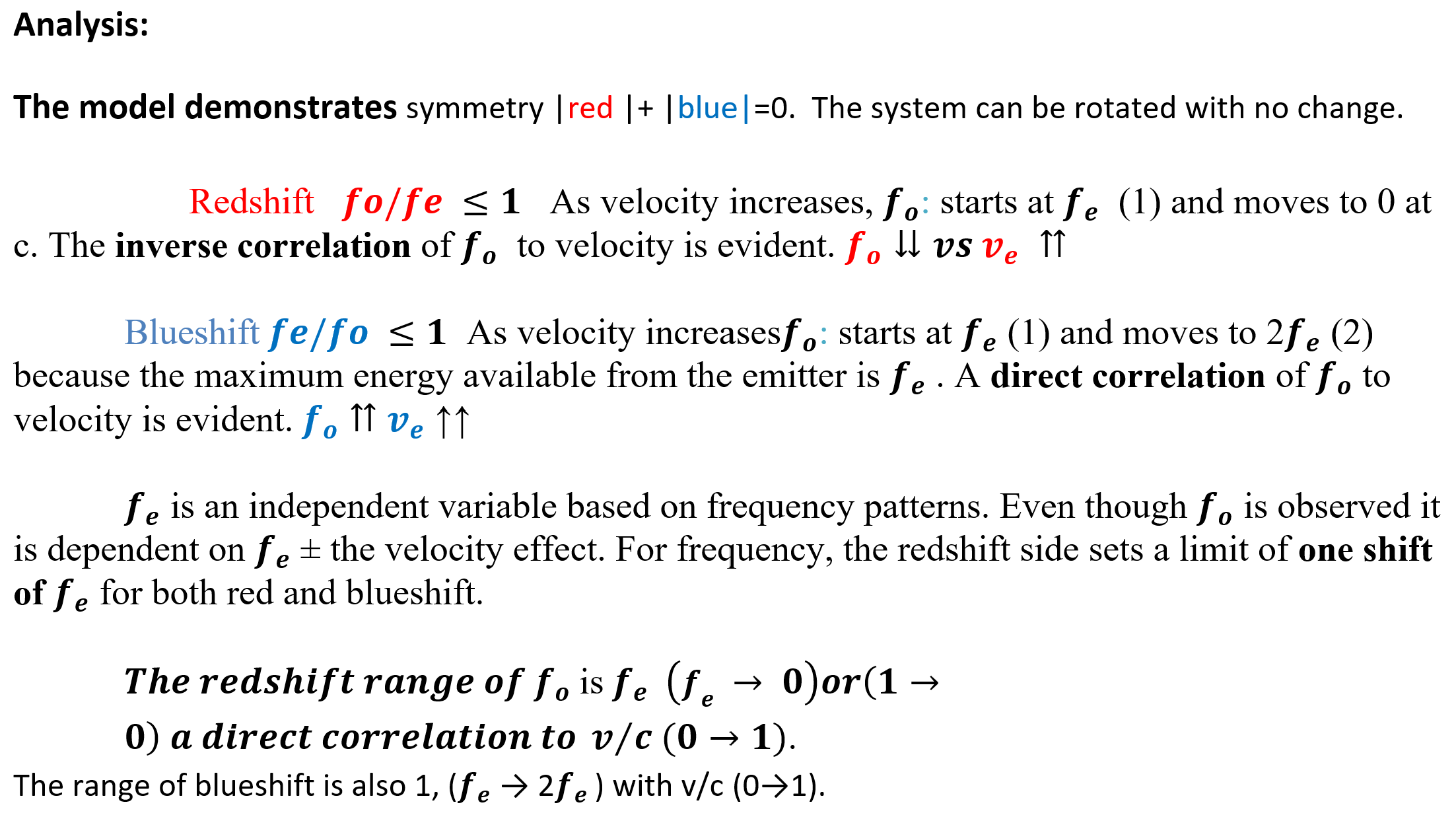
The energy balance is an accurate non relativitistic way to describe the total system of spectral shift. For each shift observed there is an opposite shift that can be observed from a different point of view.  The physicist has to pick the correct bound equation to match the shift to determine an accurate v/c. We are presently using the wrong equation (observer stationary) when we know we are in motion? Hr blueshift equation to calculate velocities from redshift. We are using. The result is a multiple of fe  creating an exponential type curve to ∞!

There has been a failure to integrate relativity in astrophysics.

Relativitistic Doppler equation applies to all of the degrees of freedom or points of view of Doppler and or frequency shift: This equation has been published and known for years. It is the correct description or model of velocity versus frequency shift.

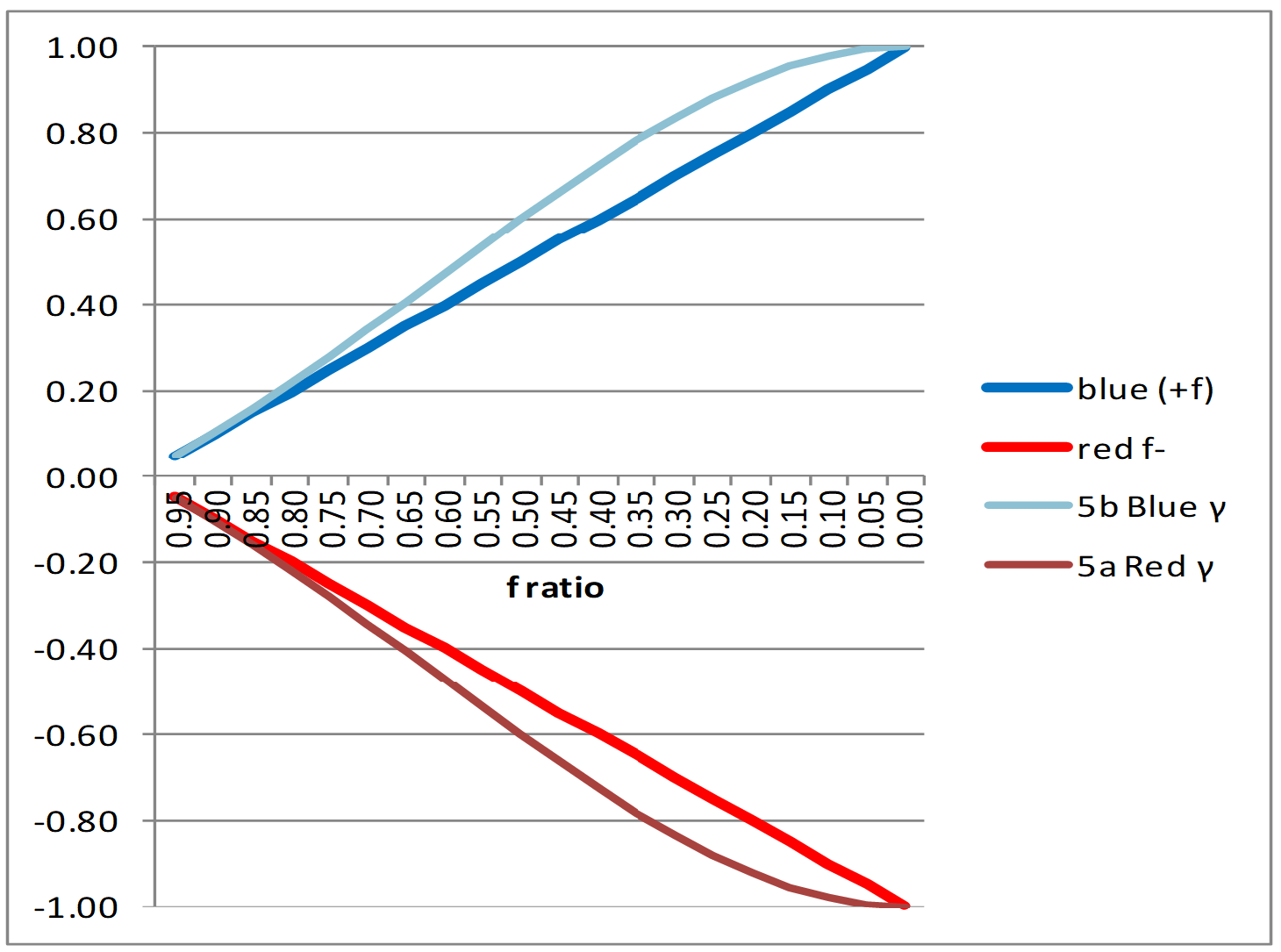
Diagram shows the two linear independent red and blue equations plotted in separate quadrants’. The relativitistic Doppler equation plots in both quadrants. The curvature is due to the clock correction of the two frequencies.

The accurate determination of velocity from the frequency ratio is critical for the accurate modeling of celestial objects. Relative velocity is a critical independent variable for most aspects of the observable universe. If the methods are not accurate or sound, projecting defective models beyond the data for determining distance or anything else is problematic.  The most critical error has been choosing the wrong equation to correlate frequency ratio with velocity or v/c. “no privileged frame” is in play?

Using the relativitistic Doppler equation for velocity calculations should eliminate the Dark Energy (pushing on a string) theory.

I would appreciate any comments and recommendations for a path forward.

Posted in May 2026, Sidereal Times | Tagged , , , , , , , , | Leave a comment

Snippets

compiled by Arlene & David Kaplan

-NASA

Telling Time on Other Worlds 
From Earth orbit to the Moon and Mars, explore the world of human spaceflight with NASA each week on the official podcast of the Johnson Space Center in Houston, Texas. Listen to in-depth conversations with the astronauts, scientists and engineers who make it possible…more

-phys.com
-space.com

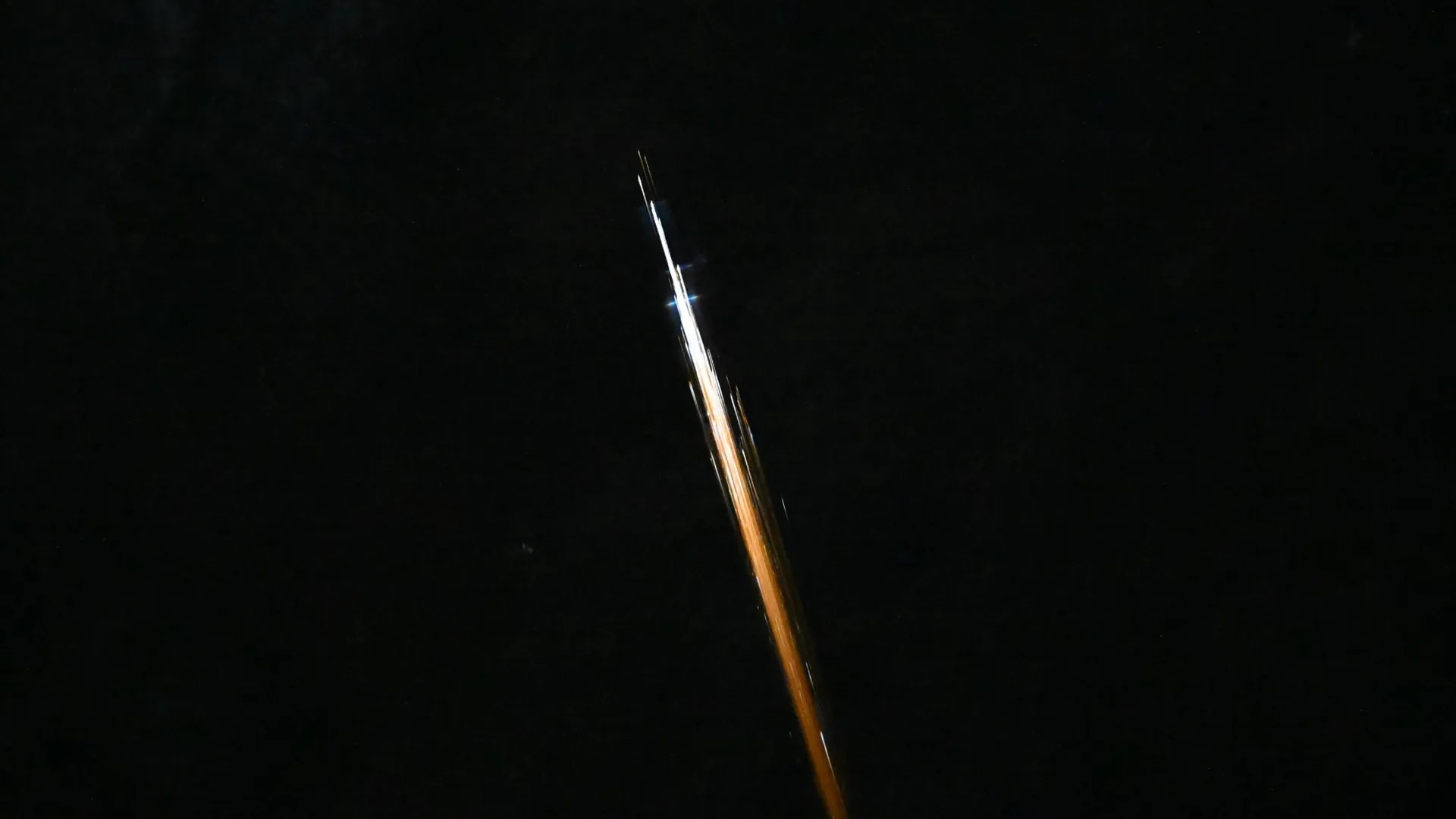
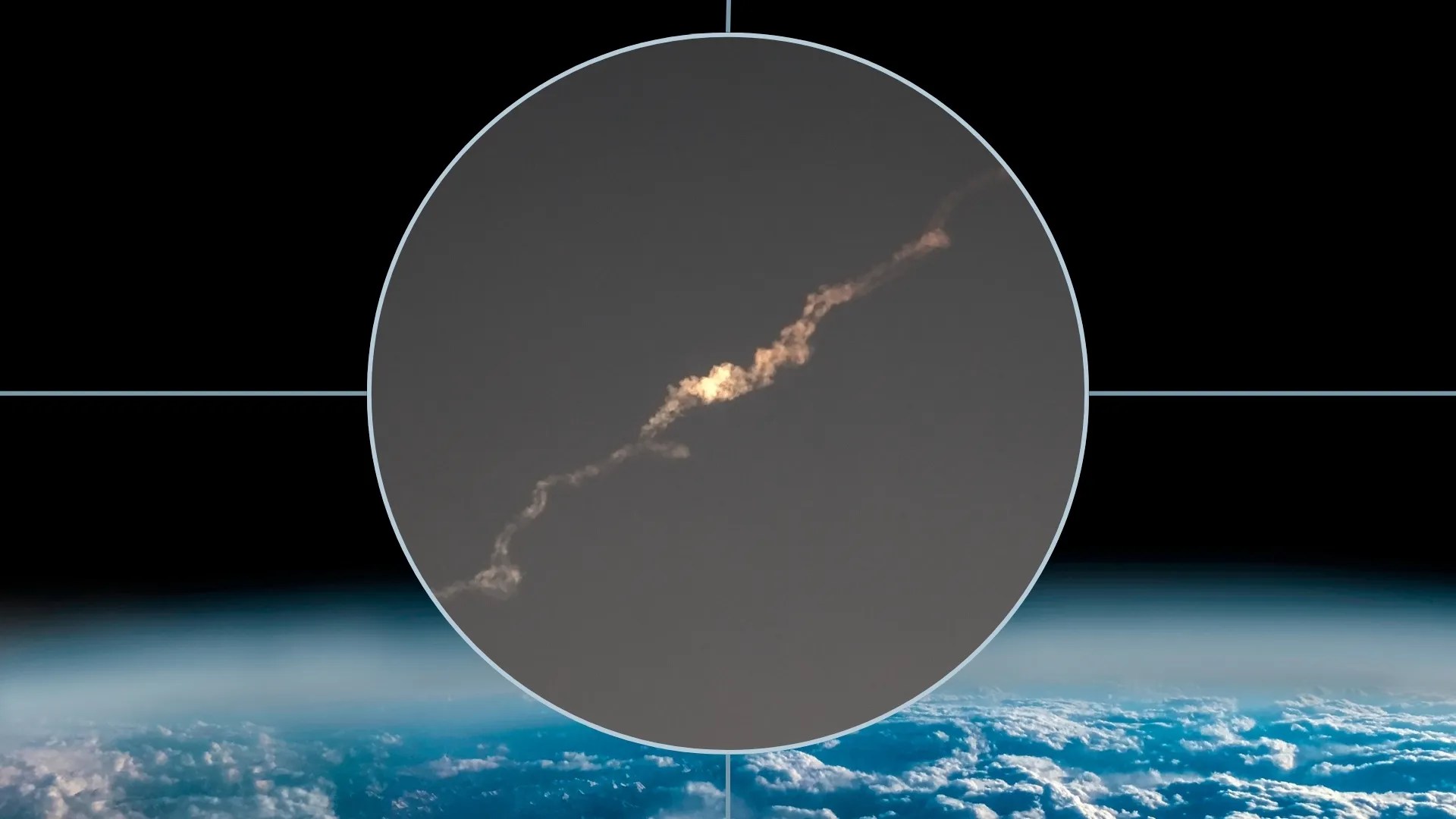
‘It was quite a light show!’ NASA astronaut spies dramatic fireball from the International Space Station “I think it must have been some piece of orbital debris or a satellite breaking up as it entered the atmosphere.” On the International Space Station, you look down to see shooting stars. NASA astronaut Chris Williams just reminded us of that mind-bending fact, sharing footage of a spectacular fireball he saw from the orbiting lab….more

-space.com

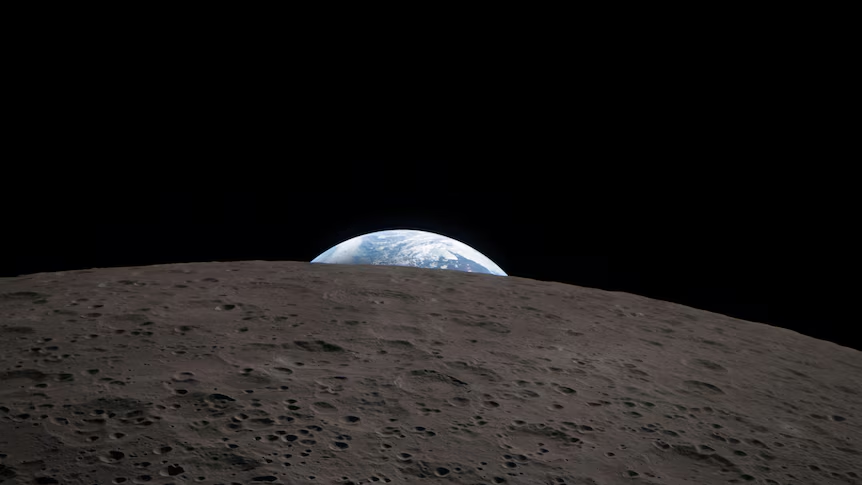
Artemis 2 heat shield is a sunken treasure in the ocean The Artemis 2 heat shield looks like a sunken treasure from the Titanic in an underwater shot following splashdown. The mission’s Orion capsule splashed down off the coast of San Diego on April 10, safely returning its astronaut crew home. Now, we can see the aftermath of that landing in a striking new photograph….more

-ABC.net

‘I’m not religious, but …’: The Artemis II space mission stirs something deep inside us It’s been some weeks since Artemis II splashed back down to earth, but the reels are still doing the rounds on social media — especially one from a post-mission press conference where Commander Reid Wiseman said ten days in space had stirred something in his soul…more

-SETI.org

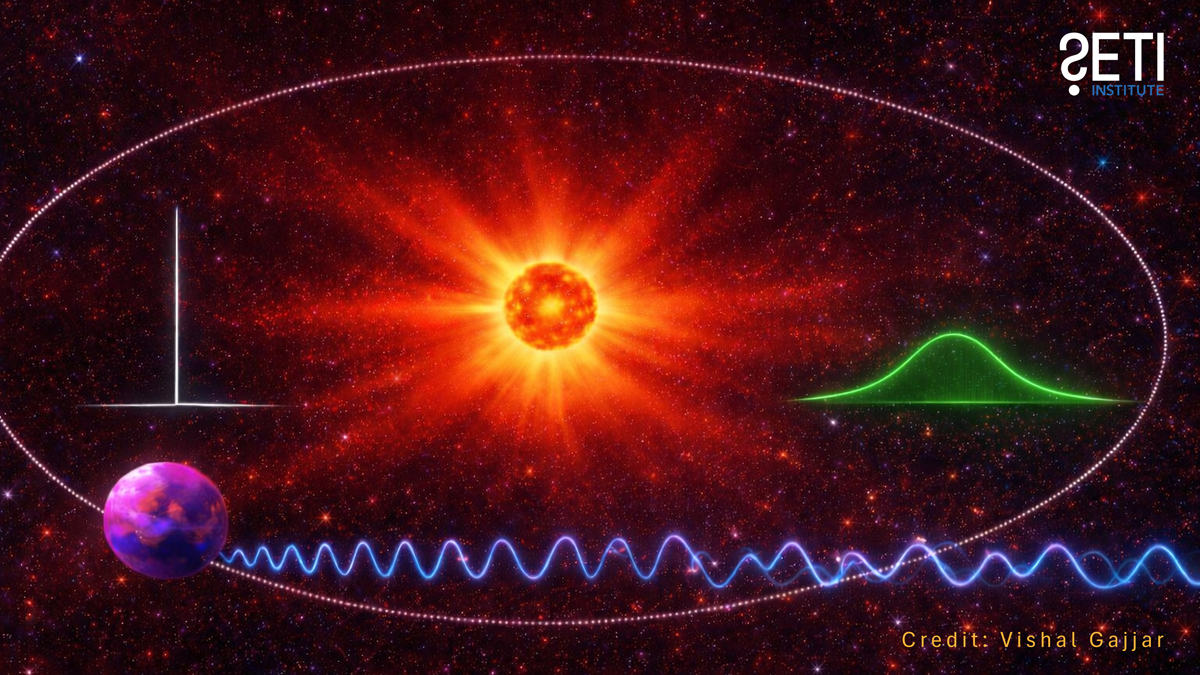
Why SETI Might Have Been Missing Alien Signals A new study by researchers at the SETI Institute suggests stellar “space weather” could make radio signals from extraterrestrial intelligence harder to detect. Stellar activity and plasma turbulence near a transmitting planet can broaden an otherwise ultra-narrow signal, spreading its power across more frequencies and making it more difficult to detect in traditional narrowband searches…more

-NASA

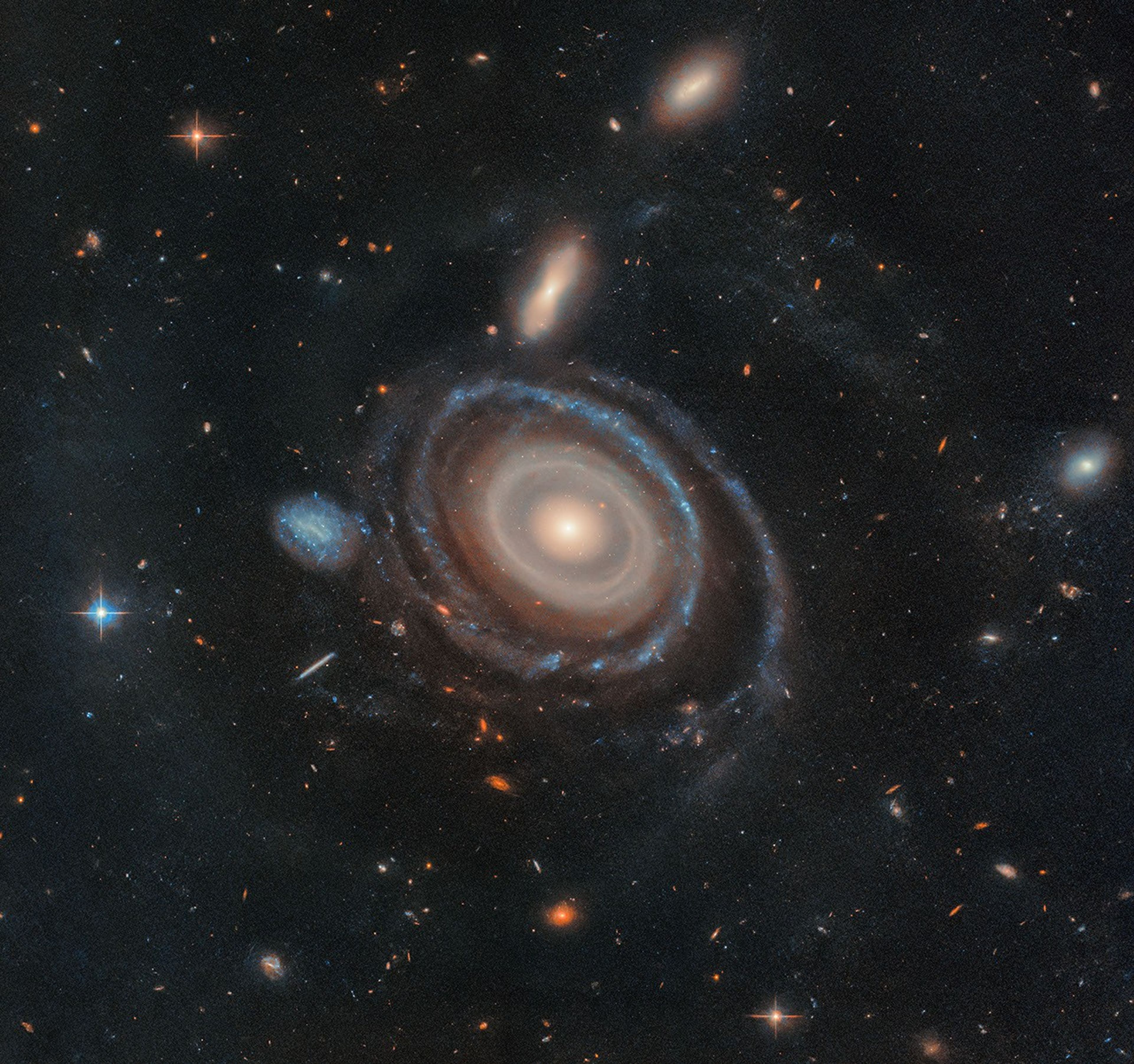
Straight Shot: Hubble Investigates Galaxy with Nine Rings NASA’s Hubble Space Telescope has captured a cosmic bullseye! The gargantuan galaxy LEDA 1313424 is rippling with nine star-filled rings after an “arrow” — a far smaller blue dwarf galaxy — shot through its heart. Astronomers using Hubble identified eight visible rings, more than previously detected by any telescope in any galaxy, and confirmed…more

-NASA

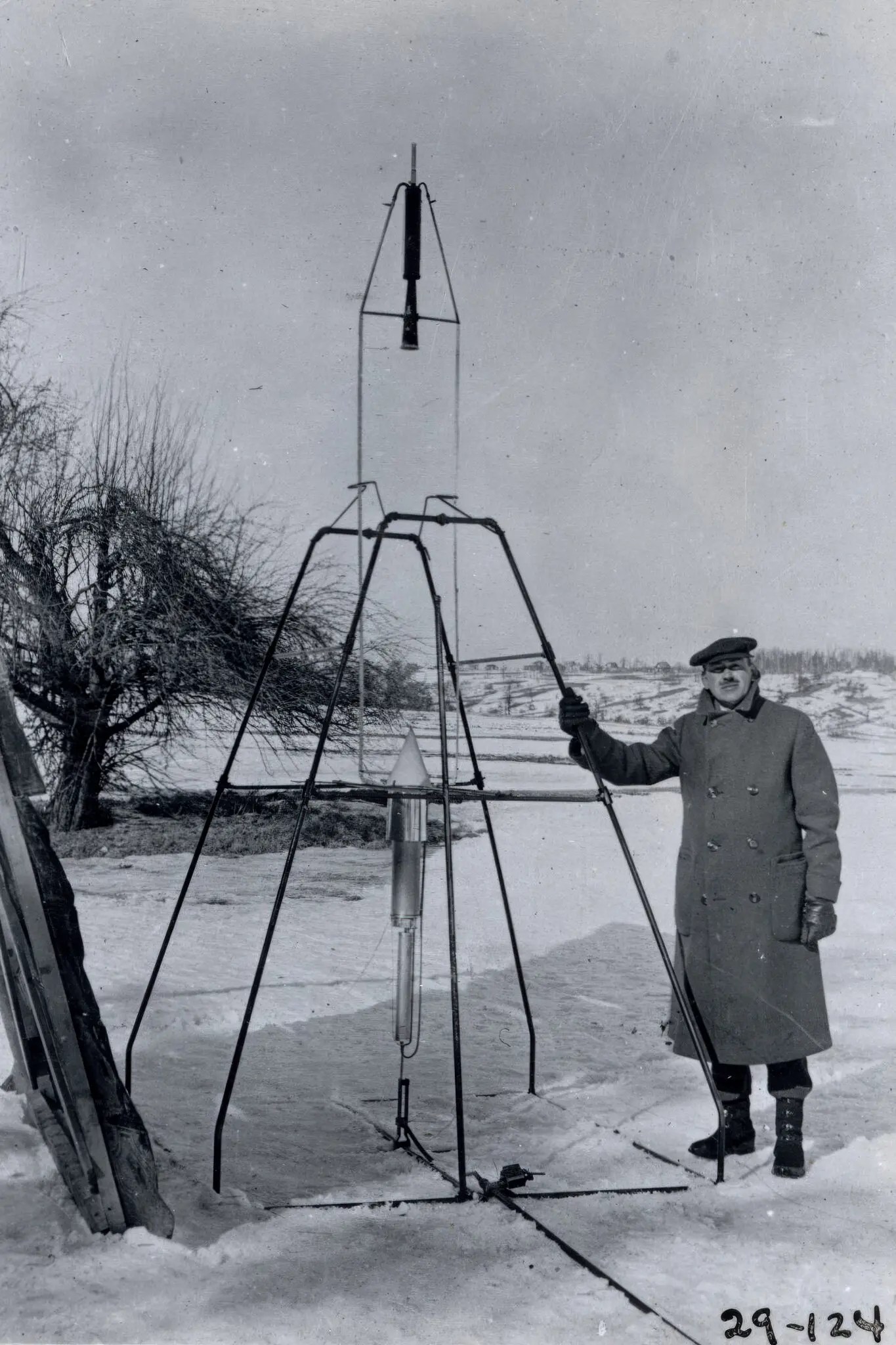
Spaceflight Started 100 Years Ago in a Massachusetts Cabbage Patch Robert Goddard arrived at his aunt’s farm in Auburn, Mass., on a cold, snowy morning 100 years ago. The wide-open spaces of the farm became on March 16, 1926, a rudimentary Cape Canaveral for an event never witnessed before on Earth: the launch of a rocket that would become a trailblazer for vehicles capable of sending satellites, probes and even humans beyond our planet’s atmosphere…more

-NASA

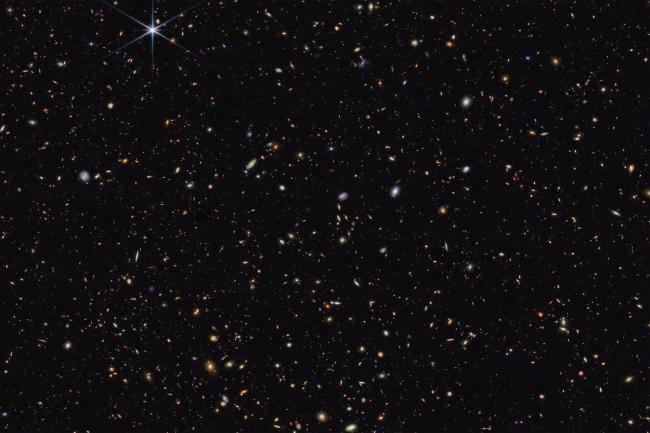
New Theory May Explain Mysterious “Little Red Dots” in the Early Universe Astronomers at the Center for Astrophysics | Harvard & Smithsonian have proposed a new explanation for some of the universe’s most puzzling early galaxies, nicknamed “little red dots.” In the study, published in The Astrophysical Journal Letters, Authors Fabio Pacucci and Abraham (Avi) Loeb suggest that these galaxies are the result of very slowly spinning dark matter halos, an extremely rare cosmic structure…more

-NASA

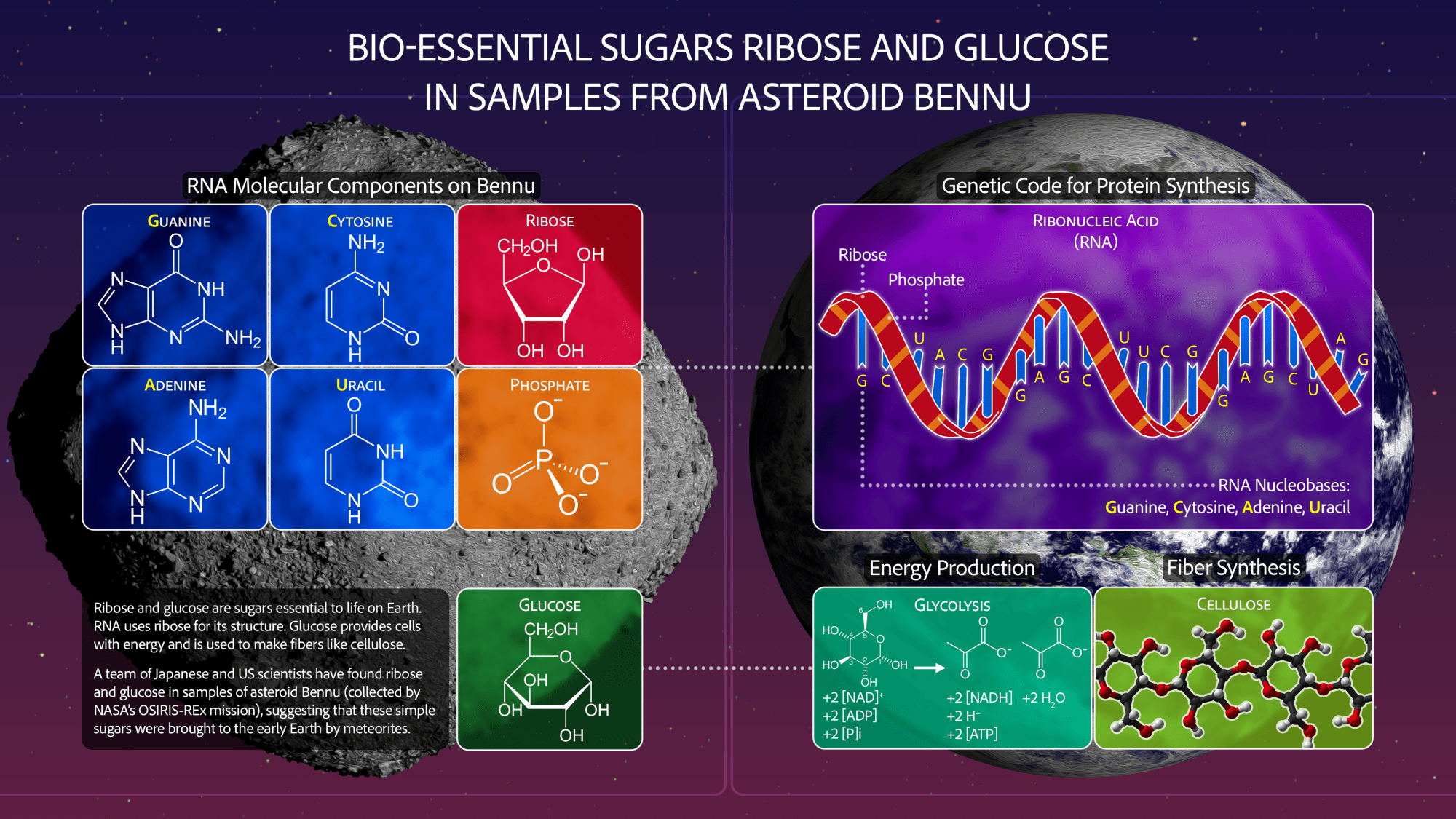
Sugars, ‘Gum,’ Stardust Found in NASA’s Asteroid Bennu Samples The asteroid Bennu continues to provide new clues to scientists’ biggest questions about the formation of the early solar system and the origins of life. As part of the ongoing study of pristine samples delivered to Earth by NASA’s OSIRIS-REx (Origins, Spectral Interpretation, Resource Identification, and Security-Regolith Explorer) spacecraft…more

-NASA

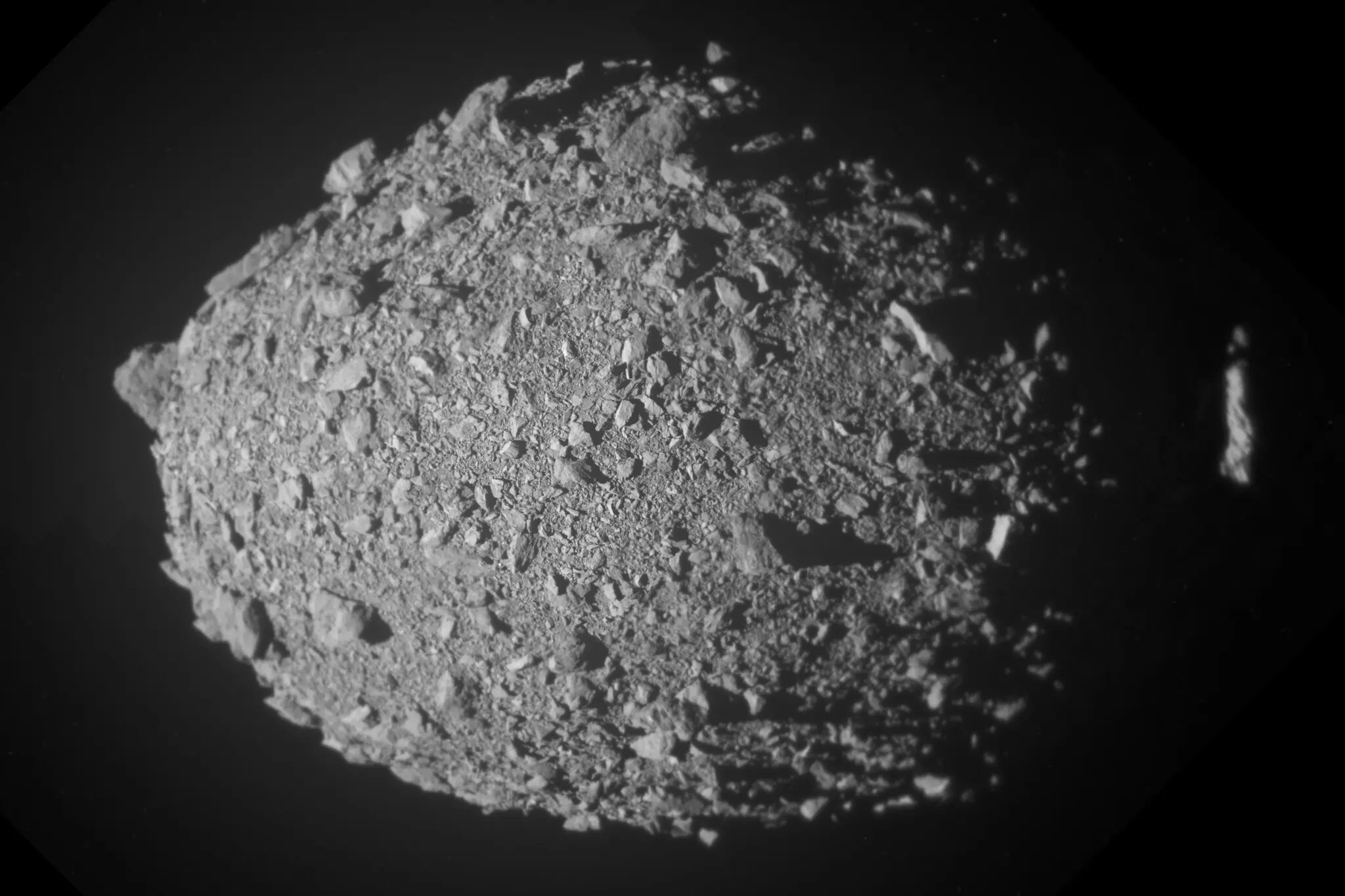
NASA’s DART Mission Changed Orbit of Asteroid Didymos Around Sun New research reveals that when NASA’s DART (Double Asteroid Redirection Test) spacecraft intentionally impacted the asteroid moonlet Dimorphos in September 2022, it didn’t just change the motion of Dimorphos around its larger companion, Didymos; the crash also shifted the orbit of both asteroids around the Sun…more

-space.com

Spectacular fireball over Europe sends meteorite crashing through roof of German home A meteorite has crashed through the roof of a house in the city of Koblenz in the west of Germany after a spectacular fireball lit up the night sky above western Europe on Sunday evening, March 8. More than 2,800 sightings of the fireball have been reported to the International Meteor Organization (IMO), with dozens of video recordings having been uploaded on social media…more

Posted in May 2026, Sidereal Times | Tagged , | Leave a comment

From the Director

by Rex Parker, PhD  director@princetonastronomy.org

April 14 Meeting at Peyton Hall.  With the warmer temperatures I will traipse across a blooming campus to Peyton Hall once more for the AAAP meeting on April 14. While walking I look up into the night sky to see the changing constellations, and realize the newcomers signal the start of galaxy season.  The brightest and greatest concentration of the northern hemisphere’s galaxies move into good telescope observing position (at hours not causing sleep deprivation) in April.  During spring, Earth’s night-side faces away from the populated Milky Way center, allowing clear views of other galaxies in the constellations Virgo, Leo, and Ursa Major. Indeed, clusters of galaxies emerging in the spring. 

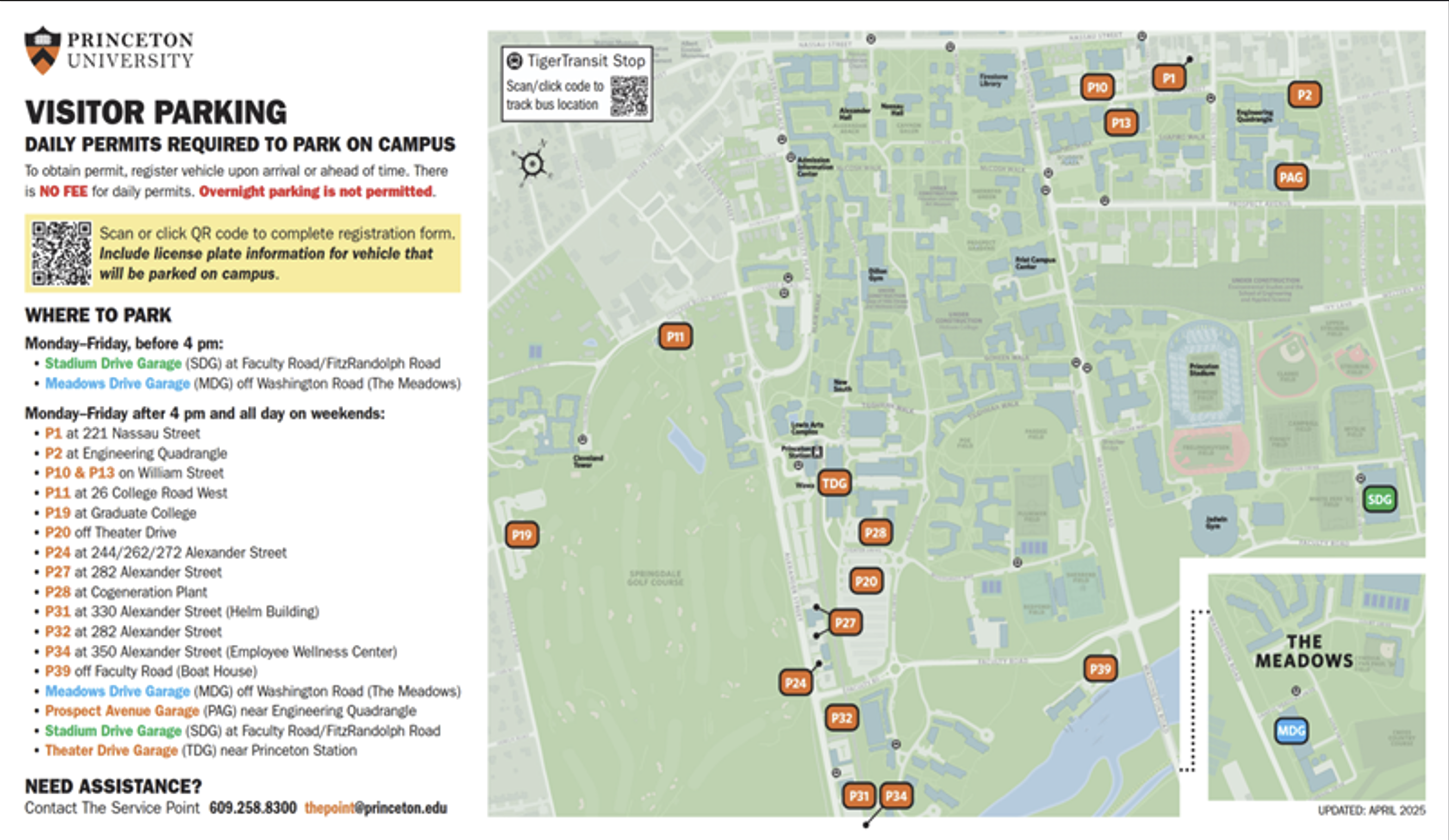
I hope you will join me in person April 14, as Peyton Hall will become unavailable to us for a while with reconstruction on the building starting this summer.  And unexpectedly we have been pre-empted for our May 12 meeting by exam scheduling that evening.  So, the May 12 meeting will be held in Sherrerd Hall, a newer building easily accessed with street level parking close by (thanks to Bob V. for arranging this).  A campus/parking map will be provided next month in Sidereal Times.  And if you haven’t yet, I insist upon you watching the new movie Project Hail Mary adapted from Andy Weir’s sci-fi book.  See yourself in those situations calling on MacGyver-like skills to respond to challenges.  These are some of the abilities we aspire to as amateur astronomers! 

Program Chair Victor’s section below describes our guest speaker for April 14. This will be a good opportunity to learn about the latest approaches being taken in the search for intelligent life outside our planet, SETI.  With the encouraging signs of spring, let’s have a great member turnout at Peyton Hall April 14.  Of course, if you cannot be there in person please join our meeting by Zoom.  The updated Zoom link will be sent by e-mail a few days before each meeting and posted on the newly redesigned website.

AAAP Board Election in May.  As directed by the by-laws, each May we hold the election  of officers (aka the Board) for a 1-year term.  Michael Mitrano has agreed to serve as the temporary Nominations Chair for the election.  The basic duties involved for each position are provided on the website, https://www.princetonastronomy.org/about/board.  If you are interested in helping AAAP as an officer (this or perhaps a future year), feel free to contact Michael at nominations@princetonastronomy.org.  He will report on a slate of candidates at the April meeting.

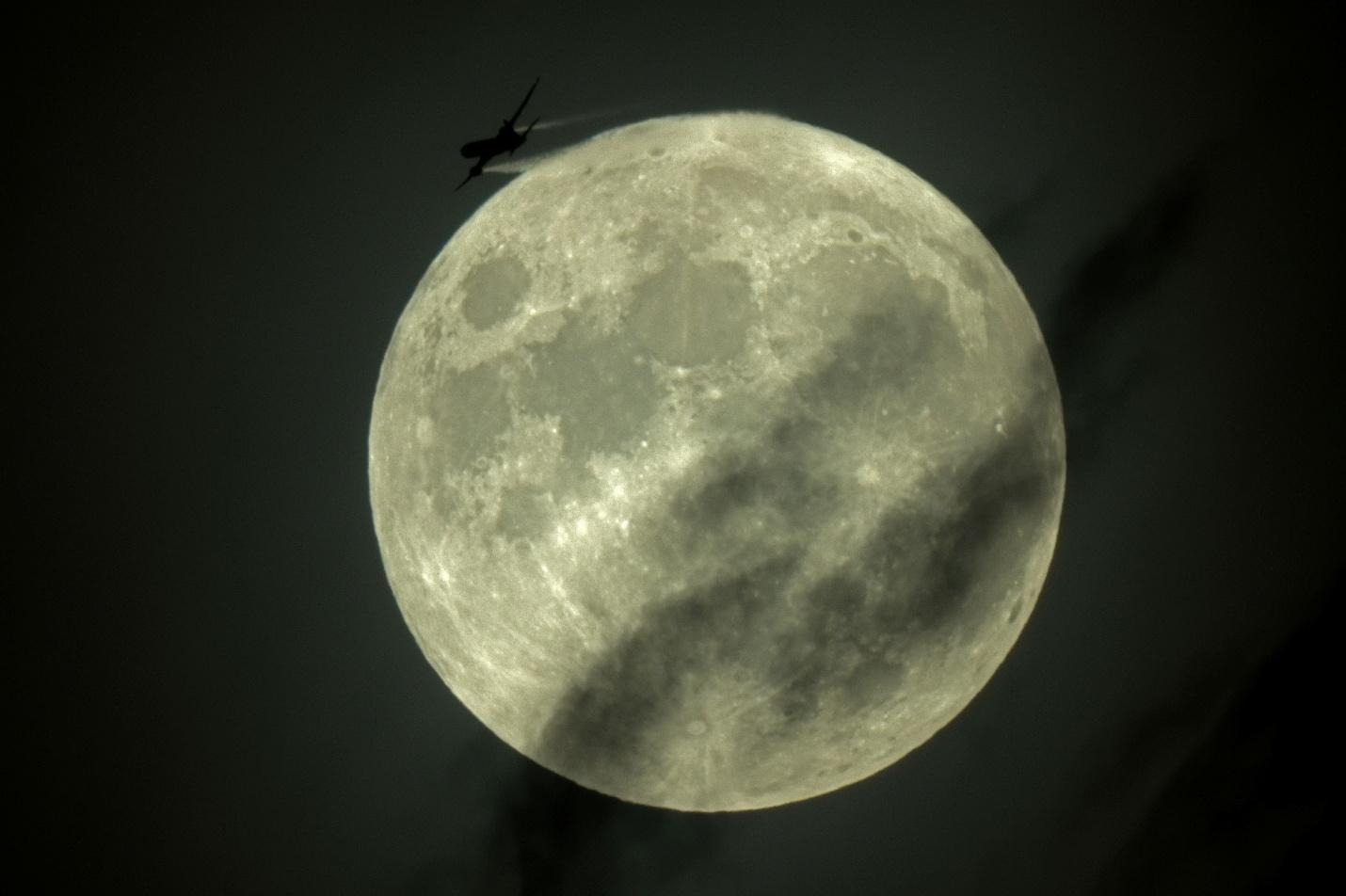
A Full Moon on the Day of Artemis 2 Launch (April 1).  An unexpected flyby occurred by the upper edge of the moon seen through the clouds in this image, from my 12.5” reflector telescope in central NJ.

Posted in April 2026, Sidereal Times | Tagged , , , | Leave a comment

From The Program Chair

by Victor Davis, Program Chair

Productive Listening
The April, 2026 monthly meeting of the Amateur Astronomers Association of Princeton will take place in Peyton Hall on the campus of Princeton University on Tuesday, April 14th at 7:30 PM. As usual, the meeting is open to AAAP members and the public. Participants can join the meeting in-person at Peyton Hall or log in to the Zoom session as early as 7:00 pm to chat informally before the meeting begins. The evening’s guest speaker will be Dr. Brian Lacki, a theoretical astrophysicist working for Breakthrough Listen, a SETI project seeking signs of alien technology.

Options for Attending the Meeting
You may choose to attend the meeting in person or participate via Zoom or YouTube as we’ve been doing for the past few years. (See How to Participate below for details). Due to security concerns, if you log in before the host has set up internet connectivity in Peyton Hall, you may need to wait in the Waiting Room for a few minutes until the host is prepared to admit you into the meeting. You’ll need to unmute yourself to make comments or ask questions. It’s polite, though not required, for you to enable your camera so other participants can see you. The meeting will be recorded and edited for posting to our club’s YouTube channel.

There will be no “meet the speaker” dinner this month
Dr. Lacki is immunocompromised and always wears an N95+ mask in public places and so has politely declined our invitation to dinner at Winberie’s.

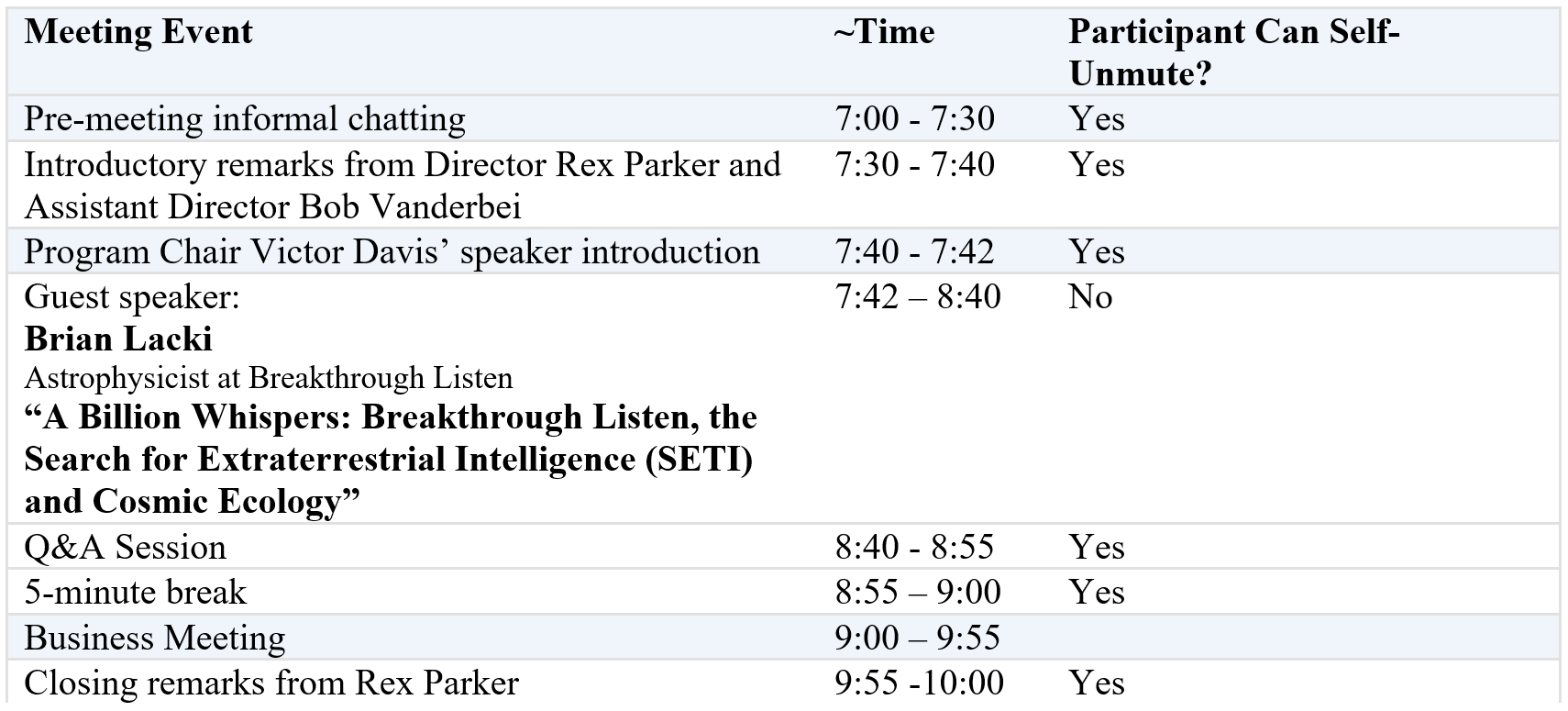
Here’s the anticipated agenda for April 14th 2026’s monthly meeting of the AAAP:

(Times are approximate)

Getting to Peyton Hall
The parking lots across the street (Ivy Lane) from Peyton Hall are now construction sites, unavailable for parking. We’ve been advised by the administration of the astrophysics department that we should park in the new enclosed parking garage off Fitzrandolph street and walk around the stadium and athletic fields. Here’s a map of the campus and walking routes from the parking garage to Peyton Hall. The map shows the recently completed East Garage. Not shown is an access road Sweet Gum that connects from Faculty Road to an entrance at the lower left corner of the garage. Stadium Road connects from Fitzrandolph Road to another entrance at the opposite corner (and higher level) of the garage. It’s about a 10-15 minute walk from the parking garage to Peyton Hall.

astrobrianlacki@gmail.com

A Billion Whispers: Breakthrough Listen, the Search for Extraterrestrial Intelligence (SETI) and Cosmic Ecology

A Billion Whispers:
The Search for Extraterrestrial Intelligence (SETI) has had a renaissance in the past decade, spearheaded by several groups including Breakthrough Listen. Dr. Lacki will review the basic concepts of SETI, including the Drake Equation, the Fermi Paradox, and how scientists hope to find signs of alien technology. He will then discuss his own work as a theorist at Breakthrough Listen, much of which focuses on how the possibility of interstellar travel affects prospects for SETI. The ability to spread between stars is something that almost no other phenomenon is capable of, behaving more like biology than astrophysics. Breakthrough Listen and other SETI projects are observing galaxies near and far, where we may detect signs of technology if it becomes pervasive and powerful enough.                                                                                 

Brian Lacki, PhD.
Brian Lacki is a theoretical astrophysicist working for Breakthrough Listen. After getting his Ph.D. at Ohio State University, he received a Jansky Fellowship from the NRAO and resided at the Institute for Advanced Study in Princeton. His earlier research, on high energy processes in star-forming galaxies, informed his first ventures into SETI theory. Now, his interests include technosignatures across the spectrum. Brian is also interested in philosophical aspects of SETI. His work includes the Breakthrough Listen Exotica Catalog, which aims to include “one of everything” in the Universe, and the first workshop on SETI in X-rays, gamma-rays, neutrinos, gravity waves, and particles.

How to Participate (Links)
Zoom & YouTube Live
Amateur Astronomers Association of Princeton is inviting you to a scheduled Zoom meeting.
Join Zoom Meeting
Topic: April AAAP 2026 Meeting; Brian Lacki, Berkley SETI; Breakthrough Listen Catalog
Time: Apr 14, 2026 07:00 PM Eastern Time (US and Canada)
Meeting ID: 852 4786 5253
Passcode: 221147
Join instructions

https://us06web.zoom.us/j/85247865253?pwd=8LuiqIJIlNB2IBf0D7NwAd9CStgnp3.1....https://youtube.com/live/hxXU79eMCTk?feature=share
Click the above icons for Zoom and YouTube

AAAP’s library of monthly meetings is available on the club’s YouTube channel. March’s edited meeting featuring a presentation by Dr. Bob Vanderbei “Dynamic Astronomical Things: From Supernovae to Moving Stars, Eclipses, Occultations, etc.” can be viewed at https://youtu.be/Zf2lRGlJvLg?si=fqqVqMwti4Zav. Runtime is 1hour 14 minutes.

A look ahead at future guest speakers:

Date Featured SpeakerTopic
May 12, 2026
John Horgan
Science Writer
horganism3@gmail.com
Mr. Horgan will discuss his controversial 1996 book The End of Science, in which he argues that pure science, defined as “the primordial human quest to understand the universe and our place in it,” may be coming to an end. Horgan claims that science will not achieve insights into nature as profound as evolution by natural selection, the double helix, the Big Bang, relativity theory or quantum mechanics. In the future, he suggests, scientists will refine, extend and apply this pre-existing knowledge but will not achieve any more great “revolutions or revelations.” Shades of Auguste Comte, perhaps?
 
We expect to have copies of his book(s) for sale for the author to sign at the conclusion of his presentation.
 
Thanks to Rex Parker for engaging this speaker.
Jun 9, 2026
Jacob Hamer
Assistant Curator
NJ State Museum Planetarium
Jacob.Hamer@sos.nj.gov
As usual, the June meeting will take place in the planetarium at the NJ State Museum in Trenton. There will be no streaming of this live-only sky show and PowerPoint presentation. Topic to be announced.
Sep. 8, 2026Michael DiMario
Chair of AAAP’s Astro-imaging SIG
K2mjd@outlook.com
Dr. DiMario will present a primer on astro-imaging.
Oct. 13, 2026Becka Phillipson
Assistant Professor in Physics
Villanova University
Prof. Phillipson, originally scheduled to be October 2025’s guest speaker, is an unconfirmed prospect to try again in 2026.

As always, members’ comments and suggestions are gratefully accepted and much appreciated. Thanks to Ira Polans and Dave Skitt for setting up the online links and connecting the meeting to the world outside Peyton Hall.

victor.davis@verizon.net
program@princetonastronomers.org
(908) 581-1780 cell

Posted in April 2026, October 2025, Sidereal Times | Tagged , , , , , , | Leave a comment

Minutes of the March 10, 2026 Meeting

by Gene Allen, Secretary

Director Rex Parker opened the meeting in PeytonHall at 1931 with comments about the constellation Leo coming into view, the spring galaxy season, and the upcoming equinox on March 20. There were 26 in the auditorium and 24-some online.

Promotions Chair Debbie Mayes has resigned that role due to family demands. She has done an excellent job managing our social media accounts, distributing flyers she had printed up, and being present at most observatory Public Nights to welcome visitors. We thank her for doing so well at the job she created and now we seek someone to take her place.

With the annual officer election approaching, we need someone to step forward to chair the Nominating Committee.

Outreach Chair Bill Murray reported that a surprising number of stargazing requests have been received in spite of this exceptionally cold winter season.

Past Events – We thank these members for their support:

February 20 – Cub Scout Pack 91 in Hamilton was served by Member Hrishikesr Karvir, Assistant Director Bob Vanderbei, and Observatory Co-Chair Dave Skitt.

February 28 – an event at the Plainsboro Preserve was served by Member Rajat Das, Member Hongkun Zhao, Program Chair Victor Davis, Dave Skitt, and Bill Murray.

March 1 – a Montgomery Friends of Open Space gathering enjoyed a lecture and stargazing served by Bob Vanderbie.

March 5 – stargazing at the North Brunswick Twp High School was served by Member Sarvesh Raghupathy and Bob Vanderbei.

Upcoming Events – Mark your calendar and bring your telescope:

April 18 – stargazing at the Mercer Meadows Pole Barn – no one has yet volunteered.

April 22 – stargazing at the Newgrange School in Pennington – volunteers are Member Maiya Qiu, Member Dan Opdyke, Member Tom Swords, Bob Vanderbei, and Bill Murray.

Early June – the Village Elementary School in West Windsor requests a presentation on amateur astronomy with a hands on demonstration – details to follow.

October 6 – the Monmouth County Library requests a star party – details to follow.

Webmaster Jeff Pinyan has launched our new AAAP website. While development continues and additional features and content will still be added, it is operational. Members should create their own password to sign in and check it out.

Program Chair Victor Davis introduced our speaker for tonight, AAAP Assistant Director Dr Bob Vanderbei, Princeton University Emeritus Professor in the Department of Operations Research and Financial Engineering. His talk was titled Capturing Dynamic Astronomical Objects.

After the question period Director Rex Parker continued the meeting without a break. Sixteen remained in the auditorium as he called our attention to the following hot topics:

We were shown how Member Luyi Wang did the best at the Imaging Challenge of capturing the occultation of Neptune by Saturn using a remote telescope located in China.

Rex showed us his capture of the occultation of the Pleiades by the Moon.

The upcoming Artemis 2 manned mission intending to orbit the Moon has been delayed again, this time until April.

The Keyholder schedule for the upcoming observatory season is available on the new website.

Bill Murray had a great time again at the Winter Star Party in the Florida Keys.

Jeff Pinyan had a fun time setting up his telescope in a Target parking lot and ended up hosting a star party for over 100 spontaneous attendees. That’s a neat idea. Way to go, Jeff!

The meeting was adjourned at 2059.

As of March 9, we have 210 active members. So far in CY2026, renewals number 21 and expirations number 6, giving us a 78% retention rate. We have added 8 new members.

Submitted by Secretary Gene Allen
March 26, 2026

Posted in April 2026, Sidereal Times | Tagged , , | Leave a comment

Note on Merchandise

by Rich Sherman

As we finished a brutal winter, our thoughts now turn to spring and warmer weather. The same is true at your AAAP merchandise shop. On April 15th, we will shift our inventory from the cold-weather gear to more seasonal apparel. As always, if you need help with an order or are looking for something you don’t immediately see at the store, please email Rich at RJSherman@hotmail.com. As a reminder for when you visit the store, the passwords is:  SiderealTimes.

Posted in April 2026, Sidereal Times | Tagged , , | Leave a comment

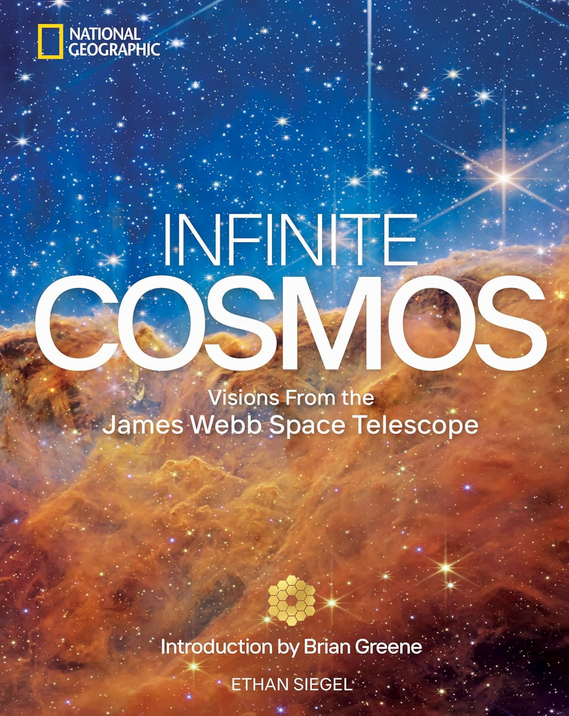
Book Review: Infinite Cosmos: Visions From the James Webb Space Telescope, by Ethan Siegel

By Richard Sherman

Published 2024

Grade:  A

$28.32, hardback, at Amazon.com 

224 pages

“Infinite Cosmos” is a large, coffee table-sized book. It is published by National Geographic, so the production quality is excellent as are the images and diagrams. For me, it helped me complete my understanding of the JWST from its production to recent operations. Despite the physical size of the book, it does not take long to read it. However, the trim size is helpful so the reader can see the important details in the graphics and photographs. It has been on the market since 2024 and now the price has dropped to below $30 for a new copy. As much as I enjoyed it, I think it makes an even better gift for our family and friends who “kind of” understand what we are talking about when we reference the James Webb Space Telescope. 

Posted in April 2026, Sidereal Times | Tagged , , | Leave a comment

Neutrino Astronomy

By Prasad Ganti

Astronomy started out as optical, viewing the light emitted by astronomical bodies in space. Our ancestors looked at the night sky and imagined patterns of stars and distant bodies. Several advances occurred in the last four hundred years in identifying stars, galaxies, clusters of galaxies, and finally, our universe. Along the way, the optical limitation was overcome and astronomy branched out to other areas.

Firstly, into radiation-related multi-messenger astronomy: beyond the visible light, radio astronomy, infrared astronomy, X-ray astronomy, and gamma-ray astronomy ensued. Each of them provided different perspectives and images of the Universe compared to the limited visible spectrum. As a whole, a composite mosaic of the Universe started emerging.

Recently, two more candidates were added to the multi-messenger astronomy club: gravitational waves and neutrinos. Neutrinos are elementary particles with no charge that are nearly massless. They travel without interacting with any matter or any radiation, as if the matter did not exist. It is an extremely rare event that a neutrino produces a trace of its interaction with the material universe.

There are copious numbers of neutrinos produced by violent nuclear reactions in the stars, supernovae, neutron star mergers, active galactic nuclei, and even the nuclear reactors on our own planet Earth and our Sun. They were also produced in the Big Bang which created our universe. Trillions of neutrinos pass through our bodies every second and yet we have no clue about them. Many come from cosmic rays which are very energetic and travel great distances to convey a picture of our Universe to us. Neutrinos offer a unique opportunity to observe processes that are inaccessible to optical telescopes.

With a great number of them and their ability to travel astronomical distances without any impediment, they are the perfect messengers from distant astronomical events. From the cores of the stars and passing through intervening objects, they are constantly on the move. But perfection comes at a cost. What makes them ideal to travel long distances unimpeded, also makes them very difficult to detect. Neutrinos were a theoretical prediction by Wolfgang Pauli in the 1930s to explain the case of missing mass-energy in a nuclear reaction called beta decay. Beta decay is the emission of an electron from the nucleus of some radioactive elements. Their existence was confirmed in 1956 by Clyde Cowan and Frederick Reines.

The largest neutrino detector is called IceCube. Located at the South Pole, it consists of about 5,000 electronic sensors buried at depths between roughly 1,450 meters (4,760 feet) and 2,450 meters (8,040 feet) below the ice surface. This shields the detectors from other radiation. The sensors detect light emitted by charged particles that are produced when a single neutrino collides with a proton or neutron inside an atom. Although a rare event, a quadrillion such neutrinos produce a collision every few days. The resulting nuclear reaction produces secondary particles traveling at high speeds that give off a blue light called Cherenkov radiation. Such a reaction is called “inverse beta decay.” Such tiny flashes of light are multiplied by thousands of photomultiplier tubes to produce a detectable signal.

There are other neutrino detectors which consist of thousands of gallons of a liquid like chlorine or argon or heavy water housed deep underground, like the Super-Kamiokande in Japan or the Sudbury Neutrino Observatory in Canada. Kamiokande-II, the predecessor of Super-Kamiokande, detected the first extrasolar neutrinos coming from Supernova 1987A, an explosion in the Large Magellanic Cloud, a satellite galaxy of our own Milky Way.

The lexicon of astronomy is getting richer while we get one step closer to understanding our Universe.

Posted in April 2026, Sidereal Times | Tagged , , , | Leave a comment

Short Stories Series

by Eklavya Doegar, Student, 8th grade

Amazing stories from Ancient Astronomy

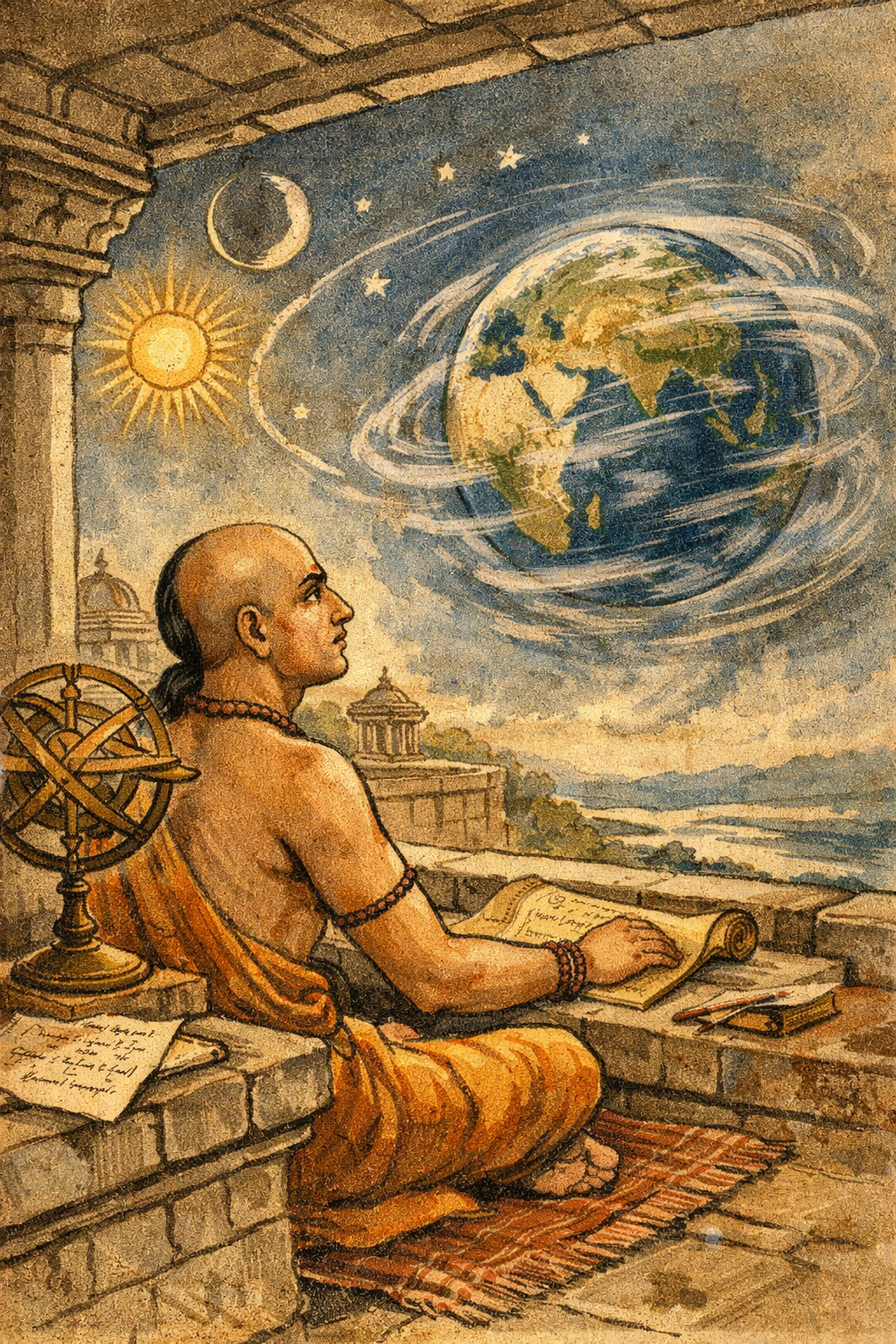
Aryabhata I: The Young Stargazer 

A long time ago in the land of India, there lived a boy who couldn’t stop looking up at the skies.

This was in the 5th century CE. At an age when most children are into playing or learning life skills, Aryabhata loved watching the skies. Every night, he would lie on the ground and stare at the sky, wondering, why do the stars move? Why does the Sun rise every day?

Aryabhata used to write down everything he saw. He noticed that the stars seemed to move in a circle across the sky. 

Most people at that time believed the Earth was still, and the sky moved around it. But he asked the question challenging this assumption: 

“What if the Earth is moving instead?” 

Aryabhata thought differently. He observed, calculated and figured out that the Earth spins on its axis! That’s why the stars appear to move.

Aryabhata conducted even more observations and estimated how long it took the Earth to go all the way around the Sun (what we now call a year), and his answer was almost exactly right. 

Aryabhata also worked on the number pi, which we still use to calculate circles and orbits today! He wrote all this in a book called the Aryabhatiya when he was just 23 years old. His observations, findings supported with calculations were found to be very powerful, and they even traveled across countries and centuries.

So the next time you look at the stars, remember Aryabhata. The curious boy who made detailed observations, asked questions, and changed the way we see our planet!

Posted in April 2026, Sidereal Times | Tagged , , | Leave a comment