
Short Stories Series from Eklavya Doegar
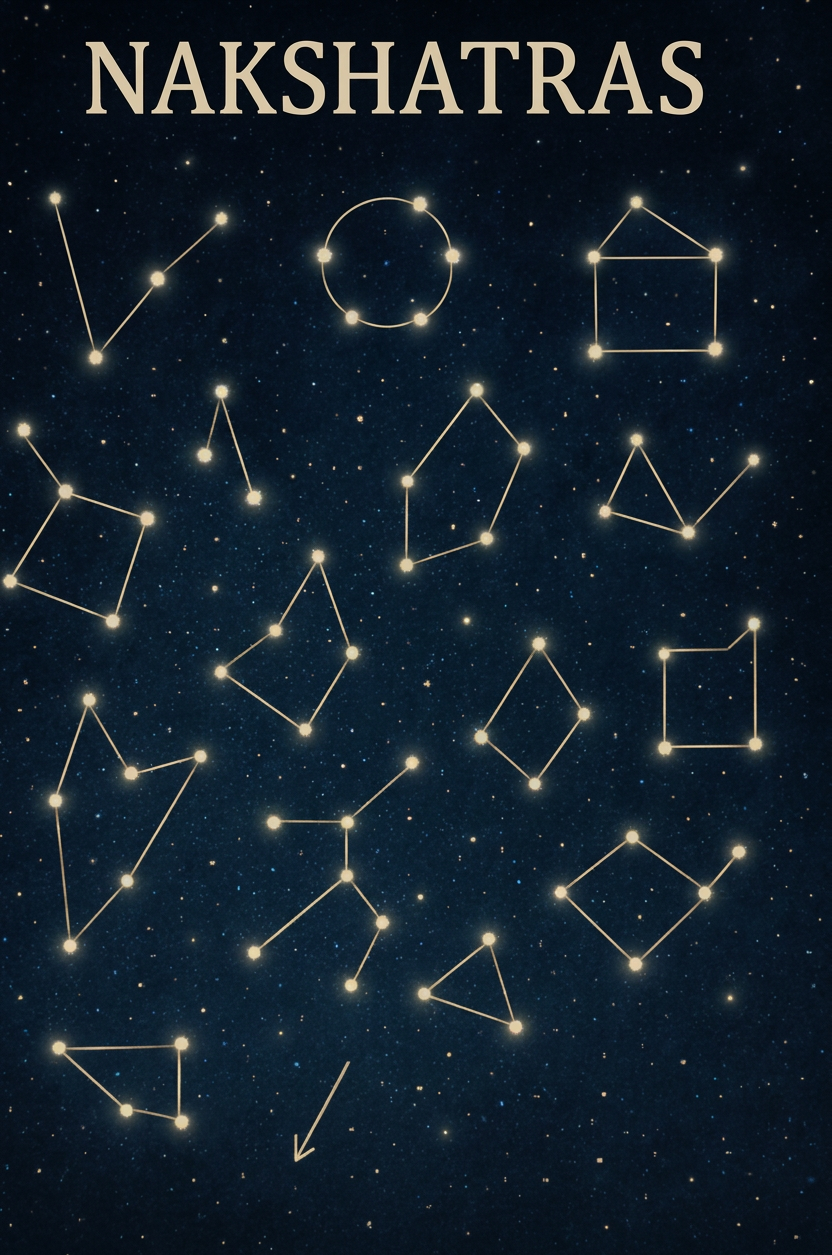
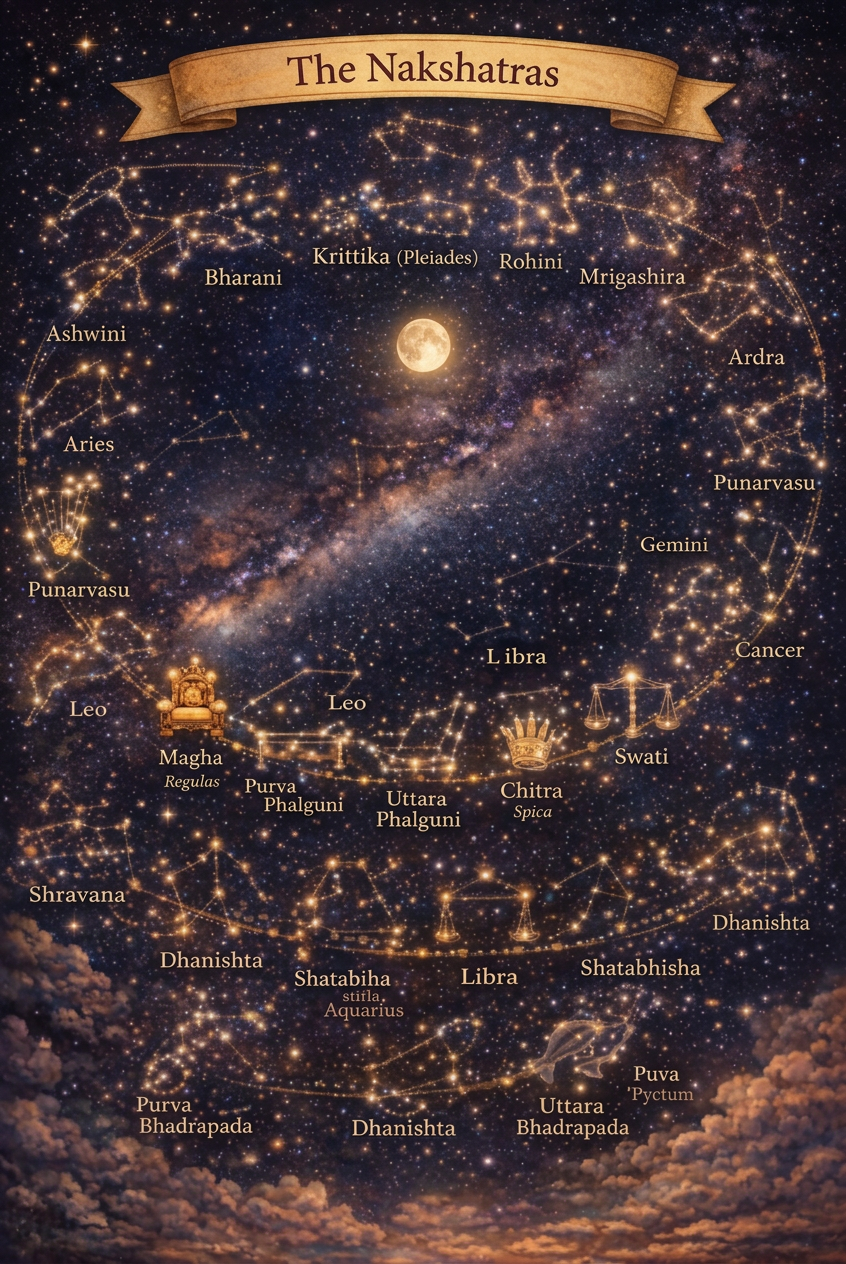
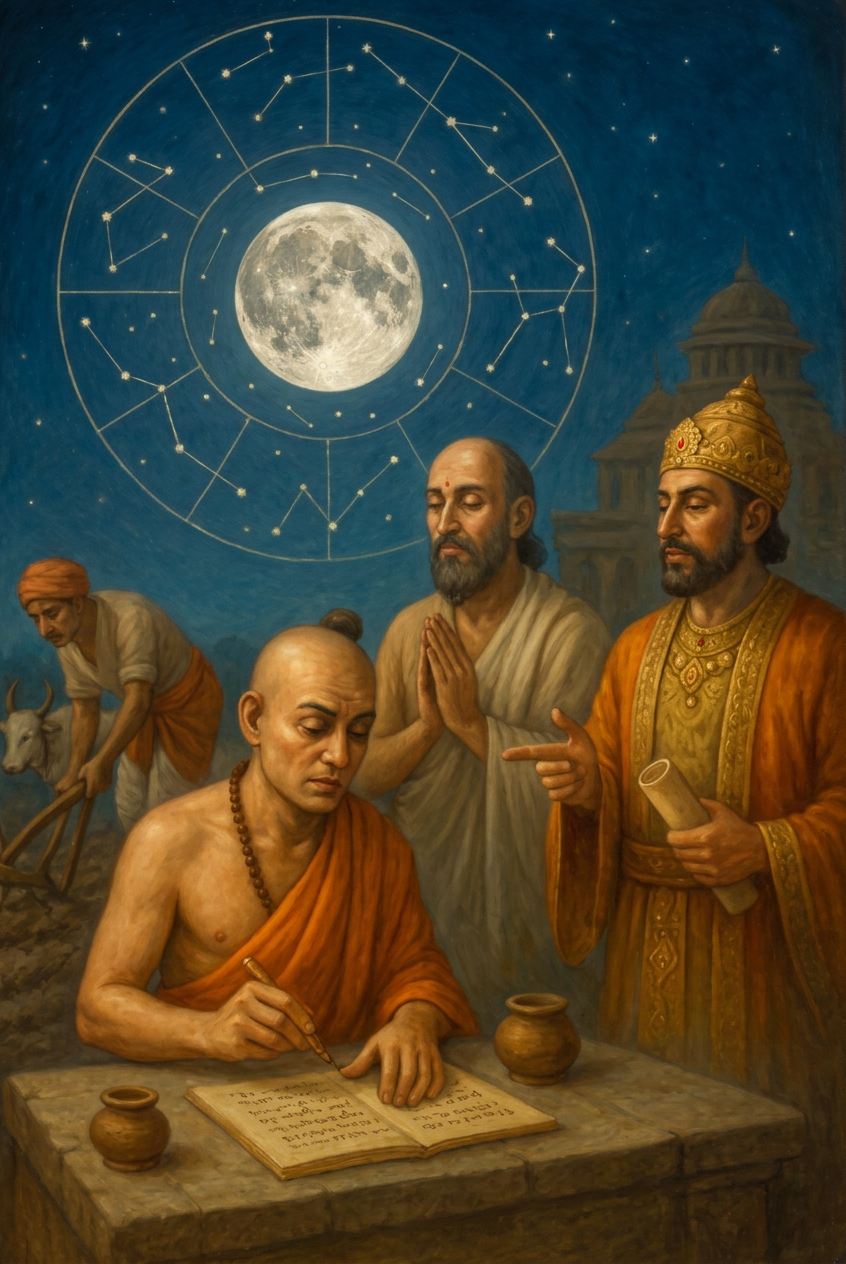
In the night time, we look up at the sky and see the moon. To most of us, it just looks like the Moon is up there, alone among the stars. Yet, ancient astronomers observed and noted that the Moon was on a journey. They had hypothesized that the moon was moving towards different neighborhoods of the sky. They called these neighborhoods “nakshatras”, another name for sky maps.
Thousands of years ago, astronomers put the sky into 27 equal sections, each section related to a specific cluster of stars. The moon spent about one day in each nakshatra. That means in almost one month, the Moon would complete a full lap through all 27. Each one had a name, a story, and a meaning, and were connected to gods and goddesses, to animals and nature, and to ideas about fate, health, and time.
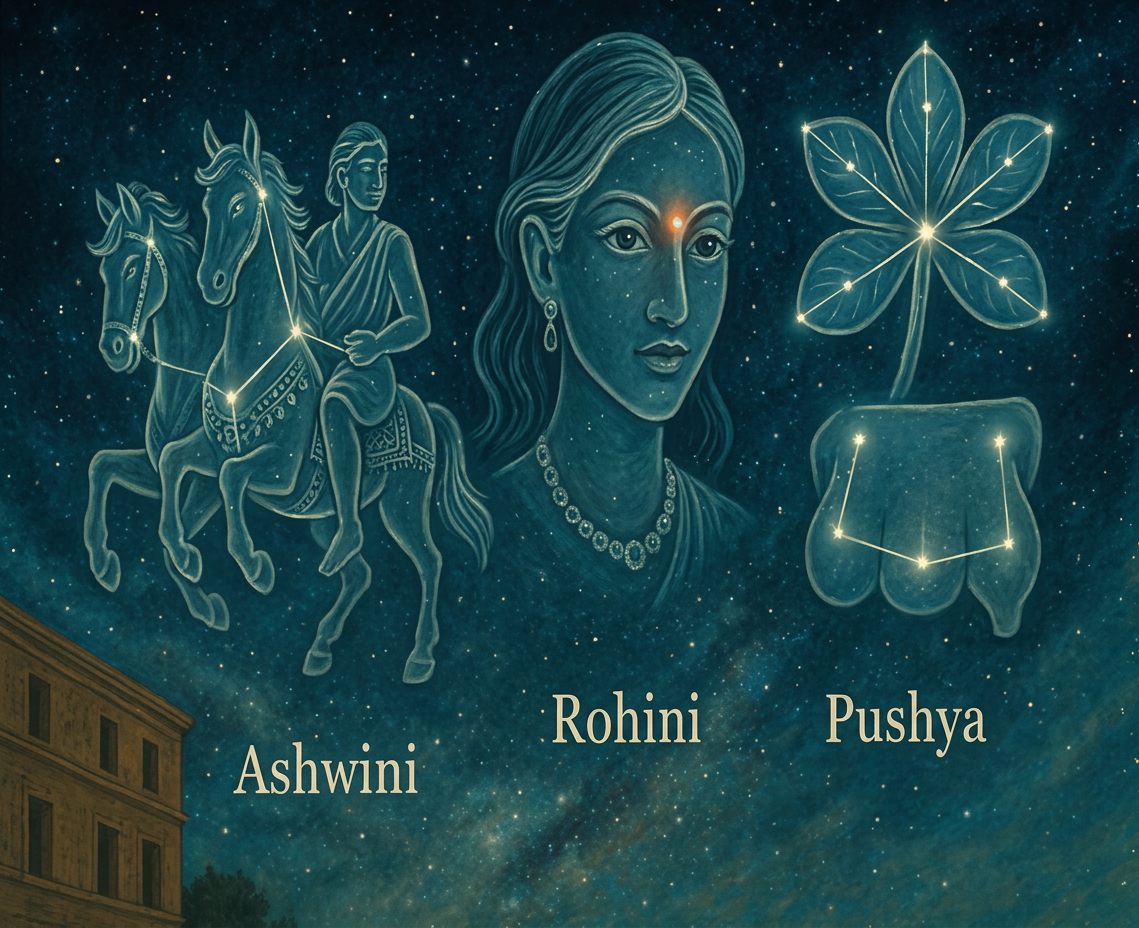
The nakshatra called Ashwini, for example, was linked to twin horsemen who brought healing and energy. Rohini was the red star Aldebaran, a bright eye in the constellation Taurus, and was said to bring beauty and creativity. Pushya, symbolized by a flower or a cow’s udder, was connected to nourishment and kindness.
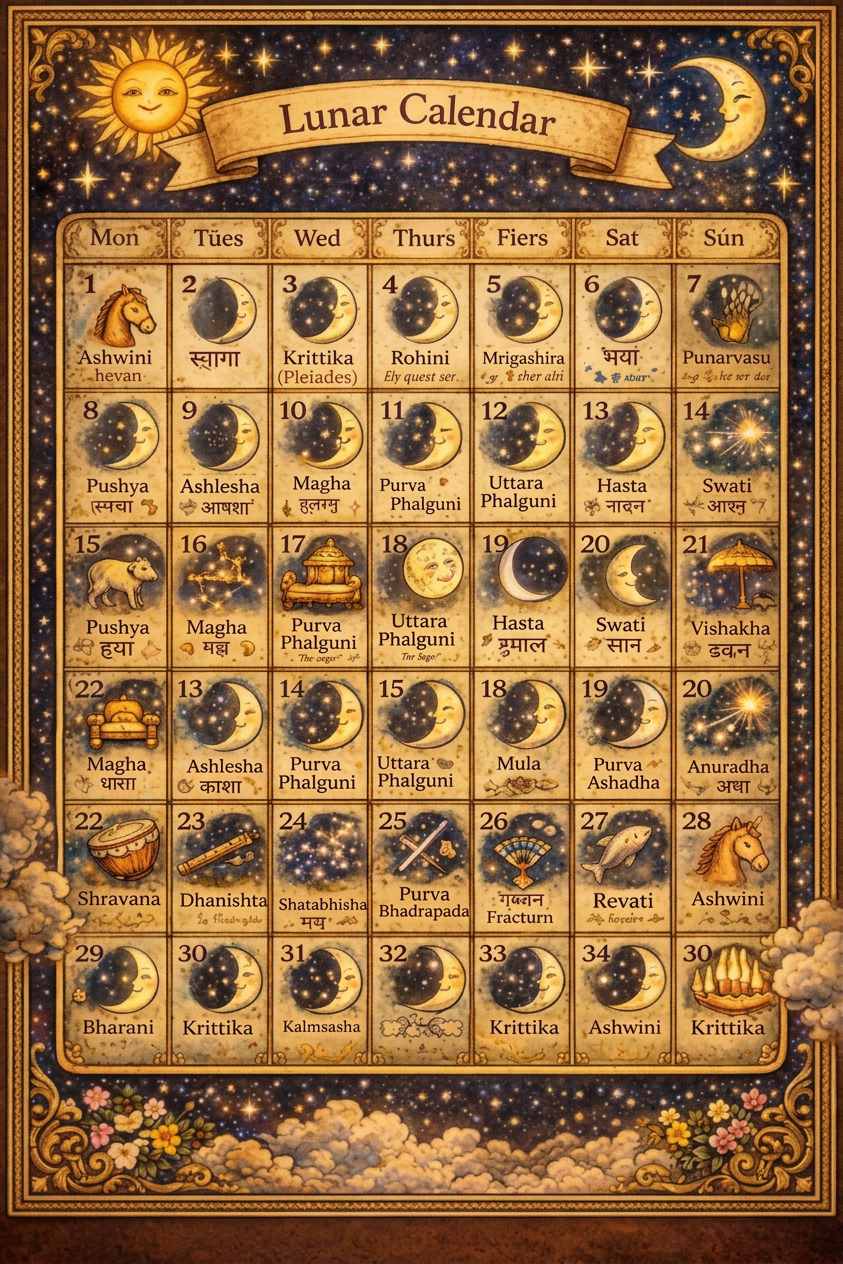
Ancient scientists didn’t just use these nakshatras to study the stars. They used them to organize time itself. They tracked location of the Moon each night, and created a lunar calendar that guided almost every part of life. When to plant crops, when to celebrate festivals, when to name a child, and even when to take medicine.
For farmers, this sky-based calendar was like a weather forecast, a clock, and a planner all in one. If the Moon entered a certain nakshatra known for strong winds or bad luck, they might wait to plant seeds. If it was a peaceful nakshatra, they knew it was a good time to begin a journey or start a new project.
But it wasn’t only farmers who watched the Moon. Doctors, priests, kings, and architects all paid close attention to the nakshatras. In Ayurveda, the ancient system of medicine, the nakshatra a person was born under was believed to influence their body type and health. Temple builders chose specific nakshatras for laying the first stones of sacred buildings. And royal advisors looked to the Moon to pick the perfect time for coronations or declarations.
This connection between stars and human life was written about in some of the oldest texts, like the Vedas, which date back more than 3,000 years. Over time, the nakshatra system grew more precise as mathematicians began measuring the angles of the Moon’s path.
They calculated how far apart the nakshatras were, how to correct errors in timing, and how the Sun’s position could be used alongside the Moon to create accurate calendars. This knowledge eventually formed the foundation for Jyotisha, the traditional form of astronomy and astrology. Nakshatras became a key part of horoscopes, which are still used today during weddings and other ceremonies. Even modern lunar calendars continue to mark which nakshatra the Moon is in each night.
It is interesting that these ideas were based only on human eyes, careful observation, and deep thinking. There were no satellites or computers, and only clear skies, deep curiosity, and a lot of patience.
To this day, people still use these star maps, passed down through generations. When the Moon shines bright over, it is not alone. It is still passing through ancient paths, being watched by several people who look at the sky and see how to make connections.


