tikun olam

by Theodore R. Frimet

tikkun olam

how Aesop met his end

I am having a difficult time incorporating our politics concerning the 2nd Amendment with this unnecessary death. This isn’t the venue, now, for a call to revisit the purposefulness of arming yourself, or other Americans.

It is beyond anyone’s imagination that a sixth grader wrote an award winning essay on guns, and gun violence in her neighborhood, only to be shot and killed, two years later, in the presumed safety of her own home.

The only consolation that I read, is from her mother. That she died a hero.

From Fox News…”I looked at her. She didn’t cry. She wasn’t hollering. She was just so peaceful. She didn’t deserve to leave the world like that. She didn’t,” said Bernice Parks.

And forgive me for begging that you no longer espouse your political views, no matter how dignified, and written in stone they may be.

Please for the love of g-d, give us all some breathing room.

This country is looking to us, nay the world is looking to us all as a bastion of dialogue, to guide their very souls to what is most expressive of our democracy.

And we should take great care to ensure that this discourse, our civic dialogue, is not so perturbate as to be the cause of any great distress to the ones who suffer the most.

In their time of need, you should do better and be aware of the pain and suffering of another American. That a mother should never see the day her daughter dies, needlessly.

And for the certainty of it, our Second Amendment need not shine its light of liberty at the cost of any one human beings life.

There goes into that good night
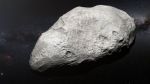
an asteroid that bears the mark
of Rosa Parks, 284996 Rosaparks.

Where there once lay a mark upon the earth
a cosmic convergence within our universe
and one woman did not yield.

And gave birth to the epicenter of movement
we knew as civil rights.

What more can we yearn
for an amateur astronomer to look
into the night sky with presence of mind
being ever hopeful.

Sandra Parks, writes in her essay, Our Truth, “we must fight until our truths stretched to the ends of the world”.

Astronomers know no such boundaries, as we move our prayers and thoughts beyond our common earth bound existence, and yield unto the heavens above.

tikkun olam.

Posted in December 2018, Sidereal Times | Tagged , | Leave a comment

Aesop rising

by Theodore R. Frimet

Aesop rising

her moment, a lifetime.

Time is not a constant throughout the universe. An intelligent and sentient life, within or without our galaxy, leads a time compressed experience. Our kissing cousins’ seconds, minutes, or even their eons of evolution will peaceably coexist amongst us as a microsecond ephemera.

How impervious to our experiential techniques to hunt for our lay brethren, that we be still in sack cloth, covered in the ashes of our withering and wanton trials. Walk you may thru the Universe; she shall gird herself, ever more the virgin, keeping safe her continents of life.

To read a book, one must first turn the page. Of course, you find fancy in the cover, and read the brief on the authors accomplishments. Let the night sky be your cover, and look no further. for there is nothing written for you to read. Aye, my mate, you must experience it, first hand.

Brandishing your 52mm eyepiece, round to make maximum use of light in an average amateur telescope, you peel back the deep. The sky is made to give you its due. You presently find the space between the spaces, where that great mystery lay. And behold, you travel forward into irreverent time, and tic the toc, ‘till you are no more.

Having passed thru the threshold of the neurological network, upon which you base your sanity, you find yourself immersed in a new revelation. You have discovered that there is no paradox. That we can move beyond three variables in the Drake Equation. And more than a discussion and a cup of coffee is there to greet you. You are no longer amazed, as you have pushed thru the maze herself.

Briefly you should stay the course in this dimensional manifold embedded in euclidean space. For if you tarry the longer, the night sky will envelope you with calculus and her derivatives. General equations aside, you will be vexed, forever with the math you have always sought to avert. With keen eye, you deploy averted vision, and see what could never before be seen. You record your observations, and make the report: “The deep, is black as ink, and falls off the edge of the nebulous crab.” You are lost, for a moment in time. Remember, though? Her moment was a life-time.

Posted in December 2018, Sidereal Times | Tagged , | Leave a comment

The passing of the shadow

by Theodore R. Frimet

The passing of the shadow

an “eglimpse” of the future

Well, my benefactor, once again, left a gift of a journal on the front table. There it waited patiently for the after event of another great Tuesday night lecture, at AAAP. I gingerly paged thru the tome, to my personal delight, and stumbled upon a really good article. Many well thought out pages were devoted to the human psychology and its limitations on being Mars bound. I dreamt of quoting a sentence, here and there, and interspersing my thoughts, as if to shed light on a topic that you, my dear amateurs, are already well versed and adept at. However, it was not to be. Although the veritable dog did not eat my homework, /i have cats/, I absentmindedly left this delicious magazine at an office site, far, far away.

And then our editor calls out, waiting patiently, once again for a submission. And I have to wrangle, nay slay the dragon of distraction, and ask, why, oh why has another month passed us by? I think out loud, with the sheer lunacy that you have come to know, “better that I lay down my armor, and give up my sword”. Then only by chance of true honesty, shall we find each other at the opposite ends of the habitat. Such is the destiny of vanquished minds, those intelligent wayfarers and educated planet bound explorers. Come, we should share the same outcome! Truly, my words shall separate us, as likely as it is, we would strangle each other on our voyage to Mars! Yes, please keep your distance, as we find this months substitute for prose, found in “A Hand Book of Solar Eclipses”, by Isabel M. Lewis, A.M., published 1924 by Duffield & Company. How non-profound, indeed!

Why speak of solar eclipses, so late in the night? At one o’clock in the ‘morn, I could not sleep. Tell me, then, what amateur astronomer does? Well, walk the walk to my back door and ponder the light on the lawn! Bear witness to the natural car beams that shew dual purpose. It both ruins the view to the nebulous and round, while shrieking its brilliant moon, with terminator, all aglow and with spurious detail. What better time to trip the light fantastic, and open a few pages of a copyright, dated from almost a century ago?

The pages, yellowed with time, list preface and twenty two chapters of well scripted lunacy. Where to start, is as good a question, as where best to end? Chapter IX gets the attention of the beast, as we shuffle off to page 36, and study the total solar eclipse of January 24, 1925.

Lewis starts right out of the gate and slaps me awake! Shouting from across 93 years, this author provokes me to study her time frame, that almost one hundred and twenty years had transpired, since the last totality observed from the Northeastern United States. She chides us into cognizance of the year 2024, which be just a smidge over a hundred years from her publish mark, that we will all share in our total eclipse, visible in New York, Pennsylvania, or New England, for that matter.

In tactical military intelligence, when one gives a dandy report, we remember to give the lay of the land. Our author goes to great extent to describe the boundaries, and paths of her “next January”. We find in this handbook a full accounting including the central line, shortest distances, and limits of the path. Contained within are saint like remarks, and best advice ever, “As the corona cannot be seen so long as the least percentage of sunlight remains and as the glory of the eclipse lies in the corona, it is advisable for this reason alone to get within the northern and southern limits of at least ten miles”.

Go forward and make observations, and be not faint of heart. Lewis reminds us of the June 8, 1918 eclipse that expeditions from Lick, Yerkes, and the United States Naval Observatory made, were accomplished in less than two minutes. Of similar time scope, were the eclipse of New Years Day 1889. And yet, some of us recall, more personally, from their more recent eclipse, of last years flavor, that weather held the upper hand. Clouds. Cloud parting. Clouds aggregating. Some areas snow, and travel to beat the snow resulted in natures cruel joke – that having sheltered in place provided a better view than driving a thousand miles to try to beat the impending storm.

I flip the tattered page reading the circumstances of the Total Eclipse of January 24, 1925 for Principal Towns within the limits of Lewis’ eclipse. Many of the numbers read well into the hundreds of miles distance to the nearest edge of the path. And then, it stares me right in the face. Newark, New Jersey, having only 5 miles to the edge, was blessed with a 99% magnitude, at the eighth hour Eastern Standard Time, with the greatest eclipse occurring at 9h 11m, and ending at partial eclipse at 10h 29m. Noteworthy contenders to our domain lists Trenton, our nearest neighbor, at 50 miles to the edge, as was Philadelphia Pennsylvania at 80 miles with approximate magnitude.

Isabel M. Lewis closes her chapter on the Eclipse of January 1925, never to suggest that we stay at the opposite ends of the scientific habitat. However, that we continue to extend to ourselves the hope, that the “weatherman will not fail to provide a suitable setting for the scene”. To wit, I distill the bile for you, and yield hope to all Amateurs, that our mission to Mars will not be fraught with the perilous Void, filled with deadly cosmic rays, or left to be beaten into submission by our monkey instinct. We will adapt. We always have. It will be known as the passing of the new shadow on the human race. The Void be damned, as the March of the Monkeys continues!

Posted in December 2018, Sidereal Times | Tagged , | Leave a comment

Snippets

compiled by Arlene & David Kaplan

Parker -NASA

Parker -NASA

Parker Solar Probe: Nasa’s Sun mission smashes records
America’s audacious mission to “touch the Sun” has now got nearer to our star than any previous human-made object. The Parker Solar Probe passed the current record of 42.73 million km (26.55 million miles) from the Sun’s surface. The previous record was set by the German-US Helios 2…more

Solar storms

Solar storms

The violent solar storms that threaten Earth
A violent storm on the Sun could cripple communications on Earth and cause huge economic damage, scientists have warned. Why are solar storms such a threat?. What causes an extreme solar event?…more

-BBC

-BBC

Glass component ‘made from supernovae’, Cardiff study finds
We drink out of it, we look through it, we put flowers in it. We even wear it on our face – glass is one of the most important materials we use. And thanks to research by a Cardiff scientist, we now know the main component of glass…more

Space view: The semi-circular margin of the ice sheet traces the outline of the crater

Space view

Greenland ice sheet hides huge ‘impact crater’
What looks to be a large impact crater has been identified beneath the Greenland ice sheet. The 31km-wide depression came to light when scientists examined radar images of the island’s bedrock…more

ALMA in Chile

ALMA in Chile

Where Will Science Take Us? To the Stars
A monthlong visit to observatories in Chile, Hawaii and Los Angeles revealed spellbinding visions of the heavens. The Atacama Desert in Chile is arguably the best place in the world to see the night sky. After 30 hours of bumping along on planes and buses, at long last…more

-SSTL

-SSTL

NovaSAR: UK radar satellite returns first images
Sydney Harbour and the Egyptian pyramids feature in the debut images from the first all-UK radar spacecraft. NovaSAR was developed jointly by Surrey Satellite Technology Limited of Guildford and Airbus in Portsmouth, and launched to orbit in September…more

Artwork: Barnard's Star b

Artwork: Barnard’s Star b

Exoplanet discovered around neighbouring star
Astronomers have discovered a planet around one of the closest stars to our Sun. Nearby planets like this are likely to be prime targets in the search for signatures of life, using the next generation of telescopes…more

Posted in December 2018, Sidereal Times | Tagged , | Leave a comment

From the Director

Rex


by Rex Parker, Phd director@princetonastronomy.org

November 13 Meeting – “glass universe meets high tech”. Hope to see you at Peyton Hall auditorium on the Princeton Campus on Tues, Nov 13 at 7:30pm. We’ll pick up where Dava Sobel left off in her amazing talk on the Glass Universe (her book title) back in April 2017. Please see Ira’s article in this edition for information about the guest speaker and topic.

November 17 – Home Observatory Tour. Some members have expressed a curiosity about astrophotography, how it is done, and how the hardware is set up. In addition to using the club’s facility at Washington Crossing, building a home astronomical observatory is an option. There are many potential designs ranging from basic pedestal/mount installations with weather covers, to aluminum or fiberglass/plastic domes, to roll-off roof designs. Interested members are invited to visit and see firsthand some of the approaches to the issues of telescope, mount, and camera hardware, software and observatory design. On Saturday morning, November 17, we are offering a two-site tour of home observatories – at my house in Titusville and member Bill Murray’s house in Bordentown. This will give interested members the chance to see two main designs, a roll-off roof type and a dome. If you are interested but have not yet replied, please send an e-mail to director@princetonastronomy.org to join the small group tour. Further details will be sent by e-mail reply.

The Irony of Iron. Halloween mythology has it that a bullet made of argentium (silver, Ag) can kill a werewolf. And it’s sometimes said that iron (Fe) can kill a star, at least in a colloquial sense of astrophysics. Is this mythical or true? Iron is essential to the evolution of biological life and to human civilization as much or more than any material on our planet. Can it actually be like a silver bullet to a star? As we learned from Dr. Jack Hughes last month, fusion of elements lighter than iron releases energy, and fission of elements heavier than iron also releases energy. Among all the elements, iron Fe (atomic number 26, atomic weight 56) has the highest binding energy or in other words the most stable nucleus (nickel is slightly more stable but its major isotope quickly decays to iron in stars). This means that iron ironically has the lowest mass per nuclear particle (nucleon), even though we think of iron as a very heavy element (density ~8 times water). Iron is at the end of the road for the standard atomic fusion process in stars of high mass, and when Fe accumulates fusion declines and the core temperature drops, setting the stage for a supernova explosion – the death of the star. Not so much a silver bullet as an iron curtain falling on the previous acts!

Thank you, Observatory Keyholders. Another season of public outreach has concluded at the Washington Crossing Observatory. Once again we have educated, entertained, and provided fascinating views and images of the celestial sphere to many hundreds of people. On behalf of AAAP I would like to thank all 35 of our Keyholders who have run the show and generously gave their time and expertise upon many nights under the stars.

NOTICE:

AAAP Annual Membership Renewal. Our fiscal year runs Oct-Sept, so it’s time to renew now if you have not already done so. Members are urged to renew on-line rather than by mail or at meetings – it’s better for our record keeping. The fee is $40/year. Renewal on the website: http://www.princetonastronomy.org/membership_renewals.html

Posted in November 2018, Sidereal Times | Tagged , | Leave a comment

From the Program Chair

by Ira Polans

The November meeting will be held on the 13th at 7:30PM in the auditorium (Room 145) of Peyton Hall on the Princeton University campus. This meeting will be held as a joint event with the MIT Club of Princeton.

This month’s featured talk has its roots in Dava Sobel’s April 2017 talk on her book “The Glass Universe”. The main subject of the book is the collection of over 500,000 glass plates, collected over almost a century, and the women who were employed by Harvard to interpret them. Near the end of the talk she briefly mentioned the project to digitize the plates. In tonight’s talk Robert Simcoe will speak about this project DASCH (Digital Access to a Sky Century @ Harvard).

Bob Simcoe designed and built the two instruments, the plate washer and the scanner, which are central to the project. The project is near the half-way point, having scanned 300,000 of the 600,000 astronomical photographic plates in the collection of the Harvard College Observatory.

He brings a 35 year career of digital circuit design to bear ranging thru the NSA, GE, and DEC (Digital Equipment Corporation). In DASCH, he has turned the challenge of safely cataloging, cleaning, and scanning into a production process. The project team is now making the scanned images available to astronomy researchers. Bob was an amateur telescope maker, frequenting Stellafane, the summer ATM convention.

This talk will discuss the development of the hardware, software, and archival processes needed to meet the goals of digitizing and extracting accurate photometric and astrometric data from this unique data base. The result has been the creation of the unique Harvard DASCH collection of astrophotographs that allows astronomers to study how the sky has changed over one hundred years .

Prior to the featured talk member Rafael C. Caruso, MD will give a 10-minute talk on Averted vision for the amateur astronomer. His talk concerns the retinal basis underlying the advantage of averted vision for the detection of dim stars or nebulae.

Prior the meeting is a meet-the-speaker dinner that will be held at Wiberie’s in Palmer Square. This dinner will be held jointly with the MIT Club of Princeton. If you’re interested in attending the dinner please let me know by noon on October 12.

This is a day earlier than normal because we need to coordinate with the MIT Club of Princeton. If you’re new to the club, please be aware that the dinner might not lend itself to talking a lot about club activities and benefits. You may want to consider coming to the next dinner instead.

Looking forward to you joining us in November!

Posted in November 2018, Sidereal Times | Tagged , , | Leave a comment

Outreach Blotter

by Gene Allen, (semi-vacant) Chair

Well, I cannot do that again! During Jun, July and August, there were 6 requests for Outreach Events. During September and October, there were 12. It is painfully apparent that I cannot spend a month touring in Europe in the fall without designating a substitute or adding a co-chair. I am not yet fully caught up.

The REI Campout in Hopewell was slipped two weeks to September 29 and AAAP participation was organized by new member and Event Lead Jeffrey Pinyan. From everything I read of his preparations it certainly sounds as if he did a most professional job. He was well supported by Dave Reis,Tim Donney, and Dave Skitt, and together they earned rave reviews. REI Coordinator Kathleen Witman shared this with Jeff, and copied me:
“I want to thank you and the other club members for an incredible evening under the stars at Cedar Ridge Preserve this past weekend and for being so flexible with our rescheduled date. Your program added so much interest and education to our campout! We received a lot of positive feedback from campers, including this one:
‘…the Princeton Telescope guys…uh!!! They were nothing short of AMAZING!!!!!! We saw …2 shooting stars! MARS , SATURN, JUPITER!!!!'”

In Paris, I was able to receive an email sent Thursday making a last minute request to open the observatory on Saturday night, September 22. I passed it off immediately to Dave Skitt, and he rang the bell. Hearty souls Jen Skitt, Ted Frimet and Amit and Athena Basu rose to the challenge and made it happen for the boys of the Princeton Academy.

On his own, Dave again stepped up to make another Saturday night work, this time for Hopewell Cub Scouts and parents. On October 13, about 50 folks were hosted at the observatory by Dave and Jen, Amit & Athena, Tom Swords, and Tim Gong and Luisa Villani-Gong. Once again, kudos to those members meeting Outreach challenges.

An evening stargazing program for the Masquerade Ball of D&R Greenway on October 27 was in the planning stages when it was cancelled due to impending showers.

We have three First Lego League robotic competition teams seeking support, although from what I can see of that program, our amateur and observational bent does not seem to offer much value. Other requests are for more classroom level support, which we have not provided recently. Another summary request for Outreach support will be coming to your mailbox soon! If anyone has any ideas about how to do Outreach better (other than replacing myself during absences, which I already acknowledge!), I’m all ears.

Posted in November 2018, Sidereal Times | Tagged | Leave a comment

October 2018 Meeting Minutes
by Jim Poinsett

Minutes of the October 9, 2018 meeting of the Amateur Astronomers Association of Princeton
  • The meeting was called to order after the lecture by Dr. Jack Hughes on “Stellar Nucleosysthesis”.
  • Observing items –

    • A cub scout group would like to visit the observatory on October 13th and is looking for volunteers.
    • There are two Planetarium/Observatory sessions planned. One for October 12th and one for the 19th.
    • The Stokes Star Party is October 12th – 14th.
  • On November 24th the NJ State Planetarium is hosting a “How to Choose Your First Telescope” session and is looking for members to bring their scopes and discuss them with visitors. Talk with Bill Murray if interested.
  • There are a couple of website updates in progress, one of which is an updated membership form.
  • Becoming a member of the “Night Sky Network” is being investigated.
  • Rex has volunteered to host a “How to Build a Home Observatory” seminar. See Sidereal Times for more information.
  • Member book reviews are being solicited. Share your recent readings with other members.
  • Field trip ideas were discussed, the Smithsonian Air and Space by Dulles Washington is one possibility.
  • It was suggested to find a lecturer that would discuss Radio Astronomy.
  • Since StarQuest was clouded out, Dave presented his nature/astro photographs.

Meeting was adjourned.

Posted in November 2018, Sidereal Times | Tagged , | Leave a comment

Choosing Your First Telescope – Sunday November 25th 2018
by Bill Murray

Here’s a call out to all AAAP members – I need your help! I am giving a presentation at the Planetarium at 9:30 AM on Sunday, Nov. 25th – a tie in with the beginning of the holiday shopping season. The topic of the talk is what you need to consider if you are thinking about buying a telescope as a present. If you have a telescope that you enjoy using I would like you to bring it to the planetarium to show off. Time will be between 9 and 11 AM in the 25th. This is not an observing event. (Although, if it is clear and you have a setup to do solar observing you can set up outside the planetarium entrance to do that.) I just would like you to set up your scope in the planetarium lobby and talk to people about your scope – what you like about it, what you don’t like about it and why it would/would not make a good beginner telescope. Since the event is indoors it will occur regardless of the weather. You can park in the back parking lot of the planetarium to load/unload your equipment. Thanks, in advance. If you need any further info you can contact me at strgazr1@verizon.net

Posted in November 2018, Sidereal Times | Tagged | Leave a comment

Saul Moroz, My Friend

by David Kaplan

AAAP lost a longtime member, Saul Moroz. He loved our club. He loved its members and he loved our beautiful science, astronomy.

Saul Moroz

Saul Moroz


About ten years ago something sparked my interest in astronomy. My wife, Arlene, knew Saul had an interest in astronomy and suggested I contact him. And so I did. Immediately, Saul rekindled the interest I had as a kid in astronomy and suggested I join AAAP.

For several years we traveled together to club meetings, always having interesting discussions about world affairs and astronomy. The conversation usually started off with Saul asking, “Did you see NASA’s picture of the day?”

Saul started as a glazier at about the age of 16. His first job was changing a heavy glass window on the 108th floor of the Empire State Building. What an initiation to a lifelong career! His knowledge of glass and its properties most likely led him to polishing mirrors and building reflector telescopes.

Early in our friendship he invited me along to a convention of vendors of astronomical instruments at Union College. One of the items on the agenda was a visit to the college’s observatory. I was game for that, but Saul was stalling. “Been there,” he said. But after a few minutes he acquiesced and we both walked over toward the observatory. When we entered the building a talk had already begun. A lecturer was standing on atop a ladder adjacent to the eyepiece of their rather large telescope. In the middle of a sentence he stopped and said, “I have to acknowledge who just came in to our observatory. Saul Moroz was a major contributor in building this facility.” I was flabbergasted. He had never mentioned a word.

One evening, driving to Princeton, I asked Saul about his vacation in Colorado from which he had just returned. He said that while on vacation he had visited the National Solar Observatory.

“I drove up to the facility. No one was around except for a grounds keeper. I introduced myself as an amateur astronomer who belonged to a club in Princeton, New Jersey and was wondering if a tour of the observatory was available. The fellow said, “Wait here, I’ll find out.”

Saul said, that the guy misinterpreted, or misheard what he had said. Because in the length of time the grounds keeper took to find the Director of the observatory, Saul had been promoted to: “An astronomer from Princeton University is here to see you,” he told the Director of the National Solar Observatory, who was in the middle of conducting a staff meeting.

Saul said the Director introduced him to the staff as an astronomer from Princeton University. “No, I’m just an amateur astronomer.”

The director adjourned the meeting and took Saul to his office. Saul said, “Why did you stop the meeting, I was just looking for a little tour.”

“The meeting was boring. Tell me about AAAP.”

Saul said the director was really interested in our club and about the illustrative speakers the club is fortunate to invite.

“In his office there was a monitor displaying in real time what the solar telescope was observing. Right in the middle of our chat a massive prominence lifted off a limb of the sun. ‘Holy Sh*t!’ the director said, jumping up and grabbing me by the arm. ‘Where are we going?’”

“The conference room has no monitors. Those people haven’t seen this yet. I think they should be observing this event.”

This could only happen to Saul. He received his doctorate in astronomy from the grounds keeper and observed a prominent solar event in real time at the National Solar Observatory.

I will always remember Saul as a most generous person. Throughout his adult life he literally donated gallons of blood to blood banks, and in death, donated his body to cancer research.

Saul was quite a guy.

Editors’ note
We are impressed with Saul’s credentials and his generous acts of donating blood and in the end his body for cancer research. May his soul rest in peace.

Posted in November 2018, Sidereal Times | Tagged , | 1 Comment

Messier Visit

by Gene Allen

Bill Murray’s excellent review of Charles Messier’s life and work at a meeting last spring inspired me to take some of our time in Paris to visit the site where his famous catalog was compiled. The building itself dates from 1480, when it was constructed alongside the ruins of Roman baths to house abbots of the Clugny Order. In the 18th century it was rented by the Royal Navy, and the Observatoire de Marine was added atop the tower in 1748. The observatory consisted of a wooden pyramid with opening glass windows through which Messier hunted for comets. It was removed not too many years after his death in 1817.


Today the edifice is known either as the Hotel de Cluny or the Musée National du Moyen Age, and it can be found just about four blocks south of Ile de la Cite, the island in the Seine on which the Cathedral of Notre Dame is located. It was closed on the day we were able to swing by, but we were content to capture a few photos from outside. Several Trip Advisor posts had reported that the building’s astronomical history and significance is completely unknown to its current staff, which is rather shameful.


The minimalist design and obscure location of Messier’s grave further testifies to his lack of stature in greater French society today. It is located in the Père Lachaise Cemetery more to the east in Paris, squeezed among other tombs, up in back of the rather grand memorial to Frédéric Chopin. His name does not appear on the index at all.

(click on picture to zoom)

Posted in November 2018, Sidereal Times | Tagged , | Leave a comment

void, a bizzaro essay

by Theodore R. Frimet

void

a bizzaro essay

I wrote a bizzaro essay. And am afraid to post it anywhere, other than here.

Of course, an AI program at Google will savage me. And commit my drooling words to become a permanent fixture in its latent subconsciousness. How sad for the AI.

You, my friends, will not be quite so affected. What follows is not ramble. It was a predetermined effort to let you know how my mind actually ticks. And it looks like I am missing a few seconds!

As there is some Astronomy mentioned, I leave it to you now, as I post it for your eventual perusal.

Here it is.

THE VOID.
When I was a child, perhaps at the age of four or five, I was reading aloud. My older sister asked me to read silently to myself. I had only recently mastered the audition of words. I asked, “how do you do that”? She replied, “there is a voice in your head, use it”. No longer being bound to the words on the page, I began to enter the world of stream of consciousness.

There are players. And then there are actors. Can I bring players and actors together? I don’t know. I do know how to write a list. And like the rest of us, I also know how to leave the task, undone.

There comes a time to reconcile the information one gathers over a lifetime. With the benefit of friends, and acquaintances, one or more of us can make certainties out of the uncertain. There is a lot of head space and timing (1) between all things described in our Universe. What follows is information overload for most sentient beings. I did, however, manage to make it a short list.

When did our Universe cease to exist? To be more precise, if not accurate, when I say ‘our’, I mean not ‘our’ in the exclusive anthropoetic (2) sense.

I predetermine this inclusionary question to incorporate the all-seeing, all-knowing, and ever obstinate Universe that pervades the senses. And yes, this goes beyond the five percent or less of what is normal. Dark matter and energy never quite acquiesces to being measurable by our meager means. Besides, it is the new Void.

THE LIST.
Dark Matter — 27%. Nothing known except, maybe it is the bulwark and framework that supports our brethren guts of creation.

Dark Energy — 68%. Another nothing known. A second maybe that pervasively and without our understanding pushes the space between space.

Normal Matter — 5%. Ok. What is normal? This question has no business appearing in what you currently perceive to be a metaphysical work.

Black Hole — Thank you Stephen Hawking for letting me be brief.

Earth — see Douglas Adams.

Worm Hole — never going to read, or see that phrase appear anywhere here, in this tome.

Blazar — nasty business about gamma ray bursters and hoping that we never cross the line of sight. Too late. Already happened.

Magnetar — more nasty business. With a star quake expect monstrous results and devastation throughout all interstellar mass. See Vonnegut. Maybe not see Vonnegut. His was a time-quake.

SuperNova — not your mothers’ Nova.

Monkeys — a room full of them, with typewriters. Responsible for this essay, and nothing else.

I choose to keep the monkeys on a short leash. Just kidding. I would never use a leash on a monkey. That would be contrary to all design and be contemptuous of the natural order of things.

What is natural about any order, you ask? For starters, hold the monkey. Any monkey. We end up with fauna and flora of our biological predecessor getting into our DNA trace.

Empirically speaking, there is more to an epigenetic digress than meets the eye. Behold a whole room full of Monkeys tapping out the eventual complete works of Shakespeare on their keyboards! This leaves no doubt that your chromatin will be pervaded with that good old monkey flavor. Call it random walk intelligence.

Too much random and not enough intelligence?

Yes. I remember now. It was my sister. Years later you are reading my thoughts. And none of this is being read, “out loud”. Shhhhh.

Look. A break between paragraphs. Something is lurking behind the eyes of the beholder. He is taking a breath. Now he takes a leap of faith, backwards in the list. That would be the list we started out with. It meant nothing in particular, and was given in no spectacular literary order. A pause. Let’s move on, shall we?

We should have kept those monkeys on a leash, I tell you. They were up to no good. They typed out what happens to space-time waves as they pulsate outward from a SuperNova. The churning of space-time envelops the modicum of momentum. It had those monkeys in a flurry of ramble! They made no further sense as they typed away. The monkeys scrambled to make order out of the missing time. They would fail, as they hadn’t invented the next idea. Nowhere would the universe give up its secret of time envelopment. It was a firewall. Would someone please check on those monkeys?

Within the room, a managing monkey gets called into existence. If you look, microscopically at this conundrum, you will see the quantum chatter for yourself. The monkey leadership style is running them all to ruinous defeat. In the end, this supervised ending had preceded their beginning.

The universe is pervaded with this nonsense. Here and again, the monkeys never get their fair shake to write Shakespeare.

Let us split hairs. Why? Because it is better than splitting monkeys. You enter into the room full of monkeys. You and only you are affected by their biomes. All without the benefit of a really good shower, and a second cup of coffee. It results in your becoming inseparably combined with monkey instinct. Maybe that didn’t need to happen? Too late. You already spilt a hair. This is much better than splitting monkeys.

Pause. How does one use the word time, and then define it in a sentence using the word, time? That is a mockery of all things, literary! Must be the monkey supervisor. Please fire the supervisor, and hire a couple more monkeys. The newcomers, though, need to be kept on a short leash. Only for a short period of time. A period, by the way, looks like this: “.” No worries. Time is an illusion. There will be no actual leash-time. Period.

Next month: How the monkeys are related to Magnetars, and why there is a Void where our Universe used to be. Same Bat time, same Bat channel. Quick. Someone enlist an army of bats to cross the channel. Note to self. Replace the monkeys with bats. Never mind. That would never work.

A critical bibliographical guide for the curious and perplexed:

  1. Head space and timing. A method of preparing a 50 calibre machine gun for correct and reliable use in the Army.
  2. Anthropoetic – my contribution to the English language. First used here: https://princetonastronomy.wordpress.com/2018/07/28/blazing-saddles/
Posted in November 2018, Sidereal Times | Tagged | Leave a comment