
by Veer Bedi
We all like to look at the night sky: just watching the stars and the constellations is enough to spark wonder and curiosity in our minds. But sometimes, you wish that you could have a closer look at objects and see some objects that you cannot see with the naked eye, and one way to see them is through astrophotography. Nearly 4 months ago, I purchased the Seestar S30 Pro Smart Telescope, which is specifically for astrophotography, and it has helped me capture various deep-sky objects (DSOs). Clicking these objects made me wonder about what stories lie behind these objects, and in this article, I will not only share astrophotographs clicked by me, but I will also share the stories behind them.
NGC 7000 (North America Nebula)
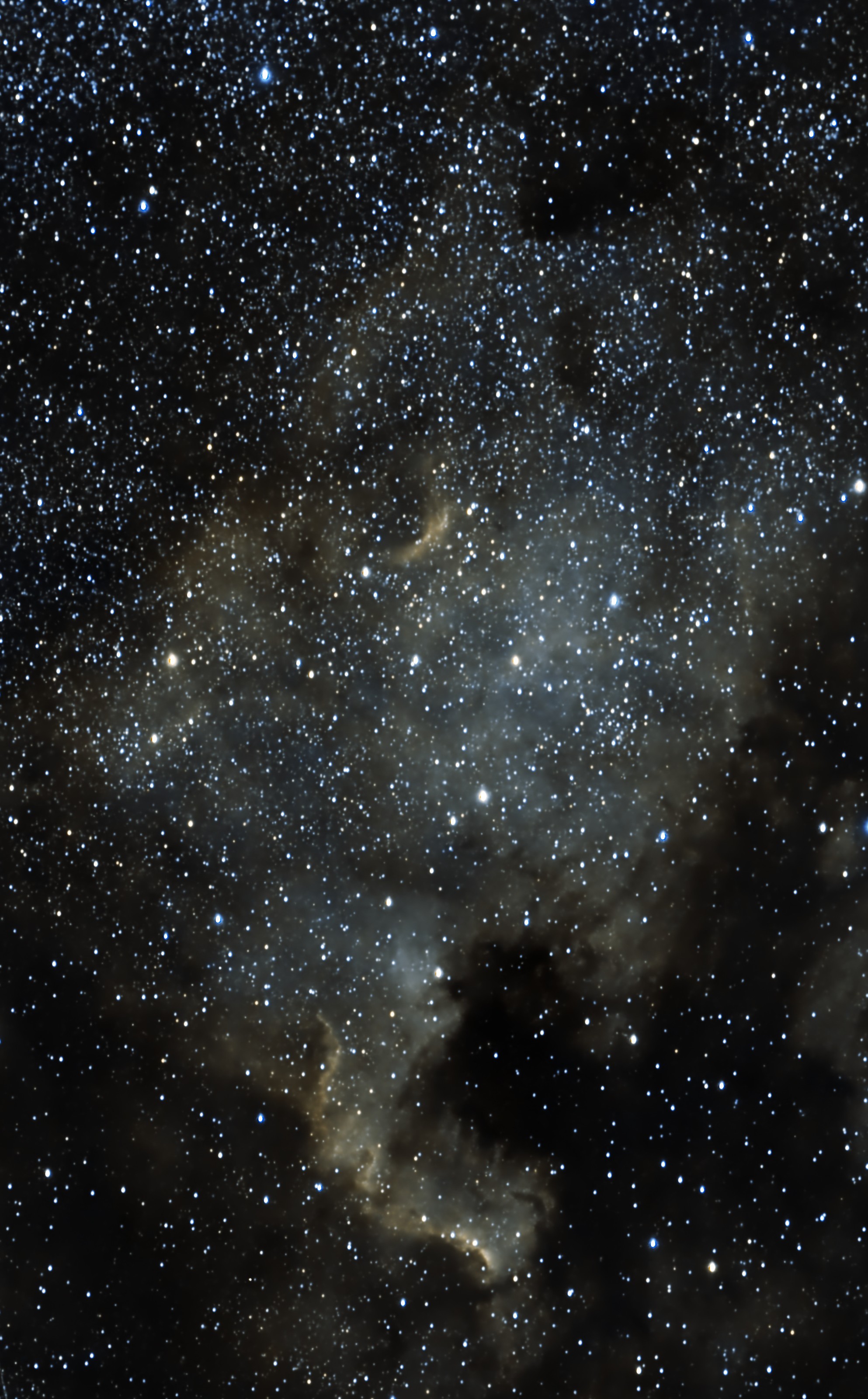
Discovered by William Herschel in 1786, this nebula is called the North America Nebula for its resemblance to the continent of North America. The nebula is 90 light-years across and, if you could see it with the naked eye, would appear several times wider than the full moon! It is located 2,600 light-years from Earth and is an emission nebula (and a star-forming region) located in the constellation Cygnus.
Messier 51a (Whirlpool Galaxy) and Messier 51b
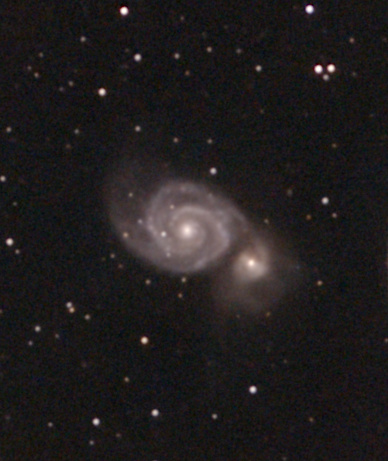
The Whirlpool Galaxy, or M51a, is recognizable by its spiral structure and bright center. However, it is not alone. Messier 51b is its companion (the smaller, yellow-looking galaxy to the right) and is interacting with the Whirlpool Galaxy gravitationally. Both the galaxies have been actively colliding and interacting for millions of years, and eventually, the two will merge to become one galaxy.
Messier 8 (Lagoon Nebula) and Messier 20 (The Trifid Nebula)
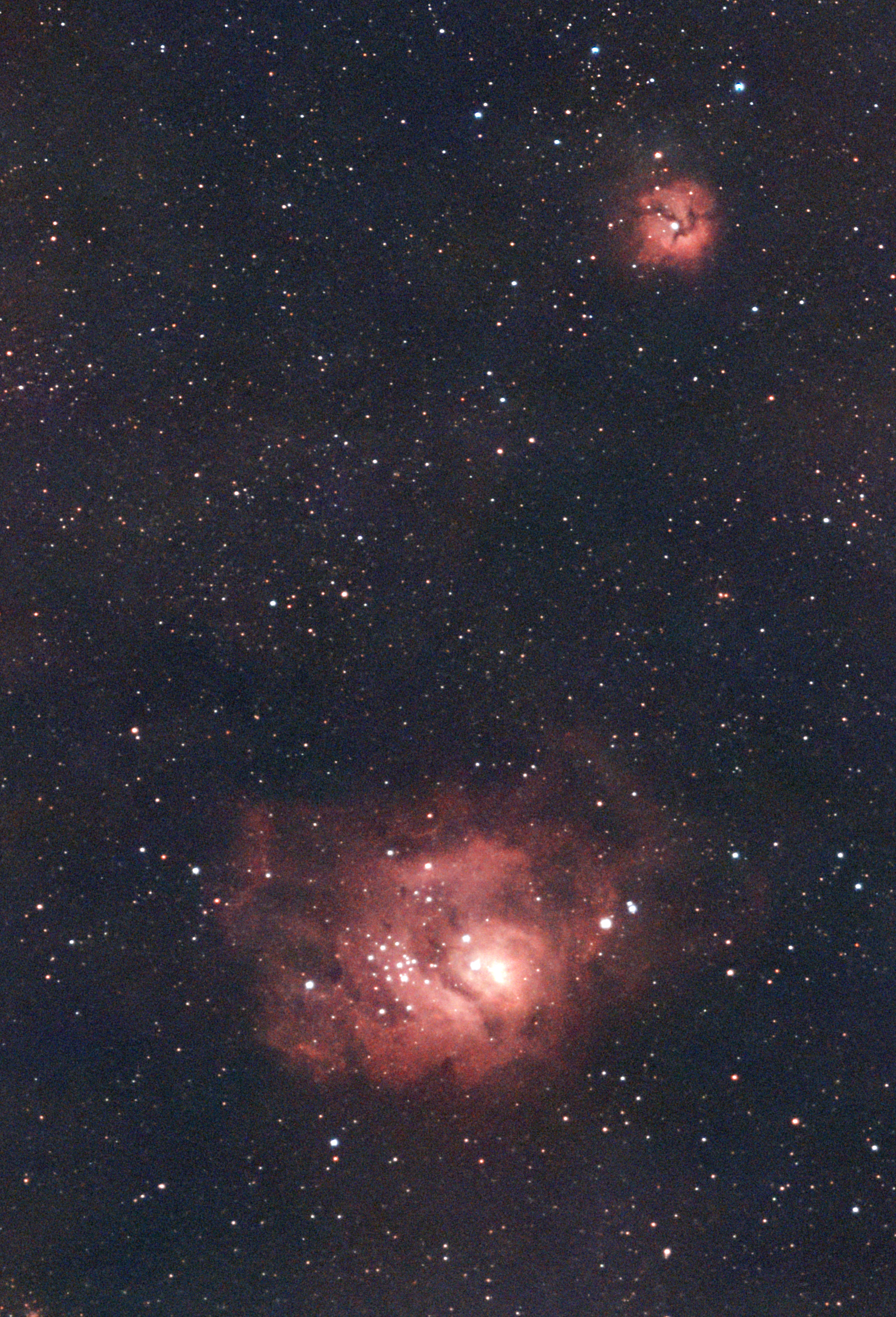
The Lagoon Nebula (Messier 8) is a famous nebula in the constellation Sagittarius and is famous for its striking pinkish-red colors. Discovered by Giovanni Battista Hodierna and catalogued by Charles Messier, the nebula acts as a stellar birthplace and frequently gives birth to new stars, and the high levels of UV rays from the starbirth cause the gas in the nebula to look pinkish-red. It is called the Lagoon Nebula because the bright star in its center, Herschel 36 (which is 200,000 times brighter than our sun), and the rest of the nebula are separated by dark dust lanes, looking like a lagoon. The Trifid Nebula, on the other hand, was discovered by Charles Messier in 1764 and was named the Trifid Nebula by John Herschel (Trifid means something divided into three parts, and the prominent black dust lanes do divide the nebula into three parts). For the same reason as the Lagoon Nebula, the intense UV rays from starbirth cause the nebula to glow pinkish-red.
As we think of these stories of celestial objects, it is important to think back and reflect upon the fact that we still don’t know too much about our universe, and that is why it is important to be constantly exploring the universe and contributing to the field of space science: after all, the universe has given itself the power to figure itself out, and let’s work towards this task, one step at a time.


