NJAA’s 3rd Annual Open House and Astronomy Flea-market

by Michael Franzyshen, New Jersey Astronomical Association

The New Jersey Astronomical Association’s (NJAA) 3rd Annual Open House and Astronomy Flea-market is on Saturday, September 21, 2019 at their observatory in High Bridge, NJ.

Hours are: 10:00 AM – 4:00 PM. The rain date is October 5, 2019. The club had over 200 attendees last year and hope to grow the attendance again this year!

If you are going to participate in the flea-market, limited tables/chairs are available (first come/first served). For Sellers, there is a $20 registration fee (refundable at end of event). Paypal: michaelf@ascendant.com

Tours of the observatory, Astro flea-market, solar observing, see Venus in the daytime (a favorite), door prizes and food will be available onsite.

Speakers/Vendors/Sponsors Include:

  • Charles Bracken, Author of the “The Deep-Sky Imaging Primer” Speaking at 11:00 AM EST
  • “Telescope Tune-Up” by Keith Marley at 1:00 PM EST – Bring your Scope!
  • Al Nagler of Televue will be onsite demonstrating their exciting, new Apollo Eyepiece!
  • Al Ernst will be sharing his widefield images take out west (Death Valley, Etc) – 2:30 PM EST
  • Rob Teeter of Teeter’s Telescopes will be onsite displaying some of his wonderful Dobsonian telescopes.
  • Outdoor Sports Optics will be onsite selling eyepieces, scope accessories, filters, etc.

More information on the open house event and registration details for the flea-market is available at: https://njaa-openhouse.org.

FLEA-MARKET
Clear out your garage or living room of astro-hardware – Join us for the Flea-Market and sell that unused astro-hardware!
Come enjoy a day of astronomy, buying & selling! Buy that difficult to find scope/eyepiece/mount you’ve been looking for!

The PDF Flyer can be referenced here:
https://ascendant-tech.box.com/v/njaa-open-house-2019

Questions about the event? Call me at 908-256-2918!

Posted in September 2019, Sidereal Times | Tagged , , , | Leave a comment

Simple Astrophotography

by Larry Kane

I took this picture with my cell phone, hand held with lots of light pollution nearby. It is touched up a bit with Photo Shop. I wanted the members to see that astrophotography can be achieved with simple tools (and some patience).

Posted in September 2019, Sidereal Times | Tagged | Leave a comment

Solving the gravitation problem

by John Church

I posed a gravitation problem in the May Sidereal Times. The problem was to find the time that it would take for two nonmagnetic cubes, 4 cm on an edge, with masses of 1 kilogram each, originally placed with their centers 1 meter apart on a perfectly frictionless horizontal surface, to touch under the sole effect of their mutual gravitation. The right-hand cube is fixed in place and the left-hand cube is free to move towards its neighbor. Assume that there are no nearby masses that could perturb the experiment. The Earth’s vertically-downward gravitational pull is assumed not to have any effect on purely horizontal and frictionless motion.

Here’s my solution. Newton’s Law of Universal Gravitation says that the force attracting these two cubes to each other will be directly proportional to the product of their masses (i.e. 1 kg x 1 kg) and inversely proportional to the square of their separation, which starts off at 1 meter and then begins to decrease. The constantly changing acceleration of the left-hand cube is then specified by Newton’s Second Law of Motion: acceleration equals force divided by mass. Putting all this together, the result is a differential equation (DE). The gravitational constant G is taken as 6.67 x 10^-11 in the SI system of units (meters, kilograms, and seconds).

Now comes calculus. We need to solve this DE to find the separation as a direct function of time. In this case, we need to specify two initial conditions. The first condition is that the initial separation is 1 meter and the second is that the initial velocity of the movable cube is zero.

I have an application called Mathematica that is very good at solving DE’s, but it couldn’t solve this one in terms of known math functions because the equation is nonlinear. Nonlinear in mathematics means that the dependent variable (the separation in this case) is raised to a power other than 1. The separation is squared due to the basic nature of gravitation, i.e. the inverse square law.

Nonlinear DE’s are notoriously hard to solve except in special cases. This reflects the real world, in which most things are nonlinear. Results are usually not directly proportional to causes. This is exemplified in the old saying, “For want of a nail the shoe was lost, for want of a shoe the horse was lost,” etc.

Back to gravitation. Mathematica was able to solve this DE numerically in terms of what’s called an Interpolating Function. Mathematica also made a graph showing the position of the left-hand cube as a function of time, starting from t = 0 when the left-hand cube is released. As expected, the movable cube hardly moves at all for a very long period of time, but it gradually speeds up and the effect feeds back on itself as the separation decreases.

Using the Interpolating Function, one can find the moment when the two 4-cm cubes will just touch by finding the center-to-center distance at various times in seconds and zeroing in by successive approximations. The cubes will touch when this distance is 4 cm, i.e. half the diameter of each cube.

The answer that I found was 162,737 seconds. How does this relate to my anagram “To find us a pretty egg in Ohio, eh?” Anagram solution: This many seconds is about “One point eight eight four days.” It would take nearly two full days for the movable cube to finally touch the fixed one after its short journey. This would be a very boring experiment to watch, even if it could actually be set up and carried out.

I also found how fast the movable cube was moving just before it touched the stationary one. This was about 1 millimeter per minute, which would be barely perceptible with a strong magnifying glass. There wouldn’t be much of a bang at the end. The Big Bang would be a lot more interesting. Talk about nonlinearity !

Posted in September 2019, Sidereal Times | Tagged | 1 Comment

Starchild

by Theodore R. Frimet

No Taurus

We spoke. We speak often with those we outreach, under the night sky. It is an impermanent relationship. One that is marked by conversation, sight and awe. Among the two-way talks that glanced thru the veil, were The Standard Model, a new flavor of neutrino, and an Awakening.

When faced with the prospect of speaking beyond my comprehension, there will come the time when a question is also far out of the boundaries of Astronomy. The question begs its genesis. Whatever did I say to encourage a question on the composition of the Standard Model, during outreach?

I flopped and flailed about, like a fish out of water. Creeping to the innermost part of my temporal lobes, was an attempt by my raging hippocampus to unleash the dogs of war. And out it came. ‘Shot, over. Shot, out’!

Spoken softly, we engaged a brief incursion to QED, the Quantum Electrodynamics Theory. Briefly, I took pause to mention the few flavors of Quarks that I could taste. Salty, bitter, were at the tip and back of my tongue, as thus Sprach Zarathustra: Charmed, Up and Down. Never enough time to chat about bottom, top and strange. Although the utterances rang true, they had little to do with the Standard Model, as it is the framework that describes boson carrying forces between quarks and leptons. Well, at least my brain had it a third right. There were Quarks in there, somewhere. Maybe charges do come in thirds, after all? Yes. I recall they do.

Earlier, that afternoon, a Superman of math, and engineering, queried, “what do you make of sub-neutrinos”? I turned partially on my heel, and answered out of the corner of my mouth, “there is no such thing. Why do you ask?” “I was checking to see if you were paying attention”, he replied.

I was. Once again, the fluttering of Quantum change took place, as information was displaced from our future selves, to the present. It is with deep regret, that one of our time lines has forever been erased. Having borrowed information, from the future, that future has now become your past. When we apply what we gleaned, from the wheat, to be felled in the field, our ‘morrow becomes a new yesterday. Sorry for that. We must move forward. I always wanted to know more about sub-neutrinos (warning: hyperbole ahead).

I will not mention the Physicist, by name, that gave her lecture to our club, a year, or few ago. I do not wish to do harm, to the good name of a great scientist, while spewing my own brand of insanity. It was, however, an excellent lecture. Here, we sat, listening in on the flavors of Neutrinos, and their conversion from electron, to tau, or muon, and not necessarily all in that order. I thought briefly, that neutrinos, being so plenty, and exotic, that they could pass thru the fabric of space time? So, I asked. The reply was professional, succinct, and non-exclusive. Think, the good doctor said, and ask yourself how a photon would behave in the curvature of space-time. I replied that it would follow the curve. Apply that to the neutrino, was the unspoken answer, as our guest lecturer nodded her head, as if to agree.

The answer did not take root. The question stuck for months. Years even. Until the Superman asked it, as a glancing afternoon blow to my cerebrum. I told my flighty friend that in my world, sub-neutrinos exist. To be of good manner, I acquiesced to a second Astronomer, on site. And asked how to put the “sub” in sub-neutrino. He replied, “Submarine”, as in water, water, everywhere. He knew not what he had just said. You do, if you read one of our previous essays, don’t you? Keep it safe. Keep it secret.

I then let them into my world, as I revealed that the sub-neutrino exits, and pierces the curvature of space-time. Where our photon observations are bound to follow the stiff curves, the sub-neutrino travels the human observed distance that is shorter than photonic flight.

Yes, of course, in relativity, massless photons travel without respect to time or distance. It is you, the observer that slows the reference frame, and to have beams of light take eons to reach your retina. Not so, with the sub-neutrino. It defies relativity, and even within the reach of the observer, it destinates itself, as quickly as it was instantiated. That is, it travels without regard to the measurement of time, or distance; despite the observers reference frame. Coupled with the faster than light expansion of space-time, which is not bound by relativity, we now have formed the basis for faster than light (FTL) travel. Einstein rode a beam of light. You and I, however, will take spin on a Magic Carpet Ride.

Then the Ghost Catcher article was published. It is a featured story, authored by Adrian Cho, Science, 9 August 2019, pps 532-535. It wasn’t concerning my hyperbolic sub-neutrino. Cho captures the flavor of the sterile-neutrino. It is a particle we are now on the hunt for. It will doggedly make up the difference in a neutrino flavor count, as our nearly massless particle covets electron, tau, or muon, moieties. We envision the largest detectors on the job, vying to account for these transpositions. These nearly massless particles will shortly be accompanied by the detection of the far heavier sterile-neutrino. My hyperbole, continues to be safe, so far, as they have decided not to take on a massless solution. FTL, it seems, is not on their radar. Creating or maintaining mathematical symmetry in the standard model, no doubt, is.

After many tear soaked investitures of making a little human come into their life, in its place, there came a dream. Seven woman gathered about a common point. A circle was made. Our dream catcher saw them, as I see you, in the night. Some color, and mostly shades stemming from the near ultra-violet. Crying emanated from the locus.

Her dream-time color was now no longer impeded. They appeared, all at once, to be dressed in blue and white. One by one, they left the circle. Unveiling a child that cried to the night sky. Our dreamer, too, turned to take her leave. The last of the blue and white clad, dream-time dwellers called out to our departing, sleep walking, mother, “Here is your baby. Don’t leave without her. She is yours.” Cradling the newborn infant, in her arms, she awoke. Several days later, she was pregnant with child. Hers, finally, would be birthed upon this Earth.

Years later, she spoke of her mothers dream, and owned it as her own genesis. I told her that the Pleiades, or Seven Sisters, were a constellation of interest. These Seven Sisters are clad in blue-white hot stars. We remarked on the coincidence. We learned to appreciate that this nebulous cluster appears at the tip of the constellation Taurus, the Bull. And quick was she to be telling that her Astrological sign was Taurus.

How much data sampling is required to reject the null hypothesis? There is too much burden, within an essay, an apparent work of fiction, to yield to the inner workings of advanced statistical mathematics. Suffice to say, that the story, although modified, is human enough an experience. You and I have found our Starchild. And yes, Starchild has traveled on a sub-neutrino, magic carpet ride. https://youtu.be/U4WiyxXpyZc

Steppenwolf – Magic Carpet Ride 1968, last accessed Sunday, August 24, 2019, 9:44 AM EST

Posted in September 2019, Sidereal Times | Tagged | 1 Comment

How Apollo flew to the Moon

by Prasad Ganti

We were inundated with programs on Apollo during July, marking the 50th anniversary of Apollo 11’s landing on the moon. Plenty of information came to the fore. All filled with nostalgia. In addition to all the TV programs, I came across a book titled “How Apollo flew to the moon” by David Woods. Lot of details are explained in a very lucid way. Here are some of my learnings distilled from these sources.

The space program essentially evolved once President Kennedy made the declaration of landing a man on the moon by the end of the 1960s. Starting with the Mercury capsule, which could just seat one astronaut to go into space and return safely back to the Earth. The Gemini capsule could seat 2 astronauts to orbit the Earth. It tested the space walks and the docking capabilities. Docking of two spacecrafts in the space was very crucial for the overall mission of sending human beings to the moon. With each mission, a new capability was tested.

Next stage was the Apollo spacecraft, which could seat 3 astronauts, and consisted of the command module, service module and the lunar module. Command module is the cone shaped module was would travel to the moon and come back to the Earth to make a splash down into the Ocean. Service module contained the consumable supplies and would be mated with the command module almost all the time. It would be jettisoned just before the re-entry into the Earth’s atmosphere. The lunar module is separated from the command and service modules for landing on the moon. While the command and service modules are still orbiting the moon. Then taking off from the moon and docking with the command and service module to return to the Earth. The lunar module is immediately jettisoned after the docking and the transfer of men and material into the command module.

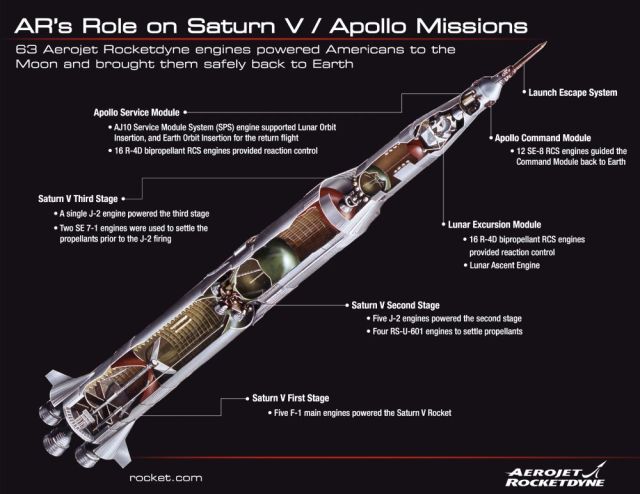
Saturn V is the most powerful rocket ever built. To carry the Apollo spacecraft into space and hurl towards the moon. Rockets are usually multi stage, with each stage doing some of the pushing towards the space. First stage of Saturn V, namely S-1C built by Boeing, had five F-1 engines mounted at the bottom. It contained two fuel tanks – one for kerosene called RP-1 which is like jet fuel, and one for LOX (liquid oxygen). It ran for 2.5 mins before being thrown into the Atlantic. The second stage S-II carried the cryogenic (super cooled) propellants, built by North American Aviation, had five J-2 engines. The third stage S-IVB had one J-2 engine.

Rocketdyne built the most powerful F-1 engine powered by liquid fuels. Lot of trial and error over five years led to dampening of the instability of the F-1 engines. J-2 is a smaller engine with less power and used liquid hydrogen to improve its efficiency. The Command module had its own engine (SPS – Service Propulsion System), while the Lunar module had its own ascent and descent engines. The SPS engine used hypergolic fuels like hydrazine as fuel and nitrogen tetroxide as oxidizer, which would combust as soon as they come in contact. No sparking is required.

The Apollo spacecraft sat on top of the multi-stage Saturn V rocket. The whole contraption is a complex assembly of different vehicles, each having a specific role and jettisoned after its role is over. It is like carrying a motorbike, a boat, a rugged vehicle inside or attached to a truck. Throwing each vehicle away after a certain part of the journey. Picture below shows the fully mated Saturn V rocket.

AGC (Apollo Guidance Computer) played a key role in taking the spacecraft towards the moon and bringing it safely back. Ever since the Gemini program involved docking, there was a need for a computer which could take data in real time from all the sensors and control the outputs required to manipulate the spacecraft. Like switching on the engines to change direction or speed or the trajectory. The computer is very primitive compared to the modern smart phone. But it was very rugged to withstand the rigors of space travel.

There was a design flaw lurking in Mercury and Gemini, which caused Apollo 1 to be blown up on the launch pad. All the three astronauts died. Pressurized by oxygen alone, a short circuit initiated spark inside the spacecraft led to a massive explosion. A mixture of oxygen and nitrogen (like it is found in nature) is better than pure oxygen. That is what prevents everything from burning up on the Earth. Supplying two gases from two different cylinders would increase the complexity. The resultant shortcut taken with a single cylinder, blew up Apollo 1. Apollo 4 (there was no 2 and 3) tested the Command module to go into space and re-enter the Earth’s atmosphere. Apollo 5 tested the Lunar module. Apollo 10 left the Earth’s neighborhood and ventured towards the moon for the first time. Apollo 11 landed on the moon.

The IMU (Inertial Measurement Unit) got the data from the various sensors to determine the position of the spacecraft in space. The INS (Inertial Navigation System) used the data from IMU to guide the spacecraft towards its destination. The trajectory used to go to moon and return back is shown below. The free-return trajectory works by using the gravitational effects of the moon like a slingshot to loop around towards the Earth. The landing site was along the equator of the moon. Landing anywhere else on the moon requires more fuel. Any change in speed or direction in space requires burning of fuel.

courtesy - wikipedia

Now we realize what kind of uncertainty the crew and the engineers were dealing with. The uncertainty of landing on the moon, the uncertainty of the lunar module not taking off from the moon forcing the command module (along with the third astronaut) to return back to the Earth. The fact that everything worked as planned and the astronauts came back home safely was a great achievement. It was indeed a giant leap for mankind.

Posted in September 2019, Sidereal Times | Tagged | Leave a comment

Snippets

compiled by Arlene & David Kaplan

Tardigrade -BBC

Tardigrades: Stuck on the moon after crash
The moon might now be home to thousands of planet Earth’s most indestructible animals. Tardigrades – often called “water bears” – are creatures under a millimetre long that can survive being heated to 150C and frozen to almost absolute zero. And the co-founder of the organization that put them there thinks they’re almost definitely still alive…more

-BBC

Nasa confirms ocean moon mission
Scientists working on an audacious mission to the ocean world of Europa can proceed with the final design and construction of the spacecraft, Nasa says. The Europa Clipper mission will target the ice-encrusted moon of Jupiter, which is considered a prime target in the search for life beyond Earth…more

-NASA

Nasa picks HQ for Moon lander
A Nasa facility in Alabama that developed the giant rocket for the Apollo programme in the 1960s will play a key role in sending astronauts down to the Moon’s surface in 2024.
The Marshall Space Flight Center in Huntsville will lead the development of a vehicle that will land astronauts…more

-BBC

Rosalind Franklin Mars rover nears completion
The “Rosalind Franklin” Mars rover is in its final stages of construction. Engineers at Airbus (UK) are running through the end tasks of assembly and expect to get the six-wheeled vehicle out the door before August is up. Among the last items being attached are the robot’s solar panels, and its mast and camera system…more

-ISRO

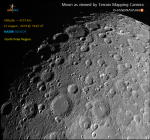
India’s Chandrayaan-2 Lunar Photos
India’s Chandrayaan-2 spacecraft is settling into orbit around the moon and has an incredible view as it waits to try to make history.
The spacecraft arrived in lunar orbit on Aug. 19 (Aug. 20 local time at the Indian Space Research Organisation’s mission control) and is currently conducting a series of maneuvers to tweak…more

-NASA

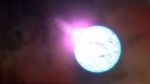
Magnetars Can Bombard Earth with γ-Ray Flares
Three times in the last 40 years, giant gamma-ray flares have bombarded our corner of space. These giant flares aren’t dangerous, and last just about one-tenth of a second. But they’re wildly out of proportion to the usual gamma-ray beams bouncing around the universe…more

-SpaceX

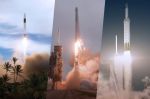
Evolution of SpaceX’s Rockets
SpaceX began in 2002, when its founder, Elon Musk, took the first steps in his grand ambition to send a mission to Mars. More than 15 years later, the company is way beyond the space startup stage. The Hawthorne, California-based company regularly reuses rockets, sends cargo missions to the International Space Station with the uncrewed Dragon spacecraft…more

-NASA

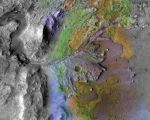
Wet, Frozen Conditions on Ancient Mars Could Have Supported Life
3 to 4 billion years ago, it was warm enough on Mars to spark major rainstorms and flowing water, which would have frozen shortly after, a new study has found. This could serve as evidence that simple life may have developed on Mars at a similar time that it developed on Earth…more

Posted in September 2019, Sidereal Times | Tagged | Leave a comment

From the Director

Rex


by Rex Parker, Phd director@princetonastronomy.org

AAAP Member Survey Summer 2019. There were 78 responses to the survey sent a month ago (out of 100 total members). The Board will be reviewing the results and using them in making decisions for the future. The survey will remain open through August 21 at this link if you haven’t yet responded: https://www.surveymonkey.com/r/Z2MNWPH

It’s encouraging that 61 respondents own an astronomical telescope, 48 come out to the WC Observatory at least once a year, and 33 would likely participate in the proposed Gravity Hill star party (see below).

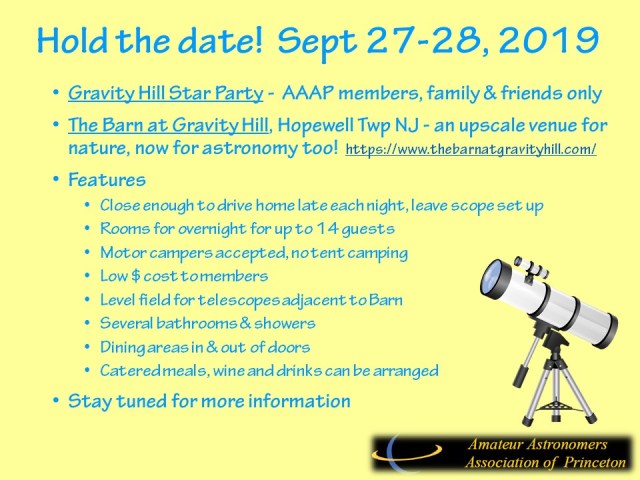
Hold the Date: Sept 27-28 Gravity Hill Star Party. Plans are being developed for a AAAP member star party, a new twist on the StarQuest theme of years past – stay tuned for more information later this summer.

Performance Test – AAAP’s ZWO294 Astro Camera. I borrowed the ZWO ASI294-MC PRO camera from the Observatory to see how good it can be, especially when hooked up to a “large but fast” scope. The ZWO is a technological marvel and illustrates why CMOS sensor technology continues to displace the CCD in astronomy applications. The ZWO294 camera features a CMOS Bayer-matrix (RGGB) color sensor, the Sony IMX294. The sensor itself is relatively large at 19 x13 mm (so-called 4/3-inch sensor with diagonal 23mm), key to wider-field images. The pixel array is 4144 x 2822 (11.3M pixels) at 4.6 um size. The camera has 14-bit native bit depth, very fast download rate, low read noise, and cooling to ~35 deg C below ambient to reduce dark current noise. Results below confirm that the newer-gen CMOS color cameras are a revolutionary step forward for electronically assisted astronomy (EAA).

My ZWO test was carried out on a bright moonlit night in mid-July with pasty, hazy skies. I even left the deck light on here at home and could barely see the stars. But I gave the camera a whirl using my AG Optics modified-Dall-Kirkham 12.5” reflector telescope at f/5 (0.75x focal reducer on native f/6.7 scope, FL = 1610 mm) on a Paramount-MX running TheSkyX. For these images I didn’t even need to guide. The ZWO camera sensor was cooled to -10 deg and the gain set at default/mid-range deep sky setting. Below are unprocessed JPEGs of screen shots showing what you’d see as live images in real-time with the ZWO. These are all 15 second “live” subframes with stacking going out to only 3 or 5 min.

I do not think SharpCap is the way to go here as the camera control program. I found a much better software program in terms of ease of use, color balancing, and stability of output – for the ZWO as well as the SX Ultrastar. Software Bisque recently developed a “Live Stack” mode in their Camera Add-On to TheSkyX which we have at observatory. It works great, is simpler, and overall better than SharpCap with the ZWO in my opinion.

We can do this at the observatory with the Celestron-14 using a Celestron f6.3 focal reducer (and presumably flip mirror so eyepiece is still available). I really hope that Keyholders give it a tryout (and yes, I did return the camera to the observatory :>).

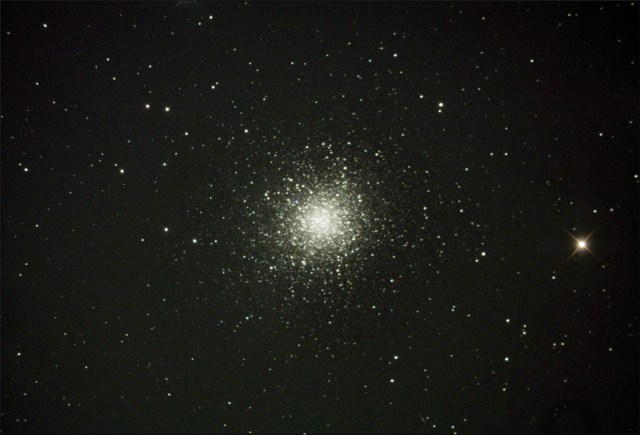
M13 Globular Cluster in Hercules, ZWO294 – 15 sec live image stacked for 3 min

M16 Eagle Nebula in Sagittarius, ZWO294 – 15 sec live image stacked for 5 min

M27 Dumbell Nebula in Vulpecula, ZWO294 – 15 sec live image stacked for 3 min

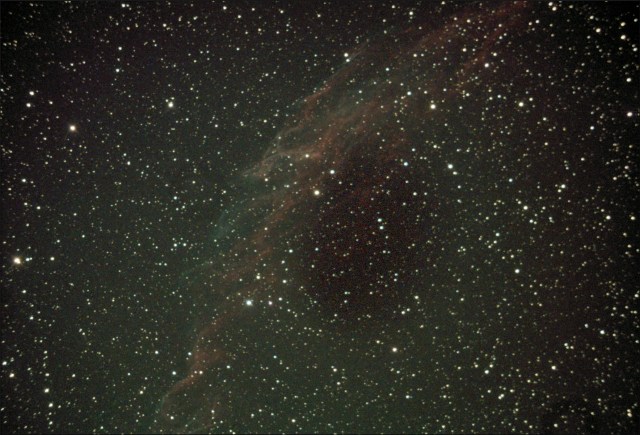
Cirrus Nebula East in Cygnus, ZWO294 – 15 sec live image stacked for 5 min

Skynet Project Renewal. Payment has been completed and the new contract is in place now for another two years of Skynet. Two years ago we began this project to bring AAAP members access to remote astrophotography. Skynet was created by Dr Dan Reichart of the Physics and Astronomy Dept at the University of North Carolina, Chapel Hill. The internet-based queue scheduling program runs on a computer at UNC which accesses a system of observatories they created for remote imaging. This system, the Skynet Robotic Telescope Network, comprises more than a dozen telescopes around the world at observatories in Chile, Australia, Italy, Canada, and US. Each telescope is set up with tracking mount, CCD camera, and filters for remote color image acquisition. Tutorial videos are available to help a user get up and running.

Whether you’re a first-time astronomer or seasoned observer, Skynet’s easy-to-use yet powerful interface allows you to get images of celestial objects from the Messier and NGC deep sky catalogs. Skynet also includes a basic image processing program “Afterglow” that runs on the server, so you don’t need any special software on your PC. You also can download and process your images locally with your own programs like CCD Stack or Maxim DL if you like. While there are limits on the length of exposures, Skynet is a great way to get onto the learning curve for astro-imaging and understanding how the modern practice of astronomy works. Current AAAP members who have used the system will have new credits added to their accounts. If you are interested in a Skynet account, or already have an account and want additional credits, please send me an e-mail note at director@princetonastronomy.org.

Posted in Mid Summer 2019, Sidereal Times | Tagged , | Leave a comment

From the Assistant Director

by Larry Kane

As some of you who have Meetup accounts know, the AAAP also has one. At this site. I post notices about out observatory open houses and other salient information about our club. This is a great site to share information about our club and its activities with other members and the public. It is also an excellent way to find out what the public thinks about our club and the decisions it makes.

With this in mind, I am urging that, if you do not presently have a Meetup account, go to meetup website, setup one and stay abreast of what’s happening. And, while you are there, be sure to leave a comment so I and the other Board members know what is on your mind. Setting up an account is free. You can always be up to date with what your club is up to any time and any place. Hoping to keep the AAAP better aligned in the twenty first century and wishing you all lazy summer weekends of clear skies!

Posted in Mid Summer 2019, Sidereal Times | Tagged , | Leave a comment

Outreach Blotter

by Gene Allen, Outreach Chair

We have had a few non-hardware members coming to Outreach Events, and that is great. If you try it, come a bit early and try to engage attendees as they arrive to ask about their interest and experience and share your own. Sometimes there will be opportunities to assist in activities, sometimes not. Chat with them as they wait between stargazing targets. You can bring your interest and passion for astronomy and science and take away what you learn from the presentation and sky tours.

You will be getting continuing email appeals to help staff Outreach Events as their scheduled dates approach. I won’t list them here except to say we have a “biggee,“ our first Partnership Event with Gravity Hill, on August 3. Come and participate if you possibly can. We are also still short of telescopes for stargazing after Prasad Ganti’s presentation at the Plainsboro Library on August 10.

On July 20, the 50th anniversary of the Apollo 11 Moon landing, the New Jersey State Museum Planetarium held a party. Dave Skitt, Jeff Pinyan, Victor Davis, and Tom Swords set up solar scopes for attendees in spite of the oppressive afternoon heat. Following the party, only about 10 folks took advantage of Members’ Night at Simpson Observatory.

On July 24 Jeff Pinyan gave our first library summer reading program presentation to about 30 folks in East Windsor. The very next night, Jim Peck gave a presentation to 12 at the library in Cranbury. These programs target youth and tend to end before it’s dark enough to gaze at stars.

On July 25 we were sort of double booked. While Jim gave his talk in Cranbury, I gave my presentation for the first time at a Morven Museum and Gardens event. It seemed to be well received by the mostly adult group of about 25. Stargazing followed, with Hongkun Zhao, Scott Smith, and Jeff Pinyan setting up scopes. They were able to show both Jupiter and Saturn, and Jeff again enraptured those who gathered to hear his constellation walk.

On July 26 I think we had the most folks at the observatory this season. At one point Tom counted 25 inside and nearly as many outside. He was able to take time from his Team 1 duties to repair one customer’s damaged refractor, and Jeff helped another customer set up and get started using their SCT. John Church stopped by to share his vast knowledge and undying enthusiasm. With the turnover of folks throughout the evening, I think we easily had more than 60. Jeff had a group mesmerized right up until midnight, even after we had the roof closed! New member Mark and Keyholder Team Leader Tim Donney were both there with guests, and another Keyholder, Allan Nolde, I think it was, brought his family.

We are off to a powerful start, and there is lots more to come!

Posted in Mid Summer 2019, Sidereal Times | Tagged , | Leave a comment

Minutes of the June 11, 2019 AAAP General Meeting

by John Miller, Secretary

  • This season-end meet gathered at the N.J. State Museum’s Planetarium.
  • Rex Parker, Director, brought the meeting to order at 7:30 P.M.
  • The group thanked member Bill Murray for arranging and hosting the Planetarium show. The presentation was titled: Cap Con Go – Story of Apollo 11.
  • Rex Parker mentioned the Planetarium’s operation may be in jeopardy due to budget allocations. He stated the intention of sending a letter of support for the facility to the State Museum management, on behalf of the AAAP.
  • It was announced that July 20th – Lunar Landing Day will be hosted by the Planetarium. Members are encouraged to attend. That evening, a “Members Night” is scheduled at the Washington Crossing Observatory. All AAAP members and their guests are invited.
  • Rex Parker announced the Skynet Automated Astrophotography (Skynet University – UNC) contract has been renewed for two years.
    https://skynet.unc.edu/introastro/ourtelescopes/ .
  • A proposal was opened to the floor to hold a AAAP star party at a location in Hopewell Township, NJ. Rex Parker is leading talks with a site called “Gravity Hill.” Tentative dates discussed were September 28th and 29th, 2019.
    https://www.thebarnatgravityhill.com/
  • There was continued discussion regarding a proposed name change to our organization. From: Amateur Astronomers Association of Princeton To: Astronomy Association of Princeton.
  • The meeting adjourned at 10:10 PM.
Posted in Mid Summer 2019, Sidereal Times | Tagged , | Leave a comment