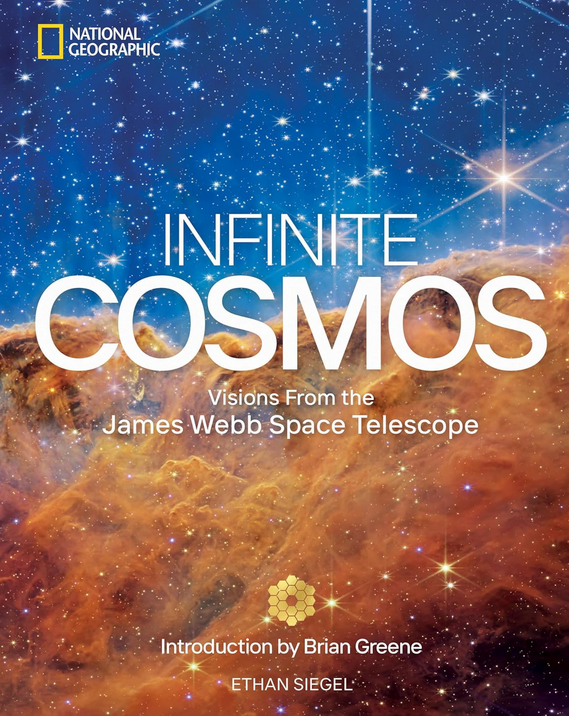
“Infinite Cosmos” is a large, coffee table-sized book. It is published by National Geographic, so the production quality is excellent as are the images and diagrams. For me, it helped me complete my understanding of the JWST from its production to recent operations. Despite the physical size of the book, it does not take long to read it. However, the trim size is helpful so the reader can see the important details in the graphics and photographs. It has been on the market since 2024 and now the price has dropped to below $30 for a new copy. As much as I enjoyed it, I think it makes an even better gift for our family and friends who “kind of” understand what we are talking about when we reference the James Webb Space Telescope.
Astronomy started out as optical, viewing the light emitted by astronomical bodies in space. Our ancestors looked at the night sky and imagined patterns of stars and distant bodies. Several advances occurred in the last four hundred years in identifying stars, galaxies, clusters of galaxies, and finally, our universe. Along the way, the optical limitation was overcome and astronomy branched out to other areas.
Firstly, into radiation-related multi-messenger astronomy: beyond the visible light, radio astronomy, infrared astronomy, X-ray astronomy, and gamma-ray astronomy ensued. Each of them provided different perspectives and images of the Universe compared to the limited visible spectrum. As a whole, a composite mosaic of the Universe started emerging.
Recently, two more candidates were added to the multi-messenger astronomy club: gravitational waves and neutrinos. Neutrinos are elementary particles with no charge that are nearly massless. They travel without interacting with any matter or any radiation, as if the matter did not exist. It is an extremely rare event that a neutrino produces a trace of its interaction with the material universe.
There are copious numbers of neutrinos produced by violent nuclear reactions in the stars, supernovae, neutron star mergers, active galactic nuclei, and even the nuclear reactors on our own planet Earth and our Sun. They were also produced in the Big Bang which created our universe. Trillions of neutrinos pass through our bodies every second and yet we have no clue about them. Many come from cosmic rays which are very energetic and travel great distances to convey a picture of our Universe to us. Neutrinos offer a unique opportunity to observe processes that are inaccessible to optical telescopes.
With a great number of them and their ability to travel astronomical distances without any impediment, they are the perfect messengers from distant astronomical events. From the cores of the stars and passing through intervening objects, they are constantly on the move. But perfection comes at a cost. What makes them ideal to travel long distances unimpeded, also makes them very difficult to detect. Neutrinos were a theoretical prediction by Wolfgang Pauli in the 1930s to explain the case of missing mass-energy in a nuclear reaction called beta decay. Beta decay is the emission of an electron from the nucleus of some radioactive elements. Their existence was confirmed in 1956 by Clyde Cowan and Frederick Reines.
The largest neutrino detector is called IceCube. Located at the South Pole, it consists of about 5,000 electronic sensors buried at depths between roughly 1,450 meters (4,760 feet) and 2,450 meters (8,040 feet) below the ice surface. This shields the detectors from other radiation. The sensors detect light emitted by charged particles that are produced when a single neutrino collides with a proton or neutron inside an atom. Although a rare event, a quadrillion such neutrinos produce a collision every few days. The resulting nuclear reaction produces secondary particles traveling at high speeds that give off a blue light called Cherenkov radiation. Such a reaction is called “inverse beta decay.” Such tiny flashes of light are multiplied by thousands of photomultiplier tubes to produce a detectable signal.
There are other neutrino detectors which consist of thousands of gallons of a liquid like chlorine or argon or heavy water housed deep underground, like the Super-Kamiokande in Japan or the Sudbury Neutrino Observatory in Canada. Kamiokande-II, the predecessor of Super-Kamiokande, detected the first extrasolar neutrinos coming from Supernova 1987A, an explosion in the Large Magellanic Cloud, a satellite galaxy of our own Milky Way.
The lexicon of astronomy is getting richer while we get one step closer to understanding our Universe.
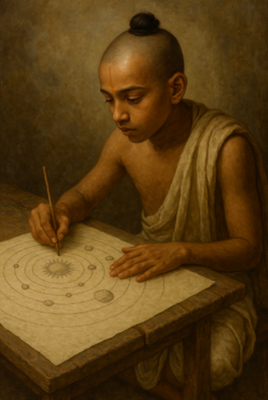
A long time ago in the land of India, there lived a boy who couldn’t stop looking up at the skies.
This was in the 5th century CE. At an age when most children are into playing or learning life skills, Aryabhata loved watching the skies. Every night, he would lie on the ground and stare at the sky, wondering, why do the stars move? Why does the Sun rise every day?
Aryabhata used to write down everything he saw. He noticed that the stars seemed to move in a circle across the sky.
Most people at that time believed the Earth was still, and the sky moved around it. But he asked the question challenging this assumption:
“What if the Earth is moving instead?”
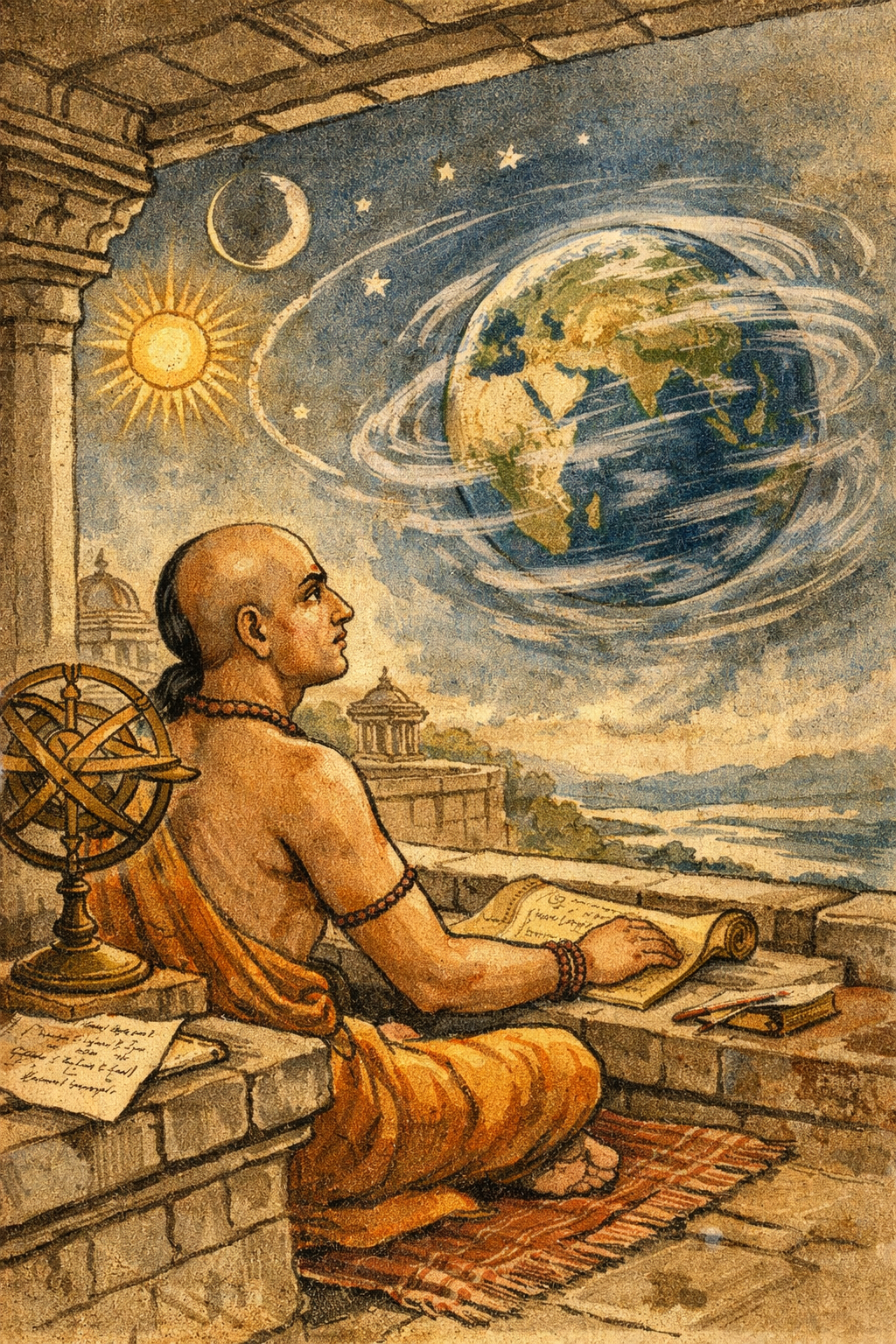
Aryabhata thought differently. He observed, calculated and figured out that the Earth spins on its axis! That’s why the stars appear to move.
Aryabhata conducted even more observations and estimated how long it took the Earth to go all the way around the Sun (what we now call a year), and his answer was almost exactly right.
Aryabhata also worked on the number pi, which we still use to calculate circles and orbits today! He wrote all this in a book called the Aryabhatiya when he was just 23 years old. His observations, findings supported with calculations were found to be very powerful, and they even traveled across countries and centuries.
So the next time you look at the stars, remember Aryabhata. The curious boy who made detailed observations, asked questions, and changed the way we see our planet!
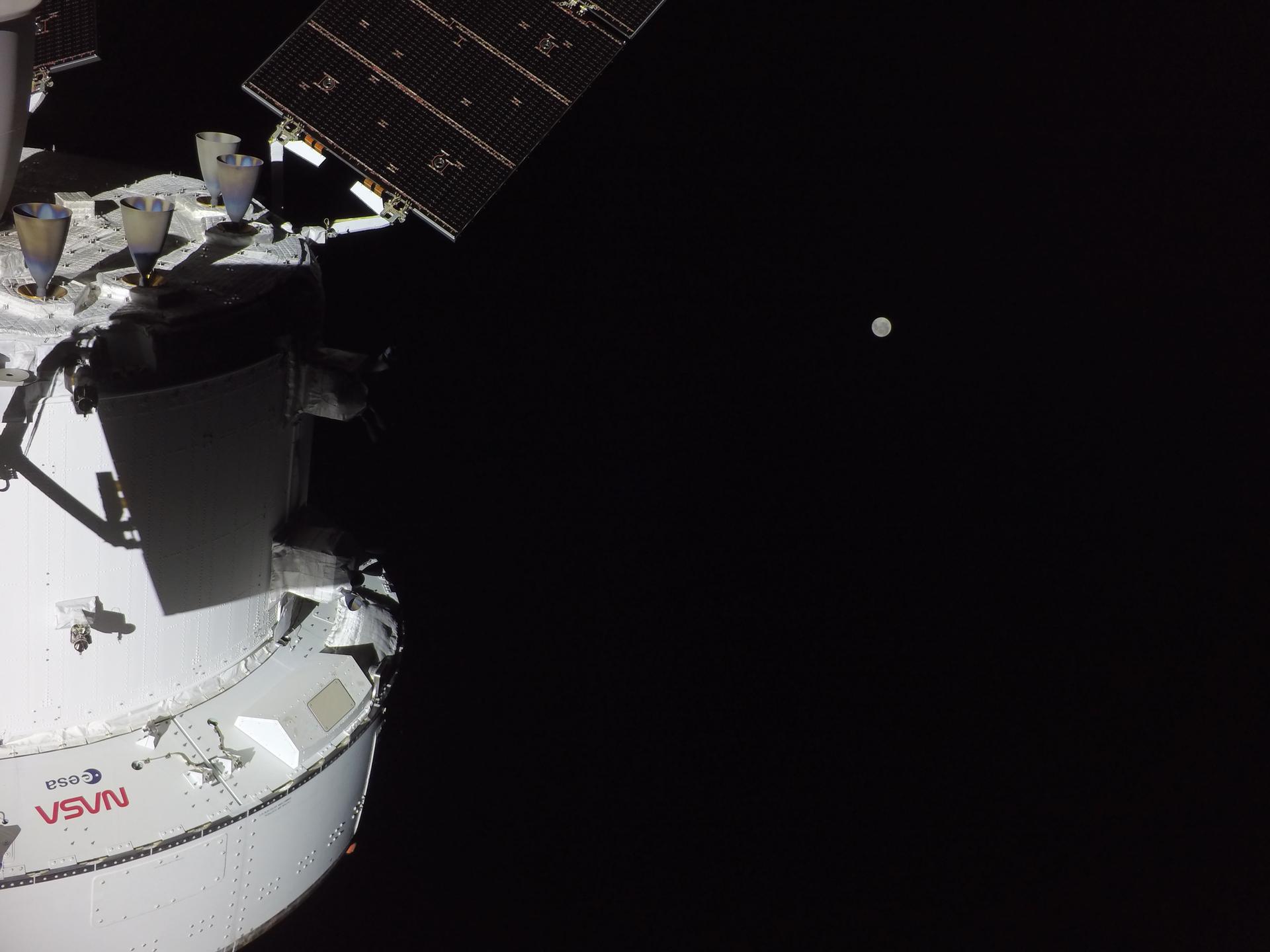
Artemis II Flight Day 5: Crew Demos Suits, Readies for Lunar Flyby The Artemis II crew of NASA astronauts Reid Wiseman, Victor Glover, Christina Koch, and CSA (Canadian Space Agency) astronaut Jeremy Hansen, continue their workday aboard the Orion spacecraft. With a demonstration underway of the Orion crew survival system spacesuit, the crew also will prepare for their lunar flyby set for Monday, April 6…more
-space.com
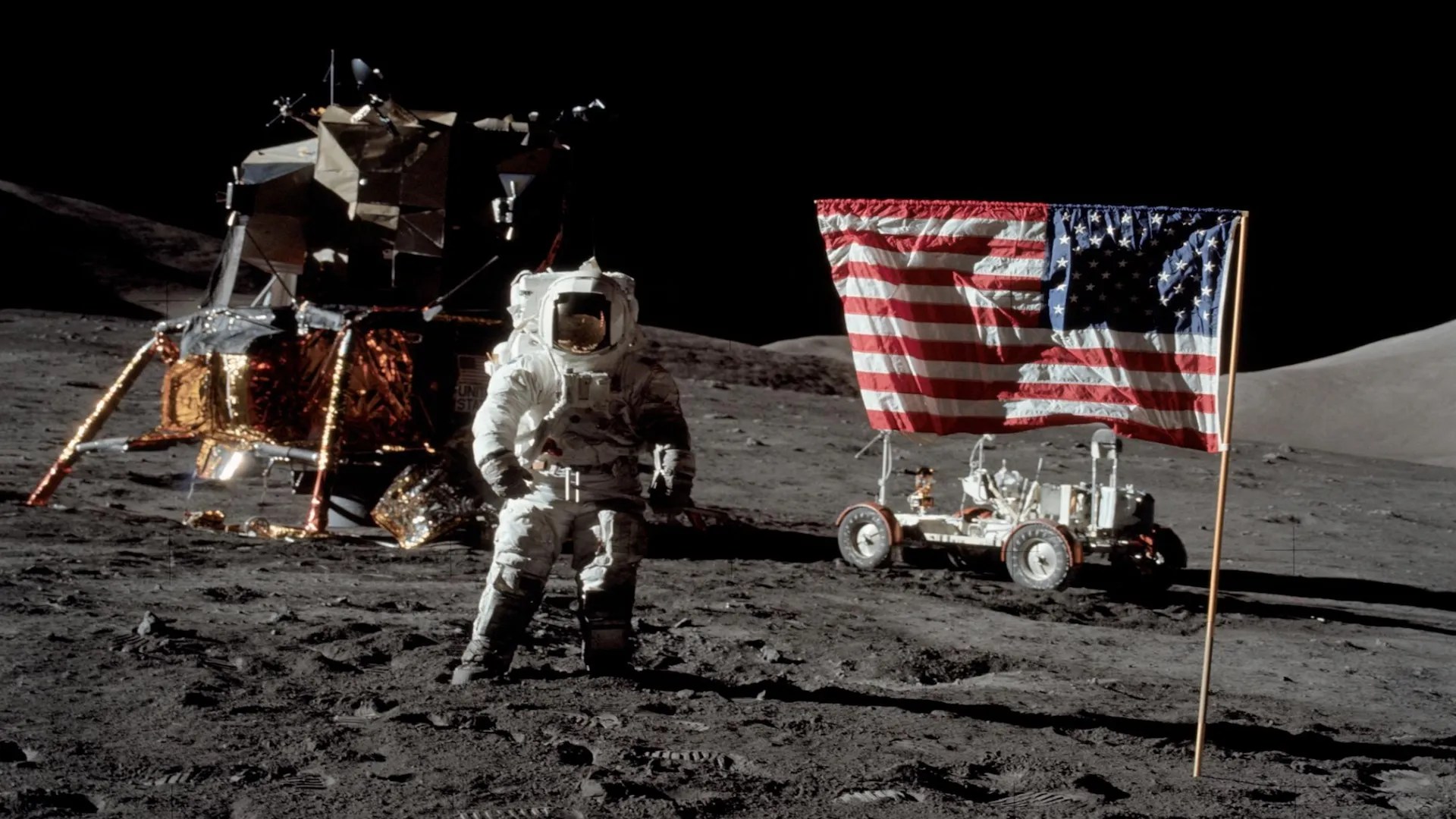
Artemis 2 astronauts are now headed to the moon. Why has it taken humanity so long to go back? For the first time in more than half a century, humanity is on its way to the moon.NASA’s Artemis 2 mission began heading toward lunar realms on Thursday evening (April 2), after its Orion capsule aced an engine burn that took it out of Earth orbit…more
-Nautil.us
Did Scientists Just Detect an Exploding Black Hole? On Feb. 13, 2023, a cosmic bullet of sorts zipped beneath the Mediterranean Sea near Sicily. It was a subatomic particle known as a neutrino, traveling through the depths at virtually the speed of light and carrying a whopping 220 peta-electron volts of energy. Its presence was detected by a new underwater observatory known as the Kilometer Cube Neutrino Telescope, or KM3NeT…more
-NYT
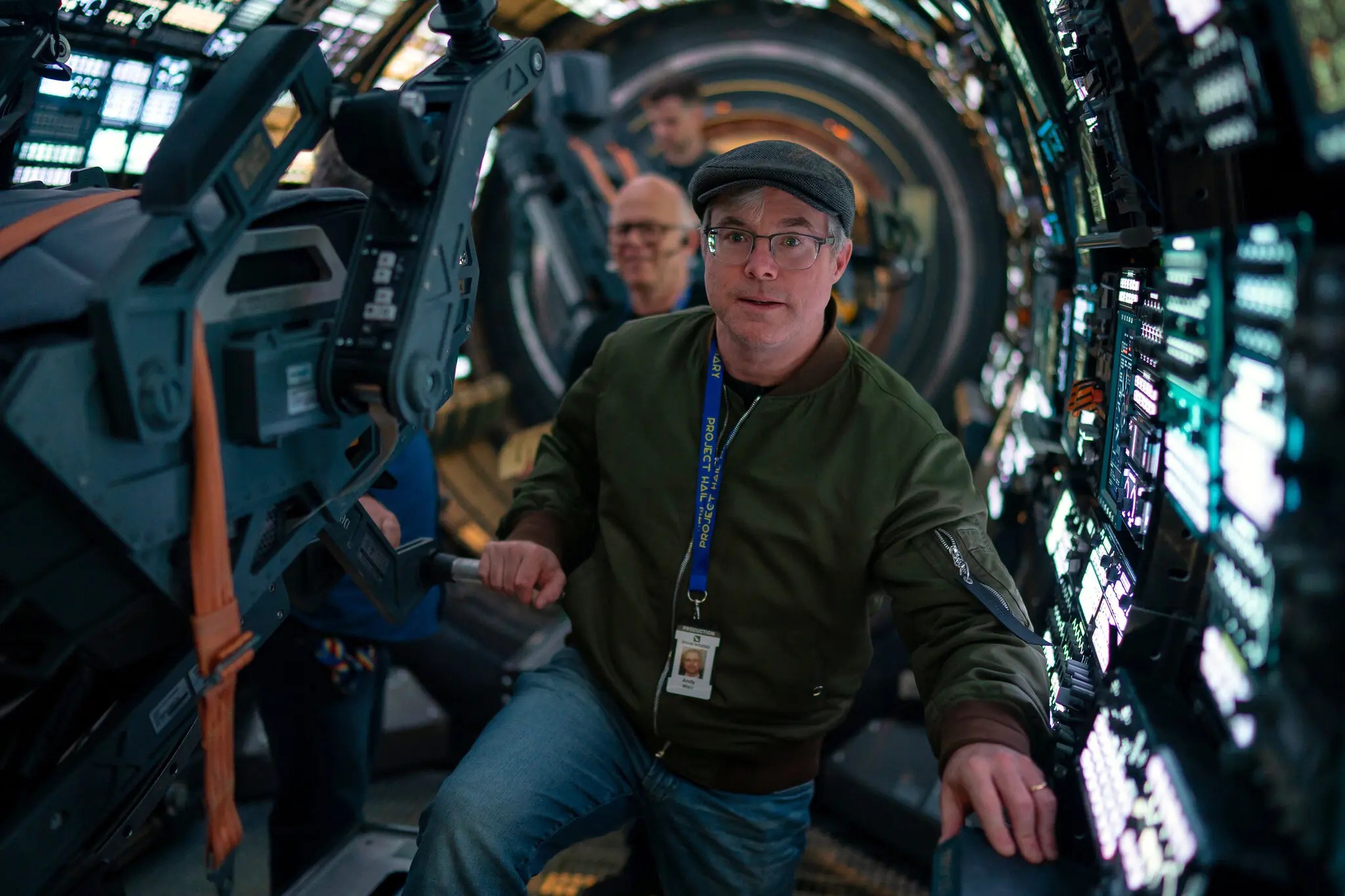
A ‘Hail Mary’ for Earth, Built on Solid Science Andy Weir’s “Project Hail Mary,” published in 2021, is a story about humanity’s last-ditch attempt to save Earth from “astrophage,” a fictional, star-eating algae that has infected our sun. The book chronicles the journey of scientist-turned-science-teacher Ryland Grace, who wakes up on a spaceship and ultimately befriends Rocky…more
-Berkeley.edu
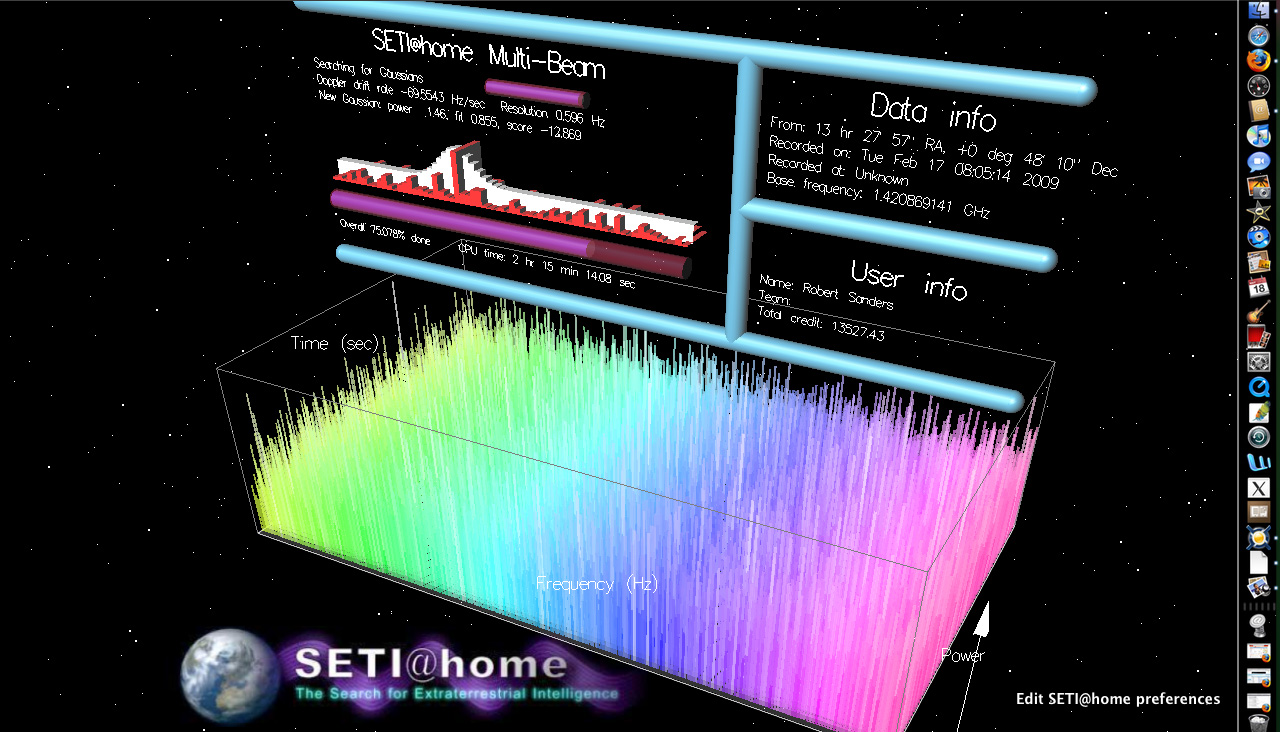
For 21 years, enthusiasts used their home computers to search for ET. UC Berkeley scientists are homing in on 100 signals they found. For 21 years, between 1999 and 2020, millions of people worldwide loaned UC Berkeley scientists their computers to search for signs of advanced civilizations in our galaxy. The project — called SETI@home, after the Search for Extraterrestrial Intelligence (SETI) — generated a loyal following eager to participate in one of the most popular crowd-sourced projects in the early days of the internet…more
-SETI.org
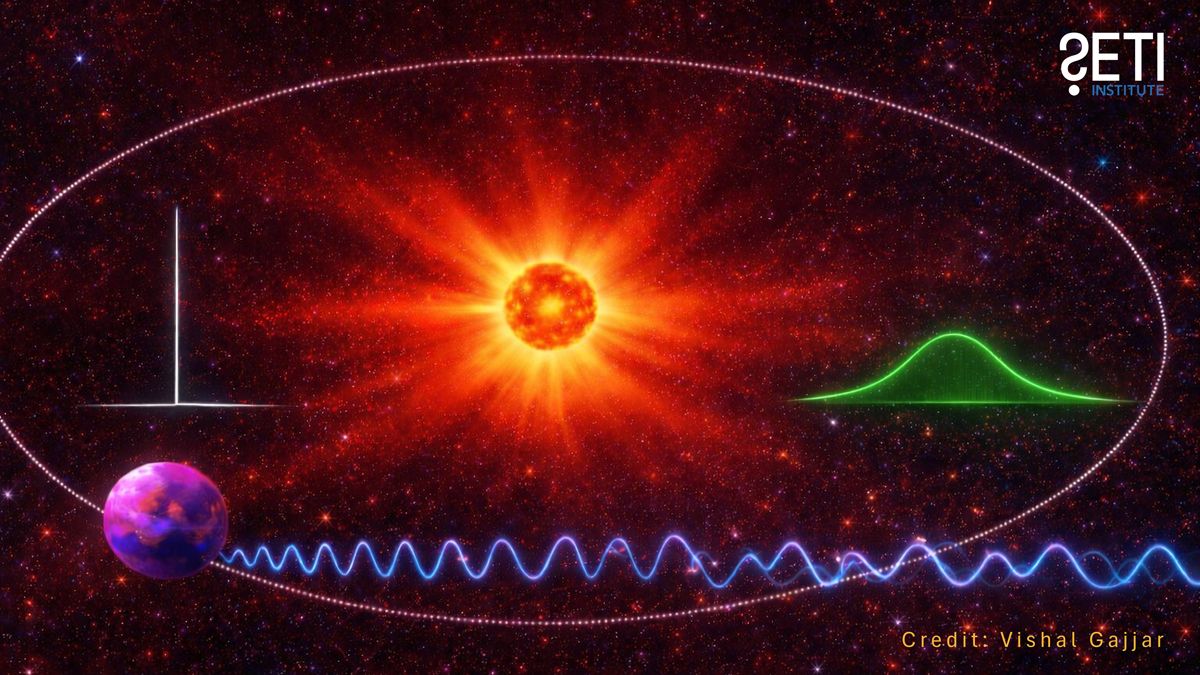
Why SETI Might Have Been Missing Alien Signals A new study by researchers at the SETI Institute suggests stellar “space weather” could make radio signals from extraterrestrial intelligence harder to detect. Stellar activity and plasma turbulence near a transmitting planet can broaden an otherwise ultra-narrow signal, spreading its power across more frequencies and making it more difficult to detect in traditional narrowband searches…more
-NASA
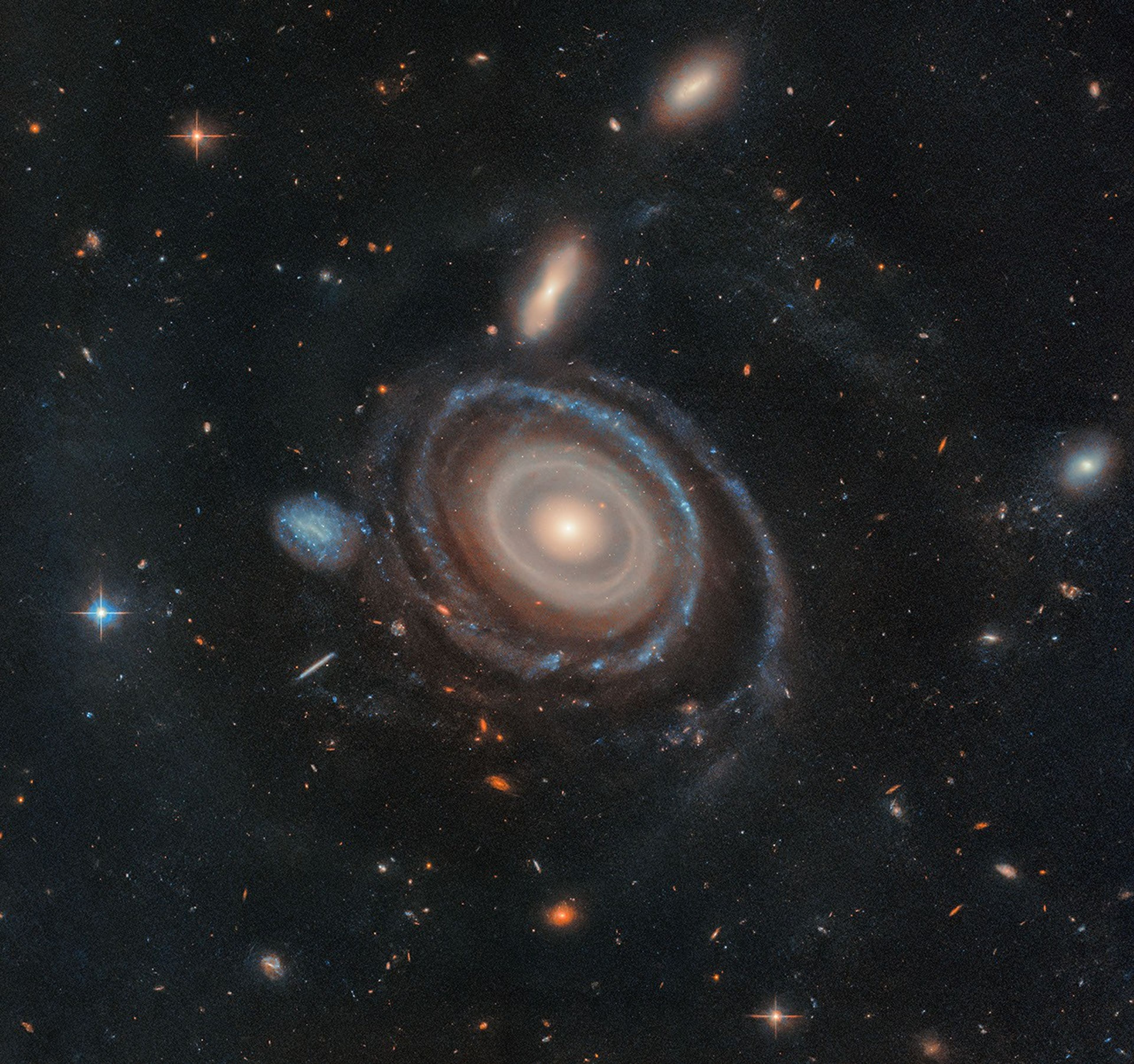
Straight Shot: Hubble Investigates Galaxy with Nine Rings NASA’s Hubble Space Telescope has captured a cosmic bullseye! The gargantuan galaxy LEDA 1313424 is rippling with nine star-filled rings after an “arrow” — a far smaller blue dwarf galaxy — shot through its heart. Astronomers using Hubble identified eight visible rings, more than previously detected by any telescope in any galaxy, and confirmed…more
-NASA
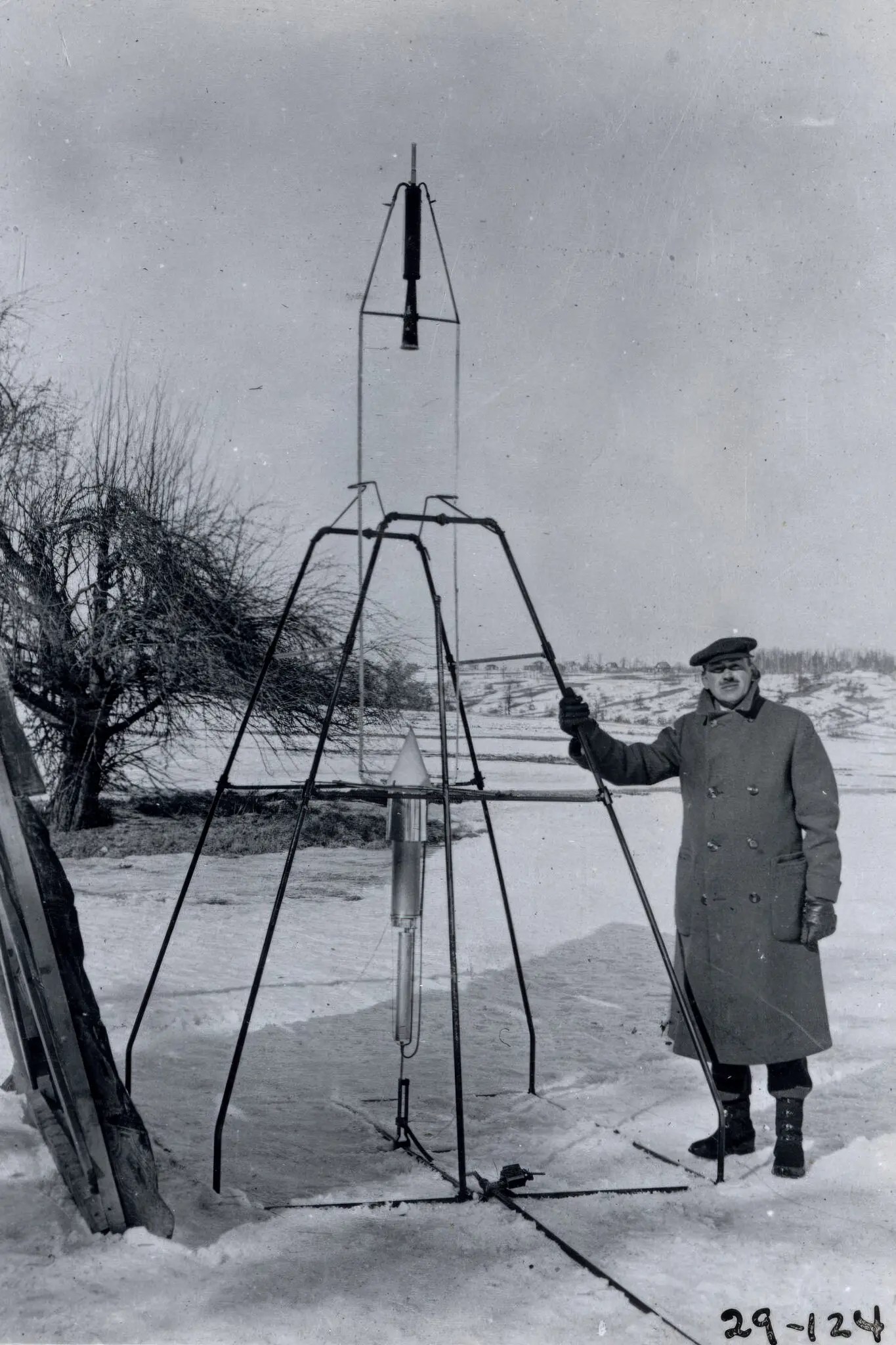
Spaceflight Started 100 Years Ago in a Massachusetts Cabbage Patch Robert Goddard arrived at his aunt’s farm in Auburn, Mass., on a cold, snowy morning 100 years ago. The wide-open spaces of the farm became on March 16, 1926, a rudimentary Cape Canaveral for an event never witnessed before on Earth: the launch of a rocket that would become a trailblazer for vehicles capable of sending satellites, probes and even humans beyond our planet’s atmosphere…more
-NASA
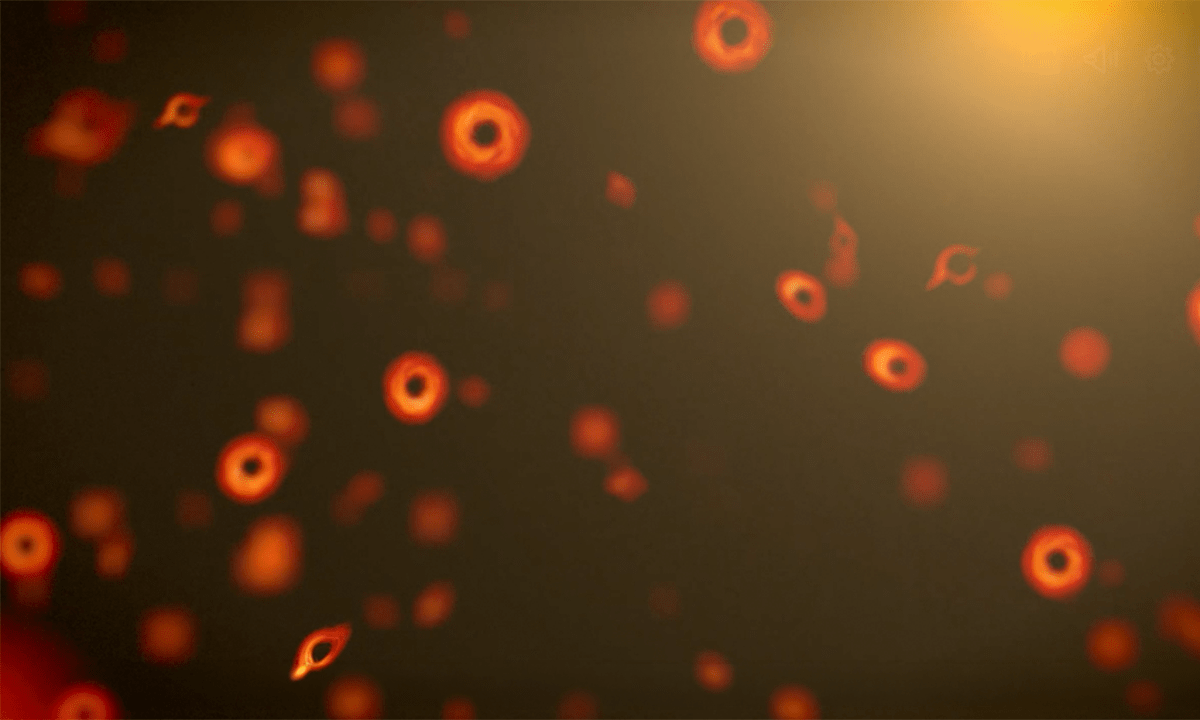
New Theory May Explain Mysterious “Little Red Dots” in the Early Universe Astronomers at the Center for Astrophysics | Harvard & Smithsonian have proposed a new explanation for some of the universe’s most puzzling early galaxies, nicknamed “little red dots.” In the study, published in The Astrophysical Journal Letters, Authors Fabio Pacucci and Abraham (Avi) Loeb suggest that these galaxies are the result of very slowly spinning dark matter halos, an extremely rare cosmic structure…more
-NASA
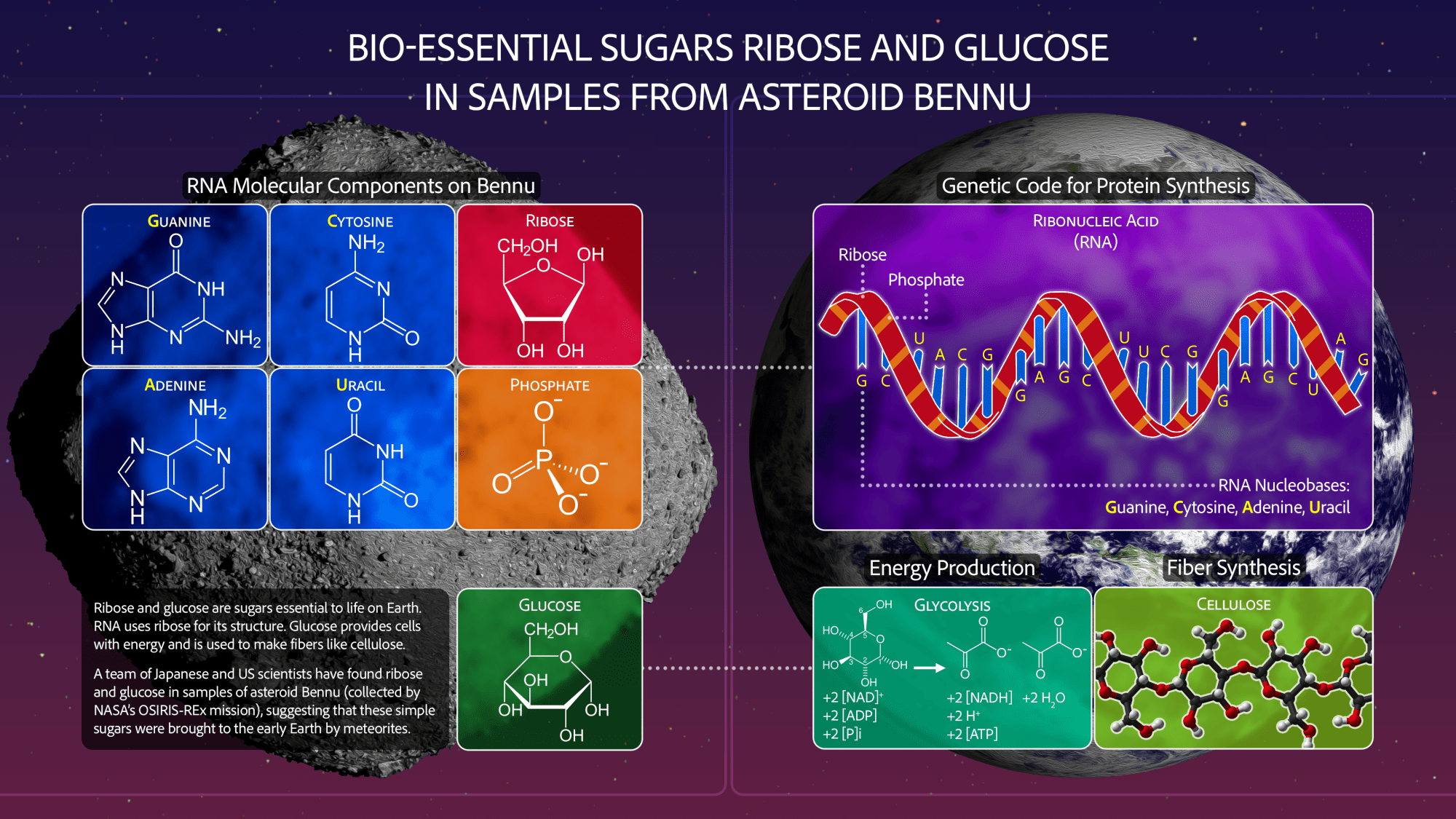
Sugars, ‘Gum,’ Stardust Found in NASA’s Asteroid Bennu Samples The asteroid Bennu continues to provide new clues to scientists’ biggest questions about the formation of the early solar system and the origins of life. As part of the ongoing study of pristine samples delivered to Earth by NASA’s OSIRIS-REx (Origins, Spectral Interpretation, Resource Identification, and Security-Regolith Explorer) spacecraft…more
-NASA
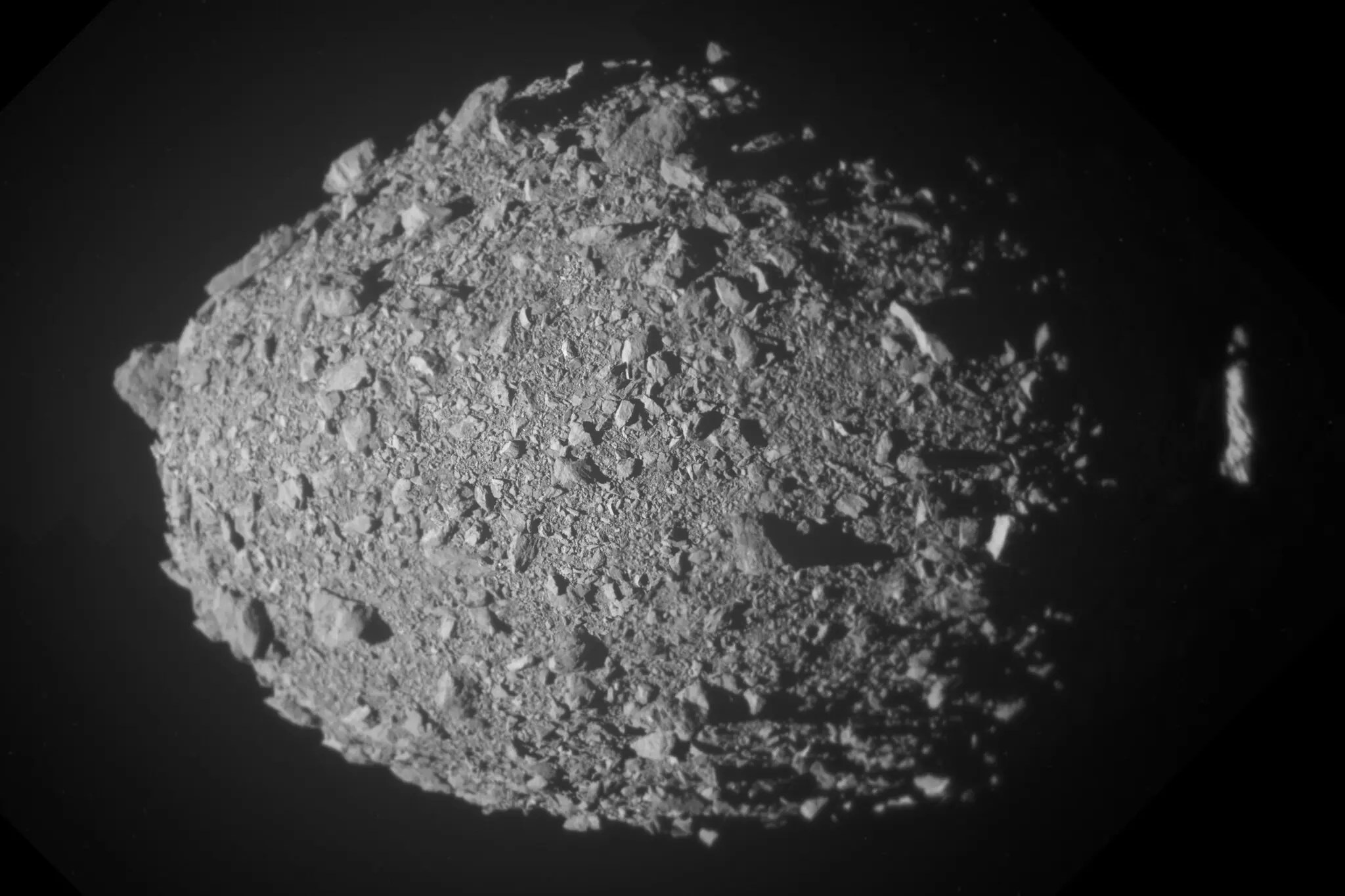
NASA’s DART Mission Changed Orbit of Asteroid Didymos Around Sun New research reveals that when NASA’s DART (Double Asteroid Redirection Test) spacecraft intentionally impacted the asteroid moonlet Dimorphos in September 2022, it didn’t just change the motion of Dimorphos around its larger companion, Didymos; the crash also shifted the orbit of both asteroids around the Sun…more
-space.com
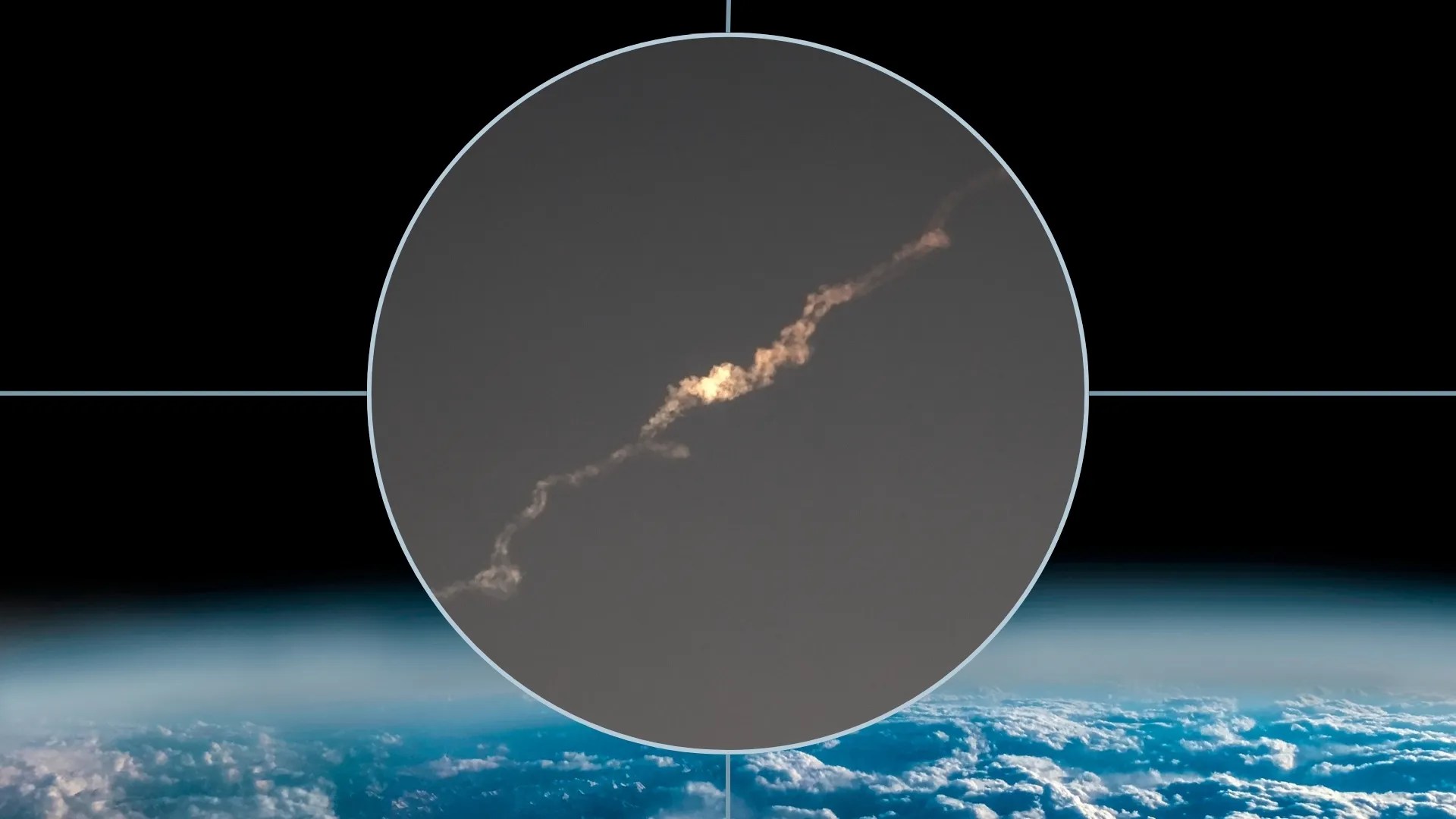
Spectacular fireball over Europe sends meteorite crashing through roof of German homeA meteorite has crashed through the roof of a house in the city of Koblenz in the west of Germany after a spectacular fireball lit up the night sky above western Europe on Sunday evening, March 8. More than 2,800 sightings of the fireball have been reported to the International Meteor Organization (IMO), with dozens of video recordings having been uploaded on social media…more
March 10, 2026 Meeting at Peyton Hall. The approach of the vernal equinox is a great time of year in the northern hemisphere! It reminds us that the cycle of life is deeply intertwined with the celestial calendar, as the re-emergence of the botanical world depends on the orbital geometry of our planet. What is the vernal equinox in purely astronomical terms? It can be reduced to a single moment in time, which at locations near Princeton arrives at 9:46am on Mar 20. At this time Earth’s axis is tilted neither toward nor away from the Sun, so that the sun appears directly over earth’s equator. The lengths of day and night at places across the globe are nearly equal, and both hemispheres receive about the same amount of solar energy.
Let’s celebrate the return of springwith a strong turnout in person at Peyton Hall for the Mar 10 meeting. Keep in mind that our access to this splendid venue is subject to changes on campus. The University has plans for a renovation construction project on Peyton Hall. Our ability to hold meetings there may be affected — we are in contact with the chair of the department about this. So let’s not take Peyton for granted. I am preparing to travel back to NJ after an extreme winter in the Midwest US, and look forward to being on site in person March 10. Of course, the meeting will also be run as a hybrid via Zoom, so join us virtually if you cannot physically attend. Our speaker will be Bob Vanderbei, Emeritus Prof. at Princeton Univ and assistant director of AAAP. For more on his talk see Victor’s section below.
Hot Topics for Mar 10. Our monthly meetings give us the opportunity after the main presentation to review timely and interesting astronomy events and announcements. By going a bit deeper than the media typically do we hope to dispel some of the misinformation that tends to confuse or overhype some celestial events, and to better prepare us all to explain hot astro topics to friends and family. Please offer your thoughts about astro topics for Mar 10 and upcoming meetings and get ready to weigh in on the discussions. Send your ideas by e-mail to: director@princeonastronomy.org.
A Dynamic Presentation The March, 2026 monthly meeting of the Amateur Astronomers Association of Princeton will take place in Peyton Hall on the campus of Princeton University on Tuesday, March 10th at 7:30 PM. As usual, the meeting is open to AAAP members and the public. Participants can join the meeting in-person at Peyton Hall or log in to the Zoom session as early as 7:00 pm to chat informally before the meeting begins. The evening’s guest speaker will be AAAP Assistant Director and Princeton University Emeritus Professor Robert Vanderbei. Dr. Vanderbei will present “Dynamic Astronomical Things: From Supernovae to Moving Stars, Eclipses, Occultations, etc.”
Options for Attending the Meeting You may choose to attend the meeting in person or participate via Zoom or YouTube as we’ve been doing for the past few years. (See How to Participate below for details). Due to security concerns, if you log in before the host has set up internet connectivity in Peyton Hall, you may need to wait in the Waiting Room for a few minutes until the host is prepared to admit you into the meeting. You’ll need to unmute yourself to make comments or ask questions. It’s polite, though not required, for you to enable your camera so other participants can see you. The meeting will be recorded and edited for posting to our club’s YouTube channel.
Join us for our “meet the speaker” dinner Prof. Vanderbei will be joining us for our traditional “meet the speaker” dinner at Winberie’s before the meeting. Our reservation is for 5:45 pm Tuesday, March 10th. Please contact the Program Chair if you plan to attend.
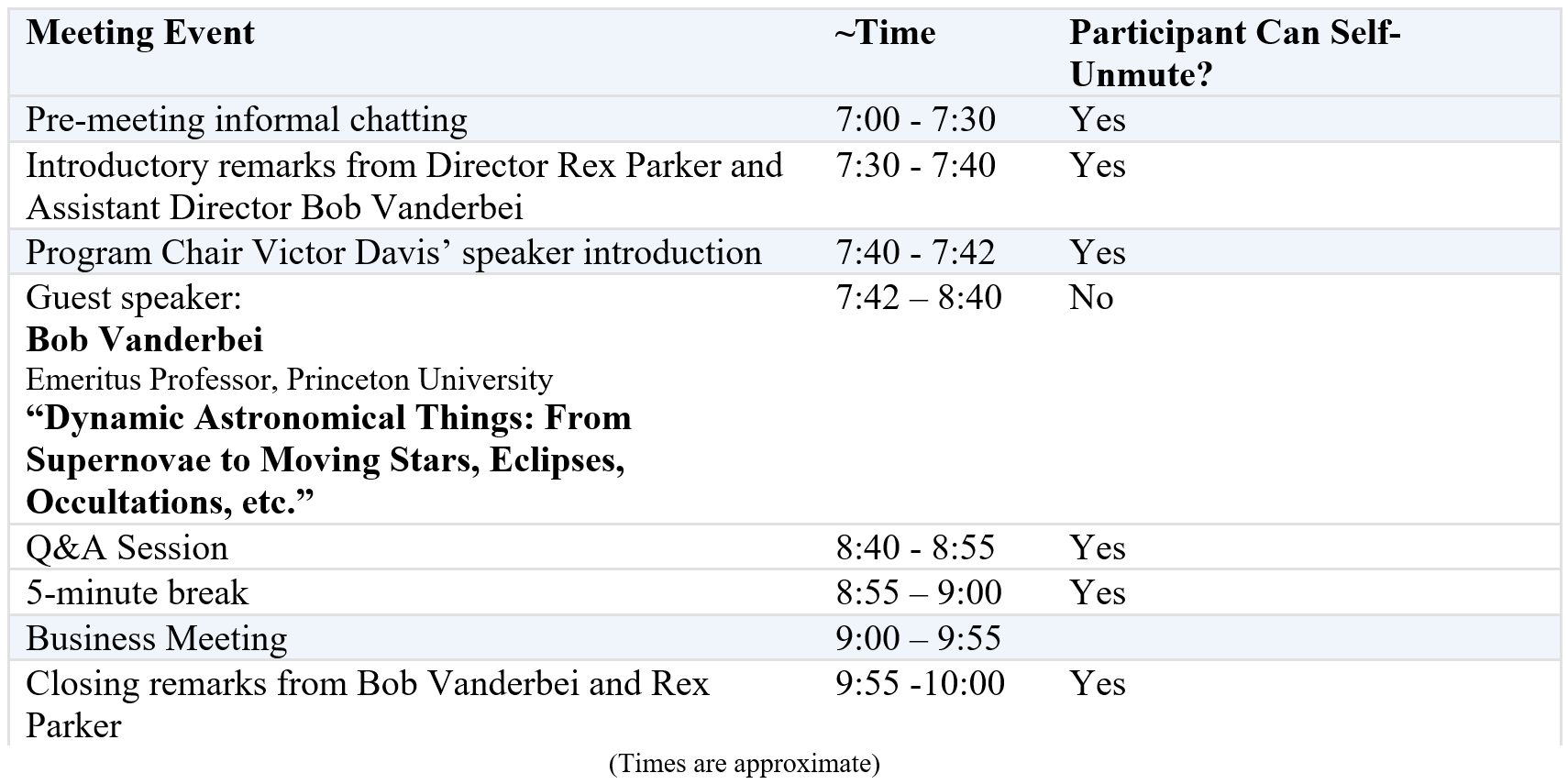
Here’s the anticipated agenda for March 10, 2026’s monthly meeting of the AAAP:
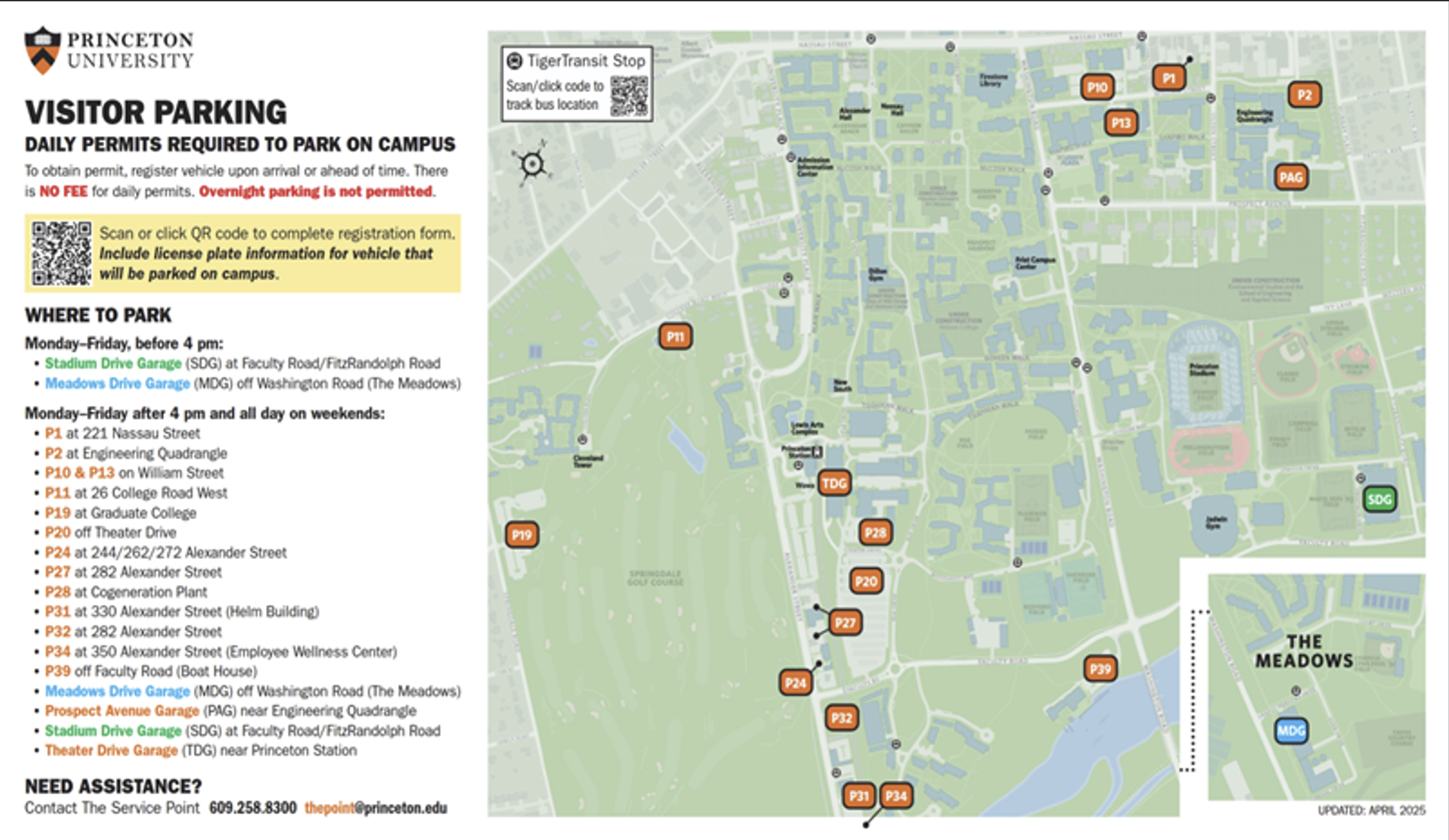
Getting to Peyton Hall The parking lots across the street (Ivy Lane) from Peyton Hall are now construction sites, unavailable for parking. We’ve been advised by the administration of the astrophysics department that we should park in the new enclosed parking garage off Fitzrandolph street and walk around the stadium and athletic fields. Here’s a map of the campus and walking routes from the parking garage to Peyton Hall. The map shows the recently completed East Garage. Not shown is an access road Sweet Gum that connects from Faculty Road to an entrance at the lower left corner of the garage. Stadium Road connects from Fitzrandolph Road to another entrance at the opposite corner (and higher level) of the garage. It’s about a 10-15 minute walk from the parking garage to Peyton Hall.
Featured Speaker: Robert Vanderbei, PhD Emeritus Professor in the Department of Operations Research and Financial Engineering
Princeton University rvdb@princeton.edu
Dynamic Astronomical Things: From Supernovae to Moving Stars, Eclipses, Occultations, etc.
Dynamic Astronomical Things: From Supernovae to Moving Stars, Eclipses, Occultations, etc. Most people think of the celestial sphere as a mostly static thing made of unmoving stars, nebulae, and galaxies. But, of course many people also know that the Earth rotates around its polar axis once a day, and that can be thought of as a dynamic process. But there’s a lot more motions besides Earth’s rotation:
We’re standing on a planet that’s evolving, And rotating at nine hundred miles an hour. It’s orbiting at nineteen miles a second, so it’s reckoned, A sun that is the source of all our power.
The Sun and you and me, and all the stars that we can see Are moving at eleven million miles a day, In an outer spiral arm at four hundred fifty thousand miles an hour, Of the galaxy we call the Milky Way.
Our galaxy itself contains a hundred billion stars. It’s a hundred thousand light-years side to side. It bulges in the middle, sixteen thousand light-years thick, But out by us it’s just three thousand light-years wide.
We’re thirty thousand light-years from galactic central point, We go ‘round every two hundred twenty-five million years. And our galaxy is only one of trillions In this amazing and accelerating universe.
The universe itself keeps on expanding and expanding In all of the directions it can whiz. As fast as it can go, the speed of light you know, Twelve million miles a minute and that’s the fastest speed for matter that there is.
Monty Python (Eric Idle), Galaxy Song
There are also supernovae, stars whose brightness vary on a regular basis, and many other dynamical events. In this talk, Prof. Vanderbei will discuss many of these motions and events, why they exist, and how to see and photograph them.
Note: Eric Idle’s Galaxy Song was surprisingly accurate for its time, but recent discoveries since it was written in 1983 have made it inaccurate beyond rounding errors. I (Victor) have changed some numbers, and apologize for the disruptions in rhyme and rhythm.
Prof. Robert Vanderbei Bob Vanderbei grew up in Grand Rapids, Michigan. He first became interested in the stars at the age of six, when he and his family took a camping trip around Lake Superior. Late one night on that trip, Bob looked up at the sky and was astonished by the beauty of the stars. He was enthralled by the idea of space exploration, but a high school teacher convinced him that the Apollo era would be short-lived, and that a career with NASA was a suboptimal career path. Nevertheless, he joined a local astronomy club and immersed himself in math and science. Bob earned a BS in chemistry at Rensselaer Polytechnic Institute and a PhD in applied math at Cornell. A few postdocs later, he took a job at AT&T Bell Labs, where he emerged as the lead developer behind Korbx, a groundbreaking optimization tool. He received an offer to come to Princeton in 1990. Among the courses Bob taught were undergraduate and graduate courses that were required for Operations Research and Financial Engineering students. His textbook for the course is currently in its fifth edition. He collaborated with Princeton astrophysicist J. Richard Gott on several publishing projects, including “Sizing Up the Universe” published by National Geographic. The book has become the basis for a freshman astronomy course Bob continues to teach. More recently, Bob and Richard, along with Michael Strauss and Neil DeGrasse Tyson coauthored “Welcome to the Universe in 3D.” The day it was released, Tyson promoted the book on The Late Show with Stephen Colbert. The next day, the book was the number one bestseller on Amazon.com.
Bob’s sense of adventure and curiosity have been constants. He became a National Ski Patrolman in his senior year of high school. At Cornell, he trained as a glider pilot, later becoming the chief flight instructor at the Central Jersey Soaring Club. A friendship with a colleague and former director of AAAP and a visit to a star party led Bob to join our club and eventually to become its Assistant Director. Bob is a prolific and expert astro-photographer. His work is on view at vanderbei.princeton.edu.
How to Participate (Links) Zoom& YouTube Live Amateur Astronomers Association of Princeton is inviting you to a scheduled Zoom meeting. Join Zoom Meeting Topic: AAAP March Meeting-Robert Vanderbei, Princeton Univ, Stellar Dynamics Time: March10th, 07:00 PM Eastern Time (US and Canada) Meeting ID: 853 2157 6662 Passcode: 001601 Join instructions
AAAP’s library of monthly meetings is available on the club’s YouTube channel. February’s edited meeting featuring a presentation by Dr. John Bochanski, member of the LSST Discovery Alliance “From Sloan to Rubin: A Journey Through the Age of Sky Surveys” can be viewed at https://youtu.be/3PwJ3MirNOo. Runtime is 1:40:46.
A look ahead at future guest speakers:
Date
Featured Speaker
Topic
Apr. 14, 2026
Astronomer Brian Lacki Berkeley SETI Research Center astrobrianlacki@gmail.com
Dr. Lacki, affiliated with Breakthrough Listen, a SETI initiative, recently submitted for publication a catalog of objects he and his team consider to be realistic and valuable observation targets. Dr. Lacki will talk about the catalog, “One of Everything: The Breakthrough Listen Exotica Catalog” and opine on the prospects of finding technosignatures and extraterrestrial intelligence.
Mr. Horgan will discuss his controversial 1996 book The End of Science, in which he argues that pure science, defined as “the primordial human quest to understand the universe and our place in it,” may be coming to an end. Horgan claims that science will not achieve insights into nature as profound as evolution by natural selection, the double helix, the Big Bang, relativity theory or quantum mechanics. In the future, he suggests, scientists will refine, extend and apply this pre-existing knowledge but will not achieve any more great “revolutions or revelations.” Shades of Auguste Comte, perhaps?
We expect to have copies of his book(s) for sale for the author to sign at the conclusion of his presentation.
As usual, the June meeting will take place in the planetarium at the NJ State Museum in Trenton. There will be no streaming of this live-only sky show and PowerPoint presentation. Topic to be announced.
Dr. DiMario will present a primer on astro-imaging.
Oct. 13, 2026
Becka Phillipson Assistant Professor in Physics Villanova University
Prof. Phillipson, originally scheduled to be October 2025’s guest speaker, is an unconfirmed prospect to try again in 2026.
As always, members’ comments and suggestions are gratefully accepted and much appreciated. Thanks to Ira Polans and Dave Skitt for setting up the online links and connecting the meeting to the world outside Peyton Hall.
Assistant Director Bob Vanderbei opened the meeting in Peyton Hall at 1931 with photos from his recent trip to Egypt while describing his frustration at being unable to do astrophotography in our greatly improved weather. There were 20 who had braved the cold to attend in the auditorium and 30-some online.
Outreach Chair Bill Murray reported a surprising number of stargazing requests for the winter season but very few with scopes have volunteered to support them.
February 20 – Cub Scout Pack 91 in Hamilton expects 60 scouts plus parents for stargazing February 24 – request from Brunswick Township February 28 – an event at the Plainsboro Preserve March 1 – Montgomery Friends of Open Space will host a presentation by Bob Vanderbei and stargazing April 18 – stargazing at the Mercer Meadows Pole Barn April 22 – the Newgrange Star Party
Program Chair Victor Davis introduced our speaker for tonight, Dr John Bochanski, member of the LSST Discovery Alliance. His talk was titled From Sloan to Rubin: a Journey Through the Age of Sky Surveys.
After the question period Director Rex Parker continued the meeting without a break. Ten remained in the auditorium as he called our attention to the following hot topics:
Watch for the upcoming Artemis 2 manned mission intending to orbit the Moon.
NASA has omitted funding for the critical Mars Sample Return Mission. He reminded us of his October 14 presentation about fossil biosignatures.
Watch for results of the Mars Exploration Program Analysis Group meeting on April 21-23.
Observing Challenges : February 20: Saturn-Neptune conjunction February 23 2200-0000: Pleiades lunar occultation
Merchandise Shop Lead Facilitator Rich Sherman is excited about dark energy discoveries described in a Sky & Telescope March issue article Evolving Dark Energy – Cracks in Cosmology by Paul Sutter, pages 34-40. He is also wondering if a Moon simulator would predict when Shackleton Crater at the Lunar South Pole might be visible.
Astroimaging Chair Michael DiMario reported that the new AAAP website is essentially done and only a few details remain to be worked out.
Observatory Co-Chair Dave Skitt is hoping to be able to resume Keyholder training in March.
Rex is planning to be back east to attend the March meeting in person.
The meeting was adjourned at 2130.
As of February 22, we have 211 active members. So far in CY2026, renewals number 18 and expirations number 5, giving us a 78% retention rate. We have added 8 new members.
Submitted by Secretary Gene Allen February 23, 2026
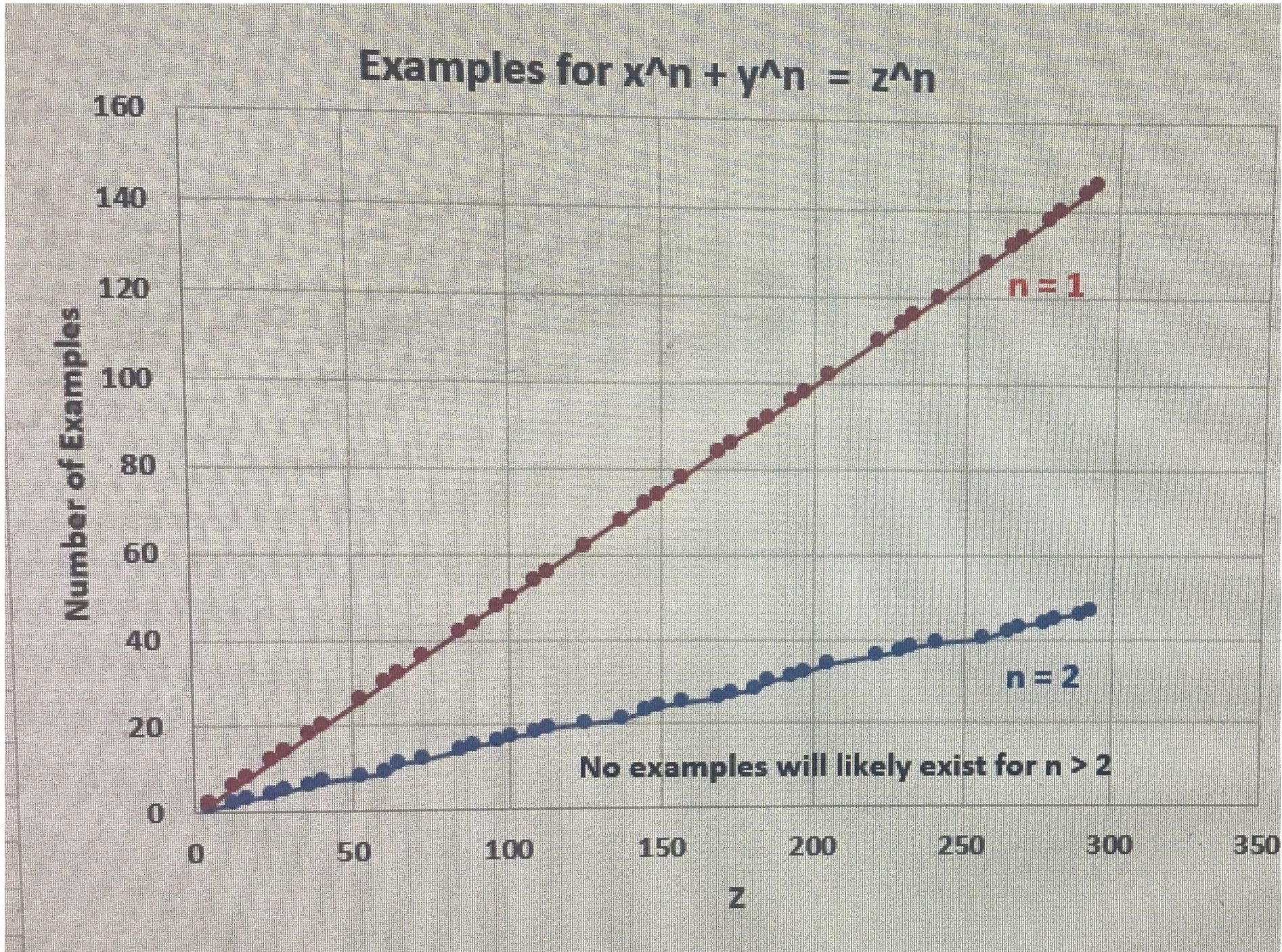
Pierre de Fermat’s famous “Last Theorem” states that there are no examples of x^n + y^n = z^n for n greater than 2, where x, y, z, and n are positive integers. When making this statement in the margin of a book, he said that there wasn’t room to show the proof. A lengthy proof was published by Andrew Wiles in 1995, using techniques that would not have been available to Fermat,
I believe that Fermat must have had, if not an actual proof, at least a reasonable explanation of his theorem. Here is an intuitive graphical approach that he might have used to convince him that there would be no such examples for n larger than 2. He already knew that there exists an arbitrarily large number of positive integer primitive “Pythagorean” triples x, y, and z that satisfy the equation x2 + y2 = z2. And obviously there is an infinite number of positive integer triples that satisfy the equation x1 + y1 = z1 In order to avoid unnecessary duplication, we specify that x < y.
Pretending we’re Fermat, let’s graphically explore the relationship between exponents (n) 1 and 2 in the first two equations. We’ll take the right-hand term (z) as the independent variable, i.e. the horizontal axis. Z is always odd for n = 2, as in 32 + 42 = 52 and so on. For uniformity, we keep that convention for n = 1, where we see that the number of triples with respect to z increases linearly as far as we like.
The idea is to pair off the cases for n = 1 and n = 2 and compare the results. For example, with the 5-12-13 Pythagorean triple, there are six possibilities for n = 1 where x < y: 1 + 12, 2 + 11, 3 + 10, 4 + 9, 5 + 8, and 6 + 7. The number of possibilities is always (z-1)/2. For exponent 2, the smallest z is 5 for the 3-4-5 triple, but again the number of triples again increases linearly as far as we like with respect to z. (Data is from a list of triples on Wikipedia).
In the chart below, the upper line is for n = 1 and the lower line is for n = 2. If Fermat had made such a chart, simple inspection should have suggested to him that no examples would likely exist for n >2. (Such has actually been shown for a number of particular integers.) Interestingly, the ratio of the two like slopes is approximately 3:1
A note from the editor, Surabhi Agarwal: After reading John’s article, if your curiosity has been sparked, I highly recommend the following two books on the subject:
Fermat’s Last Theorem: Unlocking the Secret of an Ancient Mathematical Problem by Amir D. Aczel
The hunt for the first stars formed in the universe is on. There have been some promising candidates but no confirmations yet. The first batch of stars called the population III stars were formed when the universe was in its infancy. They consist of the primordial hydrogen and helium soon after the big bang.
Population III stars are metal free. In astronomy anything other than hydrogen and helium are called metals. These stars are posited to be very massive, very hot and also short lived. Heavier stars, 10-1000 solar masses, burn fuel very rapidly, generating a lot of luminosity. At the end of their short lives, with all the hydrogen converted to helium, they churn out heavier elements like carbon, oxygen and nitrogen in their burnt out cores. These form the seeds for the next generation of stars – the population II stars.
Population II stars are low metallicity stars. Recent stars which are the population I stars are high in metals. Our Sun is considered as a population I star. Our discoveries to date have centred around population I and II stars. Population III stars are the real challenge.
Firstly, all of them died within a few million years of their formation, which is in the distant past. There would be none in our vicinity for sure. The distant ones are dead as well. But the light from those stars could still be travelling towards us. The further we look into space, the older the objects are. Watching distant objects is like going into the past on a journey using time travel. We could be seeing objects which do not exist “now”.
Secondly, we cannot see objects further away without any intervening objects blocking our line of sight. For example, assuming that the earth were flat and we had a powerful telescope, we still cannot see Los Angeles from Jacksonville. Because of some intervening town or city blocking our view. However, if we go higher into space, we can see. In astronomy, we don’t have the luxury of flying higher into space. Our solar system is essentially in a plane and so is our galaxy the Milky Way confined to the galactic plane. Any attempt to go beyond the solar and galactic planes needs a lot of rocket fuel. It is not a practical proposition to move out to a vantage point to make observations. All the spacecraft and telescopes launched to date are confined to our planes with very little deviation in the vertical dimension.
Fortunately in astronomy, even if there is an obstructing object in between, we still can see objects behind using a concept called gravitational lensing. If the obstructing object is massive enough, the radiation (including light) coming from the hidden object gets bent by the gravitation force exerted by the obstructing object. As a result of this bending, the image of the hidden object appears as a distorted ring or as part of a ring around the obstructing object.
Another factor is that the earlier universe was very compact and dense. As the universe expanded, objects moved away from each other very rapidly. The population III stars moved away as well, resulting in redshifting of the radiation coming from those stars. A promising candidate named “Earendel” (named for a character in JRR Tolkien’s novel meaning “morning star”) is the closest we have come to observing population III stars. It was spotted by the Hubble telescope in 2022. It later proved to be a cluster of stars, but not a population III star.
One of James Webb Space Telescope’s goals is to detect population III stars. And the hunt goes on.
by Veer Bedi, Eighth Grade, Princeton Middle School
The night sky is full of wonders. You can see stars, planets, constellations, star clusters, and even the occasional shooting star. Go out on a clear, moonless night in a place with low light, and the beauty of the night sky will truly unfold before you.
I often go to Princeton Battlefield State Park for stargazing. Being in a place where a major battle was fought more than two centuries ago makes me wonder: in the past, did stargazing—and knowledge of the night sky—help armies win battles?
Let’s look at some historical examples.
On the night of January 2, 1777, General George Washington marched approximately 4,500 soldiers from Trenton toward Princeton in a bold move to outmaneuver British General Charles Cornwallis. The Battle of Princeton took place on January 3, 1777, where Washington’s forces defeated British troops under General Charles Mawhood. This victory proved pivotal in boosting American morale during the Revolutionary War. The battle occurred right here at what is now Princeton Battlefield State Park. Could Washington and his soldiers have used the stars to help guide their nighttime march and arrive at Princeton in time?
There are other examples of celestial navigation in military history. During World War II, U.S. Army Air Forces bombers used bubble sextants to observe celestial objects and determine their position during long-range missions. Around the same time, the British Long Range Desert Group (LRDG) conducted deep desert patrols behind Axis lines in North Africa. Operating in the vast Sahara—with no roads, landmarks, or radio beacons—they relied on Polaris, star altitude measurements, and sextants to determine their location and direction, according to the National Army Museum.
Even the Roman armies are believed to have used the stars at night to help maintain direction during long marches.
Returning to Princeton and my own stargazing experiences, the constellation Perseus is visible these days—or rather, at night—weather gods permitting. Perseus, the mythological Greek hero and son of Zeus, was also a great warrior in legend. Perhaps, in the stories told about him, he too looked up at the stars for guidance on his epic quests!
This Comet Stopped Spinning. Then It Started Rotating Backward. If you were standing on the surface of Comet 41P/Tuttle-Giacobini-Kresák nine years ago as it was getting closer to the sun, you might have been in for a shock. First, each day on the comet would have gotten drastically longer over a period of weeks, until the object’s rotation stopped dead — and then started going backward…more
-space.com
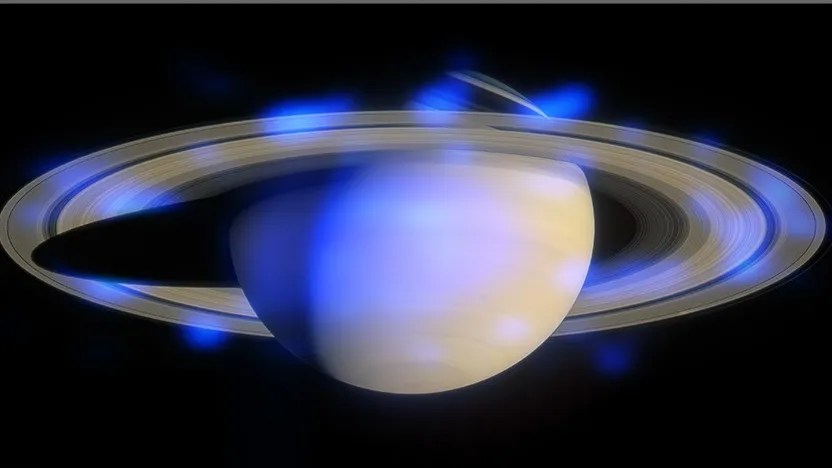
Real NASA space telescope data creates soundtracks for Jupiter, Saturn and Uranus NASA’s Chandra X-ray Observatory has transformed new telescope views of Jupiter, Saturn and Uranus from this month’s “planetary parade” into striking soundscapes — capturing everything from Jupiter’s crackling auroras to the sweeping arc of Saturn’s rings…more
-space.com
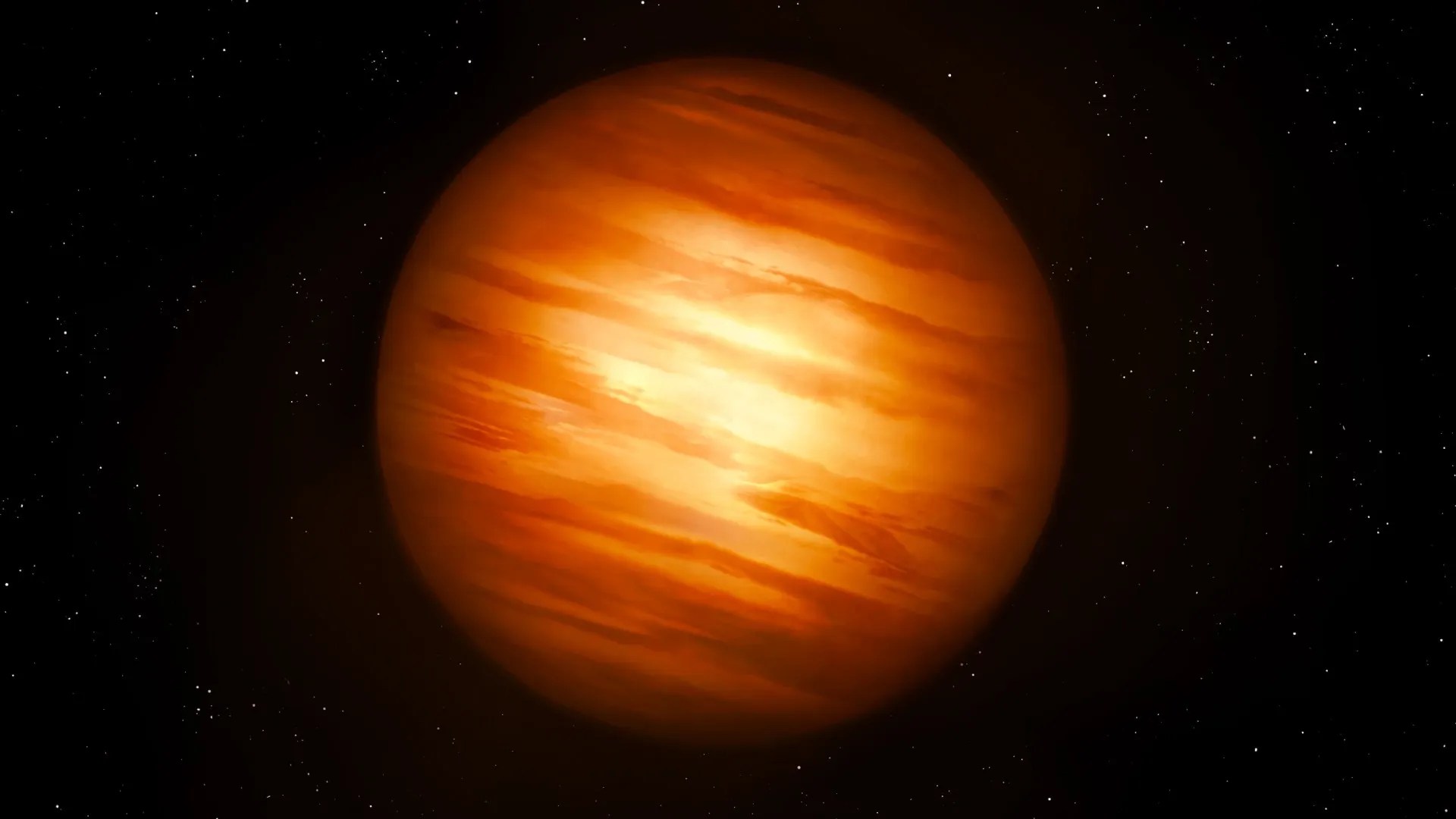
Could these weird stars just be overgrown planets? Many astronomical objects play by clear rules and fit into neat categories, but brown dwarfs (celestial objects too massive to be mere planets, but too small to be real stars) continue to refuse to cooperate. Astronomers recently studied a sample of 70 objects, ranging from Jupiter-mass planets to brown dwarfs that are right on the brink of stardom…more
-NASA
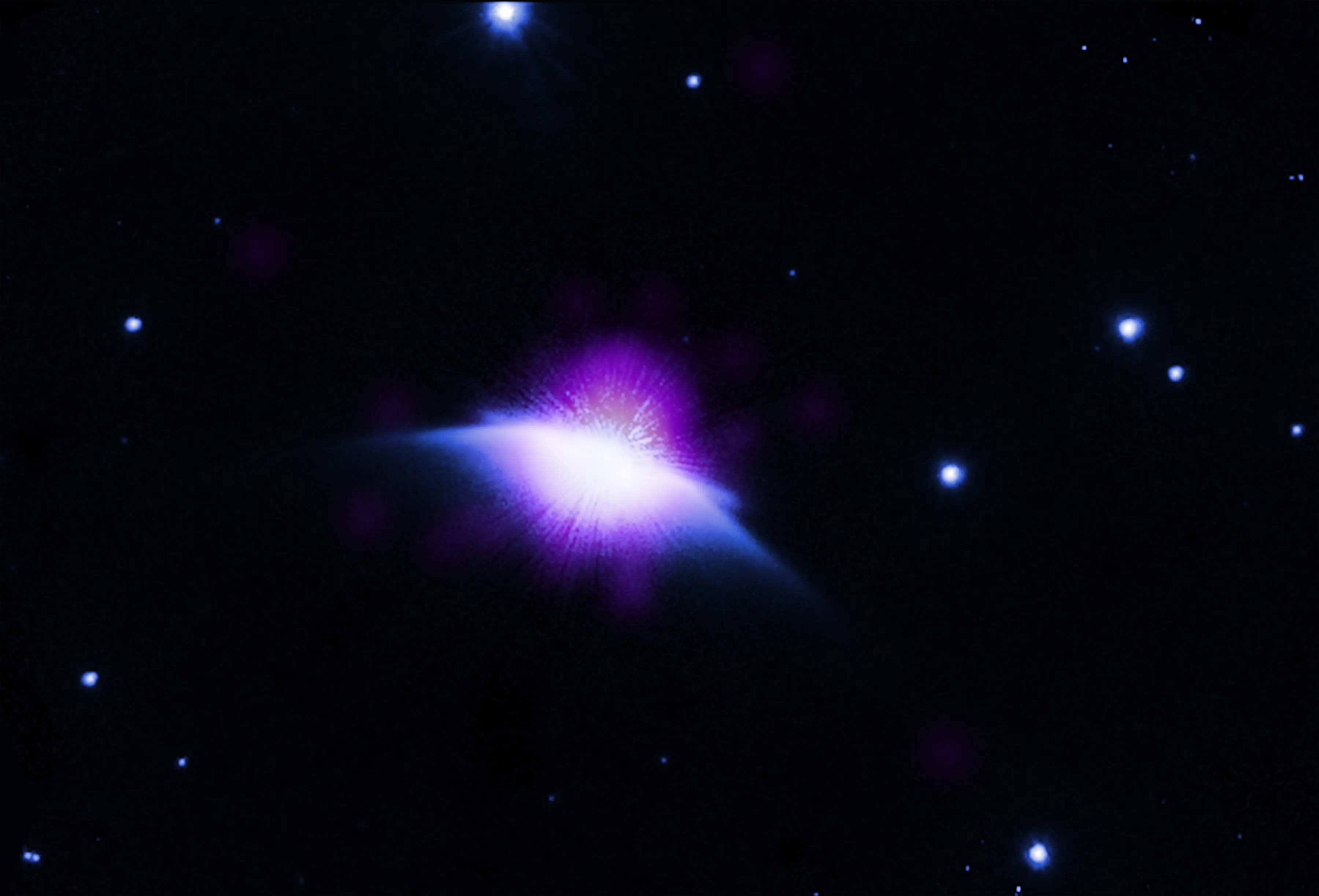
Young ‘Sun’ Caught Blowing Bubbles by NASA’s Chandra For the first time, a much younger version of the Sun has been caught red-handed blowing bubbles in the galaxy, by astronomers using NASA’s Chandra X-ray Observatory. The bubble – called an “astrosphere” – completely surrounds the juvenile star. Winds from the star’s surface are blowing up the bubble and filling it with hot gas as it expands…more
-NASA
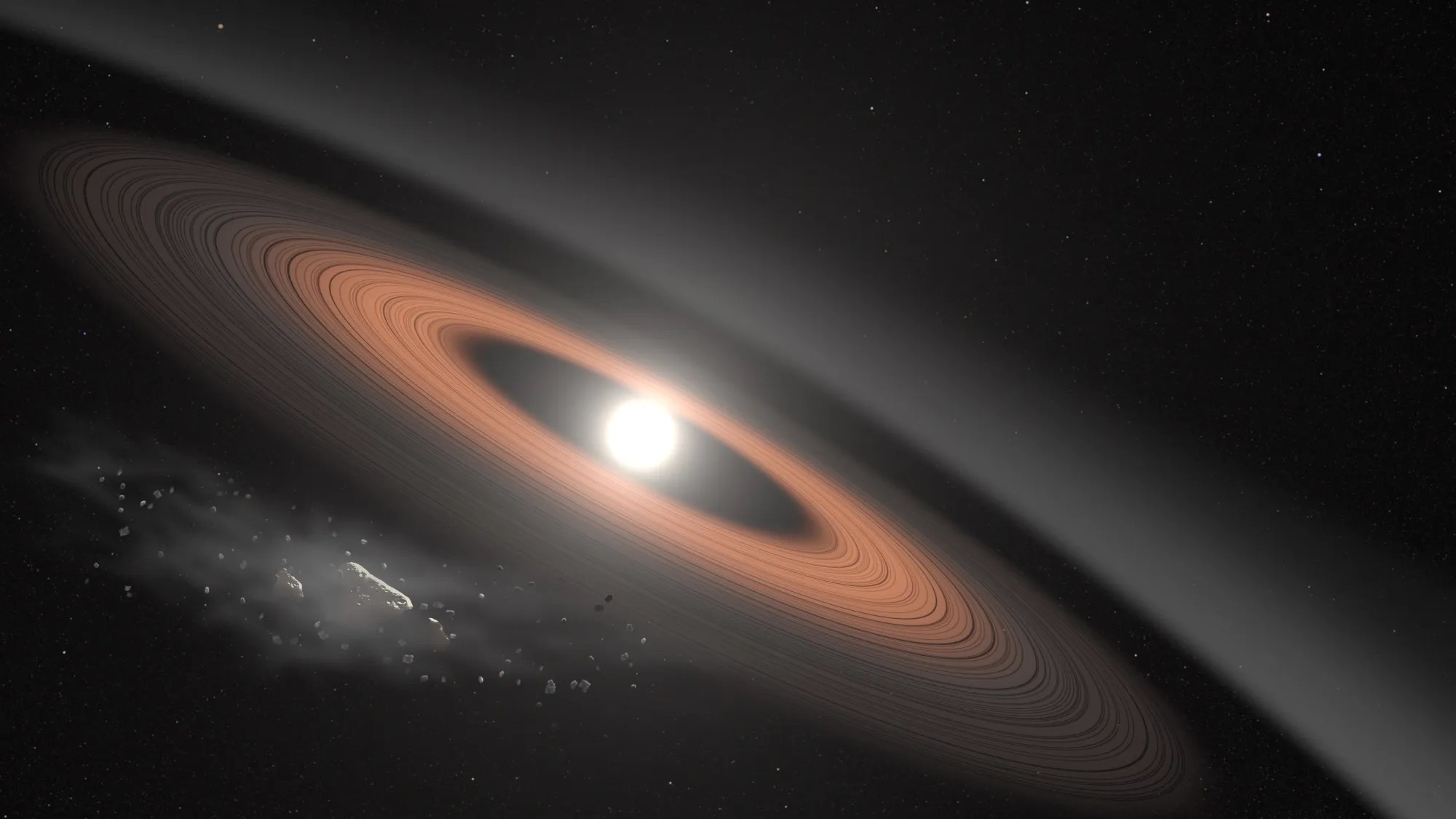
Citizen Scientist Finds Ancient White Dwarf Star Encircled by Puzzling Rings Since the Sun is so hot, how can it contain oxygen, carbon, and other elements without destroying them? If you were to take a random blob of gas and heat it to solar temperatures (roughly 10,000 degrees Fahrenheit [5,500 degrees Celsius] at the surface or over 27 million F [15 million C] in the core), two things would happen. …more
-NASA
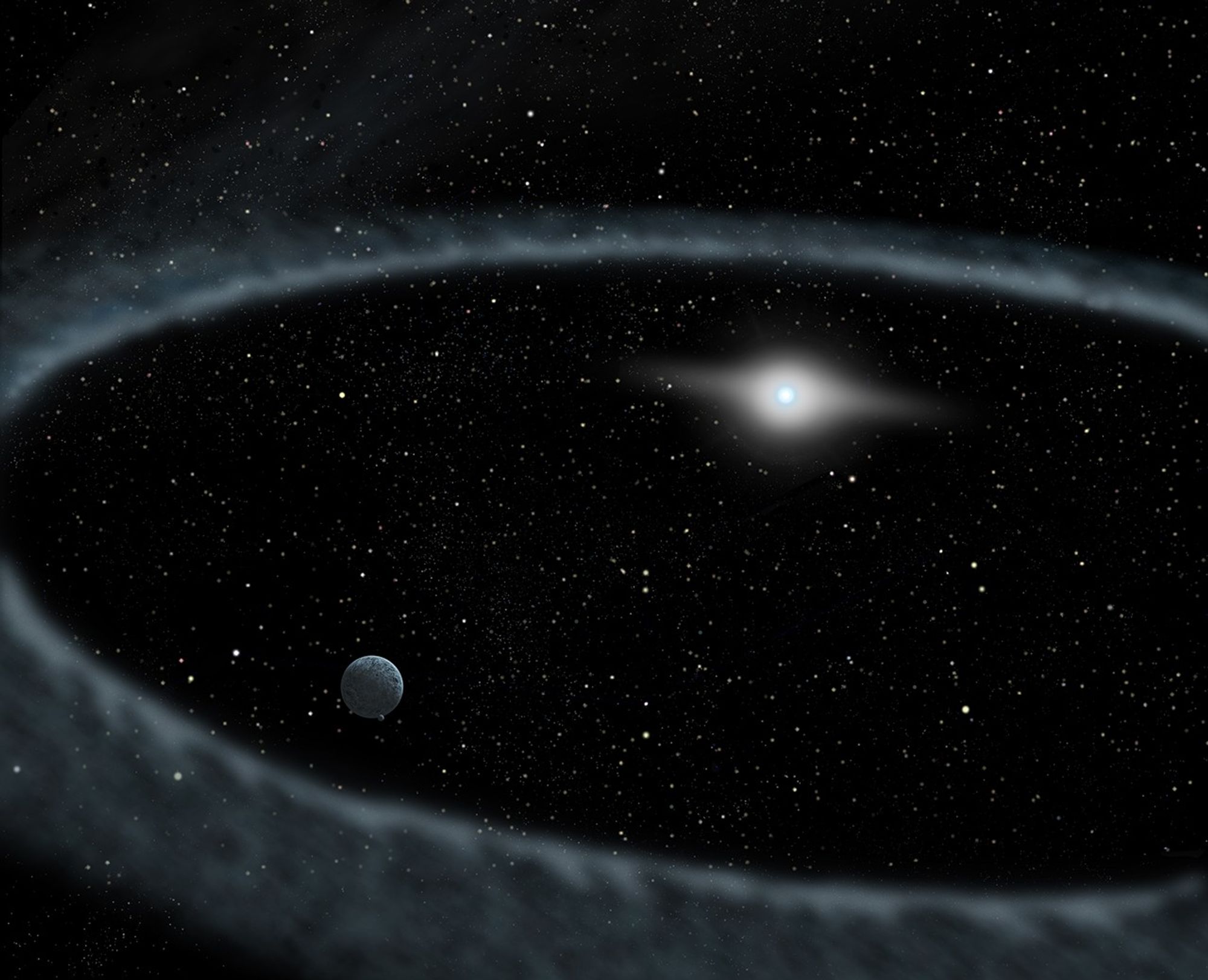
Elusive Planet Reshapes a Ring Around Neighboring Star NASA Hubble Space Telescope’s most detailed visible-light image ever taken of a narrow, dusty ring around the nearby star Fomalhaut (HD 216956), offers the strongest evidence yet that an unruly and unseen planet may be gravitationally tugging on the ring. Hubble unequivocally shows that the center of the ring is a whopping 1.4 billion miles (15 astronomical units) away from the star….more
-NASA
Straight Shot: Hubble Investigates Galaxy with Nine Rings NASA’s Hubble Space Telescope has captured a cosmic bullseye! The gargantuan galaxy LEDA 1313424 is rippling with nine star-filled rings after an “arrow” — a far smaller blue dwarf galaxy — shot through its heart. Astronomers using Hubble identified eight visible rings, more than previously detected by any telescope in any galaxy, and confirmed…more
-NASA
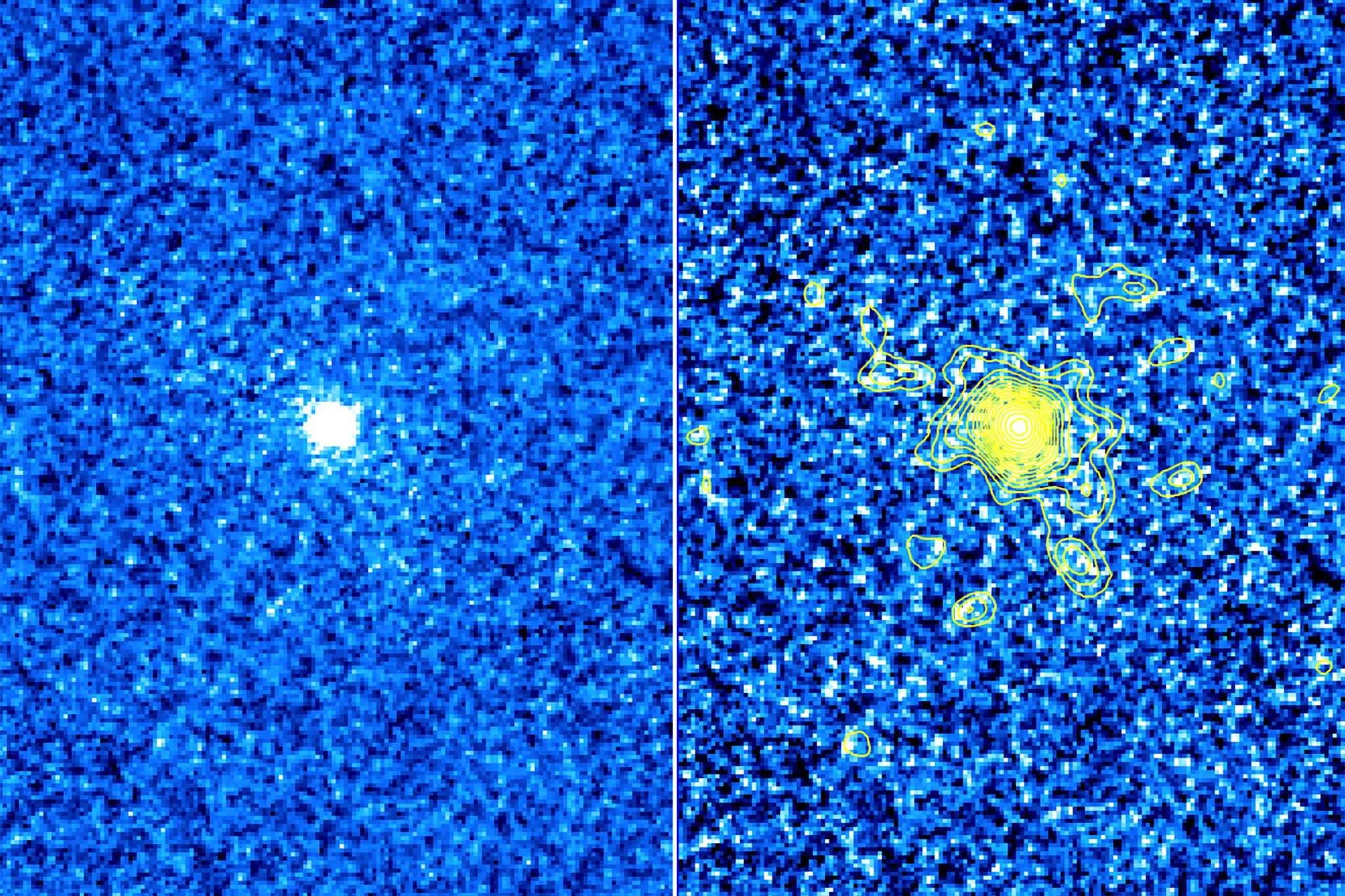
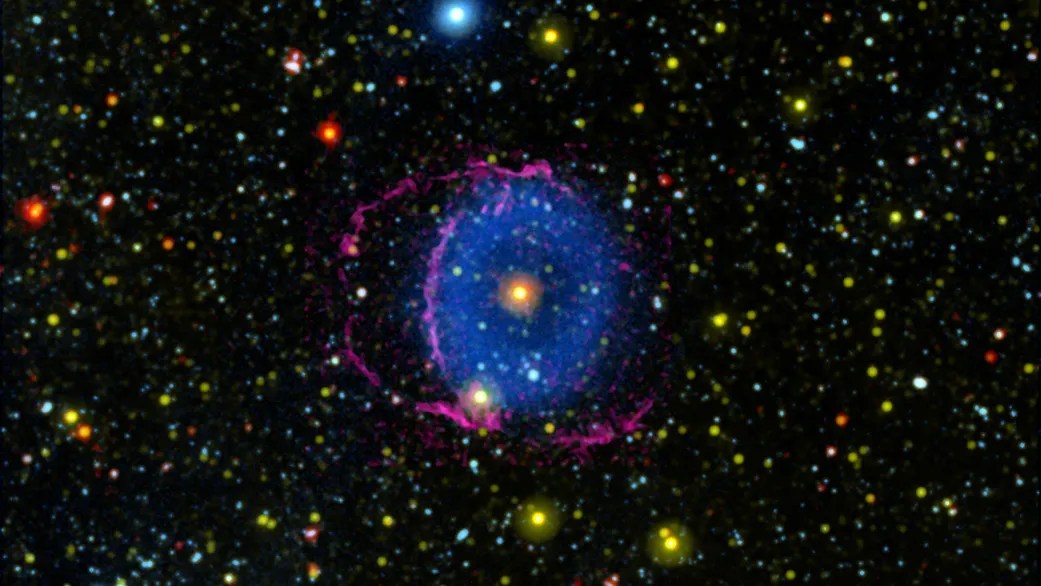
16-Year-Old Cosmic Mystery Solved, Revealing Stellar Missing LinkThe Blue Ring Nebula, which perplexed scientists for over a decade, appears to be the youngest known example of two stars merged into one. In 2004, scientists with NASA’s space-based Galaxy Evolution Explorer (GALEX) spotted an object unlike any they’d seen before in our Milky Way galaxy: a large, faint blob of gas with a star at its center. In the GALEX images, the blob appeared blue…more
-NASA
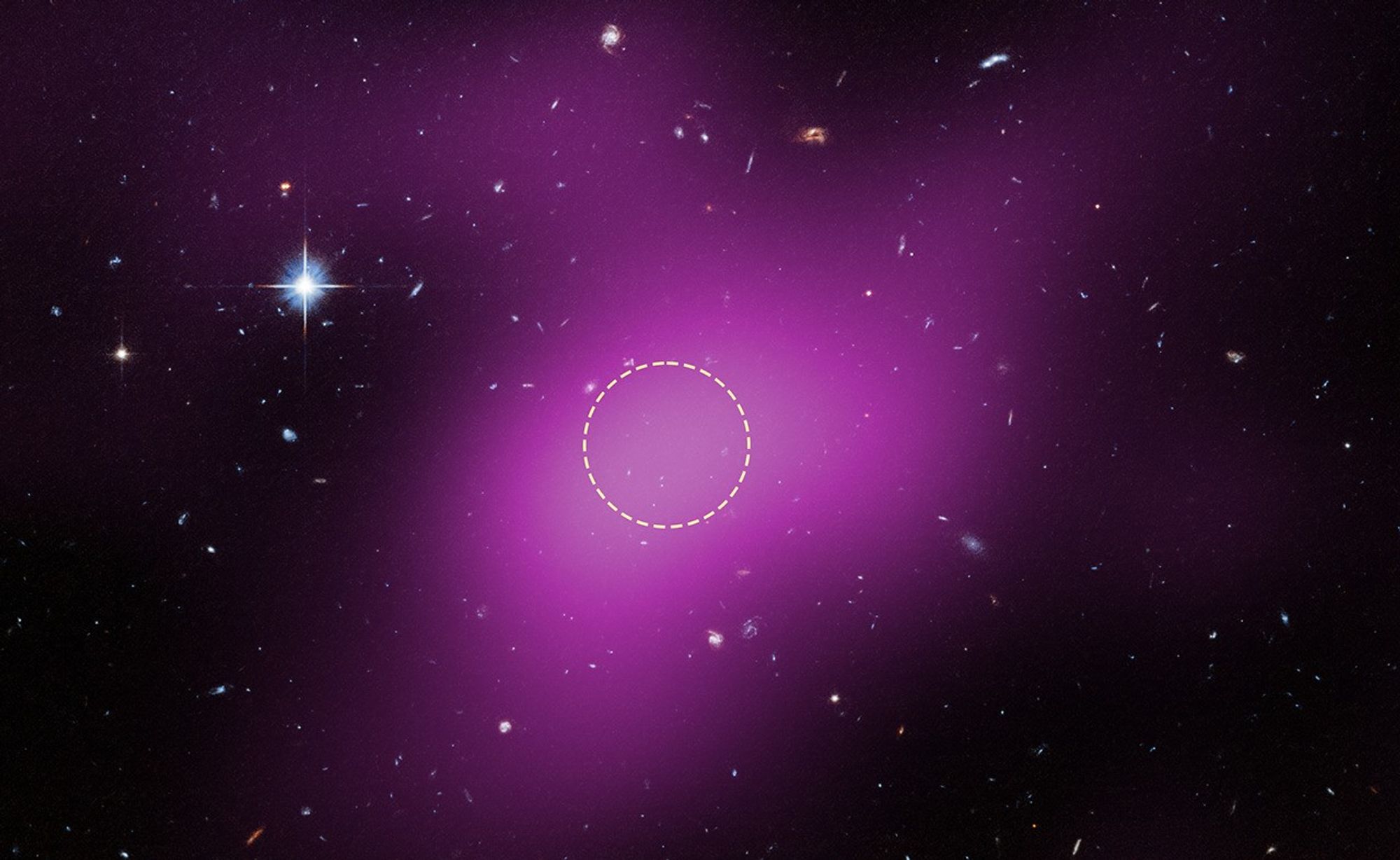
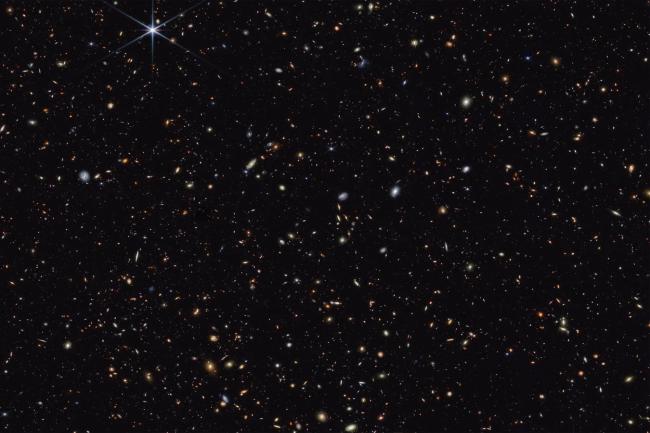
NASA Reveals New Details About Dark Matter’s Influence on Universe With the Webb telescope’s unprecedented sensitivity, scientists are learning more about dark matter’s influence on stars, galaxies, and even planets like Earth. Scientists using data from NASA’s James Webb Space Telescope have made one of the most detailed, high-resolution maps of dark matter ever produced…more
-NASA
NASA’s Hubble Examines Cloud-9, First of New Type of Object Dark matter doesn’t emit light, it doesn’t absorb light and it doesn’t even block it, passing through ordinary matter like a ghost through walls (I’m very proud of that sentence.) Yet this invisible substance makes up roughly 85% of all matter in the universe, and its gravitational influence has shaped everything from galaxy clusters millions of light years across down to the rocky planet beneath our feet…more
-NASA
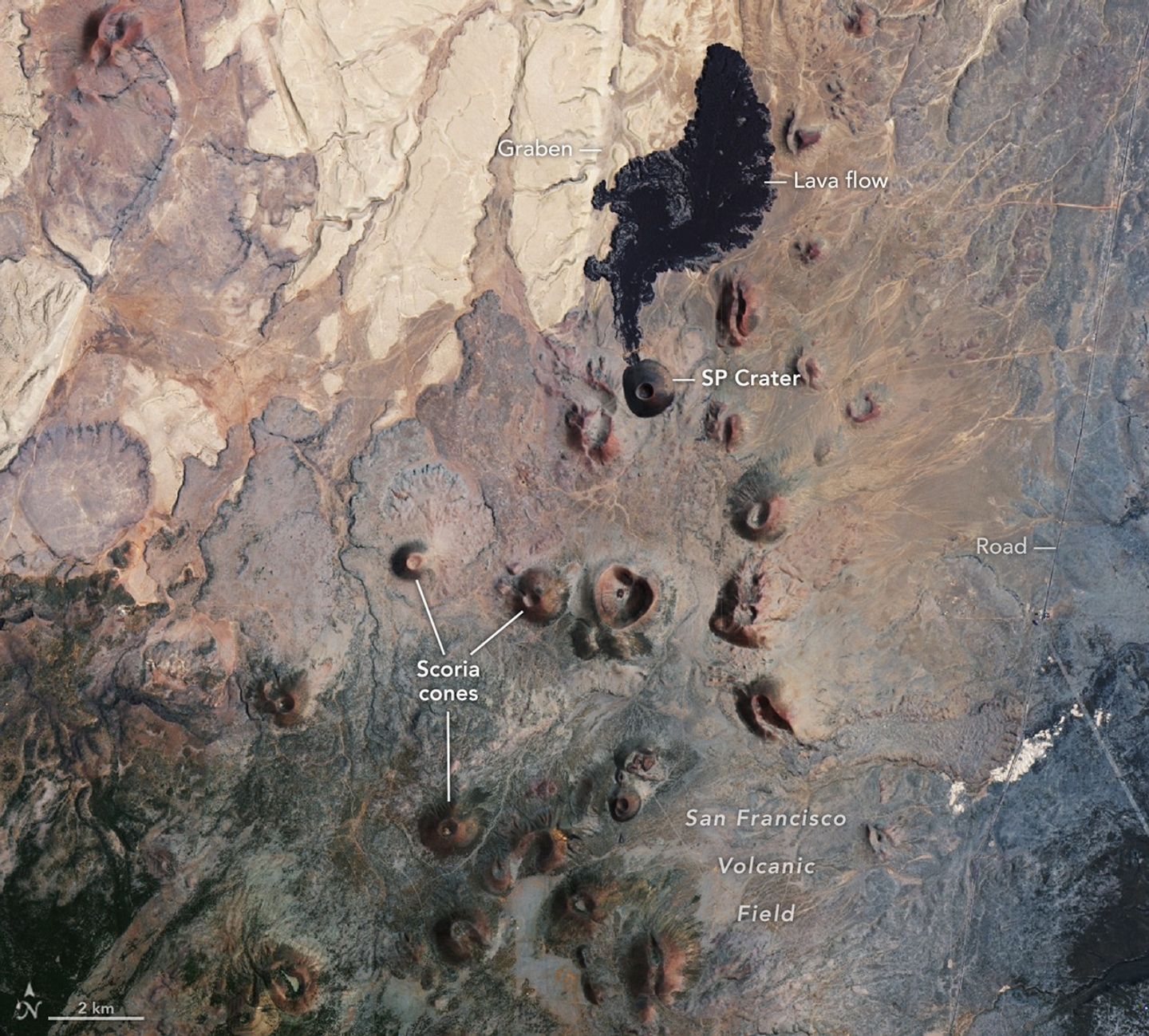
Scoria Cones on Earth and Mars Since the 1970s, planetary geologists have known that volcanic features cover large swaths of Mars. Early Mariner 9 images revealed massive shield volcanoes and lava plains on a scale unlike anything on Earth. Olympus Mons, the tallest volcano in the solar system, stands nearly three times higher than Mount Everest. Alba Mons, the planet’s widest volcano, spans a distance comparable to the length of the continental United States….more
-NASA
Most Notable 2026 Astronomical Events: A Year of Watching the SkiesThis year will be busy for avid skywatchers, with some incredible opportunities to view meteor showers, planets, and the Moon in the night sky. In 2026, we will also mark the 20th anniversary of NASA Marshall Space Flight Center’s Observatory. Originally established as an engine test site in 1958, it was converted to a solar observatory in 1968 to study the sun…more
February 10, 2026 Meeting at Peyton Hall. Let’s get a strong turnout in person at Peyton Hall for the Feb 10 meeting. It will also be run as a hybrid meeting via Zoom, so join us virtually (as I will) if you cannot physically attend. For more on the guest speaker, please see Victor’s section below. I know, it has been very cold out there. Your Princeton campus walk might not be quite like Robert Frost’s “Stopping By Woods on a Snowy Evening,” but the heaps of snow around the paths will help the plants underneath sleep until spring comes around again. Just remember that water is the key ingredient in the search for life in our solar system and on exoplanets. Science has revealed that the conditions required for life may not be quite so rare as once thought. The environment needed may be out there waiting to be discovered, in the so-called Goldilocks Zone of planetary systems, where conditions are “just right” to support biological life. This is the region around a star where conditions allow liquid water to exist on a planet’s surface, which depends on the star’s type and brightness among many other factors. So keep this in mind while you’re waiting for those drifts to melt – ice and snow are in the Goldilocks Zone.
Hot Topics for Feb 10. We are starting up a new feature at our monthly meetings, a review of timely and interesting astronomy events and announcements. We aim to cover these during the second half of our Peyton Hall/Zoom meetings. Hopefully we will go a bit deeper than the media typically do, and you’ll be better prepared to explain these astro topics to your friends and family — who no doubt look up to you to carry this weight. Please send your thoughts and themes on topics of sufficient thermal character for upcoming meetings. And do some reading so you can weigh in on the discussions. Please send your ideas by e-mail to: director@princeonastronomy.org.
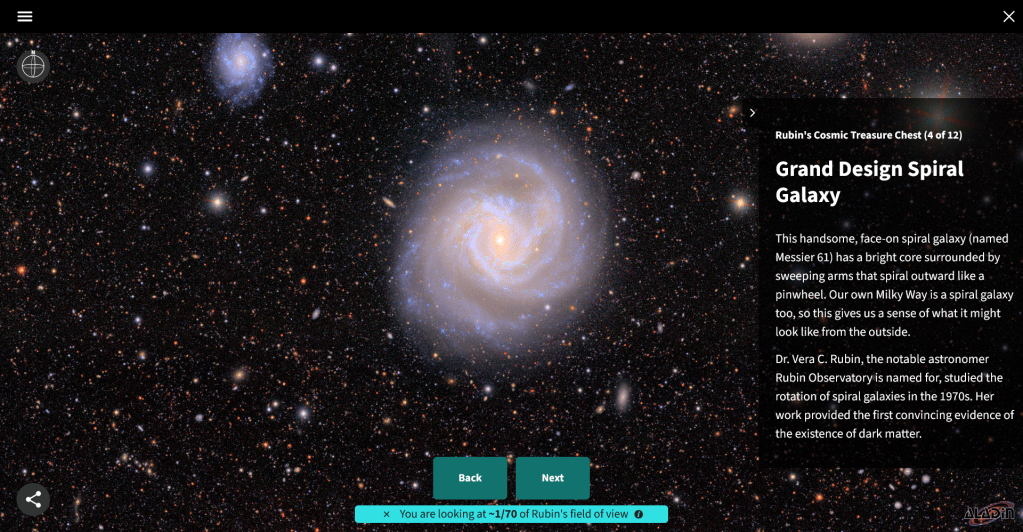
Dark Matter Further Illuminated. In advancing my 2026 resolution (see Jan. Sidereal Times) I’m currently immersed in the theories of the hot big bang origin and dark matter which prop up the “standard model of cosmology”. This relies in a major way on cold dark matter (CDM) contributing most of the matter in the universe, by its gravity holding together the vast structures of galaxies and galaxy superclusters. For the present I’m holding off on thinking about dark energy which is even more indescribable. It is hard to really get our minds around the idea that about 5/6 of the mass in the universe is entirely unseen, neither emitting, reflecting, absorbing, nor blocking radiation. It is detectable only by its gravitational influence on normal matter. The actual data supporting cold dark matter goes back to Vera Rubin and colleagues in the early 1970’s. Using telescopes at Kitt Peak Observatory in Arizona (with a new spectrograph they created), they showed that spiral galaxy rotation speeds were faster than visible matter alone would allow.
Since Rubin’s day, gravitational lensing of distant galaxies has become one of the best probes of dark matter between the galaxies. With its amazing sensitivity, the James Webb Space Telescope is now making major contributions to this field. In a publication this week, scientists at JPL/Caltech along with colleagues at many other institutions, including European, have made the highest resolution map of dark matter ever produced (Nature Astronomy, Jan 26 2026, Scognamiglio et al., An ultra-high-resolution map of (dark) matter). The method uses gravitational lensing of distant galaxies imaged at multi-wavelength in super high resolution by the Webb instruments. The new Webb observations analyzed about one-half of a square degree of the sky, a little over twice the angular area of the full moon, in the southern constellation Sextans. By measuring the shapes of hundreds of galaxies per sq-arcmin (note: 3600 sq-arcmin per square-degree) the map reached an angular resolution twice that of previous Hubble Space Telescope maps.
The new map reveals how invisible dark matter overlaps with and intertwines with galaxies and all of the reality we can see. The map extends the concept of how dark matter shaped the universe on a very large scale, with galaxy clusters spanning millions of light-years. It helps show how the gravity from dark matter ultimately determined the shape and fate of galaxies, stars, and even planets. It shows how dark and luminous matter co-evolved across filaments, clusters, and low density regions. The authors conclude by saying that the observed alignments can’t be coincidence but are due to the gravity of dark matter pulling normal matter throughout all of cosmic history. It can be seen as some of the strongest data to support the dark matter theory since Vera Rubin herself shocked the astronomy world in 1970.
New AAAP Website. The new AAAP website will be going on line very soon, and the old site will be turned off. Some final tweaks (membership and dues related) are in progress before we activate the new site. Access will use the same web URL (www.princetonastronomy.org). Stay tuned for an e-mail announcing the start of the new site, with instructions on setting up your own member account with password for member-exclusive content access.




 .
.