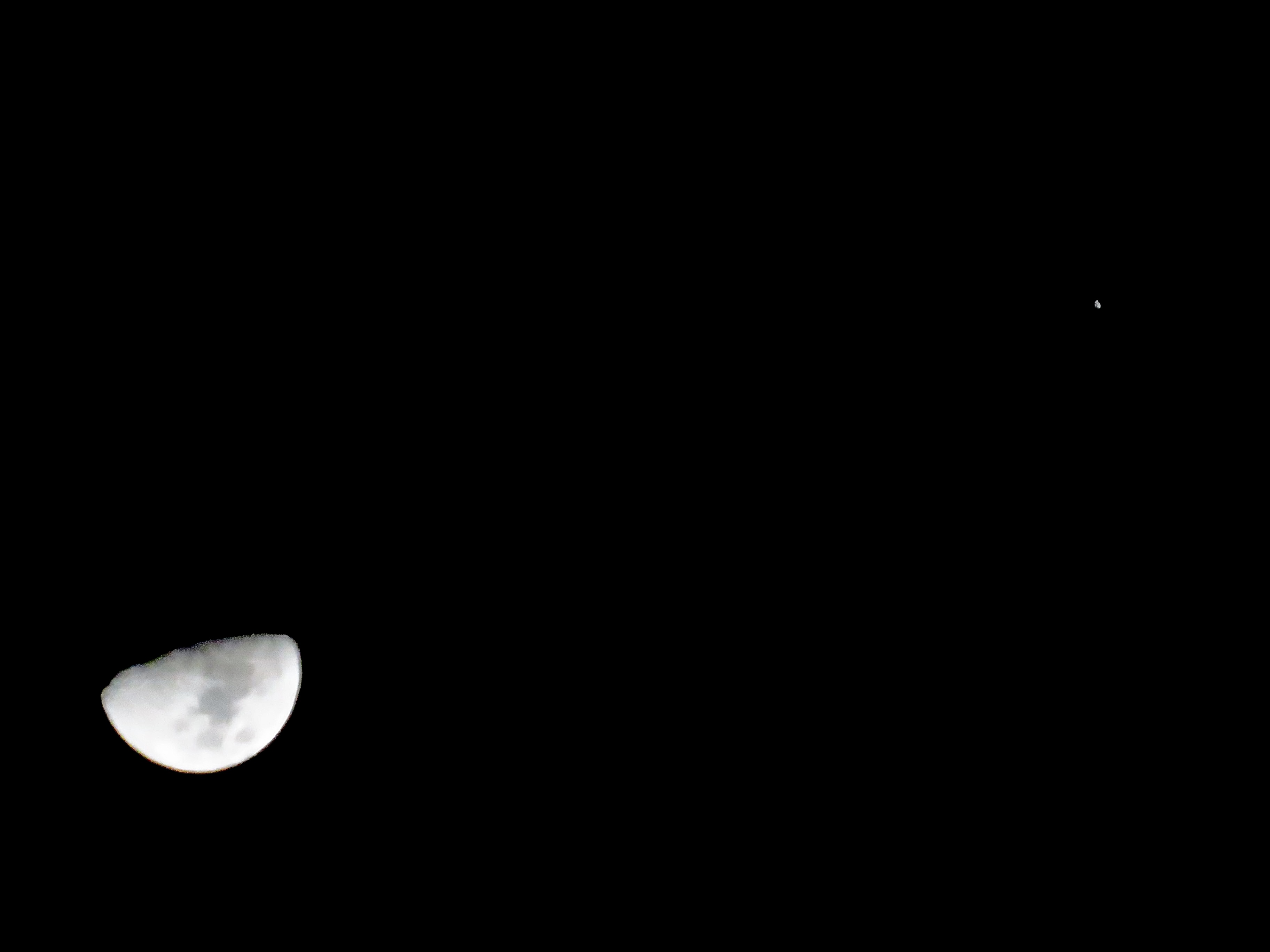
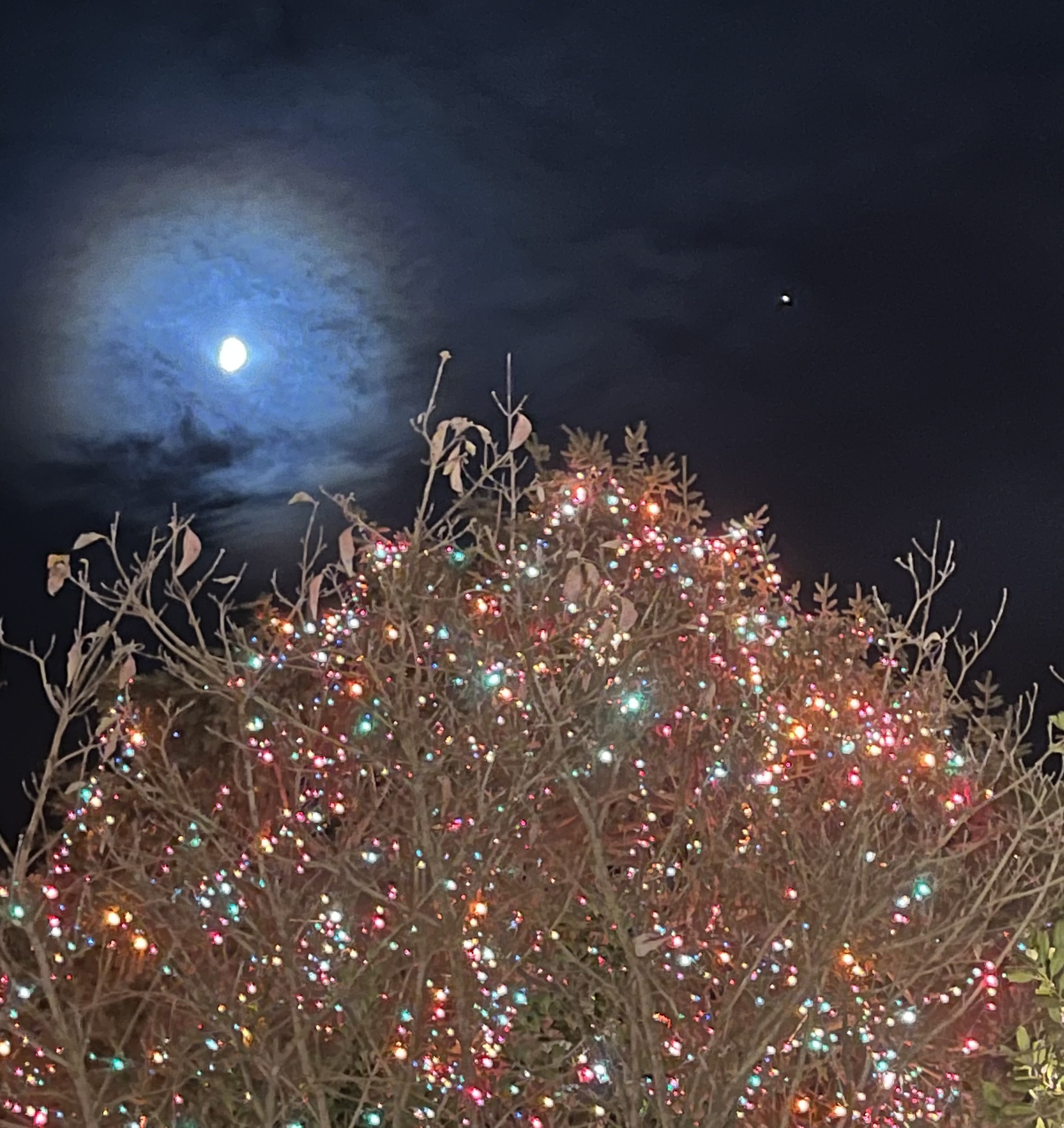
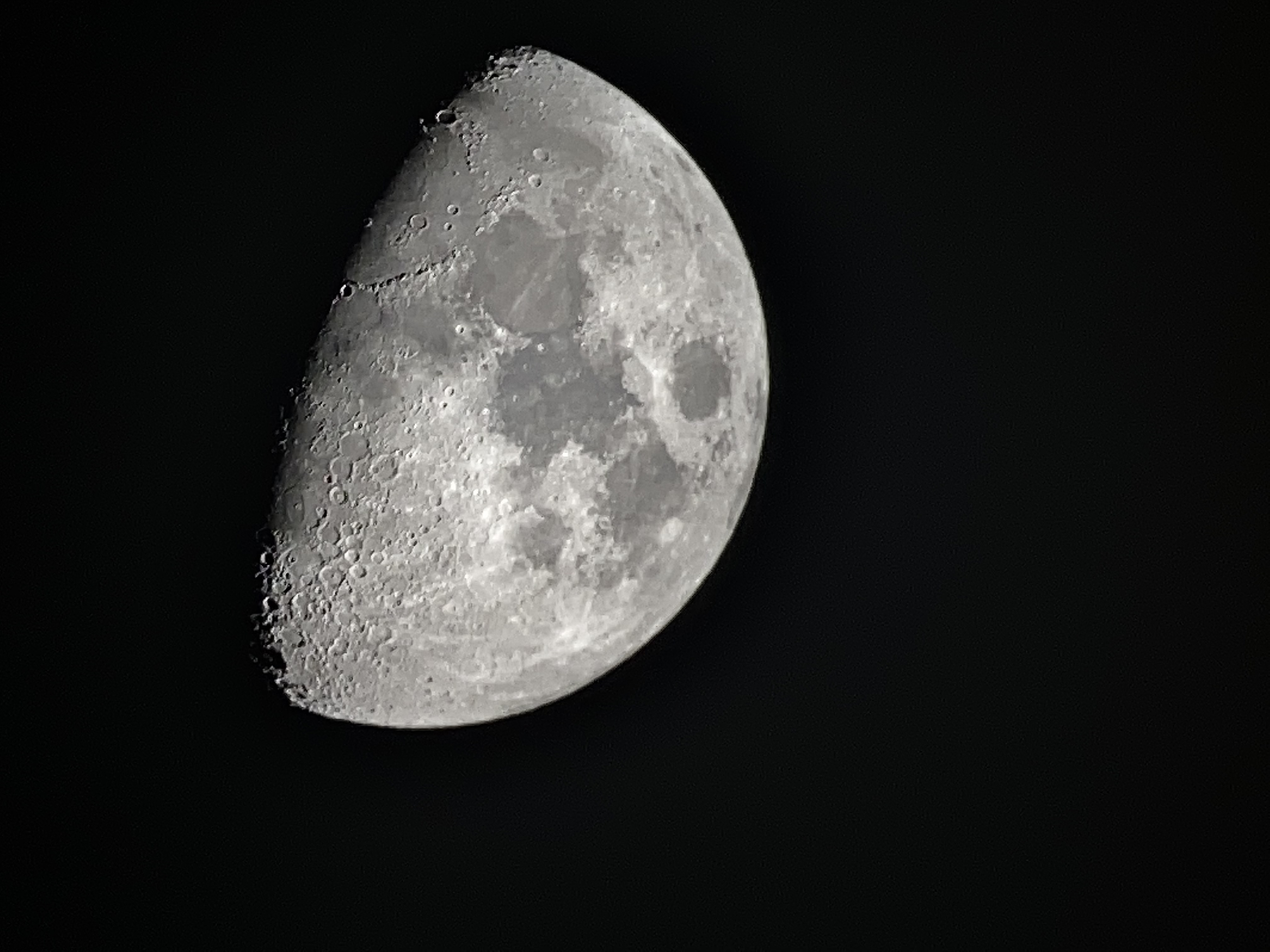
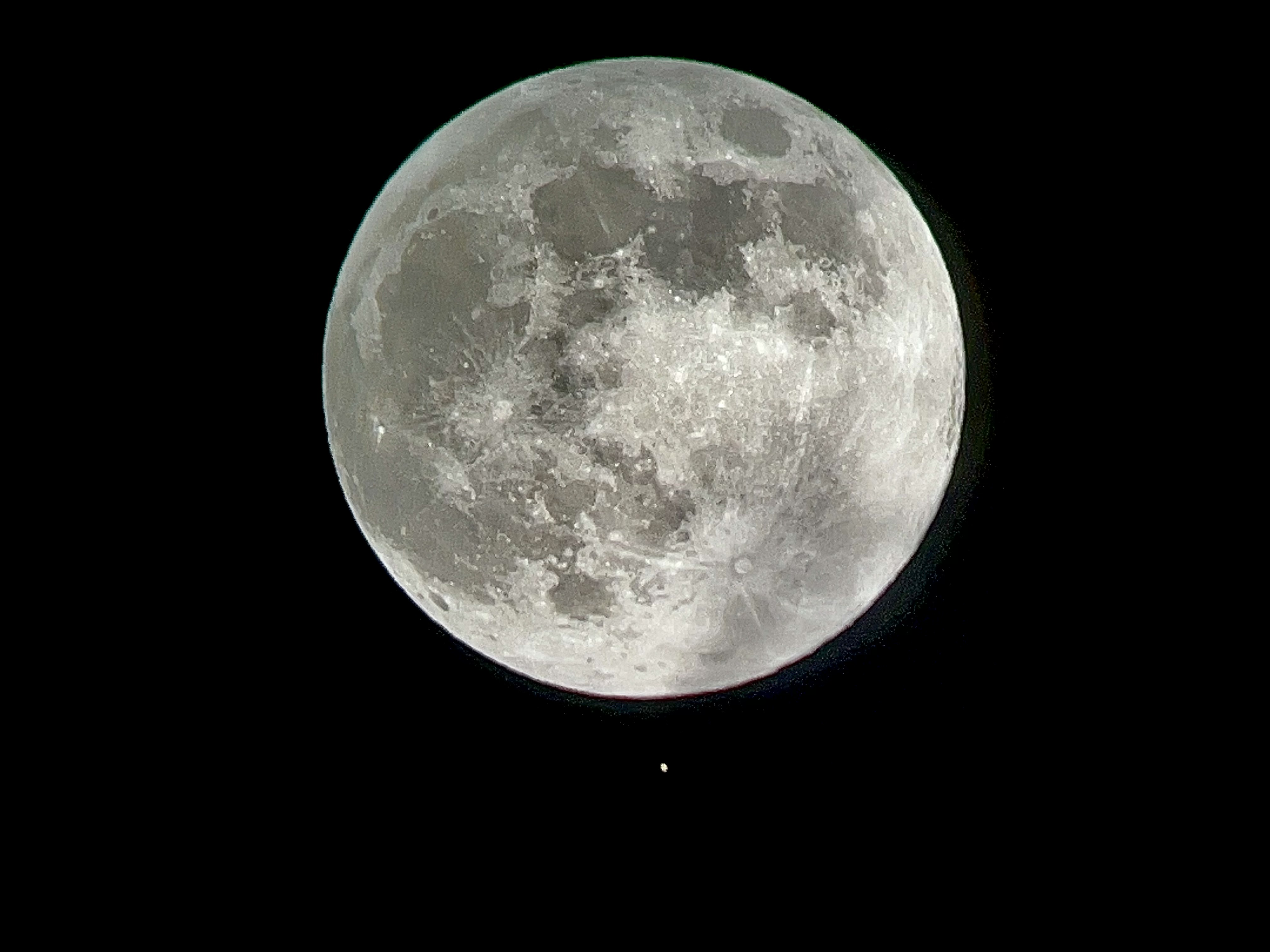
My name is Dan Mints and I started getting serious into amateur astronomy and astrophotography since February 2022. Almost a year later, I find it to be such a rewarding hobby. I started off with a Celestron Nexstar 8se and as I got further into astrophotography I upgraded to an AVX mount.
In December, my wife and I welcomed a new child to our family, Andrew. As he gets older, I hope that I can introduce him to the hobby as well! I recently purchased an ASIAIR and guidescope, which has allowed me to both automate the astrophotography process and improve the quality of my photos immensely. Not only that, it lets me stay inside and spend time with my new son instead of poking around on a laptop outside in the cold! My next area of interest is wide-field astrophotography, so I am looking to get a Samyang 135mm F/2 setup and take pictures of targets I could only image a small portion of with my C8.
Here are a few of my favorite shots done with the C8 over the past year:
Mysterious ‘whirlpool’ appears in the night sky above Hawaii An observatory in Mauna Kea, Hawaii captured footage of a flying spiral making its way through the night sky in the early morning hours of 18 January. Scientist believe the phenomenon is connected to the launch of a SpaceX satellite…more
-BBC
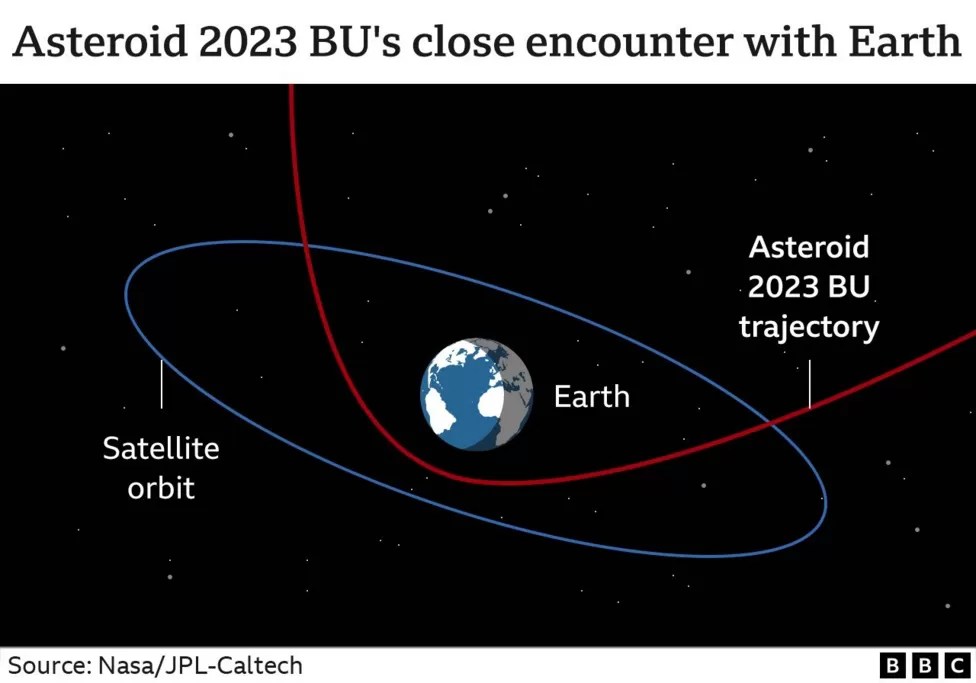
Asteroid 2023 BU: Space rock passes closer than some satellites Now it’s over, we can say it: a biggish asteroid passed by Earth a short while ago. About the size of a minibus, the space rock, known as 2023 BU, whipped over the southern tip of South America just before 00:30am GMT…more
-NYT
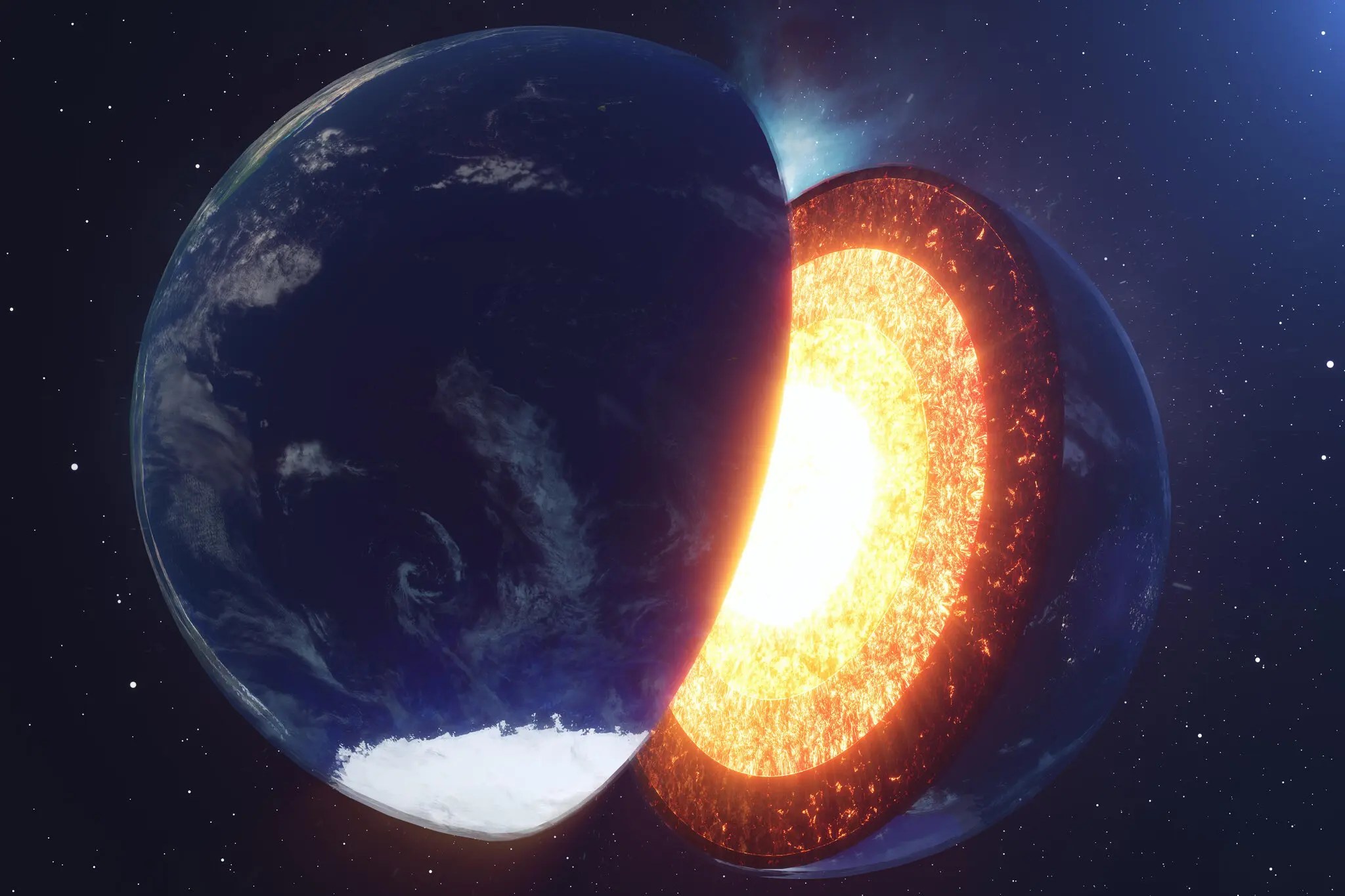
Earth’s Inner Core: A Shifting, Spinning Mystery’s Latest Twist Imagine Earth’s inner core — the dense center of our planet — as a heavy, metal ballerina. This iron-rich dancer is capable of pirouetting at ever-changing speeds. That core may be on the cusp of a big shift…more
-NYT
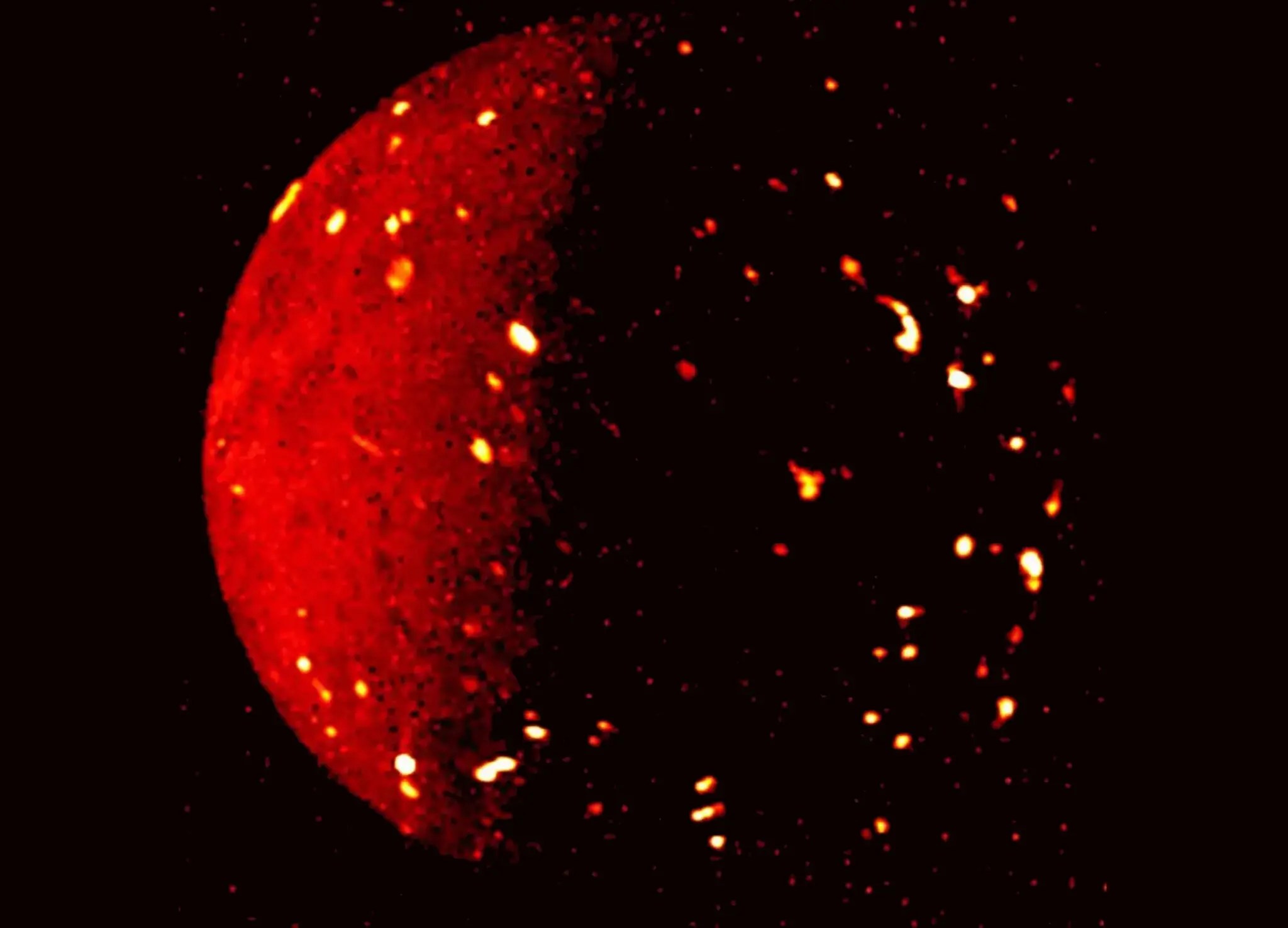
A New View of the Most Explosive Moon in the Solar System Io, the third largest of Jupiter’s moons, is caught in a pressurized, explosive dance. Orbiting near Ganymede and Europa, two of the other largest Jovian moons, and the planet itself, Io’s mineral composition is constantly pulled and pushed by gravity, creating frictional heat deep inside the moon. …more
-NYT
Where is Physics Headed (and How Soon Do We Get There)? The future belongs to those who prepare for it, as scientists who petition federal agencies like NASA and the Department of Energy for research funds know all too well. The price of big-ticket instruments like a space telescope or particle accelerator can be as high as $10 billion…more
-BBC
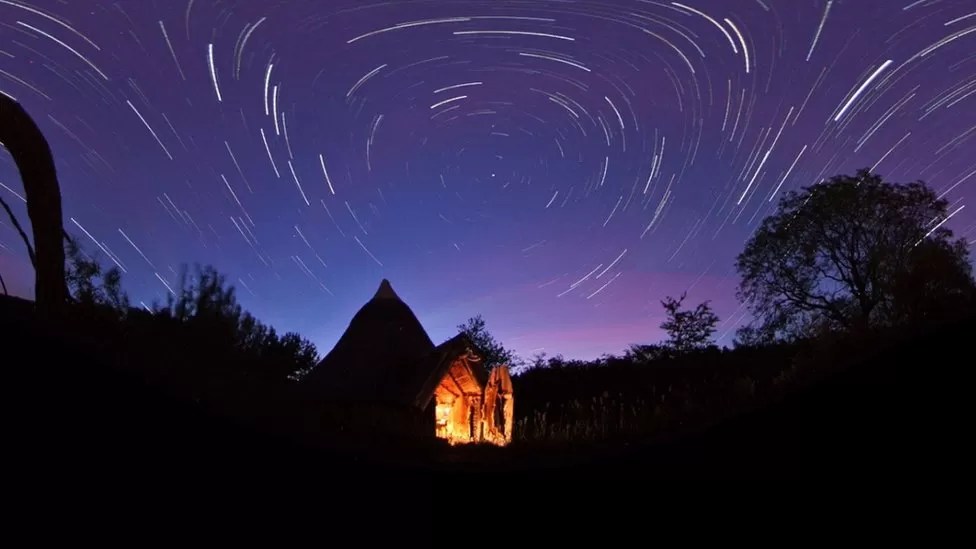
Yorkshire Dales: Dark sky sites set for added protection measures Strict new light pollution rules have been proposed to help protect some of the darkest skies in England. Harrogate Borough Council wants to bring in fresh controls for all new outside lights in the Nidderdale Area of Outstanding Natural Beauty (AONB)…more
-NYT
Are We Living in a Computer Simulation, and Can We Hack It? If you could change the laws of nature, what would you change? Maybe it’s that pesky speed-of-light limit on cosmic travel — not to mention war, pestilence and the eventual asteroid that has Earth’s name on it. Maybe you would like the ability to go back in time —…more
-BBC
Winchcombe meteorite: Is this the UK’s most important fireball? A PhD student looking into what scientists regard as the most important space rock ever to be recovered in the UK has said: “It’s pretty exciting”. Niamh Topping, 23, is in her first year at the University of Leicester, studying water and rock reactions in the early solar system…more
-NYT
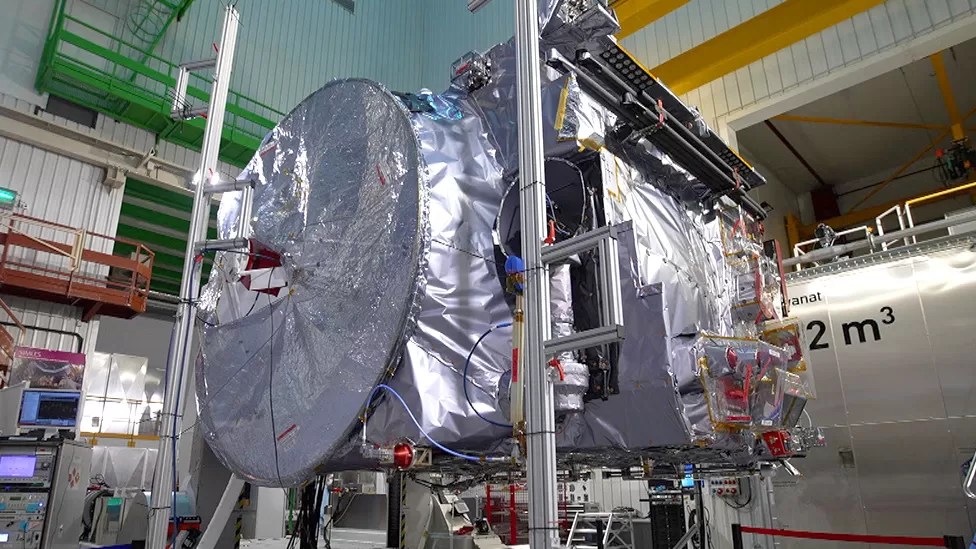
Europe’s mission to Jupiter’s icy moons ready for launch Europe is about to undertake one of its grandest ever space missions, to explore the icy moons of Jupiter. The Juice satellite is going through final testing in Toulouse, France, after which it will be shipped to the launch site in South America…more
-BBC
JCan humanity’s new giant leap into space succeed?ames Hugely technically challenging and costly goals have been touted, not least the aim of people living and working on other worlds, possibly within ten years – but in a divided world where international good will is scarce, are they realistic?Nasa’s return to the Moon has begun with its Artemis programme…more
by Rex Parker, PhD director@princetonastronomers.org
Denizens of Planet Earth Declare a New Year! There are goodreasons to have a little more hope this new year than the last few. The best development for AAAP in 2022 came late in the year as we returned to in-person meetings at our long-time base, the auditorium in Princeton’s Peyton Hall — home of the Astrophysical Sciences Dept. In 2023 we will conduct monthly “hybrid” in-person live plus remote Zooming meetings to give members and public the choice of how to attend. Of course, we want you to come in person when you can. However, note that the January 10 meeting will be remote by Zoom only. This is actually good news, as Peyton auditorium will be closed for the month for significant audiovisual hardware upgrade work by the university. This should make the technical part even better for our return on February 14 (monthly meetings are always the 2nd Tuesday at 7:30pm).
With the new year comes opportunity to improve. Though the club made progress last year in running virtual meetings and increasing membership, there are two areas that could be improved upon to enhance member experience and our effectiveness as a science-outreach organization.
Increase participation and contribution by members in regular monthly club meetings
Provide opportunities for learning and doing astro-photography in its many forms
One way to approach these goals is to take part in AAAP’s observing activities, for example the “AstroVideo Live!” sessions being held again this winter as they were on several occasions last year. You can participate even if you don’t have your own equipment, indeed the point is to show and demonstrate how it’s being done with the technology and equipment within reach of amateurs today. Announcements for these members-only sessions (plus family and friends) are sent by e-mail to the full membership. We look forward to seeing you in person either on campus or on Zoom over the next several months.
The “Un-journal Club” Wants You AAAP’s monthly meetings feature a guest speaker, usually a professional, followed by highlights of club activities and member conversations. We’re developing a tradition called the Un-journal Club, brief informal presentations given in the second half of the meeting by members. “Un-journal” means this is not grad school, and these short episodes don’t need scholarly journal-like topics, they only seek to engage members with what you care about in astronomy. You can use PowerPoint slides, JPEG’s, astro-images, travel pictures, book reviews, whatever you want (if desired, bring a USB memory stick or your own laptop). To get on the schedule for an upcoming meeting, please contact me or program chair Victor Davis.
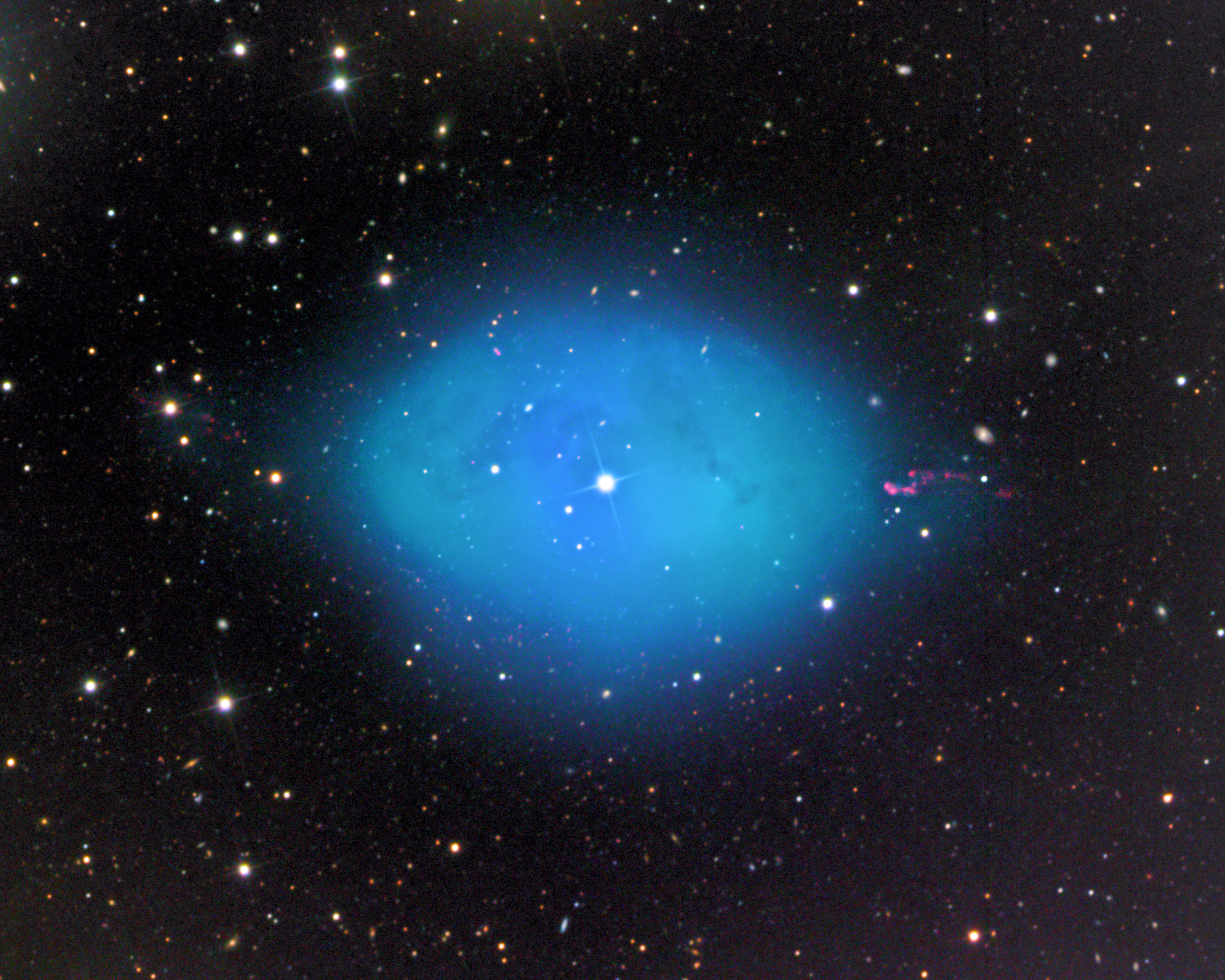
“Robin’s Egg” Planetary Nebula NGC 1360 in the southern constellation Fornax. The distinct blue colors (image below) indicate high levels of ionized oxygen illuminated by the central white dwarf star, now known to be a binary star. The reddish arc indicates a jet of matter ejected from the suspected binary star during nebula formation. Distance ~1800 light years, angular size ~11×7.5 arc-min. Did this nebula come from a binary star system as discussed in the section below? Astro-photo by Rex Parker taken with the 16” Planewave PROMPT-2 telescope at Cerro Tololo in the Chile Andes.
Will Our Sun Become a Planetary Nebula? Among the most beautiful celestial objects we can see and image in our telescopes are the colorful planetary nebulae, for example the Robin’s Egg Nebula above. These are not planets of course, the name is a hold-over from the hazier views of astronomers centuries ago. The prevailing theory for their formation is that stars of a certain size range will eventually become planetary nebulae as their nuclear fusion fuel runs low. It has been thought that in the fullness of time our sun, sol – a G-type main sequence star – is destined to become a red giant engulfing the inner planets including earth. The subsequent physics are pretty well understood. As nuclear energy release diminishes, the core of the red giant collapses into a super-dense white dwarf, followed by expulsion of the outer layers of gases away from the surface, ergo a planetary nebula forms.
Writing these lines led me to do a little review, and I was startled to read that the thinking is changing. This may not be our future glorious doom after all. Sol is now being reclassified as a yellow dwarf star (G-type stars with mass range 80-100% of sol), which may be too small to drive the physics needed to enter the red giant/nebula sequence. At least our sun is big within its peer group, though I prefer to associate “dwarf’ with JRR Tolkien rather than our sun. The thinking now, though still debated of course, is that G-type stars need to be at least one-fifth heavier than our sun in order to drive the planetary nebula process. The proposal is that most planetary nebula we see in our galaxy actually formed from binary star systems. Think about this next time you observe a planetary nebula in your telescope. Oh well… where would humanity be without classifying and theorizing? Ask Linnaeus, the 18th century scientist who developed the classification mania whose influence still grips the way natural sciences operate.
The January meeting of the AAAP will take place virtually only (via Zoom) on Tuesday, January 10th at 7:30 PM. As usual, the meeting is open to AAAP members and the public.
Please take note that due to renovations to our customary meeting room in Peyton Hall, we will not have access to meet in person there this month. Virtual participants will be able to log in to the meeting as early as 7:00 pm to chat informally with others who log in early. We’ve had some security concerns during a past broadcast, so we’re re-instituting the Zoom waiting room. Please be patient for the host to recognize you and grant you entry into the meeting. Be aware that you must unmute yourself to be heard by other participants.
For the Q&A session, you may ask your question using Zoom’s chat feature or you may unmute yourself and ask your question directly to the speaker. To address background noise issues, we are going to follow the rules in the table below regarding audio. If you are not speaking, please remember to mute yourself. You are encouraged, but not required, to turn your video on.
Former Program Chair Ira Polans will introduce this month’s guest speaker, as I will be on vacation the week of the meeting.
We expect to resume in-person meetings (with hybrid Zoom option) at Peyton Hall next month.
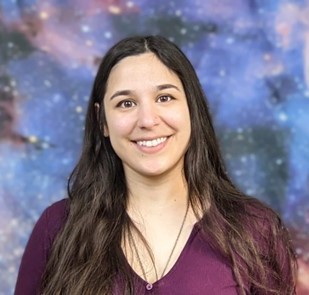
Alyssa Pagan Science Visuals Developer Space Telescope Science Institute (STScI) apagan@stsci.eduFeatured
The Art and Science of Visualizing Webb Imagery
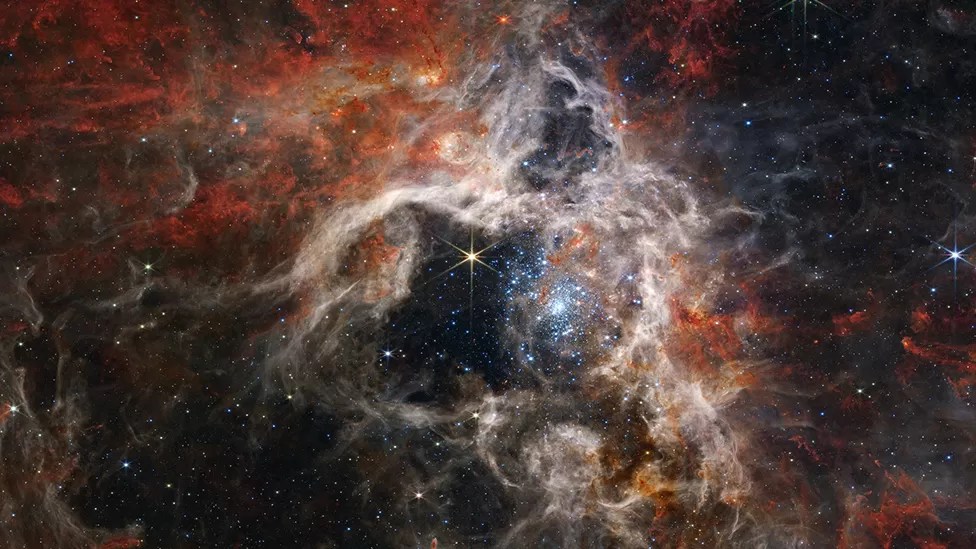
Last Christmas, The James Webb Space Telescope began its journey toward its gravitationally stable L2 vantage point nearly a million miles from Earth, flawlessly unfolding its 18-panel hexagonal mirror and unfurling its tennis-court-sized sunshade along the way. It was an inspirational feat, surmounting enormous technical challenges and budget woes that nearly put an end to the whole ambitious project – several times. Fast forward nearly seven months to July 12, 2022 when the first science images from JWST were revealed to the public. From the start, it was clear that JWST is fundamentally altering our view of our cosmos. But JWST is not a point-and-shoot camera. The workflow from raw data to sock-dropping images is non-trivial to say the least. As our guest speaker will explain, creating color imagery is a delicate balance between art and science, which is guided by the fundamental goals of astronomical imagery; to educate, inspire, and engage.
Ms. Pagan will give us an in-depth look at the process of taking raw, black-and-white astronomical data and translating it into color imagery that reveals both astronomical insights and great beauty. Using real data from the Webb telescope, she will demonstrate the varying stages in processing Webb imagery from acquiring data, scaling brightness values, detector artifact correction, and assigning colors that adhere to aesthetic and scientific principles.
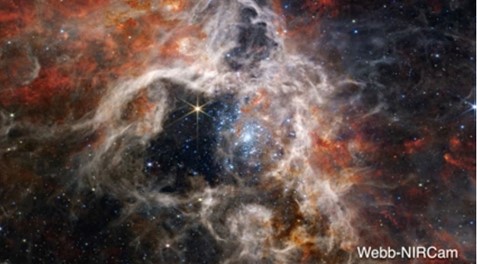
30 Doradus Credit: NASA/STScI/A. Pagan
Alyssa Pagan Alyssa Pagan is a Science Visuals Developer in the Office of Public Outreach at the Space Telescope Science Institute. She earned a bachelor’s degree in Art and Design from Towson University, and subsequently a degree in Astronomy from The University of Maryland, College Park. Leveraging her talents in art and science, Ms. Pagan produces color images of astronomical objects that are both scientifically informed and aesthetically compelling, striving to make the Universe and our understanding of it more accessible, inspiring, and engaging.
AAAP webcast: This month’s AAAP meeting, beginning with Rex’s opening remarks and ending at the beginning of the business meeting, will be webcast live on YouTube and recorded for subsequent public access on AAAP’s YouTube channel. Be aware that your interactions during this segment, including questions to our guest speaker, may be recorded for posterity.
Join YouTube Live to listen to the speaker Ms. Alyssa Pagan using the link below –
This session will be recorded and saved on YouTube. Send me an email at program@princetonastronomy.org if you have any concerns
Using Zoom: While we are social distancing, the AAAP Board has chosen to use Zoom for our meetings, based on our belief that many members have already used Zoom and have found it easy to use. One of its great features is you can choose whether you want to install the software on your computer or use it within your browser.
Please make sure you have Zoom installed on your computer. You do not need a Zoom account or to create one to join the meeting. Nor are you required to use a webcam.
Please see below for the link to the meeting, or visit our website.
There is no “Unjournal Club” presentation scheduled this month. As you may know, guest speakers receive a baseball cap with the AAAP logo embroidered upon it as a “thank you” for making a presentation to us. We’re expanding the hat giveaway to members who contribute an “Unjournal Club” presentation to encourage participation.
We hope to make these short presentations a regular feature of our monthly meetings. We’d like to know what members are doing or what members are thinking about in the broad range of topics encompassed by astronomy. A brief ten-minute (or so) presentation is a good way to introduce yourself and the topics you care about to other club members. If you are interested in presenting a topic of interest, please contact either director@princetonastronomy.org or program@princetonastronomy.org.
A look ahead at future guest speakers:
February. 2023
Jenny Greene, Princeton University Professor of Astrophysics Jenny recently wrote an article on middleweight black holes for Sky & Telescope. She will discuss the contents of her article.
March 14, 2023
Joe DePasquale, Space Telescope Science Institute Joe is Senior Data Imaging Developer in the Office of Public Outreach at the Space Telescope Science Institute. A colleague of Alyssa’s, Joe will describe his work turning JWST data into images.
April 11, 2023
Ira Polans, former Program Chair of AAAP Rising nearly 400 feet above the desert floor in a remote section of ancient Anasazi territory in New Mexico is a sacred Native American site that a thousand years ago revealed the changing seasons to Anasazi astronomers. Ira will present a documentary film about the “Sun Dagger” and talk about indigenous people of New Mexico. Note that this film is solely for viewing by in-person members, as copyright restrictions will not permit broadcasting it on the internet.
May 9, 2023
Gary Rendsburg, Distinguished Professor of Jewish Studies and History at Rutgers Prof. Rendsburg will talk about “The Jewish Calendar,” with emphasis on its astronomical connections to lunar months, intercalated month to adjust to the solar year, festival days, and new moon observances.
June 13, 2023
Bill Murray, AAAP’s Outreach Director and staffer at NJ State Museum planetarium Bill will give his traditional planetarium show at the New Jersey State Museum in Trenton.
As always, members’ comments and suggestions are gratefully accepted and much appreciated.
Assistant Director Larry Kane convened the meeting at 1933 in the Peyton Hall auditorium and on Zoom and YouTube. We continue to work out the technical details to make our meetings hybrid by transmitting the in-person gathering. Mega thanks to Observatory Co-Chair Dave Skitt for shouldering this challenge, with the assistance of his wife, Observatory Co-Chair Jen, and Member Tom Swords.
At 1935 Program Chair Victor Davis introduced speaker Dr. Joshua Winn, Professor of Astrophysical Sciences and Director of Graduate Studies, Princeton University. His topic was Exoplanets: Science and Science Fiction.
About 30 attended the talk in person and about 40 watched on Zoom.
The meeting was reconvened at 2101.
Everyone is reminded that the January meeting will be virtual only. The Peyton Hall auditorium will be closed for a major audio/video upgrade “to bring it up to campus standard.” Future speakers who have been scheduled are listed in the Sidereal Times.
A number of our members Zoomed the Mars -Moon conjunction from the observatory and from their scopes at home on December 7. Quite a few of the rest of us were happy to watch from our own homes.
The meeting was adjourned at 2129.
Our membership currently numbers 191. 53 have joined this calendar year, 27 since the June meeting. We have had 107 renew while 55 have allowed their membership to expire, giving us a 66% retention rate.
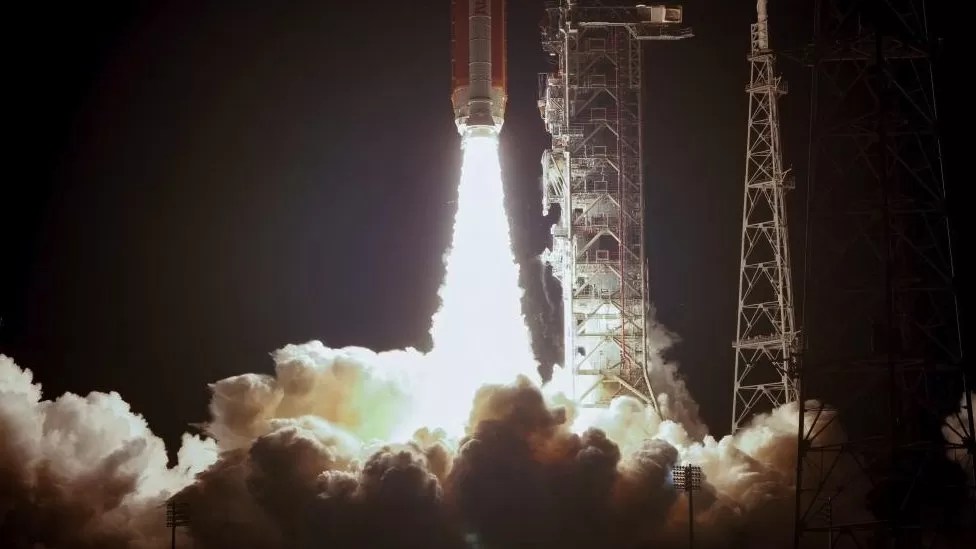
Artemis, the twin sister of Apollo, rises after five decades. The recent Artemis mission is NASA’s attempt to send astronauts back to the moon after a lapse of five decades. The initial mission carried a dummy crew in its capsule Orion which rode on top of a launch system called SLS (Space Launch System). This mission validated all the parameters before actual humans are launched towards the moon in a couple of years time. The launch and the journey to the moon and the return for a splashdown into the Pacific ocean all worked out well.
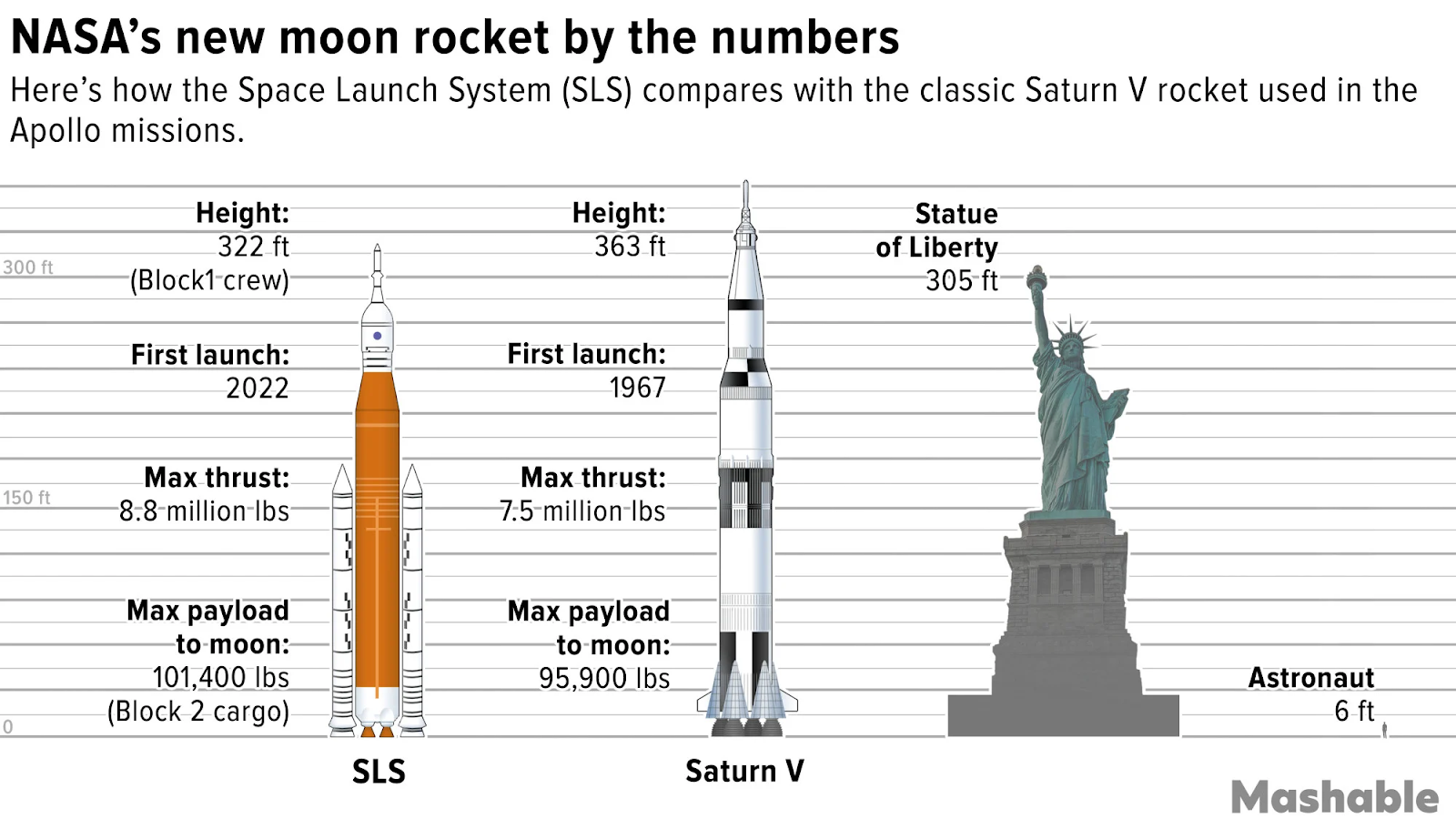
The SLS is very close to the Saturn V rocket which was used for earlier manned missions to the moon in the 1970s. The picture below, courtesy NASA, shows the two rockets side by side along with the famed Statue of Liberty in New York City. In comparison, the astronaut stands as a dot to the right of the Statue of Liberty.
The first stage of SLS is the lower half marked in orange. It houses the liquid hydrogen and liquid oxygen tanks which fuel the 4 RS-25 engines at the bottom. These are the same engines which powered the space shuttle of yesteryears. To each side is a solid rocket booster which provides additional thrust. Very similar to the space shuttle design.
The topmost spire-like structure is the launch abort system. If for some reason, the rocket needs to be aborted after the launch, the spire along with the astronaut carrying capsule are separated out and taken to a safe landing. The bell shaped tiny structure below the spire is the crew capsule. Named Orion, it carries human beings to the moon. For Artemis 1, it carried dummy human beings.
Just below the crew capsule is the cylindrical service module which carries the solar arrays and the communication equipment. This unit has been built by Airbus and is Europe’s contribution to the mission. The crew capsule and the service module fly together as one unit to the moon and come back to the Earth. The service module is jettisoned just before Orion enters the Earth’s atmosphere. Pretty much like the Apollo mission.
Wedged between the first stage and the service module top stages is the Interim Cryogenic Propulsion Stage (ICPS). It is likely to be replaced by other designs in future Artemis missions. That is why the word “interim”. After launch, the first stage falls off after pushing the rocket enough towards space. The ICPS pushes for some more time and then falls off. What is left is the crew capsule and service module which travel together for most of the life of the mission.
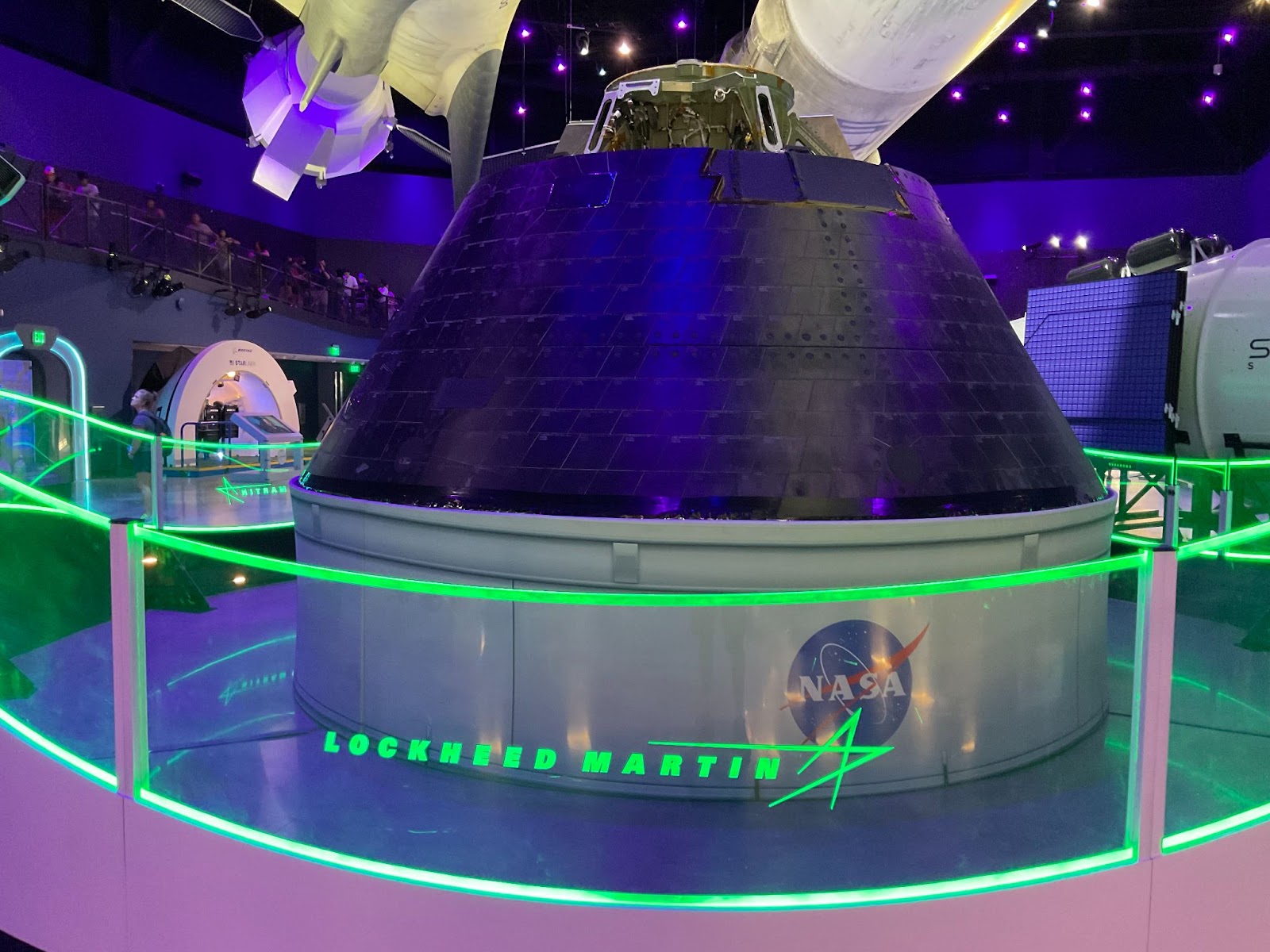
I recently visited the new exhibit called “The Gateway” at Kennedy Space Center. I took a picture of the mockup of the Orion crew module as shown below.
Artemis mission involved a new re-entry procedure called the skip entry, which meant that Orion dipped into the upper part of Earth’s atmosphere and bounced back into the atmosphere and then entered again for a splashdown. It is like skipping a rock across the water in a river or lake wherein it bounces and then on the final bounce, sinks into the water. The skip entry will allow astronauts to experience lower g-forces. Splitting up the acceleration events lowers the heat rate and the thermal stresses it creates on the crew module. It also allows for more precise splashdown within a narrow zone in the Ocean.
We have a limited inventory of the components available for future Aretmis missions, given the older technology the launch vehicle is based on. SpaceX’s Starship is on the horizon which will be flight tested early 2023. It is a two stage rocket and both of them are designed to come back safely to Earth and land. It is intended to be a fully reusable rocket and will reduce the launch costs. It will be powered by the newer Raptor engines compared to SLSs’ older RS-25 engines.
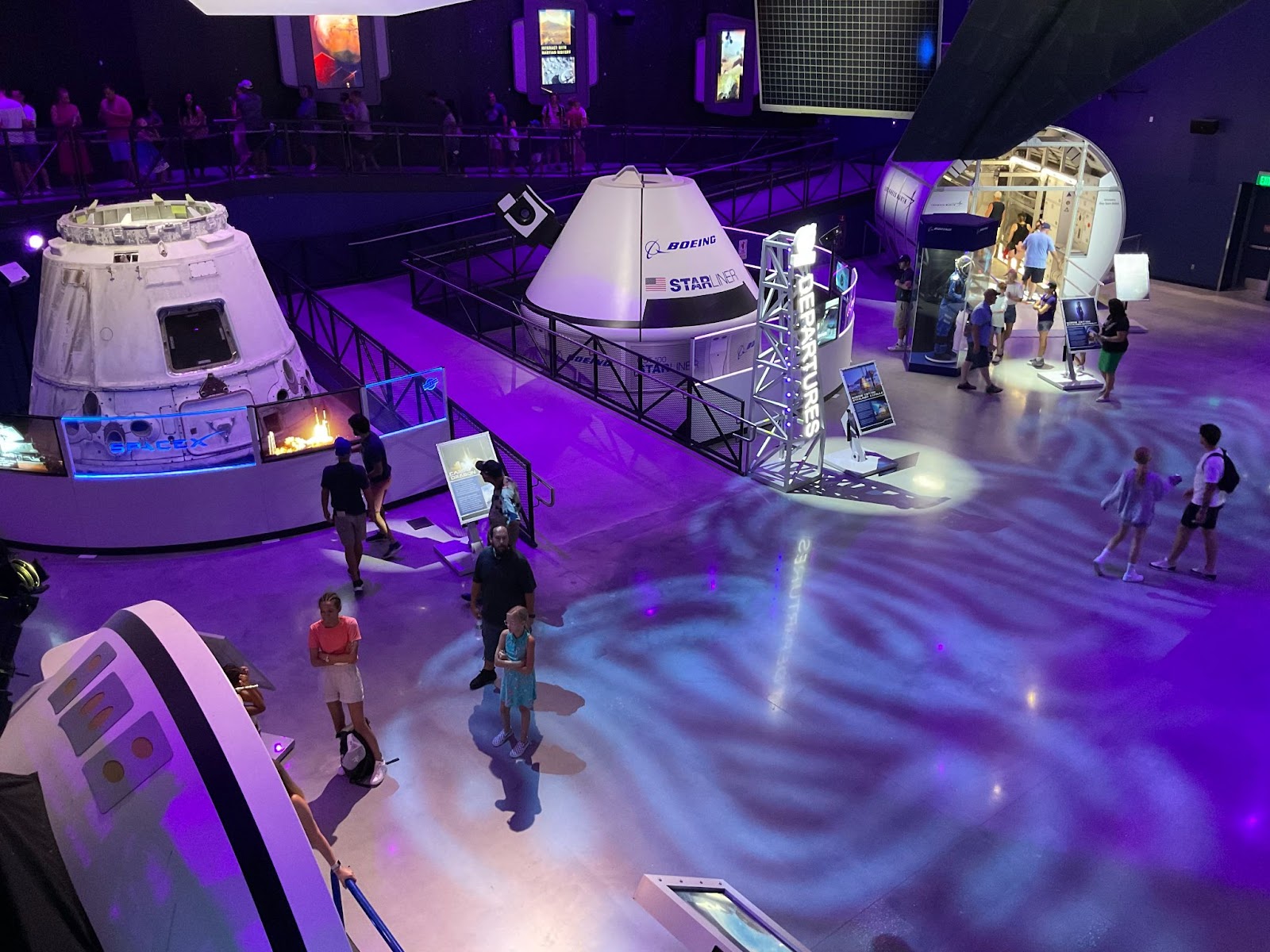
The crew module will be SpaceX’s own Crew Dragon shown in the picture below which I took at the Gateway exhibit. The module on the left where two people are standing is the Crew Dragon. In the center of the picture is Boeing’s Starliner which is another option for a crew module. To the right of the picture is the inflatable deep space habitat which might be used in future deep space missions.
With the rise of Artemis, the next few years look promising in going back to the moon and making this a regular exercise as the technology matures further and the costs come down.
My first foray into the “dark side” of astroimaging …
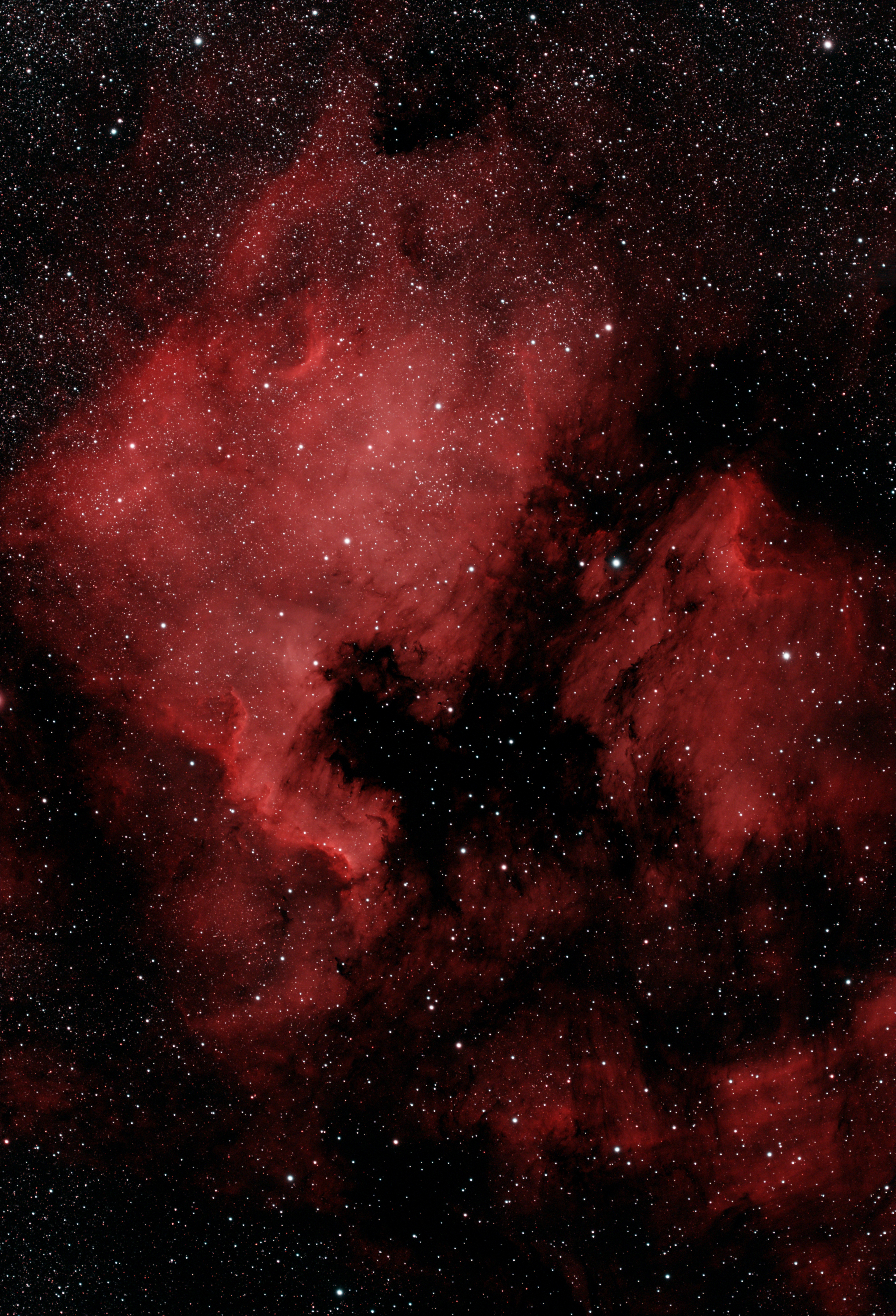
The image of the North America Nebula (NGC 7000) and the Pelican Nebula (IC 5070) below, was taken at my home in MA in September with my portable imaging rig.
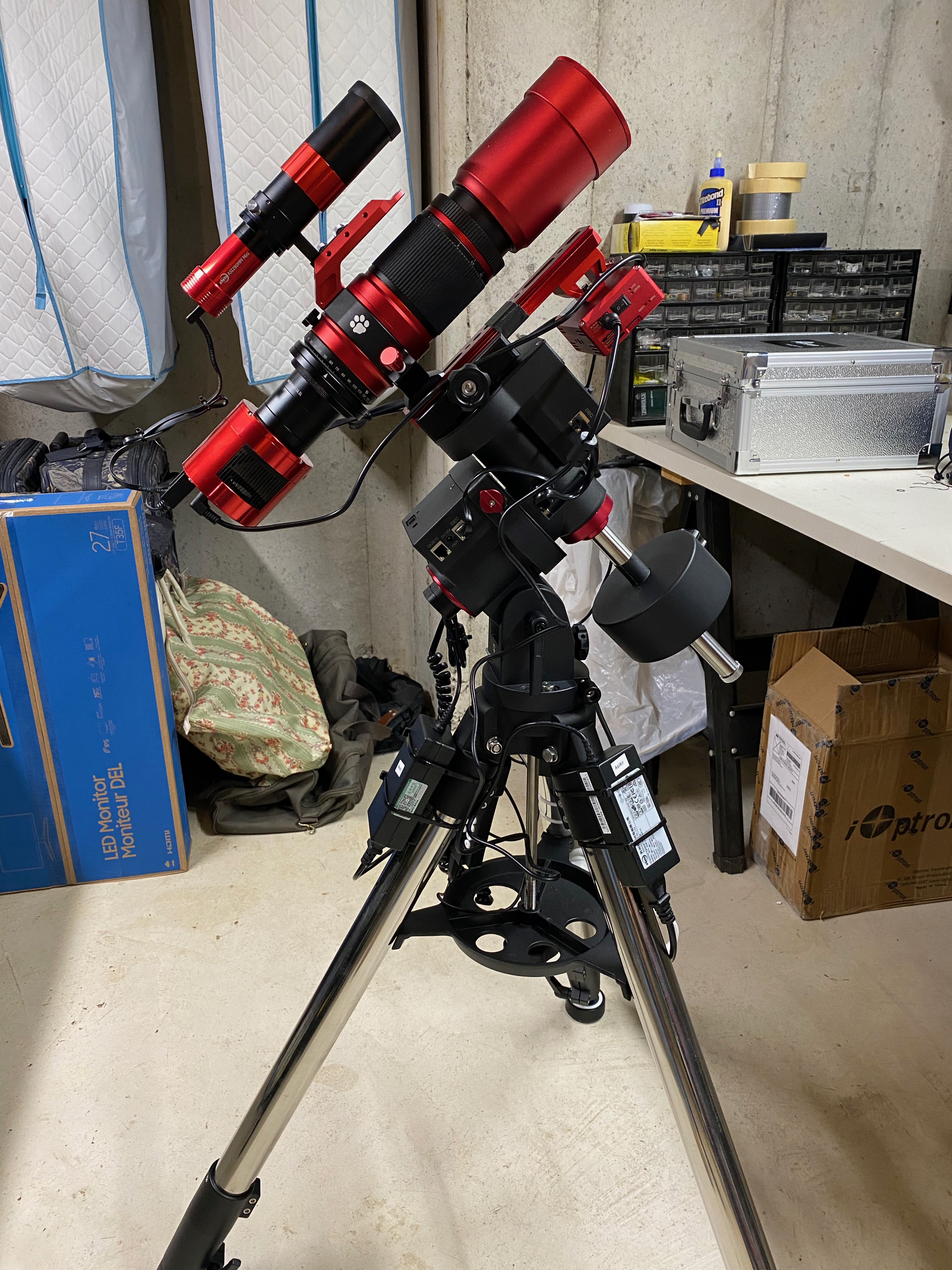
Here are the details: North America Nebula (NGC 7000) and the Pelican Nebula (IC 5070) 25 5 min. subs (Total 2 hours 5 min. integration) Calibrated with darks, flats and bias RedCat 51 petzval refractor (51 mm f/4.9) ZWO ASI294MC Pro (cooled to -10° C) Optolong L-Enhance filter IOptron GEM28 mount Processed in Photoshop
I’m just learning how to use Photoshop for astronomical image processing. The image was processed using a few stretches and black point setting.
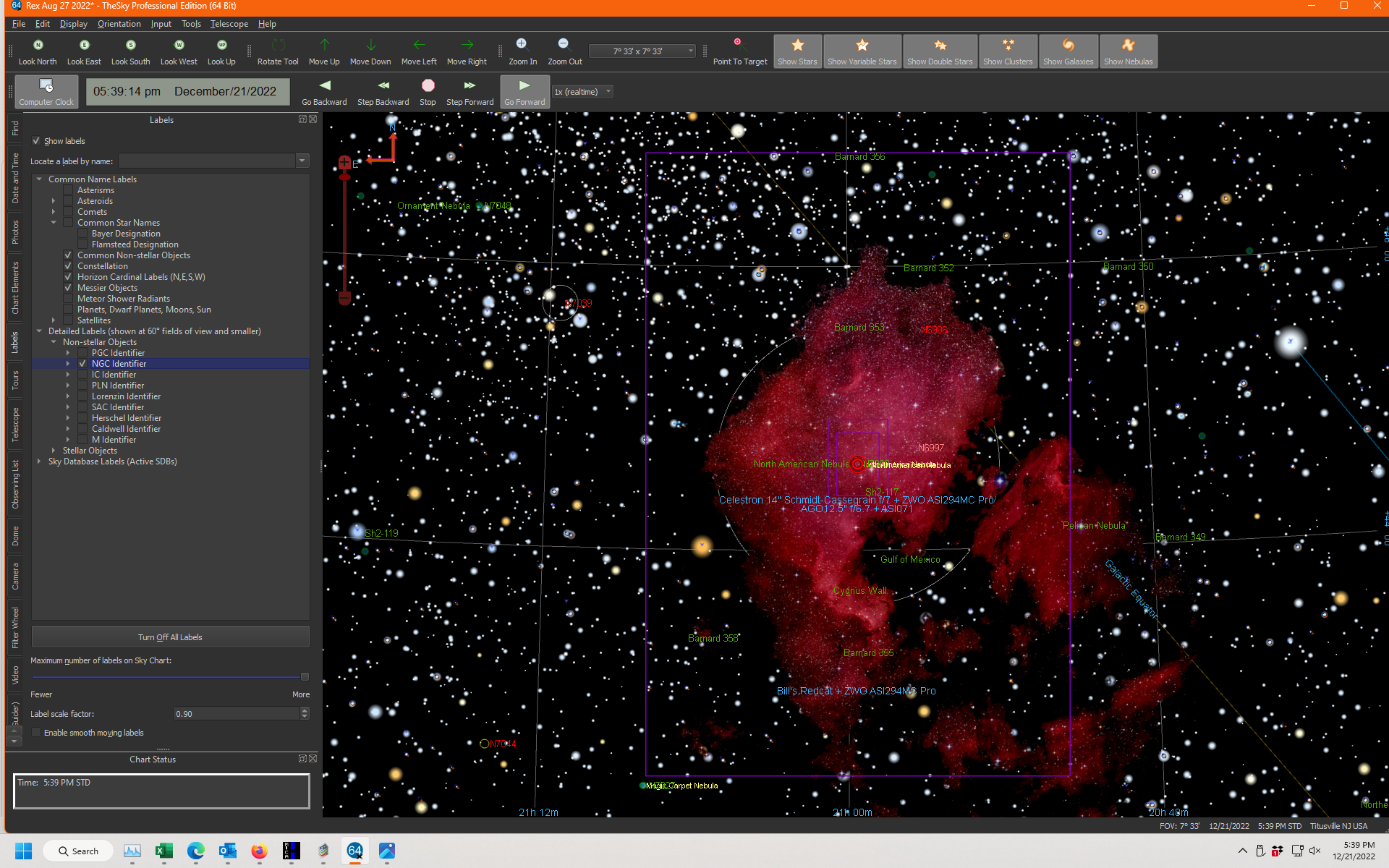
I was curious about how wide, so I put Bill’s specs into TheSkyX along with the club’s C14/ASI294 and my AGO12.5”/ASI071. The latter are those two tiny purple rectangles in the middle, Bill’s FoV is the big purple rectangle (4.4 x 3 degrees).
Here’s another Christmas present for AAAP astro imagers –
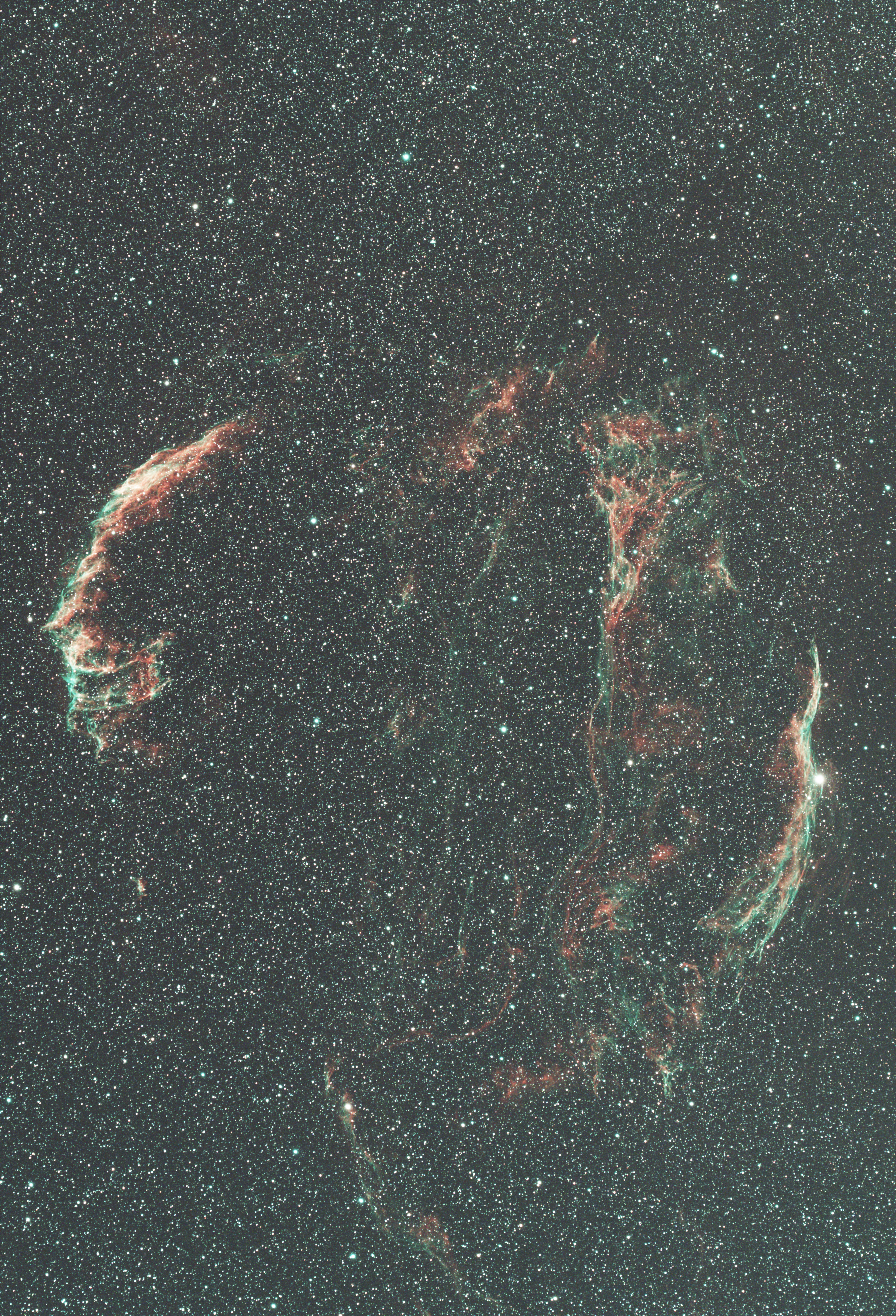
The image below is of the Veil Nebula (NGC 6992-5 on the left and NGC 6960 on the right with Pickering’s Triangular Whip, NGC 6979, in the middle) was also taken at my home in MA in September with my portable imaging rig. Here are the details:
Veil Nebula (NGC 6992 6996 6979 6960) 18 5 min. subs (Total 1 hour 30 min. integration) Calibrated with darks, flats and bias RedCat 51 petzval refractor (51 mm f/4.9) ZWO ASI294MC Pro (cooled to -10° C) Optolong L-Enhance filter IOptron GEM28 mount ASIair as controller Processed in Photoshop
Having survived this December’s popular games of “cloud dodging” and “schedule Tetris,” I’m happy to share these photos which sum up December 2022! I hope everyone is having a great holiday season! Sending wishes for a happy and healthy New Year with many clear skies!
Artemis: Nasa’s Orion capsule breaks distance records The US space agency’s Orion capsule has reached a key milestone on its demonstration mission around the Moon. The ship is uncrewed on this occasion, but if it completes the current flight without incident…more
-BBC
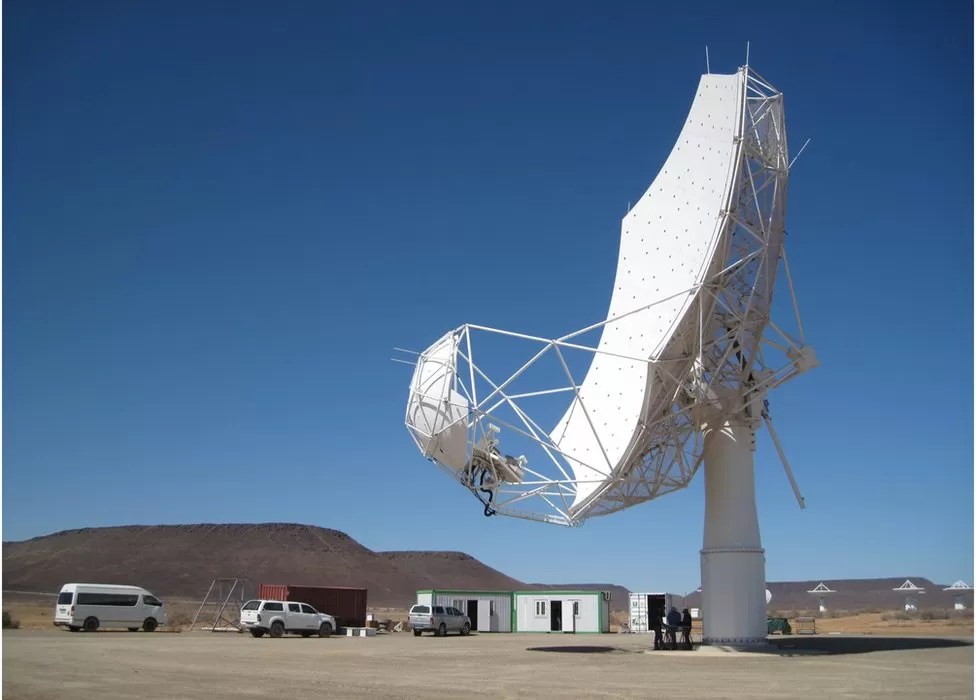
SKA: Construction to begin on world’s biggest telescope One of the grand scientific projects of the 21st Century begins its construction phase on Monday. The Square Kilometre Array (SKA) will be the largest radio telescope in the world when completed in 2028…more
-NYT
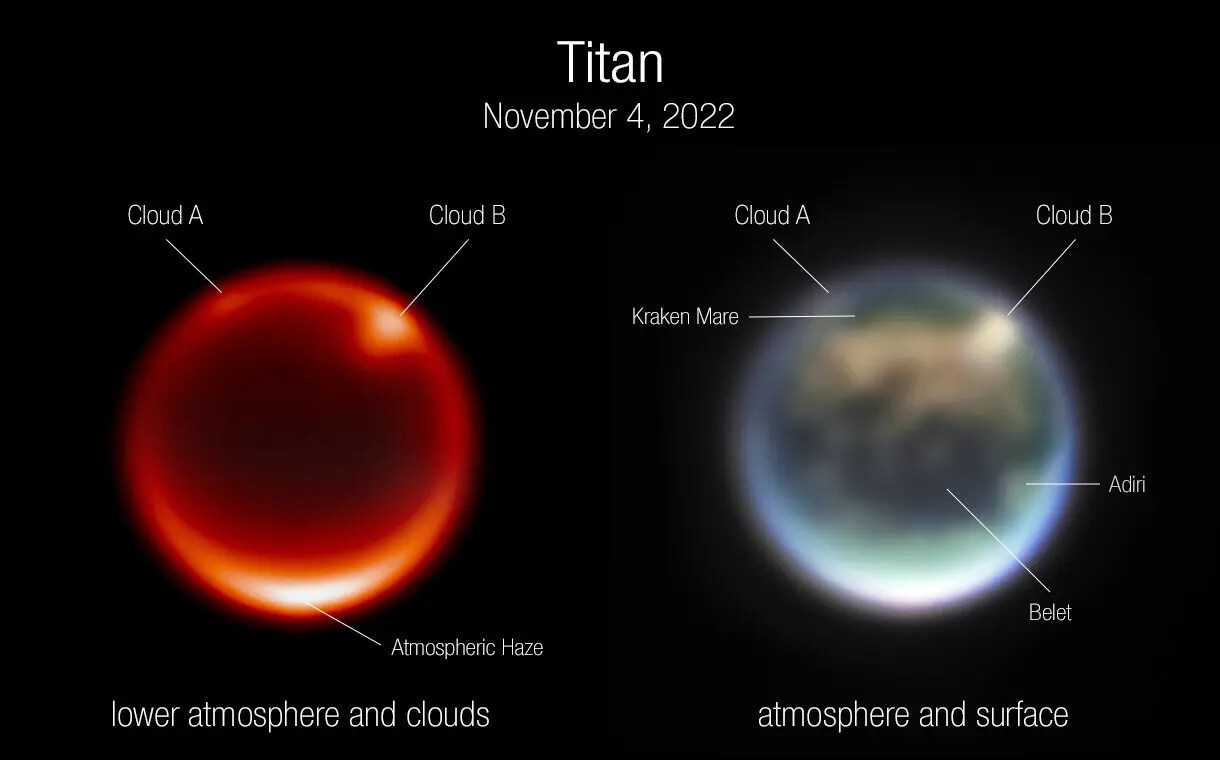
Telescopes Team Up to Forecast an Alien Storm on Titan Saturn’s largest moon came under the gaze of NASA’s powerful Webb space observatory, allowing it and another telescope to capture clouds drifting through Titan’s methane-rich atmosphere. …more
-BBC
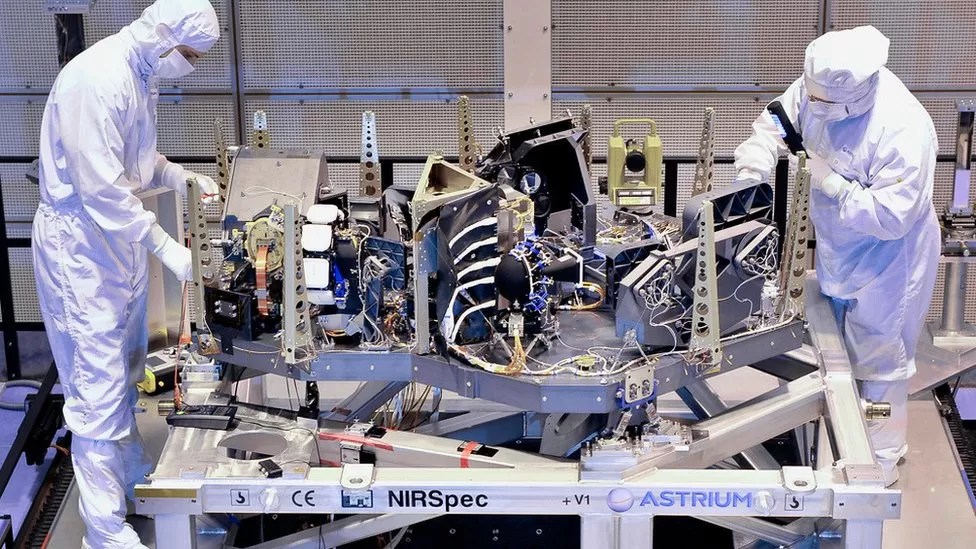
James Webb Space Telescope ‘fingerprints’ earliest galaxies It’s not much to look at – just a little red blob with the rather quirky name of JADES-GS-z13-0. But this faint smudge, imaged by the James Webb Space Telescope, is the “most distant galaxy” so far confirmed by gold-standard…more
-NASA
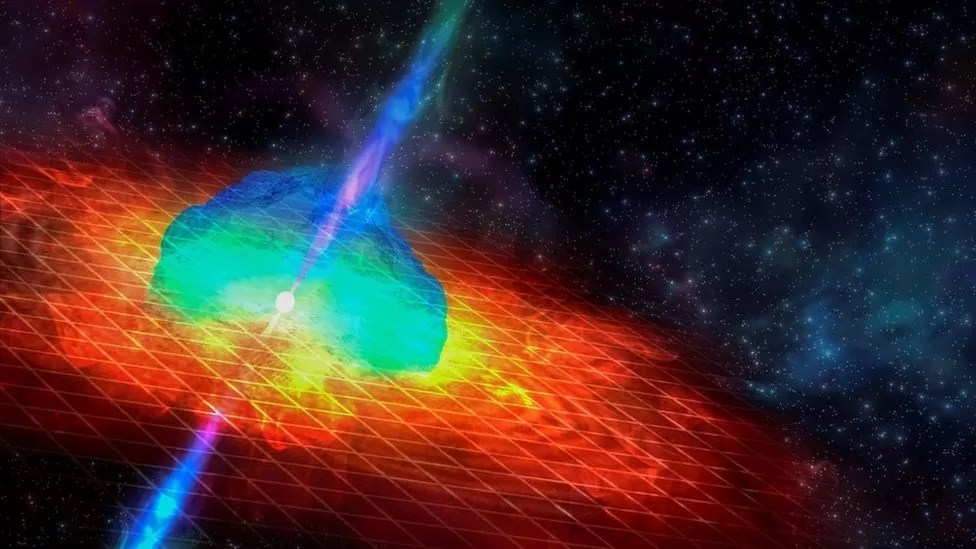
Remarkable space blast identified as black hole collision The event, a gamma-ray burst, was detected by a space telescope and a NASA observatory. A team of scientists including University of Leicester physicists described the minute-long blast as a rare cosmic event…more
-NYT
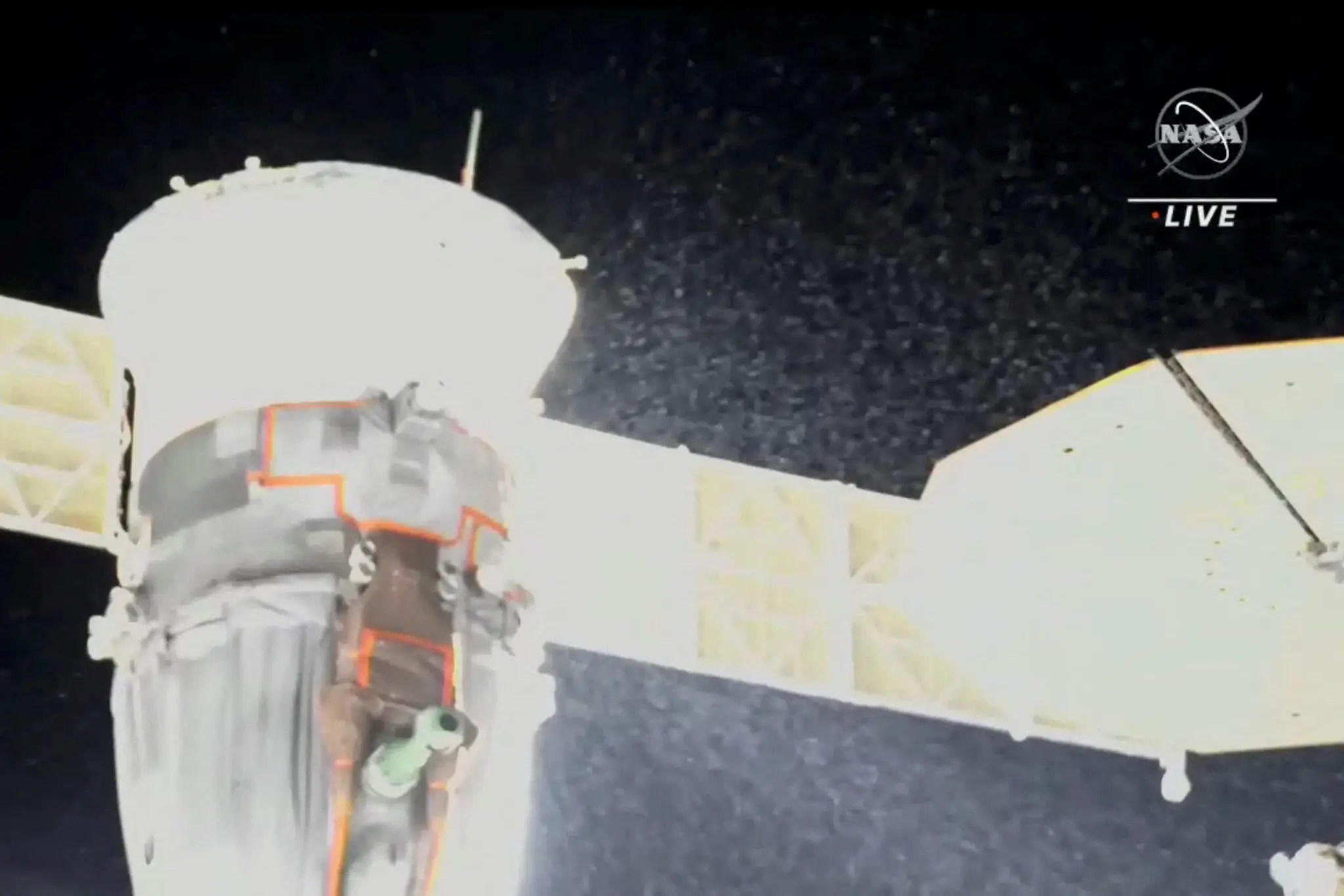
Russian Spacewalk Is Canceled Because of Coolant Leak A spacewalk by two Russian astronauts aboard the International Space Station was canceled at the last minute after mission controllers noticed a spray of white particles leaking from an attached spacecraft. The problem, NASA said later, was a coolant leak…more
-NYT
Give Thanks for the Winter Solstice. You Might Not Be Here Without It. On Dec. 21, or Wednesday this year, the sun will hug the horizon. For those of us in the Northern Hemisphere, it will seem to barely rise — hardly peeking above a city’s skyline or a forest’s snow-covered evergreens — before it swiftly sets…more
-NYT
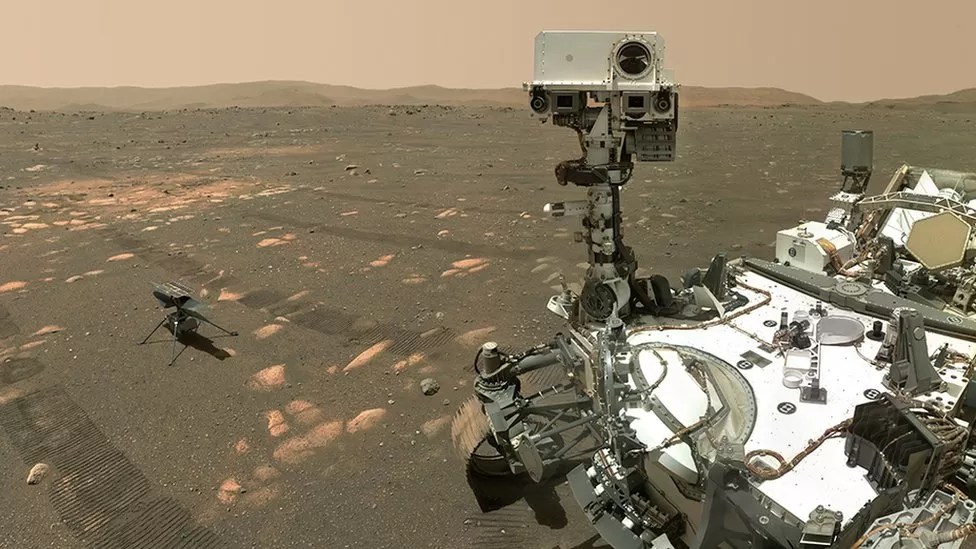
Perseverance: Nasa Mars rover to lay down rocks for Earth return The American space agency’s Mars rover Perseverance will this week begin dropping samples of rock on to the surface of the Red Planet. It’s a major milestone in the quest to find out whether there is life on Mars…more
-NASA
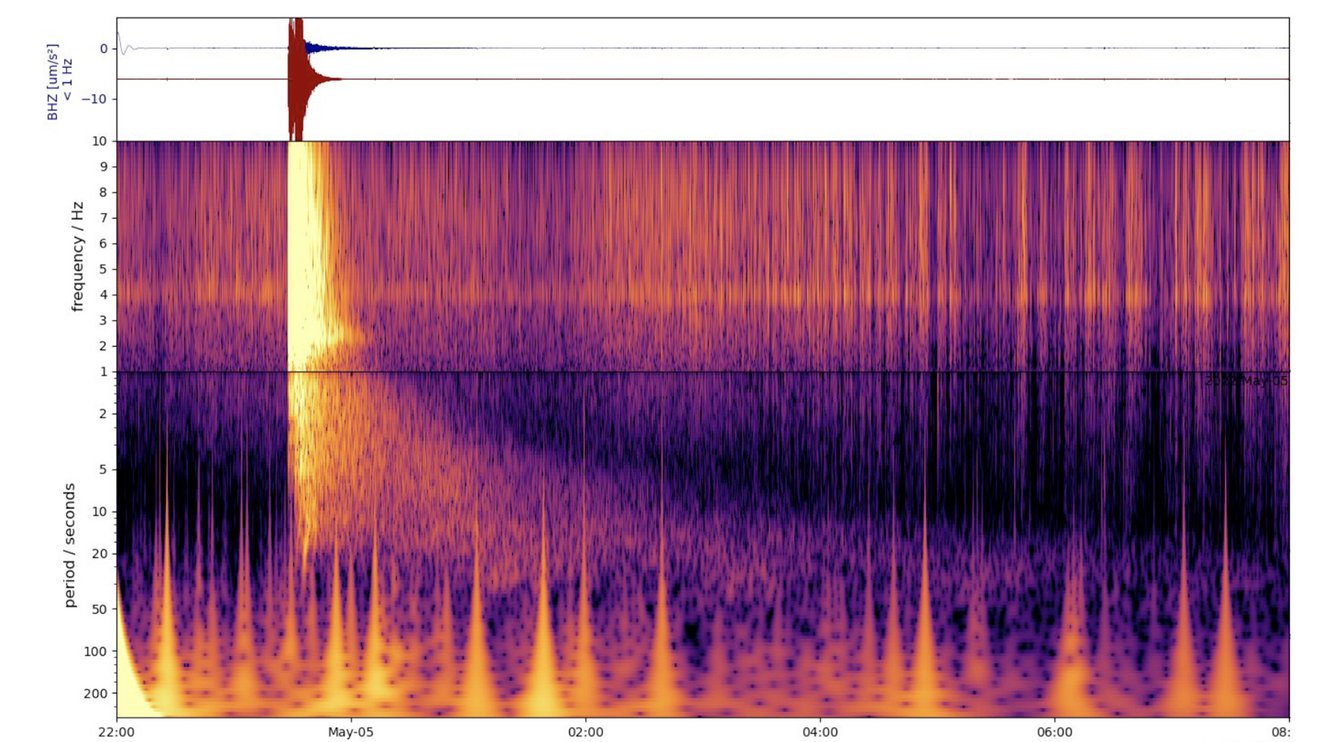
NASA’s InSight Records Monster Quake on Mars Estimated to be magnitude 5, the quake is the biggest ever detected on another planet. NASA’s InSight Mars lander has detected the largest quake ever observed on another planet: an estimated magnitude 5 temblor that occurred on May 4, 2022…more
-BBC
James Webb telescope’s ghostly ‘Pillars of Creation’ It was the $10bn gift to the world. A machine that would show us our place in the Universe. The James Webb Space Telescope was launched exactly a year ago, on Christmas Day. It had taken three decades to plan, design and build…more







 Alyssa Pagan