
by Dr. Ken Kremer

ULA Atlas V rocket carrying Orbital ATK CRS-6 Cygnus cargo spacecraft lifts off from Space Launch Complex 41 at 11:05 p.m. on Mar. 22, 2016 . Canaveral Air Force Station, FL. Credit: Ken Kremer
KENNEDY SPACE CENTER, FL – A stunningly beautiful nighttime launch on March 22 mesmerized delighted spectators as the rocket roared off a Florida space coast, launch pad stocked with over three tons of science and supplies for the multinational crews working aboard the International Space Station (ISS).
A United Launch Alliance (ULA) Atlas V rocketed raced to orbit from Cape Canaveral Air Force Station carrying an enlarged Cygnus commercial resupply spacecraft on the Orbital ATK CRS-6 mission to the ISS, as I watched from the roof of the world-famous Vehicle Assembly Building (VAB) where Saturn V moon rockets and Space Shuttles were assembled for launch.
The venerable Atlas V lifted off right on target at 11:05 p.m. EDT from Space Launch Complex 41 into a picturesque moonlit sky. The moon magnificently illuminated the scattered, thin clouds hovering over the seaside launch pad for the hordes of excited folks and families lining the beaches. They were lucky to witness what may be the last launch of a Cygnus from Florida.
After a three-day orbital chase, the Cygnus spacecraft arrived as scheduled at the station on March 26. Expedition 47 Commander Tim Kopra of NASA and Flight Engineer Tim Peake of ESA (European Space Agency) successfully grappled Cygnus with the space station’s robotic arm and berthed it at the Earth-facing port of the Unity module.
Cygnus was named the S.S. Rick Husband in honor of Col. Rick Husband, the late commander of Space Shuttle Columbia, which was tragically lost with its crew of seven NASA astronauts during re-entry on Feb. 1, 2003. It was built by Orbital ATK based in Dulles, Virginia.

Inside Payload Hazardous Servicing Facility clean room at the Kennedy Space Center in Florida with Orbital ATK Cygnus cargo spacecraft launched to ISS on Mar. 22, 2016. Credit: Ken Kremer
The Orbital ATK CRS-6 mission is the firm’s fifth contracted cargo delivery mission with NASA to the space station. It was loaded with 3513 kg (7700 pounds) of science experiments and hardware, crew supplies, spare parts, gear and station hardware for the orbital laboratory in support over 250 research experiments being conducted on board by the Expedition 47 and 48 crews. About a quarter of the cargo is devoted to science and research gear including 1713 pounds of science investigations.
Among the research highlights are experiments like Strata-1, which will evaluate how soil on airless bodies like asteroids moves about in microgravity. Gecko Gripper will test adhesives similar those found on geckos’ feet. Meteor will evaluate the chemical composition of meteors entering the Earth’s atmosphere. Safire will purposely set a large fire inside Cygnus after it unberths from the ISS to examine how fires spread in space, and a nanosat deployer mounted externally will deploy over two dozen nanosats also after unberthing.
Watch my Atlas/Cygnus launch video from a remote video camera set at the launch pad. Credit: Ken Kremer/kenkremer.com
Here a cool video prelaunch look at Cygnus and me in the NASA Kennedy Space Center clean room discussing the Meteor experiment by Thaddeus Cesari/VideoShampoo.com:
The next cargo launch to the ISS is set for April 8 with a SpaceX Falcon 9/Dragon vehicle. Learn all about these and more at my outreach lectures on April 9/10 and April 17 listed below.
For complete details about ULA’s Orbital ATK Atlas/Cygnus launch see my recent articles and photos at Universe Today:
Astronomy Outreach by Dr. Ken Kremer
Apr 9/10: “NASA and the Road to Mars Human Spaceflight programs” and “Curiosity explores Mars” at NEAF (NorthEast Astronomy and Space Forum), 9 AM to 5 PM, Suffern, NY, Rockland Community College and Rockland Astronomy Club – http://rocklandastronomy.com/neaf.html
Apr 17: “NASA and the Road to Mars Human Spaceflight programs”- 1:30 PM at Washington Crossing State Park, Nature Center, Titusville, NJ – http://www.state.nj.us/dep/parksandforests/parks/washcros.html
Please contact Ken for more info, science outreach presentations and his space photos. Email: kremerken@yahoo.com website: www.kenkremer.com http://www.universetoday.com/author/ken-kremer/ https://www.facebook.com/kremerken1

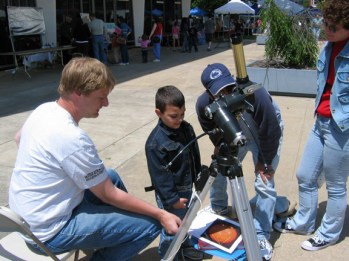 AAAP participated in a number of star parties held at local elementary schools this past academic year, which a few of our members made possible. Last November we visited the Newell school in Allentown, NJ, and the Stuart Country Day school in Princeton. We were also invited to visit the Constable Elementary school in Kendall Park last October but that was cancelled on account of the inclement weather. We visited the Princeton Day school earlier this year too.
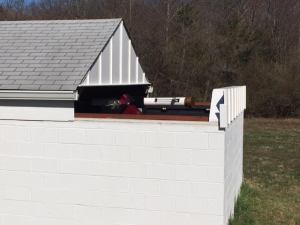
 On the weekend of March 19, 2016, Gene Allen, John Delaney, Dave Skitt and I rebuilt the south gable end of the Washington Crossing Observatory’s roof. Where once there was the flap that we needed to haul up before opening the roof, you will now find a section of wall permanently fixed to the block structure of the observatory. This season, all you need to do to open the roof is unlatch the four corner turnbuckles and turn the crank.
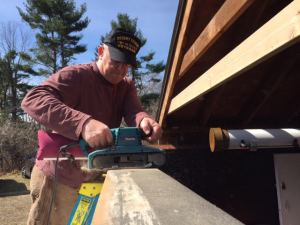 We undertook this project to create higher roof clearance over the south telescope pier, which now holds only our special Hastings refractor. That south pier now has an excellent Paramount mount that it is capable of supporting two telescopes, just as we have two scopes mounted on the north mount. However, the south pier is taller, leaving less than an inch of clearance between the top of the mount and the gable end opening when the old flap was raised. This greatly limited the diameter of the scope
 Initially we considered replacing the flap with a larger flap, but realized that tree growth over the years has concealed the south horizon that was made visible by raising the flap. Replacing the flap with a fixed wall simplified construction and lightens the weight of the movable roof, as well as making it easier for all of our members to operate the observatory.
 Thanks to the Board for supporting this and the construction team for making this happen. We bid goodbye to the flap and hello to new telescope possibilities on the south mount.
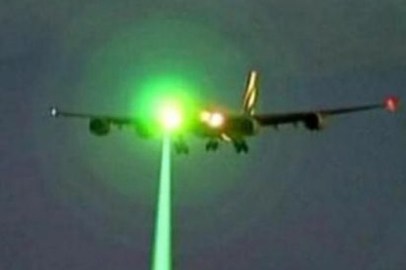 Wilbur Dixon describes himself as a space enthusiast and a lifelong amateur astronomer who happens to own a green laser. Dixon of Princeton, NJ insists he’s not a “laser nut – just an astronomy nerd” who is tired of intrusions upon his personal freedoms. So, when he read about a ban on green lasers passed by the NJ State Legislature last month, the he lit up.
 Amateur Astronomers Association of Princeton