From the Director

Rex


by Rex Parker, Phd director@princetonastronomy.org

Speakers for Astronomy

Our guest speaker at the October 8 meeting will be John Church, PhD. John is a former Director and longtime member of AAAP. See Ira’s article below for information about this presentation. Have you considered giving a 10-minute member talk following the intermission at an upcoming meeting? This is a great way for members to get to know each other and share experiences in the club – tales of recent astronomy life, perhaps a book or travel review, observing tips, a new telescope, slides optional. Please contact me or Program Chair Ira Polans to get onto the schedule for an upcoming meeting.

Saturday Night Fever

The AI running the weather program didn’t do us any favors on Sat, Sept 28, and we cancelled the Gravity Hill Star Party. However we really want to develop a tradition of member Saturday nights with telescopes. The potential benefit of this came out in the recent member survey, where 62 of 80 responders said they own a telescope but only 37 use it once in a while or more often. Becoming more skilled with telescopes is important to 67 yet only 38 are able to take advantage of using the AAAP Observatory more than once a year.

We encourage members to set up telescopes on clear nights at the west end of the soccer fields at Washington Crossing State Park. This secure location has wide views of the sky and is easily accessed off Rte 579/Bear Tavern Rd on the way to the Observatory and through much of the year no gate opening is needed. After soccer seasons ends in November the front gate at Bear Tavern Rd may be locked, but AAAP KeyHolders can open the lock.

To start out, let’s initiate Saturday night telescope sessions with members as follows (beginning October 19):

  • Send an e-mail to me by noon on Saturdays
  • Include “telescope” in your e-mail subject line
  • In your note, mention the time, expected duration, and what telescope you’d bring
  • I’ll broadcast an e-mail note to the membership that day

Big Improvements in Video Astronomy

Plans are underway to mount the club’s ZWO-ASI294 color CMOS camera onto the Celestron-14. This would replace the function of the Ultrastar color CCD camera currently on the 5-inch refractor and allow eyepiece use with the refractor to give a wide/rich-field view alongside the C-14. Importantly, the smaller, lighter, and easier to use Ultrastar would become available for members to use in outreach.

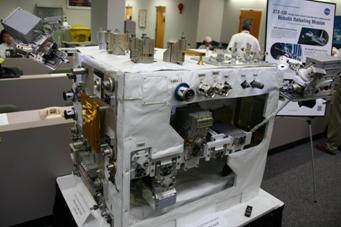
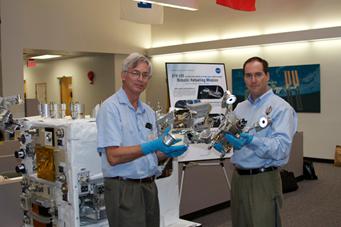
The ZWO is a technological marvel which illustrates why CMOS sensor technology is displacing the CCD in astronomy applications. This month we acquired the hardware needed for the ZWO camera to be mated to the Celestron-14, a Meade model 647 2” flip mirror assembly allowing users to flip back and forth between eyepiece glass and camera video. A focal reducer was added to widen the field of view. The picture below, from a work session at the Observatory with Tom Swords and David and Jennifer Skitt, shows the setup we hope to install after the current public Friday night season is over.

Configuration of the ZWO-294 camera on the C-14 with Meade flip mirror (see text).

Posted in October 2019, Sidereal Times | Tagged , | Leave a comment

From the Program Chair

by Ira Polans

The October meeting of the AAAP will be held on the 8th at 7:30 PM in the auditorium of Peyton Hall on the Princeton University campus. The talk is When Ireland Was the Center of the Universe by long time club member John Church.

In the late 1840’s, William Parsons, the 3rd Earl of Rosse, constructed and mounted a 72-inch aperture Newtonian reflecting telescope in central Ireland. Remarkably, this was to remain the largest telescope in the world until the 100-inch Hooker telescope was placed in service in 1917 on Mt. Wilson in California.

Parsons was the first to see and depict the spiral structure of an exterior galaxy, M51 or the Whirlpool Galaxy, in the constellation of Canes Venatici near the tail of Ursa Major. He used his telescope to examine many other galaxies and objects as well. His drawing of M1, the supernova remnant in Taurus, led to its being named the Crab nebula.

In the mid 1800’s, telescope mirrors were made of speculum metal, an alloy of 3 parts of copper and 1 part of tin. Parsons needed several tries to finally get satisfactory blanks. He designed and made his own large steam-powered machine to grind and polish the nearly 3-ton mirrors. He made two of them so that when one was being re-polished, the telescope could still be used.

Mounting such a mirror in a movable tube was a major engineering project. An equatorial mounting was out of the question, so Parsons designed and constructed a huge alt-azimuth mounting between two 40-foot high masonry walls. This allowed the 12-ton telescope assembly to swing a few degrees out of the meridian each way and observe a large arc of sky. Slow-motion controls were provided for both altitude and azimuth.

Access to the eyepiece can be a major issue even with small Newtonians. Parsons solved this problem with an elaborate array of movable galleries mounted on the western masonry wall Several assistants were needed at every observing session to raise and lower the assembly and move the galleries.

Our speaker, John Church, visited the Rosse estate in 2004 after he and his wife had attended a family wedding on the west coast of Ireland. The castle, which is the home of the present Earl, dates from about 1620. The estate also contains a fine arboretum and other attractions including the I-LOFAR (Irish Low Frequency Array) radio telescope installed in 2017, the westernmost of 50 such stations.

Two changes are being made for the 10 minute talks this season. First, the talk will be given after the intermission. Second, we are instituting a 10 minute limit. Since we want to keep the talks to 10 minutes, the speaker will be given a 90 second warning to wrap up the talk. If you’re interested in giving a 10 minute talk for our October meeting please contact Larry at assist.director@princetonastronomhy.org. Or if you’re thinking about giving a talk later in the year please contact either Rex or me.

There will not be a meet the speaker dinner prior to the meeting.

Finally I will not be able to join you at the meeting but think the talk will be interesting! See you in November.

Posted in October 2019, Sidereal Times | Tagged , | Leave a comment

Outreach Blotter

by GeneAllen

Our meeting schedule resumed in September and the Observatory will be closing at the end of October. The Outreach season should be ramping down, but it really is not. We still have three or maybe four for this month.

Friday, October 4 at Simpson EVEN IF IT’S CLOUDY!

Sixteen 4th grade Girl Scouts plan to visit and are requesting the Pocket Solar System exercise at about sunset before an evening of star gazing. We need a couple of folding tables and SOMEONE TO LEAD THE PSS, as well as some members who can bring their scopes for additional viewing opportunities. If it’s cloudy or worse, we have permission from the park superintendent to use the Nature Center Pavilion, and a tour of the roofed Observatory can be offered. Volunteers so far are Rowena Pullan and Victor Davis.

SATURDAY, October 19 at Simpson

Hopewell Cub Scout Pack 71 will be camping in the park and are asking for us to open the Observatory for 30 Scouts plus some parents and leaders. We need some Keyholder volunteers and some Members to bring extra scopes. Forgot this one in my last email blast, so if folks don’t see this one and volunteer I will have to ring the bell again.

Sunday, October 20 in Pennington

LIBRARY PRESENTATION BY GENE ALLEN at 6:30pm in the Pennington Public Library, 30 North Main Street, followed, weather permitting, by star gazing nearby. Members are requested to bring scopes for a group of TBD. Sunset is at 6:12, and the presentation lasts about 45 minutes, so plan to set up to receive guests by 7:30. Exact observing location is TBD. Volunteers so far: Dave Skitt (s), David Reis (s), Tim Donney (s). I will be solidifying details after I get back from Florida.

Friday, October 25 in Yardley

Star gazing opportunity for ten Daisy Scouts (K-1) with moms. Plan for set up at sunset 1830. This event is still tentative and may move up earlier in the month or go away altogether.

Posted in October 2019, Sidereal Times | Tagged , | Leave a comment

Minutes of the September 19, 2019 AAAP General Meeting

by John Miller, Secretary

  • Director Rex Parker opened the meeting at 7:30 p.m. AAAP overview and upcoming events schedule were discussed. Program Chair Ira Polans then introduced the guest lecturer.
  • Prior to the AAAP progress meeting, member Jeff Pinyan presented a 10 minute talk about the importance and techniques to accomplish more effective public outreach.
  • Gene Allen, Public Outreach Coordinator, asked if members were interested in bringing telescopes to the Midnight Magic Full Moon Bike Ridge (subsequently cancelled due to local environment difficulties).
  • David Skitt, Observatory Co-Chair, headed a discussion regarding:
    •     The Bisque SkySoft mount operations software renewal.
    •     Observatory physical plant repairs and upgrades.
    •     Alert about the new observatory alarm system code changes and exit times.
  • Member Tom Swords mentioned an early morning comet – 2018 W2 (Africano). Details – http://www.cometwatch.co.uk/comet-2018-w2-africano
  • The meeting was adjourned about 9:45p.m.
Posted in October 2019, Sidereal Times | Tagged , | Leave a comment

Outreach at Jenny Jump

by Theodore R. Frimet

star party for two

Awesome is our outreach from AAAP. Gene led the way, this past year, with receiving event after event. Everyone, it seems, except yours truly, volunteered to be on or off site, and provided the very essence of their being, with telescope in hand. Congratulations to all! We few, we happy few…we band of Amateur Astronomers!

I found myself embedded with the UACNJ board meeting, Saturday, September 21, 2019. As an alternate to AAAPs presence, I took the opportunity to second a motion of the board. This was to empower UACNJ to look into revising its by-laws to have new membership rules adopted. Primarily this was to assist a ham-radio group, in their pursuit to install, and maintain a repeater station, at Jenny Jump. You may ask, “how important is this to you and to me?” If in a time of cellular communication failure, ham radio operators form the network for cross national and global communications. At the Jump, vis-a-vis the homestead of UACNJ, the repeater would be the conduit for the I91 corridor.

The current dogma is that a joining club must be Astronomy related. By Jovian Loudspeaker I declare, “hoist the flag of the ham”! After our seconding the motion, all were in favor, except one still voice. And yes, even one voice has its reason. However, you may forgive me. I have unconditional support for this venture. The UACNJ board vetted the new clubs proposal, prior to discussion. They will be of assistance to Astronomy’s treasure trove of outreach. Can they improve upon a Jovian radio, or breathe life into the satellite dish in the back yard? Why not, I ask you? It does suffice to say, that we empowered the board to look into the by-laws for discussion, and did not merit a decision at the point of the meeting.

A week, less a day, goes by. And it is Friday night at Washington Crossing Park. My AAAP Keyholder schedule has me on site here, this evening. It is immediately followed by Keyholder Team Five at the Jump, on Saturday.

I am early at Jenny Jump, and arrive some time before 4 PM. I go about my Team Leader checklist, and quickly settle down to some air conditioned comfort in the living room. I spy a comfy padded chair. Taking a seat, I unbundle the six or so Science, AAAS Journals, that have accumulated as of late. I read a few notional articles of interest. Biology has always come easy to me. So my eye searches for the quick study. Ah, I find it! “Bacteria Send Messages to Colonize Plant Roots”. An epic report that I comprehend, in the 30 August 2019, Longwitz & Werner, p910. It whets my appetite for more.

I have been eating more than my fair share, as of late. I have immersed myself into a college level course in American Sign Language. Video-Logs (VLOGs) are a requisite. And seeing myself in profile, exposes my Buddha-Belly to the masses. Deaf culture must have a good look, and laugh it off at the battle of the bulge. However, I am learning. All the while, keeping my head above water. It is not failure that I fear. I will earn a grade, and it will be just. My just rewards are quick in coming. You see, coming to terms with a language improves cognitive performance. It is one of the big three. Learn a musical instrument, perform an art, or learn language, anew. Clearly this VLOG requires a trained, and dyed-in-the-wool professional interpreter to grade it. Here it is. Theodore in the Nude. See, Olgivy was right. sex sells!.

I lean forward into my chair, at the Jump. Flipping thru the contents, I look for anything Astro-related in Science. Astrochronology, 30 August, Zeebe & Lourens, p926. Galactic Archaeology with Gaia, 6 September, Wyse, p979. Quantum Darwinism Seen in Diamond Traps, 13 September, p 1070, by Adrian Cho, and an article on Cosmology, same flavor of September, a perspective by Jee, p1076. I didn’t get a head-ache, as some of you might gamble. I did, however, eventually run out of steam, and gathered the tomes of my childhood, and put them into the front seat of the car. Yet, never did I subside my thoughts, until allowing the quantum gates to open.

As discussed by Zeebe and Lourens, they have produced a new astronomical solution to Earths orbital eccentricity. Within their writings are meaningful comparisons of the Paleocene-Eocene boundary, and Solar System Chaos. If you ever get the chance opportunity, turn to their Figure 3, and stick your thumb onto page 928. Discover for yourself an abrupt Resonance Transition, as the interval between eccentricities takes a deep dive 55 millions years before the present. Yes, our solar system is chaotic, and it undergoes a specific resonance pattern. It was, however, punctuated by a transition. More importantly, however, is that the scope of the article instills within this community, a more precise time-piece by which to measure Earths past and future climate.

The insights brought to us by Rosemary Wyse, reveals how satellite data shows us the Milky Way’s turbulent past. I recall a previous essay, where I discussed the Sagittarius Dwarf Galaxy impinging on our Milky Way. She left her gravitational mark upon our spiral arms, in the form of gravitational bars. “Up and down rides the hair”, I spoke. Yet, here is more classical science, punctuated by Gaia data.

A billion stars studied, with three dimensional velocity espoused a brighter subset of approximately 7 million stars. Studying the spectroscopic analysis yields a sense of those that have higher, or lesser values of metallic elements. Sequencing these stars shows us stellar color as “blue halo (low metallacity) and red halo (high metallicity)”, p980 et.al. (cited Gaia Collaboration, Astron Astrophys. 616.10 (2018)). Coupled with the velocity studies, I learn anew.

Galaxies that have merged with the Milky Way shewn off few of their stars and accrete to the mass of our stellar halo and our thick disk. Stars in the red halo are similar to our thick disk stars. Stars in our galactic core, have halo kinematics that are elemental matches for stars from dwarf galaxies. The Milky Way, as Gaia Astrometric Satellite is tattle tailing on, has been a very naughty gobbler of smaller siblings that come her way. Currently, we are in the mire of merging with the Sagittarius dwarf spheroid. The article continues and merits the quote, “predicted to produce a wealth of features in phase space, including flaring and warping of the outer disk and inducing bending modes”.

Dare I speak of Quantum Darwinism? The cup before you, be it filled with coffee, tea, or me, exists. I will not dare to take it from you, as you are required to be in the present to give it, well, its existence. Quantumly speaking (ugh – a misuse of the treasured word, how badly this will go for us), every electron within the mug, is smeared across the entire Universe. Its interaction with the environment is you taking a sip. Perhaps simply viewing the inscription on the side of the coffee mug, (My mother-in-law’s “Life Begins at Retirement”) coalesces and collapses the wave form. It brings the mug to You. What Quantum Darwinism speaks of is that there were multiple ‘schmears’. Despite you conjuring up the classical state, and “observers agree that the cup is here, the gigantic branch persists, unrealized, like a parallel world.” (Cho, et.al.). Seen in a diamond trap, reality emerges from the quantum foam. I am in agreement. Time will tell, and become both judge and jury.

Would somebody, “please save me”!! When we speak of the Hubble Constant, I speak to the number of us that are inner circle. You and me, included. Hubbles number is in a state of flux, as it continues to be perfected. Yes, the Universe is expanding. The H(0) redshift values are invaluable as they inferred velocity. The Cosmic Microwave Background (CMB) also pitched in, to indirectly validate the value of H(0). Yet, what got my goat going, in the article entitled, “A measurement of the Hubble constant from angular diameter distances to two gravitational lenses”, wasn’t old pipe smokin’ Hubble, per se. It was the value in outreach in Jenny Jump State Park, here at UACNJ, on a Saturday night.

You and I embraced an essay, written on Gravitational Lensing, found here:

https://princetonastronomy.wordpress.com/2018/07/28/ring-around-the-rosies/

What I now have to add is a twist that was spoken to the public, on a Saturday night, before the 16 inch Buinis telescope.

I put away my journals, and put on my hat, and keyholder ID chain and card. I was a weather denier. AAAP had cancelled its star party, slated to be held at Gravity Hill Barn. I was sad for the club, and the feelings persisted. At the Jump, my co-lead inspired me, as he opened the hut to the grand 16 inch telescope. It was a profound experience, as I realized that the massive mirror needed to cool off. We pushed the roof open, and he set the scope skyward to vent the heat from the behemoth.

Asked if I would be OK, on my maiden voyage with the Buinis, I concurred. Off he went to help host the monthly lectures in the club basement go smooth as silk. This time our talk was given by Greg Waldron. Greg, I wish I was there to hear you speak. I admire your knowledge base. Clouds in the distance. Rumbling, I felt. Flashes of lightening. “No rain, yet”, I muttered to myself.

People travel from all over. Hours on the road. All with expectations to catch a skyward glimpse of the unimaginable. Having a scope open, even on questionable nights, brings home stories of, “I’ve just seen the biggest telescope, ever!”. Here, see it on my social network! Come here, to Warren County. You wouldn’t believe what those Astronomers do, there! So it goes, with good customer service. Open the door, and let them see your wares. Even if the clouds persist. Seeing is believing. I am a believer, now that I’ve seen.

I choose Jupiter. The mighty Buinis moved her gears, and set herself high above the horizon. Many a Jovian satellite could now be brought into focus. While twiddling the focuser, the great gaseous orb yielded a spectacular view. Yes, despite not using a longer focal length refractor, the planetary view was great this Saturday night!

I made a business decision. All of us know the tale of Saturn as every child’s first impressive view. I shook my money maker, and changed course, to our left. The Buinis, being somewhat of a ham, decided to take the long way ‘bout. She landed on the rings. A spectacular view for the end of September. Girded by the Cassini Division, once again I too was greeted by an old friend. I was surprised by a member of the public, who asked if the view remained the same. Struggle did I, as I spoke of Saturns and Earth orbit, and the chance meeting that we would see the old man, tilted on edge. I summoned up a description that ‘he shewn up his tartan kilt’, allowing us to see between the nether-rings. And it clouded. More cloud lightening in the distance. More outreach to be done. Jupiter set. Saturn not be seen. Look up, and find your way into the night sky, then, I shouted aimlessly to myself!

I recently relearned my lesson as to where to find M13. A favorite of Astronomers to be found in the mighty constellation of Hercules. I owe my schooling to our fellow club members of AAAP. Thank you for our Friday night, post public viewing. I took what I learned, and weighed anchor, to slip the ship, upwards and to the right. Aglow are the pearls of point light wonder. Globular cluster to be seen, and joyous were all to be in the light of M13 at the Jump.

My friend, and accomplished Astrophotographer, Alex, came in. We didn’t recognize each other at first. Alex sported a brand new hair cut, and I was covering my ancient gray with a blue baseball cap. We reintroduced each other, chatted awhile. I recall when Alex was out imaging, and I was at his side, viewing Andromeda. Playing music to keep up with the calls of the Red Fox’s from the grove below, we pined together that the local fauna would go amok, if we played Rock ’n Roll. Alex then braved the parking duties for the night. Good job, Alex. 62 or more happy peoples rolled in by means of their iron horse. More clouds skewed the view. I looked up to Vega.

The Ring Nebula is always my favorite. It was in fact, the reason why I purchased, as my third telescope, a 12 inch Dobsonian. I wanted to make sure, that despite the limitations in viewing, in my back yard, I could wonder the view for hours on end. I am so inspired by the luminance emanated from the central White Dwarf. Yes, Darwinism has not imbued the Ultra-Violet spectrum to Homo sapien. Yet, the Universe has been kind to us. She has presented the physics of visible light, as the silent gas ring re-radiates UV into the pleasure of our narrowly confined optics.

UP, up to Vega, and with Lyre, we conjure up the Ring! Briefly though be the view. Step up and quickly take a peek. The clouds you see, are forming up, on top of the Jump. The ring continues to be visible for a few salutary minutes. And then a lecture overcomes me. I teach of what I know of the curvature of space-time, photonic flight, and gravitational lensing. Some sentient being, somewhere in the Universe opened the Quantum Gate. Here it is:

There are massive galaxies that have coalesced in the Universe. Their very bodies deform space-time and form up a lens. Where they would have blocked the view points of galaxies, from behind their path comes the curving of light. The Einstein Cross is such an excellent example of gravitational lensing, that I am inspired to go further.

Clouds roll in. Lightening in the Valley below. Go further. Speak now! I see that a variable star may be captured above, and then below in the cross. You see them in different frames. Why then did they not occur above, left and right at all the same time? Luminosity distances be damned! I saw the light, from the top, first and foremost because space-time is not an evenly distributed medium. It is curvilinear, and has variance in density. In my own humble opinion, it is folded like an accordion. Up and down travels the nascent photon. It tarries a long distance. If one were to poke thru the folds, as if with a pencil thru the accordion pleats, our massless visitor would have a short-cut. Wormhole, you say? Be damned the steel tensile strength of space-time and fold it yourself! Take the short-cut to your distance relatives. Worry not about the ever expanding distances between galaxies, when all the while some of you will birth grand-children’s grandchild to make the great escape!

Clouds. No more view. Sigh. On goes the lecture. The light that took the path thru a greater optical density, appears to us later in time. Our great listeners already were versed on Relativity, and the observer reference frame. Yes, they took in with a great draw of breath the limits imposed by the speed of light. And to their humble credit, all weighed in positively that the velocity limit has no bearing on the ever expanding space between the galaxies. How proud I am, of those that visit the Jump!

A good many questions followed. Among them was, if we see more than one copy of a galaxy, due to lensing, how do we know if the galaxy count is correct? Quickly I immersed them in the visual of the fun house. Surrounded by mirrors, reflecting your very being, you see many more of you than exist. Yet you are one. The count is validated as you are now a scientist participating in a thought experiment that is grounded by your experience. I dare not, now, as then, express the arrow from my quiver, that many are the quantum count, waiting for you, the observer to find focus for our shared reality. More clouds.

I am lost to the clouds. Many are the members of the Amateur community that have looked skyward for ages, since 8, and and up. Younger those may be, that I am simply unaware of. It is you, those solid members that have learned the night sky, by wrote. My fellow team leader shows up, and I defer to him. I can see no other opportunity than to try to peer thru the clouded veil and look up to the brightest star, Vega. There is a brief pause as he sets the sail, anew.

His age becomes his knowledge. Albiero. Yes, the blue and gold is the last view of the evening. The wisdom that manifests now is to see what we can, with the heart of an Amateur at the rudder. That the public, should be given every opportunity to see what is possible with the great 16 inch Buinis. Damn the torpedos, full steam ahead! There she belies, ‘captain. I have her, astern!

All took their turn, politely turning over the event, one eye-full at a time. The good ship Buinis took sail that evening, and delivered content, causation, and happiness. What more can an Amateur ask for, doing outreach, on a public night?

Posted in October 2019, Sidereal Times | Tagged , | 1 Comment

India’s Moon Crash

by Prasad Ganti

Millions of people across India watched the live coverage of the intended soft landing of the Vikram lander near the South pole of the moon on 7th September. It was past midnight. Things really went very well until the last minute or two. The trajectory appearing on the screen showed the spacecraft right on the target. Then there was a slight deviation from the planned trajectory. And then the dot stopped, signifying that the spacecraft stopped sending any signals to the Earth. The mission control went silent. All the news channels came to a standstill. Expecting some good news, hoping against hope, hopes do not die that easily after all. After a while it became obvious that something had really gone wrong.

Vikram Lander was part of the Chandrayaan 2 mission to the moon. The launch took place on July 21st atop GSLV Mark III (Geostationary Space Launch Vehicle). This model of GSLV is India’s most powerful launch vehicle capable of putting 4 tonnes of payload into space. But not powerful enough like the Saturn V rocket to hurl the spacecraft to travel towards the moon in three days. Getting a little boost at a time, the orbit around the Earth became increasingly elliptical over a few weeks. With a little more boost it went into orbit around the moon. After stabilizing its orbit around the moon, the Vikram lander separated itself from the orbiter. The lander contained a rover and some scientific instruments, while orbiter contained some more scientific instruments. The picture below shows the trajectory Chandrayaan 2 took.

Courtesy planetary.org

Soft landing a spacecraft is the most difficult maneuver. More difficult than the launch, or putting it in an orbit around the moon. From such great speeds of thousands of miles per hour, it has to be slowed down in a very controlled manner to a standstill by the time it reaches the surface. The final moments are the most difficult ones. What Dr. Sivan the ISRO (Indian Space Research Organization) Chief called as fifteen minutes of terror. The complete landing sequence had to be programmed into the Vikram lander ahead of time. There is no scope for Mission Control from the Earth to alter the trajectory in real time.

Although officially not confirmed, I read in India Today magazine that the Vikram lander did a maneuver to orient itself to point the camera towards the ground to get a better estimate of the landing site. In the process, a somersault occurred and the speed increased and the Vikram lander spun out of control. It is presumed to have crash landed. The orbiter took a picture a few days later. The picture showed that the lander is still in one piece and is lying on the surface at a tilted angle. NASA’s LRO (Lunar Reconnaissance Orbiter) failed to find the Vikram lander when it tried to picture the vicinity of the intended landing site. Presumably because the shadows were lengthening as the days approached the lunar dusk (a lunar day lasts 14 days). Also the landing site was closer to the south pole where the Sun appears at a slanted angle. This increases the amount of shadows in the cratered surface closer to the pole.

The radio contact with the Vikram lander was lost just as it spun out of control. Either the hard landing damaged the radio equipment or the tilted angle is pointing the antenna in the wrong direction. In any case, the chances of making contact is slim to none. The lunar night is so cold and dark that the batteries and the equipment would have died permanently.

Space is a tough game. It is dangerous and unforgiving. US, Russia, Europeans, Israel, Japan and China have all experienced space disasters. Apollo 1 caught fire on the launch pad in 1967 and all the three astronauts died. Apollo 13 nearly perished and with great difficulty and some luck NASA was able to bring the crew home. Space shuttle Challenger perished soon after takeoff while Columbia was destroyed during reentry into the Earth’s atmosphere. Space-X, the private company pioneered by Elon Musk faced several failures before starting ferrying supplies to the International Space Station. More recently, Israel lost a spacecraft while trying to soft land on the moon.

Regardless of the crash landing, it has been a tremendous achievement by the Indian scientists. The orbiter is still going around the moon. The orbiter with ever sophisticated instruments consisting of cameras (to capture high resolution pictures), spectrometers (to analyze light and other forms of radiation), radar (Synthetic Aperture Radar to analyze the ground surface up to a certain depth), and various detectors of X-rays, electrons etc. The trajectory of the orbiter is inclined to the equatorial plane, since the Vikram lander was supposed to land closer to the south pole of the moon. From this trajectory, these instruments will reveal a lot about our natural satellite.

Congratulations to the entire ISRO team who made it possible to get the spacecraft to this point. Prime Minister Modi’s presence in the Mission Control in Bangalore was praiseworthy. Modi consoled a tearful Sivan and was a pillar of strength for the disheartened scientists.

India’s mission to Mars a few years ago being a success on the very first try was a statistical outlier. No other country did it. Against all odds, as well captured in the recent Bollywood movie “Mission Mangal”, with a low powered rocket PSLV (Polar Space Launch Vehicle), India made it. GSLV, it’s more powerful cousin, was not ready at that time. But expecting to stretch that luck all the time is not realistic. We should in all humility feel a sense of gratitude that things really went well on the road to Mars.

I am sure data analysis of the flight parameters and the pictures will come up with the root cause. And the lessons will be learnt. Chandrayaan 3 may be launched in due course which will hopefully reach its goal.

Posted in October 2019, Sidereal Times | Tagged , | Leave a comment