Snippets

compiled by Arlene & David Kaplan

-Yu Jingchuan/Beijing Planetarium

Scientists find ‘monster’ black hole
Before now, scientists did not think it was possible for a stellar black hole to have a mass larger than 20 times that of the sun, an approximation based on their understanding of the way stars evolve and die in the Milky Way.

But that assumption was metaphorically crushed in the gravity of a “monster” black hole that a group of Chinese-led international scientists discovered …more

-NASA

Voyagers shed light on Solar System’s structure
Data sent back by the two Voyager spacecraft have shed new light on the structure of the Solar System.
Forty-two years after they were launched, the spacecraft are still going strong and exploring the outer reaches of our cosmic neighbourhood…more

-NASA

Nasa probes oxygen mystery on Mars
The oxygen in Martian air is changing in a way that can’t currently be explained by known chemical processes.
That’s the claim of scientists working on the Curiosity rover mission, who have been taking measurements of the gas. They discovered that the amount of oxygen in Martian “air” rose by 30%…more

-NASA

Supernova 1987A: ‘Blob’ hides long-sought remnant
Scientists believe they’ve finally tracked down the dead remnant from Supernova 1987A – one of their favourite star explosions. Astronomers knew the object must exist but had always struggled to identify its location because of a shroud of obscuring dust…more

-BBC

Supernova 1987A: ‘Blob’ hides long-sought remnant
A team of British scientists has arrived in the Antarctic to try to find the continent’s “missing meteorites”. The group, from the University of Manchester, will spend six weeks scouring a remote region for lumps of iron that have fallen from the sky. These pieces of metal represent the shattered remains…more

-Forbes

‘This Is Not Cool!’ – Astronomers Despair
In the early hours of the morning today, Monday, November 18, two astronomers checked in on their remotely operated telescope in Chile, expecting to see images of distant stars and galaxies. Instead, they saw a train of…more

Posted in December 2019, Sidereal Times | Tagged | Leave a comment

From the Director

Rex


by Rex Parker, Phd director@princetonastronomy.org

November 12 Meeting
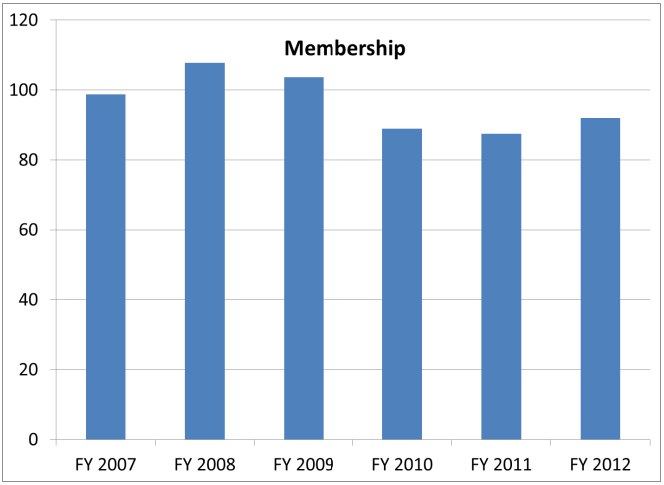
I’m back in Jersey after an exhilarating African safari last month, and am looking forward to seeing a good turnout at Peyton Hall Nov 12 for the presentation by Dr Joshua Winn of Princeton University (see Ira’s section below). Our dues-paid-up membership stands at 86 and counting. We’ve had several new members come aboard in the past few months, so if you have joined recently please introduce yourself at the break.

Farewell Prasad
As he prepares to leave New Jersey in a job-related relocation, I would like to give a big THANKS to Prasad Ganti on behalf of all the membership. Prasad has been associate editor for this publication for several years now, and his skill and dedication in editing and publishing Sidereal Times will be greatly missed, as will his participation as Keyholder at the Observatory. We wish you all the best in your future endeavors, Prasad, and hope you’ll stay connected with astronomy in the future.

8 Ways to Do Astronomy in AAAP

  1. Attend the presentations at Peyton Hall (2nd Tuesday each month)
  2. Give a 10-min member talk about your astro experiences (e-mail to program@princetonastronomy.org)
  3. Observe with state-of-the-art equipment at the Observatory
  4. Saturday night telescopes with members at WC State Park (see October Sidereal Times)
  5. Borrow the club’s SX Ultrastar color CCD camera to use with your own scope
  6. Get a Skynet account and do remote astrophotography from home (see below>)
  7. Go on an astro field trip with AAAP (recent trips include US Naval Observatory, Smithsonian Air & Space Museum, Princeton Plasma Physics Lab)
  8. Propose a field trip based on your own ideas and dreams

Andromeda!
To seek out Andromeda the constellation in the autumn sky has always been compelling – but perhaps a little mysterious too. For me the mystery stems from the lore of Greek mythology, which needs to be retold over and over as worthy legends do. Andromeda was the daughter of the king Cepheus and his wife Cassiopeia of ancient Aethiopia. Queen Cassiopeia boasted that Andromeda’s beauty even exceeded that of the Nereid sea nymphs, Poseidon’s minion, invoking the wrath of the god of the sea and storms. Poseidon thus sent the sea monster Cetus to ravage Andromeda as punishment for Cassiopeia’s hubris. It was the great hero Perseus himself who then rescued Andromeda as she was chained to the rocks by the sea, which is how he came to be her husband. Today many of the principals in this legend have a constellation named for them!

Figuring out exactly which stars are in the constellation is also part of Andromeda’s mystery (Figure below), even though it was first catalogued by Ptolemy in the 2nd century. It has no first magnitude stars, with Alpheratz, Mirach, and Almach all 2nd magnitude. I had always thought (until now) that Alpheratz was part of neighboring Pegasus since it forms the NE corner of the great square of Pegasus, but officially Alpheratz is considered part of Andromeda. But today Andromeda is probably better known as home for the Great Galaxy, Messier 31, the nearest large spiral galaxy to our own at ~3 million light years distance (red arrow in Figure). This spectacular deep sky object is for most people the first galaxy seen outside our own Milky Way and is the only spiral galaxy that can be considered a definite, obvious naked-eye object.. It is often said that the Milky Way galaxy’s appearance to an observer located in the Andromeda galaxy would look much like M31 does to us. According to Robert Burnham (Burnham’s Celestial Handbook), the Andromeda Galaxy was documented long before the invention of the telescope, mentioned in Persian writings from 905 AD. The first record of a telescopic observation was from Simon Marius of Germany in 1611, when he compared it to “the light of a candle shining through horn” (Burnham). This is a fairly accurate visual description even today for telescopes using eyepieces. However, the advent of astrophotography changed all that.

The constellation Andromeda is home to the Great Galaxy known as Messier 31 (red arrow). Figure from TheSkyX software.

In the middle of November in central NJ, the Great Galaxy in Andromeda transits (reaches is maximal elevation in the sky) at 9PM and is very close to the zenith. It’s placed splendidly for optimal astrophotography, which is better done with small amateur scopes than large, due to its immense size spanning ~3 degrees (6 times the moon’s diameter). Using a portable 3” refractor (Takahashi FC-76, focal length 600 mm) and a one-shot color camera (ZWO ASI-091), I photographed M31 the week before Halloween (Figure below). Note that two other galaxies are also in this image – M32 is the round object below the M31 core, and M110 in the upper right displays a hint of spiral structure. The final image here is the result of 17 x 20 minute subframes (total exposure 5.6 hours). All of the equipment to take photos like this is available to AAAP members at the Observatory!

The Great Galaxy in Andromeda, Messier 31, photographed with a small telescope in central NJ. North is up. Astrophoto © RAParker.

Skynet Remote Imaging for AAAP members
A good way to get going in astrophotography and learn more about how modern astronomy is done is to check out Skynet, a unique benefit of AAAP membership not offered by other astronomy clubs in the region. In June we renewed the contract with UNC-Chapel Hill for another two years. Skynet is the brainchild of Dr Dan Reichart of the Physics and Astronomy Dept at UNC-Chapel Hill. The internet-based queue scheduling software program runs on UNC computers to connect a system of observatories established for remote imaging. The Skynet Robotic Telescope Network comprises more than a dozen telescopes around the world in Chile, Australia, Italy, Canada, and the US. Each telescope is set up with robotic tracking mount, CCD camera, and filters for remote image acquisition. Tutorial videos are made available when you obtain a user account.

For both beginning astronomers or seasoned observers, Skynet’s easy-to-use interface taps into an extensive hardware network and large database of celestial objects from the Messier and NGC deep sky catalogs. It includes a basic image processing program “Afterglow” that runs on the server so you don’t need any special software on your computer. If desired you can download the data files and process the images you obtained at home on your own PC. Skynet is intended as an introduction to modern astronomy and astrophotography, and is used by science students at UNC and other institutions. Interested AAAP members are urged to take advantage of the club’s paid investment in this technology. Send me an e-mail note to get your Skynet user account at no cost to you as an individual. Email director@princetonastronomy.org

Posted in November 2019, Sidereal Times | Tagged , | Leave a comment

From the Assistant Director

by Larry Kane

I am putting together a AAAP member and member family field trip to the InfoAge Science and History Center located in Wall, New Jersey. This is the home of an operational 60 foot radio telescope. Our tour will be on December 14 at 1:00PM. Admission will be $10.00. While I have not yet visited this site myself, it looks intriguing and should be both informative and entertaining. I am awaiting the maximum number of attendees they can accommodate, but hope that fifteen to twenty of us won’t be too many. So let me know if you want to join the tour.by sending me a note to: assist.director@princetonastronomy.org.

The information below was copied from the InfoAge Center website https://infoage.org/visiting/

Please come visit us!

  • We’re open 1:00PM-5:00PM on Wednesday, Saturday, and Sunday
  • Admission is $7 for ages 13+ and $4 for ages 12 and younger
  • Our main campus is at 2201 Marconi Rd., Wall, NJ 07719 (Overview Map)
  • There are several buildings, so dress for outdoor weather (Campus Map)
  • ISEC (InfoAge Space Exploration Center) is a short walk south at 2300 Marconi Road
  • Parking at InfoAge is always free
  • InfoAge is a science and history center at the Jersey shore. We formed in 1998 as a 501(c)(3) educational non-profit organization. Our mission is to preserve, teach, and honor scientific innovation and history in order to inspire new generations of thinkers, dreamers, and visionaries.

Posted in November 2019, Sidereal Times | Tagged | Leave a comment

From the Program Chair

by Ira Polans

The November meeting of the AAAP will be held on the 12th at 7:30 PM in the auditorium of Peyton Hall on the Princeton University campus. The talk is on The Transiting Exoplanet Survey Satellite by Professor Joshua Winn of Princeton University.

We all know that 8 planets—or maybe 9 —orbit the Sun. Did you also know that astronomers have identified 4,000 planets orbiting stars elsewhere in the Galaxy? Most of them were discovered by a space telescope called Kepler that stopped operating last year. Now, a new space telescope is continuing the search: the Transiting Exoplanet Survey Satellite, or TESS. Professor Winn will describe the reasons why TESS was launched, and the results that have been achieved to date. These results include not only newly discovered planets, but also new insights into stellar pulsations, new observations of a star being shredded by a black hole, and new evidence for a system of comets orbiting the nearby star Beta Pictoris.

Two changes were made to the 10 minute talks this season. First, the talk will be given after the intermission. Second, we are instituting a 10 minute limit. Since we want to keep the talks to 10 minutes, the speaker will be given a 90 second warning to wrap up the talk. If you’re interested in giving a 10 minute talk for our November meeting or a future meeting please contact Rex at or Ira at program@princetonastonomy.org.

There will be a meet the speaker dinner at 6 PM at Winberie’s in Palmer Square prior to the meeting. If you are interested in attending please email me by noon on November 12.

Posted in November 2019, Sidereal Times | Tagged , | Leave a comment

Outreach Wrapup

by Gene Allen, Outreach Chair

It has been an amazing year. If it had not been so frantic at times, better records would have yielded better summary data. Some details may yet be recaptured from emails. It would have been nice to be able to report the total number of members who were involved, or the count of the number of times each of our volunteers stepped up, or the total number of guests served. We do have a general inability to count the number of visitors to the Observatory on a Friday night, because of all the comings and goings. Counting attendees is similarly difficult when one is involved with making a presentation or guiding them at the eyepiece.

It is safe to say this was a record year for Outreach at the AAAP. My email chains were dropped into folders corresponding to each event, so that list provides some accounting. Coordination was completed, and members volunteered to support some 35 events. They consist of remote events and groups that arranged to come to Simpson, either on a scheduled Public Night or a special opening. Not all took place, because of weather or cancellation by the customer. That does not discount the effort that went into scheduling and recruiting, or whatever effort it took on the part of those who committed to help. Hearty thanks to all of you who responded to my repeated appeals.

Here is my list of event email folders. If I take the time some rainy or snowy day to attempt to consolidate what records do exist, perhaps this reporting can be expanded. For now, this is what is available:

190203BelleMead 190226Stuart 190308Plainsboro
190322Hopewell 190322Hopewell 190405Simpson
190428Communiversity 190510Simpson 190517Simpson
190531Simpson 190601Simpson 190608Simpson
190620Simpson 190621Simpson 190709Lambertville
190720Planetarium 190720Simpson 190724LIB-Hickory
190725LIB-Cranbury 190725Morven 190803GravityHill
190807MtnLakes 190810LIB-Plainsboro 190812LIB-OldBridge
190822LIB-Hollowbrook 190823Simpson 190831WCSP
190904LIB-HopewellPublic 190914RosedaleLHT 190920Simpson
190927Simpson 190928GravityHill 191004Simpson
191018Simpson 191019Simpson 191090LIB-Pennington
Posted in November 2019, Sidereal Times | Tagged , | Leave a comment

Minutes of the October 8, 2019 AAAP General Meeting

by John Miller, Secretary

Assistant Director Larry Kane opened the meeting at 7:30 p.m. AAAP overview and upcoming events schedule were discussed. Prasad Ganti then introduced the guest lecturer – member John Church

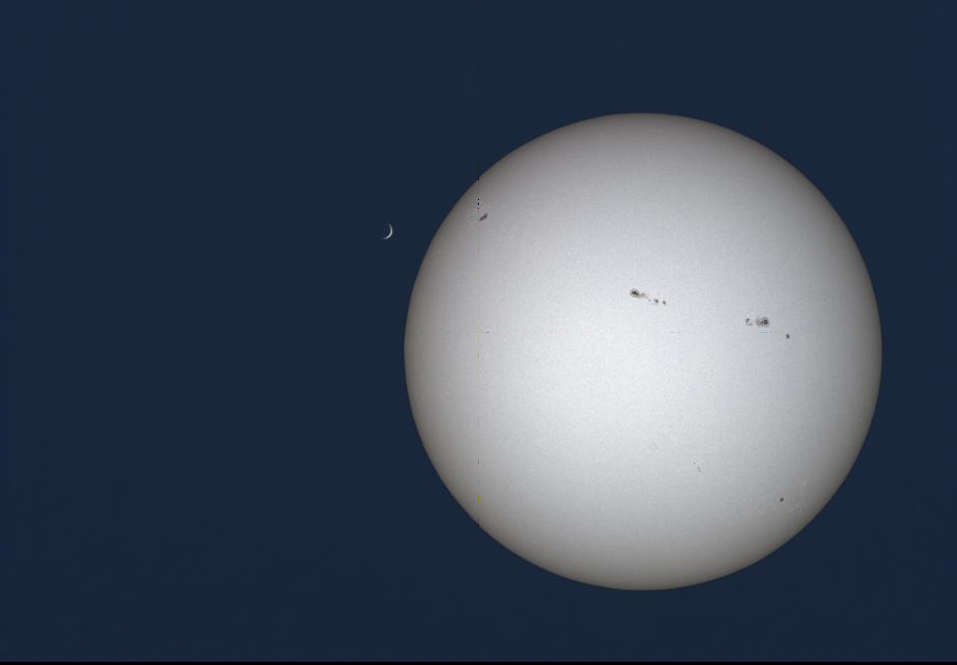
  • Larry reminded the group about the upcoming Monday, November 11th Mercury transit. Plans are to have the observatory operational and members and guests can bring their own solar equipment. Bill Murrary mentioned the sun will be obstructed until about 9 a.m.
  • Larry mentioned interest in the InfoAge Science facility located in Belmar, NJ. This includes and operational radio telescope refurbished in 2016 by the Princeton University Physics Department
  • Review discussions were led by David and Jen Skitt regarding contractor reviews and other topics for the observatory structural upgrades. Treasurer Michael Mitrano is working on contractor contact
  • Treasurer Michael Mitrano reported, in absentia, the club’s current cash balance was $15.6 K.
  • Larry adjourned the meeting about 9:45 p.m.
Posted in November 2019, Sidereal Times | Tagged , | Leave a comment