
by Victor Davis, Program Chair
Fundamentals of EAA and Astrophotography
The September, 2026 monthly meeting of the Amateur Astronomers Association of Princeton will take place in room 101 of Sherrerd Hall on the campus of Princeton University on Tuesday, September 8th at 7:30 PM. As usual, the meeting is open to AAAP members and the public. Participants can join the meeting in-person at Louis Simpson Hall or log in to the Zoom session as early as 7:00 pm to chat informally before the meeting begins. The evening’s guest speakers will be AAAP Assistant Director and Princeton University Emeritus Professor Robert Vanderbei and Michael DiMario, Chair of AAAP’s Astroimagers and EAA Group. Prof. Bob and Dr. Mike will describe the fundamentals of deep sky imaging and Electronically Assisted Astronomy (EAA) and show examples of their astroimaging work.
Options for Attending the Meeting
You may choose to attend the meeting in person or participate via Zoom or YouTube as we’ve been doing for the past few years. (See How to Participate below for details). Due to security concerns, if you log in before the host has set up internet connectivity on-site, you may need to wait in the Waiting Room for a few minutes until the host is prepared to admit you into the meeting. You’ll need to unmute yourself to make comments or ask questions. It’s polite, though not required, for you to enable your camera so other participants can see you. The meeting will be recorded and edited for posting to our club’s YouTube channel.
Join us for our “meet the speaker” dinner
Our guest speakers will be joining us for our traditional “meet the speaker” dinner at Winberie’s before the meeting. Our reservation is for 5:45 pm Tuesday, September 8th. Please contact the Program Chair if you plan to attend.
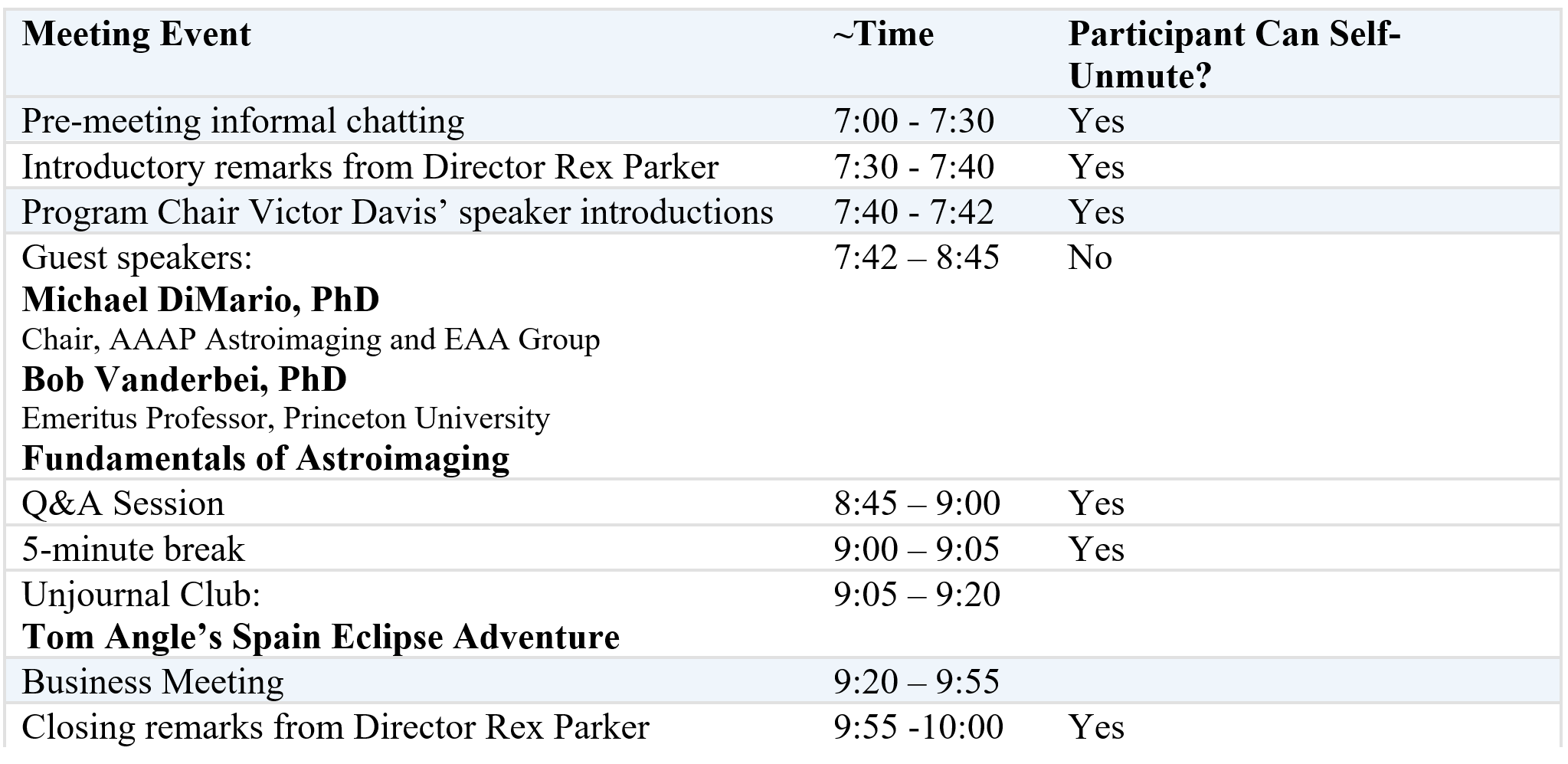
Here’s the anticipated agenda for September 8, 2026’s monthly meeting of the AAAP:
Fundamentals of Astroimaging
Featured Speakers:
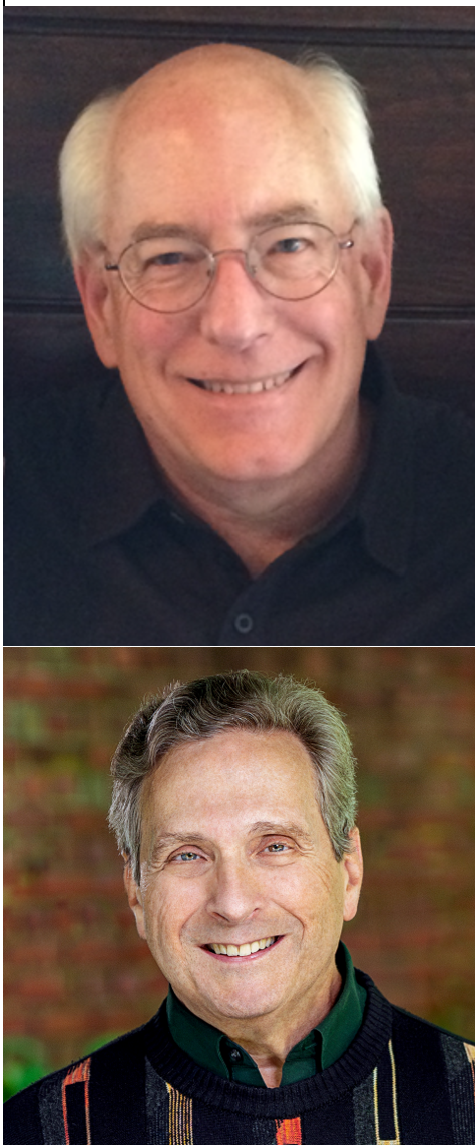
Michael DiMario, PhD
Chair, AAAP Astroimagers and
EAA Group
k2mjd@outlook.com
Robert Vanderbei, PhD
Professor Emeritus Princeton University Department of Operations Research and Financial Engineering
rvdb@princeton.edu
What you see depends on how you look. For thousands of years, visual astronomy gradually informed our appreciation of our place in the universe. Our understanding of nature, of its cosmic cycles, of religion, of origins and destinies all came from looking at the heavens, eventually aided by mechanical and optical gizmos to extend and enhance our vision. Four hundred years ago, telescopes of various sizes and sophistication began helping us collect the photons that let us see distant stars and the faint fuzzy patches of nebulae. For the curious, the serene beauty of Saturn or the glow of the Orion nebula are revelations. Yet until recently, the eye was the ultimate – the only — sensor. Today, the digital sensor has revolutionized astrophotography. Images can be stacked, histograms stretched, and software used to manipulate images in countless ways to mitigate some aspects of poor seeing, light pollution, and atmospheric attenuation. Bob Vanderbei and Mike DiMario, both avid astro-imagers, will introduce the fundamental concepts and processes by which photons modulate electrons which are tortured into stunning images that reveal what the eye cannot by itself see. This presentation explains how to use affordable gear for making pretty pictures that also disclose reality and elicit a sense of wonder that we want to feel and share.
Michael DiMario
Michael DiMario has recently retired from Lockheed Martin serving various executive roles and has held executive engineering positions at General Electric Medical and Lucent Technologies/Bell Laboratories. Michael has six patents, a published book on systems engineering, several published book chapters, more than fifty peer reviewed papers. He has been interviewed and quoted in Wired Magazine, GPS World, Sifted, and the Financial Times. In regard to his astronomical pursuits, he chairs the Amateur Astronomers Association of Princeton Astroimaging Group, spends many a night astroimaging, and does considerable astronomical history research. He co-shares the earliest precovery of Pluto on Edward Barnard 1909 photographic glass plates located at Yerkes Observatory.
Left: Sombrero Galaxy M104, Right: Heart Nebula IC 1805
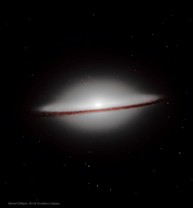
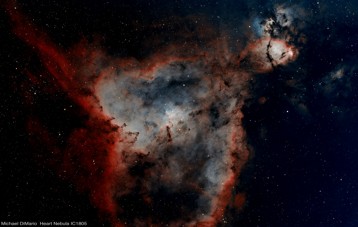
Sombrero Galaxy M104, Heart Nebula IC 1805. Credit: Michael DiMario
Robert Vanderbei
Bob Vanderbei grew up in Grand Rapids, Michigan. He first became interested in the stars at the age of six, when he and his family took a camping trip around Lake Superior. Late one night on that trip, Bob looked up at the sky and was astonished by the beauty of the stars. He was enthralled by the idea of space exploration, but a high school teacher convinced him that the Apollo era would be short-lived, and that a career with NASA was a suboptimal career path. Nevertheless, he joined a local astronomy club and immersed himself in math and science. Bob earned a BS in chemistry at Rensselaer Polytechnic Institute and a PhD in applied math at Cornell. A few postdocs later, he took a job at AT&T Bell Labs, where he emerged as the lead developer behind Korbx, a groundbreaking optimization tool. He received an offer to come to Princeton in 1990. Bob is co-author, with Princeton astrophysicist J. Richard Gott on “Sizing Up the Universe” published by National Geographic, and with Gott, Michael Strauss and Neal DeGrasse Tyson on “Welcome to the Universe in 3D, briefly the number one bestseller on Amazon.com. Bob is a prolific and expert astro-photographer. His work is on view at vanderbei.princeton.edu.
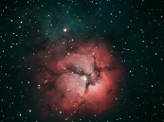
Top Left: Trifid Nebula M20 Takahashi/RC-Optical
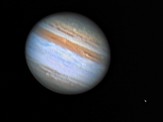
Bottom Left: Jupiter Questar
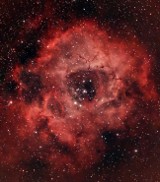
Right: Rosette Nebula NGC 2238 SeeStar S30 Pro
Unjournal Club
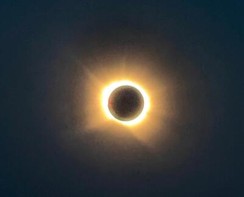
Following the break, AAAP member Tom Angle will describe his recent trip to Spain with a Sky and Telescope tour to witness the Total Solar Eclipse of 2026 August 12.
Left: Totality in Spain, Credit: Tom Angle
Right: Madrid Royal Observatory, Credit: Tom Angle
How to Participate (Links)
Zoom & YouTube Live
AAAP Sept 8, 2026 Meeting; Fundamentals of EAA and Astrophotography
Time: Sep 8, 2026 07:00 PM Eastern Time (US and Canada)
Join Zoom Meeting
Meeting Chat Link
Meeting ID: 810 2841 6217
Passcode: 883450
Join Instructions ....
....
Click the above icons for Zoom and YouTube
AAAP Video Library
AAAP’s library of monthly meetings is available on the club’s YouTube channel. May’s edited meeting featuring a presentation by John Horgan, science journalist, asking if his 2015 book “The End of Science” was too optimistic is at: https://youtu.be/EqdLY8SSDrw and runs about an hour and 13 minutes.
A look ahead at future guest speakers:
| Date | Featured Speaker | Topic | |
| October 13, 2026 | Charles Bracken Astro-photographer and author deepskyprimer@gmail.com 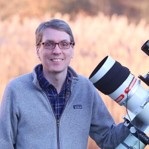 | Mr. Bracken is an amateur astrophotographer and author of “The Deep Sky Imaging Primer” now in its third edition. He will present his perspectives on astroimaging. We expect to have copies of his book(s) for sale for the author to sign at the conclusion of his presentation. Thanks to Tom Angle for suggesting this speaker. | |
| November 10, 2026 | TBA | ||
| December 8 2026 | Joel Hurowitz Associate Professor Graduate Program Director Acting Principal Investigator, Mars 2020 PIXL Team Department of Geosciences Stony Brook University joel.hurowitz.stonybrook.edu 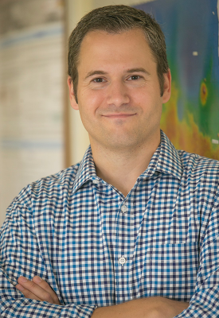 | Prof. Hurowitz will speak virtually to our club about his research using the Perseverance rover and about astrobiology on Mars. Thanks to Rex Parker for suggesting this speaker. | |
| Sometime in 2027 | Becka Phillipson Assistant Professor in Physics Villanova University rebecca.phillipson@villanova.edu  | Prof. Phillipson, originally scheduled to be October 2025’s guest speaker, is an unconfirmed prospect to try again in 2027 Prof. Phillipson leverages statistics, nonlinear dynamics, and machine learning to study the explosive and highly variable characteristics of exotic astrophysical objects such as black holes and neutron stars. Thanks to Bill Thomas for suggesting this speaker. |
As always, members’ comments and suggestions are gratefully accepted and much appreciated. Thanks to Ira Polans and Dave Skitt for setting up the online links and connecting the meeting to the world outside Peyton Hall.
victor.davis@verizon.net
program@princetonastronomers.org
(908) 581-1780 cell


