Treasurer’s Report

by Michael Mitrano, Treasurer

Member renewals continue to come in; our member count at this writing is 93 and closing in on my personal goal of 100. Dues at this point in our fiscal year are 5% ahead of the same point a year ago.

Monthly expenses at this point remain minimal and our surplus for the year to date has increased to $2,100. As we prepare the Simpson observatory for the public season, we may incur expenses for re-stoning of the driveway and repair to the flat portion of the roof.

On a cumulative basis, the AAAP’s surplus is over $24 thousand, so we are in excellent shape to fund any improvements.

Posted in April 2014, Sidereal Times | Tagged , | Leave a comment

Minutes of the March 11, 2014 AAAP Meeting

By Michael Wright, Secretary

Director Jeff Bernardis opened the meeting.  Program Chair Kate Otto introduced the speaker for the evening, Ted Blank of the International Occultation Timing Association.  Ted presented an engaging talk called Chasing Shadows for Planetary Science.  On March 20, 2014 at approximately 2:06 a.m. EDT the shadow of 163 Erigone cast by Regulus will race across the New York metropolitan area on its way to Ontario.  If skies are clear, observers within the shadow path will see Regulus disappear for up to 14 seconds.   Never before will so many people have the opportunity to witness an asteroid occultation of a star with their naked eyes.  Ted explained how citizen scientists could contribute to science by timing the event with any camera able to record video or an iPhone app developed by IOTA.

After a short break, Jeff convened the business meeting.

Nominating Committee – Jeff announce that John Giles and Jim McHenry have volunteered to serve as the nominating committee and put together the slate of candidates for next year’s officers.  The slate will be announced at the April meeting and the election will be conducted at the May meeting as required by the club’s by-laws.

Communiversity – Larry Kane announced that the club has been invited to participate in Communiversity, which will be held on April 27, 2014 in Princeton.  Jeff said this has been a worthwhile event and encouraged members to volunteer to bring scopes and staff the club’s table.

Friends of Washington Crossing Park: – Trustee Larry Kane announced that FWCP has adopted a constitution.  There may be opportunities for the club to participate in events planned by FWCP.  The organization is working with the park administration.  Jeff suggested that FWCP could help the club address the observatory access problems.

StarQuest – Michael Wright suggested that the club plan an observing-only event because no one offered any ideas or help for organizing a bigger event after the discussion at the last business meeting.  Mike will call a meeting of the volunteers to begin planning.

Mount Lemon Trip – Rex Parker provided more information regarding the proposed trip to the Mount Lemon Observatory near Tuscon, Arizona.  He suggested a two-day stay on the mountain. The University of Arizona runs a public visual observing program on the weekends until 11:00 p.m. for which they charge $60 per person for up to 20 people.  After 11:00 p.m., the club could have exclusive use of the scope for the rest of the night.  An operator would be provided.  Rex estimated UofA’s fee for 10 members would be about $160 per person per night if we share the evening with the public observers.  Members could stay in dorms on the mountain, and the club would have to cater meals.  Since there is no deliveries on the mountain, it means members would have to cook. The optimum times to visit are October 2014 or April 2015.   Trips to Kitt Peak Observatory and the Stewart Lab could be included if there is interest.  The visit could be arranged immediately before one of Adam Block’s astrophotography workshops if some members wanted to stay on to attend.  A show of hands by the 30 +/- members present showed about 12 members are interested in the trip, which is enough to justify continuing researching the trip.

Program Chair’s Report – Kate Otto announced that Bob Vanderbei and Gene Ramsey will speak at the April 8 meeting and Neta Bahcall of Princeton Astrophysics will speak in May.  The June meeting will be at the planetarium at the NJ State Museum in Trenton.

Jen and Dave Skitt

Jen and Dave Skitt Credit: M. Wright

Simpson Observatory – Gene Ramsey reported that he has trained two new keyholders that will be assigned to teams.  One other person is going through training, but the snow, cold weather and lack of access to the observatory interrupted his training. The duty roster for the upcoming season will be issued shortly. The observatory is now closed for all uses until further notice.  Due to the cold weather the floor has heaved and pushed up the wall between the computer room and the main room, which prevents opening the roof.  He anticipates that the floor and wall will return to normal when the ground thaws.  Gene demonstrated a new observing chair that he designed and gave it to Jennifer and David Skitt in appreciation for their work at the observatory.  Ludy D’Angelo reported that he checked out the stereo and that it works fine except the CD player needs a new power cord.

Outreach Report – Dave Letcher announced that the club has been invited to participate in Super Science Saturday on May 3 from 9:00 a.m. to 5:00 p.m. at the NJ State Museum.  Also, the Plainsboro Preserve has asked for the club’s assistance with an event at October 24 (rain date October 25) and Hightstown Library has asked for participation in a daytime event during the summer. The next outreach event is a science night at Ben Franklin School in Lawrenceville on Thursday, March 27. Dave will send out calls for volunteers with full details at the appropriate times.  Gene Ramsey announced that he will be helping with a science night at Hopewell elementary school on March 14, and members are invited to bring scopes.

New Observatory Donation – Jeff agreed to contact the potential buyer for the dome.  John Miller said that there is no need to bench test the C14.  An optical test at the observatory would be more appropriate.

Astronomical Calendar – Bill Murray reported that there will be a total lunar eclipse in the early morning of April 15.

Jeff adjourned the meeting.

Posted in April 2014, Sidereal Times | Tagged , | Leave a comment

Minutes of the March 19, 2014 AAAP Board Meeting

by Michael Wright, Secretary

Attendees: Director Jeff Bernardis, Assistant Director Larry Kane, Treasurer Michael Mitrano, Program Chair Kate Otto, Secretary Michael Wright, Observatory Co-chairs Jennifer and David Skitt, John Church, Kevin Mooney, Bill Murray and Gene Ramsey.

Director Jeff Bernardis opened the meeting at 7:30 p.m. by stating the purpose of the meeting was to prepare the observatory for the 2014 Friday-night public sessions.

Jeff announced that Jennifer and David Skitt have agreed to serve as Observatory Committee Co-chairs.

Gene Ramsey announced that Lee Sandburg and Daniel Benjamin will be added to the keyholder roster and assigned to teams when they complete their keyholder training. He is also training Freddie Missel who will become a keyholder after also obtaining a driver’s license.

Gene and Jen & David Skitt presented the following list of projects completed at the observatory as of March 19, 2014:

  1. Toilet insides have been replaced.
  2. Rest room faucet ahs been replaced.
  3. Bathroom has been temporarily secured.
  4. Eyepieces and the C14 diagonal have been cleaned.
  5. The stereo system has been checked and is working except the CD player, which needs a power cord.
  6. Microwave and cart have been removed.

The attendees discussed the following list of 18 repair items compiled by Gene, David and Jen:

  1. Heaving under the computer room/restroom wall appears to be raising the roof of the computer room/restroom and preventing the rolling roof from opening. The roof over the computer room/restroom has bulges possibly due to two layers of shingle that are jamming the rolling roof.
  2. It appears heaving of the slab under the wall of the computer room/restroom is causing cracks in the walls of the restroom and computer room. This has also resulted in cracks in the floor of the computer room.
  3. Restroom door needs to be better secured.
  4. Wood is rotted in various places including the entrance door, the computer room and restroom.
  5. Stone is needed to widen the parking area, fill in the potholes and improve the gate area.
  6. It would be nice to have a storage shed where club items can be stored. A small shed could be built.
  7. Larger pulley is needed to make the flap easier to open.
  8. Paint interior of the observatory.
  9. Remove roof cement can and old paint cans, and dispose of properly at Mercer County Recycling.
  10. Ceiling panel in computer room.
  11. Put Gemini mount on refractor.
  12. Bench test the donated C14.
  13. Put a window in the computer room door. The Plexiglas for this project has been purchased.
  14. Put a reflector or two on the gate so people can see it coming in.
  15. Put a “restroom” sign on the restroom door.
  16. Get batteries for the telrads.
  17. Get a cord for the CD player.
  18. Remove tape player.

The consensus was that these repairs should be made except as follows:

John Church, Gene, David and Jen will meet at the observatory on Sunday, March 23 to look at items 1 through 4 and recommend appropriate repairs. If the weather forecast for Sunday is not fair, the meeting may be moved up to Saturday. “The simplest solution that solves the problem is the best one.”

David will turn on the water this weekend and secure the bathroom door.  Michael Mitrano will de-nail the computer room roof and help with the bathroom door.

Gene volunteered to measure the driveway and parking area to be stoned so a quote can be obtained. A four-inch layer of stone would be needed. If the stone could be delivered, a work party could spread it. Also, he will speak to the Park Administration about this work and request that they repair the unpaved road that goes past the campsites.

The attendees reached the consensus that a storage shed was not necessary for the limited number of items at the observatory that could be stored in one. Sensitive and expensive scopes and accessories should remain secured inside the building. Also, ladders should be kept inside because thieves and vandals could use them to get on the roof. If equipment is in the way during public sessions, keyholders should move them outside temporarily and return them at the end of the evening.

A work party will be called to paint the interior of the observatory.

The group agreed that star-testing the donated C14 should be a priority to find out how it compares to the existing C14. A tripod is needed so the C14 can be set up at the observatory for the comparison. Michael Wright will send an email request to the membership. Michael Mitrano volunteered to build a wooden support if a suitable tripod could not be found. The goal is to do the test in May.

Jen asked that keyholders ask visitors to sign in. Michael W. said that he had created a “Friends of AAAP” mailing list and five of last year’s visitors have subscribed.

Michael W. suggested that if signs are going to be purchased, a “No White Lights Beyond This Point” sign at the driveway would be helpful on public nights

Michael W. agreed to scan and copy the blueprints of the observatory in John Church’s possession.

Bill Murray said that he is beginning to refurbish the 12.5-inch Newtonian at Jenny Jump. He has removed all the parts that he can work on at home, but he cannot find the analogue setting circle rings. Bill requested that anyone who knows where they are to contact him.

Larry Kane asked for volunteers to man AAAP’s table at Communiversity, to bring solar scopes and to prepare handouts. The event will be held in Princeton on Sunday, April 27 from noon to 6:00 p.m. He will contact Sky & Telescope and Astronomy magazines for handouts.

Larry announced that Friends of Washington Crossing Park will hold a clean-up at the park on April 27 also. Larry will write an announcement for the April Sidereal Times.

Jeff said he could probably provide a power cord for the CD player from his collection.


Posted in April 2014, Sidereal Times | Tagged , , | Leave a comment

Smoke and Mirrors

by Michael Wright

Colorado astronomers are benefiting from the state’s recent legalization of marijuana. Members of Denver’s Mile High Astronomy Club are reporting spectacular results from observing under the influence of cannabis. In an interview, Club President Bill Roach said “One of our members has been pushing grass for astronomical uses for many years. Once it became legally available in January, some of our members were willing to give it a try.”

Double Cluster in Perseus  Sketch by D. Jones

Double Cluster in Perseus Sketch by D. Jones

The club began experimenting with marijuana at their Mount Mellow observatory and found that THC, the active ingredient in marijuana, enhances their observing skill. The effects of THC on vision are well-known, but now another practical application has been found for the drug. Club members discovered that they could observe stars one to two magnitudes dimmer after partaking of a joint. Some members like Doobie Jones report even better results, “Dude, you would not believe the colors you can see in the Orion Nebula. Psychedelic, man! And the Double Cluster, like a light show at the Fillmore West.”

This is not the first time that marijuana has been used to enhance astronomer’s skills. Jamaican astronomer, Vernon Tosh, a protege of William Henry Pickering, was known to smoke a spliff while preparing his sky atlas. Tosh’s goal was to free astronomy from colonialist oppression by replacing Babylonian constellations with new ones based on Rastafari icons. Rumored to contain many previously undiscovered asterisms, the atlas was lost in a house fire in 1971 before it could be published.

Not everyone agrees that marijuana is a boon for astronomy. When asked to comment on THC-enhanced observing, Sticklie Mudd, contributing editor to Astronomy Today magazine, said “Stargazing is not like it was when I was young. Today’s observers are not willing to put in the hard work needed. This is a dangerous trend. Pot is a gateway to other observing crutches like GoTo mounts and iPhone apps.”

Despite the controversy, THC-enhanced observing is providing benefits for local eateries. Sonny Sinsemilla of Sonny’s Pizza reported “Sales are up 500% since we began staying open all night. I’ve had to hire an extra delivery person just to handle deliveries to the observatory.”

Given New Jersey’s slow roll-out of medical marijuana, our state’s astronomers may have a long time to wait to try THC-enhanced observing. In the meantime, one can visit Mt. Mellow. Jennie Hemp of the Colorado Department of Tourism explained, “We were very excited when we learned about what the club is doing. This is a great opportunity to make Denver an astronomy destination. We are working with the club to publicize THC-enhanced observing opportunities at Mt. Mellow to astronomers around the country.” President Roach said, “There’s been huge interest observing at Mt. Mellow since we began the program. We hope we can used it to increase interest in astronomy and STEM in general.”

Anyone interested in visiting Mt. Mellow can get more information at the Mile High Astronomy Club’s website: http://www.aprilfool.com.

Posted in April 2014 | Tagged | Leave a comment

Gravity

by Prasad Ganti

“Gravity”, the science fiction movie released a few months back, won accolades at the Oscar awards ceremony this year. It won 7 academy awards-for Best Visual effects, Best Sound mixing, Best Sound editing, Best Editing, Best Cinematography, Best Original score, and Best Director. The movie was based on the idea of a lone Mission Specialist, played by Sandra Bullock,  surviving a space disaster and getting stranded in Space.

We sometimes get stranded at places like trains, airports, traffic jams etc. It can be very frustrating. Not being able to move as we had intended to do. We hear stories of adventurers getting stranded in isolated and remote places like deserts or on islands. Like Ernest Shackleton and his crew got stranded on Antarctica for about a couple of years around the time of first world war.

What about getting stranded in Space ? There is no gravity in space. Which is what probably inspired the title of the movie. One just floats away without being anchored to anything. You cannot stand on anything. Neither do you fall. You just drift all over the place unless you bump into something. The bumps can change the direction of drifting unless you get a chance to hold on to something. Even tears from the eyes just float away. They don’t roll down the cheeks. There is no sound. The cries cannot be heard by anyone. However close one may be to another human being.

Space can be very unforgiving. There is no air. Because of which there is no sound. Sound waves require air to travel. The temperatures can be very hot when the Sun is present, and very cold when the Earth shields the Sun. The temperature swing is very wild, much more than that in a desert.  Radiation is a major problem. So can be the dust particles and the micro meteorites and the space debris. These unwanted items can be very energetic and even cause problems for spacecraft upon collision. The bulky spacesuit which the astronauts are seen wearing protects them from all these problems.  And even provides the air to breathe. Minus the spacesuit, a human being would not survive even a few minutes in space. Certain death would ensue.

That is why manned space missions are lot tougher than unmanned ones. Robots can live easily and work in space. Instruments can be built to function well in space. But the life support systems for human beings are very complex to build and maintain. They are very expensive and risky.

Once inside the relatively cozy confines of a spacecraft, there is no need for a spacesuit. But still there is no gravity. Astronauts float from one point to another. A pen kept on a table will not stay there and will just float away. Unless strapped securely in a pen holder which itself should be anchored to the table. In future, spacecraft will be designed with artificial gravity in which people can know which is the floor and which the ceiling ! But till then, it takes some training to get used to the weightlessness and again some getting used to when back on the Earth. As the spacecraft makes a fiery entry into the Earth’s atmosphere, astronauts start feeling the weight.

What do you miss in Space ? One astronaut who spent a few months on the International Space Station said “I just wanted to feel the wind on my face” ! Some astronauts order pizza for a meal while returning back to Earth.  After all, eating all the doctored foods in space can be boring. And eating a pizza slice which will not remain on the plate, but just float away instead may be no fun !

The story ends happily as Sandra Bullock makes it back to the surface of the Earth. People who get stranded would thank the gravity on our mother Earth for rooting us down to the land. After seeing the movie, one might feel that we are better off staying on the Earth. But then the future belongs to the space colonies and interplanetary travel. Such disasters are only the initial stumbling blocks. I would volunteer to be among the first batch of people to  move into space !

On a separate but related subject, gravity waves were reported recently by scientists using the Bicep2 telescope at the South pole. These are from the time of Big Bang. These elusive artifacts of the Universe, like the Higgs Boson, is a cause for celebration. But not so soon, unless other teams are able to replicate the findings !


Posted in April 2014, Sidereal Times | Tagged , | Leave a comment

The Pearl of Time

A Poem by Alison Lu

In the darkness of the world.
We have one savior.
The pearl in the sky.
The clock that marks the day and night.
Surrounded by the dew of the universe.
The twinkling diamonds.
You might lay, one day, in the light,
of the time,
of the shining moment.
Or you might glance,
at the sliver in the sky.

The mirror harnesses the solar flare.
so you might see it as a kid,
and wonder,
What is that?
Inspired from fire,
bring on the tide.
Higher, and higher,
then slow and subside.
The smiling man,
the generous face,
that allows us humans
to collect his skin.
Depending on the flame,
it is quite a shame,
that we are chipping it away,
rock by rock.

Posted in April 2014, Sidereal Times | Tagged , | Leave a comment

A visit to the National Navy UDT – Seal Museum

by David Kaplan

National Navy UDT - Seal Museum, Fort Pierce, Florida. Photo Credit: David Kaplan

National Navy UDT – Seal Museum, Fort Pierce, Florida. Photo Credit: David Kaplan

While in Florida these past few weeks, my wife and I, at the suggestion of a friend, visited The National Navy UDT – Seal Museum in Fort Pierce, Florida. UDT, stands for Underwater Demolition Team. If you’ve forgotten about the heroism of Navy frogmen who recovered our nation’s astronauts in the open oceans of the world, this museum is a wonderful reminder.

Narrative from UDT Museum website –

Underwater Demolition Team (UDT) frogmen, precursors to the Navy SEALs, played a key role in the Gemini and Apollo space missions. It was the job of the Navy frogmen to leap into the water from a helicopter to recover space capsules that had just ended a fiery thousand mile an hour drop from space to splashdown in the ocean. The frogmen have reported the capsules were still steaming when they swam up to them.

Apollo Capsule Frogmen Trainer.  Photo Credit: David Kaplan

Apollo Capsule Frogmen Trainer. Photo Credit: David Kaplan

After splashdown, frogmen would then wrestle a flotation collar around the capsule to keep it from sinking. It was a physically demanding job. The Navy’s strongest swimmers trained for months using training devices like the one in our collection. After ensuring the flotation device was secure, the frogmen would pop the hatch of the capsule to ensure the astronauts were okay. After decontaminating them, the frogmen made sure the astronauts were safely lifted into the rescue helicopter.

Frogmen. Photo Credit: NASA

Frogmen. Photo Credit: NASA

    In addition to the training modules, the Museum houses the wet suit of frogman LT (jg) David Kohler US Navy SEAL (Ret) worn on the July 24, 1975 Apollo–Soyuz Test Project (ASTP) Recovery Mission in the Pacific. The mission was a symbol of détente and was the first joint U.S.–Soviet space flight, and the last flight of an Apollo spacecraft.

Posted in April 2014, Sidereal Times | Tagged , , | Leave a comment

Astromart

Former club member Palmer Hendricks has sold his home and is ready to travel in his new RV. His 12″ Mead LX200 and all the accessories listed below are looking for a new owner. If interested please call him at 917-378-9797 or send an email at palm4269@gate.net. Shipping is NOT included in the prices. Palmer will accept payment by Paypal or Cash, no personal checks. He is also ready to drive an hour radius of 18977 zip code to deliver.

  • Meade 12″ LX200 EMC – Schmidt-Cassegrain D=254mm F=2500mm ser#113287 $1800 included –
         Front Mirror Cover
         Meade 2 Star 1.25″ 90 degree Diagonal
         Meade T-Adapter
         Meade 1.25″ 12.4mm Super Plossl Eyepiece
         Meade 1.25″ 26mm Super Plossl Eyepiece
         Fork Mount Base with Smart Drive
         Hand Controller (V3.21)
         Giant Field Tripod
         Meade Manual
         2 – 8×50 finder scopes
         2 – 18v AC adapters
         Original Meade travel case
  • Kendrick Astro #2081-18 – Dual Output Battery Power Pack. 12V/18V 18 amp hour rating. Built in 18 volt inverter. Includes .750 amp battery charger, LX200 cables and padded carry bag. $350
  • Celestron Stereo Binocular Viewer $200
  • Celestron #93506 – 1.25″ 2x Barlow Ultima SV series $75
  • 2 – 12mm TeleVue Radian eye pieces $150 each
  • 2 – 32mm TeleVue Plossl eye pieces $125 each
  • Starlight Feather Touch Focuser #FTF2020BCR – Rotatable 2″ Diam. Dual Speed 2″ Draw Tube with a 2″ to 1.25″ reducer $350
  • Meade Deep Sky Imager II CCD Camera w/ Astro Suite Software $225
    (plus a copy of CCD Astrophotography by Adam Stewart)
  • Meade Ser. 4000 2″/1.25″ Flip Mirror System #647 (in box, unused) $125
  • Meade Ser. 4000 f/3.3 Focal Reducer/Field Flattener w/Variable T-Adapter #07567 $100
  • Meade Ser. 4000 25mm Plossl Illuminated Retical CCD Framing eyepiece 1.25″(wireless) $100
  • Meade Plossl 9mm Illuminated Reticle Eyepiece 1.25″ w/ cord $50
  • Kendrick Astro #BM-6018 – Bahtinov Focusing mask for Meade 12″ SCT $75
  • Kendrick Astro #2054 – Kwik Focus mask for Meade 12″ SCT $45
  • Kendrick Astro Standard 2″ Laser Collimator $90
  • Sky Scout – model #93970 (open box / never used) $190


  • Posted in April 2014, Sidereal Times | Tagged , | 1 Comment

    Delta IV Rocket Boosters arrive at KSC for Orion’s December 2014 Launch

    by Dr. Ken Kremer, AAAP and Universe Today

    2 of 3 United Launch Alliance Delta IV heavy boosters powering NASA’s upcoming Orion Exploration Flight Test-1 (EFT-1) inside Horizontal Integration Facility at Launch Complex 37 at Cape Canaveral Air Force Station, FL.  Credit: Ken Kremer

    2 of 3 United Launch Alliance Delta IV heavy boosters powering NASA’s upcoming Orion Exploration Flight Test-1 (EFT-1) inside Horizontal Integration Facility at Launch Complex 37 at Cape Canaveral Air Force Station, FL. Credit: Ken Kremer

    CAPE CANAVERAL AIR FORCE STATION, FL – Production and assembly of virtually all the key hardware elements for NASA’s eagerly anticipated Orion EFT-1 uncrewed test flight later this year are nearing completion at the Kennedy Space Center .

    Two of the three first stage boosters comprising the mammoth Delta IV Heavy rocket that will propel Orion to high Earth orbit have arrived at Cape Canaveral Air Force Station, Florida, and were unveiled in mid March by top NASA managers at a media briefing I attended at the Cape.

    The triple barreled Delta IV Heavy rocket is currently the most powerful American rocket and the only one capable of launching the Orion EFT-1 capsule to its intended orbit of 3600 miles altitude above Earth.

    Delta IV Heavy boosters and Ken Kremer reporting from inside Space Launch Complex 37 at Cape Canaveral on NASA’s upcoming Orion Exploration Flight Test-1 mission. Credit: Ken Kremer

    Delta IV Heavy boosters and Ken Kremer reporting from inside Space Launch Complex 37 at Cape Canaveral on NASA’s upcoming Orion Exploration Flight Test-1 mission. Credit: Ken Kremer

    Due to urgent US national security requirements, the maiden blastoff of the unmanned Orion pathfinder has just been postponed three months from September to December 2014 in order to make way for the accelerated launch of recently declassified US Air Force Space Surveillance satellites.

    The center and starboard side boosters recently arrived at the Cape aboard a barge from Decatur, Alabama where they were manufactured by United Launch Alliance (ULA).   The remaining port side booster and the Centaur upper stage are due to arrive in mid April.

    For more about Orion read my articles here:

    http://www.universetoday.com/109533/nasa-unveils-orions-powerful-delta-iv-heavy-rocket-boosters-for-dec-2014-blastoff/

    http://www.universetoday.com/110450/us-air-force-space-surveillance-satellite-bumps-nasas-long-awaited-orion-launch-to-dec-2014/

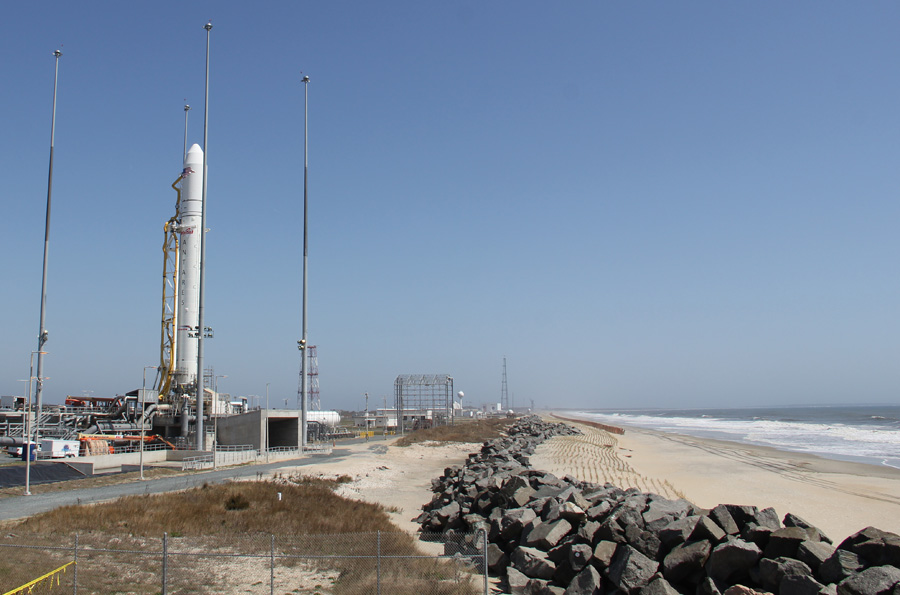
    The next Antares/Cygnus rocket launch from nearby Virginia to the ISS is tentatively set for May 6 but may be delayed.

    Contact Ken if interested to attend.

    Astronomy Outreach      by Dr. Ken Kremer

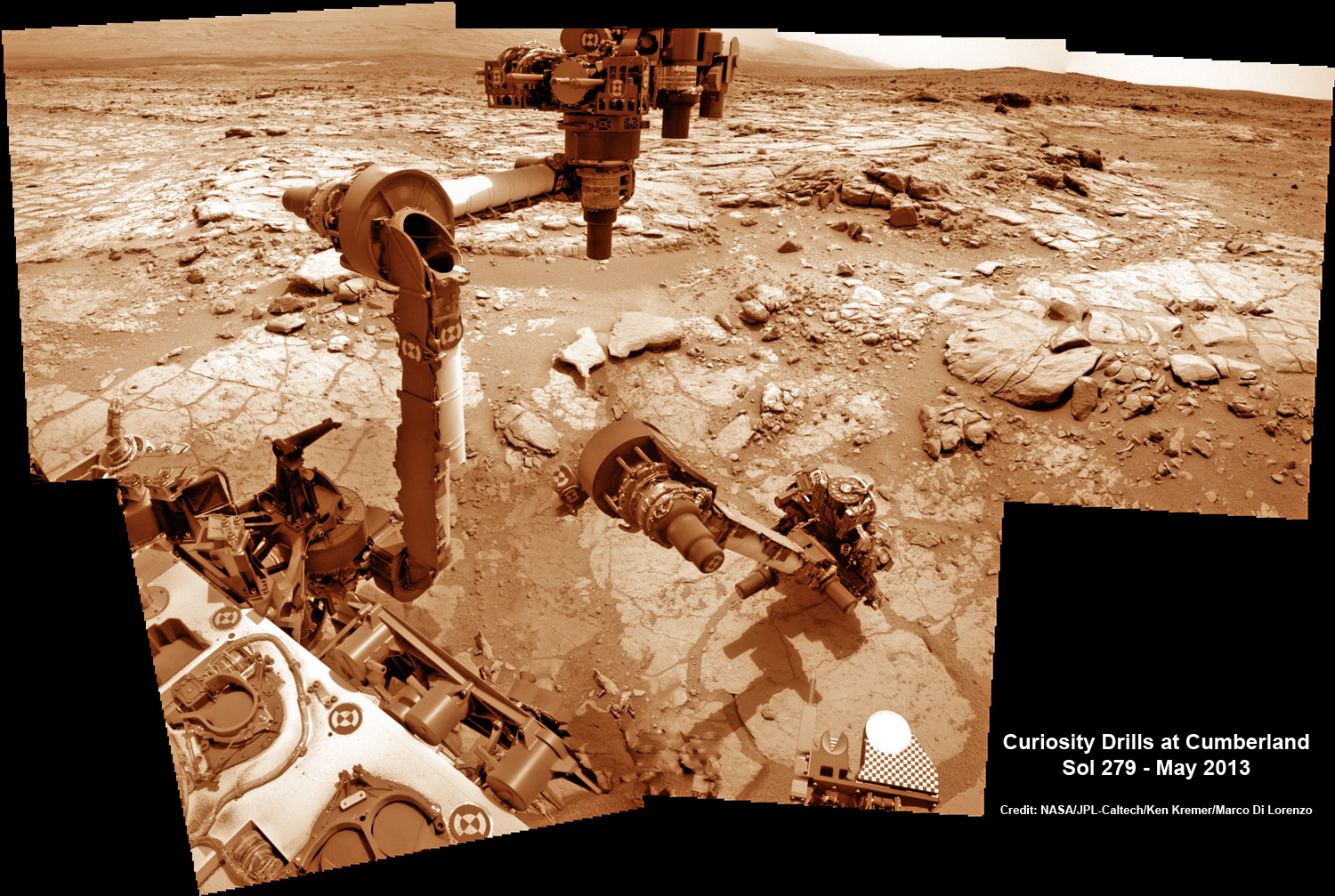
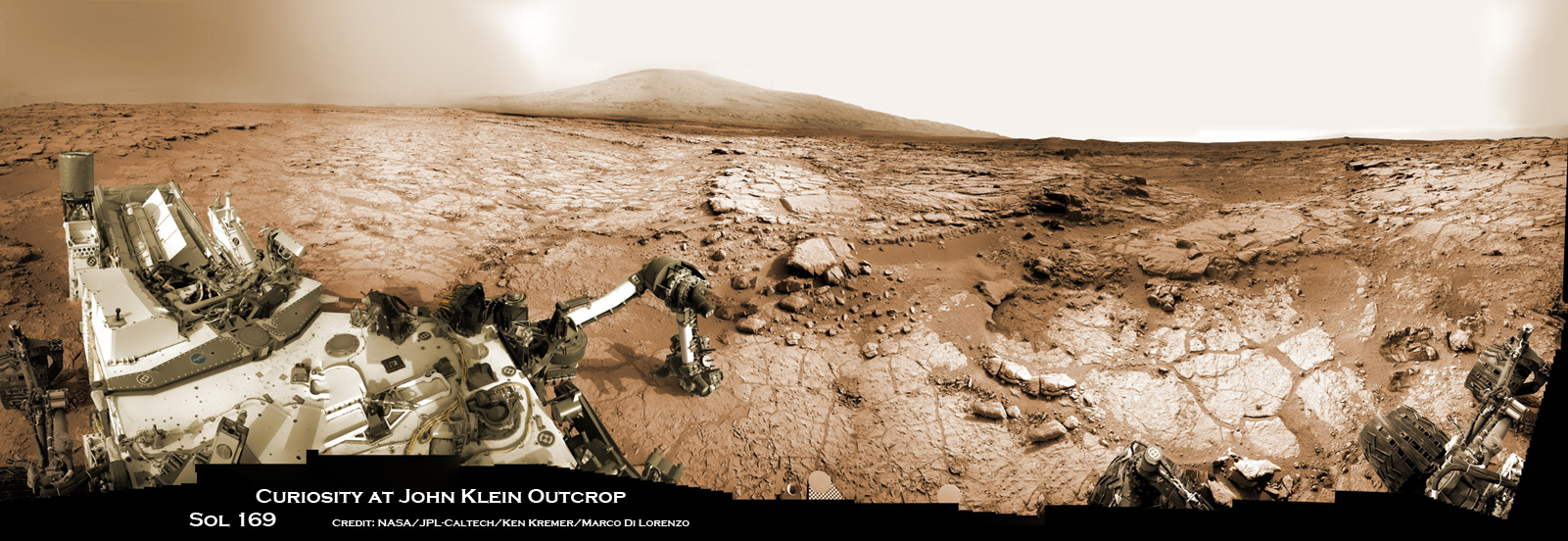
    Washington Crossing State Park, Nature Center:  Titusville, NJ, Apr 6, 1 PM.  “Curiosity, MAVEN and the Search for Life on Mars – (in 3-D)”and “May 1 Antares Launch from Virginia”

    Northeast Astronomy Forum (NEAF): Suffern, NY, Apr 12 & 13. “Curiosity, MAVEN and the Search for Life on Mars – (3-D)” and “Future of NASA Human Spaceflight”

    Antares Rocket Launch to ISS, May 1: NASA Wallops Island, VA. Evening outreach  at Rodeway Inn, Chincoteague, VA. 

    Please contact Ken for more info, science outreach presentations and his space photos. Email: kremerken@yahoo.com   website:  www.kenkremer.com, http://www.universetoday.com/author/ken-kremer/

    Posted in April 2014, Sidereal Times | Tagged , , | Leave a comment

    From the Director

    By Jeff Bernardis, Director

    I’m always intrigued by new discoveries, and many times, it’s the method of discovery that grabs me more than the discovery itself.  An example of this is the detection of exoplanets.  While I like to imagine what the planets themselves are like, it’s the ingenuity behind the discovery that I admire.

    Imagine my interest when in one single announcement a few days ago, NASA announced that it had confirmed the existence of 715 more exoplanets – all scoured from two year’s worth of the data that the Kepler mission had brought home.  There is still another two years of data to comb through, so who knows how many more they will find? These additional planets nearly double the number of exoplanets we have discovered – all in a single announcement.  Perhaps the most intriguing aspect of this discovery is the conjecture that as many as 20% of these planets could support life.  I’m a firm believer that life is out there somewhere. Knowing that life supporting conditions could exist elsewhere obviously strengthens that belief.

    Current known potentially habitable exoplanets. Credit: Planetary Habitability Laboratory/University of Puerto Rico, Arecibo.

    Current known potentially habitable exoplanets. Credit: Planetary Habitability Lab/Univ.of Puerto Rico, Arecibo.


    Of course, my question is “How did they do it?”  All I have been able to find out to date is that they used a technique called “verification by multiplicity”.  It seems to be based on the fact that orbital perturbations previously observed and attributed to star interaction is now considered too stable to be caused by stars; hence, the conclusion that the perturbations are caused by multiple planets.  I’d sure like to know more about it – maybe a future speaker…

    Believe it or not, we are nearing the end of the current club year.  We need to start thinking about upcoming elections.  Our by-laws call for the appointment of a nominating chairperson at the March meeting.  Nominations would be announced in April, and the election itself would be in May.  I brought this up at the last meeting, and nobody has as yet volunteered for the nominating chair.  If you would be willing to take on this task, please send me an email or let me know at the next meeting.

    Posted in March 2014 | Tagged , , , | Leave a comment

    Chasing Shadows for Planetary Science

    by Michael Wright

    Ted Blank

    Credit: Ted Blank

    On March 20, 2014 at approximately 2:06 a.m. EDT the shadow of 163 Erigone cast by Regulus will race across the New York metropolitan area on its way to Ontario.  If skies are clear, observers within the shadows path will see Regulus disappear for up to 14 seconds.   Never before will so many people have the opportunity to witness an asteroid occultation of a star with their naked eyes.

    Ted Blank of the International Occultation Timing Association will present Chasing Shadows for Planetary Science at AAAP’s next meeting on Tuesday, March 11, 2014.   Ted will not only tell us how and where to observe the occultation; he will tell us how we can contribute to science by timing the event with any camera able to record video.  Princeton is a short drive outside the shadow path so amateur astronomers could discover moons of 163 Erigone by timing the event from New Jersey.  As usual, the lecture will begin at 8:00 p.m. in Peyton Hall, 4 Ivy Lane, Princeton followed by a business meeting.

    Ted Blank is a member of the International Occultation Timing Association (IOTA), a group of professional and amateur astronomers collaborating to promote scientific research by recording and analyzing the occultations of stars by asteroids and the Moon. He is the current President of the New Hampshire Astronomical Society and is in his fourth year as a NASA/JPL Solar System Ambassador. He enjoys Sidewalk Astronomy and public outreach, chasing the shadows of asteroids and observing from dark places with friends.

    mpergo2s_with_text

    Predicted path of the asteroid shadow. Shortly after 2:05 am EDT on March 20, 2014, observers between the red lines have the best chance of seeing the bright star Regulus temporarily disappear as asteroid (163) Erigone passes in front of it. See the IOTA website (http://occultations.org/regulus2014/) for a more detailed plotting. Credit: IOTA

    Posted in March 2014 | Tagged , , , , | Leave a comment

    From the Outreach Chair

    by David Letcher, Outreach Chair

    We are looking at star parties that have been arranged for May and October.  In May, we will participate in “Super Science Saturday” which will occur during the day of May 3rd. As usual, volunteers will set up their telescopes on the concrete apron between the State Museum and the State Library. Maybe there will be a few sunspots! I’ll be sending out reminders and further details to you in the near future.

    In October, we have been invited by the folks at the N. J. Audubon Society’s Plainsboro Preserve to set up telescopes during the evening of Friday, October 24 to allow children and their parents to view the heavens. The rain date is October 25. This date seemed to be good not only for them but for a new moon.

    I have not heard from any school teachers yet this season, but we will probably get some invitations from schools such as Princeton Day School. We’ll see.

    In the meantime I wish you clear skies!

    Posted in March 2014 | Tagged , | Leave a comment