Two out of three ain’t bad

by Ralph Marantino

In 1994 I journeyed to the lighthouse at the Atlantic Highlands. In the dark I set up three optical units. First a Tele Vue Genesis SDF 101mm refractor with a Thousand Oaks glass white light solar filter. I soon followed with two Coronado Solar refractors a double stacked 40mm PST @ .5 Angstroms and a 70 mm Calcium K line telescope. I set up all of the telescopes to observe at 45X a perfect field of view. The sky was clear all day and I observed the entire transit.

I drove down to Columbia South Carolina for the past total Solar eclipse and was clouded out at the last fifteen minutes, enough said about that.

This past Monday I set up the Tele Vue refractor on my front lawn and gave the entire block and some children waiting for the school bus a good look at the transit of Mercury across the solar disk. I agree with Meatloaf that Two out of three ain’t bad.

I am ready to trade Tele Vue Bino Vue with Barlow and two 25mm Plossl eyepieces for either Tele Vue 41mm Panoptic or Tele Vue 31mm Nagler type 5 for my next transit. Anyone?

Posted in December 2019, Sidereal Times | Tagged | Leave a comment

Mercury Rising

by Theodore R. Frimet

of mice and bears

Needless to say, do not look directly at the Sun. Do not put filters on an eyepiece and look thru it. In either of these cases, you will be permanently blinded. Let’s take a dip, in the transit of Mercury.

It is a day before the Mercury Transit. For those not inclined to follow the lore of Astronomy, a transit is when a planet appears to move across the sphere of the sun. We, here on Earth, see a planet between our line of sight, and the Sun. It will appear as a small black dot, moving across old Sol. The ‘morrow will be Mercury.

I put away the 8 inch Celestron, and closed up the observatory. I made a few trips. One back to the car, to store the astro chair, and a sky guide. The other, twice to the Jenny Jump house, to store my eyepiece collection. 57 percent clouds were never defined as chaos or waves. The entire sky was blotted out. Thin white wisps turned vaping thick.

iPhone 6S Plus – 30mm 82 degree FOV ES eyepiece, 8” Celestron CST

About an hour, or few earlier, I had the moon in my sights. Clouds be damned. In the beginning there was hope. Then there were 17 percent clouds. The moon perversely shined thru the thick veil. The newly purchased 2 inch 82 degree 30mm Explore Scientific (ES) eyepiece, performed stellarly. The 99 percent reflective ES star diagonal performed flawlessly. Both gobbled up the moon light, and delivered performance to my satisfaction. I will leave a good review.

Bringing in clothing was a busy business. Always overpacking, it took at least three trips from the car, to the house. Right. Sign in sheet. Ok. Check all the doors, and make sure they are locked – windows too. Water on. Lights. Check. Homework. Yes, there is always homework to be done. This time it was preparation for my American Sign Language Class. I’d send you a link to my latest assignment – however I need to continue to work on it. Janet has volunteered to help when I return home.

She watched me as I had anxiety, during packing. Caught me on the back end, after returning from shopping, she did. The generalized panic was well intended by my brain, as I did not want to forget anything. I thought I did. I went back into the house to look for my black bag. Only to realize that it was well packed in the back of the car. Off to Burger King, and order two Impossible Burgers, with fries. Went back home to Janet’s surprise. I quickly gestured to the coffee maker, and expressed that two 20 cent containers outbid several dollar worth of custom coffee on the road. Gas is expensive to Jenny Jump. I needed to economize. Not complaining you see. There is plenty of free, old soda, at no cost, waiting in our club kitchen. Slurp. Fizz. Pop.

Bears. There is too much quiet when you observe alone. No takers, you see, other than the tried and true. Most others, who would volunteer, were off to their native clubs for the transit. Quiet, now. There is no noise. What was that? I hear something in the distance. Barking dogs. Dog, why do you bark? Is it a bear? When do bears hibernate in New Jersey? I’m from Pennsylvania, so these NJ bears might have a different disposition. Google it. Oh bother! Black Bears do not hibernate. As long as there is a ready food source, they stay up like teenagers into the night! What is that I hear, now? Ok. Time go get a hold on my imagination. Play Steely Dan on my iPhone. Ahhhh….Bears don’t like Steely Dan, do they?

The Celestron refuses to yield and align. A few attempts later I realize that I need to adjust the date time group. After repeating this process, a few times, I get jazzed up and proficient. The moon stays put in the center of the eyepiece. Yes. I like that 2 inch ES.

I fire off one email to UACNJ members. I was going to send them a picture of the moon. Really? How exciting would that be for the membership? Probably not too much of an event. They struggle to accept my long invitations to read these essays. Rambling about, some time and some where. Most of the time, writing about themes that wouldn’t stir the milk in your coffee. Too thick for thieves, that is. Very tough stuff. Even I slug thru the re-reads.

I telegraph the thin veil of clouds, and how the moon is visually appealing. Too late to conjure up visitors to the Jump. Remember, tomorrow is the Transit of Mercury. And there are few takers for parking or telescope operations for the public view. Why would one bother to reply to a veiled attempt to attract another club member, in situ?

The operating instructions for the extra observatory are sublime. They are quite literally the handwriting on the wall. Chris thought of everything. And I am most grateful. That is, until I try to push open the roof to the observatory. Stuck after 20 inches, or so. I try again. Doesn’t budge a bit. I wish I had a second pair of hands. I didn’t curse much, or make much ado over it. Moving to the back of the shed – I leaned into it. Nothing. Time to wander among the Bears.

Outside, I grab hold of the overhang. I press the backside of my body against the shed. Push. Push, I do. It moves with ease, and extends well beyond the mark. I reverse course, and set it aligned with the overhang. Perfection. No Bears. Shush!

It’s cold outside. No so cold if you were walking about. However any amateur knows that sitting silent in the cold can take its toll. I thought a jacket would suffice. My hands on metal spoke volumes for me. Lock the shed, and head for the house.

I brought cold weather gear. My go bag has all my clothing ready for me, at a moments notice. Last year we introduced extreme cold weather boots. Lovely things, they are. This year the investment was furthered to a cold weather coverall. Blessing be. Club members chimed in to assist to establish their favorite retail haunts. At the end of the day, however, I went shopping for an Atlanta Georgia company. Clothing made in U.S.A. Refrigiwear. Iron-Tuff Coveralls with Hood keep me protected down to -50 F.

I was thinking that maybe they were Bear proof, too? Perhaps that was asking too much. I took the iPhone out of my pocket, and laid it down on the wooden shelf. Playing more Steely Dan, I calmed my nerves. What was that? Probably just a raccoon, or a groundhog. I coughed up loudly, telling the outside world to stay outside. I turned the lock on the door. Didn’t want the bear to think that he was welcome. Click. I heard a grunt. I grunted back. No more grunts to be heard.

The boots were warm. I only had one sock layer on this evening. So the boots were a little wobbly. Not too much, though. I used to wear Army surplus Muk Luks and several layers of socks. They were unstable to walk in. After a year or few in those, that instability prompted my investment in Baffins. Good boots. I remembered to buy them one size too large. They would accommodate many layers of socks. One layer is not enough. Yet tonight, they were only slightly wobbly, as I moved from shed to house.

The old free cola in the kitchen isn’t too bad, this evening. I take another slug. Swish. Tasty. I look back into the refrigerator and spy my dinner. Microwave is here, so why not? I don’t feel very hungry. Two vegetarian whoppers were enough it would seem.

Shut in against the cold. Moon obscured by clouds. What to do? I think. Yes, tomorrow is the Transit of Mercury. I didn’t see it the last time. I knew who did, though. I wasn’t an Amateur yet. I complained to Janet that our backyard had too much light pollution. I couldn’t see the stars that I wanted to. Go to Washington Crossing Park, she said. We took a day trip.

Outside the fence, I parked the car. Janet said she would stay, and play the radio. She was comfortable there. I walked, and walked. Down the broken ground, gravel strewn about. Another fence, and then to the right. A sign. A house. No. An observatory. The roof open, and a telescope pointed skyward. I saw the unmistakable solar filter. Pretty big for a 14 inch telescope. There he was.

His grandson was in a small room, vetted just outside of the telescope’s reach. Later I would learn that it was the control room. Gene stopped, and started to talk to me. Nice guy. I thought I’d come across many nice guys, like Gene. No. As it turns out, I learned from second hand reports that Gene was kind of special. There was only one Gene.

Gene said that he would welcome me into the club. He was kind of excited when he said that we needed more husband and wife teams. He really liked that idea. Gene, it turned out, was fond of some very special people. At the time, I didn’t appreciate how indebted the art and science of amateur astronomy would be to Gene, and to those he treasured. That was the Mercury Transit, a few years back. It was Gene’s last.

Tomorrow will be my first. We may cloud in. That’s OK. Chris is technically proficient and will summon up websites that will produce for the public. I will have some reflective guard gear on. If no clouds, I will have a 6 inch Celestron on a German Equatorial mount at the ready, with white light filter.

The public will be here, tomorrow. I told Janet that those who are interested, know. And those that don’t – might have the day off and would like to visit an open observatory. We will be open. It’s a good way to spend Veterans day. I’m a veteran, by the way. I thought that you should know that, now. It’s on my drivers license, so it must be true.

I had visions of spying Andromeda Galaxy this evening. And would wait for the two o’clock showing of the Great Orion Nebula. Both are my friends, and this is their time of year to visit. Clouds, it would seem, were not the bane of Steinbeck. If it were, he might have written:The best laid plans of bears and astronomers often go astray. Well, it wasn’t Steinbeck. Truth be told, it was Robert Burns. And it wasn’t “astray” it was “awry”. Did either of them pick up a telescope to watch the Mercury Transit? I fear not. Probably never with a bear.

Posted in December 2019, Sidereal Times | Tagged | Leave a comment

Snippets

compiled by Arlene & David Kaplan

-Yu Jingchuan/Beijing Planetarium

Scientists find ‘monster’ black hole
Before now, scientists did not think it was possible for a stellar black hole to have a mass larger than 20 times that of the sun, an approximation based on their understanding of the way stars evolve and die in the Milky Way.

But that assumption was metaphorically crushed in the gravity of a “monster” black hole that a group of Chinese-led international scientists discovered …more

-NASA

Voyagers shed light on Solar System’s structure
Data sent back by the two Voyager spacecraft have shed new light on the structure of the Solar System.
Forty-two years after they were launched, the spacecraft are still going strong and exploring the outer reaches of our cosmic neighbourhood…more

-NASA

Nasa probes oxygen mystery on Mars
The oxygen in Martian air is changing in a way that can’t currently be explained by known chemical processes.
That’s the claim of scientists working on the Curiosity rover mission, who have been taking measurements of the gas. They discovered that the amount of oxygen in Martian “air” rose by 30%…more

-NASA

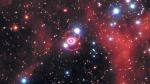
Supernova 1987A: ‘Blob’ hides long-sought remnant
Scientists believe they’ve finally tracked down the dead remnant from Supernova 1987A – one of their favourite star explosions. Astronomers knew the object must exist but had always struggled to identify its location because of a shroud of obscuring dust…more

-BBC

Supernova 1987A: ‘Blob’ hides long-sought remnant
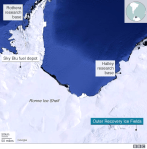
A team of British scientists has arrived in the Antarctic to try to find the continent’s “missing meteorites”. The group, from the University of Manchester, will spend six weeks scouring a remote region for lumps of iron that have fallen from the sky. These pieces of metal represent the shattered remains…more

-Forbes

‘This Is Not Cool!’ – Astronomers Despair
In the early hours of the morning today, Monday, November 18, two astronomers checked in on their remotely operated telescope in Chile, expecting to see images of distant stars and galaxies. Instead, they saw a train of…more

Posted in December 2019, Sidereal Times | Tagged | Leave a comment

From the Director

Rex


by Rex Parker, Phd director@princetonastronomy.org

November 12 Meeting
I’m back in Jersey after an exhilarating African safari last month, and am looking forward to seeing a good turnout at Peyton Hall Nov 12 for the presentation by Dr Joshua Winn of Princeton University (see Ira’s section below). Our dues-paid-up membership stands at 86 and counting. We’ve had several new members come aboard in the past few months, so if you have joined recently please introduce yourself at the break.

Farewell Prasad
As he prepares to leave New Jersey in a job-related relocation, I would like to give a big THANKS to Prasad Ganti on behalf of all the membership. Prasad has been associate editor for this publication for several years now, and his skill and dedication in editing and publishing Sidereal Times will be greatly missed, as will his participation as Keyholder at the Observatory. We wish you all the best in your future endeavors, Prasad, and hope you’ll stay connected with astronomy in the future.

8 Ways to Do Astronomy in AAAP

  1. Attend the presentations at Peyton Hall (2nd Tuesday each month)
  2. Give a 10-min member talk about your astro experiences (e-mail to program@princetonastronomy.org)
  3. Observe with state-of-the-art equipment at the Observatory
  4. Saturday night telescopes with members at WC State Park (see October Sidereal Times)
  5. Borrow the club’s SX Ultrastar color CCD camera to use with your own scope
  6. Get a Skynet account and do remote astrophotography from home (see below>)
  7. Go on an astro field trip with AAAP (recent trips include US Naval Observatory, Smithsonian Air & Space Museum, Princeton Plasma Physics Lab)
  8. Propose a field trip based on your own ideas and dreams

Andromeda!
To seek out Andromeda the constellation in the autumn sky has always been compelling – but perhaps a little mysterious too. For me the mystery stems from the lore of Greek mythology, which needs to be retold over and over as worthy legends do. Andromeda was the daughter of the king Cepheus and his wife Cassiopeia of ancient Aethiopia. Queen Cassiopeia boasted that Andromeda’s beauty even exceeded that of the Nereid sea nymphs, Poseidon’s minion, invoking the wrath of the god of the sea and storms. Poseidon thus sent the sea monster Cetus to ravage Andromeda as punishment for Cassiopeia’s hubris. It was the great hero Perseus himself who then rescued Andromeda as she was chained to the rocks by the sea, which is how he came to be her husband. Today many of the principals in this legend have a constellation named for them!

Figuring out exactly which stars are in the constellation is also part of Andromeda’s mystery (Figure below), even though it was first catalogued by Ptolemy in the 2nd century. It has no first magnitude stars, with Alpheratz, Mirach, and Almach all 2nd magnitude. I had always thought (until now) that Alpheratz was part of neighboring Pegasus since it forms the NE corner of the great square of Pegasus, but officially Alpheratz is considered part of Andromeda. But today Andromeda is probably better known as home for the Great Galaxy, Messier 31, the nearest large spiral galaxy to our own at ~3 million light years distance (red arrow in Figure). This spectacular deep sky object is for most people the first galaxy seen outside our own Milky Way and is the only spiral galaxy that can be considered a definite, obvious naked-eye object.. It is often said that the Milky Way galaxy’s appearance to an observer located in the Andromeda galaxy would look much like M31 does to us. According to Robert Burnham (Burnham’s Celestial Handbook), the Andromeda Galaxy was documented long before the invention of the telescope, mentioned in Persian writings from 905 AD. The first record of a telescopic observation was from Simon Marius of Germany in 1611, when he compared it to “the light of a candle shining through horn” (Burnham). This is a fairly accurate visual description even today for telescopes using eyepieces. However, the advent of astrophotography changed all that.

The constellation Andromeda is home to the Great Galaxy known as Messier 31 (red arrow). Figure from TheSkyX software.

In the middle of November in central NJ, the Great Galaxy in Andromeda transits (reaches is maximal elevation in the sky) at 9PM and is very close to the zenith. It’s placed splendidly for optimal astrophotography, which is better done with small amateur scopes than large, due to its immense size spanning ~3 degrees (6 times the moon’s diameter). Using a portable 3” refractor (Takahashi FC-76, focal length 600 mm) and a one-shot color camera (ZWO ASI-091), I photographed M31 the week before Halloween (Figure below). Note that two other galaxies are also in this image – M32 is the round object below the M31 core, and M110 in the upper right displays a hint of spiral structure. The final image here is the result of 17 x 20 minute subframes (total exposure 5.6 hours). All of the equipment to take photos like this is available to AAAP members at the Observatory!

The Great Galaxy in Andromeda, Messier 31, photographed with a small telescope in central NJ. North is up. Astrophoto © RAParker.

Skynet Remote Imaging for AAAP members
A good way to get going in astrophotography and learn more about how modern astronomy is done is to check out Skynet, a unique benefit of AAAP membership not offered by other astronomy clubs in the region. In June we renewed the contract with UNC-Chapel Hill for another two years. Skynet is the brainchild of Dr Dan Reichart of the Physics and Astronomy Dept at UNC-Chapel Hill. The internet-based queue scheduling software program runs on UNC computers to connect a system of observatories established for remote imaging. The Skynet Robotic Telescope Network comprises more than a dozen telescopes around the world in Chile, Australia, Italy, Canada, and the US. Each telescope is set up with robotic tracking mount, CCD camera, and filters for remote image acquisition. Tutorial videos are made available when you obtain a user account.

For both beginning astronomers or seasoned observers, Skynet’s easy-to-use interface taps into an extensive hardware network and large database of celestial objects from the Messier and NGC deep sky catalogs. It includes a basic image processing program “Afterglow” that runs on the server so you don’t need any special software on your computer. If desired you can download the data files and process the images you obtained at home on your own PC. Skynet is intended as an introduction to modern astronomy and astrophotography, and is used by science students at UNC and other institutions. Interested AAAP members are urged to take advantage of the club’s paid investment in this technology. Send me an e-mail note to get your Skynet user account at no cost to you as an individual. Email director@princetonastronomy.org

Posted in November 2019, Sidereal Times | Tagged , | Leave a comment

From the Assistant Director

by Larry Kane

I am putting together a AAAP member and member family field trip to the InfoAge Science and History Center located in Wall, New Jersey. This is the home of an operational 60 foot radio telescope. Our tour will be on December 14 at 1:00PM. Admission will be $10.00. While I have not yet visited this site myself, it looks intriguing and should be both informative and entertaining. I am awaiting the maximum number of attendees they can accommodate, but hope that fifteen to twenty of us won’t be too many. So let me know if you want to join the tour.by sending me a note to: assist.director@princetonastronomy.org.

The information below was copied from the InfoAge Center website https://infoage.org/visiting/

Please come visit us!

  • We’re open 1:00PM-5:00PM on Wednesday, Saturday, and Sunday
  • Admission is $7 for ages 13+ and $4 for ages 12 and younger
  • Our main campus is at 2201 Marconi Rd., Wall, NJ 07719 (Overview Map)
  • There are several buildings, so dress for outdoor weather (Campus Map)
  • ISEC (InfoAge Space Exploration Center) is a short walk south at 2300 Marconi Road
  • Parking at InfoAge is always free
  • InfoAge is a science and history center at the Jersey shore. We formed in 1998 as a 501(c)(3) educational non-profit organization. Our mission is to preserve, teach, and honor scientific innovation and history in order to inspire new generations of thinkers, dreamers, and visionaries.

Posted in November 2019, Sidereal Times | Tagged | Leave a comment

From the Program Chair

by Ira Polans

The November meeting of the AAAP will be held on the 12th at 7:30 PM in the auditorium of Peyton Hall on the Princeton University campus. The talk is on The Transiting Exoplanet Survey Satellite by Professor Joshua Winn of Princeton University.

We all know that 8 planets—or maybe 9 —orbit the Sun. Did you also know that astronomers have identified 4,000 planets orbiting stars elsewhere in the Galaxy? Most of them were discovered by a space telescope called Kepler that stopped operating last year. Now, a new space telescope is continuing the search: the Transiting Exoplanet Survey Satellite, or TESS. Professor Winn will describe the reasons why TESS was launched, and the results that have been achieved to date. These results include not only newly discovered planets, but also new insights into stellar pulsations, new observations of a star being shredded by a black hole, and new evidence for a system of comets orbiting the nearby star Beta Pictoris.

Two changes were made to the 10 minute talks this season. First, the talk will be given after the intermission. Second, we are instituting a 10 minute limit. Since we want to keep the talks to 10 minutes, the speaker will be given a 90 second warning to wrap up the talk. If you’re interested in giving a 10 minute talk for our November meeting or a future meeting please contact Rex at or Ira at program@princetonastonomy.org.

There will be a meet the speaker dinner at 6 PM at Winberie’s in Palmer Square prior to the meeting. If you are interested in attending please email me by noon on November 12.

Posted in November 2019, Sidereal Times | Tagged , | Leave a comment

Outreach Wrapup

by Gene Allen, Outreach Chair

It has been an amazing year. If it had not been so frantic at times, better records would have yielded better summary data. Some details may yet be recaptured from emails. It would have been nice to be able to report the total number of members who were involved, or the count of the number of times each of our volunteers stepped up, or the total number of guests served. We do have a general inability to count the number of visitors to the Observatory on a Friday night, because of all the comings and goings. Counting attendees is similarly difficult when one is involved with making a presentation or guiding them at the eyepiece.

It is safe to say this was a record year for Outreach at the AAAP. My email chains were dropped into folders corresponding to each event, so that list provides some accounting. Coordination was completed, and members volunteered to support some 35 events. They consist of remote events and groups that arranged to come to Simpson, either on a scheduled Public Night or a special opening. Not all took place, because of weather or cancellation by the customer. That does not discount the effort that went into scheduling and recruiting, or whatever effort it took on the part of those who committed to help. Hearty thanks to all of you who responded to my repeated appeals.

Here is my list of event email folders. If I take the time some rainy or snowy day to attempt to consolidate what records do exist, perhaps this reporting can be expanded. For now, this is what is available:

190203BelleMead 190226Stuart 190308Plainsboro
190322Hopewell 190322Hopewell 190405Simpson
190428Communiversity 190510Simpson 190517Simpson
190531Simpson 190601Simpson 190608Simpson
190620Simpson 190621Simpson 190709Lambertville
190720Planetarium 190720Simpson 190724LIB-Hickory
190725LIB-Cranbury 190725Morven 190803GravityHill
190807MtnLakes 190810LIB-Plainsboro 190812LIB-OldBridge
190822LIB-Hollowbrook 190823Simpson 190831WCSP
190904LIB-HopewellPublic 190914RosedaleLHT 190920Simpson
190927Simpson 190928GravityHill 191004Simpson
191018Simpson 191019Simpson 191090LIB-Pennington
Posted in November 2019, Sidereal Times | Tagged , | Leave a comment

Minutes of the October 8, 2019 AAAP General Meeting

by John Miller, Secretary

Assistant Director Larry Kane opened the meeting at 7:30 p.m. AAAP overview and upcoming events schedule were discussed. Prasad Ganti then introduced the guest lecturer – member John Church

  • Larry reminded the group about the upcoming Monday, November 11th Mercury transit. Plans are to have the observatory operational and members and guests can bring their own solar equipment. Bill Murrary mentioned the sun will be obstructed until about 9 a.m.
  • Larry mentioned interest in the InfoAge Science facility located in Belmar, NJ. This includes and operational radio telescope refurbished in 2016 by the Princeton University Physics Department
  • Review discussions were led by David and Jen Skitt regarding contractor reviews and other topics for the observatory structural upgrades. Treasurer Michael Mitrano is working on contractor contact
  • Treasurer Michael Mitrano reported, in absentia, the club’s current cash balance was $15.6 K.
  • Larry adjourned the meeting about 9:45 p.m.
Posted in November 2019, Sidereal Times | Tagged , | Leave a comment

Mercury Transit at the Observatory on November 11, 2019

This gallery contains 7 photos.

More Galleries | Leave a comment

Cosmology and Exoplanets

by Prasad Ganti

The Nobel prize in Physics for 2019 was announced for two separate advances. One was for Cosmology which moulded our view of the Universe over the last five decades. The second advance was the discovery of planets outside of our Solar system. Both of these advances have expanded our ideas of the Universe much beyond our Solar system, far out into the distant galaxies and far back into the time of the birth of the Universe itself.

Expansion of the Universe was confirmed by Edwin Hubble closer to the mid twentieth century. That is each galaxy is moving away from every other galaxy. Further away the galaxy is, faster it is moving away. Playing this story in reverse, leads to a point in time when the Universe was born. It is called the moment of the Big Bang. It sprouted forth from a tiny point with incredible amount of energy about 13.8 billion years ago. And suddenly expanded in a fraction of a second (called inflation) to a big space where the temperatures cooled down considerably enabling the creation of radiation (like light) and atoms, leading to formation of Hydrogen and Helium. Stars formed in due course and eventually galaxies.

Such a framework of the Cosmos was being constructed by several luminaries. One of them was James Peebles of Princeton, New Jersey, who was awarded this year’s Nobel prize. Peebles realized that the temperature of this background radiation, called CMB (Cosmic Microwave Background), could provide clues about the Big Bang and confirm its happening. This background radiation is omnipresent and is seemingly uniform in all directions as viewed from the Earth. The hunt for such a radiation was on. In stepped Bob Wilson and Arnos Penzias, two radio engineers from AT&T Bell Labs in New Jersey. They accidentally stumbled upon the background radiation while testing microwave antennas. They found the “noise” whichever direction the antenna was tilted. It could not go away with any amount of tweaking of the antenna. The noise manifests itself in form of random dots seen on a TV channel which is not receiving any signal. Penzias and Wilson were looking for an explanation and reached out to Princeton University where Peebels and team were very happy to connect and exchange notes. Each side got what they were looking for. The Big Bang theory was put on a firm foundation.

Another aspect of the background radiation is that Peebles thought that some amount of tiny non-uniformity must have been present to enable the formation of stars and galaxies. It is not the same in all the directions all the time. Tiny microscopic fluctuations must be present. Such measurements needed very high level of precision. Confirmation came from the COBE satellite (COsmic Background Explorer leading to Nobel prizes for John Mather and George Smoot in 2006), later from the satellites WMAP (Wilkinson Microwave Anisotropy Probe) and Planck.

Peebles also thought about the energy of empty space, which eventually came to be know as dark energy. Dark energy remained just a theory for fourteen years, until the universe’s accelerating expansion was discovered in 1998 (leading to a Nobel Prize in Physics 2011 to Saul Perlmutter, Brian Schmidt and Adam Riess).

Second part of the Nobel prize was awarded to Michel Mayor and Didier Queloz who found the first planet outside of our Solar system. Stars in our Milky Way galaxy are relatively easier to find as they emit sharp points of light. Other galaxies are seen as blurs of light as they contain a collection of stars. But planets orbiting other stars are very difficult to find. They do not emit any light, instead just reflect the light of its star. This reflected light is nearly impossible to detect.

The planet pulls on the star as much as the star pulls the planet towards itself. The tug of the planet on the star is small. As a result of this tug, the light coming from the star is doppler shifted, that it is blue shifted when the star moves towards us and red shifted when the star is moving away from us. The doppler shift tells us how long the planet takes to go around the star and how heavy the planet is. To detect this light, a very sensitive spectrograph is required. Also, as the planet moves in front of the star, the amount of light reaching us reduces. Known as transit photometry, it provides the size of the exoplanet. The size and mass of the planet leads to knowing the density and in determining its structure, if it is a rocky place or full of gas.

Mayor and Queloz found the planet labelled as 51 Pegasis b, which moves rapidly around its star 51 Pegasis, which is fifty light years from the Earth. It takes four days to complete its orbit. Only eight million kilometers (comparatively Earth is 150 million kilometers from the Sun) from it, the star heats the planet to more than a thousand degrees centigrade. The planet is a gaseous ball, similar to our Jupiter. To date, close to four thousand planets have been found, but Mayor and Queloz remain the harbingers of this quest.

A lot has been learnt about our Universe and the distant stars and planets in the last few decades. And very appropriately, recognition came in form of a Nobel prize, the highest honor awarded by mankind.

Posted in November 2019, Sidereal Times | Tagged | Leave a comment

white dwarf – black hole

by Theodore Frimet

oh my!

Ok. I’ll take what I can get. It is a dangerous thing to shout out a Hypothesis. Especially when professional scientists are doing the math, and writing their journal entries. And then you find a match! Ok, maybe this is a Sheldon moment. Not to be outdone, by this beloved member of the Big Bang Theory, I read the ensuing article. I chased down a few of the citations from the dusty, dank corridors of the WWW. Coughing up the dust, from this proverbial library, I find Russian literature that was previously hidden from my sight.

In the August 6, 2019 essay, “Planetary Nebula”, I chastised myself for being unable to source citations. My bridge forming relativistic electron scaffold, streaming from an active black hole, was not to be found. I couldn’t make the stream culpable for forming the matrix upon which white dwarfs caste their nebulae upon.

Within the reach of this Amateur, we were hopelessly entrenched with binary stars in the formation of Planetary Nebula. I discussed how those systems had long discarded their gas. They had left their binary partner, a White Dwarf, naked and alone.

Thru an online lecture, I learned to appreciate complementary light spectrums, and how they indicated the presence of binary stars, in nebulae local parentis. I finally alluded in closing, to complementary light spectrums, and periodicity of the light curve. “Perhaps where there is no light, there is only a hole. Look closely and find periods, with no complementary light spectrum, sans the ever present White Dwarf.”

I can now be a bit braver, and no longer hide in prose. Black holes are x-ray emitters and can be detected with x-ray telescopes. When Black Holes are quiet, they do not emit x-rays, and are not detectable. However, they can be detected if gravitationally bound to the White Dwarf. The dwarfs periodicity can be measured – either by occultation light data, or by alteration in her orbital data.

Kevin T Smith, writes the report on “A noninteracting low-mass black hole – giant star binary system”, (Science 01 Nov 2019: Vol. 366, Issue 6465, pp. 637-640 DOI: 10.1126/science.aau4005), writes about a 2.6 solar mass object that emits no light, including x-rays. Combining radial velocity and photometrics demonstrates that the massive star is in a binary system, paired with a black hole.

What led me to chuckle, were two references that I had long sought out. They were hiding in the Harvard repositories. This is the quote (Smith, et al) that brought me to their doorstep:

“Quiescent noninteracting black hole stellar binaries have not been found in radial velocity searches, although the existence of such systems has been discussed for decades (10, 11).”

(10) O. K. Guseinov, Y. B. Zel’dovich, Collapsed stars in binary systems. Sov. Astron. 10, 251 (1966). Google Scholar

(11) V. L. Trimble, K. S. Thorne, Spectroscopic binaries and collapsed stars. Astrophys. J. 156, 1013 (1969). doi:10.1086/150032 CrossRefGoogle Scholar

I gingerly keyed into the citation, numbered 10. The original article was submitted October 18, 1965. The Journal hailed from Soviet Astronomy, Vol. 10, p251. It discusses detection of collapsed stars, which are members of spectroscopic binaries.

I hold my breath, as I click on citation, numbered 11. In the abstract, I find, “the absence of a secondary spectrum in these systems, could, in principle, result from the secondary star’s being either a collapsed star or a massive neutron star.”

Although Einstein predicted black holes in 1916, the term “black hole” wasn’t coined until John Wheeler did so in 1967. So there are two caveats, here. In the citation, there is no mention of a black hole, only “collapsed stars”. And secondarily, the author appears uncomfortable with the lack of x-ray emissions. Reading further, they discard unseen companions that are less than the Chandrasekhar limit, and declare the unseen companion as a white dwarf. They back-reference to Zel’dovich & Guseinov, where discovery of x-rays or gamma-rays, “would constitute evidence for the presence of a collapsed star or neutron-star secondary.”

I remain comfortable in my wheel-house this morning. I add to the mix, from August’s essay, that nebular gas, structured upon relativistic outflow of electrons, and in many cases, no longer appearing present among the many nascent white dwarfs, have had their gaseous orbs and out-layers, gobbled up, long ago, by their unseen partner, a black hole. No Watson. No Holmes. Just sheer dumb luck.

Posted in November 2019, Sidereal Times | Tagged | Leave a comment

The Einstein Cross

by Theodore R. Frimet

How to measure a Gravitational Lens

The daily commute to backfill, in Norristown, sometimes has me waiting in the off-ramp. Car is idle, and I spy a bird on the left shoulder. She sits atop a tree. Looks like a bad version of a Blue Spruce. Not the bird, the tree. I wonder at her, as she lofts from the tree, and off into the brush, nearer to my gas guzzling, carbon spewing, iron chariot. Ok, not so much a guzzler. Sure, there is a carbon footprint – yet my car is mostly light steel, aluminum and plastic. The bird flies away. Ironic.

You’ve read the preamble, and you are confused. So am I. How did this experience ever spew intelligence onto the light bending affects of gravitational lensing? I dunno. No clue.

Here is what did follow, as I stepped onto the accelerator;

[which by now you should all know that this isn’t your fathers gas pedal – it is a link to actuate, via micro-controller, your mass flow air sensors, and aggregate accoutrements.]

was a brief time foray into a meager graphic analysis of how I could measure density differences of a gravitational lens.

Here it is briefly. It is brief because I choose not to augment my mind-scape with mathematics. I leave that to you, all. Calculus, anyone? Ok. My bad. It is simply because I can’t possibly drink another cup of coffee, without offending someone, or something. Sigh. I could probably use a dose of polynomial mathematics, where each band of the Cross is represented by a separate variable and coefficient – and the answer is the total mass of the lens. “What?” – Lil John.

Borrow, beg or steal three Hubble images. They need to be representative of a gravitational lensing effect. No time? No worries. I’ve done this for you in a past essay. We’ll repost the three images. Here is the link: Ring Around The Rosies

Caveat Emptor. I dug these out on my own, and they aren’t the BEST images of gravitational lensing effects, ever. Whomsoever, they will do. ‘That’ll do, pig. That’ll do.’

The best ever would show an Einstein Cross. So, for now, use your imagination. Take the composite image, and put it into a graphics program. Or print it out, in full color, and put it onto the table before you. No matter. (Hey, maybe that’s a pun- ‘no matter’ – hehe).

Construct a Cartesian plane onto your image. You know? Four quadrants. Cool beans. Find a matching element, from one of the mirror image galaxies, that was smeared across the page. Measure it, coordinate – to – matching coordinate. You are going to see if there was any subtle movement, in any mirror image.

Or more easily enough, look at my composite. I have stacked three Grayscale images, and enabled them as RED, GREEN and BLUE, in a graphics program. They appear to you, in the above link, as ‘black and white’, separately, and color (RGB) when combined. Where-ever you find subtle color shifts, in different quadrants, please know that the grayscale values shifted, over time. Remember that each image used in the composite was taken at a different time. You would imagine that there would be shift in the image. However, I would expect that each mirror image would shift the same. It does not. Did it? You tell me. After all, it’s your Universe.

In an Einstein Cross, the images that swirl, up and down, left and right, have some variance in position. If you deconstruct the images, and their effect, perhaps by means of a reverse-Gaussian algorithm, you might come to one of two of my conclusions. Either space-time was severely constrained, or warped, differently in each of the quadrants. Or the massive galaxies that make up the galactic lens have an obvious geometry and structure that can be recreated by studying an Einstein Cross’.

Yes, the geometry and structure of the massive galaxies warp space-time, and create the lens. Yes, I think that you can at the very least, know which quadrant has a more “dense” allocation of gravity bending space-time matter. Above we hint at the structure, and function of what is behind the eye of this Cosmological Camera obscura.

If you have access to more advanced channels of Cosmology, may I recommend a cup of Quasars, detected in the background, and to meter the differences in their absorption spectrum? This notion, I must admit, was borrowed from the article, “Gas filaments of the cosmic web located around active galaxies in a protocluster”, Science, 4 October 2019, Col 366, Issue 6461, pp 97-100.

Posted in November 2019, Sidereal Times | Tagged | Leave a comment

The Milner Experiment

by Theodore R. Frimet

Ok. I am going to actually write about the Milgram Experiment (2). That was where volunteers gave shocks to people. The shocks were make-believe, and the persons receiving the shocks faked their pain and suffering. A high number of participants shocked the subjects, despite the apparent visual suffering. And to Milgram’s surprise, the increase shock level would have killed a participant; yet the volunteer continued to deliver the fatal dose. Some, as they left the center, never inquired as to the health or welfare of those they acted on. Milgram discovered a persons intent to follow authority, without question.

Without realizing it, somehow I have connected the dots between Nazi Germany, California’s early Eugenics program in denying the Deaf their reproductive rights (3), and people that write hurtful, and lasting social imprints on the World Wide Web. The first resulted in the deaths of millions, while the second was the progenitor of Shoah. I wait with baited breathe as to the outcome of the Third. Perhaps societal participants writing on the wall, with impunity, is not what it seems to be.

With minds not yet fully developed until the age of 21, the brain simply cannot distinguish between reality and fantasy. An adult watches a movie, and your brain transcends you from your chair, to the scene. A child reads a negative post, and is transfixed into a self-harming relationship. They have been baited with your breath. I regret to discuss the outcome of your make-believe Milgram shock.

When we write comments on the performances of others, in a service industry, we can be blunt. Not everyone has the talent of tongue, these days. Most write three or fewer sentences to ascribe their wonder, or blatant dissatisfaction. However, now, in this brief pause between the pauses, I am in dismay. I attribute this to both the public’s fractured memory and the proclivity of the few to practice harmful graffiti.

When you write negatively, be gentle not only with your target audience – be gentle with yourself. Because all the while; all that you experience – your sight, sound, taste, and thoughts, are all recreations in your mindset. Yes. It is an argument that you have with your own ethos. The model that you create is simply yourself. You walk blind in the Universe. Nothing is out there. It is all inside your head.

If you have read up-to-this point, perhaps now you are ready for a new truth. That the lists of ideological mis-steps that you believe in, do order themselves to cause harm to others. The social queues that appear to be unrelated are part of a fuzzy logic system. Simply because the interdependent players remain invisible to you, does not in any way blunt the edge of the knife. When one part of a system is stressed, it will affect the whole. Your practice of leaving behind a curt comment, is only you whetting the edge of a realm where you believe there is absence of malice.

However, I mis-speak. You have decided to not go on. You could continue. The experiment may have required that. It may have been absolutely necessary, and you would have had no other choice. So said, Milgram. You have only written once on the wall. Yet the difference between the Milgram experiment and your licentiousness, is that one act was fleeting; while all the while your participation in a social experiment continues on, day-after-day. Forgive me for being the one that reminds the few – that your practice here, is the undoing of teenagers, everywhere. For you have caste the mold where all learn how to write. Nestled in your brief grammatical structure are the implements of where young minds go to their demise.

Wherefore art thou, Astronomy? He said twice, “I was in a car accident”. I pretended not to hear. I wanted to make sure I delivered the Dob, and beat the rain. It was going to rain. It always clouds in, during an Astronomy event. Why would the conclusion of a sale be any different?

For the past few weeks, I had posted my offer for the great behemoth. Hundreds looked, dozens watched. Several had offered. Many were refused. Of course, all were kicked to the curb, until the last offer. It wasn’t low, and it wasn’t high. It wasn’t even middle of the row. The price was simply right. I accepted. This sale was pre-empted for local pick-up, no delivery. Upon payment, I contacted the buyer. They were busy that afternoon.

Time is a precious thing. Weather can make it more valuable. I needed to look between the clouds, and focus on the light that I could see. Later it would rain. Tomorrow it would certainly be wet. Now is the time. I said, “let me come out to you”. We agreed. An hour later I waited in a driveway, Dob in SUV. Movement. Transfer. New telescope in another home. Nestled under the tree, perhaps? Not really. It isn’t Christmas. Heck, it isn’t Chanukah or Kwanzaa, either.

I am now in the present. The Universe reaches out and taps me on the shoulder this rainy, Sunday morning. It does so with impunity and anonymity. Let’s You and I put away the lazy Susan, and spin a yarn on a crises. Synthetic opioids. Many have the same story. We are truly embedded. It is my time to read the writing on the wall. I am hopeful that I am not succoring to a Milgram experiment. I could list off what I knew of synthetic opioids. I ask you, “what do you know”?

Visit the CDC website and read more about Brenda, Cortney, Devin, Judy, Katie, Mike, Noah, and more. The song remains the same.

The CDC site triggers a memory. A dear friend had committed suicide. So they said. Her fentanyl patch had ruptured. Later we learned that these patches were defective, delivering a fatal dose. I parlayed the story, and suggested that they contact a lawyer. Perhaps there is a class action lawsuit to participate in? A lawyer would know. Always best to send a friend to a doctor who knows best. Or in this case a Juris Doctor.

I will not know the outcome of the story. Not ever. Few are the words that are written on the wall. There is no Milgram participant here to give a shock. My only hope is that all of you, will continue to keep to your ethics. As Amateur Astronomers, as you come out of your seclusion to interact with the public, all I ask is that you too, do not go gently into that dark night.

References

  1. Milner – Please read about Brenda Milner’s 1952 research, last accessed on Sunday, October 27, 2019 at 10:43 AM EST:
    https://www.ncbi.nlm.nih.gov/pmc/articles/PMC2649674/
  2. Milgram – Please read about Milgram’s experiment, last accessed (per tempus) https://en.wikipedia.org/wiki/Milgram_experiment
  3. “Chapter 84.” For Hearing People Only: Answers to Some of the Most Commonly Asked Questions about the Deaf Community, Its Culture, and the “Deaf Reality”, by Matthew S. Moore and Linda Levitan, Deaf Life Press, 2016, pp. 545–554.
Posted in November 2019, Sidereal Times | Tagged | Leave a comment