
by Michael DiMario, AAAP Astroimaging Chair
The astroimaging section of this month’s Sidereal Times displays eleven remarkable images from the AAAP membership. The images presented in this edition represent a disparate set of telescopes and imaging configurations captured from locations in our very light polluted skies of New Jersey and the darker regions of Florida. The eleven images comprise several emission nebulas, a total lunar eclipse of 2023, a current sunspot event, two images of M33 the Triangulum Galaxy taken from locations of New Jersey and Florida with different astroimaging configurations, and several images with multiple targets such as the Horsehead Nebula with two adjacent nebulas, and an image of the Spider and Fly Nebulas.
Image descriptions are edited or authored by Michael DiMario unless noted.
Image capture data are by the imager.
Lisa Fanning
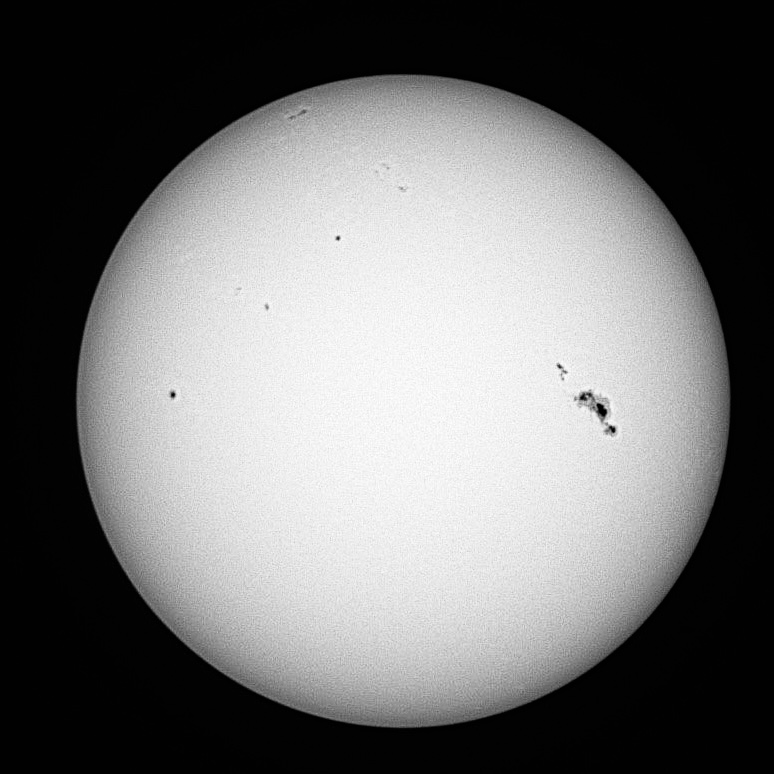
Solar image acquired 02/26/2024 at 2:54 PM ET; location Morganville, NJ. Telescope Dwarf II and Dwarf II Lab processing of 101 stacked images.
Spaceweather.com states: “AR3590 is now the largest sunspot of Solar Cycle 25. For comparison, it is now 60% as large (by surface area) as the great sunspot that caused the Carrington Event in Sept. 1859. Even a 60%-intensity Carrington Event occurring today could cause problems for satellites, power grids, and internet connectivity. That’s why forecasters are carefully watching this sunspot.”
Rich Sherman

IC417 The Spider Nebula (center) and NGC 1931The Fly Nebula (upper right) emission nebulas imaged 12/18/2023 with ASI2600MC Pro camera using the Antlia Triband Filter on a Sky-Watcher Esprit ED APO 100mm f/5.5 refractor; Integration of 25×2 min frames at -10 C, Bin 1, at unity gain; Processed with CCD Stack, Topaz De Noise, and Lightroom.
The IC417 and NGC 1931 emission nebulas known as The Spider and The Fly nebulas are located about 10,000 and 7,000 ly from Earth respectively. The nebulas are located in the Auriga constellation comprised of massive clouds and gas providing stellar nurseries. The Spider nebula is about 100 ly across while the Fly nebula has been described as a mini-Orion nebula as it displays similar characteristics.
Purnendu Gupta
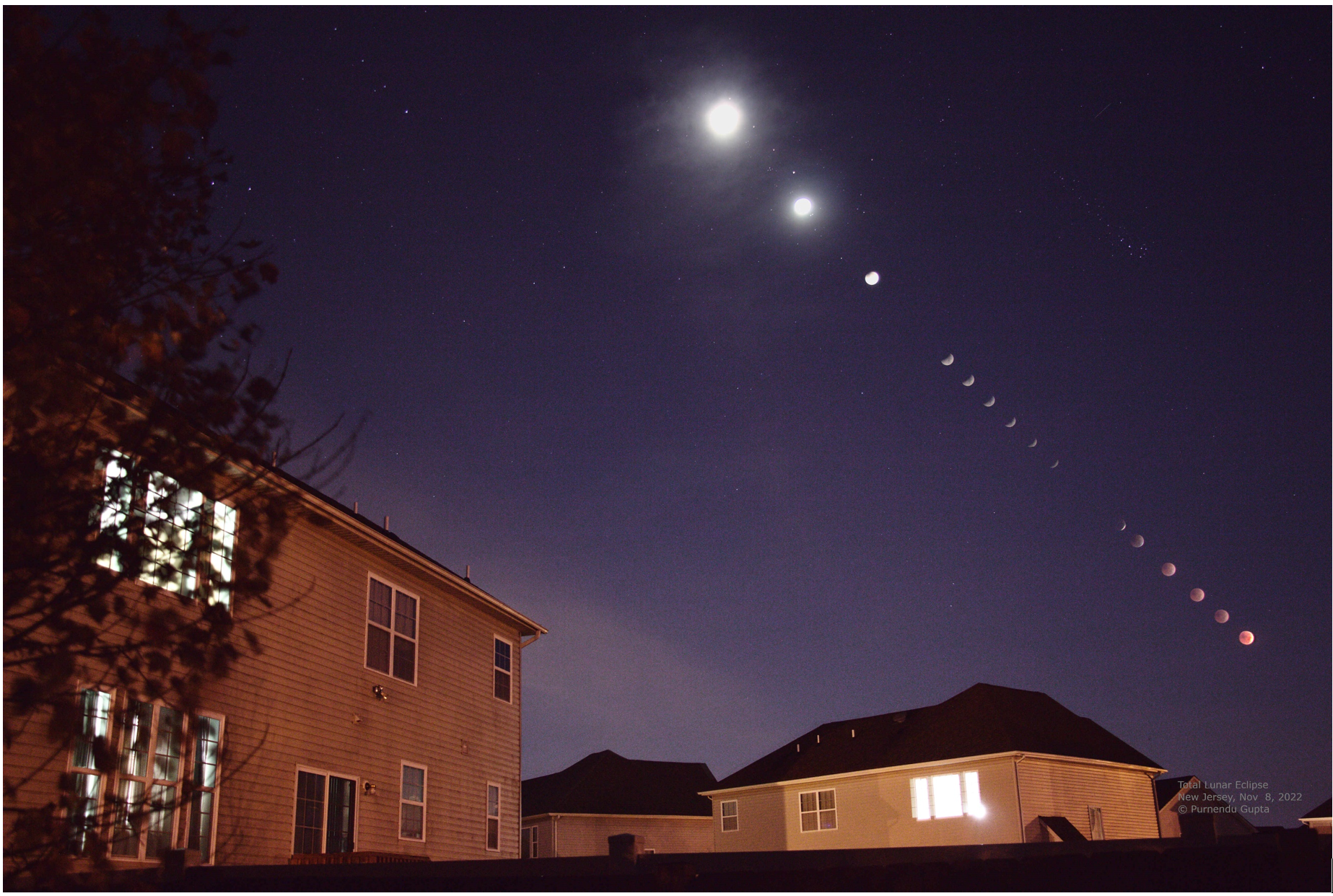
In the Earth’s shadow, a total lunar eclipse as seen on 11/08/2023 from my backyard. It’s a strange transformation to see the Moon, in a span of 2 hours, go from a brilliant full disc, to a smoldering ashen orb lurking among the stars. It doesn’t look as red by naked eye, but certainly looks more ominous. This image is a composite of 15 images taken with a DSLR on a tripod.
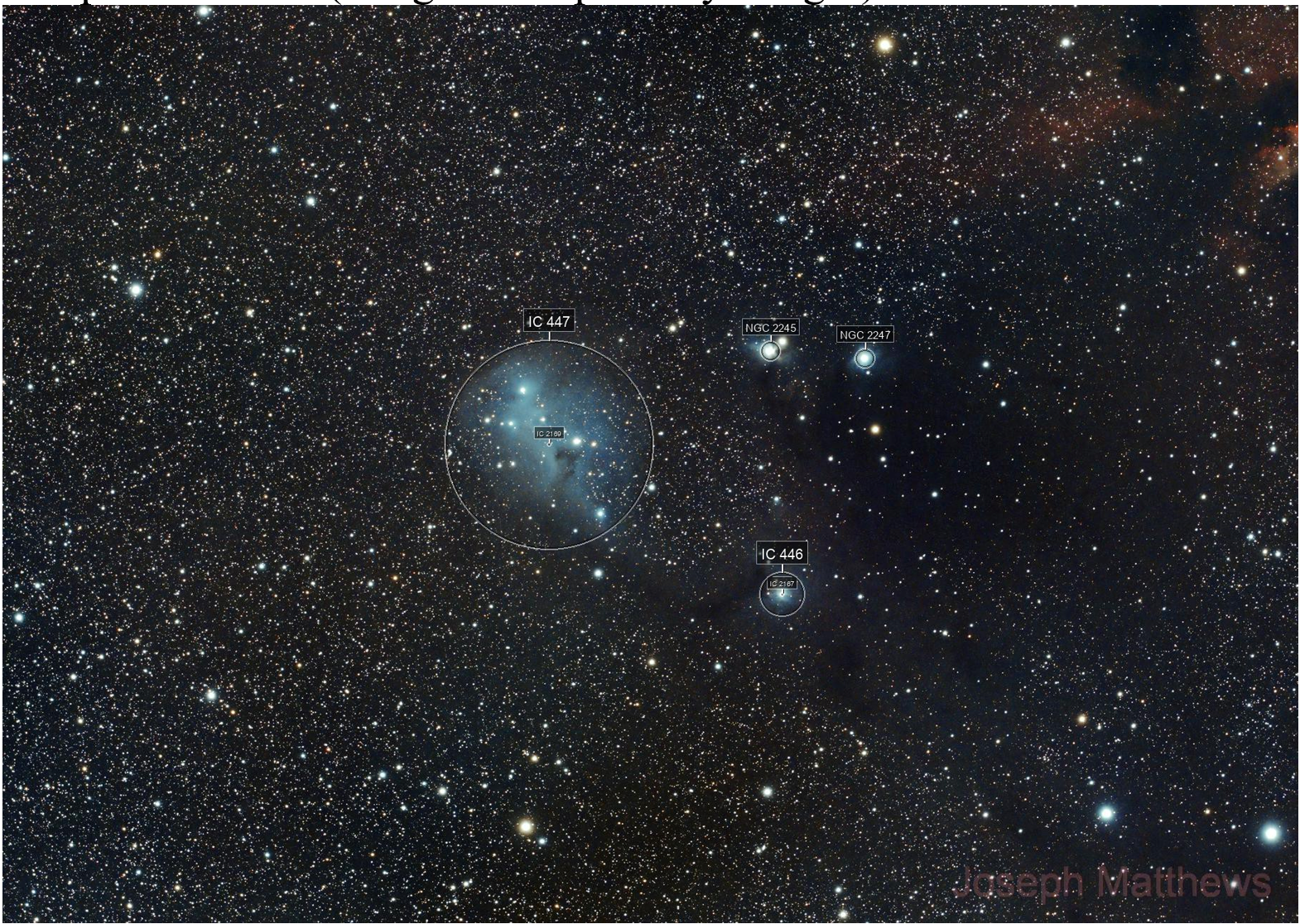
On 12/11/2023, this image of the collective IC2169, IC447, IC2169, and IC2167 located in the Monoceros constellation was taken in 26 mph wind gusts. It is not as popular as its neighbors the Cone Nebula and the Christmas Tree Cluster. It is full of dark nebula (LDN1605 LDN1606 and LDN1607) and the blue reflection nebulas scattered about the area. It is approximately 2,500 ly from Earth. Image integration of 30×300 sec frames using an Optolong L-Pro filter.
Joseph Matthews
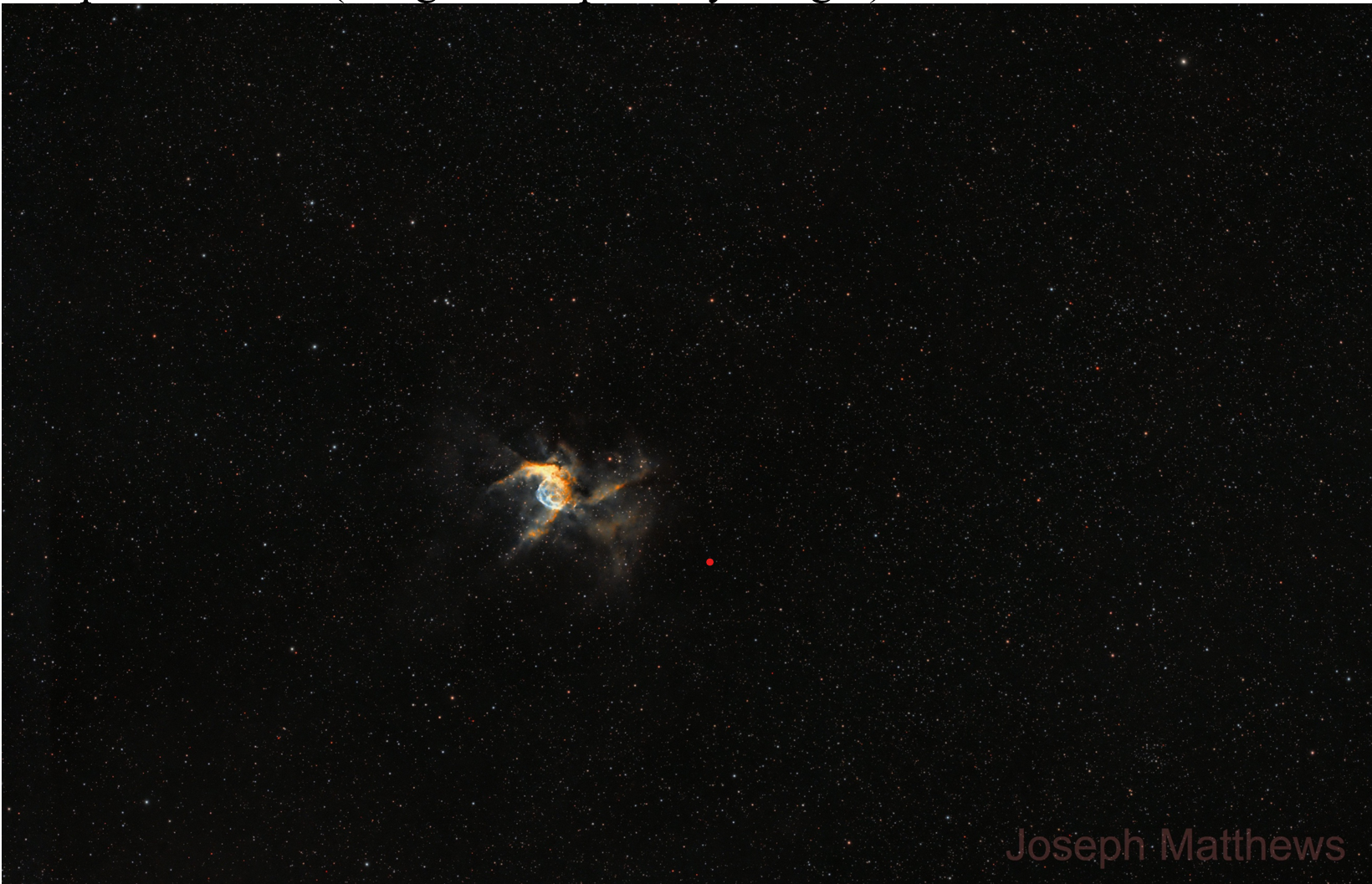
This image is Joseph Matthews’ first of NGC 2359 or known as Thor’s Helmut captured at 1 am on 12/01/2023. This emission nebula is in the constellation Canus Major. The nebula is approximately 3,670 pc or 12,000 ly from Earth and is 30 ly in size. The central star is the Wolf-Rayet star WR7, an extremely hot star thought to be in a brief pre-supernova stage of evolution. Thor’s Helmut image integration of 17×300 sec frames using a L-Ultimate filter.
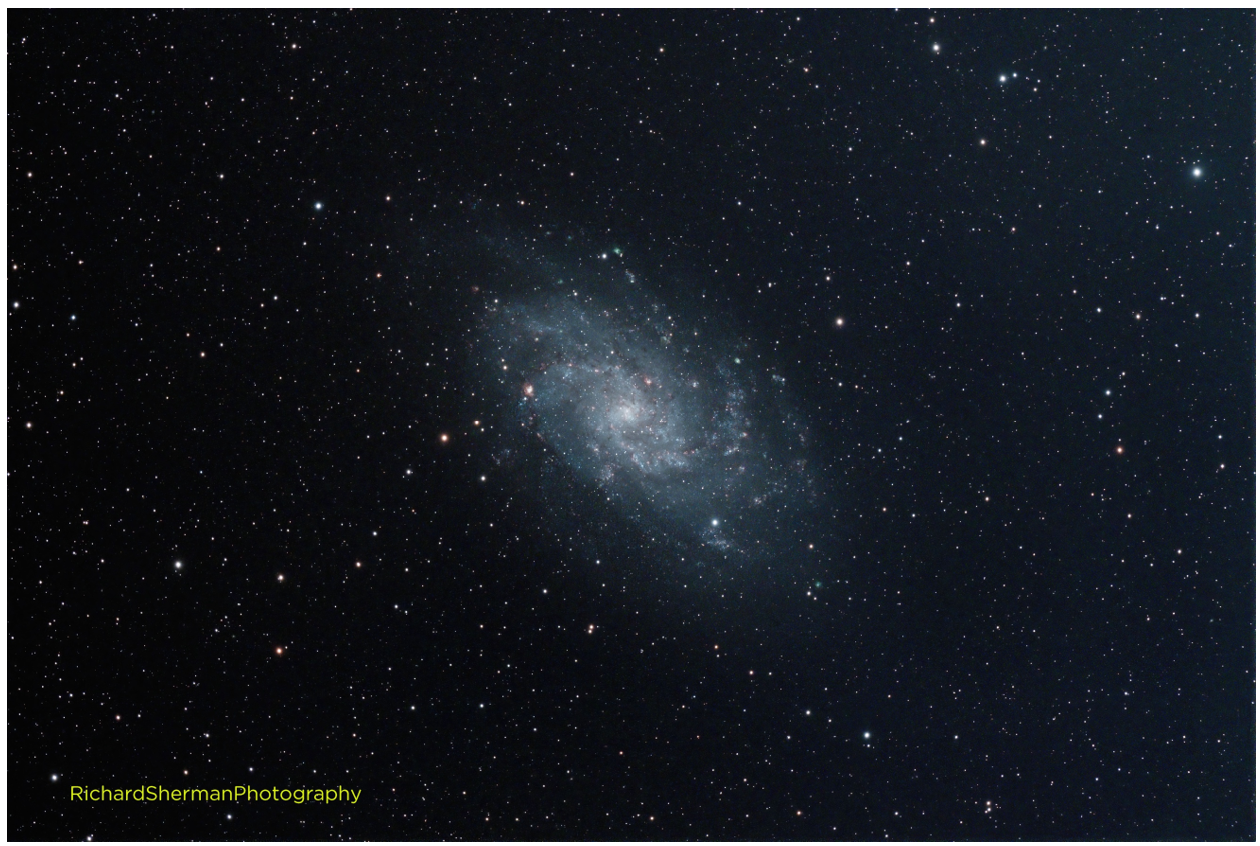
Bill Murray Rich Sherman
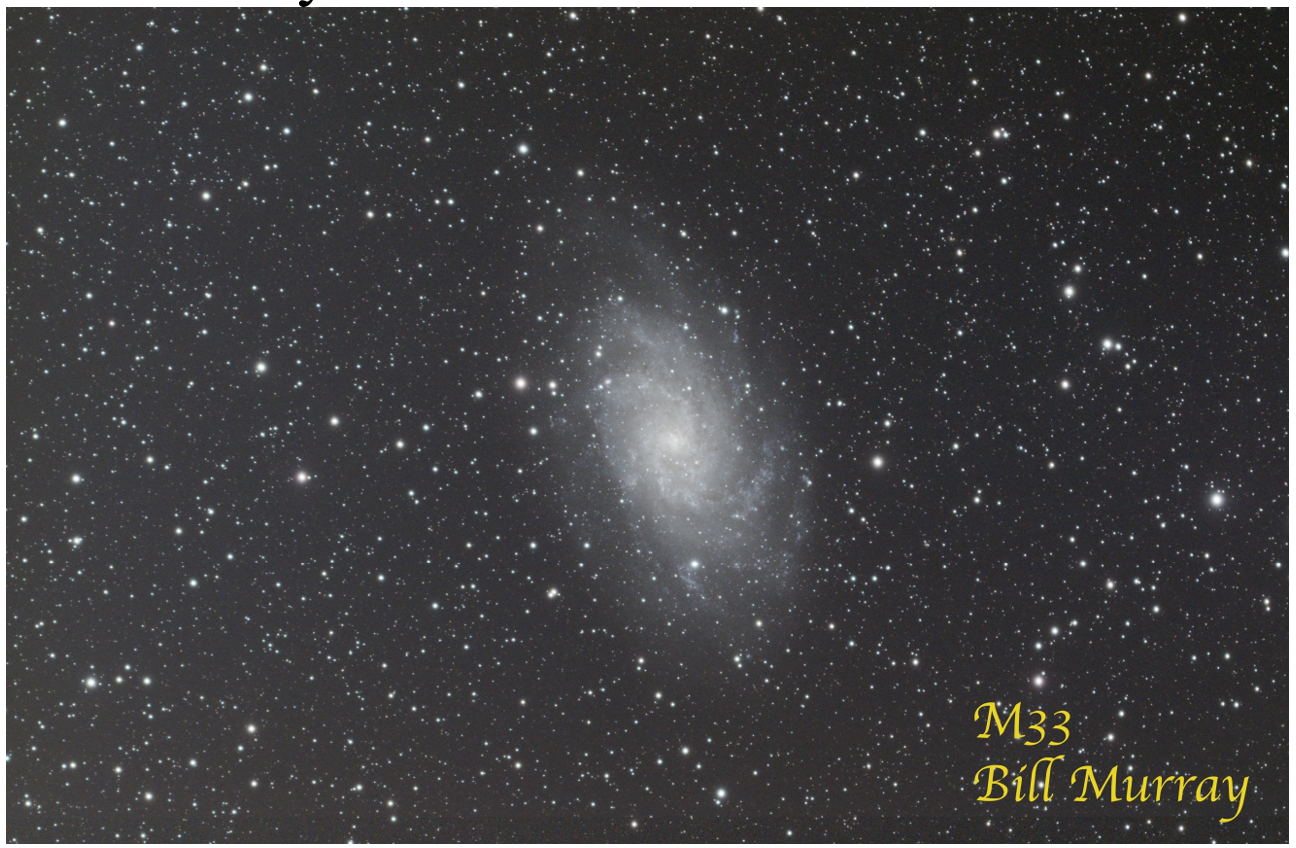
M33 image was captured using a ASI183MC Pro camera on a William Optics Redcat 51 with an integration of 5 to 6 hours.
M33 image captured 02/02/2024 with ASI2600MC Pro camera using the Antlia Triband filter on a Sky-Watcher Esprit ED APO 100mm f/5.5 refractor. Image integration of 35×2 min frames at -10C, Bin 1, unity gain; Processed in CCD Stack and Topaz DeNoise and Adobe Lightroom.
These two images of M33 the Triangulum Galaxy, or referred to as the Pinwheel Galaxy, is a spiral galaxy about 2.38 to 3.07 million ly from Earth in the constellation Triangulum first cataloged by Charles Messier August 1764 at an apparent magnitude 5.7. M33 is 61,100 ly in diameter making it the third largest member of the Local Group of galaxies with Andromeda Galaxy as the largest followed by our own Milky Way Galaxy. The galaxy contains about 40 billion stars, which is much less than the Milky Way with 400 billion stars and the Andromeda Galaxy with 1 trillion stars.
Robert Vanderbei
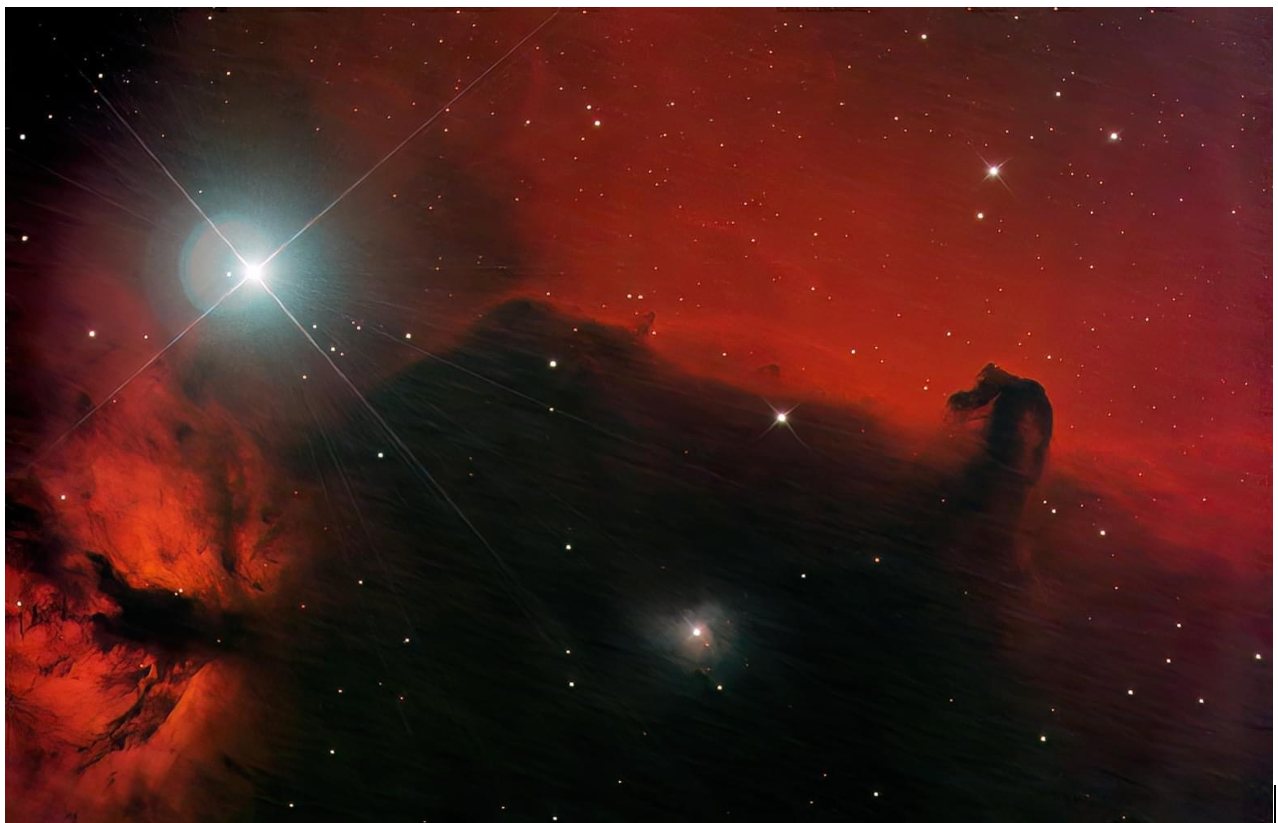
IC 434, also known as the Horsehead Dark Nebula, and NGC 2024, also known as the Flame Nebula, imaged 02/05/2023 with a ASI2400MC Pro and L-eXtreme filter using a 10” Ritchey-Chretien f/9 telescope. Images were processed using SharpCap with exposure of 102 min in 30 sec frames.
The Horsehead nebula, located in the Orion constellation, is about 422 pc from Earth. It is part of the Orion molecular cloud complex where star formation is taking place. The reflection nebula NGC 2023 is located in the lower left and is about 400 pc from our planet and is one of the largest in our sky at 10×10 arcminutes. The Flame Nebula, NGC 2024, located on far left in the image is 1,500 ly away. At the center of the Flame Nebula is a cluster of 800 newly formed stars of which 86% of them have circumstellar disks whereby planets may form.
Rich Sherman
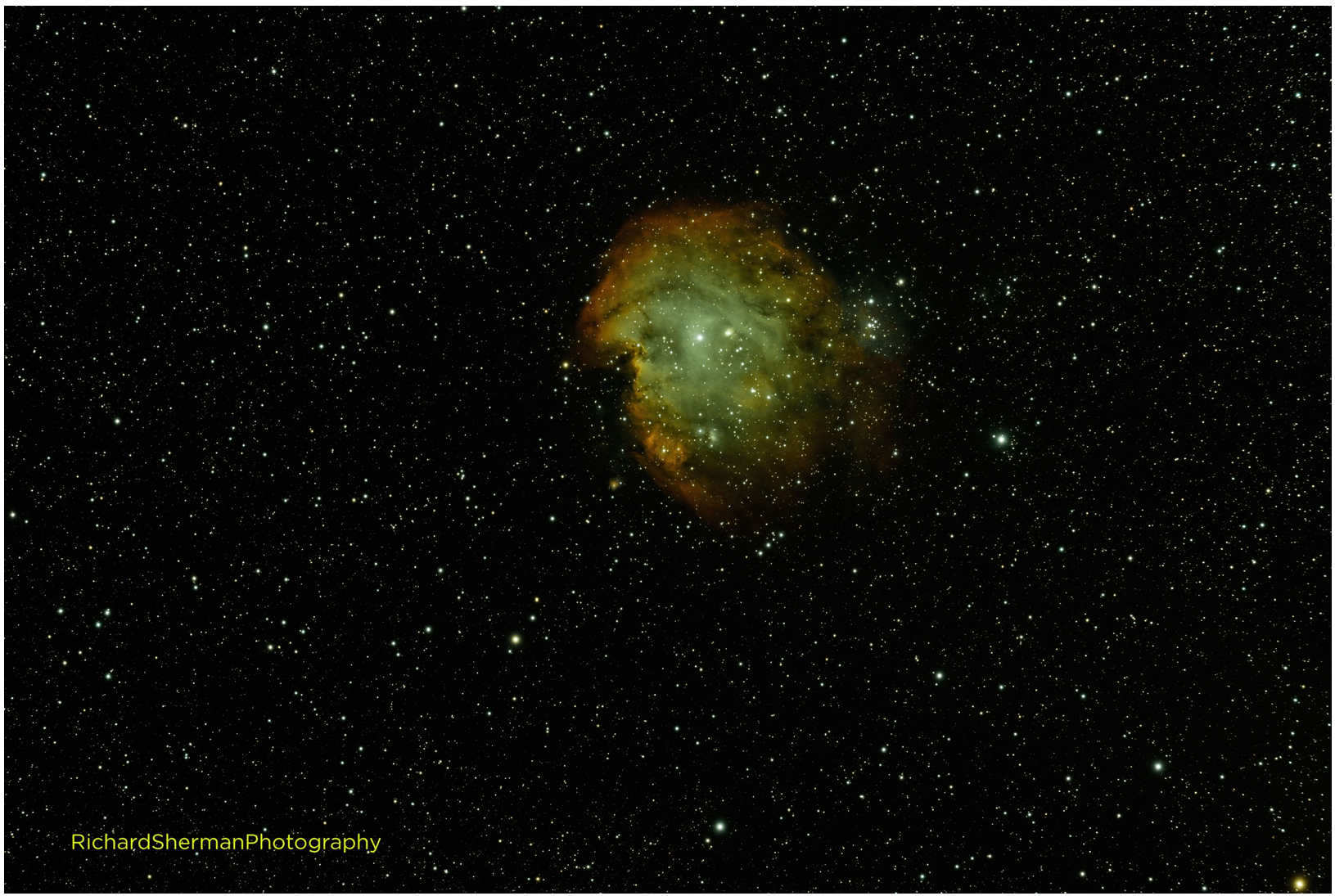
NGC 2174 – Monkey Head Nebula image captured 02/02/2023 with ASI2600MC Pro camera using the Antlia Triband filter on a Sky-Watcher Esprit ED APO 100mm f/5.5 refractor. Image integration of 35×2 min frames at -10C, Bin 1, unity gain; Processed in CCD Stack and Topaz DeNoise and Adobe Lightroom.
The Monkey Head Nebula, an emission nebula, is located in the Orion constellation and is about 6,400 ly from Earth. The stars at the center of this nebula generate stella winds coupled with high energy radiation resulting in the nebula transforming into complex dynamic shapes.

IC 2177, the Seagull Nebula, is 3,800 ly from Earth and was imaged 02/07/2024 with a ASI2600MC Pro camera and Antlia Triband filter atop a Sky-Watcher Esprit ED APO 100mm f/5.5 refractor. Image integration is 36×2 min frames at -10 C, Bin 1, at unity gain; Processed in CCD Stack, Topaz DeNoise, and Adobe Lightroom.
The Seagull Nebula lies between constellations Monoceros and Canis Major. NGC 2327 is located in IC 2177 and is known as the Seagull’s Head.

NGC 1365 “The Great Barred Spiral Galaxy” located 74,000,000 ly from Earth was imaged 02/07/2024 with a ASI2600MC Pro camera and Antlia Triband filter atop a Sky-Watcher Esprit ED APO 100mm f/5.5 refractor. Image integration is 36×2 min frames at -10 C, Bin 1, at unity gain; Processed in CCD Stack, Topaz DeNoise, and Adobe Lightroom.
NGC 1365 is a double-barred spiral galaxy 300,000 ly across in the Formax constellation. At the center of this large double-barred galaxy, there exists a supermassive black hole with a mass of about 2 million solar masses and rotates at nearly the speed of light.


