Deep Thought vs. Deep Thinking

by Theodore R. Frimet

Gary Kasparov to the Rescue!

I have not been a Chess enthusiast, oh, for so many years. I remember my finest moments in a chess club, vintage 1980’s downtown Manhattan. Surrounded by Grand Masters, I found myself teased into challenging the best that New York could offer. Well enough said that this sampling was ever limited to the programming and staff of E.F. Hutton and Company. Imagine my brilliance, or at least my narcissism kicking in, when I defeated my first champion. I was no master. I was barely a novice. Never, ever to be repeated again. The same can be said of my Algol study.

Last year I embarked on a resolve to gather light data on Algol. I did not find for want, as her 2.86739 days (Burnham’s Celestial Handbook V3, p1414), of eclipsing binary variability were made accessible to me. I am forever grateful for our clubs access to University of North Carolina, Chapel Hills’ Skynet, and the remote 14 and 17 inch telescopes’ managed by the Dark Sky Observatory (DSO). And yet, due to a twist of fate, my interim data were lost to me. Sadly, my decision to disconnect from a personal server, lost my Excel spreadsheets. Yes, woe unto me. It must be the wrath of the demon star!

I eventually teased out a plan. I am ever so grateful for the oversight of our clubs membership, and separately to Astronomer, Dr. Mary Lou West of Montclair. Please be it known, that despite my temporal association with both clubs, under the joined affiliation of The United Astronomy Clubs of New Jersey (UACNJ), that I must admit, my adoration for the kindness that has been shown to me, by all parties. Let’s rock on, shall we!

Gary Kasparov writes, in an editorial, published 7 December 2018 Science (AAAS) p1087, “…machine dominance has not ended the historical role of chess as a laboratory of cognition”. He inspires me, to be persistent that despite the many billions of dollars invested in technology, and the great span of education that melds the mind, we continue to have at our disposal our eyes, and some wonderful automated resources to probe, and validate the depths of our experiential Astronomical knowledge. Perhaps AlphaZero will show us the way, on how to probe the superb starry night, against the black ink of the night sky?

You see, machines can be the experts, as Mr. Kasparov writes, and tells us that they are not merely the tools. However, I must put in the eyepiece, and reconnoiter the night sky, myself. Astronomy is my tool. And I must ask you all to merit the process, and decide if we have been successful as amateurs? My study, and as of late – the reported results are messy – yet may be passable to the curious onlooker. May your observations, my dear Amateur Astronomers, rage against the storm. Be kind. Be discrete, and be happy for me. Rejoice with me, that although we had lost our data, to the cloud, we did not lose our determinism for the stars!

I decided to image Algol, for a few hours before and after her minimum, with 600 seconds worth of pause, between imaging. And again, acquired images during on UT November 10, 2018 from 05:58:58 thru 06:27:14 for 60 seconds between each exposure. 0.1 seconds exposure were planned. However, ‘the plans of mice and men, oft’ go astray’. I say this, as the actual minimum reported in the Observers Handbook, 2018, is Saturday, November 10, 2018, at 05:13 AM UT.

I decided on tasking more than one telescope, in the event the primary 14 inch were not available. And so, in our ‘before’ eclipse, many substitutions were performed by the 17 inch DSO, at 0.17 seconds exposure. Not to worry, as the batch photometer application, hosted by UNC’s Skynet’s Afterglow software, made short work of it. Of course, my learning curve kicked in, and over the course of a few hours, I managed to wrangle out some data. [Placing a side note, here – the magnitude data has not been adjusted to a main star. The plot data, y and x axis, are all relative measurements, to each other and are valid. Having said, I have my doubts that the software correctly placed the coordinates of the main star, in both the 14 inch telescope view and the 17 inch telescope view – which probably accounts for the very steep decline in magnitude in the “before” and “after” images.]

At first, the data appeared misleading, as the 29 minute main segment of eclipse dropped off in magnitude several times. Akin to a a previously learned lesson on tumbling asteroids, that give many variations due to albedo, I watched my light curve fall off, abruptly. A probable earth bound intervention took place, as the sky above DSO is not all laminar flow in the Northern Hemisphere, as is found in Cerro Tololo, Chile. DSO, by contrast, is located at 0 meters elevation, here at Latitude 36.253 degrees, Longitude -81.415 degrees.

And due to atmospheric change, my light became askew. I feigned to myself, this is going to go somewhere or nowhere. In my desperation, I remembered the letter I wrote to Gary Kasparov, just this morning. Here are a few words, of the many that were sent. Please recall that Mr. Kasparov sparred against IBM’s DeepBlue in 1997. We have moved so far in artificial intelligence, that the historical dominance in machine learning has long since changed names:

After two cups of coffee, you have inspired me to move forward, with my amateur analysis of a common, run of the mill, eclipsing binary star, Algol.

And despite poor stellar photography results, will plunge myself into a few hours of diagnostic and culminate with an essay for my Astronomy clubs’ next months publishing.

It is after all, what AlphaZero would do. And perhaps, if I may be so brave to express an opinion of sorts, my morning pursuit, would also be the choice of yours, to seek what is not presently known, and to explore a road, not frequently traveled.

Ah yes. The data. As I mentioned previously, I programmed for three astrophotography sessions (UT):

ID 3235779 November 10, 2018 04:19:18 thru November 11, 2018 00:22:10
ID 3235780 November 10, 2018 05:58:40 thru November 11, 2018 00:33:42
ID 3235781 November 10, 2018 05:58:40 thru November 10, 2018 06:27:14

I made the above choices based upon data in the Observers Handbook 2018, USA Edition. Here was the plan: 11/10 – Algol minimum at 5:13 UT (1:13 EST), new Moon 11/7.

Just jotting down a few notes for myself, so I don’t become complacent, here:

Given that the minima of Algol is stated as a mid-eclipse, time the photography as starting 5 hours and 10 minutes prior to the mid-eclipse. Take images every 10 minutes, for five hours, then an image every minute for 20 minutes, then an image every 10 minutes for five hours.

Image capture prior to minima: 6 x 5 = 30 (prior to mid-eclipse) plus 6 x 5 = 30 (after mid-eclipse) plus 20 images during mid-eclipse for a total of 80 exposures.

The images I captured, left me scratching my head. They were not the images I had hoped to capture to make a video. Last month, I turned to Vice President Larry Kane, and said, “Larry, I’ve got to make lemonade out these lemons!” I will do a light study, and publish the results. Yes, my Amateurs, it took two doctors, and a club member friend, to help self-motivate and get the below images to you. I hope they do not drive you insane, as you ponder, “why, oh why, has it taken him so long to espouse a simple opener for a very basic graphic”?

Yet, I could of opined:

“all I ask for is a star
a telescope to guide me
instill within me the strength
to tarry the longest,
whilst navigating the ocean
of the nights sky”.

Look below. And when done, go to your telescopes, and look above. Peace be unto you, this Holiday Season. Blessed are the keepers of the 5%.

I finally got the bandwidth to visually look over the 17 inch telescope images, this fine Sunday morning (December 23, 2018)!

Algol is clearly moving out of frame, and the resulting photometric is observing a dark field, and not Algol on the 17” DSO telescope. This applied to the study ID 3235779, which is the “BEFORE”

This project will have to go onto the back burner, for another year, or until the next moonless night with Algol approaching a minimum.

However, since the “AFTER”, which is study ID 3235780 made 29 image captures with the 14 inch telescope, and only two (#25, and #26) were imaged with the 17 inch DSO, there may be some science of consequence to compare the “DURING” to the “AFTER” images.

In the words of Ursa Comicus, aka Winnie the Pooh, “oh bother”.

There are scientists, who will not submit data for publication, when the outcome doesn’t match their expectations. At the “minimal”, if the experiment is a flop, don’t expect to read about it. There are real time developments to the contrary, however.

The particular ethic of publishing, or not, is measurable. A repository for scientific peer reviewed papers was developed. That is, papers are prepositioned in a database, pre-experiment and then the commitment must be made, to publish, post-experiment.

It is in this spirit, that I offer my “mistakes”, so that you can watch out for the pitfalls that I have experienced, both those that are visible, and the few glaring mistakes that, as an amateur, that I may have missed altogether. You know, “I can’t see the forest for the trees”?

Allow me to close the essay, “Deep Thought, Deep Thinking”, with a directed prose to AlphaZero. Whom I would like to bestow the informal nickname, “AZ” (Alt-Az):

“sweep away the mistakes
not under the carpet
nigh, sweep away under the stars.
for all that can peer with scope in hand
to view once more the inner sanctum of truth.”

As you approach the last few milestones, dear AZ, be cautious. You will attain what others lack in awareness. And end up making the fools of us, alt-ogether.
BEFORE:
DURING:
AFTER:
P.S. – I ran another look at Algol, and my latest BEFORE wasn’t executed until the approximate minimal time. Probably so, because I started the first run, just after sun-down. So I pondered. I thought to myself, “this has happened before – don’t cancel the observation – you will need it”. I gave it a few seconds, which to AZ would have been a short lifetime. And decided to cancel the remaining observations.
Of course, came the morning. I had a good nights sleep. Then awareness overtook me. I became, once more, a rational, thinking human being. Slowly, I came to regret cancelling all observations. Yes, I should have stopped the “BEFORE”. The remaining two legs of data could have been managed and used to confirm a 30 minute minimal, and a new “AFTER”.

Final Jeopardy: “I’d say thistles, but nobody listens to me, anyway.” Answer: Who is Eeyore?

Algol Eclipse

Algol Eclipse

Before

During

After

Posted in January 2019, Sidereal Times | Tagged , | Leave a comment

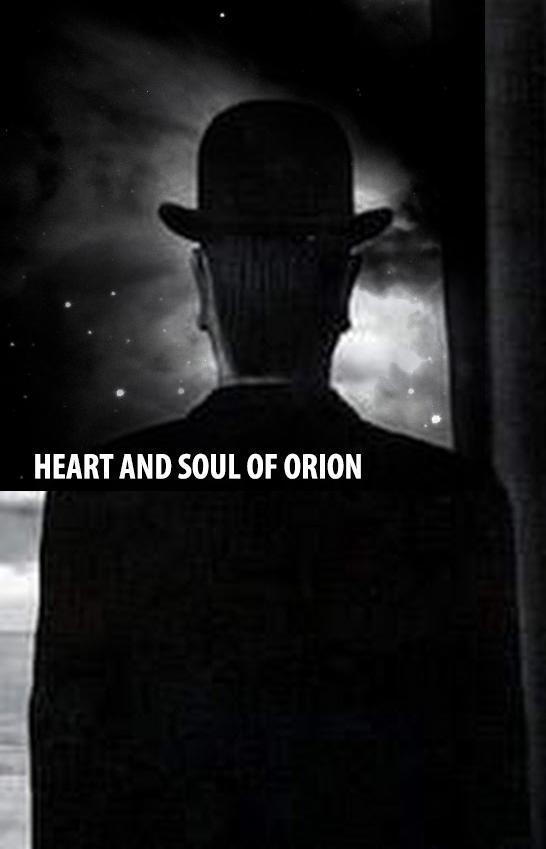
Heart and soul of Orion

Heart and Soul of Orion, derivative work by Theodore R. Frimet, © 2019 All Rights Reserved

Posted in January 2019, Sidereal Times | Tagged , | Leave a comment

Hypervelocity Missiles and the Depth of Space

by Theodore R. Frimet

It is common knowledge that we acknowledge the vast oceans as a limited resource. Beyond our national boundaries, even so, globally, there appears to be a tragedy of compromise. Whereas the 1982 United Nations Law of the Sea tempers access to the international seabed, so it goes that minor players have the occasion to overfish and stress the very biomass that we presume are protected.

It is within this oceanic genre that we begin to foment the comparison of our inner space to outer space.

With the development of hypervelocity missiles, pronounced by the Chinese government a few months back, and more recently by the Russian military, our nascent administration finds itself in the precarious position to survey the initial launch phase of a determined intruder, and presents itself the re-introduction of Reagan era Star Wars.

As Amateur Astronomers, we comprehend fully the initiators of defense, leading us in first strike capability, from Lagrange points L1 and L2, or the two more stable points of L4 and L5. However, for the sake of multi stakeholders, we must pursue a policy of peace in space.

When the alarmist rings out that space is already militarized and that an orbiting anti-missile strategy is preferable, I am resilient in my opine that our economy and allegiance are best spent on the continued preservation of space for peaceful exploration.

We are three nations strong. All with hypervelocity missiles. These three kings would do well to couple our needs as human beings with the requirements of our growing cultures to solve global problems and not to create them.

Posted in January 2019, Sidereal Times | Tagged , | Leave a comment

See no evil

by Theodore R. Frimet

Four great tunes to listen to. However only one speaker, and of course, only one channel. Unless of course you are a mutant like me! NASA isn’t going to listen. Post Hubble and James Webb, they are of course looking!

Do we glare at the first supermassive black holes with LYNX or go gaga at awesome first galaxies with LUVOIR? Perhaps better to be pedestrian and watch for Earth-like exoplanets with HABEX or stare down the cold gas and dust of planet forming disks with ORIGINS?

A great read is author Daniel Clery’s article “Starry Eyes” in Science, December 14, 2018, Vol 362, Issue 6420, pps 1230-1235.

Herein we discover the LYNX X-ray observatory goes the distance to find sources that are deeper and fainter. Nested millimeter thick mirrors allow x-rays to be captured as glancing reflections. We know the successes of Chandra and her European mission equivalents. So I crave for the hidden information of supermassive black holes that LYNX promises to unfold.

I am a sucker for a spiral galaxy. Who isn’t? LUVOIR, with its movable mirrors, will be packed into the payload of NASA’s heavy lift rocket, known as Space Launch System two. I expect great discoveries as she unfolds her huge 15 meter mirror (Hubble is 2 meters) and fires all mirror segments poised at its secondary and onwards to its optics system. A sunshield to accompany the unfolding origami will keep old Sol at bay, cheaply providing a cool roost for on-board sensors.

Where to find life exquisite than none other than HabEx? It is appealing to both the public and Congressional purse to find life on Earth like planets. And HabEx fits the bill. Equipped with a forward scarf and sun shade, it can focus most clearly on objects that are one ten billionth as bright.

Simple molecules, gas and dust are easy targets for ORIGINS to manage. It is sensitive and capable of detecting aromatic hydrocarbons. Equipped with star shield and cryo-coolers, ORIGINS will stare down feebly glowing objects in the far infrared. Her sweet spot is water. By tracking H2O we could land ourselves onto habitable worlds.

Which mission will win the favor of NASA? Well, I for one, have already shown you my hand. I have no poker face. Show me a First Galaxy and I’ll show you a happy Amateur Astronomer!

Posted in January 2019, Sidereal Times | Tagged , | Leave a comment

Radio telescopes and the black hole

by Prasad Ganti

Astronomy traditionally have been confined to seeing the light emitted by heavenly bodies. Nineteenth century discoveries proved that light is only a small part of the spectrum of what is known as electromagnetic radiation. It was found later that infrared (heat), x-rays, ultra violet rays, gamma rays, microwaves, radio waves are all part of this same spectrum. In the twentieth century, Karl Jansky of AT&T Bell Labs found that radio waves are also emitted from outside of our solar system. Gradually, radio astronomy emerged where telescopes were built to receive radio waves coming from all over our Universe.

I watched a very interesting collection of video lectures on radio astronomy. It was part of a course conducted by Dr. Felix Lockman and produced by the company “The Great Courses”. What is surprising is that the pictures of the distant stars and galaxies can be different than what is observed using optical telescopes. In multi messenger astronomy, such pictures from radio and optical telescopes are combined to produce a composite picture. The invisible pictures captured by the radio telescopes, which are a bunch of radio antennas connected to a radio receiver, reveals a different aspect of astronomy.

Light gets blocked by the interstellar dust, whereas radio waves just pass through. Due to this reason, clouds of hydrogen, ammonia, water vapor, organic chemicals like formaldehyde and acetic acid have been detected in interstellar space using radio telescopes, which would not have been possible using the optical telescopes. The presence of organic chemicals in space, although no DNA or proteins have been found yet, means that life could be present in other parts of our Universe.

Examples of radio telescopes are ALMA (Atacama Large Millimeter Array), a collection of 66 radio dish antennas in Chile. A 300 foot dish radio telescope is in Green Bank, West Virginia. A 500 foot dish radio telescope was recently built in China (called FAST). A single dish radio telescope is in the South Pole. When multiple antennas exist, they combine together (called interference pattern) and form effectively a larger telescope. Huge telescopes like the 300 foot dish cannot be made as a single piece. Multiple panels driven by motor actuators to correct for factors like gravity, wind, heat etc. Special white paint keeps the dish cool. Heat produces noise. That is why the radio receivers are cooled to a few degrees above absolute zero to eliminate most of the noise.

Picture below is of ALMA. By looking at the vehicle going on the ground, you can estimate the size of the telescope. Cables from all the antennas are connected to very sensitive radio receivers in a control room.

ALMA

ALMA in Chile

Now let us turn to Black holes. These are very interesting cosmic objects in our Universe. Massive amounts of matter gravitationally compressed very densely so that not even light can escape from them. With high level of confidence, astronomers state that supermassive black holes exist at the center of every galaxy, including our milky way. The problem is we cannot see a black hole. Even if we try to detect some form of radiation around it, there is too much dust as we get closer to the center of our galaxy. By the way, our Sun is about two thirds distance away from the center of our galaxy. Radio astronomy to come to our aid to view the center of our galaxy.

I recently read a book called “Einstein’s Shadow” by Seth Fletcher. The radio telescopes we have currently are not good enough to peep into the center of our galaxy. The book talks about a great idea of building something called EHT (Event Horizon Telescope) to view the black hole at the center of our galaxy. It is an extension of the idea of combining multiple antennas. It combines radio telescopes in different parts of the world to make one huge telescope called the EHT. EHT is a combination of ALMA, LMT (Large Millimeter Telescope), JCMT (James Clerk Maxwell Telescope), SPT (South Pole Telescope) from different parts of the world, to name a few. The eventual goal is to photograph the black hole at the center of the galaxy. That is what the author calls as “Einstein’s Shadow”.

A note that the pictures of galaxies and distant stars we see are not really the colors they have. Based on the data collected by the telescopes, computer algorithms are used to assign colors based on factors like the temperature. Please don’t expect to see a black hole in red !

The first set of experiments have been conducted using such combinations of widely scattered telescopes. The data will be analyzed for the next few years. And hoping to get a glimpse of the black hole in coming years. The revolution which Jansky sparked has taken over the universe in bringing light to otherwise dark areas.

Posted in January 2019, Sidereal Times | Tagged | Leave a comment

Snippets

compiled by Arlene & David Kaplan

Far side of the moon -NASA

China’s Chang’e-4 Launches on Mission to the Moon’s Far Side
China is aiming to go where no one has gone before: the far side of the moon. A rocket carrying the Chang’e-4 lunar lander blasted off at about 2:23 a.m. local time on Saturday from Xichang Satellite Launch Center…more

-NASA/JPL

-NASA/JPL

Nasa’s Voyager 2 probe ‘leaves the Solar System’
The Voyager probes are both outside the heliosphere, a protective bubble created by the Sun that extends beyond the orbit of Pluto. The Voyager 2 probe, which left Earth in 1977, has become the second human-made object to leave our Solar System…more

-Kain Sosa, NYT

-Kain Sosa, NYT

It’s a Briefcase! It’s a Pizza Box! No, It’s a Mini Satellite
Orbiting instruments are now so small they can be launched by the dozens, and even high school students can build them. High school students and faculty from Irvine, Calif., conducted tests that simulated the harsh conditions of space. Their latest tiny satellite, IRVINE02, went into orbit on Dec. 3…more

-NASA

-NASA

Nasa’s Jupiter mission Juno reveals giant polar storms
Nasa’s Juno mission to the gas giant Jupiter has reached its halfway mark and has revealed new views of cyclones at the poles. As it orbits the planet every 53 days – Juno performs a science-gathering dive, speeding from pole to pole…more

-NASA

-NASA


Saturn With No Rings?
It Could Happen, and Sooner Than Astronomers Expected. The “ring rain” that falls into the gas giant is so abundant that the icy bands could disappear in 300 million years, or even sooner…more

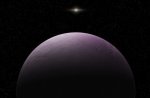
VG18, nicknamed “Farout,”

VG18, nicknamed “Farout,”

It’s the Solar System’s Most Distant Object.
Astronomers Named It Farout. Orbiting 11 billion miles from the sun, this tiny world offers additional clues in the search for the proposed Planet Nine. All they can see is a pinkish dot of light in the night sky, but that is enough to infer that they are looking at a…more

-NASA/JPL

-NASA/JPL

Nasa’s InSight deploys ‘Marsquake’ instrument
The American space agency’s InSight mission to Mars has begun to deploy its instruments. The lander’s robotic arm has just placed the bell-shaped seismometer package on the ground in front of it…more

-NASA/NRL/PARKER SOLAR PROBE

-NASA/NRL/PARKER SOLAR PROBE

Sun-skimming mission starts calling home
Just weeks after making the closest ever flyby of the Sun, Nasa’s Parker Solar Probe is sending back its data. Included in the observations is this remarkable image of the energetic gas, or plasma, flowing out from the star…more

Posted in January 2019, Sidereal Times | Tagged , | Leave a comment

From the Director

Rex


by Rex Parker, Director

See you in the New Year – the December 11 meeting is cancelled. Time seems more precious than ever as the year winds down, so you’re getting an evening back on your calendar! Thanks to you all for participating in this real-time astronomy experiment that is the AAAP. We’ll resume meetings again on January 8, 2019 with a novel presentation that Program Chair Ira Polans has lined up. You can read more on upcoming speakers in Ira’s section in this issue.

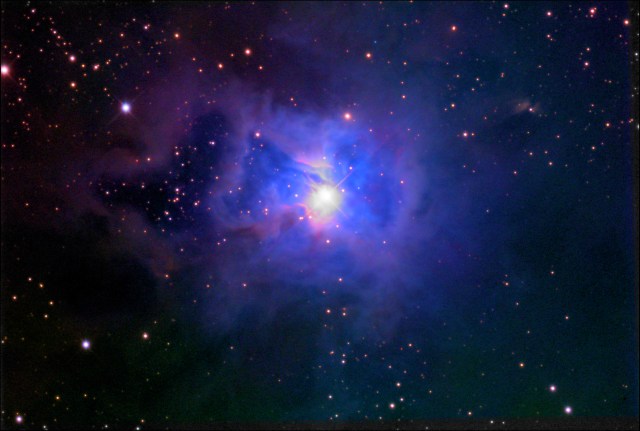
Recent lectures at AAAP – a tour de force of astronomy. Contemplating the splendor and wonder of the night sky from both aesthetic and scientific perspectives is a great way to wrap up a year of fine astronomy in AAAP. We’ve again had fascinating talks by knowledgeable guest speakers this fall. The recent presentations on the Harvard astrophotographic plates, stellar nucleosynthesis, spectroscopy, and human vision physiology can help us understand some of the complex processes driving star formation and the genesis of deep sky objects. For example, consider the reflection nebula NGC 7023 in Cepheus (image below).

NGC 7023, reflection nebula in the northern constellation Cepheus. Astrophoto by Rex Parker from home observatory in central NJ; 12.5” Cassegrain telescope and SBIG ST10 CCD camera.

Cepheus is a circumpolar northern constellation and always above the horizon at our latitude, so NGC 7023 is well-positioned now for imaging from New Jersey. The mysteriously beautiful and colorful nebula is a vast interstellar field of dust and gas surrounding a central star (near the middle in the image). This star, with the unartful name HIP-103763 (from the Hipparcos catalog), is larger than our sun (about 9 solar masses) and therefore hotter and more energetic. Stars of this size can fuse hydrogen to helium using the CNO cycle on the main sequence as we learned in October. This star’s spectral classification is type B2V, based on the Harvard sequence of stellar spectra originally developed from studies of the glass plates we learned about last month (and two years ago from Dava Sobel). If examined by spectroscopy the star shows strong Balmer lines of hydrogen emission, as discussed in September. The nebula does not emit light intrinsically, but glows by scattering and reflecting the intense stellar flux from HIP-103763. The color is intensely blue because the size of the dust grains in the cloud are similar to the wavelength of blue light, making the efficiency of scattering highest in the blue range of color perceived by the cone cells in the human retina, as presented in the 10 minute talk last month. NGC 7023 astrophoto by Rex Parker from home observatory in Titusville NJ, using 12.5” Cassegrain telescope and SBIG ST10 CCD camera.

Winter solstice – solar and clock time. Soon the sun will reach its most southerly apparent position as the temperatures drop and the days shorten. Solstice on December 21 brings the shortest day and longest night of the year, but the earliest sunset in New Jersey will be on December 8 (at 16:33 EST). This seeming disconnect has more to do with clocks than celestial mechanics, because our time system is based only approximately on solar days. Clocks run precisely on 24.0 hour days, while a solar day (period between solar transits) varies and is seldom 24.0 hours. The yearly relationship between apparent solar (sundial) time and clock time is shown in the graph below which shows the equation of time — above the axis the sundial is faster than the clock, and below the axis it is slower.

Posted in December 2018, Sidereal Times | Tagged , | Leave a comment

From the Program Chair

By Ira Polans

As mentioned in Rex’ article, there will not be a meeting on December 11. We will resume meeting on January 8.

For 2019 the upcoming talks and speakers are:
January 8 – Celestial Navigation by Frank Reed
February 12 – The Pope of Physics: Enrico Fermi and the Birth of the Atomic Age by Gino Serge
March 12 – Planet X and Oumuamua by Scott Tremaine

For the April or May, I am working on an Apollo related talk. As next year 2019 is the fiftieth anniversary of the Apollo 11 lunar landing.

Also in January, Jeff Pinyan will give a 10 minute talk on the 342nd anniversary of the determination of the speed of light.

I want to thank all the members who gave a 10-minute talk in the past. Maybe next year you’ll have a 10 minute talk to give.

Wishing everybody and their families a happy and healthy holiday season.

Posted in December 2018, Sidereal Times | Tagged , | Leave a comment

Arshad Jilani, Our Rocket Scientist

by Surabhi Agarwal

On November 8th, 2018, we lost yet another of our members and keyholder, Arshad Jilani. I had the honor and pleasure to get to know Arshad and his family for the past few years.

He came to the United States more than 40 years ago from Pakistan and worked for
General Electric’s Aerospace Business. During the early years of his career at GE, he was asked to work at NASA’s Jet Propulsion Laboratory on Project Viking. The project involved sending two probes to Mars. Arshad often told stories about his time spent in Pasadena and a few years ago he had written about it in the Sidereal Times. Here is a link to the article.

Two years ago some of us had the opportunity to travel to Oregon to watch the total solar eclipse with an ever enthusiastic Arshad filming the event for members to watch. See the film.

After his retirement, he dedicated himself in charitable causes and co-founded Swat Relief Initiative, an organization committed to women’s rights and girls’ education in rural Pakistan.

He is survived by his mother, wife and two children. He was well respected and loved by people who knew him. We will all miss his presence at the observatory and the club meetings.

Posted in December 2018, Sidereal Times | Tagged | Leave a comment

India’s Space Ambitions

by Prasad Ganti

Indian Prime Minister Narendra Modi stated boldly on August 15, 2018 that India will have one of its citizens in space by August 15, 2022 when India celebrates its 75th independence day. Sounds very much like President Kennedy’s declaration way back in 1961 of landing an American on the moon before the end of the decade. After a string of Indian space achievements over the last few decades, it sounds very plausible for this goal to be met. Just like American manned moon landing in 1969.

If achieved, India will be the fourth country in the world to do so, behind US, Russia and China. Understandably, other space achievers like Japan, Israel or European Union have not sent people into space. Not because of any failures. But it needs some extension of the non-human space missions and technologies to get there. The thinking is that automated space missions or the usage of robots can help in studying space. No need to risk human lives. Along with the bragging rights, manned space flight does result in development of technologies which can help a developing nation like India. Humans can still add value in space, which robots and automation may not be able to accomplish unaided.

There are more risks involved in a manned space flight than an unmanned one. The possibility of a loss of an unmanned space vehicle is only a financial risk. But the loss of human lives under the glaring headlights of the international media can attract a lot of flak. The first complexity of a manned space flight is the requirement of a life support system aboard the spacecraft. Living quarters, maintenance of an environment with pressured breathing air, drinking water, and food. Since only limited quantities of air and water can be carried into space, there is a need to recycle these elements. At present time, food is not recycled or grown in large quantities in space.

Some of the components and technologies do exist and some are in development. The crew module, which is shaped like a cone with its pointed top chopped off, is attached to a cylindrical shaped service module which contains the equipment for supplying air and water and the recyclers. The air consists of oxygen and nitrogen. The carbon dioxide is scrubbed using lithium absorbers, to remove the lethal gas from the environment.

The launch vehicle called GSLV Mark III (Geostationary Space Launch Vehicle) is already in use. The service module will be jettisoned before the crew module re-enters the earth’s atmosphere. The protection of the space capsule with heat absorbing tiles during the fiery re-entry and the subsequent slowing down using a parachute and the splashdown into the water has been tested before.

The emergency crew ejection system is being built and tested. In case of a disaster during the launch, the system ejects the crew to safety. The training of the crew to use the equipment and to live in the weightlessness of the space for a week, will be conducted in other countries.

The spacecraft itself would be called “Gaganyaan” which means a sky vehicle. And astronauts to be christened as “Vyomanauts” where “Vyoma” means space in Sanskrit. I also heard the term “Gaganauts”.

A billion dollar price tag for a week long human space odyssey may not sound much. But this goal is not set in the atmosphere of a cold war with unlimited budgets. It is set by a developing country where poverty still exists and prioritizing space over eliminating hunger does attract serious questions. Justifiably so. But it will be a giant technological leap for India. Paving the way for future plans like setting up a laboratory or a workshop in space or a base on the moon. Only sky is the limit.

Posted in December 2018, Sidereal Times | Tagged , | Leave a comment