From The Director

by Rex Parker, PhD director@princetonastronomy.org

Happy New Year!  Let us renew our hope for the new year and commit to connecting with other members of the amateur astronomy community and AAAP especially.  I look forward to seeing you in the upcoming Zoom sessions.  The first meeting of 2022 will be on January 11 (7:30pm) with an astronomer who has strong Hubble Space Telescope connections.  Please see program chair Victor Davis’s section below for more on the program. 

Astrovideo Live Winter Sessions.  We are renewing the hit sessions which debuted last winter.  The new dates are Jan 7, Feb 4, and Mar 4, Friday evenings close to a new moon. All members are welcome to join in these live observing sessions.  Those of you making progress with your own astrovideo telescope setups are urged to contribute your own video stream to the Zoom sessions – please contact me if interested. An email will be sent with the Zoom link a few days before each date.

The Greenness of Comets.  The current hit movie Don’t Look Up (Netflix) portrays the government and industry attempting to acquire the valuable rare minerals in a newly discovered comet on a fatal collision course with earth.  Trillions of dollars of wealth and massive job opportunities are seen, blinding the authorities from seeing the impending disaster from the collision that the astronomers (played by Leonardo DiCaprio and Jennifer Lawrence) calculate from the data.  This is a fitting allegory for climate change and human denial, yet in a literal sense the color of comets really is green.  Why is that?

The images below of comet C/2021 A1 are from my home observatory in NJ using a 12.5” telescope and ZWO ASI071 camera, taken on Dec 8 just before morning twilight.  The green glow is quite apparent in these images which are carefully color-balanced.  The stars are trailing because the mount is tracking the comet (13x2min subframes, left panel;  6x2min subframes, right panel).  Known as Comet Leonard after its discoverer at the University of Arizona, it makes a good stand-in actor for the movie Don’t Look Up.  Although it won’t collide with the earth, Comet Leonard was found using Catalina Sky Survey’s 1.5m infrared telescope on Mt Lemmon.  Just like the movie, the Catalina survey is supported by NASA and the Near Earth Object Observation Program under the Planetary Defense Coordination Office.

From an astrochemistry view the emission of green or blue-green color from a comet’s nucleus but not the tail is an intriguing puzzle, only recently solved.  It is not the same photochemistry mechanism as others in astronomy, for example the fluorescent blue-green emission from ionized oxygen seen in planetary nebulae in the telescope. The nucleus of a comet is an agglomeration of rock, dust, and frozen gases.  As it gets closer to the sun, increasing heat causes the gases to sublimate and form a nebulous envelope around the nucleus known as the coma.  The tail of a comet is an extension of the coma drawn out by the solar wind.  Yet the green around the nucleus disappears in the tail which instead displays a reddish brown color.  

It has been thought for years that a comet’s green comes from the breakdown of the reactive molecule dicarbon (C2).  Dicarbon is an abundant molecule in the universe although not on earth, and multiple valence electronic states in its chemistry give it a rich spectroscopy.  The famous British scientist Wollaston reported the emission spectra of blue-green flames as early as 1802, the first glimpse of dicarbon.  Now a new study has solved the question of green in comets.  In this laboratory work, dicarbon chloride (C2Cl4) was irradiated by UV-laser, a way to generate dicarbon for spectral analysis (Borsovszky et al., Photodissociation of dicarbon: How nature breaks an unusual multiple bond. Proc Natl Acad Sci USA 2021, Vol 118, No 52).  Further irradiation at longer wavelengths generates a metastable state of the C2 molecule (a radical) which decays and radiates a characteristic greenish photon.  The emission spectrum of dicarbon is known as the Swan band, after the Scot physicist William Swan in the 1850s.  Swan bands are a characteristic of the spectra of carbon stars and some nebulae as well as comets.  Dicarbon photoemission in the Swan band requires two “forbidden” electron transitions which are favored in the environment of space but not on earth.  The spectral pattern (color) is a sensitive probe of local environment.  In their 2021 paper, Borsovszky et al. determined that the half-life of the C2 radical is a little under 2 days under the conditions of a comet at ~1 AU distance from the Sun.  This is the first solid explanation of why the head of a comet but not the tail glows green, because the dicarbon radical with its short half-life is dissipated as material streams out to the tail.  

The Unjournal Club Wants You.  Doing astronomy in AAAP is a little different when we cannot meet in person for regular meetings.  For now, the best way to keep the comm channels active is to use our monthly Zoom meetings to highlight club activities and facilitate member conversations.  These take place during the 2nd hour after the main speaker, when the informal “Journal Club” presentation by a member is slotted each month.  Help us break the boundaries set by Zooming by volunteering to give an “unjournal” club session!  I say “unjournal” here because these short episodes don’t need scholarly, journal-like topics, they only need to engage members with what you care about in astronomy.  It works great with Zoom screen sharing of PowerPoint slides, JPEG’s, etc from your home computer or mobile device.  To get on the schedule for an upcoming meeting, please contact me or program chair Victor Davis.

Progress on the New Initiatives

  • Merchandise store.  Thanks to member Rich Sherman who did all the setup, the merchandise store is launched now.  The club will benefit with 15% of each sale, and it is not limited to members although at present we are not advertising.  The store link is  http://aaap1962.logosoftwear.com/ (also posted on the upper right of the first page of each issue of ST on the website);  the password is SiderealTimes.
  • Social Media and the Discord AAAP Server.  Thanks to Debbie Mayes who provided an initial social media action plan which is under review by the board.  Len Cacciatore, Dave Skitt, Debbie Mays, Rich Sherman and I did an initial test of two social text-like apps (Groupme and Discord).  We decided to go forward with Discordfor member trial — it has excellent features and potential to help communication in the club.  The AAAP Discord server has been set up with three channels– General, Observatory, and Astrophotography.  Members were invited to join with a link sent Dec 14.  If you missed that invite and are interested, keep tuned in for a new invitation to be sent by email around Jan 5.  The invitation-only sign-up helps make this private for members of AAAP.  Please give it a try-out and provide some feedback to me or others on the Board.   
  • Telescope Loaner Program.  We are getting the equipment organized and a system is being set up to track loan outs.  Member Todd Reichart is spearheading this initiative with input from Dave S. and me, and it is nearly ready to launch.  
  • NASA/JPL Night Sky Network.  NSN and its usefulness in the club needs more time and thought but has great promise.  One idea is that we could begin using it to handle some of the roster functions.  Ira Polans and the Board are currently working on this.
Posted in January 2022, Sidereal Times | Tagged , | Leave a comment

From the Program Chair

By Victor Davis

The January, 2022 meeting of the AAAP will take place (virtually) on Tuesday, January 11th at 7:30 PM. (See How to Join the January Meeting below for details). This meeting is open to AAAP members and the general public. Participants will be able to log in to the meeting as early as 7:00 pm to chat informally with others who log in early. We will not be using the “waiting room;” participants will enter the meeting as soon as they log in. However, they will enter the meeting space with their microphones muted. This will help to remedy some of the background noise we experienced at last month’s meeting. Please be aware you must unmute yourself to be heard by other participants.

For the Q&A session, you may ask your question using chat or may unmute yourself and ask your question directly to the speaker. To address background noise issues, we are going to follow the rules in the table below regarding audio. If you are not speaking, please remember to mute yourself. You are encouraged, but not required, to turn your video on.

Meeting EventParticipant Can Speak?Participant Can Self-Unmute?
Director Rex’s General RemarksYesYes
Program Chair Victor’s  Speaker IntroductionYesYes
Speaker PresentationNoNo
Q&A SessionStart All on MuteYes                                    
5-minute bio breakYesYes
Journal Club presentation (none scheduled)Start All on MuteNo
Business MeetingStart All on MuteYes
Director’s closing remarksNoNo
   
Only the Business part of the meeting will be locked.

Featured Speaker:  Prof. Robert Williams, Astronomer Emeritus at the Space Telescope Science Institute (STScI).

Observing Galaxy Formation with the Hubble Space Telescope

From his unique perspective as former Director of the Space Telescope Science Institute, Prof. Williams will present a brief history of the Hubble Space Telescope (HST), including its travails and the servicing of the telescope by NASA astronauts. He’ll describe the history of how HST has obtained clear views of objects in the distant Universe, and the basic principles by which astronomers have used the Hubble to look back in time to piece together the formation of structure in the Universe after the Big Bang. Prof. Williams will compare computer simulations and actual Hubble observations which indicate that small perturbations in the early Universe grew to form galaxies that now fill the cosmos.

About the Hubble Deep Field

Once HST’s spherical aberration was remedied by installing corrective optics in 1993, Prof. Williams proposed to use a substantial portion of his Director’s Discretionary time for Hubble to stare at a relatively blank portion of the sky to capture images of an unknown number of distant objects.  At the time, the idea of devoting such a valuable resource to what many considered a fool’s errand was not well received. Nevertheless, between December 18 and 28, 1995, Hubble stared at a small patch of sky in Ursa Major  (RA: 12h 36m 49.4s; Dec: +62º 12’ 58”) about 2.6 arc-minutes on a side (1/12 the apparent diameter of the full Moon). During the course of about 150 orbits, Hubble took 342 separate exposures through four broadband filters totaling about 141 hours. 

–NASA

Almost all of the 3,000 objects in the Hubble Deep Field (HDF) are galaxies, some of which are among the most distant (hence youngest) known. This iconic image revolutionized our understanding of the numbers and evolution of galaxies in the observable Universe. Over the years, deeper images including ones captured at non-visual wavelengths have expanded on the theme started by the HDF. For his leadership of the HDF project, Prof. Williams was awarded the Beatrice Tinsley Prize of the American Astronomical Society and NASA’s Distinguished Public Service Medal.

unnamed

Robert Williams received his undergraduate degree from UC Berkeley and his PhD in astronomy from the University of Wisconsin. He was Senior Fulbright Professor at University College London. He received the Alexander von Humboldt award from the German government and the Karl Schwarzschild Medal for career achievement in astrophysics by the German Astronomische Gesellschaft.

In addition to his emeritus position at STScI, Prof. Williams is Distinguished Osterbrock Professor at UC Santa Cruz. Before assuming his present positions, he spent eight years in Chile as Director of the Cerro Tololo Interamerican Observatory. Prior to that, he was Professor of Astronomy at the University of Arizona, in Tucson.  Prof. Williams is an elected member of the American Academy of Arts and Sciences. 

Prof. Williams is a strong advocate for science education and has lectured around the world on astronomical discoveries and the importance of science in modern life. He and his wife, Elaine, a pediatric psychologist, co-founded a non-profit organization in Baltimore that places adults with autism in the workplace. Prof. Williams’ research specialties include novae, nebulae, and emission-line spectroscopy and analysis.


AAAP webcast:  This month’s AAAP meeting, beginning with Rex’s opening remarks and ending at the break before the business meeting, will be webcast live on YouTube and recorded for subsequent public access on AAAP’s YouTube channel. Be aware that your interactions during this segment, including questions to our guest speaker, may be recorded for posterity.  

YouTube Link: Amateur Astronomers Association of Princeton, January 11, 2022 Meeting, 7:30 PM EST

This session will be recorded and saved on YouTube. Send me an email at program@princetonastronomy.org if you have any concerns. 

Using Zoom: While we are social distancing, the AAAP Board has chosen to use Zoom for our meetings, based our belief that many members have already have used Zoom and its ease of learning. One of its great features is you can choose whether you want to install the software on your computer or use it within your browser.

How to Join the January Meeting: For the meeting, we are going to follow a simple two-step process:

  1. Please make sure you have Zoom installed on your computer. You do not need a Zoom account or need to create one to join the meeting. Nor are you required to use a webcam.
  2. Please visit our website for the Zoom link.

This session will be recorded and saved on YouTube. Send me an email at program@princetonastronomy.org if you have any concerns.

NOTE: The Zoom site has many training videos. If you’re unsure how Zoom works you might want to view the videos on how to join a meeting or how to check your computer’s audio and video before the meeting.

Link to join January’s Zoom Meeting
Amateur Astronomers Association of Princeton is inviting you to a scheduled Zoom meeting.

Topic: January 11, 2022 Monthly AAAP club meeting with former STScI Director, Robert Williams
Time: Jan 11, 2022 07:00 PM Eastern Time (US and Canada)

Join Zoom Meeting
https://us06web.zoom.us/j/88211456054?pwd=bHd5YzAra1BEQVBqTnlJYWRNT3Rudz09

Meeting ID: 882 1145 6054
Passcode: 045800

Find your local number: https://us06web.zoom.us/u/kbNaHdJPep

“Unjournal Club”

There is not currently a member who has stepped up to make a short presentation to the club in January. It’s not too late! Thanks to Surabhi Jain-Agarwal for December’s virtual and vicarious trip to Iceland. Sorry about the puffins. At this writing Surabhi is out of town, hopefully gathering material for an upcoming travelogue. 

Update: Surabhi has decided to make a short presentation on the effects of light pollution on the night sky, climate change and our health and ecosystem. She will talk about the steps members can take to curb it in their own communities and towns.

We hope to make these short presentations a regular feature of our monthly meetings. We’d like to know what members are doing or what members are thinking about in the broad range of topics encompassed by astronomy. A brief ten-minute (or so) presentation is a good way to introduce yourself and the topics you care about to other club members. If you are interested in presenting a topic of interest, please contact either director@princetonastronomy.org or program@princetonastronomy.org.

A look ahead at future guest speakers:

February 8, 2022Chris Spalding, a 51 Pegasi b postdoctoral fellow in astronomy at Princeton University, will talk about his research to understand planet formation by way of simple theoretical descriptions of planetary dynamics.
March 8, 2022Rosanne Di Stefano, of the Center for Astrophysics/Harvard and Smithsonian, led a team who used the Chandra X-ray observatory to search for brightness dips in X-ray binaries. They may have detected a transiting exoplanet in the spiral galaxy M51. To date, all exoplanet candidates (4,000+ and counting) have been discovered within 3,000 light-years of Earth. An exoplanet in M51, 28 million light-years away, would be thousands of times farther away than those in the Milky Way.
June 14, 2022Bill Murray, AAAP Outreach Chair and astronomer at the New Jersey State Museum will once again (following a Covid hiatus) give club members a private sky tour at the museum’s planetarium. He’ll show off the refurbished planetarium’s state-of-the-art Digital Sky 2 8K projection system. This is an opportunity to put aside Zooming and commiserate with astro-buddies in the real world.

Thanks to Bill Thomas, Ira Polans, and Dave Skitt for their valuable advice and assistance.

As always, your comments and suggestions are gratefully accepted.

Posted in January 2022, Sidereal Times | Tagged , | Leave a comment

Minutes of the December 14th, 2021 AAAP Members General Meeting (online)

by Gene Allen, Secretary

The meeting was convened on Zoom by Director Dr. Rex Parker at 1930 with the agenda for the evening.

Program Chair Victor Davis introduced featured speaker Dr. Joleen Carlberg who presented “The Fiery Fate of Exoplanets” from her home in Silver Springs, MD. The talk was interrupted for about twenty minutes by what turned out to be a power failure in her neighborhood, but it was successfully resumed.

The business meeting convened at 2200 with a twenty minute Unjournal Club Presentation by member Surabhi Agarwal about her “Iceland Adventure” and views of its auroras and fiery underground.

Rex presented a Sky X depiction of the orbit of Comet Leonard and impressive astrophotos taken of it by members Robert Vanderbei, Tom Swords, and himself. Robert’s photo of the partial lunar eclipse was also shared.

The newly opened AAAP Online Merchandise Shop was described by Lead Facilitator Rich Sherman. It can be accessed from the AAAP website with the password SiderealTimes. Although purchases made now are unlikely to ship before January, members are encouraged to support the club by way of the 15% that returns to our treasury.

Dave Skitt reminded members that purchases made through Amazon Smile can also return a share to the AAAP as a legitimate charity.

The newly set up AAAP Server on Discord was described by Rex and Lead Facilitator Len Cacciatore. It is a communication platform that allows multiple forms of media and is restricted to AAAP members. An email invitation to join was sent to all members on this date. Rules and moderators will be set up as members join. Discussion revealed some dissention about choosing Discord over other platforms, but while the choice was properly considered, it is being operated on a trial basis. No cost is involved, so if it does not prove useful or substantial support grows for an alternative, we can change.

Rex proposed that interested members set aside January 7, February 4, and March 4 as possible dates for our Astrovideo Live Winter Zoom Sessions. These dates are near the New Moon, and if weathered out, hardware and technique discussions will be conducted. Members who are developing an astrovideo/EAA capability are invited to add their setups to those of our veterans.

Observatory Chair Dave Skitt presented the status of several issues. The state has finally responded to us with the specific documents we still need to provide for them to consider granting permission to repair the deteriorating roof-supporting columns. Water is currently still defended against freezing by light bulbs in the bathroom, but it will be turned off and drained shortly. The cooling function in the AAAP owned ZWO ASI294 Pro astronomy camera has been conclusively proven defective and the camera will need to be returned to them for servicing. Dave is accumulating needed bits and pieces to be added to our spare hardware for the Scope Loaner Program.

Available hardware is being prepared to be offered to members in the Scope Loaner Program. Dave, Rex, and Tom are assembling the pieces, but we need one or more members to step forward as facilitators for this program.

Miscellaneous discussions wound down and the meeting was adjourned at 2240.

Between Zoom and the live YouTube feed, approximately 55 people attended the speaker’s presentation. The business meeting began a half hour later than usual but 40 some stuck around for at least part of it. As of today we have 173 active members.

Posted in January 2022, Sidereal Times | Tagged , , | Leave a comment

Secretary’s Scribblings

by Gene Allen, Secretary

As the recently appointed Secretary of the AAAP, I have been deeply immersed in learning how to accomplish the duties of the position and tweaking the tools to better fit my use. There has been a lapse in the performance of these duties while the position was vacant, and I will be working to recover from that. All new member emails to date have been entered! That part, at least, should be current. Please be patient with me, but do report any issues you may have to secretary@princetonastronomy.org.

We are in transition from basing dues payments on the AAAP fiscal year to assigning each member a renewal month. I think this will be helpful. I was never sure how the fiscal year ran, and neither could I remember whether I had paid for whatever that year was. For new members, the renewal month is the month following the application month and for continuing members, it is the month following the last renewal payment you made. You will receive a renewal email notice roughly at the start of your renewal month and can pay anytime during that month or earlier. If you have not paid your dues by the first of the month following your renewal month, you will be overdue and receive another notice to that effect. If you still have not paid by the end of the month following your renewal month, your membership will be terminated, and your email address will be removed from the server. If you subsequently renew during the first year after termination, you can be reinstated, but your dues will not be prorated, and your renewal month will remain the same. More than a year out, you will have to reapply.

Since this is a new procedure, and we have had a significant lapse in notifications, we will be lax in enforcing the strict timeline specified above. We are also having problems with the website, and until that gets resolved it will be difficult but not impossible for new members to join. We did have one new member work it out so far. Fortunately, renewals still work fine, which I confirmed by renewing both my wife and myself on December 22nd. 

The January renewal reminders have been sent, and I include a link to the renewal page to make it super simple. I also invite feedback about what we are doing well and what we could improve, with the intention of improving member retention. We gained 65 new members this year, and it would be great if they all stay with us!

Gene Allen

Posted in January 2022, Sidereal Times | Tagged , , | Leave a comment

James Webb Telescope

by S. Prasad Ganti

It was the most awaited event – launch of the James Webb telescope into space on Christmas day 2021. In development for close to two decades and a hefty price tag of $10 billion. It is considered as a successor to the Hubble space telescope which still continues to be used and provides great pictures of our universe. Why did it cost more and take much longer with so many overruns ?  And what is it expected to do after it settles down in its new home far from Earth over the next six months ?

It is a very complex scientific instrument ever built by humanity. Its primary mirror is about 2-3 times bigger than Hubble, although much lighter. Building and deploying a mirror of that size is a gigantic exercise. Unlike Hubble, this mirror is not a single piece of glass. It is made of eighteen hexagonal segments. Each made of lighter Beryllium and coated with a thin layer of gold. This was done to fold the mirror at the time of launch and unfold it once in space. Else, there is no rocket capable of taking it up unfolded. So are the solar panels which will provide power to the telescope. The panels are folded for launch and were unfolded in space.      

Next are the most sophisticated instruments onboard. With each new generation of technology, the detectors become more sensitive. The basic instrumentation is a camera and  a spectrograph. A camera captures the image while the spectrograph splits the incoming radiation into different frequencies (colors for visible radiation). Unlike Hubble which looked at the Universe in the visible region, Webb will operate in the infrared region, of lower frequencies than the visible light. Since Webb is going to look at further and hence older objects in the Universe, something like viewing the Universe when it was a baby in its diapers, infrared is more suitable. All the ancient light is now stretched so that its remnants are in the infrared region. The gold coating of the mirror will reflect the infrared waves much better. Maybe the next generation telescope may attempt to look at when the Universe was in its mother’s womb !

Next is an enormous heat shield which will protect its instrumentation from the heat of the Sun and the Earth. The instruments need to be cooled down to the lowest temperatures in the Universe so as to be able to view the infrared waves. Else, any heat, even from the telescope and its instruments will distort the picture. To get away from Earth’s heat, the telescope will be positioned about a million miles away at a point in space called Lagrangian point L2.  Postulated by French mathematician Joseph Lagrange, there are five points in space where the Sun’s and Earth’s gravity almost cancel each other. Given below is the picture courtesy NASA. L2 is a point away from both the Earth and the Sun. The heat shield will protect from Earth and Sun on the left so that the telescope is free to look into deep space into the right. At L2, the fuel consumption is minimum so that the telescope can function for about ten years or hopefully longer. with the given fuel budget.      

Once the telescope was constructed in California, its long terrestrial journey started. Too big to fit into any aircraft, it was placed in a specialized container and loaded onto a ship. The ship made the perilous journey through the Panama canal before reaching French Guiana in South America where the European Space Agency (ESA) has its Ariane launch facilities. While ESA is a partner in the telescope mission, its Ariane is the largest and the most reliable rocket. The rocket did its job on Christmas day. After unfurling its solar panels, the telescope is travelling towards the L2 Lagrange point. It is expected to take about a month to reach. 

After reaching its destination, the heat shield and the mirror will unfurl. Then the mirror needs to be tuned. Each segment of the mirror is actuated by a motor. There are too many points of failure in this whole process. Any failure can doom the mission. The telescope will be beyond any human mission for servicing. If everything goes well, we will start getting pictures  by about mid 2022. Else, bad luck and we go back to the drawing board again.

Other than viewing the original glare from the infancy of the Universe, the telescope will also help in detecting exoplanets, the planets outside of our solar system. Although Kepler and now TESS space telescopes are on the job, Webb will be much more sensitive because of its abilities in the infrared region.  Planets like Earth emit radiation in this region. Webb also has a coronagraph, an instrument which blocks out the brilliant glare of the central star and helps the infrared detectors gather information from the orbiting planets.   

Hoping that Webb will work flawlessly and give us glimpses of our early universe and the hidden universe of exoplanets for many years to come.

Posted in January 2022, Sidereal Times | Tagged | Leave a comment

Madhup Rathi’s Amazing Images

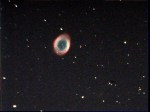
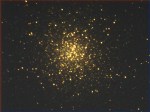
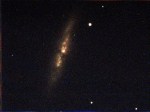
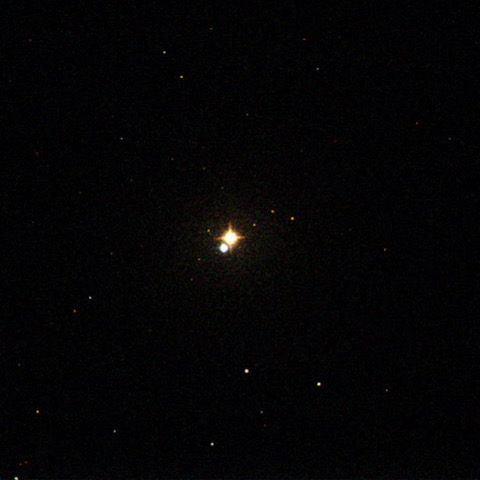
Check out Madhup’s amazing images of the deep sky. The beauty of these pictures leaves one thirsting for more of them.

Posted in January 2022, Sidereal Times | Tagged , | 1 Comment