Title: Under Alien Skies: A Sightseer’s Guide to the Universe
Author: Philip Plait, PhD
Publisher: W. W. Norton & Company, New York, NY
Publication Date: 2023
Total Pages: 336
How many of us have read tour guides taking us to far off places with descriptions so detailed that you wish you were immediately there resulting in planning and booking your travels. The book Under Alien Skies: A Sightseer’s Guide to the Universe is such a book for touring our solar system, the Milky Way, and grand deep sky objects. The author and astronomer, Dr Philip Plait who has worked on the Hubble Space Telescope Team analyzing data specifically on the Space Telescope Imaging Spectrograph, also known as The Bad Astronomer, is an advocate of NASA’s public outreach. He has written for and appeared in several science documentaries.
Plait brings the reader from the couch comfort of Earth to the Moon, onto Mars, the asteroids, Saturn, Pluto, and objects outside of our solar system exiting into a Black Hole to be unnoticeably spaghettified. The author uses the latest scientific data to translate what it would be like to walk or “shuffle” about the surface of the Moon coursing through the sunlit moonscape into the dark regions and shadows with exacting detail of the issues of moon dust. Plait continues the adventure of the astro tourist onto Mars to watch the blue sunsets, two moons fill the sky, and then to sail past the rings of Saturn. The astro tourist may wish to skim through the various atmospheric layers of Saturn and may contemplate landing to find that its surface is gaseous with an eventual hard surface of metallic hydrogen. Beneath the metallic hydrogen will eventually be a rocky core followed by extreme temperatures exceeding the surface of the Sun.
Another fascinating place Plait brings the astro tourist to is a planet caught in a binary star system such as Star Wars’ Tatooine and the experience to live on such a planet of which a third of all stars may be in a binary system. The remaining stars are in a more complex arrangement such as Mizar which is a four-star system. The Earth’s single star is actually atypical.
For anyone that wonders what it would be like to travel and experience destinations of the solar system and beyond, Under Alien Skies: A Sightseer’s Guide to the Universe is an enjoyable read.
The author includes a “Further Reading” section for even more detail on the destinations that are reviewed to further enrich your travel plans.
The astroimaging section of this month’s Sidereal Times displays eleven remarkable images from the AAAP membership. The images presented in this edition represent a disparate set of telescopes and imaging configurations captured from locations in our very light polluted skies of New Jersey and the darker regions of Florida. The eleven images comprise several emission nebulas, a total lunar eclipse of 2023, a current sunspot event, two images of M33 the Triangulum Galaxy taken from locations of New Jersey and Florida with different astroimaging configurations, and several images with multiple targets such as the Horsehead Nebula with two adjacent nebulas, and an image of the Spider and Fly Nebulas.
Image descriptions are edited or authored by Michael DiMario unless noted. Image capture data are by the imager.
Lisa Fanning
Image and description by Lisa Fanning
Solar image acquired 02/26/2024 at 2:54 PM ET; location Morganville, NJ. Telescope Dwarf II and Dwarf II Lab processing of 101 stacked images.
Spaceweather.com states: “AR3590 is now the largest sunspot of Solar Cycle 25. For comparison, it is now 60% as large (by surface area) as the great sunspot that caused the Carrington Event in Sept. 1859. Even a 60%-intensity Carrington Event occurring today could cause problems for satellites, power grids, and internet connectivity. That’s why forecasters are carefully watching this sunspot.”
Rich Sherman
Image taken by Rich Sherman
IC417 The Spider Nebula (center) and NGC 1931The Fly Nebula (upper right) emission nebulas imaged 12/18/2023 with ASI2600MC Pro camera using the Antlia Triband Filter on a Sky-Watcher Esprit ED APO 100mm f/5.5 refractor; Integration of 25×2 min frames at -10 C, Bin 1, at unity gain; Processed with CCD Stack, Topaz De Noise, and Lightroom.
The IC417 and NGC 1931 emission nebulas known as The Spider and The Fly nebulas are located about 10,000 and 7,000 ly from Earth respectively. The nebulas are located in the Auriga constellation comprised of massive clouds and gas providing stellar nurseries. The Spider nebula is about 100 ly across while the Fly nebula has been described as a mini-Orion nebula as it displays similar characteristics.
Purnendu Gupta
Image and description by Purnendu Gupta
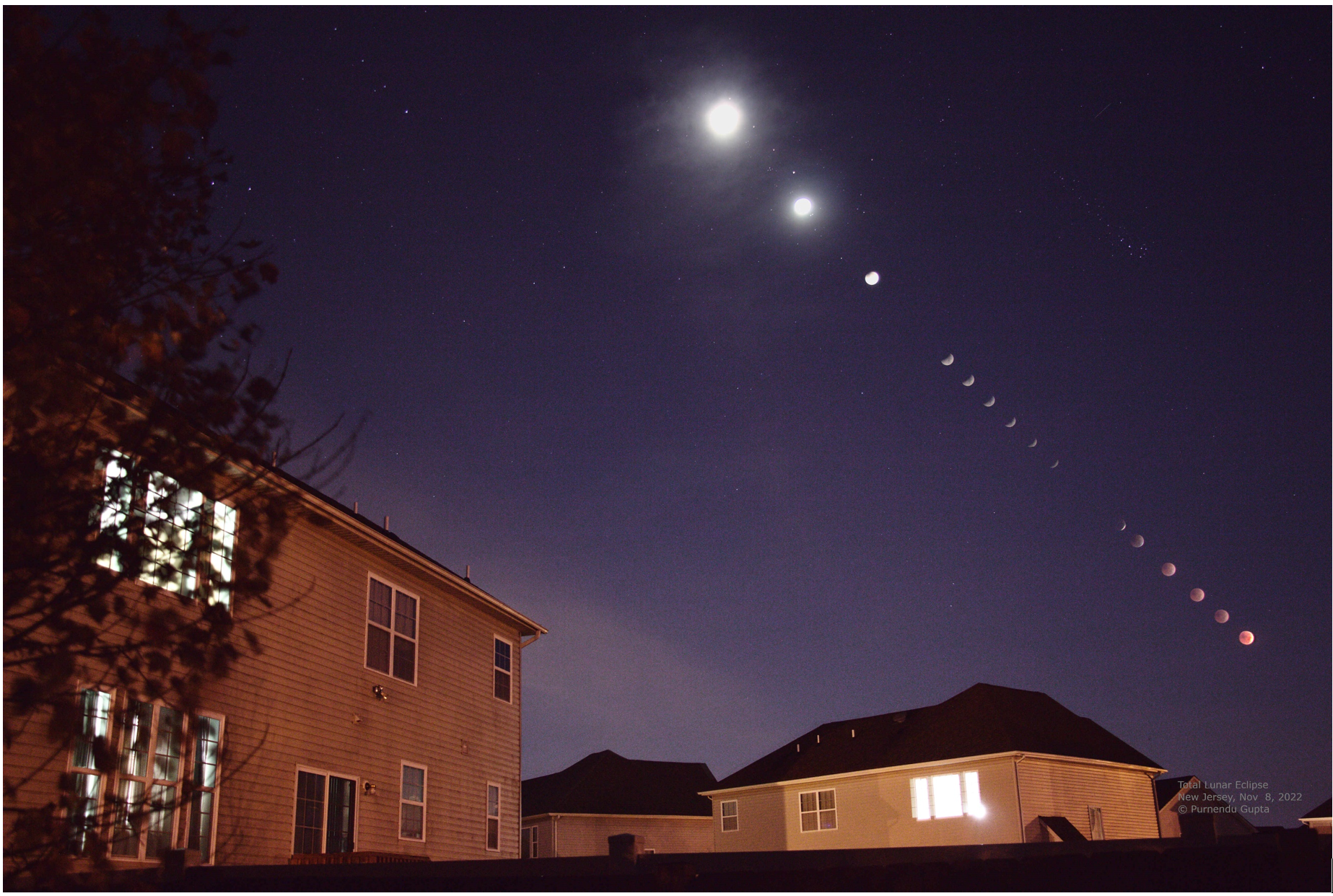
In the Earth’s shadow, a total lunar eclipse as seen on 11/08/2023 from my backyard. It’s a strange transformation to see the Moon, in a span of 2 hours, go from a brilliant full disc, to a smoldering ashen orb lurking among the stars. It doesn’t look as red by naked eye, but certainly looks more ominous. This image is a composite of 15 images taken with a DSLR on a tripod.
Image and description by Joseph Matthews
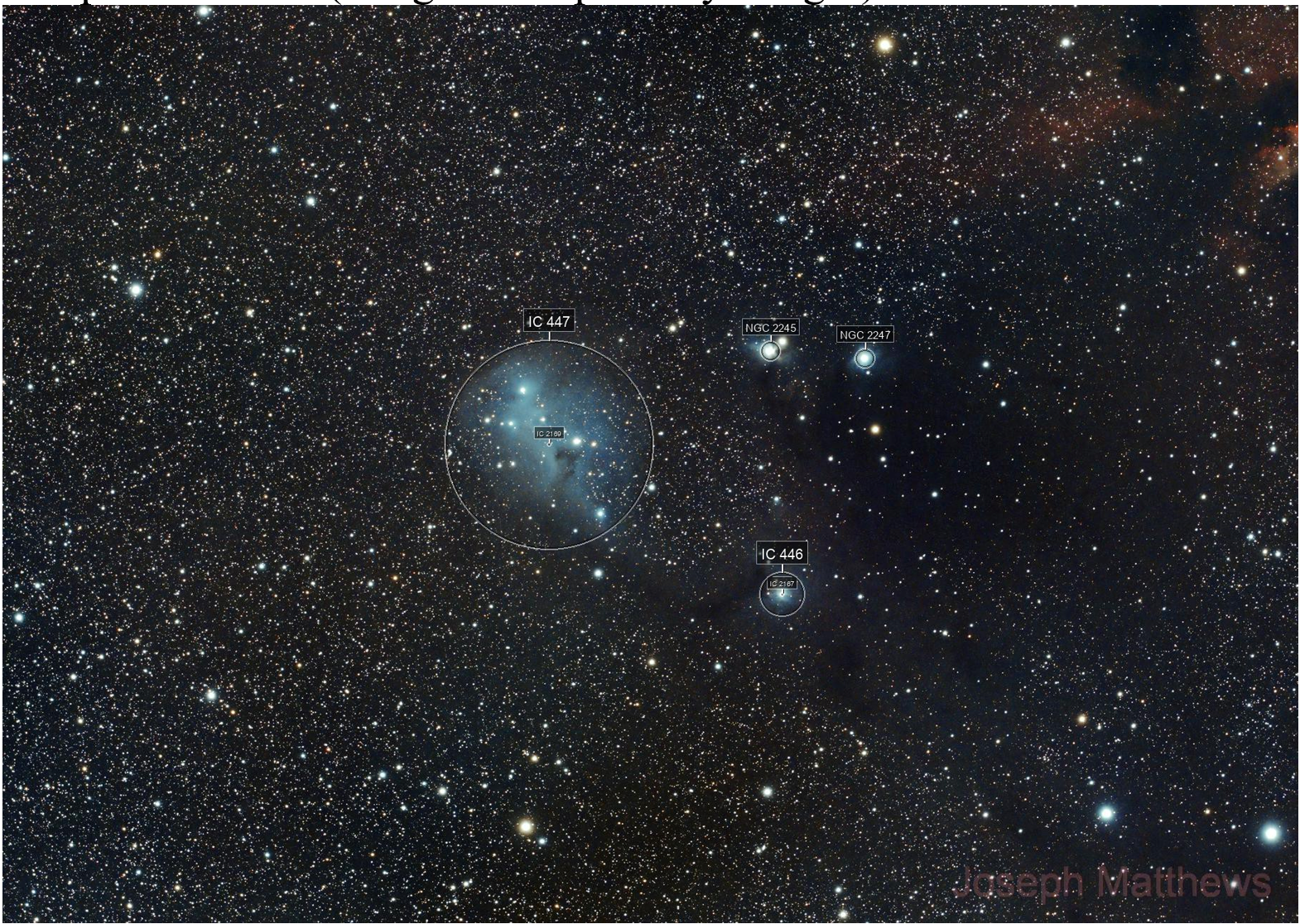
On 12/11/2023, this image of the collective IC2169, IC447, IC2169, and IC2167 located in the Monoceros constellation was taken in 26 mph wind gusts. It is not as popular as its neighbors the Cone Nebula and the Christmas Tree Cluster. It is full of dark nebula (LDN1605 LDN1606 and LDN1607) and the blue reflection nebulas scattered about the area. It is approximately 2,500 ly from Earth. Image integration of 30×300 sec frames using an Optolong L-Pro filter.
Joseph Matthews
Image and description by Joseph Matthews
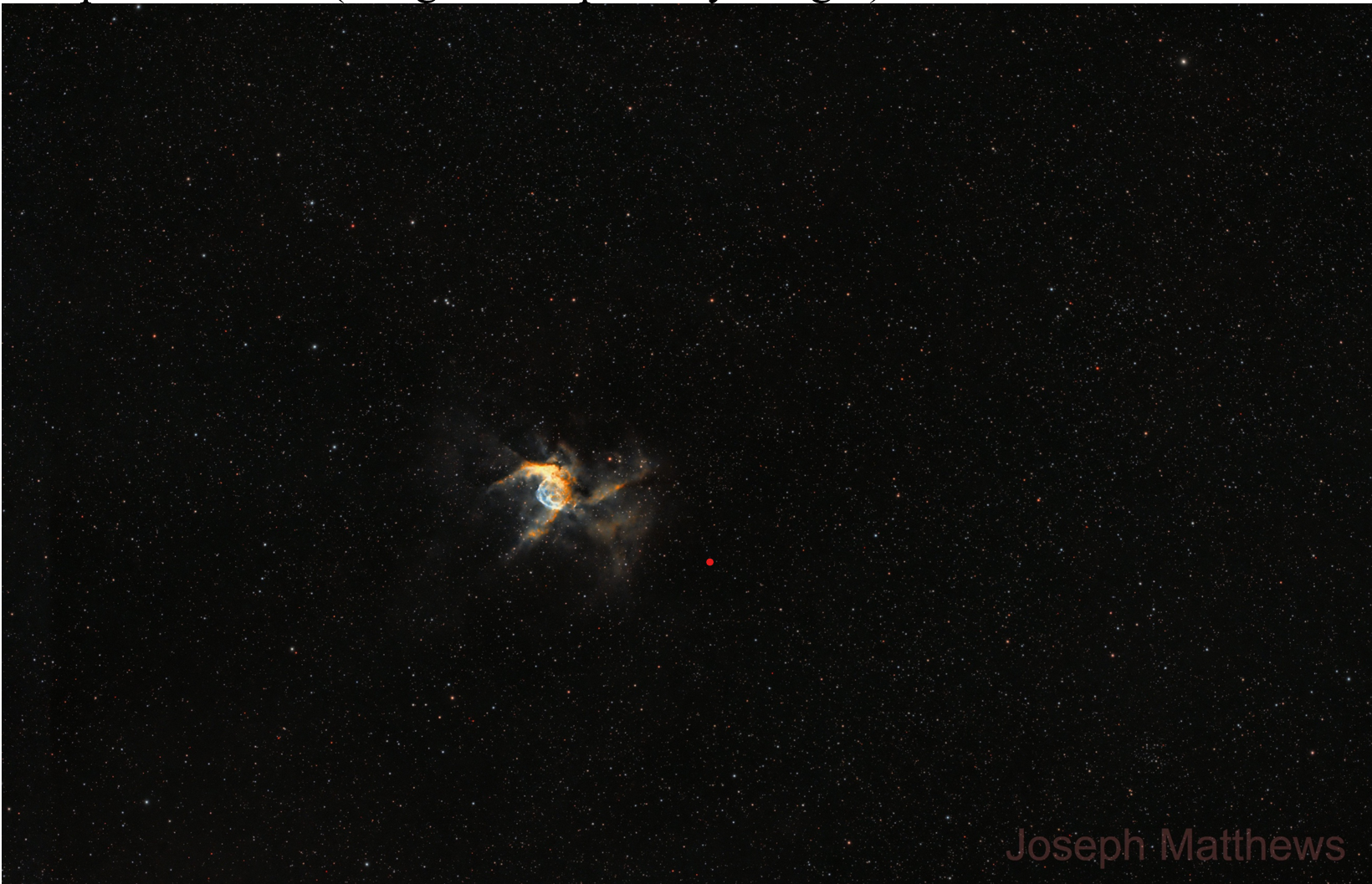
This image is Joseph Matthews’ first of NGC 2359 or known as Thor’s Helmut captured at 1 am on 12/01/2023. This emission nebula is in the constellation Canus Major. The nebula is approximately 3,670 pc or 12,000 ly from Earth and is 30 ly in size. The central star is the Wolf-Rayet star WR7, an extremely hot star thought to be in a brief pre-supernova stage of evolution. Thor’s Helmut image integration of 17×300 sec frames using a L-Ultimate filter.
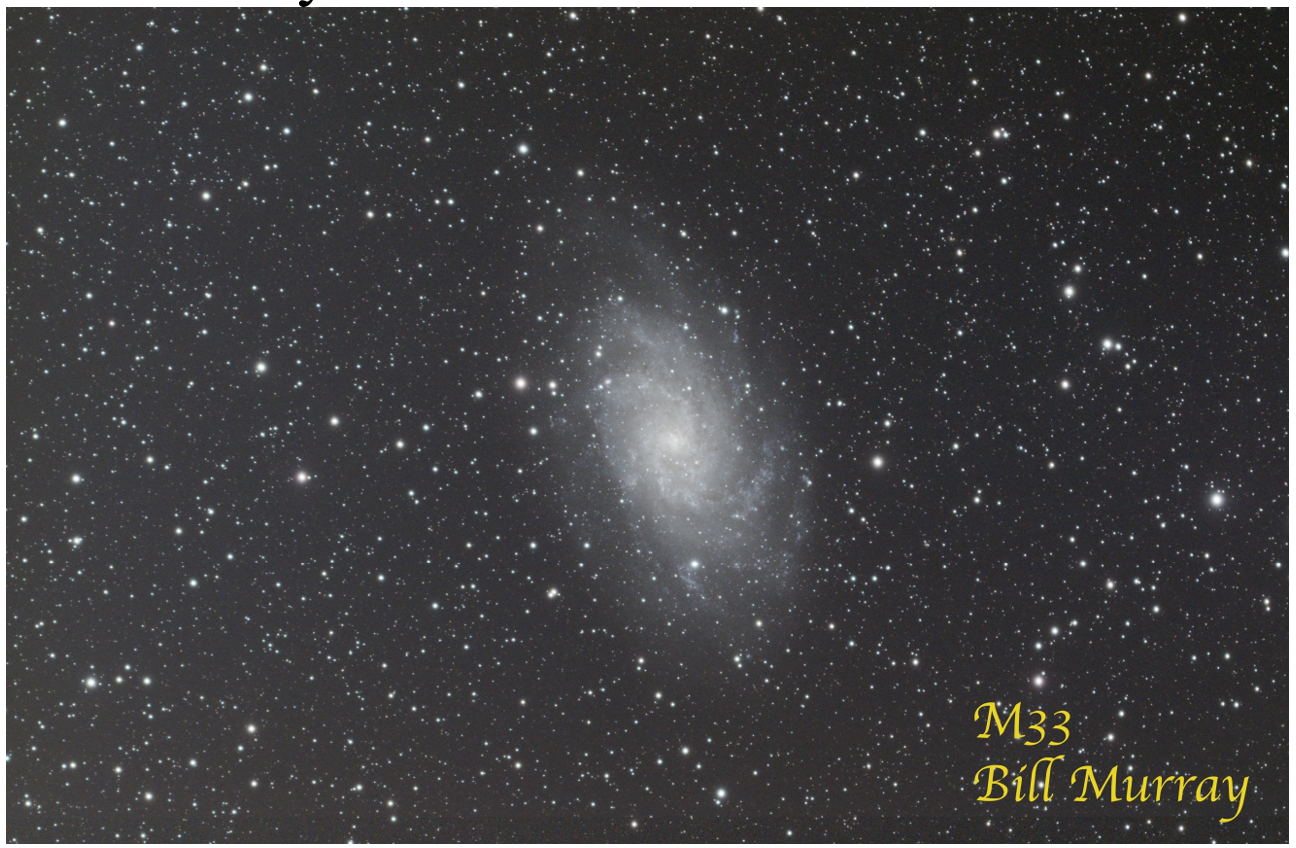
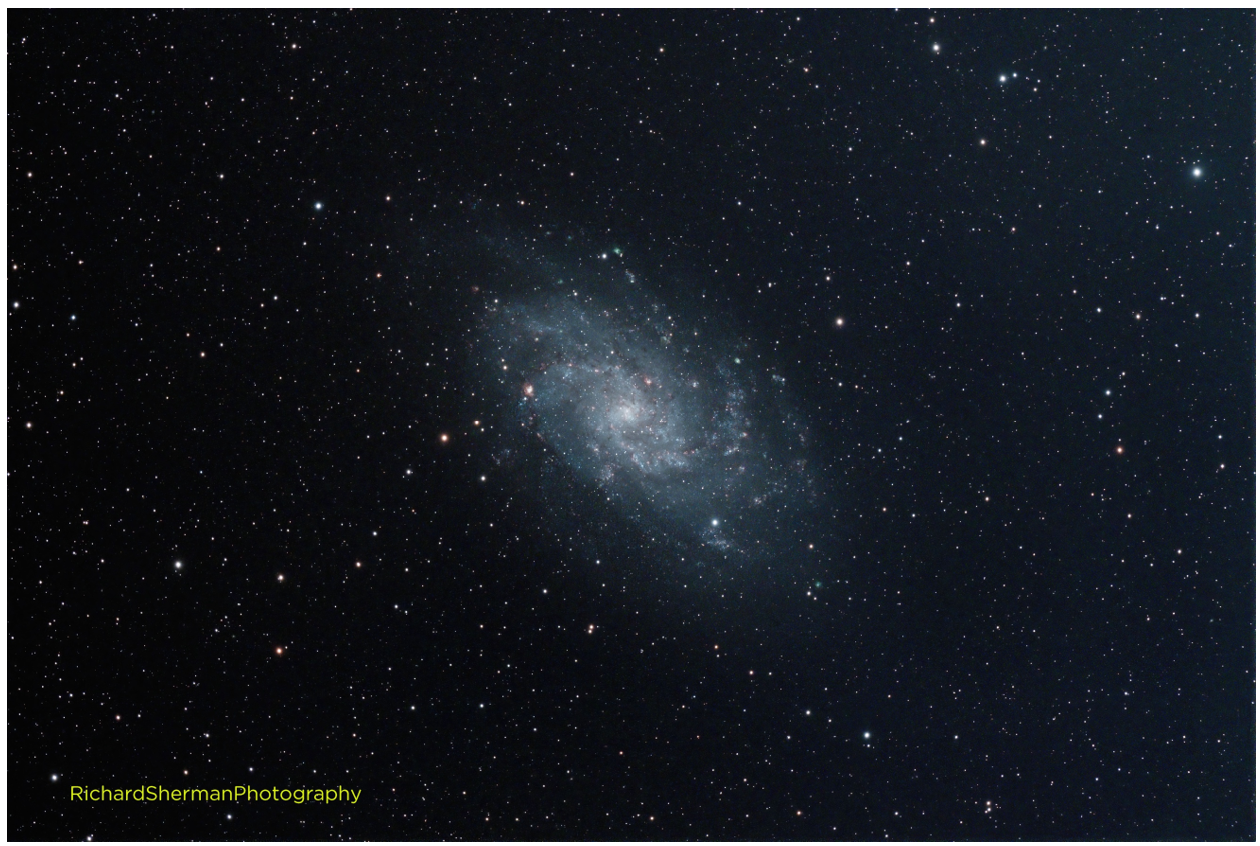
Bill Murray Rich Sherman
Image by Bill MurrayImage by Rich Sherman
M33 image was captured using a ASI183MC Pro camera on a William Optics Redcat 51 with an integration of 5 to 6 hours.
M33 image captured 02/02/2024 with ASI2600MC Pro camera using the Antlia Triband filter on a Sky-Watcher Esprit ED APO 100mm f/5.5 refractor. Image integration of 35×2 min frames at -10C, Bin 1, unity gain; Processed in CCD Stack and Topaz DeNoise and Adobe Lightroom.
These two images of M33 the Triangulum Galaxy, or referred to as the Pinwheel Galaxy, is a spiral galaxy about 2.38 to 3.07 million ly from Earth in the constellation Triangulum first cataloged by Charles Messier August 1764 at an apparent magnitude 5.7. M33 is 61,100 ly in diameter making it the third largest member of the Local Group of galaxies with Andromeda Galaxy as the largest followed by our own Milky Way Galaxy. The galaxy contains about 40 billion stars, which is much less than the Milky Way with 400 billion stars and the Andromeda Galaxy with 1 trillion stars.
Robert Vanderbei
Image by Robert Vanderbei
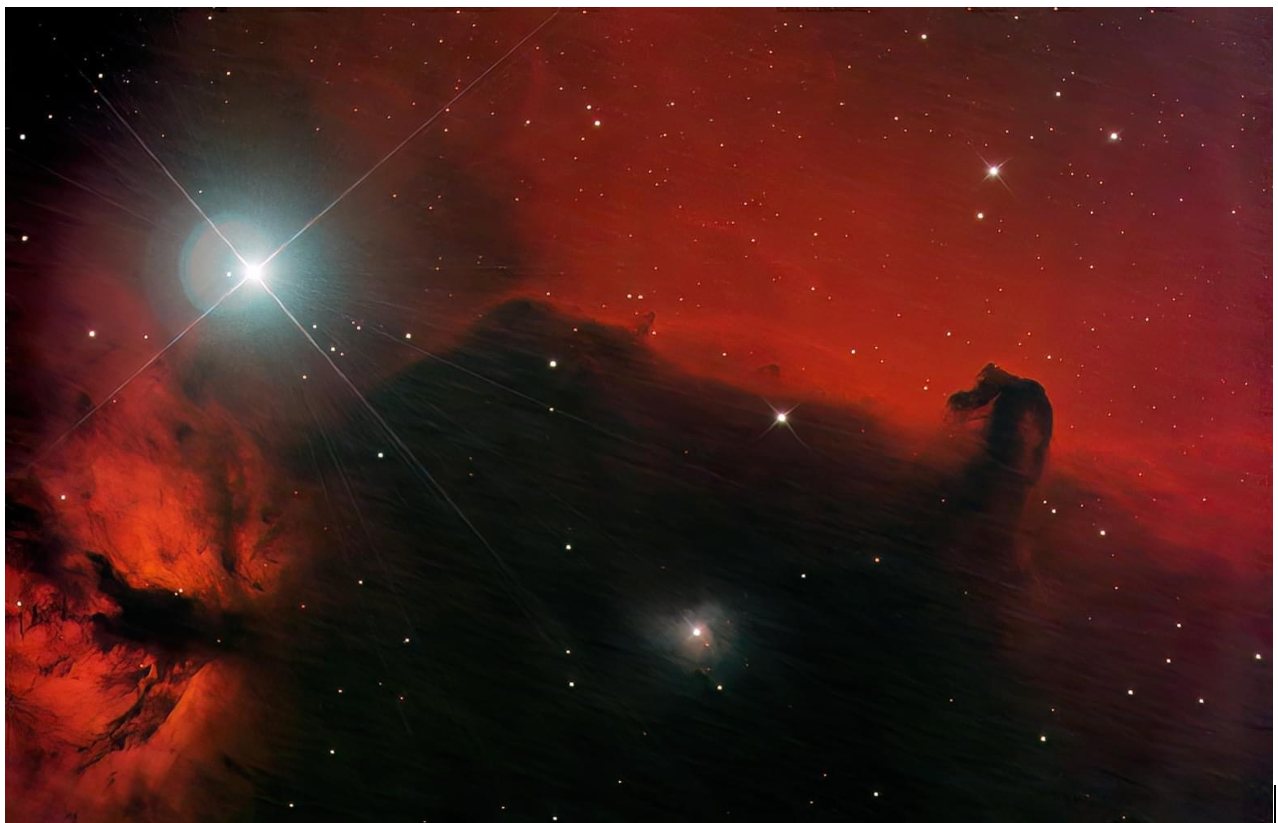
IC 434, also known as the Horsehead Dark Nebula, and NGC 2024, also known as the Flame Nebula, imaged 02/05/2023 with a ASI2400MC Pro and L-eXtreme filter using a 10” Ritchey-Chretien f/9 telescope. Images were processed using SharpCap with exposure of 102 min in 30 sec frames.
The Horsehead nebula, located in the Orion constellation, is about 422 pc from Earth. It is part of the Orion molecular cloud complex where star formation is taking place. The reflection nebula NGC 2023 is located in the lower left and is about 400 pc from our planet and is one of the largest in our sky at 10×10 arcminutes. The Flame Nebula, NGC 2024, located on far left in the image is 1,500 ly away. At the center of the Flame Nebula is a cluster of 800 newly formed stars of which 86% of them have circumstellar disks whereby planets may form.
Rich Sherman
Image by Rich Sherman
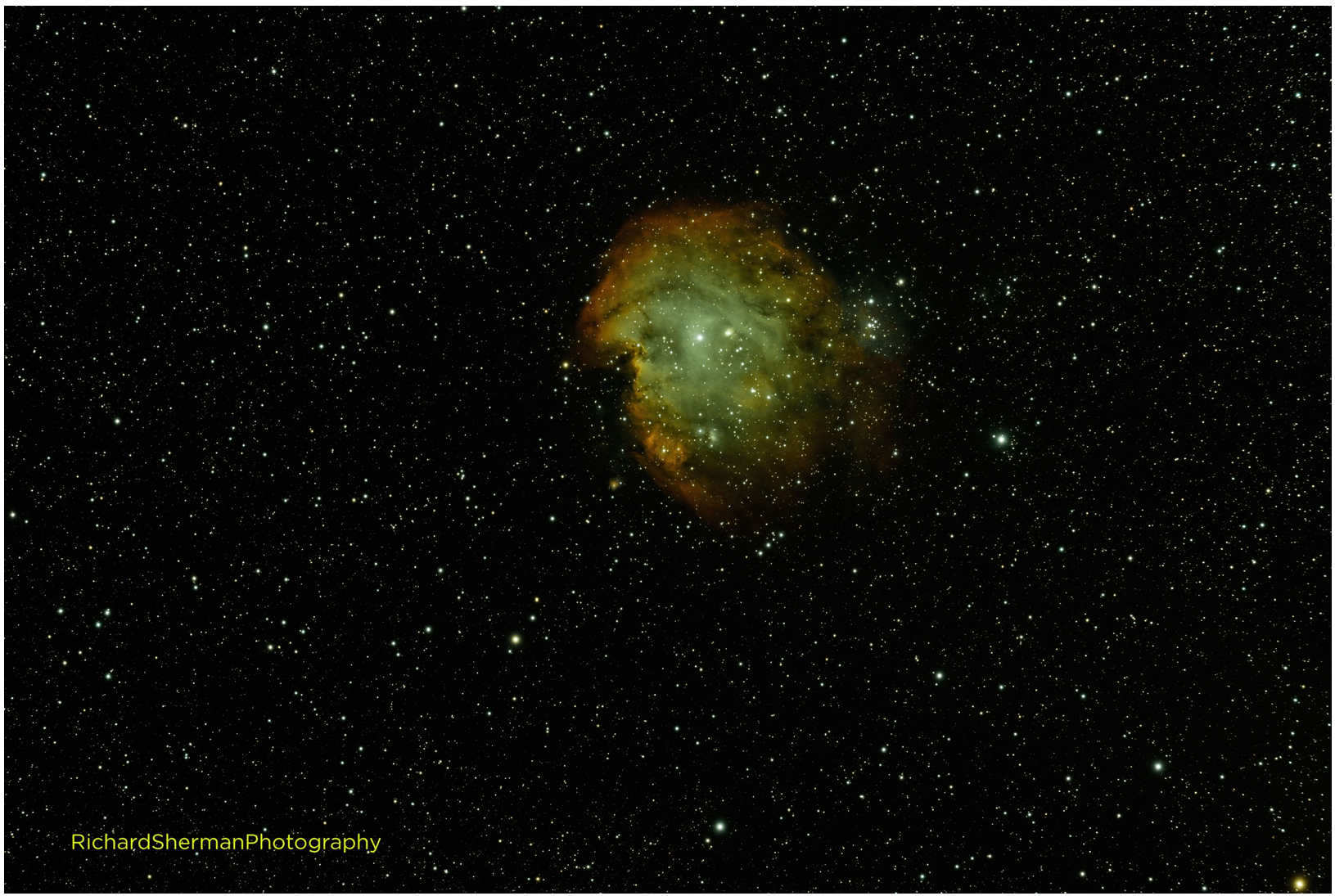
NGC 2174 – Monkey Head Nebula image captured 02/02/2023 with ASI2600MC Pro camera using the Antlia Triband filter on a Sky-Watcher Esprit ED APO 100mm f/5.5 refractor. Image integration of 35×2 min frames at -10C, Bin 1, unity gain; Processed in CCD Stack and Topaz DeNoise and Adobe Lightroom.
The Monkey Head Nebula, an emission nebula, is located in the Orion constellation and is about 6,400 ly from Earth. The stars at the center of this nebula generate stella winds coupled with high energy radiation resulting in the nebula transforming into complex dynamic shapes.
Image by Rich Sherman
IC 2177, the Seagull Nebula, is 3,800 ly from Earth and was imaged 02/07/2024 with a ASI2600MC Pro camera and Antlia Triband filter atop a Sky-Watcher Esprit ED APO 100mm f/5.5 refractor. Image integration is 36×2 min frames at -10 C, Bin 1, at unity gain; Processed in CCD Stack, Topaz DeNoise, and Adobe Lightroom.
The Seagull Nebula lies between constellations Monoceros and Canis Major. NGC 2327 is located in IC 2177 and is known as the Seagull’s Head.
Image by Rich Sherman
NGC 1365 “The Great Barred Spiral Galaxy” located 74,000,000 ly from Earth was imaged 02/07/2024 with a ASI2600MC Pro camera and Antlia Triband filter atop a Sky-Watcher Esprit ED APO 100mm f/5.5 refractor. Image integration is 36×2 min frames at -10 C, Bin 1, at unity gain; Processed in CCD Stack, Topaz DeNoise, and Adobe Lightroom.
NGC 1365 is a double-barred spiral galaxy 300,000 ly across in the Formax constellation. At the center of this large double-barred galaxy, there exists a supermassive black hole with a mass of about 2 million solar masses and rotates at nearly the speed of light.
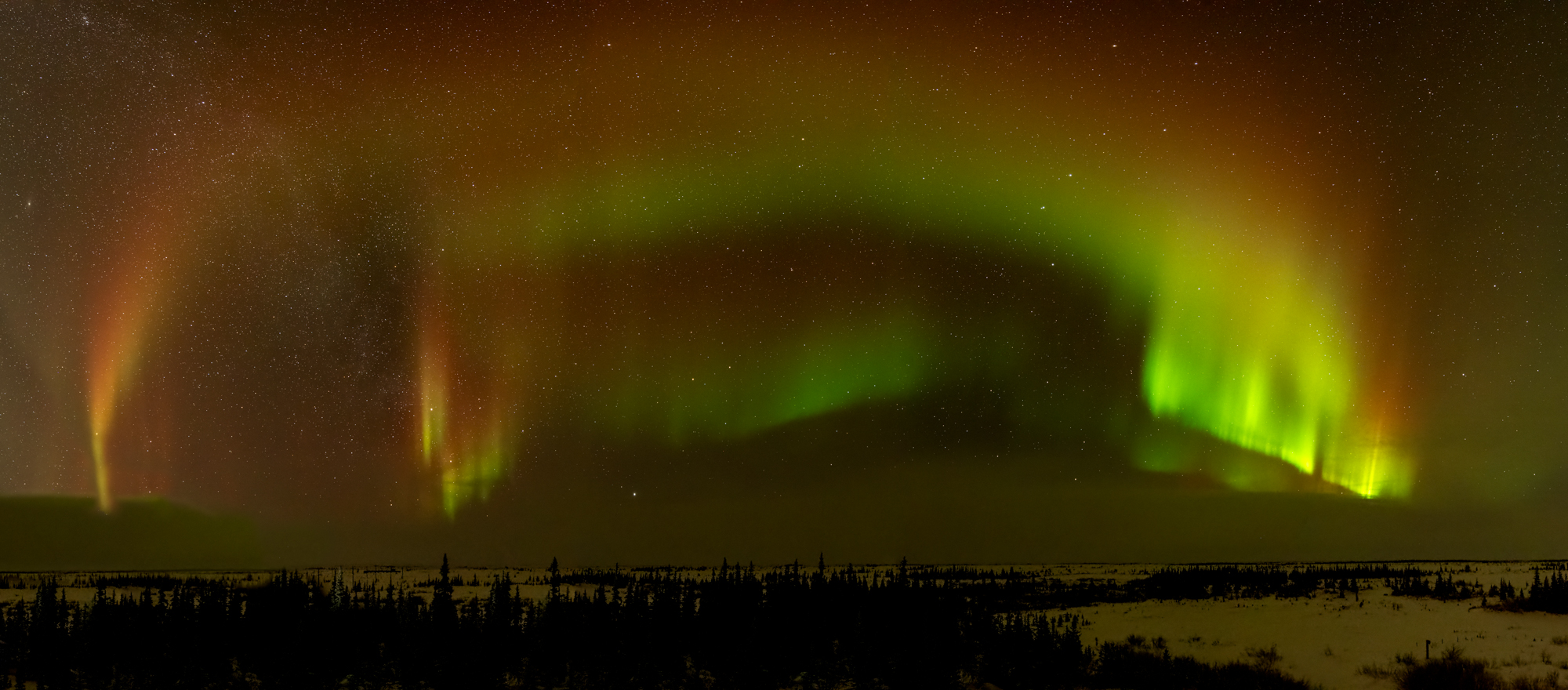
A wide field image of the Aurora Borealis viewed from within the Auroral oval, looking north, photographed from Churchill, MB, latitude 59N, temperature a balmy -20F. Nikon DSLR with 14mm lens, 5s exposure, ISO 3200 (thank you NoiseXTerminator).
The Auroral Oval is a ring-shaped region encircling the polar regions. It is a prime location for observing auroras due to its high geomagnetic activity. Churchill, Manitoba in Northern Canada falls within the Auroral Oval.
A recent article in the journal “Nature” intrigued me. It stated that the accelerated expansion of the Universe, attributed to dark energy currently, could be happening due to merger with other Universes. A very thought provoking idea indeed, although very difficult to prove. It made me think and come up with my 2 cents.
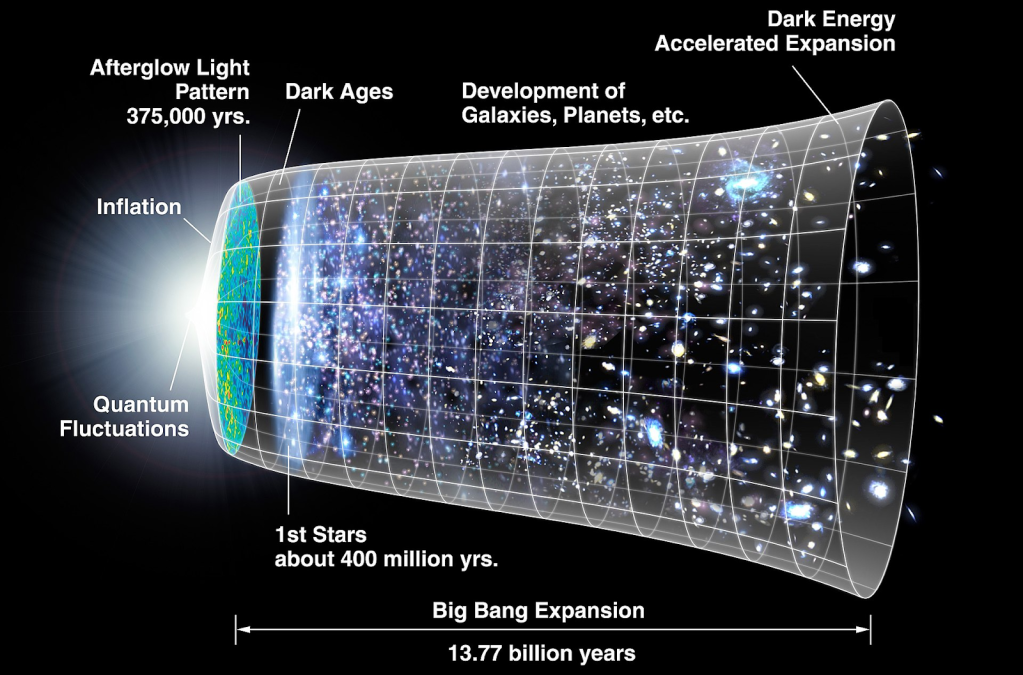
Our Universe was born from a super giant explosion called “The Big Bang”. From a very humble beginning a small dense and hot dot grew rapidly – a phenomenon called “inflation”. It led to the Universe we know today. The expansion still continues. This expansion pales in comparison with the initial inflation which expanded the space twenty orders of magnitude (10 followed by 20 zeroes) in a very tiny fraction of a second. Given below is the picture from Wikipedia depicting the growth of our universe since the big bang. The vertical rise to the left is the period of rapid inflation.
The current expansion which is accelerating (right portion of the picture) is supposed to be caused by Dark energy. Also known as the energy of the vacuum, wherein virtual particles come into existence and get annihilated, not much is known about it, There has been no light shed on the “dark” yet. In the middle of such a situation comes in an explanation based on Multiverses or Multiple Universes. While the Multiverse is only a mathematical theory, it is also being used to explain what happened before the Big Bang. Very well explained in the book “Before the Big Bang” by Laura Mersini-Houghton. It is posited that multiple Universes float in a higher dimension. Universes are born and not everyone of them matures to become one like ours.
Given this background, it is not much of a stretch to say that we are absorbing other Universes from higher dimensions. In fact it is being said that we did absorb a lot of other Universes during the initial inflation phase. Collisions and mergers amongst astronomical objects are very common in our Universe too. Black holes merge into other black holes, neutron stars merge into black holes and also into other neutron stars. Galaxies merge too. In fact, our neighboring Andromeda galaxy is on a collision path with our Milky Way galaxy to happen in about two million years. After the merger, things will settle down into a bigger merged galaxy. Our galaxy, in effect, would be expanded to more than double its size.
Multiverse may sound like science fiction. But then about a century ago, our Universe was just confined to our galaxy, Edwin Hubble made a shattering discovery that a nebula in the Orion belt called Andromeda is a separate galaxy and is about 2 million light years away. Since then a lot of galaxies have been found and the span of our Universe and its age and history were discovered as well. A century from now, multiple universes may be in the same state as multiple galaxies are today. And another dimension would have been added to our lexicon.
For now, the question is how to find evidence. Most of the evidence in astronomy is indirect. It is only remote measurements anyway. Analyzing the spectrum of the radiation coming in, to infer what elements or molecules have emitted that radiation. And to look at pictures and infer the properties of the object. After all, no human being has gone beyond our moon and none of our spacecraft has ventured beyond the confines of our solar system.
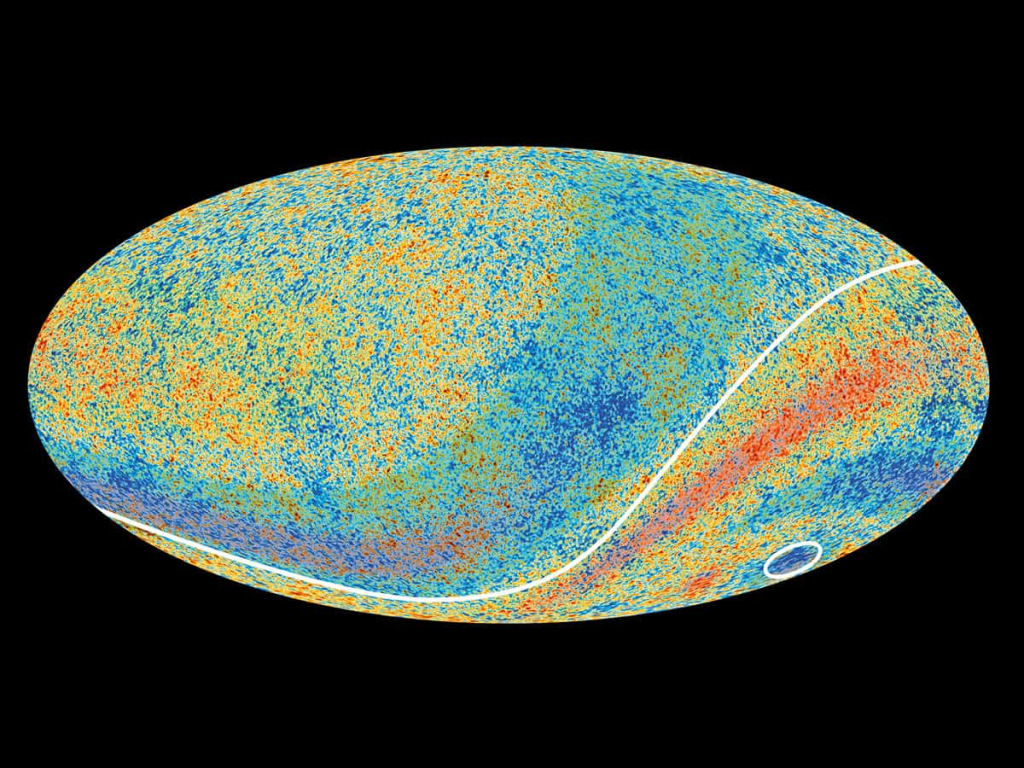
Studying the pattern of CMB (Cosmic Microwave Background) radiation can give us some clues. Like the book “Before the Big Bang” mentioned that a patch of the pattern in CMB was possibly related to interaction with our neighboring Universes (picture shown below has a circled patch in the right lower corner, by the Planck satellite, courtesy Physics World). There could be other hidden messages in the CMB patterns. CMB could tell us about possible mergers with other Universes. I am letting my imagination fly here. Someday we might find out there is no dark matter at all. The gravitational effects we see may be due to the tug of our neighboring Universe ! Both the “darks’ ‘ which are not well understood – dark energy and dark matter may be due to a common cause of the multiverse.
CMB detectors will become more granular in the future. And AI (Artificial Intelligence) may come to the fore to detect patterns that our minds cannot imagine. Hoping it would be a groundbreaking discovery.
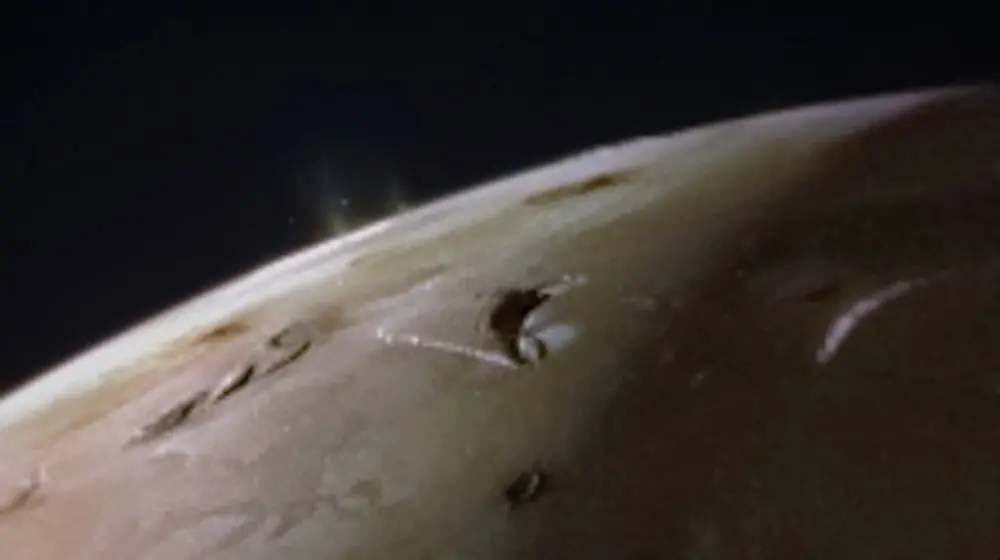
NASA Spots Signs of Twin Volcanic Plumes on Jupiter’s Moon Io On Saturday, NASA’s Juno orbiter got a second close-up with Io, Jupiter’s third-largest moon and the most volcanic world of our solar system. The Juno spacecraft, which arrived at the gas giant in 2016, is on an extended mission to explore Jupiter’s rings and moons. Its latest flyby, which complemented the mission’s first close approach on Dec. 30…more
-NYT
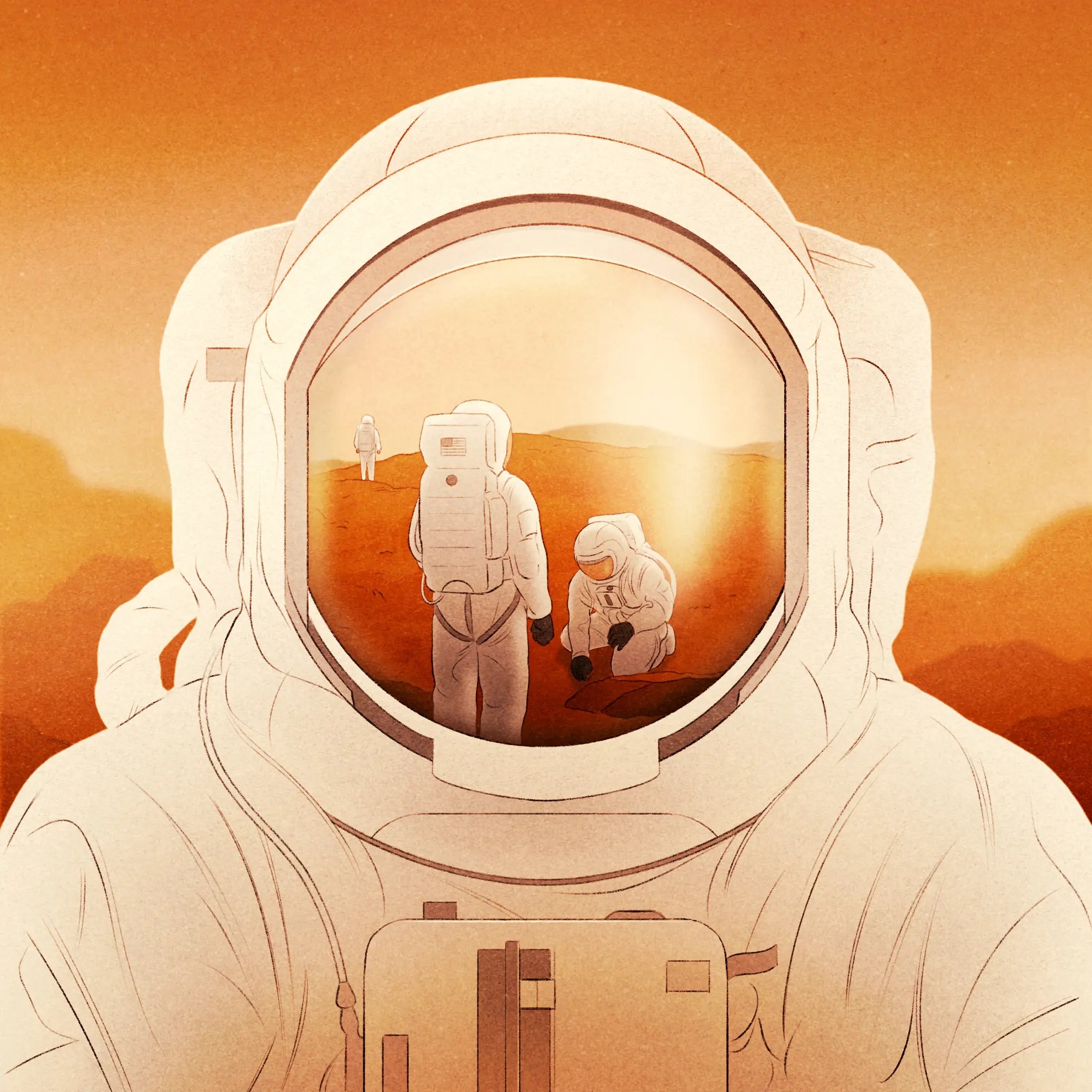
Can Humans Endure the Psychological Torment of Mars? Alyssa Shannon was on her morning commute from Oakland to Sacramento, where she worked as an advanced-practice nurse at the university hospital, when NASA called to tell her that she had been selected for a Mars mission. She screamed and pulled off the highway. As soon as she hung up, she called her partner, an information-security…more
-BBC
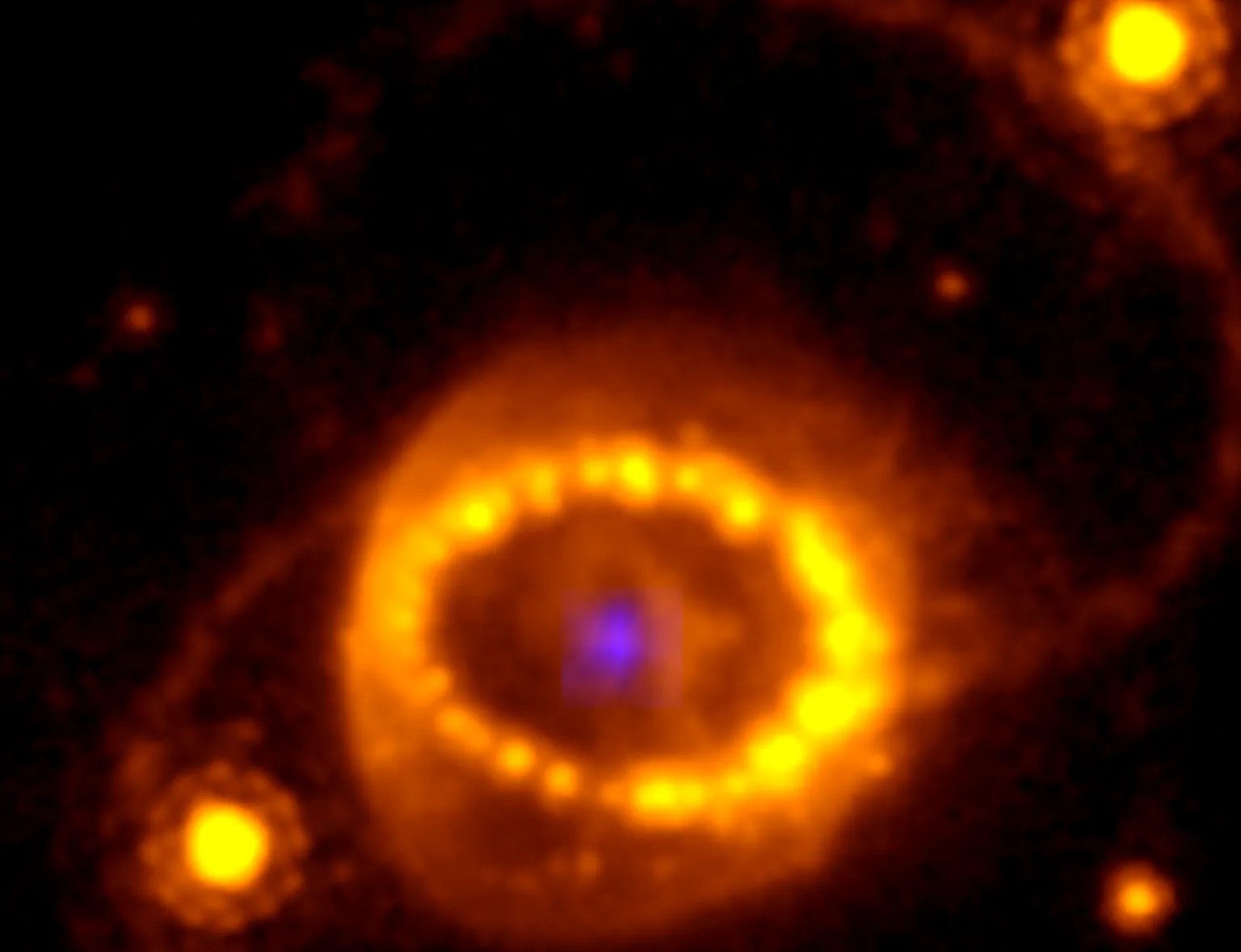
Supernova: Astronomers crack cosmic ‘murder mystery’ Scientists say they have solved the mystery of what lies at the heart of a celebrated cosmic explosion. In February 1987, a star was seen exploding in a nearby galaxy. It was visible from Earth for months, shining with the power of 100 million suns. There was so much debris, even the most powerful telescopes could not confirm what remained at its heart…more
-NYT
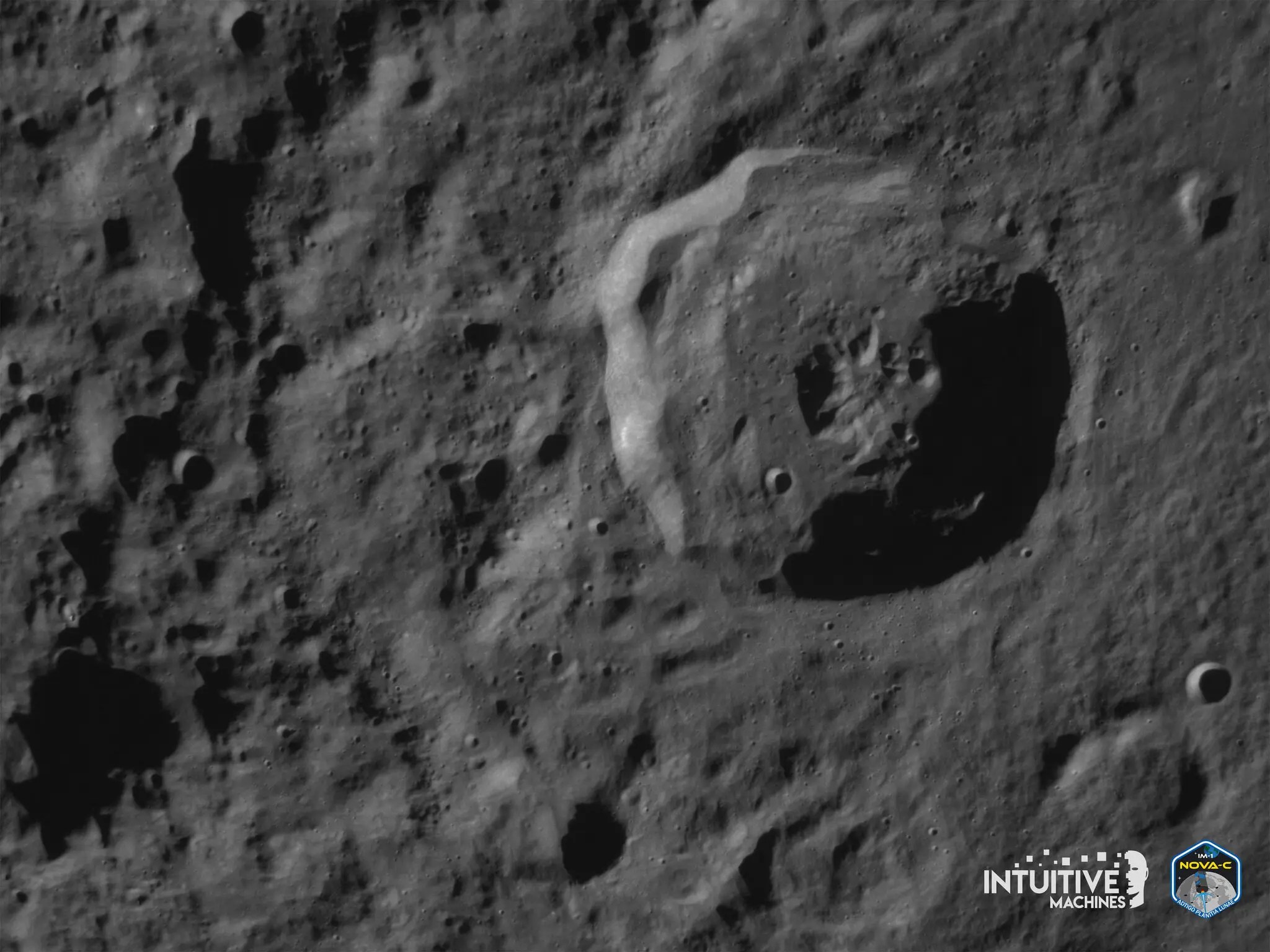
A U.S.-Built Spacecraft Lands on the Moon for the First Time Since 1972 For the first time in a half-century, an American-built spacecraft has landed on the moon. The robotic lander was the first U.S. vehicle on the moon since Apollo 17 in 1972, the closing chapter in humanity’s astonishing achievement of sending people to the moon and bringing them all back alive…more
-BBC
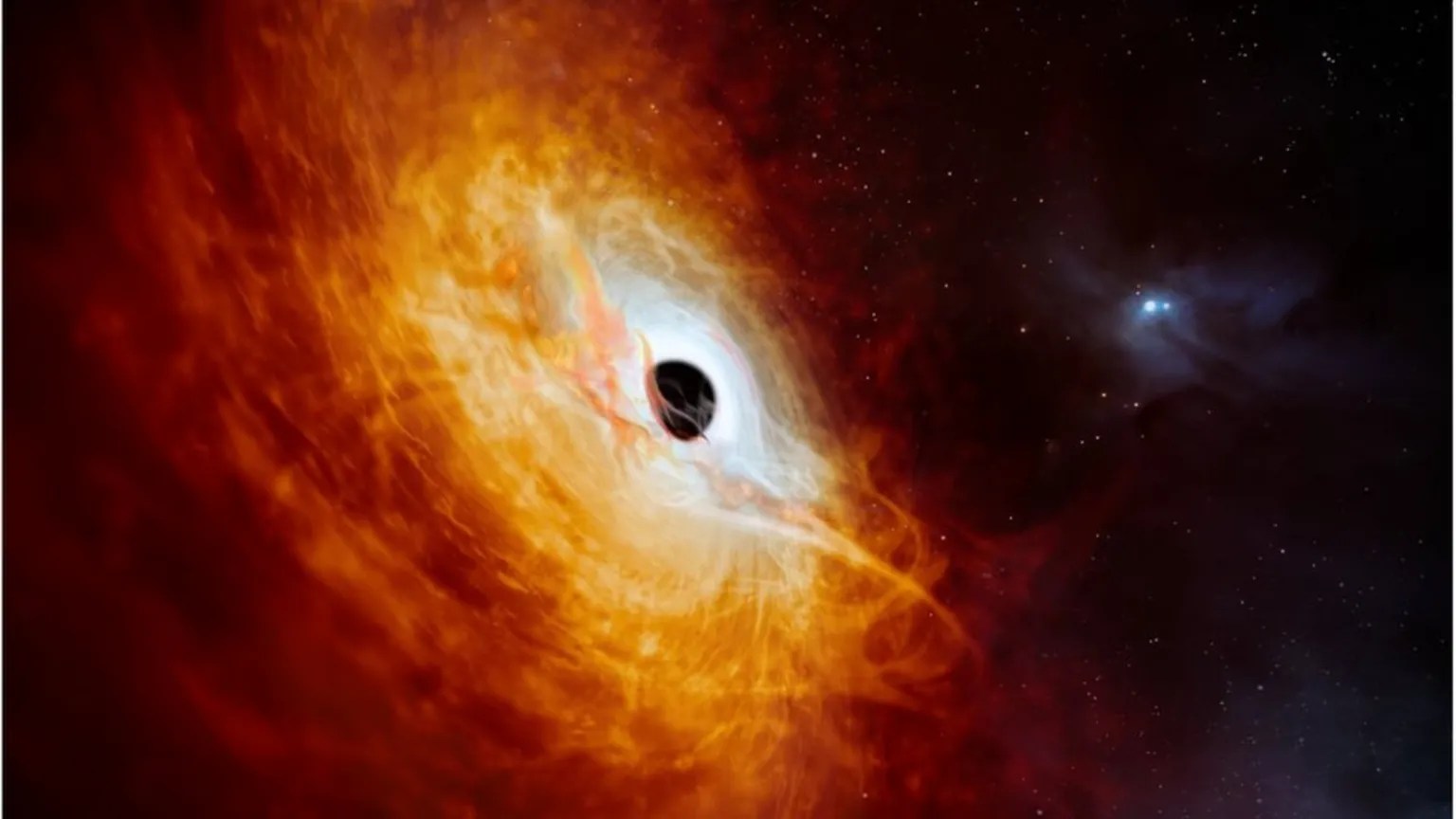
Brightest and hungriest black hole ever detected The most luminous object ever detected has been spied in the distant Universe. It’s a quasar – the bright core of a galaxy that is powered by a gargantuan black hole some 17 billion times the mass of our Sun. Known as J0529-4351, the object’s power was confirmed in observations by the Very Large Telescope in Chile…more
-NYT
Fragments of Asteroid With Mystery Origin Are Found Outside Berlin Scientists have found pieces of a meteorite that fell near Berlin just after midnight on Jan. 21. It is a rare find, from an asteroid that was identified just before it entered Earth’s atmosphere. Only a handful of such events in the recent past have allowed astronomers…more
-NYT
When Eyes in the Sky Start Looking Right at You For decades, privacy experts have been wary of snooping from space. They feared satellites powerful enough to zoom in on individuals, capturing close-ups that might differentiate adults from children or suited sunbathers from those in a state of nature…more
-NYT
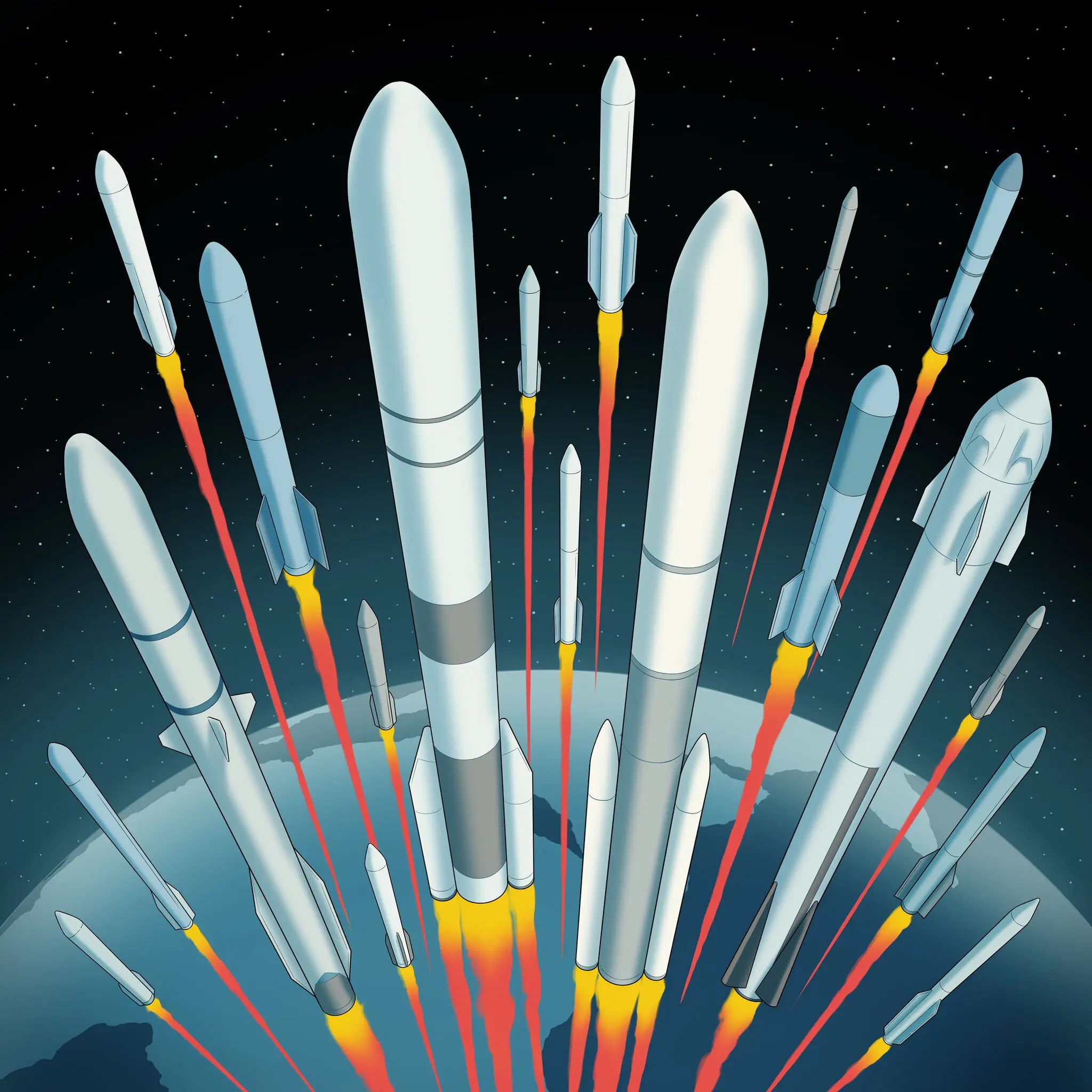
The New Space Race Is Causing New Pollution Problems Earth’s stratosphere has never seen the amounts of emissions and waste from rockets and satellites that a booming space economy will leave behind. The high-altitude chase started over Cape Canaveral on Feb. 17, 2023, when a SpaceX Falcon 9 rocket launched…more
-space..com
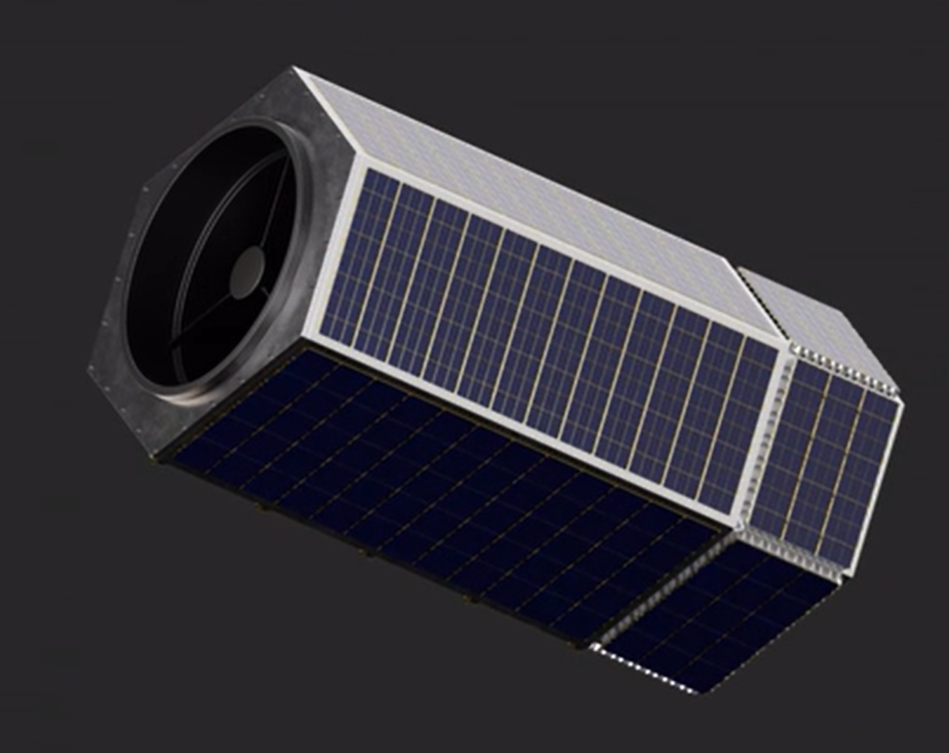
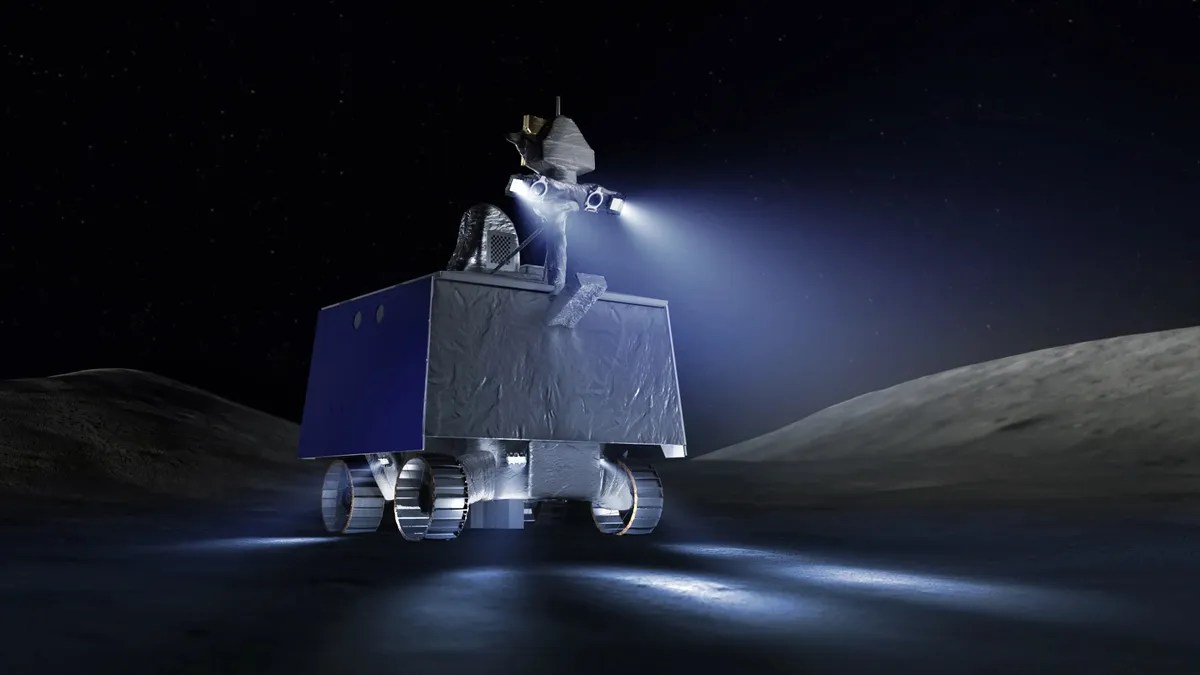
NASA’s ice-hunting VIPER moon rover getting ready to slither to the launch pad NASA’s next moon rover is one step closer to starting its lunar mission. The rolling robot, known as VIPER (“Volatiles Investigating Polar Exploration Rover”), is set to launch toward the moon later this year. And it just notched a milestone along that path…more
-space.com
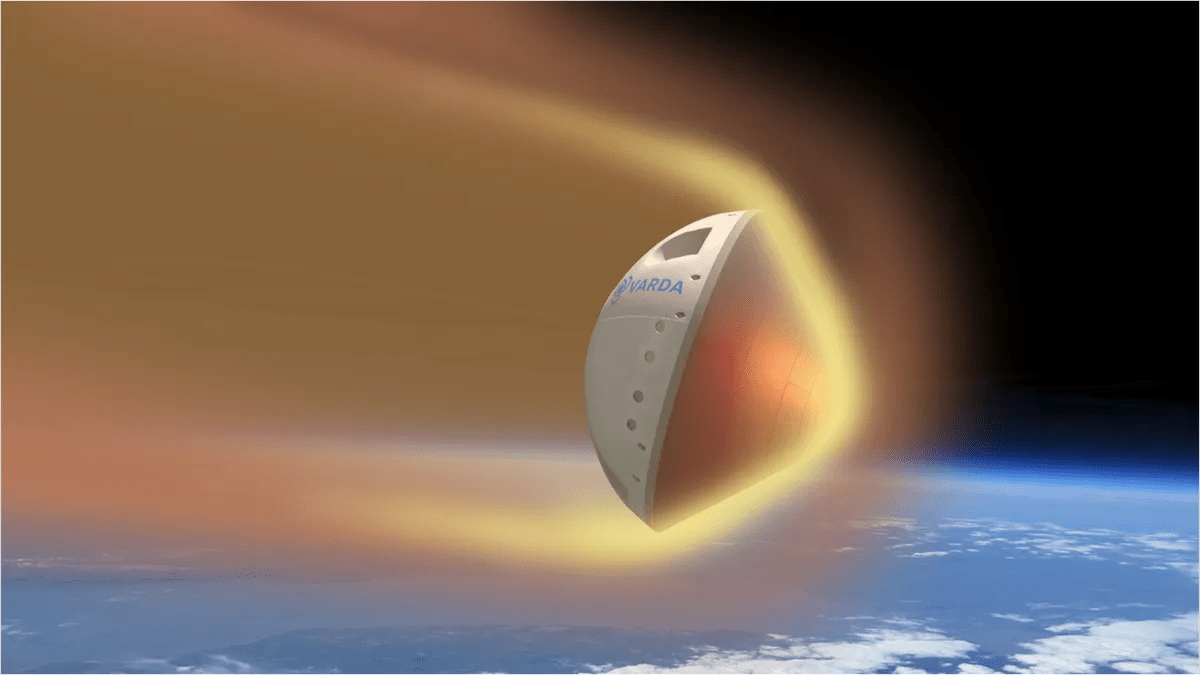
Private Varda Space capsule returns to Earth with space-grown antiviral drug aboard A California startup’s first in-space manufacturing effort is in the books. The capsule from Varda Space Industries‘ W-1 mission landed in northern Utah this afternoon (Feb. 21), bringing down to Earth crystals of an antiviral drug that were grown in orbit. The success makes Varda just the third company to recover an intact spacecraft from orbit…more
by Rex Parker, PhD director@princetonastronomers.org
UPDATE: 02/13/2024 Tuesday, February 13th. Due to inclement weather today, this evening’s AAAP meeting will be virtual only. You can join on Zoom orYouTube Live.
Next Meeting Live in Peyton Hall. After getting knocked back by a major winter storm last month, we will again seek to have a real live meeting in Peyton Hall for our next monthly get-together on Feb 13.The guest speaker is Prof David John Helfand from the Astronomy and Astrophysics Dept at Columbia University in NYC. Dr Helfand is a big name in astronomy and physics, having been chair of the department at Columbia for many years and deeply involved with the American Inst. of Physics (AIP) and AIP Publishing. Please see Victor’s section below for more on the speaker. Let’s hope the weather is calm on Feb 13 and that we have a great turnout at Peyton Hall for the meeting. See you there (or on Zoom, if you just cannot make it to campus that night).
So You Want to Be an Amateur Astronomer? To those of you who recently signed on to become a member of AAAP, I extend special greetings and a warm welcome. And to members who have re-upped, your participation and support is deeply appreciated by the club. For all of us, I pose the question: why amateur astronomy?
You may read opinions on the topic which describe how astronomy is one of the few scientific areas where amateurs can make a real contribution. You can take part in data mining from the big telescopes and transient events reported continually by the large sky survey projects such as PAN-STARRS. You can supplement your local club membership by joining the Planetary Society, and the American Astronomical Society — the most prestigious professional astronomy organization in the country and perhaps the world (https://www.aas.org/join/classes-membership-and-affiliation). By tuning in to the AAS, and NASA and JPL’s Center for Near Earth Object Studies (CNEOS; https://cneos.jpl.nasa.gov/), you can jump start your participation in cool observing projects using the AAAP’s telescopes or your own equipment. For example, NASA is currently seeking citizen scientist help in classifying light curves of Gamma-Ray Bursts (GRBs), some of the most energetic explosions in the universe: https://www.zooniverse.org/projects/amylien/burst-chaser
But there are other good answers to the “why” question, and maybe these are more important. One answer has more to do with giving back to the world. The education company EF (“Education First”) states that “Individuals who volunteer throughout their lifetime typically live longer and have better psychological well-being. In addition to the health benefits, volunteering gives people a sense of purpose. The fulfillment from giving back and contributing to society is unparalleled.” This is a very satisfying answer to the “why” question, and here AAAP can really help by providing opportunities to get more involved personally. We offer outreach participation for members to interact with the public, both young and adult, at AAAP-sponsored events. Many external requests are fielded by our outreach chair throughout the year, and spring is the prime time for requests from school teachers and scout groups. In addition, we hold public open house observing events every Friday night from April through October at our Washington Crossing Observatory. The AAAP Observatory chairs coordinate these activities, and members can enter training to learn the astronomical hardware/software as well as get a better grasp of how to interact with the public on these nights. Contact us to get more involved (please find the e-mail addresses in the Sidereal Times banner above).
An equally good answer to the “why” question is, because it’s fun and fascinating to observe and especially to interact with fellow enthusiasts and with the modern technological marvels that telescopes, mounts, and imaging equipment have evolved into in recent years. There has been a major revolution in astro-imaging that makes it possible for any of us to become more able to see the celestial wonders like never before. AAAP membership is your path to this exciting way of observing the natural world of our skies, despite the light pollution and challenges that come with our New Jersey skies.
This year will present new opportunities in our club. At the organizational level, here are a few areas to enhance member experience and up our game as a science-outreach organization.
Increase the participation and contributions by members in real-time at the regular monthly club meetings.
Provide learning opportunities for members and public to better understand the night sky and the physics of the cosmos, with increased hands-on astronomy observing and imaging in its many forms.
Strengthen our links and interactions with the Princeton Astrophysics Dept faculty, post-docs, staff, and astronomy students, both during the monthly meetings and outreach events.
The “Un-journal Club” Needs You. AAAP’s monthly meetings feature a guest speaker, usually a professional, followed by highlights of club activities and member conversations. This year we want to continue the Un-journal Club, a fun term evoking (provoking?) the journal clubs common in science grad school programs. For AAAP the Unjournal Club is simply brief informal presentations given in the second half of the meeting by members. These don’t need scholarly journal-like topics, but merely engage members with what you care about in astronomy. You can use PowerPoint slides, JPEG’s, astro-images, travel pictures (e.g., bring on a USB memory stick), book reviews, whatever you want including simply your voice. To get onto the schedule for an upcoming meeting, please contact me or program chair Victor Davis.
Lecture and Book Signing this Month at Peyton Hall The February, 2024 meeting of the AAAP will take place in Peyton Hall on the campus of Princeton University on Tuesday, February 13th at 7:30 PM. As usual, the meeting is open to AAAP members and the public. Participants can join the meeting in-person at Peyton Hall or log in to the Zoom session as early as 7:00 pm to chat informally before the meeting begins. This evening’s guest speaker is David John Helfand, Professor of Astronomy at Columbia University. Prof. Helfand will discuss his recent book “The Universal Timekeepers: Reconstructing History Atom by Atom.” Copies of his book will be available for purchase, and Prof. Helfand will be pleased to sign them.
Options for Attending the Meeting You may choose to attend the meeting in person or participate via Zoom or YouTube as we’ve been doing for the past few years. (See How to Participate below for details). Due to security concerns, if you log in before the host has set up internet connectivity in Peyton Hall, you may need to wait in the Waiting Room for a few minutes until the host is prepared to admit you into the meeting. You’ll need to unmute yourself to make comments or ask questions. It’s polite, though not required, for you to enable your camera so other participants can see you. A week or so after the meeting, the video of the lecture and Q&A will be posted on AAAP’s public YouTube channel.
Meet the Speaker Dinner The club will host a “Meet the Speaker” dinner at Winberie’s Bar and Restaurant, 1 Palmer Square, Princeton, NJ, just across the street from the campus of Princeton University. The reservation is prior to the meeting on February 13th at 5:45 pm. Please contact the Program Chair if you plan to attend.
Here’s the anticipated agenda for February, 2024’s monthly meeting of the AAAP:
(Times are approximate)
Getting to Peyton Hall The parking lots across the street (Ivy Lane) from Peyton Hall are now construction sites, unavailable for parking. We’ve been advised by the administration of the astrophysics department that we should park in the new enclosed parking garage off Fitzrandolph street and walk around the stadium and athletic fields. Here’s a map of the campus and walking routes from the parking garage to Peyton Hall. The map shows the recently completed East Garage. Not shown is an access road Sweet Gum that connects from Faculty Road to an entrance at the lower left corner of the garage. Stadium Road connects from Fitzrandolph Road to another entrance at the opposite corner (and higher level) of the garage. It’s about a 10-15 minute walk from the parking garage to Peyton Hall.
Featured Speaker:
David John Helfand Professor of Astronomy Columbia University
djh@astro.columbia.edu
“The Universal Timekeepers: Reconstructing History Atom by Atom”
By utilizing the basic building blocks of matter as imperturbable little clocks, we are now able to reconstruct in quantitative detail a remarkable range of human and natural events. From detecting art forgeries to dating archeological sites, and from laying out a detailed history of human diet and the Earth’s climate to revealing the events surrounding the origin of life, of the Solar System and of the Universe itself, atoms provide us with a precise chronology from the beginning of time to the moment humans emerge to contemplate such questions.
David John Helfand Prof. Helfand writes that “We all edit our lives into stories. Some are carefully plotted; others follow a meandering path like mine; from a theater major to an astrophysicist, a researcher who found creating a university from scratch an even more fascinating challenge than understanding neutron stars.” Prof. Helfand’s meandering path included undergraduate studies at Amherst College, then MS and PhD degrees in respectively, Physics and Astronomy at University of Massachusetts Amherst. He’s been on Columbia’s faculty for forty-six years, nearly half that time as Chair of the Department of Astronomy. He has authored more than 200 scientific publications and mentored twenty-two PhD students, mostly in high-energy astrophysics, yet most of his pedagogical efforts have been aimed at teaching science to non-science majors. It took 27 years of effort to implement in Columbia’s Core Curriculum the teaching of science to all first-year students. It was the first change to the famed Core Curriculum in fifty years. His “Frontiers of Science” is not “Rocks for Jocks” or “Physics for Poets,” but a hugely successful effort to share with students what he calls “Scientific Habits of Mind.” Prof. Helfand received Columbia’s 2001 Presidential Teaching Award and the 2002 Great Teacher Award from the Society of Columbia Graduates. In 2005, he became involved in the effort to create Canada’s first independent, non-profit secular university, Quest University Canada, first as Visiting Tutor then as President and Vice Chancellor. For six years in a row, Quest was ranked #1 in North America in the National Survey of Student Engagement. Prof. Helfand served as President of the American Astronomical Society and was named as a Society Legacy Fellow in 2020. He is currently Chair of the Boards of the American Institute of Physics and of AIP Publishing. He’s a member of the Executive Committee of the Board of Science Counts, an organization formed to communicate with the public about the importance and impact of publicly funded fundamental research.
Graduate student, University of Maryland ebhoff@umd.edu
Erika will describe her research using high-resolution x-ray spectroscopy to investigate ionized outflows from active galactic nuclei (AGNs). Suggested by Bill Thomas.
April 9 2024
Eclipse Observations
Since this meeting will take place the day after the Total Solar Eclipse of 08 April 2024, and many members will be out of town or returning from their trips, I’m suggesting that we host an online roundup of eclipse observations, with members (and perhaps others) Zooming in to share their experiences.
May 14 2024
Dr. Tea Temim Research Astronomer, Princeton University Department of Astrophysics
Dr. Temim will describe her research using JWST imagery to study supernova remnants. Suggested by Gene Allen. temim@astro.princeton.edu
June 11 2024
NJ State Museum planetarium’s Bill Murray, and Jacob Hamer, Assistant Curator
AAAP’s traditional annual pilgrimage to the NJ State Museum planetarium in Trenton, where members will experience a presentation and a preview of the planetarium’s latest sky show.
Due to the governor declaring a state of emergency, the meeting was convened on Zoom by Director Rex Parker at 1930. Following a brief introduction in which he displayed a star chart from The Sky X and introduced an Astro quiz, Program ChairVictor Davis introduced speaker Dr. Lia Medeiros, who gave us a presentation entitled A Sharper Look at the M87 Black Hole with PRIMO. She did an excellent job of keeping the subject matter at a level most of us could follow but also going into greater depth in some areas. Her talk was followed by twenty minutes of questions and a ten minute break. Attending were 45 online.
Some 23 continued with us when we reconvened at 2115 with an Unjournal Presentation by Member Jim Peck about his childhood visit to Meteor Crater in Arizona and the Meteorite Study Kit he bought.
The business meeting opened at 2114 with 23 still attending.
Outreach Chair Bill Murray requested volunteers for:
Monday, January 22 at the Helen L. Beeler Elementary School an hour south at 60 Caldwell Ave in Marlton
Ira will be giving a talk rain or shine and if it is clear they want to add stargazing so we need 3 or 4 folks who can bring their scopes.
Saturday, May 18 at the AAAP Observatory
That is Astronomy Day and Keyholders are needed to open the Observatory for a group driving up after a talk at the NJ State Museum Planetarium.
Observatory Co-Chair Dave Skitt reported that the observatory water system has been shut down and drained. Verizon has repaired a drooping wire. Keyholder Tom Swords assisted in aligning the C14 and the Explore Scientific 5”using cameras so that they can offer two views well centered on the same object. No star test has yet been accomplished on the new focuser installed on the Orion XT12i Dobsonian.
Rex guided discussion about his Astro Quiz and the answers:
6 most abundant elements in solar system?
H, He, O, C, N, Ne
Which is larger, a light year or a parsec?
3.26 light years in a parsec
What is the approx. diameter of our Galaxy?
~100,000 light years or ~30,000 parsecs
How long does it take our solar system to make one revolution around the core of our galaxy?
~250 million years
How many times brighter is a 1st magnitude star compared to a 6th mag star?
100 times (each mag step is 5√100=1001/5=2.52)
Rex then presented information about Hidden Hydrogen. It seems that hydrogen gas was dissolved in rock as the planet formed and it has now collected in pockets underground that might be the target for drilling. If there is as much as is anticipated, we may be able to transition from fossil fuels to a fuel cell power economy. Here is the article:
Discussion ensued about the changes coming to amateur astronomy in the form of automated camera scopes that internalize even image enhancement and stacking. Many of us expect scopes such as the ZWO Seestar ($500) and the newly released Celestron Origin ($3999) to be the future of our passion. The days of post-processing may slip behind us like film cameras.
The meeting was adjourned at 2203.
Membership currently numbers 208, with 58 having joined in 2023 and 6 so far in 2024. There have been 131 renewals in 2023 and 6 so far in 2024. Only 49 have allowed their membership to expire in 2023, giving us a 73% retention rate. For 2024, none have expired, so we are retaining 100%!
Title: American Eclipse – A Nation’s Epic Race To Catch The Shadow Of The Moon And Win The Glory Of The World
Author: David Baron
Publisher: Liveright Publishing Corporation, New York, NY
Publication Date: 2017
Total Pages: 352
The upcoming total solar eclipse Monday April 8, 2024 made this book attractive to read and I was not disappointed with the author David Baron, a former NPR science correspondent and an umbraphile (a person who chases eclipses), narrative of the challenges of a young and burgeoning science America to witness and collect scientific data on the total solar eclipse Monday July 29, 1878. Gilded Age America represented rapid economic, industrial, and technological growth becoming the envy of the world. The author elegantly describes how the United States was positioned to establish itself as a major leader in the world’s scientific community with the advent of the total solar eclipse.
The 1878 total solar eclipse followed a path stretching from northwest Montana, through Wyoming, Colorado, Oklahoma, Texas, and onto the Gulf of Mexico. The rapid industrialization and expansion of the railroads allowed coast to coast transit in less than a week. Rapid travel allowed for eclipse expeditions to move equipment from the east coast to points still considered the “Wild West.” The author describes these expeditions and the primary characters that were to usher the United States to join the world’s scientific community. The author’s story centers on three main characters – Thomas Edison whose primary goal was to test his prototype devise to measure temperature changes in the Sun’s corona introducing the concept of infrared telescopes and his eureka moments that lead to the light bulb; Maria Mitchell whose fame and attributes as a comet discoverer, Navy celestial navigation woman computer, a Vassar College professor, and presiding over the Women’s Congress to promote women in science, and an astronomer James Watson whose goal was to locate the planet Vulcan orbiting between the Sun and Mercury. The author Baron describes as well the Princeton College eclipse expedition, Henry Draper expedition, as well as a myriad of other intriguing characters of the Gilded Age. The story includes the ambitions and personalities of the primary characters with the difficulty of scientific expeditions in the still “Wild West” United States with train robberies, Indian uprisings, and Wild West outlaws and the immediate justice system.
The author depicts the Gilded Age and all its glory and promise dampened by the Wild West and the pressure of scientific and technical advancement using the Eclipse of 1878. The book details the theory of the planet Vulcan and its continuous belief of its existence to be extinguished by Albert Einstein and Thomas Edson’s infrared measurement device and other inventions he was working on at this time. The author David Baron does not disappoint as the book is an enjoyable read with its many facets and weaving stories
Welcome to the new section of the Sideral Times dedicated to club member’s activities in astrophotography or called astronomical imaging. It is our intent to publish a few of our member’s latest images demonstrating our member’s passion for this hobby and communicate the wonders of the celestial sky. Astroimagery is broad and varied ranging from nightscapes, solar, planetary, lunar, and deep sky objects whereby each requires different techniques and methodologies. Even within a specific imaging topic of deep sky objects, the approach ranges from narrow to medium to wide-field as well as specific spectral wavelengths.
The interest in astroimaging is exploding with the advent of new supporting technologies and standards in affordable cameras, mounts, filters, software for mount and camera controls and image processing. The affordable technologies and interface standards, such as the Astronomy Common Object Model (ASCOM), fuels the burgeoning astroimaging hobby attracting more astroimagers and in turn creates more innovation. Gone are the days of very long duration film astrophotography whereby celestial guiding was manual through an eyepiece reticle whereby the imager made continuous very fine adjustments to keep the target on the reticle over the course of several hours to obtain sufficient film exposure. This imager spent many a night manually guiding with hyper-sensitive 35mm film for several hours for one image. Today, hundreds of digital frames may be taken of multiple objects in a single night and processed the very next day and in many cases processed in real-time.
The AAAP has an astroimaging subgroup with forty-six members, at no additional club fee, whereby club members may share their images, challenges, specific problems, solutions, and a general discussion of astroimaging. The AAAP Astroimaging Group meets online by Zoom the fourth Tuesday of the month at 7:30 pm. As well as the monthly meeting, images and communications are provided nearly daily via an email group and collaboration platform group.io. The continuity of discussions is retained and members take advantage of lessons learned and images by browsing the postings. If you wish more information or to join the Astroimaging Group, please contact Gene Allen secretary@princetonastronomy.org or Michael DiMario astroimaging@princetonastronomy.org.
Photograph by Rich Sherman
This image is IC342 or known as the Hidden Galaxy located in the constellation Camelopardalis. This spiral galaxy is “hidden” because it lies behind dusty areas of our own galaxy’s equator. This galaxy is estimated to be 7 million to 11 million light years from Earth and is believed to appear very much like our own galaxy the Milky Way. Captured 12/18/2023 with ZWO ASI2600MC camera with the Antlia Triband Filter on a Sky-Watcher Esprit ED APO 100mm f/5.5 refractor; Integration of 52x2min frames at -10 C, Bin 1, at unity gain; Processed with CCD Stack, Topaz DeNoise, and Lightroom. – Rich Sherman
Photograph by Purnendu Gupta
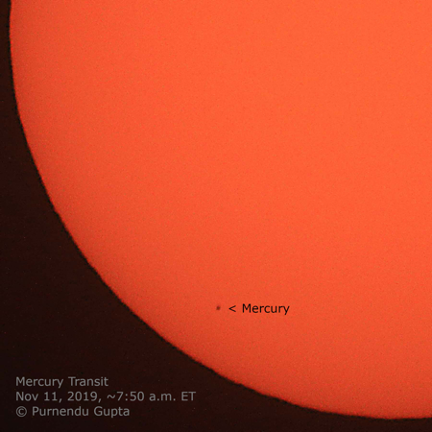
Our nearest star seen against its closest neighbor Mercury during the transit event in November 2019. Mercury appears as a tiny speck a few pixels wide. It is amazing to think that the Earth, from the same perspective, would only be about 2.5 times larger – still just a few pixels wide. If the Sun was the size of a basketball, on a relative scale, Mercury would be a pinhead about 30 feet away. – Purnendu Gupta
Photograph by Joseph Matthews
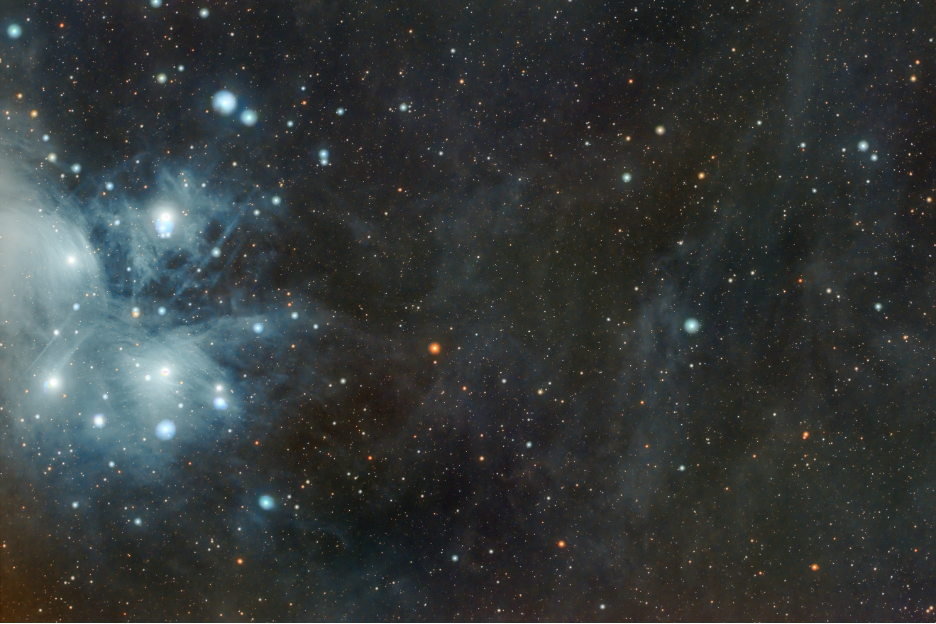
This image is of IC353, located in the Taurus constellation, taken on or about December 8th, 2023. IC353 was discovered by E.E. Barnard in 1893. IC353 is a vast diffuse reflection nebula that is just north-east of the Pleiades star cluster, and is probably physically connected to the Pleiades nebulosity. It is described in the Index Catalog as “very faint, extremely large,” with a diameter of about 3 degrees. — Joseph Matthews
Photograph by Daniel Mints
This image is of M78 the brightest reflection nebula in the night sky and is referred by many as the Casper the Friendly Ghost Nebula. It is located in the constellation Orion at magnitude 8.3 and is approximately 1,600 light years from Earth with an approximate diameter of 10 light years. M78 is lit by a stellar nursery of young stars that illuminate the dust particles reflecting and scattering blue light. This image was taken by a ZWO ASI533MC Pro at gain 101on a Celestron C8 SCT at f/6.3 with a Celestron AVX mount. Integration of 200x120sec stacked images and processed in PixInsight with BlurXTerminator and NoiseXTerminator and post processed in Lightroom. – Daniel Mints
Photograph by Bill Murray
This image of NGC 1499 is known as the California Nebula, discovered by E. E. Barnard in 1884, and is an emission nebula located in the constellation Perseus approximately 1,000 light years from Earth at magnitude 6.0. It is fairly large stretching 2.5 degrees by a half degree wide. NGC 1499 image was captured using a ZWO ASI183MC Pro camera on a William Optics Redcat 51 with an integration of 5 to 6 hours. — Bill Murray
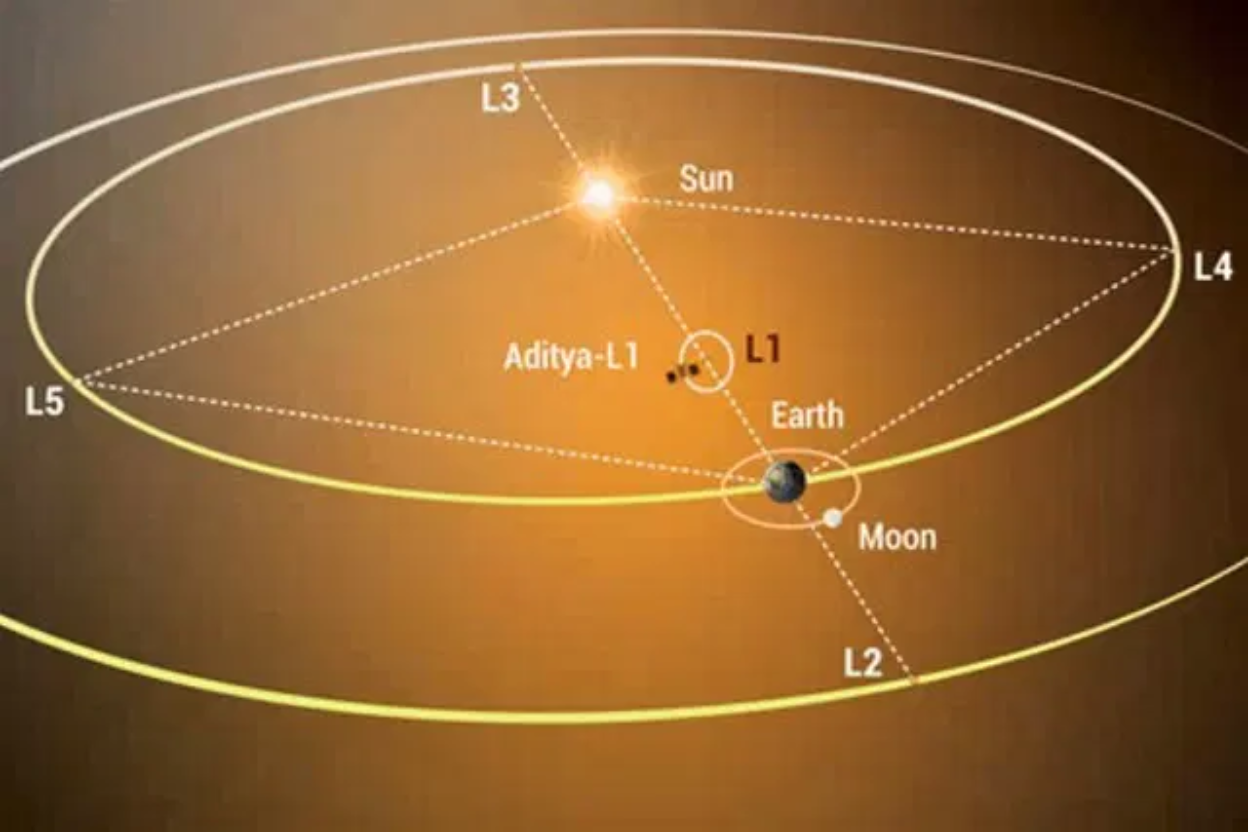
In Hindu mythology, Aditya is the Sun god, something akin to Ra in Egyptian mythology. Studying the Sun has been occurring for most of human history. In the last few decades done using telescopes – both space based and land based. India launched a spacecraft named Aditya a few months back. In the beginning of the new year 2024, Aditya reached a parking slot called L1 Lagrangian point which is about a million miles from the Earth and towards the Sun on the Earth-Sun axis.
At the L1 Lagrangian point parking slot, the spacecraft just hangs in without spending much fuel. It is a good vantage point as well, being able to see the Sun all the time without any day or night. The picture below, courtesy ISRO (Indian Space Research Organization), shows all the 5 Lagrangian points where the gravitational forces are minimal as the forces from the Sun and the Earth cancel each other out. It is like living with very little gravity.
These points came as a solution to a problem called the 3 body problem. The Earth, Sun and the spacecraft forming the 3 bodies. This problem was first solved by the mathematician Leonard Euler who came up with 3 of the points. Joseph Lagrange then completed the solution with all the 5 points. The 3 body problem can exist anywhere in the Universe. It is not specific to the Sun or Earth or our solar system. In fact, a famous Sci-fi novel called “Three body problem” involves a tale woven around 3 Sun like stars orbiting each other and a civilization on a planet having the experience of 3 Suns in the sky.
The L2 Lagrangian point is very popular for space telescopes like James Webb. L2 is good for spacecraft wanting to see the Universe, away from our Sun. While L1 is very good for observing the Sun. The other 3 Lagrangian points have found no uses so far. ESA’s (European Space Agency) SOHO (Solar and Heliospheric Observatory) spacecraft is there at L1 observing the Sun. NASA’s (National Space and Aeronautics Administration) Parker spacecraft also observes the Sun, but it is not there at L1 instead it is positioned much closer to the Sun.
While getting to L1 Lagrangian point involves a tedious million mile journey, inserting into a halo orbit and staying there could be a challenge. ESA’s SOHO spacecraft had broken loose from its orbit and had to be maneuvered back to its parking slot orbit. Hope Aditya does not encounter such a situation.
Aditya’s goal is to image the sun in visible, ultraviolet and x-ray wavelengths of electromagnetic radiation to get more insight into the dynamics of the solar atmosphere. It will also study “space weather” that results from solar storms. The instruments which are on board to make such observations possible are divided into observing and analyzing ones. Observing ones are the Visible Emission Line Coronagraph (VELC), Solar Ultraviolet Imaging Telescope (SUIT), Solar Low Energy X-ray Spectrometer (SoLEXS), and High Energy L1 Orbiting X-ray Spectrometer (HEL1OS). These cover the visible, ultraviolet and -ray parts of the electromagnetic spectrum.
The three analyzing instruments sitting inside the spacecraft are the Aditya Solar wind Particle Experiment (ASPEX), Plasma Analyser Package For Aditya (PAPA), and Advanced Tri-axial High Resolution Digital Magnetometers. While these instruments present an alphabetic soup of acronyms, each new generation of spacecraft has more sophisticated and complex electronics to make more detailed and precise observations. All the space maneuvering skills are not of much use without these instruments. After all, nowadays, astronomy is all about capturing a series of numbers and interpreting them on the Earth and imbuing them with colors. Thereby enhancing our knowledge of the Cosmos.

 Title: Under Alien Skies: A Sightseer’s Guide to the Universe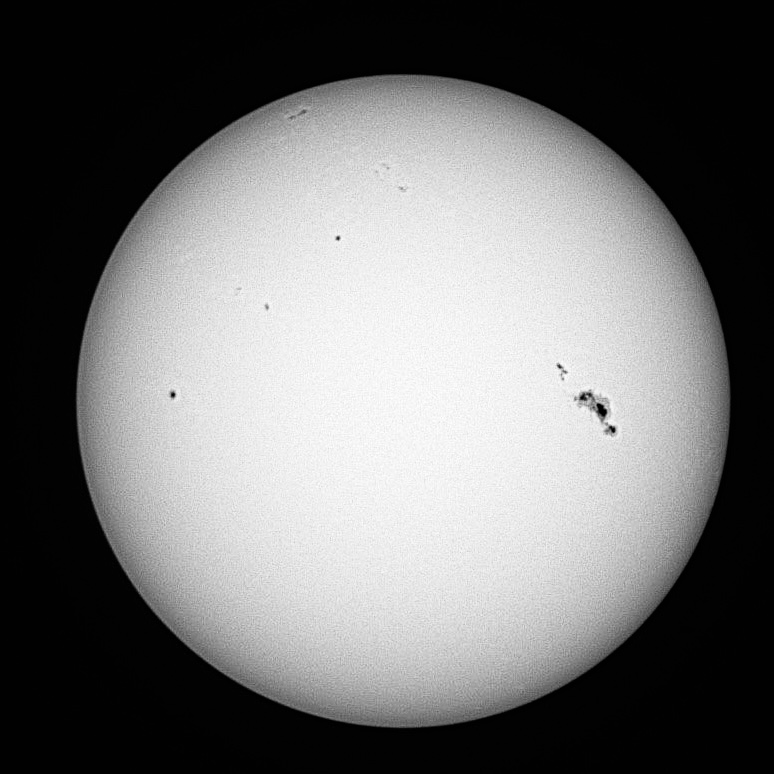



 The current expansion which is accelerating (right portion of the picture) is supposed to be caused by Dark energy. Also known as the energy of the vacuum, wherein virtual particles come into existence and get annihilated, not much is known about it, There has been no light shed on the “dark” yet. In the middle of such a situation comes in an explanation based on Multiverses or Multiple Universes. While the Multiverse is only a mathematical theory, it is also being used to explain what happened before the Big Bang. Very well explained in the book “Before the Big Bang” by Laura Mersini-Houghton. It is posited that multiple Universes float in a higher dimension. Universes are born and not everyone of them matures to become one like ours.
  Studying the pattern of CMB (Cosmic Microwave Background) radiation can give us some clues. Like the book “Before the Big Bang” mentioned that a patch of the pattern in CMB was possibly related to interaction with our neighboring Universes (picture shown below has a circled patch in the right lower corner, by the Planck satellite, courtesy Physics World). There could be other hidden messages in the CMB patterns. CMB could tell us about possible mergers with other Universes. I am letting my imagination fly here. Someday we might find out there is no dark matter at all. The gravitational effects we see may be due to the tug of our neighboring Universe ! Both the “darks’ ‘ which are not well understood – dark energy and dark matter may be due to a common cause of the multiverse.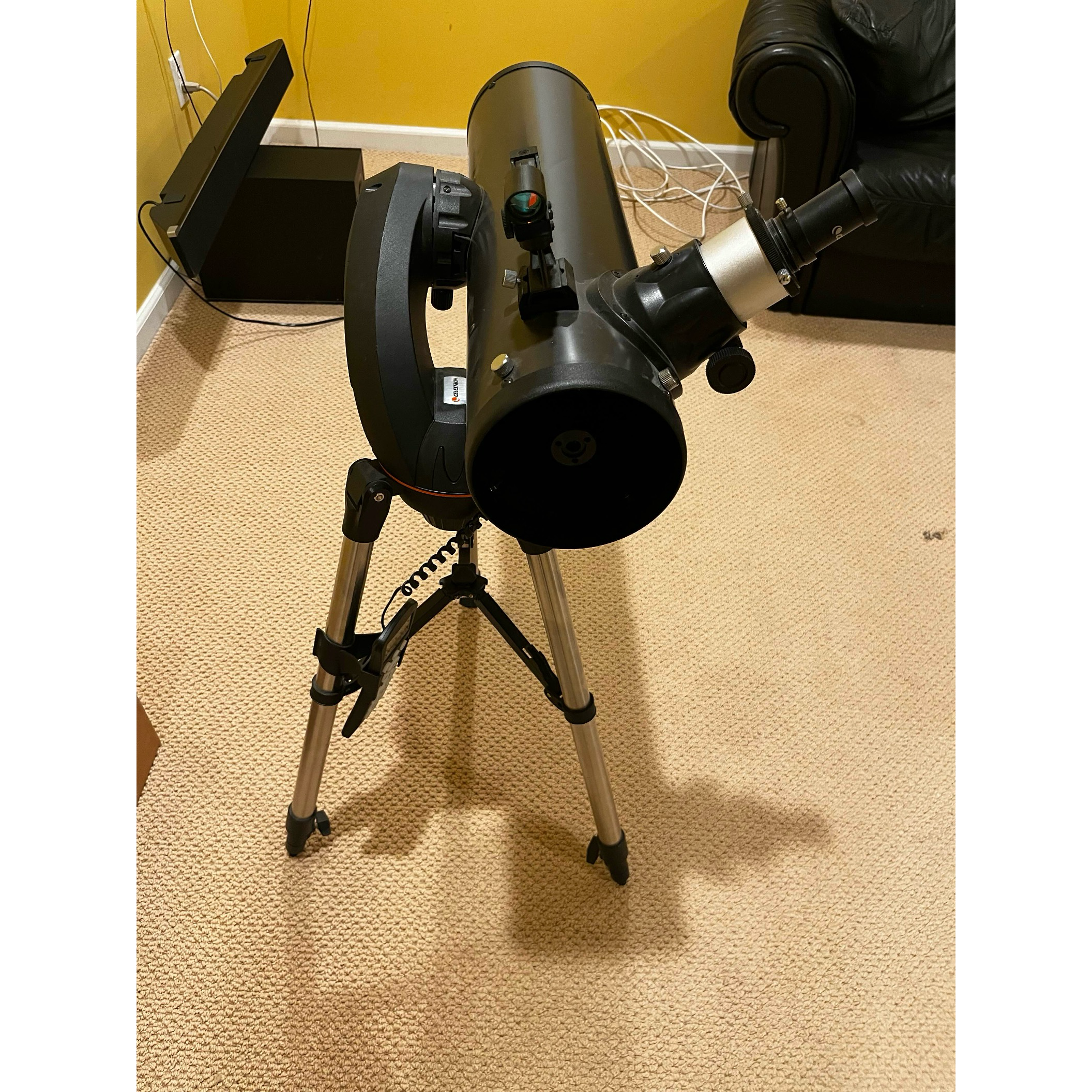














 Amateur Astronomers Association of Princeton