Minutes of September 9, 2014 AAAP Meeting

by James Poinsett, Secretary

Director Rex Parker opened the meeting with a brief introspective of the AAAP and expressed his thanks to Princeton University for the use of their facilities.

The Board meetings are scheduled for this coming year. They will be on October 7, 2014, January 6, 2015, April 7, 2015 and July 7, 2015.  All are on the first Tuesday of the month.

The meeting opened by discussing members recent astronomy experiences. Rex discussed his recent Perseid experience in California. Bill, Saul and Kate also shared their recent observations.

A “Telescope of the Month” feature was introduced. Rex started this off by showing and talking about his Celestron C-11. He also briefly mentioned a video technology proposal for discussion later in the business portion of the meeting.

Program Chair Kate Otto introduced this month’s speaker, Aram Friedman. A large portion of Aram’s talk was about his experiences viewing and recording the 2012 Transit of Venus from Hawaii.

The business meeting began with a discussion on improving member and public observing at the Washington Crossing observatory. Rex presented a technology proposal to use live video imaging and suggested using a camera from Mallincam, www.mallincam.net. Larry Kane will head a committee to come up with a proposal by the October board meeting. The main concern was about the added wires creating tripping hazards.

Mike Wright discussed StarQuest planning. Ludy D’Angelo will handle the cooking and meal planning. The star party information has been sent to other clubs and the publicity has been taken care of. We are still looking for activities for the daytime.

Outreach Chair David Letcher reminded everyone about the October 30th viewing party at the Unionville Winery. Bear Tavern School is having a Sunrise Science program and is looking for volunteers to speak about astronomy topics. David will again be hosting his classes in Backyard Astronomy the first four Fridays in October.

Gene Ramsey informed us that the staff at the park is greatly reduced, and they are not locking the gate properly. The park is not insisting on our using the Church Rd. entrance so we can continue using the entrance by the soccer fields. Be sure to be considerate of campers and hopefully we can continue using that entrance.

Larry brought us up to date on the activities of the Friends of Washington Crossing Park.

Kate said we have speakers through December.

Larry will bring in a telescope for October’s “Telescope of the Month”.

Meeting was adjourned.

Posted in October 2014, Sidereal Times | Tagged , | Leave a comment

From the Outreach Chair

by David Letcher, Outreach Chair

We at AAAP are becoming quite popular in the world of star parties. Our first star party was held on Saturday evening, September 20th. Volunteers Gaspar Bakos and Habib Ahson led the show. According to Gaspar the star party at Plainsboro Preserve went very well. There were about 20-25 people, half of them kids. They observed the constellations, Saturn, Alcor & Mizar, Albireo, M13, M11, M57, M27, and Andromeda with M32. All-in-all the evening was enjoyed by all. Thanks Habib and Gaspar!

Two more star parties are on the schedule for October.

  • Tuesday evening, 10/21 will see us at the Linwood Middle School in North Brunswick, NJ. This school has become one of our regular sites. We have one volunteer so far. More would be better.
  • Thursday evening, 10/30 will see us at the Unionville Winery in Ringoes, NJ. The winery staff claims they have dark skies and an interesting mulled wine. So far, two volunteers that have signed up.

Another opportunity just came up: a star party at Rider College in Lawrence, NJ on the evening of Friday, November 7th. A newly hired assistant professor of astronomy and physics will entertain students and parents with an early evening lecture and an observing session starting around 8 p.m. AAAP is cordially invited to bring our scopes and help out. It is their parents’ weekend.

Finally, yours truly will offer four lectures on backyard astronomy at the Nature Center in Washington crossing Park on the first four Friday evenings in October. The lectures begin at 7:30 p.m. and end at 8:30 p.m. Afterwards, participants will be encouraged to go to our observatory for viewing the things I talked about. This is the third year I have done these classes.
Respectfully submitted,

Posted in October 2014 | Tagged , | Leave a comment

Observatory Video Project

By Larry Kane, Assistant Director

Following up on a suggestion from Director Rex Parker, a group of members met at the observatory on Wednesday, September 17 to discuss the possibility of adding video viewing.  Several configurations of video equipment and compatible telescopes were discussed, all with the objective of being able to provide the best viewing experience to the visitors of our observatory.  The discussion, which is still ongoing, covered questions of available video hardware now on the market, hardware compatibility with our telescopes, new telescopes that might meet our needs, and the placement of a monitor within the observatory that would allow the public to participate in the viewing.

The discussion is continuing, and will be on the agenda of the next AAAP Board meeting on October 7 at 7:30 in Peyton Hall.  It was agreed that the ultimate goal will be to make any video system that is purchased and installed, a part of a long range program designed to ensure that our club is vibrant and growing.  Input is welcome from any interested AAAP member.  If you are interested in being a part of the development of this project, please come to the next Board meeting in on Oct. 7 at 7:30 pm in Room 140 of Peyton Hall.  The project will also be discussed at the next AAAP meeting on Tuesday, October 14 also.  Whether or not you can make either of these meetings, feel free to send your ideas to me.

Posted in October 2014, Sidereal Times | Tagged , | Leave a comment

Clear Dark Skies Enjoyed at StarQuest 2014

by Michael Wright

SQ LogoAAAP held our annual star party from Friday, September 26 to Sunday, September 28, 2014 at the Hope Conference and Renewal Center, Hope, NJ.  On both nights, skies were clear; transparency was excellent and seeing was very good.  In my admittedly limited experience, these were the best skies I have ever seen in NJ, even at Hope.  The dust lanes in the Milky Way, the Andromeda Galaxy and the Double Cluster were visible to the naked eye.  Only dew limited our observing time.

Thank you to everyone who helped make this year’s party a success, particularly Chef Ludy D’Angelo, Jim Poinsett, the kitchen crew and everyone who shared their passion for astronomy.

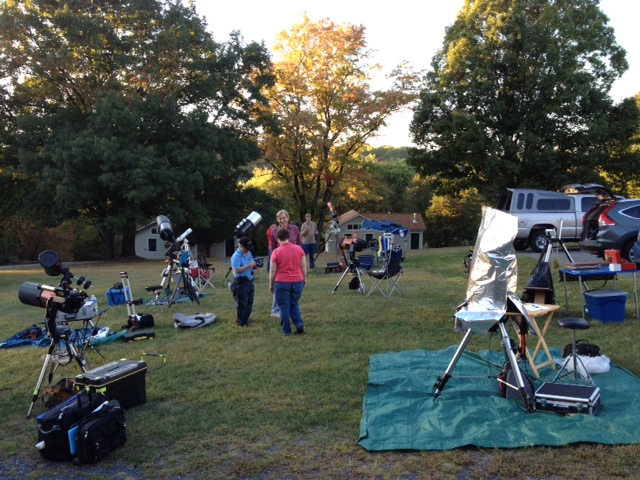
The observing field.  Credit: Rex Parker

The observing field. Credit: Rex Parker

2014-09-26 16.51.38

Gene Ramsey supervises mounting of Larry Kane’s OTA.  Credit: Michael Wright

2014-09-26 16.54.18

Brian Van Liew gets ready for imaging.  Credit: Michael Wright

2014-09-26 16.52.45

Bill Murray and his Teeter push-to Dob. Credit: Michael Wright

SQ5

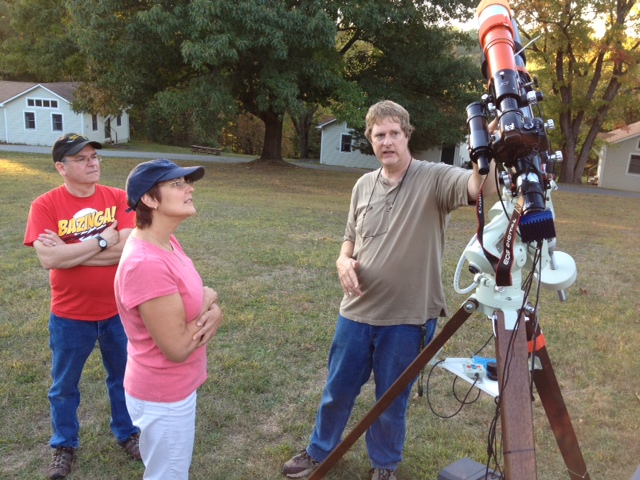
Brian Van Liew explains imaging to Michael Wright and Lynn Sian Credit: Rex Parker

2014-09-27 11.34.33

Larry Kane, Rex Parker, Michael Wright, Jim Poinsett and Gene Ramsey pause for a photo on the Solar System Walk. Credit: Lynn Sian

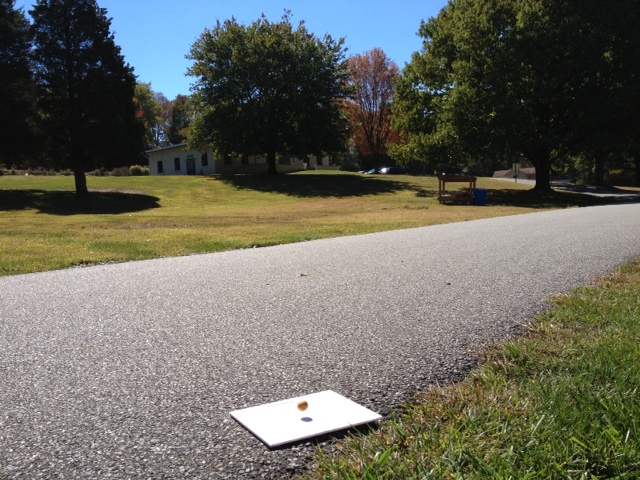
On the solar system Walk, Jupiter appears to hover at the edge of the driveway.  To scale, Mars is invisible to the left of the lodge.

On the Solar System Walk, Jupiter appears to hover above the driveway. Set to scale, Mars is invisible by the right corner of the lodge.  Credit: Rex Parker

Posted in October 2014, Sidereal Times | Tagged | Leave a comment

Congratulations Mangalyaan Team, Congratulations India!

by Prasad Ganti

 After a long journey of 300 days in the vacuum of space, Mangalyaan, India’s Mars Orbiter Mission was finally captured by the gravity of Mars. A nation heaved a sigh of relief, yours truly included. Congratulations followed from all over the world. NASA, ESA, even rival China celebrated in India’s joyous moment. I want to highlight some of the challenges involved and cover some basics of space travel.

 Why is it a big deal sending a spacecraft towards Mars? The low-budget spacecraft was a big deal for a developing nation. It demonstrated the mastery the technology required to maneuver one’s way in the wilderness of space. Prime Minister Modi stated that it cost India less than making of the acclaimed science fiction movie Gravity.

 What are the challenges in these kinds of mission? Firstly, getting the trajectory right. The distance between New York and Mumbai is fixed at about 9000 miles. It does not change with time of the day or at night or in a different season. A plane takes slightly less or more time depending on whether the winds are favoring or against. But the distance never varies. Mars is a planet orbiting the Sun, very much like Earth does, except that it is farther from the Sun. The position of both planets on their orbits coincide very rarely. One needs to correctly determine when is the right time to launch the spacecraft so that it can reach Mars. Because both Mars and Earth are moving platforms, it is like a shooter standing on a moving platform trying to shoot at a target, which is on another moving platform. Timing is everything. Trajectory is important for spacecraft as much as it is important in spin bowling in cricket.

 Once the spacecraft is flung into space with a massive thrust,  it leaves the Earth’s orbit and goes into an orbit around the Sun. Its orbital radius increases constantly until it approaches that of Mars. It then chases Mars and it slows down enough to be caught in the gravity of Mars. It travels relatively faster, and it needs to apply brakes. Too much deceleration and it would crash into the atmosphere of Mars and get destroyed. Too little deceleration and it will shoot past Mars with no chance of making another attempt. Why? Because an additional change in speed or direction will require burning of fuel. Fuel is a scarce commodity because it has to be lifted off the Earth. It is very expensive to lift one pound of any material into space. That exercise itself needs lots of thrust and fuel.

 Once slung into the orbit around the Sun, the engines are mostly shut down because a body just keeps orbiting around the Sun unless something disturbs it. Periodically some fuel is burnt to raise the orbit towards Mars. When it reaches Mars, the engines need to be restarted after going through all the ravages of space, which by itself a major challenge. It is achieved by sending signals from the command center on the Earth. Once engines start, lot of fuel must be burnt (about half an hour worth of it) to slow the spacecraft down to be captured by Mars. This is a very precision exercise. This is where other countries lost their spacecraft on their maiden voyages, and India got it right on its first attempt.

 How did India do it ? By studying the failures of other countries. Like Isaac Newton once said, “If I have seen further it is by standing on the shoulders of giants.”  Steve Jobs once said that  Amazon came up with the idea of a tablet with its Kindle, but Apple carried the idea a little further with the iPad. India carried the earlier ideas a little further. If no other nation sent a spacecraft to Mars, Mangalyaan might not have succeeded. Additionally, they kept the design and the payloads very simple and light. They did not carry the same scientific instruments which others carried. By the same token, their instruments are not trivial and complement what other spacecraft and rovers are doing on Mars. Let us wait for the science to begin. Mangalyaan is supposed to study the methane and analyze the atmosphere to look for signs of life. Life could have been there in the past, if not now.

 Will it help India while millions are starving? Certainly. Technological capability results in businesses, both on Earth and in space. Our mission was cheap, but the technology was not cheap. Cheaper educated manpower using local low-cost components and some ingenuity made the mission cheaper. India is already launching satellites into space for other countries because India is a low-cost carrier like a discount airline,  Businesses build economies and benefits to the masses, not subsidies or distribution of wealth.

 I don’t think we should view it as a space race. Supremacy over China and Japan? Every dog has its day. Someday they will zoom past India. Whatever the scientific findings are, it eventually benefits humanity. It adds to mankind’s pool of knowledge.

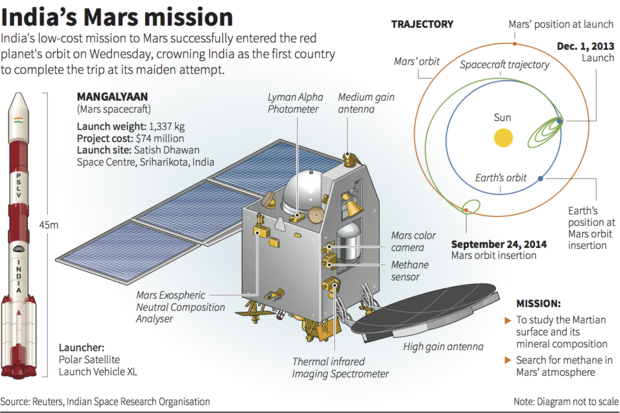
 My kudos to all the space scientists and the engineers involved in this mission. I found a great picture in the news reports, which I reproduced below. It gives the orbital trajectory which the spacecraft took, the positions of Mars and Earth at launch time and when it at reaches Mars, the instruments carried, and the rocket that launched Mangalyaan.

Mangalyaan
Posted in September 2014, Sidereal Times | Tagged , , , | Leave a comment

Snippets

India’s Mars mission
India has successfully put a satellite into orbit around Mars on its first attempt. The Mangalyaan robotic probe arrived at the planet early on Wednesday following a 10-month journey from Earth. A 24-minute engine burn slowed the probe down enough to allow it to be captured by Mars’ gravity.

Indian Space Research Organisation's (ISRO) Mission Control

Indian Space Research Organisation’s (ISRO) Mission Control, Credit: AFP

The complete article may be found at: India’s Mars mission

Published: Wed 24 September 2014, 2013- 9:18 ET on BBC


Tides

The Moon’s mass alters the structure of spacetime at it’s location, and this distortion propagates outward, becoming more dilute with the volume encompassed according to the inverse cube of the distance. At Earth, the distortion results in the waters of the oceans following slightly different paths through spacetime than does the rigid planet beneath, producing the characteristic egglike shape of the tidal effect. The tidal heartbeat is that of the very fabric of spacetime. The tides at our feet carry a profound message.

Excerpt from Tides and the Earth-Moon System by Roy Bishop, RASC Observers Handbook 2014.

Posted in October 2014, Sidereal Times | Tagged , , | Leave a comment

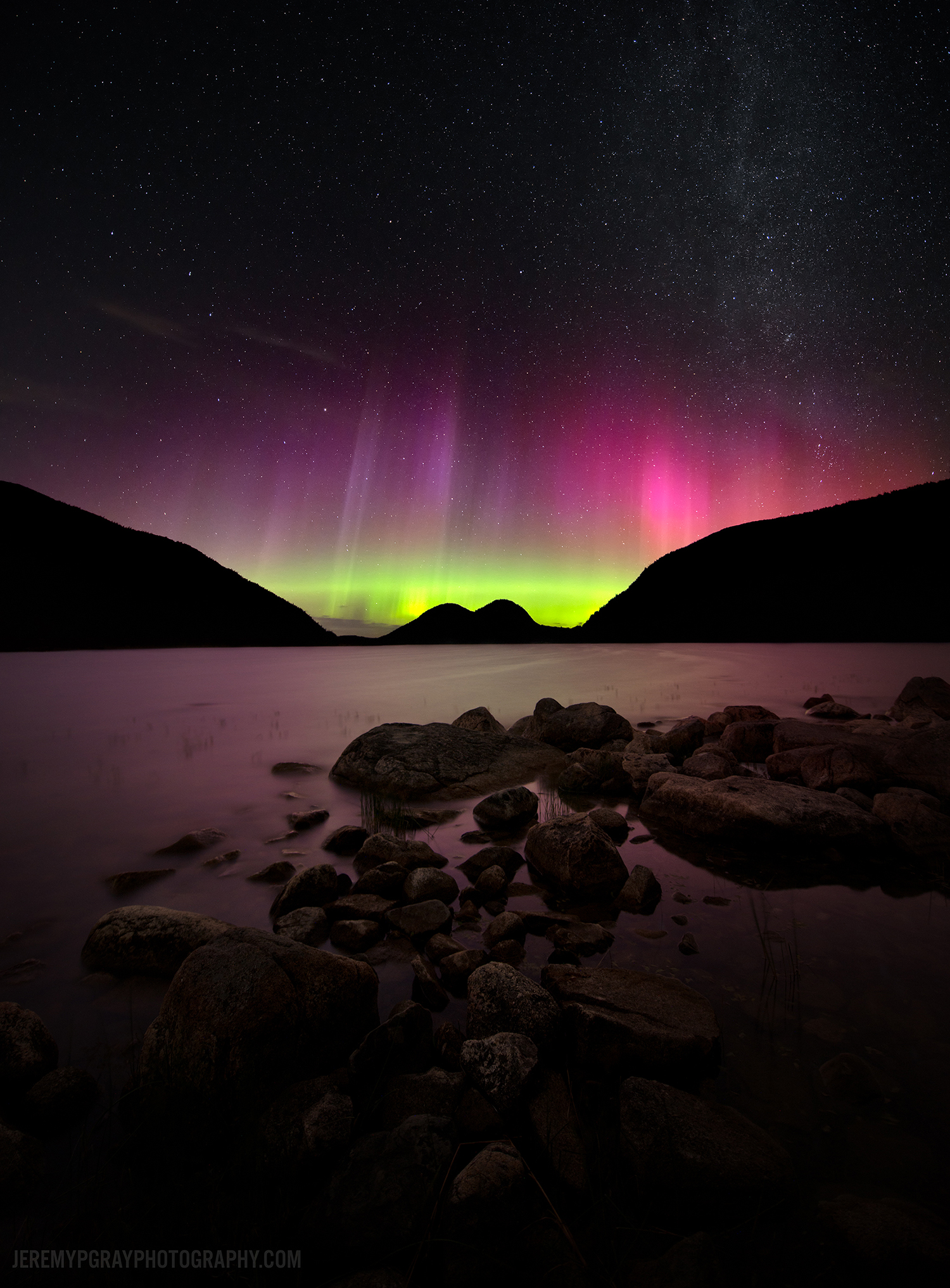
Like Night and Day – Jordan Pond, Acadia National Park, ME

Jeremy Gray took this amazing photograph at Jordon Pond, Acadia National Park, ME. on Sept. 13, 2014. Copyright © Jeremy Gray Photography

Jeremy Gray took this photograph at Jordon Pond, Acadia National Park, ME. on Sept. 13, 2014. Copyright © Jeremy Gray Photography

Member David Kaplan took this from the almost identical spot.

Member David Kaplan took this photograph from almost the same spot. Copyright © David Kaplan


Posted in October 2014, Sidereal Times | Tagged , , , , , | Leave a comment

Rocket Trio to Restore America’s Human Spaceflight Program

by Dr. Ken Kremer, AAAP, Universe Today

KENNEDY SPACE CENTER, FL – Over the past few weeks, I was fortunate to visit a trio of rockets at their Cape Canaveral launch pads that will restore America’s capability to launch humans to the International Space Station and later on deep space missions to the Moon, Asteroids and Mars. My launch pad visits at the Kennedy Space Center also coincided with two thrilling night launches.

SpaceX Falcon 9 carrying Dragon bound for the ISS. Credit: Ken Kremer

SpaceX Falcon 9 carrying Dragon bound for the ISS. Credit: Ken Kremer


First came the Sept. 16 blastoff of the clandestine CLIO satellite from pad 41 on an Atlas V that will eventually be used to launch the Boeing CST-100 astronaut taxi (see my AAAP report last month).

Second came the Sept. 21 launch of the SpaceX cargo Dragon atop a Falcon 9 rocket bound for the ISS. The Falcon 9 will eventually launch the upgraded crewed Dragon.


IMG_8285_1a_CLIO_Ken Kremer

Ken Kremer sets up cameras during up close visit to clandestine CLIO satellite and Atlas V rocket at Cape Canaveral, Florida launch pad. Credit: Ken Kremer


Third, I visited the United Launch Alliance processing hanger at the Cape’s pad 37 used to assemble the Delta IV Heavy rocket. It’s the world’s most powerful rocket and will launch an unmanned test version of the Orion crew vehicle on Dec. 4, 2014, which I will attend.


IMG_1022_1a_KSC Orion EFT 1_Ken Kremer

Delta IV Heavy will launch the Orion EFT-1 mission in December 2014. Credit: Ken Kremer


Finally, I visited NASA’s facilities in Louisiana and Mississippi that will be used to build NASA’s gargantuan SLS rocket for manned launches to deep space.


All this and the upcoming Oct. 20 Antares rocket launch from Virginia to the ISS will be the topic of my Oct. 14 AAAP presentation entitled – “What’s the Future of NASA’s Human Spaceflight Program with Orion and Commercial Astronaut Taxis.

Here’s a selection of my Universe Today and AmericaSpace articles for a preview:

http://www.universetoday.com/114885/assembly-completed-on-powerful-delta-iv-rocket-boosting-maiden-orion-capsule-test-flight/

http://www.universetoday.com/114602/completely-clandestine-clio-climbs-through-clouds-to-orbit-on-mystery-mission/

http://www.universetoday.com/114688/spectacular-nighttime-blastoff-boosts-spacex-cargo-ship-loaded-with-science-and-critical-supplies-for-space-station/

http://www.americaspace.com/?p=67533

Astronomy Outreach by Dr. Ken Kremer

The Future of NASA’s Human Spaceflight Program with Orion and Commercial Astronaut Taxis: Oct 14, 7:30 PM, AAAP, Princeton University, Princeton, NJ.

Antares Rocket Launch to ISS, Oct 20: NASA Wallops Island, VA. Evening outreach at Rodeway Inn, Chincoteague, VA.

Please contact Ken for more info, science outreach presentations and his space photos. Email: kremerken@yahoo.com   website: www.kenkremer.com, http://www.universetoday.com/author/ken-kremer/

Posted in October 2014, Sidereal Times | Tagged , , , , | Leave a comment

From the Director

Rex

by Rex Parker, PhD, Director

Change is in the wind for AAAP.  As director this season, my goal is to enhance the connections you make with AAAP, to expand your access to the Princeton Astronomy experience, to enrich the role of astronomy and scientific fellowship in your life.  A few impending changes follow.

  • Meetings will start at 7:30 p.m (instead of 8 p.m.) to get you in/out at a reasonable time. This will get you home earlier, and make it easier to stay around for the “business” meeting after the talk.
  • 5 min “Astronomic Experiences” to begin each meeting. I will be calling on you for a brief anecdote, a memorable recent experience, that shows why astronomy matters to you.
  • “Telescope of the Month” on display in Peyton Auditorium at our meetings. I will ask many of you to participate.  Does not need to be state of the art, rather whatever instrument you have to share.
  • Track & recognize volunteer contributions. Vibrancy of the club depends on your contributions.
  • Video astronomy is coming to AAAP Washington Crossing Observatory (see below).

We will continue our tradition of great monthly speaker presentations from faculties, community, and membership.  Please do let the Program Chair, Kate Otto (program@princetonastronomy.org) and me know your thoughts to help identify future topics and speakers.

Video astronomy is proposed in order to evolve AAAP’s public outreach astronomy capabilities.  We recognize that Washington Crossing Observatory is a great place and that AAAP Friday night observing is well-received by members and public, kids and adults alike.  However, light pollution and poor sky conditions take a toll on effectiveness.  All of our keyholders can relate to the challenges that we often face.

  • Light pollution and sky conditions sub-optimal, yet public turnout is large.
  • Difficult for Keyholder Teams to showcase the deep sky.
  • Disappointing views through the telescope eyepiece, lost opportunities.

Members and observatory visitors tend to be technologically savvy.  While the eyepiece can be wonderful, it is not the only, nor best, approach under some conditions.  Most visitors are likely able to appreciate video images of the deep sky on a monitor.

  • I am proposing to improve our technology/hardware to provide live video astronomy. In this context, video is related to, but distinct from CCD imaging.
  • Video technology can break through mediocre weather/sky conditions. We can provide both video monitor and visual eyepiece presentation of deep sky objects through the telescopes.
  • Telescope/instrument changes at WC Observatory are necessary to achieve this goal.

How we can bring video astronomy to WC, and other topics, will be under discussion at the September meeting of AAAP.  Hope to see you there!

Important note: AAAP meetings at Peyton Hall will begin at 7:30 p.m. starting Sept 9.

Posted in September 2014, Sidereal Times | Tagged , | Leave a comment