ISRO Launches Satellite to Geostationary Orbit

by S. Prasad Ganti

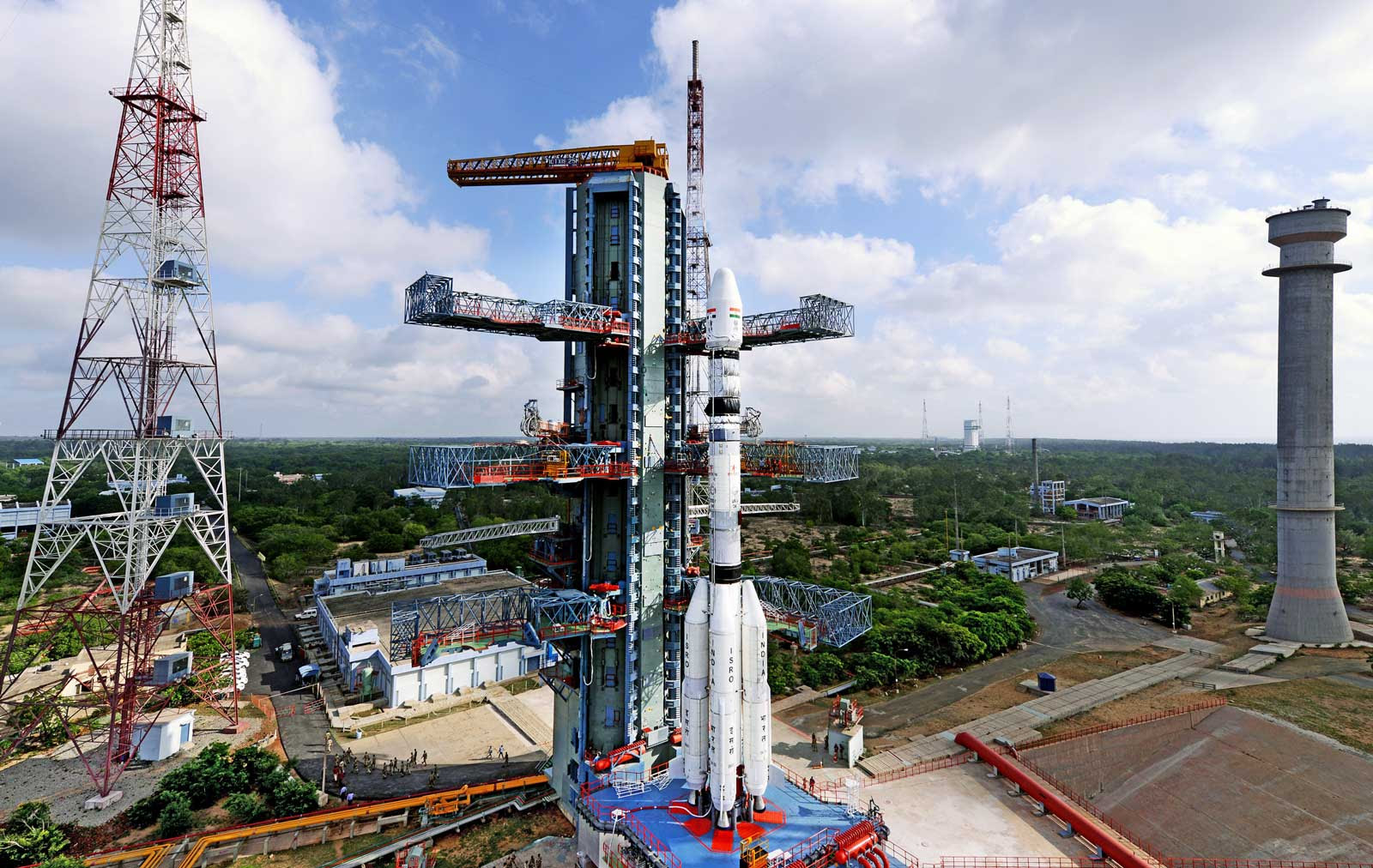
GSLV-D6 on the Launch Pad Credit: ISRO

GSLV-D6 on the Launch Pad Credit: ISRO

Indian Space Research Organization launched a communication satellite. On the surface of it, it may not be a big piece of news. But since I have been following the space news from ISRO as much as I do from NASA or SpaceX, there are some baby steps leading to something bigger.
The two-ton satellite called GSAT-6 is well on its way to geostationary orbit. It stays in the same place above the Indian subcontinent providing communication services to the country. Launched aboard GSLV-D6 (Geostationary Satellite Launch Vehicle), the satellite was placed in a geostationary transfer orbit or GTO. The satellite will then use its own propulsion to reach the final orbit about 36,000 kms above the Earth where it will be parked in a fixed slot for rest of its life.

About 60% of the two-ton satellite is fuel to propel it into the higher geostationary orbit. Afterwards the fuel is burnt to operate the communications equipment to provide services to the country for nine years.

India has developed complex satellites before and attained a level of maturity in building satellites, but the launch capability was lagging behind. Some of the earlier satellites were launched using foreign launch vehicles like European Space Agency’s Ariane. Lifting a two-ton satellite into a GTO requires more power and complexity. The current launch vehicle GSLV uses three stages to give the payload a heavy boost.

The first stage is powered by solid fuel. Like the first relay runner, a solid stage provides a massive push. The solid stage cannot be stopped once ignited. It cannot be controlled easily. After a big push during the first few seconds of a rocket launch, its job is done, and it falls back to the Earth. The second stage is powered by liquid fuels. A liquid fuel and an oxidizer are stored in separate tanks and are pumped into  a combustion chamber to generate the thrust. The liquid stage is controllable since the pumps can be slowed down or turned off. These two stages were mastered in the earlier phases of India’s space program.

The third stage is powered by cryogenic engines. Cryogenics means dealing with super cooled matter close to absolute zero of -273 degrees Kelvin. The super cooled fuel and oxidizer give lot of punch per unit of weight. These propellants are difficult to handle and tame in an engine. The technology is so complex that very few countries in the world have this capability. The first two Indian attempts in 2010 led to failures. In 2014, the first successful launch with cryogenic engines took place. This is the second successful launch and augurs well for the Indian space program.

Next in line is the launch of newer generation of GSLV called Mark 3, which is very likely to happen in next couple of years. Each succeeding generation of space vehicles leads to more lifting capabilities, and more mastery over space launches. Whether it is SpaceX, NASA, ISRO, ESA or JSA, it only bodes well for humanity’s future in space.
Posted in September 2015, Sidereal Times | Leave a comment

UACNJ Symposium

Jenny JumpAnnual Astronomy Symposium
September 26, 2015
A special event at the UACNJ facility in Jenny Jump State Forest, Hope, NJ

Indoor events will take place rain or shine.
All observing subject to weather conditions.

Noon
Solar Telescope Observing, Chris Callie, NWJAA
1:00 PM
Welcome to Jenny Jump State Forest and UACNJ, Ernie Kabert, Park Superintendent and Diane Jeffer, UACNJ President, NWJAA
1:30 PM
A Tourist in the Universe, Karl Hricko, AAI, NWJAA
2:30 PM
Intro to the Geology & Physiography of NJ, Joseph Molnar, MMAS
3:30 PM
Eclipses and Occultations, Gregg Waldron, NWJAA
4:30 PM
How the Sun’s Surface Affects Earth’s Surface, Dr. Andrew Gerard, NJIT
5:30 to 7:00 PM
Food available for purchase
5:30 to 6:00 PM
Tour of the Observatory, Bill Eberly, MMAS
5:30 to 7:00 PM
Saving Hubble, documentary film by David Gaynes
7:00 PM
The Human Side of the Hubble Story, David Gaynes, documentary filmmaker
8:00 PM
Public Night at UACNJ Observatory, (regularly scheduled free event), Photography in Astronomy, Stan Honda, AAA
9:00 PM to Midnight
Star Party

Suggested donation will be collected onsite: $20 per adult and $10 per child under 12.
For more information, please visit http://www.uacnj.org or write to info@uacnj.org.

Bring your own telescope or binoculars – or look through ours. Join us for a free program at our facilities in Jenny Jump State Forest every Saturday evening. Our free Saturday evening programs begin at 8:00 PM. Following a lecture on an astronomy-related topic, the public is invited to view the night sky (weather permitting) through our telescopes until 10:30 PM.

Programs and speakers for September and October:
9/5/2015 What’s up in the September Sky? Lonny Buinis, RVCC
9/12/2015 Multicultural Look at the Sky Sean Post, NWJAA
9/19/2015 Sudden Ionospheric Disturbances Mark Phillips, NWJAA
9/26/2015 Photography in Astronomy Stan Honda, AAA
10/3/2015 What’s up in the October Sky? Lonny Buinis, RVCC
10/10/2015 Mars: From Canals to Curiosity & Beyond Gary DeLeo, Lehigh U.
10/17/2015 Telescopes for Amateurs Bill Murray, AAAP
10/24/2015 Let’s Live in Space Karl Hricko, AAI,NWJAA
10/31/2015 What’s Up in the Winter Sky? Lonny Buinis, RVCC

Posted in August 2015, Sidereal Times | Tagged , | Leave a comment

Adirondack Astrophotography Workshop

by David Skitt

Last week, Jennifer and I had the opportunity to visit the Adirondack Public Observatory in Tupper Lake, NY for a daytime tour.  Their mission is “to provide quality educational experiences for people of all ages through the science, technology and history of astronomy” under the dark skies that the Adirondack Mountains provide.  I encourage you to check out their website http://www.apobservatory.org to learn more about their mission, methods and to see their large Roll-Off-Roof observatory.

While visiting with Carol Levy and Gordie Duval (President and Vice President of the group) they informed me of their upcoming Astrophotography Workshop scheduled for September 18-20, 2015.  They were very enthusiastic about the event, and I promised them I would spread the word to AAAP members.  The event takes place in Tupper Lake, NY, which is about a 6.5 hour drive from the Princeton area. More information about the event can be viewed here: http://www.apobservatory.org/pages/events.html.

Jennifer and I can attest to the dark skies of the Adirondack Mountains. Where we stayed in Speculator, NY, the Milky Way was visible horizon to horizon, and the Andromeda Galaxy was visible with the unaided eye.  We can only imagine how enjoyable learning astrophotography would be under the Adirondack dark skies.  If interested in this event, feel free to call the APO office at (518) 359-3538.  They should be able to recommend places to stay and suggest making arrangements now as the fall-foliage followers tend to flock to the area around the same time as the workshop.

Posted in August 2015, Sidereal Times | Tagged , , | Leave a comment

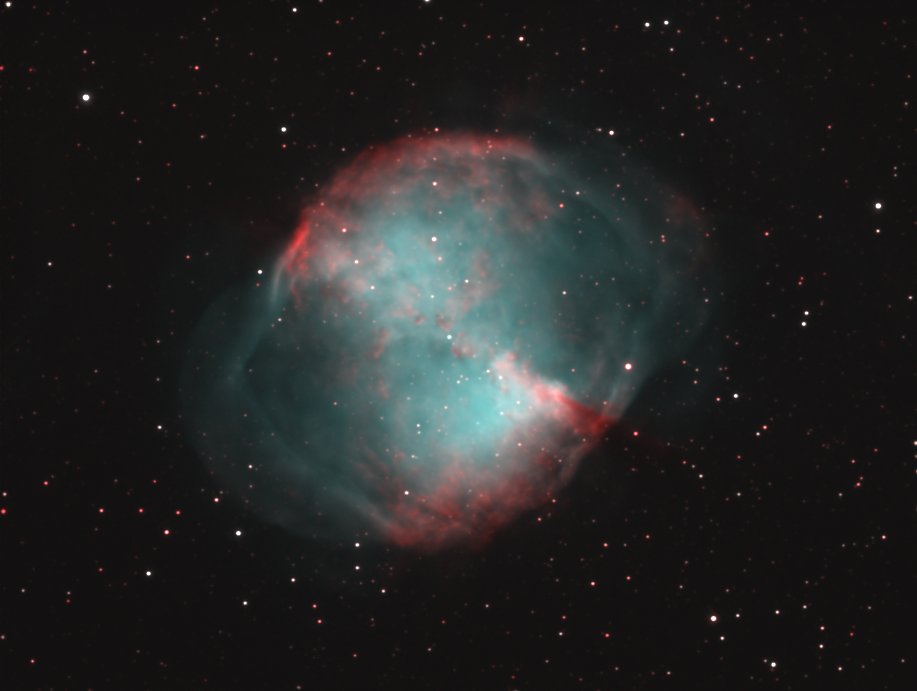
M27, the Dumb Bell Nebula

by Robert Vanderbei

m27-RL_Gamma05_LRGB_917x691

M27, the Dumb Bell Nebula 21:14 EDT July 23, 2006. Starlight Express SXV-H9 on 10″ RCOS at f/9. Ha = 64 min, O-III = 96 min L = Ha+OIII, R = Ha, G = O-III, B = O-III (guided 4-minute subexposures). Richardson-Lucy deconv, Gamma stretch. Credit: Robert Vanderbei: http://www.princeton.edu/~rvdb/images/NJP/m27.html

Posted in astrophoto, August 2015 | Tagged , , | Leave a comment

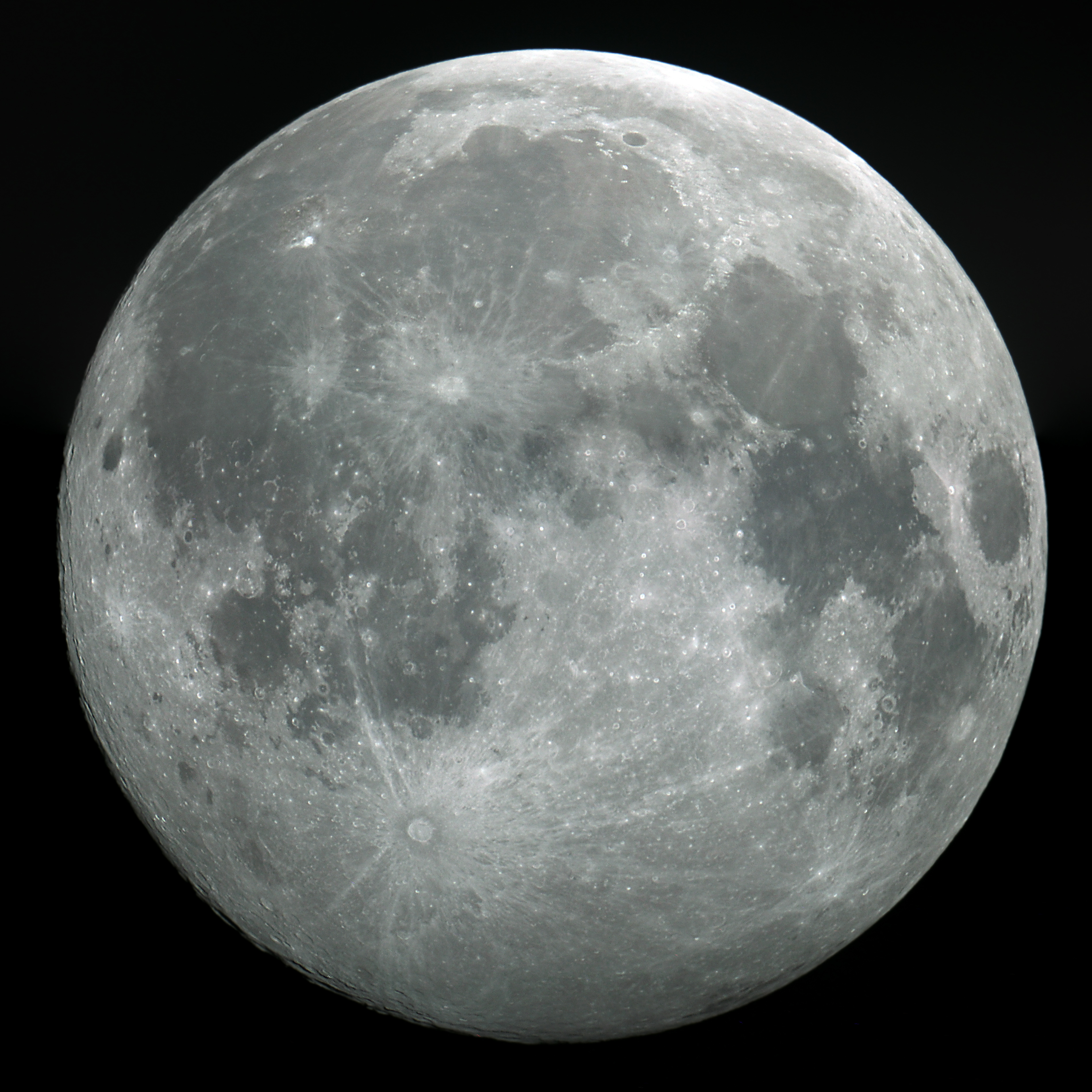
July 2015 Blue Moon

Blue Moon by Member Robert Vanderbei

Blue Moon by Member Robert Vanderbei

July 30, 2014, 22:35 EDT (8 hours before actual full fullness)
Canon 450D on 10″ RC
Four-image Mosaic of 8-image stacks.
Exposure: 1/2400 sec at ISO 800.

Posted in astrophoto, August 2015, moon | Tagged , , | Leave a comment

Snippets

Compiled by David Kaplan and Michael Wright

Politician wants to renew legislation to ban green lasers:
Blinded by the light: Who is shining laser pointers into planes over N.J.? NJ.com
12 planes hit by blinding lasers in N.J. among dozens targeted in U.S. in one night: NJ.com

Astronomy meets the blues: When I Look into the Night Sky by Lori Henriques

“I know that I am mortal by nature and ephemeral, but when I trace at my pleasure the windings to and fro of the heavenly bodies … I stand in the presence of Zeus himself and take my fill of ambrosia.” ~Ptolemy

The flyby of Pluto was a triumph of human ingenuity and the capstone of a mission that unfolded nearly flawlessly. It almost did not happen. NYTimes

The NYTimes says the New Horizons flyby ends an era of planetary exploration. I don’t think so. It ended with the Voyager flyby of Neptune. We just did not know it. Maybe this flyby begins an era of Kuiper belt object exploration? ~Mike

Extraordinary lunar astrophotography by Paolo Lazzarotti National Geographic

Don’t miss NYTimes’ Summer of Science

Space video cameras to circle globe: Canadian group Urthecast plans to put a 16-satellite constellation in orbit to image the Earth, including making small movies of what is happening at the surface of the planet. BBC

Volcanic eruptions glimpsed on Venus: Scientists say they have the best evidence yet that there is hot lava spewing from the surface of Venus. BBC

Recently discovered galaxy, CR7, holds the signature of a lost generation of stars that created the elements needed for life. NYTimes

Philae comet lander wakes up: the Philae lander which lost power after historic comet landing has woken up and contacted Earth – European Space Agency BBC

Earth enters new extinction phase: The Earth has entered a “new period of extinction”, a study by three US universities concludes, and humans could be among the first casualties. BBC

Ceres’ spots seen in more detail: NASA releases a new, higher-resolution picture of the brightest spots on the dwarf planet Ceres. BBC

Aiming to make the first portrait of the hungry monster at the center of our galaxy, astronomers built a telescope as big as the world. NYTimes

HST studies Pluto’s wobbly moons: Hubble reveals fascinating new details about Pluto’s four smaller moons – Styx, Nix, Kerberos and Hydra. BBC

Does science always need empirical evidence?  NYTimes

Green light for Magellan super-scope: Construction of the Giant Magellan Telescope receives the go-ahead, leading to preliminary operations in 2021 or 2022. BBC

Hadron collider turns on data tap: the Large Hadron Collider has re-started scientific investigations after a two-year pause. BBC

Black hole seen ‘playing billiards’: a series of images captures two vast blobs of plasma, shot out by a black hole, cannoning into each other in a nearly light-speed cosmic collision. BBC

Posted in July 2015, Sidereal Times | Tagged , , | Leave a comment

From the Director

by Rex Parker, PhD, Director

Rex


Tuesday June 9 (7:30 pm) at the New Jersey State Museum Planetarium will be the last regular monthly meeting of the season. You are welcome to bring family and friends for our gathering at the Planetarium, at 205 West State Street in the capitol area of Trenton. AAAP member and Planetarium staffer Bill Murray will give us a private show (no charge) using the state-of-the-art “Full DomeVideo” technology which immerses the audience within images covering the entire dome. http://www.nj.gov/state/museum/dos_museum_programs_planetarium.html

The meeting continues the tradition of AAAP sharing the vision of the Planetarium to bring astronomy experiences to the public. After the show, we’ll review club plans for summer observing activities at the Washington Crossing Observatory, and discuss the upcoming Cherry Springs State Park astronomy observing field trip (see below).

Officers and Committees. At the May meeting, a new Board of Trustees was elected to lead the club in the next season. I would like to congratulate and thank my colleagues on the Board: Assistant Director Larry Kane, Program Chair Ira Polans, Secretary Jim Poinsett, and Treasurer Michael Mitrano. Deep appreciation goes to former Program Chair Kate Otto for bringing in so many good speakers the last three years, and thanks to Prasad Ganti and John Miller who form the new Program Committee with Ira. Thanks also to continuing Outreach Chair Dave Letcher, and Observatory Co-chairs Gene Ramsey and Dave Skitt, along with Jennifer Skitt, John Church, and the Keyholders for improving the observatory and running our weekly public observing operations.

Upcoming Events

  • June 2: Mallincam training for Keyholders at WC Observatory
  • June 13: Members-only night at Washington Crossing Observatory (family & friends are welcome too) including unveiling the Mallincam astro-video, a new Paramount for the Hastings refractor, and two new telescopes. Please join us at the Observatory beginning after sunset to see what the excitement is all about.
  • June 19-20: Observing weekend at Cherry Springs State Park in northern PA, a remarkable dark sky site. Arrive Friday before sunset, return Sunday.

Astronomy Observing Field Trip to Cherry Springs State Park, Pennsylvania, June 19-20.  This will be the dark sky observing event of the year! Plan for both Friday and Saturday nights, June 19 and 20. The trip is contingent on good weather and sky conditions to be decided the week of the event.  We don’t have a backup date at this time.

The park is situated at 2300 ft elevation deep in the wild forests of north-central PA.  It has some of the darkest and best skies for astronomy in the entire eastern U.S.  All interested AAAP members are invited to attend, but please understand that this will be a “roughing it” type trip.  We will happily offer telescope viewing access and share knowledge of the celestial sphere to members and family/friends,  attendees must provide their own transportation, equipment and supplies including tent, sleeping bag, food and drink.  Please read carefully the information on the Cherry Springs State Park website:

Pennsylvania State Parks
Serious Stargazing at Cherry Springs State Park

It’s about a 5 hour drive from Princeton (important – see recommended directions, below).  You must arrive well before dark to set up even if you don’t have a telescope (i.e., setting up tents etc).  White flashlights or other white lights on or near the observing field are strictly prohibited.  Red flashlights are accepted and are a necessary item.  It’s important to understand there are essentially no amenities except for 110V AC electrical plug-ins and concrete telescope pads.  You must bring all of your own supplies, tents and camping equipment, food and drinks, etc. Water for washing dishes is supplied at several pumps located around the site. There are modern bathroom facilities and sinks, but no showers at Cherry Springs State Park, and the nearest showers are at Lyman Run State Park about 10 miles down the road. Those are good private showers with hot water. There are no motels or restaurants nearby. Some have complained about the taste of the water available at the site; fracking is done in the area. The water is fine for washing but if you care about this point, it is recommended that you bring drinking water with you.

Be ready for dew at Cherry Springs. If the sky is clear there will be dew, probably more dew than you have ever seen. Everyone should have dew heaters and/or “hair dryers” for their scopes. Dew shields are useful but not enough. Bring an extension cord as well.

Directions. The directions given on the Cherry Springs Star Party website are not the best. They will take you through ~50 miles of unpaved logging roads to get to Cherry Springs State Park. It has been suggested by observers from recent years that the best way to get there is the following.

  • Take the PA Turnpike (276) to the NE Extension (476 northbound)
  • Continue on NE Extension (476) to I-80W
  • Go west on I-80W to I-180N (beltway around Williamsport, PA)
  • Take I-180N to Rte 15N
  • Follow Rte 15N to Rte 6W
  • Go west on Rte 6W to Galeton, PA
  • Get off Rte 6 at Galeton. It’s then about 15 miles of paved back roads to Cherry Springs (Mapquest or GPS will give a route).
  • There is a local-detail map on the park website.

Please respond by e-mail if you plan to make the trip (director@princetonastronomy.org). I look forward to having you join us at Cherry Springs!  

Posted in June 2015, May 2015, Sidereal Times | Tagged , | Leave a comment

Annual Planetarium Show – June 9

by Ira Polans, Program Chair

AAAP member Bill Murray will once again host the AAAP’s last program of the season on June 9th at the New Jersey State Museum Planetarium. Members will gather at 7:30 for a private show. Friends and family are welcome. Free parking and easy access to the Planetarium is available. After the show, there will be a meeting to review the AAAP’s summer activities.

Posted in June 2015, Sidereal Times | Tagged , | Leave a comment

From the Assistant Director

by Larry Kane, Assistant Director

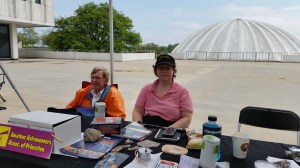
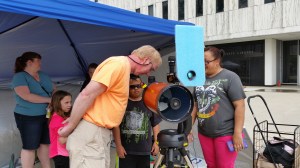
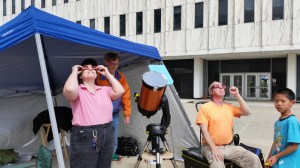
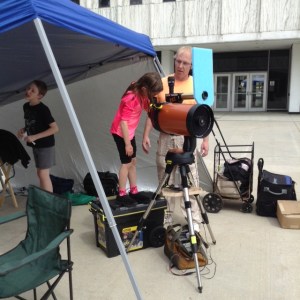
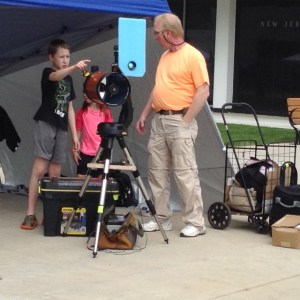
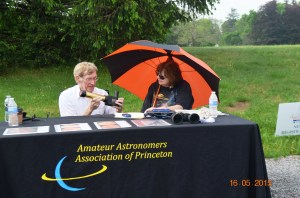
May saw the AAAP table turn up at two events. At the first event, Super Science Saturday in Trenton, our club was represented by Gene Ramsey, Jennifer and Dave Skitt and myself, as custodian of the club’s table banner. Even though the day started with rain, it did stop. Lots of people turned out to talk to us and take free literature offered by Astronomy Magazine and the AAAP. Despite the continuing cloud cover that thwarted our efforts to view the Sun, everyone that came to our table went away pleased and more knowledgeable about the AAAP.


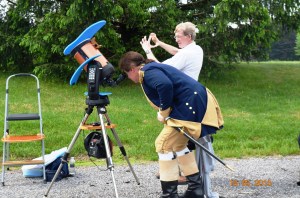
The second event, sponsored by the Washington Crossing Park Association, was a Walk in the Park with George. At this one, our club was represented by Gene Ramsey, my wife Marlene and yours truly. While the focus of the gathering was more historical than astronomical, the AAAP was recognized by the WCPA, as a supporting group with an established relationship of mutual interests. Gene was able to show General Washington what sun spots look like in a telescope. Many of the attendees who knew a lot about our park, left with a new understanding of our club and our observatory.

Posted in June 2015, Sidereal Times | Tagged , | Leave a comment

Treasurer’s Report

by Michael Mitrano, Treasurer

New memberships and renewals have tapered off, but hopefully the summer public nights will bring us more new members. Our count now stands at 88.

With the purchase of additional equipment to improve the observatory, we are now showing a $1,300 loss for the fiscal year to date. Since we account for the cost of new equipment when it is purchased rather than using accrual accounting to depreciate it over time, we will show a loss in a year when we use some of our reserves to invest in the facility.

On a cumulative basis, the AAAP’s surplus is slightly below $24 thousand.

Posted in June 2015, Sidereal Times | Tagged , | Leave a comment