Radio telescopes and the black hole

by Prasad Ganti

Astronomy traditionally have been confined to seeing the light emitted by heavenly bodies. Nineteenth century discoveries proved that light is only a small part of the spectrum of what is known as electromagnetic radiation. It was found later that infrared (heat), x-rays, ultra violet rays, gamma rays, microwaves, radio waves are all part of this same spectrum. In the twentieth century, Karl Jansky of AT&T Bell Labs found that radio waves are also emitted from outside of our solar system. Gradually, radio astronomy emerged where telescopes were built to receive radio waves coming from all over our Universe.

I watched a very interesting collection of video lectures on radio astronomy. It was part of a course conducted by Dr. Felix Lockman and produced by the company “The Great Courses”. What is surprising is that the pictures of the distant stars and galaxies can be different than what is observed using optical telescopes. In multi messenger astronomy, such pictures from radio and optical telescopes are combined to produce a composite picture. The invisible pictures captured by the radio telescopes, which are a bunch of radio antennas connected to a radio receiver, reveals a different aspect of astronomy.

Light gets blocked by the interstellar dust, whereas radio waves just pass through. Due to this reason, clouds of hydrogen, ammonia, water vapor, organic chemicals like formaldehyde and acetic acid have been detected in interstellar space using radio telescopes, which would not have been possible using the optical telescopes. The presence of organic chemicals in space, although no DNA or proteins have been found yet, means that life could be present in other parts of our Universe.

Examples of radio telescopes are ALMA (Atacama Large Millimeter Array), a collection of 66 radio dish antennas in Chile. A 300 foot dish radio telescope is in Green Bank, West Virginia. A 500 foot dish radio telescope was recently built in China (called FAST). A single dish radio telescope is in the South Pole. When multiple antennas exist, they combine together (called interference pattern) and form effectively a larger telescope. Huge telescopes like the 300 foot dish cannot be made as a single piece. Multiple panels driven by motor actuators to correct for factors like gravity, wind, heat etc. Special white paint keeps the dish cool. Heat produces noise. That is why the radio receivers are cooled to a few degrees above absolute zero to eliminate most of the noise.

Picture below is of ALMA. By looking at the vehicle going on the ground, you can estimate the size of the telescope. Cables from all the antennas are connected to very sensitive radio receivers in a control room.

ALMA

ALMA in Chile

Now let us turn to Black holes. These are very interesting cosmic objects in our Universe. Massive amounts of matter gravitationally compressed very densely so that not even light can escape from them. With high level of confidence, astronomers state that supermassive black holes exist at the center of every galaxy, including our milky way. The problem is we cannot see a black hole. Even if we try to detect some form of radiation around it, there is too much dust as we get closer to the center of our galaxy. By the way, our Sun is about two thirds distance away from the center of our galaxy. Radio astronomy to come to our aid to view the center of our galaxy.

I recently read a book called “Einstein’s Shadow” by Seth Fletcher. The radio telescopes we have currently are not good enough to peep into the center of our galaxy. The book talks about a great idea of building something called EHT (Event Horizon Telescope) to view the black hole at the center of our galaxy. It is an extension of the idea of combining multiple antennas. It combines radio telescopes in different parts of the world to make one huge telescope called the EHT. EHT is a combination of ALMA, LMT (Large Millimeter Telescope), JCMT (James Clerk Maxwell Telescope), SPT (South Pole Telescope) from different parts of the world, to name a few. The eventual goal is to photograph the black hole at the center of the galaxy. That is what the author calls as “Einstein’s Shadow”.

A note that the pictures of galaxies and distant stars we see are not really the colors they have. Based on the data collected by the telescopes, computer algorithms are used to assign colors based on factors like the temperature. Please don’t expect to see a black hole in red !

The first set of experiments have been conducted using such combinations of widely scattered telescopes. The data will be analyzed for the next few years. And hoping to get a glimpse of the black hole in coming years. The revolution which Jansky sparked has taken over the universe in bringing light to otherwise dark areas.

Posted in January 2019, Sidereal Times | Tagged | Leave a comment

Snippets

compiled by Arlene & David Kaplan

Far side of the moon -NASA

China’s Chang’e-4 Launches on Mission to the Moon’s Far Side
China is aiming to go where no one has gone before: the far side of the moon. A rocket carrying the Chang’e-4 lunar lander blasted off at about 2:23 a.m. local time on Saturday from Xichang Satellite Launch Center…more

-NASA/JPL

-NASA/JPL

Nasa’s Voyager 2 probe ‘leaves the Solar System’
The Voyager probes are both outside the heliosphere, a protective bubble created by the Sun that extends beyond the orbit of Pluto. The Voyager 2 probe, which left Earth in 1977, has become the second human-made object to leave our Solar System…more

-Kain Sosa, NYT

-Kain Sosa, NYT

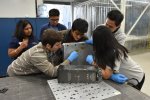
It’s a Briefcase! It’s a Pizza Box! No, It’s a Mini Satellite
Orbiting instruments are now so small they can be launched by the dozens, and even high school students can build them. High school students and faculty from Irvine, Calif., conducted tests that simulated the harsh conditions of space. Their latest tiny satellite, IRVINE02, went into orbit on Dec. 3…more

-NASA

-NASA

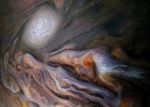
Nasa’s Jupiter mission Juno reveals giant polar storms
Nasa’s Juno mission to the gas giant Jupiter has reached its halfway mark and has revealed new views of cyclones at the poles. As it orbits the planet every 53 days – Juno performs a science-gathering dive, speeding from pole to pole…more

-NASA

-NASA


Saturn With No Rings?
It Could Happen, and Sooner Than Astronomers Expected. The “ring rain” that falls into the gas giant is so abundant that the icy bands could disappear in 300 million years, or even sooner…more

VG18, nicknamed “Farout,”

VG18, nicknamed “Farout,”

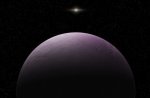
It’s the Solar System’s Most Distant Object.
Astronomers Named It Farout. Orbiting 11 billion miles from the sun, this tiny world offers additional clues in the search for the proposed Planet Nine. All they can see is a pinkish dot of light in the night sky, but that is enough to infer that they are looking at a…more

-NASA/JPL

-NASA/JPL

Nasa’s InSight deploys ‘Marsquake’ instrument
The American space agency’s InSight mission to Mars has begun to deploy its instruments. The lander’s robotic arm has just placed the bell-shaped seismometer package on the ground in front of it…more

-NASA/NRL/PARKER SOLAR PROBE

-NASA/NRL/PARKER SOLAR PROBE

Sun-skimming mission starts calling home
Just weeks after making the closest ever flyby of the Sun, Nasa’s Parker Solar Probe is sending back its data. Included in the observations is this remarkable image of the energetic gas, or plasma, flowing out from the star…more

Posted in January 2019, Sidereal Times | Tagged , | Leave a comment

From the Director

Rex


by Rex Parker, Director

See you in the New Year – the December 11 meeting is cancelled. Time seems more precious than ever as the year winds down, so you’re getting an evening back on your calendar! Thanks to you all for participating in this real-time astronomy experiment that is the AAAP. We’ll resume meetings again on January 8, 2019 with a novel presentation that Program Chair Ira Polans has lined up. You can read more on upcoming speakers in Ira’s section in this issue.

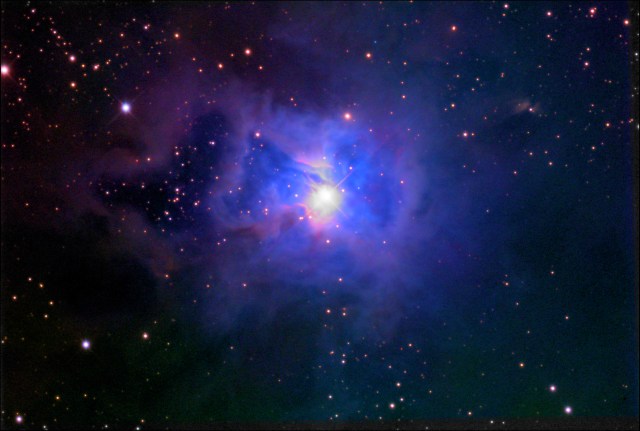
Recent lectures at AAAP – a tour de force of astronomy. Contemplating the splendor and wonder of the night sky from both aesthetic and scientific perspectives is a great way to wrap up a year of fine astronomy in AAAP. We’ve again had fascinating talks by knowledgeable guest speakers this fall. The recent presentations on the Harvard astrophotographic plates, stellar nucleosynthesis, spectroscopy, and human vision physiology can help us understand some of the complex processes driving star formation and the genesis of deep sky objects. For example, consider the reflection nebula NGC 7023 in Cepheus (image below).

NGC 7023, reflection nebula in the northern constellation Cepheus. Astrophoto by Rex Parker from home observatory in central NJ; 12.5” Cassegrain telescope and SBIG ST10 CCD camera.

Cepheus is a circumpolar northern constellation and always above the horizon at our latitude, so NGC 7023 is well-positioned now for imaging from New Jersey. The mysteriously beautiful and colorful nebula is a vast interstellar field of dust and gas surrounding a central star (near the middle in the image). This star, with the unartful name HIP-103763 (from the Hipparcos catalog), is larger than our sun (about 9 solar masses) and therefore hotter and more energetic. Stars of this size can fuse hydrogen to helium using the CNO cycle on the main sequence as we learned in October. This star’s spectral classification is type B2V, based on the Harvard sequence of stellar spectra originally developed from studies of the glass plates we learned about last month (and two years ago from Dava Sobel). If examined by spectroscopy the star shows strong Balmer lines of hydrogen emission, as discussed in September. The nebula does not emit light intrinsically, but glows by scattering and reflecting the intense stellar flux from HIP-103763. The color is intensely blue because the size of the dust grains in the cloud are similar to the wavelength of blue light, making the efficiency of scattering highest in the blue range of color perceived by the cone cells in the human retina, as presented in the 10 minute talk last month. NGC 7023 astrophoto by Rex Parker from home observatory in Titusville NJ, using 12.5” Cassegrain telescope and SBIG ST10 CCD camera.

Winter solstice – solar and clock time. Soon the sun will reach its most southerly apparent position as the temperatures drop and the days shorten. Solstice on December 21 brings the shortest day and longest night of the year, but the earliest sunset in New Jersey will be on December 8 (at 16:33 EST). This seeming disconnect has more to do with clocks than celestial mechanics, because our time system is based only approximately on solar days. Clocks run precisely on 24.0 hour days, while a solar day (period between solar transits) varies and is seldom 24.0 hours. The yearly relationship between apparent solar (sundial) time and clock time is shown in the graph below which shows the equation of time — above the axis the sundial is faster than the clock, and below the axis it is slower.

Posted in December 2018, Sidereal Times | Tagged , | Leave a comment

From the Program Chair

By Ira Polans

As mentioned in Rex’ article, there will not be a meeting on December 11. We will resume meeting on January 8.

For 2019 the upcoming talks and speakers are:
January 8 – Celestial Navigation by Frank Reed
February 12 – The Pope of Physics: Enrico Fermi and the Birth of the Atomic Age by Gino Serge
March 12 – Planet X and Oumuamua by Scott Tremaine

For the April or May, I am working on an Apollo related talk. As next year 2019 is the fiftieth anniversary of the Apollo 11 lunar landing.

Also in January, Jeff Pinyan will give a 10 minute talk on the 342nd anniversary of the determination of the speed of light.

I want to thank all the members who gave a 10-minute talk in the past. Maybe next year you’ll have a 10 minute talk to give.

Wishing everybody and their families a happy and healthy holiday season.

Posted in December 2018, Sidereal Times | Tagged , | Leave a comment

Arshad Jilani, Our Rocket Scientist

by Surabhi Agarwal

On November 8th, 2018, we lost yet another of our members and keyholder, Arshad Jilani. I had the honor and pleasure to get to know Arshad and his family for the past few years.

He came to the United States more than 40 years ago from Pakistan and worked for
General Electric’s Aerospace Business. During the early years of his career at GE, he was asked to work at NASA’s Jet Propulsion Laboratory on Project Viking. The project involved sending two probes to Mars. Arshad often told stories about his time spent in Pasadena and a few years ago he had written about it in the Sidereal Times. Here is a link to the article.

Two years ago some of us had the opportunity to travel to Oregon to watch the total solar eclipse with an ever enthusiastic Arshad filming the event for members to watch. See the film.

After his retirement, he dedicated himself in charitable causes and co-founded Swat Relief Initiative, an organization committed to women’s rights and girls’ education in rural Pakistan.

He is survived by his mother, wife and two children. He was well respected and loved by people who knew him. We will all miss his presence at the observatory and the club meetings.

Posted in December 2018, Sidereal Times | Tagged | Leave a comment

India’s Space Ambitions

by Prasad Ganti

Indian Prime Minister Narendra Modi stated boldly on August 15, 2018 that India will have one of its citizens in space by August 15, 2022 when India celebrates its 75th independence day. Sounds very much like President Kennedy’s declaration way back in 1961 of landing an American on the moon before the end of the decade. After a string of Indian space achievements over the last few decades, it sounds very plausible for this goal to be met. Just like American manned moon landing in 1969.

If achieved, India will be the fourth country in the world to do so, behind US, Russia and China. Understandably, other space achievers like Japan, Israel or European Union have not sent people into space. Not because of any failures. But it needs some extension of the non-human space missions and technologies to get there. The thinking is that automated space missions or the usage of robots can help in studying space. No need to risk human lives. Along with the bragging rights, manned space flight does result in development of technologies which can help a developing nation like India. Humans can still add value in space, which robots and automation may not be able to accomplish unaided.

There are more risks involved in a manned space flight than an unmanned one. The possibility of a loss of an unmanned space vehicle is only a financial risk. But the loss of human lives under the glaring headlights of the international media can attract a lot of flak. The first complexity of a manned space flight is the requirement of a life support system aboard the spacecraft. Living quarters, maintenance of an environment with pressured breathing air, drinking water, and food. Since only limited quantities of air and water can be carried into space, there is a need to recycle these elements. At present time, food is not recycled or grown in large quantities in space.

Some of the components and technologies do exist and some are in development. The crew module, which is shaped like a cone with its pointed top chopped off, is attached to a cylindrical shaped service module which contains the equipment for supplying air and water and the recyclers. The air consists of oxygen and nitrogen. The carbon dioxide is scrubbed using lithium absorbers, to remove the lethal gas from the environment.

The launch vehicle called GSLV Mark III (Geostationary Space Launch Vehicle) is already in use. The service module will be jettisoned before the crew module re-enters the earth’s atmosphere. The protection of the space capsule with heat absorbing tiles during the fiery re-entry and the subsequent slowing down using a parachute and the splashdown into the water has been tested before.

The emergency crew ejection system is being built and tested. In case of a disaster during the launch, the system ejects the crew to safety. The training of the crew to use the equipment and to live in the weightlessness of the space for a week, will be conducted in other countries.

The spacecraft itself would be called “Gaganyaan” which means a sky vehicle. And astronauts to be christened as “Vyomanauts” where “Vyoma” means space in Sanskrit. I also heard the term “Gaganauts”.

A billion dollar price tag for a week long human space odyssey may not sound much. But this goal is not set in the atmosphere of a cold war with unlimited budgets. It is set by a developing country where poverty still exists and prioritizing space over eliminating hunger does attract serious questions. Justifiably so. But it will be a giant technological leap for India. Paving the way for future plans like setting up a laboratory or a workshop in space or a base on the moon. Only sky is the limit.

Posted in December 2018, Sidereal Times | Tagged , | Leave a comment

tikun olam

by Theodore R. Frimet

tikkun olam

how Aesop met his end

I am having a difficult time incorporating our politics concerning the 2nd Amendment with this unnecessary death. This isn’t the venue, now, for a call to revisit the purposefulness of arming yourself, or other Americans.

It is beyond anyone’s imagination that a sixth grader wrote an award winning essay on guns, and gun violence in her neighborhood, only to be shot and killed, two years later, in the presumed safety of her own home.

The only consolation that I read, is from her mother. That she died a hero.

From Fox News…”I looked at her. She didn’t cry. She wasn’t hollering. She was just so peaceful. She didn’t deserve to leave the world like that. She didn’t,” said Bernice Parks.

And forgive me for begging that you no longer espouse your political views, no matter how dignified, and written in stone they may be.

Please for the love of g-d, give us all some breathing room.

This country is looking to us, nay the world is looking to us all as a bastion of dialogue, to guide their very souls to what is most expressive of our democracy.

And we should take great care to ensure that this discourse, our civic dialogue, is not so perturbate as to be the cause of any great distress to the ones who suffer the most.

In their time of need, you should do better and be aware of the pain and suffering of another American. That a mother should never see the day her daughter dies, needlessly.

And for the certainty of it, our Second Amendment need not shine its light of liberty at the cost of any one human beings life.

There goes into that good night
an asteroid that bears the mark
of Rosa Parks, 284996 Rosaparks.

Where there once lay a mark upon the earth
a cosmic convergence within our universe
and one woman did not yield.

And gave birth to the epicenter of movement
we knew as civil rights.

What more can we yearn
for an amateur astronomer to look
into the night sky with presence of mind
being ever hopeful.

Sandra Parks, writes in her essay, Our Truth, “we must fight until our truths stretched to the ends of the world”.

Astronomers know no such boundaries, as we move our prayers and thoughts beyond our common earth bound existence, and yield unto the heavens above.

tikkun olam.

Posted in December 2018, Sidereal Times | Tagged , | Leave a comment

Aesop rising

by Theodore R. Frimet

Aesop rising

her moment, a lifetime.

Time is not a constant throughout the universe. An intelligent and sentient life, within or without our galaxy, leads a time compressed experience. Our kissing cousins’ seconds, minutes, or even their eons of evolution will peaceably coexist amongst us as a microsecond ephemera.

How impervious to our experiential techniques to hunt for our lay brethren, that we be still in sack cloth, covered in the ashes of our withering and wanton trials. Walk you may thru the Universe; she shall gird herself, ever more the virgin, keeping safe her continents of life.

To read a book, one must first turn the page. Of course, you find fancy in the cover, and read the brief on the authors accomplishments. Let the night sky be your cover, and look no further. for there is nothing written for you to read. Aye, my mate, you must experience it, first hand.

Brandishing your 52mm eyepiece, round to make maximum use of light in an average amateur telescope, you peel back the deep. The sky is made to give you its due. You presently find the space between the spaces, where that great mystery lay. And behold, you travel forward into irreverent time, and tic the toc, ‘till you are no more.

Having passed thru the threshold of the neurological network, upon which you base your sanity, you find yourself immersed in a new revelation. You have discovered that there is no paradox. That we can move beyond three variables in the Drake Equation. And more than a discussion and a cup of coffee is there to greet you. You are no longer amazed, as you have pushed thru the maze herself.

Briefly you should stay the course in this dimensional manifold embedded in euclidean space. For if you tarry the longer, the night sky will envelope you with calculus and her derivatives. General equations aside, you will be vexed, forever with the math you have always sought to avert. With keen eye, you deploy averted vision, and see what could never before be seen. You record your observations, and make the report: “The deep, is black as ink, and falls off the edge of the nebulous crab.” You are lost, for a moment in time. Remember, though? Her moment was a life-time.

Posted in December 2018, Sidereal Times | Tagged , | Leave a comment

The passing of the shadow

by Theodore R. Frimet

The passing of the shadow

an “eglimpse” of the future

Well, my benefactor, once again, left a gift of a journal on the front table. There it waited patiently for the after event of another great Tuesday night lecture, at AAAP. I gingerly paged thru the tome, to my personal delight, and stumbled upon a really good article. Many well thought out pages were devoted to the human psychology and its limitations on being Mars bound. I dreamt of quoting a sentence, here and there, and interspersing my thoughts, as if to shed light on a topic that you, my dear amateurs, are already well versed and adept at. However, it was not to be. Although the veritable dog did not eat my homework, /i have cats/, I absentmindedly left this delicious magazine at an office site, far, far away.

And then our editor calls out, waiting patiently, once again for a submission. And I have to wrangle, nay slay the dragon of distraction, and ask, why, oh why has another month passed us by? I think out loud, with the sheer lunacy that you have come to know, “better that I lay down my armor, and give up my sword”. Then only by chance of true honesty, shall we find each other at the opposite ends of the habitat. Such is the destiny of vanquished minds, those intelligent wayfarers and educated planet bound explorers. Come, we should share the same outcome! Truly, my words shall separate us, as likely as it is, we would strangle each other on our voyage to Mars! Yes, please keep your distance, as we find this months substitute for prose, found in “A Hand Book of Solar Eclipses”, by Isabel M. Lewis, A.M., published 1924 by Duffield & Company. How non-profound, indeed!

Why speak of solar eclipses, so late in the night? At one o’clock in the ‘morn, I could not sleep. Tell me, then, what amateur astronomer does? Well, walk the walk to my back door and ponder the light on the lawn! Bear witness to the natural car beams that shew dual purpose. It both ruins the view to the nebulous and round, while shrieking its brilliant moon, with terminator, all aglow and with spurious detail. What better time to trip the light fantastic, and open a few pages of a copyright, dated from almost a century ago?

The pages, yellowed with time, list preface and twenty two chapters of well scripted lunacy. Where to start, is as good a question, as where best to end? Chapter IX gets the attention of the beast, as we shuffle off to page 36, and study the total solar eclipse of January 24, 1925.

Lewis starts right out of the gate and slaps me awake! Shouting from across 93 years, this author provokes me to study her time frame, that almost one hundred and twenty years had transpired, since the last totality observed from the Northeastern United States. She chides us into cognizance of the year 2024, which be just a smidge over a hundred years from her publish mark, that we will all share in our total eclipse, visible in New York, Pennsylvania, or New England, for that matter.

In tactical military intelligence, when one gives a dandy report, we remember to give the lay of the land. Our author goes to great extent to describe the boundaries, and paths of her “next January”. We find in this handbook a full accounting including the central line, shortest distances, and limits of the path. Contained within are saint like remarks, and best advice ever, “As the corona cannot be seen so long as the least percentage of sunlight remains and as the glory of the eclipse lies in the corona, it is advisable for this reason alone to get within the northern and southern limits of at least ten miles”.

Go forward and make observations, and be not faint of heart. Lewis reminds us of the June 8, 1918 eclipse that expeditions from Lick, Yerkes, and the United States Naval Observatory made, were accomplished in less than two minutes. Of similar time scope, were the eclipse of New Years Day 1889. And yet, some of us recall, more personally, from their more recent eclipse, of last years flavor, that weather held the upper hand. Clouds. Cloud parting. Clouds aggregating. Some areas snow, and travel to beat the snow resulted in natures cruel joke – that having sheltered in place provided a better view than driving a thousand miles to try to beat the impending storm.

I flip the tattered page reading the circumstances of the Total Eclipse of January 24, 1925 for Principal Towns within the limits of Lewis’ eclipse. Many of the numbers read well into the hundreds of miles distance to the nearest edge of the path. And then, it stares me right in the face. Newark, New Jersey, having only 5 miles to the edge, was blessed with a 99% magnitude, at the eighth hour Eastern Standard Time, with the greatest eclipse occurring at 9h 11m, and ending at partial eclipse at 10h 29m. Noteworthy contenders to our domain lists Trenton, our nearest neighbor, at 50 miles to the edge, as was Philadelphia Pennsylvania at 80 miles with approximate magnitude.

Isabel M. Lewis closes her chapter on the Eclipse of January 1925, never to suggest that we stay at the opposite ends of the scientific habitat. However, that we continue to extend to ourselves the hope, that the “weatherman will not fail to provide a suitable setting for the scene”. To wit, I distill the bile for you, and yield hope to all Amateurs, that our mission to Mars will not be fraught with the perilous Void, filled with deadly cosmic rays, or left to be beaten into submission by our monkey instinct. We will adapt. We always have. It will be known as the passing of the new shadow on the human race. The Void be damned, as the March of the Monkeys continues!

Posted in December 2018, Sidereal Times | Tagged , | Leave a comment