Planetary Protection

by Theodore R. Frimet

Planetary Protection

and then there were none

There are some pretty cool things that come into your email inbox, from time to time. And September 24th was no exception. Hailing from The National Academies of Science Engineering Medicine, I am alerted to the latest publication. Prima facie my chosen topic preference appears to now be available by purchase, or free PDF download. Enter Review and Assessment of Planetary Protection Policy Development Processes. And of course, I am giddy with happiness as I download the free PDF. To learn more, please visit nap.edu

There are historical and modern approaches to planetary protection, and I would be happy to touch upon a few salient points. But first, let me break the hearts of all Amateurs, and Professional’s alike. Planetary Protection is not about Space Force, or destroying minor planets or asteroids before Earth doomsday impacts. It is more akin to making sure that as we explore our outer worlds, that we do not bring Earth bound contaminants with us. How unhappy would we be, if first contact with biological trace on Mars, was due to human or Earth centric fauna and flora?

Further, let us couple the Drake Equation and an old movie favorite of mine, The Andromeda Strain, to over-reach and acknowledge the burden of knowing that “we are not alone”. Let us not accidentally become in contact with a life form, no matter how minor the xtra-terrestrial beasty might be – as it will have an impact on Earth’s ecology. At the least, it will muddle up the science of exobiology. However, with human beings and our agricultural vertebrates leaving only 5% to the remaining 5,000 vertebrate species on Earth, I fear for very little. If we pay lip service to Planetary Protection, truly Water Bears and the Class Insecta will become the dominant life form.

In 1967 an Outer Space Treaty (OST) was kindled by international and federal law. We have all been blessed, that for the last 50 years, that we have had something in common with the rest of our planet. Outer Space. Not to be outdone, we also have The Committee of Space Research, also known as COSPAR. Whose guidance, it tuns out, is not binding under the OST. Nutz!

I initially stumbled upon COSPAR when I was researching my ECHO I plates. By the by – I continue to be in a holding pattern for the archival process to be written and and accepted by the curator at the Smithsonian. Truly, this is nothing to be taken lightly – as acceptance of historical photographic plates of our first transnational satellite communication system takes lodes of time to digest and ponder. Come on, ‘M’ – I will make the trip to Washington myself!

Ok, let’s get back on track with the good stuff. Everyone is excited about visiting Europa and deep sea diving. And yet, to fast track any off world surf and turf would require stringent methodology to protect the waters of life, well…from life itself. Keeping with the times, we have known since the 1990’s that water wasn’t limited to the boundaries of Earth. Regardless if it is NASA or COSPAR, we Amateur Astronomers must stay abreast of nascent developments. It is incumbent upon us all, to weigh in on the politics of the day, and make sure that we do not stick our biological noses into thriving or developing exo-zoological systems.

Mars. So close this time of year, and yet my shrubs have grown so high that a vista to the South is blocked. Coupled with the many clouded days of yore, I wept silently into many a night. I turn my tears into powerful ascertainment that today is the day that I trim the verge. Where were we? Ah, yes. Mars. A visit to the below web page, hosted by NASA, and brought to our attention by page 32 of the National Academy of Sciences document (ibid) is a welcome sight!

https://www.nasa.gov/centers/kennedy/about/history/50thgallery/1975-01-07.html shows us the container used for the Viking Lander I. After sterilization, that is dry baking at over 111 degrees Celcius for 30 hours, the probes were sealed in a protective bioshell. The bioshell is a poster child for planetary protection policy. Due to budget limitations, and a broad spread of vendors that produce parts and crafts, what was orchestrated by NASA, in the day, is difficult for me to envision as being practical for today’s science exploration. Further reading into policy is not for the feint of heart. However, given the logistics of modern space exploration, new avenues of planetary protection are to be explored, and utilized. Cue the Amateur. Wink. Wink. Nod. Nod.

Let us touch upon orbital debris, for a moment. It wasn’t until the time of President Ronald Reagan, circa 1988, when policy was first mentioned to minimize the creation of space junk. We continue to design methods to define the environment, and limit the growth of nuts and bolts in space. There are international dialogues and inter-agency co-operations that help assess debris impact, before missions ever take flight. Discussion over the years, led to the creation of the Inter-Agency Space Debris Coordination Committee (IADC) in 1993 (ibid p113). As an aside, high level cooperative discussions and decision making are sent to the United Nations Committee on the Peaceful Use of Outer Space (COPUOS). From there, the UN General Assembly makes the guidelines. On December 22, 2007, the UN adopted mitigation guidelines under resolution 62/217. Here is the web link below,last accessed Saturday, September 29, 2018 at 9:35 AM EST: http://www.un.org/en/ga/search/view_doc.asp?symbol=A/RES/62/217

And Then There Were None. Yes, I prefaced Elon Musks’ car launch of a Tesla into space with the title of Agatha Christie’s most difficult novel for her to write, ever. I feel her pain, as I finish laying my golden egg, and soon to bid you adieu.

Good job, Elon. Nice way to contaminate and avoid Planetary Protection policy and guidelines. Wait a minute? Did he actually violate any law or guideline? Turns out Mr. Musk and SpaceX are within perfect bounds. The Falcon Nine Heavy launch of February 6, 2018, according to the below weblink, referencing Appendix H of the National Academies Report on Planetary Protection, last accessed Thursday, October 4, 2018, 10:21 PM EST:

https://www.nap.edu/read/25172/chapter/17

reads that “the payload and trajectory were only generally defined with no direct reference to a Mars-targeted orbit” back in August 2017, when NASA responded to the FAA’s launch license. NASA calculated limited trajectories for the Tesla Roadster, and “was not in a position to confirm the probability of an impact on Mars”, and it is given that Mr. Musk did not include plans for a fly-by, orbiter or lander for a target body. The FAA launch license was consistent with Mr. Musks’ Twitter feed. And, “a spacecraft not encountering another planetary body is not subject to NASA or COSPAR planetary protection policy”.

My gut instinct is to make a call for further planetary protection, however I do not care for intrusive policies that limit the imagination and outreach of scientists, both Amateur and Professional. Or, to turn a page to the home World of Superman. If Jor-El listened to his council, we would never have had six great full feature films to watch. May it be fortuitous that we have not less than five more launches for good measure! Please, though, remember to keep your seats and trays in the up-right position, at all times!!
Posted in October 2018, Sidereal Times | Tagged | 1 Comment

‘Interstellar Visitor ‘Oumuamua Came From 1 of 4 Nearby Stars

by Ashwani Saxena

‘Interstellar Visitor ‘Oumuamua Came From 1 of 4 Nearby Stars

link :
https://www.extremetech.com/extreme/277808-interstellar-visitor-oumuamua-came-from-1-of-4-nearby-stars

Posted in October 2018, Sidereal Times | Tagged | Leave a comment

Pioneers in understanding our Universe

by Prasad Ganti

Pioneers in understanding our Universe

Bell Labs was the research arm of the telephone company AT&T. In the telecommunication business, the scientists got to experiment with different radio antennas. And as an act of serendipity, came up with two of the most significant discoveries in astronomy and cosmology in the twentieth century. I was curious about finding the relics of these two accidental discoveries and went on a trip, about an hour’s drive from my home to find these historic antennas.

Going in chronological order, first pioneer is Karl Jansky who during the 1930s while testing his radio antenna, discovered radio waves coming from space. Till then, radio waves only came from terrestrial radio or TV stations. Or other radio transmitters on the ground. Getting waves from outside was really an abnormality. Jansky found that the radio waves were coming from the center of the Milky Way, from the direction of the Sagittarius constellation. Jansky published his work but no one paid much attention to it. Jansky died young in his 40s. After the second world war, scientists in US, Europe and Australia started building radio antennas and receivers to receive signals from outer space.

The field of radio astronomy grew since the 1950s and Jansky was recognized after his death. A unit called Jansky (amount of radio signal in watts received per square meter per Hertz) has been named in his honor. Today, radio astronomy is as important as optical astronomy using telescopes. By tapping signals from radio, microwave, infrared, visible light, ultraviolet, gamma rays, x-rays, leading to multi-messenger astronomy, lot of our Universe has been discovered and confirmed. After all, objects in our Universe do not transmit signals which are more convenient for some humans in a distant part of a distant galaxy to see with their eyes or their telescopes. Our telescopes needed redefinition, and that happened courtesy Jansky.

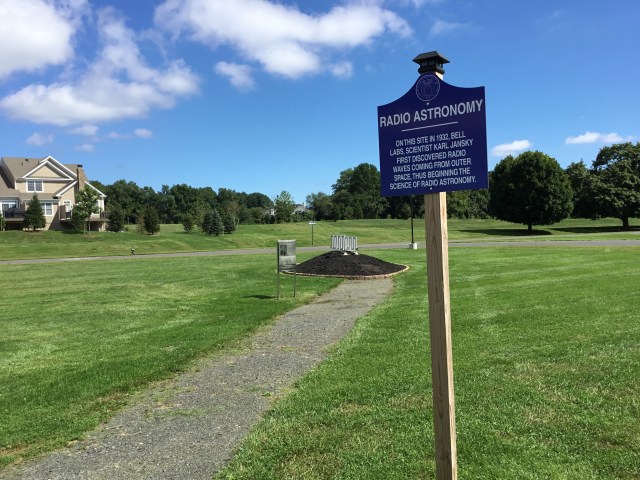
I found by searching the internet where the Jansky antenna is. The original antenna unfortunately is not there any more. A replica has been built and installed in Green Bank in West Virginia, where major radio telescopes are stationed. I hope to visit Green Bank someday. However, a monument is there in 101, Crawfords Corner Road in Holmdel, New Jersey. I tracked down the place. The address points to a building which is a modern day research lab. There are two concentric roads around the building. It is not easy to find the monument. I kept driving on the concentric roads a few times and then located the monument in between the two circular roads. It looks more like a bicycle stand, but I do respect monument as a shrine to Radio astronomy. Given below are three pictures taken using my iPad pro.

Next discovery came in the 1960s. Two scientists Arno Penzias and Bob Wilson were testing a horn antenna, which is used in transmission and reception of signals involving microwaves. They found some noise coming into the receiver. They thought it is related to some ground based sources, or due to some dust and bird droppings. All the cleaning was done, the antenna rotated in all directions. Yet the same noise persisted. This is the same noise we see on our TV set when a station is not transmitting any signal on a given channel. Those black and white dots with a hissing noise is what Penzias and Wilson received. Word spread about this discovery.

At the same time in nearby Princeton University, some scientists have speculated the existence of Cosmic Microwave Background radiation (CMB) in support of the big bang theory which explains the formation of our Universe about thirteen billion years ago. Penzias and Wilson met the Princeton team and the discovery was confirmed. This background noise is the leftover from the creation of the Universe. The oldest relic from the birth of our Universe. Since then, three satellites have been launched to study and confirm the theory. Penzias and Wilson were honored with the Nobel prize in Physics in 1978. The discovery of CMB certainly led to a revolution in cosmology, in our understanding of our Universe.

Fortunately, the original antenna is still there and enshrined at 791 Holmdel Road in Holmdel, New Jersey. I visited the historic site and given below is the picture taken with my iPad pro.

These monuments are certainly milestones in the human quest to picturize our Universe. And I am glad that they exist to inspire the posterity.

Posted in October 2018, Sidereal Times | Tagged | Leave a comment

Snippets

compiled by Arlene & David Kaplan

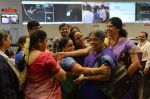
Women of India's space agency -BBC

Women of India’s space agency -BBC

Rocket woman: How to cook curry and get a spacecraft into Mars orbit
This picture of women at India’s space agency celebrating the Mars orbit went viral.
Can you guide a spacecraft into orbit around Mars and cook for eight people morning and night?…more

-ESA

-ESA

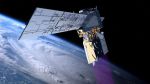
Aeolus: Space laser
The British-built Aeolus satellite has begun firing its laser down on Earth to map the planet’s winds. It is a big moment for the European Space Agency mission, the technology for which took 16 years to develop…more

The RemoveDebris satellite

The RemoveDebris satellite

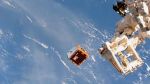
RemoveDebris: UK satellite nets ‘space junk’
A British satellite has successfully deployed a net in orbit to demonstrate how to capture space debris. The event took place more than 300km above the Earth. It was part of a series of trials that will showcase different technologies ..more

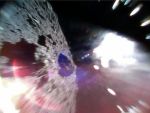
A picture taken by one of the rovers on the asteroid's surface. The white area on the right is due to sunlight

A picture taken by one of the rovers on the asteroid’s surface. The white area on the right is due to sunlight

Hayabusa-2: Japan’s rovers send pictures from asteroid
Japan’s space agency (JAXA) has made history by successfully landing two robotic explorers on the surface of an asteroid. The two small “rovers”, which were despatched from the Hayabusa-2 spacecraft on Friday, will move around the 1km-wide space rock known as Ryugu…more

Hayabusa-2: Some more picturesmore

Posted in October 2018, Sidereal Times | Tagged , | Leave a comment

From the Director

Rex


by Rex Parker, Phd director@princetonastronomy.org

New Season Begins Sept 11. AAAP will resume regular monthly meetings on Tuesday Sept 11 (7:30 pm) at Peyton Hall, home of Princeton University Dept of Astrophysical Sciences. Several new members have joined this summer, and so I extend a starry welcome to you along with the rest as our ranks approach 100-strong heading into the season. Oh and lest we forget, dues ($40) for the full year are renewable each October. Thanks to webmaster Surabhi, you can now renew on-line; go to http://www.princetonastronomy.org/membership_renewals.html. As an added benefit, see the exciting news below about access to amateur affiliate status in the American Astronomical Society.

The parade of planets this summer put Venus, Jupiter, Saturn and Mars on display in the best sky positions we’ve had for years. But unfortunately the Mars opposition didn’t turn out so well, with the Martian planet-wide dust storm obscuring telescopic details and only now beginning to settle down. The rare new-moon-coinciding Perseid meteor shower was a bust as well, unless you were fortunate enough to find clear skies elsewhere in mid-August (not just Jersey, I was clouded out at Acadia National Park in Maine). It’s too soon to give up on Mars just yet though, and I urge you to head out to AAAP’s Washington Crossing Observatory in September while it’s still close to opposition. Mars will be 20 arc-sec in diameter on Sept 5 and drop below 16 at month’s end (at opposition it was a little over 24).

Observatory public Friday nights this summer have been enthusiastically attended by hundreds of folks from around the region, with some of the best turnouts we’ve seen in recent years. The new equipment has performed well and Keyholders have learned the new cameras and software which enables deeper more detailed views than glass eyepieces can deliver. Not to say that direct eyepiece viewing is outmoded, not by a long-shot, especially with the premium Televue oculars we have in the facility. I would like to express a big THANKS to the Keyholders and Observatory and Outreach Chairs, who have put in a lot of dedicated and informative hours at the observatory to drive successful public outreach this summer.

Exciting Development! – Amateur Affiliate Membership in the American Astronomical Society (AAS) for AAAP Members. If you’re ready to participate in science outreach and education at a deeper level, if you’ve wondered how you could access serious astronomy and astrophysics journals, now you can! We have arranged for AAAP members to become amateur affiliate mmembers of AAS — without needing to join a national organization such as AAVSO first as has generally been required. The amateur affiliate membership gives full access to their professional science journals and web-based astronomy tools such as the AAS WorldWide Telescope web client. It includes the journals listed below and other benefits such as meeting attendance, at an annual cost of $52 membership plus $25 journal access. To join, go to and follow the membership tab links, and using the pdf form-fill software that pops up, enter Amateur Astronomers Association of Princeton as your amateur affiliation.

The American Astronomical Society is the major astronomy professional organization in North America. Founded in 1899, its membership of ~7,000 includes astronomers, physicists, mathematicians, geologists, engineers, and others whose interests are in the broad spectrum of astronomy. The AAS seeks to increase public support for scientific research, improve science education at all levels, steer young people to careers in science and technology, and make evident the connections between science, technology, and prosperity. AAS publications include: Astronomical Journal (AJ), Astrophysical Journal (ApJ), Astrophysical Journal Letters (ApJL), Astrophysical Journal Supplements (ApJS), Research Notes of the AAS.

Jersey StarQuest (Oct 5-6, 2018). The 27th StarQuest event sponsored by our club once again will feature Electronic-Assisted Astronomy (EAA) live on the observing field. EAA is the emerging technique of using a digital imaging device in lieu of an eyepiece at the telescope for near-real-time viewing (distinct from long-exposure deep sky astrophotography). Several EAA equipment setups will be available for you to see and learn at StarQuest, as well as eyepiece-based systems. Weather-permitting, telescopes will be running all night giving you a chance to learn from experienced members even if you don’t yet own a telescope. See the announcement below for more info. We’re requesting that you return an intent-to-participate form (in the flier sent by e-mail to all members, and on the website) but no advance payment is needed, pay upon arrival.

Once again we’ll be hosting the Jersey StarQuest astronomy weekend at the Hope Conference and Renewal Center in north Jersey . This is a fun, educational, and inspiring observing-oriented event for both Friday and Saturday nights at one of the best relatively dark sky locations in the state. The Hope Center is located just north of I-80 a few miles north of Jenny Jump forest, and offers clean bunkhouse accommodations or camping on-site, and a kitchen for cooking if desired. Restaurants are within a few minutes’ drive. If you’re experienced or just beginning, a new member or veteran, even if you don’t own a telescope, here’s your chance to learn hands-on about astronomy and observing.

  • Walk-in registration, no advance payment or pre-registration needed. You can decide to attend at the last minute. We will ask that you send in a non-binding intent-to-participate form to help estimate needs for Hope Center.
  • AAAP member-oriented event, a chance to make friends in the club. You’re encouraged to invite family and friends who may not yet be members.
  • Low costs. The club subsidizes the costs, we do not make money on the event but the more people attend the better the economics for the club.
  • No meals provided. You should bring your own food and plates or plan on restaurants ~15 min away. The Hope Center’s clean, well equipped kitchen is available.
  • Hot and cold drinks and snacks, esp. coffee will be provided.
Posted in September 2018, Sidereal Times | Tagged , | Leave a comment

From the Program Chair

By Ira Polans

Welcome back to the new season of the Amateur Astronomers Association of Princeton! The September AAAP meeting is on the 11th at 7:30PM in Peyton Hall on the Princeton University campus. The talk is on the “Spectroscopy for the Amateur Astrophotographer” by Robert Vanderbei, Princeton University and AAAP club member.

After years spent taking astrophotographs of beautiful star clusters, nebulae and galaxies, Bob recently purchased a relatively inexpensive diffraction grating that fits in my camera’s filter wheel. He can now produce stellar spectra and is having lots of fun taking spectral pictures and learning about stellar spectra. In his talk Bob will haring what he has learned

Luisa Villani will give a 10 minute talk “Introduction to Meteorites”. This talk will give a brief explanation of the different types of meteorites, how they form and their visual characteristics, and then we will look at samples with a digital display telescope and identify them.

Prior to the meeting there will be a meet-the-speaker dinner at 6PM at Winberie’s in Palmer Square. If you’re interested in attending please contact no later than Noon on September 11.

Parking is available opposite Peyton Hall.

Posted in September 2018, Sidereal Times | Tagged , | Leave a comment

From the Outreach Chair

Y’all come out now!
Gene Allen, Outreach Chair

Upcoming Outreach Events

It would be great if more of our Members – with or without their own hardware – mixed it up at our Outreach Events and Public Nights. Bring your enthusiasm for things cosmic and bask in the appreciation of those who invited us or just showed up to gasp in awe. The more the merrier, and you may even catch the Keyholder bug.

Here is a recap of Outreach Events as recently emailed, but with the Labor Day WCSP Solar event correctly placed:

Still, the website calendar RULES!!! Please watch it for opportunities and updates.

August 10 at Simpson Observatory

The Girl Scout leader took ill and they cancelled out of the campout and planned visit on the day of.

August 24 at Simpson Observatory

Civil Air Patrol Cadets were due to visit and we had good support scheduled. Personally unable to attend one of the few clear Friday nights of the summer, it is hoped that a good time was had by all.

August 26 off Keefe Road in Lawrence

After being warned off by a Member because of the severe dust issues he has experienced at this event, your Outreach Chair withdrew AAAP participation from the Full Moon Magical Bike Ride.

Saturday, September 1 at WCSP Nature Center

This is a repeat of the Memorial weekend solar observing event, hosted jointly by WCSP and AAAP. Set up at noon thirty to open for a 1300-1500 public session. Cloud/rain date will be Monday, September 3, Labor Day, at the same time.

Saturday, September 15 REI Campout in Hopewell

This event is still a “go,” and we have three participants so far. Anyone bringing a scope is invited to camp overnight for free in the D&R Cedar Ridge Preserve on Stony Brook Road. Check out the maps attached to the calendar entry and come join us. They are requesting an educational presentation of some sort, so educators and experienced Members are especially invited.

Wednesday, October 3 in Princeton

This event is still pending, but if you could participate, please save the date. We are requesting Member scopes to provide a stargazing opportunity 1900-2300 for guests at Morven Museum & Gardens. No Moon but the tallest trees in the southwest raise that horizon to nearly 30 degrees. We have no volunteers yet.

Saturday, November 24 at the NJ State Museum Planetarium

Presentation “Choosing your first telescope” will be offered 0930-1030.

Posted in September 2018, Sidereal Times | Tagged , | Leave a comment

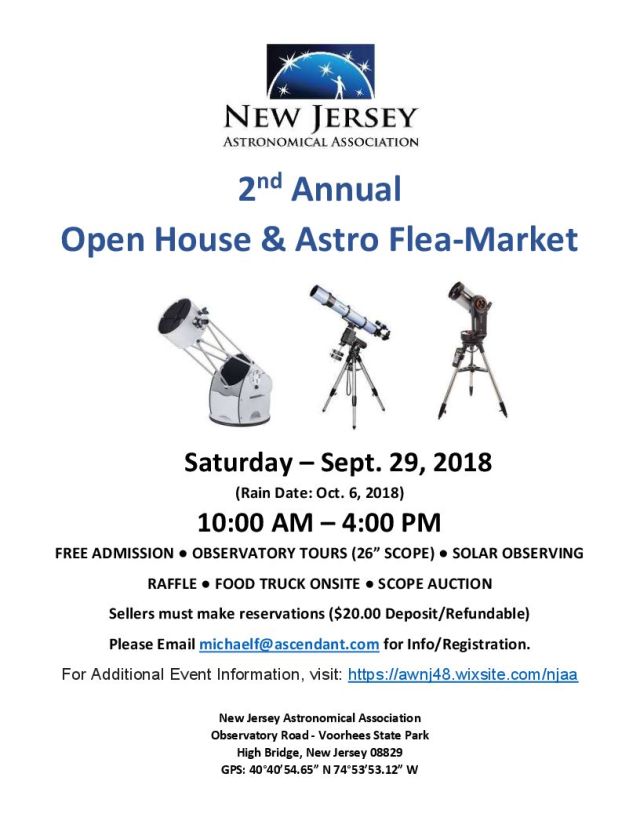
NJ Astronomical Association – Open House & Flea Market – Saturday – Sept. 29, 2018

The New Jersey Astronomical Association (NJAA) is planning an Open House and Astronomy Flea-market on Saturday, September 29, 2018 (rain date – Oct. 6) at their observatory – Voorhees State Park, High Bridge, NJ. Event hours are: 10:00 AM – 4:00 PM. Tours of the observatory, solar observing, door prizes, raffle and food truck will be available onsite.

For flea-market sellers, limited tables/chairs are available (first come/first served). For Sellers, there is a $20 registration fee (refundable at end of event).

More information and registration details on the flea-market are available at: https://awnj48.wixsite.com/njaa or by emailing michaelf@ascendant.com.

Come enjoy a day of astronomy, buying & selling. Buy that difficult to find scope/eyepiece/mount you’ve been looking for!

General information about the NJAA may be found here: http://www.njaa.org/

Following is the flyer for the event:

Posted in September 2018, Sidereal Times | Leave a comment

Planetary Photography in the Film Era

by John Church

Planetary Photography in the Film Era

Back in the 1970’s (BC = “Before Computers”) I had my own modest home darkroom and did a lot of film developing and B&W printing. I was greatly helped in this effort by advice from a professional photographer at work and an experienced lunar and planetary photographer in the AAAP.

I learned about things such as compensating developers to reduce the inherently high contrast of extra-fine grain film such as Kodak’s High Contrast Copy and a similar film called H&W Control. I also learned about advanced printmaking techniques called “dodging” and “burning in”, and which grades of printing paper to use in various situations. One of my lunar photos and two of my planetary photos taken with the 6-1/4 inch Hastings-Byrne refractor were published in Sky & Telescope. The lunar photo is currently on display in our observatory.

In those days we didn’t have such things as Photoshop or the ability to overlay several negatives to get rid of local film defects and bring out details that an individual exposure might have missed. However, we still got by. What we did was to take many consecutive exposures of the same object and print the best single negative.

Before I took custody of the Hastings-Byrne in the fall of 1972, I used my Edmunds 4-inch refractor for lunar and planetary work. It actually did pretty well. Here is my photo of Mars taken at 11 pm on August 18, 1971 near its very favorable opposition of August 10. Its closest approach to Earth had been on August 12 at a distance of only 34.9 million miles, which is nearly as close as it can get. And to top it off, there was no planetary-wide dust storm such as the one we’ve had to suffer through this year. I was fortunate in that the seeing was very good on that particular evening, helped out by a slightly hazy sky. South is up and east is to the left.

 j. church photo

j. church photo

For those interested in the technical details, I used Barlow projection at an effective focal ratio of about f/60 to get as large an image on the negative as I conveniently could. The film was High Contrast Copy in a Praktina SLR with the lens removed, and the exposure time was 12 seconds. I made the print using 22 x floor projection, with the enlarger lens set at f/4 and an exposure of 15 seconds on Kodabromide F-5 paper. I’m afraid, however, that little of this will make much sense these days. Unfortunately, I seem to have mislaid the orginal negatives and so no further enhancement would be possible.

I used a convenient application on the Sky & Telescope website (https://www.skyandtelescope.com/observing/interactive-sky-watching-tools/mars-which-side-is-visible/) to find the longitude of Mars’ central meridian (10 degrees) on that UT date and time, i.e. August 19, 1971 at 0300 UT. This application also provides an image of the surface with the central point shown in a red circle at that time. As with my photo, south is up.

Comparing this with my photo lets us identify several features. First of all, the south polar cap is conspicuous. Sinus Meridiani is just below center and slightly to the left, with Noachis above it. Sinus Sabaeus extends leftward from Sinus Meridiani and Mare Serpentis is above the latter. The well-known feature Syrtis Major is disappearing on the left limb, with Iapygia and Hellas just above. Mare Erythraeum is conspicuous above and to the right of center.

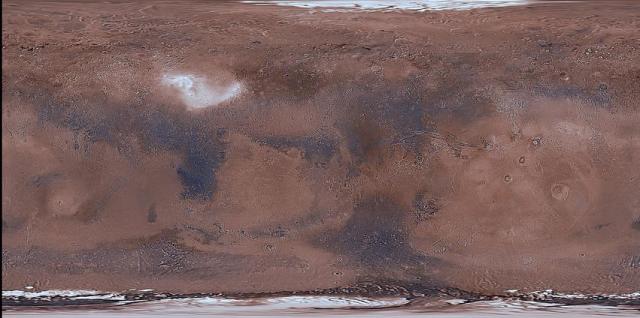
To make things even more interesting, here is a Viking Orbiter mosaic image of Mars in a Mercator projection, with 0 degrees longitude in the center and south up. Many of the same features are obvious here. Hellas has frost on it, which is a fairly common occurrence in this low-lying area. [Credit: NASA]

Note the famous Valles Marineris as a nearly horizontal streak in the westward part of Mare Erythraeum. Could I possibly have caught a hint of it in my own photo? I like to think that maybe I did.

Posted in September 2018, Sidereal Times | Tagged | Leave a comment

I got burned

by Ted Frimet

I got burned

clouds, sun and the fabric of space-time

Well, I was out late last night, with my 12” Dobsonian, and my feral cat Priss. She was a good girl, and stayed aloof, while the local gophers and skunks didn’t venture very close. Actually, no critters at all!

All was well. Despite the heat and humidity, the stars didn’t twinkle much that night. I must conclude that the upper atmosphere was stable enough to try out a 6.7 mm eyepiece on the Ring Nebula. However, I settled into an 11 mm for the best part of the evening. Later on, while into my second bottle of water, I put in a 2 inch 56mm, and kicked back and watched the star show.

I had attempted a long sleeve shirt to ward off mosquitoes, but the humidity was too trying. Down to a tee-shirt and some Deep Woods Off, I must say, that there were either no buggers about, or the repellent worked most excellently. An outdoor astronomer can ask for nothing better. Truly.

Days leading up to my few hours of scope time, I was pondering Sol. The conundrum of the outermost part of our Sun, being hotter than the inner part is, to say the least, counter intuitive. However, with the presence of iron at its core, a cooler internal temperature must prevail.

Soon, the Parker Solar Probe, http://parkersolarprobe.jhuapl.edu, should collect the data to help us make heads or tails of the plexing nature of inconsistent temperatures. And unlock a few more mysteries contained within.

Last month, I wrote an essay on Cepheid Variables, and noted how Helium sucks light. Knowing that the suns surface was hotter than its core, gave me pause on the conclusions I supported, within the essay.

As of late, I turned to a youtube channel, in the hopes that there might be some clarification. I didn’t find much. Not just yet.

I commented on the above youtube channel:

Hi. At time slot 5:07, we are stating that the further away from the core of the star, the cooler it gets. This isn’t so with our star, so why would it be true with a cepheid variable? The conundrum we are trying to work out, as vexing as it is, is that the periphery of our Sol is HOTTER than the internal core.

I wrote an essay based upon similar ideas that you presented, and neither of our statements seem to hold water.

I wrote:

“I crawl from under the weight of my books, my tempest, and key into Wikipedia, https://en.wikipedia.org/wiki/Cepheid_variable (5). It’s author(s), brings to light so simply that it is the veil of Helium that obscures our light. That during the due course of ionizing helium, the ionized gas becomes opaque, even more so, when both electrons are stripped off. The trapping of heat, that is an increase in temperature, causes an expansion. And with this expansion comes a subsequent cooling; it becomes less ionized, permitting contraction, and allowing starlight to escape. It is known as the Eddington Valve (or kappa-mechanism).”

Here is the full essay:

https://princetonastronomy.wordpress.com/2018/07/28/man-bites-dog/

Of course, it comes to mind, that I was just comparing a core to the corona. Perhaps all the physics takes place at the periphery of the star,

and has little to do with the internal workings of the cepheid, herself.

Working backwards in time, I didn’t stop there. There have been many times during outreach, when I help people visualize the solar activity, and make it akin to earth bound clouds. It is within this scope, that I have given this a few days thought.

As a reminder, when we look up at a cloud, we do not see into it. For all practical purposes, when we use our naked eye telescopes to peer at this meteorological wonder, we only see its periphery.

You always see the outside of the cloud.

I have been trying to use a visual model of clouds, to try to understand how celestial matter shapes space-time. So far, I have managed to ascertain a thought model that the interaction happens at the periphery of the cloud, and not within. That is, there is no averaging of matter density and a calculated point within the sphere of the sun, earth or moon, when it comes to interacting with fabric of space-time. I allude that it happens at the skin.

Well, that is all that I have, so far, and will continue on with my quest to establish space-time curvature with matter.

Now, I am thinking about clouds, once again. The light scattering affect does not come from within the cloud. And a point of fact, that the light you see does not come from direct tangential photons, either. Light streams across and interacts broadly through-out the surface of the cloud. And we get to see it. If we had the biological capacity, we could see it holographically. Well, I will leave that to holographic photographers to show you the clouds, some day.

And then I thought about star light.

Yes of course photons take millions of years to pass from the furnace below sols surface. And eject at the periphery. Though, we never really considered that photonic activity streams across the surface of Sol, and that we get these tangential streams striking our retinas. That is, the light that you see, may not have come directly from the point you think you are looking at.

If we were to simplify the surface of the sun, as a sphere, then it becomes more tangible to visualize energy passing across the surface, akin to a tsunami wave across the curvature of our greatest and vast oceans.

The wave can contract or expand. The tsunami can grow in height, or become a shrinking violet. As a tsunami encounters shallow water, its velocity decreases, and its height grows.

https://earthweb.ess.washington.edu/tsunami/general/physics/transform.html

Well, it is well worth noting that the maximum velocity of light does not alter. However, there are a few encumbrances that do affect the velocity of light in a medium.

The outer sphere of the sun is akin to shallow water, as it is less dense. I can only hope that the Parker Probe confirms this.

And in the case of ionizing Helium, which originally blocked light from escaping, in a cepheid variable, is affected not by a cooling affect, but by an increase of wave velocity in the shallow waters of the suns photosphere.

Not unlike the tsunami, whose height grows in shallow water, the periphery of our sun grows in response to diminished densities. Ultimately, this drop in density permits Helium to collect its precious cargo of previously stripped electrons, and allows the passage of a greater energy flux.

Variability of cepheids is based upon a tidal ebb and flow across a suns surface.

Posted in September 2018, Sidereal Times | Tagged | Leave a comment