Messier Visit

by Gene Allen

Bill Murray’s excellent review of Charles Messier’s life and work at a meeting last spring inspired me to take some of our time in Paris to visit the site where his famous catalog was compiled. The building itself dates from 1480, when it was constructed alongside the ruins of Roman baths to house abbots of the Clugny Order. In the 18th century it was rented by the Royal Navy, and the Observatoire de Marine was added atop the tower in 1748. The observatory consisted of a wooden pyramid with opening glass windows through which Messier hunted for comets. It was removed not too many years after his death in 1817.


Today the edifice is known either as the Hotel de Cluny or the Musée National du Moyen Age, and it can be found just about four blocks south of Ile de la Cite, the island in the Seine on which the Cathedral of Notre Dame is located. It was closed on the day we were able to swing by, but we were content to capture a few photos from outside. Several Trip Advisor posts had reported that the building’s astronomical history and significance is completely unknown to its current staff, which is rather shameful.


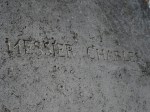
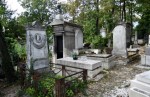
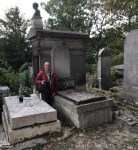
The minimalist design and obscure location of Messier’s grave further testifies to his lack of stature in greater French society today. It is located in the Père Lachaise Cemetery more to the east in Paris, squeezed among other tombs, up in back of the rather grand memorial to Frédéric Chopin. His name does not appear on the index at all.

(click on picture to zoom)

Posted in November 2018, Sidereal Times | Tagged , | Leave a comment

void, a bizzaro essay

by Theodore R. Frimet

void

a bizzaro essay

I wrote a bizzaro essay. And am afraid to post it anywhere, other than here.

Of course, an AI program at Google will savage me. And commit my drooling words to become a permanent fixture in its latent subconsciousness. How sad for the AI.

You, my friends, will not be quite so affected. What follows is not ramble. It was a predetermined effort to let you know how my mind actually ticks. And it looks like I am missing a few seconds!

As there is some Astronomy mentioned, I leave it to you now, as I post it for your eventual perusal.

Here it is.

THE VOID.
When I was a child, perhaps at the age of four or five, I was reading aloud. My older sister asked me to read silently to myself. I had only recently mastered the audition of words. I asked, “how do you do that”? She replied, “there is a voice in your head, use it”. No longer being bound to the words on the page, I began to enter the world of stream of consciousness.

There are players. And then there are actors. Can I bring players and actors together? I don’t know. I do know how to write a list. And like the rest of us, I also know how to leave the task, undone.

There comes a time to reconcile the information one gathers over a lifetime. With the benefit of friends, and acquaintances, one or more of us can make certainties out of the uncertain. There is a lot of head space and timing (1) between all things described in our Universe. What follows is information overload for most sentient beings. I did, however, manage to make it a short list.

When did our Universe cease to exist? To be more precise, if not accurate, when I say ‘our’, I mean not ‘our’ in the exclusive anthropoetic (2) sense.

I predetermine this inclusionary question to incorporate the all-seeing, all-knowing, and ever obstinate Universe that pervades the senses. And yes, this goes beyond the five percent or less of what is normal. Dark matter and energy never quite acquiesces to being measurable by our meager means. Besides, it is the new Void.

THE LIST.
Dark Matter — 27%. Nothing known except, maybe it is the bulwark and framework that supports our brethren guts of creation.

Dark Energy — 68%. Another nothing known. A second maybe that pervasively and without our understanding pushes the space between space.

Normal Matter — 5%. Ok. What is normal? This question has no business appearing in what you currently perceive to be a metaphysical work.

Black Hole — Thank you Stephen Hawking for letting me be brief.

Earth — see Douglas Adams.

Worm Hole — never going to read, or see that phrase appear anywhere here, in this tome.

Blazar — nasty business about gamma ray bursters and hoping that we never cross the line of sight. Too late. Already happened.

Magnetar — more nasty business. With a star quake expect monstrous results and devastation throughout all interstellar mass. See Vonnegut. Maybe not see Vonnegut. His was a time-quake.

SuperNova — not your mothers’ Nova.

Monkeys — a room full of them, with typewriters. Responsible for this essay, and nothing else.

I choose to keep the monkeys on a short leash. Just kidding. I would never use a leash on a monkey. That would be contrary to all design and be contemptuous of the natural order of things.

What is natural about any order, you ask? For starters, hold the monkey. Any monkey. We end up with fauna and flora of our biological predecessor getting into our DNA trace.

Empirically speaking, there is more to an epigenetic digress than meets the eye. Behold a whole room full of Monkeys tapping out the eventual complete works of Shakespeare on their keyboards! This leaves no doubt that your chromatin will be pervaded with that good old monkey flavor. Call it random walk intelligence.

Too much random and not enough intelligence?

Yes. I remember now. It was my sister. Years later you are reading my thoughts. And none of this is being read, “out loud”. Shhhhh.

Look. A break between paragraphs. Something is lurking behind the eyes of the beholder. He is taking a breath. Now he takes a leap of faith, backwards in the list. That would be the list we started out with. It meant nothing in particular, and was given in no spectacular literary order. A pause. Let’s move on, shall we?

We should have kept those monkeys on a leash, I tell you. They were up to no good. They typed out what happens to space-time waves as they pulsate outward from a SuperNova. The churning of space-time envelops the modicum of momentum. It had those monkeys in a flurry of ramble! They made no further sense as they typed away. The monkeys scrambled to make order out of the missing time. They would fail, as they hadn’t invented the next idea. Nowhere would the universe give up its secret of time envelopment. It was a firewall. Would someone please check on those monkeys?

Within the room, a managing monkey gets called into existence. If you look, microscopically at this conundrum, you will see the quantum chatter for yourself. The monkey leadership style is running them all to ruinous defeat. In the end, this supervised ending had preceded their beginning.

The universe is pervaded with this nonsense. Here and again, the monkeys never get their fair shake to write Shakespeare.

Let us split hairs. Why? Because it is better than splitting monkeys. You enter into the room full of monkeys. You and only you are affected by their biomes. All without the benefit of a really good shower, and a second cup of coffee. It results in your becoming inseparably combined with monkey instinct. Maybe that didn’t need to happen? Too late. You already spilt a hair. This is much better than splitting monkeys.

Pause. How does one use the word time, and then define it in a sentence using the word, time? That is a mockery of all things, literary! Must be the monkey supervisor. Please fire the supervisor, and hire a couple more monkeys. The newcomers, though, need to be kept on a short leash. Only for a short period of time. A period, by the way, looks like this: “.” No worries. Time is an illusion. There will be no actual leash-time. Period.

Next month: How the monkeys are related to Magnetars, and why there is a Void where our Universe used to be. Same Bat time, same Bat channel. Quick. Someone enlist an army of bats to cross the channel. Note to self. Replace the monkeys with bats. Never mind. That would never work.

A critical bibliographical guide for the curious and perplexed:

  1. Head space and timing. A method of preparing a 50 calibre machine gun for correct and reliable use in the Army.
  2. Anthropoetic – my contribution to the English language. First used here: https://princetonastronomy.wordpress.com/2018/07/28/blazing-saddles/
Posted in November 2018, Sidereal Times | Tagged | Leave a comment

The March of the Monkeys

by Theodore R Frimet

The March of the Monkeys

Cassini crashed the party

After writing the Void, I came to the conclusion that it did not service the mindset of the Amateur Astronomy community, one IOTA. So be it my surprise when I decided to catch up with a couple of issues of Science, the journal from AAAS, and read about Saturn. The introductory article written by Keith T. Smith (1) was inspiring to help me focus on a few of my favorite things. Smith composes a thought list on the magnetic field, an inner radiation belt, solid grains falling from the rings to the planet, and Saturns atmospheric composition.

How amazing is it to find out, that during the course of self study, with dingy little sensors and an Arduino, that the budding Amateur may have some working knowledge of how a magnetometer might be employed. Cassini was no shrinking violet, here. Her fluxgate magnetometer measured Saturn’s magnetic field, with fierce resolution. In cooperation with her onboard star cameras and gyroscopes, a vector analysis inferred the magnetic field structure. We confirmed the north-south asymmetry of Saturns magnetic field. The implication of author M.K. Dougherty (2) are the presence of strong zonal flows. All signs express a growing knowledge of the planets deep dynamo.

Nothing like a good cup of coffee to wake you up, on a chilly November morning! And like the best of latte tasters – know that Saturn and her rings gets a daily dose of energetic protons, located between the planets surface, and her rings. Despite the inner radiation belt, being limited by the atmosphere, an astounding measurement of proton energy is demonstrated and bounded by 25 MeV to the giga-electron volt range (3). A reduced intensity, within the inner area, attributes itself to the presence of ring dust. Matter always seems to get in the way! To me, it would appear that having knowledge of energetic protons, we have a new utility to measure what could be the waxing and waning of inner belt stability. Just my 2 cents.

L. Lamy (4) introduces us to the sounds of Saturn. It is reminiscent of using a radio receiver to listen to Jovial sounds. However, here, we are briefed on the necessity to have close proximity to make accurate measurement, to understand how low-frequency radiation is generated. And Cassini had arrived to be on site, to do just that! Sampling the 10 to 20 kHz bandwidth, a correlation to coincident ultraviolet (UV) auroral oval was accomplished while observations were made by the Hubble Space Telescope. The main conclusion reached was that low frequency emissions are strongly time variable. Perhaps the next time we probe Saturn, with a bent on UV, we could “tune in” to the low frequency source to accompany the imaging?

Manna from Heaven. Ring Rain! How more eloquent to say that there are grains of dust falling, from the rings of Saturn, into her atmosphere? H.-W. Hsu (5) introduces us, to the grand finale mission of 2017. The 22 transits between this planet and her innermost D ring had us analyzing the dust. The tool employed is called the cosmic dust analyzer. The estimate is “a few tons of nanometer sized ejecta is produced each second across the main rings”. (ibid) Wonders of wonders that science is, we are told that the two grain types are known as water ice and silicate. Having confirmed the constituents of Ring Rain, we continue to be left with educated guesses on the ring erosion process. However, the ratio of dust grains does vary 1:11 to 1:2 with latitude. Between the ejecta velocity, and the offset magnetic fields, it encourages me to hunt for a visual on the phenomenon.

At my last public outreach for the year, for our parent organization, UACNJ, a question was posed on how we know the composition of exoplanetary atmospheres. I quickly summarized for our guest. We initially detected “wobble” as a Jupiter sized planet passed in front of her main star. And that as the light passed thru this hot Jupiter, we could measure the spectrum of light. From this measurement, it provides us clues as to the inherent chemical composition of the exo-planets atmosphere. Herein, though, J.H. Waite (6), reminds us that we study Saturn’s atmosphere, in situ! We learn that the primary tool for this job is called the Cassini Ion Neutral Mass Spectrometer (INMS). It took measurements of the upper atmosphere, and within the rings. The INMS detected an abundance of Hydrogen (H2) at all altitudes. Methane, ammonia, molecular nitrogen, carbon monoxide, and carbon dioxide were all observed along with water from the rings. Fragments from organic nanoparticles were observed. The impact of any organic material probably denigrated upon collection within the INMS chamber. Hence, only organic fragments were recorded due to high velocity impact. Cassini was no slouch, as she vaulted through her mission end at a velocity in the neighborhood of 31 km s-1. Evidence abounds pointing to a molecular soup of volatiles and organic fragments. It doesn’t take a leap of faith, to suggest that the chemistry of Saturns rings doesn’t stay localized, and contributes to the chemistry of the planets atmosphere.

We dove off the deep end, within the rings of Saturn, and crashed into her veiled atmosphere. All for the mix of scientific measurement, discovery and to maintain an even keel on Planetary Protection. There is, of course, much data that needs to be gone through. Perhaps we as Amateurs can stay abreast of the developments, as Cassini’s last dive, continues to present to us a treasure trove of information on Saturn.

References:

  1. Smith, K. T. (2018). Diving within saturn’s rings. Science, 362(6410), 44-45.
  2. M.K. Dougherty et al., Science 362 eaat5434 (2018). DOI 10.1126/science.aat5434
  3. E. Rousssos et al., Science 362, eeat1962 (2018). DOI 10.1126/science.aat1962
  4. L. Lamu et al., Science 362, eaat2027 (2018). DOI: 10.1126/science.aat2027
  5. H.-W. Hsu et al., Science 362, eaat3185 (2018). DOI: 10.1126/science.aat3185
  6. J.H. Waite Jr. et al., Science 362, eaat2382 (2018). DOI: 10.1126/science.aat2382
Posted in November 2018, Sidereal Times | Tagged | Leave a comment

The Goldilocks Zone

by Prasad Ganti

The Goldilocks Zone

While there are billions of galaxies and each galaxy harboring billions of stars, the probability of finding life elsewhere in the universe is significant. There may not be life resembling humans, in our neighborhood. Like in our solar system. Life seems to evolve with the right combination of different factors. Referred to as the goldilocks zones (scientifically called the Circumstellar Habitable Zone). Let us consider what those factors are.

The position of Earth in our solar system is supposed to be unique for life formation. It is not too close to the Sun nor too far away from it. At the right distance, it is neither too cold nor too hot. Where there is a solid surface of rocks, where there is a breathable environment, where the range of temperature swings is mild. Where water exists in liquid form. Where there are no violent phenomena like volcanoes on Venus, or the giant storm on Jupiter. Yes, there are storms and volcanoes on the earth, but they are comparatively very mild.

Mercury is hot, Venus is a runaway greenhouse, Mars is rocky but cold, asteroid belt is some junk leftover from the solar system formation, Jupiter onwards are gaseous giants which have very little solid cores. Earth’s distance from Sun is falls within the goldilocks zone. For other stars, the goldilocks zone varies. Depending on the star’s temperature which determines the radiation, star’s size which determines gravitational fields etc.

Our earth does have protection from Sun’s solar winds, which generate very energetic charged particles. The earth’s magnetic field, resulting from the molten metallic core of iron and nickel in the innermost layer, protects us from all the harmful radiation which could have prevented life from forming in the first place, or demolishing it once formed. But the earth is not immune from all the disasters which could befall in our solar system. There are extraneous objects like the meteors and asteroids which swing by and threaten a collision. The most famous asteroid collision wiped out the dinosaurs sixty five million years ago.

Earth also has the unique feature called plate tectonics. Which means that the crust is made of several thin plates, like a jigsaw puzzle. Due to the hot and molten core in the interior, these plates float and move and collide with one another. Resulting in volcanoes, earthquakes etc. They also recycle metals to the top. Diamonds, which result from the cooking of carbon in the earth’s interior under extreme heat and pressure, would not come to the surface without the plate tectonics. Because of plate tectonics, the continents have moved around and will move in the future as well. Such changes are very small compared to human lifespans.

Another factor is that the presence of moon has been a stabilizing factor in the earth’s orbit around the sun. The earth and the moon are tidally locked with each other. After life formed on earth, for the first two billion years, it was very simple. Just single celled organisms. It is said that accidentally, one form of life called archaeon gulped another form, a bacteria. This led to creation of complex cells called eukaryotes, where the genetic material DNA is contained in a separate compartment called the nucleus. And then to multicellular organisms, and the evolution of sex about a billion years ago. And then the explosion of species, called the cambrian explosion, about half a billion years ago.

There could be microbial life on one of Jupiter’s moons called europa, which is supposed to be harboring an ocean of liquid water beneath its surface. Another candidate is titan, saturn’s moon, which is supposed to be having lakes of organic chemicals like methane. The presence of organic chemicals is supposed to be conducive to evolution of life. Organic chemicals have been found in clouds in interstellar regions in our galaxy, and confirmed using radio telescopes. After all, in a simple explanation, life is just an amalgamation of complex organic chemicals. DNA is an organic chemical, which comprise genes, which create proteins, which themselves are organic chemicals.

I read about another goldilocks zone concept in an article titled “Alone in the milky way” in Sept 2018 issue of Scientific American. Called the galactic habitable zone, our solar system is at the right distance from the center of the universe. It is about two thirds the distance from the center, and one third from the outer edge. Since our galaxy is a spiral galaxy, we are situated on one of the spiral arms. If the star is too far from the center of the galaxy, metal formation does not happen. If it is too close, there are violent phenomena like getting sucked into the supermassive black hole at the center.

So what next ? Is our milky way in a goldilocks zone of a higher cosmological structure, which makes life possible ? Is our universe itself in a goldilocks zone, amongst the multiple universes of which we have no evidence, of right parameters to support life ? Looking forward to future discoveries to throw more light.

Posted in November 2018, Sidereal Times | Tagged , | Leave a comment

Snippets

compiled by Arlene & David Kaplan

Hubble -BBC

Hubble -BBC

Nasa ‘fixes’ Hubble malfunction
Nasa believes it has fixed a malfunction with the Hubble telescope which threatened to limit the orbiting observatory’s performance. Earlier this month, one of Hubble’s gyros – needed to point the spacecraft – failed, forcing controllers to place the telescope in “safe mode” – where it operates with essential functions only…more

-NASA

-NASA

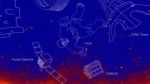
Nasa names constellations after the Hulk, Godzilla and the Tardis
For thousands of years, people have looked up at the stars and ordered them into constellations. A constellation is a group of stars that forms an imaginary outline of something. If you look up to the night’s sky perhaps you’re familiar with the Big Dipper or Orion’s Belt. But can you spot the TARDIS or the Incredible Hulk hidden among the stars?…more

-DLR

-DLR

German satellites sense Earth’s lumps and bumps
The German space agency (DLR) has released a spectacular 3D map of Earth. Built from images acquired by two radar satellites, it traces the variations in height across all land surfaces – an area totalling more than 148 million sq km. DLR is making the map free and open, enabling any scientist to download and use it…more

-SPL

-SPL

Hawking’s final science study released
Stephen Hawking’s final scientific paper has been released, and it deals with one of the central topics in the physicist’s 56-year-long career. The work was completed in the days before Hawking’s death in March. It tackles the question of whether black holes preserve information on the stuff that falls into them…more

-NYT

-NYT

A Volcanic Eruption on Mars?
Nope. A photograph from a spacecraft orbiting Mars shows a long, white wisp, close to a thousand miles long, spilling out of a giant volcano. Could the volcano, thought to be dormant for some 50 million years, be about to blow? Planetary scientists confidently say no…more

-NYT

-NYT

How Do You Take a Picture of a Black Hole?
With a Telescope as Big as the Earth. A planet-spanning virtual observatory, years in the making, could change how we think about space, time and the nature of reality. Will it work?…more

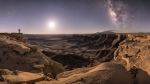
In pictures: Astronomy Photographer of the Year 2018
The winners of the Royal Observatory Greenwich’s annual photography competition have been announced, with first place going to an image of a dramatic landscape below the Milky Way…more

The European Service Module pushes the Orion capsule through space

The European Service Module pushes the Orion capsule through space

Orion capsule: Europe delivers astronaut spaceship’s first ‘powerhouse’
European industry has handed over a key part of the spaceship infrastructure that will eventually take humans beyond Earth into the wider Solar System…more

Posted in November 2018, Sidereal Times | Tagged , | Leave a comment

From the Director

Rex


by Rex Parker, Phd director@princetonastronomy.org

October 9 Meeting – “It’s Elemental, My Dear Watson”! Hope to see you at Peyton Hall auditorium on the Princeton Campus for our next meeting (Tuesday, Oct 9 at 7:30pm). Please see Ira’s article in this edition for information about the guest speaker, Dr Jack Hughes, Rutgers Dept of Physics and Astronomy. Over the years I’ve always been fascinated by a Big Question: How did the elements form? How did we go from just Hydrogen and Helium from the Big Bang to the 92 natural elements – those we all learned in the periodic table, those that form the basis for all of planetary geology and the origins of life? How does stellar nucleosynthesis work? The answers to these may not come easy, but astrophysics does have answers. On Tuesday night, thanks to Dr Hughes, for the first time in AAAP we’ll take a deep dive into nucleosynthesis; no exam afterwards :> .

Astronomy, Tides, and Hurricanes. Earth is a blue marble rolling through the heavens, shaped by astronomical forces that profoundly affect the course of human life. When hurricane Florence struck North Carolina last month, the flooding and damage along the coast was astronomical in multiple meanings of the term. NOAA defines storm tide as the coastal water level rise during a storm due to the combination of storm surge and astronomical tide. The surge is highest where the strongest winds of a hurricane occur, in this case the northeast quadrant as the eye made landfall. But the magnitude of the inland surge also depends on the astronomical tide.

Tides result from the combined gravitational force of the moon and the sun on the fluid outer layer of the blue marble. Lunar gravity pulls the oceans about twice as strongly as the sun – the sun’s gravity is moderated by distance. If earth had no large continents then all areas would see two high and two low tides every lunar day (approx. 24 hr, 50 min). But as the earth rotates the westerly passage of the bulge of seawater is blocked by the continents, making the pattern of tides complex within each ocean basin. Diurnal tide cycles exhibit one high and one low tide every lunar day, e.g., in the Gulf of Mexico. Most of the U.S. east coast has a semidiurnal tide cycle with two high and two low tides of similar size every lunar day (Figure below; also see https://oceanservice.noaa.gov/education/tutorial_tides/tides07_cycles.html). The U.S. west coast has a mixed semidiurnal cycle with two high and two low tides of different size every lunar day.

Since hurricane Florence was so slow-moving as it made landfall in North Carolina, the storm surge was integrated across multiple tide cycles over more than a day. The multiple astronomical high tides during that period added several feet of depth to the surging seawater and contributed to the flood scenario as the storm surge approached 10 ft and higher along the Carolina coast.

Opportunity for Members to Visit Home Observatories. Some members have expressed a curiosity about astrophotography, how it is done, and especially how the hardware is set up. In addition to using the club’s facility at Washington Crossing, many of us have thought about building a home astronomical observatory. There are many potential designs ranging from basic pedestal/mount installations with weather covers, to aluminum or fiberglass/plastic domes, to roll-off roof designs. I’ve been fortunate to have the opportunity to create a home observatory in my back yard, which is now operating hands-on and can be run remotely through automation software. I would like to invite interested members to visit and see firsthand one approach to the issues of telescope, mount, and camera hardware, software and observatory design. Please send me a note (send e-mail to ) if you would like to join a small group tour of this observatory in the near future. Once I hear from you, we can arrange a date(s).

Posted in October 2018, Sidereal Times | Tagged , | Leave a comment

From the Program Chair

By Ira Polans

The October AAAP meeting is on the 9th at 7:30PM in Peyton Hall on the Princeton University campus. The talk is on the “Stellar Nucleosynthesis” by Dr. Jack Hughes, Rutgers University.

Dr. Hughes will focus on the basics of stellar nucleosynthesis and will finish up with more recent research topics. Dr. Hughes will discuss hydrogen-burning on the main sequence, helium burning and hydrogen shell burning on the red giant branch, and then, in stars of >8 solar masses, and later stages of burning ending up with iron. Also, briefly mentioned is Big Bang nucleosynthesis since it sets the stage for the rest of the story. Dr. Hughes, will also briefly cover supernova explosions, which are (mostly) how the metals produced in stars get into the interstellar medium and the extra boost they give to nucleosynthesis. Time permitting, Dr. Hughes will talk about the role of high energy astrophysics in the continuing evolution of our understanding of the origin of the chemical elements in the universe, such as studies of Fe-group elements in type Ia supernovae and the role of recent multi-messenger observations of neutron star mergers.

The talk looks very interesting and will cover a lot of ground!!

Prior to the meeting there will be a meet-the-speaker dinner at 6PM at Winberie’s in Palmer Square. If you’re interested in attending please contact no later than Noon on October 9.

Parking is available opposite Peyton Hall.

We’re looking forward to seeing you at the meeting!

Posted in October 2018, Sidereal Times | Tagged , | Leave a comment

September 2018 Meeting Minutes

by Jim Poinsett

Minutes of the September 2018 Meeting of the AAAP

  • The meeting was called to order after the lecture. The first topic was StarQuest 2018. It will be held on October 5th through 7th at the Hope Conference Center in Hope NJ. The cost is $40 per night.
  • Membership renewal is due now. You can send in a check or make payment on our website through PayPal.
  • The American Astronomical Society (AAS) is now accepting Amateur Affiliate Memberships. The AAAP is an affiliated organization. Membership is $50, e-journals are available for an additional $25.
  • 2019 Astronomy calendars are available, $10 speak to Larry.
  • There are problems with the TeamViewer service at the observatory. Many users are being kicked off. TeamViewer is cracking down on home use vs. professional use.
  • The was an article in the NY Times on Sunday September 9th about travel to dark sky locations.
  • The NJ Astronomical Association is hosting an open house and flea market. Check their website (NJAA.ORG) for details.
  • There is an astrophotography workshop at the Tupper Lake Observatory in late October.
  • The club is considering a field trip to the Air and Space museum at Dulles. Either early December or early next year are times being considered.
  • The NJ State Planetarium is having a “Choosing Your First Telescope” presentation on November 24th. They are looking for members to set up their scopes and answer questions for visitors.

Meeting adjourned

Posted in October 2018, Sidereal Times | Tagged , | Leave a comment

September, 2018 Board Meeting Minutes

by Jim Poinsett

Minutes of the September 2018 Board Meeting of the AAAP

  • There was a discussion about StarQuest and the fact that it loses money every year. Should we keep having it or cancel it. The board decided to keep it and raise prices to cover the cost, $40 per night, per person. No discount for campers, students would only be $25. Email intent forms to observatory@princetonastronomy.org
  • Rules were drawn up for requesting a star gazing event and will be placed on the website. The website will be modified to make it easier to find the requesting information.
  • It was suggested that the AAAP twitter feed be embedded on the website. The suggestion will be passed on to Surabhi.
  • The board discussed Meet-Up and decided to continue it’s use and to monitor statistics to determine it’s usefulness.
  • The topic of reaching out to new members was discussed, basically how are we doing? The new members interested in outreach are contacted by Gene and those interested in the observatory are contacted by Dave. Gene is getting good response, Dave’s results are hard to determine.
  • There will be a new member “Meet and Greet” during the break between the lecture and the business meeting.
  • The meeting programs are being set. The 10 minute member talk needs to be kept to 10 minutes so as to not make the guest lecturer run late.
  • Field trip possibilities were discussed. Two places of interest are the Air and Space Museum in Dulles in December or early next year and Cherry Springs in the Spring or Summer of 2019.
  • The Mewlon and the Refractor need better alignment. The new cameras are working well with no complaints.
  • Larry will handle the Astronomy Calendars this year.
  • AAS memberships are now available to amateurs.
  • A memorial plaque is being made to honor Gene Ramsey.

Meeting adjourned.

Posted in October 2018, Sidereal Times | Tagged , , | Leave a comment

In Memoriam: Dick Peery

by John Church

In Memoriam: Dick Peery

Richard D. “Dick” Peery, former Director of the AAAP, passed away on April 3, 2017 at age 75. He held bachelor’s and master’s degrees from Rutgers University and was the former Director of the New Jersey State Museum Planetarium in Trenton, where he worked for 35 years. I knew Dick well, and I offer this in his memory and in gratitude for his many contributions to the AAAP.

The first reliable record that I have about Dick and the AAAP was when he volunteered to be a member of the new observatory committee at our tenth anniversary dinner on November 13, 1972. Ironically enough, at our first committee meeting two weeks later, we eliminated Washington Crossing State Park as a possible site for our projected observatory. Later on, however, as chair of the observatory committee, Dick facilitated negotiations with the NJ Department of Environmental Protection that allowed us to lease the site near the Nature Center where our observatory now stands. The lease was finalized in early 1977 and approved by the AAAP membership at the February meeting.

Dick was elected AAAP Director in May, 1975. His future wife and future Director Roxanne Tobin, who as editor named our newsletter “Sidereal Times,” was re-elected Secretary. Several of us, including Dick and Roxanne, scouted various locations in Hopewell Township and environs earlier, looking for a suitable observatory site, but had come up empty. Without Dick’s creative help with the Washington Crossing site, we might still be looking for a home.

Speaking of Roxanne, I recall her frustration at perpetually cloudy skies such as those we have been enduring for most of this past summer. She usually wrote a monthly column called “Roaming the Skies,” but in 1973 she wrote one called “Roaming the Clouds” with a map and objects such as Dubheious, Vague, Denebulus, Ridiculous, and Beta Cumulonimbus.

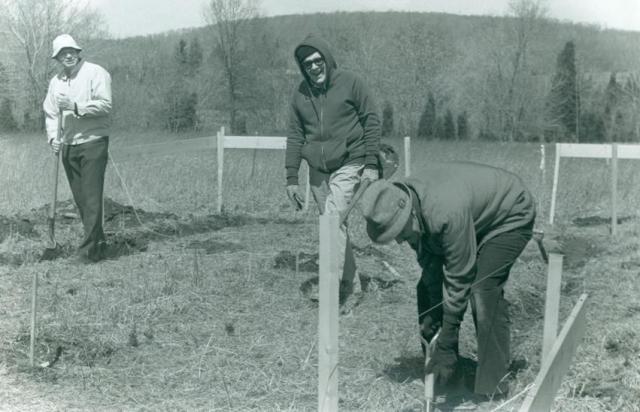
We broke ground for the observatory in April 1977. Dick is in the hooded sweatshirt, our crew chief Bill Phillips is on the left, and I’m in the trench.

Groundbreaking was the easy part. Little did we know that we would soon be hitting shale and large rocks. With no funds for power equipment, many pitched in with shovels and pickaxes. The future location for the refractor pier is indicated by a stick, and some dirt has already been removed where the north pier would be.

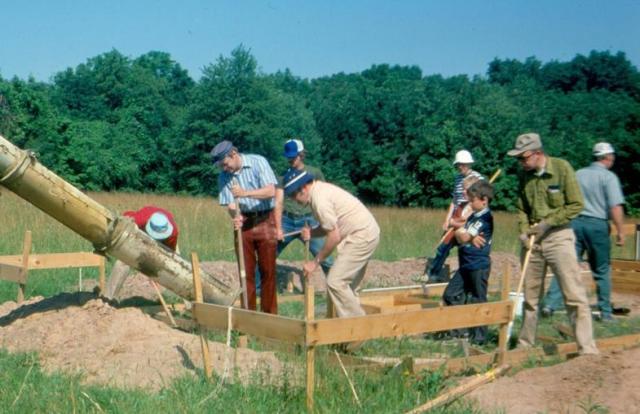
The photo below, taken two months later and in much better weather, shows the concrete foundation being poured. Dick is at center in the beige shirt. The young “superintendent” is my son Fred and I’m in the red shirt. Bill Phillips is in the blue shirt and standing behind him is future Director Kurt Goepfert. Treasurer and future Director Leith Holloway is in the green shirt. Tireless star party organizer Mike Clark is at right.

Roxanne passed away in 2001. The last time I remember seeing her and Dick was at the planetarium many years ago when Dick was giving our traditional June show. I remember how proud he was for the part he had played in getting the fine Minolta projector that is still there and is occasionally used for demonstrations. It’s now been superseded by a digitized projection system that not only shows the skies, but also gives other major presentations for the public.

The mutually beneficial relationship that the planetarium and AAAP still enjoy would not have happened without Dick’s hard work and contributions over many years. We are in his debt.

Posted in October 2018, Sidereal Times | Tagged | Leave a comment