Outreach Blotter

by Gene Allen, Outreach Chair

Last month, as I scrambled to submit yet another delinquent article (!), I neglected to report on the excellent showing our members made at an Outreach Event in Plainsboro back in March. Once again an evening of star gazing was clouded out, but organizer Tara Miller moved the gathering indoors and Event Lead Jeffrey Pinyan reconfigured the program.

“Despite the cloud cover, there was a reasonable turnout (several dozen people), and I think tonight’s event was a success. Both adults and children got to see an array of different telescopes, and some volunteers even had visuals to share (previously captured astrophotographs, and Luisa brought her meteorite collection and presentation). Tara seemed pleased with the result, and all of us were busy with visitors for most of the time we were present. Only one volunteer [of seven!] couldn’t attend, due to illness.”

On Thursday, June 20, we need both Keyholders and Member volunteers who can bring additional scopes to offer a star gazing evening to 20-40 participants of the Delaware River Sojourn, a paddle trip that began in Hancock, NY. They will be camping overnight in WCSP before continuing south on the river.

We have multiple libraries clamoring for astronomy presentations since the state declared a summer reading program theme to commemorate the 50th anniversary of the Apollo 11 Moon landing. It has been something of a struggle limiting them to nine by referring more distant ones to other clubs. Some of them will be daytime programs, and some have requested evening star gazing. A couple of us are trying to develop a “canned” but adaptable presentation to introduce an all-age audience to the pleasures and rewards of amateur astronomy. I have been told that our most enthusiastic “guru” of outreach, the late Gene Ramsey, may have had some such materials. When he trained me to become a Keyholder, he spoke often about his meteorite collection as his cloudy weather alternative. “If I can’t show them a star,” he was fond of saying, “at least I can show them a piece of one!” If anyone has a copy of any of his outreach material, please contact me. It would be an honor to compile a “Gene Ramsey Memorial Lecture.” In addition, I will be recruiting members to help make these library presentations.

Posted in May 2019, Sidereal Times | Tagged , | Leave a comment

April 2019 meeting minutes

by Jim Poinsett Sr.

Minutes of the April 9th meeting of the Amateur Astronomers Association of Princeton

  • Rex called the meeting to order and Ira introduced the speakers for the evening, Gino Segre and Bettina Hoerlin and their lecture titled “The Pope of Physics, Enrico Fermi and the Birth of the Atomic Age”.
  • After the lecture Prasad announced the slate of nominees for next year, everyone except Jim Poinsett as secretary will return. John Miller has placed his name in nomination for the secretary position.
  • The dates for the celestial navigation class were discussed, contact Ira if interested.
  • The club brochure has been re-designed with color graphics and photos by Rex Parker. Some professionally printed ones will be ordered and some will be printed by Jim Poinsett for communiversity.
  • Speaking of that, Communiversity is April 28th, 1-6 PM, volunteers are needed. Contact Gene.
  • Observatory news
    • The water is on
    • The Mewlon has been collimated
    • A list of observatory equipment for member use is available, quite an impressive list.
    • The ZWO ASI 294 camera is in use at the observatory the Starlight Express Ultrastar is available for members to borrow.
  • May 3 and May 10 are the Planetarium / Observatory combination nights. Extra members would be helpful at the observatory to help with the crowd (optimistically) from the planetarium. That is if we ever get a clear Friday night, 0 for 4 so far.
  • There are new exhibits at the Planetarium commemorating the 50th anniversary of the moon landing.
  • There being no further business, the meeting was adjourned.
Posted in May 2019, Sidereal Times | Tagged , | Leave a comment

A gravitational challenge

by John Church

The AAAP has members who enjoy science and math challenges. I invite all who are interested to try their hands at this one.

Consider two identical, homogeneous, nonmagnetic cubes, each having a mass of 1 kg, measuring 0.04 meters (4 cm) on an edge. One of these cubes is securely fixed in place on a horizontal, inert, and perfectly frictionless surface. The other cube, initially at rest and 1 meter to the left of the fixed cube (center to center), is free to slide towards the fixed cube under the sole influence of their mutual gravitation. Such cubes would have a density of 15.6 g/cm3 or about that of a 70-30 alloy of gold and silver. Assume that there are no significant masses nearby to perturb the experiment. Assume also that any possible movement of the fixed cube is negligible.

(Note, in memory of Henry Cavendish and his pioneering work on gravitation, you could also use far less costly lead cubes of different masses and sizes, but cost is no object here.)

The cubes would touch when their center-to-center distance had been reduced to 0.04 m. How long would it take for this to happen? How fast would the movable cube be going just before contact? Take the gravitational constant (G) as 6.67 x 10⁻¹¹ m3 kg-1 sec-2 . Present a graph to show the position of the movable cube as a function of time.

Here is a diagram of the setup. My word processor does not have a square symbol to represent a cube, so a capital “O” will have to do:

Movable cube

O—————————————————–OO Fixed cube

Center is initially 1 meter from Cube centers are 0.04 meter from

center of fixed cube. each other when they touch.

Time = 0 Speed = 0 Time = ? Speed = ?

A Canadian friend of mine (“eh?”) came up with an anagram of my solution for the length of time that this would take. Ignore the comma and the question mark.

To find us a pretty egg in Ohio, eh?

In the spirit of Galileo, I can show priority by giving the solution to the anagram. We are not in Ohio or Canada of course, let alone Italy, but this particular egg (a lost Easter egg?) is perhaps not unattractive. Finders keepers!

Possibly one or more of you can find time and speed solutions early enough to make the June Sidereal Times. (If not then, perhaps for the Midsummer edition.) However, as they say on final exams, you must show your work, including the graph. If you can demonstrate that your solutions are more egg-xact than mine, then congratulations: you win and I get egg on my face, so to speak.

You get extra credit if you also decipher the anagram successfully. Fair warning – there are many possible solutions and you should do the math first. One entry per challenger please. There are anagram solvers on the Internet, but I don’t think they will help you very much; I tried them already.

If nobody has found solutions by the time of our September meeting, I can give a 10-minute talk with my answers. Good luck!

Posted in May 2019, Sidereal Times | Tagged | Leave a comment

amateur tested

by Thedore R. Frimet

save the universe one life at a time

I am getting ready to embark on a mission. A deep space, fly-by, that has been tested, and retested by the best of the best, of the best.

Early detection saves lives. Even if you are an amateur, I smack you with the gauntlet, that many spired glove of reality. This is the essay of life, liberty and the pursuit of early colon cancer detection.

Yes, I will be traveling down the path not easily taken, nor preferred. I will be shortly sustaining my being and the backside of Orion’s view, with green Jello, Beef and Chicken flavored bouillon.

Not to be undone, of course, will be 8.3 oz of nasty recourse, dissolved into 64 oz of cool blue glacier flavored Gatorade, and a doctor ordered 4 pill chaser.

I never put this stuff in my body. But what the heck. In the freezer, awaiting my desserts, are a single flavor (not red) ices as my just reward.

However, and not to lead anyone of you, down the road to shallow disappointment, I have managed to also purchase apple juice.

And to my contentment, and your laughter – YES – the apple juice is organic.

Remember: Save the Universe, one life at a time.
Tell a fellow amateur to get a colonoscopy, today.

Nothing but love, and thanks for reading, as I prepare for the deep end of the scope.

Posted in May 2019, Sidereal Times | Tagged | Leave a comment

When enough is enough

by Theodore R. Frimet

to teet, or not to teet? that is the question

I had entered an order into eBay a few weeks ago. It was for a slide study on meiosis. The seller had access to slides, presumably all the same (the growing tip of some typical specious plant). The purveyor of the micro-slides circled the ostentatious breaks that visually were representative of each meiotic phase.

I put in a best offer. It was declined. I put in a better, best offer. It was declined, again. I put in a highest, best-offer, one cent below the ask price. It too was declined. I wrote into eBay describing my disenchantment, and offered a suggestion to the seller. That they get on-board. The result was that they increased their sales price. No meiosis slides for mr wordy.

Truth be told, even at the higher price, it appeared to be a bargain. In the interim, I completed a purchase order with a true, dyed-in-the wool, trusted seller, for a set of pathology slides. Happiness be thy name.

A short while later, I decided to place an order for a good used book on human histology. This arrived in the mail, just the other day. Unfortunately, the arrival coincided with my responsibility to be at Washington Crossing Park for our AAAP Observers Duty. So, no biology that evening.

The skies clouded out, and it rained. This was most unfortunate, as I had already promised to pick up our newly minted, and folded brochures, and to bring said folio to UACNJ the very next day. What to do? Forget about human histology, for awhile at least. And sleep thru the clouds and the rain – and make it a new day, on Saturday.

I picked up the brochures, and dutifully delivered them to the UACNJ site, where many associated astronomy clubs sport their menus for the taking. It was Astronomy Day, this Saturday, at Jenny Jump. And I was not to be disappointed.

What does this have to do with meiosis? Nothing at all, old sport. However, on Sunday, I did load up a cross section of Rabbit spinal cord, and by using Fiore’s Human Histology duly noted that horn cells, and some other similar structures simply are not to be found in rabbit pathology. Go figure. We are somehow very different, after-all.

I wonder if it is the same with the Cosmos? Probably not, as any sane physicist will tell you that all particular matter can be transformed into a structural relationship that establishes consciousness. And math could very well be used to describe your soul. Just as one would describe the apparent lack of particulates for wave-forms thru a solid, or liquid. Yet waves, and patterns that do not have a particle basis do exist in our reality. Ah souls do exist! Bring it on Max Tegmark, courtesy of a Ted Talks on YouTube.

I was sitting in the dark. Well, that is nothing do brag about, as all you amateur astronomers sit in the dark. Unless, that is, you are doing computational math and an analysis looking for clues in the puddle of data in front of you! Well, I had a red light. So, it wasn’t too dark. And the moon was half full, and the sky full of wispy clouds to refract the light of the night. Ok. I wasn’t sitting in the dark. If you weren’t such an accomplished amateur, and were new to the crowd, you’d bump your head, and say, “hey, it’s really very dark out here”!

People came and went, while looking thru a Baader and the sixteen inch, at the moon. Craters, basalt fields, terminator, oh my! It appeared to me that just about everyone that looked, had enjoyed their view. As for myself, I settled into a nice lawn chair, besides the scope, and chatted with a fellow amateur astronomer, and his daughter. The universe was very kind to me that evening. I had a great chat, with a long time amateur, and had the ear of budding new one!

“Should I get that ten inch telescope?”, she quipped. My two years of experience started to kick in. I felt the wheels turning. Molecular biology at its best. Histones were being unraveled in record time, while DNA, not being exposed to the lot of its nucleosome experience, became naked and exposed. Polymerase chain reactions were set into motion while DNA was being transcribed to vintage RNA – to be whisked away to many a tethered ribosome. Polypeptide chains were being made at the speed of a Ferrari. Well, maybe not. I think I drive like a snail and keep to the proverbial speed limit. My personal transcription best is probably at 45 mph. Proteins abounded and knocked sense out of my neural nets. And out, YES! – out came the whirlwind of amateur experience. Some correct, some not. You decide. Oh, pooh. “A ten inch”, you say?

My first go-to statement was a repeat of a very wise professional astronomer, Bill. “Dark skies trumps aperture”. I briefly explained that in years gone by, when the world was dark, and music wasn’t classical yet, that a 3 inch aperture was used to chart the night sky. And that a ten inch, although a fine instrument, to be sure, would not be necessary if she had access to dark skies (our budding amateur, did, by the way).

My second go-to statement was that it is the telescope that you use, the most, is the one you want. Too heavy and it stays in the closet. Never to come down a flight of stairs. I described my 12 inch Dob and the conditions by which it would fly to the netherlands of my backyard. Better be pretty good seeing for me to bring out the lazy susan, and a 60 pound accessory! The answer from said future scientist, “I could pick up the 10 inch, easily”. Good news, all around.

We had spoken a tad about the moon, and the use of a 16 inch telescope. Which of course was overkill. In fact it is a promoter of a deleterious visual cacophony of aberrations that are induced by seeing alone. Cells. And many cells fit into the behemoth diameter of a 16 inch scope.

I had briefed her on the cover I employ with my 12 inch Dob. And that it had a knock out of about 2 inches. And how it limited the cell archetype to one, instead of four, or five. Less, in the case of lunar observation, is best. Perhaps the same can be said of a good planetary view. Well, not Jupiter. And I always got unrivaled views of Saturn, this past year, with a full aperture. I was too giddy to test out a constriction on the old light bucket. Maybe this year?

That led to a discussion on Cherry Springs. Bring Dad, and yourself to Cherry Springs, during a warmer clime, and enjoy a star party. There will be many that will share the view with their scopes. And therein lay the rub. Here you will get your chance to get a view, of a spiral galaxy, with an 8 inch, and then with a 10 inch. Soon you will be able to tell me if the 2 inch aperture difference has sufficient gain, to merit the investment in time, money, and weight. And then it hit me. While you are at the star party, take note of the eyepieces. Dad, now nodding his head in agreement, silently conspired with me, as I suggested that you take note of the eyepieces employed.

You had a great view with that LX200 with the Baader, in an 8 inch, and for some reason, the view appears so similar in the 10 inch version, with an Explore Scientific? Get it? Yup. She did. And that led to our attempt to forge out a plan for the pursuit of eyepieces.

There is no doubt that the best in brand will yield a best in view. And command top dollar. So, if price is not an object, perhaps the level of skill is the limiting factor, therein. I explained that as I raised a young drummer, to do four-way playing – I was not going to throw an expensive, and complete drum set his way. We would start with a snare drum. Then add a high-hat. A cymbal, and a few weeks later, some Toms. A bass drum would follow. And a musician would emerge. And a full complement of the best drums would come his way. I said to our future daughter of the stars, to decide if it were to be best to add an eyepiece, one at a time, as needed. Or to jump to the chase, and purchase an entire set outright? Money was no object, remember? I think we all know what decision was made, that evening.

The 10 inch telescope remained, somewhere in the nether-lands at a discounted 20%. at NEAF. Or was it 10%? I dunno. However, I did manage to bring up the last charge in my arsenal of astronomical refusniks:

The scope you are planning on purchasing is mass manufactured. And although the company may give you its “high-five” that all is well – the mirrors that are so crucial to an aberration free view, well, may not be aberration free. Dad, being clued in, at this point, juxtaposed his club position and many good friends that would be able to test, test, and retest to satisfaction. Having said, let the company know that you expect nothing but the best, for your purchase dollars.

However, many a company that I have had the pleasure of giving that challenge to, has backed down. So where did that leave us to venture? I am name impaired. And it would have taken me at least 20 minutes, or more to remember the best of the best. So I cheated the moon-light, and lit up my smart phone. And keyed in a request. And out popped the name of names. The best of the best. Wait a minute. I forgot, and don’t want you to wait another 20 minutes for me to remember. Just a moment, let me get my smart phone…

Just as I reached for said beasty, the name popped into existence. TEETERS. See? Ferrari, after all. Zoom-Zoom.

Posted in May 2019, Sidereal Times | Tagged | Leave a comment

The picture of a black hole

by Prasad Ganti

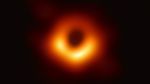
In January 2019, I wrote an article on radio astronomy in which I mentioned a recent book titled “Einstein’s Shadow” by Seth Fletcher. The book talked about photographing black holes and why it is very difficult to do so. The spectacular pictures of a black hole came out recently. It has been one of those major scientific victories of this decade like the discovery of Higgs Boson or the gravitational waves. It is another validation of Einstein’s theory.

It is now widely believed that every galaxy has a supermassive black hole in its center. The very first picture of the black hole is from Messier 87 (M87), a galaxy located more than 53 million light-years from Earth. It has a mass 6.5 billion times that of the sun.

Why is it difficult to see a black hole ? Why was the first black hole pictured not from our own galaxy ? Black hole by definition is black. Because it absorbs all the light and radiation and matter falling into it. It does not reflect any radiation back to us to capture and hence see. The size of the black hole is much much smaller compared to the galaxies harboring them. We can try to look at the gas surrounding a black hole. The gas and matter close to the black hole, but has not yet reached the point of no return, which is called the Event Horizon. The gas in this region can get heated up to billions of degrees (at such temperatures it does not matter if it is fahrenheit or centigrade). And emits radiation of its own as any hot body would do so.

The radiation coming out of the halo surrounding the black hole, spans across different frequencies. Lower frequencies are radio waves and microwaves. Higher frequencies are infra-red, light, ultra-violet, x-rays and gamma rays. These different frequencies then start their journey across the universe. Across the vast space to reach us. The space between us and the source of radiation is not truly empty. Other than possibly objects like stars and galaxies, there is lot of dust and clouds of organic molecules which can act as potential obstacles in our line of sight. Most of the higher frequencies are absorbed by the such noise in the space. What manages to escape are the radio waves. Which are very similar to our AM and FM radio waves, except that they are not intelligible like our radio stations are.

Since it is the radio waves we are trying to capture, an optical camera will not do. Certainly not the ones which are there in our phones. We basically need a radio receiver. Instead of optical telescopes, we need the radio antennas – dish shaped or a set of rods. This combination of equipment leads to radio astronomy instead of lens and mirror based optical astronomy. Lens and mirrors can be thought of as antennas for light, or antennas can be thought of as lenses and mirrors for radio waves.

Examples of radio telescopes are ALMA (Atacama Large Millimeter Array), a collection of 66 radio dish antennas in Chile. A 300 foot dish radio telescope is in Green Bank, West Virginia. A 500 foot dish radio telescope was recently built in China (called FAST). A single dish radio telescope is in the South Pole. The bigger the telescope, the larger is the collection area. Better it is to capture pictures of distant objects. There is a limitation on how big the telescopes can grow. Another option is to combine telescopes across the globe to effectively form a big telescope. Such a giant telescope to picture a black hole is called an EHT (Event Horizon Telescope).

EHT combined measurements from radio observatories on four separate continents – namely North America (Large Millimeter Telescope), South America (Atacama Large Millimeter Array), Europe (Institute for Radio Astronomy in Millimeter range), and Antarctica (South Pole Telescope). And a few other telescopes were involved. Since they are all spread out geographically across multiple time zones, synchronizing them and co-ordinating among different teams was a himalayan effort. The collected data was so massive that it could not transported over the internet. Hard drives containing vast amount of data were physically transported back to MIT and Max Planck Institute of Radio Astronomy in Germany. There were delays in getting data from South Pole due to the Antarctic winter.

The book “Einstein’s Shadow” has lot more details about the EHT and the team which did all the conception and the co-ordination of this massive exercise.

I am not reproducing any pictures here. They are there on the internet, particularly on the site space.com. A note that the pictures of the black hole or any other astronomical object like the galaxies and the distant stars we are shown, is not how they would be appearing even if we happen to be in the neighborhood. The human eyes are simply not enough to perceive that kind of reality. Based on the data collected by the telescopes, computer algorithms are used to assign colors based on factors like the temperature. This is the best we can do with our limited senses.

Our Universe the Milky Way also has a supermassive black hole in the middle. This black hole is closer to us, but we cannot be looking from the above, since we are in the same plane. We will be looking at it from the side. That makes it difficult to view. But I am expecting more black holes to be pictured in the future. More radio telescopes will be joining the EHT in the hunt. I am also expecting a Nobel prize in physics in the coming years for this effort.

Posted in May 2019, Sidereal Times | Tagged | Leave a comment

Snippets

compiled by Arlene & David Kaplan

The first ever picture of a black hole: It's surrounded by a halo of bright gas

-BBC

First ever black hole image released
Astronomers have taken the first ever image of a black hole, which is located in a distant galaxy. It was captured by the Event Horizon Telescope (EHT), a network of eight linked telescopes.
It is surrounded by a halo of bright gas and measures 40 billion km across – three million times the size of the Earth – and has been described by scientists as…more

The sensors were developed in France and the UK

-BBC

Nasa lander ‘detects first Marsquake’
The American space agency’s InSight lander appears to have detected its first seismic event on Mars…more

Posted in May 2019, Sidereal Times | Tagged , | Leave a comment

From the Director

Rex


by Rex Parker, Phd director@princetonastronomy.org

From Stone to Star. The relationship of stars to common earthly things is closer than one might think. Advances in astrophysics over the past century have revised the story of geology by providing a detailed explanation for how minerals found on earth were created in stars. That process, called stellar nucleosynthesis, was elegantly described to AAAP members at a lecture last fall by Dr Jack Hughes of Rutgers Astronomy Dept. Nuclear fusion in stars is understood to create all the chemical elements up to atomic mass of iron (Fe, atomic number 26). But heavier nuclei cannot be generated at the observed abundances in the universe under the conditions within stars. Rather they are produced through much more energetic and cataclysmic processes, chief among these being supernova explosions. Over time this has seeded the interstellar spaces with vast clouds of particles and gases that are the stuff from which new planetary systems form. Although the 66 natural elements (all found on earth) heavier than Fe make up less than 0.1% of the total mass of the universe, they’re essential to biological life and human society.

Back down on earth, I’ve recently had a close encounter with the great diversity of minerals found in the top layer of our planet. Over the past couple months I’ve moved the family rock and mineral collection to our home in New Jersey. Imagining the processes that created the beautiful and highly variable crystalline rocks and colorful blends of agates and jaspers is a mind-expanding exercise. When touching a nodule of turquoise the realization that the origin lies in stars and supernovae brings home the reality of what astrophysics means to geology, chemistry, and biology. Can’t help but think of Carl Sagan’s words about us being star stuff. When looking through a telescope at emission nebula and “HII regions” where new stars are being born in the deep sky, consider that these precious minerals are being formed right there.

For a good book on the topic, I recommend “From Stone to Star” by Claude Allegre. And keep an eye out for emerging ideas about the formation of the heavier elements. Supernovae are not the only explanation, as their frequency across the universe does not appear to equate with the observed abundances of elements such as gold and platinum. One recent hypothesis is that neutron star collisions can also generate heavier elements. Of course neutron stars are the gravitationally collapsed core products of supernovae, so the latter are not being disrespected by the neutron star hypothesis. The recent breakthrough observation by LIGO in 2017 of gravitational waves, interpreted as being generated by a neutron star merger, has supported this proposal. It has been estimated that the “kilonova” gravitational wave event detected by LIGO (termed GW170917) generated about 10 earth masses equivalent of the element gold!

The AAAP Washington Crossing Observatory is for all club members. As the main hub for observational astronomy, member gatherings, and public outreach, the Observatory is central to the club’s mission. You don’t need to be an expert, just come out on Friday public nights starting April 5 through Nov 1. If you have thought learning more about telescope hardware, software, and technical aspects, I urge you to come out to see what’s up there through the AAAP’s telescopes (see list of equipment below). If you’d like to enter the training program to become qualified to access the observatory 24/7, please contact me or send an e-mail note to observatory@princetonastronomy.org.

Telescope equipment for member use at the AAAP Observatory as of April 2019.

  • Paramount-ME #1, robotic equatorial mount
    • Mount run with TheSkyX planetarium and control software under Win10 computer.
    • Celestron-14 Schmidt-Cassegrain telescope, D=355mm (14-inch), f/11, FL=3900mm.
    • New Stellarview 80 mm right-angle finder scope on the C-14.
    • Explore Scientific ED127 refractor telescope, D=127mm (5-inch), f/7.5, FL=950 mm, triplet air-spaced apochromatic refractor.
    • Numerous 2-inch and 1-1/4-inch eyepieces for these telescopes.
    • Starlight Xpress Ultrastar Colour CCD camera.
    • Starlight Live and SharpCap software cameras.
    • Verizon FiOS is available inside the Observatory.
  • Paramount-ME #2, robotic equatorial mount
    • Mount run with TheSkyX planetarium and control software under Win10 computer.
    • Hastings-Byrne 61/4-inch refractor, f/14.6, FL=2310mm. This fine historic instrument is a great planetary telescope, dating to 1879 with the original air-spaced doublet lens and steel tube intact.
    • Takahashi Mewlon-250, D=250mm (10-inch) Dall-Kirkham reflector telescope, with -inch TMB Optical dielectric-diagonal and Feathertouch 2-inch Crayford focuser.
    • Numerous 2-inch and 1-1/4-inch eyepieces including Panoptic 27 mm and 41 mm for the M250.
    • ZWO ASI 294 Pro color CMOS camera
    • Starlight Live and SharpCap software set up for EAA cameras

Posted in April 2019, Sidereal Times | Tagged , | Leave a comment

From the Program Chair

by Ira Polans

The April meeting of the AAAP will be held on the 9th at 7:30PM in the auditorium (Room 145) of Peyton Hall on the Princeton University campus.

The featured talk is by Gino Segre and Bettina Hoerlin on their book THE POPE OF PHYSICS: Enrico Fermi and the Birth of the Atomic Age. Enrico Fermi is unquestionably the most famous scientist to come from Italy since Galileo, so revered by his peers that he was known as “the Pope,” because his scientific instincts and skills were to be “infallible.” A physics Nobel Prize winner in 1938, he was one of the most productive and creative scientists of the twentieth century. His work changed our world. The largest particle accelerator in the United States, the nation’s most significant presidential award in science and technology, and the element fermium all bear his name.

This major biography of a towering figure in the history of science portrays Fermi as an architect of the atomic age with all its complexities. In THE POPE OF PHYSICS: Enrico Fermi and the Birth of the Atomic Age Gino Segrè and Bettina Hoerlin bring this scientific visionary to life. From his modest beginnings in Rome amidst the tumultuous environment of fascist Italy, to his immigration to America escaping anti-Semitism, he became a key figure in the Manhattan Project. His work under the football field of the University of Chicago on the world’s first nuclear chain reaction was critical in subsequently building the atomic bomb. THE POPE OF PHYSICS delves into the personal and scientific life of Fermi and how political and social forces shaped the man, and how he, in turn, shaped them. A thrilling history of scientific innovation in the twentieth century—including the controversial issue of nuclear weapons—this is the comprehensive biography that Fermi deserves. During the break there will be a book signing.

The 10 minute talk will be given by Dave and Jen Skitt and Ira Polans about our trip last summer to Chicago and the Yerkes Observatory.

There will be a meet-the-speaker at 6 PM at Winberie’s in Palmer Square. If you want to join us for dinner please email me at program@princetonastronomy.org by Noon on April 9.

Looking forward to you joining us at the April meeting!

Posted in April 2019, Sidereal Times | Tagged , | Leave a comment

Outreach Blotter

by Gene Allen, Outreach Chair

David Letcher, our former, longtime Outreach Chair, served as Event Lead for an Outreach Event in Hopewell on March 22. His report on the Event is as follows:

“Well, we continued our tradition of giving a star party at Hopewell Elementary School tonight, a tradition that began through the efforts of our late member Gene Ramsey.

Victor Davis and I went to the school tonight with 100% overcast skies with occasional rain and very windy conditions BUT Victor Davis saved the night!

Victor (with my humble assistance) brought his 3 inch Questar and assorted equipment from his car into the school auditorium and, under Victor’s direction, we set up a neat alternative to observing the real night sky. To wit, Victor, who had purchased a bunch of 35 mm slides of astronomical objects from the Astronomical Society of the Pacific, set up an arrangement in which children could look through his eyepiece and see a slide’s object, such as a star cluster, just as if they were outside!

We were also happy to attend a one-hour demonstration of gas laws by a scientist who owns a business of doing science lectures/demos to school groups. That was good fun!

It was a good time had by all!”

We have a number of Outreach Events coming up, from a Scout Troop at the opening night at Simpson Observatory to Communiversity Day April 28 to more than a half dozen library presentations over the summer. We are working on developing a somewhat “canned” presentation that can be adapted to daytime or evening events for a wide age range. My wish is to come up with something that can be offered by any of our Outreach volunteers with little additional preparation. If any of our membership has any material or assistance to offer toward this effort, please get in touch with me.

Posted in April 2019, Sidereal Times | Tagged , | Leave a comment