When, How and Why I Became Interested in Astronomy

by John Miller, Secretary

I was in my father’s den – the summer of 1965 – looking up something for a school assignment in our World Book Encyclopedia. Dad was also in the room tapping madly on his ancient Royal typewriter. It must have weighed 40 pounds.

On the floor, next to his desk was a beautiful rectangular, burgundy leather case; small – about 15 by 8 inches. He had recently brought this home and I was fascinated by its contents. I will always remember his telling my older brother and me: “Keep five feet from this case. You’re always welcome to look inside, but never before asking me first.”
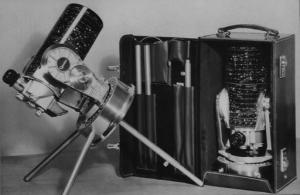
Of course, it was a new Questar 3 1/2” astronomical telescope. Gleaming like platinum and costing as much as a living room of new furniture. My father was an accomplished engineer out of Cornell. He knew this was a Stradivarius. He was also an avid sailor and well-educated in celestial navigation. Thus, an astronomical connection for me (but not my brother).

My uncle Tek (no one knows where the nick name originated), Dad’s older brother, owned a sprawling farm outside of Califon, NJ, about an hour’s drive from my hometown, Metuchen, NJ. “The Farm” (to which it was always referred) had livestock, a party-line phone – and a pristine open dark sky. Soon after acquiring the Questar, we went up to The Farm for dinner and to set up the scope for First Light.

It was late summer Clear as a bell. Lamb was roasting on the outside open spit. I remember my father and Tek (also a Cornell engineer) discussing how best to set up this little gem in the “outer field” (about 30 acres of horizon-to-horizon open sky) while simultaneously scratching there heads trying to figure out the Questar’s mysterious mode switches. I wasn’t watching their progress.

I was looking up.

In the past, I hadn’t really paid much attention to the sky. There was already light pollution in Central Jersey and none of my friends were much interested in astronomy. But that September night I couldn’t stop stargazing. We got the Questar set up on a sturdy table in the outer field. No vehicle noise. Not a light for miles. Just critters rustling in the grass. And more talk about the mysterious mode switches. And me – still mesmerized, looking up.

Dad knew some of the constellations, with their associated brighter stars and planets important to celestial navigation. It was a lucky night for a visit. The moon was in last quarter and late rising. Although, for this group, a quarter moon would have been a spectacular experience in the Questar.

Near the zenith was Vega, which my father recognized. And Polaris, which, of course, he knew well. There was a bright object low in the southeast. As with any well-prepared boatman, he had brought along his 7×50 binoculars. We would have been lost without them ! One of my Farm cousins had a beginner’s astronomy book (of course Chris, Tom, Peter, Mopsie and young Collie, Jupiter — yup, that was his name) were all out with us). The book listed a few prominent Messier objects, none of which any of us knew about. But we certainly wanted to explore.

The first target, if old memory serves, was Vega. Dad and Tek fiddled until they reached focus. They were most impressed. My cousins and I jockeyed for eyepiece (the famous Brandons) position and were sternly warned by both adults that any rough-housing near the Questar was absolutely forbidden. Back then, when our fathers set a command, we listened.
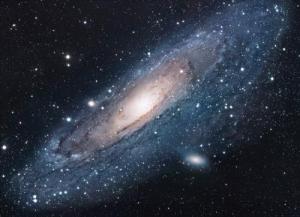
We found Altair and Polaris. I have no idea if we were able to split Polaris (Ab 2006 sep = 17.0”), but I doubt it. My father serendipitously ran across M 31 with the binocs (although it was easily naked eye). What a great to-do THAT caused. The book described M 31 and I recall we spent quite a bit of time on the galaxy. Mostly with the binoculars. I was slack-jawed and couldn’t wait to look up more about this object. Get me to a library ! But for me, the astonishment that sparked a life-long journey of curiosity and discovery was to come a little later in that field.

That bright object rising the the south east was…Saturn.

It took a while for the grown-ups to get the planet in the Questar FOV. But when they did, my father, generally a pretty reserved person, let out a shout. I don’t remember what he said, but I’ll never forget his tone of excitement and delight. When it was my turn at the Brandon, I was stunned. Sure, I’d seen lots of pictures of Saturn. But none of them looked like this. Not a one. This was live! This was real ! This eleven-year-old was hooked. Deeply and permanently.

I built a small library over the following year or two and was allowed to use the Questar under close supervision. I learned that binoculars were a Godsend for learning the sky and (at that early stage) effective for finding some of the brighter DSOs. Plus, I was very lucky to have a father who (loving the physical sciences himself) completely encouraged a youngster’s curiosity.

At 13, I still didn’t have my own telescope (I had use of a QUESTAR, for God’s sake).
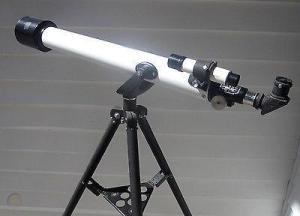
But I wanted my own. Akin to a teenager wanting his own car. My paternal grandparents, who lived a few miles away, agreed to gift me the money. At the local hobby shop, I bought the standard novice scope of the era. You guessed it: a Tasco 60mm, f/12 refractor. Rickety, with a dangerous eyepiece screw-in solar filter, a 25mm and 10mm (undoubtedly Huygens) and a Barlow. The universe was mine.

At home, observing was challenging, Most of the property was filled with giant oaks, except for the front yard, which was filled with giant street lights. I kept copious observing notes and researched every new object I discovered. The ultimate astro uber-nerd. For a year or so, I treated that shaky scope like the Hale 200” at Palomar (which many years later I would climb aboard). A buddy I’d known from elementary school gained an interest in astronomy and bought a Sears refractor. So I had a comrade in arms. 1968. Just entering Junior High School there were new distractions. Girls (problem is they didn’t find me much of a distraction), and school work, much more of it and more difficult.

But astronomy was deeply ingrained and could be shoved to a corner – but not for very long. Then another hobby began gnawing at me as a direct result of my love for the sky.

Photography.

Like today’s public pushing their cell phones against an eyepiece, one night I pushed my Dad’s Leica IIIc against the terribly achromatic eyepieces (although all those exposures were B&W).

Of course photography was film-based (I mostly used Kodak Tri-X). You had to wait a week or more to see the results of those moon shots. While doing all that waiting, I started doing some terrestrial shots. And more terrestrial work.
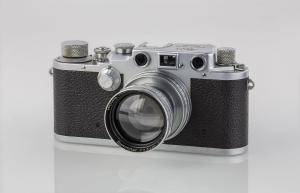
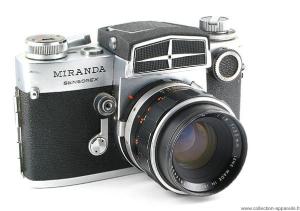
So, for the first time since that Saturn epiphany, I was deeply smitten by a second hobby. And I seemed to be pretty good at it. I never pursued astro photography. I bought my first DSLR (a Miranda SX}, with removable penta prism, just in case astro photography came back into the —– picture. No more waiting. I convinced my parents to build a custom darkroom.
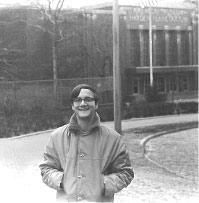
Early in 1969, at 15, my astronomy buddy, Eric Sohmer and I enrolled in a 10 session Saturday astronomy class at New York’s Hayden Planetarium. Our parents were initially against the idea of our going into the city, but we were good salesmen. Yes, of course we skipped some classes and went exploring another universe: Manhattan. We kept our wits about us and never ran into any problems. So THIS is 42nd Street ! Huh.
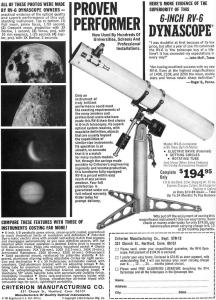
By this time I had been a loyal subscriber to Sky & Telescope. Remember those ads? Jaegers; Edmund Scientific; Optical Craftsmen (oh my !); Unitron. And, of course – Criterion and it’s mouth-watering RV-6. That full page ad lit my eyes on fire (again, what a nerd). That needed to be my next scope.  But, alas, my parents said no to all my imploring and justification. No room in the two-bay garage. Sure.

Many years later, I lived in the town of West Hartford, CT where Criterion Manufacturing was headquartered. But by then it had recently closed down.

At each NEAF I’ve attended, I still visit the vintage scope booth and admire the one or more RV-6s on display.

High school led to more terrestrial photography and new interests in physics (Henry Anzak – thank you for understanding how to bring physics alive for us !) and theoretical astronomy and cars and going “steady” and…
Tenth grade and my first trip to a newly-discovered astronomy club in Princeton; the Amateur Astronomers Association of Princeton. It was 1970. My father drove a friend and I down for the advertised lecture. That friend was Vince DaGrosa, who had a cursory interest in astronomy.

Fifty years later we’re still friends. Vince recently joined the AAAP. I guess he really had to study the options of joining. I stayed with the AAAP until 1976 (when college began) and re-joined in 1998. The 22 year hiatus was due primarily to living elsewhere around the country for business. From that year forward I again immersed myself in astronomy and astrophysics – and lucky enough to get to know many Princeton University astronomers and physicists over time. As luck and fate would have it, one evening an emeritus professor made a short “request” visit at the beginning of a AAAP monthly meeting.

That person was none other than David Todd Wilkinson.
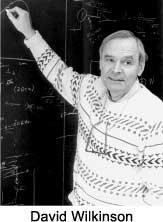
Wilkinson was a world-renowned pioneer in the field of cosmology specializing in the study of the cosmic microwave background radiation (CMB). He was looking for volunteers to assist with a project, coordinated with Harvard’s Oak Ridge Observatory, It was an optical SETI endeavor and would require the refurnishing of the long-unused Fitz-Randolph Observatory, housing a 0.9 meter Perkin Elmer Cassegrain. All new software was written and installed by the physics department wizard Norman Jarosik. A complex photometer array called the “OSETI Box was co-designed and built by both groups. The project was active from 2001 to 2004. Sadly, David died from cancer after a long battle. He was one of the nicest human beings I’ve ever met. That project was a singular highlight in my astronomy life.
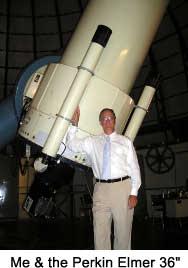
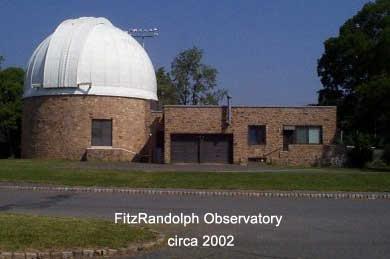
We also used the refurbished observatory to occasionally invite the public for open-house viewing. These events were extremely popular. Unfortunately, despite many debates, after David’s death, neither the Department of Astrophysics nor the Physics Department had any interest in maintaining the facility. It was mothballed and later scheduled for the wrecking crew. The scope was sold or donated to a school about 2015. The observatory still stands.

A long, fun and rewarding journey. From a field on a family farm, to Tascoland, later, an 8” Newtonian, an adventure climbing aboard the majestic and legendary Hale 200” on Palomar Mountain, Princeton classes (General Astronomy; Exoplanets; General Relativity; Cosmology), many NEAFs, countless “star parties” and a library of books.

Oh yes. And the experience has come full circle, dear reader.

Two years ago, I bought my very own ——
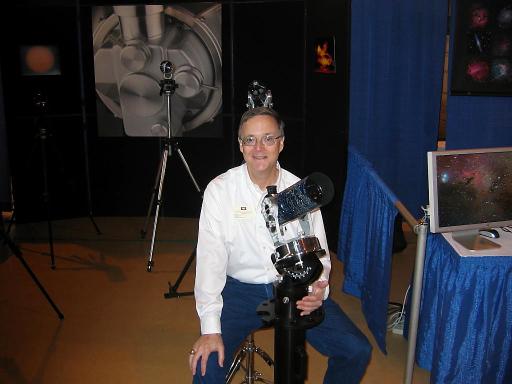
QUESTAR !

Posted in May 2020, Sidereal Times | Tagged | 1 Comment

When, how, and why I began my interest in astronomy

by Victor Davis

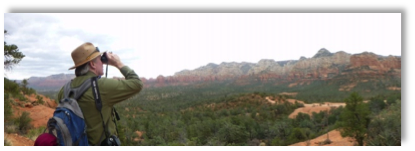
As a general rule, I tend to value earned experiences more than accidental ones. That’s a pretty common view, it seems to me. The exhilaration of a summit view is heightened by appreciating the effort it took to get there. The view from a parking lot is less sublime than the vista from an untrammeled vantage point miles from the trailhead and reached by scrabbling uphill across fields of talus and scree. My car climbed Mount Washington (though I never collected the ubiquitous bumper sticker), but it’s the experience of hiking the Franconia Ridge that I particularly remember. These events took place, as you might imagine, many years ago when I was more agile and before my heart muscle had to be re-plumbed. 

Among these miniature adventures was a cross-country car trip nearly 50 years ago. I took off with a friend in his beat-up Chevrolet on a 6-week tour from our homes in Ohio to the West Coast and back. We had little agenda beyond spending a few weeks sponging off relatives; his in Montana and mine in northern California.  We subsisted mainly on a diet of cheeseburgers and french fried mushrooms, an unfortunate addiction that led more or less directly to my re-plumbing experience mentioned earlier.

I no longer remember the sequence of our travels, but at some point we ended up, as many tourists do, at the south rim of the Grand Canyon. Then as now, the visitors’ overlooks swarmed with people (also black flies), and though only about one percent of canyon visitors expend the effort to hike its trails, my friend and I decided to be among the enlightened few to “walk” down to the Colorado River and back. In one day. At midday in August. Signs warned of the foolhardiness of expecting to accomplish what seemed a modest 16-mile stroll (with a 4,400 foot change in elevation) in a single day and without proper preparation. No matter; we knew better than the ignorant rabble who turned back at the first rest area that it was important to wear long pants and to stay hydrated. We filled our one-quart water containers to the very top, and headed off down the Bright Angel Trail. The scenery was stunning, each of many switchbacks bringing into view a landscape different from the last, and just as beautiful. We were pretty baked by the time we got to the river, but that made its cold water that much more appealing. We played along the river for a few hours, splashing around and clambering over two-billion-year-old rocks. Then, with an exuberance and confidence available only to the profoundly ignorant, we headed back up the trail. 

Frolicking overlong at the river had the unintended benefit of sparing us the worst heat of the day. Nevertheless, the uphill climb was brutal. And nightfall came unbelievably quickly. Did I mention that our water supply was woefully inadequate? So there you have it: two inexperienced, barely-fit hikers, exhausted and dehydrated, hiking a steep and precarious trail in the dark.  At some point, and many details are mercifully lost to memory, we virtually collapsed along the trail. Lying flat on the ground, I looked up at the sky.

I’d never –and I mean NEVER – seen anything like it. I briefly entertained the idea that I was hallucinating. Stars shone everywhere. A few bright planets dazzled. There was this amazing gauzy band spanning the sky from one canyon rim to the other. What the heck was that? Every minute or so, a meteor streaked across the sky. A Perseid? It was all so beautiful, so dynamic, that I couldn’t stop watching. It was unforgettable, a sight I’ve tried to recapture, usually with disappointing results. What would I have to give up to enjoy such a view from where I live? That’s a pretty slippery slope. 

In subsequent years I have gone out of my way to experience astronomical sights and events, and to seek the company of others whose enthusiasm and expertise surpass my own. These efforts have enriched my life. But, my first experience of a starry night in a dark sky is what got me hooked on astronomy. When the hour gets past 10 pm and the temperature drops below about 50 degrees, remembering the rewarded efforts of these experiences is what gets my butt out of its comfy chair.

high-contrast photo of my nutty friend climbing around the bottom of the Grand Canyon

high-contrast photo of my nutty friend climbing around the bottom of the Grand Canyon

Posted in May 2020, Sidereal Times | Tagged , | Leave a comment

Rekindling My Love of Astronomy

by David J. Kaplan

I was born in the South Bronx. My parents each had two jobs, so we as kids were pretty much on our own. Saturday mornings my mother gave me fifty cents, pinned a label inside my coat with my name, address and telephone number. “If you get lost, ask a cop for directions.”

My friend Gary and I would take the subway, which was 10 cents, and travel all over the city. Transfers were free. We would take the Staten Island ferry for a nickel, go to the Bronx Zoo, it was free, or the Botanical Gardens, also free.

But our favorite destination was the Hayden planetarium and the Museum of Natural History, also free. We’d weigh ourselves on scales calibrated to how much we’d weigh on several of the planets and the moon. We’d exam giant meteorites, and wonder at the latest missiles sent aloft during the formative years of artificial satellites such as Explorer I.

Of course the sky show in the domed theater was the biggest attraction and for two kids whose imaginations were as infinite as space that was the hit of the day.

Before leaving the planetarium a visit to the gift shop was also a must. If we purchased anything on our limited budget, it was a giant postcard with images of Saturn and Jupiter, always a winner on Monday’s show and tell in our public school classroom.

Another of my friends received, for his 11th birthday, a three inch reflector telescope. Now that was a big deal. One evening we carried it to the rooftop of his apartment building and observed the moon. What a thrill!

Talk about imaginations as infinite as space. While observing the moon, it appeared as though something was heading toward it. It had a trail like the exhaust of a rocket ship. And then, it appeared as though it went behind the moon and reappeared on the opposite side. We thought we had made some extraordinary discovery. We ran downstairs to my friend’s apartment and (at 10 o’clock at night) called the Hayden Planetarium, excitedly telling the person who answered the phone of our great discovery. He replied, “I’m only the night watchman.”

So much for our great discovery.

In 1967, I was doing research for CBS News, the Special Events Unit. We we’re covering the launch of Apollo 8. The executive producer approached me and in an off-handed manner said, “See if you can find a sculpted globe of the moon. We’ll use it as a prop.”

It seemed a slight chance. I called several agencies in the Soviet Union. Hey, it was on CBS’s dime. I knew they had the first images of the far side of the moon and thought someone might have had the same idea, sculpting a model of the moon. Nyet, nyet and more nyets.

After speaking with folks at space agencies in Europe and having no luck, a colleague suggested I call Dr. Thomas Nicholson, an astronomer at the Hayden Planetarium, who later became its director. “Sure, there are two guys in the Bronx who just finished sculpting a model of the moon.”

What an extraordinary find. Graciously, they allowed us to use their sculpted moon (1,000,000:1) in inches. Every rill and crater, straight wall. It was all there.

We invited Dr. Nicholson to come to our studio and assist the lighting director. The moon was lit to duplicate how the astronauts would see it on their approach.

I would say that entire experience rekindled my love of astronomy.

David J. Kaplan

Me, the young guy, with Robert Wussler the Executive Producer, The Flight of Apollo 8

Posted in May 2020, Sidereal Times | Tagged | Leave a comment

keep your distance

by Victor Davis

artist alteration

keep your distance. “at least the diameter of a saturn-mass black hole’s event horizon” – Artists alteration, 2020 – Ted Frimet, no copyright held.

assuming zero angular momentum and zero charge

I thought you might include in the newsletter, this social distancing advice for the astronomically inclined, which leaves the calculation as an exercise for the viewer.

Here are the relevant numbers:

Formula for the Schwartzschild radius of a black hole: R=2MG/c^2 (discounting charge and spin)

Gravitational constant (G): 6.67 X 10^-11 m^3/kg.s^2

Mass of Saturn: 5.68 X 10^26 kg

Have fun. My ZWO camera, which my wife ordered as a Christmas/Birthday gift for me, is finally due to arrive tomorrow! I figure that means dreary weather for the next month at least.

Your optimistic astro-buddy,

Victor

Posted in May 2020, Sidereal Times | Tagged , | Leave a comment

Vanity Cards

by Theodore R Frimet

That in my own humble opinion every Amateur Astronomer wearing a mask is a masked crusader for our mutual pursuit of life and liberty.

I’ve got nothing. I have been waiting to write that phrase for a few years now. Oft borrowed quotes from the media, steeds sometimes have to rise to the occasion. I too have to turn the page to the genius that is Chuck Lorre. “I’ve got nothing” appeared in one of his vaunted vanity cards.

I can’t seem to put the under age trace of the ministry of magic on it. Without a whiff, or a valid search engine (one that works), it is forever lost. My missing quote has become a tattered piece of laundry linen, flapping endlessly in Springs’ daily breeze.

No, I haven’t hunkered down in a battery of toilet paper. Yet, here I am, confessing my sins using intellectual confetti. Toilet paper, how-so-ever, could certainly make good confetti.

A shout out to the Mayor of New York: be sure to ban tossing unused toilet paper rolls onto the rank and file of those on the front lines! Once the touted parade on Broadway begins its ascent, marking the end of our recently endured pestilence, paper confetti would be best served, shredded then tossed lightly with a showering of gratitude and freshly shed tears.

Looking at the table before me, I vy Allegre (half read, my fellow amateur), a tome on molecular biology – untouched for months, and a few weeks worth of AAAS Science journals. No fodder here for the canon that is Sidereal Times. Wimper.

Off to my library then! Ok. The bookshelf in the living room should do. Social distancing is very important to both life and limb. I concede to what works. I hoof off a few, brew a hot coffee, and hunker down to…um…I’ve got nothing there, either.

K2, where are you, when the children need you the most?

Fritz, the destroyer of dobsonians, appears. He alights onto the table, and drops quickly to the ground. With a single bound, be leaps to the window. What is it, Fritz, old boy? What do you see?

I see nothing, Fritz replies. My hearing however is excellent. And of late, I am getting a little tired of your wimping about. What kind of amateur are you, anyway? Certainly not one that doesn’t spy the night sky and speak of his accomplishments!

Be wary your wordiness, humankind. Try to use your ears, as I do. Listen, learn and be aware of the difference between the truth and the contrivances of misdirection. The night sky is a record of truth. Pure and pristine, even the tidal forces surrounding the disk of a black hole can be dissected by science. Clouds be damned and use your imagination in lieu of your telescopic views.

Big Pussycat, aka Maybelle, sleeps on her low lying perch. Not being disturbed by my temporary insanity, she is blissfully unaware of the dob destroyers’ dominance over my cup of Joe. I take a sip. It is cold. How could that be? I just brewed it. “Twasinow”, says Fritz.

Enter K2.

K2 had not only fallen into a time well that lasted 10 or more time-space detents, she had knocked my coffee onto a time-loop. Hidden from my sight, K2 skirmished a slice of time. She bumped my coffee cup. The cup superimposed itself with the vibrations of K2’s temporal nexus.

It perplexes me that the physics of my coffee, in temporal isolation, would work out differently and become a cold cup of Joe. I sputter the drink back into its mug. Get up and brew another. Bad pussycat.

In Cheshire Cat style, K2 pops her head into my timeline. I am not amused. Taken off guard, I jump up. Fritz is puzzled as to the source of my anxiety. He too, runs from the room. Maybelle sleeps soundly. My coffee is ready.

For the past few weeks, off and on, I have been working away from home, doing a job that is considered essential. Each away-evening I give my brain the pre-sleep suggestion that I would like to solve faster-than-light travel all the while bending space-time to my will.

Due to the existential nature that is Freud, many poignant reveries revealed in deep sleep are compounded by the fractal nature of the dream. The deeper meaning, unlike Pascal, is lost upon my hippocampus. The best that has risen, not unlike the cream in my cup, is me traveling upon a road. Slipping to one side or the other, correcting the gait of my car, we encroach upon a tunnel. I enter it as I awake from slumber. And once again, I’ve got nothing. ‘Twasilater.


Posted in May 2020, Sidereal Times | Tagged , , | Leave a comment

Snippets

compiled by Arlene & David Kaplan

-BBC

Biggest cosmic mystery ‘step closer’ to solution
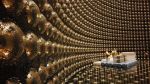
The nature of this quirk, which allowed matter to dominate the Universe at the expense of antimatter, remains a mystery. Now, results from an experiment in Japan could help researchers solve the puzzle – one of the biggest in science. It hinges on a difference in the way matter and antimatter particles behave.
The world that’s familiar to us – including all the everyday objects we can touch – is made up of matter. The fundamental building blocks of matter are sub-atomic particles, such as electrons, quarks and neutrinos…more

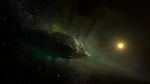
artists conception of a comet

-BBC

‘Alien comet’ visitor has weird composition
The interstellar comet 2I/Borisov was detected in our Solar System last year. This mysterious visitor from the depths of space has provided astronomers with an unprecedented opportunity to compare it to comets that formed around the Sun. New data suggests it contains large amounts of carbon monoxide – a possible clue to where it was “born”…more

-BBC

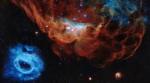
Hubble’s 30th anniversary image
Hubble’s 30th anniversary image has been turned into a 3D “spaceflight” experience.
Experts created this visualisation showing the Giant Red Nebula and its smaller blue neighbour, which lie in a satellite-galaxy of the Milky Way…more

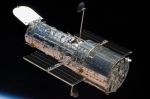
Hubble Telescope

-BBC


Hubble looks back in time 12.6 billion years
Experts have created a spectacular visualisation of the “Hubble Ultra Deep Field” – one of the deepest optical images of the Universe ever taken. It was assembled for the 30th anniversary of the space telescope’s launch…more

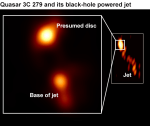
Quasar black hole

-BBC


Event Horizon Telescope: Black hole produces twisting jet
Hubble’s 30th anniversary image has been turned into a 3D “spaceflight” experience. One year on from publishing the first ever image of a black hole, the team behind that historic breakthrough is back with a new picture.
This time we’re being shown the base of a colossal jet of excited gas, or plasma, screaming away from another black hole at near light-speed. The scene was actually in the “background” of the original target…more

Posted in May 2020, Sidereal Times | Tagged , | Leave a comment

From the Director

Rex


by Rex Parker, Phd director@princetonastronomy.org

Astronomy in the Time of Coronavirus
AAAP’s operations at both Peyton Hall on campus and the Observatory at Washington Crossing State Park are closed until the coronavirus crisis normalizes and group gatherings are once again allowed. We’re probably all feeling stress from the disruptions. I deeply hope that you and yours are staying healthy and making the best of it during this difficult period.

AAAP Officer Elections coming up
In order to conduct elections of officers in keeping with our constitution and by-laws, I have asked John Church to be nominations chair. He will report this month on the status of a slate. The elections will be conducted via e-mail or survey on-line since we cannot meet in person. I am in discussions now with the Board regarding process and will be communicating the election plan to members by May.

Starlight for Our Eyes
Science and the study and practice of astronomy can be a great theme to pursue while we are immobilized at home with social distancing in place. Of course, it would help a little if our local skies would clear up, our retinas need starlight. Unfortunately, most professional as well as amateur centers for astronomy are shuttered. The entire mountain top observatory cluster in Chile (Cerro Tololo) where I do remote astronomy is now shut down, like the rest of the planet. So the image below is from the last data we were able to get.

NGC 2736 (image below) is part of a large supernova remnant in the constellation Vela in the southern sky, 820 light years away – close by astronomical standards. It was first described by England’s Sir John Herschel in March 1835 during his 4 year period doing astronomy in South Africa. Sometimes called the Pencil Nebula, NGC 2736 is a glowing sheet of gases and particles ejected from the supernova event about 11,000 years ago. Today a pulsar sits at the center of the original star. The red regions in the image below are mainly ionized hydrogen and the blue ionized oxygen, gases ejected from the inner layers of the star when it exploded. According to David Malin, the section seen here is part of a roughly spherical shell outlining the expansion of the supernova explosion, but that connection is really only visible in X-ray telescope images. The connectivity in optical wavelengths is obscured by dust from the explosion. The exploding star is thought to have quickly reached a brightness over 200 times that of Venus. Our human ancestors and animals and birds alike would have been dazzled by the sudden appearance of a daystar in 9000 BC, much as we are amazed by its remnants in the deep sky today.

NGC 2736, supernova remnant in the constellation Vela in the southern sky. Astrophoto by Rex Parker with Star Shadows Remote Observatory at Cerro Tololo in Chile.

Posted in April 2020, Sidereal Times | Tagged , | Leave a comment

From the Program Chair

by Ira Polans, Program Chair

All monthly club meetings have been cancelled due to Princeton University closing its campus and the need to social distance. I have reached out to the speakers affected by the cancellation (March, April, and May) and all have agreed in principle to give their talks once things return to normal.

While we’re going through this difficult time please stay safe and healthy.

Posted in April 2020, Sidereal Times | Tagged , | Leave a comment

Observatory Public Nights Postponed. Our Skies Remain Open

by Dave Skitt, Observatory Chairperson

The State of New Jersey closed our public state park buildings. This is part of the COVID 19 virus response. AAAP delayed the opening of our observatory for Friday Night Public Observing for your safety. This delay will remain in effect until NJ lifts the group congregation restriction.

All is not lost; the skies will remain open. How you might ask? Through the marvel of telescope technology and the internet.

AAAP recently assembled “the outreach scope” from a pre-owned Orion ED 80 refractor and iOptron AZM Pro mount. We equipped it with a flip mirror and the clubs’ Starlight Xpress Ultrastar C camera.

Appearing in this months edition of Sidereal Times is, Novice EAA Imager Captures Rare, Unseen Astronomical Phenomenon. There I describe the pleasure to dabble with the scope and learn how to use it. Inspired by my church switching to online video services, I have now learned how to broadcast live streaming video from the Ultrastar camera to the internet.

I invite you to check out our club’s Twitter page (@Princetonastro). Our social media is your temporary observatory gateway. Using Twitter, we will observe together over the next several Friday nights. I will be live broadcasting night sky views from my home observatory, weather permitting.

Together we wait for the AAAP observatory to re-open. There, we can share the stellar photons at the eyepiece. For the meanwhile, I hope you will join me in this technological substitute.

Posted in April 2020, Sidereal Times | Tagged , | Leave a comment