my longest yard

by Theodore R Frimet

a stitch in time saves nine

Behold! A true moonless night, low humidity and no clouds. Unless you are the astrophotographer to my left. He kept on getting red smears in his semi-finished product, on screen. He had been working with a Canon T1 throughout the night. Truth be told, I couldn’t remember if it were his expletives or mine that were aurally sampled throughout the night. Maybe not all mine?

Janet, should I go to Washington Crossing Park, or out to Jenny Jump State Park? “Go To Jenny Jump”, she quipped. Not even tongue in cheek. This cherished astronomy widow drew from her experience. The cloudless, low humidity, moonless nights were as scarce as hens teeth. Yes, work thru the travel anxiety and pack up, and go!

Never skip lunch, I told myself. Get it on the road. A burger, maybe? Drive on thru. Keep to the speed limit and avoid the Route 31 speed traps. Plenty of time to take to the right side of the road. Let the local traffic pass you by. Most don’t, though. They are equally respectful of the ordinances in place to keep all travelers safe. See? It isn’t true what they say about Jersey drivers.

It’s already dark at UACNJ by the time I arrive. I close the gate behind me. I remind myself of the sign the committee placed on the gate. Outsiders should remain cautious as we are not open to the general public. Soon, though, we will be showing the night sky on Saturday nights for public outreach.

I turn the hair pin corner, at the speed of slug. Lights on for safety. Outside the house, a line of amateur astronomers appear on the hill. I silently commiserate with them. My car headlights are reminiscent of a late comer to the movie theatre. This ticket holder pardons his way thru the seats to the empty one in view. Hooded gentry of the cloth stand stoically about their astral machines. Heads bowed down in mercy, as they avoid the pitfall of headlights.

I park across from the house. No cars there. No wonder. Who wants to port a hundred kilograms of gear across the gravel, up the hill, and to the scrimmage line? No one, ‘cept the old timer, here. Not wanting to drive off a minor cliff, I cautiously pull into spot number one. I am careful not to go beyond the concrete barrier.

I make quick sport of my personal belongings. A huge go-bag has all of my cold weather gear. The translucent storage container holds my artifice. I spy my suitcase with pillow and sleeping bag. I make a quick check for the astro-seat, eyepiece case, field tripod, and JMI. Yes, didn’t forget a thing, except lunch. I have an emergency granola bar to munch – so I’m prepared for the long haul. Thank goodness I remembered a couple bottles of water. So very important to stay hydrated in cold weather!

I do the dance to the front door, and let myself in. Membership has its privileges, and key holders have house access. I make my bed, and decide what layers of clothing to wear. I settle on two layers of socks to ward off the nights chill. The first can wick away moisture. I choose polyester top and bottom long john. They will keep my body warm and dry. I decide to wear my stretch blue jeans, mostly because I am bashful. And put on the RefrigiWear Iron Tuff Coveralls with Hood. I am protected down to -50 F. Yes, that was a minus sign. I don’t overheat. This is brilliant textile engineering. I cap my toots off with Baffin footwear. Bragging rights, here. Does minus 148 sound posh? Mittens, hobo style. Check! I remove my $7 faux fur hat, and cover my noggin with balaclava. I solved the breath fog by choosing an open face version. My last balaclava, although performance based for skiers, clouded out the lens before dew point ever had her way with me.

Back out to the SUV, and hand carry the tripod to site. I step up the minor grade, only to find my feet sinking slightly into terra firma. It holds well. I muse to myself that the soft grounds should be good for tripod stability.

The line of amateurs greet me with grimaces hidden by the dark of night. Only the pale shine of the horizon skirmishes the evening veil. I silently listen to conversations being held and try to take stock of who is present. My ears play tricks on me, as I vy to ascertain only a few well known club members. I site the tripod, and level it. And re-level, and again, level. Back to the car.

Bring out the tub, with all the astro goodies, and particulars that make the night operate smooth as silk. You can’t learn enough from club members. They have learned all the best rules of the road. The storage tub, neatly confines all that is required for the evening view. Less to lose, and everything at your beck and call.

I transport the astro-chair. What a back saver. Best investment, ever! Eyepiece case comes next. Followed by the JMI. Two amateur values that were an add-in for my recent purchase of a Meade LX 200 GPS were the JMI case, and an engineered table. The aircraft aluminum table stays permanently affixed to the tripod top. It effortlessly guides my scope into place. No need to wreak havoc on my back or worse – drop a scope into the black abyss of the night. I place my gerry rigged center bolt up, from underneath the tripod head, into the LX bottom. Careful not to over insert the threading, we tighten the mizzenmast. This ship is almost ready to set sail for her maiden voyage.

I place the Lithium power tank at the tripod base. Making note of the velcro straps, I secure the power line to Ahab’s peg leg. Tank to scope connection made. Power up, and let the LX begin the vintage dance of 2003. All goes well. It should, as I’ve committed more than 45 days of time and labor to bring her to set sail. North, level, and limits are found. The GPS makes a siren song with satellites not in view, and finds me in the darkness. Two stars are selected for me. Sirius. Thank god. I can find that bright son-of-a gun, with one eye closed!

Fortunately, Sirius was the first star selected for auto-guiding. My finder scope had managed to break free of its architecture. I reset the small scope into the rings of destiny. I applauded myself knowing full well that a bright star makes alignment simple. Of course, this is a reverse order – however when life hands you lemons, you make lemonade! Finder and main oculus now in agreement, I motion to the second star for alignment. Althios.

One repeated review on the Meade alignment system, is that newcomers would have difficulty in finding alignment stars. Chosen for them, by the telescope software, I can see where this might have been problematic. Equipped with an app for the night sky, this amateur makes quick sense of where Althios is. Now, forever more, burned into my memory – Althios will be easy to find in the night sky. No, really. I focused on the wrong star. And when it came to finding The Great Orion Nebula, it was off centered. I knew I could do better. Life is a do over.

Help! My finder scope image is upside down! Yes, I had a tough time with a star, that wasn’t solo. I called out for help. Thanks, Bill. I apologized to him, as he had to genuflect before an RACI 8×50, without a correct image diagonal. Bill is a professional astronomer, and makes quick to center the orb. Taking back the oar, I put her blade back into the black water. I press into her paddle. Stroke, stroke, stroke the enter button, and look astern to the Autostar. It glows red words, reminiscent of a sea creatures bioluminescence. Alignment complete!

Chit chat in the background. I hear that another member mused about deep cycle marine batteries. Not me. My lithium tank is outperforming all expectations this evening. To my right, perchance I pickup the vibe of others cold feet. I feel not the cold hearted orb that rules the night. My toes are warm, and no creature discomfort will distract me from my night time view.

Like a child at play, with a new toy, I look to the rivers and streams that I am used to. The Great Nebula appears well centered. Not all is what it appears to be. Let me share some of the preamble to the view:

Yup. So satellite metrics do change over time! Evidently there was a “crossover” last year.

I ordered an RS-232, and a bridge cable to USB for the latest update.

It would be questionable that the LX200 GPS would be able to target anything, using its onboard GPS without the latest firmware installed.

I can’t imagine it wouldn’t work properly once the time/date was manually entered, and a correct corresponding manual site was selected!

However, I’ll try to vette the telescope, once again, after I install the latest firmware

and again:

We had a great night last night. And it exposed yet another problem that I wanted to share with you.

After experiencing the issue, and researching – it was truly an easy fix.

Considering that some of the SCTs you offer for resale have been closet stored for a few years – it is likely that the grease has “redistributed” itself over the years, if only due to gravity, and heat/cooling variations during storage.

When I took to the telescope, last evening – the aperture was so far off – it was stuck at the extremis at the 10 o’clock position. The mirror had “cocked”.

The simple minded solution last night was to turn the focus all the way out, and all the way back in. Intuitively done – this redistributes some of the grease. And the rest of the night was only bothered by the tit for tat focus shift that all old Meades are known for. When I get to it, Peterson Engineering for about $30 should not only fine tune it – the application of new grease will give this scope another few years of service.

So, if anyone complains about that YOUR 10 inch that you were offering – you might want to have them search for the solution – or simply set the scope at 30 degrees, end pointed up – and rotate the focus ALMOST all the way out, and ALMOST all the way in – for about 10xs. I only did this five times, and was successful.

Again – this is NOT mirror flop, or minor focus shift. Cold temperatures do NOT play nicely with grease that hasn’t been redistributed for a couple of years!

We can now leave well enough alone. I’m afraid that I’ve relentlessly conveyed only a few hours work. Yes, this is the big payoff. The jackpot. Nothing here was left to chance, except the learning curve of used equipment investiture. Having paid the price of admission, I am entreated with the unmitigated view of spiral galaxies, and nebulas.

Having filled my cup, and it overfloweth, I remembered a shout out to me. As soon as I had entered the club, I was asked if I was from Pennsylvania. I doggedly answered, and went quickly out the door. I was eager to set up. Later another member of the night asked all to visit with him, inside. He wanted to warm up his bones, and talk for a spell. Someone to chit chat with. I was focused on the mission. Stroke, stroke, stroke, went my oars. Away to me, to worlds that were previously hidden by push-to delinquency, and light polluted skies. No time to talk.

Yet, I had my fill. Camaraderie slowly came into focus. It would seem that astronomy wasn’t my sole learning curve. I looked about, and saw the membership had dwindled. Some had left. I listened to the dark, and heard a few at the Buinis 16 inch. I moved to the direction of the bodiless voices. Samir and Eric looked up.

Eric was about ready to close up the observatory. We all talked for a while. I inquired about the time. It was only 10:30 PM EST. I spewed a little pablum of my penchant for atheism, and thanked G-d for slowing down time for me. Usually, we all experience the fleeting clock movements of time management. Yet, lately, my interrupted sleep patterns are extensible. Evidently so, my timeline for astronomy is a dual boot. My two and half hours felt like double the time. Astronomy, it seems, affects the mind on a molecular basis. For that I say, thank you Darwin.

Everyone packed, ‘cept Samir – I ask him to lock up, as I intend to stay the night. He agrees. We talk for awhile, as he waits on his fill of astrophotography to complete its nocturnal mission. Walking outside, he heads for his gear, and me for mine.

I peer into the eyepiece, and feel the wind at my back. I don’t mind as I start to feel the break chill of the late evening. The quadrature giggles. It yields in waves of hyperbole that is certain to ruin the remainder of the venue. The hill that I chose, amplifies the wind churning vibrations. I dare not lock down the scope any further. I might not be able to extract my field expedient retention bolt.

Samir is here for another half hour or so. Timed for the setting of the Great Hunter, I am faced with a choice. Both require putting away the telescope. Along with my lunch, I also forgot my scope shroud. Not wanting to wake up to a frozen popsicle, it was incumbent upon me to stow away our oars, pull down the riggings, and make safe the Meade.
It was fair choice to leave with Samir. He locked the gate, as I waited at the park exit. Once all was secure, he went his way, and I my own.

In football, there is the Hail Mary. Having missed my opportunity at professional sports, I can only imagine that players have their own mental time management. That the pigskin gets suspended in time and in space. My gridiron lacks the struggle for dominion over the earth. Yet we astronomers share an overlapping ven. Making the last throw for the evening, at the Crab Nebula, became what I will always remember as my longest yard.

Posted in March 2020, Sidereal Times | Tagged , , , , , | Leave a comment

The next amateur

by Theodore R Frimet

to know a fly – dithier

Today we look at the wing of a fly. Not much to see here. “Move on”, you say. I differ. Many are the weekends that I wait for. A trouble free morning. Brush the cat. Stir the coffee. Pop in a microscope slide.

After the obligatory cardiac muscle, followed by a section of frog embryo, I take notice. One or more slides are cracking. Probably due to my early days of the hobby setting in. My nascent ignorance of clearance between 10x and 100x shows up. I disregard the shattered mirrors and move on to the fly’s wing.

Flap. Flap. Flap, I think out loud to myself. That is how a fly propels itself. 4x, 10x, 40x. I stop at 400x, too lazy to oil up for 1000x magnification. I see the individual hairs and their apparent attachment to single minded scales. Then the epiphany. 

Each hair is shaped like an individual aircraft wing. Bernoulli’s principle must indeed be at work here! As the fly moves forward, with each gross flapping movement, every minuscule hair catches the breeze. It elevates the vector at hand!

Science is a subject best served to beginners as biology, chemistry, physics, etc. You get it. I did. It was how we were studied and sacrificed to the philosophy. However, in this day and age I am adapting a less liberal approach to study. We must plug the breach that has been formed over the past few years. 

The drive towards STEM education is simply superb. However it is going to leave some very bright and well meaning people behind. Not every biologist understands, nor appreciates chemistry. Tell me of a budding physicist that is eager in her first year of study, to undertake what had been the antithesis of ethics, while dissecting once was a living and breathing being?

Quick to enter college, and just as probable to leave the study of science. I know not of where I can source that data. I must have read it in a journal, as of late. The idea is not my origin, however I portend to be an early adopter.

We need to bring into the classroom the science that our charges will practice in the laboratory and at work. If they will profess to be biologists, then focus on real world matter, and place the emphasis on biology. If we expect chemists to emerge to produce the next generation of life saving drugs, then press the periodic table into the outreached palm.

In her testimony (1) on science and technology education, dated March 17, 1999, Shirley M. Malcom, PhD, writes:

We find ourselves with a system of problems that, if taken together, threaten to overwhelm our ability to keep pace with the knowledge and skills needed to manage and maintain the technologically based society and economy we have created. 

Our need to import talent has been necessitated by our failures to develop talent, by expanding the talent base for technical and scientific fields. 

We have systematically underdeveloped women, minorities and persons with disabilities as crucial human resources for computing, engineering, telecommunications and biotechnology fields among many.

It is easy to agree that elementary and secondary education will need to secure an underpinning of the basic sciences. Let’s point out that along the way, a citizen may stand in the jury box, expected to understand DNA results. Or at the very least, not confuse, as was my personal experience, high value assay results, with copious consumption of illicit drugs. Such misunderstandings will enjoin innocent citizens to a life behind prison walls. This is very serious.

All too serious are the very ingredients of mainstay America, whose youth enter into the fold, and drop out. The math-science obstacle to the freshman kicks them to the curb, and is wasteful of America’s precious resource. The time has come to appreciate the student that has a penchant to look into the optics of the telescope.

In a flash a gamma-ray derived from lightening, all so close to the earths upper atmosphere, lands upon the reticle of the astrophotographer. Ugh! My image is aghast, and I must remove it from the fray! Yes, this is wonders of all wonders. Appreciate now how this works.

If we asked the next amateur to pass muster with biology, chemistry, engineering, and even to master the constellation count of the night sky – they would never, and I insist here, “never”, proceed to the greatness that is the many of you. You will end up capturing photons all by your lonesome. And your grandchild will receive an ignorant ruling from the bench. You betcha.

Caste a wide net. Permit the eager freshman to pursue the specificity of their wants and desires. Muddy not the waters. Do not toss them into the battlefield to skirmish subjects that ultimately will be the demise of 40 to 60 percent of those that once chose to matriculate.

Let the horizon pass. Let it sweep over them as if nothing were of concern. You argue that ignorance is not bliss. The ven overlap of STEM is a necessity for our survival. STEM is a tool, and should not be used in isolation.

Bring out your telescopes. Be aware that the weather now warms and tonight the clouds will become fewer, and more sparse. When the minds, both young and old, ask questions that relate to their night time view, be prepared to discuss astro-biology, astro-chemistry, and a tad bit of astro-physics. All these topics are meant to whet the appetite. They help mould the direction of the next biologist, chemist, or physicist.

See? Not every young amateur will be an astronomer. Yet, you bring potential to birth great science. You shape the future, by reaching the public, not with media, or tweets. It is done by the magical contact of the first sighting of the Rings of Saturn.

(1) Malcome, Shirley M. (1999, March) Science and Technology Education Testimoney. Retrieved from https://www.aaas.org/archives/science-and-technology-education-testimony Last accessed Saturday February 8, 2020 9:38 AM EST.

Posted in March 2020, Sidereal Times | Tagged , , , , , , | Leave a comment

Snippets

compiled by Arlene & David Kaplan

-BBC

-BBC

Google Doodle celebrates scientist Mary Somerville
Mary Fairfax Somerville was a mathematician, geographer and astronomer, who was born in 1780 in Jedburgh but her childhood home was at Burntisland in Fife. Mary carried out detailed and highly-accurate studies of the solar system. Mary was also a huge advocate of women’s rights…
more

Solar Orbiter. Sun mission blasts off!

-BBC

Solar Orbiter: Sun mission blasts off
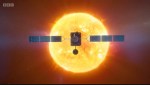
Europe’s audacious Solar Orbiter probe has lifted off on its quest to study the Sun from close quarters. The spacecraft launched aboard an Atlas rocket, which lifted off from Cape Canaveral in Florida at 04:03 GMT. Researchers hope the knowledge gained from Solar Orbiter (SolO) will improve the models used to forecast the worst of the outbursts…more

Allen Observatory

-BBC

Astronomers want public funds for intelligent life search
The director of the US National Radio Astronomy Observatory in Charlottesville in Virginia said that it was now “time for Seti to come in from the cold and be properly integrated to all other areas of astronomy”. Dr. Anthony Beasley told the BBC that there should be greater government support…more

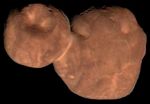
Two space objects fusing together. The genesis of a small planetoid.

-BBC

New Horizons spacecraft ‘alters theory of planet formation’
The established view is that material violently crashed together to form ever larger clumps until they became worlds. New results suggest the process was less catastrophic – with matter gently clumping together instead. The study’s lead researcher, Dr Alan Stern, said that…more

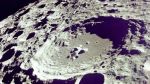
Crater on Lunar Surface

-BBC

Open University scientists testing ‘Moon dust’ for water
Ms Sergeant said: “The production of water, either from frozen deposits at the lunar poles or generating water from the rocks themselves, will be the first step to enable such long-term space exploration missions.”…more

Posted in March 2020, Sidereal Times | Tagged , | Leave a comment

From the Director

Rex


by Rex Parker, Phd director@princetonastronomy.org

What’s Happening in AAAP
This month’s lecture on Feb 11 at Peyton Hall will deepen our look at our own favorite star, the sun, from the incredibly close perspective of NASA’s Parker Solar probe. Recent updates from Parker’s NASA blog on Jan. 29 indicated that in its latest (fourth) solar orbit the probe came closer than 12 million miles from the Sun’s surface and reached a speed of 244,000 miles per hour. These are unprecedented achievements in the history of science. See Ira’s section below for more on the speaker and specifics about the talk.

Meanwhile here in our local corner of the planet we patiently await clear nights, especially on weekends, for the opportunity to gather at AAAP’s Observatory in Washington Crossing Park for member training/refresher sessions with the astronomy equipment and software. Due to the challenges of weather this time of year, announcements for these sessions are likely to come on short notice – so please keep your eyes on the e-mail when signs of a clearing sky appear. I hope to see you out there over the next couple of months.

We are also aiming for a special observing outreach session on Feb 29 at the Friends of Hopewell Valley Open Space headquarters at the mansion (on the patio) at the Ted Stiles Preserve on Baldate Mountain in Hopewell Township (https://www.fohvos.info/events/). To participate with your telescope go to the Calendar on our website and send a note to outreach@princetonastronomy.org.

Princeton Legacy of the Space Telescopes
Here among the ivy-trailed towers and steeply slanting lecture halls across our benefactor university, many tales intertwine to speak of deeds worthy of our remembering. So many bright stars of astronomy have called Princeton University home through the decades.

The Spitzer Space Telescope has gone out with a flare of news and publicity recently as it concluded its scientific career on January 30, 2020. It made numerous discoveries from exoplanetary to galactic research in its nearly 18 year life, longer than ever expected. The Spitzer telescope’s earth-trailing solar orbit was the first among spacecraft. Rather than circling Earth as Hubble does, Spitzer orbits the Sun but moves more slowly and drifts farther away from earth each year. Spitzer was one of NASA’s four orbiting Great Observatories which spanned the wavelengths and together enabled concomitant observations of deep space across the spectrum: Spitzer (infrared), Hubble (visible), Compton (gamma ray), and Chandra (X-ray). Each wears the name of a luminary of astronomy and astrophysics. Did you realize that the Spizter was named for a Princeton University icon?

An earlier chapter in this story begins with Spitzer’s mentor at Princeton, professor Henry Norris Russell (also director of the Princeton University Observatory). In the early 1910’s, Russell’s trail-blazing work and intellectual abilities led him to deep insights about the fundamental relationships between temperature, size, distance, and luminosity of stars. He developed a profoundly elegant formulation which today is known by students and amateurs alike as the Hertzsprung-Russell (H-R) diagram. Independently established by Russell and the Danish astronomer Ejnar Hertzsprung, the H-R diagram can be used to directly infer a wide range of stellar astrophysical properties. As Russell continued his work at Princeton he mentored several young PhD students, one of the brightest being Lyman Spitzer, who received his doctorate in 1938 and went on to astrophysics fame. Spitzer made big contributions in stellar dynamics and plasma physics over many decades at Princeton. He became one of the main drivers of thermonuclear fusion research in the 1950s, culminating in Project Matterhorn which in 1961 became the Princeton Plasma Physics Laboratory. Today Spitzer’s stellarator fusion design prototype can still be seen in the main lobby at PPPL. He is acknowledged as the first to seriously conceive and promote development of space-based telescopes, and was a force in the creation of the Hubble Space telescope.

It is this legacy which NASA honored by naming the Spitzer Space Telescope back in the early 2000’s. Over the next millennium, this reminder of the incomparable history of great astronomers at Princeton will continue its now lonely journey watching over the planets and stars, a sentinel for the remarkable scientific achievements of its namesake and lineage.

Posted in February 2020, Sidereal Times | Tagged , | Leave a comment

From the Program Chair

by Ira Polans, Program Chair

Featured Speaker The February meeting of the AAAP will be held on the 11th at 7:30 PM in the auditorium of Peyton Hall on the Princeton University campus. The talk is on Parker Solar Probe’s Historic First Passages by the Sun by David J. McComas, Princeton University Vice President for the Princeton Plasma Physics Laboratory (PPPL) and Professor of Astrophysical Sciences.
NASA’s Parker Solar Probe mission launched 12 August 2018 from Cape Canaveral Air Force Station. The mission design required the nation’s largest launce vehicle – a Delta IV-Heavy with an additional Upper Stage – and seven Venus flybys to progressively lower its orbit’s perihelion down to within 9 solar radii of the Sun’s surface. After the initial Venus flyby, the first two perihelia pierced within ~35 solar radii, nearly twice as close to the Sun as the planet Mercury or any prior spacecraft. Parker Solar Probe carries four instrument suites to measure 1) the surrounding density structures from scattered white light and in situ observations of 2) plasma ions and electrons, 3) magnetic and electric fields, and 4) solar energetic particles; this last suite, the Integrated Science Investigation of the Sun (IS☉IS), is led by Princeton University. This talk summarizes the Parker mission and highlights early results from these various measurements over the first two orbits.

Speaker Biography David J. McComas is Princeton University Vice President (VP) for the Princeton Plasma Physics Laboratory (PPPL), Professor of Astrophysical Sciences, and Associated Faculty in Mechanical and Aerospace Engineering. As VP, he also serves on the Princeton University President’s Cabinet, President’s Council, and Executive Compliance Committee. Previously he was Assistant VP of the Space Science and Engineering Division at the Southwest Research Institute (SwRI) in San Antonio, Texas, and an Adjoint Professor in the joint University of Texas, San Antonio – SwRI graduate program in Physics, which he helped to establish in 2004. From 1998 through 2000 Dr. McComas served as the founding Director of the Center for Space Science and Exploration (CSSE) at Los Alamos National Laboratory. Prior to that, he was concurrently the NASA Program Manager at Los Alamos Group Leader for Space and Atmospheric Sciences (NIS-1). Dr. McComas received his B.S. Degree in Physics from MIT in 1980 and Ph.D. in Geophysics and Space Physics from UCLA in 1986.

Dr. McComas is a Fellow of the American Physical Society (APS), American Geophysical Union (AGU) and the American Association for the Advancement of Science (AAAS). He has received numerous awards and accolades including the AGU’s 2018 Eugene Parker Lecture, the COSPAR Space Science Award in 2014, NASA’s Exceptional Public Service Medal in 2015, and AGU’s James B. Macelwane Award in 1993.

Dr. McComas is the Principal Investigator for NASA’s Interstellar Mapping and Acceleration Probe (IMAP, Boundary Explorer (IBEX) Mission, the Two Wide-Angle Imaging Neutral-Atom Spectrometers (TWINS) Explorer Mission-of-Opportunity, the Integrated Science Investigation of the Sun (ISʘIS) on Solar Probe Plus and the Ulysses Solar Wind Observations Over the Poles of the Sun (SWOOPS) Experiment; he is also the lead Co-Investigator for the Solar Wind Electron Proton Alpha Monitor (SWEPAM) instrument on the Advanced Composition Explorer (ACE), the solar wind analyzer for the New Horizons mission to Pluto (SWAP), and the Jovian Auroral Distributions Experiment (JADE) on the Juno spacecraft that will orbit over Jupiter’s poles. At Los Alamos he was also the Principal Investigator for DOE’s series of 10 Magnetospheric Plasma Analyzer (MPA) instruments at geosynchronous orbit. Dr. McComas is Co-Investigator on NASA’s Medium Energy Neutral Atom (MENA) instrument on the IMAGE Midsized Explorer, the plasma instrument for the Cassini mission to Saturn (CAPS), the GENESIS Discovery mission, ISTP Polar spacecraft’s Thermal Ion Dynamics Experiment (TIDE), the Cluster plasma electron instrument (PEACE), and is a team member on the New Millennium Plasma Experiment for Planetary Exploration (PEPE).

10-Minute Member Talk After the break Bill Murray will give a talk on The Past and Future of Astronomy. If you’re interested in giving a future 10 minute talk please either email me at program@princetonastonomy.org or speak with me during an upcoming meeting.

Meet-the-Speaker Dinner There will be a meet the speaker dinner at 6 PM at Winberie’s in Palmer Square prior to the meeting. If you are interested in attending please email me by noon on February 11 at program@princetonastonomy.org.

Posted in February 2020, Sidereal Times | Tagged , | Leave a comment

Minutes of the January 14, 2020 AAAP General Meeting

by John Miller, Secretary

  • Director Rex Parker opened the meeting, 7:30PM. He reviewed several current items on the club’s agenda (Keyholder and Member observatory training). It was announced that member Ted Frimet has volunteered as co-editor of Sidereal Times, taking the place of Prasad Ganti.
  • Ira Polans introduced guest speaker, Associate Professor of Physics, Bin Chen of NJIT. His presentation centered on solar atmospheric dynamics. There were approximately 50 attendees.
  • It was announced that the AAAP has joined the NASA Night Sky Network. Contact Rex Parker or David Skitt for details regarding participation by AAAP members.
  • A general discussion addressing the pending project to refurbish the observatory support columns was revisited. Outstanding issues remain contractor availability and costs and necessary permits. Rebuild design was also discussed.
  • The current club financial balance is reported at $15,100.
  • The meeting adjourned about 10 P.M.
Posted in February 2020, Sidereal Times | Tagged , , | Leave a comment

Let’s be naughty!

by Theodore R Frimet

look under the bonnet

Thank you all for allowing me to step up to the plate and learn how to co-edit Sidereal Times. From studying the banner pages, I’ve identified many good souls that have contributed their talents, throughout the years. The one consistent astronomical find is our present Editor-in-Chief, Surabhi Agarwal.

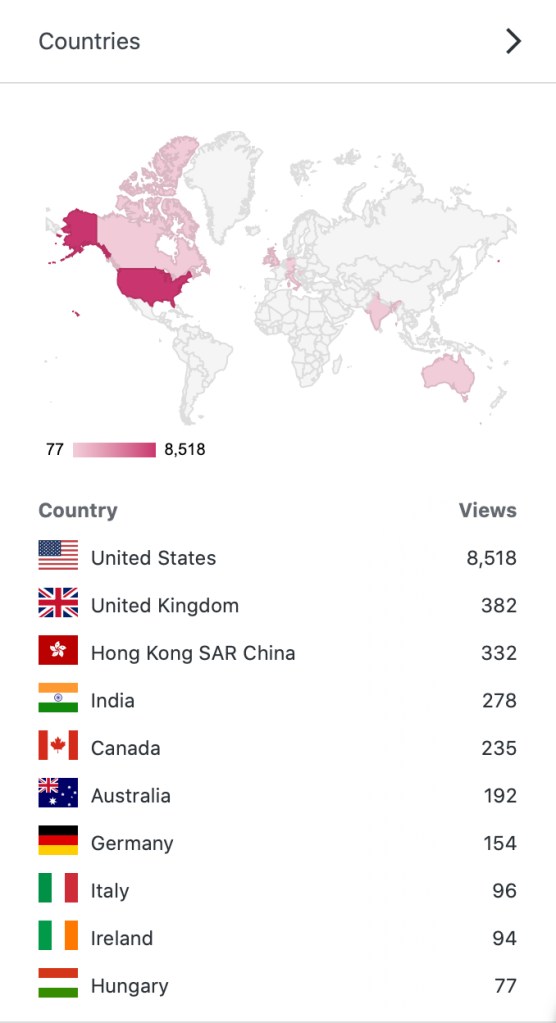
Let’s all tip our proverbial hat to Editor Agarwal, as we peer into the observatory lens of journalism, and find not less than 11,753 views, complemented by 6,102 visitors in 2019.

Your contributions, and Surabhi’s adeptness to flawlessly edit, have provided eons of images and text for all to see and learn from.

Clear Skies,
Ted Frimet

View count for countries visiting Sidereal Times in 2019. A total of 11,753 views, with the United States leading at 8,518.

Sidereal Times has 11,753 total views for 2019 with the United States leading at 8,518.

Posted in February 2020, Sidereal Times | Tagged | Leave a comment

Orion the Hunter

by Theodore R Frimet

neither slumber nor sleep

The night sky is truly wonderful. I find it sometimes hard to explain. I have been searching for an explanation ever since. What, you ask? Orion the Hunter appears on his side, early evening at the horizon, and then stands tall, at the upper meridian later at night. That is the question.

I have observed, at Washington Crossing Park, as well as at Jenny Jump, that constellations appear larger or smaller, depending on the time of night. I’ve read this is due to an illusion. Perhaps the same type where we see a Large Moon, or a Small Moon. The moon size, however, depends on its relationship to our view thru the trees, or over the top of an apartment building, or house. It is in fact, an illusion.

I’d take it with a grain of salt, that the astronomers’ constellation view appears bigger or smaller. There are no trees in space. Apartment complexes and houses do not obstruct the wide field of view from the soccer field. I await the commentary of our readers to educate me and set the record straight.

For now, I will trust my eyes. The horizon at Washington Crossing Park is wonderful! Orion becomes my subject anew:

At the horizon’s far distance I spy the Hunter. He is virtually on his side. Hours later, I look up, and find him upright! I share my freshman opine with other seasoned amateurs. Of course they say, “happens all the time”. And yet, you and I must transcend Einstein, look past Newton, kick Galileo to the curb, and toss Kepler with Tycho Brahe in his pocket, too. Copernicus, shall we stare back at early cosmology of Ptolemy and Aristotle? Do I dare say, circles upon circles?

Oh, all right. Before I toss out the greats, and invoke the hostility of Astrology everywhere, I’ll remand myself to the Sixth Circle of Hell. Therein too heretics once burned before the eyes of Virgil and Dante.

In an all out effort to be brave, I crack open my toughest read ever recommended to me by another amateur. W. M. Smart’s Textbook on Spherical Astronomy, Sixth Edition, revised by R.M. Green, Cambridge University Press Edition, 1997, page 34, figure 17, to be precise. I’ll spare you the imagery, and make quick of the description, below:

The celestial equator is on a different visual angle than our horizon. And with the earth’s rotation, we observe not only the rise, and setting of Orion, we see his rotation as well. Further, our Southern observers “below” our equator see things a little differently. As we in the Northern Hemisphere witness The Great Hunter’s feet dipping below the line of site, our Southern partners would see Orion appear, feet first, and upside down!

Ah, the celestial sphere! A convenient construct that flattens out the three dimensions of space onto an imaginary plane. It is a brotherly view as if curved like the earth itself. Once again, it is we that are moved thru the night sky. From our observers fixed position on Earth, we rotate about our axis, giving the illusion that the hunter first sleeps, then awakens anew, standing upright.

This great heavenly envelope, or celestial sphere, is only a construct. There is no such thing. The motion of the heavenly bodies is an apparent one caused by Earths rotation. And with our axis tilt, as the stars follow the path of the celestial equator, Orion the Hunter neither sleeps, nor slumbers. Awake always, he remains my trusted friend thru the Winter night.

Posted in February 2020, Sidereal Times | Tagged , , , , | Leave a comment

Permit the Hermit

by Theodore R Frimet

pay to view

Recently, a member forwarded a link to an online article detailing New York States Stargazing Permit programs. Clearly for 2020, the Empire State has gone above and beyond. The permit for the hermit, in all of us, has both its pros and cons.

Here is a link to the Official Website of New York State:
https://www.ny.gov

Keying in “2020 Dashboard Permit Guide” into their Search feature leads us to the first hit. This describes, among other fishing and windsurfing permits, the Stargazing Permit. A PDF describing more detail can be found below, last accessed on February 2, 2020, Sunday, 9:46 AM EST.

Click to access 2020DashboardPermitGuide.pdf

I have been known to pine away the evenings in my own Pennsylvanian back yard. I always think about seeking the darkness of our local County Park system. I am shooed away by researching the inevitable. That the park closes after sunset. Sigh.

Imagine my surprise to learn that New York has upended the apple cart! They have facilitated lawful, licensed access for after sunset parking. They have done so for not less than six locations. One such notable restive makes me shudder with memories of my childhood. Having spent a few summer days at Montauk Point, I do miss NYS. Yet having spent that luxury of time digging for piss-clams in the sand, I am wanting to know more of just where the Upper Parking Lot domain lay?

Simmons (1) writes, “Along comes a park ranger demanding to see your Stargazing Permit, and issues you a citation because you didn’t know you needed such a permit.” Ah, the yesteryear of my youth. Baiting flatfish out of the inner harbor of Staten Island. The rustling of rats after dark. Time to go home, now. All the while, knowing that if ye venture to the shoreline a permit is a requirement. And that knowledge, my friends, was the venue and tale of a 8 year old. Certainly an adult New Yorker would know the difference between lawful access at night, and scurrilously venturing into the park, after dark.

We amateurs seek the shelter of dark skies. I am filled with fond memory when Scouts from New York trekked to Washington Crossing Park, NJ. They chose not their local Wolfs Pond Park of Staten Island. That evening they happened across two AAAP members cruising the soccer fields’ open horizon and starlight. Forgive my memory as I vie to recall if Jupiter was out, in the company of the last sighting of Saturns Rings?

I cannot speak for the Scouts or any New Yorker for that matter. Our price of admission for the AAAP keyholder is your membership, and ongoing dedication to advancing Amateur Astronomy. Coupled with the membership at UACNJ, we sport even more dark skies than Titusville can deliver. Both memberships come at a cost. It isn’t hefty, and is reasonable beyond all comparison. The value is great, and the camaraderie of our mutual affiliations are gilded with gold.

New Yorkers now pay for regimented night time access. They may flee no more to the haven that is the Amateur Astronomers Association of Princeton. This is presumptuous at best.

The park system that includes Jenny Jump State Forest, and the observatory at Washington Crossing Park, is manned by amateurs and professionals alike. We are open during the clear dark nights as proscribed by our respective websites. That, my dear reader, is truly what is valued.

Come press your eye against the eyepiece. Talk, discuss, and be happy to be among those that wish to learn the night sky. With the help of those that care, we continue to host a guided view to the Universe. No permit required.

(1) The Gateway Pundit. (2020). Can’t Make This Up… New York State Is Now Mandating “Stargazing Permits” For Looking At The Sky. [online] Available at: https://www.thegatewaypundit.com/2020/01/cant-make-this-up-new-york-state-is-now-mandating-stargazing-permits-for-looking-at-the-sky/ [Accessed 2 Feb. 2020].

Posted in February 2020, Sidereal Times | Tagged , , , | Leave a comment

Snippets

compiled by Arlene & David Kaplan

-BBC

Sun’s surface seen in remarkable new detail
Behold the Sun’s convulsing surface at a level of detail never seen before. The Daniel K Inouye Solar Telescope on Hawaii has released pictures that show features as small as 30km across. This is remarkable when set against the scale of our star, which has a diameter of about 1.4 million km (870,000 miles) and is 149 million km from Earth…more

-BBC

Cosmic vibrations sensed from unusual star merger
Scientists have observed gravitational waves emanating from the collision of two dense, dead stars. It’s the second time the international Ligo-Virgo collaboration of laser labs has picked up such a signal. What makes this one different, though, is the combined mass of the two merging neutron stars – at three and a half times that of our Sun…more

artists conception of a star nursery

-BBC

Vast ‘star nursery’ region found in our galaxy
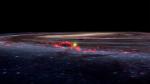
Astronomers have discovered a vast structure in our galaxy, made up of many interconnected “nurseries” where stars are born. The long, thin filament of gas is a whopping 9,000 light-years long and 400 light-years wide. The discovery, outlined in the journal Nature, came from work to assemble a new map of the Milky Way…more

-BBC

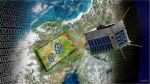
Global methane map
A Canadian start-up, GHGSat, is promising to release a high-resolution map of methane in Earth’s atmosphere by the year’s end. The company has one spacecraft in orbit currently to monitor the trace gas. Another two are expected to go up in the next few months. Montreal-based GHGSat tracks oil and gas operations…more

-BBC

Mega-constellation firms meet European astronomers
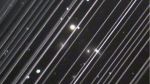
There’s concern that the size and brightness of the firms’ planned fleets could interfere with the work of professional telescopes. The parties discussed the issues in a private meeting at the Royal Astronomical Society in London, UK. The talks were described “as positive”. OneWeb and SpaceX are in the process of launching big networks of spacecraft…more

NASA Space telescope discovers largest ring around Saturn

-JPL

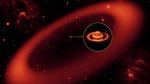
NASA Space Telescope Discovers Largest Ring Around Saturn
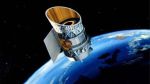
NASA’s Spitzer Space Telescope has discovered an enormous ring around Saturn – by far the largest of the giant planet’s many rings. Saturn’s newest halo is thick, too – its vertical height is about 20 times the diameter of the planet. It would take about one billion Earths…more

Two satellites in close shave over US city of Pittsburgh. Artists conception of one of the satellites

-BBC

Two satellites in close shave over US city of Pittsburgh
Two satellites hurtling across the sky at nearly 33,000 mph (53,000 km/h) narrowly missed a collision over the US state of Pennsylvania on Wednesday. The two objects “crossed paths without incident,” a spokesman for US Space Command told the AFP news agency. US Space Command said the two inactive satellites passed each other at 18:39 EST (23:39 GMT) some 550 miles (900km) above Pittsburgh…more

artists conception of the capella space based radar

-BBC

Capella Space radar company chases persistent vision
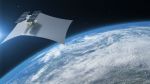
Capella is developing a commercial constellation of small, low-cost Synthetic Aperture Radar (SAR) satellites. These will be capable of sensing the Earth’s surface in all weathers, day or night. It’s an activity that has traditionally been dominated by Big Government – the national space agencies and the military – because of the expense and complexity of doing radar from orbit…more

cosmic glowing gasses artist representation of sign language

-BBC

Inventing sign language for space
British sign language is receiving an astronomical update thanks to a unique collaboration between a space scientist and a group of deaf astronomers….more

Posted in February 2020, Sidereal Times | Tagged , | Leave a comment