Snippets

compiled by Arlene & David Kaplan
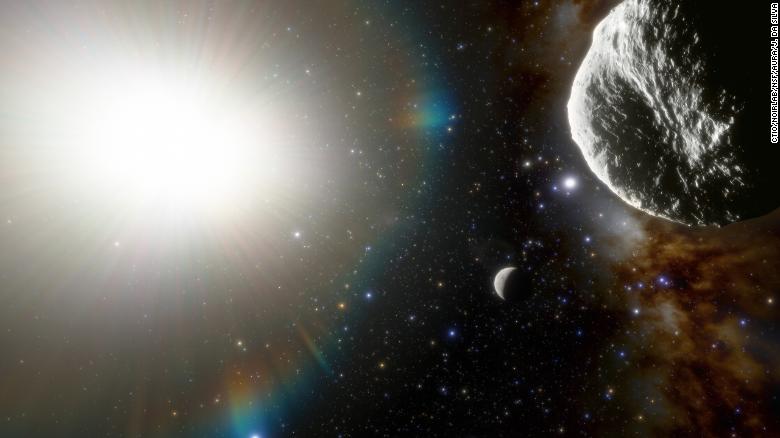
Fastest Orbiting Asteroid Found In Our Solar System
A newly discovered asteroid is sticking close to our sun — much closer than our own planet Earth. The asteroid, called 2021 PH27, completes an orbit around the sun every 113 days and comes within 12.4 million miles (20 million kilometers) of our star. That gives this space rock the distinction of having the shortest known orbital period for an asteroid …more
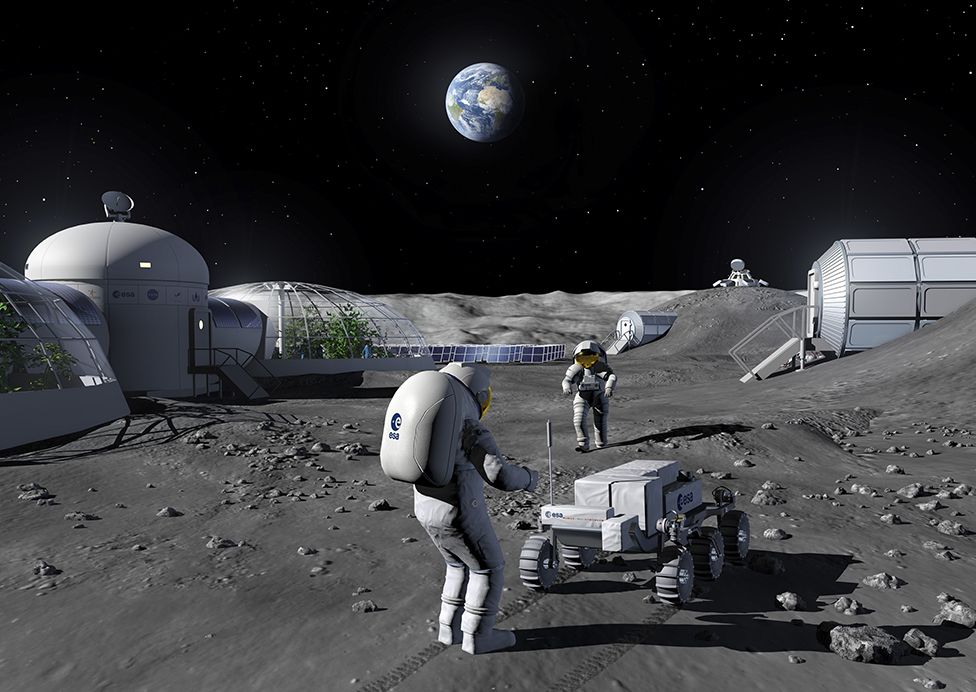
The European Space Agency is proposing a precise navigation system at the Moon, much like the sat-nav technology we have here on Earth. It would enable spacecraft and astronauts to know exactly where they are when moving around the lunar body and to land with precision. The initiative, known as Moonlight, would also incorporate a telecommunications function. A large flotilla of lunar missions will be launched this decade…more
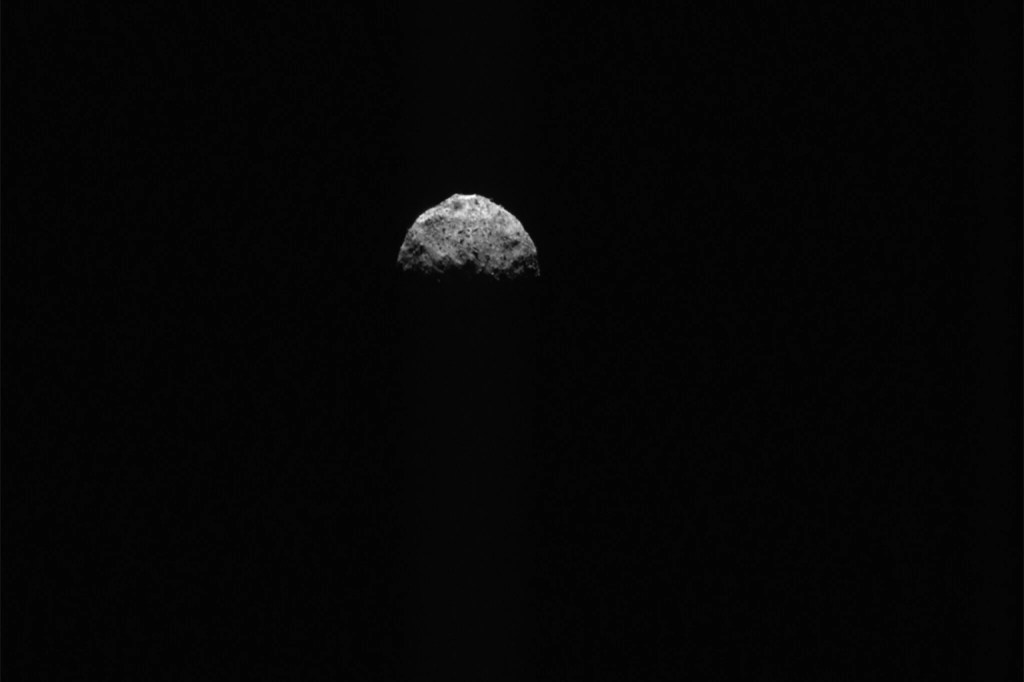
Deflecting an Asteroid Before It Hits Earth May Take Multiple Bumps. After years of shooting meteorites with a special gun owned by NASA, researchers highlighted challenges for a preferred method of planetary defense. There’s probably a large space rock out there, somewhere, that has Earth in its cross hairs. Scientists have in fact spotted one candidate…more
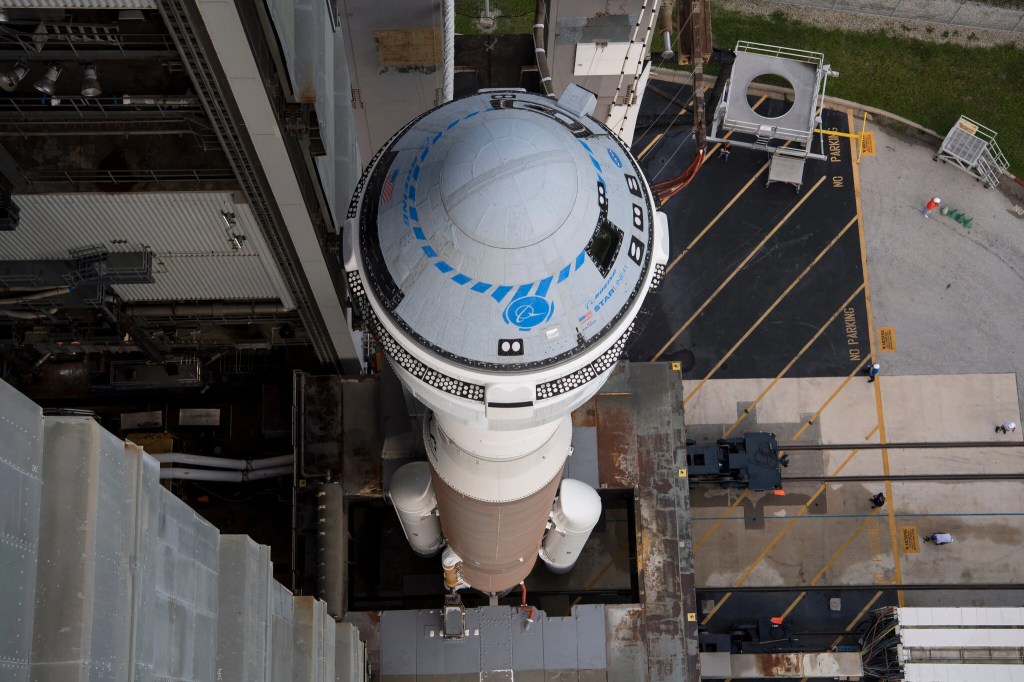
Boeing’s Starliner Launch Is Delayed, Again, Possibly Until Next Year Problems with the capsule’s propulsion system require more troubleshooting, a setback for a program to carry NASA astronauts to the space station…more
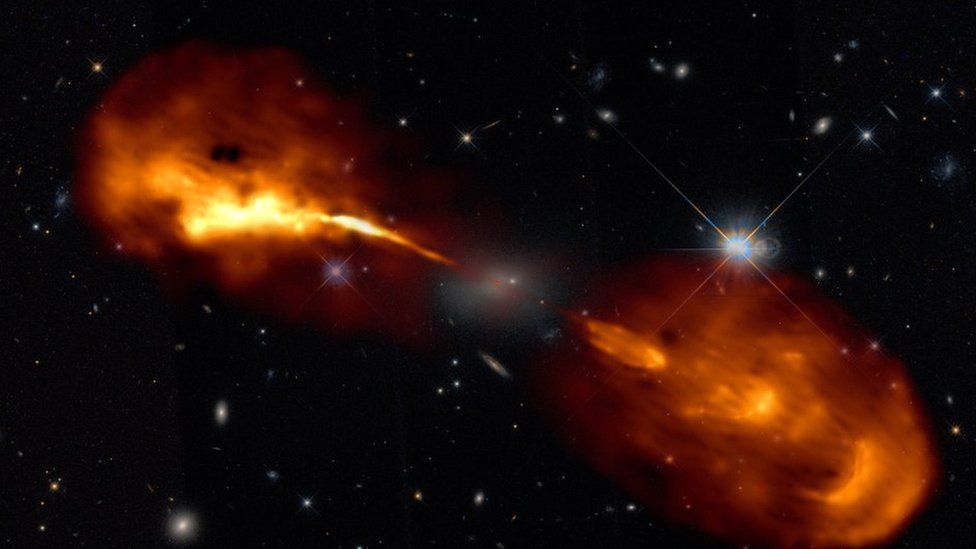
Astronomers See Galaxies in Ultra-High Definition Astronomers have captured some of the most detailed images ever seen of galaxies in deep space. They are in much higher definition than normal and reveal the inner workings of galaxies in unprecedented detail. Many of the images could yield insights into the role of black holes in star and planet formation. The researchers say that the pictures will transform our understanding of how galaxies evolve…more 

Where Dark Skies Draw Star-Gazers, Wildfire Smoke Spoils the View Parts of the Mountain West still largely free of light pollution or cloudy weather are losing their famed spectacular views of the night sky to smoke from fires burning hundreds of miles upwind…mor
–NYT

Mars Has Auroras and a U.A.E. Spacecraft Captured New Pictures of Them When barrages of charged protons and electrons erupted from the sun head our way, Earth’s magnetic field deftly deflects them around the planet. This buffeting generates shimmering, glowing curtains of color known as the aurora borealis in the Northern Hemisphere’s polar regions, and aurora Australis in the south. That same phenomenon happens on Mars, too. …more
–NYT

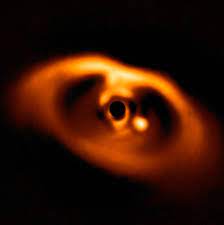
Astronomers See Moons Forming in Disk Around Distant Exoplanet Scientists have never before gotten such a clear view of moons in the making…more

Gilbert V. Levin, Who Said He Found Signs of Life on Mars, Dies at 97 - The  New York Times
–NYT

Gilbert V. Levin, Who Said He Found Signs of Life on Mars, Dies at 97 Most planetary scientists dismissed his conclusions, but he remained steadfast that the experiment he conducted in the mid-1970s had been a success…more

2 Red Objects Were Found in the Asteroid Belt. They Shouldn’t Be There. The space rocks may have come from beyond Neptune, and potentially offer hints at the chaos of the early solar system…more
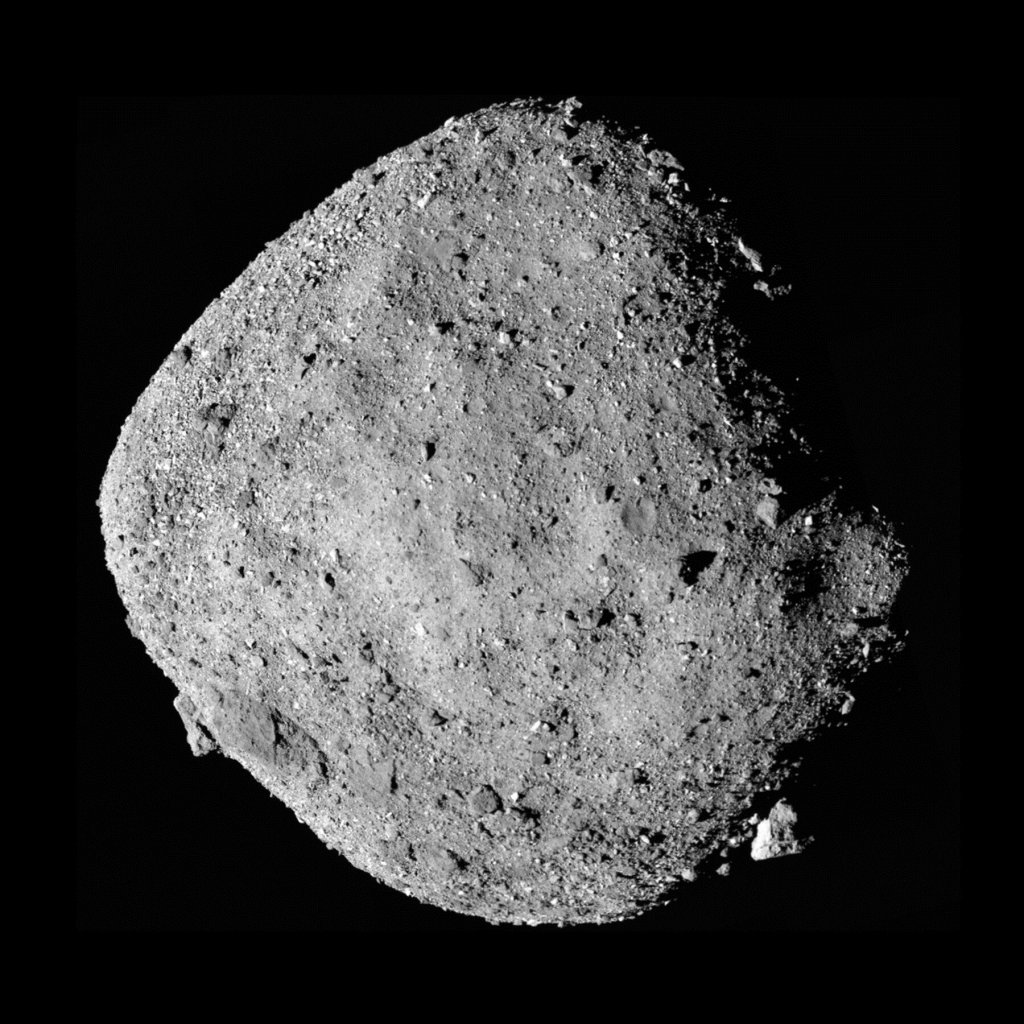
 

NASA Says an Asteroid Will Have a Close Brush With Earth. But Not Until the 2100s. Scientists have improved their forecast of the orbital path of Bennu, a space rock the size of the Empire State Building that was visited by the OSIRIS-REX spacecraft…more

Toshihide Maskawa, 81, Dies; Nobelist Helped Unlock a Cosmic Mystery - The  New York Times
–NYT

Toshihide Maskawa, 81, Dies; Nobelist Helped Unlock a Cosmic Mystery Why did the universe not destroy itself in the Big Bang, in a collision of matter and antimatter? A eureka moment in the bathtub led to an answer…more
Biggest ever rocket is assembled briefly in Texas - BBC News
–BBC

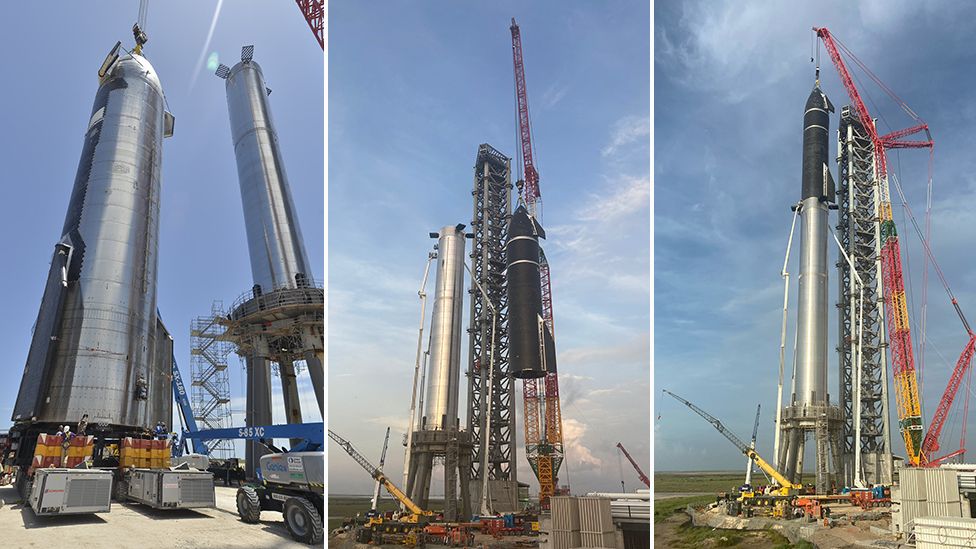
Biggest ever rocket is assembled briefly in Texas The American SpaceX company has stacked the biggest rocket ever constructed. The vehicle’s two segments – an upper-stage called Starship and a booster called Super Heavy – were connected together at the firm’s Starbase R&D facility in Boca Chica, Texas. Standing roughly 120m (400ft) in height, the SpaceX rocket dwarfs any previous launch system…more
Perseverance Mars rover's first rock sample goes missing - BBC News
–BBC

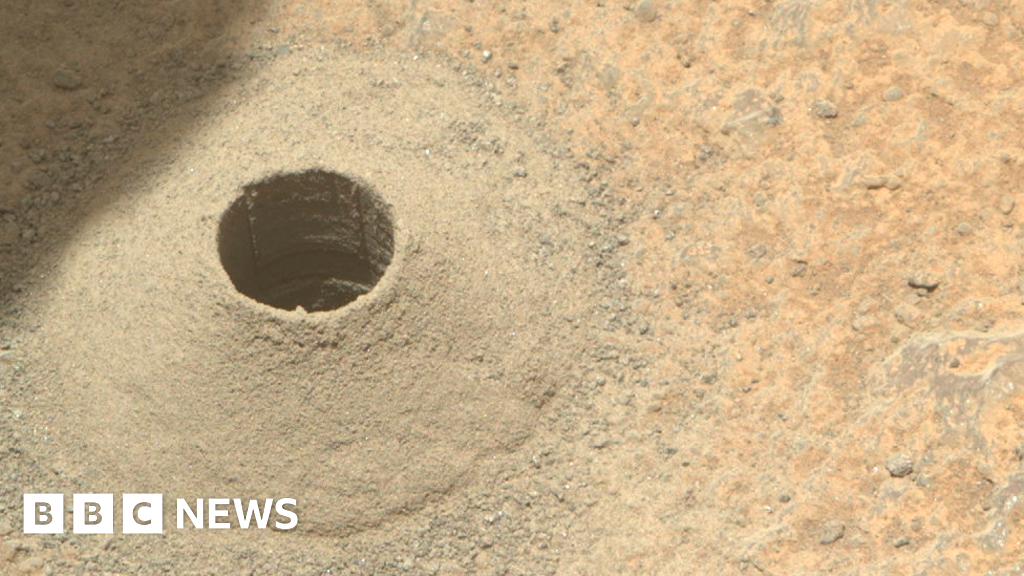
Perseverance Mars Rover’s First Rock Sample Goes Missing Engineers are trying to work out what went wrong when the US space agency’s Perseverance rover tried to gather its first rock core on Mars. The robot’s mechanisms seemed to work perfectly but when a metal tube expected to hold the sample was examined, it was found to be empty. The mission team think the particular properties of the target rock may have been to blame…more

Peculiar Galaxies
–NASA

Hubble Returns to Full Science Observations and Releases New Images NASA’s Hubble Space Telescope is back in business, exploring the universe near and far. The science instruments have returned to full operation, following recovery from a computer anomaly that suspended the telescope’s observations for more than a month. Science observations restarted the afternoon of Saturday, July 17. The telescope’s targets this past weekend included the unusual galaxies shown in the images above…more

What Animals See in the Stars, and What They Stand to Lose - The New York  Times
–NYT

Man who 'killed Pluto' has no regrets - BBC News
–BBC

The man who ‘killed’ Pluto In 2005 Professor Mike Brown and his team discovered a new dwarf planet at the edge of our solar system. Eris, as it is now known, was more massive than Pluto and left astronomers with a dilemma: whether to add it and other larger bodies, to the list of planets or to strip Pluto of its 75-year status as the ninth planet…more
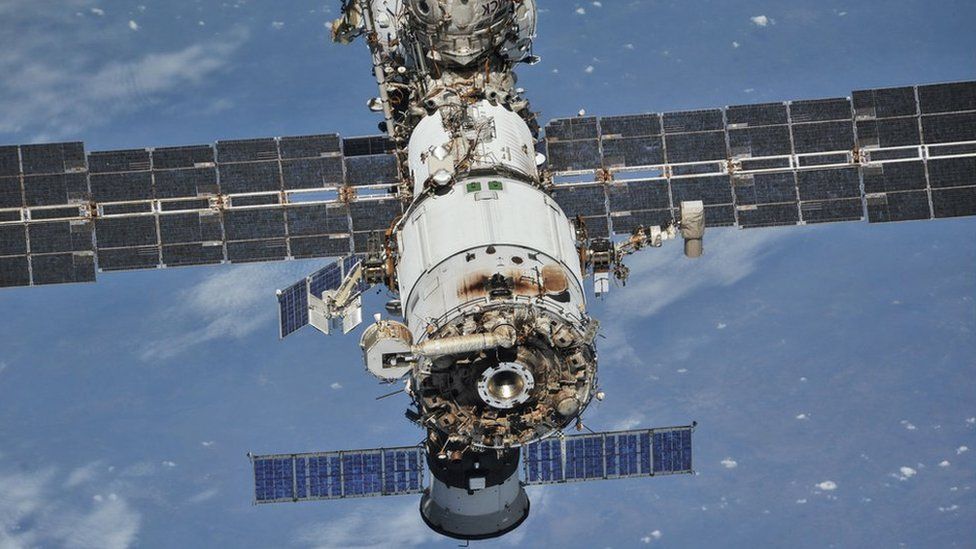
The International Space Station (ISS) could suffer “irreparable” failures due to outdated equipment and hardware, a Russian official has warned. At least 80 percent of in-flight systems on the Russian segment of the ISS had passed their expiry date, Vladimir Solovyov told state media. He also said small cracks had been discovered that could worsen over time…more

Posted in June 2021, Sidereal Times | Tagged , | Leave a comment

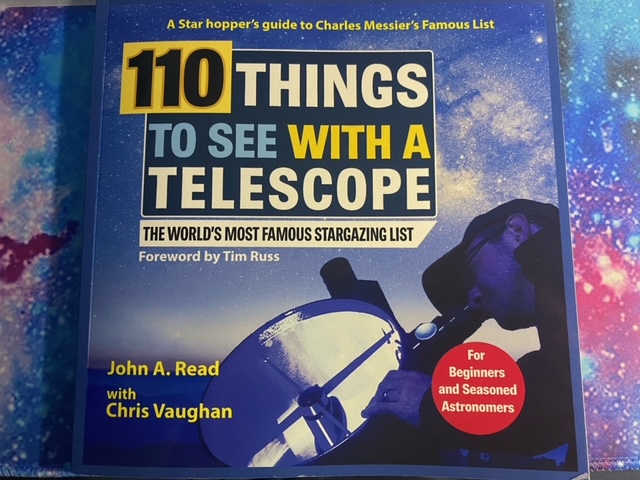
Book Review: 110 Things To See With A Telescope

By Lisa Ann Fanning

OFFICIAL REVIEW OF 110 THINGS TO SEE WITH A TELESCOPE 

⭐⭐⭐⭐⭐

Must have for your Astronomy library!

John A. Read has done it again!  His writing style demystifies astronomy, which can be such an intimidating topic, especially for a reader like me, who grew up in the light-polluted skies of New York City. And this time, he has brought Chris Vaughan along to help bring the reader through the night sky. This book, 110 Things To See With A Telescope is no exception and a must have for ANY enthusiastic Astronomy buff, regardless of experience.

I highly recommend this book to anyone with an interest in Astronomy!

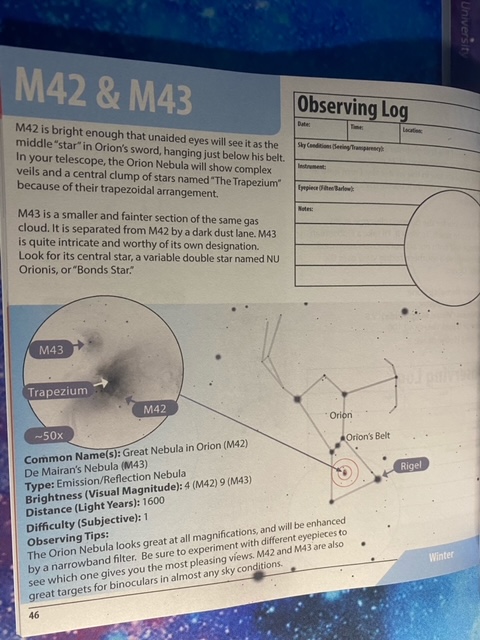
New to Astronomy? Not a problem – there are 20 pages of introductory information that is helpful in understanding things like types of telescopes, how to plan viewing sessions, how to record observations, and of course, history and background of the Messier catalog.

The design team has thought of so many little format touches that make this book incredibly user friendly. Objects are organized by season to help the reader plan their observing sessions easily and the page edges are even color coded accordingly.

Each object has a brief description in simple terms, common and alternative names, object brightness, distance, a subjective rating for difficulty to see.  Additionally, each object is depicted to a scale of about 100x, similar to the size of the full moon. They are also depicted in relation to the easier to find objects (stars, constellations, etc.) that surround it, making it easier much easier to locate than other books which do not typically show this information. Diagrams even include a depicted Telrad ring to aid the reader.

Also helpful is space to record your observations, with prompts for information and space to sketch that is helpful whether submitting observing certificate applications or just maintaining a record of your sightings that you can look back on in years to come.

Posted in Sidereal Times | Leave a comment

RASC Halifax Member John A Read Releases Guide to Observing Messier Catalog

By Lisa Ann Fanning


Three years in the making, and 110 Messier objects later, 2020 RASC Simon Newcomb Award Recipient and RASC Halifax Centre member John A. Read has published his 12th non-fiction title, and it is a must have for any Astronomy buff. 110 Things To See With a Telescope is a guide through Charles Messier’s famous catalog of deep sky objects. 


Read began penning the book in April 2018, beginning with M13 and ending with M24, the last object he photographed for the book. 


Reviews have been consistent, five out of five stars on amazon.com and amazon.ca, and it has earned accolades as #1 Best Seller in telescopes (amazon.ca) and #1 New Release in telescopes (amazon.com). Many of the reviews point out the book’s features, and design. 
The design team has thought of so many little format touches that make this book incredibly user friendly. Objects are organized by season to help the reader plan their observing sessions easily and the page edges are even color coded accordingly.


Each object has a brief description in simple terms, common and alternative names, object brightness, distance, a subjective rating for difficulty to see.  Additionally, each object is depicted to a scale of about 100x, similar to the size of the full moon. They are also depicted in relation to the easier to find objects (stars, constellations, etc.) that surround it, making it easier much easier to locate than other books which do not typically show this information. Diagrams even include a depicted Telrad ring to aid the reader.


Also helpful is space to record your observations, with prompts for information and space to sketch that is helpful whether submitting observing certificate applications or just maintaining a record of your sightings that you can look back on in years to come.
The book is geared towards observers of all skill levels, and contains comprehensive background information for beginners as well, with 20 pages of introductory information that is helpful in understanding concepts like types of telescopes, how to plan viewing sessions, how to record observations, and of course, history and background of the catalog itself. Want to take the book out in the field? The book is designed and printed to be used under red light as well, so no need to lose your night vision while observing.


When asked what motivated Read to write this book, he replied, “This is the book I want to use when I go observing, and it simply didn’t exist. Sure, there are other books on the messier list (most are out of print), but there are none that you can simply pick up, use to find your specific target, and record your observation, all without turning a page. I believe my method for creating a book containing customized star maps with only one target per page is unique.”


In Autumn, 2020, fellow RASCal, Chris Vaughan, joined Read in writing the book, after they teamed up with Outreach Coordinator, Jenna Hinds on the Mars opposition live-stream for the RASC. “In early 2021, I watched Chris doing a presentation on the Messier objects during another streaming session, and asked him to co-write the book with me shortly after. Chris has more dark-sky observing experience than I do, and the book needed someone who could speak to the finer details on the lesser known targets.” 

I had the opportunity to ask Read some Q&A and it follows below:


Q: Which object(s) would you say are the easiest to see (for beginners?)
JR: M13 (Great Globular Cluster in Hercules), M22 (Globular Cluster), M45 (The Pleiades), M31 (Andromeda Galaxy), M57 (The Ring Nebula) and M42 (Orion Nebula)

Q: Which object(s) presented you with the biggest challenge and why?
JR: I didn’t see Leo Triplet until recently. This is a springtime target, but is a challenge to see from the city. Most of my dark-sky observing is done in the late summer, when Leo is below the horizon. 


Q: Do you have a favorite / favorites ?
JR: I tend to return over and over to the ones that are easy to find. M57 (The Ring Nebula), M27, the Dumbbell, M13 in summer. M42 in winter, The Beehive (M44) in spring, and M31 in autumn. M81 and M82 are nearly circumpolar, so I check in on those quite often as well. 

Q: Do you have any interesting stories that happened while you were writing the book?
JR: After I first reached out to Tim Russ (Star Trek Voyager actor) to write the forward for the book, he responded quickly, and we began exchanging lots of emails. Several of my friends are Trekkies, and if it came up, I’d let them know I was talking with “Tuvok,” Tim’s character on the show. One of my friends asked me to ask Tim if he thought Captain Janeway was a murderer for killing Tuvix ( a character created when Tuvok and Neelix became one person in a transporter accident). I was too shy to ask.


Q: Do you have a favorite moment?
JR: Taking the photos for the “Eyepiece view” images was a lot of work, but probably the most fun, and most challenging. I had an excel file going to track which photos I had, and which photos I was missing. For consistency, I used robotic telescopes for about 80 percent of the images, but several were too far south, so I had to learn to use other robotic telescopes located down in the states. For wide field shots I ordered a wide field telescope (Sharpstar 61), but due to the pandemic, my order was delayed for months. Then Ray Khan from Khan Telescopes went to his store, found the display model, and shipped that to me. 

Q: Did you apply for both certificates?   
JR: I plan to re-observe the Messier objects over the next year, using the book to document my progress and apply for the certificate. 

Q: What/ when was your best night of viewing? (Most objects in a single session) + describe the evening
JR: It’s hard to say what my best night of viewing was, probably one of the evenings at a past Nova East Star Party. I LOVE doing mini-marathons, challenging myself to see how many objects I can see in a single session. I usually use my 12 inch dobsonian for this, hopping around from target to target. On a good night, I typically hit up about 30 different objects.  

Q: Were there any objects that made your family members or friends go “wow!” when you showed them?
JR: Only the brightest objects like M42 typically get the wows. The dimmer more obscure objects take time and effort to appreciate, so a wow is generally not the goal for most Messier objects. 

Q: Are your boys passionate about astronomy?  What do they love most?
JR: My boys love looking at the Moon, and different colored stars. I think they’re a little young to be passionate about astronomy, but I’m hoping that will come with time.

Q: How has the pandemic changed your viewing? Do you view more /less? Do you miss anything in particular? Have you gained anything from the pandemic?
JR: I still stargaze whenever I can. So I don’t think the pandemic changed the frequency of my observations. What I really miss is the hands-on work I did at the Burke-Gaffney Observatory; getting the 5 dobsonians on our school’s observation deck and helping dozens of students (per session) with their observing projects for SMU’s introductory astronomy course for non-science students. 

Q: Any new and exciting projects coming up?
JR: I have some projects with Formac publishing for the 6th grade science curriculum. For the next few months, I’d like to focus on creating helpful content on my LearnToStargaze YouTube channel to supplement the books. 

Q: Any advice you’d like to add for us newbies?
JR: Get the book and get to work observing! You’ll be surprised how much you can see, and how fun it can be to record your progress toward seeing all 110 targets. 

Posted in Sidereal Times | Leave a comment

Book Review: The God Equation by Michio Kaku

by Prasad Ganti

“The God Equation” is a recent book written by Michio Kaku, the popular Physicist and String theorist. This book comes on top of several other popular ones he wrote earlier. It emphasizes on the holy grail of Physics – unifying all the four fundamental forces of nature. From the weakest one, Gravity which spans over astronomical distances to the strong force which rules over the length of an atomic nucleus. The book presents the concepts  in a very lucid style. And not many equations although the title has the word “equation” in it.  Below is my summary. 

Mathematical equations are used to define physical and conceptual parameters and the relationships between them. More than three hundred years back Isaac Newton came up with an equation describing the gravitational force as attraction between two bodies. The bodies could be apples or oranges or planets, or stars. Using this equation, the trajectory of the planets or spacecraft or falling apples or terrestrial ballistics could be calculated. It was a triumph of human thought in expressing a pragmatic concept so succinctly.

Then came James Clerk Maxwell about two hundred years ago, who showed that electricity and magnetism are related to each other. A changing electric field can generate magnetism and vice-versa. His set of equations described the electromagnetic radiation as a wave propagating through changing electric and magnetic fields. These waves encompass a wide range from radio, to microwaves, to infrared, to visible light, to ultra violet, to X rays, to Gamma rays etc. Each varying from the other in frequency and thus the wavelength. He calculated the speed of such a  wave which is now recognized as the speed of light.  Our eyes are only sensitive to the visible part of the electromagnetic spectrum. But all the types of radiation being described by the set of Maxwell’s equations is a triumph of the human mind in relating the abstract concepts to the practical reality. 

About a hundred years back, Albert Einstein stretched Newton’s equations to incorporate some “out of the world” concepts like space time curvature. In the special theory of relativity, he set the speed of light as  a cosmic speed limit for most practical purposes. And described what happens when objects travel at very high speeds and why they cannot exceed the speed of light. He postulated  time as a dimension like the three dimensions of space.And that time can slow down if an object is travelling at very high speeds. 

Einstein’s crowning achievement was the General theory of relativity which considers accelerated motion and gravity as equivalent to each other. Further in the presence of gravity, space curves, and time slows down. All these concepts were expressed using mathematical equations. In fact, for space curvature, Einstein had to use Bernard Riemann’s geometry. Riemann’s geometry is a stretch of Euclid’s geometry which stood for thousands of years and deals with flat spaces. Concepts like Black holes, Gravity waves came as a result of multiple solutions to Einstein’s equations.      

Parallelly, during the twentieth century, a lot was happening at the atomic and subatomic levels. Atoms and its constituents like electrons, protons and neutrons were discovered. The forces binding these particles were being formulated into mathematical equations. These particles were also postulated to be waves. Erwin Schrodinger came up with an equation to describe the electrons as particles and waves. Paul Dirac improved upon this equation to add space and time together (known as Einstein’s relativistic effects). All these postulations were part of a broader field called Quantum mechanics. 

QED (Quantum Electro Dynamics) resulted from the combination of Dirac’s theory of electrons with Maxwell’s theory of light. Thus were combined Quantum mechanics and electromagnetism. Only gravity remained outside the orbit of a unified theory of everything. Einstein himself spent decades but was not successful. In the last three decades or so, a new theory called string theory is being developed which can help with this unification. But the theory needs the existence of ten space dimensions and one time dimension as a foundation. But we see only three space dimensions in our life. Speculation is that the extra dimensions are curled into tiny spaces, much smaller than nuclear lengths, in the order of Planck’s length. 

Experimentation at such small lengths or higher dimensions is nearly impossible. The kind of energies required are huge, much much beyond the reach of the current particle accelerators. Even the biggest one LHC (Large Hadron Collider) in Switzerland, which produced evidence for the Higgs Boson, incidentally known as the God particle. If the God’s particle can be found, if the miniscule perturbations of space resulting from Gravity waves can be discovered,  can the God equation be that far behind? I am optimistic.

Posted in Sidereal Times | Leave a comment

For Sale: Tele Vue Big Barlow 2″

AAAP member Ralph Marantino is selling a new-in-box Tele Vue Big Barlow 2 inch.

Tele Vue 2.0x BIG Barlow 2 Inch
–Stock Image. Not actual lens.

Retails for over 200! Asking $150.

For information, please email Ralph at h-alpha@hotmail.com.

Posted in Sidereal Times | Leave a comment

From the Director

Rex
by Rex Parker, Phd director@princetonastronomy.org

Astronomy in Summertime.  The AAAP Observatory at Washington Crossing State Park is up and running and ready for members to see the stars!  We are still limited by the state to having  no more than 12 people in the building at a time, but there’s no limit on the observing field.  A benefit of membership is using the telescope equipment whenever a Keyholder is present to open up and help operate the equipment.  Members can also set up personal telescopes on the observing field next to the building.  Varying sky conditions make it hard to plan sessions, but outside of Friday night public open-house, if you want to access the observatory you are encouraged to send an e-mail to the Observatory Chair (observatory@princetonastronomy.org) or me (director@princetonastronomy.org). We’ll attempt to find a Keyholder who can come out to the Observatory that night. 

It is encouraging that life is trending towards normal around the state.  Princeton University announced the intention to resume on-campus operations this fall.  Later this summer we hope to learn if and when AAAP can return to Peyton Hall auditorium for monthly meetings. 

The Edge of Space.  The past couple weeks have seen some astounding advances in privately developed aeronautical/space adventures.  Virgin Galactic’s suborbital flight took it to ~86 km (53 miles) while Blue Origins rocket reached ~106 km (66 miles) above sea level, passing through the von Karman line.  Although it may mean bragging rights between Richard Branson and Jeff Bezos and their companies, the von Karman line is not really a true boundary of outer space.  The von Karman line at 100 km altitude above sea level is an internationally accepted altitude for where space begins.  But of course physics doesn’t correspond to nice round numbers.  This altitude corresponds only approximately to where aerodynamics stops and astronautics begins, where the atmosphere becomes so thin that aeronautical lift cannot be sustained.  But original citations of the von Karman line indicated  275,000 ft (83 km), and the 100 km definition appears to have been the result of US-Soviet geopolitical agreements in the early 60s.  An astronaut is still defined by the USAF as a person who has flown higher than 50 miles (80 km) above sea level.

Light Dome Dimmer.  The mandate from the New Jersey Supreme Court to expand affordable housing has resulted in big plans for development across the state.  This is a very good thing at many levels, but the increase in light pollution that would result is a problem for all who appreciate the night sky.  Two large residential developments (1077 and 379 units) going forward now in Hopewell Township are located close to the AAAP Observatory (one is only ~2 miles away).  To reduce skyglow, the Environmental Commission and the Planning Board requested significant changes in the developer’s outdoor lighting plans.  In the last few weeks, the developer formally agreed to reduce the number of lighting fixtures by 62% overall (from 545 to 199, and 141 to 58, in the two subdivisions).  They will use sky- and wildlife-friendly 2700K LEDs (amber-tinted) and install adaptive controls which lower light output by half after midnight.  Compared to where it was originally headed, this is a big improvement that will help protect what’s left of the night sky at our Observatory.  There will be significantly less skyglow coming from the intensive development and the “light dome” above them at night will be proportionately dimmer.

The take-home message is that you, citizen amateur astronomer, can make a difference in the future of our night skies. Tune in to the development plans happening now in your town, and speak up at your planning board or environmental commission.  Right now most meetings are being Zoomed, a great way to make your concerns heard. 

SATCON2 Workshop – Astronomers Respond to the Onslaught. As if we don’t already have too much light pollution, the night sky is being disturbed by an unexpected threat — the tracks of satellite “constellations” reflecting sunlight.  Hundreds, soon to be many tens of thousands, of low earth orbit satellites have begun to appear in the night sky.  The good intentions of the Starlink project from SpaceX, and similar efforts planned by others, are to provide fast, low-latency internet access to underserved areas of the planet.  The problem with all this is not only future space debris, but night sky light pollution of a special kind.  Depending on your angular position with respect to the satellites, the low orbital trajectory results in bright visible trails from reflected sunlight as the trains of satellites cross the sky.  Of course North America is the most profitable market, so the satellite intensity will initially be highest here.  The streaking trails of these satellite constellations are seriously damaging to data collection and can overwhelm sensitive instruments for many scientific projects at the big professional observatories.  They disturb the natural darkness of the night sky and can ruin astrophotographs.  Instrumental and software remedies are proving to be extremely difficult.

The American Astronomical Society (AAS) and NSF’s NoirLab are leading the effort to respond to this growing problem that caught the astronomical community off-guard.  There is an opportunity for amateur astronomers to be among the diverse voices of stakeholders for the sky.  I urge you to read up on the issues and consider becoming an amateur member of AAS in order to participate in the expanding conversation on this major topic.  You can become a member of AAS through this link (use AAAP as your affiliation on the application).  https://aas.org/join/classes-membership-and-affiliation. 

Last year, experts joined to assess satellite constellations impact on astronomy and consider possible mitigations.  The meeting in July 2020 was titled, “Impact of Satellite Constellations on Optical Astronomy and Recommendations toward Mitigations”. The findings are summarized at this link:  https://aas.org/satellite-constellations-1-workshop-report    I participated this July in the second workshop, SATCON2.  The main topic was how to implement the strategies and recommendations emerging from SATCON1. The summaries from SATCON2 can be found at this link: https://noirlab.edu/public/media/archives/presentations/pdf/presentation026.pdf 

One of the key recommendations was that the obligation to reduce detrimental effects of satellite constellations on astronomy should be a condition of FCC licensing.  The community engagement section of the workshop stressed that further involvement of amateur astronomers is needed to help amplify the concerns and seek solutions.  The situation seems convoluted, with some people finding the sightings enjoyable, not realizing the havoc they may reek when there are 50,000 of them aloft.  One activity for AAAP members would be to observe the satellite constellations at specific predicted times, and share our impressions within the club. Here’s a link to a site that predicts when they could be seen:  https://findstarlink.com/.  If we can work out the timing, let’s aim for members to meet at the Observatory during a Starlink sky crossing this summer.

Posted in Mid-summer 2021, Sidereal Times | Tagged , , , , , | Leave a comment

An invitation to participate in the ’20th Annual Stirling Street Fair’

by Victor Davis, Program Chair

I’ve just been invited to participate (again) in the annual Stirling Street Fair. I normally do this solo, setting up solar telescopes and what not. There are generally a lot of people who come out, and the day is a lot of fun. The latest Covid resurgence is scary, but I’ve said that I’ll participate if the weather and health restrictions cooperate.

I’m inviting any other AAAP members who wish to participate to join me in this outreach opportunity. There’s also an opportunity to turn this into an “AAAP sanctioned event” where we pass out literature and promote the club.

The street fair is within walking distance of my house, but a bit of a drive from the Princeton area. It will take place (hopefully) Sunday, Sept. 5. Please contact me at program@princetonastronomy.org if you’d like to participate.

From the Long Hill Chamber of Commerce:

  • The Long Hill Chamber of Commerce will sponsor its 20th Annual Street Fair on Sunday, September 5 from 10:00 AM to 5:00 PM on Main Avenue in Stirling.
  • The Street Fair will feature shopping, food, all-day entertainment, kids’ rides, local vendors and organizations and a chance to see fire and first aid equipment up-close.
  • Main Avenue residents should move their cars to a side street before 7:00AM.  Churchgoers should allow extra time for detours around downtown Stirling.
  • Long Hill merchants who want to participate should visit www.jcpromotions.info and and click on the “Vendor Registration” button.

Posted in Mid-summer 2021, Sidereal Times | Tagged , , , | Leave a comment

Minutes from the May 11, 2021 Members General Meeting (Online)

by John Miller, Secretary

The June meeting convened at 7:30 PM via Zoom and Yahoo (online).  There were initially about 49 Zoom attendees.

●   Rex Parker introduced the evening’s topics and included a video of a model rocket launch (several members recalled launches when they were younger), a review of Zoom meetings versus live gatherings at Peyton Hall if the building reopens (live gatherings edged out). Also reviewed briefly – the current night sky.

●  Victor Davis introduced the evening’s guest speaker: Anna T.P. Schauer – a NASA Hubble Fellow at the University of Texas at Austin.  Her presentation was titled: “First Star Formation and the Lunar Ultimately Large Telescope.”  It was very well received.

● The upcoming June 10th partial solar eclipse (as viewed from NJ/PA) was discussed. Long-time member Ron Mittelstaedt put up a conglomerate of views from the May 10, 1994 partial solar eclipse he took in NY State. Some present members discussed a field location for the forthcoming event.

●  Rex mentioned a new remote imaging group using a PlaneWave 24” in the Hurtado Valley, Chile.

●  The Washington Crossing Observatory repair status was reviewed.  AAAP Treasurer Michael Mitrano continues communications with State Park officials in an effort to re-secure permits.

●  Observatory Co-Chair David Skitt reviewed keyholder preparations.  A discussion ensued reviewing where the optimum EAA (Electronically-Assisted Astronomy) screen placement would be on the outside of the observatory building.  There was some concern voiced regarding the interference of field visual observing, astrophotography and public naked-eye observing caused by the bright light of the optical screens.

●  A lengthy discussion regarding the Space X StarLink satellite programs was shared. The topic concentrated on the detrimental effects on both the amateur and professional astronomy environment.

●  The meeting adjourned at 10:30 P.M.

Posted in Mid-summer 2021, Sidereal Times | Tagged , , , | Leave a comment

S.P.A.C.E.–The First Frontier?

by Sam Sherman

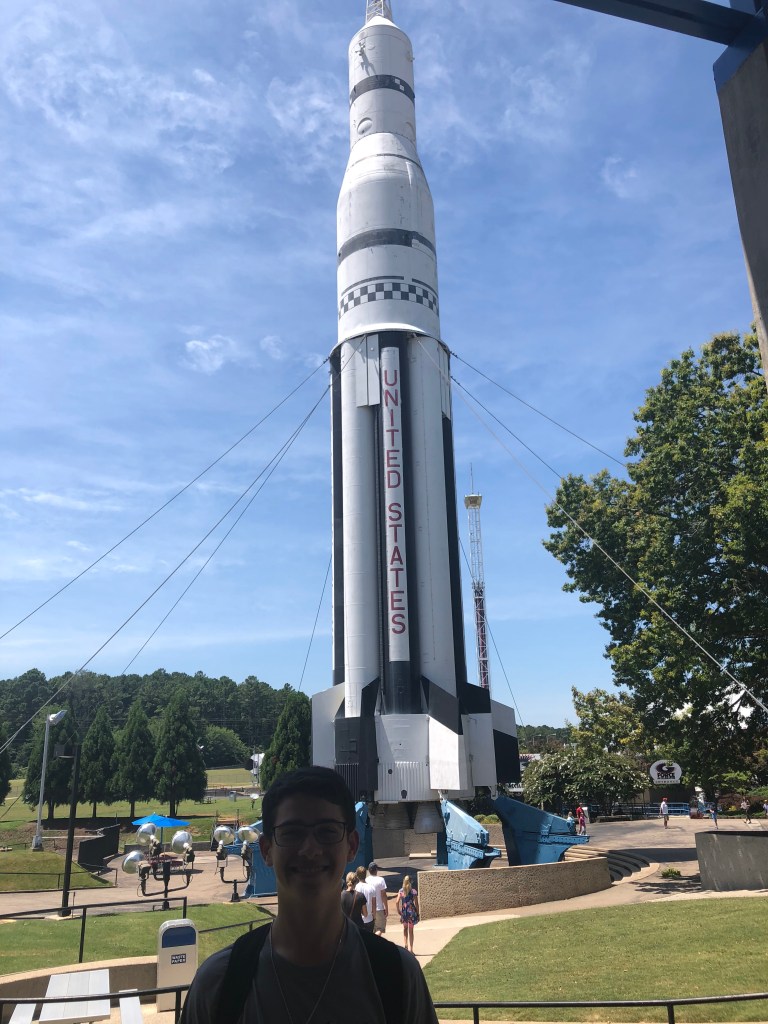
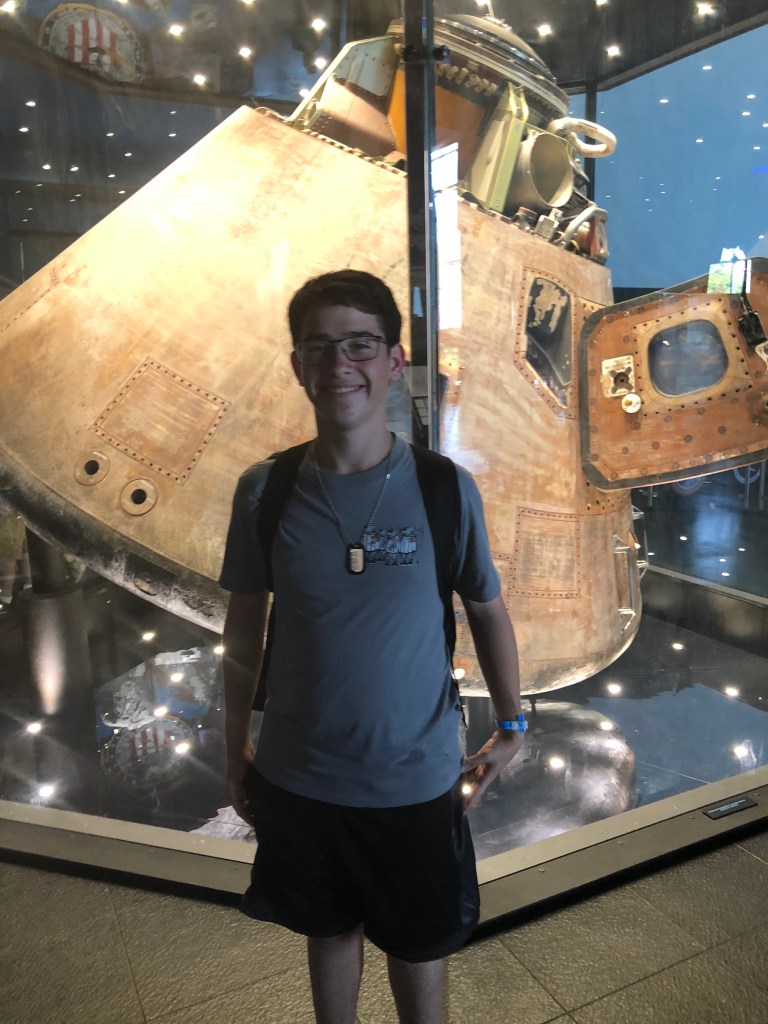
During the May monthly meeting, member Ira Polans spoke about his travels to the U.S. Space & Rocket Center in Huntsville, Alabama. I smiled as he shared details about their wonderful exhibits and tours, including the bus tour of the NASA complex a short ride away. I smiled because not only is that location home to the museum, but it is also home to Space Camp, an incredible place where I spent a week for three consecutive summers. If not for COVID-19, it might have been four! They do have programs for adults and families, though, so I sincerely hope to return one day as a camper.

            Since Mr. Polans already spoke to eloquently about the complex itself, I wanted to share a little bit about my experiences with Space Camp itself. The first time I went, I was a rising sixth grader. It was my very first time away from home, and I was nervous and did not know what to expect. I did not need to worry! Camp kept us busy all day long, between flight simulations, learning the various Mission Control positions, including Flight Control, CAPCOM, EECOM, and so many other roles! I even had the experience of trying to repair a satellite upside down in a zero-gravity simulator. And then there was the multi-axis trainer and all of my new friends from around the world. One year, I roomed with several kids my age from Argentina. Their English wasn’t too strong, and my Spanish was non-existent at that time so we communicated in the one language we shared—soccer.  I could go on and on. It was one of the best experiences of my life and I am so grateful to have had the opportunity to go—and to go multiple times.

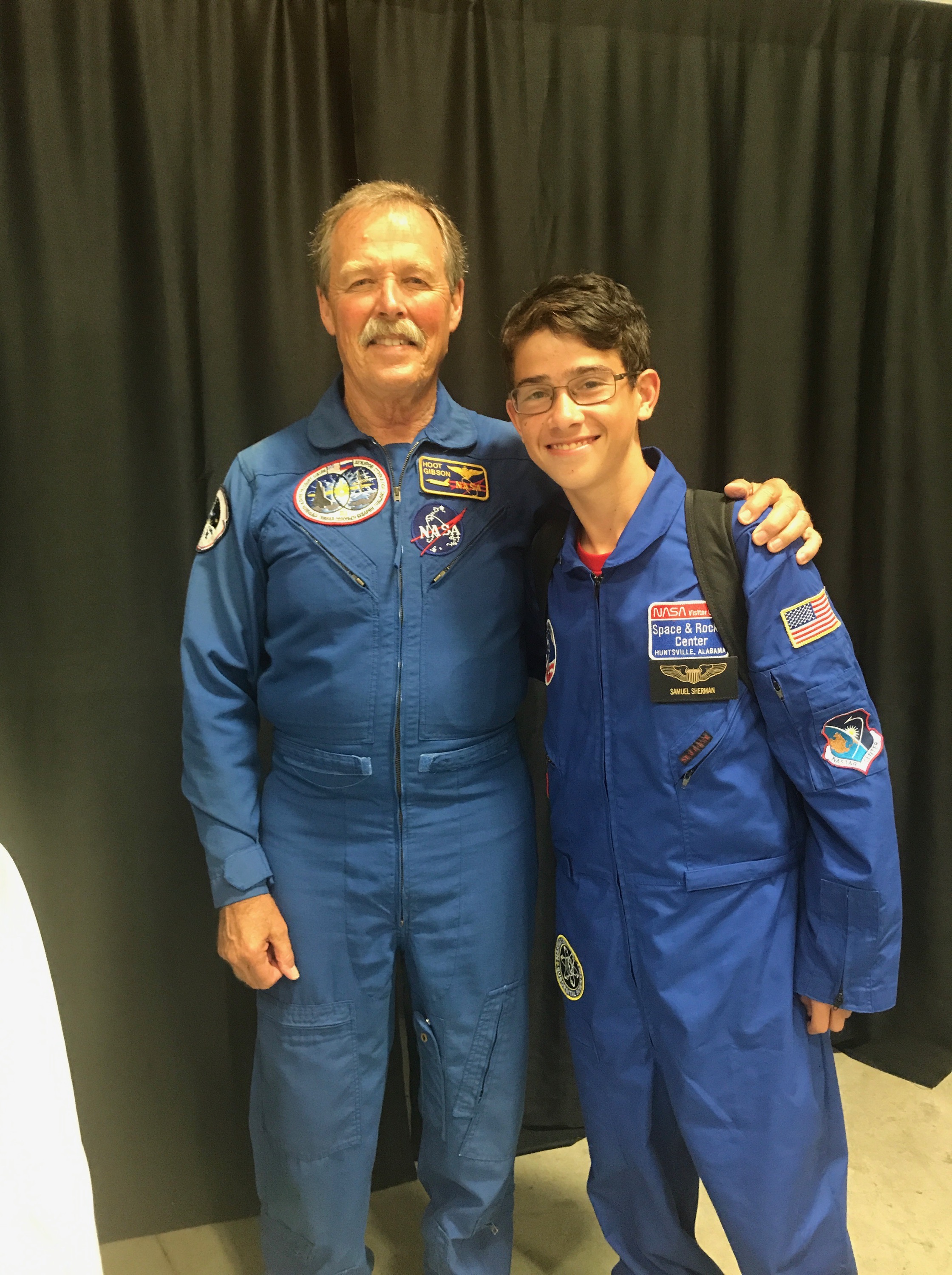
Me and Hoot Gibson:

            That appreciation got me thinking, though. I am fortunate that my parents not only paid my camp tuition but incurred the cost to travel to Huntsville and to stay the week three times. Many of my peers do not have that same opportunity. As a student in the Pennsbury School District, economic diversity among the students is both a strength and a challenge in our community.  After my third summer there, I decided that I wanted to do what I could to make sure that other kids could have the same opportunity to attend Space Camp that I did. In 2018, I founded S.P.A.C.E.—Scholarships for the Promotion of Astronomy through Camp and Education. We are a Pennsylvania Nonprofit organization, with federal 501(c)(3) status still pending. My goal was to send even just one student who would not otherwise be able to attend Space Camp, though we have also looked to finance other local opportunities for students interested in space and astronomy as well. The project was put on hold for a few years—first because I was ill for an extended period of time, and later because of COVID-19. I am extremely proud, however, that the organization is now up, funded to the point of being able to finance at least one student to Space Camp, and open for applications for the Summer of 2022. 

            If you know of a student who may qualify, please encourage them to apply. Though my goal was, initially, limited to the Pennsbury population our charter is broad enough to extend the opportunity to other students as well. I will be fundraising for the remainder of the application period, and will make available as many opportunities as we can to share this opportunity with as many students as possible. Sending one student would be a dream come true; sending more than one student would be truly amazing. Information about S.P.A.C.E., the application process, and how to donate can be found at http://www.spacecampscholarship.com. Please do not hesitate to reach out with any questions or comments about the program to sammymsherman@gmail.com.

Posted in Mid-summer 2021, Sidereal Times | Tagged , | Leave a comment