We recently added several new winter items (and removed some summer items) with our cool anniversary logo at our AAAP store. However, if you still want a summer item or need a custom color, please email Rich Sherman at merchandise@princetonastronomy.org.
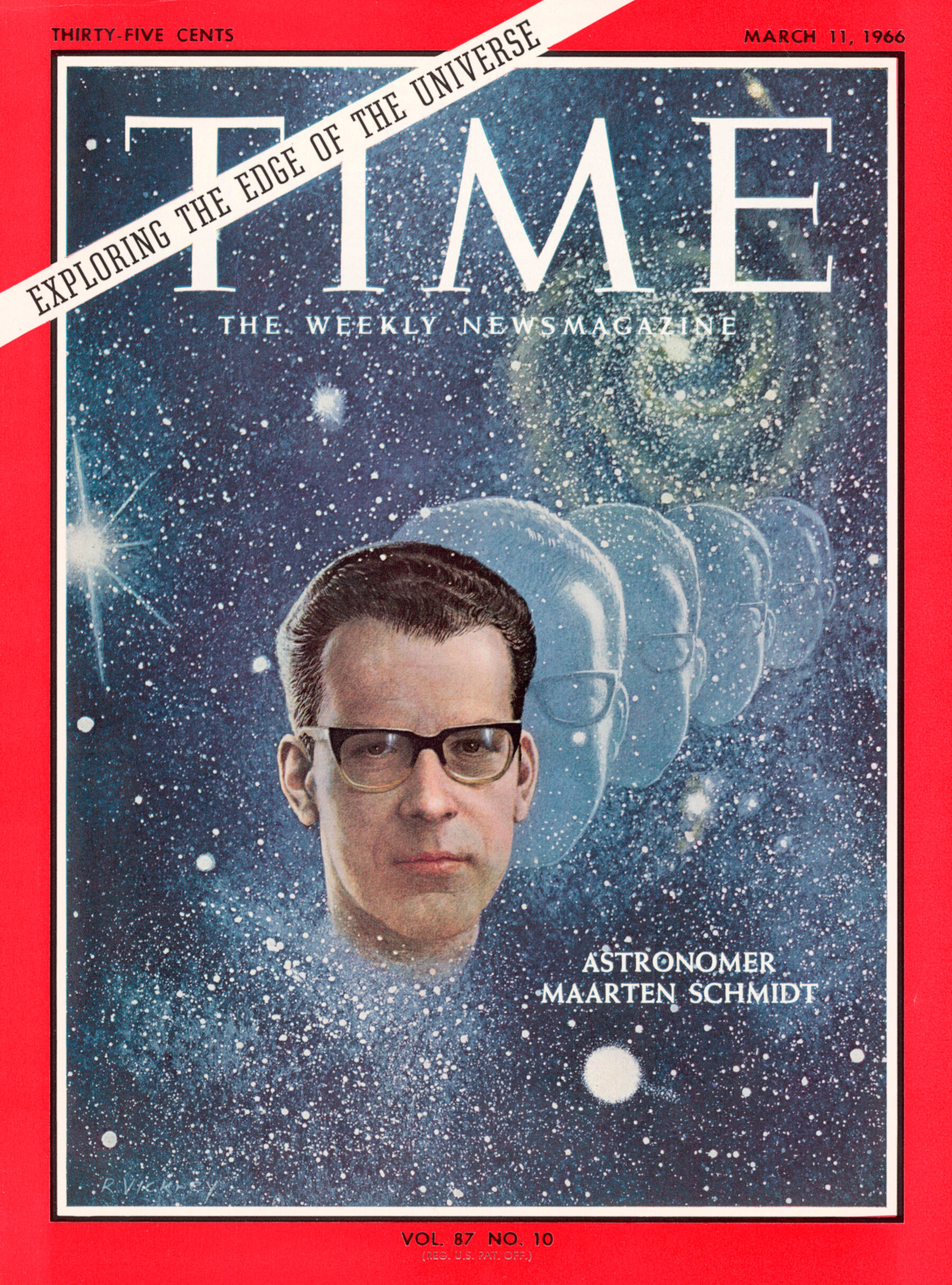
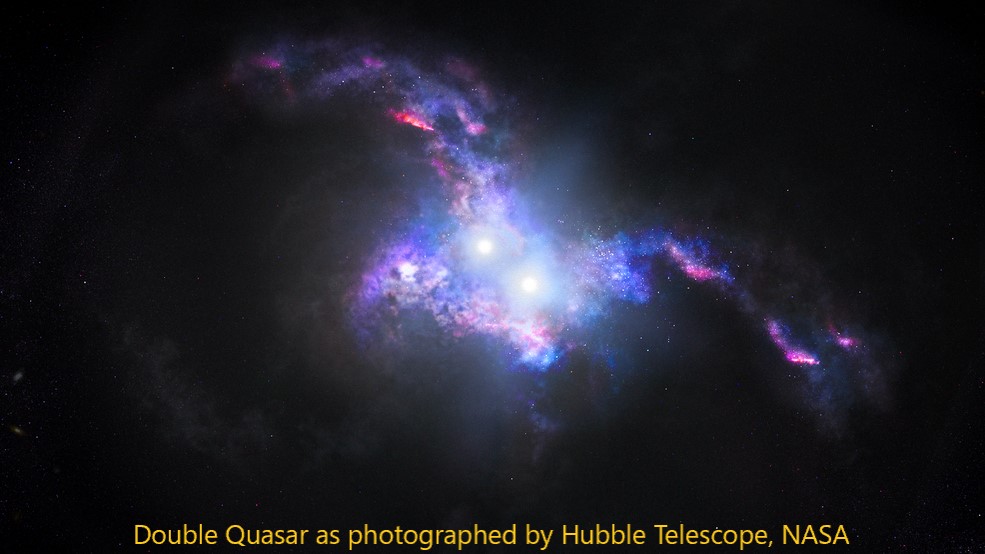
Eminent astronomer Dr. Maarten Schmidt passed away recently. His greatest discovery was an esoteric astronomical object called a Quasar. He appeared on the cover of the Time magazine in 1967 for brilliantly solving a part of the mystery. It took me a while to understand at a high level what a Quasar is. Here is my understanding of Dr. Schmidt’s work.
In the 1960s, very intense radiation at radio frequencies were received on the earth. They were detected by radio telescopes which are a bunch of antennas and radio receivers hooked up to each other. There was corresponding radiation at visible frequencies too, detected by optical telescopes, but that was too feeble. The radiation at radio frequencies did not fit the pattern of any known star within our galaxy or any from other galaxies. Dr. Schmidt found that this radiation is extremely red shifted, which means that the original source is moving away from us at very high speeds.
As Edwin Hubble found that our universe is expanding rapidly. That is the galaxies distant from us are moving away from us even faster. When radiation from such objects reaches us, it is red shifted. Meaning that a blue object moving rapidly away from us appears as a red color to us on the earth. If the speed is much more, then the radiation moves further down from red into the invisible frequencies like infrared and radio waves. Like the siren of an ambulance changes in pitch as it moves away from us.
The radiation from a Quasar would have started its journey as visible light, but over the course of billions of years, it moved to radio frequencies and appeared as such to us. Since the intense radiation was at radio frequencies the source was named as a Quasar (Quasi Stellar Radio Source). The name symbolized the mysterious nature of the source from where this radiation was coming from.
Because of the extreme red shift, it was postulated that the source was very very far away from us. It is not from our galaxy or our local group or our supercluster of galaxies. It is clearly coming from extreme distances across our universe. And looking that far out into the universe means that we are looking back in time. Because radiation takes time to traverse vast distances across the universe, Quasars are from the earliest life of our universe.
A key question is how could we have had such powerful sources of radiation so early in the life of our universe. What powered their luminosity? Now it is agreed that quasars are powered by black holes which exist in the middle of distant galaxies. Super massive black holes are known to exist in the middle of every galaxy. But how did black holes form in such early stages of the universe? Stars were just forming, so there could not be corpses of stars. Latest theory is that huge masses of cloud and dust directly collapsed into black holes, instead of going through the star formation process and their subsequent deaths.
As matter falls into a central black hole, it grows bigger and bigger. Emission of radiation resulting from a star which ventures close enough to a black hole, is the most likely explanation for a quasar.
Quasars were much more common in the early universe – about 2 and 3 billion years after the Big Bang. Accordingly, most distant quasars are from 8-10 billion years ago. Do they exist today ? We will not know for another 8-10 billion years. There will always be this lag of when an event occurs in the distant parts of the universe and when we get to observe it.
We do not see any quasars closer to home. If we did, it would outshine our sun hands down. Something like a cosmic fireworks called supernova does not happen anywhere in our neighborhood. If it does, we would be history in no time.
Dr. Schmidt was a giant who helped us peer into the distant stretches of our universe and helped us go back so much in time when the universe was a lot younger. My kudos to him for his great achievement. And the quest for the exotic astronomical objects continues.
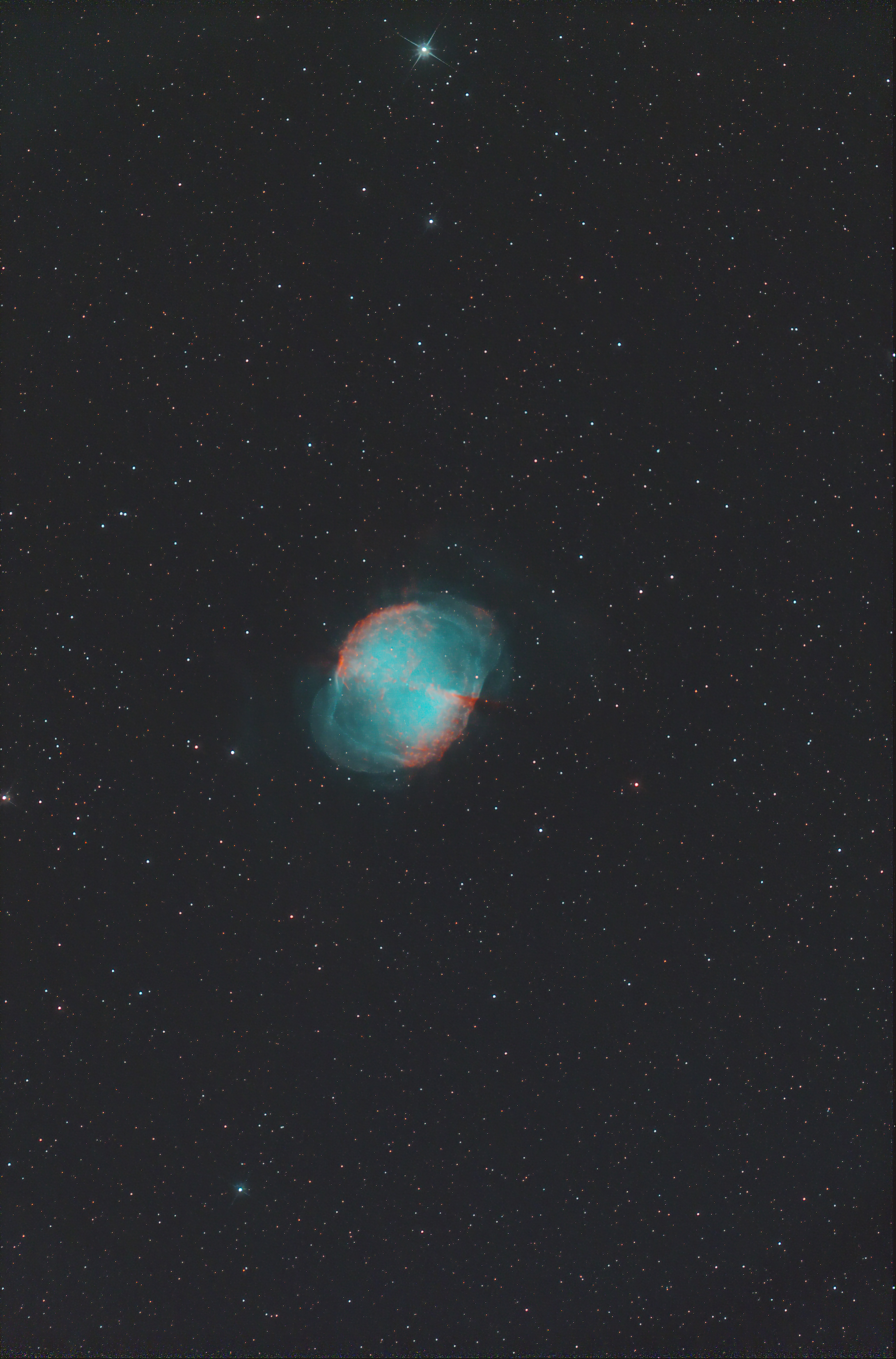
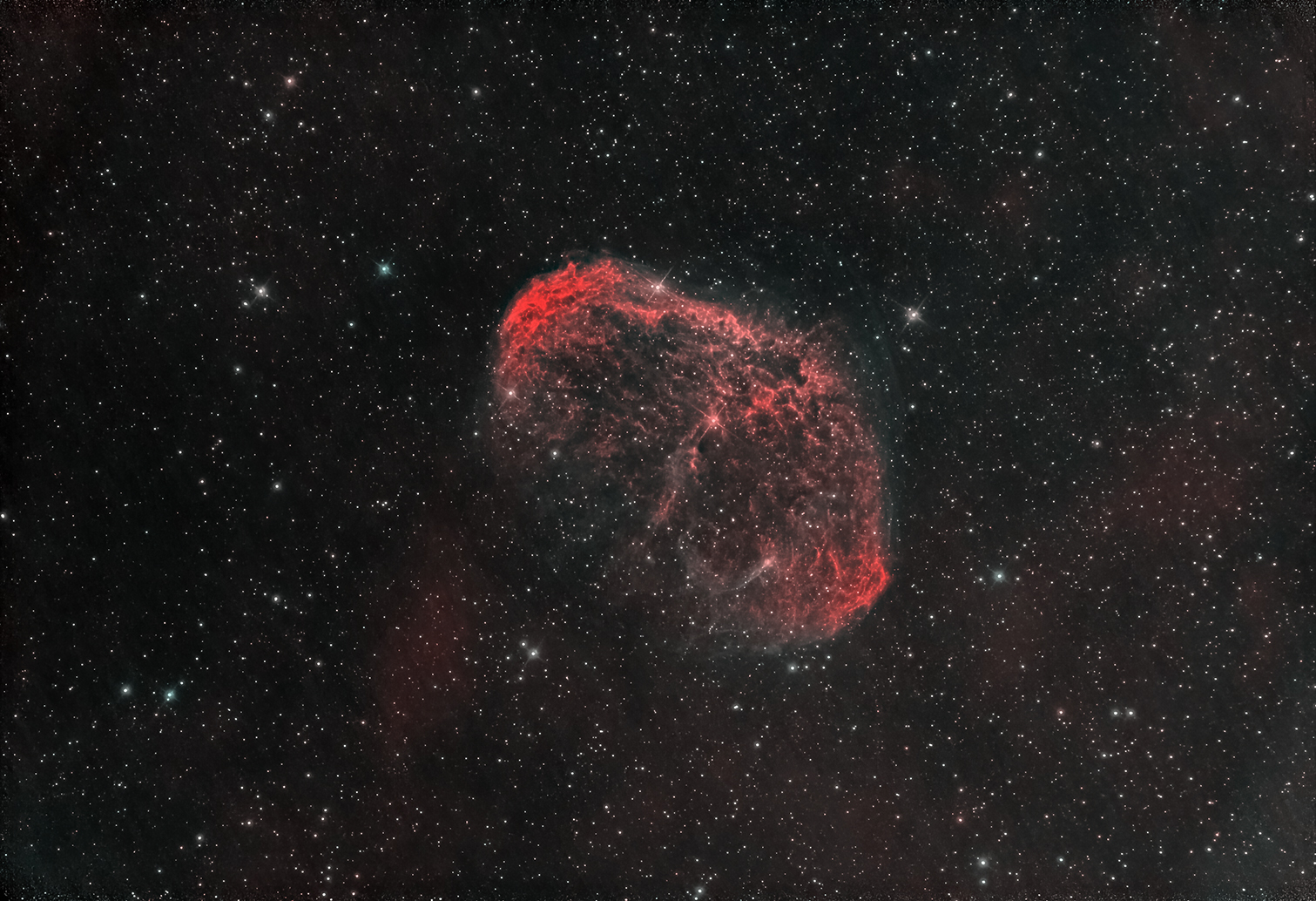
Bob Vanderbei did it again! Take a look at his haunting pictures of the Dumbbell and the Crescent Nebulae below. Prof. Bob Vanderbei and Prof. Michael Strauss will be on hand at the November meeting to sign copies of “Welcome to the Universe” and “Welcome to the Universe in 3D” which will be available for purchase.
Sept. 15, 2022. ZWO ASI2400MC-Pro with L-Extreme filter on 10″ RCOS at f/9. Total Exposure time: 80 minutes (unguided 30-second subexposures). For more pictures and information, click here21:09-22:18 EDT Aug. 7 2016, 20:40-23:21 EDT Aug. 26 2016, 20:37-23:23 EDT Aug. 27 2016 Starlight Express Trius SX-694 on 10″ RCOS Two frame mosaic North (top) frame: Hα = 120 mins, OIII = 114 mins, South (bottom) frame: Hα = 78 mins, OIII = 78 mins, (in 6 min PHD2 guided increments). For more pictures and information, click here
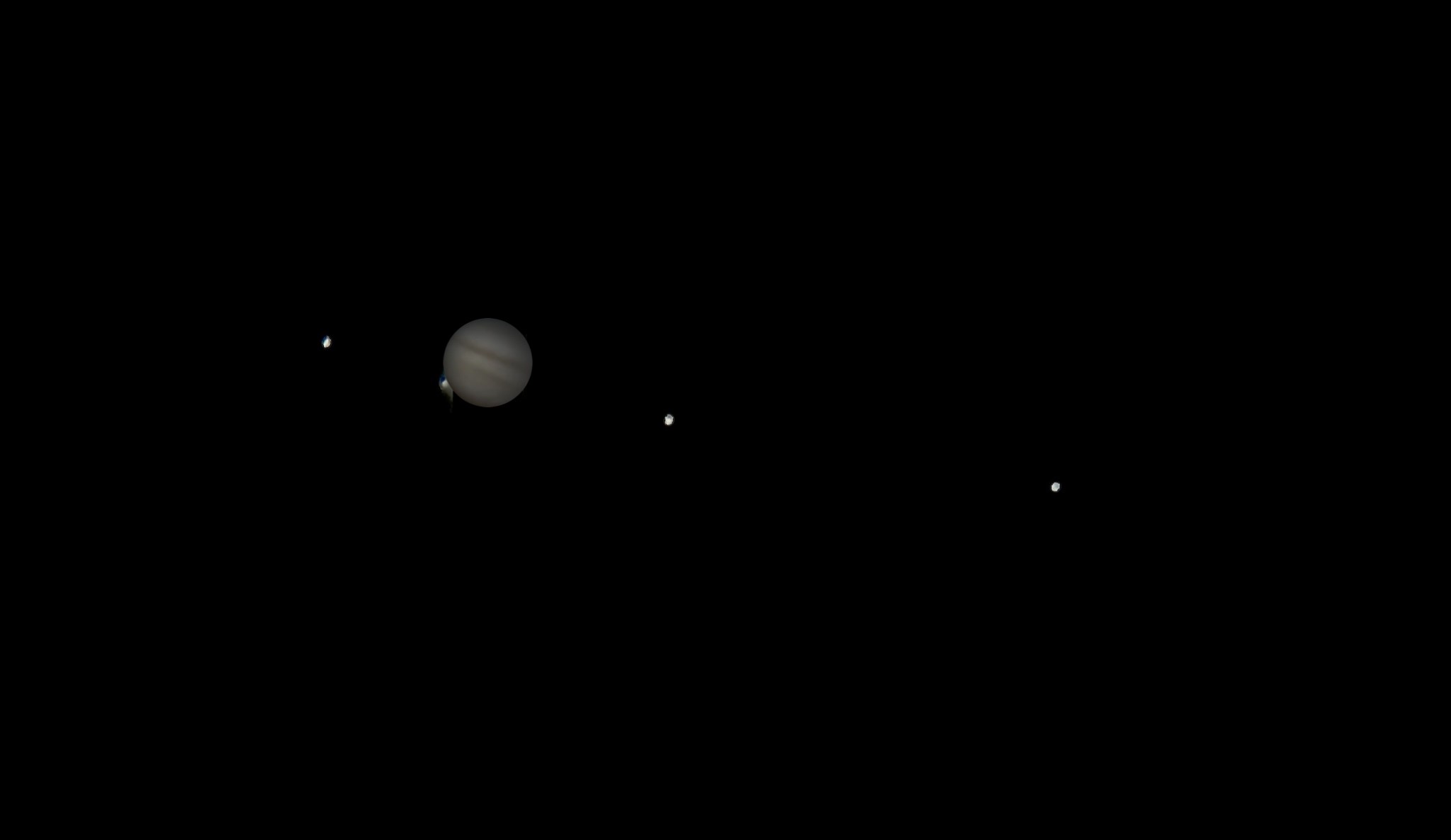
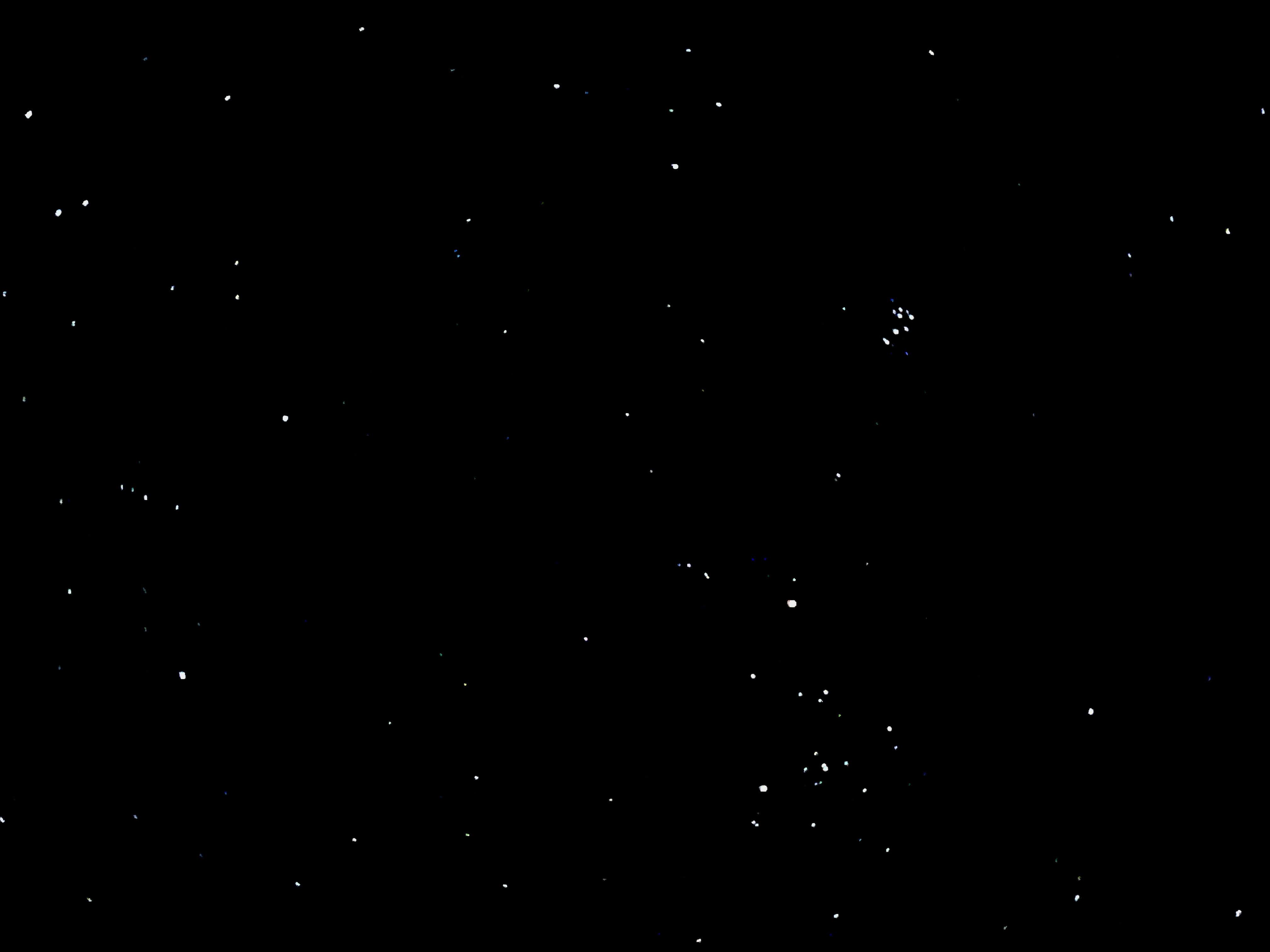
Recently, I had some success in photographing Jupiter. Two single photos were used- one to record positioning of the moons and one to capture detail of Jupiter. I like the challenge of trying to capture detail with a simple phone camera.
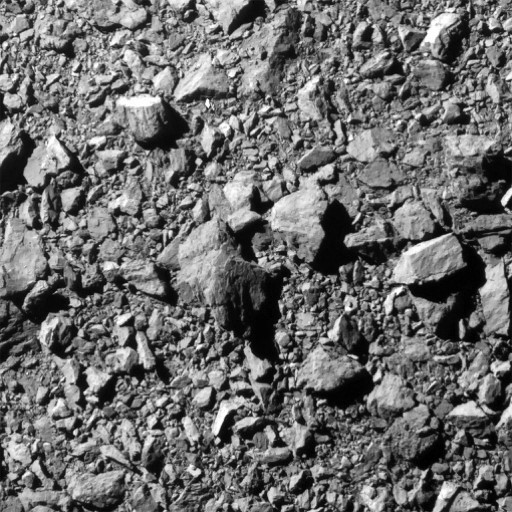
What NASA’s Crash Into an Asteroid Looks Like NASA’s DART spacecraft was not able to take pictures of the very moment it slammed into an asteroid on Monday at more than 14,000 miles per hour. Or the aftermath. But telescopes on Earth, seven million miles away, were watching. The images they recorded revealed a spectacular outburst of debris rising from the asteroid after the collision…more
-NYT
Maarten Schmidt, First Astronomer to Identify a Quasar, Dies at 92 Maarten Schmidt, who in 1963 became the first astronomer to identify a quasar, a small, intensely bright object several billion light years away, and in the process upended standard descriptions of the universe and revolutionized ideas about its evolution, died on Sept. 17 at his home in Fresno, Calif. He was 92…more
-NYT
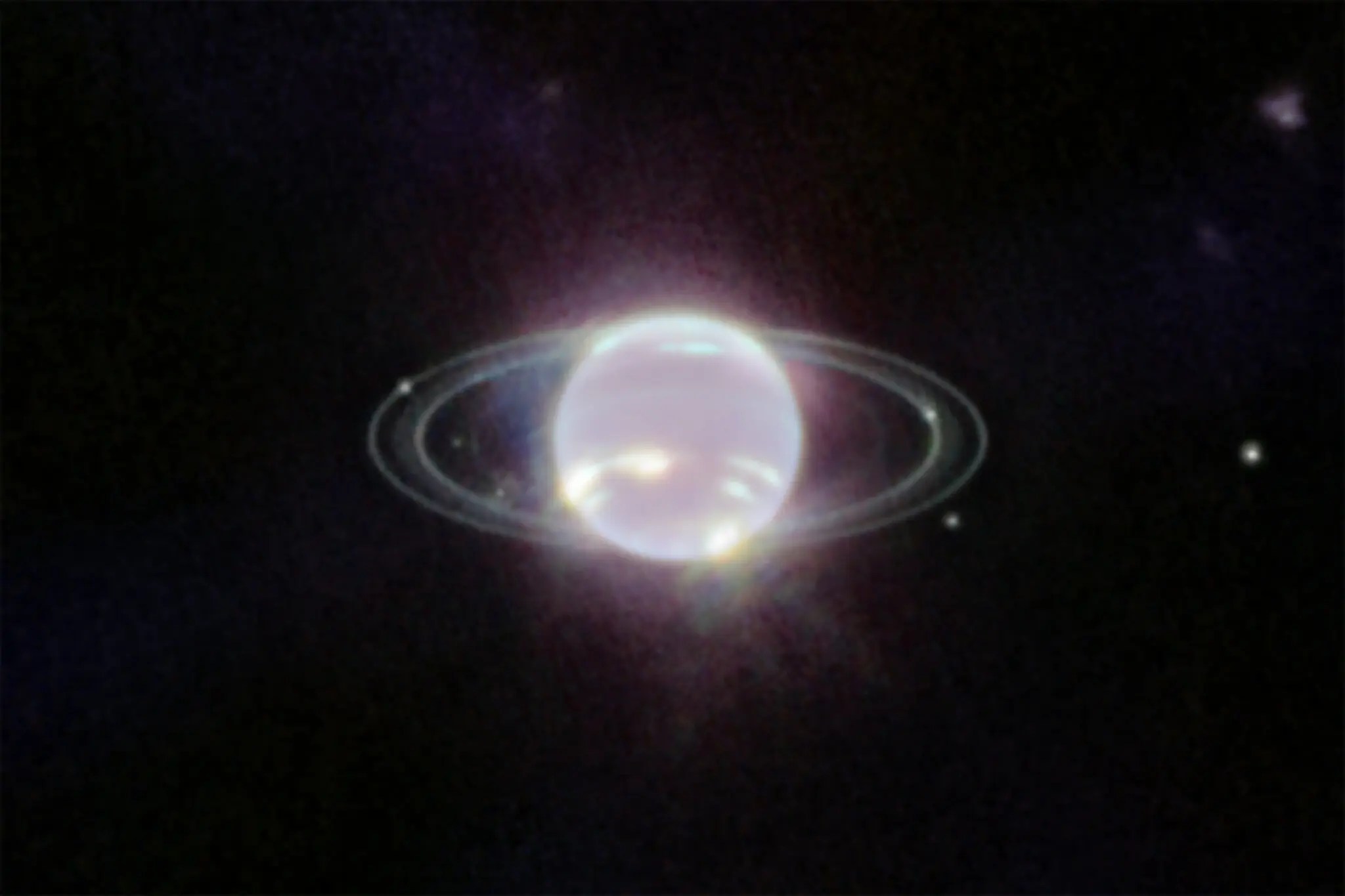
Neptune and Its Rings Come Into Focus With Webb Telescope No spacecraft has visited Neptune since 1989, when the NASA probe Voyager 2 flew past on its way out of the solar system. Neptune, which is four times as wide as Earth, is the most distant planet of our solar system. Voyager 2’s observations whetted the appetites of astronomers, who were eager to learn more about the ice giant…more
-NYT
China’s Discovery of Lunar Mineral Could Add to Fuller View of the Moon Scientists found a single crystal of a new phosphate mineral while analyzing lunar basalt particles, which were collected from the moon two years ago by the Chang’e-5 mission. In December 2020, it became the first country in about four decades to bring back lunar rocks and soil, amassing several pounds of samples, experts said…more
-NASA
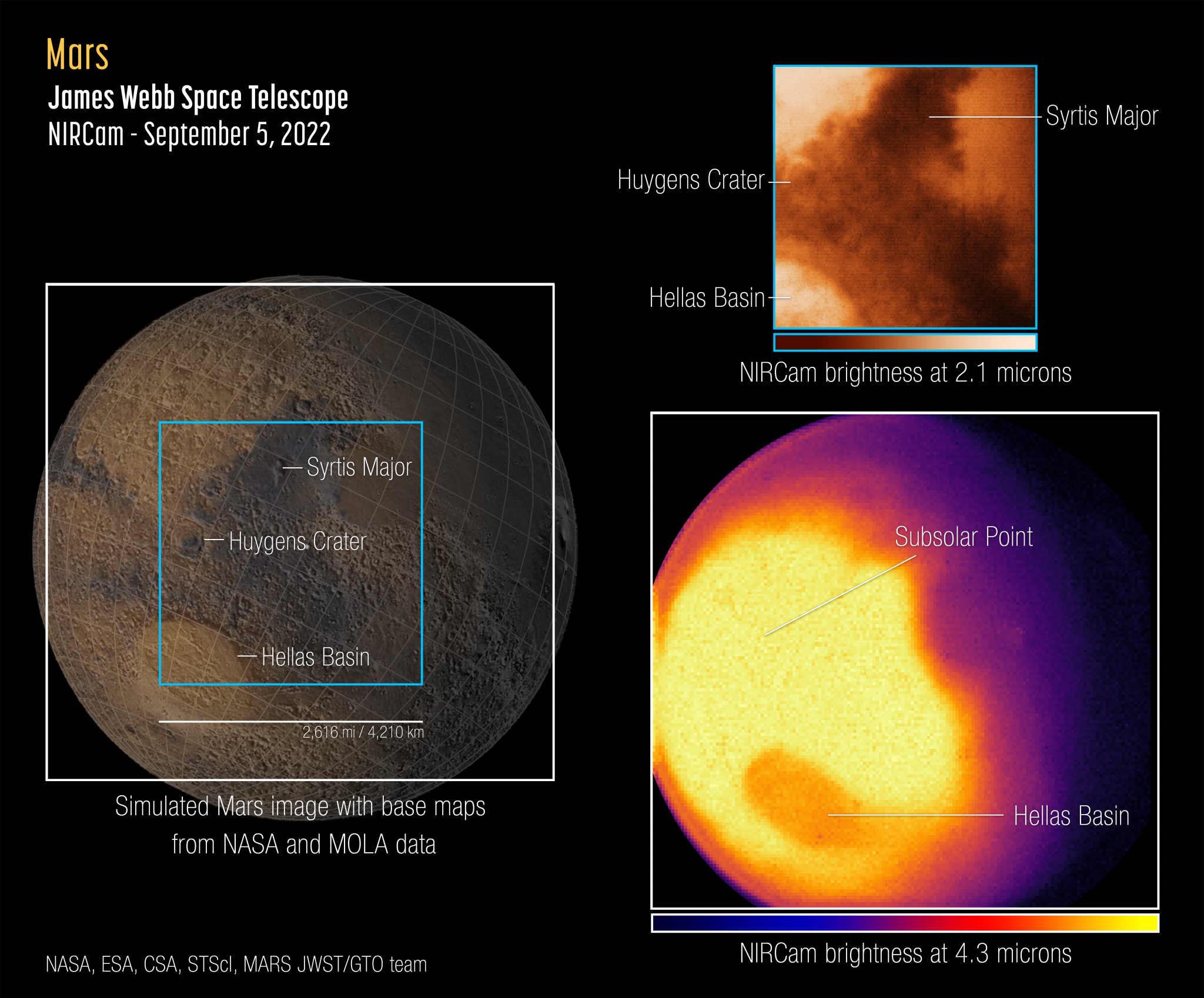
Mars Is Mighty in First Webb Observations of Red Planet NASA’s James Webb Space Telescope captured its first images and spectra of Mars Sept. 5. The telescope, an international collaboration with ESA (European Space Agency) and CSA (Canadian Space Agency), provides a unique perspective with its infrared sensitivity on our neighboring planet, complementing data being collected by orbiters, rovers, and other telescopes…more
-Phys.org
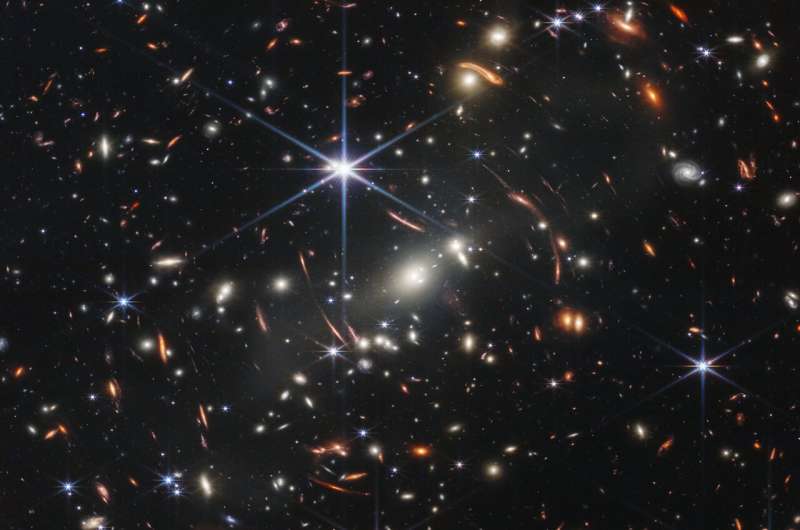
Webb reveals a galaxy sparkling with the universe’s oldest star clusters Using the James Webb Space Telescope (JWST), researchers from the CAnadian NIRISS Unbiased Cluster Survey (CANUCS) team have identified the most distant globular clusters ever discovered. These dense groups of millions of stars may be relics that contain the first and oldest stars in the universe…more
-Phys.org
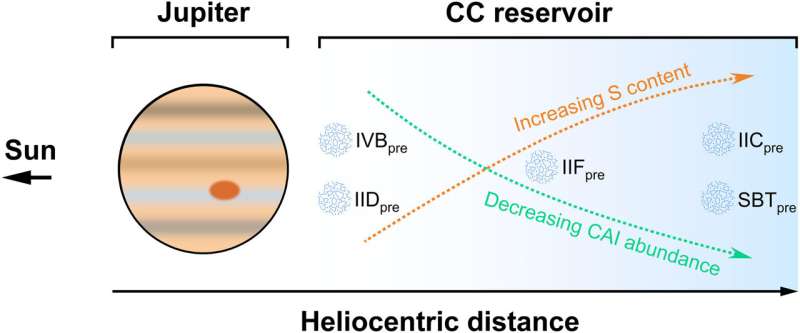
The composition of asteroidal cores in the early solar system Iron meteorites of the solar system are composed of parent cores belonging to the earliest credited bodies of the environment. The cores are formed in two isotopically distinct reservoirs including non-carbonaceous and carbonaceous types in the inner and outer solar system. In a new report…more
-Phys.org
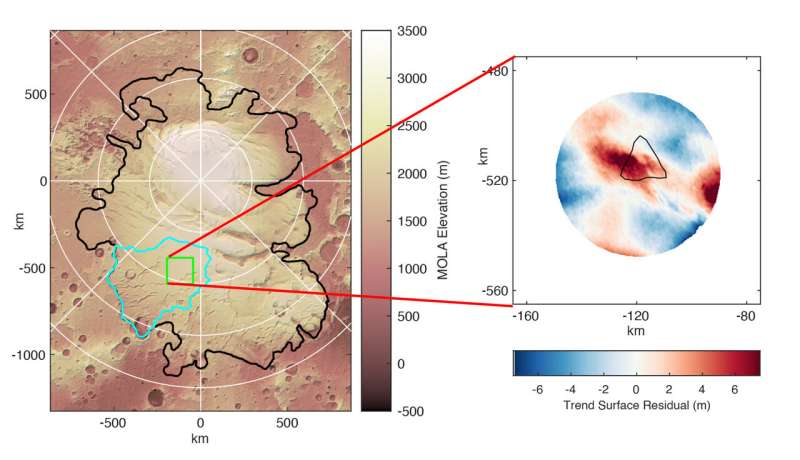
New evidence for liquid water beneath the south polar ice cap of Mars An international team of researchers has revealed new evidence for the possible existence of liquid water beneath the south polar ice cap of Mars. The researchers, led by the University of Cambridge, used spacecraft laser-altimeter measurements of the shape of the upper surface of the ice cap…more
-Phys.org
Milky Way’s graveyard of dead stars found The first map of the “galactic underworld”—a chart of the corpses of once massive suns that have since collapsed into black holes and neutron stars—has revealed a graveyard that stretches three times the height of the Milky Way…more
-NASA
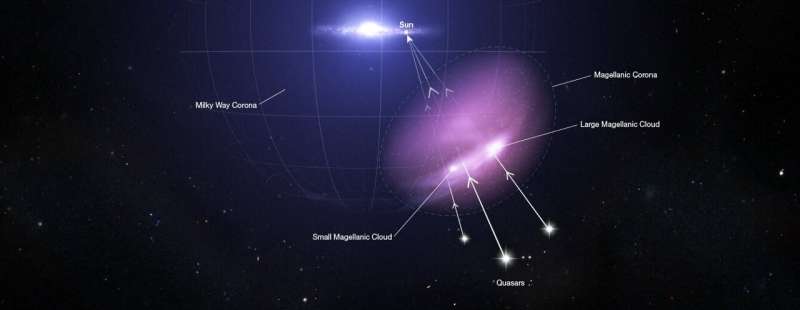
Hubble detects protective shield defending a pair of dwarf galaxies For billions of years, the Milky Way’s largest satellite galaxies—the Large and Small Magellanic Clouds—have followed a perilous journey. Orbiting one another as they are pulled in toward our home galaxy, they have begun to unravel, leaving behind trails of gaseous debris. And yet—to the puzzlement of astronomers—these dwarf galaxies remain intact…more
by Rex Parker, PhD director@princetonastronomers.org
60th Anniversary of AAAP! This fall marks the 60th year that AAAP has been an astronomy club. Yes, back in the fall of 1962, in the early years of the space race, AAAP filed for incorporation as a non-profit. We have met nearly every month (Sept-June) without fail ever since. Now it’s time to decide what we want to do to mark this momentous occasion. Please send your idea on a 60th celebration event to the editors (editors@princetonastronomy.org) or me for consideration.
Welcome to a new season of AAAP monthly meetings. Being in the Princeton orbit, naturally AAAP has kept a schedule based on the scholastic year ever since our beginning 60 years ago. So, the first meeting of the seasonSept 13 marks a renewal of our monthly gatherings, even though we are not quite ready yet to hold face-to-face meetings again. Whether by Zoom or in person, these meetings are truly the life-blood of the club, and we urge all new and experienced members to participate. There are many amazing advances in the science of astronomy that we really need to sort out together. Please refer to my article in the mid-summer edition of Sidereal Times for an assessment of our possible meeting future at the Institute for Advanced Studies. But for the next 2 months at least we will continue Zooming the monthly meetings. We have some exciting programs lined up and hope you will join us on Sept 13 at 7:30pm for the kick-off of the new season. See the Program Chair’s section below for information about the guest presentation on Sept 13.
Observatory columns reconstruction completed. One of the great benefits of the club is being able to use some serious astro equipment at AAAP’s Washington Crossing Observatory. And it isn’t surprising that, from time to time, we need to make significant investments to maintain the facility. In this case, I am pleased to announce that the much-needed concrete reconstruction work on the facility was completed in August. At long last, 4 new steel-reinforced concrete pillars now support the massive roll-off roof. The new columns will probably outlive the rest of the building, projecting a sense of strength and symmetry to the observatory (picture below). The fit and finish are perfect. A big thank you goes tomembers who contributed to the reconstruction fund (see below).You really came through – contributions covered essentially all of the approximately $10,000 project.
Contributors to the Observatory Reconstruction Fund:
Agarwal, Surabhi
Kaplan, David
Peck, James
Allen, Eugene
Kugel, Henry
Polans, Ira
Braun, Douglas
Letcher, David
Pullan, Rowena
Bristol-Myers Squibb
Magnanao, Titus
Sandberg, Lee
Cacciatore, Leonard
Masters, John
Schneider, Mary
Caruso, Rafael
Miller, Dennis
Shea, Thomas
Coats, Ted
Misiura, David
Sherman, Richard
Donney, Tim
Mitrano, Michael
Sindora, John
Fling, Jim
Mittelstaedt, Ron
Sproles, Ed
Ganti, Prasad
Mooney, Kevin
Swords, Thomas
Gong, Timothy
Mroz, Aileen
Wraight, Peter
Harding, John
Owen, David
Kaplan, Arlene & David Kaplan Fund
Parker, Rex
Water ice on the Moon! An ongoing theme (dare I say inescapable) in our club is lunar observing. Only a few years ago wehad several presentations about the moon in recognition of the 50th anniversary of Apollo.Now, returning human astronauts to the moon has never been more compelling, especially with the increasing evidence for water ice deep within the south pole craters of the moon. The excitement is increasing as NASA’s Artemis 1 approaches its launch window at Cape Canaveral. The Artemis project’s main goal is to return humans to the moon and set the stage for Mars with a moon base near the south pole, where water has been detected instrumentally by NASA’s orbiting probes. The necessary proof, of course, will be for astronauts to actually locate and recover samples of water ice.
Lunar south pole region observing challenge. A few of the southmost craters are named after earth’s Antarctic adventurers from a century ago: Amundsen, Scott, and Shackleton (see Figures below). The moon’s rotation axis passes through Shackleton a few km from its center. Observing the polar craters edge-on with a telescope is a real challenge and requires a favorable libration in which the moon’s tilt reveals more of the south pole area. For an excellent high resolution imaging video of the south pole region and Shackleton crater, see this article from NASA and the Planetary Society. https://www.planetary.org/articles/water-on-the-moon-guide At the most favorable southern libration over a few nights each month an earth observer can see about 6 degrees beyond the pole. Sky & Telescope lists the favorable libration dates for north and south poles on the almanac page (center-fold star map) each month. For more ideas on when and how to observe the south pole craters, see Sky & Telescope, March 2022, “Meet Shackleton Crater: Future Moon Landing Site”. Here I’m proposing aAAAP observing challenge to see how close to the south pole you can observe, image, and identify craters through a telescope at high magnification. If you do succeed in getting an image that shows the near-south-pole craters, please send it in to Sidereal Times and we will talk about it at an upcoming meeting.
The deeper craters near the moon’s poles remain in permanent shadow and are extremely cold, below -200 deg C, where water ice is stable even in the vacuum of space. Deep shade turns out to be the key to whether abundant free water ice exists on the moon, and the answer means everything to future human habitation. Moon atlases as recently as the mid-90’s, such as my edition of “Astronomy Atlas of the Moon” (1996) by Antonin Rukl, states “there is no water on the moon – not even in the rocks”. The first evidence for free water ice came from NASA’s Clementine and Lunar Prospector missions in the late 1990’s, and the instrumental data from more recent missions is convincing. Imagine an astronaut actually holding ice crystals, and someday even drinking water from the deep polar craters of the moon. Let’s hope that this happens in the next few years with Artemis, and that the Shackleton crater scenes in the acclaimed science fiction drama TV series, “For All Mankind”, do come true.
The lunar south pole region. NASA’s Lunar Reconnaissance Oribiter (LRO) flew over the south pole and imaged the craters which hold permanent shading. The polar axis runs through Shackleton crater. Credit: NASA/Goddard Space Flight Center Scientific Visualization Studio. https://svs.gsfc.nasa.gov/3686
Welcome back from summer hiatus! Though we’re still Zooming, we’re kicking off the 2022-2023 academic year with a “double header;” two AAAP members each giving approximately half-hour talks. Michael DiMario tells the story of how a group of amateurs affiliated with Yerkes Observatory made a “precovery” of dwarf planet Pluto on photographic plates decades before Pluto’s official discovery by Clyde Tombaugh in 1930. Lisa Ann Fanning, a longtime birder and frequent photographic contributor to Sidereal Times, will speak on “Astronomical Events and Bird Behavior.” Here are the details:
The September 2022 meeting of the AAAP will take place (virtually) on Tuesday, September 13th at 7:30 PM. (See How to Join the September Meeting below for details). This meeting is open to AAAP members and the general public. Participants will be able to log in to the meeting as early as 7:00 pm to chat informally with others who log in early. We will not be using the “waiting room;” participants will enter the meeting as soon as they log in. However, you will enter the meeting space with your microphone muted. Please be aware you must unmute yourself to be heard by other participants.
For the Q&A session, you may ask your question using Zoom’s chat feature or you may unmute yourself and ask your question directly to the speaker. To address background noise issues, we are going to follow the rules in the table below regarding audio. If you are not speaking, please remember to mute yourself. You are encouraged, but not required, to turn your video on.
Featured Speaker: Michael DiMario, PhD
Founder and CEO, Astrum Systems
mjdimario@outlook.com
Pluto Precovery and the Resurrection of Yerkes Observatory
The dwarf planet Pluto was famously discovered by Clyde Tombaugh in 1930, using photographic plates he exposed at Lowell Observatory near Flagstaff, Arizona. There’s now evidence that serendipity played a role in Pluto’s discovery, since we now know that the dwarf planet is not massive enough to have disturbed Uranus and Neptune in such a way as to put a hypothetical “Planet X” where Tombaugh was told to look. Nevertheless, now that we do know where to look, could pre-1930 images have revealed Pluto? It turns out that Pluto has been “precovered” fourteen times, the earliest images taken on January 23, 1914 at the Konigstuhl Observatory in Heidelberg, Germany.
More recently, an even earlier “precovery” was accomplished at the University of Chicago Yerkes Observatory, located at Williams Bay, Wisconsin. Members of the Asteroid Search and Studies by Amateurs at Yerkes Group (ASSAY), a function of Yerkes’ Outreach Program, made a precovery of Pluto on two photographic plates dated August 20 and November 11, 1909. At this time, Pluto was in the constellation Taurus.
Pluto orbits the Sun once every 248.5 earth years at a mean distance of 39.53 au. Since its discovery in 1930, Pluto has only traversed 27% of its orbit. The 1909 precovery increases the observed orbit to 36%. Dr. DiMario will discuss the precovery process and its significance. He will also discuss the status of Yerkes Observatory’s Revitalization.
Dr. DiMario is the Founder and CEO of Astrum Systems, a global consulting venture focused on employing systems engineering methodologies in early research and development. He is also actively engaged in creating a blog highlighting large and university-based observatories including solar and RF telescopes.
Dr. DiMario has five granted patents, numerous corporate trade secrets, a published book on systems engineering, a book chapter on systems engineering, and more than forty peer reviewed papers in regard to quantum magnetometry, systems engineering and quality management. He has been interviewed and quoted in Wired Magazine, GPS World, Sifted, and the Financial Times.
He holds a PhD in Systems Engineering, MBA in Management of Technology, MS in Computer Engineering, and significant course work in Space Science. He is President of Astrum Systems, a technology management consulting firm and co-chairs the INCOSE Early Systems Engineering and Research Working Group. He holds an amateur radio Extra class license, call sign K2MJD.
Featured Speaker: Lisa Ann Fanning
la.fanning@yahoo.com
Astronomical Events and Bird Behavior
Many people are familiar with the effects of solar eclipses on animal behavior, but what about the stars or moon phases? What is their link to the bird and animal world? How is migration impacted? This program will explore all those and more with some interesting case studies.
Lisa Ann Fanning
Born and raised in New York City, Lisa Ann Fanning has always had a curiosity for the natural world, and that passion has only grown into her adult life. She is a longtime member and volunteer for Monmouth County Audubon and various other conservation organizations across New Jersey. She is also an amateur Astronomer, recipient of the Explore the Moon and Explore the Universe Observing Certificates from the Royal Astronomical Society of Canada, editor of the RASC’s Halifax Centre’s Nova Notes newsletter, creator of “Lisa’s Look Up!” on Facebook, a member of the Amateur Astronomers Association of Princeton and contributor to their Monthly online newsletter, Sidereal Times and has appeared on several programs and podcasts.
AAAP webcast: This month’s AAAP meeting, beginning with Rex’s opening remarks and ending at the beginning of the business meeting, will be webcast live on YouTube and recorded for subsequent public access on AAAP’s YouTube channel. Be aware that your interactions during this segment, including questions to our guest speaker, may be recorded for posterity.
This session will be recorded and saved on YouTube. Send me an email at program@princetonastronomy.org if you have any concerns.
Using Zoom: While we are social distancing, the AAAP Board has chosen to use Zoom for our meetings, based on our belief that many members have already used Zoom and have found it easy to use. One of its great features is you can choose whether you want to install the software on your computer or use it within your browser.
Please make sure you have Zoom installed on your computer. You do not need a Zoom account or to create one to join the meeting. Nor are you required to use a webcam.
Please see below for the link to the meeting, or visit our website.
There is no “Unjournal Club” presentation scheduled this month. As you may know, guest speakers receive a baseball cap with the AAAP logo embroidered upon it as a “thank you” for making a presentation to us. We’re expanding the hat giveaway to members who contribute an “Unjournal Club” presentation to encourage participation.
We hope to make these short presentations a regular feature of our monthly meetings. We’d like to know what members are doing or what members are thinking about in the broad range of topics encompassed by astronomy. A brief ten-minute (or so) presentation is a good way to introduce yourself and the topics you care about to other club members. If you are interested in presenting a topic of interest, please contact either director@princetonastronomy.org or program@princetonastronomy.org.
October 11, 2022
Avi Loeb, will speak on “The Galileo Project: The Search for Technological Interstellar Objects.” Prof. Loeb, Professor of Science at Harvard University, is the author of the controversial book, “Extraterrestrial,” which examines the possibility that the unusual interstellar object Oumuamua may be not a wayward asteroid but a product of an advanced extraterrestrial civilization. Thanks and a tip o’ the AAAP cap to Rex for promoting Prof. Loeb as a guest speaker.
Future meetings
Although we do not expect to return to Peyton Hall in the foreseeable future, alternative venues are being sought to resume in-person meetings. Based on member feedback, the Board is acting on the commitment to continue virtual participation in the meetings via Zoom and/or YouTube even after in-person meetings resume.
As always, members’ comments and suggestions are gratefully accepted and much appreciated.
The AAAP store now has NEW merchandise that features our “Anniversary Edition” logo celebrating AAAP’s 60 years. Check it out at : https://aaap1962.logosoftwear.com/. The password is SiderealTimes.
The items with the new anniversary logo will have ” **Anniversary Edition** ” as the first words in the product description (note that the first 21 items on the page have the Anniversary Edition logo; the remaining items have our traditional logo). If you want a different color, or are looking for a product that you don’t see on the site, please email Rich Sherman at merchandise@princetonastronomy.org, and we will make every effort to get that item for you. Also, note that it takes about 3-4 weeks to receive your order.
This year our club completes 60 years of its formation. In the years following its formation, it steadily established itself as one of the premier astronomy clubs of our times. The club has been instrumental in promoting the wonders of the skies to the young and the young at heart. Our members visit schools and entertain and educate public at the impressive observatory in Washington Crossing State Park. Many of our members have been with the club for more than half its existence and have dedicated a good chunk of their lives to the club and its mission to introduce the public to the wonders of the universe and promote backyard observation.
For our golden anniversary, ten years ago, we arranged for a memorable discussion among some of the very renowned astronomers and astrophysicists on the possibilities of extraterrestrial life. We invited young children to write poems on astronomy and awarded the best amongst them. We also felicitated our long time members. All this was followed by a fancy and sumptuous dinner.
To celebrate the diamond anniversary this year, we are looking for ideas and assistance from all our members. Please send an email to the editors@princetonastronomy.org if you have any recommendations or if you would like to involve yourself to organize a memorable celebration.




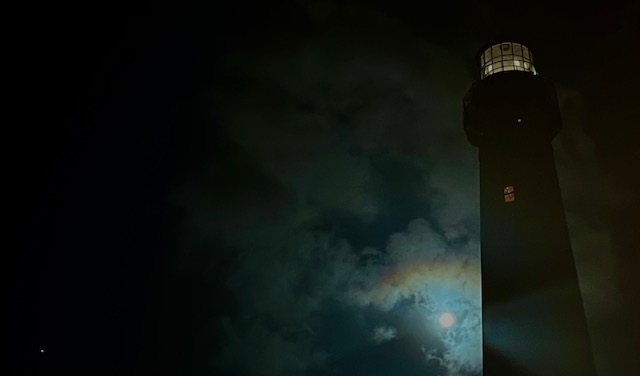
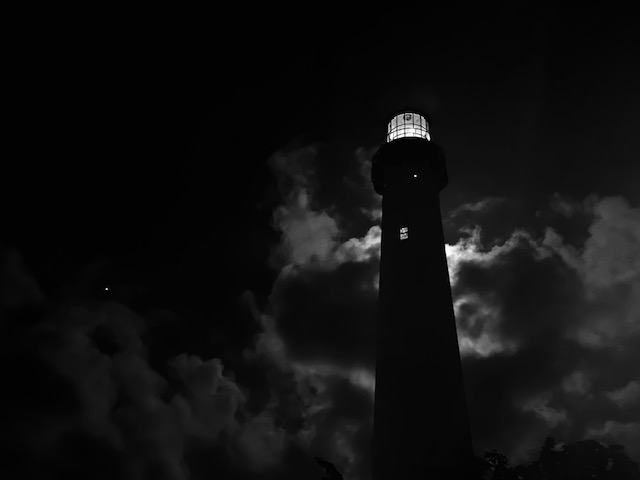





 Featured Speaker: Michael DiMario, PhD



 Amateur Astronomers Association of Princeton