Hello and welcome to this month’s installment of “From the Lens of Lisa.”
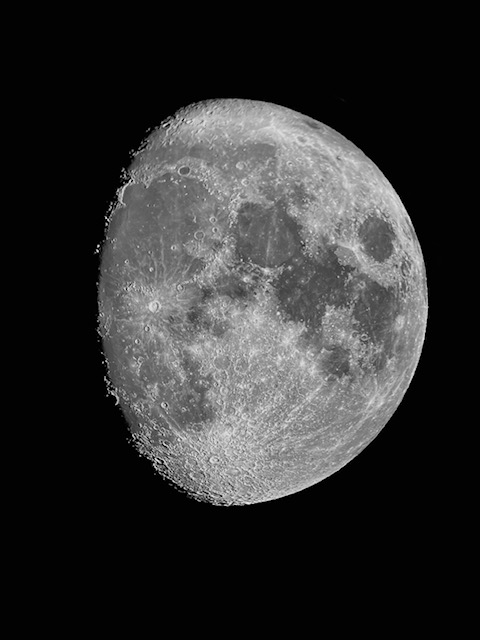
10/5/22 11:58 PM EDT After days of rain here in Central New Jersey, there was finally a tiny window of clear skies before more clouds rolled in. I took advantage of that window to view the Waxing Gibbous Moon.
iPhone 13 through Celestron NexStar Evolution 8 (32 mm eyepiece)
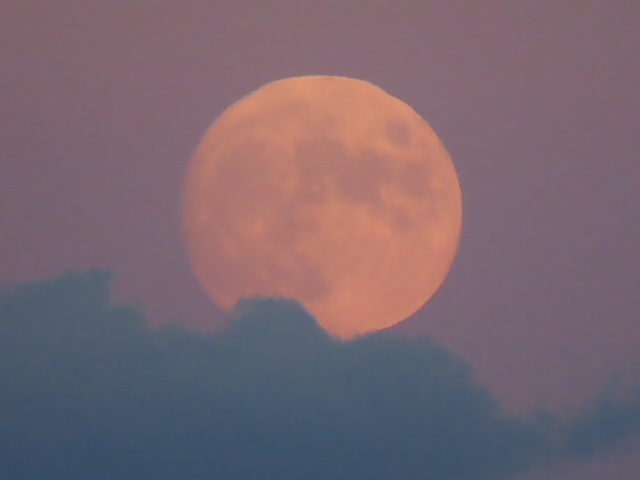
10/11/22 When you love sleep a lot but your husband says the words… “look at the Moon!” 🙂 (And the foliage is beginning to turn!)
Canon PowerShot SX70 HS
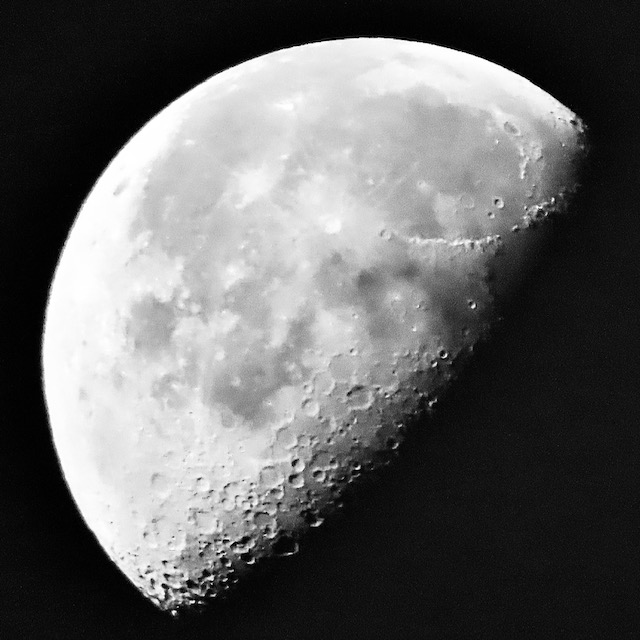
10/16/22 The Moon was looking great as it was approaching Last Quarter! Some nice details on the terminator!
Canon PowerShot SX70 HS
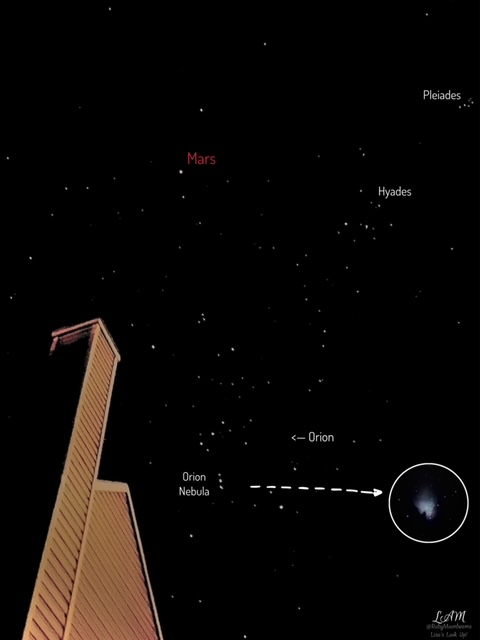
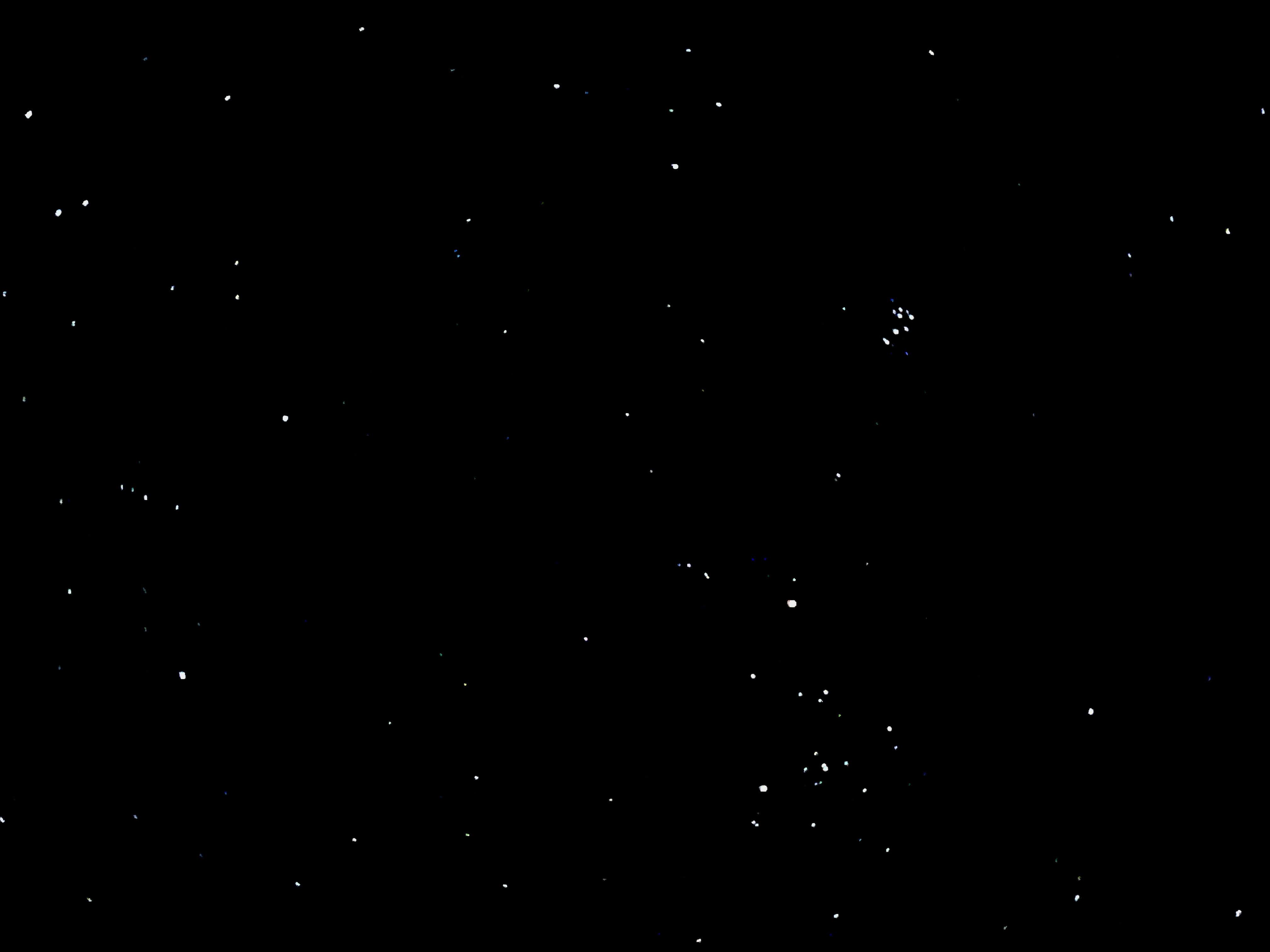
10/22/22 4:20 AM ET- Up early to look for Orionid Meteors (we saw 5,) I spent a lot of time looking up in this region last night during a rare NJ crystal clear night. Mars was also shining bright and the Hyades and Pleiades were also quite visible naked eye!
iPhone 13 for wide field Detail: iPhone 13 through CelestronNexstar Evolution 8 with 13mm eyepiece (handheld)
Sharpened and contrasted using standard iOS tools. Assembled and labeled in Bazaart
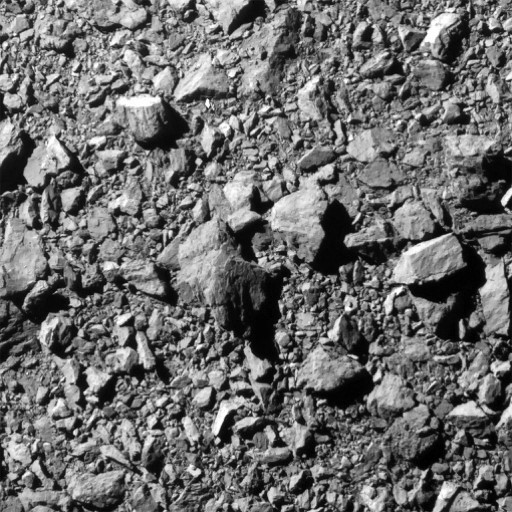
What NASA’s Crash Into an Asteroid Looks Like NASA’s DART spacecraft was not able to take pictures of the very moment it slammed into an asteroid on Monday at more than 14,000 miles per hour. Or the aftermath. But telescopes on Earth, seven million miles away, were watching. The images they recorded revealed a spectacular outburst of debris rising from the asteroid after the collision…more
-NYT
Maarten Schmidt, First Astronomer to Identify a Quasar, Dies at 92 Maarten Schmidt, who in 1963 became the first astronomer to identify a quasar, a small, intensely bright object several billion light years away, and in the process upended standard descriptions of the universe and revolutionized ideas about its evolution, died on Sept. 17 at his home in Fresno, Calif. He was 92…more
-NYT
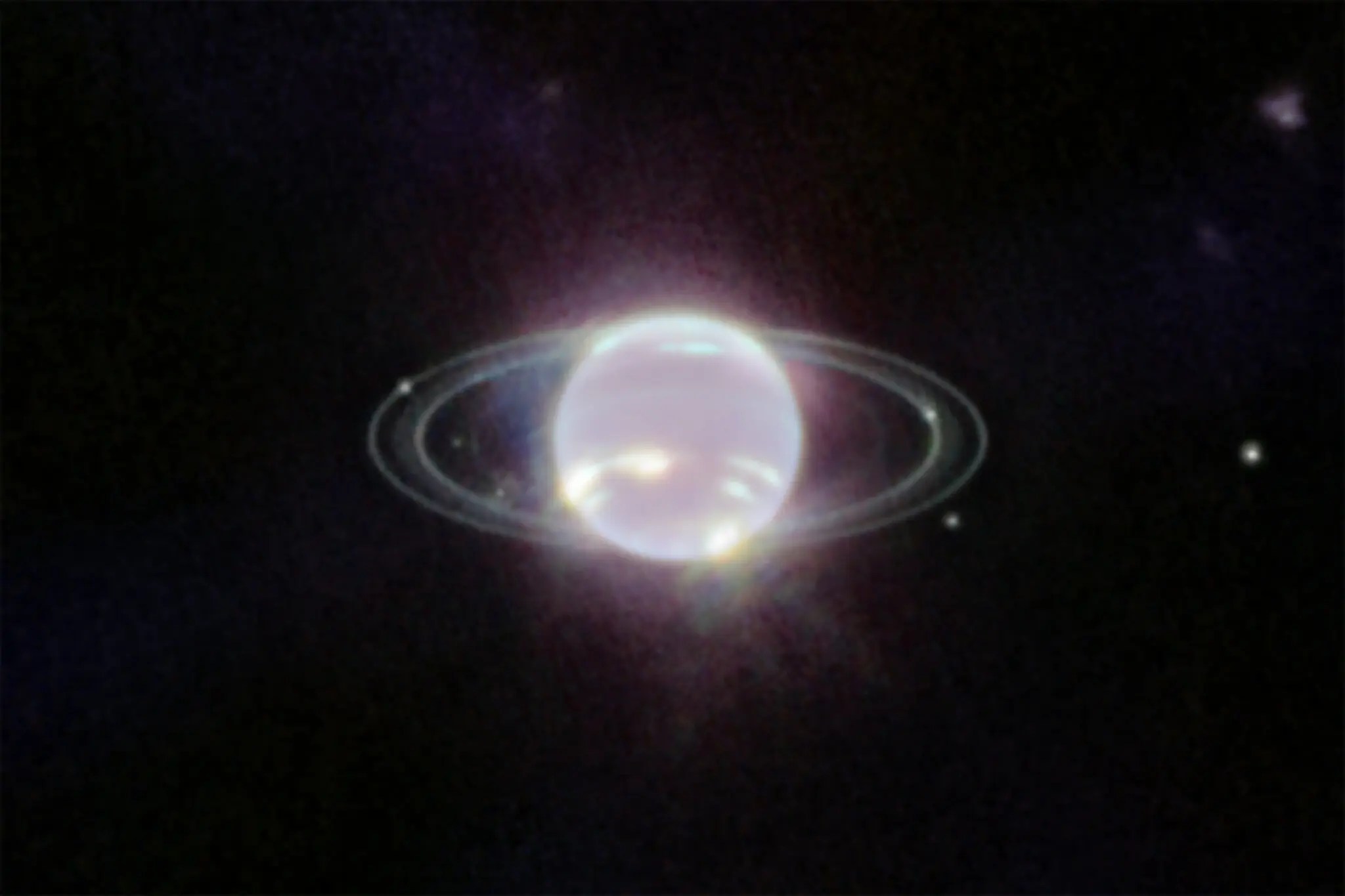
Neptune and Its Rings Come Into Focus With Webb Telescope No spacecraft has visited Neptune since 1989, when the NASA probe Voyager 2 flew past on its way out of the solar system. Neptune, which is four times as wide as Earth, is the most distant planet of our solar system. Voyager 2’s observations whetted the appetites of astronomers, who were eager to learn more about the ice giant…more
-NYT
China’s Discovery of Lunar Mineral Could Add to Fuller View of the Moon Scientists found a single crystal of a new phosphate mineral while analyzing lunar basalt particles, which were collected from the moon two years ago by the Chang’e-5 mission. In December 2020, it became the first country in about four decades to bring back lunar rocks and soil, amassing several pounds of samples, experts said…more
-NASA
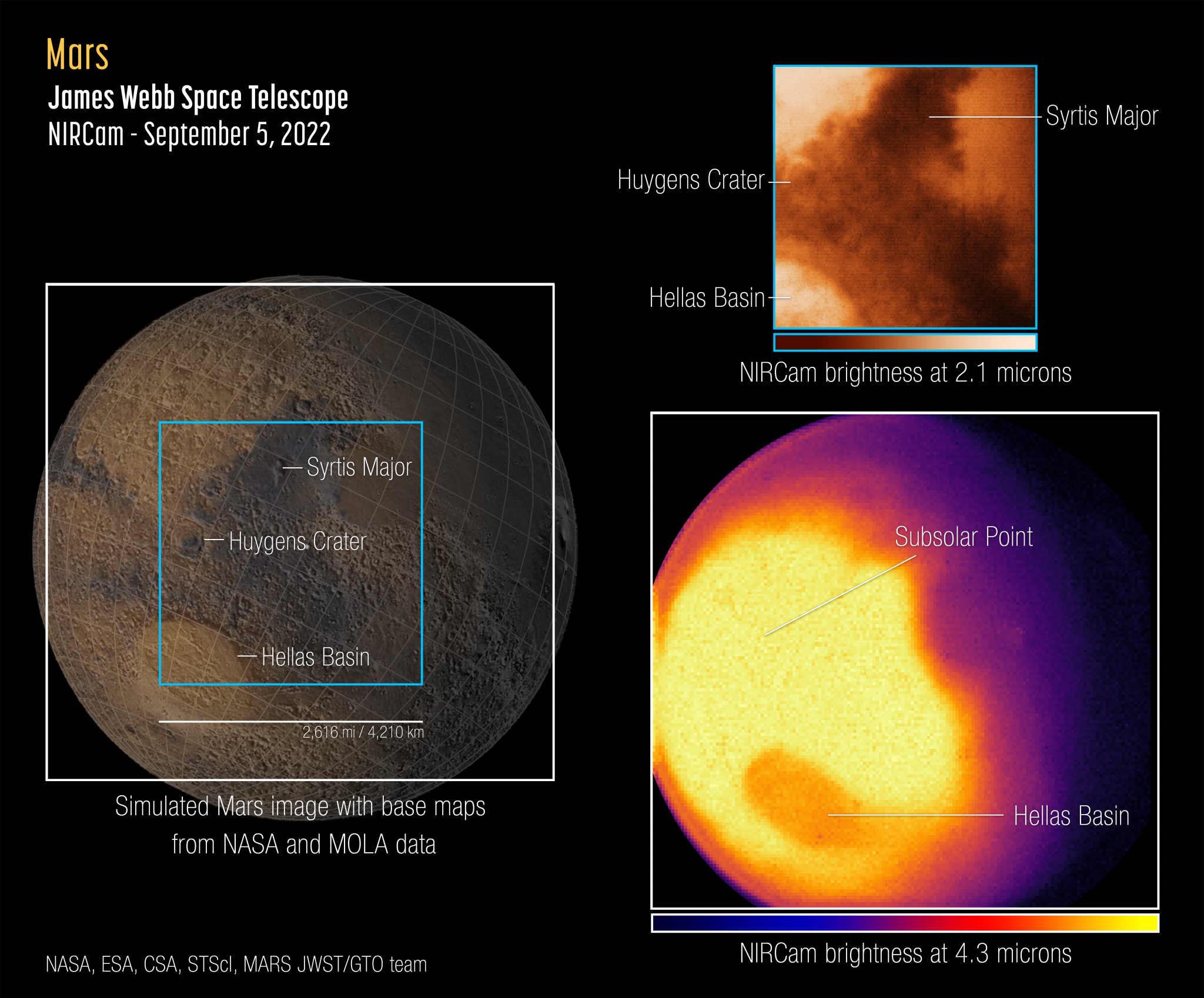
Mars Is Mighty in First Webb Observations of Red Planet NASA’s James Webb Space Telescope captured its first images and spectra of Mars Sept. 5. The telescope, an international collaboration with ESA (European Space Agency) and CSA (Canadian Space Agency), provides a unique perspective with its infrared sensitivity on our neighboring planet, complementing data being collected by orbiters, rovers, and other telescopes…more
-Phys.org
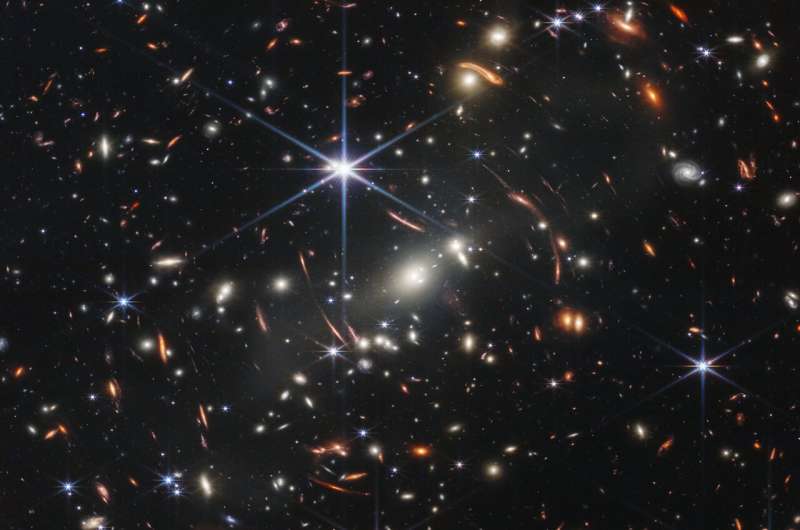
Webb reveals a galaxy sparkling with the universe’s oldest star clusters Using the James Webb Space Telescope (JWST), researchers from the CAnadian NIRISS Unbiased Cluster Survey (CANUCS) team have identified the most distant globular clusters ever discovered. These dense groups of millions of stars may be relics that contain the first and oldest stars in the universe…more
-Phys.org
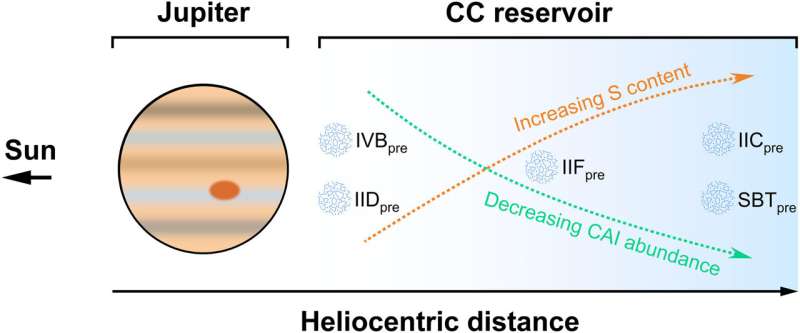
The composition of asteroidal cores in the early solar system Iron meteorites of the solar system are composed of parent cores belonging to the earliest credited bodies of the environment. The cores are formed in two isotopically distinct reservoirs including non-carbonaceous and carbonaceous types in the inner and outer solar system. In a new report…more
-Phys.org
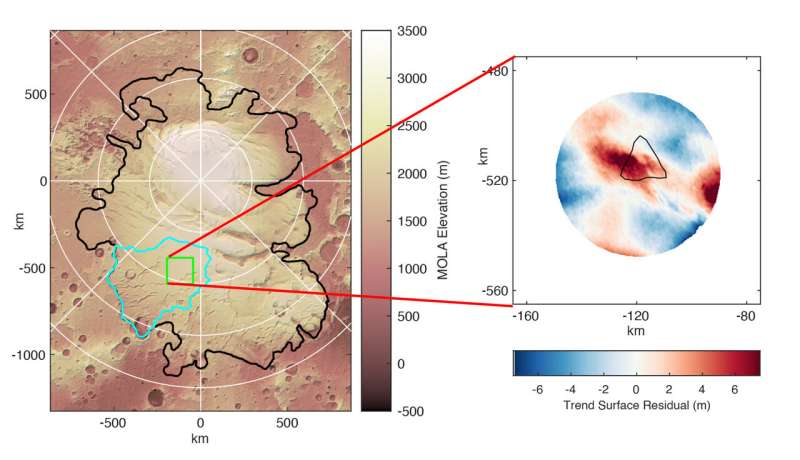
New evidence for liquid water beneath the south polar ice cap of Mars An international team of researchers has revealed new evidence for the possible existence of liquid water beneath the south polar ice cap of Mars. The researchers, led by the University of Cambridge, used spacecraft laser-altimeter measurements of the shape of the upper surface of the ice cap…more
-NYT
NASA May Let Billionaire Astronaut and SpaceX Lift Hubble Telescope NASA announced on Thursday that it and SpaceX had signed an agreement to conduct a six-month study to see if one of SpaceX’s Crew Dragon capsules could be used to raise the altitude of the Hubble Space Telescope, potentially further extending the lifetime of the 32-year-old instrument…more
-NASA
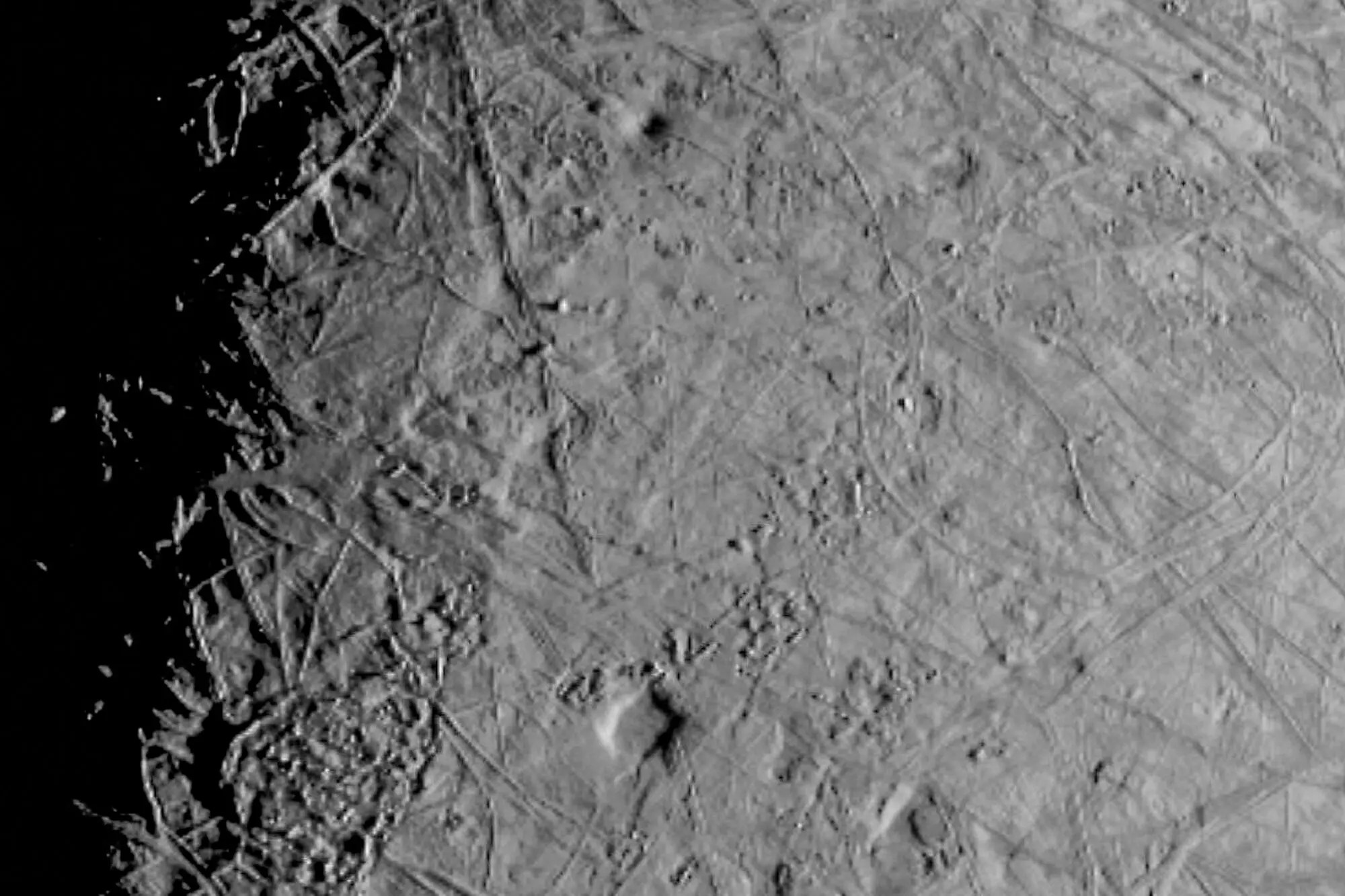
New Europa Pictures Beamed Home by NASA’s Juno Spacecraft Europa, the ice-encrusted moon of Jupiter, is still everything it’s cracked up to be. Juno, a NASA spacecraft that has been orbiting Jupiter since 2016, zipped within 219 miles of Europa’s surface early on Thursday, speeding by at more than 30,000 miles per hour…more
by Rex Parker, PhD director@princetonastronomers.org
Transition to real time and space. After two-and-a-half years gathering virtually we are coming to the last of AAAP’s monthly Zoom sessions on October 11. Beginning in November we will again hold our meeting in person at Princeton University’s Peyton Hall. The Oct 11 meeting is an important one for members to attend, as we have invited the famed Harvard astronomer Avi Loeb as guest speaker. You may recall our vigorous discussion of his provocative book “Extraterrestrial” at a meeting a year and a half ago. Avi Loeb is one of the foremost thinkers examining the data from the highly unusual extra-solar-system “asteroid” Oumuamua in the fall of 2017. He and colleagues are proposing new ways to prepare for, and instrumentally detect, objects from other star systems passing through our local neighborhood. See the article below from Program Chair Victor Davis for more information on the talk. We hope to see you at the Oct 11 meeting – let’s have a big AAAP presence to welcome Dr. Loeb for this important presentation.
Storms, rockets, and the lunar south pole observing challenge. Hurricane Ian’s rage across Florida on September 28-29 seriously threatened the Space Coast, as the core of the storm passed right over Kennedy Space Center and Cape Canaveral. NASA had wisely rolled back the massive Artemis I moon rocket and hardware into the giant vehicle assembly building, and the facilities suffered only minimal damage. A number of other rocket launches are planned for the next couple months. The Artemis rocket will now be readied for its next lunar orbit launch window, forecast Nov 12 to 27 according to reports from NASA (source, Ars Technica).
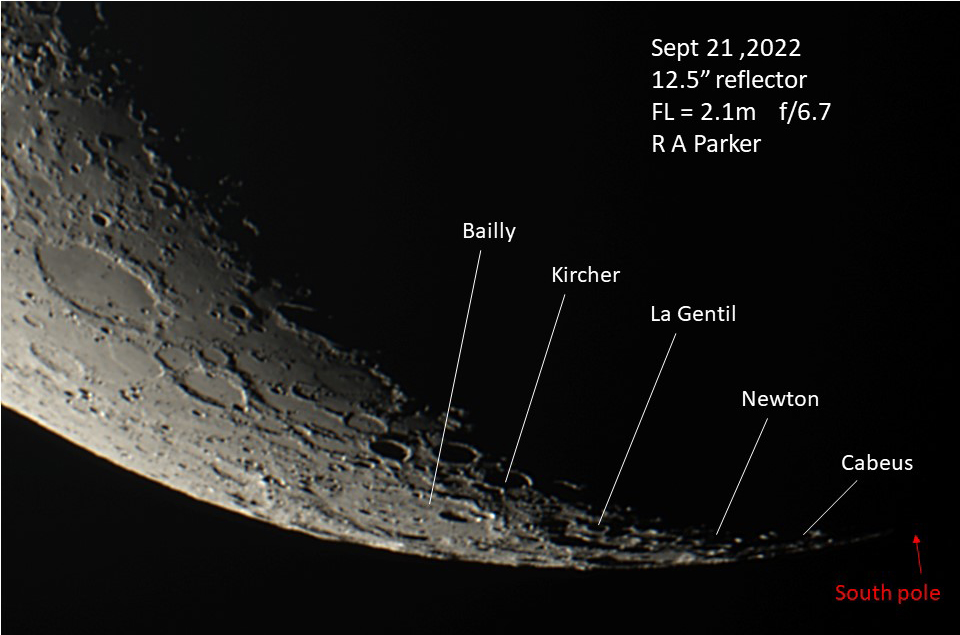
For those of you taking the lunar south pole observing challenge that I issued last month, the challenge remains right in front of us. The degree of difficulty is surprisingly high because most phases of the moon do not present the area close to the south pole to earthly observers – the pole is over the horizon. Lunar libration presents the south pole craters to our view only a couple of nights each month. See my article in last month’s Sidereal Times for more information on the south polar region, the discovery of water in that area, and why this is so important to lunar exploration. Below, I offer my best effort so far to image the south pole region. In the pre-dawn hours of Sept 21 the weather cooperated here in New Jersey, and I rose at 4am to see a beautiful crescent moon (after the last quarter) rising in the east. The images below reveal some of the near-south pole region craters, although those closest to the pole were not visible on this occasion. After studying a moon atlas, I identified several craters and concluded that the south-most features in this image are within 50-100 miles of the south pole. Looks like I’ll have to go for it again in the upcoming months. If you succeeded in the challenge, please submit your telescopic images to Sidereal Times, and send them on to me for showing at upcoming meetings.
Close but not quite there – lunar south pole region. I took these images Sept 21 with a 12.5” reflecting telescope and a ZWO ASI071MC camera. Southern craters were identified by comparing to The Virtual Moon Atlas, available free on line. Image by RAParker.
The October 2022 meeting of the AAAP will take place (virtually) on Tuesday, October 11th at 7:30 PM. (See How to Participate below for details). This meeting is open to AAAP members and the general public. Participants will be able to log in to the meeting as early as 7:00 pm to chat informally with others who log in early. We will not be using the “waiting room;” participants will enter the meeting as soon as they log in. However, you will enter the meeting space with your microphone muted. Please be aware you must unmute yourself to be heard by other participants.
For the Q&A session, you may ask your question using Zoom’s chat feature or you may unmute yourself and ask your question directly to the speaker. To address background noise issues, we are going to follow the rules in the table below regarding audio. If you are not speaking, please remember to mute yourself. You are encouraged, but not required, to turn your video on.
Featured Speaker: Abraham (Avi) Loeb
Frank B. Baird, Jr. Professor of Science
Harvard University
aloeb@cfa.harvard.edu
The Galileo Project: In Search of Technological Interstellar Objects. On October 19, 2017, astronomers using the University of Hawaii’s Pan-STARRS1 telescope discovered a highly unusual object. Its speed and trajectory indicated that it originated outside our solar system. Its elongated shape gave it an aspect ratio greater than that of any asteroid or comet observed to date. There was a lot that was odd about the object, 1l/2017 U1. It was soon named “Oumuamua,” Hawai’ian for “a messenger from afar arriving first.”
Most astronomers agreed Oumuamua was a unique and fascinating object. Harvard University Professor Avi Loeb went further. He suggested that Oumuamua could be a technological artifact of an alien civilization, cruising through our Solar System much as our own Voyager space probes are leaving it. Prof. Loeb gained notoriety and provoked no small amount of controversy when he argued in his book “Extraterrestrial” that Oumuamua could be a “technosignature” of alien life.
Prof. Loeb will discuss his views on extraterrestrial life and the recently announced “Galileo Project” searching for technological interstellar objects. He will feature content from his books “Extraterrestrial” and “Life in the Cosmos.”
Abraham (Avi) Loeb is the Frank B. Baird, Jr. Professor of Science at Harvard University. He’s the author of several bestselling books and nearly a thousand academic papers. He was a longtime member of the Institute for Advanced Study and was the longest-serving Chair of Harvard’s Department of Astronomy. He serves on many advisory committees and is currently head of the Galileo Project. In 2012, TIME magazine selected Loeb as one of the 25 most influential people in space, and in 2020 he was selected among the 14 most inspiring Israelis of the last decade.
AAAP webcast: This month’s AAAP meeting, beginning with Rex’s opening remarks and ending at the beginning of the business meeting, will be webcast live on YouTube and recorded for subsequent public access on AAAP’s YouTube channel. Be aware that your interactions during this segment, including questions to our guest speaker, may be recorded for posterity.
Join YouTube Live to listen to the speaker Prof. Avi Loeb using the link below –
This session will be recorded and saved on YouTube. Send me an email at program@princetonastronomy.org if you have any concerns
Using Zoom: While we are social distancing, the AAAP Board has chosen to use Zoom for our meetings, based on our belief that many members have already used Zoom and have found it easy to use. One of its great features is you can choose whether you want to install the software on your computer or use it within your browser.
Please make sure you have Zoom installed on your computer. You do not need a Zoom account or to create one to join the meeting. Nor are you required to use a webcam.
Please see below for the link to the meeting, or visit our website.
There is no “Unjournal Club” presentation scheduled this month. As you may know, guest speakers receive a baseball cap with the AAAP logo embroidered upon it as a “thank you” for making a presentation to us. We’re expanding the hat giveaway to members who contribute an “Unjournal Club” presentation to encourage participation.
We hope to make these short presentations a regular feature of our monthly meetings. We’d like to know what members are doing or what members are thinking about in the broad range of topics encompassed by astronomy. A brief ten-minute (or so) presentation is a good way to introduce yourself and the topics you care about to other club members. If you are interested in presenting a topic of interest, please contact either director@princetonastronomy.org or program@princetonastronomy.org.
A look ahead at future guest speakers:
November 8, 2022 Our first in-person meeting in Peyton Hall!
Michael Strauss, Chair, Princeton University Department of Astrophysics. Prof. Strauss will speak on a topic TBA. He and Bob Vanderbei will be on hand to sign copies of “Welcome to the Universe” and “Welcome to the Universe in 3D” which will be available for purchase.
December 13, 2022
Ira Polans, former Program Chair of AAAP Ira will present “Sun Dagger” film and talk about indigenous people of New Mexico. Note that this film is solely for viewing by in-person members, as copyright restrictions will not permit broadcasting it on the internet.
January 10, 2023 Virtual meeting
Alyssa Pagan, Space Telescope Science Institute Alyssa works to process the JWST images that have been leaving us sockless. She’ll talk about JWST and her work turning its data into images.
February. 2023
Jenny Greene, Princeton University Professor of Astrophysics Jenny recently wrote an article on middleweight black holes for Sky & Telescope. She will discuss the contents of her article.
March 14, 2023
Joe DePasquale, Space Telescope Science Institute Joe is Senior Data Imaging Developer in the Office of Public Outreach at the Space Telescope Science Institute. A colleague of Alyssa’s, Joe will describe his work turning JWST data into images.
April-May, 2023
TBA
June 13, 2023
Bill Murray, AAAP’s Outreach Director and staffer at NJ State Museum planetarium Bill will give his traditional planetarium show at the New Jersey State Museum in Trenton.
As always, members’ comments and suggestions are gratefully accepted and much appreciated.
The meeting was convened on Zoom by Director Rex Parker at 1930. Twenty-three people were logged on at the start. He briefly described his four agenda items:
Michael Strauss, Department Chair of Astrophysics at Princeton University, has officially invited us to hold our meetings in Peyton Hall once again. Our October speaker is remote, so our first expected return will be in November.
The piers at Simpson Observatory have been rebuilt and look as if they will last the rest of the century.
The AAAP was organized in 1962, and we have met very nearly every month since. Ideas for how to celebrate our 60th Anniversary are being sought. Send ideas to editors@princetonastronomy.org.
Rex issued a Lunar South Pole Challenge. The NASA Artemis Program is targeting the south pole due to water being discovered there, but that region is barely viewable even when the Moon librates, or wobbles upward a bit. Members are challenged to view or image Shackleton Crater and its vicinity.
Program Chair Victor Davis introduced Speaker/Member Dr. Michael DiMario and he began his talk, “Pluto Precovery and the Resurrection of Yerkes Observatory,” at 2047, with 35 people logged onto Zoom. Michael was part of a team that found Pluto on photographic plates recorded in 1909. These pre-dated its official discovery by more than two decades and this effort is credited with the earliest “precovery” of that distant dwarf planet / Kuiper Belt Object. Yerkes Observatory had been decommissioned and was headed for destruction until it was purchased from the University of Chicago by the Yerkes Future Foundation in 2020. They predict that it will take a decade to repair and renew the observatory after a century of wear and deferred maintenance, but now that historically significant site will not be lost to us forever.
Program Chair Victor Davis introduced Speaker/Member Lisa Ann Fanning and she began her talk, “Astronomical Events and Bird Behavior,” at 2021, with 36 people logged onto Zoom. Lisa has gathered and analyzed data from multiple diverse sources that show how many different species utilize features of the night sky and the Earth’s magnetic field to guide their migrations and more ordinary activities. New studies are adding evidence almost daily.
After a period of questions being directed to both speakers, with 35 people still logged onto Zoom, a 5-minute break ended at 2103.
Ivy Lane itself and the parking lots we used before the pandemic have been consumed by extensive campus construction that is expected to last years. Peyton Hall is no longer accessible from the north. The nearest parking is now the Stadium Drive Garage off Faculty Road, a fifteen-minute walk away. While that may limit participation by some, we feel we need to try. Renewing a connection to either the university or the IAS is important to maintaining our prestige. While the facilities may be better and the parking closer, our attempt to gain access to the IAS has not yet been successful. Four board members walked the route and observed that the Peyton auditorium has been reupholstered and recarpeted. Some additional research must be done to determine how we can accomplish hybrid (in-person plus Zoomed) meetings with the existing equipment. The auditorium will be unavailable to us in January because its equipment is being “brought up to campus standards.” That may help us a lot. Our speaker next month is Avi Loeb, author of the controversial book Extraterrestrial: The First Evidence of Life Beyond Earth. Since he is a professor at Harvard University, he will be addressing us via Zoom, and that is why we propose our first meeting in Peyton would be November.
Thirty-seven people contributed enough money to the Gene Ramsey Memorial Reconstruction Fund to nearly cover the cost of rebuilding the crumbling piers that support the observatory roll-off roof. Ingenious, quality work was performed by what may be the only 5-generation masonry company in the country. Member John Church was an original member along with the late Freeman Dyson, and they labored together with others to build the observatory in 1978. John shared some of his photos showing the construction, including one of Freeman wielding a shovel in a trench! Another of his photos appears in a book about Washington Crossing that he recommends to us, ISBN 978-1-5402-5167-1. We will assimilate his material into the AAAP history archives.
Director Rex Parker reissued his Lunar South Pole Challenge and described the difficulties of viewing and imaging the very bottom of the Moon. The lower left corner of the two-page star chart in Sky & Telescope magazine gives the date of the most favorable lunar libration for specific south polar features. The only listed libration for the remainder of September is Bailly Crater on the 22nd. Member Bob Vanderbei chatted links to a couple of Moon images and his very helpful lunar libration video (https://vanderbei.princeton.edu/images/NJP/LunarLibration.html).
Discussion proceeded about how to celebrate our 60th anniversary sometime this fall. We held a gala banquet at the IAS for our 50th and some say we are unlikely to be able to top or even match that event. Member Rich Sherman suggested a flashy half or full-page commemorative ad in Sky & Telescope magazine. Editor Surabhi Agarwal agreed to try to come up with such a design. Member John Church thinks he can come up with an article that S&T would publish for free. Member Tom Swords suggested a catered commemorative star party on Baldpate Mountain. The consensus was to develop all these ideas to see which ones offer the most promise. Assistant Director Larry Kane volunteered to work on a committee for this event, but no one spoke up to join him. What it seems we most need is a central contact point to encourage and coordinate the development of the various proposals.
Observatory Co-Chair Dave Skitt offered additional updates on the Observatory.
The ZWO ASI294MC Pro astronomical camera has been repaired and returned to service. With its cooler once again working, Member Tom Swords created a library of dark and bias calibration frames that can be applied to improve the quality of its images.
Recent Public Nights have helped us recover from a poor summer, offering decent viewing and gathering crowds numbering in the 30s and more. A particularly fun target this last Friday was NGC 40, a red planetary nebula.
We still seek someone to coordinate and oversee professional installation of new carpet.
Zoom participants numbered 29 through most of the meeting and dwindled to 24 as we approached 2200.
The meeting was adjourned at 2211.
Our membership currently numbers 189. Those who joined this calendar year number 48, with 22 of them joining since our June meeting. Sadly, 46 have failed to renew, so our membership total has barely changed. Renewal reminder emails are continuing to encourage members to praise what is working for them and call our attention to what we might do better. Very few respond to that request, but most still renew. We have a 65% retention rate year-to-date.
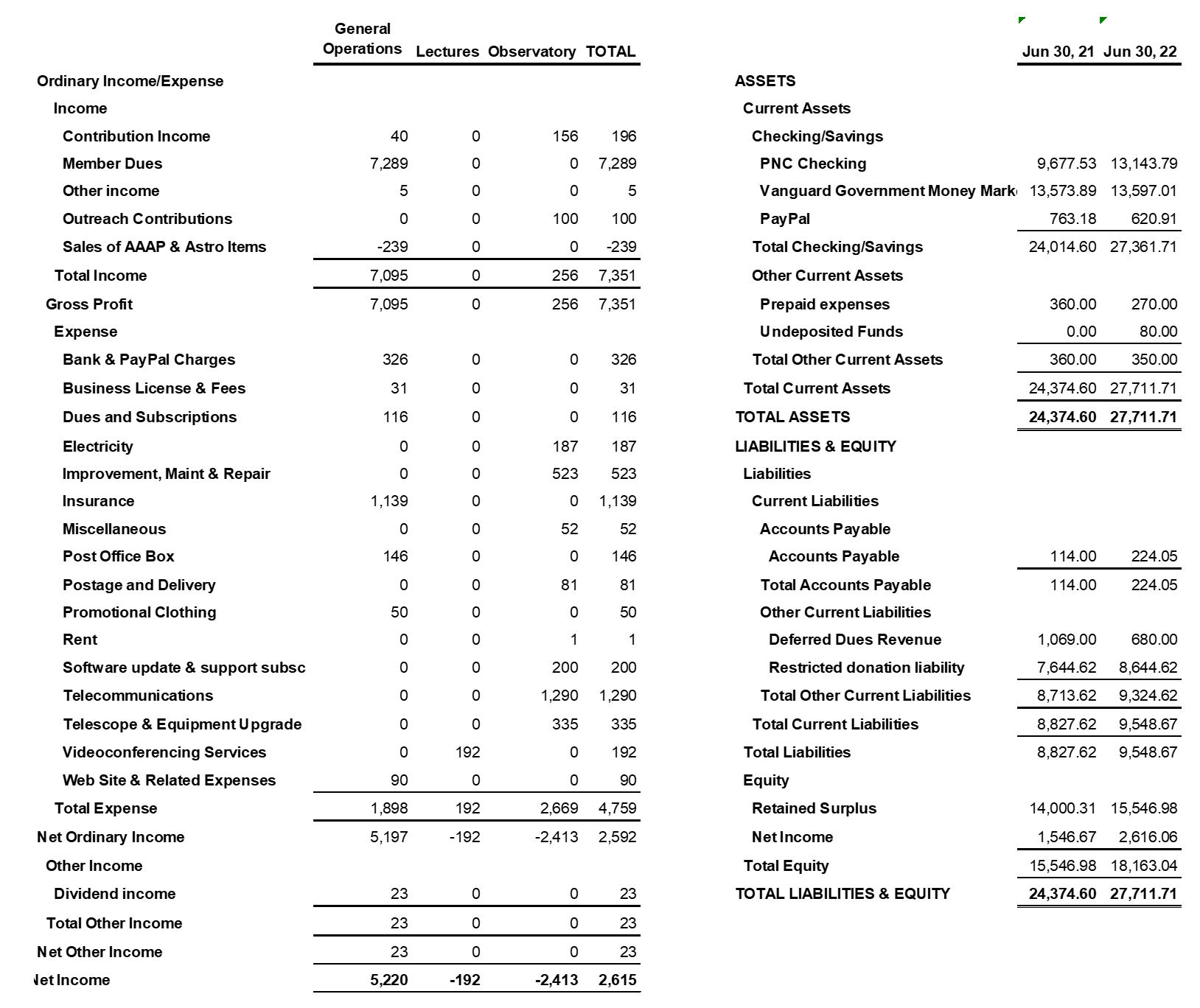
The income statement and balance sheet below show the AAAP’s financial results for the fiscal year that ended on June 30, 2022, and our financial position at the beginning and the end of the year.
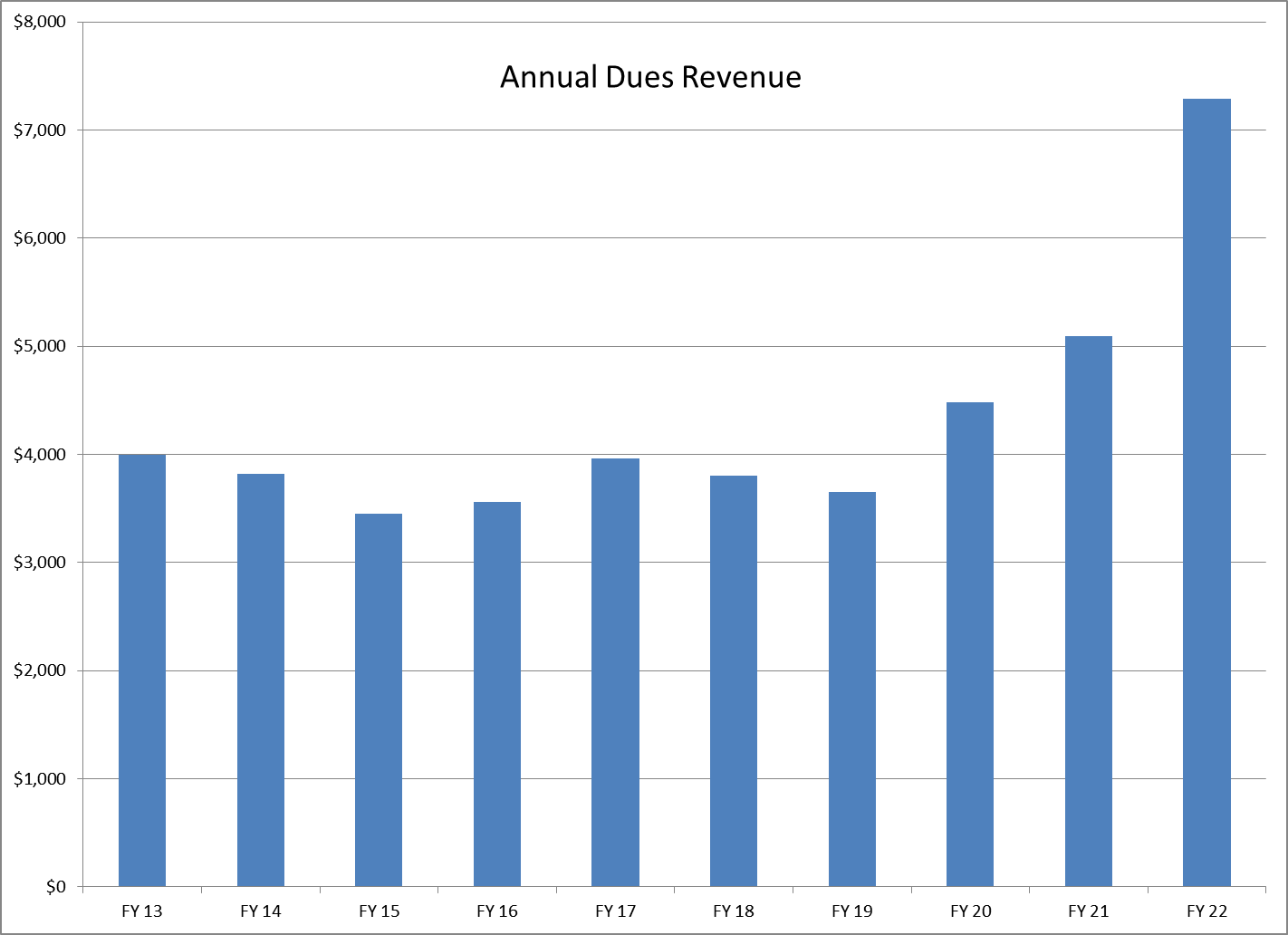
The AAAP had a $2,600 surplus for the fiscal year, driven again by substantial increase in membership. The chart below shows member dues for the past 15 years:
Dues were paid by 184 members during the fiscal year.
PayPal fees – incurred when members pay via PayPal – account for most of our banking fees and roughly equal eight members’ dues income. Payments via check to the PO box are always welcome.
Over the last two fiscal years, we had received $8,645 in contributions towards the observatory columns replacement. These receipts were not taken into income when received; instead they were held on the balance sheet until the project went forward. After the end of FY 2022, the work was completed. The total funds ultimately received covered the $9,700 cost of the masonry contractor; the AAAP covered permit costs from general funds.
Our cumulative reserves are close to $18 thousand, equaling about four years of the association’s expenses at last year’s level.
Kindly let me know if you have any questions about the report.
We recently added several new winter items (and removed some summer items) with our cool anniversary logo at our AAAP store. However, if you still want a summer item or need a custom color, please email Rich Sherman at merchandise@princetonastronomy.org.
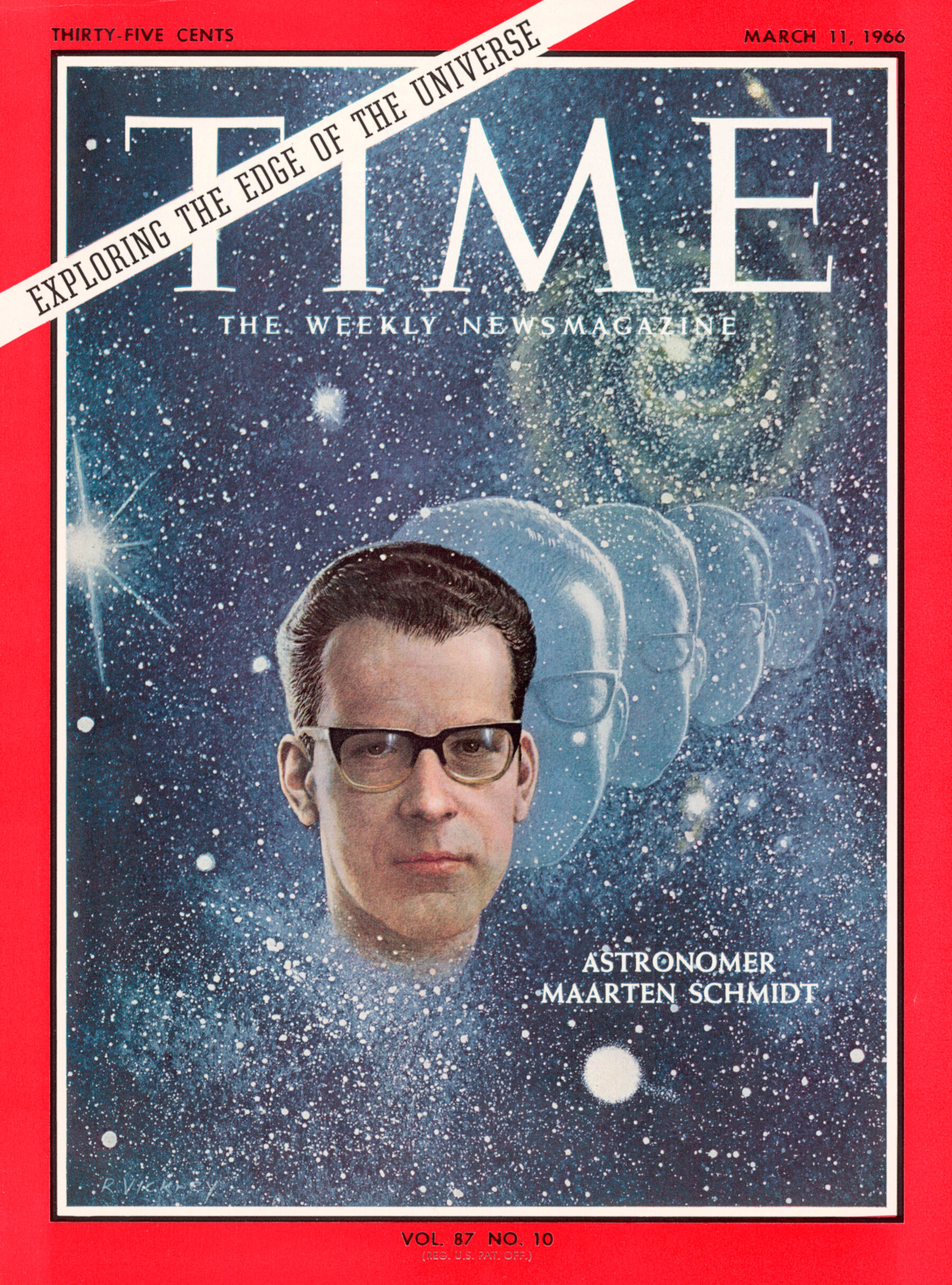
Eminent astronomer Dr. Maarten Schmidt passed away recently. His greatest discovery was an esoteric astronomical object called a Quasar. He appeared on the cover of the Time magazine in 1967 for brilliantly solving a part of the mystery. It took me a while to understand at a high level what a Quasar is. Here is my understanding of Dr. Schmidt’s work.
In the 1960s, very intense radiation at radio frequencies were received on the earth. They were detected by radio telescopes which are a bunch of antennas and radio receivers hooked up to each other. There was corresponding radiation at visible frequencies too, detected by optical telescopes, but that was too feeble. The radiation at radio frequencies did not fit the pattern of any known star within our galaxy or any from other galaxies. Dr. Schmidt found that this radiation is extremely red shifted, which means that the original source is moving away from us at very high speeds.
As Edwin Hubble found that our universe is expanding rapidly. That is the galaxies distant from us are moving away from us even faster. When radiation from such objects reaches us, it is red shifted. Meaning that a blue object moving rapidly away from us appears as a red color to us on the earth. If the speed is much more, then the radiation moves further down from red into the invisible frequencies like infrared and radio waves. Like the siren of an ambulance changes in pitch as it moves away from us.
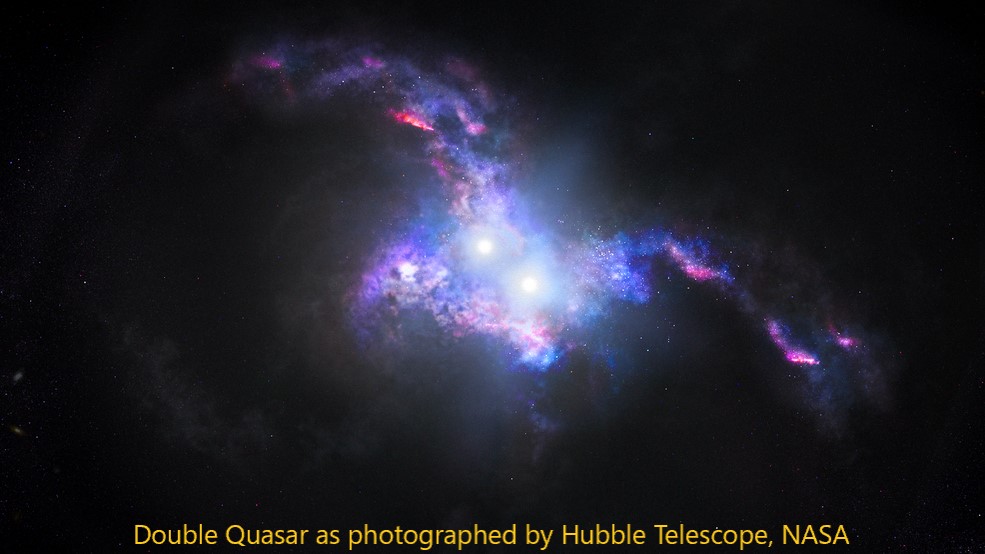
The radiation from a Quasar would have started its journey as visible light, but over the course of billions of years, it moved to radio frequencies and appeared as such to us. Since the intense radiation was at radio frequencies the source was named as a Quasar (Quasi Stellar Radio Source). The name symbolized the mysterious nature of the source from where this radiation was coming from.
Because of the extreme red shift, it was postulated that the source was very very far away from us. It is not from our galaxy or our local group or our supercluster of galaxies. It is clearly coming from extreme distances across our universe. And looking that far out into the universe means that we are looking back in time. Because radiation takes time to traverse vast distances across the universe, Quasars are from the earliest life of our universe.
A key question is how could we have had such powerful sources of radiation so early in the life of our universe. What powered their luminosity? Now it is agreed that quasars are powered by black holes which exist in the middle of distant galaxies. Super massive black holes are known to exist in the middle of every galaxy. But how did black holes form in such early stages of the universe? Stars were just forming, so there could not be corpses of stars. Latest theory is that huge masses of cloud and dust directly collapsed into black holes, instead of going through the star formation process and their subsequent deaths.
As matter falls into a central black hole, it grows bigger and bigger. Emission of radiation resulting from a star which ventures close enough to a black hole, is the most likely explanation for a quasar.
Quasars were much more common in the early universe – about 2 and 3 billion years after the Big Bang. Accordingly, most distant quasars are from 8-10 billion years ago. Do they exist today ? We will not know for another 8-10 billion years. There will always be this lag of when an event occurs in the distant parts of the universe and when we get to observe it.
We do not see any quasars closer to home. If we did, it would outshine our sun hands down. Something like a cosmic fireworks called supernova does not happen anywhere in our neighborhood. If it does, we would be history in no time.
Dr. Schmidt was a giant who helped us peer into the distant stretches of our universe and helped us go back so much in time when the universe was a lot younger. My kudos to him for his great achievement. And the quest for the exotic astronomical objects continues.
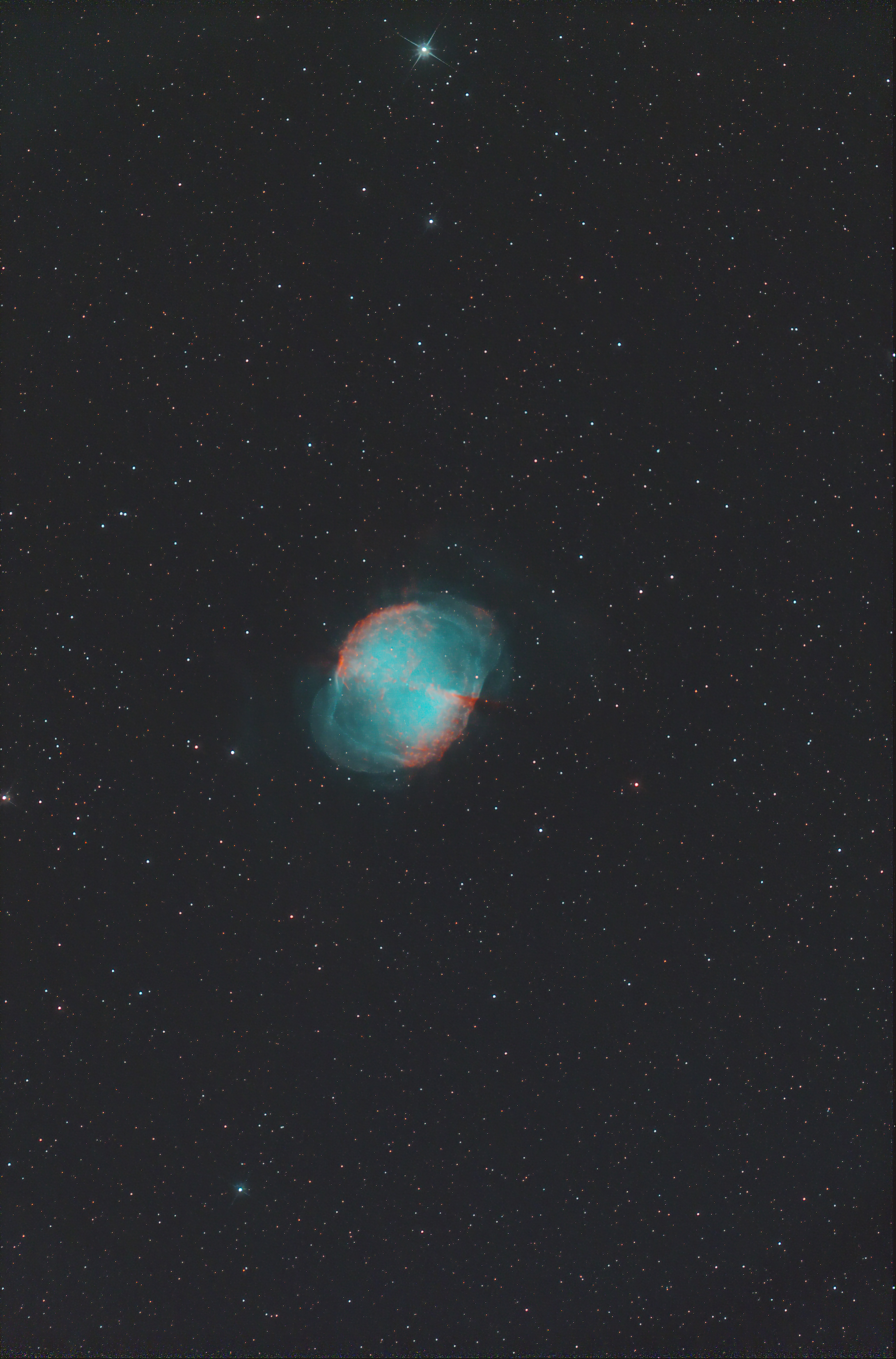
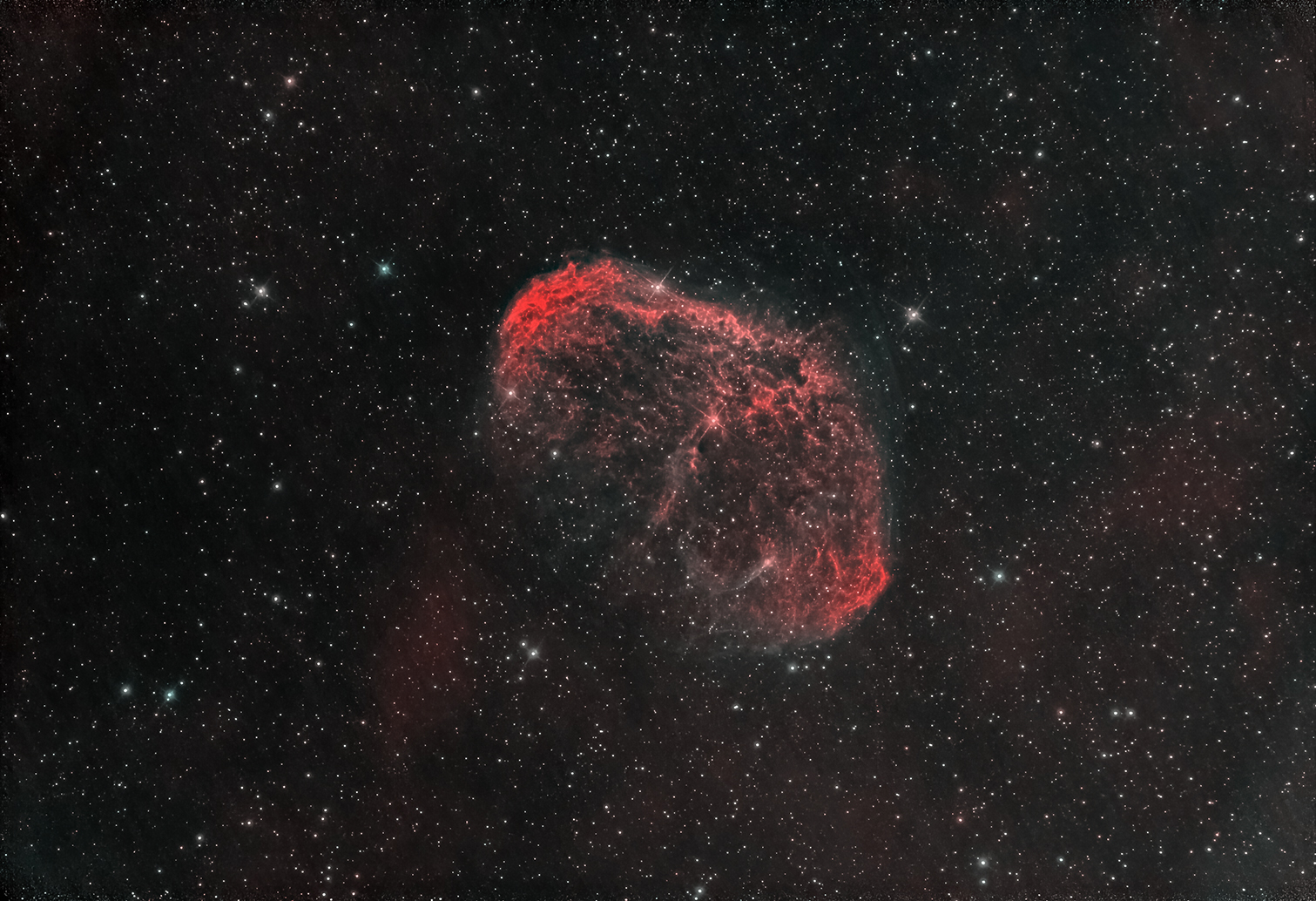
Bob Vanderbei did it again! Take a look at his haunting pictures of the Dumbbell and the Crescent Nebulae below. Prof. Bob Vanderbei and Prof. Michael Strauss will be on hand at the November meeting to sign copies of “Welcome to the Universe” and “Welcome to the Universe in 3D” which will be available for purchase.
Sept. 15, 2022. ZWO ASI2400MC-Pro with L-Extreme filter on 10″ RCOS at f/9. Total Exposure time: 80 minutes (unguided 30-second subexposures). For more pictures and information, click here21:09-22:18 EDT Aug. 7 2016, 20:40-23:21 EDT Aug. 26 2016, 20:37-23:23 EDT Aug. 27 2016 Starlight Express Trius SX-694 on 10″ RCOS Two frame mosaic North (top) frame: Hα = 120 mins, OIII = 114 mins, South (bottom) frame: Hα = 78 mins, OIII = 78 mins, (in 6 min PHD2 guided increments). For more pictures and information, click here
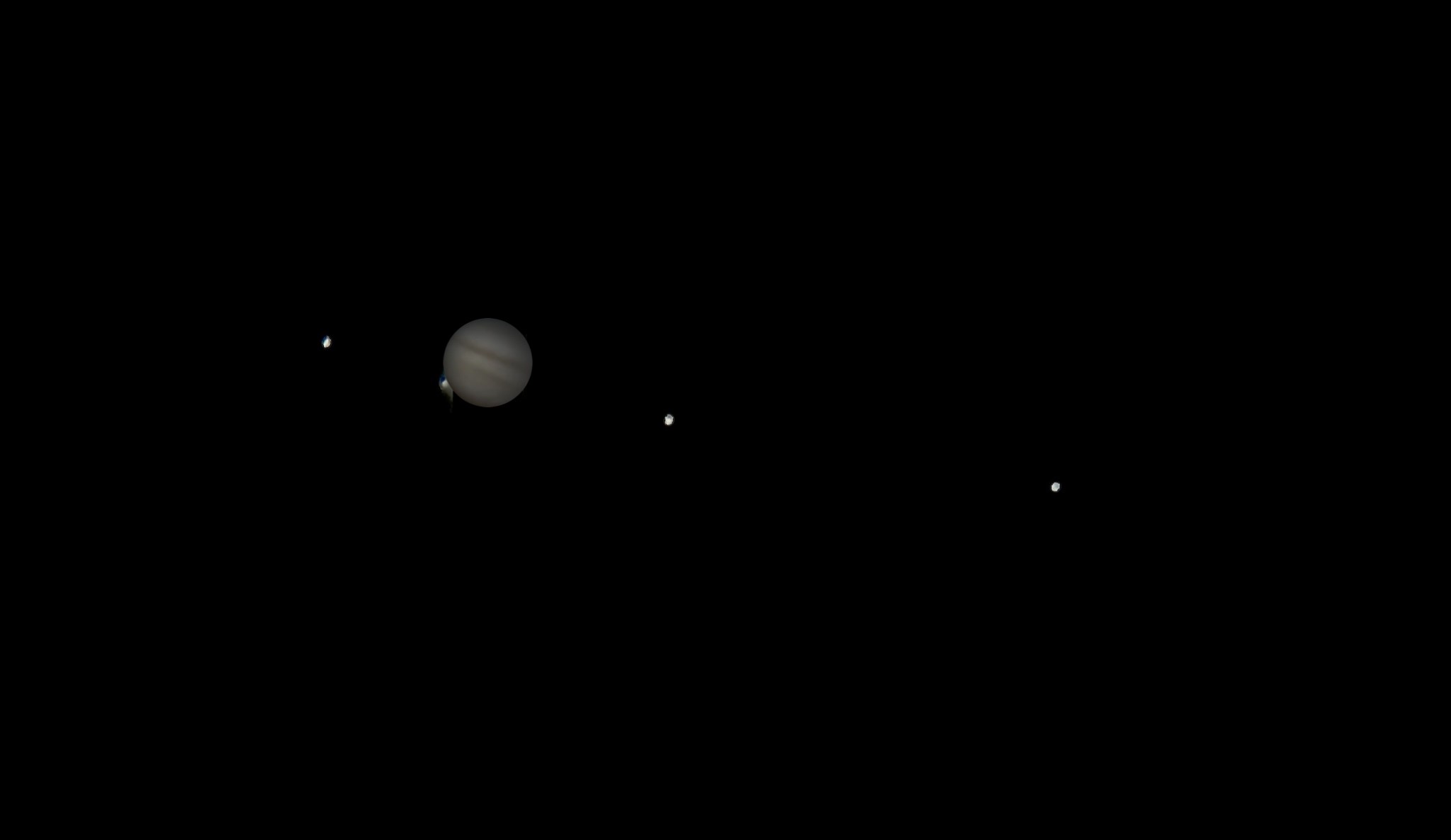
Recently, I had some success in photographing Jupiter. Two single photos were used- one to record positioning of the moons and one to capture detail of Jupiter. I like the challenge of trying to capture detail with a simple phone camera.






 Featured Speaker: Abraham (Avi) Loeb






 Amateur Astronomers Association of Princeton