
by Victor Davis, Program Chair
Welcome to the new year at Peyton Hall
The January, 2024 meeting of the AAAP will take place in Peyton Hall on the campus of Princeton University on Tuesday, January 9th at 7:30 PM. As usual, the meeting is open to AAAP members and the public. Participants can join the meeting in-person at Peyton Hall or log in to the Zoom session as early as 7:00 pm to chat informally before the meeting begins. This evening’s guest speaker is Lia Medeiros, PhD, a Visitor in the School of Natural Sciences at the Institute for Advanced Study (IAS). Dr. Medeiros is a computational high-energy astrophysicist interested in using extreme/compact astrophysical objects and phenomena to test fundamental theories of physics. She will discuss her work as a member of the Event Horizon Telescope Collaboration (EHTC).
Options for Attending the December Meeting
You may choose to attend the meeting in person or participate via Zoom or YouTube as we’ve been doing for the past few years. (See How to Participate below for details). Due to security concerns, if you log in before the host has set up internet connectivity in Peyton Hall, you may need to wait in the Waiting Room for a few minutes until the host is prepared to admit you into the meeting. You’ll need to unmute yourself to make comments or ask questions. It’s polite, though not required, for you to enable your camera so other participants can see you.
Meet the Speaker Dinner
The club will host a “Meet the Speaker” dinner at Winberie’s Bar and Restaurant, 1 Palmer Square, Princeton, NJ, just across the street from the campus of Princeton Universitiy. The reservation is prior to the meeting on Jan. 9 at 5:45 pm. Please contact the Program Chair if you plan to attend.
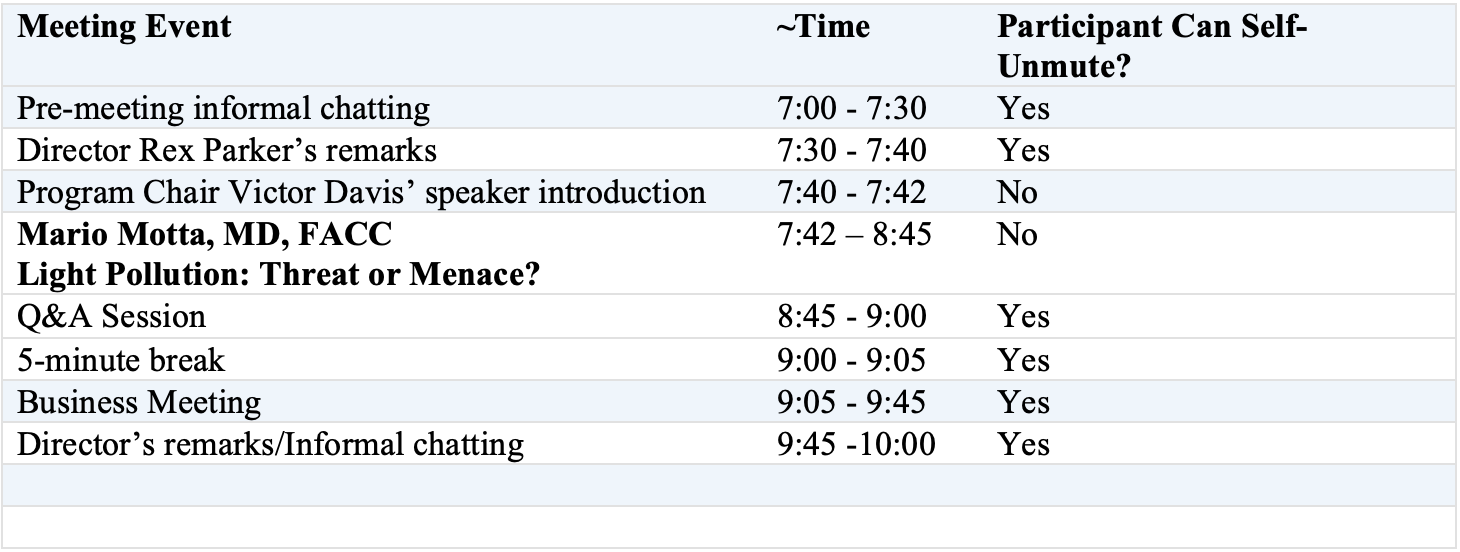
Here’s the anticipated agenda for January, 2024’s monthly meeting of the AAAP:

Getting to Peyton Hall
The parking lots across the street (Ivy Lane) from Peyton Hall are now construction sites, unavailable for parking. We’ve been advised by the administration of the astrophysics department that we should park in the new enclosed parking garage off Fitzrandolph street and walk around the stadium and athletic fields. Here’s a map of the campus and walking routes from the parking garage to Peyton Hall. The map shows the recently completed East Garage. Not shown is an access road Sweet Gum that connects from Faculty Road to an entrance at the lower left corner of the garage. Stadium Road connects from Fitzrandolph Road to another entrance at the opposite corner (and higher level) of the garage. It’s about a 10-15 minute walk from the parking garage to Peyton Hall.


Featured Speaker:
Lia Medeiros, PhD,
lia@ias.edu
“A Sharper Look at the M87 Black Hole with PRIMO”
A Sharper Look at the M87 Black Hole with PRIMO The Event Horizon Telescope (EHT) is a very long baseline interferometer incorporating several radio telescopes spread all over the world. The EHT performed its first observations in early 2017, and the first image of a black hole (at the center of the nearby galaxy M87) were published on April 10th, 2020. The sparse interferometric coverage of the EHT makes reconstruction of black hole images challenging. PRIMO is a new algorithm for image reconstruction that builds principle components from high-fidelity general relativistic, magnetohydrodynamic (GRMHD) simulations of low-luminosity accretion flows. This allows researchers to reconstruct images that are both consistent with the interferometric data and that live in the space spanned by the simulations. PRIMO can efficiently and accurately reconstruct simulated EHT data sets for several simulated images, even when the simulations are significantly different from those in the training set. PRIMO is more specific than fully general reconstruction algorithms, but richer and more flexible than other parametric modeling techniques. Dr. Medeiros will discuss the algorithm itself, its application to synthetic data, and show a new image of M87 published in April 2023.
Lia Medeiros, PhD Dr. Medeiros grew up in Brazil and a few years in Cambridge, UK. She completed her undergraduate education in Physics and Astrophysics from UCAL-Berkeley and her Masters and PhD in Physics at UCAL Santa Barbara. She’s currently an Einstein Fellow in the NASA Hubble Fellowship Program at Princeton University. She was a member of the Institute for Advanced Study (IAS) from 2019-2023 and an NSF Astronomy and Astrophysics Postdoctoral Fellow 2019-2022. After completing her classes in Santa Barbara, Dr. Medeiros took advantage of the flexibility allowed by an NSF Graduate Research Fellowship and spent three years at the Steward Observatory at the University of Arizona and one year at the Black Hole Initiative at Harvard.
She’s lectured to academic and public audiences in both Portuguese and English. She loves horseback riding, practicing aerial silks, salsa dancing, and almost any type of art, especially ceramics and drawing.
How to Participate
Zoom
Join Zoom Meeting
https://us06web.zoom.us/j/85774324328?pwd=eFyEiXB9fpsT7Kh2o8tZxfRpxFEYVh.1
AAAP webcast: This month’s AAAP meeting, beginning with Rex’s opening remarks and ending at the beginning of the business meeting, will be webcast live on YouTube and recorded for subsequent public access on AAAP’s YouTube channel. Be aware that your interactions during this segment, including questions to our guest speaker, may be recorded for posterity.
Join YouTube Live to listen to the speaker using the link below –


A look ahead at future guest speakers:
| Date | Featured Speaker | Topic | |
| February 13 2024 | Prof. David John Helfand Columbia University djh@astro.columbia.edu 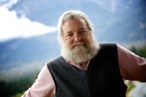 | The Universal Timekeepers: Reconstructing History Atom by Atom By utilizing the basic building blocks of matter as imperturbable little clocks, we are now able to reconstruct in quantitative detail a remarkable range of human and natural events. From detecting art forgeries to dating archeological sites, and from laying out a detailed history of human diet and the Earth’s climate to revealing the events surrounding the origin of life, of the Solar System and of the Universe itself, atoms provide us with a precise chronology from the beginning of time to the moment humans emerge to contemplate such questions. Copies of Prof. Helfand’s book will be for sale and he’ll be available to sign them. | |
| March 12 2024 | Erika Hoffman Graduate student, University of Maryland ebhoff@umd.edu | Erika will describe her research using high-resolution x-ray spectroscopy to investigate ionized outflows from active galactic nuclei (AGNs). Suggested by Bill Thomas. | |
| April 9 2024 | Eclipse Observations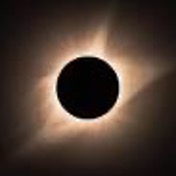 | Since this meeting will take place the day after the Total Solar Eclipse of 08 April 2024, and many members will be out of town or returning from their trips, I’m suggesting that we host an online roundup of eclipse observations, with members (and perhaps others) Zooming in to share their experiences. | |
| May 14 2024 | Dr. Tea Temim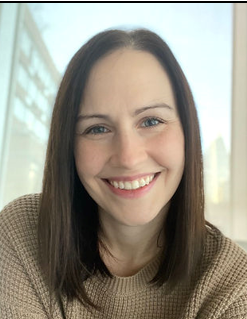 Research Astronomer, Princeton University Department of Astrophysics | Dr. Temim will describe her research using JWST imagery to study supernova remnants. Suggested by Gene Allen. temim@astro.princeton.edu | |
| June 11 2024 | NJ State Museum planetarium’s Bill Murray, and Jacob Hamer, Assistant Curator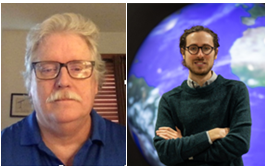 | AAAP’s traditional annual pilgrimage to the NJ State Museum planetarium in Trenton, where members will experience a presentation and a preview of the planetarium’s latest sky show. |
As always, members’ comments and suggestions are gratefully accepted and much appreciated.
victor.davis@verizon.net
program@princetonastronomy.org
(908) 581-1780 cell








 Amateur Astronomers Association of Princeton