RIP John Miller

John Miller Remembered

by Robert J. Vanderbei

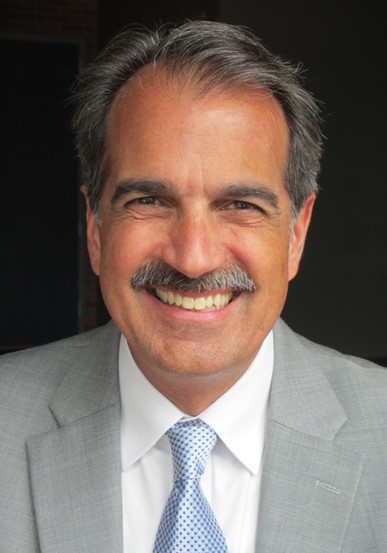
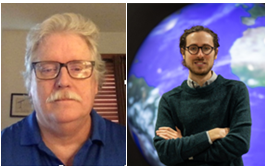
I am very saddened to hear that John Miller is no longer with us.  I met him back in 1999 when I first got started in astronomy and joined the AAAP.  He and I quickly became good friends.  Not only did we share an interest in astronomy, but we also both liked to play tennis and the two of us hit balls together many times back in the early 2000’s.  

As I recall, it was in 2005 when John was diagnosed with a rare blood cancer.  And, his diagnosis was only a month or two after John Bahcall was diagnosed with the same illness.   For those of you who don’t know (or remember), John Bahcall was the Chair of the Astrophysics Department at the Institute for Advanced Study here in Princeton.  And, his wife, Neta was, and still is, an active faculty member in the Astrophysics Department here at Princeton University.  

Anyway, both John’s were told that they would probably pass away less than a year after the diagnosis.  John Bahcall did succumb to the cancer only months after being diagnosed.  John Miller luckily and amazingly got to be with us for almost twenty more years.  So, I’m very sad that he’s no longer with us but I’m also very happy that we got to be with him many more years than we expected.  He was a great person and I’m glad that I got to be one of his friends.

Link to an article that John wrote for Sidereal Times.
https://princetonastronomy.com/2020/05/01/when-how-and-why-i-became-interested-in-astronomy/

John, you will be missed.

by Gene Allen

After I had been attending the meetings of the Amateur Astronomers Association of Princeton for a few months, I found myself asking about “that grump who sits up toward the back of the auditorium and says ‘no’ to just everything.” With a chuckle, the name came back, “John Miller.” I was informed that while highly opinionated, he is intensely passionate about astronomy, science and the club, and he has been a vital force within the organization for many decades.

Some months later John and I became acquainted on a public night at the observatory. Aviation provided additional commonality, since he had earned his private license some years prior and I earned his respect, having completed an aviation career between the Air Force and American Airlines. I was impressed with his enthusiasm and the richness of his knowledge, experience, and dedication. He was on a first name basis with many of the Princeton astrophysics faculty and claimed the “special privilege” of asking questions when auditing their courses. His campaign to delete “Amateur” from our name failed to generate sufficient momentum to overcome more than a half century of history on its first round, but I am confident more rounds would have been launched.

John’s friendship felt like an honor to me. He would call me now and then, asking if I had time for a quick question. He would open with a query about thrust reversers or some aspect of airline operation, or maybe share some event that caused him frustration or irritation. We would invariably end up going from topic to topic for over an hour. I knew he lived alone and struggled against numerous severe health issues, so I was eager to provide a cheerful and respectful ear. I always gave him however much time he wanted, and when my wife heard his voice on speaker, she would smile and roll her eyes, knowing I was indisposed for an extended period.

Recently, John had requested my assistance in creating Excel graphs of some of his medical test data. He felt the doctors were inadequately monitoring trends and wanted to see the longitudinal data for himself. I offered to set them up from data he sent or go to his home and do it with him, but he never got far enough out from under his latest health challenges. He apologized to me more than once, of all things, for putting off that project.

We have all been aware that he has been living on borrowed time, but news of his passing was surprisingly painful. He has left a far bigger hole in my personal life than I would have expected. I truly enjoyed every conversation I had with him, and I will miss them. I had never seen the video of John pitching membership in the AAAP, and I will long cherish it. Thank you so much for that, Richard Sherman.

Link to the video that Rich did with John in 2020:

John’s obituary provided by his friend Vincent DaGrosa.
https://www.lestermemorialhome.com/obituary/john-miller


Posted in December 2023, Sidereal Times | Tagged , | Leave a comment

Book Reviews

by Richard Sherman

Astrophysics for People in A Hurry by Neil deGrasse Tyson
Published 2017
Grade: A
Hardback $9.99 on Amazon
224 pages

Okay, so it’s not a new book but with the holidays right around the corner “Astrophysics for People in a Hurry” would make a great gift for your family and friends who wonder why you are so interested in the night sky. It is well-suited for the beginner to intermediate, easy to read, and does a solid job on all the topics. It has 12 chapters, and with 224 pages you might think it is long, but the hardback measures only 4.75” x 7.5” so it is a quick read. There are no images in the book, but that is certainly one of the reasons the hardback costs less than $10. There are lots of interesting details throughout. For example, Chapter 8, “On Being Round” discusses the universe’s preferred geometric shape of the sphere. Dr. Tyson has developed a reputation for interpreting astronomy and astrophysics for the layman and this book is a perfect example of what he does well. 

The One Thing You Need to Know by Marcus Chown
Published 2023
Grade: A-
Hardback $22.14 on Amazon
256 pages

This is not an astronomy nor astrophysics book, but one that addresses a variety of scientific topics. Fortunately for us, it delves into many things we care about, like quantum theory, special relativity, general relativity, black holes, and the Big Bang to name a few. There are lots of other interesting topics in the 21 chapters, such as plate tectonics and evolution. The chapters are short and concise, and Mr. Crown tries to boil all the concepts down to one basic idea—much like that high school English teacher who required a clear topic sentence in each paragraph. Of course, these concepts are complex and it is quite a challenge to know where to stop the discussion. I particularly enjoyed the final chapter, “The Big Bang” that reminds us of the three reasons it remains a theory and not science. I would put this comfortably in the “intermediate” category. Club members with Ph.D.’s in scientific fields may find this book too basic, but I think the rest of us can appreciate its breadth and clarity. 

Posted in December 2023, October 2023, Sidereal Times | Tagged , , , , , | Leave a comment

First light from the Dark Universe

by Prasad Ganti

Euclid is a space based telescope launched by ESA (European Space Agency) in July 2023. Since then it has traveled to its home at the L2 Lagrangian point in space about a million miles from Earth. And sent back first images of what it has seen. Whenever a new space based observation mission is launched, I am curious to find out how it is different from other missions in the past. 

Euclid was launched on SpaceX’s workhorse rocket Falcon 9 from Kennedy Space Center in Florida (closer to my home). Why would ESA launch from the US ? ESA’s Arianne 6 rocket was not ready at that time while Arianne 5 was retired. Due to the ongoing Ukrainian war, Russian launch options were not feasible either. Since then Euclid has traveled to the L2 Lagrangian point on the Sun-Earth axis, away from Earth and Sun. It is the same parking lot where the James Webb Space Telescope is also positioned. Balanced by the gravitational pull of the Earth and the Sun, the Telescope consumes minimal energy and its fuel is expected to last for six years. The picture shown below, courtesy NASA shows the various Lagrangian points. Though not drawn to scale, it illustrates the concept well.

Euclid’s mission is to look at large swaths of sky and produce a survey of all the galaxies and their red shifts in the form of a 3D map. The distribution of the galaxies shows how much dark mass is around. While dark matter cannot be seen, its effect can be felt. While the red shift of the galaxies, which measures how fast the galaxies are receding from each other, measures the dark energy. Unlike the narrowly focused telescopes like James Webb, it will not focus on any individual galaxy or any other object. But would be observing and constructing a panoramic view of the universe dominated by dark matter and dark energy. The sharp pictures produced would be built from 600 million pixels each. 

Euclid will observe galaxies which have dark matter in front of them. Any big lump of matter sitting between us and the object, creates a distorted view of the object behind because light bends in the presence of a gravitational field. This concept is known as gravitational lensing. Regular gravitational lensing causes arcs, rings and multiple images of the objects behind. When dark matter is in front, it produces a weak gravitational lensing instead, It helps us study the dark matter by looking at the images.

Another set of observations would involve Baryonic Acoustic Oscillations (BAO) which are remnants of the Cosmic Microwave Background (CMB) radiation. The structure of the universe shows clustering of galaxies in pairs and separated by some distance. This distance is related to the sound waves in plasma in the early universe. Plasma represents the ancient cosmic soup consisting of ions. The BAO is related to these sound waves. The BAO would give some clues about the universe’s expansion and the strength of dark energy at different times during the universe’s lifetime.

Coming to the first light received by Euclid, is a galaxy nicknamed the “Hidden Galaxy” closer to our Earth. Given below is the picture courtesy ESA. It looks like an ordinary picture taken by any other telescope. The galaxy is located behind our galaxy, as viewed from edge on. We do not have a ringside view of this galaxy. Instead the galaxy is behind a mountain of dust and gas which block our view. Euclid’s piercing vision made this image possible. And this is just the beginning.

The Greek mathematician Euclid is considered as the father of geometry. He lived in Alexandria about twenty three hundred years ago. The Euclid mission will map the geometry of the universe. We will have to wait for six years to see a comprehensive 3D map of our dark universe. I am waiting to get this poster to be hung in my home.

Posted in December 2023, October 2023, Sidereal Times | Tagged , , , , | Leave a comment

Snippets

compiled by Arlene & David Kaplan

-NASA

How NASA’s Roman Space Telescope Will Chronicle the Active Cosmos NASA’s Nancy Grace Roman Space Telescope will pair space-based observations with a broad field of view to unveil the dynamic cosmos in ways that have never been possible before. “Roman will work in tandem with NASA observatories such as the James Webb Space Telescope and Chandra X-ray Observatory, which are designed…more

-scitechdaily
-phys.org

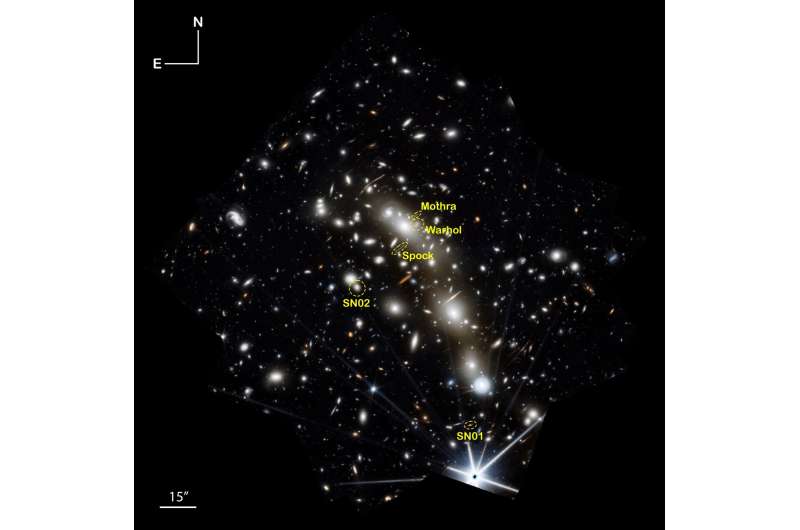
Scientists find 14 new transient objects in space by peering through the ‘Christmas Tree Galaxy Cluster’ An international team of scientists, led by University of Missouri’s Haojing Yan, used NASA’s James Webb Space Telescope (JWST) to discover 14 new transient objects during their time-lapse study of galaxy cluster MACS0416—located about 4.3 billion light years from Earth—which they’ve dubbed “The Christmas Tree Galaxy Cluster.”…more

-skyandtelescope

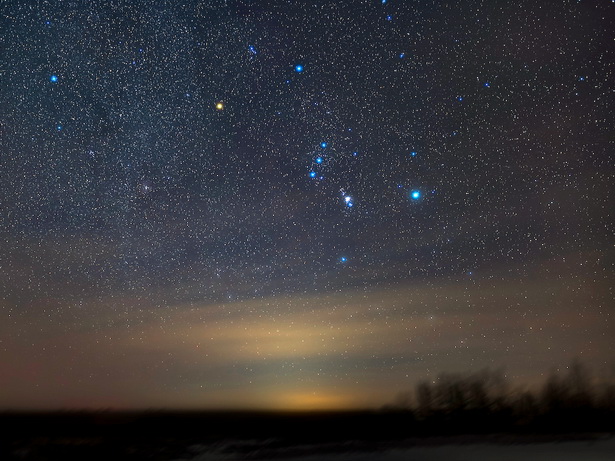
Asteroid will cover Betelgeuse, may reveal its visible surface Astronomers are gearing up for an unusual celestial event: an asteroid’s occultation, or total covering, of an iconic star. Imagine your favorite constellation without one of its brightest stars. For a brief moment on December 12th, this may happen to Orion, at least for viewers in a narrow stretch from central Asia and southern Europe to Florida and Mexico….more

-sciencealaert.com

Dozens Of Massive ‘Runaway’ Stars Found Fleeing The Milky Way The Milky Way can’t hold onto all of its stars. Some of them get ejected into intergalactic space and spend their lives on an uncertain journey. A team of astronomers took a closer look at the most massive of these runaway stars to see if they could find out how they get ejected….more

-phys.com

One step closer to unveiling dark matter with ARRAKIHS The ARRAKIHS consortium, for which EPFL has the science lead, has just successfully passed the mission definition review of the project, a very important first milestone towards full completion of the mission preparation. ARRAKIHS is a satellite selected by ESA to address the nature of dark matter, to be launched in 2030…more

-debrief.org

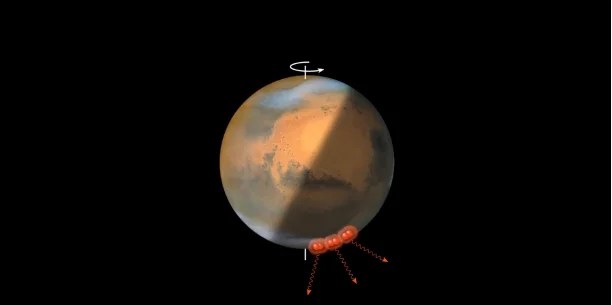
European satellite spots mysterious glow coming from Mars A European Space Agency satellite has detected a mysterious glow coming from Mars. Measured in the visible spectrum with the NOMAD-UVIS instrument on board the European Space Agency (ESA) Trace Gas Orbiter (TGO) satellite, the unexpected glow emanates from the night side of Mars and was observed in the planet’s upper atmosphere…more

-space.com

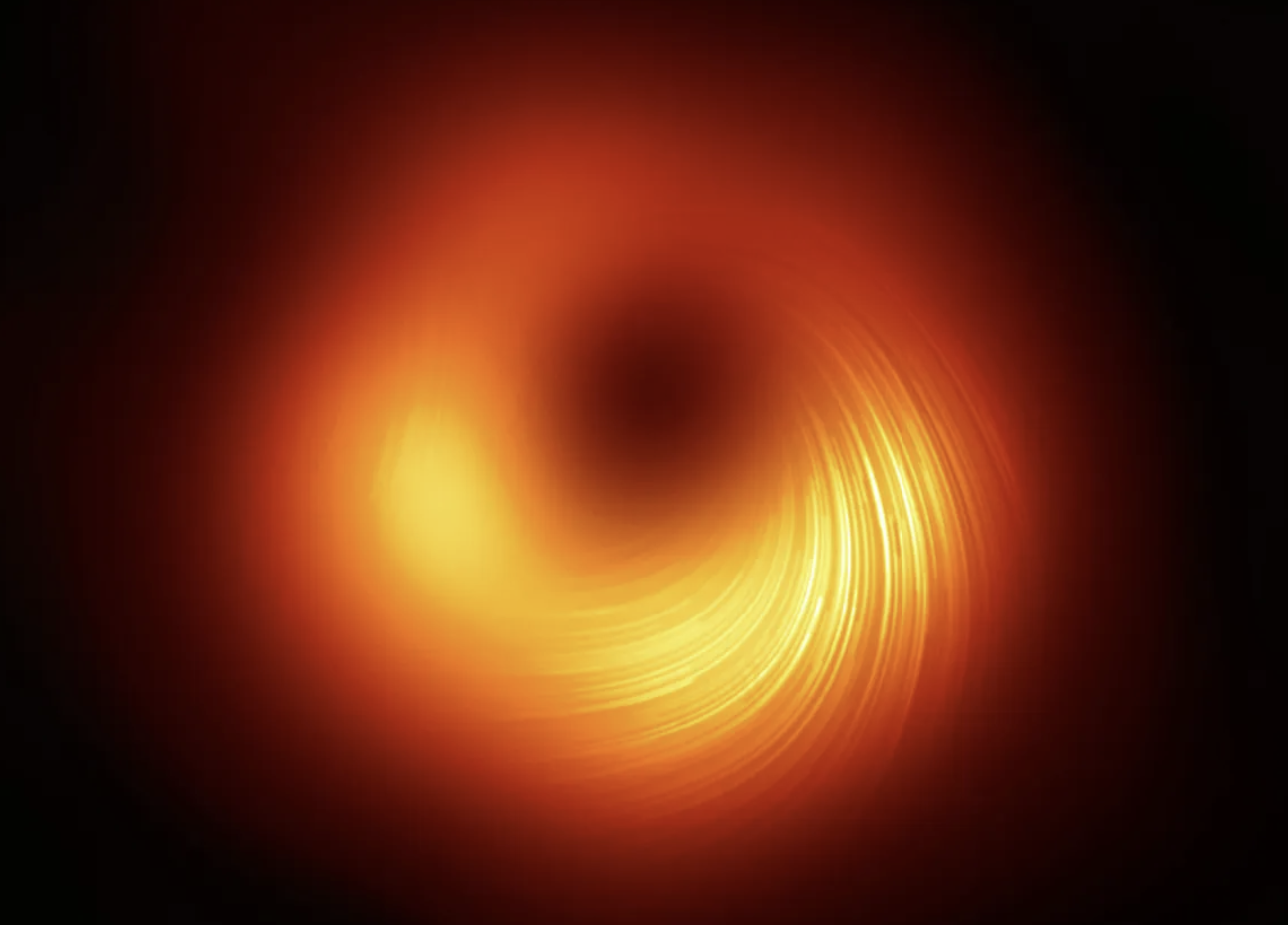
1st black hole ever imaged by humans has twisted magnetic fields and scientists are thrilled Spiraling light at the edge of a distant supermassive black hole could help matter escape from being consumed by this cosmic titan. The supermassive black hole of M87 —  also known as M87* —  has a mass equal to around 6.5 billion suns. It especially came to the public’s attention in 2019 when an image of M87*, captured by the Event Horizon Telescope (EHT)…more

-space.com

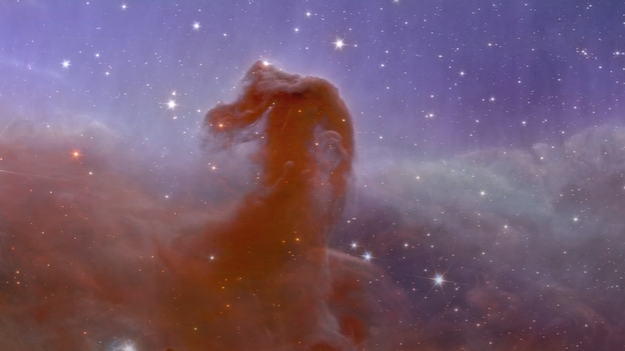
Euclid ‘dark universe’ telescope captures 1st full-color views of the cosmos (images) On Tuesday (Nov. 7), astronomers hailed the Euclid telescope’s ability to capture stunning intricacies of the universe in remarkably few hours as they revealed the mission’s first portfolio of full-color images. “We have never seen astronomical images like this before, containing so much detail,” René Laureijs, Euclid project scientist, said in a statement…more

-NYT

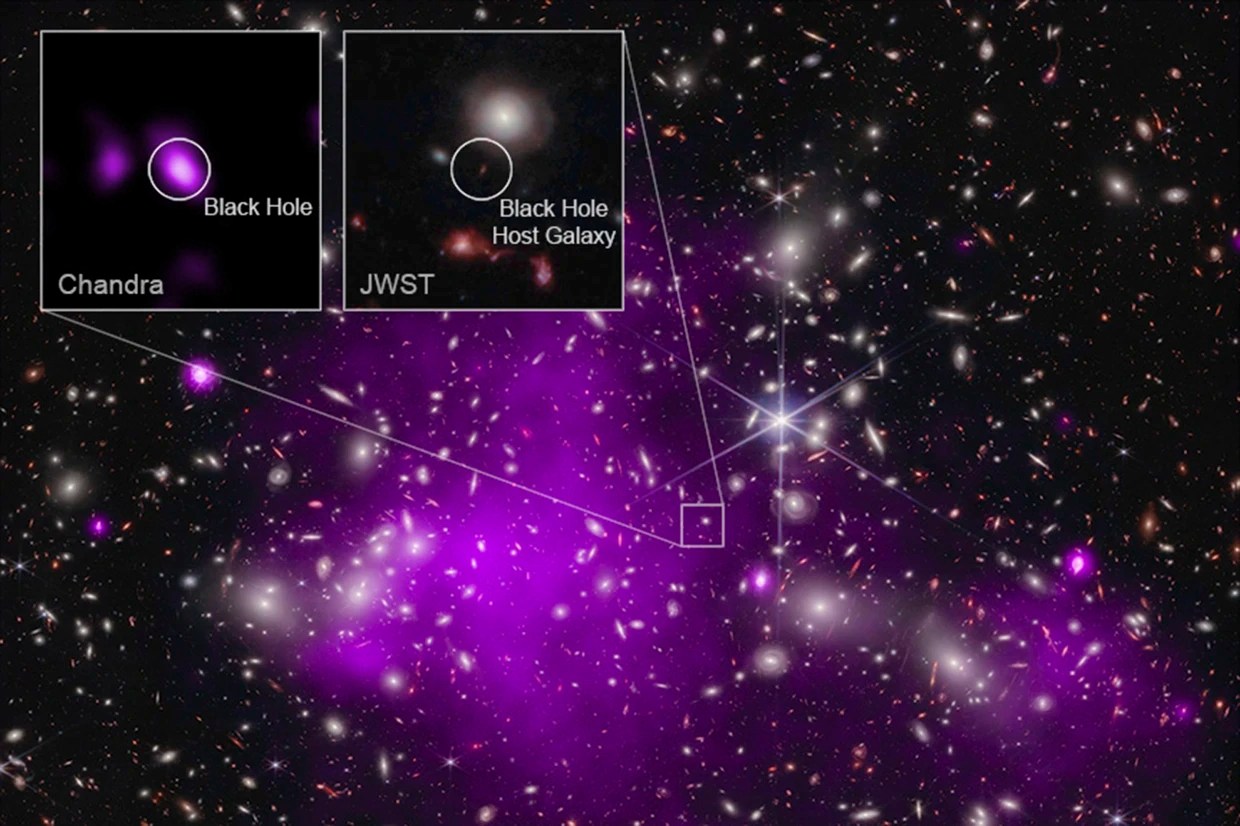
Oldest black hole discovered dating to 470 million years after the Big Bang Scientists have discovered the oldest black hole yet, a cosmic beast formed a mere 470 million years after the Big Bang. The findings, published Monday, confirm what until now were theories that supermassive black holes existed at the dawn of the universe…more

Posted in December 2023, Sidereal Times | Tagged , | Leave a comment

From The Director

Captain John Smith and Thermodynamics

by John Church, PhD, Former Director AAAP

After various adventures in Europe and Africa, Captain John Smith helped found Jamestown in Virginia in 1607.   He also suggested the name “New England” for the northeastern part of our country after having explored its coast.  Not many are aware, however, that according to one story he was an early proponent of the first and second laws of thermodynamics.

By way of background, there was an alliance of the original inhabitants of Tidewater Virginia, headed by Chief Powhatan.  Captain Smith was visiting Powhatan when the chief concluded that Smith was a major problem.  Powhatan’s daughter Pocahontas acted as interpreter for what then transpired.

Powhatan:  Captain Smith, you and your companions have invaded our land.  Not only that, but your firearms make loud bangs.  I have decided to do away with you.

Smith:  Honorable Chief, we mean no harm.  We want to live in peace with you and your people.  Besides, I know some physics that you might find helpful.  Please let me explain.

P:  “Physics” sounds like another English trick.  I’ll listen to your last words.

S:  Thank you, Chief.  First of all, energy is conserved.  It can’t be created or destroyed, but it can be transformed from one form into another.  For example, the chemical energy contained in your arm muscles can be partially converted into kinetic energy of your club, and thence to fragmentation of my head.  Meanwhile, some heat will have been generated and lost, but if you carefully add everything up, it will all balance out.

But now comes the worst part.  Entropy, in other words the disorder of the universe, will have been increased.  Whatever help I might have otherwise been able to give you to improve your material condition would be lost forever if you kill me.  Please consider all these facts.

P:  Very interesting, Smith.   I appreciate the science lesson.  However, you are still going to die and we will just have to clean everything up.  I’m sure the universe will survive this minor increase in its entropy.  Put your head on this rock.

Pocahontas (interrupting):  Father, what he’s saying makes a lot of sense.  For example, suppose I visit England.  I could bring back some more physics and other things to help us.  If you kill Captain Smith, the Jamestown people will be very angry and this might never happen.  Please reconsider.

P:   Sorry, my child.  Captain Smith is toast.  Here goes!

Pocahontas:  Over my dead body!  I’m putting my head over Captain Smith’s.  Go ahead and hit if you really must, but you’ll be sorry!

P (relenting):  OK, Smith, get up. You can live, at least for now.  By the way, speaking of bangs, what’s all this I’ve been hearing about the Big Bang that is supposed to have started the whole universe?  You say energy can’t be created, but it was, right?  And the Big Bang made about as much disorder as possible, didn’t it?  How could things get any worse than that?  You and your physics can go pound sand.  And don’t get me going on string theory!

S:  Thanks, Chief.  We’ll talk again soon.  Bye now!

Author’s note:  The story about Captain Smith being saved by Pocahontas relies on the word of Smith himself, in a 1616 letter to King James’s wife, Queen Anne.  I’ve filled in the missing parts.

No disrespect is intended to Chief Powhatan.  In fact, he was honored by the creation of Powhatan County in 1777.   Pocahontas did go to England as the wife of John Rolfe.  She died in Kent at about 20 or 21.  Astronomer Percival Lowell is said to have been one of her descendants.

Posted in November 2023, Sidereal Times | Tagged , | Leave a comment

From The Program Chair

by Victor Davis, Program Chair

Late Autumn at Peyton Hall
The November, 2023 meeting of the AAAP will take place in Peyton Hall (on the campus of Princeton University) on Tuesday, November 14th at 7:30 PM. As usual, the meeting is open to AAAP members and the public. Participants can join the meeting in-person at Peyton Hall or log in to the Zoom session as early as 7:00 pm to chat informally before the meeting begins. This evening’s guest speaker is Gary A. Rendsburg of Rutgers University. Prof. Rendsburg will present “The Jewish Calendar: An Ingenious Integration of the Lunar and Solar Cycles.”

Options for Attending the November Meeting
You may choose to attend the meeting in person or participate via Zoom or YouTube as we’ve been doing for the past few years. (See How to Participate below for details). Due to security concerns, if you log in before the host has set up internet connectivity in Peyton Hall, you may need to wait in the Waiting Room for a few minutes until the host is prepared to admit you into the meeting. You’ll need to unmute yourself to make comments or ask questions. It’s polite, though not required, for you to enable your camera so other participants can see you.

Here’s the anticipated agenda for November’s monthly meeting of the AAAP:

(Times are approximate)

“Meet the Speaker” Dinner Goes Vegan
Members are invited to attend the “Meet the Speaker” dinner. Reservation is for 5:45 pm prior to the meeting. Please take note of the new location:
Planted Plate
15 Spring Street
Princeton, NJ  08540
(609) 356-0845
plantedplatevegan.com

Please Contact the Program Chair if you plan to attend. program@princetonastronomy.org victor.davis@verizon.net

Getting to Peyton Hall
The parking lots across the street (Ivy Lane) from Peyton Hall are now construction sites, unavailable for parking. We’ve been advised by the administration of the astrophysics department that we should park in the new enclosed parking garage off Fitzrandolph street and walk around the stadium and athletic fields. Here’s a map of the campus and walking routes from the parking garage to Peyton Hall. The map shows the recently completed East Garage. Not shown is an access road Sweet Gum that connects from Faculty Road to an entrance at the lower left corner of the garage. Stadium Road connects from Fitzrandolph Road to another entrance at the opposite corner (and higher level) of the garage. It’s about a 10-15 minute walk from the parking garage to Peyton Hall.

Gary_A_Rendsburg

Featured Speaker:
Gary A. Rendsburg
grends@rutgers.edu

“The Jewish Calendar:
An Ingenious Integration of the Lunar and Solar Cycles”


The Jewish Calendar…
The ancient Jews understood well that the sun and the moon were for calendrical reckoning.  The notion is so central to Jewish life that it is highlighted in the very first chapter of Genesis:  “And God said, ‘Let there be lights in the firmament of the heavens to separate the day from the night; and let them be for signs and for seasons and for days and years’” (1:14).  To be sure, the calendar used by the Jews – both then and now – was the standard ancient Near Eastern one developed by the Babylonians, though naturally the Jews adapted the calendar to their own specific needs, with special attention to the Sabbath and the festivals.  Prof. Rendsburg will help us explore the fascinating subject of the Jewish calendar, all based on astronomical phenomena, with special attention to the use of lunar months integrated into a solar year.

Gary A. Rendsburg
Prof. Rendsburg serves as the Blanche and Irving Laurie Chair in Jewish History and is Distinguished Professor in the Department of Jewish Studies at Rutgers University. His teaching and research focus on ‘all things ancient Israel’ – primarily language and literature, though also history and archaeology.  His secondary interests include ancient Egypt, the Dead Sea Scrolls, and the Hebrew manuscript tradition.

Prof. Rendsburg is the author of seven books and more than 200 articles.  His most recent book is How the Bible Is Written (Hendrickson, 2019), with particular attention to the use of language to create literature. 

In addition, he has produced two series for the Great Courses program, one on ‘The Book of Genesis’ and one on ‘The Dead Sea Scrolls’; plus he lectures regularly for Smithsonian Associates, One Day University, the Biblical Archaeology Society, and other adult education venues.

Prof. Rendsburg has visited all the major archaeological sites of Israel, Egypt, and Jordan, plus he has excavated at Tel Dor and Caesarea.  He also has done extensive research on medieval Hebrew manuscripts at leading libraries, including the Bodleian Library in Oxford, the Cambridge University Library, the Vatican Library, Fisher Library in Sydney, and the Library of Congress in Washington.

During his career, Prof. Rendsburg has served as visiting professor or visiting research scholar at the University of Oxford, the University of Cambridge, the University of Sydney, the Hebrew University, Bar-Ilan University, the University of Pennsylvania, UCLA, the Getty Villa, and the Pontifical Biblical Institute (Rome).

Unjournal Club
AAAP member and former Program Chair Ira Polans will present “Basic Principles of Celestial Navigation,” and show how to conduct a noon sight; using a sextant to measure the angle between the sun and the horizon at local noon.

How to Participate
Zoom Amateur Astronomers Association of Princeton is inviting you to a scheduled Zoom meeting.
Prof. Gary A. Rendsburg
Topic:
“The Jewish Calendar:
An Ingenious Integration of the Lunar and Solar Cycles”
Time: Nov. 14, 2023 07:00 PM Eastern Time (US and Canada)
Join Zoom Meeting
https://us06web.zoom.us/j/86111412467?pwd=BcYgjixdFqRXvhqA82cXoM9QiR3u83.1

AAAP webcast:  This month’s AAAP meeting, beginning with Rex’s opening remarks and ending at the beginning of the business meeting, will be webcast live on YouTube and recorded for subsequent public access on AAAP’s YouTube channel. Be aware that your interactions during this segment, including questions to our guest speaker, may be recorded for posterity.

Join YouTube Live to listen to the speaker using the link below –

Logo-with-play YouTubeAAAP November Meeting, 

A look ahead at future guest speakers:

DateFeatured SpeakerTopic
December 12, 2023Dr. Mario Motta
Dr. Motta is a cardiologist and past president of AAVSO who uses his home-built 32” telescope to image various objects and to study variable stars. He will talk about building his telescope and the observations he makes with it. He would join the meeting via Zoom. Suggested by Michael DiMario.
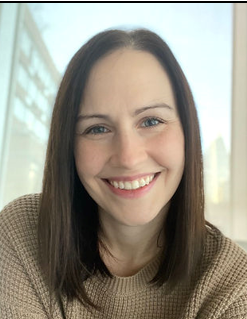
January 9 2024Erika Hoffman

Graduate student, University of Maryland
ebhoff@umd.edu
Erika will describe her research using high-resolution x-ray spectroscopy to investigate ionized outflows from active galactic nuclei (AGNs). Suggested by Bill Thomas.
February 13 2024Prof. David John Helfand
Columbia University
djh@astro.columbia.edu


The Universal Timekeepers: Reconstructing History Atom by Atom
By utilizing the basic building blocks of matter as imperturbable little clocks, we are now able to reconstruct in quantitative detail a remarkable range of human and natural events. From detecting art forgeries to dating archeological sites, and from laying out a detailed history of human diet and the Earth’s climate to revealing the events surrounding the origin of life, of the Solar System and of the Universe itself, atoms provide us with a precise chronology from the beginning of time to the moment humans emerge to contemplate such questions.

Copies of Prof. Helfand’s book will be for sale and he’ll be available to sign them.
March 12 2024TBA
April 9
2024
Eclipse Observations
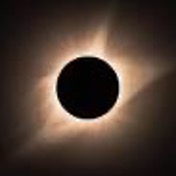
Since this meeting will take place the day after the Total Solar Eclipse of 08 April 2024, and many members will be out of town or returning from their trips, I’m suggesting that we host an online roundup of eclipse observations, with members (and perhaps others) Zooming in to share their experiences.
May 14
2024
Dr. Tea Temim

Research Astronomer, Princeton University Department of Astrophysics
Dr. Temim will describe her research using JWST imagery to study supernova remnants. Suggested by Gene Allen.
temim@astro.princeton.edu
June 11
2024
NJ State Museum planetarium’s Bill Murray, and Jacob Hamer, Assistant Curator

AAAP’s traditional annual pilgrimage to the NJ State Museum planetarium in Trenton, where members will experience a presentation and a preview of the planetarium’s latest sky show.

As always, members’ comments and suggestions are gratefully accepted and much appreciated.
victor.davis@verizon.net
program@princetonastronomy.org
(908) 581-1780 cell

Posted in October 2023, September 2023, Sidereal Times | Tagged , , , | Leave a comment

Minutes of the October 10, 2023 Meeting

by Gene Allen, Secretary

The meeting was convened in Peyton Hall by Astrophotography Chair Michael DiMario at 1930. Following a brief introduction Member Ira Polans introduced speakers Member John Church, PhD, and Member Michael DiMario, PhD. John gave details about the optical design of the Yerkes 40” refractor and Michael spoke about its employment and the discoveries it enabled. The second question session wrapped at 2052 for a ten minute break.

The business meeting convened at 2102 with a reminders of the Lunar South Pole Observation Challenge and the upcoming Annular Solar Eclipse on 10/14. Two significant astronomical events were discussed: the distortion of the tail of Comet Nishimura C/2023P1 by a CME and the Osirus Rex asteroid sample return on 09/25.

Merchandise Chair Rich Sherman reminded us to prepare for the coming cooler weather with AAAP logo attire.

The meeting was adjourned at 2115.

We had 18 attend the speakers online. During the business meeting we had 12 remain online.

Membership currently numbers 201, with 43 having joined in 2023. There have been 95 renewals while 41 have allowed their membership to expire, giving us a 70% retention rate. Submitted by Secretary Gene Allen, whose attendance was only by Zoom due to quarantine.

Posted in November 2023, Sidereal Times | Tagged , | Leave a comment

Data formats for Astronomy

by S. Prasad Ganti

A recent article in the journal “Nature” piqued my interest about data formats for data coming from microscopic observations. Wearing my Information Technology hat, I read this article and also explored the different data formats in use for Astronomical data.  

The article mentioned that there is no one standard for data coming out of Microscopes. Thousands of biological researchers use microscopes made by different manufacturers. Unfortunately each vendor creates data in their own proprietary format. As a result, researchers cannot exchange data with each other. 

The importance of data standards becomes noticeable if the recipient cannot view an image I share in an email. We all can read a PDF file or a JPEG based picture. We take these standards for granted, but absent such standards the networking effect would be very feeble. That is the value of a phone network increases if more people can share information (voice or data). We just have to remember the VHS vs. Betamax wars from yesteryears for the video cassettes. One type of video player could not play the other format. Eventually VHS won the battle but lost the war when video cassettes became history in a few years. 

A standard called OME (Open Microscopy Environment) is coming to the fore so that one set of observations made by one researcher can be viewed and studied by another in a different Lab or a different country. The key to such a data format is the presence of metadata, which describes the data present in the file, i.e. the specimen observed, the conditions prevailing at the time of observations etc. Increasingly data formats contain the metadata, the actual data, and chunking of data so that the whole set of data need not be transmitted which could overwhelm the networks as well as the resources on devices like cell phones. Like Google maps, more data is requested when the user moves the cursor to a different area or wants to magnify a certain area. The data is transmitted only in chunks on a need basis.

The telescopes and the spectroscopes by comparison to a microscope,  are custom built. I am not talking about the backyard telescopes. Instead the Keck telescope in Hawaii or the JWST (James Webb Space Telescope). It is easier to standardize data format for astronomical data than it is for biological data from a microscope. 

In the 1970s, the Astronomers came up with the Flexible Image Transport System (FITS) standard when became a widely used data format. It incorporates metadata and binary data in the same file.The FITS standard has several limitations that make it difficult to use for complicated and hierarchical metadata. It is an older standard which was defined when computing and networking resources were at a premium. It needed a change. 

The Advanced Scientific Data Format (ASDF) was originally developed in 2015. The format consists of a YAML (Yet Another Markup Language) header optionally followed by one or more binary blocks for containing binary data. This format is not limited to Astronomy, and is being proposed as suitable for much of scientific and engineering data, NASA has adopted ASDF and FITS data formats for JSWT. The upcoming Nancy Grace Roman Space Telescope is slated to be launched in 2026. Although its mirror size is the same as that of the Hubble Space Telescope (HST), its field of view is much larger. It will be used mostly for survey of the skies. ASDF will be the primary data format for this telescope.

To read and process the data, libraries exist for the Python and C++ programming languages. ASDF, like FITS, is only a transport format but not a storage format. Storage formats are different for high performance computing environments. Given that a lot of research gets done after, sometimes long after the data is captured by the telescope, storing and transporting data in a standard format is very important. Data is at the center of new astronomical discoveries. With the launch of more sophisticated telescopes with increasingly complex instruments, and more powerful computing facilities and standard data formats on the Earth, awaiting many more discoveries in the future. 

Posted in November 2023, Sidereal Times | Tagged , | Leave a comment

Snippets

compiled by Arlene & David Kaplan

-NYT

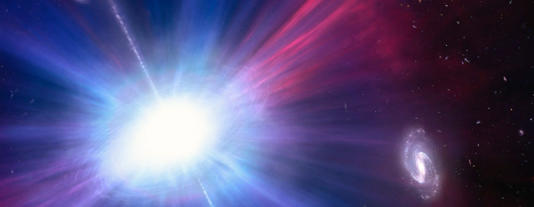
NASA’s Hubble spots a mysterious flash in the middle of nowhere that defies sciencebright flash of blue light appearing in the middle of seemingly empty space has scientists confused.The brilliant flash — thought to have burned at about 36,000 degrees Fahrenheit —is a rare explosion…more

-NYT
-NYT

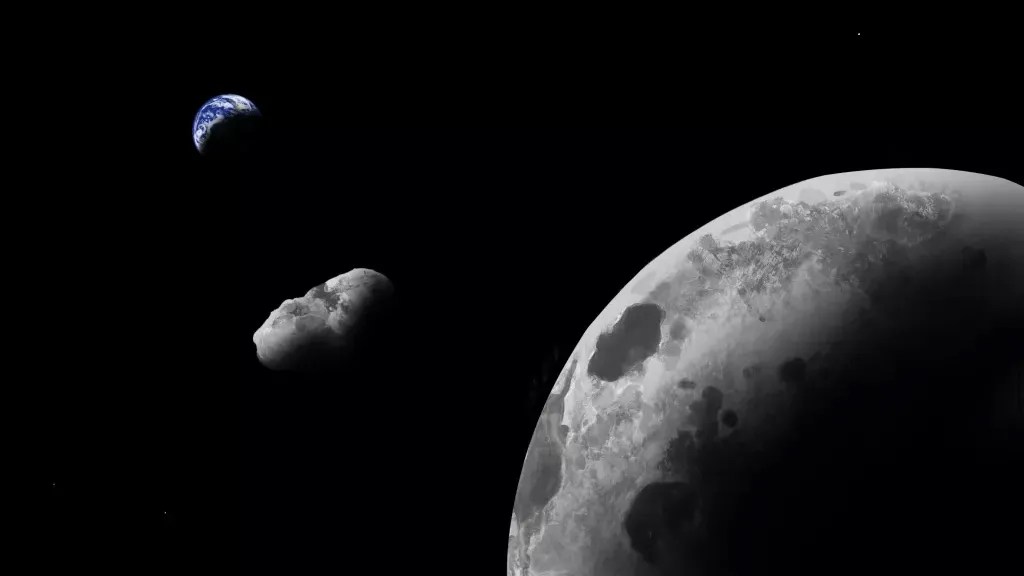
A chunk of the moon appears to be orbiting near Earth, new study suggests Astronomers have found more evidence that a near-Earth asteroid is an ejected chunk of the moon.The asteroid Kamo’oalewa — a Hawaiian name that means “the oscillating fragment” — is a Ferris-wheel-size rock chunk…more

-phys.org

Salts and organics observed on Ganymede’s surface by NASA’s Juno Data collected by NASA’s Juno mission indicates a briny past may be bubbling to the surface on Jupiter’s largest moon. NASA’s Juno mission has observed mineral salts and organic compounds on the surface of Jupiter’s moon Ganymede…more

-skyandtelescope

Black Hole Rain The planned LISA gravitational-wave detector might discover a shower of hundreds of small black holes falling in galactic centers. At the center of nearly every massive galaxy sits at least one supermassive black hole. These black holes weigh in at millions or even billions of times the mass of the Sun…more

-space.com

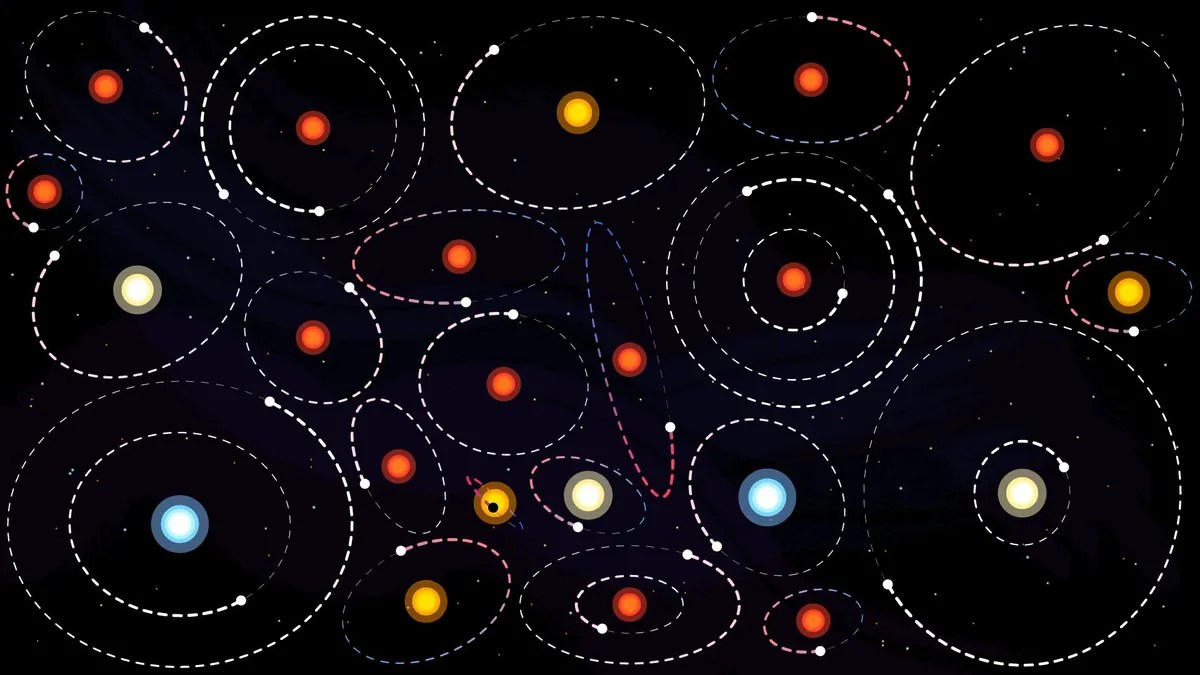
Nailing down exoplanet orbits could be key to finding ET. Here’s why The search for extraterrestrial intelligence (SETI) will likely be sped up thanks to new results that narrow down how alien radio signals would drift in frequency as a result of the Doppler shift caused by their home planet’s orbit around its star. A Doppler shift is the lengthening or shortening of the frequency of a signal caused by the motion of the transmitter…more

-space.com

Supervolcano eruption on Pluto hints at hidden ocean beneath the face Although it has been close to a decade since NASA’s New Horizons spacecraft visited Pluto, the dwarf planet continues to reveal itself as a surprisingly complex world. Scientists studying spacecraft data of an unusual crater near a bright, heart-shaped region…more

-NYT

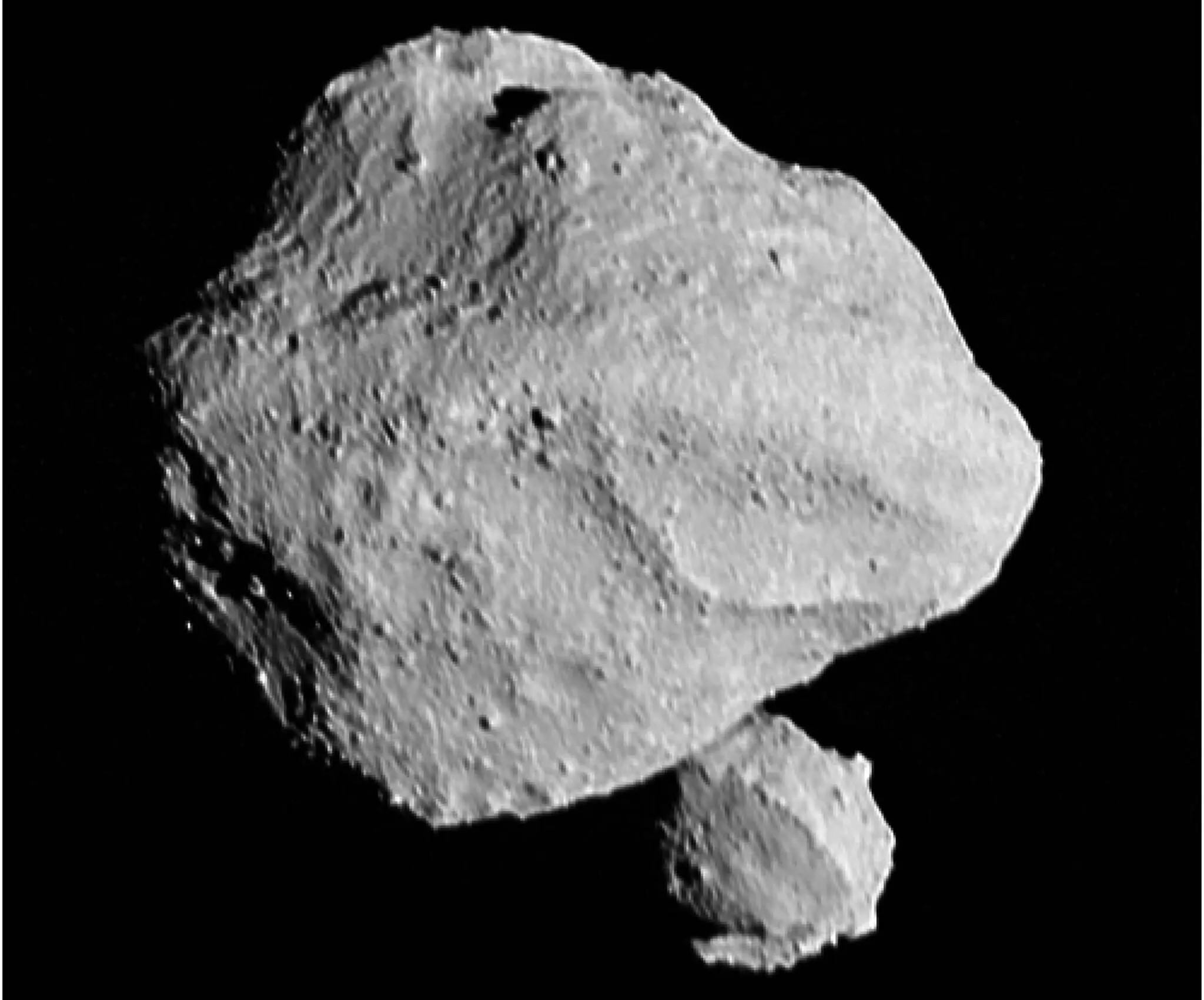
Lucy Mission Set Its Sights on 1 Asteroid. It Found 2 On Wednesday, NASA’s Lucy spacecraft zoomed by its first asteroid target — and scientists on the mission were shocked to discover that the rock, named Dinkinesh, was actually two rocks. The binary consists of a larger, primary asteroid and a smaller “moon” orbiting around it, as seen in images that Lucy captured of the pair…more

-space.com

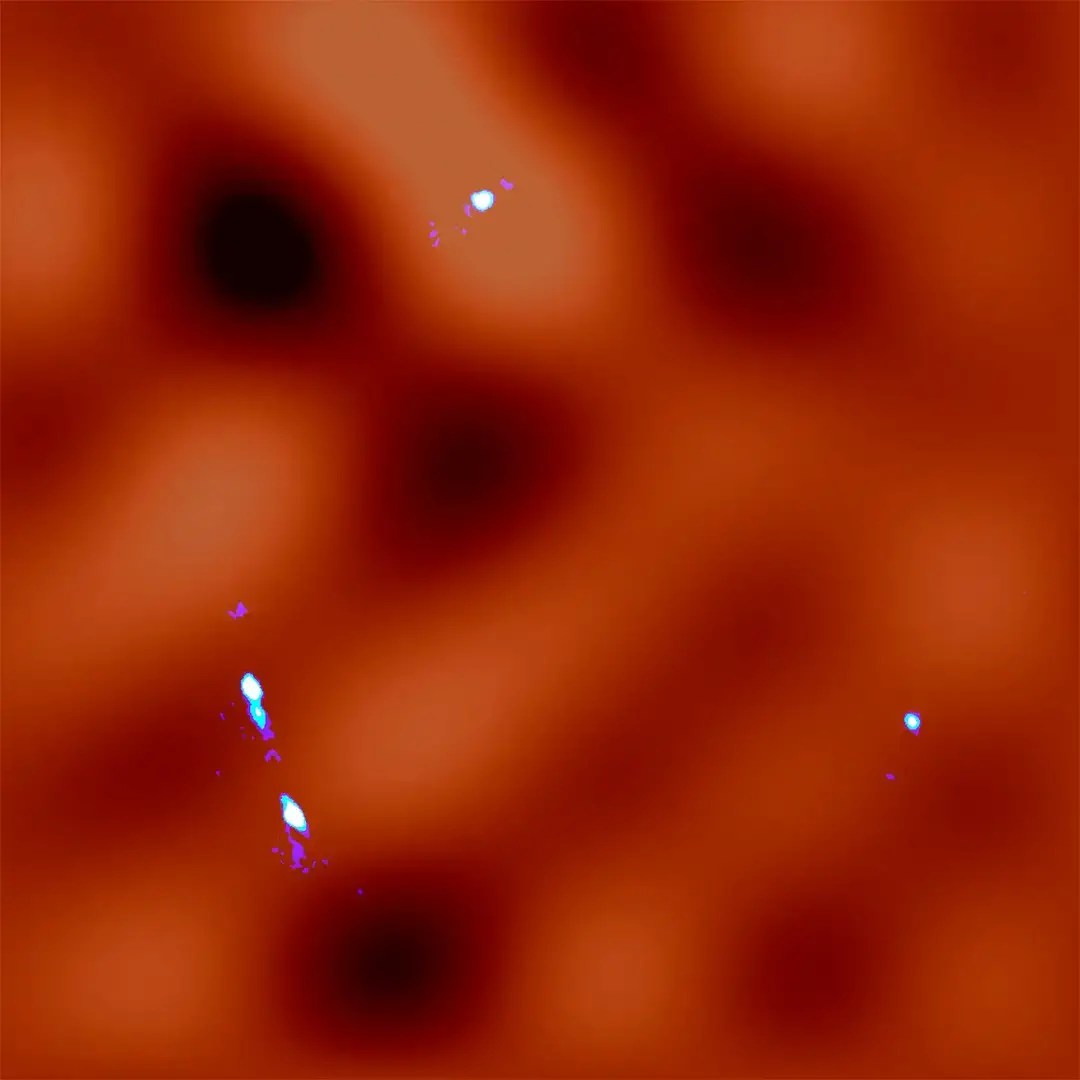
Supermassive black hole seen spinning ropes of plasma like a cosmic spider Like a monstrous cosmic spider, a distant supermassive black hole is spinning a jet of plasma into a twisted rope and blasting it out at near-light speed. Astronomers witnessed this spectacular sight with a network of radio telescopes, including the RadioAstron space telescope, that are combined to form an Earth-sized…more

-NYT

NASA’s Parker Solar Probe smashes record for fastest human-made object The NASA Parker Solar Probe has become the fastest human-made object ever recorded — again. On Sept. 27, the probe reached a blistering 394,736 mph/ (635,266 km/h) as it swooped close to the sun’s surface, thanks to a little gravity assistance from a close flyby of Venus on Aug. 21…more

Posted in November 2023, Sidereal Times | Tagged , | Leave a comment