From The Program Chair

by Victor Davis, Program Chair

Welcome to a New Academic Year at Peyton Hall
The September, 2023 meeting of the AAAP will take place in Peyton Hall on Tuesday, September 12th at 7:30 PM. As usual, the meeting is open to AAAP members and the public. Participants can enter Peyton Hall or log in to the Zoom session as early as 7:00 pm to chat informally before the meeting begins. This evening’s guest speaker is Prof. Suzanne T. Staggs of Princeton University whose presentation is entitled “Looking Backwards with the Cosmic Microwave Background.”

Options for Attending the September Meeting
You may choose to attend the meeting in person or participate via Zoom or YouTube as we’ve been doing for the past few years. (See How to Participate below for details). Members are invited to attend the “Meet the Speaker” dinner at Winberie’s Bar and Restaurant before the meeting. Our reservation is for 5:45 pm. Please contact the Program Chair if you plan to attend. 

Winberie’s Bar and Restaurant
1 Palmer Square E
Princeton, NJ
(609) 921-0700
princeton.winberies.com

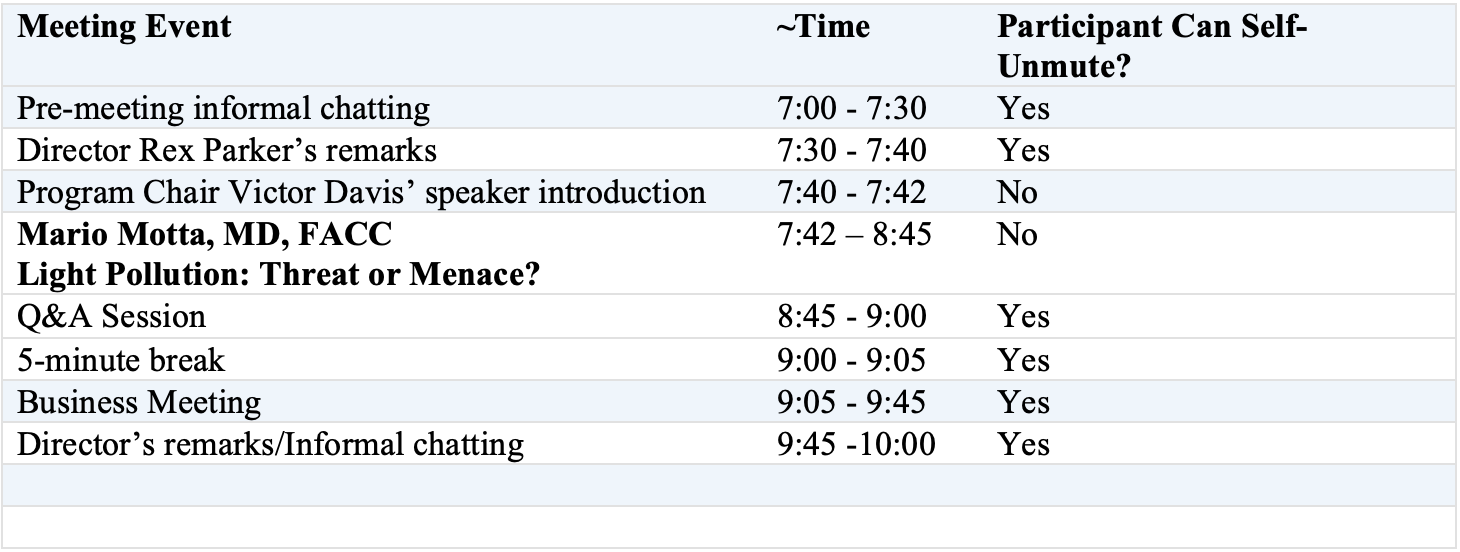
Here is the anticipated agenda for September’s monthly meeting of the AAAP:

(Times are approximate)

Getting to Peyton Hall
The parking lots across the street (Ivy Lane) from Peyton Hall are now construction sites, unavailable for parking. We’ve been advised by the administration of the astrophysics department that we should park in the new enclosed parking garage off Fitzrandolph street and walk around the stadium and athletic fields. Here’s a map of the campus and walking routes from the parking garage to Peyton Hall. The map shows the recently completed East Garage. Not shown is an access road Sweet Gum that connects from Faculty Road to an entrance at the lower left corner of the garage. Stadium Road connects from Fitzrandolph Road to another entrance at the opposite corner (and higher level) of the garage. It’s about a 10-15 minute walk from the parking garage to Peyton Hall.

Picture1

Featured Speaker: Suzanne T. Staggs
Henry DeWolf Smyth Professor of Physics
Princeton University
staggs@princeton.edu

Looking Backwards with the Cosmic Microwave Background
The cosmic microwave background (CMB) emanates from a brilliant plasma that suffused the universe in its first moments. Since the first deliberate measurements of the radiation comprising the CMB in the mid-60s, our capacity to detect and decode its cosmological signatures has increased remarkably. Prof. Staggs will describe the way the CMB encodes information about not only the large-scale dynamics and structure of the universe, but also about its earliest instants and its likely future. To study the largest length scales in the universe, researchers use thousands and thousands of tiny thermometers which measure the fluctuations in the heat delivered by the CMB, and special-purpose telescopes located in some of the most extreme environments on and above the surface of the earth. After describing some of this instrumentation, Prof. Staggs will conclude by discussing future prospects for even more knowledge she and her research team intend to pry from the CMB.

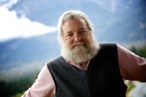
Suzanne T. Staggs
Suzanne Staggs received her undergraduate degree in physics from Rice University and her PhD in physics from Princeton University. Her thesis advisor was David Wilkinson, one of the leaders of the eponymous Wilkinson Microwave Anisotropy Probe (WMAP) satellite.   After two years as a Hubble Fellow at the University of Chicago, she joined the faculty at Princeton, where she is currently the Henry DeWolf Smyth Professor of Physics.  She is the current Principal Investigator (PI) of the Atacama Cosmology Telescope (ACT), co-director of the Simons Observatory, an American Physical Society fellow, a member of the National Academy of Science and a member of the American Academy of Arts and Sciences.  Her research focus is the experimental study of the cosmic microwave background (CMB) radiation, including precise measurements of its electromagnetic spectrum and thus its blackbody temperature, and exploration of its polarization properties and fine-scale angular anisotropies.  Her present CMB work focuses on searching for the signature in the CMB polarization of gravity waves from an inflationary epoch in the primordial universe, and in using the CMB as a backlight to probe the growth of gravitationally-bound structures in the last thirteen billion years. This growth depends on such fundamental quantities as the nature of dark energy, and the mass of the neutrino.

How to Participate

Zoom Amateur Astronomers Association of Princeton is inviting you to a scheduled Zoom meeting.

Topic: AAAP-September 2203 Meeting-Prof. Suzanne T. Staggs, Princeton University, “Looking Backwards with the Cosmic Microwave Background.”
Time: Sep 12, 2023 07:00 PM Eastern Time (US and Canada)

Join Zoom Meeting
https://us06web.zoom.us/j/89855483876?pwd=VWxxTk41Mmtlbk0vdTVNRkdxWXMzZz09

Meeting ID: 898 5548 3876
Passcode: 994729

AAAP webcast:  This month’s AAAP meeting, beginning with Rex’s opening remarks and ending at the beginning of the business meeting, will be webcast live on YouTube and recorded for subsequent public access on AAAP’s YouTube channel. Be aware that your interactions during this segment, including questions to our guest speaker, may be recorded for posterity.

Join YouTube Live to listen to the speaker using the link below –

Logo-with-play YouTubeAAAP Sept Meeting, Prof Suzanne T. Staggs , Looking Backwards with the Cosmic Microwave Background

A look ahead at future guest speakers:

October 10, 2023
AAAP members John Church and Michael DiMario

John and Michael will talk about the efforts to restore the historic Yerkes Observatory and the optics of the famed 40-inch refractor, still the world’s largest refracting telescope
November 14, 2023Dr. Gary Rendsburg
Distinguished Professor of Jewish Studies and History at Rutgers
Prof. Rendsburg will talk about “The Jewish Calendar,” with emphasis on its astronomical connections to lunar months, intercalated month to adjust to the solar year, festival days, and new moon observances. Suggested by Ira Polans.

Also, AAAP member Peter Wraight will show and discuss his 3D printed binoscope designs for which he won two awards for Mechanical Design at last year’s Stellafane convention.
December 12, 2023Dr. Mario Motta
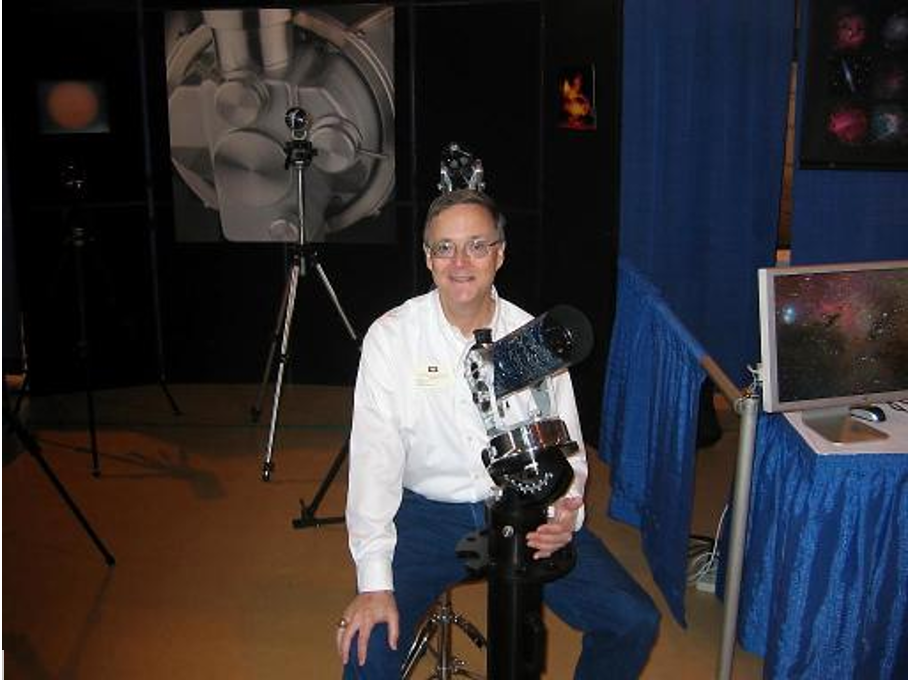
Dr. Motta is a cardiologist and past president of AAVSO who uses his home-built 32” telescope to image various objects and to study variable stars. He will talk about building his telescope and the observations he makes with it. He would join the meeting via Zoom. Suggested by Michael DiMario.
January 9 2024Erika Hoffman

Graduate student, University of Maryland
ebhoff@umd.edu
Erika will describe her research using high-resolution x-ray spectroscopy to investigate ionized outflows from active galactic nuclei (AGNs). Suggested by Bill Thomas.
February 13 2024TBA
March 12 2024TBA
April 9
2024
Eclipse Observations
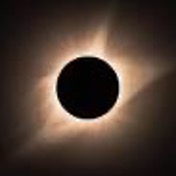
Since this meeting will take place the day after the Total Solar Eclipse of 08 April 2024, and many members will be out of town or returning from their trips, I’m suggesting that we host an online roundup of eclipse observations, with members (and perhaps others) Zooming in to share their experiences.
May 14
2024
Dr. Tea Temim

Research Astronomer, Princeton University Department of Astrophysics
Dr. Temim will describe her research using JWST imagery to study supernova remnants. Suggested by Gene Allen.
temim@astro.princeton.edu
June 11
2024
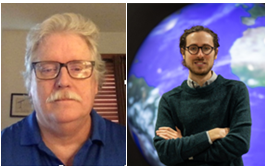
NJ State Museum planetarium’s Bill Murray, and Jacob Hamer, Assistant Curator
AAAP’s traditional annual pilgrimage to the NJ State Museum planetarium in Trenton, where members will experience a presentation and a preview of the planetarium’s latest sky show.

As always, members’ comments and suggestions are gratefully accepted and much appreciated.


Posted in September 2023, Sidereal Times | Tagged , , | Leave a comment

From The AAAP Store

by Rich Sherman, Merchandise Chair

Last call on warm weather apparel!  We will switch over to the winter gear by the end of September.  Visit https://aaap1962.logosoftwear.com/ and the password is:  SiderealTimes

And don’t forget about our new merchandise vendor for non-apparel items where you can buy bags, coffee mugs, and other sundries.  Visit:  https://aaap-next-gen-store.printify.me/products and again the password is:  SiderealTimes.

As always, you can email me at merchandise@princetonastronomy.org if you are searching for something that you might not see in the stores, like a different item, or a different size or color of an existing item. 

Posted in September 2023 | Tagged , | Leave a comment

New Member, Eugene

My name is Yevgeniy Bukhshteyn, though you can address me as Eugene. I proudly identify myself as an amateur astronomer, though I do not have much experience. I consider myself immensely fortunate whenever I seize the opportunity to observe planets, a treasured experience that I have only a few times each year through my modest refractor telescope. The honor of joining the Amateur Astronomy Association of Princeton (AAAP) has given me a profound sense of privilege. My aspiration in being part of this esteemed community is to engage with like-minded individuals, sharing in the wonders of our universe. As I embark on this journey, I eagerly anticipate absorbing knowledge and mastering the art of observation under the guidance of seasoned members.

Posted in September 2023 | Tagged , | Leave a comment

In The Quest For Moonlight

by S. Prasad Ganti

For the Indian moon bound spacecraft, Chandrayaan 3 (meaning moon craft), the second time was a charm. Twenty minutes of terror while hundreds of millions of people waited with baited breath. It touched down softly in the southern hemisphere closer to the pole. Coming on the heels of a disastrous crash in 2019, this was an excellent comeback. I would like to cover the journey including the improvements from its predecessor, and then the science which the mission set out to accomplish. Finally the future trends.

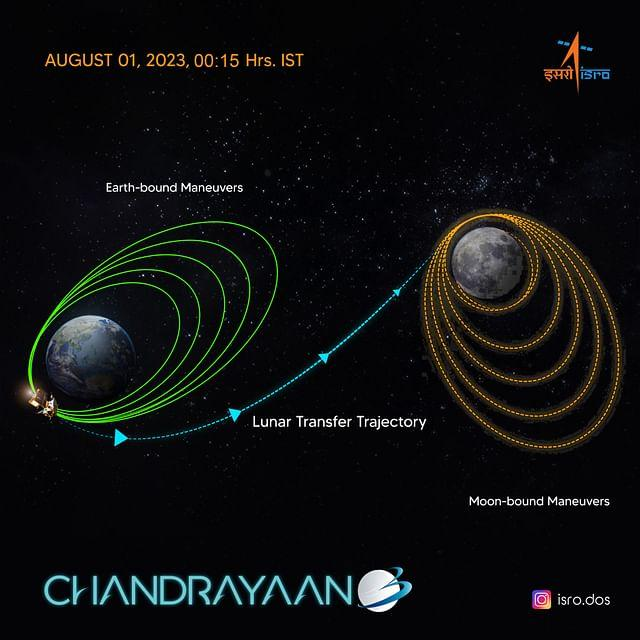
Firstly, the journey in space is vastly different from terrestrial movements. The spacecraft including the propulsion unit, the Vikram lander (named for India’s space pioneer Vikram Sarabhai) and Pragyaan rover (meaning “wisdom” in Sanskrit) was launched into space using a GSLV (Geostationary Space Launch Vehicle) Mark III rocket. Thereafter it took a longer fuel saving route covering about forty days before it landed on the moon.

The longer route is also due to the power of the launcher. GSLV Mark III, although the most powerful in ISRO’s (Indian Space Research Organization) arsenal, it does not have the punch to hurl the spacecraft to the moon on a direct trajectory which could take a lot less time. As a result, the spacecraft orbited the Earth several times, with a fuel burning boost elongating the ellipse in each iteration. In the final boost, the spacecraft was sent towards the moon. The reverse process happened closer to the moon, to slow down the spacecraft to get caught by the moon’s gravity. The picture below, courtesy ISRO, shows the path taken.

This is similar to a hammer thrower in Olympic games. The hammer is tied to a string. The athlete holds one end of the string and turns around and around. With each turn, the hammer gains momentum. Once the hammer gains significant momentum, the string is let go. The hammer travels and drops at some distance due to gravity.

Before we cover the landing phase, let us see how Chandrayaan 3 is different from its predecessor Chandrayaan 2. The earlier disaster was studied extensively. Multiple engines on the lander were designed to have better coordination in terms of shutting off at different times. The landing legs were made stronger to withstand tougher landings. The AI-driven sensors played an important role in ensuring a secure touchdown on the lunar surface. They helped the lander to anticipate lunar topography and deal with it accordingly. The array of sensors consists of velocimeters (measure the speed with which the surface is approaching) and altimeters (measure the height above the surface) to accurately study the position of the lander with respect to the lunar surface. While a suite of cameras using the advanced computer algorithms to generate a comprehensive image of the lunar surface which was coming up during the landing phase.

The spacecraft utilized an automated landing sequence in its final 20 mins of the journey. No remote human intervention would have been possible anyway. It covered about 500 miles during this phase with an altitude loss of about 20 miles. In a controlled fashion it went through four phases – rough braking, attitude stabilization, fine braking and finally local navigation using its sensors and intelligence. It was like an aircraft making a perfect landing without any pilots. Except that there was a rocky terrain instead of a smooth runway.

The landing site was in the southern hemisphere closer to the pole, something akin to the Antarctic circle on the Earth. All the earlier landings took place closer to the equator where the surface is relatively smoother. India became the fourth nation (after the US, China and the erstwhile Soviet Union) to make a soft landing on the lunar surface. And the first in the southern hemisphere’s rough terrain.

Now the science. The AI algorithms which guided the spacecraft to a smooth landing will also guide the rover on the rough surface and also in optimizing its route. AI will also help in analyzing the data collected by the mission during its 2 week lifetime. The instruments and the spacecraft are expected to work only during one lunar day, which is two weeks of Earth’s days and nights. After the lunar day, the cold of the lunar night is expected to render the equipment lifeless.

The rover basically has two spectroscopes – one called the Alpha particle X-ray Spectrometer (APXS) and the Laser Induced Breakdown Spectroscope (LIBS). Both of them will be used to study the composition of the soil and the rocks. They approach the problem differently. APXS uses alpha particles to bombard the sample and study the resulting emissions. LIBS will melt the sample using the laser beams and study the resulting gases. The rover will specifically look for the elements magnesium, aluminum, silicon, potassium, calcium, titanium, and iron.

The interest in the southern hemisphere and poles is due to the findings of water and ice in significant quantities. They can be used to produce hydrogen and oxygen via electrolysis to power spacecraft from there. The Moon is expected to become a base for such pit stops in the future.

Landing in the southern hemisphere has been a great challenge. It has become a graveyard for several spacecraft including Chandrayaan 2. Just a few days before the landing of Chandrayaan 3, the Russian
spacecraft Luna 25 crashed. Regardless of the geopolitics, it is bad for science and engineering and humanity as a whole. But we are learning as we go along.

Also, a word of appreciation for the folks who made this mission possible. Most of these people are from the second string of educational institutions in India, working on a shoestring budget from a third world government to get the biggest bang for the buck. The ones from elite educational institutions, including yours truly, have sought greener pastures elsewhere and are tending to terrestrial matters. I cannot be more thankful and appreciative of the people who achieved the lofty goals.

The future bodes well for Indian space missions and others. The GSLV launcher is being beefed up with a powerful SCE (Semi Cryogenic Engine) second stage. The private sector investments are picking up steam to supplement the meager government budgets. And, AI will play an increasingly important role in all future international space missions.

Posted in September 2023, Sidereal Times | Tagged , , , | Leave a comment

NJAA’s 5th Annual Open House and Astro Flea-Market

The New Jersey Astronomical Association’s 5th Annual Open House and Astro Flea-Market is on Sept. 30, 2023 (10:00 AM-4:00 PM EST). Rain Date is Oct. 7, 2023. 

Visit NJAA website at https://njaa-openhouse.org for more information.

You can also reach out to Michael S. Franzyshen, NJAA Open House Coordinator at michaelf@ascendantusa.com or (908) 256-2918.

Posted in September 2023 | Tagged | Leave a comment

Snippets

compiled by Arlene & David Kaplan

-NYT

Our Galaxy Is Home to Trillions of Worlds Gone Rogue Free-floating planets — dark, isolated orbs roaming the universe unfettered by any host star — don’t just pop into existence in the middle of cosmic nowhere. They probably form the same way other planets do: within the swirling disk of gas and dust surrounding an infant star…more

-NYT
-NYT

What It Looked Like When India Landed on the Moon India’s Chandrayaan-3 mission landed on the moon on Aug. 23. There was no guarantee that the lander would make it in one piece. A previous Indian vehicle crashed in 2019 as it headed to the lunar surface, as did spacecraft from Russia and a Japanese company this year…more

-NYT

The Biggest Question Mark in Astronomy? You’re Looking at It. The astronomers will tell you it is just an optical illusion, a pair of galaxies caught in the act of mating as seen from the wrong angle. Happens all the time. In the 1960 and 70s, Halton Arp, an astronomer at Hale Observatories in Southern California, caused a ruckus by asserting that galaxies…more

-space.com

India’s Chandrayaan-3 takes the moon’s temperature On Aug. 23, thanks to the success of Chandrayaan-3, India made a strong mark in space history. Not only did it become the first nation to land a spacecraft near the south pole of the moon, but also the fourth to create imprints on Earth’s gleaming companion at all. However, the lunar lander’s touchdown was only step one of its ultimate story…more

-BBC

Dying star analysed by Cardiff scientists Astronomers New images of a dying star have revealed structures that no previous telescope could detect, according to astronomers. The pictures are of a dying star at the centre of the Ring Nebula, 2,600 light years from earth…more

-NYT

NASA Seeks a Nuclear-Powered Rocket to Get to Mars in Half the Time Avi Loeb, a theoretical astrophysicist at Harvard University, followed the news about Oumuamua for months. Then one morning in the fall of 2018, he had an idea. For Oumuamua to accelerate as it did, something had to have given it a push…more

-Cosmos Magazine

Mars rover Perseverance sees huge sunspot rotating toward Earth NASA’s Perseverance Mars rover has caught a glimpse of a huge sunspot, indicating a region of high solar activity, on the far side of the Sun which will turn to face Earth in the coming days. The rover, whose mission is to analyse the surface of the Red Planet and look for potential ancient signs of life on Mars, took a moment from its usual tasks to take a look up….more

-NYT

Russia’s Lunar Lander Crashes Into the Moon A Russian robotic spacecraft that was headed to the lunar surface has crashed into the moon, Russia’s space agency said on Sunday, citing the results of a preliminary investigation a day after it lost contact with the vehicle. It is the latest setback in spaceflight for a country that…more

-NYT

Why Is the Red Planet Spinning Faster? NASA’s InSight lander fell silent in December after dust accumulated on its solar panels. But scientists continue to sift through the four years’ worth of data it gathered, learning more about what is deep inside the red planet…more

Posted in September 2023, Sidereal Times | Tagged , | Leave a comment

From The Director

by Rex Parker, PhD director@princetonastronomers.org

Sublime Joys of Summer Stargazing.  Here in the Princeton area we’ve been spared much of the extreme heat and stalled weather patterns that have been baking parts of the US this summer.  But our telescopes have spent more nights indoors than out with the cloudy, rainy, and smokey skies we’ve tolerated.  So when a clear night sky eventually does coms around, don’t miss out!  The AAAP Observatory in Washington Crossing will be ready for action.  Our rules of operation enable member access to the observatory any time a trained Keyholder is present.  You can email me or the observatory chair or call the Observatory phone (609-737-2575) to see if it is open on any given clear night (beyond regular Friday night open house events.  Hopefully the huge forest fires in Canada will be quenched by rains as summer goes on.  Meanwhile I’m keeping an eye on forecasts to try to get some observing and imaging time whenever the skies do clear out.

Another AAAP Observing Challenge! — Perseid Meteor Shower Could Be Unusually Good.  The earth in its solar orbit has already transected the orbit of the comet responsible for the Perseid meteor shower, comet 109P/Swift-Tuttle.  Meteors from the “shower” radiating from the constellation Perseus may be visible under good observing conditions in central NJ from now through around August 24, with peak around August 13.  Moon brightness is probably the biggest factor in being able to see meteors, and this time around the moon will be in a favorable waning crescent phase in the nights leading up to August 13.  Let’s call this another AAAP observer challenge:  see how many Perseid meteors you can see and count, and report your count at the first AAAP meeting of the season on Sept 12 at Peyton Hall. 

Amateur Astronomer Discovered the Supernova in M101.  The impressive supernova in the spiral galaxy Messier 101 is among the closest core-collapse supernovae (Type II) discovered in the past several decades.  Japanese amateur and famed supernova hunter Koichi Itagaki has been credited with its the discovery on May 19 2023.  Named SN2023ixf, the M101 supernova was confirmed by professionals at Palomar the next day.  A recent article in Science describes the amazing lifestyle of Mr. Itagaki, who operates a private observatory in the hills above his home in Yamagata, Japan, about -180 miles north of Tokyo.  A colorful description of his telescope setup and discoveries that he made through the years was published recently in Science:  https://www.science.org/content/article/amateur-astronomer-may-worlds-top-supernova-hunter

M101 is a giant spiral galaxy 21 million light years distant, sometimes called the Pinwheel Galaxy.  It’s located a few degrees from the double star Alcor & Mizar in the Big Dipper’s handle.  This type of supernova usually flares quickly to a maximum brightness in a few days then declines in brightness gradually over months to years.

Measuring a Supernova’s Magnitude.  During the June meeting at the Planetarium I suggested that it would be a cool AAAP observer challenge to attempt to measure the light curve of the M101 supernova in the months following its explosion on May 19.  Even without special photometric filters our equipment can accurately determine stellar magnitudes and changes in star magnitude over time.

Here is how I measured the supernova’s magnitude and its change over time.  I acquired new images of M101 on 4 occasions from May 22 to July 21, and had previously imaged the galaxy in April 2022.  Camera exposure times (using ZWO cameras with my telescope) were selected so that pixels in the region of the supernova were not saturated, which is important for quantitation.  Color images were converted to monochrome before magnitude measurement.  I then used the astro software Maxim DL to measure the supernova’s magnitude.  Maxim DL has very good stellar photometry capabilities.  It lets the user control the star diameter measured and accurately subtract the background brightness, and provides a routine for calibration of magnitude using a known star in the image with data from professional stellar databases such as those provided in TheSkyX. 

In the images and data (below), the progenitor star region in the image from 2022 was very faint, about magnitude 20.5.  Right after the supernova explosion May 19, the magnitude jumped to  around 11 by day 3 and 4, and then steadily declined over the next 2 months to magnitude 12.3 by day 63 (see graph).  It will be interesting to see how far the supernova light curve will decline in the future, and to contemplate the radical changes its atomic fusion processes, diameter, and radiation spectrum will undergo during this period. 

The spiral galaxy Messier 101 before (left) and after (right) the supernova event which first appeared on May19 2023.  The supernova SN2023ixf is circled in the upper images and indicated by arrows in the lower zoomed images. AGO 12.5” f/6.7 scope with ASI2400MC camera at gain 0.  The magnitudes were measured as discussed in the text above.  Images and data by RA Parker.

M101 supernova change over time white annotation. Rex A Parker, July 2023
Light curve of SN2023ixf in M101
Posted in Mid-summer 2023, Sidereal Times | Tagged , | Leave a comment

Minutes of the June 13, 2023, AAAP Members General Meeting

by Gene Allen, Secretary

The meeting was convened in the Planetarium of the NJ State Museum by Director Rex Parker at 1935. Following a brief introduction Program Chair Victor Davis introduced Speaker Dr. Jacob Hamer, the new Assistant Curator of the Planetarium. His topic was 60 Years of Discoveries with the Arecibo Observatory. Questions followed and then they presented a video program about the aurora which will be offered to the public in the fall.

The business meeting convened at 2116 with an update from Observatory Co-Chair Dave Skitt.

               Two benches have been obtained for free and are intended to offer seating along the west wall.

               Memorial Weekend Solar Observing was attended by 50-60 people a half dozen Ha and white-filter scopes were provided by members highlight was “sun on a stick” by Member Tom Swords.,

               Recently donated scopes include a non-Bird-Jones 114 and a Meade LX200.

We were reminded that AAAP Merchandise includes apparel from the first vendor and non-apparel from the second. Contact Member Rich Sherman at < merchandise@princetonastronomy.org > with any questions or requests.

Assistant Director Larry Kane is coordinating research and participation in the 2024 Eclipse Travel Group. Their first meeting on April 24 will be followed by another on June 19 at 1930. Contact Larry if you would like to participate or just learn what they are finding.

Delores Ramsey, widow of beloved former Observatory Chair Gene Ramsey, has expressed interest in selling some of Gene’s astronomy gear. We have also had requests from non-members looking to sell equipment to or through our club. In order to clarify and formalize our policy a motion was made, seconded, and approved by the six Board members in attendance.

The use of any form of AAAP communication will be limited to sales and donations by our members. Non-members will be directed to alternative marketplaces such as AstroMart.

Delores will be considered an honorary member out of respect for the long and selfless service of her late husband.

Since we had been unable to assemble even the tiny 15% quorum at the May meeting, that confirming vote was invalid. An email vote was conducted on May 21 and the response was terrific. In less than 24 hours we received 70 “yes” votes and voting was concluded. That is more than twice the required number based on our quorum of 30. The first 30 were individually verified as active members, and all 70 email replies have been placed in a folder on the secretary webmail account. They will be retained until next spring as confirmation of the process, should any challenge be issued. The slate which this voting confirmed is:

Director:                                 Rex Parker
Assistant Director:               Larry Kane
Treasurer:                              Michael Mitrano
Secretary:                               Gene Allen
Program Chair:                     Victor Davis
Observatory Co-Chairs:      Jen & Dave Skitt
Outreach Chair:                    Bill Murray

The meeting was adjourned at 2130.

Membership currently numbers 205, with 33 having joined in 2023. There have been 44 renewals and 21 have allowed their membership to expire, giving us a 68% retention rate.

Posted in Mid-summer 2023, Sidereal Times | Tagged , , | Leave a comment

Treasurer’s Report

by Michael Mitrano, Treasurer

The income statement and balance sheet below show the AAAP’s financial results for the fiscal year that ended on June 30, 2023, and our financial position at the beginning and end of the year.

The AAAP had a $2,481 surplus for the fiscal year, similar to last year’s.  The chart below shows member dues for the past 16 years:

Dues were paid by 189 members during the fiscal year – five more than the year before.

Replacement of the observatory columns was completed last fall; the donations from members and others who supported that work were taken into income during the fiscal year (which may not be when the donations were made).  The $9,700 in donations fully covered the cost of the work itself.  Thank you to those who supported the project!  The AAAP absorbed the related PayPal fees.

Our cumulative reserves are close to $21 thousand, equaling about 3 1/2 years of the association’s expenses (excluding the columns replacement) at last year’s level.  We are in a very strong financial position.

Kindly let me know if you have any questions about the report.

Posted in Sidereal Times | Tagged , | Leave a comment

Witness the Marvel of a Total Solar Eclipse as a Group!

by Surabhi Agarwal, Editor

As avid stargazers and astronomy enthusiasts, we are always in search of extraordinary astronomical events to witness together. Well, buckle up your seat belts, because we have an astronomical adventure that promises to be nothing short of unforgettable – a once-in-a-lifetime opportunity to witness a Total Solar Eclipse!

On April 8, 2024, this awe-inspiring celestial spectacle will grace our skies, as the Moon aligns perfectly between the Earth and the Sun, casting a shadow upon our planet and plunging us into temporary darkness. The experience of witnessing a total solar eclipse is beyond words – the sky turns into an ethereal canvas, stars become visible in the daytime, and the whole atmosphere fills with an otherworldly aura.

I am proposing that we should travel as a group.

Why should we travel as a group?

While watching a total solar eclipse is an astounding experience for anyone, doing it as a group holds even more magic. Here are a few reasons why I think traveling together will make this event even more special:

1. Shared Enthusiasm: We all share a common love for the cosmos. Experiencing this incredible event as a group will allows us to share our enthusiasm and excitement with like-minded individuals.

2. Enhanced Learning: A total solar eclipse is a fantastic learning opportunity. By being together, we can collectively gather insights, learn from one another, and exchange observations. This experience will undoubtedly deepen our understanding of celestial mechanics and eclipse phenomena.

3. Community Bonding: Watching together will strengthen our bond as a club and allow us to build lasting memories that we can cherish for years to come. We can pool resources and knowledge to make the trip smooth and enjoyable for everyone.

6. Celebrate Nature’s Wonders: Witnessing a total solar eclipse is a humbling reminder of our place in the universe and the majestic dance of celestial bodies. By being together, we can celebrate and appreciate the grandeur of nature’s wonders as one cohesive group.

How can we make this happen?

To embark on this astronomical journey together, we need your input and cooperation. Here are the steps to make this dream a reality:

1. Express Your Interest: Let us know if you are excited about joining the group to watch the total solar eclipse. Your enthusiasm matters, and the more members interested, the more memorable the experience will be!

2. Destination and Planning: We will collectively decide on the best destination for our eclipse expedition based on factors such as accessibility, weather conditions, and visibility. Once decided, which should be very soon, we’ll collaborate on the logistics, including travel arrangements, accommodations, and safety measures.

Personally, I was looking at Dallas area with the town of Ennis in particular. The line of totality passes through the middle of the town and the duration of totality is almost 4.5 minutes. You can use this link to follow the line of totality from north of the country to the south. A click anywhere on or around the line will allow a small informational screen to popup.

Please don’t hesitate to suggest any other place on or around the line towards the south of the country that you may think is easy to get to.

3. Educational Sessions: To prepare for this exceptional event, we can hold educational sessions within the club. These sessions will cover the science behind solar eclipses, observing tips, and eclipse photography, enhancing our overall eclipse experience. I am sure our seasoned astronomers will be delighted to share their knowledge and expertise.

4. Share the Excitement: Don’t hesitate to invite friends and family who might be interested in witnessing this celestial marvel with us.

The next total solar eclipse that can be seen from the contiguous United States will be on Aug. 23, 2044. In conclusion, this is an opportunity most of us cannot afford to miss. If you’re eager to be a part of this extraordinary journey, drop an email to Larry Kane at assist.director@princetonastronomy.org or to me at editors@princetonastronomy.org and let us know your thoughts and suggestions. Together, we’ll make this astronomical adventure one for the ages!

Posted in Mid-summer 2023, Sidereal Times | Tagged , , | Leave a comment