From The Program Chair

by Victor Davis, Program Chair

November Meeting

The November, 2024 meeting of the AAAP will take place in Peyton Hall on the campus of Princeton University on Tuesday, November 12th at 7:30 PM. As usual, the meeting is open to AAAP members and the public. Participants can join the meeting in-person at Peyton Hall or log in to the Zoom session as early as 7:00 pm to chat informally before the meeting begins. The evening’s guest speaker is Princeton Postdoc Manuel Cuesta, who will give a talk on remote observations of solar dynamics, including recent research using the Parker Solar Probe.

Options for Attending the Meeting

You may choose to attend the meeting in person or participate via Zoom or YouTube as we’ve been doing for the past few years. (See How to Participate below for details). Due to security concerns, if you log in before the host has set up internet connectivity in Peyton Hall, you may need to wait in the Waiting Room for a few minutes until the host is prepared to admit you into the meeting. You’ll need to unmute yourself to make comments or ask questions. It’s polite, though not required, for you to enable your camera so other participants can see you. A week or so after the meeting, the video of the lecture and Q&A will be posted on AAAP’s public YouTube channel.

The traditional “meet the speaker” dinner will be held at Winberie’s Restaurant & Bar, One Palmer Square, Princeton, NJ. Reservation is for 5:45 pm. Please advise the Program Chair if you plan to attend.

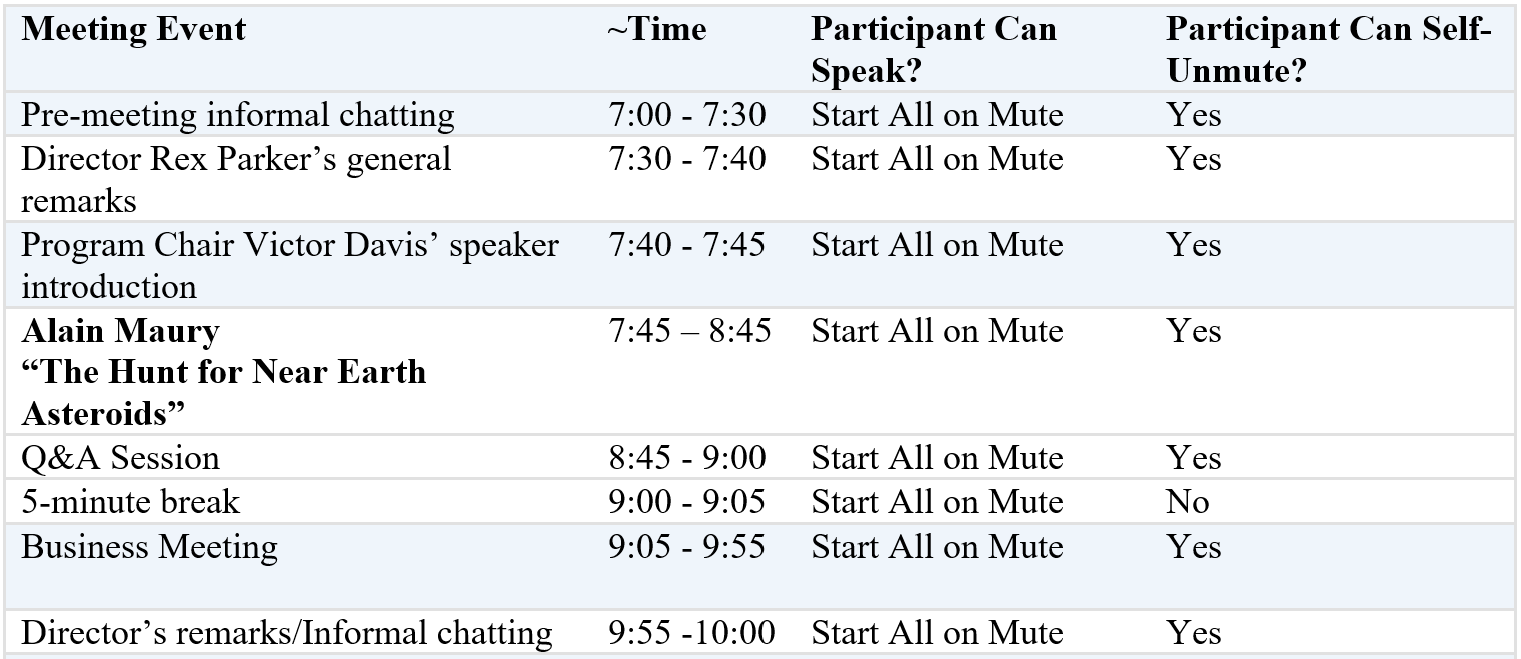
Here’s the anticipated agenda for November, 2024’s monthly meeting of the AAAP:

(Times are approximate)

Getting to Peyton Hall
The parking lots across the street (Ivy Lane) from Peyton Hall are now construction sites, unavailable for parking. We’ve been advised by the administration of the astrophysics department that we should park in the new enclosed parking garage off Fitzrandolph street and walk around the stadium and athletic fields. Here’s a map of the campus and walking routes from the parking garage to Peyton Hall. The map shows the recently completed East Garage. Not shown is an access road Sweet Gum that connects from Faculty Road to an entrance at the lower left corner of the garage. Stadium Road connects from Fitzrandolph Road to another entrance at the opposite corner (and higher level) of the garage. It’s about a 10-15 minute walk from the parking garage to Peyton Hall.

Remote Observations of Solar Dynamics and Results from the Parker Solar Probe
One of the key discoveries leading up to the space age was the solar wind, which permeates interplanetary space throughout the heliosphere. Dr. Cuesta will review the history of remote observations of such solar dynamics.  He will discuss the impact of space physics research involving the investigation of space weather with the goal of predicting extreme solar events, which cause large disruptions of the solar wind. Coronal mass ejections, for example, usually carry with them enhanced particle populations accelerated to very high energy. These high energy particles and mass ejections of plasma sometimes ram into the Earth, causing power-grids to shut down, increasing radiation exposure to people in mid-flight, and communication disruptions. The Parker Solar Probe mission is the project that aims to answer many of the unsolved questions in field of space physics, such as sources of particle acceleration and their mechanisms, the main driver(s) of the solar wind, and the coronal heating problem. Dr. Cuesta’s  presentation gives some of the first results from this mission and some current topics of ongoing research in the Space Physics Group here at Princeton University.

Manuel Cuesta
Dr. Cuesta earned his Ph.D. in Physics at the University of Delaware. For his thesis, he worked on the radial evolution of turbulence intermittency in the solar wind in comparison to well-known quantities in hydrodynamic turbulence, as well as anisotropy and compressibility, finding that the solar wind in many ways behaves like a wind tunnel.  He has analyzed data measured in situ via numerous spacecraft missions including NASA’s Parker Solar Probe, Helios 1, Advanced Composition Explorer, Wind, Magnetospheric Multi-Scale, and Voyager 1. He was awarded the Donald L. Turcotte Award from the American Geophysical Union in recognition of his outstanding dissertation research for potential contributions to the field of nonlinear geophysics. He currently conducts research at the Department of Astrophysical Sciences at Princeton University relevant to energetic particles and their interaction with solar wind dynamics. 

How to Participate (Links)

Meeting link Meeting link
Click the above icons for Zoom and YouTube

Date Featured SpeakerTopic
December 10, 2024
Jesse Christiansen
christia.ipac.caltech.edu

Dr. Christiansen is Senior Scientist at NASA’s Exoplanet Science Institute at Caltech. She’ll describe her research and the current status of Exoplanet discoveries. 
January 12,
2025
Rebecca Boyle
rebecca.b.boyle@gmail.com

Rebecca Boyle, science writer, essayist, and Contributing Editor to Scientific American, will discuss her new book, “Our Moon: How Earth’s Celestial Companion Transformed the Planet, Guided Evolution, and Made Us Who We Are.”  Suggested by Ira Polans.

As always, members’ comments and suggestions are gratefully accepted and much appreciated.

victor.davis@verizon.net
program@princetonastronomers
(908) 581-1780 cell

Posted in November 2024, Sidereal Times | Tagged , , , , , , | Leave a comment

Minutes of the October 8, 2024 Meeting

by Gene Allen, Secretary

Director Rex Parker opened the meeting in Peyton Hall and on Zoom at 1934. There were 35 in attendance and 43 were noted online.

Rex reported that the 2024 Nobel Prize in Physics has been awarded to Princeton University Professor Emeritus Dr John Hopfield. Rex did some research and found that there are an impressive 79 Nobel laureates among PU faculty.

He continued to say that fall observing targets are coming into view and comet C/2023 A3 is expected to present great views as it emerges from behind the Sun. Saturn is just past opposition, so at its brightest for the year, with its rings nearly edge on. The launch of Europa Clipper to study that moon of Jupiter up close and personal is imminent.

Program Chair Victor Davis introduced St. Joseph’s University Professor Paul Halpen and his lecture, “The Allure of the Multiverse; Beyond the Limits of Direct Observation.” It is based on his similarly titled book, “The Allure of the Multiverse: Extra Dimensions, Other Worlds, and Parallel Universes.”

Questions and a break followed his talk. Books were available for purchase and Dr Halpen was signing them.

Rex reconvened the meeting at 2116 with 11 in attendance. He described astrophotos which include landscape elements as enabled and championed by PhotoPills software. Planetary astrophotography discussion ensued, dealing with image scale and the rate of retention of frames during stacking. In general, the best results are obtained with the highest gain and shortest exposure plus an image scale appropriate to your observing conditions. Retention rates chosen during stacking varied from 20% (Rex) to 50% (Member Tom Swords) to 100% (Assistant Director Bob Vanderbei). The best planetary results, regardless of technique, generally require a bazillion exposures.

A number of members are planning to try to capture the comet at the low western horizon available at the soccer fields near the observatory in the middle of next week.

Outreach Chair Bill Murray reported upcoming outreach events on 10/10, 10/18, and 10/22 which will have passed before these minutes publish. Hopefully additional members will turn out to support these events. A fourth event is on November 2, from 1730-2230 at the Mercer Meadows Pole Farm. If you can bring a scope please let Bill know.

Merchandise Shop Lead Facilitator Rich Sherman reported the changeover to winter clothing articles has been accomplished. Due to frequently long lead times on fulfilling orders, he recommends ordering very early for Christmas. He reported that the AAAP has profited $350 from merchandise sales and recommends the book “Before the Big Bang.”

The meeting was adjourned at 2155.

Posted in November 2024, Sidereal Times | Tagged , | Leave a comment

Documentary Screening at IAS

by Lee Sandberg

I have an event that will likely be of interest to the membership. On Nov. 15 at 5:00pm, the Institute for Advanced Study will host a public screening of the documentary film “The Hunt for Planet B“. This will be followed by a panel discussion with filmmaker Nathaniel Kahn, Art History Professor Maria Loh, renowned astronomer Sara Seager, and former Chief Scientist – NASA Headquarters Jim Green. Registration details are available here: https://www.ias.edu/events/st-lee-film-screening-november-15-2024 I am happy to answer any questions before I leave for my travels on Nov. 12. You can reach me at
lsandberg205@gmail.com

Posted in November 2024, Sidereal Times | Tagged , , | Leave a comment

Time

by John Church

Time, in and of itself, flows equably without relation to any external thing.
– Isaac Newton

My granddaughter Nora once asked her mother where time comes from. Hmm! No one has ever been able to really answer this question. Poets and essayists have debated it for as long as we have had written languages.

Some maintain that there is no such thing as time; it’s all in our minds, a strictly psychological effect. For example, how can we decide whether we pass through time, or whether time passes through us? What is the duration of a moment? Metaphysics 101: does time pass more quickly when we’re having fun? These and similar questions are variants of the old “egocentric predicament,” or the problem of deciding if a reality external to our own perception actually does exist. Questions like this continue to provide employment for philosophers.

I’m prepared to allow that psychological or subjective time does have an inner if somewhat tenuous reality. On the other hand, as a physical chemist specializing in kinetics, I’ve studied the objective effects of time many “times” in the laboratory. Time does have a real and independent existence there. With physical objects, Newtonian mechanics works very well, even with space probes; but things can be much different under extreme conditions, such as in or near black holes.

We all know about the one-way passage of time from daily experience. My morning coffee can’t be unbrewed, my toast untoasted, or my scrambled eggs unscrambled. These are everyday examples of irreversible events, accompanied by an increase in disorder (entropy) and a decrease in “free energy,” to use the chemical term. Unusual word choice – we all know that energy isn’t free in the economic sense.

But it doesn’t work that way with living things, at least not for a while. Children grow, learn how to speak and read and write and ask hard questions, and maybe even invent calculus. Life temporarily defeats the destructive effects of time, in apparent if not real contradiction of the laws of thermodynamics. I say apparent, because living things create order within themselves only at the expense of creating more disorder in the environment. Yet there is a pervasive, organizing life force – on Earth anyway – that temporarily cancels the general tendency of things to become more disorganized and go to lower “free energy” states as time passes.

Regarding this, I have a personal anecdote. A bumblebee was caught in my bedroom window in the space between the inner sash and the storm sash, both of which were closed. I must have accidentally trapped it. I wanted to release the poor creature, but how could I do this safely? If I lifted up the inner sash in order to get at the storm sash and open it, the bee might sting me or fly into the house before I could get the storm sash open. So I did nothing for a couple of days. The bee gradually got weaker, and finally just sat lethargically on the inner window sill, shrunken and nearly dead. An idea came to me. I made up a little sugar water and got a medicine dropper. I lifted up the inner sash, ready to close it again if the bee stirred. (It didn’t.) I opened the storm sash several inches, placed a little pool of the sugar water right under the bee’s face, quickly closed the inner sash, and watched. The surprised bee tasted the sugar water. Then it began to lap it up, very slowly at first. After a few seconds it rested. Then it began to breathe deeply through its abdomen, which swelled and contracted. It eagerly lapped up more sugar water, faster now. Spurred on by rapid enzymatic reactions, the bee quickly came back to life. It lifted its wings off its back and began to tremble with anticipation. It gathered strength. It buzzed. It lifted off. It flew around inside the window for a few seconds, then found the opening and sped off into my front yard as if nothing had ever happened. Life had won again.

We know that time cannot be shielded against, stopped, or made to go backwards. Neither can gravitation. Time and gravitation must be deeply connected, not just near the Earth of course but throughout all of space. Is this a coincidence? Does one possibly cause the other, or are they completely independent?

Edgar Allan Poe’s theory, expounded in his 1848 essay Eureka, is that gravitation is simply the reaction of matter to having been thrown out (“radiated” he called it, drawing a parallel with light) from a primordial particle at the beginning of time. Cosmologists and physicists have never yet succeeded in explaining why gravitation exists; they usually just say “it is” and stop there, rarely if ever referencing Poe’s anticipation of the Big Bang and what, to him, seemed its logical consequence. Poe’s additional theory as to why the night sky is dark (the “Olbers paradox”) may have been the first correct explanation: light from the farthest reaches simply hasn’t had enough time to reach us yet.

People have been looking for antigravity devices about as long as they have been trying to stop time or make it go backwards. We can freeze light rays in a photograph, but we can’t freeze gravitation. It is a slow unforgiving force which might eventually collapse the entire universe. The first person who invents a way to stop or reverse time will probably also have invented a way to stop or reverse its alter ego, gravitation. And vice versa. Let the games begin. Down to the workshop! I’ve got a prototype of an
antigravity machine (not a helicopter). Would you like to buy some of my stock?

Posted in November 2024, Sidereal Times | Tagged | Leave a comment

Hubble Tension

by S. Prasad Ganti

Edwin Hubble was the legendary astronomer of the early twentieth century. Credited with the discoveries of the Andromeda galaxy and the expansion of the universe. With these, he brought the concept of galaxies to our lexicon. And that the size of our universe is ever expanding. This eventually led to the postulation of the Big Bang theory and the birth of the universe from such a humble beginning. 

Hubble used the 100 inch Hooker telescope on Mount Wilson in California to come up with his historic observations. He measured distances to different stars using standard candles – stars whose absolute brightness can be determined and whose apparent brightness as seen from Earth can be measured. First standard candle is a star known as the Cepheid variable which was discovered by Henrietta Leavitt. These stars vary cyclically in brightness over an interval of time. This interval is proportional to its absolute brightness. Leavitt observed the brightness of different Cepheid variables and their periods. By determining the distance of few such stars using other methods like parallax (which work for stars at smaller distances), she was able to plot the brightness cycle vs. distances.   

Hubble observed more Cepheid variables in what appeared to be distant nebulae. He found that the distances  of such nebulae are much more than what was the known size of our galaxy, the Milky Way. That is how he discovered the Andromeda galaxy, our nearest neighbor. He then discovered several galaxies distinct from the Milky Way. He found their distances by making an assumption that the brightest star in every galaxy is equally bright.

Along with different galaxies, he also found something surprising. That the galaxies are moving away from each other. He found this using the redshift of the light coming from that galaxy. The color of light changes if the source is moving towards us or away from us. The color change is apparent only at high speeds, not like a few miles per hour. Light from sources moving away from us will be shifted towards the red end of the spectrum. While light from any source moving towards us will be shifted towards the blue end of the spectrum. Hubble concluded that the further a galaxy is away from us, the faster it is moving away from us. 

The expansion of the universe was formulated into an equation which had “Hubble’s constant” as one of the parameters. He attempted to measure the value of this constant given the distance of the galaxies and the red shift they were producing. He went through several iterations before settling on a value. More recent observations resulted in more precise calculations and a better value. 

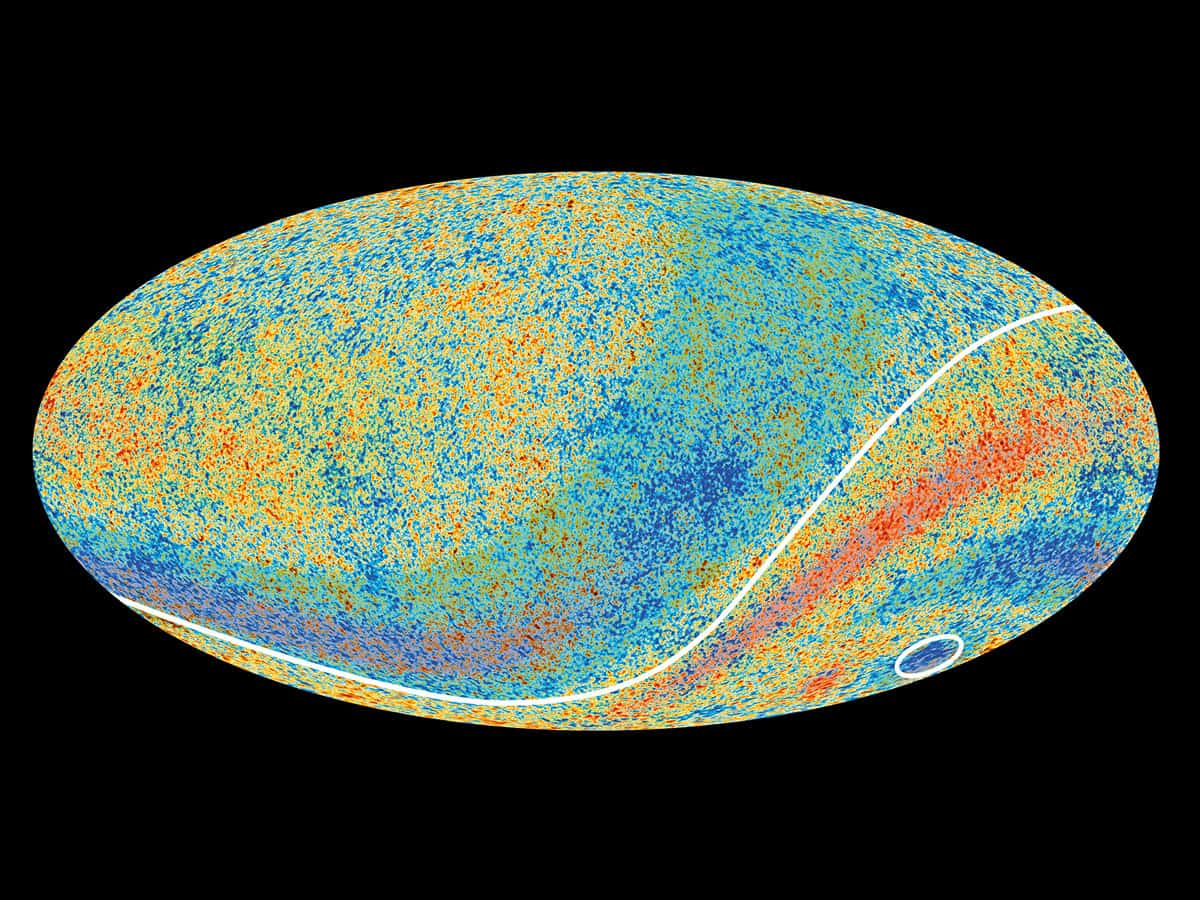
A second way of calculating the Hubble’s constant is by looking at the CMB (Cosmic Microwave Background) pattern of the universe produced by several space based observatories – COBE (Cosmic Background Explorer), WMAP (Wilkinson Microwave Anisotropy Probe), and Planck. The results from the two methods differ by a non-trivial amount. This discrepancy is known as “Hubble tension”. 

The discrepancy was resolved in 1998 by postulating that the expansion of the universe is accelerating. And that dark energy is responsible for such an accelerated expansion. Now dark energy is accepted as a part of the “standard model” of our universe. Yet some discrepancy still exists between the values calculated using two different methods.

If the two methods  yield values close enough, then the standard model is validated again. Work continues in this area. More progress is expected when two observatories start getting the first light. Vera Rubin observatory is being built in Chile. It is expected to see the first light in 2025. A space based telescope Nancy Grace Roman is expected to be launched towards the end of 2026. 

With newer discoveries, hope is that the “Hubble tension” will be eased if not erased. 

Posted in November 2024, Sidereal Times | Tagged , | Leave a comment

The Curse is Broken!

by Gene Allen

For many reasons I’m sure, I have been unable to observe any comet, either visually or with photography, with the naked eye, binoculars, iPhone cameras, DSLRs, telescopes with eyepieces, or telescopes with cameras. This condition has prevailed for decades. Recently everybody reports seeing C-2023 A3, and some show me pictures they took on their phones quite effortlessly, even neighbors who are virtually never astronomers. It truly makes me feel as if I were the victim of some nefarious “no comets for you!” curse.

Tonight I took my little ZWO Seestar S50 to a school in nearby Robbinsville to support a AAAP outreach event for a Girl Scout troop. Not too cold yet, and fairly decent skies, I was hopeful to share some of the DSOs (Deep Sky Objects) it captures so handily. I have not yet worked out why it has trouble with the first target and needs manual pointing, but from then it’s spot on. After struggling a bit trying for Venus as it slipped into the trees, Saturn was centered on the screen, and I figured what the heck, why not take one more stab at that #*$& comet?

And there it was, blooming from a tiny speck as the 10 second images stacked in what ZWO calls “enhancing.” It was a popular spectacle, on both my iPhone and iPad, when intently searching the night sky clearly showed a big, fat nuthin’.

The view was reframed, moving the core down from center to better show the tail, and the stack restarted. While the tail did intensify as the images accumulated, I noticed that the core “extended” into a bar. My first thought was field rotation, that bane of alt-az mounts with longer exposures. What little I understand about it seems to involve a degrading of the edges of the field, not this growing bar, with the stars in the background staying pretty circular, at least by EAA (Electronically Assisted Astronomy) standards. Those far more capable at this stuff can chime in, but I conclude that the bar shows the movement of the comet away from us over the duration of the total exposure. Instead of a fault with the image, it’s actually some neat and, to me, unexpected evidence.

The smaller pictures on the side are enlargements of the core at 3, 6, and 13 minutes of exposure. Even the 3 minute one is less than round.

The leaders and parents were more excited than the scouts about what the five of us were able to show them, but I’m convinced that the best rewards of the night came to me.

As you can see, anyone can do it. Grab whatever binoculars or telescope you have, and bring your enthusiasm to an outreach event.

Posted in Sidereal Times | Tagged , , , , | Leave a comment