My Respects to Fred Hoyle

by Prasad Ganti

One of the human weakness is to get carried away with the negatives associated with a human being and not make a balanced assessment of one’s capabilities. Something similar happened to Fred Hoyle, the great astrophysicist. He backed the wrong horse called “Steady State theory” and opposed an alternate theory, which was derisively called “The Big Bang theory”.  The name stuck and later evidence in form of background cosmic radiation proved the Big Bang Theory correct.
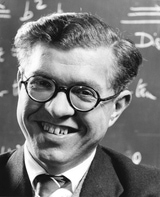
Fred Hoyle Public Domain (University of Cambridge)

In addition to a bad bet, his taking of politically unpopular positions went against him. As a result, his most notable achievement called “nucleosynthesis” in which he explained the formation of all the elements heavier than helium through nuclear reactions in stars and in supernovae, fetched a Nobel physics prize for his colleagues but not for him. There have been cases where other scientists were proved wrong in their theories, but Hoyle paid a heavy price for his stance. He became a pariah. In his case, I  want to see the glass as half full, not as half empty. On his count,  I respect Hoyle for his immense contribution to nucleosynthesis.

Fred Hoyle, along with his colleagues Thomas Gold and Herman Bondi saw a ghost movie in 1945 called “Dead of Night”,which did not have a beginning or an end. Based on this idea, Hoyle named his theory of the Universe the “Steady State Theory”, meaning that the Universe always existed without a beginning or an end. It fit well with the religious belief of God’s creation of the Universe. A rival Big Bang Theory gained credence with the discovery of the expansion of the Universe by Edwin Hubble. Hubble theorized that if we run the expanding Universe backwards, it will collapse into a point. The Universe is supposed to have been born from this single point through a big bang. The prediction of background microwave radiation and its subsequent discovery by Penzias and Wilson proved the theory right. After this discovery, Hoyle conceded that he was wrong about his Steady State Theory.

Hoyle took a stand against the award of the Nobel physics prize in 1974 for the discovery of pulsars. The Nobel committee ignored Jocelyn Bell for the award. Hoyle felt that Bell contributed significantly to the discovery and deserved the prize.

Let us look at Hoyle’s work in little more detail. In the first half of the twentieth century, there were a couple of prevailing questions in cosmology. The Universe started with a big bang and soon after hydrogen formed. It is the simplest and lightest of all the elements. Even today, hydrogen is the most abundant element in the Universe though not on Earth. How did elements heavier than hydrogen get formed ? Secondly, what powers the stars ?

Arthur Eddington speculated that the stars, including our own Sun, may be powered by nuclear energy. He observed that helium weighed slightly less than four atoms of hydrogen. He speculated that the fusion of hydrogen must result in helium, and the rest of the mass must be converted to energy according to Einstein’s famous equation e=mc². Hans Bethe came up with the details behind this fusion reaction. He also concluded that elements higher than helium cannot be created in the stars. Temperatures of billions of degrees are required for such a process, whereas a star only has millions of degrees.

Hoyle came up with an explanation of how stars can cook up all the elements heavier than helium. Hoyle predicted an unstable form of carbon as a stepping stone to produce heavier elements up to iron in stars. This form of carbon has been recreated in labs. Hoyle found that as elements grow larger, the repulsive force between their positively charged nuclei makes it increasingly difficult to squeeze them together. Iron, element number twenty six, is the last element of the periodic table whose creation via fusing two smaller nuclei releases energy. Fusing two atoms of iron requires energy, rather than releasing energy. “Iron peak” is a critical juncture in the way stars make elements. Hoyle said that supernova bursts may generate such temperatures required for fusion of elements higher than iron.
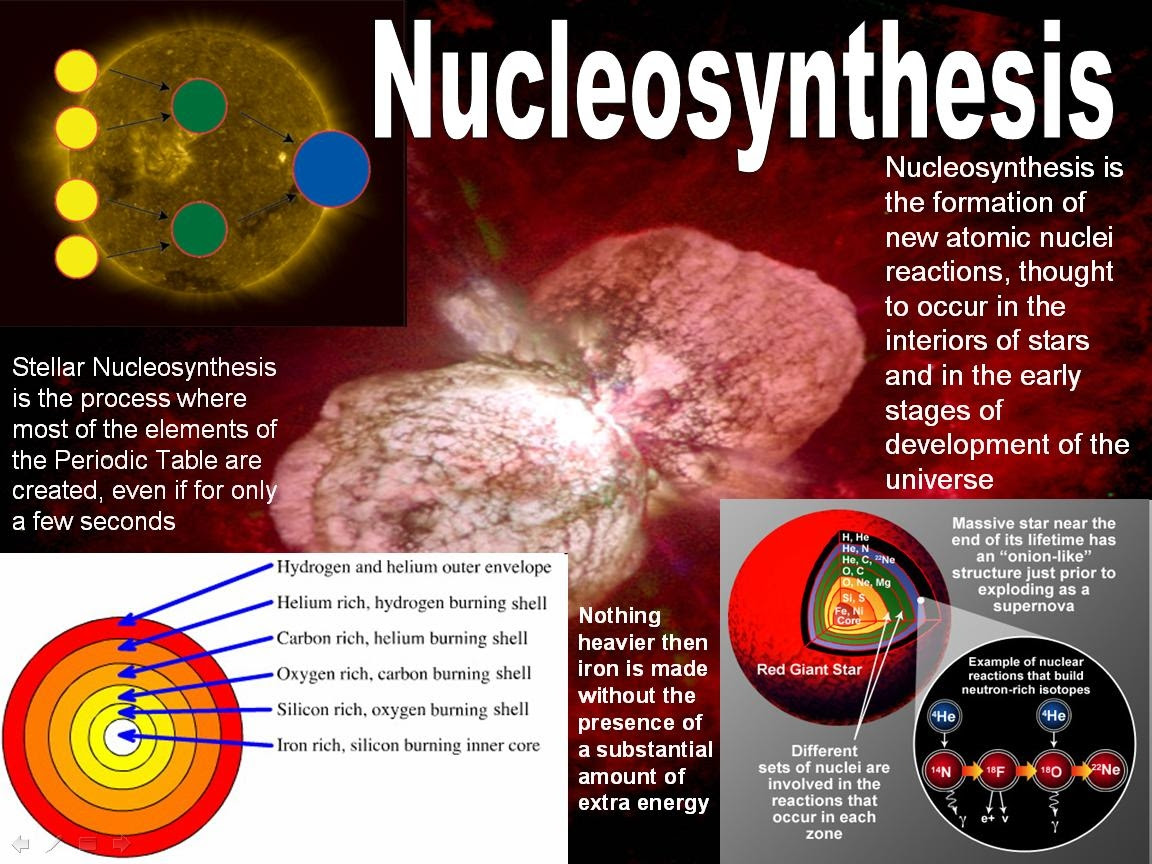
nucleosynthesis

Public Domain Image

Hoyle proved that the death of a star did not mark the end of the nucleosynthesis process. One generation of stars cook lighter elements and feed second generation of stars and so on. Our own Sun is a third generation star. As a first generation star exhausts its hydrogen, it contracts and heats up, and the helium starts its nuclear burn, forming carbon and oxygen. This sets the stage for the alpha process, when massive stars’ cores burn carbon and oxygen, forming the elements from neon to sulfur.

It is true that the carbon which forms the bulk of our bodies was once cooked in a star in the Universe. A supernova would have produced the precious metals like silver, platinum, and gold which human beings on Earth crave for. For all of Hoyle’s great work, the 1983 Nobel prize for nucleosynthesis included Hans Bethe, but not Hoyle. I am not protesting the Nobel award. I just feel philosophic about Hoyle not being recognized. I am trying to do my part here by offering my respects.
Posted in February 2014 | Tagged , , , | 1 Comment

Antares Commercial Rocket Blasts Off from Virginia Spaceport

by Dr. Ken Kremer, Universe Today, AAAP

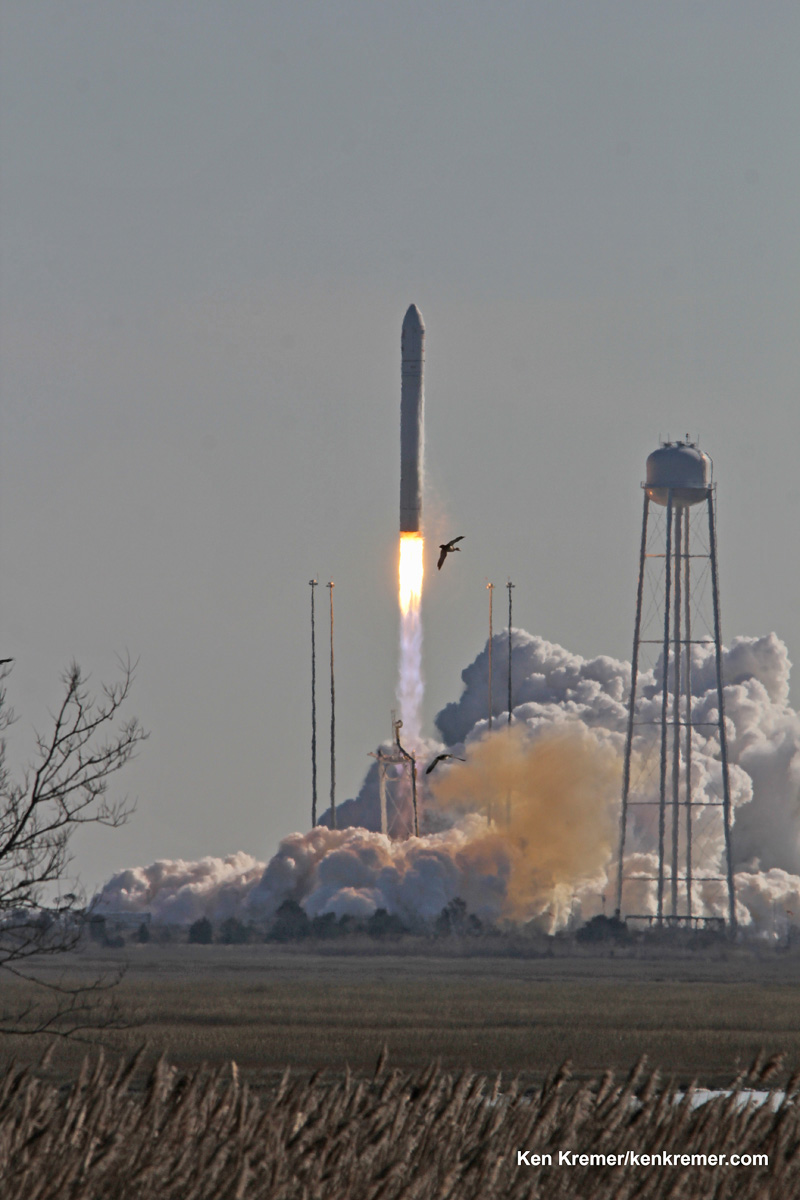
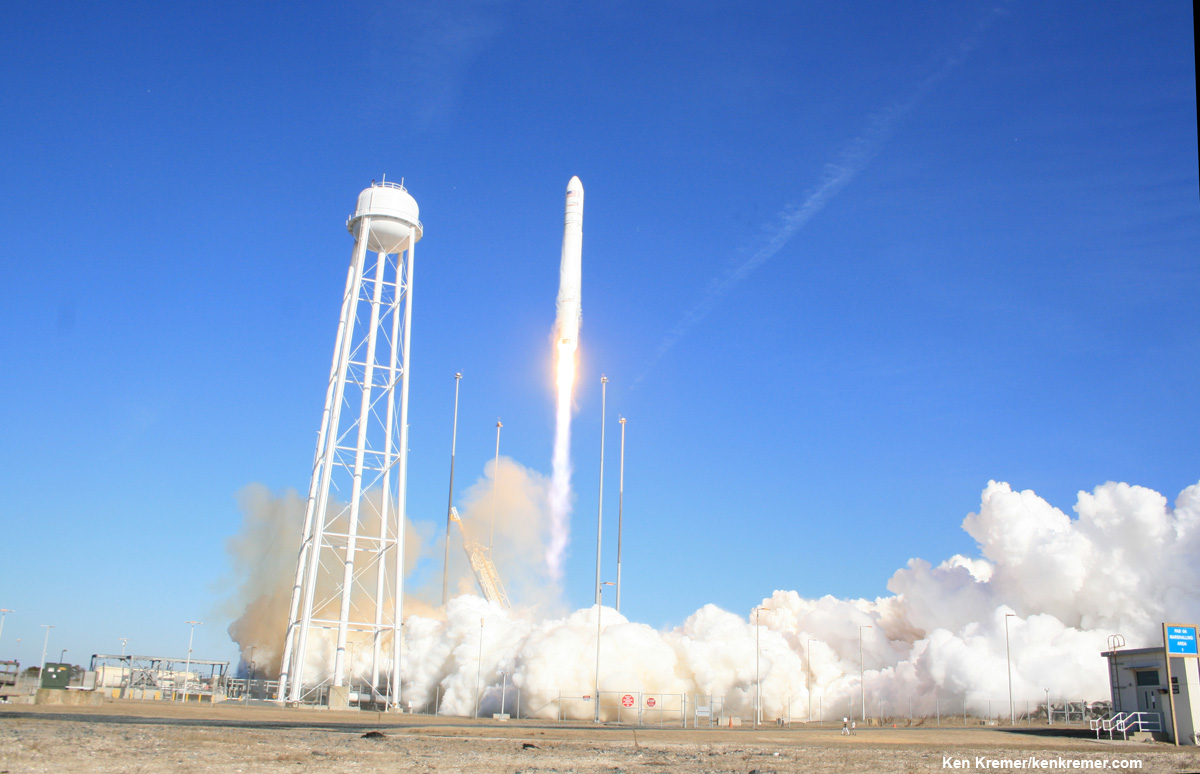
Birds take flight as Antares lifts off with Cygnus Jan. 9, 2014. Credit: Ken Kremer

Birds Take Flight as Antares Lifts Off with Cygnus on Jan. 9, 2014. Credit: Ken Kremer

NASA WALLOPS ISLAND, VA – A private Antares rocket and Cygnus resupply ship thundered off a Virginia launch pad on January 9, 2014.  Cygnus successfully docked at the International Space Station two and a half days later on January 12 with a huge cargo of 2800 pounds of science experiments and critical supplies for the six person crew.

The Orb-1 flight was a breakthrough mission for commercial spaceflight as well as providing an absolutely crucial life line to the station. The majestic blastoff of Orbital Science’s Antares rocket took place from a beachside pad at NASA’s Wallop’s Flight Facility along the eastern shore of Virginia at 1:07 p.m. EST.

The milestone flight was conducted under Orbital’s $1.9 billion contract with NASA as the firm’s first operational cargo delivery flight to the ISS using their self-developed Cygnus resupply vehicle.

Remote Camera at Launch Pad Captures Antares Blast Off  Credit: Ken Kremer – kenkremer.com

Remote Camera at Launch Pad Captures Antares Blast Off Credit: Ken Kremer

With the ISS lifetime now extended by the Obama administration to 2024, the resupply freighters pioneered by Orbital Sciences and SpaceX in partnership with NASA are even more important than ever before to keep the station well stocked and humming with an ever increasing array of research projects.

Read more about the Antares launch and see my launch video on YouTube here:

http://www.universetoday.com/108082/up-close-launch-pad-cameras-capture-spectacular-sound-and-fury-of-antarescygnus-jan-9-blast-off-to-space-station-video-gallery/

http://www.universetoday.com/107917/antares-private-rocket-thunders-off-virginia-coast-bound-for-space-station-marks-2nd-us-commercial-launch-this-week/

http://www.youtube.com/watch?v=v6lX_9Jf6DI

The next Antares launch is set for May 1. Contact Ken if you are interested to attend.

Also, see Ken’s February 3 Astronomy Picture of the Day:   http://apod.nasa.gov/apod/ap140203.html, a Lunar Time Lapse Panorama including the Yutu Rover.

Astronomy Outreach by Dr. Ken Kremer

Washington Crossing State Park, Nature Center:  Titusville, NJ, April 6, 1 PM.  “Curiosity, MAVEN and the Search for Life on Mars – (in 3-D)”and “May 1 Antares Launch from Virginia”

Northeast Astronomy Forum (NEAF): Suffern, NY, April 12 & 13. “Curiosity, MAVEN and the Search for Life on Mars – (3-D)”and “Future of NASA Human Spaceflight”

Please contact Ken for more info, science outreach presentations and his space photos. Email: kremerken@yahoo.com   website:  www.kenkremer.com, http://www.universetoday.com/author/ken-kremer/

Posted in February 2014, Sidereal Times | Tagged , , | Leave a comment

From the Director

by Jeff Bernardis

So comet ISON has come and gone with a lot less fanfare than had been anticipated – at least by me.  There was a fear that perihelion would consume so much of the comet that it would not be a naked-eye object on its outward journey. In fact, perihelion totally disintegrated the comet.  A disappointment?  Yes, but there are other things to look at in the sky.  This time of the year is always the most satisfying to me from an observational point of view.  Not only are the atmospheric conditions generally better in the winter; we also have some beautiful and easy-to-acquire targets.  One of my favorites is the Orion Nebula.  I enjoy showing it to my non-observing friends.  Venus has been bright at sunset, and Jupiter comes into view inside Gemini not long after sunset.

Outreach Involvement

It’s always interesting to receive requests for telescope recommendations from people who are either just entering the hobby, or perhaps are trying to encourage a child’s interest.  This being the gift-giving season, I have had several such requests, and I have tried to provide good decision-making information to the individuals involved.  Many people, predictably, lean towards higher magnifications, and are surprised when I try to sway them towards aperture size.  It’s all fun, and it indicates to me that the interest is out there.  Based on these exchanges, we have several people who we have invited, with children in some cases, to attend our meetings to see what we are about.

All of this underscores the significance of public outreach for our club.  As most of you know, Dave Letcher is our Outreach Coordinator, and he does an excellent job, but outreach is not just his responsibility.  It is the responsibility of all of us.  There are things that you can do to help with the effort.

  • This time of year is typically when we do our keyholder training.  The primary responsibility of keyholders is to run the observatory during our public nights.  If you are interested, talk to our observatory chair Gene Ramsey – or to any officer.
  • Help out at one of the “star parties” that Dave Letcher coordinates.  I still volunteer for as many as I can, and find them rewarding.
  • There are other events that will happen over the course of the year like the Princeton sidewalk astronomy and Communiversity.

Perhaps it is appropriate that I make this request now – so close to the New Year.  If you make resolutions, make one to get more involved with the club.

Club Business

We had planned on discussing the options for dealing with the donated equipment at the last meeting, but since that was cancelled, that agenda item will move to the January 14 meeting.  I don’t think we’ll get everything resolved, but I think it’s important that we keep it in our sights.

Posted in January 2014 | Tagged , , , | Leave a comment

From the Outreach Chair

by David Letcher, Outreach Coordinator

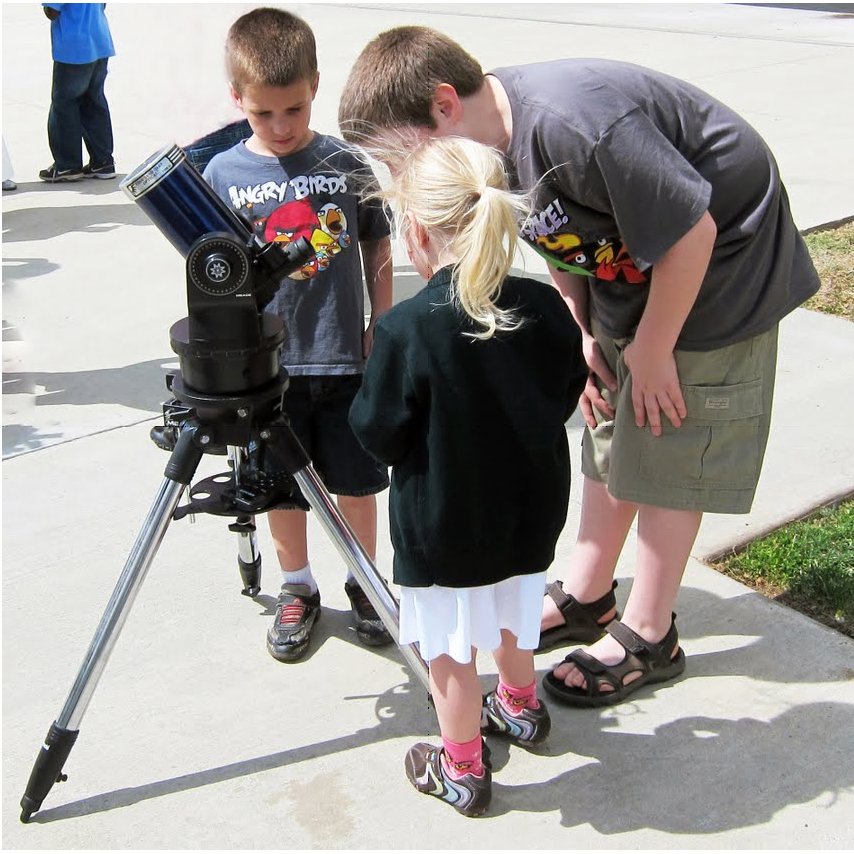
Future AAAP members confer about the merits of differ-ent solar filter types. Credit: David Kaplan

Future AAAP members confer about the merits of different solar filter types. Credit: David Kaplan

AAAP has been invited to take part in a “Hands-on-Science Night” on Thursday evening, January 23 at Antheil Elementary School in Ewing Township. The school is about a 25 minute drive south of Princeton.  If the skies are clear we can set up scopes outside the school.  If not, we can set up an indoor exhibit. Or we can do both.

Please let me know if you can volunteer (outreach@princetonastronomy.org).

Posted in January 2014 | Tagged | Leave a comment

Derrick Pitts to Speak at January 14 Meeting

15b8Our next meeting will be on January 14, 2014.  Derrick Pitts, Chief Astronomer and Planetarium Director at The Franklin Institute, will be returning to present a talk entitled “TMT and the Galileoscope: Big Scope for Big Work, Small Scopes for the Most Important Work”. He will pose the question, “With more huge scopes on the horizon to dig deeper into the universe’s secrets, who’s going to operate them if we don’t cultivate a new crop of inquisitive investigators?”

This talk was postponed from the December meeting.

As usual we will meet at 8:00 p.m. in Peyton Hall, 4 Ivy Lane on the Princeton University Campus.   Watch your email for an announcement about a meet-the-speaker dinner.

2014 Astronomy calendars will be for sale again at the meeting.

Derrick Pitts has been associated with the Franklin Institute Science Museum since 1978. Among his positions, Pitts was the original director of the Tuttleman OMNIMAX Theater, and museum vice-president. He has been Chief Astronomer and Director of the Fels Planetarium since 1990, having written and produced more than two-dozen planetarium programs.

He appears regularly on television and radio including CurrentTV, MSNBC, CNN, Comedy Channel’s “Colbert Report” and “The Late, Late Show with Craig Ferguson” on CBS.  For nearly two decades, he has hosted award-winning astronomy radio programs on Philadelphia’s WHYY 91 FM and on WXPN’s “Kid’s Corner”. Pitts recently participated in the first-ever White House Star Party, where he met President Barack Obama and his family.

Among Pitts many awards include the David Rittenhouse Award, the Mayor’s Liberty Bell Award, the St. Lawrence University Distinguished Alumni Award, the G. W. Carver Medal, and Please Touch Museum’s “Great Friend To Kids”Award.  He was inducted into the Germantown Historical Society Hall of Fame, selected as one of the “50 Most Important Blacks in Research Science” by Science Spectrum Magazine in 2004, and awarded an honorary Doctor of Humane Letters degree by LaSalle University.

Future AAAP lectures will be on the second Tuesday of each month: February 11, March 11, April 8, May 13 and June 10.    Speakers and topics will be announced when confirmed.

Posted in January 2014 | Tagged , | Leave a comment

2014 Astronomical Calendar

by Michael Wright

Psychics are making their predictions for 2014, so I thought “Why can’t I?” With some help from NASA, I generated my astronomical predictions for the year and created the 2014 Astronomical Calendar.  These predictions are based on science so you can be sure they will come true, unlike the psychics’ predictions.  Happy New Year to all!

Posted in January 2014 | Tagged , , | Leave a comment

Reminiscences of STS-1

by David Kaplan

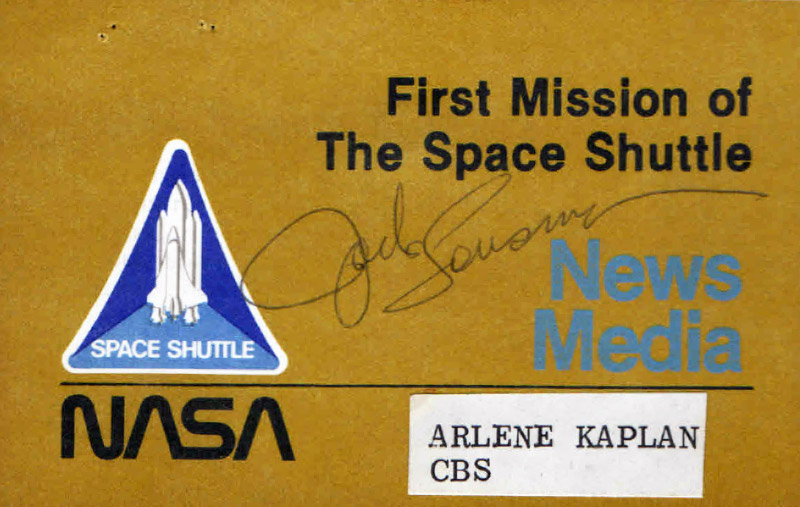
First Flight Signed Patch

First Flight Signed Patch

Employed at CBS Television for 40 years put me a somewhat privileged position of occasionally being an eyewitness to history. Whether it was working at a national political convention or an inauguration, the Special Events Unit, which I was part of for a time, covered it all. So why should envy raise its ugly head, and to what deity should I ask forgiveness? I’m not even going to try.

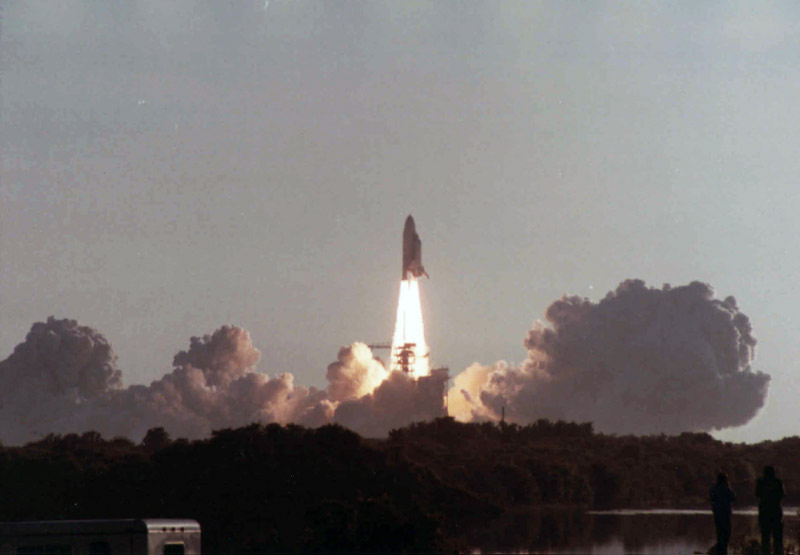
Launch of Columbia

Launch of Columbia

In April of 1981, my wife Arlene, who I fortunately met at CBS in 1968, was assigned to aid in the television network’s coverage of STS-1, the first launch of the Space Shuttle Columbia.

In addition to working alongside Alan Bean, meeting John Glenn and later going on to the Houston Space Center, she met Jack Lousma, a member of the second manned crew on the Skylab space station in 1973 and who would command STS-3. Her assignment was assisting in the control room at the Cape, but her producer offered her the opportunity to go outside to witness the launch live.  What a choice!

We’ve included some memorabilia from that launch, including Arlene’s photograph of the launch. Notice the price of the original souvenir Columbia patch in its original wrapper. 

All photo credits: Arlene Kaplan

Alan Bean and Leo Krupp

Alan Bean and Leo Krupp

Columbia Mission Patch

Columbia Mission Patch

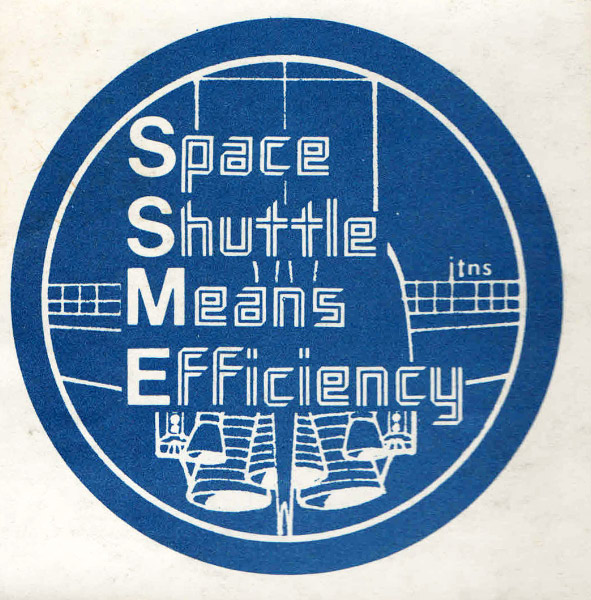
Shuttle Sticker

Shuttle Sticker

Posted in January 2014 | Tagged , , | 1 Comment

Social Media and Asteroids?

More: http://xkcd.com

Posted in January 2014 | Tagged | 1 Comment

Best of Sidereal Times

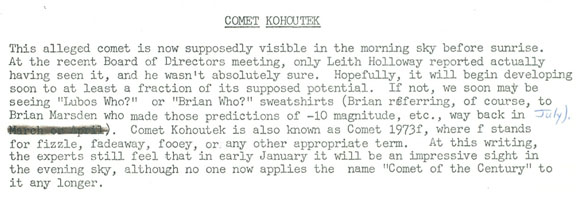
Is Comet ISON déjà vu all over again?  Here’s the report on Comet Kohoutek from the December 1973 issue of Sidereal Times.  Somebody was very disappointed.
Kohoutek

Click on image to read the article.

Posted in January 2014 | Tagged , | Leave a comment