Update on the Hastings-Byrne Refractor

by John Church

At the December AAAP meeting, Gene Ramsey, Dave and Jen Skitt, and the writer reported their progress on a plan to upgrade the refractor mount to make it more usable for both club members and the general public.

To review, there are two issues that need attention. First, the donated Losmandy GoTo mount that was installed in 2014 has not worked out well; it has a steep learning curve and other disadvantages. Fortunately we have a donated computer-capable Paramount which we believe can be readily mounted on the original cast-iron pier. The Paramount should also be able to take the current plate that holds the refractor onto the Losmandy.

Second, when pointed at objects higher than about 60 degrees above the horizon, the eyepiece has always become inconveniently low. Replacing the Losmandy with the Paramount will raise the entire OTA about 8 inches more above the floor, and it should still clear the roof when it is being rolled off.

This height gain alone should be helpful, but in addition we also propose moving the tube about a foot more up in its rings, which would give a total gain in eyepiece height of about 20 inches for the higher altitude objects. This will of course require that the assembly be rebalanced around the declination axis, but the existing sliding weight at the upper end of the tube should be able to compensate for this. Balance around the polar axis should not be affected.

Philosophically speaking, different sets of observers have legitimate and totally understandable preferences for the kinds of objects that they like to observe and possibly photograph. To accommodate these different interests, we feel that having two distinct types of fine telescopes in the observatory, each with its own special advantages, is very beneficial. The C14 is good for deep-sky objects and the refractor is good for solar system objects and open clusters, where its sharp definition and wide coma-free field of view can make for a rewarding observing experience. Additionally, the latter types of objects are often more appealing to the general public than deep-sky objects, as well as being much more easily accessible under the observing conditions that typically prevail in our area.

Another advantage of the refractor is that its objective and tube are always close to ambient temperature. It therefore needs very little equilibration time after the roof is opened. The large primary mirror of the C14 can take much longer to equilibrate and give images steady enough to appreciate, especially during the warmer months when the building heats up significantly during the day. Irregular air convection currents due to slow internal cooling within the wide tube can also be an issue.

Club members already know about the history of the refractor, and this background is typically of great interest to visitors. They also appreciate the opportunity to use a classic 135-year-old instrument that can provide excellent views of the moon, planets, open clusters, multiple stars, and some of the brighter deep-sky objects. Of the three objectives that Hastings ground himself, this is the only one still in active use as far as is known.

If we are successful in the remounting project, the next step would be to make the instrument fully computerized and have it operated by The Sky software in the same way that the C14 is operated. It would need its own computer, as of course any instrument would.

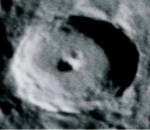
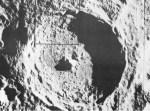
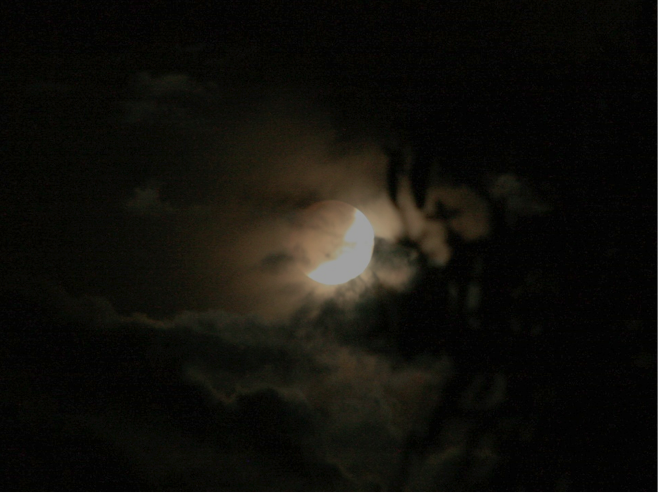
Here are photos of the lunar craters Copernicus and Tycho that I took on High Contrast Copy film and processed in my darkroom. The jagged shadow of the central peak in Tycho can be compared with the same area in a closeup taken by Lunar Orbiter V. Using a 2x Barlow gave an EFL of 4600 mm and therefore a large image scale, bringing out details down to nearly 1 arcsecond.


Even better resolution can be obtained visually. Watching the shadow play as the terminator creeps across the floor of a crater in the period of half an hour or so can be entertaining and educational to members of the public, and sometimes even to us hardened observers!
Posted in January 2015, Sidereal Times | Tagged , , , , | Leave a comment

Astronomy Calendar Sale

Our annual astronomy calendar offering was nearly a sell-out at the last meeting.  We have two left and they are available for $10 to the first two members who e-mail Michael Mitrano at treasurer@princetonastronomy.org.

If you are interested:

  1.  Please send the e-mail indicating your interest and confirming your postal mailing address.
  2. Wait for a response from Michael which will confirm that you are one of the two first to respond.
  3. Following confirmation, send the $10 check to the AAAP at P.O. Box 2017, Princeton, NJ  08543.
  4. He will mail you the calendar.
Posted in January 2015, Sidereal Times | Tagged , | Leave a comment

Astro Imaging from New Jersey

by Brian Van Liew

I started out imaging with various mono Starlight Xpress cameras years ago, but over the past few years, I have been imaging with a modified DSLR. Recently, I picked up an older camera and had the chance to see how rusty my imaging skills have gotten. The Starlight Xpress SXV-M25C is a model that I have been looking for but never found for sale. It is a few years old, and there are newer versions of it available now. However, I was quite happy to get the older version. I bought it used on Astromart from a fellow who lives in Poland. I spent many days emailing with him to discuss the purchase. Once I pulled the trigger, it only took a week to make the trip to me. It was in good shape and made the trip without any issues.

Now I needed to run the camera to see if it was in working order. I had to spend time with my friend Bill Nagel who also has experience with Starlight Xpress cameras to get familiar with a software package that I had not run in many years. After a visit and a few emails between us, I was ready for some serious first light.

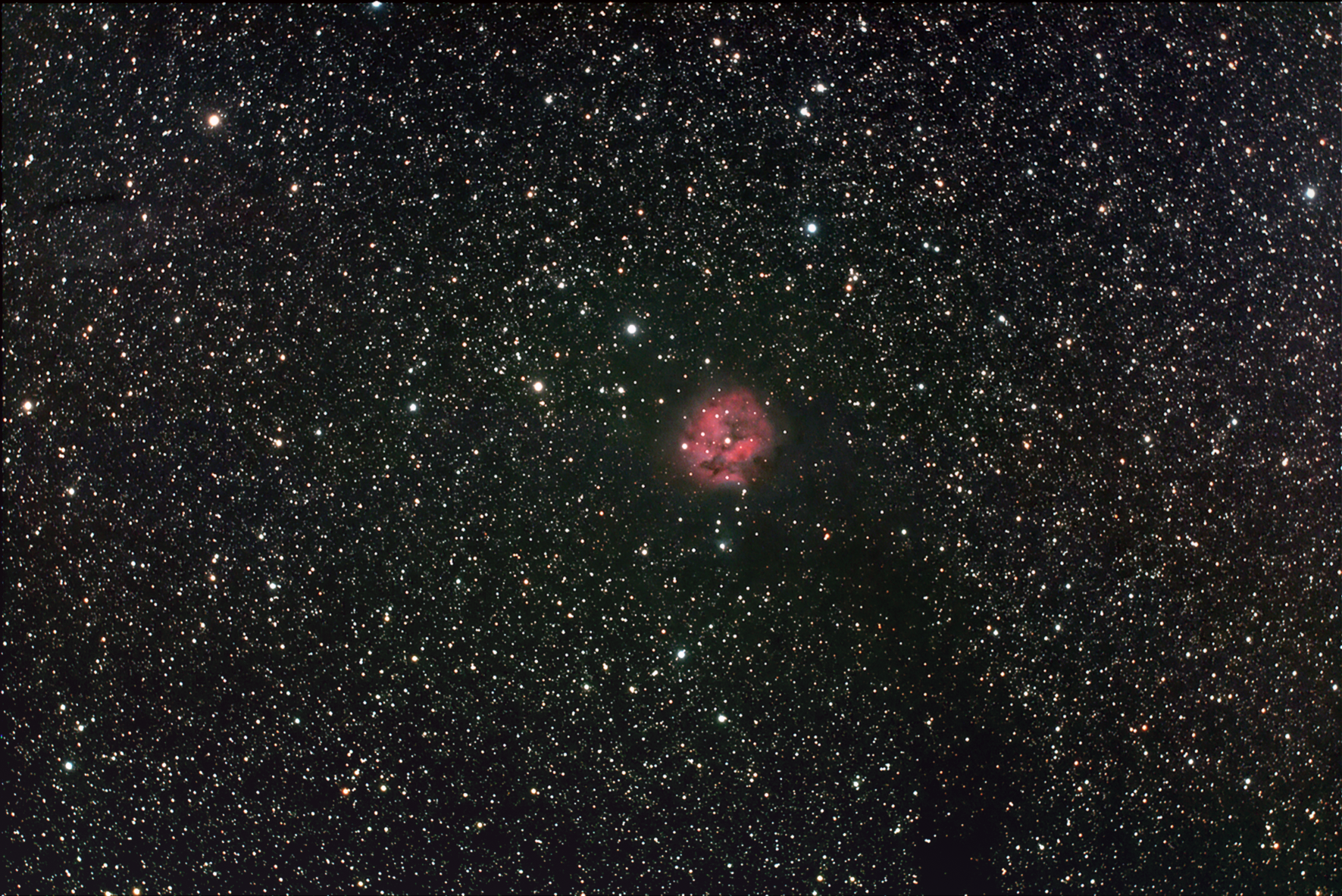
I selected an object that was in the best part of the sky at my home, which is from zenith to west/northwest. I configured my imaging rig for the appropriate FOV to cover the object and get a good image scale with the sensor in my new camera. I choose to go for IC 5146 a.k.a. the Cocoon Nebula. I set up my rig on my driveway and prepared for the imaging session. I was able to get it up and running without any big problems. My guiding looked good so now it was time to gather the subs. After a test shot to verify the pointing and the focus, I set it up to take fifty 300-second images for a total exposure time of over four hours. I pressed go and off it went. There was nothing more for me to do but catch up on a TV show and to check once in a while that everything was going according to plan. After the 50 subs had been collected, I moved my rig into the garage. Now that I had the lights (sub images of the Cocoon Nebula), I need to take three darks of the same exposure time of 300 seconds, several bias frame subs and flat field subs to correct for any imaging train vignetting and dust spots on the sensor. Then I’m off to bed to get some rest.

The next day I aligned/stacked and calibrated the light subs on my PC. Again, this is where Bill was able to give me more advice. So once the PC was finished, I had a calibrated image of the Cocoon Nebula. At this point, you can adjust the image to your liking and taste. I typically use Photoshop to do this post-processing work and try not to spend too much time working the image. Here is my final result.

Cocoon Nebula. Credit: Brian Van Liew

Cocoon Nebula. Credit: Brian Van Liew

There is a lot more that I haven’t covered in detail. If you would like any advice or would like to know how to do your own imaging, feel free to talk to me at one of the monthly meetings or you can email me at brian@princetonastronomy.org. I can’t make any promises that I will be able to answer all of your questions, but I will try to do my best.

Posted in January 2015, Sidereal Times | Tagged , , | Leave a comment

Into Deep Space and Back

by Prasad Ganti

The ride lasted only 4.5 hours. The space enthusiasts waited with bated breath for a successful early morning launch from Cape Canaveral, Florida; a successful circling of the Earth; a trip into deep space in an elongated orbit; a fiery re-entry into Earth’s atmosphere and opening of parachutes to soften the landing into the Pacific Ocean. The spacecraft was whisked away by the waiting navy ships to the mainland ending another space saga.

Sounds like one of the pre-Apollo missions from almost fifty years ago. No, it happened on December 6th, 2014. What is different about this mission? The spacecraft weighed a massive 23 tons. It is built primarily to carry crew into deep space, probably a mission to a comet or to Mars in a decade or two. This was an experimental mission to test Orion with thousands of sensors to monitor various flight parameters, with a heat shield meant to withstand four thousand degrees generated during the re-entry into Earth’s atmosphere and obviously no human crew to serve as guinea pigs.

Space exploration is about taking baby steps, dealing with the consequent stumbles and improving with each step. It cannot be viewed as a glass half empty. It cannot be a simple exercise in bean counting returns on investments. It is simply too valuable like any other basic research.

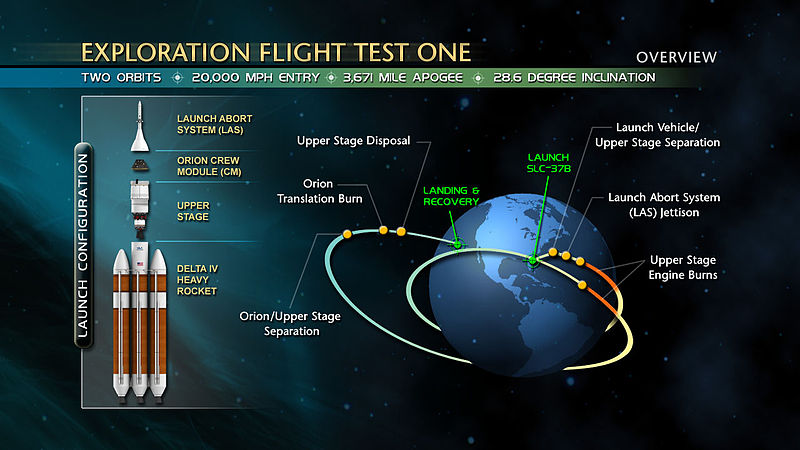
Orion is the next generation spacecraft meant to carry crew into deep space. A crew-carrying spacecraft is more complex than an unmanned cargo spacecraft. It needs life support systems to provide air for breathing, and water for consumption and cleansing. Such a heavy spacecraft had to be lifted by the most powerful launch vehicle, the Delta 4 heavy rocket. Below is a picture of the spacecraft and the launch vehicle and the sequence of events.

EFT-1 Mission Diagram

EFT-1 Mission Credit: NASA

The next baby step will be in 2018. It will also be an unmanned mission. NASA is building a giant Space Launch System (SLS) rocket. Heavy launch vehicles need powerful engines, powerful boosters, and more fuel. During the 2018 flight, known as Exploration Mission 1 (EM-1), Orion would fly around the moon and return back to Earth.

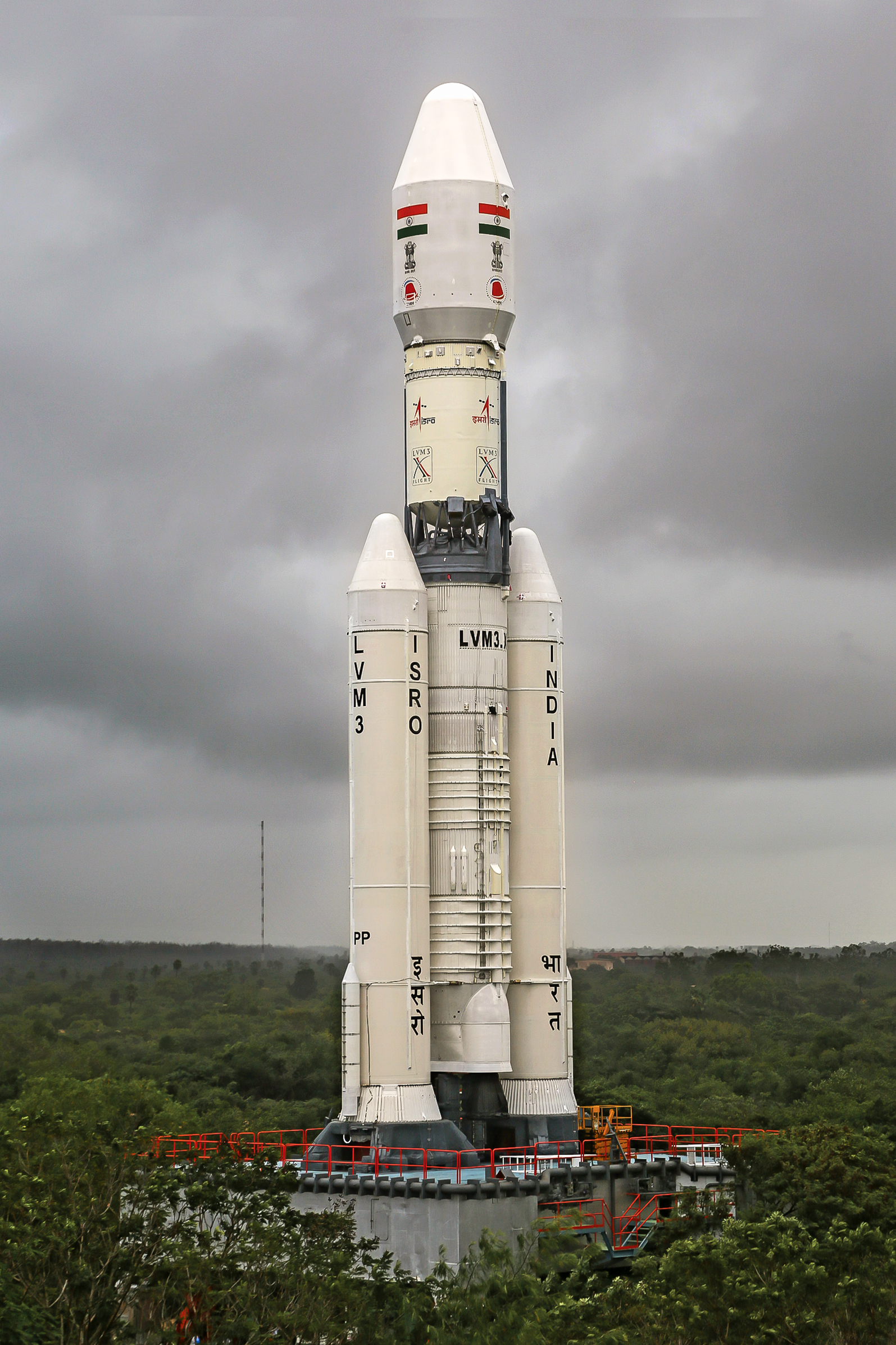
GSLV Mk-III Integrated with CARE being Transported to the Second Launch Pad

GSLV Mk-III Integrated with CARE being Transported to the Second Launch Pad Credit: ISRO

Coming close on the heels of the Orion module test, came a similar experiment, on a smaller scale by Indian Space Research Organization (ISRO). Carried out on Dec 18 2014, called CARE (Crew Module Atmospheric Re-entry Experiment), it involved a 3.7 ton module for future manned missions. India’s latest launch vehicle GSLV (Geostationary Space Launch Vehicle) Mark 3, a 3 stage rocket shot into the space carrying the crew module on the top. First stage is a solid booster followed by second stage a liquid fueled engine. The third stage was an experimental cryogenic engine called C25 which was passive on this flight. CARE separated from the cryogenic stage and reached a height of 126 km (~80 miles) and then re-entered the Earth’s atmosphere and safely parachuted itself to a safe landing over Bay of Bengal just about half an hour after the launch. This experiment augurs well both for future manned missions as well as the cryogenic engines which are critical for lifting heavy loads into space.

Posted in January 2015, Sidereal Times | Tagged , , | Leave a comment

Snippets

All contributions by David Kaplan except as noted

The Top 101 Astronomical Events to Watch for in 2015
Universe Today Contributed by Surabhi Agarwal

What Our Skies Would Look Like Without City Lights
In a series of transporting images, a photographer recovers the Milky Way — and a longing for infinite spaces — for city dwellers. NYTimes

Curiosity Progress Report
More than two years after arriving on Mars, Curiosity is climbing a mountain of sedimentary rock, reading the story of how the young planet turned dry and cold.  NYTimes

Goals Defined for UK’s Lunar Mission
Scientists set out the detailed scientific goals of a proposed UK-led mission to the Moon, including research into the feasibility of a human base there. BBC

The Dazzle of Southern Skies
A perspective from the Southern Hemisphere:  NYTimes
Our constellations may be upside down, but our stars shine brighter

Sun’s Sizzling X-rays Photographed
NASA’s “X-ray eye”, designed to study distant galaxies and black holes, has turned its attention to our own star and snapped a remarkable portrait: BBC

Discover a New kind of Astronomy Magazine

To discover the full riches offered by First Light Magazine, visit www.firstlight-magazine.com, or your Apple, Google, or Amazon digital shop. Contributed by Michael Wright


Posted in January 2015, Sidereal Times | Tagged , , | Leave a comment

From the Director

Rex


by Rex Parker, PhD director@princetonastronomy.org 

Peyton Hall and Beyond. Our journey through the universe and university continues in December as we meet for the last time (for a while, anyway) in Peyton Hall, which will undergo renovation in 2015. This will lead us to different campus venues beginning in January (Green Hall) as we adapt to the changes. Stay tuned to Sidereal Times for updates on upcoming meetings as we enter a new phase of club activities.

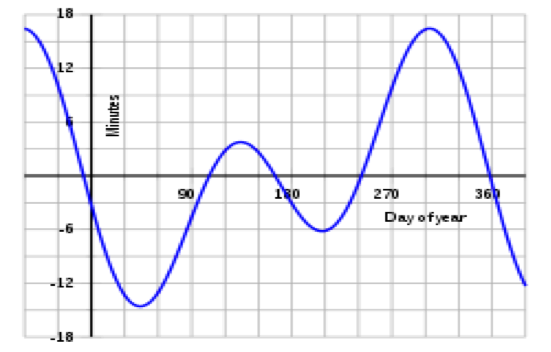
Solstice – Solar and Clock time. Soon the sun will reach its most southerly apparent position as the temperatures drop and the days shorten. Solstice comes on December 21, formally beginning winter season in the northern hemisphere. The solstice brings the shortest day and longest night of the year, but surprisingly it is not the earliest sunset for us in New Jersey, which will occur December 7. This seeming paradox may need some explaining. The answer has more to do with clocks than celestial mechanics, because our time system is based only approximately on solar days. Clocks are based on exactly 24.0 hour days, while a solar day (the period between solar transits) varies and is seldom 24.0 hours. In December, one solar noon to the next is about 24 hours plus half a minute. So the sun reaches its noontime (southernmost) position about seven minutes earlier on December 7th than the 21st. The exact relationship between apparent solar (sundial) time and clock time is more complex, as shown in the graph below, which shows the equation of time — above the axis the sundial is faster than the clock, and below the axis it is slower.  

REx-2

The Equation of Time Credit: U.S. Naval Observatory


Starstruck. One of the first-ever major exhibitions revealing astrophotography in all its glory as a genre of the fine arts is now running at the Michener Museum in Doylestown, PA. This exhibition features over 100 printed images from 35 astronomer-artists from around the world. The celestial show includes several images from AAAP’s speaker from last month, Dr Steven Mazlin, as well as many other nationally-known experts in the field. The photographs in this exhibition were selected by a distinguished group including Dennis di Cicco of Sky and Telescope and J.T. Bonnell of NASA’s APOD. Your opportunity to see this amazing show in Doylestown, PA will extend through Feb 8, 2015. I was personally starstruck after viewing the exhibit, the most impressive and inspiring astrophotography I’ve ever seen.

Winter and the heavens. Contemplate the splendor and wonder of the night sky as you button up and pull on your gloves. Wishing all members well as we wrap up a year of fine astronomy in AAAP.

Rex-1

Sharp are these cold nights
Moon and frost earth’s shadow share
Stars beckoning beyond globe’s rim
Waypoints and patterns for closing eyes.
We dream in these wintry climes
Wishing heaven to be our home
Misting clouds wrapped in our embrace
Chilled yet warmed by lunar light.        
– RAP –


Posted in December 2014, Sidereal Times | Tagged , | Leave a comment

Dr. Vera Gluscevic from Institute for Advanced Studies on December 9, 2014

IAS Post-Doc Vera

IAS Post-Doc Vera Gluscevic

AAAP’s next meeting and lecture will be on Tuesday, December 9, 2014 at 7:30 p.m. in Peyton Hall.  Our guest speaker will be Institute for Advanced Studies’ Post-Doc Vera Gluscevic. Dr. Gluscevic’s research focuses on using the cosmic microwave background to test physical theories, including those invoked to explain dark energy and inflation. She is also investigating a range of other topics, such as the direct detection of dark matter, probes of reionization, and the origins of magnetic fields in the universe.

She was born and grew up in Belgrade, Serbia, where she majored in astrophysics at the Faculty for Mathematics. She moved to Pasadena, California in 2007, for a PhD program at Caltech. After graduating, she moved to Princeton for a postdoc at the Institute for Advanced Study, starting in the fall of 2013. 

Beginning in January, Peyton Hall will be under renovations, so we will be meeting in other lecture halls on campus.  In January, we will meet in Green Hall.  Please watch future meeting announcements for new meeting locations.  

Posted in December 2014, Sidereal Times | Tagged , , | Leave a comment

Minutes of the November 11, 2014 AAAP Meeting

by James Poinsett, Secretary

  • Rex brought the meeting to order at 7:30 and suggested we have the membership vote on the technology proposal for the WC Observatory while most of the members were in attendance.
  • Larry Kane was introduced and outlined the specifics of the proposal for the membership. He asked Michael Mitrano to inform the club on the treasury balance. Michael stated the balance is currently a little under $26,000 dollars and the technology proposal would use less than 25% of that. There was some additional discussion, if it would be possible to set up an internet feed if we ever add internet service to the observatory. The membership was reminded that this is not the same as astrophotography. A motion was made and seconded to bring the issue to a vote. The proposal was approved unanimously.
  • Kate then introduced the speaker for the evening, Dr. Steven Mazlin and his talk “Fourth Dimension Astro-imaging”.
  • After the talk Bob Vanderbei shared his images of Barnard’s star and of Jupiter during the daytime.
  • There was some discussion on the club’s “Flicker” account for member photos.
  • There was discussion on the Rosetta spacecraft and the upcoming landing on the comet of the probe Philae.
  • Discussion on the video proposal, a timetable to get things done. It was decided that Larry and Michael will get together to purchase the camera. The possibility of buying some of the hardware used to save money will also be looked into.
  • There were 20 responses to the free dome advertised in Astro-mart. All the pieces need to be gathered in one place for whoever will pick it up. We also need to make sure they know what size truck is needed to transport it. Rex and Michael will coordinate the responses.
  • Program Chair Kate Otto thanked everyone who has sent in suggestions for speakers. We are set for the next 3 months.
  • Next was a discussion on the fate of the HB refractor. It has been determined that the pier can be raised about 8” to make it easier to use. John showed us some old pictures of the scope and the crew that used it during the eclipse in the 1800’s. Discussion will continue as to replace or not.
  • Gene informed us the park is repairing the gate at Bear Tavern Road. Winterizing the observatory will take place after the weekend of 11/22. The contractor doing the repair work was delayed by injury, the work will be done soon. The locks will be moved once the gate is repaired. We were also reminded that the dirt road is not plowed and is sometimes blocked by the plowing the park does do.
  • The issue of updating the computer and software at the observatory was brought up for discussion. It was decided that nothing needs to be done right away, and it is something that should be considered for next spring.
  • Green Hall is set for January’s meeting as Peyton Hall will be closed for HVAC work.
  • The donated camera is in the observatory ready for use by members.
  • Larry brought us up to date on the activities of the Washington Crossing Park Association. It has been suggested that if we support their activities they in turn would probably support us. The possibility of donating stone to shore up the road by the campsites while we get stone for our driveway was brought up.
  • A motion to adjourn the meeting was made and seconded. Meeting adjourned.
Posted in December 2014, Sidereal Times | Tagged , | Leave a comment

End-of Season Keyholder Star Party

by Michael Wright

To close out another successful season of public nights, keyholders held a star party at the Simpson Observatory observatory on Friday, November 21, 2014.  About 15 keyholders and guests attended, hung out talking astronomy and enjoyed hot drinks and snacks. Gene Ramsey ran the C14 and pointed out many popular objects including Uranus and Neptune, M76 and M15.  I pushed the Hastings-Byrne refractor around to some interesting doubles and triples such as ι Cass and η Cass.  Bill Murray surprised us with an interesting triple star, οmicron-2 Eridani (aka 40 Eridani), that consists of a K dwarf, a white dwarf and a red dwarf. Despite the cold, we enjoyed the clear skies at the observatory. Perhaps we can make this an annual tradition.

Posted in December 2014, Sidereal Times | Tagged , | Leave a comment