Star Wars – The Force Awakens

by Prasad Ganti

unnamed-2The seventh “Star Wars” movie was released in December of 2015. After almost a decade after Disney bought the franchise from George Lucas, there were uncertainties over how much would it stick to the original cult classic. Would it excite the fans as much as the original two trilogies did earlier? The fans came back in droves. The excitement reverberated in the box office coffers. By all measures, it was an amazing success.

I am a Star Wars fan. It inspires me like no other series. Rich in imagination are those fabulous worlds beyond our planet Earth: desert planets, icy planets, planets with strange creatures, strange dwelling structures, strange vehicles in stranger surroundings, different kinds of spacecraft zipping across the galaxy and so on.

Probably the human mind tires of the familiar sights we see in our daily lives – roads, cars, malls, airports etc. Anything newer looking is a welcome sight. Sometimes we develop contempt for the familiar. The same sights may look awesome to someone from an earlier age or from another planet which does not have advanced technology. We long for new and different places; planning a new vacation as soon as we come back from the current one. The Pyramids of Egypt and the beaches of Caribbean are enchanting for the same reason.

Usually it is difficult to sustain the creativity beyond one movie. That is why part 2 and part 3 are usually not all that interesting. Not so with Star Wars. Each of the seven movies has been freshly creative, not just an extension of the first successful one. Different concepts with an underlying common thread has been the hallmark of this franchise.

An empire stretching across the galaxy also stretches our imagination. The speed of light becomes the limiting factor for radio waves or spacecraft across such huge distances. It takes 20 minutes for radio signal to reach neighboring Mars. The Voyager 1 and 2 spacecrafts which left the Earth in the 1970s have barely reached the edge of the solar system. A hyper-drive for the spacecraft, and a hyper-wave relay for superluminal communication are the inventions in science fiction to overcome these limitations. We may not have these technologies for centuries to come.

It is not just the technology developments, but also the development of the mind. The Jedi are mentally as strong as their sabre fighting capabilities. There are many parallels between the Star Wars and Isaac Asimov’s Foundation series. Like Star Wars, Foundation consists of two trilogies, the second foundation focusing on the mental powers. Stretching across the galaxy, Star Wars was conceived by George Lucas with no mention of the Foundation.

Although a lot of things in Star Wars are different than the world we live in, one thing is the same: the baser instincts of human beings to fight with each other, to be territorial and to invent deadlier and deadlier arms to destroy on a vast scale. May be it is the Darwinian survival of the fittest instinct.

As Albert Einstein said after the dropping of the atom bomb, “Everything has changed except human thinking”. Good versus evil is at the core of the plots. Not only in Star Wars, but across wider variety of genres. “May the force be with you.” is the mantra of Star Wars, an equivalent of the present day “God bless you”. Evil seems to be winning most of the time until much later. The good then makes a comeback. Can the plots be equally creative and innovative, as the technologies and the other worlds are? Regardless, inspiring millions of people and firing their imaginations enough to cough up billions of dollars is no mean achievement.
Posted in April 2016, Sidereal Times | Tagged , | Leave a comment

Snippets

compiled by Michael Wright and David Kaplan

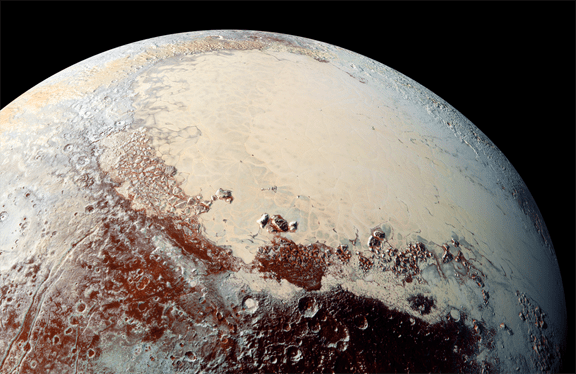
A color image of Sputnik Planum, the region known as Pluto's "heart," which is rich in nitrogen, carbon monoxide and methane ices. Credit NASA/Johns Hopkins Applied Physics Laboratory/Southwest Research Institute


A color image of Sputnik Planum, the region known as Pluto’s “heart,” which is rich in nitrogen, carbon monoxide and methane ices. Credit NASA/Johns Hopkins Applied Physics Laboratory/Southwest Research Institute

What We’ve Learned About Pluto
The story of Pluto is largely a story of ice. On Earth, the only ice is frozen water. On Pluto, nitrogen, methane and carbon monoxide also freeze solid. The most striking feature that NASA’s New Horizons spacecraft saw when it flew past Pluto last July was a heart-shape region now named Tombaugh Regio after Clyde Tombaugh, the discoverer of Pluto. The left half is covered by mostly nitrogen snow; the right side is more methane ice.

Dawn spies new detail in Ceres’ bright spot
The US space agency’s Dawn satellite continues to return remarkable images from the dwarf planet Ceres, in particular from its collection of bright spots in Occator Crater.

Project Greenglow and the battle with gravity
Scientists are debating whether it’s possible to harness the power of gravity for interstellar space travel.

Hubble telescope spies stellar ‘land of giants’
Astronomers use the Hubble Space Telescope to investigate a clutch of monster stars on the edge of our Milky Way Galaxy.

A ‘Tail’ of Two Comets
Two comets that will safely fly past Earth later this month may have more in common than their intriguingly similar orbits.

Astronomers Discover Colossal ‘Super Spiral’ Galaxies
A new class of behemoth spiral galaxies has been uncovered using NASA archival data.

Europe’s New Mars Mission Bringing NASA Radios Along
Two NASA radios aboard the European Space Agency’s Mars mission that launched today are engineered to provide communication relay service for rovers and landers on Mars.

Mars Mission Blasts Off From Kazakhstan
The ExoMars spacecraft consists of an orbiter that will measure methane and other gases in the Martian atmosphere and a lander that will study dust storms.

NASA Targets May 2018 Launch of Mars InSight Mission
NASA’s InSight mission to study the deep interior of Mars is targeting a new launch window that begins May 5, 2018.

Who was Caroline Herschel?
Caroline Herschel is the subject of a Google doodle, but what was her contribution to science?

Watching the heavens: The female pioneers of science

Why the forgotten women of astronomy are being celebrated 100 years on.

Ten Years of Discovery by Mars Reconnaissance Orbiter
True to its purpose, the big NASA spacecraft that began orbiting Mars a decade ago this week has delivered huge advances in knowledge about the Red Planet.

NASA’s K2 mission: The Kepler Space Telescope’s Second Chance to Shine
How engineers devised a clever solution to give NASA’s Kepler spacecraft a new mission.

Dawn’s First Year at Ceres: A Mountain Emerges
NASA’s Dawn mission commemorates the spacecraft’s first year at Ceres with new images of a mysterious mountain.

Dark Mercury’s ‘pencil lead crust’ revealed
The planet Mercury may once have been encased in an outer shell of graphite, the same material used as pencil lead.

Gravitational waves: Tests begin for future space observatory
The European Space Agency’s Lisa Pathfinder probe begins testing the technologies needed to detect gravitational waves in space.

Hubble sets new cosmic distance record
The Hubble Space Telescope spies a galaxy that existed more than 13 billion years ago, very close to the dawn of star formation.

Versatile Instrument to Scout for Kuiper Belt Objects
The CHIMERA instrument at the Palomar Observatory near San Diego is using hi-tech cameras to locate near-Earth asteroids and objects in the Kuiper Belt.

Radio flash tracked to faraway galaxy
Astronomers pinpoint the source of an explosive ‘fast radio burst’ for the very first time, and use it to measure the density of the cosmos.

Astronaut Capt Scott Kelly’s year in space
A selection of some of the stunning images posted on social media by astronaut Capt Scott Kelly

5 Ancient Sites Built to Align with the Spring Equinox
Architecture that works with astronomy.

Posted in March 2016, Sidereal Times | Tagged , , | Leave a comment

Director’s Report

by Assistant Director Larry Kane

This month I am filling in for our Director, Rex Parker, as he is off exploring the natural wonders of New Zealand.  No doubt, he is more interested in the ecology and grandeur of this mini-continent than in the hunt for the “one ring that binds them all.”  On behalf of the AAAP, I am hoping that Rex brings back many stunning pictures, and, perhaps a talk about his trip.

This month, on Sunday, March 20 at 12:30 AM, we will witness the “spring equinox.”  At this time, the Sun will shine directly on the equator and the hours of daylight and night will be nearly the same.  It is also the time when the Sun crosses the celestial equator.  These events have been widely celebrated in the Northern Hemisphere as witnessing a time of rebirth with the cold of Winter relinquishing to the hope of a warmer Spring.

After some discussion with Director Rex and other members of the AAAP, I have decided to take on another two-year term as trustee and AAAP representative on the Board of the Washington Crossing Park Association (WCPA).  As the interests and goals of both organizations often overlap, I will do my best to ensure that the AAAP remains an integral part of the park and its programming.  When events, developed and presented by the WCPA, are of interest to the AAAP, I will make sure that our organization is made aware of them.  The importance of a working relationship between these two organizations cannot be over emphasized and I encourage all AAAP members to consider becoming members of the WCPA.  You can contact me for details.

I cannot write to the AAAP membership without reminding everyone about the TOTAL SOLAR ECLIPSE VISIBLE OVER MUCH OF NORTH AMERICA ON AUGUST 21, 2017.  An effort has begun to look into a AAAP group trip to view the eclipse.  Initial investigations have determined that the best place to view it may be in Oregon.  While this will definitely be a hike for us, the closer locations in parts of Kentucky, Tennessee, North Carolina and Illinois, are more likely to have cloud cover.  As this is a once in a lifetime chance for many of us to see such an event live, we should consider going to a place where we have the best chance of actually seeing it.  Stay tuned, as I am still putting together preliminary data and will, shortly send out a survey to gauge interest within the AAAP.  Again, please contact me if you have any suggestions or questions.

Clear Skies,

Larry

Posted in March 2016, Sidereal Times | Tagged , , | Leave a comment

The Dark Side of the Universe – March 8, 2016

Dr. Netah Bahcall

Dr. Neta A. Bahcall

By Ira Polans, Program Chair

 The March meeting of the AAAP will be held on the 9th at 7:30 PM in Peyton Hall on the Princeton University campus. The speaker is Dr. Neta A. Bahcall, Eugene Higgins Professor of Astrophysics at Princeton University. Dr. Bahcall will discuss “The Dark Side of the Universe”.

What is the Universe made of? Recent observations suggest surprising results: most of the content of the Universe is dark and unexpected; not only most of the matter in the Universe is dark and unconventional but, more surprisingly, the major component of the Universe may be in the form of ‘dark energy’—a form of energy that opposes the pull of gravity and causes the expansion of the universe to accelerate. By combining recent observations of clusters of large-scale structure, distant supernovae, and the cosmic microwave background, we find evidence for a Universe that has only 5% normal baryonic matter, 20% non-baryonic dark matter, and 75% ‘dark energy’. The observations suggest a Universe that is lightweight, with only 25% of the critical mass-density needed to halt the Universal expansion; the Universe will likely expand forever. Dr. Bahcall will discuss the observations of the dark side of the Universe and their implications.

We will not have a March meet-the-speaker dinner.

Our April speaker will be Dr. James Green, Director of the Planetary Science Division at NASA Headquarters. Dr. Green will speak on “New Discoveries in the Outer Solar System: Ceres, Pluto, and Planet X”.

We urge you and friends to attend one or both of these meetings.

Posted in Sidereal Times | Leave a comment

Public Astronomy Lecture – University of the Sciences

by Ira Polans, Program Chair

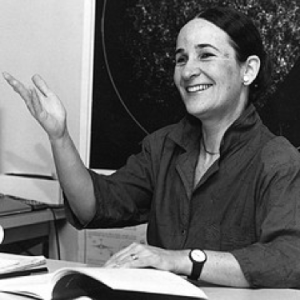
Our November speaker, Dr Paul Halpern, has invited AAAP members and the general public to a series of free astronomy lectures at the University of the Sciences in Philadelphia on Wednesday, March 23 and Thursday, March 24 by astronomer Dr. Susana Deustua of the Space Science Telescope Institute (NASA).

  • Wednesday, March 23 from 4:00 PM – 5:00 PM
    Women in Astronomy
    Whitecar Hall, Room 207
  • Thursday, March 24 from 1:00 PM – 2:00 PM
    The Accelerating Universe and Dark Energy
    Science and Technology Center, Room 137

The University of the Sciences is located in West Philadelphia, 43rd St. and Woodland Ave. The lectures are sponsored by the Harlow Shapley Lecture Series, American Astronomical Society.

Posted in Sidereal Times | Leave a comment

2016 Stokes Star Party

The Stokes Star Party will be held April 1 and 2 this year at the New Jersey School of Conservation in Stokes State Forest, 1 Wapalanne Road, Branchville, NJ 07826.

Members interested in attending can find more information on the star party website: http://stokesstarparty.com

From the website:

The 2016 Spring Star Party is NOT New Moon weekend, this is the Last Quarter Moon. However, the Moon will not rise at this site until approximately 3:25am the morning of Saturday, April 2. Thus, Friday night’s observing will be dark and mostly Moonless, as will Saturday night’s as the Moon doesn’t rise until approximately 4:10am Sunday morning.

We selected this weekend because the Rockland Astronomy Club (RAC) scheduled the Northeast Astronomy Forum (NEAF) during April’s New Moon weekend. So as not to cause a conflict of dates for those interested in attending both events, the Stokes Star Party was moved from our usual April New Moon schedule.

The main observing field during the 2006 event. (Credit: Tom Olgetree)

“New Jersey” and “dark skies” are not usually companions within the same sentence, but the Stokes Star Party has begun a tradition of taking advantage of the remaining dark skies in the Garden State. Nestled up in the far Northwest corner of the state is Stokes State Forest, inside of which is found the 240-acre abode of the New Jersey School of Conservation (NJSOC). Owned and operated by Montclair State University (MSU), this tract of land is preserved as an environmental extension station for the College of Science and Mathematics at MSU.

As such, the NJSOC has become an ideal setting for star-gazing under night skies that are the least obstructed by light pollution in the state.

With the coordination of John Miller (Pearl Observatory), Rob Teeter (Teeter’s Telescopes) and a handful of other dedicated observers, the Stokes Star Party has become a “right of passage” every April as the first Northeast Star Party of the calendar year.

Posted in March 2016, Sidereal Times | Tagged | Leave a comment

Treasurer’s Report

by Michael Mitrano, Treasurer

Thus far in our fiscal year that ends in June, we have 81 members.  Our dues revenue at this point is almost exactly the same as it was a year ago at the same date.

Revenue for the fiscal year to date is about $7,500, with nearly $4,000 of that resulting from the sale of donated equipment and the C14 that we removed from service in Washington Crossing State Park.  Even with repair and improvement costs for the observatory, which total $1,200 so far, we still have a year-to-date surplus of nearly $4 thousand.

On a cumulative basis, the AAAP’s surplus is about $27 thousand.

Posted in March 2016, Sidereal Times | Tagged , | Leave a comment

Minutes of the February 2016 Meeting

by James Poinsett, Secretary

  • “Saving Hubble” was shown before the meeting followed by a lecture by the filmmaker, David Gaynes.
  • The meeting was called to order at 9:00 after the movie and lecture.
  • The new website is live. Good job Surabhi and Mike. Surabhi is still waiting for some additional items to be added to the site.
  • There was a brief discussion on the newly discovered Planet X.
  • There will be a board meeting on Tuesday, March 29th at 7:00 PM at the West Windsor Branch of the Mercer County Library. All members are welcome.
  • Ways to help keyholders refresh their knowledge of the night sky were discussed. There will be refresher classes at the NJ State Planetarium on Saturday mornings, Feb 13 & 20.
  • StarQuest 2016 was discussed. The only new moon nights available are April 8 and October 28. Other options discussed were last quarter moon weekends of Sept 23 or Oct 21. A concensus of club members present agreed to the weekend of October 28th.
  • UAC NJ is soliciting donations to refurbish their observatory at Jenny Jump. Board members present agreed to a $200 donation by the club.
  • The observatory is open and operational, but be careful as there is snow all around. Four wheel drives vehicles are recommended until the snow is gone.
  • Observatory improvement ideas are wanted for the next board meeting.
  • Larry will survey club interest in a trip to view the 2017 total solar eclipse.
  • The keyholder schedule for the upcoming viewing season will be adjusted so the same teams are not on the holiday weekends every year. Keyholder email address and phone numbers will be added to the schedule to facilitate communication between teams.
  • Meeting was adjourned at 9:55
Posted in March 2016 | Tagged , | Leave a comment

Gravitational Waves

by Prasad Ganti

A couple of weeks back came the news that gravitational waves have been detected proving one of Einstein’s predictions. Rex wanted to see if we can arrange for a talk on this topic. The same sentiment was expressed by the program co-ordinator of “Science on Saturday” at the Princeton Plasma Physics Laboratory. Since our lectures are booked until June, we will try to find a speaker for September or later this year.

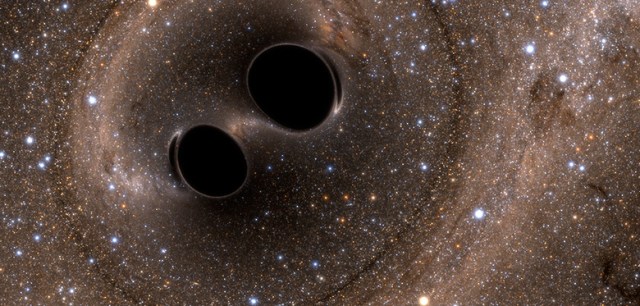
Einstein came up with the General Theory of Relativity about a hundred years ago in which gravity was a main player in the sculpting of our Universe. Most of his predictions regarding the bending of light due to space-time curvature and slowing of time in presence of gravitational fields have been proved. One thing left over was the prediction of gravitational waves. These ripples in the fabric of space are supposed to be created when violent cosmic events happen like the collision of two black holes. We have witnessed other extreme events like cosmic collision of galaxies and supernova explosions, but they are too mild to produce gravitational waves. No one has witnessed collision of black holes so far.

Black holes are a gravitational extremity predicted by Einstein. Since it is is a very compact gravitational well, absorbing all the radiation and giving nothing out, they have been observed indirectly through their effect on other visible bodies around them. Most of the galaxies are supposed to have a black hole at their centers, including our own Milky Way and our neighbor Andromeda. Finding two black holes in the vicinity of each other leading to a collision is rare events Finding such scenarios in our neighborhood or even within a few million light years is nearly impossible. If such a thing does exist, the human race may cease to exist!

Looking further into space also means looking back into the past. Because of the vast distances involved, even light takes millions or billions of years to reach us. As a result, the gravitational waves tend to be very feeble by the time they reach us. Detection of such waves is as much engineering as science. Like telescopes are detectors for light and radiation like infrared, ultraviolet etc., a precise interferometer was constructed in an L-shape with two2.5-mile arms. A laser beam fired along both the arms is reflected by end mirrors. Any discrepancy in arrival of the beams to the starting point could indicate the presence of gravitational waves.

LIGO Facilities in Washington and Louisiana (Credit: Caltech)

LIGO Facilities in Washington and Louisiana (Credit: Caltech)

The mirrors are highly polished and guarded against any other terrestrial vibrations. The tubes themselves have a high vacuum and are very cold. To verify that a signal is not due to another source of vibrations, two such devices were built. Called LIGO (Laser Interferometer Gravitational-Wave Observatory), one is located in Louisiana and other in Washington state. Both of them detected the gravitational waves in a recent collision of two compact black holes. There is very high degree of confidence in the scientific community that these were indeed gravitational waves. More such observations are required to be totally certain. Since the equipment is becoming more sensitive and sophisticated, we can expect similar observations in the future.

LISA (Laser Interferometer Space Antenna), a set of 3 satellites with lasers and mirrors, will be positioned a million miles from the Earth, where the gravity from Sun and Earth cancel each other out. This Lagrangian points is a good spots for observing gravitational waves. Let us see if LISA can detect other gravitational waves including the ones from the Big Bang itself.

Coming on the heels of the discovery of Higgs Boson a few years back, this has been a phenomenal discovery. What is next ? Unification of gravity and quantum mechanics via the string theory? Discovery of multi verses? Just when we thought that we learnt a lot about cosmology, it seems like nature threw a wrench into the works and we stumbled upon dark matter and dark energy. Making us realize that we still have a long way to go. Learning is a quest, not a destination.

Posted in Sidereal Times | Leave a comment