From the Assistant Director

by Larry Kane, Assistant Director 

I wanted to give everyone an update on the AAAP Solar Eclipse trip to Oregon in August. While most of the available lodging within driving range of our observing position is taken, I have managed to secure eight rooms at two motels. Four of them have been requested by AAAP members and their spouses. Two other members and their spouses have indicated an interest in joining our expedition.

So, if you are interested in viewing, what may be a once in a lifetime event, please contact me at ​kane@princetonastronomy.org​ or call me at 609-273-1456.

Posted in March 2017, Sidereal Times | Tagged , | Leave a comment

AAAP March 14, 2017 Meeting

by Ira Polans, Program Chair

josh-winnThe March AAAP meeting is on the 14th at 7:30PM in Peyton Hall on the Princeton University campus. The talk is on the “Strange New Worlds” of exoplanets by Dr. Josh Winn, Princeton University.

Did you know that it wasn’t until the 1990s that scientists could be sure there were planets beyond our solar system? Since then, astronomers have discovered thousands of these planets known as “exoplanets” circling distant stars. Dr. Winn will explain why it took so long to find planets around other stars, what new technologies and techniques were required, and what kind of planets have been found. Recent advances have revealed bizarre new worlds unlike anything in our Solar System, while also bringing us right to the threshold of finding other planets similar to Earth. Dr. Winn’s talk will also cover the latest findings of earth-sized planets recently announced by NASA.

Dr. Winn in addition to being a professor at Princeton, is also a professor at The Great Courses (aka The Teaching Company) and has a course “The Search for Exoplanets: What Astronomers Know”. The course will be available after the talk at a special price.

We’re planning to schedule a short meeting (of about 30-45 minutes) either later in March or in April to seek club member suggestions for speakers for next year. In the business half of the March meeting I will be announcing an exciting speaker for the April meeting. We’re hoping to get a large turnout next month!

Prior to the meeting there will be a meet-the-speaker dinner at 6PM at Winberie’s in Palmer Square. If you’re interested in attending please contact program@princetonastronomy.org no later than Noon on March 14.

Posted in March 2017, Sidereal Times | Tagged , , | Leave a comment

There’s a Star Gazing App for That

by Dave Skitt

While training new keyholders, I am often asked to provide the names for the various astronomy related apps that I use or am familiar with. Below are the apps I have on either my iPhone 7 or iPad Mini 2. I cannot be sure if there are similarly named apps by the same developers in the Android environment since I only have iOS devices (sorry!). Typically, I would begin with the free version of the app, if offered, and eventually purchase the full version. Some are really good tools that I use frequently; others I have because they are good references or others have talked about them.

For general astronomy/planetarium/planisphere type apps, I have the following:

SkySafari 5 (various $)
This is a really great app that has three paid levels of its current version, SkySafari 5 (before 5, there was 4 and 3, etc.). The three levels are: SkySafari 5 (Basic) (~$3), SkySafari 5 Plus (~$15) and SkySafari 5 Pro (~$30). It is put out by Simulation Curriculum which also makes SkyPortal, a free app written specifically for Celestron that can connect to and run some of the Celestron go-to telescopes. SkyPortal is similar to, but has less content and feature rich variation of the Basic SkySafari 5 level. The Basic SkySafari app is fine, but it cannot run any go-to telescopes, Celestron or otherwise. The SkySafari 5 Plus level has a lot of good content and features and can run many go-to telescopes, if you eventually go that route and have the proper direct connect cable or a Wi-Fi module for the telescope. The SkySafari 5 Pro level has a ton of content and can run many telescopes, but much of what’s in the database is beyond what most telescopes can see from earth (not that there is anything wrong with that). The Pro level is a very large app, however, that takes up a lot of space on your device. One other downside for any of the SkySafari products is that if you buy one of the three levels, there is no “free upgrade” to the next higher level. You must pay for each level separately (app updates within the levels are free, however). This also applies if Simulation Curriculum eventually comes out with a newer ‘version’ (like SkySafari 6, for example). You’ll have to pay again for whichever level of the newer version you want. But it is such good app that I have never regretted supporting the developer with my many purchases.

Orion Star Seek 5 (~$15)
I have an earlier version of this app (Orion Star Seek 3) which was practically the same app as the prior SkySafari 3 Plus. I would imagine this app is similar to SkySafari 5 Plus, but I haven’t used it.

Luminos (~$20)
This is another really great astronomy app similar to SkySafari 5 Plus/Pro. It can run telescopes and has a lot of really good features and content. I flip between this app and SkySafari 5 frequently.

TheSky HD (~$30)
This is put out by Software Bisque, the makers of the Paramount ME telescope mounts in our observatory and the software that runs them (The Sky6 and The SkyX). I do not have this app so I can’t comment on it. It seems to have gotten mixed reviews. Software Bisque also puts out a nifty app called Gas Giants, which shows the planets Jupiter, Saturn, Uranus and Neptune and the position of their visible moons. I have the Gas Giants app and really like it.

Stellarium (~$3)
This app is similar to the free, PC/Mac computer software by the same name. The PC/Mac version is open source software which gets updated often. I really learned a lot about what’s up in the sky just by using the computer software when I got started in this hobby. The computer software can also connect via cable to many go-to telescopes and act as a hand controller replacement. I did this with my Celestron Nexstar 8SE before graduating to using SkySafari and an iPad via Wi-Fi.

Pocket Universe (PUniverseX) (~$3)
I just recently found this really good starter app. Lots of really cool stuff in here.
Other good general astronomy/planetarium/planisphere type apps that I use off and on are the following: SkyView, GoSkyWatch, Sky Live, Star Walk 2, Solar Walk 2, Star Chart, Astro Sky, Astro Plan, Starmap 3D+, ShowSky, Star Rover, Starglobe, Distant Suns, and Star Tracker HD.

For Moon and planet specific apps, I have the following: Gas Giants, Saturn Moons, Jupiter Moons, MoonGlobeHD, MarsGlobeHD, MoonPhases, Moon+, Moon Tours, Jupiter Facts, Mars Facts, Mercury Facts, Venus Facts, Pluto Safari, Luna Solaria, Your Weight on Planets, Solar System and Exoplanet.

For Sun specific apps, I have the following: SDO, SoHo, SunViewer, Aurora Fcst (forecast), Aurora (two different apps; I don’t know how to distinguish the two but one is iPad and one is iPhone), SolarTrack, SunFacts! and Touch the Sun. A very useful app that shows the difference between civil, nautical and astronomical daylight, twilight and night time is called DayLight.

For Deep Space objects, I have the following: Ad Astra and Star Atlas are two, fixed (paper-like) star chart apps that show deep space objects. Other apps are NGC List, DS Browser, Messier Ma. (Messier Marathon) and Nearest Stars.

For comets/meteors/asteroids, I have the following: Meteor Shower Calendar, ams (American Meteor Society) and AsteroidAlert.

For Satellite and/or ISS tracking, I have the following: Satellite Safari, Sputnik!, ISS Spotter, ISS Finder, pxSat, Satellites, ISS Live!, GoISSWatch and Earthlapse.

For space and/or space flight news, I have the following: SkyWeek+, NASA, NASA Viz, Universe Today, Portal to the Universe, ESA (European Space Agency) and What’s Up At Wallops.

For weather apps, I have the following: Weather Channel, WeatherBug, eWeather HD, MyRadar Pro, Hi-Def Radar, Radar HD, NOAA Weather Radar and AccuWeather. For astronomy specific weather forecasts, I have myCSC, iCSC and Scope Nights. Typically, I set up the radar views differently across the various weather apps as one may show cloud cover or the wind patterns better than the others while and one may show more detailed precipitation patterns, etc. You get the idea.

As the number of astronomy related websites is astronomically huge, here are a few that I visit: SpaceFlightInsider.com, Space.com, Spaceweather.com, EarthSky.org, Heavens-Above.com and UniverseToday.com.

If you find a really cool app or website, shoot me an email at Observatory@Princetonastronomy.org; I still have a little bit of space left on my iPad.

Happy star gazing app hunting…

Posted in March 2017, Sidereal Times | Tagged , | Leave a comment

A failure is a non sequitur

by Theodore Frimet

or how I stumbled onto an Ultra Violet telescope

A few articles ago, in fact, my first, I described how I was converting my passion for infrared based sensing of cloud height to near infrared sensing of star light. And that I anticipated a failure. What I should have seen coming, down the proverbial tunnel, was lots of procrastination. Well, maybe not ‘lots”, however enough to miss out on the three really good days of winter for back yard astronomy in my hometown of Croydon, PA. And by snuggling up with some books, and coffee, instead of the cold dark sky, I missed the winter sky. Almost entirely, that is, if you don’t count “looking up at the night sky” and knowing that you are one with the universe(s).

So, how to recover from some of the insult of having to wait for better skies in March? It came to me about three days after positing the question. Or to rephrase, politely, how does one not “eat crow” for missing a self appointed time schedule? Be inventive!

I had discovered, to my delight, that after coating my 4 inch mirror with gold leaf, that the visual color of star light had been altered. It appeared pale, with blue over tones. “Ah Ha”, he decries! What was once invisible that is now blue in visual spectrum?

Having originally thought out that “yellow” gold leaf would enhance more red-yellow; to my amazement, I was seeing more of the opposing side of the visual spectrum. I now pronounce, …ahem…, and with some reservations….that Ultra Violet light is being converted from the non visible part of the spectrum to visible blue (or if you prefer “visual purple/violet”). By default, I claim that instead of a “IR” telescope, I’ve got a “UV” telescope!

I plan on March to revisit the near infrared sensor (TI 101) as installed. And then, with or without success, will invest some time in an UV sensor and see if gold coating on the mirror surface does promote more visible light, than not.

However, no timetable is going to be set this time, as it is a slow boat from overseas that delivers the goods. Alas, and for now, I’ve got to take some Tums© to go with my crow.

Posted in March 2017, Sidereal Times | Tagged , | Leave a comment

Launching a hundred satellites

by Prasad Ganti

India’s space agency ISRO recently launched a rocket with one hundred and four satellites as payload and released each satellite in succession flawlessly into the intended orbit. Apart from setting a record, some trends became apparent to my mind.

India’s proven launch vehicle PSLV (Polar Satellite Launch Vehicle) carries routine payloads to low earth orbits, a few hundred miles above us. It has carried a lot of satellites belonging to different organizations and countries across the world in the past. The large number of satellites carried recently does not imply a heavier payload. One ISRO’s Cartosat-2 Series Satellite was big and weighed about 714 kg. Two others also belonging to ISRO were Nano Satellite-1 (INS-1) weighing 8.4 kg and INS-2 weighing 9.7 kg and the rest of them were smaller. In fact, the smaller ones were accommodated after some spare capacity in terms of space and weight was found.

Of this bulk payload of small satellites, also called cubesats or nano satellites, ninety six of them belonged to the U.S. based Earth-observing company Planet. Measuring only twelve inches long by four inches wide by four inches high, these tiny satellites, also called Doves, will allow the company to image the entire Earth every day.

The rise of cubesats is amazing. It is democratizing the design, building and launching of satellites. A college project can now consist of designing and building such a satellite. With the growth in complexity and the fall in cost of electronics and sensors, such satellites are becoming commodities. Standardizing the dimensions of such satellites makes it easier to load into launch vehicles and releasing them from it. Something akin to containerization of the shipping industry which led to a dramatic drop in shipping costs across the globe.

The launch of such a large number of satellites required a specialized release strategy involving three stages. In fact, the design of the release adapter was the hallmark of this launch. The three larger satellites belonging to India were deployed first “axially along the vehicle,” followed by eighty one of the nanosats, released in a radial direction away from the vehicle. Finally, the last twenty nanosats successfully separated in a different sequence.

Although the cost of launching a satellite is significant, they are dropping fast. NASA and the other western powers are not the only game in the town anymore. Even they are contracting with low cost countries like India to do the launches. It is said that the engineers in India are paid lower which leads to lower costs. But that is an oversimplified explanation. Technology maturity comes with failures over time and with experience. Besides, these engineers work in a democracy with free markets. No one works for a pittance for the sake of “our beloved leader”. Same way we don’t pay our baby sitters more than what the markets and laws demand.

The smaller companies, countries and universities are now able to have their satellites up in space. Anytime such proliferation occurs for short life cycle devices, it invariably leads to junk. Like mobile phones or tablets or desktop or laptop computers. Space junk will be a serious problem in the future, if it is not already one. There may be a business model to just clean up space garbage!

India’s heavier and higher orbit launcher GSLV (Geosynchronous Satellite Launch Vehicle) is for launching the heavier communication satellites into much higher geosynchronous orbits where they appear to be stationary from a point on Earth. GSLV is still maturing. The current model Mark 2 uses indigenously developed cryogenic engines to launch about 2 tons of payload. Mark 3 for launching 4 tons of payloads is slated for launch in a few months. Setting the stage for a manned spaceflight in near future.

Miniaturizing satellites and launching multiple of them seems to be the mantra for increasing space based applications.

Posted in March 2017, Sidereal Times | Tagged , | Leave a comment

Snippets

compiled by Arlene & David Kaplan

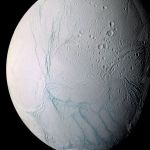
Streams of water on Enceladus. -NASA/JPL/SSI

Streams of water on Enceladus. -NASA/JPL/SSI

Cassini probe sweeps over Saturn’s moon Enceladus
The NASA craft swept just 50km above the moon’s surface in a final attempt to “taste” the chemistry of water jets spewing from its south pole. Enceladus has produced a series of major discoveries that mean it is now considered one of the most promising places to find life beyond Earth…more

Interferometer System - ESA

Interferometer System – ESA

Gravity probe exceeds goals
The long-planned LISA space mission to detect gravitational waves looks as though it will be green lit shortly. Scientists working on a demonstration of its key measurement technologies say they have just beaten the sensitivity performance that will be required…more

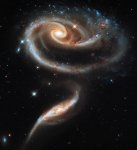
Interacting Galaxies - NASA

Interacting Galaxies – NASA

Cosmos Controversy: How Fast is the Universe expanding?
There is a crisis brewing in the cosmos, or perhaps in the community of cosmologists. The universe seems to be expanding too fast, some astronomers say. Recent measurements of the distances and velocities of faraway galaxies don’t agree with a hard-won “standard model” of the cosmos that has prevailed for the past two decades…more

India launches 104 satellites in one go. - ISRO

India launches 104 satellites in one go. – ISRO

India launches record 104 satellites in a single mission
India has created history by successfully launching 104 satellites on a single mission, overtaking the previous record of 37 satellites launched by Russia in 2014. All but three of the satellites are from foreign countries, most of them from the United States…more

Winston Churchill - BBC

Winston Churchill – BBC

Winston Churchill on aliens
A newly unearthed essay by Winston Churchill reveals he was open to the possibility of life on other planets. In 1939, the year World War Two broke out, Churchill penned a popular science article in which he mused about the likelihood of extra-terrestrial life.
..more

Posted in March 2017, Sidereal Times | Tagged , | Leave a comment

From the Director

Rex


by Rex Parker, Director

AAAP ends observatory operation at UACNJ. For the past year and longer, we have been considering the fate of our club’s observatory at the United Astronomy Clubs of New Jersey observatory site at Jenny Jump State Forest. Our involvement there goes back to the beginnings of UACNJ as a consortium of NJ astronomy clubs when we became one of the founding member organizations. Our observatory, one of six on the Jenny Jump site, was built from scratch in the mid-90’s by a group of club members, including Bill Murray, Saul Moroz, and myself, along with former members Vic Belanger, Ron Mittlestaedt, Ralph Marantino, Larry Smith, and others.

Over the past year our assessment of member interest and the ability of AAAP to continue to support an observatory there reached a dismal conclusion. Largely due to travel distance, we lack a critical mass of member-observers able to participate on a regular basis. Further, recent rule changes executed by the UACNJ Board require a higher level of engagement and regular attendance in order to maintain our sub-lease for the site.

On Jan 18 the AAAP Board of Trustees considered these facts and reached a unanimous decision to formally disengage from observatory operations at UACNJ Jenny Jump. We therefore are allowing the observatory facility to be placed back into regular use by another club (several are interested), ending our claim to an observatory at Jenny Jump. Importantly, we agreed to maintain AAAP’s member-club status in UACNJ, so that AAAP members can bring their own equipment onto the site and observe anytime a UACNJ Observer is present.

Upcoming Club Activities:

Solar eclipse plans (Aug 21, 2017). A solar total eclipse is rare at any single location on earth, happening about once per 360 years on average. Several AAAP members are making plans to view the upcoming eclipse in Oregon. If you’re interested in participating contact assistant director Larry Kane. The chosen locale is near the town of Monmouth OR, where one of our members has a family connection. This site is in the path of totality running W to E across the U.S. from Oregon to South Carolina. In Oregon the duration of totality will be about 2 min. Of course, a clear sky is key to eclipse observing, and August weather considerations are favorable at this site. NJ and surrounding states will see only a partial eclipse, far less impressive than totality.

Night-sky refresher at Planetarium (May 13, 2017). We’re reprising the “night sky refresher” session so that members can improve understanding of deep sky objects and how to observe them at our observatory or at home. We’ll utilize the Planetarium equipment along with the expert knowledge of AAAP member Bill Murray who is also on the Planetarium staff. Meet on May 13 at 10AM, at the Planetarium located at the NJ State Museum at 205 W State St in Trenton.

Member nights – star parties at Washington Crossing Observatory (May 27 & June 24). Plans are being made to hold two special celestial observing events for members (friends and family welcome too) at our observatory on May 27 and June 24. This is a good chance to check out the new hardware and software and bring your own telescope for a great night of observing and camaraderie.

Seeking AAAP outreach co-chair. We’re aiming to identify members interested in assisting current co-chair David Letcher to drive club outreach, helping enable this important AAAP mission. The role involves communicating with scout troop leaders, teachers, and other community leaders to help set up local astronomy events. This includes coordinating with members to bring telescopes to schools and other public facilities, and sometimes at the observatory. Please contact me if you’re interested (director@princetonastronomy.org).

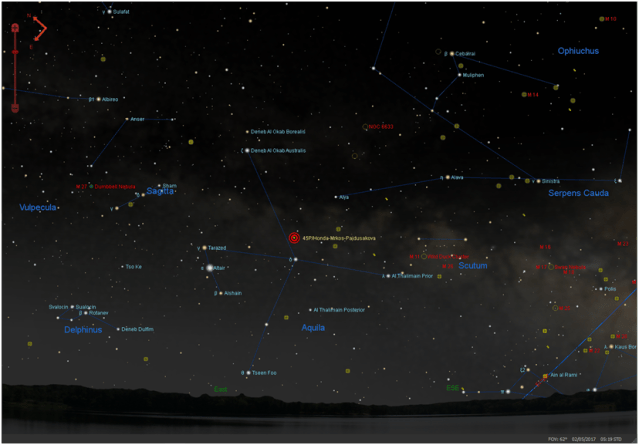
Comet 45P/Honda Mrkos-Pajdusakova observing challenge. We now have a rare opportunity to see a comet with binoculars. As mentioned at the Jan meeting, I’m tossing out a friendly challenge for members to get out and observe comet 45P. The “P” is for periodic, this is a short-period comet with orbital period of ~5 years, an Oort cloud object that was deflected into the inner solar system when it was first discovered by humans in 1948. As February progresses the comet will move away from the sun climbing higher in the early morning eastern sky before sunrise. By Feb 5 it should high enough before twilight to see with binoculars due east about 15° above horizon around 5AM (chart below), but it will get dimmer as it goes higher, so don’t wait too long to attempt the observation!

Comet 45P/Honda is due east in Aquila at 5:20 AM Feb 5 from central NJ.  Chart by RAParker using TheSkyX software.

Comet 45P/Honda is due east in Aquila at 5:20 AM Feb 5 from central NJ. Chart by RAParker using TheSkyX software.

Posted in February 2017, Sidereal Times | Tagged , | Leave a comment

No meeting on February 14, 2017. Happy Valentine’s Day

by Ira Polans, Program Chair

Since the next meeting is on February 14 which is Valentine’s Day we’ve decided not to hold the meeting.

I can report that the program committee is continuing its work to find speakers for the remainder of the year. It looks like we have good speakers lined up for both March and April. Next month’s issue of Sidereal Times will provide the detail about the next talk.

In addition the program committee is planning to schedule a short meeting in either March or April to get the club member’s suggestions for speakers for next year (2017-2018). For example we’ve received comments about arranging a talk relating to radio astronomy. We would like your input for suggested speakers on this topic and others you would like to hear.

The March talk is about Exoplanets by Dr. Joshua N. Winn who recently joined the Princeton faculty after teaching for several years at MIT. We look forward to seeing you at the March meeting.

Happy Valentine’s Day!! Heart

Posted in February 2017, Sidereal Times | Tagged | Leave a comment

Minutes of the January 18th AAAP Board Meeting

by James Poinsett, Secretary

• Rex called the meeting to order at 7:30 pm

• A brief overview of 2016’s accomplishments and 2017’s objectives was presented.

• The main topic of the evening was next, what to do about the Jenny Jump Observatory. Bill Murray updated us on the requirements to maintain the observatory, the club must participate in at least one Saturday evening viewing event per month along with the two special events during the year. The discussion centered on will we be able to staff it and is it worthwhile to fix and upgrade the observatory equipment? There was a lot of discussion on both sides but the final decision was that it would be very difficult to enlist enough members to staff the observatory as required this year and even less likely we would continue to staff it in the coming years. A motion was made, seconded and approved unanimously (albeit reluctantly) to give up the observatory at Jenny Jump but to remain a member of UACNJ.

• The next subject was the possible purchase of “The SkyX” software for all keyholders. There are two benefits, one would be increased familiarity with the program for users. The second is it would be a perk for keyholders, possibly increasing the number of new members becoming keyholders. The cost was estimated to be about $1000, Rex is discussing a club rate with Software Bisque and will update the club when more information is available.

• Observatory upgrades were discussed next with training on the new software being scheduled. A new viewfinder was installed on the refractor and the proper viewfinder for the Mewlon will be purchased and the current one sold when the new one arrives. The possibility of automating the rollback roof was discussed. It was decided the goal would be to get it done this year after finishing all of the computer upgrades.

• Upcoming club activities was the next topic.

    o The site in Oregon for the solar eclipse is set, near the center line. All lodging reserved by Larry has been taken. John Church has the information on the site location, contact him if you plan on going out west and meeting up with other club members.

    o More member nights at the observatory are planned, May 27th and June 24th.

    o There will be solar observing at the Nature Center at WC Park on Memorial Day and Labor Day weekends. Contact Dave Skitt if you can make it.

    o The possibility of using full moon nights at the observatory for scope clinics was discussed. Members and the public could bring their scopes and more experienced members would try and help them learn to use them better.

    o A night sky refresher will be held at the planetarium on May 13th at 10:00 am. This year we will go more in depth to find more than the usual objects.

    o A social/observing night with Friends of WC Park is being planned at Gravity Hill. The date is still to be determined.

    o Several field trip ideas were discussed, the Horn Antenna, Hayden Planetarium, Pittsburgh Planetarium were all listed as possibilities.

• The new member form along with PayPal payment is almost ready for the website. The roster will be returning to the website soon.

• With the success we have had by making the Program Chair position into a committee, the idea of making the Outreach Chair position a committee was discussed. This will be brought up at the next meeting.

• A motion was made and seconded to adjourn the meeting, the time was 10:15 pm.

Posted in February 2017, Sidereal Times | Tagged , | Leave a comment

Minutes of the January 10, 2017 AAAP Meeting

by James Poinsett, Secretary

Minutes of the January 2017 meeting of the AAAP

• The meeting was called to order at 7:30

• Rex briefly listed some objective for the club for 2017
    o Continuation of the outstanding lectures at Peyton Hall
    o More members and hopefully new members to become keyholders
    o Strong astronomy/science outreach program
    o High quality observing with the observatory upgrades
    o Getting “The Sky 10” software into the hands of keyholders
    o Identify and plans some field trips for the 2017 year
    o Organize an astrophotography interest group

• The first topic for discussion was the fate of our Jenny Jump observatory. Rex told the club that the board will be deciding the fate at the upcoming board meeting and if any member wanted to express an opinion to attend the meeting.

• So far 12 club members are making the trip to Oregon for the solar eclipse. Talk with John Church if you plan on going so you will know where the club is gathering.

• The club will host some kind of event on eclipse day as the partial eclipse in the Mercer County area with cover about 75% of the sun.

• An event with the Washington Crossing Park association is being planned.

• Shirts for club members was discussed. Larry will obtain the logo and get pricing.

• The possibility of a field trip to Tucson Arizona was brought up, most suggested waiting until 2018 because of the trip some are making to Oregon for the eclipse.

• The topic of Jenny Jump was brought up again with many ideas being discussed. Rex reminded everyone interested to be at the board meeting planned for Jan 18th, in the dome room in Peyton Hall.

• The meeting was adjourned.

Posted in February 2017, Sidereal Times | Tagged , | Leave a comment