The new exoplanet hunter

by Prasad Ganti

The Falcon 9 rocket blasted off into space like what has now become a routine launch. This time the payload was a space telescope on a mission, a more powerful set of eyes, peeping into the heavens for worlds beyond our own, to prove that we and our home planet are not all that unique in the Universe.

It is only in the last decade or so that we have been identifying planets orbiting other stars. Having overcome some of the technical challenges to detect something which is not easily visible, Which does not have light of its own, unlike the stars, whose reflection of the starlight is way too feeble. Which causes a very slight dimming of light when it comes in front of its parent star. Which causes its parent star to wobble very slightly as it goes around and around.

The current space telescope Kepler, was a pathfinder in terms of identifying about four thousand such exoplanets. While most of them were far and bigger than our own Earth. Being the first generation of such a finder, the telescope had its own limitations. It looked at only a small patch of the sky. And at stars thousands of light years away.

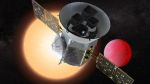
The new satellite called TESS (Transit Exoplanet Survey Satellite) will continue the legacy. It will be more focused in terms of detecting smaller planets (between the sizes of our own Earth and that of Neptune) and which are closer to us. Closeness is a relative term in astronomy. TESS will focus on a few tens or hundreds of light years, which is still far enough for a human visit. Smaller planets are likely to be rocky and at appropriate distance from the stars called the goldilocks zone, likely to host life. Also, relative proximity to our solar system can make the candidates amenable for more detailed study using other telescopes, both ground and space based.

While Kepler is on its last legs, having been a trailblazer, technology has advanced on our planet. TESS gains from such advances. Powerful cameras – four 16.8-megapixel cameras, each camera having seven lenses, which funnel light from the heavens toward four CCD (Charge Coupled Devices) image sensors which have been custom built by MIT’s (Massachusetts Institute of Technology) Lincoln labs. A single camera can cover a patch of sky 24 degrees wide by 24 degrees high. TESS’s main mission is to sweep almost the entire sky and focus on nearby stars. The search will be for about 200,000 relatively bright, pre-selected stars. The candidate red-dwarf stars are not big. They are not too bright, but because of shorter distances, appear brighter. Such stars live longer, burning their fuel at a slower rate. The longer life gives a greater chance for life to evolve on its planets.

Now a word about the orbit of this space telescope. It is an highly elliptical orbit. An ellipse is a stretched out circle. The stretching is pretty significant in this case. It will travel out as far as the moon is away from Earth, and then come back very close to the Earth every fourteen days. Most of the time spent away from the Earth, will protect it from the Earth’s Van Allen radiation belts. After all, space is a very hostile environment. Both to life as well as to spacecraft.

When TESS comes very close to the Earth, it will beam down data at a higher bandwidth. We understand the power of high bandwidth mobile networks like 4G or 5G when it comes to showing us videos on our phones. And TESS will collect huge amounts of data which needs to be analyzed for exoplanet detection. This highly elongated orbit is the first for any spacecraft. It will keep TESS very stable for longer time with minimal fuel consumption. Using a combination of Earth’s and moon’s gravity, it will need to burn very little fuel to keep moving.

The cameras will observe a vertical strip of the space stretching from the Earth’s pole to its equator in each orbit. Proceeding to the new neighboring strip in the next orbit, about twenty seven days later. It will take about one year to scan the heavens above the southern hemisphere and another year to finish the northern hemisphere. By the end of its two-year primary mission, it will have imaged roughly eighty five percent of the sky.

TESS will enable mankind to learn more about the other worlds. Certainly exciting times to be living in.

Posted in May 2018, Sidereal Times | Tagged , | Leave a comment

Fiddle Dee Dee

by Ted Frimet

Fiddle Dee Dee

A complementary portal to an impressionists viewpoint

As most know, I am not an astrophotographer.

However false coloring does provide some interesting views into deep space by the Hubble Space Telescope.

And I had some time to fiddle with Photoshop.

I created an account at the Space Telescope Science Institute (stsci.edu), and went to the Mikulski Archive for Space Telescopes (MAST). There, they hold a variety of astronomical archives, for the public to access.

From MAST, I found the HST Data Search (http://archive.stsci.edu/hst/search.php) and loaded up on M51.

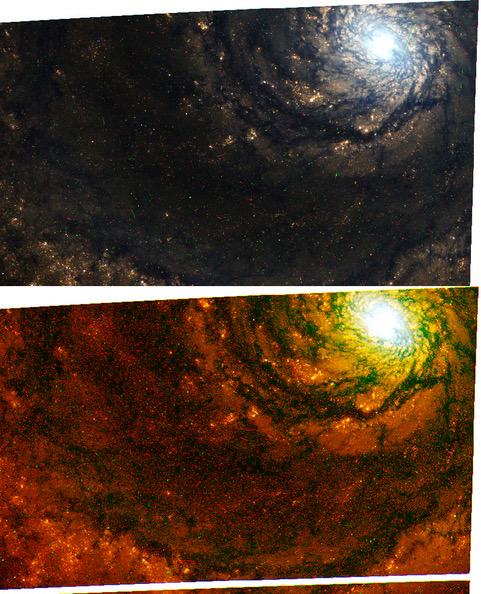
I pulled three images, J97C34XCQ, J97C34XEQ, and J97C34XGQ, imaged 2005-01-22, using the Hubbles’ Advanced Camera for Surveys (ACS).

They were closely related, enough, to provide some color contrast, when placed into Red-Green-Blue channels, in Photoshop.

GIMP, a free program could be used. However, I am in a new cycle of relearning Adobe Creative Suite – so this fit the bill – as it was already paid for.

What is really very cool, though, is the database not only gives RA, DEC, Exposure Time, Aperture and Instruments used, they also give a complete citation as to where to find where the images were used in scientific literature.

Just as it is found, here:

http://archive.stsci.edu/mastref.php?mission=hst&id=10452

I took the last three images in a series, that might be passable for use in three separate color channels.

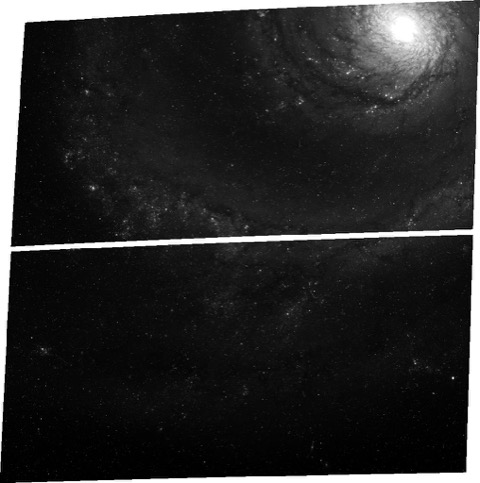
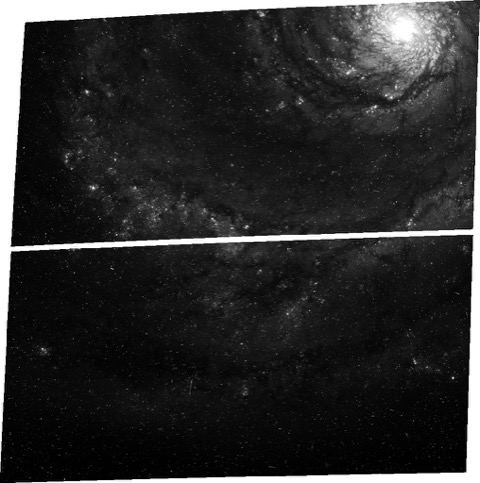
The composite images appear below, “side-by-side”. The bottom one of course, was way manipulated in Photoshop.

Not very professional, in terms of astrophotography.

However, as a technique for an outreach class, this may have merit.

Sidereal Times readers: you decide if this is something we can do, for kids, or adults interested in Hubble, at some point going forward.

Who knows? By false coloring existing Hubble archives, your Outreach might even discover a “black hole”!

Best, Ted

P.S. – if you have a Mac, running High Sierra, the archive server required encrypted ftp protocols, which is not supported by Mac OS.

I am working with Apple to…ahem…get them to re-adopt encryption for ftp.

In the meanwhile, I found an inexpensive (free) alternative from the Apple Store, called “Forklift”. Works like a charm, right out of the box.

By the by – running an ftp session, out of DOS, in Windows 10, works just fine, too.

Posted in May 2018, Sidereal Times | Tagged , | Leave a comment

luminous distance

by Ted Frimet

how to ride a light beam

AAAP board member Gene Allen programmed outreach to a Scout Group, for Wednesday night, April 18th, at Bordentown, NJ. No problem, so I thought! These Scouts had an ulterior motive, though. The hidden secret agenda was star brightness and distance calculations. That is one tall order for any neophyte Amateur. Maybe not for our more experienced membership, of course! I realized that, for me, I had better break out the textbooks, and learn to turn a page. It turned out to be a lot of page turning!

I decided to brief the Scouts on a little history, with this essay, followed by some vocabulary. Then feature a basic, intuitive view into star brightness. And close with a luminosity distance calculation.

Astronomers continue to use a system that is based upon Hipparchus. (1) This Greek astronomer established a magnitude method over 2,000 years ago. In a nutshell, the larger the number, the dimmer the star. His simple system accounted for stars between 1st and 6th magnitude.

We keep Hipparchus’ system in mind, even today, and with a twist. In modern times, we speak of magnitude jumps. A 1st-magnitude jump is a brightness change of 2.5 times. A 2nd-magnitude jump is another brightness change using an extra 2.5 factor.

Using basic mathematics, we calculate that a 3rd-magnitude jump is:

( 2.512 x 2.512 ) = 6.310 times brighter than a 1st magnitude star.

Sometime in the 19th century, Astronomers further refined the brightness scale. We can now accommodate stars that are fainter than 6th magnitude. Under dark skies our naked eye limits reach 6th magnitude. The Hubble Space Telescope (HST) can see +30. Our club’s 14 inch diameter telescope can see stars about half-magnitude of HST.

Just a few weeks ago, I was at a dark sky site, at Jenny Jump State Park, trying to observe The Pinwheel Galaxy. This galaxy has a Messier name of M101. Messier was an Astronomer that noted all the fuzzy things in the night sky. One of our members can point out M101’s location to you, with a laser. However, at around magnitude 9, it cannot be seen with the eye. Even with a 10 inch telescope, it is diffuse and hard to spot. (2) Another source describes this Ursa Major resident at magnitude 7.9 (3). I could not view this face-on galaxy with my 12 inch Newtownian telescope, that dark night.

I might venture we could use low power binoculars to see the very diffuse Pinwheel. My friend and budding Astrophotographer, Captain James DiPietro, US Army NG, member UACNJ, managed to capture images with 90 second exposures. The human eye, being quite different from an electronically assisted astronomy (EAA), cannot build up photons, like Captain DiPietro’s camera. For us, EAA is the best way to view M101.

I did, however, manage to see her sister, M51, the Whirlpool Galaxy. It has since become my favorite, at 8.96 magnitude (4). You might ask, if M101 is brighter than M51, why could I not see it? Diffuse objects in the night sky are very hard for an amateur to see. M51 is more dense, with a size of 11’ x 7’ (arc minutes), 27.9 light years away.

M101 is 8.31 magnitude, 29’ x 27’ size, and 22.2 light years. An object may be closer, or brighter. That doesn’t mean we can view it more easily.

If you want to study a diffuse galaxy, you don’t want to use your highest power objectives. Use lower power to take in a greater field of view (FOV). Ask one of our observers to show you the Andromeda galaxy.

How bright a star is, is defined by absolute magnitude. This is how bright a star appears at a standard distance of 32.6 lightyears. Our sun, Sol, has an apparent magnitude of [-26.7]. Sols’ absolute magnitude is only 4.8 (5).

Astronomers calculate distances by the parallax method. That is, stars appear to move, and shift behind our closer nearby stars. By using math, really by using triangular geometry, you can figure out a distance to a star. According to the Astronomy Education Center at the University of Nebraska-Lincoln, the parallax method is good for stars out to 500 light-years.

We use the distance modulus to calculate even further stellar distances. You can estimate the stellar distance by subtracting absolute magnitude (M) and apparent magnitudes (m) (6) (7). However that is only a first step. We need to know both magnitudes, and apply logarithm math.

We know how to estimate apparent magnitude (m). We could do it, just like Hipparchus, and modify according to modern use. How then do we get absolute magnitude (M)? We measure it using sophisticated software. Or we can look up our numbers in Astronomy reference books.

A brightest stars table, listing 286 stars in all, can be found in the RASC Observers Handbook 2018, USA edition (8). There you will find m & M, as well as distances tabulated in light-years.

A more hands-on approach is to record the M, yourself. For this, we need to become astrophotographers, and make use of well designed telescopes, under dark skies.

One AAAP asset that we subscribe to is the Skynet Robotic Network. The University of North Carolina, Chapel Hill hosts the Skynet telescope system. Afterglow is their post-processing program. We use this software to sample absolute magnitude from astrophotography data. Take a picture of a star, using Skynet, then use Afterglow. Put your cursor on your star and Afterglow will record the absolute magnitude.

Researching the web, you can find many places to learn from. Some are easy to grasp, and some, like the below link, is just out of my learning curve:

http://astro.wku.edu/labs/m100/mags.html

Can we make this more simpler? Yes, we can!

Light intensity decreases as the distance squared.

Basically, the farther out the star is, the less light will reach your eyes.

If a star is 3 times farther out, then the light is 9 times less intense.

If a star is 2 times farther out then the light is 4 times less. Get it?

At the end of the essay you will find online references, and a bibliography for further study.

Now, here is your first distance modulus math calculation:

m – M = (11.13 – 15.56) = -4.43

-4.43 ==> d

d = 1.300 parsecs

parsecs to light years conversion:

Distance = 1.3 parsecs = 4.24 light-years

parsecs to light years (9)

How we derive “d” from the magnitude difference is complex. If you like, you can read below. And we will discuss in detail how we get from m-M to d.

Here is some data (10), taken from a table of nearest stars from The Observers Handbook:

Proxima Centauri

apparent magnitude (m) = 11.13

absolute magnitude (M) = 15.56

ly (light years) = 4.24

Sirius (A)

m = -1.43

M = 1.47

ly = 8.58

Let’s calculate how far Proxima Centauri is. You may recall, from your Scout research, that this red dwarf star, is Sol’s closest neighbor. It is mentioned in this months essay (11), “go fly a kite”, as the Breakthough Starshot Intiative’s destination. Read more, here:

https://princetonastronomy.wordpress.com/2018/04/02/go-fly-a-kite/

Need the math? Ok. Here we go. Hang on!

Proxima Centauri m = 11.13 and M = 15.56

m – M = -5 + 5 log10(d)

11.13 – 15.56 = -5 + 5 log10(d)

-4.43 = 5log10(d) – 5

Using a wiki reference to isolate “d” (retrieved April 3, 2018)

https://en.wikipedia.org/wiki/Distance_modulus

Here, I mean that d = 10↑(distance modulus / 5) + 1

where “↑” means raised to the “power of (distance modulus / 5)”

then add 1 to the answer.

d = 10↑(-4.43/5) +1

d = 10↑(-.886) + 1

d = 0.1300169578 + 1

d = 1.3 parsecs

Distance = 1.3 parsecs = 4.24 light-years

If we check with our RASC reference, our distance to Proximus Centauri is confirmed.

We have calculated a distance to a star, by using the available light.

Now it is time to take notice that Sirius, the dog star, is much brighter than Sol’s closest stellar neighbor. Yet doing the math, we conclude that Sirius is 2/3rds (67%) farther away from us than Proximus Centauri. You have now proved that just because something is brighter, doesn’t necessarily mean it is closer. We will continue to plan on

dealing with star brightness as a function of distance. To do so, we must include both magnitudes types (little m & big M) in our calculations.

By happenstance, I had an opportunity to attend a lecture, this Friday afternoon, April 6th at The University of the Sciences, Philadelphia, Pennsylvania. Today’s guest lecturer was Erica Ellingson, PhD. Dr Ellingson is from the Department of Astrophysical & Planetary Sciences, University of Colorado; Fellow of the Center for Astrophysics & Space Astronomy. I was met there by fellow AAAP member and Program Chair, Ira Polans.

Regretfully, Philadelphia traffic barred me from Dr Ellingson’s first lecture. I did manage to squeeze in a slice of pizza, and the second seminar topic: Dark Energy and Cosmology. Although the topic was well presented and lucid, I’d like to bring out an important side note, touched upon by our lecturer: the Type 1A Nova.

During the seminar, I was reminded that there is a rare chance of a nova in galaxy. And if we group hundreds of galaxies together, for study, we will see many of them. One in particular is of stellar importance to luminous distance measurement. It is the Type 1A supernovae.

The absolute magnitude of a Type 1A is ALWAYS the same luminosity. However, the apparent magnitude, which varies by distance, is not always the same. If you apply the distance modulus math, you can calculate the distance to the parent galaxy. That is, you can tell the distances to stars, galaxies, and the great spaces between them all.

I would venture to say, if you hang around long enough, a Type 1A will show you how to ride a light beam; right up to the edge of what is the visual horizon of our 14.7 billion year old Universe.

Notes, resources and bibliography: (all links retrieved April 3, 2018).

There is an online distance modulus calculator hosted by University of Nebraska-Lincoln. Use it to check your work.

http://astro.unl.edu/naap/distance/distance_modulus.html

With greater ease we can review a Cornell University online document. It has plenty of math, and sample data to use.

Click to access lectures6StellarDistancesRev1.pdf

For more information, you can read here, at Swinburne Astronomy Online:

http://astronomy.swin.edu.au/cosmos/D/Distance+Modulus

A second math approach to calculate luminosity distance (12):

https://en.wikipedia.org/wiki/Luminosity_distance

M = absolute magnitude

m = apparent magnitude

Luminosity distance: DL (written as D)

M = m-5(log10 D – 1)

D = 10↑(m-M/5) + 1

distance = 10↑(11.13 – 15.56)/5) + 1

distance = 10↑(-4.43 / 5) + 1

distance = 10↑(-.886) + 1

distance = .130 + 1

distance = 1.30 parsecs

https://www.metric-conversions.org/length/lightyears-to-parsecs.htm (13)

pc = ly * 0.30660

ly = pc/.30660

ly = 1.30 / .30660

ly = 4.24 ly

  1. Harrington, P. S. (2003). Star watch: The amateur astronomers guide to finding, observing, and learning about over 125 celestial objects. Hoboken, NJ: Wiley. pps7-8
  2. Burnham, R., Dyer, A., Garfinkle, R., George, M., Kanipe, J., Levy, D. H., & O’Bryne, D. (2002). A guide to advanced skywatching: The backyard astronomers guide to starhopping and exploring the universe. San Francisco, CA: Fog City Press., p234
  3. Sparrow, G. (2015). The stargazers handbook: The definitive field guide to the night sky. London: Quercus., p32
  4. Madore, B. F., & Steer, I. (2018). The Royal Astronomical Society of Canada Observer’s Handbook (2018 ed., 110th year of publication – RASC) (J. S. Edgar, Ed.). Canada: Webcom. Observer’s Handbook 2018 USA Edition. Galaxies Brightest and Nearest, p333
  5. Burnham, R., et al, ibid, p162
  6. Burnham, R., et al, ibid, p163
  7. Bishop, Roy (2018), RASC, et al, Some astronomical and physical data, p31
  8. Karmo, Toomas, Corbally, Chris, & Gray, Richard (2018), RASC, et al,
    The brightest stars, pps 275-283
  9. Google web search April 3, 2018: “Parsecs to Light Years” conversion:
    https://www.google.com/search?client=safari&rls=en&q=parsecs+to+light+years&ie=UTF-8&oe=UTF-8
  10. Henry, Todd J. (2018), RASC, et al, The nearest stars, p289
  11. Frimet, T. R. (2018, April 02). Go fly a kite (S. Agarwal & P. Ganti, Eds.). Retrieved April 03, 2018, from https://princetonastronomy.wordpress.com/2018/04/02/go-fly-a-kite/
  12. Luminosity distance. (2018, February 28). Retrieved April 03, 2018, from
    https://en.wikipedia.org/wiki/Luminosity_distance
  13. https://www.metric-conversions.org/length/lightyears-to-parsecs.htm Retrieved April 3, 2018. Wight Hat Ltd. ©2003-2018. Their page last updated: Thr 22 Mar 2018
Posted in May 2018, Sidereal Times | Tagged , | Leave a comment

Snippets

compiled by Arlene & David Kaplan

- BBC

– BBC

‘Ground-breaking’ galaxy collision detected
Scientists have detected a cosmic “pileup” of galaxies in the early Universe.

Imaged almost at the boundary of the observable Universe, the 14 unusually bright objects are on a collision course, set to form one…more

Book of heavens -BBC

Book of heavens -BBC

Gaia telescope’s ‘book of the heavens’ takes shape
The Gaia observatory has released a second swathe of data as it assembles the most precise map of the sky.

Gaia’s “book of the heavens” will not be complete until the 2020s, but when it is the map will underpin astronomy for decades to come…more

The ExoMars rover -BBC

The ExoMars rover -BBC

Europe’s Mars rover takes shape
So, here it is. Europe’s Mars rover. Or rather, a copy of it. This is what they call the Structural Thermal Model, or STM.

It is one of three rovers that will be built as part of the European Space Agency’s ExoMars 2020 mission to search for life on the Red Planet…more

The Swarm satellites -BBC

The Swarm satellites -BBC

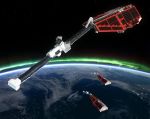
Earth’s magnetic ocean tides mapped from space
As the Moon pulls the salty seas through our planet’s global magnetic field, electric currents are generated.

And these currents then induce their own magnetic signals, which have now been mapped in exquisite detail by a trio of ESA satellites known as Swarm…more

Tess -BBC

Tess -BBC

Planet-hunter launches from Florida
It’s lift-off for a new era in planet-hunting. The US space agency’s Tess satellite has launched from Cape Canaveral in Florida on a mission to find thousands of new worlds beyond our Solar System…
more

Meteorites in the Nubian desert of Sudan

Meteorites in the Nubian desert of Sudan -BBC

Meteorite diamonds ‘came from lost planet’
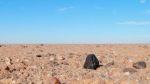
A diamond-bearing space rock that exploded in Earth’s atmosphere in 2008 was part of a lost planet from the early Solar System, a study suggests.

The asteroid fragments collectively known as the Almahatta Sitta meteorites…more

Carbonite -BBC

Carbonite -BBC

UK satellite makes HD colour movies of Earth
A British spacecraft is now routinely making movies of the Earth’s surface. Carbonite-2 was built by Surrey Satellite Technology Limited (SSTL) in Guildford was conceived as a model for a quick-build, ultra-low-cost satellite and launched in January. It is the forerunner of a network of spacecraft that will be sent up in the years ahead…more

Allison McIntyre -BBC

Allison McIntyre -BBC

The first person on Mars ‘should be a woman’
A senior Nasa engineer has said the first person to set foot on Mars should be a woman. She believes women should be at the forefront if and when the agency sends its first human missions to Mars. BBC Radio 5 live has been behind the scenes at Nasa…more

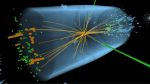
Higgs boson collision event at CMS -BBC

Higgs boson collision event at CMS -BBC

Higgs factory a ‘must for big physics’
A top physicist says the construction of a “factory” to produce Higgs boson particles is a priority for the science community. In an exclusive interview, Nigel Lockyer, head of America’s premier particle physics lab, said studying the Higgs could hasten major discoveries. He said momentum…more

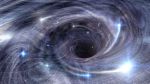
-BBC

-BBC

Dozen black holes found at galactic centre
A dozen black holes may lie at the centre of our galaxy, the Milky Way, researchers have said. A new analysis provides support for a decades-old prediction that “supermassive” black holes at the centres of galaxies are surrounded by many smaller ones. However, previous searches of the Milky Way’s centre…more

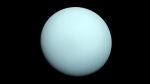
Uranus -BBC

Uranus -BBC

Rotten egg gas around planet Uranus
The planet Uranus has clouds made up of hydrogen sulphide, the gas that gives rotten eggs their unpleasant smell. The discovery confirms a long-held idea about Uranus’ atmosphere..more

Posted in May 2018, Sidereal Times | Tagged , | Leave a comment

From the Director

Rex


by Rex Parker, Director

New Tech for AAAP. “Electronic Assisted Astronomy” (EAA) has reached new levels of performance capability, enabling one to see the deep sky like never before in small and medium sized telescopes even in skyglow-compromised areas. The new generation of cameras based on the latest Sony CCD sensors have better resolution, sensitivity, and speed, with less size and power requirements compared to a few years ago when we acquired the Mallincam at Washington Crossing Observatory. At the upcoming Northeast Astronomy Forum (NEAF) show in Rockland NY this month (April 21-22, ), AAAP hopes to be a buyer of this new technology. Last week the Board considered several options and recommended acquiring 2 new cameras (within the $2K approved for this project) while delaying on the proposed iOptron AZ Pro mount and new refractor telescope. One new camera will replace the existing Mallincam video on the 5” refractor at the Observatory, and the second camera will support outreach and member use in the field. Until the new mount and telescope and laptop PC are obtained, Keyholders can use the new camera with their own telescope/mount in the field for outreach and other observing activities. We would be grateful if a member can donate to the club a used laptop PC (Win7 or higher) to support this project.

Help Us Design a Plaque to Remember Gene Ramsey. We’re seeking a volunteer with art and graphics design skills to help design a plaque to memorialize Gene Ramsey. It would be placed at our Washington Crossing Observatory where Gene contributed so much of his energy, knowledge, skill, and good will. Gene passed away last year after many years in AAAP and his spirit lives on with our current Keyholders and members who are dedicated to astronomy observing and outreach.

Update on Saul. Here’s some good news… we’d heard about member and expert observer Saul Moroz and his battle with cancer. Saul has been a contributor to AAAP for as long as I can remember. He recently underwent advanced robotic surgery for esophageal cancer at St Barnabus Medical Center. He’s come through the ordeal with flying colors and is now working through rehab and feeling well. He hopes to return to action at AAAP soon, and sends his greetings!

AAAP Activities Coming Up

  • Member Night at the Observatory, Sat. May 12 (rain date May 19). The new moon is May 15 so this will be a good opportunity to see the deep sky as well as planets. Sunset will be at 8:09 pm and Jupiter rises in the SE by mid-evening May 15. It will be one of the best weeks of the year to observe Jupiter, which reaches its closest point to earth (at opposition) the week before. Jupiter will be very bright at magnitude -2.5 and large at ~45 arc-sec in diameter (huge by planetary observing standards!). Come out and learn more about observing and telescope equipment and get to know others in the club on May 12.
  • Observatory Public Nights. Once again we offer public nights each Friday night weather permitting, beginning April 6 and continuing through Oct 26. Thanks to all the Keyholders, and to Dave and Jen Skitt for organizing this season’s Keyholder teams supporting this important part of AAAP public outreach. Of course members are welcome on these nights too.

Telescope equipment at the AAAP Observatory now includes:

Paramount-ME #1 (robotic equatorial mount)

  • Celestron-14 Schmidt-Cassegrain telescope (14 inch), D = 355 mm, f/11, FL = 3900 mm
  • New Stellarview 80 mm right-angle finder scope on the C14.
  • Explore Scientific ED127 refractor telescope (5 inch), f/7.5, FL = 950 mm, triplet air spaced apochromatic refractor.
  • Mallincam Xterminator, color video camera attached to the ED127 refractor for live video astronomy on the monitors in the observatory. Soon to be replaced with a new CCD camera, stay tuned!

Paramount-ME #2 (robotic equatorial mount)

  • Hastings-Byrne 6-1/4 inch refractor, f/14.6, FL = 2310 mm. The historic instrument dates to 1879-80, including the air-spaced doublet lens and the original glass and the tube.
  • Takahashi Mewlon-250, 10 inch Dall-Kirkham reflector telescope, with 2 inch TMB Optical dielectric-diagonal and Feathertouch 2 inch Crayford focuser
  • New Televue eyepieces, Panoptic 27 mm and 41 mm, for the Mewlon-250
Posted in April 2018, Sidereal Times | Tagged , | Leave a comment

From the Program Chair

By Ira Polans

The April meeting will be held on the 10th at 7:30PM in Peyton Hall, in the auditorium (Room 145), on the Princeton University campus.

Featured Speaker: The talk is by Princeton University Professor Frans Pretorius regarding the “LIGO and the Extreme Side of Gravity”

The LIGO gravitational wave detectors have ushered in a new era of gravitational wave astronomy. Several signals consistent with the collision of two black holes have been observed, and one that we can infer was the collision of two neutron stars. These signals come from the most extreme regions of strong gravity we know of, and are providing the first direct evidence that black holes, as described by Einstein’s theory of general relativity, actually exist. In this talk Dr Pretrious will explain the basics of compact object collisions and gravitational waves, and how we are able to interpret the LIGO signals as originating from these cataclysmic events.

Member Talk: We will have our second 10 minute member talk by Jim Peck on “Describing the Sun’s apparent motion across the sky to the general public”.

We are looking for more members to give an informal 10 minute talk on an astronomy related topic at a future meeting. If you’re interested in giving one please see me at the meeting or contact me at program@princetonastronomy.org.

Pre-Meeting Dinner:Prior to the meeting there will be a meet-the-speaker dinner at 6PM at Winberie’s in Palmer Square. If you’re interested in attending please contact program@princetonastronomy.org no later than Noon on April 10.

2018-2019 Speakers: We are planning to start identifying the primary speakers for the 2018-2019 season during the week of April 16. If you have suggestions for topics now’s the time to submit them. If you have a specific speaker and topic in mind please include the organization’s contact information if available. Please send all ideas to program@princetonastronomy.org.

We look forward to seeing you at the dinner or at the meeting!

Posted in April 2018, Sidereal Times | Tagged , | Leave a comment

March 13, 2018 Meeting Minutes

Minutes of the March 2018 Meeting of the Amateur Astronomers Association of Princeton

  • Meeting called to order at 7:30
  • Jim Fling has volunteered to head the Nominating Committee to put together a slate of nominees for the board of directors for next year.
  • Upcoming outreach event at Stuart Day School, about 24 students with parents and siblings. No other events scheduled currently.
  • Communiversity Day in Princeton is April 29th, volunteers and scopes needed.
  • Observatory news
    • Requests for groups to visit the observatory will be handled by Outreach
    • Public night groups will be handled by the observatory
    • Eight members want keyholder training, the weather is making it difficult to schedule training
    • The pointing problem with the refractor is being worked on, the mount is being adjusted.
    • EAA plans will be discussed at the board meeting later in March.
  • The meeting was adjourned.
Posted in April 2018, Sidereal Times | Tagged , | Leave a comment

March 26, 2018 Board Meeting Minutes

Minutes of the March 26, 2018 meeting of the AAAP Board of Directors

  • Meeting started and Rex welcomed and thanked all 14 members and board members present.
  • Nominations update – Nominations chairman, Jim Fling, announced all current board members have volunteered to return for another term in office. Anyone else interested in volunteering to serve on the board please contact Jim Fling.
  • There has not been much interest in the 10 minute member talk before the main speaker at each meeting. The board is looking for ideas to generate more member involvement.
  • The NorthEast Astronomy Forum (NEAF) is April 21-22.
  • Currently there are two parent/child pairs being trained to be keyholders.
  • The board plans to contact all area science teachers to generate more interest in the club and public nights at the observatory.
  • New member Joy S. has set up the AAAP on meetup.com to let more of the public know about our public nights and other club public events.
  • Currently there is no way for members to reach keyholders to request access to the observatory. If a non-keyholder would like access to the observatory they can send their request to the secretary at or another board member the their request will be forwarded to keyholders.
  • Social media was discussed thoroughly, pros and cons. Facebook, Twitter, PrincetonOnline.com will be used more. Contact with NJ newspapers and magazines will be increased.
  • Local colleges will be contacted for the possibility of getting some marketing assistance to increase membership and attendance at meetings. The possibility of becoming a sponsor at the Mercer County Science Fair to increase exposure to high school students was discussed.
  • Treasurer’s report. The current club balance is over $15K with 92 members. An increase of $2500 over last year.
  • Michael Mitrano is now on the board of the Washington Crossing Park Association.
  • The next topic was Electronic Assisted Astronomy. There was much discussion about the possible options. Using the newly donated scope or the refractor on the C-14. Which camera to buy and which software to use. It was finally narrowed down to two cameras, the Ultrastar and the Atik. Whichever camera we get will be mounted on the refracter that is mounted on the C-14. We may obtain a second camera use it for outreach and possibly on a portable scope during public nights. The board authorized Bill and Gene to get the best possible price on one of the two cameras at NEAF.
  • Communiversity is April 29th, volunteers are needed to represent the club.
  • A security system for the observatory is being researched and will be discussed at a future meeting.
  • Rex will talk with the Park commissioner about getting some gravel on the roadways leading to the observatory and also repairing the gates.
  • The focusing unit on the HB refractor is almost ready and will be ready for the public observing season.
  • The meeting was adjourned.
Posted in April 2018, Sidereal Times | Tagged , , | Leave a comment

go fly a kite

by Ted Frimet

“you’re a good man, charlie brown”

Last month, I looked at the astrophotography image, produced by AAAP Club Director Rex Parker, of a blue comet. And was somewhat jealous of what he had accomplished. Well, maybe not jealous as much as knowing what can be done. Rex has talent, and years of experience to back it. This month, Rex reminds us that Proximus Centaurus came to roost, as a preamble to future science, being explored at a AAAP lecture. What a beautiful collaboration of color. This image showcases the star closest to our outside solar system ventures. In this red giants habitable zone, we note the recent discovery of Proxima B. This exoplanet is the target of “The Breakthrough Starshot Initiative”, discussed by this months, AAAP lecturer, Dr. Ed Turner.

The red dwarf Proxima Centauri and surrounding star field. Width of field ~28 arc-min, about the size of the full moon. Alpha Centauri is out of the field ~2 degrees away. Image by RAParker using Skynet/PROMPT5

The red dwarf Proxima Centauri and surrounding star field. Width of field ~28 arc-min, about the size of the full moon. Alpha Centauri is out of the field ~2 degrees away. Image by RAParker using Skynet/PROMPT5

Dr. Turner gave us his time and provided personal insight into the interstellar flight project. Combining advances in micro-electronics, nanotechnology, and photonics, our future generations stand to witness the return of information from Proxima B, precisely 54 years after flight departure. There are many technical hurdles to overcome. Amazingly, in a sense, there are already off the shelf solutions to attach to this scientific venture. Advances in non-related material science, for instance, will form the framework for a thin shell, reflective sail. This is not your parents solar-sail, mind you. Dr. Turner taught us that if we want to get to light speed, we need to leave the fuel behind. The sail material that will be attached to the postage stamp sized space craft, will be pummeled by an intense and coherent, ground based, laser light array. It will be responsible for accelerating the craft to 20 percent of the speed of light. “Meow”, says my photonic cat.

Meow to you, too. I asked why we have to have reflectivity, from the sail. Explained to me, satisfactorily by Dr Turner, and by fellow club Astronomer and Professional Planetarium Technician, William Murray, that there is a double kick. Momentum is imparted when the photon strikes, and on the reverse course (the reflection), there is another kick. This is akin, so I have been told, to a martial artists punch. It was a good analogy, however I remained stuck at the gate.

In my minds eye, I was seeing non-interaction of the photon with the sail, and the creation of virtual particles to do the job of excitation (momentum production). I started to see the quantum mechanics at work, and the emanation of light from the sail material. Untimely for me, I had already asked my question about using Snell’s Law and “reflected” on using refraction. I didn’t quite get it, yet, why we needed two kicks, and reflect light, when we could get one kick and let the light thru – or constrained within the sail – giving many kicks. Watch as one coherent wave goes in, yielding multiple wavelets, tugging at the outer sail in true Minkowski pressure! Not seeing it, yet? Think thru the double slit experiment, or water wave demonstrations. There it lay! My grandmother was a seamstress. Imagine her glee, whilst weaving thru the sail, incredibly small magnetic thread shielding. These intelligent nano-polymers threads will mark the way for a deterministic outcome.

Perhaps the physics of it, is that the cumulative small kicks equals the one big, reflective kick? I don’t think so. Richard Feynman did, years ago. So who am I to argue? In Feynman’s diagram, he would simply sum up all the smaller occurrences of refraction, with two arrows, and “close the triangle”, yielding the squared amplitude of the third side, as a definitive probability. But that was Feynman. And I am only poorly recalling one of his great lectures, again.

It would be akin to a laser light, refracting into an optical resonance chamber, where it would recursively push, like a subroutine caught in an endless loop. At the least, it would be a resource that would be used, repeatedly and not simply reflected back to the ground station. And then the voice of reason whispered into my ear – there will be heat!

Commercial break. I wanted to take that quantum step, and decided almost immediately that heat, is just another electromagnetic emanation. Is it destructive? Then upsample this heat of light into a frequency that is not. Can’t resample the frequency? Then alter the material. I have been mulling around with the idea of finding the correct frequencies to rotate a CO2 molecule. And in doing so, to upend it – so that it does not trap infrared energy. I would imagine that the sail will be fine tuned, so that an active material will permit heat to escape. Actually, this isn’t waste heat. I can’t be sure, if this is Minkowski or Abraham’s domain, however, the heat (or rather, this specific photonic pressure) may further drive momentum. Why not put it to good use? Ok. Maybe I just described a “good movie”, once again? Commercial time is over. In a true opto-mechanical fashion, where light resonates within a cavity, the light can in fact cool the surface, and not heat it, as opposed to what was whispered into my ear, earlier. Let’s continue.

I had to resort to an internet search, this morning. After speaking with Dr Turner, I was convinced that we should have available a tool to teach photonic pressure. After all, those fourth grade school girls, that had the heavens open for them, at Sacred Heart Astronomy Outreach March 2018, will have their next generation children be the recipients of Starshot image data. I wanted them to be agape at the continent wide images, when their adult children show them the Starshot results. I approached our guest lecturer, afterwards, and he suggested likewise. That we should develop and employ a science kit to demonstrate photonic pressure. This sounds like a good idea.

I thought, over the evening, and into the next day, that photonic pressure demonstration will go a long way, in seeding the mind of a child. I remember seeing, in grade school, a Crookes radiometer. However, I do not want to get caught up in the trap of thermodynamics driving this process. Even as amateurs, we have come a long way since Maxwell & Crookes. So, no Crookes. I want photonic pressure to drive this kit. Sensing how to manufacture this; the physical kit would fit in a shoe box, securing a low power laser and a bit of solar sail, within. While wearing the protective eye goggles, with a press of a button, the 4 centimeter square sail would deflect. Or would it? Could it?

The choice of laser might seem easy enough. Perhaps. Aside from making certain it is in fact, low power, the other over-riding principle would be matching frequencies. In terms of light propulsion, I do not have a firm grasp on momentum. Frequency times Planck constant, is all we really have to work with, here. Some have a slip of the tongue, and invite the talk of mass. However, we all know that light is massless (unless by creating a virtual particle, we have measurable mass, i.e. a virtual electron). I am inclined to believe that the frequency must match the material in question, for any deflection to be observed. A few solemn searches turned up what I expected. So for the pretentious Edison’s list of materials, we would have half as many lasers’ to choose from. And might I mention, that the realm of light, that cannot be seen (which is far more available in selection that the visible spectrum), might manage to do damage to our observers, while being, “unseen”?

I am at a crossroads, between material and matching laser light. I have no solution in sight. Maybe it is just best, to order some gold foil from eBay, shine a light on it, and hope for the best? I have a bottle of colloidal gold that can be applied to materials like tissue or plastic wrap. It is left over from the near infrared telescope that sits patiently in the attic, waiting for a reprise. (Oh, the projects you and I have set to the side!) I have no idea if that would work. And even if successful, I might just end up making a poor mans radiometer. Sigh.

I am pestered by the persistent thought of refraction, thru, or within a material, rather than the double kick reflection. And while searching for the truth of it, I found that in a liquid state, a photonics application can either, push or pull. That is, there can be either a push out, or a pull in, on a surface. Fortunately, the two theories that describe either activity, on its own merits, are known as Minkowski or Abrahams’. The theories work out best in empty space. Essentially, as long as there is a refractive index of less than 1, either theory may prove out. The citation below has the first quantitative proof to substantiate Abraham’s theory of photonic push.

Either way, I do not think we could do a kit in a vacuum. The box would collapse, and Schrodinger’s cat would not be meowing, anymore. I think I recall reading that the experimental containers were rather large. It would be desirable to keep it small, and simple, so that anyone can replicate it. However, if I fail to match material science (“a sail”) to a matching low power laser, it is still within the realm of possibilities to demonstrate either a push, or a pull, on a contained liquid to demonstrate photonic pressure. The study reference is from Li Zhang, et al. “Experimental evidence for Abraham pressure of light.” New Journal of Physics. DOI: 10.1088/1367-2630/17/5/053035

Read more about it at phys.org

By the by – this is some serious physics. Photonic pressure can be used to ignite a fusion reaction, called inertial confinement fusion. Momentum exchange is used in a laser cooling technique that stirs atoms into a quantum-mechanical ground state. I can finally relate to what was meant by laser cooling to produce a Bose-Einstein Condensate, in previous reads. At the end of the day, however, I only want to fly a kite. Call me Charlie Brown.

Following video: https://youtu.be/xv4vp9d1VP8

Posted in April 2018, Sidereal Times | Tagged | Leave a comment