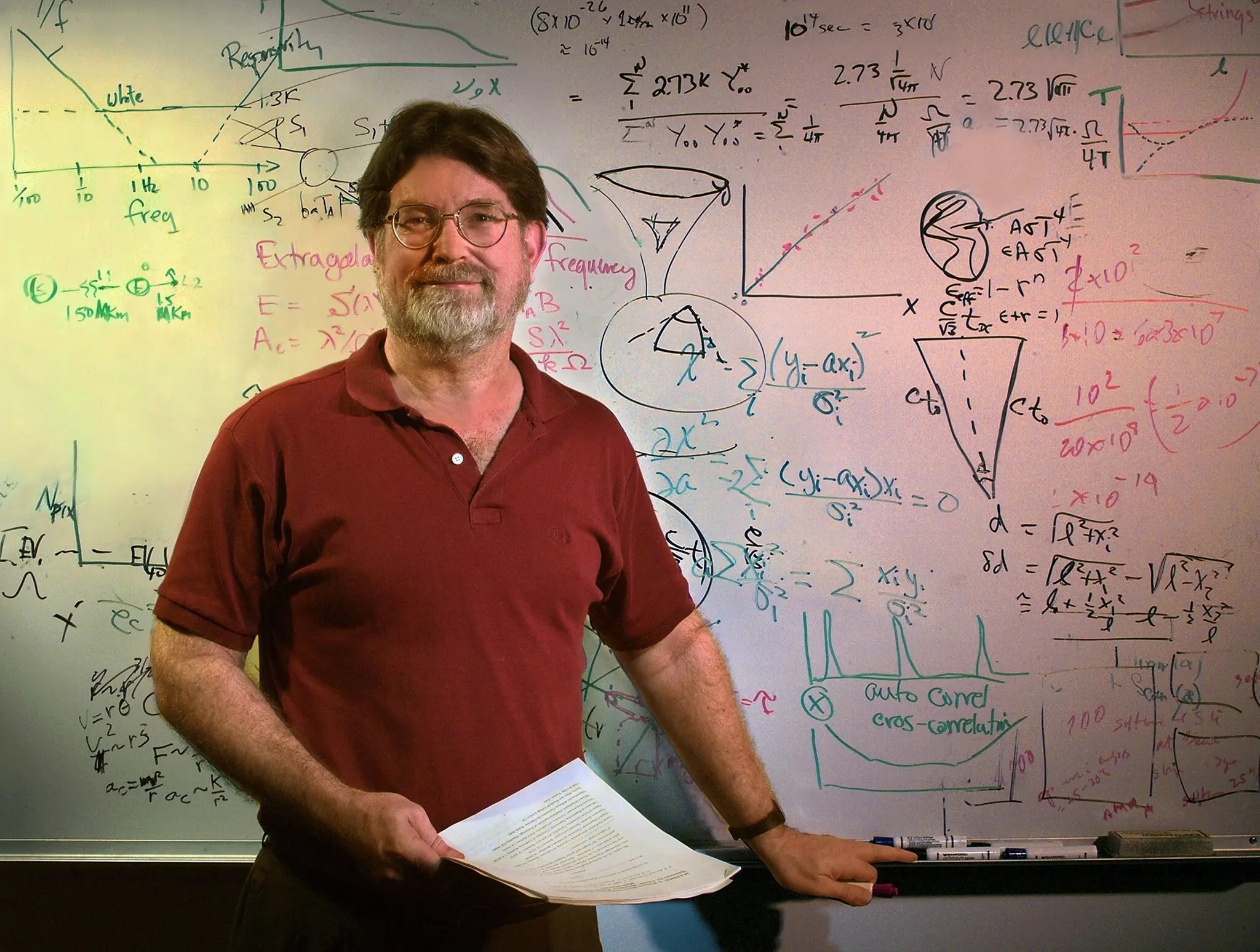
George F. Smoot, Who Showed How the Cosmos Began, Is Dead at 80 George F. Smoot, an American physicist and Nobel laureate who helped elucidate the story of cosmic creation, providing evidence of what he called the primordial seeds that grew into galaxies and galaxy clusters, died on Sept. 18 at his home in Paris….more
-NYT
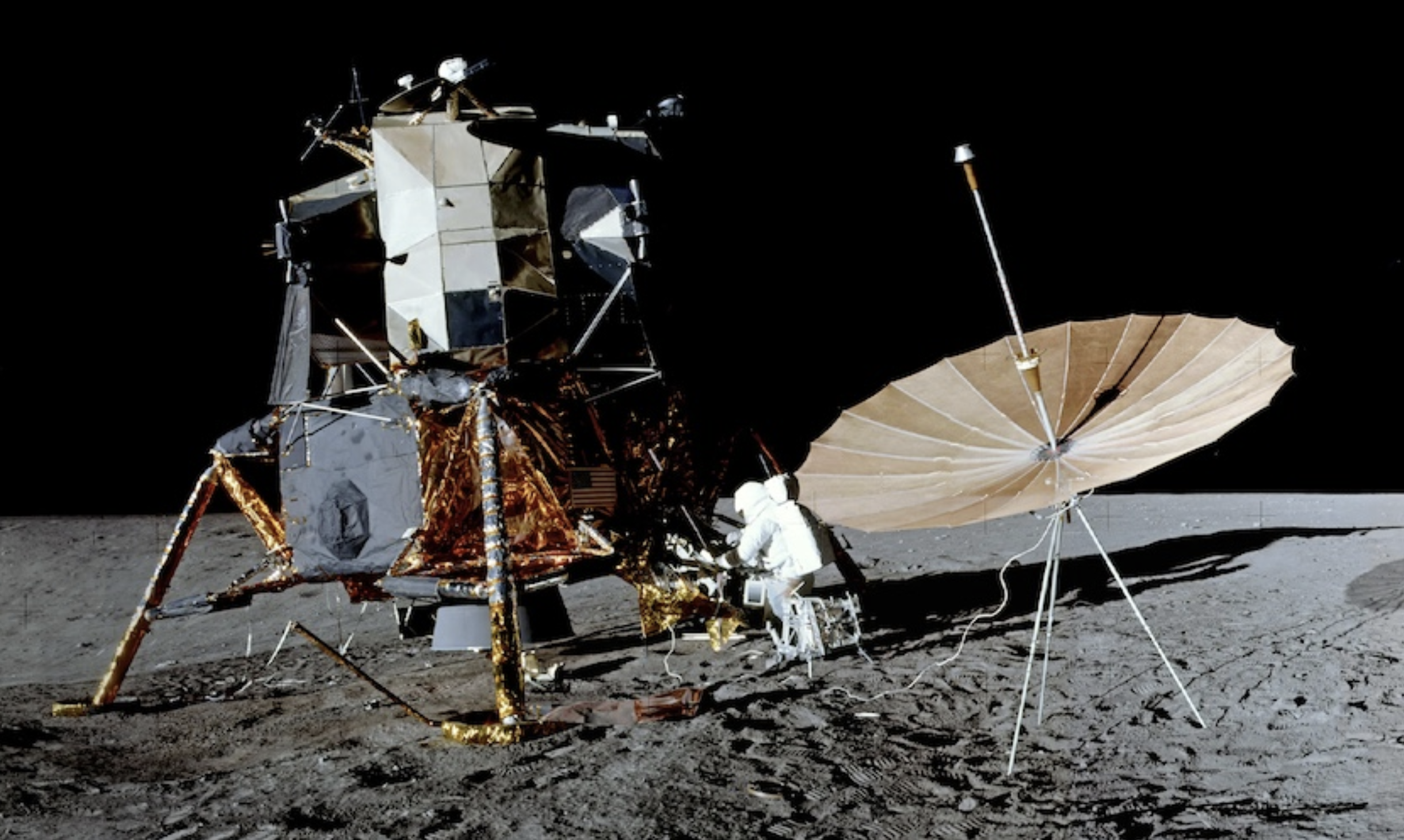
How Lunar Photography Brought the Heavens Down to Earth The darkness we expected. What we had underestimated was the silence: the quiet of the vacuum, disturbed only by our breath and the radio in our ears. We brought quite a bit of gear. There are only two of us up here, the third and fourth men on the moon…more
-NYT
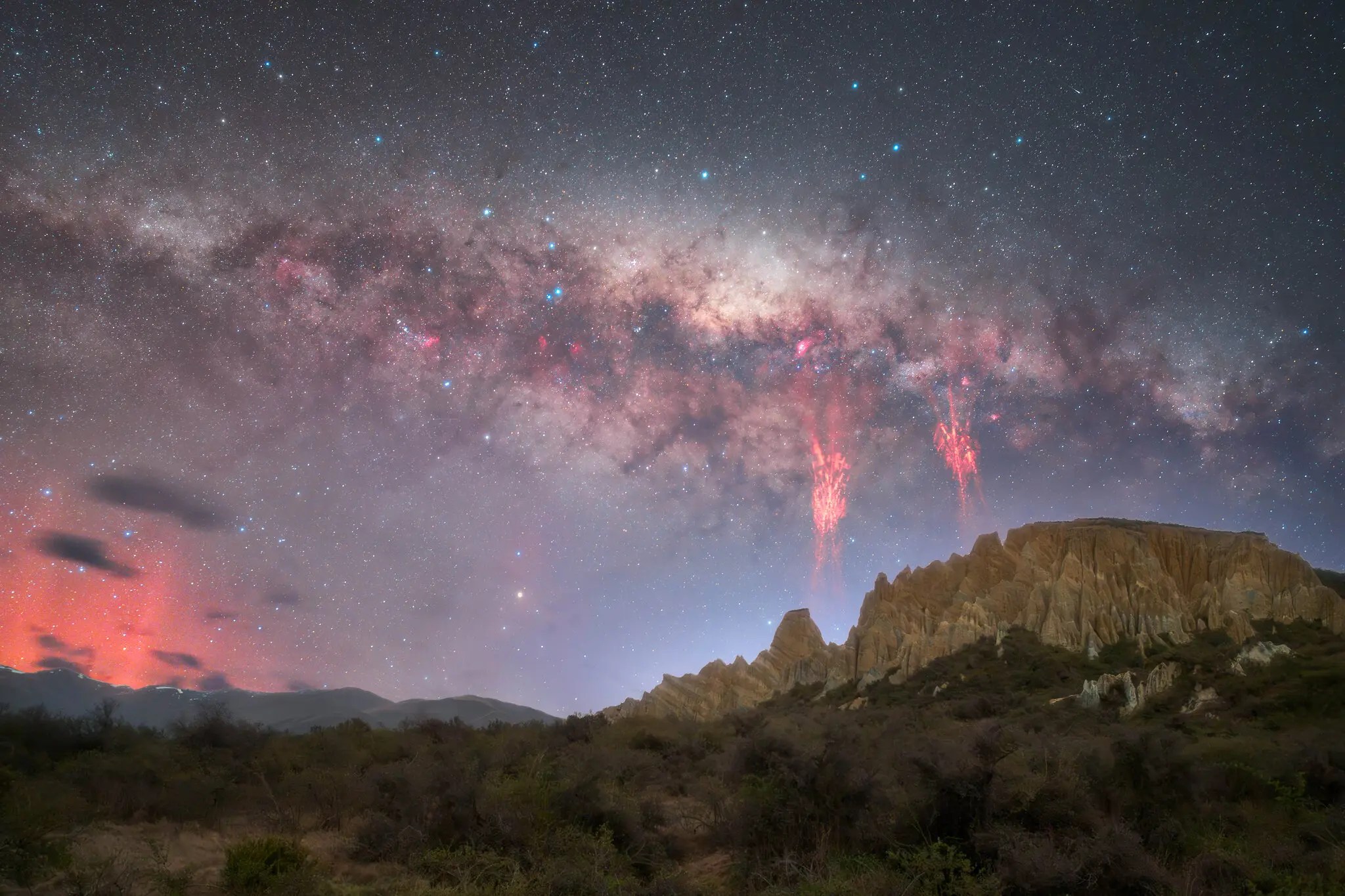
Take a Look at Rare Photos of Red Lightning in New Zealand About 150 miles southwest of Christchurch, New Zealand, far away from the light pollution in urban centers, three photographers planned to capture the Milky Way galaxy over the clay cliffs outside Ōmārama on the night of Oct. 11….more
-NYT
An Army of Robot Telescopes in Texas Makes the Stars Feel Closer Than Ever During the day, this patch of land in sparsely populated Central Texas is not remarkable. Eleven buildings, nearly identical, look like bland, oversize backyard sheds. Several large R.V.s are parked nearby. Not long ago, cows grazed here….more
-CBS
Astronomers discover most powerful “odd radio circle” twins ever detected Deep in outer space, astronomers have discovered another “odd radio circle” — the latest in a short list of mysterious rings that surround distant galaxies — and researchers say this one is particularly peculiar. “Odd radio circles,” or ORCs, are enormous and unexplained phenomena that can only be detected using radio telescopes…..more
-CBS
SpaceX launches 11th test flight of giant Super Heavy-Starship rocket SpaceX launched its Super Heavy-Starship rocket on Monday for the 11th time, marking another successful test flight that built upon previous launches. Elon Musk, SpaceX founder and CEO, briefly made an appearance on the company’s livestream ahead of the launch, saying it was the first time that he was going to be outside to watch the rocket. ….more
-CBS
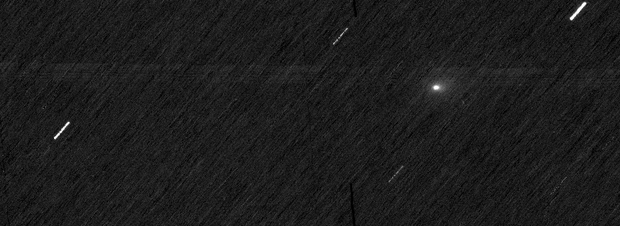
Interstellar comet passing by Mars seen in rare images A rare interstellar comet — only the third ever confirmed to enter our solar system — was photographed last week, closely approaching Mars, the European Space Agency said Tuesday. The images taken on Friday by two Mars orbiters show a bright, fuzzy white dot of the comet, also known as 3I/ATLAS,…more
-CBS
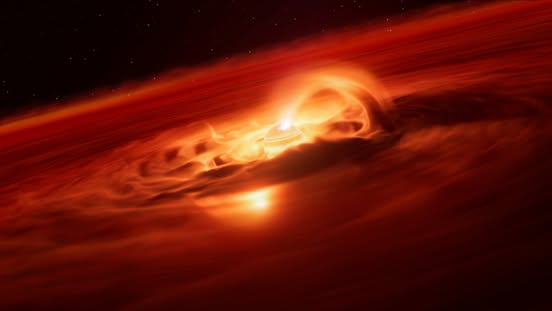
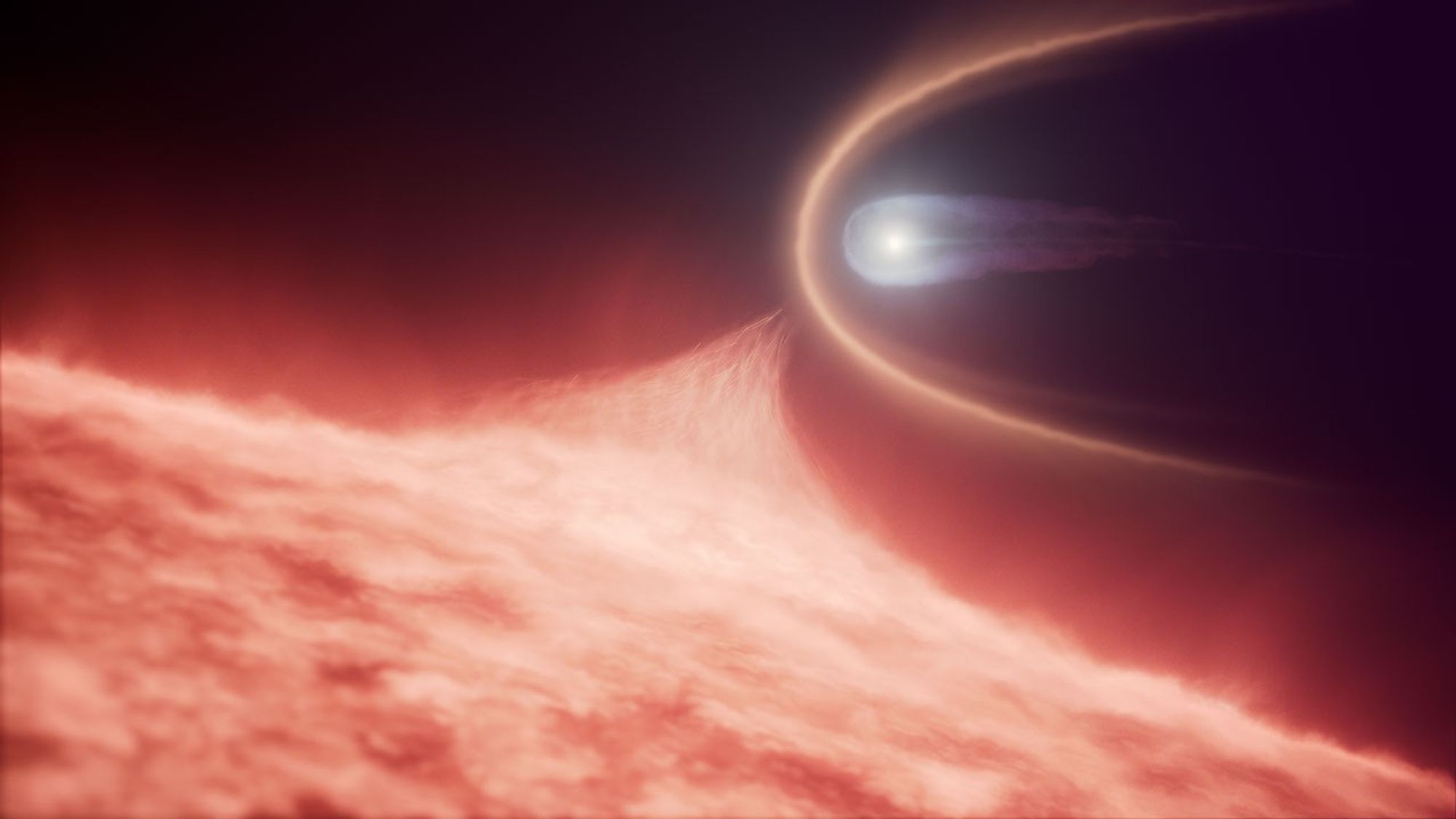
Mysterious “rogue planet” spotted gobbling 6 billion tons of gas and dust a second A mysterious “rogue planet” has been observed gobbling 6 billion tons of gas and dust a second — an unprecedented rate that blurs the line between planets and stars, astronomers said Thursday. Unlike Earth and other planets in our solar system, which orbit the sun, rogue planets float freely through the universe untethered to a star…..more
-CBS
Unprecedented views of largest star-forming region in our galaxy captured by Webb telescope NASA’s powerful James Webb Space telescope has revealed a colorful spread of stars and cosmic dust in the Milky Way’s most active star-forming region. The telescope was studying Sagittarius B2, a massive molecular cloud, NASA said in a news release…more
-CBS
Space weather satellites blast off to collect information on solar storms A cluster of space weather satellites blasted off Wednesday morning to cast fresh eyes on solar storms that can produce stunning auroras but also scramble communications and threaten astronauts in flight. The three satellites soared from Kennedy Space Center shortly after sunrise on the same SpaceX rocket….more
–Space.com
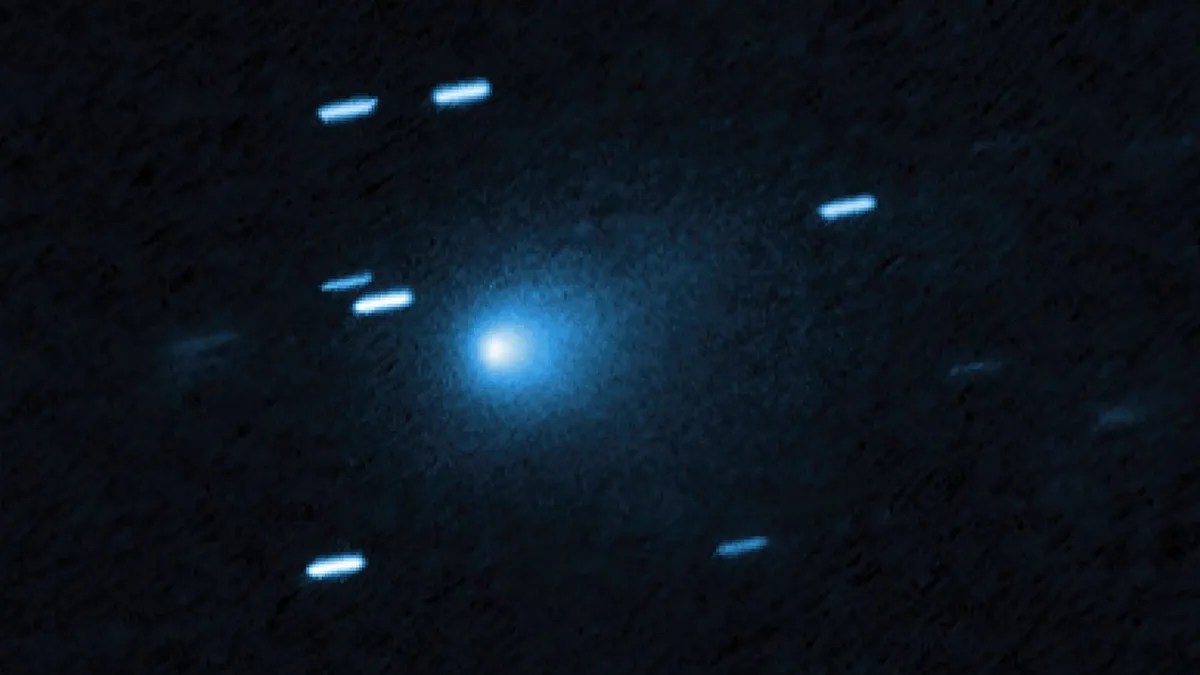
You won’t see intertsellar comet 3l/ATLAS zoom closest to the sun on Oct. 30 – but these spacecraft will The interstellar comet 3I/ATLAS is just a day away from perihelion, which is its closest point to the sun and the time around which it is expected to be most active. Although 3I/ATLAS is currently hidden from view from Earth, flying behind the sun, spacecraft elsewhere in the solar system still have the comet in their sights…more
October 14, 2025 Meeting on Campus. I look forward to seeing you for our monthly meeting Oct 14 at Peyton Hall of Astrophysics. Our guest speaker will be Becka Phillipson, Asst Prof in Physics at Villanova University. Her expertise includes black hole and neutron star studies, active galactic nuclei, and time domain astronomy (that is, observable changes in astronomical position, brightness, and structure during human-centric time periods). Dr. Phillipson uses machine learning and artificial intelligence to pursue these areas, making Oct 14 a great opportunity for us to get closer to the cutting edge of astrophysics, and better understand where and how AI is being used. We will also stream the meeting via Zoom as usual, but it’s better to attend in person at Peyton Hall if you can. Please see Victor’s article in this issue for more information.
“Unjournal Club” at the meeting, Oct 14. If you have been wondering what the new generation of “smart telescopes” is all about, you can have an insider’s look at Peyton Hall after the break on Oct 14. The Unjournal Club (aka, the 10min member talk) will be given by the Unistellar Project Team, the student members who have been exploring astronomy with the club’s Unistellar EVScope2. The students have put together a short presentation describing how they used and shared this powerful yet portable advanced telescope over the summer. The scope will be on display for us to marvel at. You will want to be present at the meeting for this!
Here’s some more background on the Unistellar scope.The club acquired through generous donation last spring a Unistellar EVScope2. You may be familiar with the SeeStar smart scopes from ZWO, which several members now own and enjoy. The Unistellar is similar in concept and function but unique in design. It is mirror-based (114mm Newtonian reflector), so this larger aperture gathers more photons than other refractor lens-based smart scopes on the market. The EVScope2 features a high sensitivity Sony CMOS sensor (STARVIS technology). This particular model also features a Nikon electronic eyepiece, along with integrated mobile app to view emerging images on a smart phone or tablet. Up to 10 persons can simultaneously observe via local Wifi without an external internet connection. The scope quickly and automatically aligns itself and tracks without polar alignment. With its carbon tripod it is highly portable, lightweight, and simple to set up, making the deep sky accessible despite light pollution.
Proposal for a Youth/Student Group in AAAP. We have an opportunity to support the development of a youth group within AAAP. Some of the student members in AAAP who led the Unistellar observing project this summer (described above) have proposed an ongoing youth sub-group within AAAP. They would be students in high school or above, be dues-paying members (usually with their parents), and would be engaged in learning and sharing astronomy and astro technology with other students and adults. They would help with AAAP outreach programs and develop contacts within schools and libraries in the area. The Board endorses this proposal and will establish some guidelines and appoint an advisor(s), under which the group can operate through the auspices of AAAP. This will be discussed at the Oct 14 meeting, when you will get a chance to meet a few of our energetic young amateur astronomers. I hope you will be present at Peyton for this discussion.
Announcement: EAA Is Now Part of the AAAP Astroimaging Group. The AAAP-exclusive astrophotography interest group is being expanded to include EAA activities (EAA is electronically assisted astronomy), or what I like to call astrovideo. Further, the Group.io website dedicated to AAAP astroimagers will now support equipment and software discussions of EAA as well as astrophotography and EAA. Please contact Michael Dimario at astroimagers@princetonastronomy.org and Gene Allen at secretary@princetonastronomy.org to sign up or share ideas.
New Findings in the Search for Biosignatures of Extraterrestrial Life. In AAAP as elsewhere in astronomy, exoplanet research and the possibility for biosignatures of extraterrestrial life are hot topics. The idea of water-rich “Hycean” exoplanets and the suggestion of biosignature gases in exoplanet K218b are being debated (discussed in my article in May 2025 Sidereal Times). A new paper suggests that the hypothesis of deep water oceans on these worlds is likely wrong (Sept 18, Astrophysical Journal Letters; link to the free article: https://iopscience.iop.org/article/10.3847/2041-8213/adff73). The current paper challenges the ideas of how large planets with water-rich atmospheres can form, with implications for interpreting recent exoplanet spectral data from JWST.
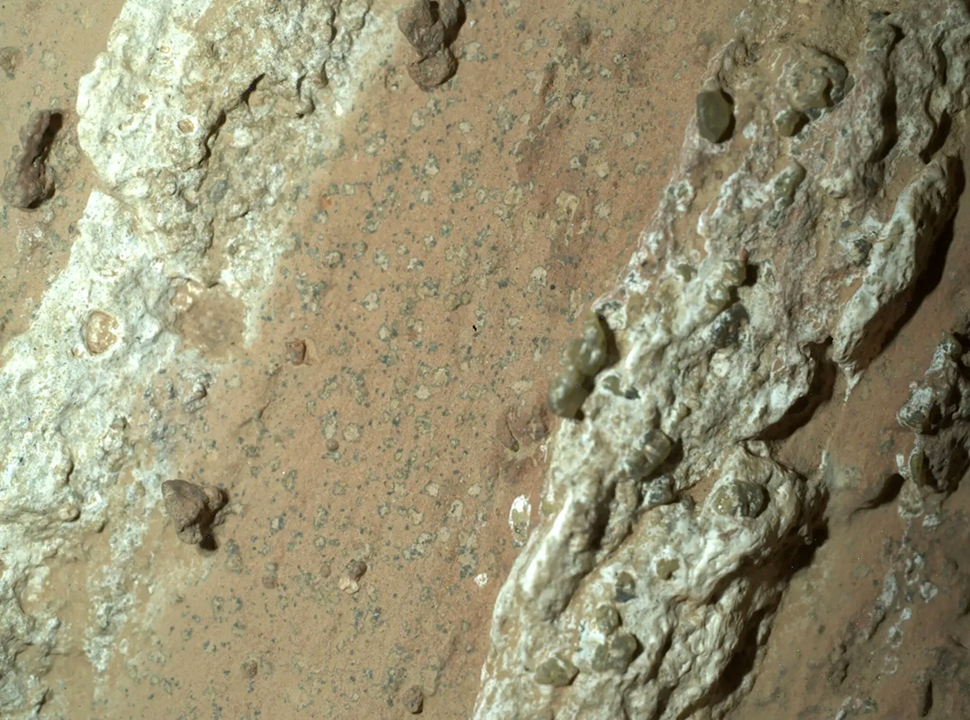
Closer to home, NASA released a head-turning report from a new analysis of photographic images from a Mars rock collected by Perseverance rover in 2024. The specimen from an ancient dry riverbed in Jezero Crater could be a type of fossil revealing chemical evidence of ancient microbial life. The study was published in the Sept 10 issue of Nature, with lead author from the SUNY Dept of Geosciences (link: Redox-driven mineral and organic associations in Jezero Crater, Mars | Nature). The specimen, nicknamed “Cheyava Falls,” shows contrasting spots consistent with ancient microbial redox activity (oxidation-reduction reactions), based on mineral features found in known fossils on earth. Of course, other non-biological explanations exist and NASA stressed that these are not confirmed fossils. Most importantly, the findings support the need to fund and execute a Mars rock sample return mission as originally planned and now being reevaluated by NASA.
A Possible Fossil Biosignature on Mars? NASA’s Perseverance Mars rover found and imaged this rock nicknamed Cheyava Falls. The irregular mm-sized spots in the red matrix in the image are being interpreted as possible redox biochemical reaction products from microbial life, perhaps billions of years ago. Credit: NASA
He Who Lives in Harmony with Himself Lives in Harmony with the Universe Marcus Aurelius
Smooth Moves: Why Strain Wave Mounts are Taking Over The October, 2025 meeting of the AAAP will take place in Peyton Hall on the campus of Princeton University on Tuesday, October 14th at 7:30 PM. As usual, the meeting is open to AAAP members and the public. Participants can join the meeting in-person at Peyton Hall or log in to the Zoom session as early as 7:00 pm to chat informally before the meeting begins.
The evening’s guest speaker, Michael DiMario, chairs this club’s Astroimaging-EAA Group. Due to a misunderstanding regarding meeting dates, Dr. DiMario will step in to take over for Becka Phillipson, who will be rescheduled for a future meeting
Also, Eklavya Doegar and her fellow members of the Unistellar Student Group will show images they acquired with the newly donated “smart” telescope and discuss their experiences using it.
Options for Attending the Meeting You may choose to attend the meeting in person or participate via Zoom or YouTube as we’ve been doing for the past few years. (See How to Participate below for details). Due to security concerns, if you log in before the host has set up internet connectivity in Peyton Hall, you may need to wait in the Waiting Room for a few minutes until the host is prepared to admit you into the meeting. You’ll need to unmute yourself to make comments or ask questions. It’s polite, though not required, for you to enable your camera so other participants can see you. The meeting will be recorded and edited for posting to our club’s YouTube channel.
No “meet the speaker dinner” Dr. DiMario has expressed his preference to forego the traditional pre-meeting dinner at Winberie’s.
Here’s the anticipated agenda for October 14, 2025’s monthly meeting of the AAAP:
(Times are approximate)
Getting to Peyton Hall The parking lots across the street (Ivy Lane) from Peyton Hall are now construction sites, unavailable for parking. We’ve been advised by the administration of the astrophysics department that we should park in the new enclosed parking garage off Fitzrandolph street and walk around the stadium and athletic fields. Here’s a map of the campus and walking routes from the parking garage to Peyton Hall. The map shows the recently completed East Garage. Not shown is an access road Sweet Gum that connects from Faculty Road to an entrance at the lower left corner of the garage. Stadium Road connects from Fitzrandolph Road to another entrance at the opposite corner (and higher level) of the garage. It’s about a 10-15 minute walk from the parking garage to Peyton Hall.
Featured Speaker: Michael DiMario k2mjd@outlook.com
Chair of Astroimaging – EAA Group Amateur Astronomers Association of Princeton
Smooth Moves: Why Strain Wave Mounts are Taking Over
Smooth Moves: Why Strain Wave Mounts are Taking Over Telescope mounts have come a long way — from bulky worm gears to sleek, high‑precision systems. Strain wave mounts (also called harmonic drives) are transforming how we track the night sky. By using elastic motion instead of traditional gear teeth, these mounts offer extreme precision, near‑zero backlash, and compact designs. This talk will explain strain wave technology, how it works, compare it to traditional worm‑gear mounts, and explore why it’s becoming a game‑changer for amateur astronomy. No engineering background required — just curiosity and a love of the stars.
Michael DiMario, PhD Michael DiMario has recently retired from Lockheed Martin serving various executive roles and has held executive engineering positions at General Electric Medical and Lucent Technologies/Bell Laboratories. Michael has six patents, a published book on systems engineering, several published book chapters, more than fifty peer reviewed papers. He has been interviewed and quoted in Wired Magazine, GPS World, Sifted, and the Financial Times. In regard to his astronomical pursuits, he chairs the Amateur Astronomers Association of Princeton Astroimaging Group, spends many a night astroimaging, and does considerable astronomical history research. He co-shares the earliest precovery of Pluto on Edward Barnard 1909 photographic glass plates located at Yerkes Observatory.
How to Participate (Links) Zoom& YouTube Live Amateur Astronomers Association of Princeton is inviting you to a scheduled Zoom meeting. Time: October 14, 2025 07:00 PM Eastern Time (US and Canada)
Join Zoom Meeting Topic: October 2025 AAAP Meeting-Michael DiMario, PhD, Astroimaging Chair, AAAP Time: October 14, 2025 07:00 PM Eastern Time (US and Canada)
Breakthrough Starshot When last month’s guest speaker, Edwin Turner, visited Peyton Hall several years ago, his topic was the Breakthrough Starshot Initiative. This now-abandoned project was funded by billionaire Yuri Milner. The idea is to launch tiny probes weighing a gram or so attached to reflective sails into orbit and then use high-powered lasers to accelerate them to 20% of the speed of light and direct them to the nearest stars. The history of this project and its quiet demise are described in a recent article in Scientific American magazine. Apparently both billionaires and politicians can be capricious and arbitrary. You can read the article at https://www.scientificamerican.com/article/the-quiet-demise-of-breakthrough-starshot-a-billionaires-interstellar/
A look ahead at future guest speakers:
Date
Featured Speaker
Topic
Nov. 11, 2025
Romain Teyssier Professor of Astrophysical Sciences and Applied and Computational Mathematics Princeton University teyssier@princeton.edu
Prof. Teyssier’s main research activity is to perform simulations of cosmic structure using supercomputers in order to understand the origins of stars and galaxies.
Discovery of Dwarf Planet Candidate in an Extremely Wide Orbit
Dr. Cheng and colleagues discovered in publicly available data from the Dark Energy Camera a dwarf planet candidate, 2017 OF201, currently located at a distance of 90.5 au. Its orbit is extremely wide and extends to the inner Oort cloud, with a semi-major axis of 838 au and a perihelion of 44.9 au precisely determined from 19 observations over seven years. Assuming a typical albedo of 0.15, they estimate a diameter about 700 km, making it the second-largest known object in this dynamical population and a likely dwarf planet.
Thanks to Nick Mellis for suggesting these speakers.
Jan. 12, 2026
Not Yet Scheduled
Feb. 12, 2026
John Bochanski Associate Professor and Chair, Department of Computer Science and Physics Rider University
Dr. Bochanski has been connected to the Legacy Survey of Space and Time Discovery Alliance since his graduate studies more than 15 years ago. Rider University is part of the global effort using the Vera C. Rubin Observatory to map the optical sky. The Rubin observatory (formerly the Large Synoptic Survey Telescope, LSST) will capture more information about our Universe than all other optical telescopes throughout history combined. The observatory released its first images this past June. Prof. Bochanski will discuss the project’s history and discoveries.
Thanks to Nick Mellis for suggesting this speaker.
Mar. 10, 2026
Robert Vanderbei Emeritus Professor in the Department of Operations Research and Financial Engineering Princeton University
Mr. Horgan will discuss his controversial 1996 book The End of Science, in which he argues that pure science, defined as “the primordial human quest to understand the universe and our place in it,” may be coming to an end. Horgan claims that science will not achieve insights into nature as profound as evolution by natural selection, the double helix, the Big Bang, relativity theory or quantum mechanics. In the future, he suggests, scientists will refine, extend and apply this pre-existing knowledge but will not achieve any more great “revolutions or revelations.” Shades of Auguste Comte, perhaps?
We expect to have copies of his book(s) for sale for the author to sign at the conclusion of his presentation.
As usual, the June meeting will take place in the planetarium at the NJ State Museum in Trenton. There will be no streaming of this live-only sky show and PowerPoint presentation. Topic to be announced.
As always, members’ comments and suggestions are gratefully accepted and much appreciated. Thanks to Ira Polans and Dave Skitt for setting up the online links and connecting the meeting to the world outside Peyton Hall.
Director Rex Parker opened the meeting in Peyton Hall at 1930 with 54 attending. He reported:
The new website, under construction by Member Jeff Pinyan for many months, is available as a beta version to try out at https://www.princetonastronomy.org/beta. When fully implemented, a login will offer members to exclusive content and functionality.
Member David Ackerman is also a member of Dark Sky International and DarkSky New Jersey. Earlier this year he founded DarkSky Hopewell to remediate bad lighting in Hopewell Borough. His team has helped the Hopewell Village Square convert to dark sky compliant lighting and has two more businesses waiting to follow.
Astroimaging Chair Michael DiMario, PhD will be giving a talk Before Pluto Was Pluto at the Morris County Library in Whippany, NJ on Saturday, September 13.
Restoration of power to the observatory continues to await the glacial response of JCP&L.
NJAA will hold their annual open house and astro flea market on September 13 in High Bridge, NJ.
Program Chair Victor Davis introduced our speaker for tonight, Dr. Edwin L. Turner, Emeritus Professor of Astrophysical Sciences at Princeton University. His talk, An Observable Universe Devoid of Extraterrestrial Life, Intelligence, and Technological Civilizations Is Plausible, was delivered in person. He showed how many of the presumptions about the likelihood of extraterrestrial life are emotional and not determinant.
Thirty minutes of questions and a break followed the talk.
Rex convened the business meeting at 2122 with 16 attending in Peyton Hall. Fifty years ago Viking 1 was the first spacecraft to successfully land on another planet (Mars) to begin a search for biology. Member Rich Sherman shared images he made of the Antenna Galaxies and Rex showed his of the Trifid and Iris Nebulae, demonstrating that it is nebula season. The NSF-DOE Vera C. Rubin Observatory on Cerro Pachon in Chile had first light on the world’s largest camera on June 23. Later this year Rubin will begin its Legacy Survey of Space and Time, scanning the sky for 10 years to precisely capture every visible change.
Outreach Chair Bill Murray reported on three upcoming outreach events:
Friday, September 12: only 4 have volunteered to take scopes for 100 observers at the Plainsboro Preserve. We need more please.
Week of September 22-26: Active Day Of Hamilton is seeking astronomers to give talks to their adult day care participants. Only Assistant Director Bob Vanderbie has volunteered so far. < https://www.activeday.com/locations/active-day-of-hamilton/ >
Thursday, November 13: Stone Bridge Middle School in Allentown NJ has invited AAAP to provide educational materials and stargazing, weather permitting, at their science fair. We manned a table there last year.
Observatory Co-Chair Dave Skitt reported that Washington Crossing State Park is getting a new visitor center but neither the parked JCP&L trucks nor the extra funding has enabled any improvements in the gates or roadway to our observatory.
A member reported great skies when attending the Maine Astronomy Retreat at the Medomak Retreat Center, August 18-24. < https://astronomyretreat.com/ >
A comment was made that we really need to get funding for a Mars Sample Return mission to bring back the numerous samples already collected and packaged by the Perseverance rover.
The meeting was adjourned at 2200.
As of September 8, we have 215 active members. So far in CY2025, renewals number 86 and expirations number 42, giving us a 67% retention rate. We have added 36 new members.
Minutes taken from the Zoom recording of the meeting.
The meeting convened at 1900 on September 15, 2025
In attendance:
Director Rex Parker Treasurer Ira Polans Program Chair Victor Davis Secretary Gene Allen (joined late) Observatory Co-Chairs Jenn & Dave Skitt Outreach Chair Bill Murray Astroimaging Chair Michael DiMario Editor Surabhi Agarwal
Rex, Dave, and Michael briefly reviewed the two quotes for replacing the failed underground power line between the pole and the observatory panel. The quotes were sent to everyone in advance and have been made part of this document. Discussion followed which fairly quickly revealed a preference for the Holcombe Electric estimate. It seems perfectly adequate and complete, supports a smaller, more local business, and comes in at $4,000 less. They had done good work for Michael in the past, and we may be able to get on their schedule more promptly. The motion to have Holcombe do the job was seconded and approved unanimously.
To recap, a UniStellar eVscope 2 was donated to the club last spring. After polling all members for a project team to take on learning the scope and presenting to the membership, some 16 youth members responded enthusiastically. The scope was handed over to them with the expectation that they will organize themselves to learn to use it and then make an Unjournal Presentation, now scheduled for the October meeting.
Rex has been coordinating with them, and Jason Mak, a high school age Keyholder, is requesting that we officially establish a youth subgroup. Pros are that it will add legitimacy to youth membership, we can Bill expects they can be a great outreach resource at events such as the Stone Bridge Middle School Science Fair coming up again in November. Dave has seen youth interest at a recent event at Plainsboro Preserve. The group should remain mostly self-organizing with little structure forced on them. They should be members, but Dave, Mike, and Surabhi spoke out for implementing tiered memberships. The only con that came up is that they will age out of the group and it may not be self-sustaining. Connecting with astronomy club advisors that we think exist in most schools should help keep youth membership refreshed. There does need to be a formally appointed advisor, and our Assistant Director Bob Vanderbie has the panache of being a retired Princeton University Professor. [In completing these minutes, it was noted that he had accepted that role at our April Board Meeting.] Dave kept coming up with projects we could suggest to them, including a human sundial, a solar system walk, creating a real-world horizon from panographic photos for The Sky X software that runs our observatory scopes, and manning the greeting and literature table function at the observatory. There was universal support for creating a youth member subgroup.
The failed underground power cable to the observatory has been replaced, but the trench refill was done poorly, with many sharp-edged rocks making it a hazard. A motion, second, and unanimous approval vote authorized spending $2000 to pay a landscaper recommended by Michael Mitrano to clean it up. Dave will follow up. JCP&L continues to be even more unresponsive in hooking us up than the state. It was noted that the end of the conduit at the building is open and that the electrician responded that a weather head was not included in the quote, though it probably should have been.
Michael DiMario reported that the astroimaging Group.io free account is using 80% of its free allotment of 1GB for archiving both images and the conversations supporting them. He expects it to be full early next year and proposes that the lowest paid increment provides 30GB and costs about $200 a year. While only 10 or so out of the 45 or so in the group provide most of the images and discussions, he finds 20% active participation is also shown in the other two astronomy clubs to which he belongs. At present, EAA does not comprise much of the activity, and the introductory description should add that. A motion, second, and unanimous approval vote authorized spending the annual $200.
The beta website has generated no feedback and it is suggested that having two sites in parallel is confusing and not as productive as we had hoped. There was consensus that we need to migrate content from the old website to the new, populating the blank blue boxes and preparing to go officially live with the new site around about the first of next year. The website team will see what Jeff’s plans are. In that process, Mike suggested that we make the Sidereal Times newsletter a members-only benefit, as it is at his other clubs. Since everything else we do is free to the public, that would make it a reason to pay dues and might add legitimacy to the document. It could be moved to beyond the members login with little trouble, and Surabhi reported that a “teaser” extract on the public side could easily be created to entice joining.
Bill noted in closing that the planetarium is planning to bring groups to the observatory on October 10 and 24.
We will shift our inventory from warm weather to cool weather gear on October 15. Don’t forget AAAP gear makes a great holiday present! If you want a different color just email me at merchandise@princetonastronomy.org, and I will do my best to get you what you want.
We also offer a wide range of non-apparel items at our Next Gen Store—from bags and magnets, to towels and cups, and lots of stuff in between. The password for both is: SiderealTimes.
You can also reach our stores by clicking here: AAAP Shopping
I’ve been having lots of fun with my Seestar S30 smart telescope. Over the last week or so I took pictures of the Andromeda galaxy, the Orion Nebula, and the Pleiades. As I’m sure many/most of you know, I have for about 8 years been teaching a Freshman Seminar here at Princeton University called “Sizing Up The Universe”. The course is all about how we can measure distances to things using data/pictures acquired using cameras and telescopes that are affordable to amateur astronomers. We start by measuring the size of Earth, then the size of and distance to the Moon, followed by the Sun and other planets in our solar system. After that we use pictures I’ve taken over multiple years of Barnard’s star to measure its parallax and hence its distance. Then toward the end of the semester, we study RR-Lyrae stars and use them to measure the distance to some globular clusters near our Milky Way galaxy and from those distances we estimate roughly how big our Milky Way galaxy is. Then, we notice that there are some globular clusters that can be imaged in nearby galaxies and comparing the angular size of those far away globulars to the angular size of our nearby globulars we are able to estimate the distance to some of our nearby galaxies. Lastly, we study some pictures I’ve taken of Quasar 3C-273 using a diffraction grating that I bought. From those pictures we are able to measure the red-shift of that quasar. These things are all very fun to do and in previous years I’ve mostly used pictures taken with my 10″ Ritchey-Chretien telescope together with cameras I’ve bought from StarlightXpress.
This year, we are doing things a little differently. The Freshman Seminar program has bought eight ZWO Seestar-S30 smart telescopes so that the students in the class (there are 15 of them) can take their own pictures of things. My hope is that maybe we’ll use some of those pictures for our analysis. With those goals in mind, I have started taking pics with my own Seestar-S30. I’m having lots of fun. It’s both easy to do and the images captured are amazingly good for such a small telescope. Shown here are three of the pictures I took recently.
The first picture is of the Andromeda galaxy (aka M31). It was taken in the evening on September 19. The image is a stack of 480 10-second exposures, i.e., 80 minutes. I used the Seestar app in “Mosaic” mode. As I recall, I enlarged the image to be about 70% larger than the base size of the camera. When doing mosaic mode, there is a significant temporal gap between exposures because the app moves from one position to another position after every exposure. So, the 80 minute total exposure time took about twice that long to get.
The second picture was taken of the Orion nebula (aka M42) in the early morning hours of September 22. The image is a stack of 210 10-second exposures, i.e., 35 minutes. This picture was also taken in “Mosaic” mode but the size was not upscaled. I only used mosaic mode so that I could orient the picture so that we can see Orion’s sword in a vertical orientation. The nebulosity we see around those few bright stars near the top is called the Running Man nebula, aka NGC 1977. Those stars are the “top” of Orion’s sword. And, of course, Orion’s nebula is the large interesting nebula at the center of Orion’s sword. And, lastly the few bright stars similarly far down below the Orion nebula form the bottom of Orion’s sword. Visually, the top, middle, and bottom of Orion’s sword just looks like three stars but here we see that it’s actually more than three stars.
M42
The third picture is of the Pleiades (aka M45). It was taken in the earlier morning hours of September 22. It’s a stack of 105 10-second exposures, i.e., 17 minutes. And, it too was taken in “Mosaic” mode so that I could orient the picture with north at the top, east at the left, etc.
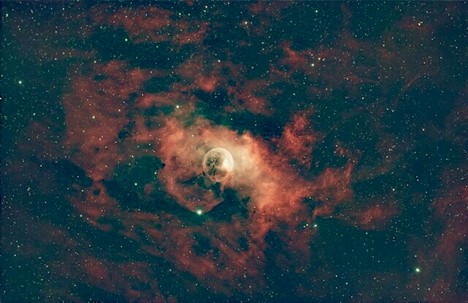
The Bubble Nebula NGC 7635 is located in the constellation Cassiopeia 7100 light year from Earth. It is 7 light years across and is a glowing molecular cloud due to a very hot central star. The bubble molecular cloud is expanding at 4 million miles per hour. This image was captured with a Celestron C9.25 telescope with a 0.7x reducer, ZWO ASI2600MC Pro camera, and Optolong L-Ultimate filter. PixInsight was used for post processing 250 light frames of 300 sec each for an integration of 20.8 hours over a course of 4 nights.
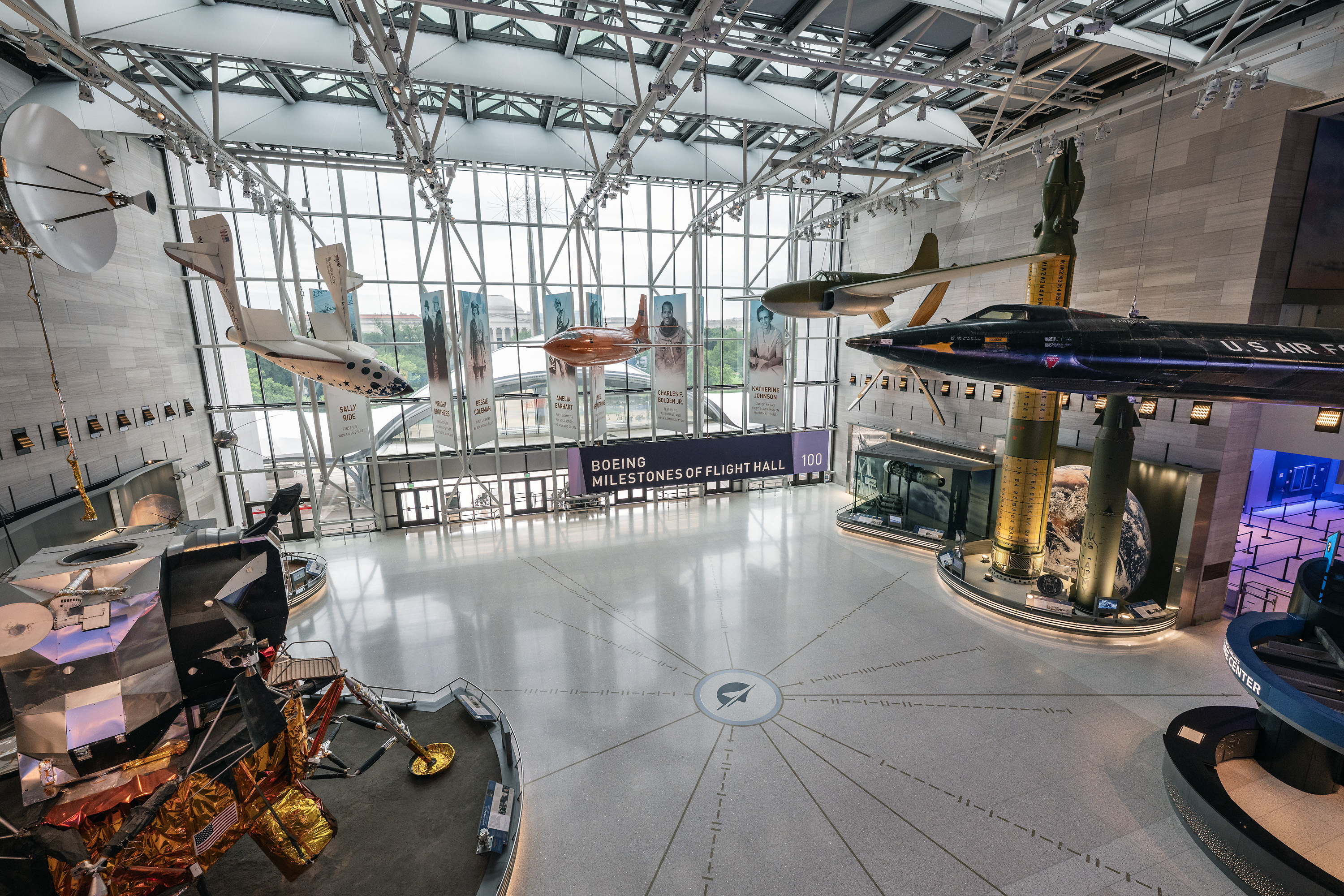
A recent news item piqued my interest. The National Air and Space Museum in Washington DC opened 5 new galleries. In the “Boeing milestones of flight hall”, etched on the floor is a set of radial lines emanating from a central point. This is the Pulsar map. It is a map showing the bearings of our planet earth with respect to 14 known pulsars, some in our galaxy and some outside. Pulsars are spinning remnants of once massive stars. These emit pointed beams of radio waves which is what the radial lines in the map represent.
Stars end their lives and become smoldering remains of once glowing nuclear furnaces. Smaller stars like our Sun become white dwarfs after death. While massive stars become neutron stars and black holes. Neutron stars are very dense objects where the electrons and protons of all the matter collapse into neutrons. Some neutron stars spin very rapidly and emit radio waves in focused beams from their poles. These neutron stars are known as pulsars. Something like light beams coming from a light house. Not all neutron stars have their beams coming towards earth. Some of them do. And 14 of them were selected to guide any alien to make the trip to the earth ! The picture below, courtesy National Air and Space Museum, shows the pulsar map on the floor. All the radial lines are not equal in length. The length indicates the distance of earth from the given pulsar.
The Boeing Milestones of Flight Hall Gallery 100 at the National Air and Space Museum in Washington, DC. July 2, 2025. (Smithsonian Photo by Mark Avino)
[20250702.MA.117] [NASM2025-03405]
The Pulsar map is very similar to the earlier navigation used by airplanes in our skies. There are a number of special radio sources installed on the ground, which transmit 360 different radio signals to indicate the 360 degrees of the direction from the source. Airplanes have specialized radio receivers which can receive these signals and specify which radial the plane is currently on. Similarly, another radial from another source can specify radial with respect to the second source. The intersection of the two radials provides the location of the airplane. Now, this is supplanted to a large extent by GPS navigation which works everywhere on the earth, even where there are no radio transmitters.
How do we know how far the pulsars are ? The spinning pulsars send radio waves. The pulse period, related to the frequency of the emitted radio waves, indicates the distance from the earth.
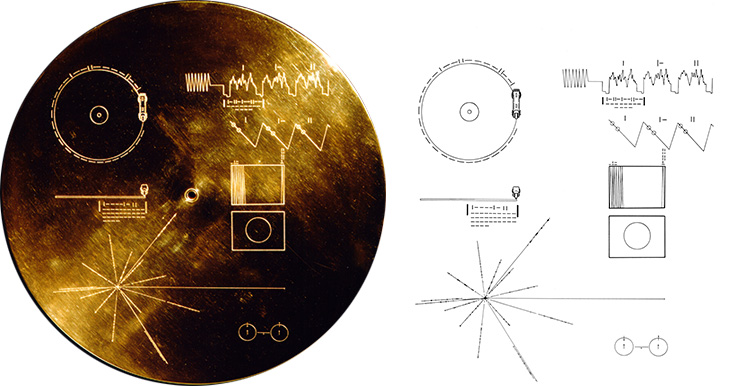
NASA launched 2 spacecraft Voyager 1 and Voyager 2 in the 1970s to make a grand tour of the outer gaseous planets – Jupiter, Saturn, Uranus, Neptune. And then they made their way across the outer solar system to interstellar space. A memento called “Voyager golden record” created by a committee led by famous astronomer Carl Sagan was put on these 2 spacecraft. A gold-plated phonograph record which contains images, greetings in 55 languages, diverse music, sounds of earth, and the Pulsar map. The Pulsar map itself was designed by Carl Sagan and another famous astronomer Frank Drake. These spacecraft also carry the needle used to play the golden record ! Any such modern day spacecraft would carry USB memory sticks instead ! The picture below, courtesy NASA, shows the details of the golden record.
The Pulsar map is not a static image which can ensure accuracy for centuries. Things keep changing all the time. Pulsars move. Our solar system moves around the center of our galaxy. An older version of the Pulsar map was sent on Pioneer 10 and Pioneer 11 spacecraft, which predated the Voyagers. What we have in the museum is the latest version, even later than what went on Voyager.
The museum is getting a lot of face lift. Some more galleries are coming up next year. It will be time to make the pilgrimage again !
The Fermi Paradox refers to a simple question that has eluded us all for decades: If aliens exist, then why haven’t we seen any yet? Billions of Earth-like planets exist in the Milky Way alone, and if life is a fraction as common as we believe it to be, our galaxy should be filled with alien civilizations in various points of development. Obviously, this is not the case, so the question the Fermi Paradox poses is “what went wrong?” Most people agree that there are only two likely answers. Either the development of life is significantly rarer than we previously believed, and we are truly the only intelligent beings thus far in our local pocket of the universe’s history, or there is some sort of “Great Filter” that kills off the majority of species. I’m going to explore both of these possibilities and then share my thoughts on them.
Although we are aware of most of our evolutionary history, the likelihoods of some of these processes occurring remains unknown. For example, abiogenesis, or the process of life emerging from non life like we believe it did on Earth, might be exceedingly uncommon. It is possible that the factors that allowed for this have only lined up once, and it happened here on earth. Other stages of our evolution also have the potential to be far rarer than expected. The evolution of eukaryotes(cells with nuclei), which are essential to multicellular life, only happened once on Earth. Multicellularity arose precious few times as well. And, of course, out of the millions of species that roamed Earth, intelligent life only appeared in one of them(us). If these processes are exceedingly rare on their own, and Earth has the optimal environment to encourage them, other planets that might have less ideal conditions than ours could be incapable of developing intelligent life, as multiple processes could keep their native species locked in an inferior stage of development. The evolutionary argument is widely regarded as the most likely explanation for the Fermi Paradox, but others propose a more ominous one: the Great Filter.
Some experts posit that throughout a species’ development, it encounters several “filters” or major obstacles that prevent it from progressing to the next stage of life. The Great Filter refers to the largest of these filters, the one that typically holds a species back. This filter may be something behind us, such as the attainment of intelligence or abiogenesis, which shines a brighter prospect on our future. However, it could just as well be something that lies ahead of us, whether it be nuclear war, AI, or environmental catastrophe. If it lies ahead, some argue, it could be the answer to why there are no visible spacefaring civilizations in our universe. Perhaps none of them were able to break past this filter, and they were forever doomed to the confines of their planet or even extinguished entirely.
Now that I’ve laid out the two main theories, I want to talk about what I think. Of course, there is some overlap in both, but most supporters of the Great Filter seem to think it lies ahead of us, so I think it’s safe to consider these separate arguments. I personally believe the evolutionary perspective is far more logical and likely. In my opinion, it is a mistake to believe that we would possess even an inkling of an idea of the motivations and psychology of an alien species. There is no guarantee that a species with our intelligence level will develop the exact same technologies on the same level. One species might shut down the idea of nuclear weapons before they ever come to fruition. Another might do the same with AI. A third could recognize the collapse of its environment due to industry and rush to fix the problem. Others might never explore these possibilities at all. Because civilizations could take such different developmental paths, I find it unlikely that there is a single universal filter that wipes out nearly all of them. On the flip side, the evolutionary argument shows us just how much we don’t know about our own ascension to intelligence. Without thorough simulations to ascertain the exact probabilities of abiogenesis or other processes, any one of them could be the secret to the Fermi Paradox. Regardless of which viewpoint you support, however, one thing is true: For now, we are alone in this universe.
Birds become shrouded in confusion, sunflowers twist in uncertainty, yet I gaze in awe. The sky plunges into darkness, so fast it makes you question the possibility of a cosmic light switch. This infamous phenomenon is known as a solar eclipse.
It was a typical summer morning. After packing my bag, I headed out to summer camp. For weeks, my counselors had told me to mark my calendar for this very day, August 21st, because a solar eclipse was coming. I had read about eclipses before, but experiencing one was not something my nine-year-old brain could truly comprehend.
After arriving, the wait seemed to never end. I was filled with excitement you only experience a handful of times in life. My ears awaited the announcement from the camp director, and when it finally came, I struggled to refrain from tugging on the counselors and other campers to get there faster. After the classic warning not to look at the eclipse until totality, I was ready. I quickly grabbed my eclipse goggles and looked at the Sun patiently. A black spot started to engulf the light, my heart raced. Gradually the Sun was eclipsed and adrenaline coursed through my veins. Once totality was confirmed, I lifted off my goggles and it felt like my whole life led up to this moment. I was only reminded that the passage of time continued by the cold, surreal breeze grazing my skin.
I could almost smell the disruption in the Earth’s natural flow. A solar eclipse defies all things nature is accustomed to.
It dawned on me though: if the Sun was completely blocked, why was it not night time? Obviously it was just sun rays peeking through, right? I was puzzled by this question ever since totality, but I forgot temporarily as everyone started to clap and cheer. Once it was over, the call for the cosmos rang in my head stronger than ever before. Going home after was disappointing, but it meant I got to revisit my question. I ran to my trusty tablet as soon as I got home and began to research.
My previous assumption was far from the truth. Every solar eclipse, a typically forgotten aspect of the Sun shines instead. The corona, a hazy cloud of million-degree plasma, is usually invisible because the Sun’s rays overshadow it. But during totality, it finally has its chance to show the world its beautiful halo around the Moon’s darkness.
Total solar eclipse showing the Sun’s corona, Oregon, August 21, 2017. Credit: NASA / Aubrey Gemignani
Once the corona stepped off stage, nature resumed. Birds began to sing again, the chatter of campers grew louder, and the warmth rushed back to my skin. But the image of the eclipse was engraved in my mind. While uncovering the answers, I realized eclipses were not just spectacles of cosmic nature but doors leading to mysteries science has been trying to solve. I was oblivious to it at the time, but that day a seed of curiosity for the cosmos was planted in me.
Eight years later I cherish this moment as one of the biggest sparks in my journey toward becoming an astronomer. The universe is an endless sea of knowledge, and though the sky’s light switch has long been flipped back on, my curiosity has stayed lit ever since.
Something Very Tiny Is Following Earth Around the Sun The Earth stands alone in the solar system as a habitable world, as far as we know. But that doesn’t mean we don’t get visitors, most often in the form of (usually harmless) asteroids. Some even choose to stick around for a while, gaining a moonlike status….more
-NYT
A Forgotten Cosmic Impact Was Hidden in a Museum’s Glass Shards Every few million years, give or take, a sizable asteroid slams into our planet. Researchers have now found evidence of such a cataclysm roughly 11 million years ago, thanks to shards from a more recent Earthly encounter with a giant space rock…more
-NYT
What a Signal in a Failed Star’s Clouds Means for the Search for Life On a brown dwarf dozens of light years from Earth, astronomers have detected trace amounts of phosphine, a molecule that on this planet is produced by living things. This discovery is not life, the astronomers say. Any life as we know it would be impossible to sustain in such an environment…..more
-NYT
A Defender of Darkness in the Darkest Place on Earth When night falls in the Atacama Desert, in northern Chile, brilliant constellations shine down on the dry plains. So perfect was the inky blackness that the Indigenous people who live here believed they could make out the forms of animals in the dark spaces between the bright stars…..more
-NASA
What is Betelgeuse? Inside the Strange, Volatile Star A blazing red supergiant shining brilliantly in the night sky, Betelgeuse is a star that has captured humanity’s awe and attention for centuries. The “right shoulder” in the constellation Orion (or left shoulder, as seen from Earth), Betelgeuse (or Alpha Orionis) is one of the brightest stars in the night sky and one of the largest stars ever discovered. But there is more to this ultra-bright stellar monster than meets the eye…..more
-NYT
In a Rock on Mars, NASA Sees ‘Clearest Sign of Life’ So Far Life, especially the microbes too small to see, has left an indelible mark on rocks on Earth, creating minerals that would otherwise not be there. If some of those minerals turn up in rocks on Mars, is that not good evidence that life once existed there, too?….more
-NYT
Happy Birthday, LIGO. Now Drop Dead. The space around It’s been 10 years since astronomers first felt the universe tremble. At 4 a.m. on Sept. 14, 2015, in both the desert of eastern Washington State and the backwoods of Louisiana, two beams of light began quivering in distant synchrony as the space through which they were traveling stretched and shrank at a rate of 250 times a second….more
-NYT
Hopeful Hint of an Earthlike Atmosphere on a Distant Planet Around 40 light-years from Earth, seven rocky worlds orbit a cool, red star named Trappist-1. Some of these planets may be habitable to life as we know it, which has led astronomers to point the James Webb Space Telescope at each member of the septuplet. To date, they have been left disappointed: Several of the planets appear to be bare rocks exposed to the horrific void of space….more
-NASA
NASA’s Hubble Uncovers Rare White Dwarf Merger Remnant An international team of astronomers has discovered a cosmic rarity: an ultra-massive white dwarf star resulting from a white dwarf merging with another star, rather than through the evolution of a single star. This discovery, made by NASA’s Hubble Space Telescope’s sensitive ultraviolet observations, suggests these rare white dwarfs may be more common than previously suspected…more
-NASA
NASA’s Apollo Samples, LRO Help Scientists Forecast Moonquakes As NASA prepares to send astronauts to the surface of the Moon’s south polar region for the first time ever during the Artemis III mission, scientists are working on methods to determine the frequency of moonquakes along active faults there. Faults are cracks in the Moon’s crust that indicate that the Moon is slowly shrinking as its interior cools over time. The contraction from shrinking causes the faults to move suddenly,….more
Science and science fiction writer Arthur C. Clarke famously speculated, “Two possibilities exist: Either we are alone in the Universe or we are not. Both are equally terrifying.” September’s guest speaker argues for the first terrifying possibility. The evening’s guest speaker is Edwin L. Turner, Emeritus Professor of Astrophysical Sciences at Princeton University. The September, 2025 meeting of the AAAP will take place in Peyton Hall on the campus of Princeton University on Tuesday, September 9th at 7:30 PM. As usual, the meeting is open to AAAP members and the public. Participants can join the meeting in-person at Peyton Hall or log in to the Zoom session as early as 7:00 pm to chat informally before the meeting begins.
Options for Attending the Meeting
You may choose to attend the meeting in person or participate via Zoom or YouTube as we’ve been doing for the past few years. (See How to Participate below for details). Due to security concerns, if you log in before the host has set up internet connectivity in Peyton Hall, you may need to wait in the Waiting Room for a few minutes until the host is prepared to admit you into the meeting. You’ll need to unmute yourself to make comments or ask questions. It’s polite, though not required, for you to enable your camera so other participants can see you. The meeting will be recorded and edited for posting to our club’s YouTube channel.
Meet the Speaker Dinner Prof. Turner will join us for the traditional “meet the speaker” dinner at Winberie’s Bar and Restaurant prior to the meeting. Our reservation is for 5:45 pm. Please contact the Program Chair if you plan to attend.
Here’s the anticipated agenda for September 2025’s monthly meeting of the AAAP:
(Times are approximate)
Getting to Peyton Hall The parking lots across the street (Ivy Lane) from Peyton Hall are now construction sites, unavailable for parking. We’ve been advised by the administration of the astrophysics department that we should park in the new enclosed parking garage off Fitzrandolph street and walk around the stadium and athletic fields. Here’s a map of the campus and walking routes from the parking garage to Peyton Hall. The map shows the recently completed East Garage. Not shown is an access road Sweet Gum that connects from Faculty Road to an entrance at the lower left corner of the garage. Stadium Road connects from Fitzrandolph Road to another entrance at the opposite corner (and higher level) of the garage. It’s about a 10-15 minute walk from the parking garage to Peyton Hall.
Featured Speaker: Edwin L. Turner elt@astro.princeton.edu
Professor Emeritus of Astrophysical Sciences Princeton University
“An Observable Universe Devoid of Extraterrestrial Life, Intelligence, and Technological Civilizations Is Plausible”
The two most common and apparently compelling arguments for the existence of extraterrestrial life, intelligence and technological civilizations are the (probable) extremely large number of exoplanetary environments similar to the Earth’s and the application of the Copernican Principle to abiogenesis, evolution, and sociology. On closer examination both of these lines of reasoning are shown to have fundamental flaws. Thus, it remains plausible that the Earth is unique in the observable universe as a home to any or all three of these astro-biological phenomena. The discussion will also illuminate a major unresolved question in our understanding of nature which deserves serious attention independent of the specific context considered in this presentation.
Edwin L. Turner Edwin L. Turner is Professor of Astrophysical Sciences at Princeton University. He also serves as Co-Chair of the NAOJ-Princeton Astrophysics Collaboration Council (N-PACC). After receiving an S. B. in Physics at MIT (’71) and a Ph. D. in Astronomy from Caltech (’75), he spent brief periods at the Institute for Advanced Study and on the astronomy faculty at Harvard University before joining the Princeton faculty in 1978. Since 2008 he has also held an Affiliate Scientist appointment at the University of Tokyo’s Kavli Institute for the Physics and Mathematics of the Universe. He has carried out extensive astronomical observations at Mt. Palomar Observatory, Kitt Peak National Observatory, NRAO’s Very Large Array, Apache Point Observatory, the National Astronomical Observatory of Japan’s (NAOJ’s) Subaru Telescope and with the Hubble Space Telescope. Turner has served on a variety of national professional committees, including nine years each on the Board of Directors of the Association of Universities for Research in Astronomy and the Space Telescope Institute Council (which he chaired for 3 of those years). He also served as Director of the Apache Point Observatory 3.5-meter Telescope for nine years and on the Board of Governors of the Astrophysical Research Consortium for an additional 8 years. His sabbatical leaves have taken him to Caltech, Harvard, MIT, the National Astronomical Observatory of Japan, the University of Melbourne and the University of Tokyo. Working extensively in both theoretical and observational astrophysics, he has published more than 240 research papers with particular concentrations on topics including binary galaxies, groups of galaxies, large scale structure, dark matter, quasar populations, gravitational lensing, the cosmic x-ray background, the cosmological constant, exoplanets, astrobiology and the origin of life, frequently in all of these areas with an emphasis on statistical analyses. His recent teaching activities at Princeton include courses in cosmology, in astrobiology and in media coverage of science, and he has been a member of the University’s Committee for Statistical Studies since 1992. Recently he has been an active participant in the Breakthrough Starshot Initiative and in the organization of YHouse, Inc. project.
How to Participate (Links) Zoom& YouTube Live Amateur Astronomers Association of Princeton is inviting you to a scheduled Zoom meeting.
Topic: September 2025 AAAP Meeting-Edwin Turner, Emeritus Professor of Astrophysical Sciences, Princeton University Time: September 9, 2025 07:00 PM Eastern Time (US and Canada) Join Zoom Meeting
Prof. Phillipson is an astrophysicist who leverages statistics, nonlinear dynamics, and machine learning to study the explosive and highly variable characteristics of exotic astrophysical objects such as black holes and neutron stars.
Thanks to Bill Thomas for suggesting this speaker.
Also: Eklavya Doegar and members of the Unistellar Student Group will show images they acquired with the club scope and discuss their experiences using this recently donated smart telescope
Nov. 11, 2025
Romain Teyssier Professor of Astrophysical Sciences and Applied and Computational Mathematics Princeton University teyssier@princeton.edu
Prof. Teyssier’s main research activity is to perform simulations of cosmic structure using supercomputers in order to understand the origins of stars and galaxies.
Discovery of Dwarf Planet Candidate in an Extremely Wide Orbit
Dr. Cheng and colleagues discovered in publicly available data from the Dark Energy Camera a dwarf planet candidate, 2017 OF201, currently located at a distance of 90.5 au. Its orbit is extremely wide and extends to the inner Oort cloud, with a semi-major axis of 838 au and a perihelion of 44.9 au precisely determined from 19 observations over seven years. Assuming a typical albedo of 0.15, they estimate a diameter about 700 km, making it the second-largest known object in this dynamical population and a likely dwarf planet.
Thanks to Nick Mellis for suggesting these speakers.
Jan. 12, 2026
Not Yet Scheduled
Feb. 12, 2026
John Bochanski Associate Professor and Chair, Department of Computer Science and Physics Rider University
Dr. Bochanski has been connected to the Legacy Survey of Space and Time Discovery Alliance since his graduate studies more than 15 years ago. Rider University is part of the global effort using the Vera C. Rubin Observatory to map the optical sky. The Rubin observatory (formerly the Large Synoptic Survey Telescope, LSST) will capture more information about our Universe than all other optical telescopes throughout history combined. The observatory released its first images this past June. Prof. Bochanski will discuss the project’s history and discoveries.
Thanks to Nick Mellis for suggesting this speaker.
Mr. Horgan will discuss his controversial 1996 book The End of Science, in which he argues that pure science, defined as “the primordial human quest to understand the universe and our place in it,” may be coming to an end. Horgan claims that science will not achieve insights into nature as profound as evolution by natural selection, the double helix, the Big Bang, relativity theory or quantum mechanics. In the future, he suggests, scientists will refine, extend and apply this pre-existing knowledge but will not achieve any more great “revolutions or revelations.” Shades of Auguste Comte, perhaps?
We expect to have copies of his book(s) for sale for the author to sign at the conclusion of his presentation.
As usual, the June meeting will take place in the planetarium at the NJ State Museum in Trenton. There will be no streaming of this live-only sky show and PowerPoint presentation. Topic to be announced.
As always, members’ comments and suggestions are gratefully accepted and much appreciated. Thanks to Ira Polans and Dave Skitt for setting up the online links and connecting the meeting to the world outside Peyton Hall.