the squish factor

by Theodore R. Frimet

oh baby, it’s cold outside!

I reached out to the universe, by email, on February 8th 2019, at 11:55 AM, with the following plea, and embedded an image from https://www.star.nesdis.noaa.gov/GOES obtained a few minutes before said cosmic transmission:

Could someone please push up some dry air, from our South ?
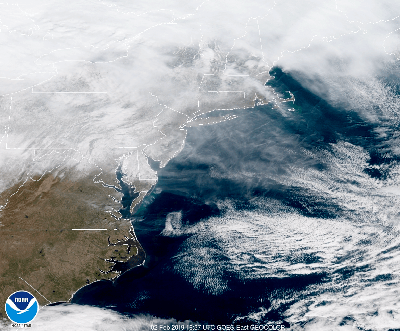
I would just love a clear sky, tonight ! I have given up all hope on barometric, snif snif, in dispersing cloud cover for my neck of the woods!

A response from the wild read that it’s been crystal clear the past few nights!

Ah yes. Past weather performance is an odd indicator of views to come. It’s all I’ve got, right now. Time to get out the telescope for a weekend look at my old friend, Orion!

Ok. Sure. This could become a checklist to help you out, into the cold, dark night. Or I could squeeze out of this lump of clay; an accounting of the foolishness, and haphazard method of preparing for a Saturday night view. I vote for the squish factor. And in no particular order, I bring you, the semi-play, hemi-prose, and somewhat astro-charged, “Oh Baby, It’s Cold Outside!”

Janet, before it gets dark, could you give me a hand with the Dob? Yes, remember it is a two part, 60 pound construction? And the cats just love to race out the door, when it is open for too long? Yes, we can do this just after 5 PM.

Five o’clock approaches, and I’m on the couch, watching the tube. Nothing special. Just flicking from one old movie, to another. Landing nowhere. Accomplishing nothing except laziness. And a small spark appears, from within. “Janet, I’ll need you in a few”, I said. Time to put on the new polypropylene liners.

At our last AAAP members only night, which was a hoot, by the way, member Tom Swords sold me on the idea of a polypropylene liner. Speaking with co-Observatory Chair member, Jennifer Skitt, the motion carried. Both are avid Amateurs, and Jennifer hikes her way thru mountainous regions of space-time. I would not fiddle around with either of their recommendations.

My first foray into the purchase of a polypropylene liner was by way of eBay. Top and bottom pieces, were both former military gear. New-old stock, and $40 including shipping. Large. It came in the mail quickly enough. Yet after putting it on, something did not quite gel. It wasn’t the sellers carcinogenic warning. I deduced it did not pertain to the 100% polypropylene. Probably it was directed at the previous use of flame retardants. Don’t take my word for it. Go to Walmart and buy a brand new polypropylene liner in the form of a shirt. See if you can get matching pants. The whole business behind the liner, is to wick away any sweat from your skin, and pass it thru the fabric. Dry skin equals warm body. I have been told that this material does an excellent job. It does. Amateur tested, Orion approved.

Ah yes. Something was off. It was the size. The ordered size was precisely a Large. And if I were a Large, all would be well in Astro-Land. I however, am not a Large. As Janet giggled as she saw the top over-stretching my belly, she said, “I always buy you Extra-Large!” I sighed, and took off the garb. Placed it onto my son’s bed for his use in his new job. Congratulations, Josh! Keep safe, and keep warm with the new poly.

Back to eBay. I scrambled to find a matching top and bottom. I almost fell into the trap of purchasing a couple of low cost pairs. However, that vendor was kind enough to capture a photograph of the material tag. And obscured the main ingredient. I surmised that it was cotton and not poly. And moved onto the next few matches.

I do purchase clothing from Goodwill, and will wear second hand, gently used material. However, poly-liners are not something that you want to buy used. At least, not for me. I draw the line, there. It is akin to wearing some other persons’s astro-underwear. Of course, you can wash it – be careful and don’t pill it up to become nearly useless in the dryer. Do a search on Google and see what others are doing to keep it tidy and clean. Oh, never mind. Here: hand wash with gentle soap, rinse and hang dry. There!

I had to settle on two different vendors. The first vendor did not have an XL. I used the watch list feature, and went back and forth to find the best price. It didn’t take too long before I had two separate orders in, net an additional $1 for my troubles to find the perfect fit.

Delivery. Cutting open one box, easy. Cutting open the soft packing for the other, not so. “Be careful”, I told myself. Or you risk cutting into the fabric of space-time and out will leak quantum foam! Ugh. Foam. It gets into all the cracks in the void. So I was careful. And finished opening up both packages. My eyes gleamed with happiness, as I laid out the two undergarments.

I put on the pants first. And then the top, overlaying the pants at the waist. There is a zipper at the neck, and I engage it gingerly. It had to last many, many more forays out into the cold. And I wasn’t taking any chances that my investment would fail prematurely. I coddled the clothing, and it was a success! Of course it helped somewhat that I went back into the gym, the previous week, slacked off on night time snacking, and put off a few pounds. Yes, I took no chances at any giggle factor, from Janet. It fit, just fine, thank you!

Last years purchase for cold weather included two pairs of long johns. One white, and one black. The black pair was XXL, so it would overlay the snug pair. I put the better fitting pair, aside for a snowy day. It no longer had any purpose in my cold weather viewing ensemble. It could not be up against my skin, as it would not wick away moisture. And it could not be a second layer, on top of the poly – as it would compress the underlayment.

Never compress your clothing layers. It is a bad idea. What you want are all those nice fluffy compartments of air to be open and not compressed. And loosely fitting clothing fits the bill. I put the larger black long johns on. Wait. Stop. Socks. Put the John aside, for now. We can play dress-up the Astronomer, later.

I had already purchased hunting socks, and underlayment socks. The first layer of socks are guaranteed to wick away moisture. Keep your feet dry, and they will not freeze in the cold of the night. The second layer hunting socks, were a size larger, and fit nicely over the first pair. And hugged right up, and over the calf, a tad. Calling Mr. John! Put on the second pair of XXL long johns, now. I notice it is starting to feel a little warm, in the bedroom.

Priss, I recall is on the stairs, on the second floor. Maybe my feral cat (she’s sweet) would like to accompany me outside, this evening? Probably not, as the temperatures will be at, or below 20 degree Fahrenheit. In my minds eye, I see her as she confidently nods off to slumberland. No, Mr. Amateur, you can go outside and play all by yourself. I will take a nap, at the high heat point of the house. I own your stairs. Meow.

I put on the top large long johns, and whine a little to myself that I need to purchase an XXL. Not perfect, yet it was stretched out sufficiently to not compress the poly. Just made it. Phew! Time for snow pants.

I put on the bib-snow pants. They are an over-all pair and fit nicely. The left hand pocket has a hole in it. I must remember to sew it up, before I lose some small iconic accessory to the night. Like all items lost to the back yard, either the good earth will swallow her whole, or a rambunctious critter will come by and add it to her nests’ collection.

I make some adjustments to the pant legs, and remember that they are zippered. I tug gently at the zipper, and close the bottom leg. And think ahead, in real-time, how I am going to put this leg into my cold weather boots? I make a mental note, “Should be OK”.

We already had a dry run, during our members only viewing. I struggled to put on the boots. And was too proud to ask for help. I finally got past the learning curve, and was able to get my right foot buried into the canopy of warmth, and buckled up. Repeated not-so-professionally for the left foot. Yes, your other right!

I was asked, that evening, why I hadn’t worn the boots to the observatory. I quipped that I wasn’t too certain about the stability, and didn’t want to walk from the car, let alone try to operate the vehicle. Don’t wear extreme cold weather boots in the car, and drive. “Not a good idea”, I told myself. And I wasn’t going to test those limits. Probably not ever. Wear sneakers, or other temporary cold weather gear for the feet, and change when you get to your destination. That, my dear amateur, seems to be a good compromise. And it worked out, just fine, thank you!

I am in the bedroom, again. And deciding if I should put on those boots, or continue with another layer of top clothing. I spy my red sweater. Red is a great color for me. It always tends to bring out the truth in a situation. That is, if I wear red, I must be prepared to learn new universal truths about myself, and my current situation. I become more aware with red, than with any other color. Some think it a superstition. Maybe. I don’t. Well, that red sweater was there, right at the end of the bed. So why fuss with what is in the closet? Put it on, and pay the piper later!

I adjust the snow bib straps, and lay them even, so that the suspenders aren’t cock-eyed and crushed at odd angles. I look in the mirror. Looks good. Grab the boots, and go into the living room. Janet is there, watching TV and playing Candy Crush. She turns up a small, wry smile, from both ends of her lips. And giggles. Just a tad.

I sit down on the couch. Opposite her gaze, I proceed to put on the left boot. And fail. I look at the boot, in hand. Almost quizzically, I am slightly perplexed as to why the boot does not go on, all by itself. The auto-on feature must be on the glitch! Janet asks me why am I putting the right boot onto my left foot? I look down. The boot construction is so defining that it almost appears, at a casual glance, that there is not a left, nor a right. However, there is. And upon further investigation, I determine that I do, in fact, hold the left boot in my hand. And proceed to slowly, dip my left foot, into the cavernous well. Success!

Baffin. Their trademark is Polar Proven. The style I chose, after two years cold, was a Mens Impact. Rated at -100 C / -148 F. This double buckling, waterproof and throughly insulated (upper included) will keep my feet warm.

I was on the fence into bowing to a lesser god. Perhaps this extreme warmth would make my feet sweat. And then I’d have cold cucumbers, and race away to put my astronomy equipment on the back burner, for the evening?

Not so. Despite Baffin no longer being produced by a Canadian company, and the box itself, most certainly made in China, the ultra-warm construction kept my feet warm, and dry. Let me repeat that: warm and dry. Very pleased.

There is a struggle in your acquisition of a good pair of warm foot wear. Many amateur astronomers take accounting of a few sizes and samples. You don’t have to buy polar proven footwear to be comfortable. Do your research on an over-sized shoe, and accommodate many layers of over-sized socks. Right up through last year, I used military surplus muc-lucs and the many layered sock approach. The downsize was I was not as stable, as I wanted to be, when I walked to my scope. So I decided, a year ago, to set my eyes on the best pair of cold weather gear, for my feet, that I could comfortably afford. And since budget is tight, I decided not to make any other purchases from the astro-department store.

Back to online shopping. The best advice I can give you is that you must know your size, ahead of time. If your novice instinct brings you to a shoe store – be prepared to accept that your salesperson will not be as knowledgeable as you portend them to be. Once you get a grip on that reality, it is time to toss the dice, and buy online.

Ah yes, size. I purchased one size LARGER. Read the comment sections, on online purchases, and a common thread emerges. The sizes are irregular. If you buy your exact size, you might get lucky. Not! Expect to return them for a larger size, and pay a restocking fee, not to mention you will bear return shipping costs. So, yes, do take my advice and buy one size larger. In any case, you are accommodating a couple pair of socks. If it is a wee slack, put on another layer!

As amateur astronomers, observing in the dead of winter, you are standing, or preferably, sitting still at the scope. And you will get cold. No amount of layering will intervene in the physical fact that your body warmth will breathe out of your clothing. Oh, wait. It’s that dream where I go to school, naked. Yes. Must put on the overcoat, tied at the waist. Add mittens that open at the fingers (best ever) and put on a ski mask. “Hoods up in five, people!” Time to get the telescope out the door.

Ah, time machine. Turn back the clock. Before I had saddled up, I cried to Janet. “Please open the door, and help me keep the cats in, while I struggle to get the Dob out the door!” As always, she obliged. Janet probably fathomed that if she put up with this mix of stellar anxiety, that once out the door, she could settle down and watch some of her favorite pre-recorded shows. I laid out the lazy susan and put the dob into place. Wired up the fan, to blow gently across the mirror, as the dob’s 12 inch mirror adjusted to the temperature change. And hooked up the push-to electronics to test drive an earlier purchase that was guaranteed to make my life a little easier.

I no longer had the benefit of sun light. I saw a forming crescent moon, in the West, and was silent. It was going to be a dark night. The weather reports were correct. Clear sky. Light, and I mean almost no wind. The verge and the neighbors fence provided ample cover.

Argh! The backyard neighbor’s dog. Woof! Woof! Intrusive lights, from a few meters away. I called out to my neighbor, thru the verge, and said, no worries it is only I. She called the dog in. Somehow, somewhere, and an hour or few later, the porch light was extinguished. Orion and I would be eye-to-eye, very soon.

50mm, 30mm, 14mm, 11mm…oops – no collimation. Eyepieces out, and laser collimator in. The secondary appeared to align quite easily. I was proud of myself. And then we had a red sweater moment. I could not seem to reconcile the red laser dot, from the business end of the mirror. Worse, I had a senior moment in not remembering it if was the black knobs or the white knobs that addressed mirror positioning!

I went back inside, and after a brief search gave up on any hope of reconciling the different knobs for my Zhumel Z8 Dobsonian. I turned on the outdoor lights, and sacrificed my night vision all-together. Armed with a flashlight, I relearned what I had forgotten. That in my installation, the black knobs control spring adjustment, while the white knobs are for lock down. I tried to collimate. And did feebly so.

Lights out. 30mm, 14mm, stop. Stars are skewing from right to left. No pinpoint. Is it my eyes? Do I need a pair of glasses? Perhaps it is the astigmatism that I’ve always been concerned about. No. I did not collimate.

Pull the optics, and put in the laser collimator, again. The neighbor dog barks. Incessantly. I get annoyed. I start the collimation procedure. Secondary looks good. Laser is pointed dead center at the mirror. I get on my knees, again. And look for the laser point of light. Dog barks. Woof! Woof!! Woof!!! I loosen all knobs, and tug down slightly on the mirrors armature. And then start to tighten up on the spring based knobs. A little at a time. Clockwise. Woof! “Would that dog please stop her incessant barking?”, I thought out loud.

And then I see it. A red dot appears at the two o’clock position. Keep on barking, old gal. You are now and forever to be known, as “Astro-Dog”. She quiets down, sensing my confidence at the business end of collimation. I make the final adjustments. I recheck the secondary, and all is well. I tighten the lock downs, being ever so careful to keep my laser dot in the middle. Collimation at last!

50mm, 30mm, 14mm, 11mm, 6.7mm. Happy is the man that can see pin-point precise stars. I am pleased, yet not overjoyed. I muse to myself that there must be a lot of pollen, from the last two years, and dust, that needs to be attended to on my 12 inch mirror. The stars are centered without distortion, although not pinpoint. It could be my eyes – although I would attribute that this is the finest resolution I can achieve, given the mirror condition, and that the sky is somewhat unstable. I look up, and see twinkling. Yes. The atmosphere did not provide me with a a perfect night. However, I agree with my red sweater and confided to AstroDog that this is “as good as it gets”.

The quadrature showed me her soft underbelly, as there was a fifth star to behold that evening. And the glow of The Great Orion Nebula was my companion for hours, on end. Pleiades nestled me in her blue disquiet. I finally started to feel the cold settling in.

One last look for the dwelling of a spiral arm, and none to be found. Straight up, again, at the thinnest part of our atmosphere, and little compensation, here too to be found.

The inevitable night chill sets in. My coffee turns to ice. I strip down the optics, and put away our astronomy tools. I cover her nakedness with a cloth made from aluminum. Through the night, she would wait. Daybreak, it was agreed, we would put our dob away. “Oh baby, it’s cold outside!”
Posted in March 2019, Sidereal Times | Tagged | Leave a comment

Were Apollo manned moon landings fake ?

by Prasad Ganti

In a recent gathering of friends and family, this topic came up. There are some conspiracy theorists who believe that NASA faked the moon landings. The reasoning is that the enormous pressure during the cold war to keep up President Kennedy’s challenge of landing a man on the moon by the end of the decade (1960s). And secondly we did not go back to moon ever since the program ended in early 1970s. They sound like plausible arguments. My take is that they were not fake and they were as real as any other human achievement like the manned conquest of the North and the South poles and the scaling of Mount Everest.

The manned moon program started in early 1960s with the Mercury program which put a man in Earth’s orbit. It was followed by the Gemini program which produced a bigger spacecraft or more than one person. It proved the concept of space walks and also rendezvous of two spacecraft in space. Apollo program followed. This program was meant to shoot the spacecraft from the Earth’s orbit to the trans lunar trajectory, basically catapulting it towards the moon. All of these programs involved the design and implementation of life support systems. These systems make the design more complex. A human habitat needs to be established in the spacecraft. The cabins need to be pressurized using a mix of oxygen and nitrogen, thus simulating the Earth’s atmosphere. The exhaled carbon dioxide needs to be scrubbed and converted back to oxygen. Drinking water was generated as a byproduct of the fuel cells which used hydrogen and oxygen to generate electricity.

The Apollo spacecraft consisted of the command and the lunar modules. And the service module too. But the command and lunar modules were for human habitation and had the life support systems. Command module was used by the astronauts to travel to the moon. Then the lunar module detached itself from the command module, carrying the astronauts to the surface of the moon. While the command module pilot kept it in the lunar orbit, waiting for rendezvous for return back to the Earth. It is like a big ship docked offshore at a distance while a small boat carried the crew to the land (some crew are needed to stay back in the ship to take care of it).

The life support systems on the Apollo missions came in handy for the design of the space shuttle, which had very limited budget, as opposed to the seemingly unlimited budgets during the Apollo times. Space shuttle life support systems could not have been designed within its budget if it did not inherit the system from the Apollo program.

Media is like a hawk. The New York Times exposed the Pentagon papers which was a cover up of the losses occurring in the Vietnam war. The Washington Post exposed the Watergate scandal which sent the Republican President Nixon home before his term was complete. These events happened roughly during the manned moon landings. Media scrutiny would have been intense. Yet, no findings on a fake moon landing.

There could have been a whistle blower to expose the fake. Tens of thousands of people worked for NASA and its contractors. Many of them lost their jobs in the aftermath of post-Apollo budget cuts. There could have been at least one disgruntled person who could have blown the lid. But it did not happen.

Then we have the cold war competitor Soviet Union who was watching the American developments very closely. So much Apollo footage is out there. It would have been put under the microscope and every pixel examined. And there was no Photoshop or any of the sophisticated digital manipulating tools in those days ! Even if all these sources were evaded, statistically you cannot fake six moon landings without any detection. Even one may not be doable, but certainly not six. What about the moon dust and the rocks which were brought back ? They could not have come from any place on the Earth. Again, these artifacts have been examined to death too.

I recently took an MIT course on “Engineering the Space Shuttle”. Most of the lecturers were from NASA. Most of them were original Apollo designers and managers, who used their expertise to design the space shuttle and its life support systems. I could see the passion and pride in their eyes. Passion with which they pursued their work and proud of their accomplishments. It looked very genuine to me. They could not have faked it.

The manned moon landings stopped as the space race was won during the cold war, which itself ended a couple of decades later. There was no appetite for spending huge sums of taxpayer money on manned missions when unmanned missions advanced the technology as well as provided more bang for the buck. The economics may be changing in the future. Till then, manned moon landings are for real !

Posted in March 2019, Sidereal Times | Tagged , | Leave a comment

Snippets

compiled by Arlene & David Kaplan

-NASA

-NASA

How NASA’s Curiosity Rover Weighed a Mountain on Mars
With a bit of technical improvisation, scientists worked out that the bedrock of Mount Sharp appeared to be less dense than had been expected.
For more than four years, NASA’s Curiosity rover has been exploring Mount Sharp…more

-NASA

-NASA

Nasa’s InSight mission: Mars sensor gets its protective ‘hat’
The US space agency’s (Nasa) InSight mission has reached a new milestone in its quest to understand the interior of the Red Planet.
The probe has spent the weeks since its landing in November positioning a seismometer instrument on the surface…more

-NASA

-NASA

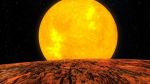
Cosmic pile-up gives glimpse of how planets are made
Astronomers say they have the first evidence of a head-on collision between two planets in a distant star system.
They believe two objects smacked into each other to produce an iron-rich world, with nearly 10 times the mass of Earth…more

Edwin Hubble -Getty Images

Edwin Hubble -Getty Images

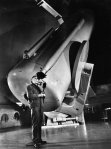
Have Dark Forces Been Messing With the Cosmos?
Axions? Phantom energy? Astrophysicists scramble to patch a hole in the universe, rewriting cosmic history in the process. Long, long ago, when the universe was only about 100,000 years old — a buzzing, expanding mass of particles and radiation…more

-Alexander Kuznetsov/Reuters

-Alexander Kuznetsov/Reuters

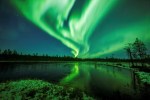
The Northern and Southern Lights Are Asymmetric Dancers in the Dark
Our planet’s auroras do not mirror one another, and their varying shapes result from the interplay of the sun and Earth’s magnetic fields. Earth’s auroras, popularly known as the Northern and Southern Lights, are indisputably beautiful. They are also, perhaps surprisingly,…more

Hunga Tonga-Hunga Ha’apai Island-Dan Slayback

Hunga Tonga-Hunga Ha’apai Island-Dan Slayback

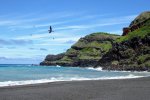
A Young Island on Earth May Reveal Clues to How Water Shaped Mars
NASA has closely studied the island, created four years ago by a volcanic eruption in the Pacific. Recently, one of its scientists was able to travel there to take on-the-ground measurements.
The island’s evolution could hold clues to how water might have shaped similar features on Mars billions of years ago, NASA officials believed, so the space agency began…more

Posted in March 2019, Sidereal Times | Tagged , | Leave a comment

From the Director

Rex


by Rex Parker, Director

Open space, dark skies, and the stars. According to a recent study of satellite-based luminance measurements across the globe (Falchi et al., Sci Adv 2016, The new world atlas of artificial night sky brightness), more than 80% of the world and 99% of the U.S. and EU live under light-polluted skies. The Milky Way is hidden from more than a third of humanity and 80% of North Americans. Light pollution is a painful reminder of the unintended consequences of modern civilization. What, if anything, can we do about this?

The quantitative physics of skyglow indicate that it arises from both regional and local causes combined. Reducing and mitigating the local sources of light pollution therefore has a beneficial impact on perceived skyglow over any given community. Despite overdevelopment, New Jersey has a large number of “land trusts” dedicated to acquiring remaining undeveloped parcels and keeping them as natural as possible. Land preservation saves habitat, promotes biodiversity, and assists the growing public perception that natural areas are essential to the future vitality of our community and state. A strong case can be made that local land preservation is the most effective way currently available to conserve what’s left of our view of the night sky.

At a recent meeting of Montgomery Friends of Open Space (MFOS) in Belle Mead, I gave a presentation on amateur astronomy and the relation of dark skies to land preservation. A clear dark night sky has profoundly redemptive qualities while excessively lit nightscapes are disorienting to the circadian rhythm of wild animals, insects, and plants. Life on earth evolved a strong physiologic dependence on the daily light–dark cycle of the sun as the centerpiece. In botany it is well known that the biochemically essential dark reactions of photosynthesis are inhibited during the light phase. Recent reports in the ecology literature describe the adverse effects of outdoor lighting on plants (e.g., Bennie et al., J Ecology 2016, Ecological effects of artificial light at night on wild plants). The behavior and ecology of herbivores and pollinators are similarly disaffected by unnatural light at night. For humans, the daily cycle of sleeping, waking, hunger, activity levels, body temperature, and melatonin concentration in the blood, provide deeply ingrained biological reminders of our synchrony with the natural light-dark cycle.

Choosing to be hopeful, one can see increasing awareness of the problem of light pollution. Government responses such as improving local outdoor lighting ordinances are steps in the right direction. In fact both Montgomery and Hopewell townships have lighting ordinances in place, and Hopewell is updating its code to require warmer color-temperature LEDs to reduce skyglow. Supporting local land trusts financially and socially is one of the most effective choices we can make, along with becoming more informed about the issue. But the bigger picture remains a challenge for the next generation of concerned citizens to drive policy towards a major reconception and “do-over” of outdoor lighting.

AAAP membership in UACNJ renewed for 2019. Take advantage of our renewal of status as an affiliate of the United Astronomy Clubs of New Jersey. This includes access for our members to the observatory at Jenny Jump State Forest, a darker sky site in northern NJ. For more information, see the website http://www.uacnj.org/

2019 AAAP UACNJ Certificate

Act now! – only 3 months remain on our Skynet contract! As described in my article in Sidereal Times, June 2017 (https://princetonastronomy.wordpress.com/2017/06/03/from-the-director-64/), AAAP members now have the remarkable privilege to access Skynet – a state of the art robotic telescope system created by the Univ of North Carolina Chapel Hill Astronomy Dept (https://skynet.unc.edu/). Our contract with UNC expires this June. During the current phase, we are assessing the interest among membership with an eye to future continuation of this project. If you have not yet taken advantage of this perquisite of AAAP membership, and you would like to begin doing astrophotography using Skynet observatories around the planet, first review the Sidereal Times article, and then send me an e-mail indicating your interest in an account with Skynet.

Posted in February 2019, Sidereal Times | Tagged , | Leave a comment

From the Program Chair

By Ira Polans

The February meeting of the AAAP will be held on the 12th at 7:30PM in the auditorium (Room 145) of Peyton Hall on the Princeton University campus
The featured talk is by Gino Serge on his book Enrico Fermi: The Pope of Physics and the Birth of the Atomic Age. Enrico Fermi is unquestionably the most famous scientist to come from Italy since Galileo, so revered by his peers that he was known as “the Pope,” because his scientific instincts and skills were to be “infallible.” A physics Nobel Prize winner in 1938, he was one of the most productive and creative scientists of the twentieth century, the only physicist to reach the very highest levels of the profession as both a theorist and an experimentalist. The largest particle accelerator in the United States, the nation’s most significant presidential award in science and technology, and the element fermium all bear his name. After the talk there will be a book signing.

As of now there will not be a 10-minute talk. If you’re interested in giving a 10-minute talk for our February meeting or at a future club meeting please contact me at program@princetonastronomy.org.

There will not be a club dinner before the talk.

Looking forward to you joining us at the February meeting!

Posted in February 2019, Sidereal Times | Tagged , | Leave a comment

January 2019 meeting minutes

by Jim Poinsett, Secretary

Minutes of the January 2019 Meeting of the Amateur Astronomers Association of Princeton

  • After the lecture by Frank Reed on Celestial Navigation, Larry called the meeting to order.
  • Reports from the chairs of the departments:

    • Program chair reports that lecturers are set for February and March, still waiting on April and May. Volunteers are needed for the 10 minute member presentations.
    • Outreach reported an upcoming event on March 8th in Plainsboro. Also Communiversity is being held on April 28th.
    • Treasurer reports that membership is in the mid 70s, many of the new members are youngand getting younger.
    • Secretary had nothing to report.
    • Observatory reports all is well. There is a letter going to the WC park superintendant about reducing the treeline near the observatory. There is some interest in a public night during the lunar eclipse.
  • There being no additional new business the meeting was adjourned.
Posted in February 2019, Sidereal Times | Tagged , | Leave a comment

Lunar Eclipse

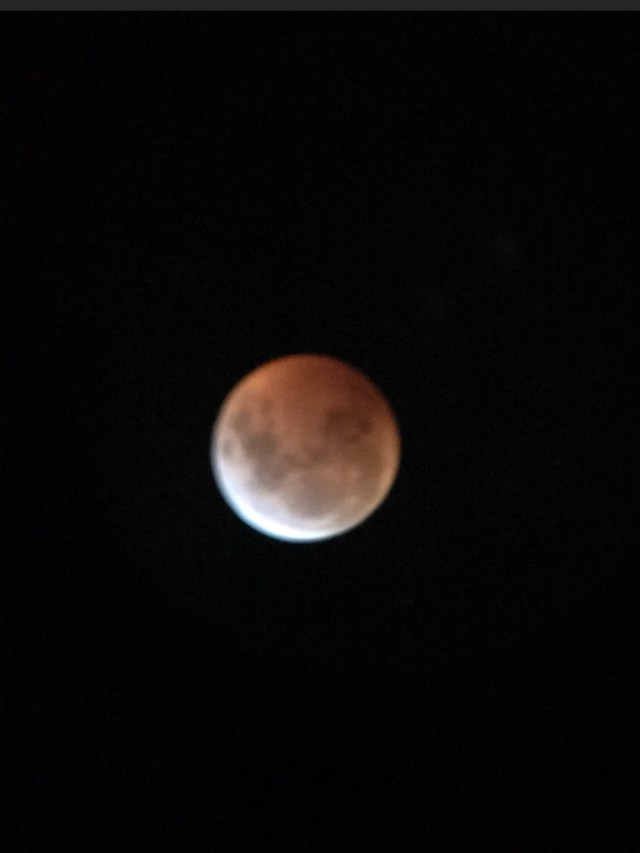
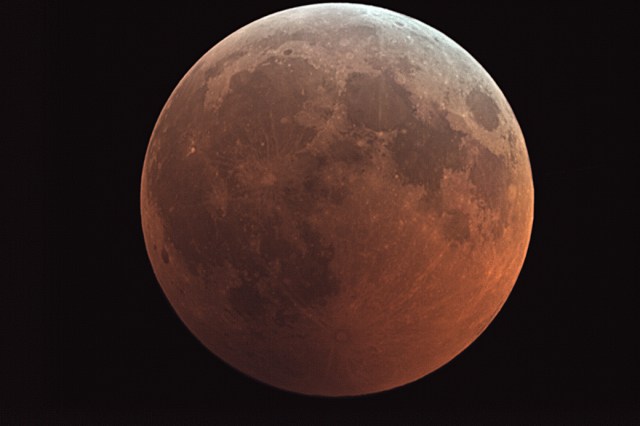
23:47-00:00 EST Jan 20, 2019. Stack of 56 five-second exposures taken by club member Robert Vanderbei

For more pictures of the Lunar Eclipse by Robert Vanderbei follow the link below.

Lunar Eclipse by Robert Vanderbei

The following picture by Matthew Oechsner

Posted in February 2019, Sidereal Times | Tagged , , | Leave a comment

Fireball event during the lunar eclipse

by Luisa Villani-Gong

For those witnessing the January 20, 2019 lunar eclipse in the New Jersey area there was an added treat: a fireball event.

At approximately 10:48 p.m. local time, a fireball fell in the skies south west of our area. The eclipse was in it’s “first bite” phase, when a distinctive blue-green streak passed between the moon and the dog star, Sirius. It flared to a bright blue and appeared to “shatter” into many fragmented sparks before making Earth contact.

Several sightings of this event were recorded on the American Meteor Society website and can be viewed on their web page:

American Meteor Society – Fireball event

The second event occurred at 11:41 p.m. EST, just a few seconds after the eclipse reached totality and the Moon fully displayed its reddish “blood moon” hue. A space rock struck the Moon’s surface, west of Mare Humorum (Sea of Moisture). The event was visible through binoculars and was recorded by many amateur astronomers, as well as the Griffith Observatory in Los Angeles,CA.

Meteor Strike during a Lunar Eclipse | All Space Considered at Griffith Observatory | January 2019

The size of the object striking the Moon has been estimated to be about the size of a football, and its resulting flash lasted only 1/30 of a second. If it had not occurred during the time of the lunar eclipse, it might well have gone unnoticed due to the occluding brightness of the Moon’s surface.

Posted in February 2019, Sidereal Times | Tagged , | Leave a comment

The Carrington Event

by David W. Letcher

The Carrington Event AKA The Solar Storm of 1859

I became aware of the Carrington Event while watching National Geographic’s TV program entitled “Mission To The Sun” which I recorded on November 26, 2018 and watched a few days later. The program’s theme states: “A tiny spacecraft the size of a small car hurtles closer to the sun than any man-made object has ever been, at a speed faster than any man-made object has ever traveled, defying the almost unimaginable heat and deadly radiation of our closest star”.

This spacecraft, initially named the “Solar Probe Plus”, was renamed the “Parker Solar Probe” in honor of astrophysicist Eugene Parker, who, in 1958, published research predicting the existence of the solar wind. At the time he was a professor at the University of Chicago’s Enrico Fermi Institute. Two years later his theory of the solar wind was confirmed by satellite observations.

The main goals of the Solar Probe are to determine the structure and dynamics of the sun’s magnetic field, trace the flow of energy that heats the corona and accelerates the solar wind, and explore dusty plasma near the sun and its influence on solar wind and energetic particle formation. This mission will also help us learn more about the Sun-Earth relationship. (1)

After some introductory comments about the sun itself, the “Mission to the Sun” program briefly turned its attention to the observations and recordings of the British amateur astronomer Richard C. Carrington (26 May 1826 – 27 November 1875). This segment really captured my interest and spurred me on to write this article for AAAP. Much has been written about Richard Carrington in many books, journals and magazines, etc. so this article is not meant to bring about any new information about him but rather to bring awareness of his work to readers of this AAAP newsletter.

A few facts about Carrington are of historical and scientific interest. (2, 3)

Carrington entered Trinity College, Cambridge in 1844 initially to study for church service, but, influenced by lectures by Professor Challis, a professor of astronomy and experimental philosophy, he switched to science with an emphasis in astronomy. Upon graduation he began his career as Observer at the University of Durham in 1849, but soon left due to his disappointment in their narrow scope of studies and poor supply of adequate instrumentation. He resigned his position in 1852, but during his two years there, he published studies of his observations of comets and minor planets. He was even admitted as a member in the Royal Astronomical Society in 1851, based upon recognition of his observing skills!

One more accomplishment by Carrington must be mentioned before I get to the main purpose of this essay. Carrington decided to build his house and observatory in Redhill, Surrey in 1852, and his astronomical studies resumed in 1853 resulting in the 1857 publication of “A Catalogue of 3,735 Circumpolar Stars observed at Redhill in the years 1854, 1855, and 1856, and reduced to Mean Positions for 1855”, a work for which he was awarded the Gold Medal of the Royal Astronomical Society!

I’ll turn my attention now to Carrington’s seven and one-half years study of sunspots that resulted in his 1863 publication entitled “Observations of the Spots on the Sun from November 9, 1853, to March 24, 1861, made at Redhill”. A total of 5,290 observations of 954 groups of sunspots were made, many of which were drawn by hand and can be seen by downloading this publication. (6)

Well, on September 1, 1859 Carrington was fortunate enough to observe a very significant event on the sun. Here are some of his very words that he published in (7):

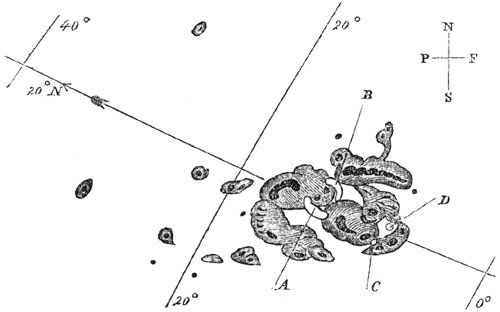
“While engaged in the forenoon of Thursday, Sept. 1, in taking my customary observation of the forms and positions of the solar spots, an appearance was witnessed which I believe to be exceedingly rare. The image of the sun’s disk was, as usual for me, projected on to a plate of glass coated with distemper of a pale straw color, and at a distance and under a power which presented a picture of about 11 inches diameter. I had secured diagrams of all the groups and detached spots and was engaged at the time in counting from a chronometer and recording the contacts of the spots with the cross-wires use in the observation, when within the area of the great north group (the size of which had previously excited general remark), two patches of intensely bright and white light broke out, in the positions indicated in the appended diagram (see below) by the letters A and B, and of the forms of the spaces left white. My first impression was that by some chance a ray of light had penetrated a hole in the screen attached to the object-glass, by which the general image is thrown into shade, for the brilliancy was fully equal to that of direct sun-light; but by at once interrupting the current observation, and causing the image to move by turning the R.A. handle, I saw I was an unprepared witness of a very different affair.”

Figure 1.

Carrington’s drawing of the sunspots

Carrington’s article is quite lengthy so I won’t include it here in its entirety here but will note an interesting number he calculated. After the flurry of surprise he sought out a witness, but by the time they returned to the telescope about 60 seconds later the bright spots of light had diminished considerably and after a few more moments the bright spots had disappeared.

The last traces of light were at spots C and D. Based upon this 5-minute movement Carrington calculated the distance the bright patches traveled to be about 35,000 miles at 420,000 mph! Furthermore, the appearance and structure of the sunspot group did not seem to change at all before, during and after the occurrence of the bright spots leading Carrington to surmise that the disturbance took place above the sun’s surface and above the sunspot group itself. (7)

Another witness, Carrington’s friend and amateur solar astronomer, Mr. Richard Hodson of Highgate observed the same bright patches of light that Carrington saw. Soon after both men presented the results of their observations to the November 11, 1859 meeting of the Royal Astronomical Society, which convinced those in attendance that something unprecedented had occurred on the sun. (8)

Carrington knew that additional witnesses would bolster his case, so he sought out his friend Warren de la Rue who was photographing the sun on clear days from the Kew Observatory. Regretfully, the sun was not photographed on the day of the bright spots and no one there had seen the spots either. But tracings from magnetic instruments at Kew showed disturbances at the same time that Carrington saw the bright spots on the sun indicating that the sun was able to influence the earth through magnetism 93 million miles away!

So what happened here on earth?

Evidently the Carrington Event occurred soon after a previous coronal mass ejection that occurred just a few days earlier. Fiery red and blood red auroras filled nighttime skies in both hemispheres to unusually low latitudes on August 28 and August 29 and again during the nights of September 1 and 2 of 1859. It is just the second episode that is named the Carrington Event. The first episode is named the Stewart Super Flare named after Balfour Stewart, a Scottish physicist and meteorologist. (3)

Enter Elias Loomis, an American mathematician who was a professor at Western Reserve College, the University of the City of New York, and finally at Yale University. After experiencing these auroras in late August and early September, Loomis wrote an appeal for eyewitness accounts of observations of the aurora, magnetic storms and effects of such storms on telegraph lines. He synthesized these many accounts into a picture of what happened as a result of the two storms. (4) and (8, Chapter 6)

Loomis published his many findings and conclusions in nine publications in the American Journal of Science between 1859 and 1862. I will only summarize herein what very many eyewitnesses from virtually all around the world provided to Professor Loomis.

Findings for telegraph Lines:

  • Telegraph lines stopped working. Giant sparks crackled from telegraphy equipment. Communication between many telegraph offices along telegraph lines stopped for the night.
  • “Streams of fire” leaped from telegraph lines.
  • Operator stunned by a large arc of electricity.

Findings for auroras:

  • Auroras outshining sunsets.
  • Skies flooded with white light.
  • Auroras in Key West, Florida and in Henry County, IN
  • Auroras so bright the stars were dimmed.
  • Blood red and fiery red auroras.

Findings for magnetic observations:

  • Magnetometers, especially at Kew Observatory, showed vacillating movements.

Loomis’ conclusions:

  • The base of the auroras are found at about 50 miles above the surface.
  • They can be as high as 500 miles.
  • Southern auroras always accompany northern auroras.
  • Both occur in belts encircling their respective polar regions.
  • The further away you are from these belts, the less likely you are to see one.
  • Northern hemisphere auroras span areas that include Hudson Bay, much of Canada, Alaska, and the Bering Strait then through the Russian Empire (sic) and then to the Atlantic, Iceland and Greenland.
  • As for Southern Auroras, the sources I consulted did not indicate which specific southern hemisphere regions experience auroras.
  • Auroras are linked to telegraphic disruption.
  • Auroras are produced by the flow of electricity through the atmosphere.

Final Comments about the Carrington Event.

When Carrington observed and recorded the bright spots on his screen, he realized the sun emitted the white light but, as X-rays had yet to be discovered by physicist Wilhelm Conrad Rontgen in 1895, he didn’t know that these rays were also being received. It was these X-rays that electrified the particles in the upper atmosphere and caused the erratic behavior in the magnetic needles at the Kew observatory. Since both white light and X-rays travel at the speed of light, Carrington’s spots of light and the magnetic needle behavior at Kew coincided in time with each other. But, a coronal mass ejection soon followed which, traveling 1,500 miles per second, reached Earth about 17.5 hours later which resulted in the brilliant red auroras, magnetic storms and damage to telegraph systems.

It has been suggested (5, 8) that if another Carrington Event were to occur today, we Earthlings would experience disruptions to radio and telephone communications including cell phone communications, melting of transformers, blackouts in cities and putting many people at risk. Satellites in orbit would experience damage to their circuitry, decreased solar panel power and endangerment to our GPS system.

Not a pretty picture!

Sources:

  1. UNIVERSE TODAY. Space and Astronomy News.
  2. Richard C. Carrington. Wikipedia.
  3. Solar Storm of 1859. Wikipedia.
  4. Elias Loomis. Wikipedia.
  5. Origin of Life and Evolution of the Biosphere (2014) 44:185–195 DOI 10.1007/s11084-014-9368-3
  6. Carrington, Richard Christopher, Observations of the spots of the Sun from 1853 to 1861 (1863) Williams and Norgate
  7. Monthly Notices of the Royal Astronomical Society, Volume 20, Issue 1, 11 November 1859, Pages 13–15. This article can also be found at: https://doi.org/10.1093/mnras/20.1.13
  8. Clark, Stewart. (2007) The Sun Kings. Princeton. Princeton University Press.
Posted in February 2019, Sidereal Times | Tagged , | Leave a comment

The hair rides the string

by Theodore R. Frimet

Observation and perception

There are regular and predictable motions of a galaxy’s spiral arm. On our carousel ride through our neck of cosmos, we typically move altogether. What perplexes me, the most, however, is the bumpy ride of the bar. Ask around. Maybe take a course, or two. Many have questions, and few of us, have answers.

I took an online Astronomy course, care of University of Arizona, a year or so back. One of the challenges was to subscribe, detect, and validate bar galaxies. I did so, by the dozens. It was fun, and fulfilling. Yet, all good things must come to an end. The experience did yield a future potential. It has given me visual insight as to what a bar galaxy should appear to be.

I have obsessed, or perhaps simply become more aware, of gravity waves. And their impact on clouds. Yes, back to Earth, for a little while. It is so wonderful to make first hand observations, just outside the door. I observe the cloud stratus with the apparent chaotic voids, separating the bands of white puffy moisture. The occasional updraft, at clouds end, shows the intent of a horizontal storm, a-brewing. Tilt it upright, and feel her natures fever. Yet beware! Toronadic forces abound in this child’s game of “name the cloud”.

Pull the horses hair bow across the violin string. Screech out a tone, or make music. It is all in the ear of the beholder. Is it not? Stars stretched out across our Milky Way arm, ride an intermittent gravity wave. Our brightly lit nebular masses bob up and down, up and down, for each encounter with a bar. They are the hair riding the string.

The bar, it is told to us, is a region of space that is tightly packed with stars. Yet, here I am, proffering that the star packed region has an immense gravity pool. Throughout these measurable perturbations lay a luxury of a commonplace comparison.

Draw the horses hair bow across the violin string. And vibrate the string. A very human endeavor. Now listen as our Cosmos draw the compacted stars across a region of space-time, where no sound may ever emanate. Exceptions abound, as in the LIGO experimenters transforming the blip of a detected gravity wave into our aural spectrum.

There is a difficult read for any beginner, looking for dynamic answers, here in the journal, Nature; “A dynamically young and perturbed Milky Way disk ” (1). I was hopeful that I would commiserate soon that a dwarf galaxy, or closed cluster, made its way to our doorstep. Perhaps it deformed our spiral arm. I was soon defeated, partly so, as the article makes no solid claims for either. They have used interpretations of the data, from the European Space Agency (ESA), Gaia, to infer our disk perturbations by the Sagittarius dwarf galaxy. This occurrence was between 300 and 900 million years ago. With another perturbation occurring about 2 Gyr, (giga-or billion years), ago.

More significantly, I learned that stars with similar velocities will stretch out in phase space, projecting as spirals. However, the article attests phase mixing in two dimensions. I steal at their thunder, when I suggest herein that the second dimension is the latent gravity pool, discarded by the solid mass of the Sagittarius dwarf. Yes, we are thick as thieves, now, as I continue to portend that gravity is as ever present as a dark cloud over your head.

What is the sound of the galactic wave? Is there no one here, to hear it? Does it make a sound? Of course it does! Ask any amateur. You just think you, “see it”.

Relax at the wide field of sight, and begin your journey with me. Now, go ahead. Feel it. You are in it. Yes, you and I are on the bob sled journey thru the fabric of space-time. Yield to her call and rediscover the gravity of the situation. Close one eye, my amateur, so that you do not loose your sight to the night.

References:
(1) Antoja, T., Helmi, A., Romero-Gómez, M., Katz, D., Babusiaux, C., Drimmel, R., Evans, D., Figueras, F., Poggio, E., Reylé, C., Robin, A., Seabroke, G. and Soubiran, C. (2018). A dynamically young and perturbed Milky Way disk. Nature, 561(7723), pp.360-362.

Posted in February 2019, Sidereal Times | Tagged | Leave a comment