
by Richard Sherman

by Richard Sherman
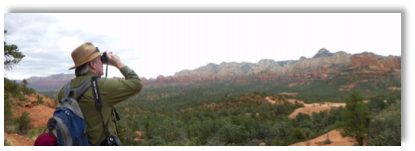
The Solstice Cometh After what seems a long weary hike over treacherous terrain we approach our destination at last. Am I speaking of the Covid pandemic? No, though it fits, but I allude to the coming of light, winter solstice. December 21 marks the lowest declination of the sun and shortest day of the year (at ~5:05 AM in Princeton area). As we look to the south sky at noon now the sun does appear lower than ever. Note in the figure below that the sun’s declination at winter solstice is equal to the negative of the value of earth’s axial tilt. It’s well known that the earth is closer to the sun in winter than summer, but as seen below, the closest distance comes a few weeks after solstice due to earth’s elliptical orbit and tilt. Last month’s lecture covered the development of star charting and astrometry over the centuries. The data for the Excel graphs below were generated using MICA software (Multiyear Interactive Computer Almanac), the essential ephemeris program produced by the US Naval Observatory (available at Willmann-Bell, $29.95, PC or 32-bit Mac). I highly recommend MICA for amateur astronomers because it teaches the fundamentals of astrometry. Using it helps interpret some of the graphically advanced programs that we’ve been talking about in recent meetings, such as TheSkyX, Sky Safari, and Stellarium. MICA computes the exact quantities and positions that lie behind those beautiful graphs in the star charting programs.

New Program Chair Joins AAAP Board The search among the membership for a new Program Chair to succeed Ira Polans’ 5 year tenure has reached a happy conclusion. The Board voted unanimously to appoint Victor Davis as Program Chair for the remainder of this term (through May). It’s apparent to us all that Ira’s act will be hard to follow, and from my perspective of over 25 years with the club, the programs of the past 5 years have been many of the best. Yet resilience is undeniably a needed feature of our organization. I would like to thank Victor on behalf of all AAAP members for stepping up to take the reins of this critical position. Importantly, member Bill Thomas has offered to research and help identify topics and speakers, comprising an actual committee which Victor will chair. As before, we welcome member input on future speaker programs. Please communicate ideas directly to Victor by email to program@princetonastronomy.org.
The Search for a New Outreach Chair The ability of our club to carry out its mission – bring astronomy to our fellow beings – depends on having a vital and committed membership. This is especially true of the Board positions whose roles are to guide the operation and future course of the AAAP. Unfortunately unexpected consequences of pandemic situation led to Gene Allen deciding to step down from the Outreach Chair in which he was highly effective over the previous 2 years. In Gene’s wake there remains the tradition of our club offering exciting astronomy connections to appreciative public and school participants.
Now there is an opportunity to reinvent how we do outreach. The next Chair will have a key role in developing the new virtual outreach strategy. We continue to receive requests for astronomy presentations by schools and a range of adult as well as youth organizations. What we need is a coordinator to link the talent in the club to those outside. But the days of face-to-face observing sessions or presentations are on hold if not permanently altered. We’ve learned that Zoom and related technologies actually are pretty well suited to the needs of amateur astronomy. The new Chair could develop contacts in regional schools and public organizations such as local Land Trusts and special interest groups and connect them to virtual astronomy presented by members of our club. The club’s video astronomy project is a prime example of capabilities that could be directed towards virtual outreach. Keep in mind that this is one of 7 Board level positions (Director, Asst. Director, Treasurer, Secretary, Program Chair, Observatory Chair, and Outreach Chair). Thereby it includes fiduciary responsibilities, such as voting on larger expenditures, helping guide strategy, and participating in the Board Meetings. If you would like to consider helping reinvent this essential role, please contact me at director@princetonastronomy.org or phone (609) 306-1480.
5 Ways to Do Astronomy in AAAP – Revised for the Time of Coronavirus!
by Ira Polans
The December meeting will be held on the 8th at 7:30 PM. (See Joining the Meeting with Zoom below for details). This meeting is open to AAAP members and the general public. Due to the number of possible attendees, we will use the Waiting Room. This means when you login into Zoom you will not be taken directly to the meeting. The waiting room will be opened at 7:00 PM. Prior to the meeting start time (7:30 PM) you may socialize with others in the waiting room. The meeting room has a capacity of 100 people.
For the Q&A session, you may ask your question using chat or may unmute yourself and ask your question directly to the speaker. To address background noise issues, we are going to follow the rules in the table below regarding audio. If you are not speaking, please remember to mute yourself. You are encouraged, but not required to turn your video on.
| Meeting Event | Participant Can Speak? | Participant Can Self-Unmute? |
| Rex’ General Remarks | Yes | Yes |
| Ira’s Speaker Introduction | Yes | Yes |
| Speaker Presentation | No | No |
| Q&A Session | Start All on Mute | Yes |
| Business Meeting | Start All on Mute | Yes |
Only the Business part of the meeting will be locked.

Featured Speaker: Dr. Kimberly Arcand a science communicator and the Visualization and Emerging Technology Lead for NASA‘s Chandra X-ray Observatory will give a talk on Two Decades Plus with NASA’s Chandra X-ray Observatory. In the past 20 plus years, NASA’s Chandra X-ray Observatory has made profound discoveries and contributed invaluable information about objects in our Universe. Chandra is part of a rich legacy of telescopes with its X-ray lineage stretching back to the Space Age when scientists and engineers pioneered instruments that were sent above the Earth’s atmosphere. Each decade has brought new innovations and new capabilities, culminating in Chandra’s launch aboard the Space Shuttle Columbia in 1999.
Chandra has strong astronomical family ties across the electromagnetic spectrum. As part of NASA’s “Great Observatories” program, Chandra was designed and built to observe X-rays alongside the Hubble Space Telescope, the Spitzer Space Telescope, and the Compton Gamma-ray Observatory. The quest to explore the Universe is both multi-wavelength and multi-messenger in nature, with many significant discoveries requiring information from different types of light as well as gravitational waves and more. Learn more about Chandra, and the pivotal role it has played in understanding our Universe.
Speaker’s Biography: Dr. Kimberly Arcand is an expert in astronomy visualization and has been a pioneer in 3D imaging, 3D printing and virtual reality. She presented her TEDx talk entitled How to Hold a Dead Star in Your Hands in 2016 on 3D printing, the same year she was selected as a “Changemaker” for the White House State of the Women Summit. In 2019, she was featured in the Smithsonian’s How to be a Scientist video series both for her work in 3D visualization, 3D printing and virtual reality applications of astronomical objects, and her work with under-represented groups in STEM. She began working with additive manufacturing in 2011, and led her team’s effort to product the first-ever data-driven 3D print of an exploded star, using NASA observational data. She also led a team of researchers to launch the first-ever data-driven virtual reality application of a supernova remnant using NASA data, and has successfully launched subsequent projects in other areas of emerging technology.
Arcand began her career in molecular biology and public health before moving to NASA’s Chandra X-ray Observatory in 1998. In addition to being an award-winning producer and director, she is a leading expert in studying the perception and comprehension of high-energy data visualization across the novice-expert spectrum. She is principle researcher in the Aesthetics and Astronomy image response research project with international participation. Her current work focuses on applications of holograms, augmented reality and data sonification to astrophysics data sets. She has co-written five non-fiction science books and had her first two science-related children’s books come out in 2020.
Using Zoom: While we are, social distancing the AAAP Board has chosen to use Zoom for our meetings, based our belief that many members have already have used Zoom and its ease of learning. One of its great features is you can choose whether you want to install the software on your computer or use it within your browser.
How to Join the November Meeting: For the meeting, we are going to follow a simple two-step process:
NOTE: We plan to open the meeting site 30 minutes to the 7:30 start time. This way you won’t have to rush to join the meeting. A maximum of 100 attendees can join the meeting.
More Information: The Zoom site has many training videos most are for people who are hosting a meeting. If you’re unsure how Zoom works you might want to view the videos on how to join a meeting or how to check your computer’s audio and video before the meeting.
Journal Club Presentation: We are off to a good start, but still need a member to give a short Journal Club presentation at our December meeting. These talks are given after the break. If interested, please contact either director@princetonastronomy.org or program@princestonastronomy.org. We’d like to keep our momentum going!
Program Chair: This month’s program will be my last as the AAAP Program Chair. I hope you’ve found the talks interesting, informative, and wide-ranging. If you did, I accomplished what I set out to do. I’ve enjoyed being Program Chair these last 5+ years and I am ready to pass the baton to somebody else. Since the November meeting, Victor Davis has chosen to serve as Program Chair for the remainder of my term starting in January. I believe he will make a great Program Chair! During the transition, I’ve agreed to help him learn the role and provide advice as needed. As of the December 31, I will continue as part of the AAAP as a club as a member. If you wish to contact me, you may do so at ipolans@princetonsastoronmy.org. Thank-you for your support and the Board’s support these last 5+ years.
Looking forward to you joining us on Zoom at the December meeting!
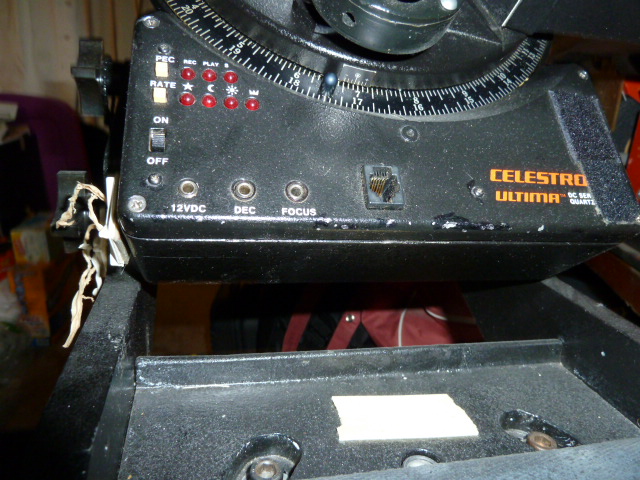
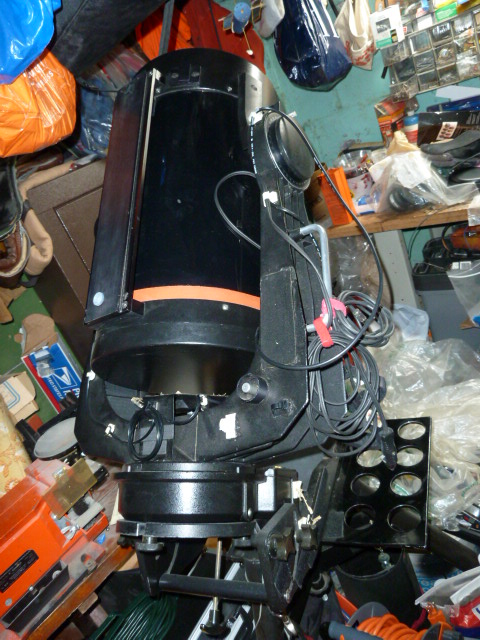
 Club Member Ron Mittelstaedt is selling his telescope! It is a great opportunity to get this one and enjoy the enchanting starry night sky. And what’s more, Ron will help you set it up, give you hands on instructions, and if you are lucky he might throw in a few observing sessions guiding you through the parade of constellations!
Company Seven Celestron Ultima 11 Schmidt-Cassegrain Telescope
NOTE: The Setting Circle Installation Works Well With Software Bisque “The Sky” Software
OTA Alone Sold for $2125 when Sold in 1998 from Company Seven
Asking $3300 for ALL. Call Ron at 609-306-5881 or email him at c8user@aol.com if you are interested.
compiled by Arlene & David Kaplan
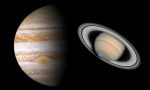 Jupiter, Saturn Will Look Like Double Planet Just after sunset on the evening of December 21, 2020, Jupiter and Saturn will appear closer together in Earth’s night sky than they have been since the Middle Ages, offering people the world over a celestial treat to ring in the winter solstice…more

-NYT
Arecibo Observatory Is Going Dark One of the great icons of human curiosity, the Arecibo radio telescope, is going to be torn down, the National Science Foundation, its owner, announced today. From its perch in the mountains of Puerto Rico, the observatory has served for decades as the vanguard of the search for alien civilizations and guarded the planet against killer asteroids….more
-NYT
Signs of Recent Volcanic Eruption on Mars Hint at Habitats for Life Mars was once home to seas and oceans, and perhaps even life. But our neighboring world has long since dried up and its atmosphere has been blown away, while most activity beneath its surface has long ceased. It’s a dead planet. Or is it? …more
-NYT
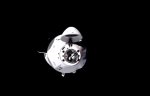
SpaceX Crew Docks at the International Space Station The Crew Dragon spacecraft, a privately built and operated vessel carrying four astronauts, successfully arrived at the International Space Station on Monday night. “Docking confirmed — Crew Dragon has arrived at the @space_station!”…more
-NASA/JPL
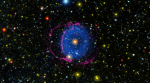
The dazzling Blue Ring Nebula puzzled scientists for 16 years Researchers may have finally figured out a nebula puzzle. Using the W.M. Keck Observatory in Hawaii, researchers found that the blue ring is actually the base of a cone-shaped cloud of glowing molecular hydrogen that extends away from the central star, toward Earth…more
-Walton et al, 2020
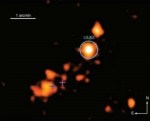
New transient ultraluminous X-ray source detected An international team of astronomers has identified a new ultraluminous X-ray source (ULX) in the galaxy NGC 7090. The object, designated NGC 7090 ULX3, was found using NASA’s Swift spacecraft. The finding is detailed in a paper published November 17 on the arXiv pre-print repository….more
-NASA, Daniel Rutter
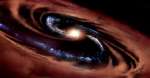
Galaxy survives black hole’s feast—for now Black holes are thought to gobble up so much surrounding material that they put an end to the life of their host galaxy. In that process they create a highly energetic object called a quasar which was previously thought to halt star birth…more
-ISAS/JAXA
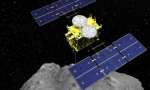
Japan spacecraft carrying asteroid soil samples nears home A Japanese spacecraft is nearing Earth after a yearlong journey home from a distant asteroid with soil samples and data that could provide clues to the origins of the solar system, a space agency official said…more
-Wikipedia
Space worms experiment reveals gravity affects genes Living at low gravity affects cells at the genetic level, according to a study of worms in space. Genetic analysis of Caenorhabditis elegans worms on the International Space Station showed “subtle changes” in about 1,000 genes…more
-ÖWF/Florian Voggeneder
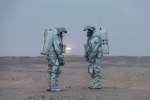
Conscientiousness key to team success during space missions NASA is working toward sending humans to Mars by 2030. If all goes according to plan, the flight crew’s return trip to the red planet will take about two-and-half years. That’s a long time to spend uninterrupted with co-workers. But imagine if the astronauts don’t get along with each other….more
-NAOJ
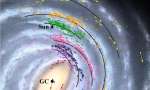
Earth faster, closer to black hole in new map of galaxy Earth just got 7 km/s faster and about 2000 light-years closer to the supermassive black hole in the center of the Milky Way Galaxy. But don’t worry, this doesn’t mean that our planet is plunging towards the black hole. Instead the changes are results of a better model of the Milky Way Galaxy based on new observation data, including a catalog of objects observed over the course of more than 15 years by the Japanese radio astronomy project VERA…more
-Pol Bordas and Xiying Zhang, 2020
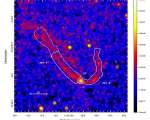
Observations unveil jet-like structures from the pulsar PSR J1135–6055 Using NASA’s Chandra spacecraft, astronomers from the University of Barcelona, Spain, have investigated a pulsar wind nebulae (PWN) around the pulsar PSR J1135–6055. The observations detected jet-like structures from this source. The finding is reported in a paper published November 17 on arXiv pre-print server….more
Be thankful for computerized star charts We’ll illuminate the history of celestial cartography at our next meeting via Zoom on Nov 10 at 7:30 (see Ira’s section below about the guest speaker and Zoom link). The premise that we stand on the shoulders of giants is apropos here, as planetarium software today owes a great debt to the work that came before. Our computers can display a wealth of graphical information using very large databases created over the decades (actually, centuries) by professional astronomers. Astrometry is the oldest branch of astronomy largely because of its role in the development of navigation. Some experienced AAAP members will recall flipping through paper star atlases with flashlights in the dark beside our telescopes, trying to find dim celestial objects which were equally faint on the chart pages. Having a laptop PC, iPad, or cell phone display colorful, zoom-able, searchable star charts with million object catalogs is one of the many wonders of the modern era that we absolutely cannot live without!
AAAP astrovideo live – one Friday per month via Zoom A proposal for regular astro video sessions for members was described in last month’s Sidereal Times, and I urge you to go back and read it. The vitality of our astronomy club depends on audio/video technologies – these days we have few alternatives. AAAP intends to expand involvement in these areas and help members apply them in an astronomy context. The idea we’re developing is to offer members regular opportunities to participate in live astrovideo Zoom sessions. The events feature electronically-assisted astronomy (EAA) with local telescopes run by members. The stable of scopes sending live video to these sessions includes the club’s Paramount/Celestron-14 with ZWO-ASI-294 CMOS camera, along with 6 inch Astrophysics refractor, 12.5 inch AG Optical Cassegrain, and other scopes owned by members. Those of you who are gearing up to do EAA with your own equipment are welcome to be part of the video source, and all members are urged to join in the sessions to learn and enjoy. This is the beauty of using Zoom to host the sessions.
The once-a-month events are being scheduled, rain-or-shine, on the Friday nearest the new moon each month for best sky conditions. In clear weather live sky tours will be featured, while cloudy nights allow a forum for “how-to” discussions of the technology and astronomy talk. The first session was held on Oct 16, a cloudy night, and it was well-attended and much appreciated based on feedback. Starting times and Zoom links will be sent to members prior to each event.
Upcoming AAAP astro video sessions| Nov 13 | Dec 11 | Jan 15 | Feb 12 |
You may have heard that Ira Polans intends to step down as Program Chair after December following a tremendous run of 5 years in the post (see his article below). The chair of the program committee is an officer of the Board of Trustees whom we elect each May. With Ira ready to hand it over soon, we need one of you to step up into this important role.
We’ve usually had a committee of one, but it doesn’t need to be that way, and in my opinion should not be so going forward. In fact the by-laws describe the role as follows. Section 1: Duties of the Officers. E. Program Chair. The Program Chair shall select a Program Committee, over which the chair shall preside. The Program Committee shall be responsible for arranging suitable astronomy-related programs at general meetings.
Our club runs on the energy released by the speaker program, with the Princeton cachet as an additional fuel source. We have connected with amazing speakers over the past many years, and undoubtedly Princeton has been a draw for getting top notch speakers. Coming to campus, having AAAP-hosted dinner in town, and presenting in the auditorium of the famed Dept of Astrophysical Sciences is a potent venue for speakers. Now we are deep in the new era of remote Zoom meetings. While much seems lost, for a while at least, there are also positive aspects. There is the unique opportunity to connect with world-class scientists, authors, and innovators unencumbered by distance and travel expenses. The next program chair can contact potential speakers across the globe using the club’s “program@princetonastronomy.org” e-mail address. It’s a chance to directly communicate and develop rapport with professional and amateur astronomers, scientists, and other experts. The office empowers the Chair with the obligation to make the Princeton connection with these potential speakers, who nearly always are pleased to receive the invite even if they are not always able to say yes. Princeton provides the entrée into places and personalities that many other clubs may not have.
It’s been fantastic for me to work with Ira over the past 5 years. He’s done the job at a very high level with innovation and creativity. He’s carried out the role with deep consideration of appropriate topics and identified and coaxed important astronomers to speak to us at our monthly meetings. We’ve had some of the best speaker presentations ever in the history of AAAP during these 5 years. Please contact me soon if you are interested. And I will help you form the committee so you’re not going it alone.
by Ira Polans
The November meeting will be held on the 10th at 7:30 PM. (See Joining the Meeting with Zoom below for details). This meeting is open to AAAP members and the general public. Due to the number of possible attendees, we will use the Waiting Room. This means when you login into Zoom you will not be taken directly to the meeting. The waiting room will be opened at 7:00 PM. Prior to the meeting start time (7:30 PM) you may socialize with others in the waiting room. The meeting room has a capacity of 100 people.
For the Q&A session, you may ask your question using chat or may unmute yourself and ask your question directly to the speaker. To address background noise issues, we are going to follow the rules in the table below regarding audio. If you are not speaking, please remember to mute yourself. You are encouraged, but not required to turn your video on.
| Meeting Event | Participant Can Speak? | Participant Can Self-Unmute? |
| Rex’ General Remarks | Yes | Yes |
| Ira’s Speaker Introduction | Yes | Yes |
| Speaker Presentation | No | No |
| Q&A Session | Start All on Mute | Yes |
| Business Meeting | Start All on Mute | Yes |
Only the Business part of the meeting will be locked.
 Featured Speaker: Amateur astronomer Nick Kanas, MD will give a talk on Celestial Mapping and the Modern Amateur Astronomer. The history of celestial cartography has evolved into several pathways that have relevance for today’s amateur astronomer. Ancient views of the sky had star mapping traditions that used both a geocentric orientation (where the stars and constellations were pictured as they were seen from the Earth) and an external orientation (where they were right to left reversed as seen from the outside of a celestial globe carved in marble). The development of the telescope favored a geocentric view, as well as a switch in the celestial grid from a longitude/latitude perspective to one that spoke about right ascension/declination. Many ancient books included volvelles, analog computers on paper that attempted to reproduce some of the features of 3-dimensional astrolabes on 2-dimensional pages in a book. These led to our modern planispheres. Early atlases pictured beautiful images of mythological and scientific figures in over 100 constellations, but these were reduced in number by an international society to 88 constellation areas of the sky, with increasingly fading then non-existent constellation images (but whose line drawings persist in modern astronomy magazines). Dr. Kanas will trace the history of these and other developments that we take for granted as amateur astronomers.
Speaker’s Biography: Nick Kanas has been a member of the SFAA since 1977, serving as a Board member in the early 1980s. He has been an amateur astronomer since childhood. He is a Fellow of the Royal Astronomical Society (London). He has collected antiquarian celestial maps for over 40 years and has given talks on celestial cartography to amateur and professional groups, including the Adler Planetarium; the Lick Observatory; the California Academy of Sciences; and annual meetings of the International Conference on the History of Cartography, the Society for the History of Astronomy, and the Flamsteed Astronomical Society in Greenwich, U.K. He has published articles on celestial cartography in magazines and journals, such as Sky and Telescope, Imago Mundi, and the Journal of the International Map Collectors Society. He has written two celestial map-related books: Solar System Maps: From Antiquity to the Space Age, and Star Maps: History, Artistry, and Cartography, the 3rd edition of which was published in 2019. He also has published three science fiction novels. As a UCSF Professor of Psychiatry, he was a NASA-funded Principal Investigator studying psychosocial issues involving astronauts and cosmonauts in space. He is the co-author of the textbook Space Psychology and Psychiatry (now in its 2nd edition), and more recently the author of Humans in Space: The Psychological Hurdles. Both books were award Life Science Book Awards from the International Academy of Astronautics.
Using Zoom: While we are, social distancing the AAAP Board has chosen to use Zoom for our meetings, based our belief that many members have already have used Zoom and its ease of learning. One of its great features is you can choose whether you want to install the software on your computer or use it within your browser.
How to Join the November Meeting: For the meeting, we are going to follow a simple two-step process:
NOTE: We plan to open the meeting site 30 minutes to the 7:30 start time. This way you won’t have to rush to join the meeting. A maximum of 100 attendees can join the meeting.
More Information: The Zoom site has many training videos most are for people who are hosting a meeting. If you’re unsure how Zoom works you might want to view the videos on how to join a meeting or how to check your computer’s audio and video before the meeting.
Journal Club Presentation: Rafael C. Caruso will present on Sir Arthur Eddington’s observations of the 1919 solar eclipse, which supported the predictions of the general theory of relativity. His presentation is based on a chapter from the book Gravity’s Century: From Einstein’s Eclipse to Images of Black Holes by Ron Cowen (Harvard University Press, 2019).
We are looking for other members to give a Journal Club Presentation. If interested, please contact either director@princetonastronomy.org or program@princestonastronomy.org.
Program Chair: As announced at the October meeting I am resigning as Program Chair effective December 31, 2020. When I started, I figured I would do the job for a year or two. I ended up serving for 5 plus years. Now I think it is time for somebody else to take on this role. If you’re thinking about becoming the Program Chair, you have the unique opportunity to test drive the role for 3-4 months before deciding if you want to continue on for a full-term. As Program Chair, under our by-laws, you can establish a Program Committee to help choose topics and speakers so you don’t have to go it on your own. The committee could decide to rotate the formal position of Program Chair among its members from year-to-year. This way no one is making a long-term commitment.
As Program Chair you will have the final word on the topics you, think the club will be interested in hearing or learning about with the support of the Program Committee. You also will have the opportunity to interact with professional astronomers and authors as you fill the schedule. While serving as Program Chair I learned that most astronomers are very happy to give a talk to our club. The fact that the Princeton University Astrophysics department hosts us is a draw to potential speakers.
In addition, we have a ready-made pool of speakers in the area. This includes Princeton, Philadelphia, New York, and Eastern Pennsylvania. We also have Zoom. This means that potential speakers don’t have to travel to NJ to give their talks. This month’s featured speaker will be giving his talk from California. While I will not be scheduling speakers past December, I’ve offered to help with the transition and provide advice to the new Program Chair. As of next year, I will be a regular member of the AAAP. To keep things on track, ideally somebody will step up at our November club meeting to be the next Program Chair.
by John Miller, Secretary
● Rex Parker opened the Zoom meeting at 7:00 P.M.
● Rex and David Skitt indicated that the previous plan of opening the Washington Crossing Observatory to six people inside the building had failed to consistently succeed in keeping individuals at the required “social distancing” spacing of six feet (Covid-19 safety rules). Control of people into the observatory, it was reported, proved difficult to manage.
● Rex suggested modifying his “Phase 2” Observatory Re-Opening Plan. It was proposed a “Phase 1.5” ad-hoc change be adopted in the interim. This adjustment to the original “Phase 2.0” plan would:
1. Raise the guest number from 16 to 20 (6 inside; 14 outside from the original 6 inside 10 outside).
2. Assign a AAAP key holder to monitor/control the number of people entering the observatory.
3. Allow only AAAP members and their families to attend (“Phase 2.0” would allow the public in limited numbers). Mask-wearing, hand sanitizer and “social distancing” would continue to be enforced.
● Secretary John Miller called for a Board vote to adopt the interim “Phase 1.5.” The vote was:
Rex Parker, Director Yea;
Larry Kane, Assistant Director Yea;
Michael Mitrano, Treasurer Yea;
John Miller, Secretary Nay;
Ira Polans, Program Chair, (in absentia per Rex Parker), Yea.
The motion was passed 4 to 1.. .
● Bill Murray, current AAAP representative to the United Astronomy Clubs of NJ (UACNJ), mentioned he was named a nominee by the UACNJ as a candidate for the UACNJ liaison to the member clubs. Should he gain this position, he would have to relinquish his representative status (to the UACNJ) at the AAAP.
● Additional suggestions were made by Observatory Chair David Skitt to use our EAA (Electronically Assisted Astronomy) set up at the observatory to live-stream images to members online and on screens mounted on the outside of the WC Observatory.



 Amateur Astronomers Association of Princeton