How Did Hastings Design Our Objective?

by John Church

PART I

I’ve often wondered what actual methods Charles Hastings used when designing the 6-1/4” objective now sitting at the business end of our fine refractor in Washington Crossing State Park.  I’ll start by quoting Hastings’ own words on p. 39 of Vol. 2 of the Sidereal Messenger for 1883:

“Anxious to test still farther the theory [i.e. the theory which he had developed from scratch when starting his lens design work, see below], I constructed an objective of 6-1/3 inches aperture [reduced to 6-1/4 inches by Byrne’s cell] of entirely different materials and curves resembling those chosen by Fraunhofer in most of his objectives.  This also was made strictly in accordance with the theory and with the most gratifying results,  Of interest to the optician is the fact that its focal length differed by less than 1/10 of an inch from that given by calculation. [Note:  H. designed for a focal length of 91 inches, while this lens has an actual focal length of 91.07 inches, i.e. 2313 mm.]  This lens is now in the possession of Mr. C. H. Rockwell, at Tarrytown, N.Y., and was used by him at Honolulu in observing the last transit of Mercury.  Though I have not had the opportunity for testing the telescope in astronomical work which I could wish, the ease with which I saw ζ Bootis double in 1879 (Hall 0”.55, 1874.4) and γ2 Andromedae elongated during the same summer, convinces one that it is of the highest excellence, even independently of the severe physical tests to which it has been subjected in my hands.”

The theory that Hastings was referring to was elaborated at some length in an article in the American Journal of Science for March 1882 (Third Series, Vol. XXIII no. 135), p. 167.  The general idea was to concentrate the greatest amount of visible light energy into the smallest possible area. By considering the intensities of the various wavelengths of light, he arrived at the conclusion that the wavelength for the minimum intercept distance (i.e. back focus or distance from the rear vertex of the rear element of the achromat) for paraxial (i.e. nearly central) rays should be 5614 A., which is a solar line visible in a good spectroscope and very close to the wavelength of maximum sensitivity of human vision.  He also concluded that when achromatism was considered, the marginal rays for the C line (6561 A.) and a wavelength as close as possible to 4990 A. should be united.  He found that the closest spectroscopic line readily available was at 5005 A.  Hence this was his recommendation, and it fact it was achieved in our actual objective (Sky & Telescope for March 1979, p. 294).

Hastings didn’t publish the actual calculations which led him to these conclusions. However, he did write the following passage in this same article:  

 “The second objective had a clear aperture of 6-1/4 inches and a focal length of 91 inches.  The crown lens is in advance and the curves are such as to satisfy, for a first approximation, the conditions proposed by Sir John Herschel [Phil Trans.1821, p. 222].  This form, though ordinarily known as Herschel’s, cannot be said to differ from that chosen by Fraunhofer at a date earlier than that of the publication of Herschel’s paper.”

The so-called “Herschel condition” is that spherical aberration should vanish not only for objects at infinite distances (i.e. astronomical objects), but also at nearer points for use as a terrestrial telescope. This would also allow easy testing of lenses in the workshop and on convenient daytime objects in the vicinity.  It continues to be a useful principle in this area, but it’s mathematically incompatible with the Abbe or “sine condition” that both spherical aberration and coma should be made as small as possible in astronomical telescopes.  It’s fortunate however that satisfying the Herschel condition coincidentally leads to objectives with very low coma that are usually perfectly satisfactory for astronomical work.

In the second article of this series I plan to go more completely into the Herschel condition and determine if Hastings actually tried to make our objective follow Herschel’s  formulas.

Posted in February 2021, Sidereal Times | Tagged , , | Leave a comment

Annie Jump Cannon and the Creation of Stellar Classification

by Athena Basu

Many of you are probably familiar with the Harvard System of Stellar Classification. In this system, the O B A F G K M sequence groups stars in terms of apparent color and effective/surface temperature. O describes the bluest and hottest stars (> 30,000 K), while M includes the reddest and coolest stars (2400-3700 K). Each class is also subdivided by numeric digits – 0 indicating the hottest and 9 the coolest of each class (e.g. B8 like Rigel or G2 like our sun).

More recent classification systems – like the Morgan Keenan (MK) system – remain very similar to their precursor, but also add a Luminosity class to distinguish between stars of different sizes and total luminosities (for example, differentiates between a red dwarf vs a red giant) with our sun classified as G2V (the Roman numeral indicating that it is a main sequence star).

But how was the Harvard System created? For that, we will have to delve into the story of Annie Jump Cannon.

Who was Annie Jump Cannon

I first learned about Annie Jump Cannon – one of the most influential female astronomers in history – in Episode 8 of Cosmos: A Spacetime Odyssey. In 1896, she was hired by Harvard Observatory Director Edward C. Pickering to join Harvard’s female team of “Computers”; The “Harvard Computers” examined data taken by the observatory, aiming to map and catalogue every star to a photographic magnitude of 9. There, Cannon manually classified over 350,000 stars (more than anyone else in a lifetime) and revolutionized astronomy with the creation of the modern star classification scheme – on which stellar astronomy is based – all during a time where pursuit of careers in higher academia (or just careers in general) was not accepted for women.

Annie Jump Cannon – born on December 11, 1863 – was the eldest daughter of Wilson Cannon and Mary Jump. She developed her interest in astronomy in part due to her mother, who taught her the constellations and encouraged her to pursue the sciences at Wellesley College. There she studied physics and astronomy under the mentorship of Sarah Frances Whiting – who later inspired her to learn about spectroscopy – and became the school’s valedictorian. After graduating with a degree in physics in 1884, she traveled around Europe with a box camera and learned about the new art of photography, with her photos published by the camera manufacturer upon her return. Later she attended Radcliffe College to continue her studies in astronomy and was hired by Edward C. Pickering at the Harvard College Observatory. Cannon maintained a positive outlook on life in the face of adversity. She faced many challenges in her life and work – from sexist attitudes of the time challenging her success at every turn, to losing her hearing to scarlet fever even before starting her career, and the loss of her mother and greatest supporter at a young age – yet still managed to be a joyful and driven person through it all.

Annie Jump Cannon developed the Harvard system to fulfill the need for a robust yet straightforward classification scheme. She created the spectral classes O B A F G K M based on the strength of Balmer absorption lines (the specific wavelength emissions of hydrogen atoms) and sorted bright stars into these categories. Interestingly, it was not until after the Harvard system was created, that it was realized the spectral classes reflected star temperature. Her refinement of star classification processes was also incredible. At first progress was slow; from when she first joined the computers to the mid-point of her career, Cannon improved the cataloging technique from handling around 1 star per day, to 200 an hour. Using just a magnifying glass she could accurately classify stars down to 9th magnitude from their spectral pattern.

In 1901, Annie Jump Cannon published her first catalog of stellar spectra. For her work, she was later appointed the Curator of Astronomical Photographs at Harvard and in 1914 made an honorary member of the Royal Astronomical Society. In 1922 her stellar classification system was formally adopted by the International Astronomical Union and is still in use today with minor modifications. She collaborated with Cecilia Payne, who was completing her PhD in Astronomy at Harvard, to show that stars were mostly composed of hydrogen and helium – a radical idea at a time when scientists believed the earth and sun had the same ratio of elements but at different temperatures.

In 1919 she took over from Pickering to run the Harvard Computers and in 1925 Cannon became the first woman to be given an honorary doctorate from Oxford. She retired in 1940 but continued to work at the Harvard Observatory until she died a year later at the age of 77. She had a big influence on women gaining respect in science and particularly astronomy, and to this day there is the Annie Jump Cannon Award given to outstanding female astronomers in North America for their post-doctoral research, most recently won by Laura Kreidberg for her work on exoplanet atmospheres.

Annie Jump Cannon and her colleagues in the Harvard Computers, such as Henrietta Leavitt who observed variable stars that led to Edwin Hubble discovering galaxies and their distances, and Antonia Maury who figured out the relative sizes of stars from their spectra, had an incredible impact on the last century of astronomy and should be remembered long into future.

Athena Basu – some info about me

I joined AAAP over 3 years ago and became the youngest QO and Keyholder at age 14. I have found it to be a wonderful group of smart and helpful people that increased my interest in observational astronomy and motivated me to get my first decent telescope – a 10” Dobsonian. Currently I am a High School Senior in Bucks County PA and hoping to go to college in September to study Astrophysics.

Posted in February 2021, Sidereal Times | Tagged , | Leave a comment

Meet our new member Lisa Ann Fanning

My name is Lisa Ann Fanning – I live in Marlboro Twp., NJ. I have been very casually observing since 2019. My husband, Rob  and I, are avid birders, so my beginning efforts have been utilizing a Swarovski 65mm spotting scope with 20-60x zoom eyepiece. The beginners’ book series that got me hooked was John A. Read’s

“50 Things” series (50 Things to See on the Moon and 50 Things to see with a Telescope.)  In July of 2020, when Comet NEOWISE became the star attraction, my interest was re-generated. I reached out to John in mid-July to understand what options I had for any type of beginner’s training and he informed me that he was co-hosting the Explore the Universe certificate series for Royal Astronomical Society of Canada (RASC) with Jenna Hinds, outreach coordinator. I completed my certificate in October, 2020 and have since begun work on my Explore the Moon certificate. I am a member of the RASC’s Halifax Centre.   As a newer member,  I was asked to share my thoughts and experiences in a short piece in the Jan/Feb edition of SkyNews. I was also one of a few folks interviewed to tell my story in a CBC Radio interview about how my interest in Astronomy was ramped up during the pandemic and my connection, as an American member of the Halifax Centre.

I was also recently asked to join Astronomy By the Bay’s Sunday Night Astronomy Show (an online Astronomy show broadcast on Facebook Live and YouTube by an Astronomy club in New Brunswick, CA.) On that show, I told my story as a beginning Astronomer, my connection to Halifax Centre, how I have since done some online work to share with my birding friends about how they can enjoy Astronomy with much of the equipment they already have. My pet project for December was documenting the Conjunction through my spotting scope. 

I have since been gifted a friend’s old Orion SkyQuest XT10, which I am currently learning how to use.   I am excited to join AAAP.

Posted in February 2021, Sidereal Times | Tagged , | Leave a comment

Snippets

compiled by Arlene & David Kaplan

-NYT

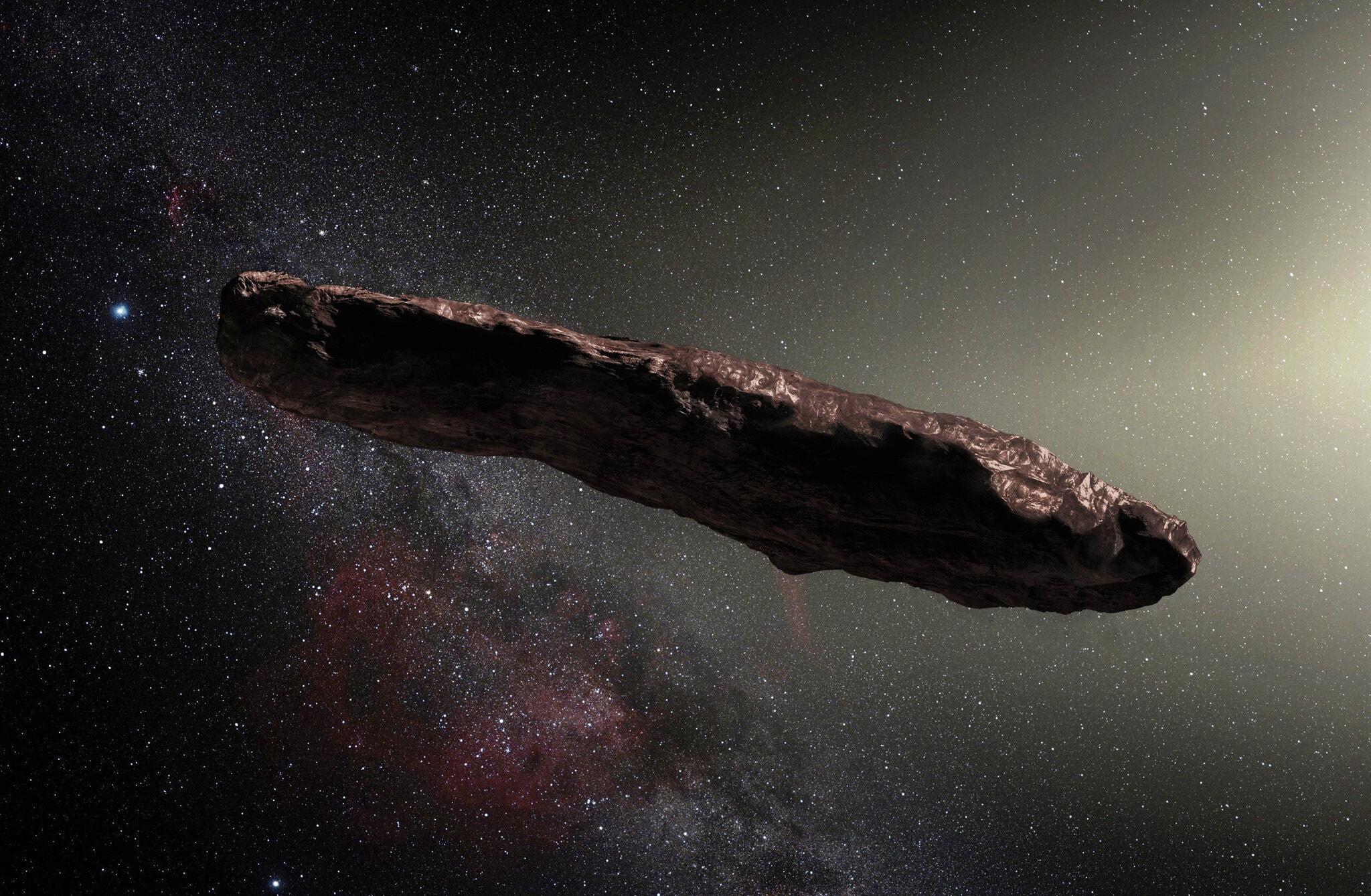
Did an Alien Life-Form Do a Drive-By of Our Solar System in 2017? On Nov. 12, 2018, Avi Loeb, then the chairman of the astronomy department at Harvard, and a young research associate, Shmuel Bialy, published a paper in the highly prestigious Astrophysical Journal Letters arguing that humans may have discovered the first evidence of alien technology…more

-NYT
-NYT
-NASA/ESA/JPL

Citizen scientists create 3D map of brown dwarfs in our sun’s neighborhood A citizen scientist group has created the most complete map to date of brown dwarfs neighboring our solar system. Celestial bodies known as brown dwarfs, which are essentially failed stars, are too big to be considered planets and too small to be considered stars…more

-NASA

Missing: One Black Hole With 10 Billion Solar Masses One of the biggest galaxies in the universe seems to lack its dark centerpiece. Astronomers are searching the cosmic lost-and-found for one of the biggest, baddest black holes thought to exist. So far they haven’t found it…more

-NASA

NASA’s Mega Rocket to the Moon Faces Setback After Test A test firing of the engines of the Space Launch System was halted after only about a minute, meaning NASA astronauts may have to wait longer before setting foot on the moon again. After billions of dollars and a decade of work, NASA’s plans to send astronauts back to the moon had a new setback…more

-NYT

A Bitter Archaeological Feud Over an Ancient Vision of the Cosmos The Nebra sky disk, which has been called the oldest known depiction of astronomical phenomena, is a “very emotional object.” The disk is small — just 12 inches in diameter — but it has loomed large in the minds of people across millenniums…more

-CNN

A distant galaxy dies as astronomers watch Galaxies die when the stars that live in them stop forming. Now, for the first time, astronomers have witnessed this phenomenon in a distant galaxy. Scientists were able to glimpse a galaxy as it ejected almost half of the gas it uses to form stars. They captured this rare observation…more

-Vito Technology

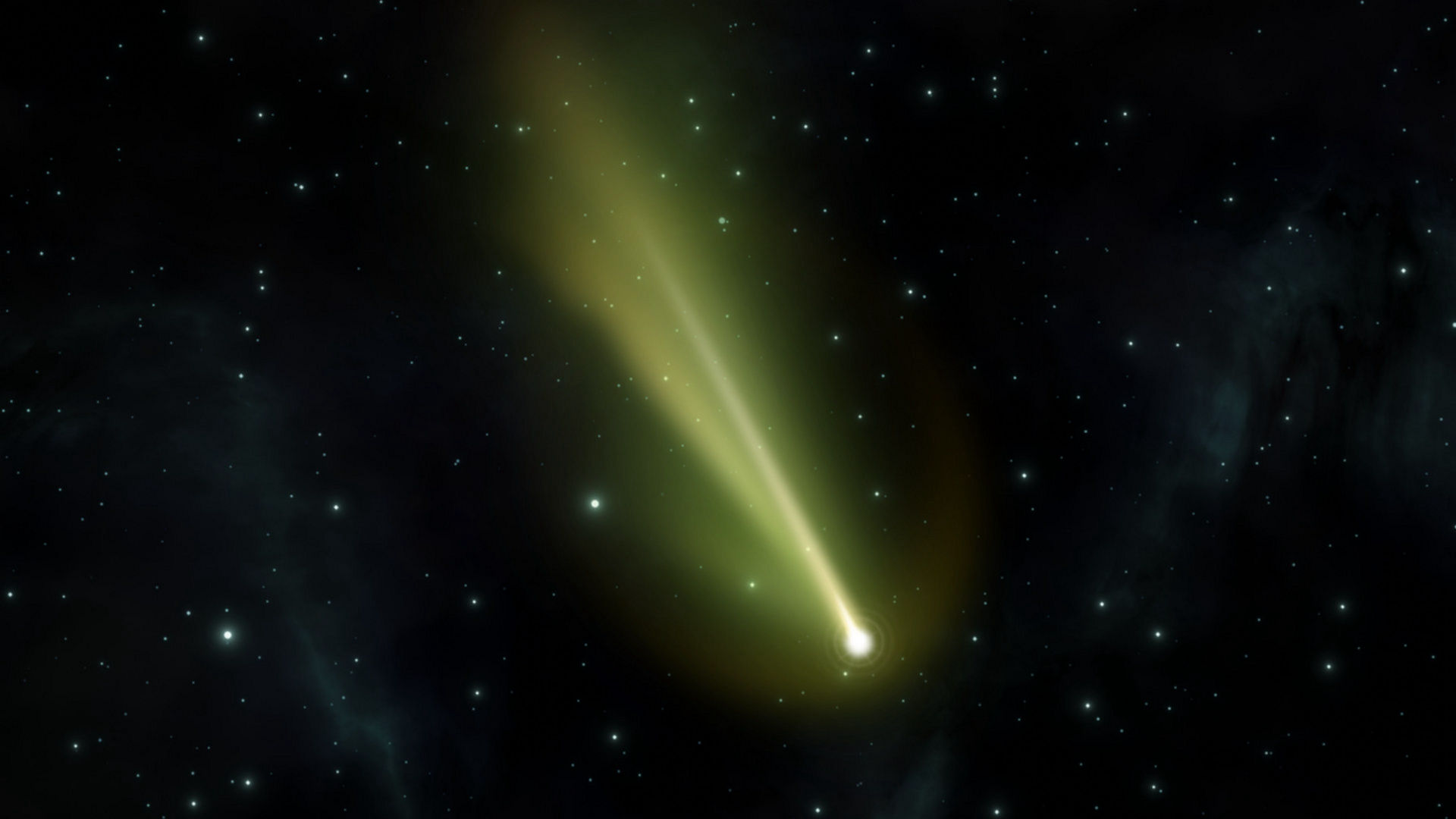
 Meet the First Comet of 2021! On January 3, 2021, an American astronomer Gregory J. Leonard discovered a new comet at the Mount Lemmon Observatory in Arizona, USA. It was named C/2021 A1 (Leonard) – the letter “C” means “non-periodic comet”, and “2021 A1” indicates that it was the first comet discovered in the first half of January 2021…more

Posted in February 2021, Sidereal Times | Tagged , | Leave a comment

From the Director

Rex
by Rex Parker, Phd director@princetonastronomy.org

The third decade of the third millennium brings great opportunities for AAAP.  Where is amateur astronomy heading in the New Year?  What actions and decisions, what different directions might AAAP take as central New Jersey slowly emerges from the pandemic?  Will the caution, restrictions, and suppression of physical gatherings dissipate?  Or will the virtual e-meeting approach to most activities stick with us, even if no longer required by the state.  What will be Princeton University’s policy towards gathering in large venues such as Peyton Hall auditorium?

These questions provide a backdrop for thinking about how AAAP can operate in 2021.  They’re worthy of a membership-wide discussion.  So, I’ll take the option of weighing in with my own opinions and perspective here, and look forward to hearing your views.

  • Philosophically, the value of this organization to its members has never been more meaningful than now. This extends also to the wider pool of the interested and curious public and young people in schools.  The benefit stems from the fundamental essence of astronomy as the science that focuses beyond earthly issues.  Astronomy is an excellent pursuit in the best of times – and a godsend in the worst.  By opening intellectual doors and thinking outside the difficult social horizons around us, we are helping set a positive tone that gives confidence to forge ahead in the New Year.  For some of us astronomy might seem one of the best medicines available short of an RNA vaccine.  
  • Guest speaker programs, long one of AAAP’s main attractions, have been released from the bounds of regional travel limits. At the same time, the credentials of speakers and the scope and depth of topics at our monthly meetings via Zoom will continue to be at the highest level.  I am grateful that new Program Chair Victor Davis and colleague Bill Thomas have embraced this approach and are developing a slate of upcoming speakers that will impress and enhance our tradition of great live speaker programs.  
  • How will the meeting format change after herd immunity is achieved? It seems that a future meeting model will likely be a hybrid, with some speakers present in Peyton Hall auditorium with members attending, and some connecting remotely via Zoom.  For some speakers, previously recorded presentations may be preferred.  It is likely that members and guests will have the option of attending in person in the cozy surrounds of home PC environment.
  • Observatory activities evolved faster last year than a meteorite blazing through the night sky. I’m sure you’ve heard the media describe that in American corporations a decade of digital advancement occurred in half a year. In a similar way AAAP’s observatory and observing members advanced with astrovideo technology.  The recent hardware and software upgrades at Washington Crossing Observatory played a major role in our being able to offer celestial observing experiences that exceeded pre-COVID capabilities.  Observatory chair Dave Skitt, Jennifer Skitt, Tom Swords, Bill Murray, and other members used their ingenuity to innovate solutions to the problems we faced.
  • Astrovideo live sessions came truly alive in our club in 2020 and will be even more important in 2021. We have seen a growing interest in the club, much like the rest of amateur astronomy, in being involved with electronically assisted astronomy (“EAA”).  The ability to do telescope astrovideo requires less “high end” equipment and much less patience than full bore astrophotography.  That’s why we started up a members’ Astrovideo Interest Group, with ~25 members getting onboard this past fall.  A monthly astrovideo live session via Zoom began airing on the new moon Fridays, which currently is the Friday night following the monthly meeting.  Approximately 50 devices were connected to the Zoom sessions for the past several events (devices viewed by more than one person in many cases).  With running commentary and multi-site telescope video streaming, the team of Bill, Dave & Jennifer, Tom, and me had a great time bringing some of the night sky to viewers.  But there’s nothing as cool as doing it yourself.  The 2021 goal is to bring more AAAP members into the live astrovideo stream with personal telescope/video setups, as well as participating at the Observatory in the live Zoom sessions.  

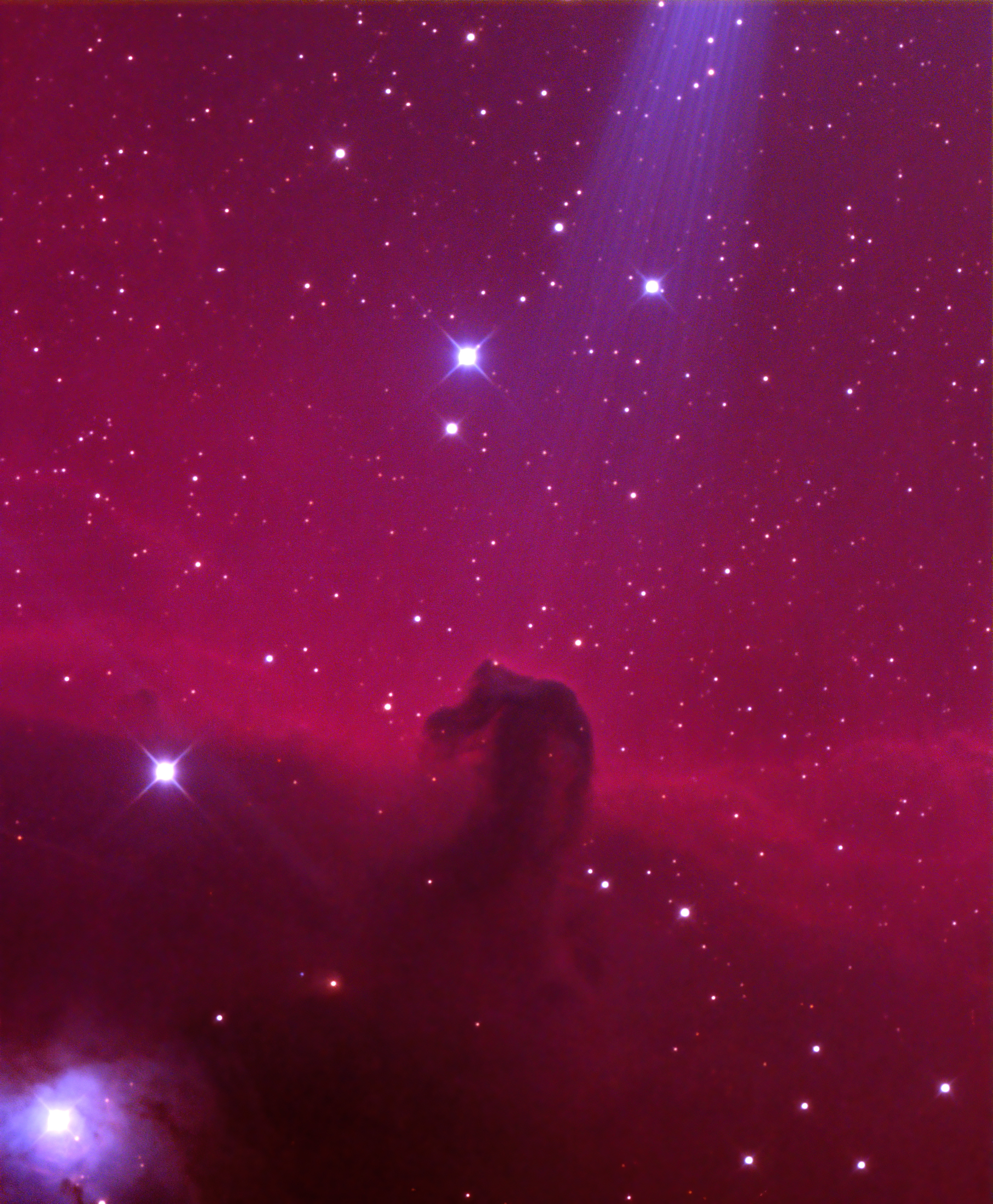
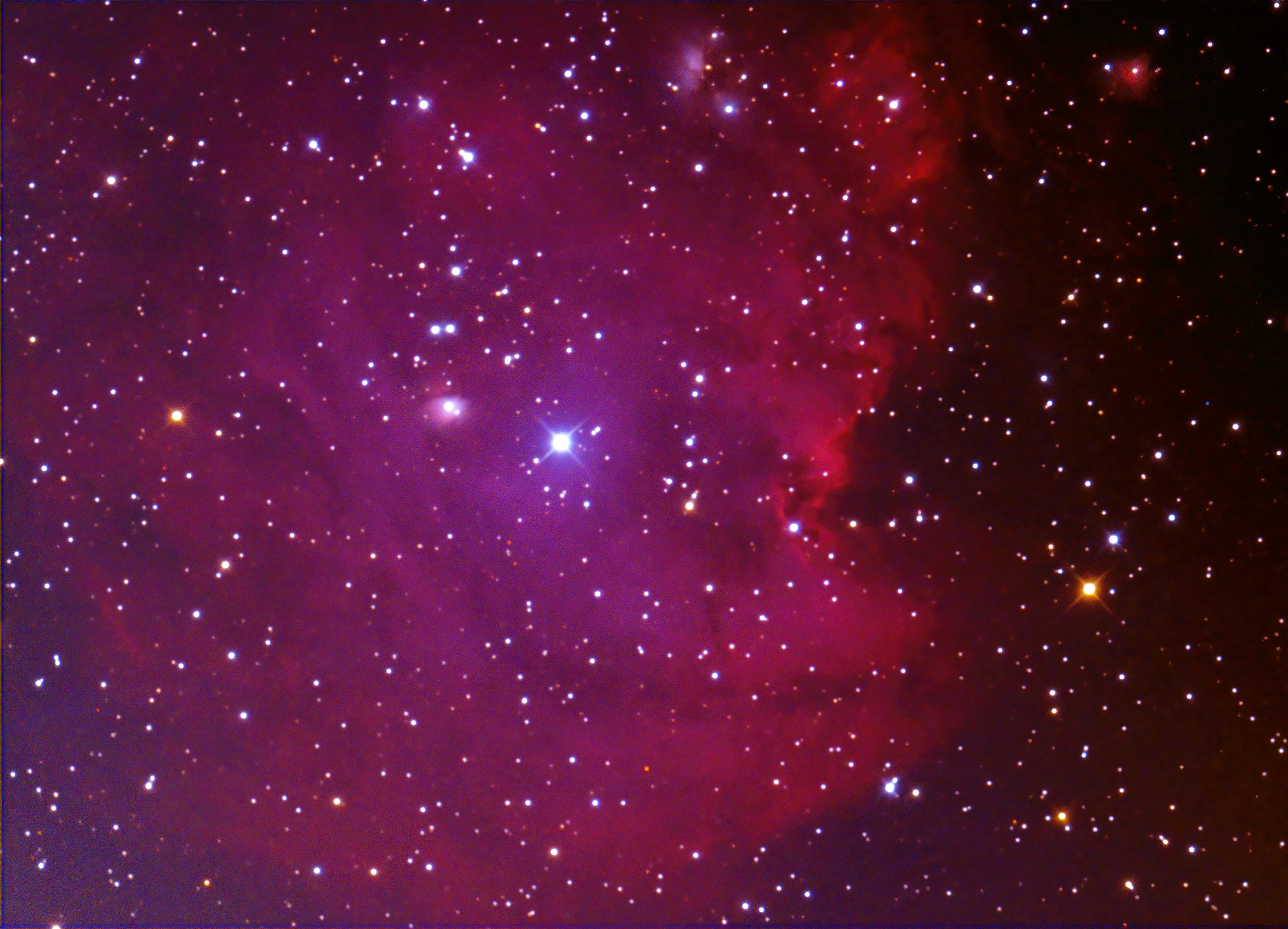
Amazing nebulae in Orion that you can see in January.  Now is the best time to get out your telescope and eyepieces or camera to observe the amazing deep sky around the constellation Orion.  Probably the best known object is Messier 42, the Great Nebula in Orion, in the sword a bit below the belt stars.  There are other less frequently seen nebulae in Orion, such as the Horsehead Nebula (IC434) in Orion’s belt, a dark nebula next to an H-II star-forming molecular cloud region about 1400 light years away from us.  Another interesting Orion object is the lesser known Monkey Head Nebula (NGC 2174), an emission nebula in Orion’s upper arm above the bright star Betelgeuse (Figures below).  These were my targets during a couple of clear nights around Christmas.

For each of these two Orion nebulae, data were collected for ~5 hours with 15 min subexposures using a color sensor CMOS camera and 12.5” reflector telescope, along with a guidescope equipped with CCD guide camera. In the resulting images I was surprised by the appearance (see Figure below) of what seems like beams of blue rays shining down onto the Horse’s Head, like rays of hope and inspiration in the heavens!  Actually the blue beam in the image is a diffraction effect due to the bright star Alnitak (mag 1.8) just above the field of view.  The Monkey Head Nebula (Figure below) emits mainly red light of ionized hydrogen from a gigantic H-II region of condensing interstellar gases where new stars are continually being born, about 6500 light years away.  The surrounding star field is catalogued as the open cluster NGC 2175.

The Horsehead Nebula (Nebula IC434) in Orion, with radiant blue beam highlighting the Horse’s Head.   Astrophoto by RAParker, 12.5”reflecting telescope with ASI-071C camera.

Monkey Head Nebula (NGC 2174), an emission nebula and star forming region in Orion.  Astrophoto by RAParker, 12.5”reflecting telescope with ASI-071C camera.

Posted in January 2021, Sidereal Times | Tagged , , , | Leave a comment

From the Program Director

by Victor Davis

The first AAAP meeting of 2021 will take place (virtually) on Tuesday, January 12th at 7:30 PM. (See Joining the Meeting with Zoom below for details). This meeting is open to AAAP members and the general public. Due to the number of possible attendees, we will use the Waiting Room. This means when you login into Zoom you will not be taken directly to the meeting. The waiting room will be opened at 7:00 PM. Prior to the meeting start time (7:30 PM) you may socialize with others in the waiting room. The meeting room has a capacity of 100 people.

For the Q&A session, you may ask your question using chat or may unmute yourself and ask your question directly to the speaker. To address background noise issues, we are going to follow the rules in the table below regarding audio. If you are not speaking, please remember to mute yourself. You are encouraged, but not required to turn your video on.

Meeting Event Participant Can Speak? Participant Can Self-Unmute?
Rex’ General Remarks Yes Yes
Victor’s  Speaker Introduction Yes Yes
Speaker Presentation No No
Q&A Session Start All on Mute Yes
Business Meeting Start All on Mute Yes

Only the Business part of the meeting will be locked.
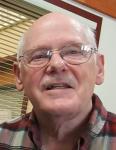
Featured Speaker: Longtime AAAP member John Church will give a talk entitled, The Fourth Condition: A Spyglass Drama. John’s presentation will summarize the steps leading up to the design of well-corrected doublet achromatic refractor objectives.

The starting point for such a design is to choose an aperture size and the desired focal length.  Next to be considered are what kinds of glasses are available, how best to minimize secondary color, spherical aberration, and finally coma. These design methods date from the pioneering researches of Alexis Clairaut, Jean le Rond d’Alembert and others in the 18th century, since then adapted and republished by many others.  Equations for implementing their design principles were converted into a BASIC program published in Sky & Telescope (November 1984; V. 68, No 5, pp. 450-1).

John will discuss the design and performance of AAAP’s historic Hastings-Byrne 6 ¼ inch refractor, with remarks about Charles Hastings, the maker of its objective lens. He will show lunar photographs taken with this instrument. For a bit of drama, John will describe the scientific rivalry between Clairaut and d’Alembert.

Speaker’s Biography: A native of Richmond, John Church graduated from the University of Virginia with a bachelor’s degree in chemistry and then earned M.S. and Ph.D. degrees from Lawrence University in Appleton, Wisconsin.   His thesis work was concerned with the reaction of crystalline carbohydrate derivatives with oxygen under relatively mild conditions.  He spent his career in research and development with American Can Company at their Corporate R&D laboratory in Princeton and then with Colgate-Palmolive at their Corporate Research Center in Piscataway.

John is the author of sixteen scientific, historical, and technical publications, including several on the optics of refracting telescopes as well as one on close conjunctions of Jupiter and Saturn.  He holds ten U.S. patents and is the author of a book chapter on the chemistry of bleach. He has written three books and edited several others.  One of his Sky & Telescope articles traced the history of the 6 ¼ inch Hastings-Byrne refractor now installed in our observatory in Washington Crossing State Park, which he and many others helped build in the late 1970’s.

John has served as Assistant Director, Director, and Program Chair of the AAAP.  Next year will mark his 50th year as a club member.  His civic activities include presently serving on the West Windsor Township Zoning Board of Adjustment.  He is married and has three children and six grandchildren.

Using Zoom: While we are, social distancing the AAAP Board has chosen to use Zoom for our meetings, based our belief that many members have already have used Zoom and its ease of learning. One of its great features is you can choose whether you want to install the software on your computer or use it within your browser.

How to Join the January Meeting: For the meeting, we are going to follow a simple two-step process:

  1. Please make sure you have Zoom installed on your computer. You do not need a Zoom account or need to create one to join the meeting. Nor are you required to use a webcam.
  2. Please visit our website for the link to the meeting

NOTE: We plan to open the meeting site 30 minutes to the 7:30 start time. This way you won’t have to rush to join the meeting. A maximum of 100 attendees can join the meeting.

More Information: The Zoom site has many training videos most are for people who are hosting a meeting. If you’re unsure how Zoom works you might want to view the videos on how to join a meeting or how to check your computer’s audio and video before the meeting.

January’s Journal Club Presentation: Bob Vanderbei will kick off the new year’s Journal Club presentations by showing some of his excellent and timely astrophotos and explaining how he accomplished them. In addition, Bill Murray will tell the story of Project Diana, in which a small local team of radar experts first probed a celestial body by bouncing radio pulses off the moon, 75 years plus two days ago.

We hope to make these short presentations a regular feature of our monthly meetings. If you are interested in presenting a topic of interest, please contact either director@princetonastronomy.org or program@princetonastronomy.org. We’d like to keep our momentum going!

Upcoming Programs: Here’s a look ahead at upcoming guest speakers. We’re expecting to conduct virtual meetings for the remainder of this academic year. In an effort to turn necessity into a virtue, we’re casting our recruiting net a bit wider than usual, inviting speakers for whom a visit to Princeton would be impractical or inconvenient. Suggestions for guest speakers for September, 2021 and beyond are welcome.

February 9  – Guömundur Kári Stefánsson: Dr. Stefánsson is the Henry Norris Russell Fellow in Princeton’s Department of Astrophysical Sciences. He will speak on innovative techniques he has helped develop for Detecting and Characterizing Exoplanets.

March 9 – Keivan Stassun: Prof. Stassun is the Stevenson Professor of Astrophysics at Vanderbilt University. He will describe The Life and Death of Stars, the title of a course he delivered for The Learning Company.      

May 11 – Alexandra Kroll Davatzes: Prof. Davatzes is an Associate Professor at Temple University. Her talk will describe Precambrian Meteor Impacts and Implications for Early Earth.

May 11 – Alex Hayes: Prof. Hayes is an Associate Professor of Astronomy at Cornell University and Director of its Spacecraft Planetary Image Facility. He will speak on Ocean Worlds of the Outer Solar System, plus he will give a brief report on the Mars 2020 mission.

June 8 – Anna Schauer: Dr. Schauer, a new mother, is the NASA Hubble Fellow at the University of Texas at Austin. She leads the team researching what she’s nicknamed the Ultimately Large Telescope, a lunar liquid-mirror telescope that will aim at investigating First Star Formation.

End of an Era: For more than five years, we have all benefitted from Ira’s efforts in recruiting an impressive array of interesting guest speakers. Their expertise and scholarship, often on the cutting edge of astronomical research, are a defining characteristic of this club. Ira took on a vital role, and he did it very well. As they say in showbiz, he’s a tough act to follow. As Ira transitions from Program Chair to Active Member, I want to express my gratitude to him not only for his past contributions, but also for generously sharing his information, experience, and advice with his successor (i.e. me). Through his judgment and thoughtfulness, I am confident of a graceful and seamless transfer of power.  Thanks also to Bill Thomas, who contributes research and advice to help identify topics and presenters. I’m thankful and relieved to have Bill’s and Ira’s help.

Though I’m officially taking over as Program Chair, Ira will still be quite visible as Zoom maven, and of course as an active member of AAAP. He can be reached at ipolans@princetonastronomy.org.

Looking forward to you joining us on Zoom at the January meeting!

Posted in January 2021, Sidereal Times | Tagged , , | Leave a comment

Minutes of the December 8, 2020 AAAP General Meeting

by John Miller, Secretary

● Online meeting, via Zoom, began at 7:30 pm. There were about 62 attendees.

● Rex Parker reviewed current membership count, which the Secretary records at 28 paid new members (2020); 52 paid renewed members (2020) and 52 unpaid members    (as of 11-24-2020).

● Rex presented an overview of current sky objects with a reminder of the December 21st Jupiter/Saturn conjunction (nearest separation on the date).

● Victor Davis was announced as new Program Chair, replacing Ira Polans.

● Guest speaker Kimberly Arcand, Science Communicator http://kimarcand.com  with NASA’s Chandra X-ray Observatory, gave an excellent overview of the project. It was very well received.

●  Rich Sherman gave a “Journal Club” presentation. He reviewed a new book titled, The Planets

●  Rex and David (Skitt) talked about their astrovideo sessions produced at the WC  observatory and invited members to contact them to learn more regarding EAA (Electronically-assisted astronomy).

 ●  The meeting adjourned at 10:00 PM.

Posted in January 2021, Sidereal Times | Tagged , , | Leave a comment

Minutes of the December 1, 2020 AAAP Board of Trustees meeting (online)

by John Miller, Secretary

● A discussion on methods to draw more Zoom attendees to the AAAP General monthly meeting was undertaken.

● Ideas and enticements to draw more speakers via Zoom.  It was agreed our cache is now exponentially larger for potential guests, now that no travel is required.

● With the advent of online guest speakers and a limitless reach for attendees, it was suggested, we might consider reaching into other regions or States, via Zoom.     

● Advertising ideas were reviewed.  Return to local paper announcements (which we did every month long ago); utilize the Princeton University radio station; pin            announcements on campus, supermarkets, Kiosks.  Email K-12 STEM coordinators.

● The Fund Raising initiative (headed by Assistant Director Larry Kane) currently has 2 committee members. It was agreed we need to draw the general membership into this task, e.g. acquaintances who have a background in fundraising  methodologies.

●  Dues payment for FY 2021 are required by January 1st. Our fiscal year is July 1st through June 31st. Payments not received by that week will forfeit membership and be removed from the promotions mailing list. The board will do its best to notify members regarding renewals. Renewal may be quickly accomplished online at the AAAP website.

●  There was a general welcome for member Victor Davis as he takes the reins of            Program Director, replacing “retiring” Ira Polans.  A review of the outreach process was also undertaken.

Posted in January 2021, Sidereal Times | Tagged , , | Leave a comment

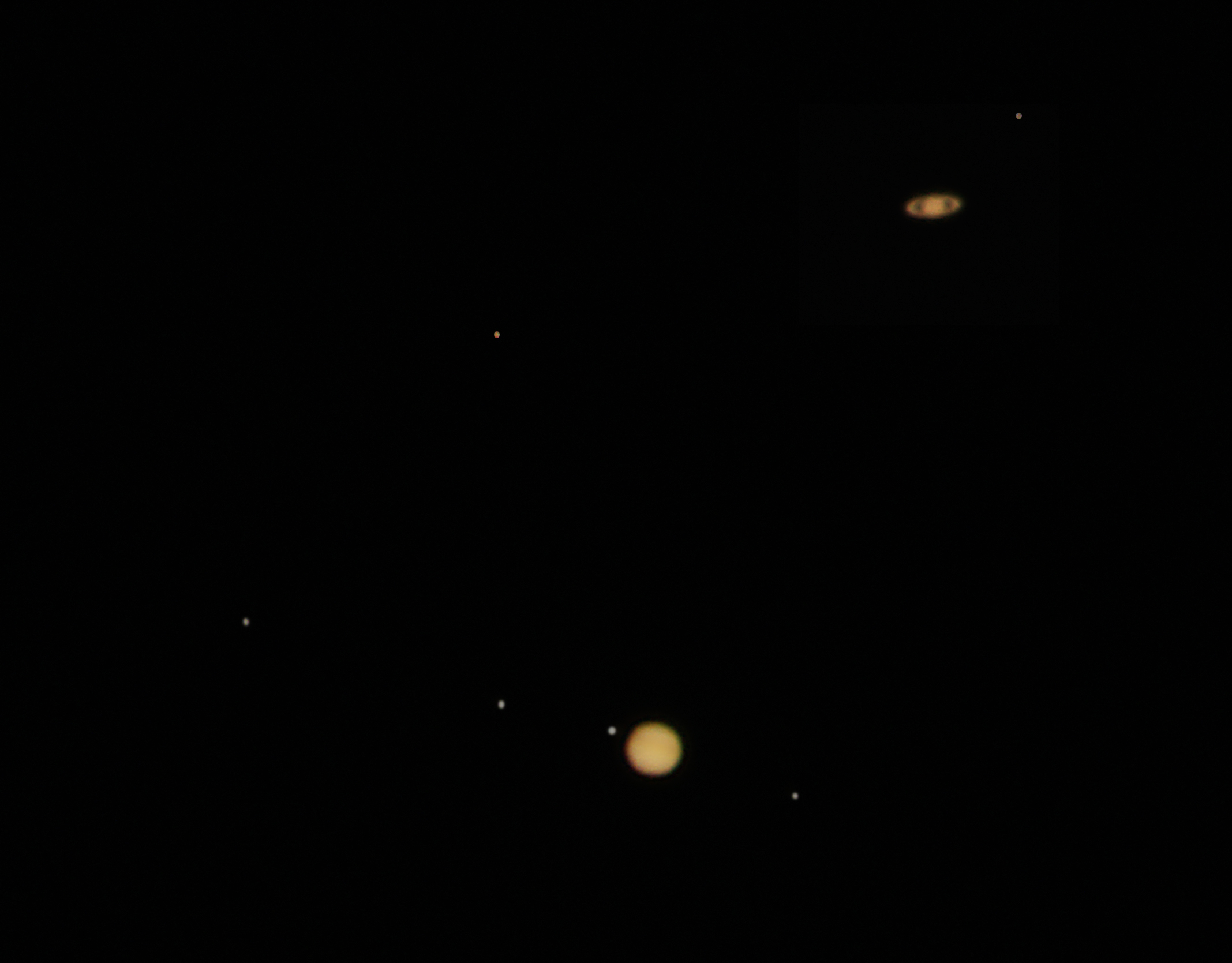
Bob Vanderbie’s Lucky Shot!

While most of the astro photographers had given up in New Jersey, Bob waited and waited for a break in the clouds and boy, did he get lucky! This picture was taken at 5:45 on December 21, the day Jupiter and Saturn came closest to each other.
Posted in January 2021, Sidereal Times | Tagged , | Leave a comment