The heavens declare the glory of God, and the firmament proclaims His handiwork. Psalm 19:1
In his retirement years, Gene Ramsey pursued his passion for astronomy, serving as a diligent caretaker of this observatory and mentor to members of the Amateur Astronomers Association of Princeton who continue to use this facility for our own observing projects and for educating the public. Gene’s special joy was explaining the wonders of the universe to children. His knowledge of sky lore and enthusiasm for public outreach inspire the club’s “keyholders” and the observatory’s many visitors to share Gene’s sense of the transcendence of the human experience.
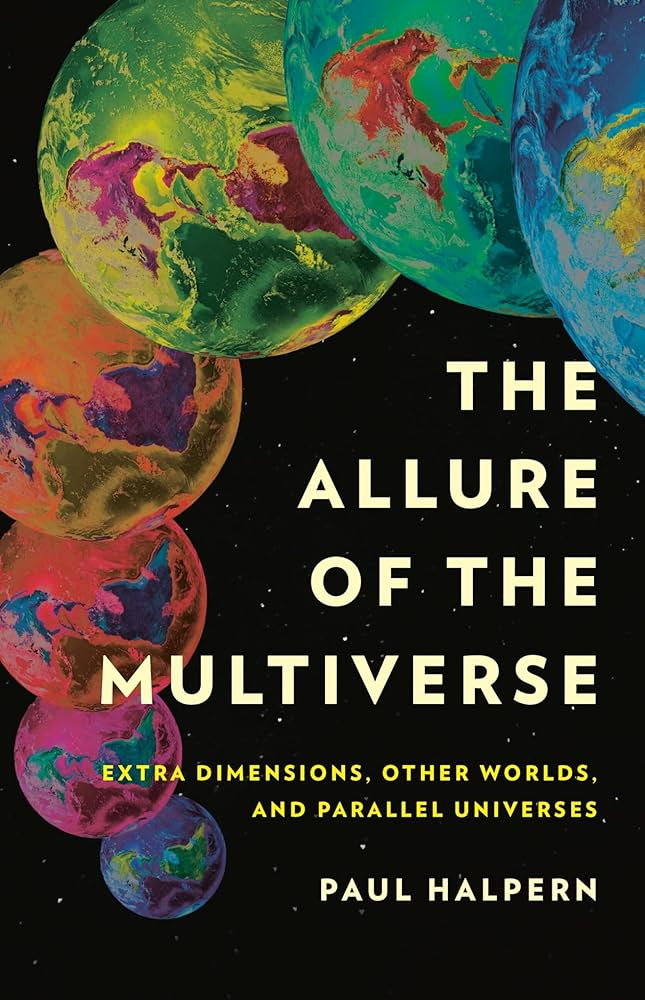
Title: The Allure of the Multiverse Author: Paul Halpern Publisher: Basic Books, New York Publication Date: January 2024 Total Pages: 320
In The Allure of the Multiverse, the author physicist Paul Halpern begins to describe the early ideas of the infinite cosmos with Giordano Bruno’s 1584 treatise On the Infinite Universe and Worlds. The author brings the reader through the history and controversies of not only our singular universe but of multiple universes before the Big Bang and of parallel universes. Time travel is discussed and the testing of time dilation brings the reader through an expanding topical discussion showing the interconnections of time, gravity, space, black holes, and a potential multiverse. Wormholes and time tunnels are discussed thoroughly as well as a description of our own Princeton J Richard Gott’s time loop.
This reader found the first half of the book a slow read delving into the history and controversies of the origins of the current multiverse theories. However, the read picked up in the latter half of the book as the reader is taken through time travel, worm holes, and the basis of the popular shows and movies of Interstellar, Star Trek, and faster than light tachyons. This is a great source to more fully understand the subject and origins of the concept of multiple universes.
The summer thus far in eastern PA and NJ has been self-evident in poor weather from clouds, humidity, storms, and extreme heat making astroimaging difficult to say the least. However, a few tremendous images were taken by AAAP members concentrating on the northern constellation Cygnus. Cygnus is one of the most recognizable constellations of the northern summer and autumn sky, and it features a prominent asterism known as the Northern Cross (in contrast to the Southern Cross) with the brightest star in Cygnus and first-magnitude Deneb, a blue supergiant, forming at the head of the Northern Cross. Deneb also forms an additional asterism known as the Summer Triangle. The constellation is home to Cygnus X-1, a distant X-ray binary containing a supergiant and unseen massive companion that was the first object widely held to be a black hole. There are 97-star systems in Cygnus that have known planets as a result of the Kepler Mission.
Clear skies, Michael DiMario, PhD AAAP Astroimaging Chair
David Wilton – Cygnus Wall
The Cygnus Wall, part of the North America Nebula (NGC 7000), photons were collected multi-nights of 15–27 June 2024. Total integration time of 13 hours, 18 minutes using a Televue 127 refractor and ZWO ASI2600 monochrome camera on a Paramount MYT mount. Post processing with PixInsight. The nebula is in the “Hubble palette,” that is using narrowband sulfur II, hydrogen-alpha, and oxygen III filters in the red, green, and blue channels; the stars were imaged with red, green, and blue filters.
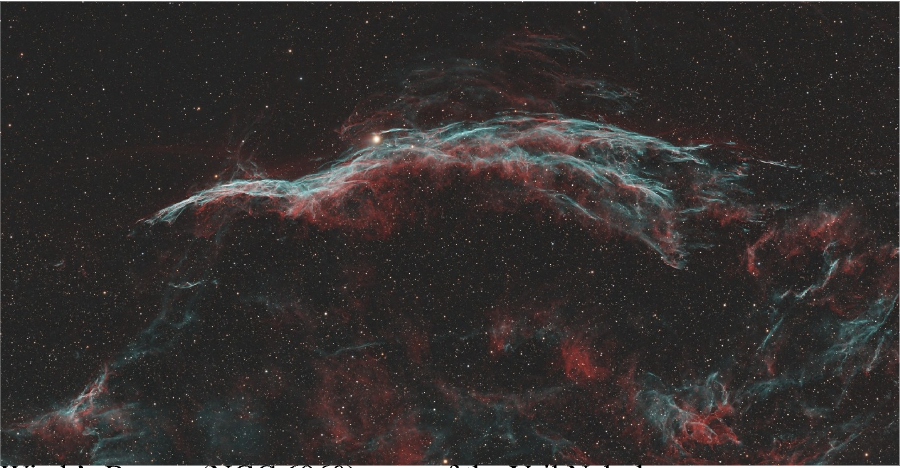
David Wilton – Witch’s Broom
Witch’s Broom (NGC 6960), part of the Veil Nebula, a supernova remnant in Cygnus. Image was captured 7–8 June 2024 with 7 hours, 56 minutes integration time, using a Televue 127 refractor and ZWO ASI2600 monochrome camera on a Paramount MYT mount. Post processing with PixInsight. The nebula is imaged with narrowband hydrogen-alpha and oxygen III filters (HOO palette); the stars were imaged with red, green, and blue filters.
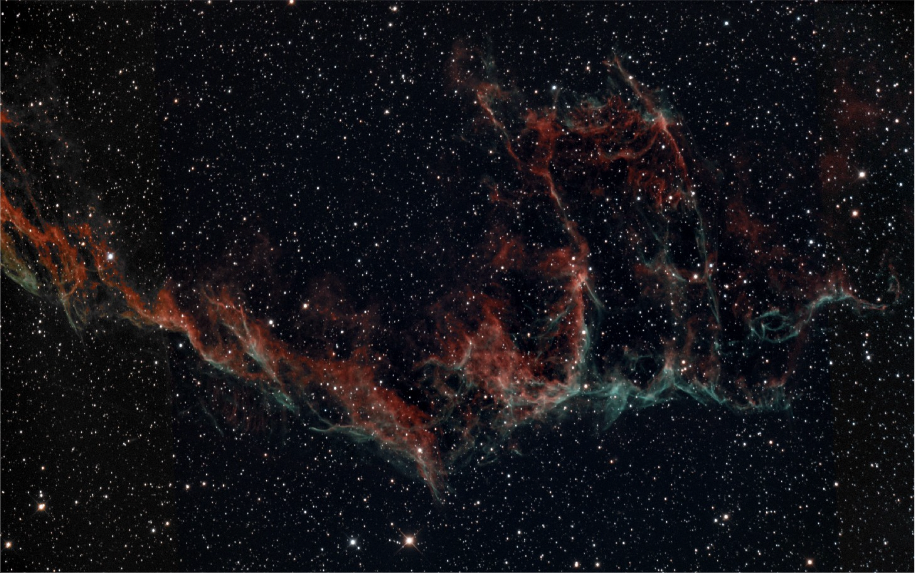
Rex Parker – Bat Nebula (NGC 6995)
NGC 6995 or known as the Bat Nebula is part of the eastern Veil Nebula in Cygnus. The Veil Nebula is a supernova remnant from an event about 5000 years ago. Image was captured using a AGO 12.5” Dall-Kirkham Cassegrain scope, ASI2400MC Pro camera with an Antlia Triband filter. Integration of 41×10 min subs, gain 140 (unity). Processed in Astrometric Stacking Program (ASTAP) and minimally in Photoshop (PS).
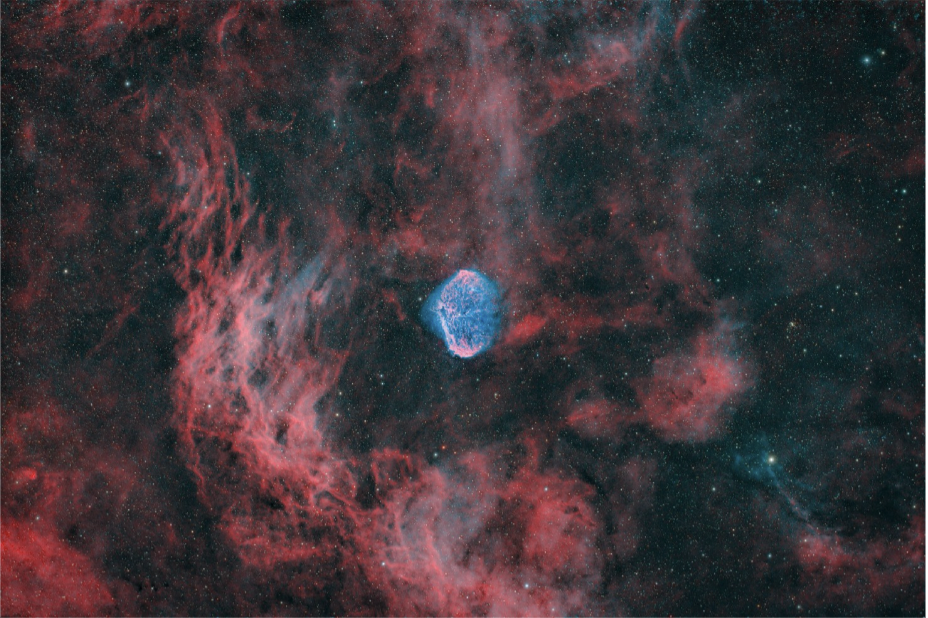
Oleg Shargorodsky – Crescent Nebula (NGC 6888)
The Crescent Nebula (NGC 6888) is an emission nebula in the constellation Cygnus, about 5000 ly from Earth. It was discovered by William Herschel in 1792. It is formed by the fast stellar wind from the Wolf-Rayet star WR 136 (HD 192163) colliding with and energizing the slower moving wind ejected by the star when it became a red giant around 250,000 to 400,000 years ago. The Crescent Nebula image was captured using a ASKAR 108mm FRA600 Quintuplet scope, an ASKAR 0.7x f/3.9 Full Frame Reducer on an iOptron CEM40 mount using a ZWO ASl2600mc pro camera, ZWO ASI 120MM-mini guider, and an Antlia ALP-T Dual Narrowband OIII (5nm) and H-a (5nm) Filter. Image processing using PixInsight and Lightroom.
Moon craters with NASA’s Shadowcam When a NASA spacecraft passes over Shackleton Crater on the moon and peers in, it sees this: a sea of blackness and nothing more. This 13-mile-wide crater lies close to the moon’s south pole. Here, the sun never rises high above the horizon, and the rim of Shackleton blocks the sun’s rays from ever shining directly onto the crater floor…more
-NYT
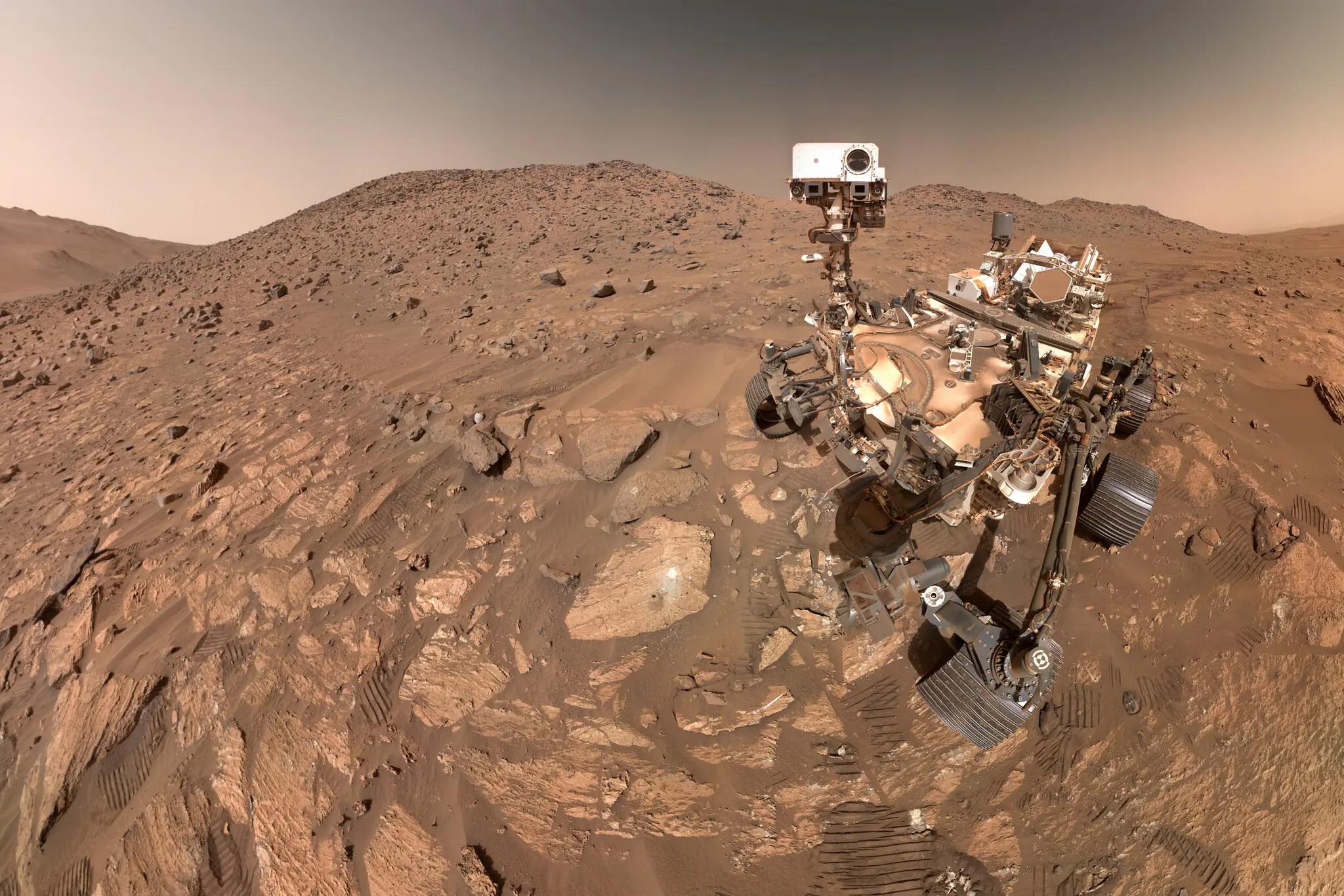
NASA Did Not Say It Found Life on Mars. But It’s Very Excited About This Rock. The rock, studied by NASA’s Perseverance rover, has been closely analyzed by scientists on Earth who say that nonmicrobial processes could also explain its features. The rover has drilled and stashed a piece of the rock, which scientists hope can be brought back to Earth…more
-phys.org
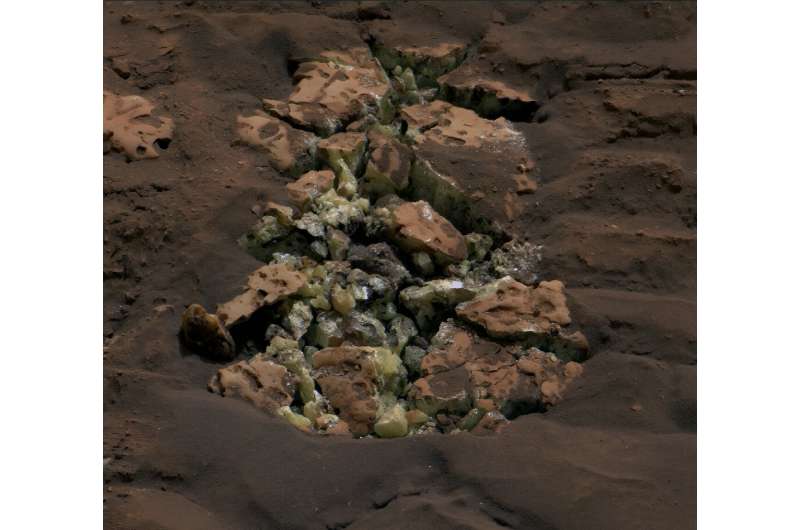
NASA’s Curiosity rover discovers a surprise in a Martian rock Scientists were stunned on May 30 when a rock that NASA’s Curiosity Mars rover drove over cracked open to reveal something never seen before on the Red Planet: yellow sulfur crystals. While people associate sulfur with the odor from rotten eggs (the result of hydrogen sulfide gas), elemental sulfur is odorless…more
-phys.org
The Higgs particle could have ended the universe by now—here’s why we’re still here Although our universe may seem stable, having existed for a whopping 13.7 billion years, several experiments suggest that it is at risk—walking on the edge of a very dangerous cliff. And it’s all down to the instability of a single fundamental particle: the Higgs boson…more
-NYT
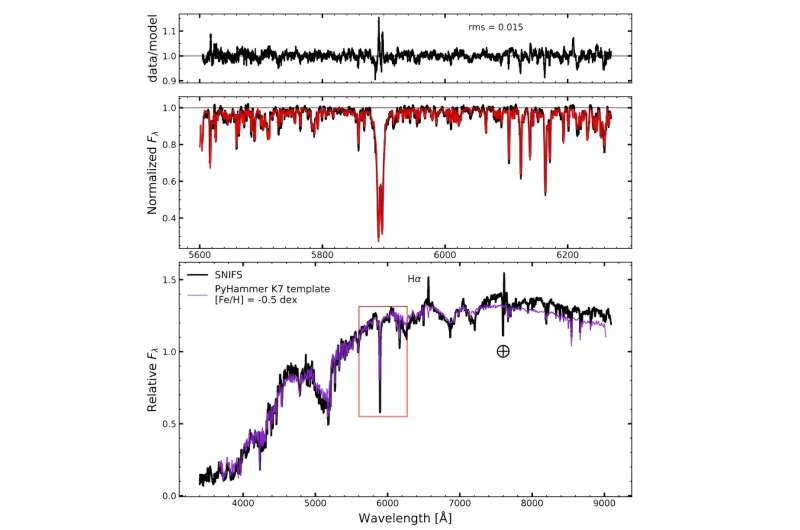
LAMOST J2354 binary hosts an unseen massive white dwarf, study suggests Astronomers from the Ohio State University (OSU) and University of Hawai’i have performed spectroscopic observations of a recently-discovered binary system known as LAMOST J2354, which contains a dark companion star. Results of the observational campaign, presented July 26 on the pre-print server arXiv, suggest that the unseen object is a massive white dwarf…more
-phys.org
Cosmic microwave background experiments could probe connection between cosmic inflation, particle physics Various large-scale astrophysical research projects are set to take place over the next decade, several of which are so-called cosmic microwave background (CMB) experiments. These are large-scale scientific efforts aimed at detecting and studying…more
-NASA
NASA Science, Cargo Launch on 21st Northrop Grumman Mission to Station Northrop Grumman’s Cygnus spacecraft for the company’s 21st commercial resupply services mission for NASA launched on a SpaceX Falcon 9 rocket from Space Launch Complex 40 at Cape Canaveral Space Force Station in Florida. New scientific experiments and cargo for the agency are bound for the International Space Station…more
-NASA
NASA Invites Media, Public to Attend Deep Space Food Challenge Finale NASA invites the media and public to explore the nexus of space and food innovation at the agency’s Deep Space Food Challenge symposium and winners’ announcement at the Nationwide and Ohio Farm Bureau 4-H Center in Columbus, Ohio, on Friday, Aug. 16. In 2019, NASA and the CSA (Canadian Space Agency) started the Deep Space Food Challenge, a multi-year international effort…more
-phys.org
Astronomers discover new supergiant-rich stellar cluster Astronomers report the discovery of a new galactic stellar cluster located some 24,000 light years away. The newfound cluster, which received the designation Barbá 2, turns out to host at least several supergiant stars. In general, star clusters are groups of stars sharing a common origin and gravitationally bound…more
-space.com
Earth’s ‘evil twin’ Venus may have mirrored our planet more than expected New research may have brought Earth and its inhospitable, “evil twin” even closer together. Today, Venus seems to lack the tectonic activity seen on Earth, but surface features like faults, folds and volcanoes indicate the hellish planet — with intense temperatures hot enough to melt lead and fearsome surface pressures — was once tectonically active…more
-Crab Nebula, NYT
Watch These Supernovas Explode Across Time “The past is never dead,” William Faulkner once wrote. “It’s not even past.” Nobody knows this better than astronomers. Everything that has ever happened in the history of the universe has left a mark on the sky; with the right technology, much of it is now decipherable…more
As amateur astronomers, our passion for observing the cosmos often brings us face-to-face with the delicate balance of our planet’s environment. In the May 2024 article from The New York Times, astronomers emphasize the urgent need for collective action against climate change. The very close relationship between astronomy and climate science behooves each one of us, amateurs and otherwise to push ourselves to take steps to protect and enrich our local ecosystems.
First, we can leverage our knowledge of planetary science to educate the public about the effects of climate change. Venus, is often described as Earth’s “twin” due to its similar size and proximity. It provides a stark example of a runaway greenhouse effect. This transformation from a potentially habitable planet to a hellish landscape with surface temperatures hot enough to melt lead demonstrates the devastating impact of unchecked carbon emissions and atmospheric changes (Astronomy Magazine) (AAS). By highlighting these examples during public stargazing events or educational workshops, we can draw parallels between Venus’ past and Earth’s potential future if climate change is not addressed.
Secondly, light pollution is an issue close to the hearts of astronomers, as it obstructs our view of the night sky. However, it also contributes to energy waste and disrupts ecosystems. By advocating for dark sky initiatives and promoting the use of efficient, downward-facing lighting, we can reduce light pollution and energy consumption simultaneously. Simple actions, such as promoting the use of shielded fixtures and advocating for “dark sky” ordinances, can make a substantial difference. Our expertise in understanding the night sky positions us well to lead these efforts and educate others on their importance.
Furthermore, our club can play a pivotal role in promoting sustainable practices within our community. This could involve organizing events to discuss the importance of reducing carbon footprints, encouraging the use of renewable energy, and advocating for local green initiatives. Small changes in our own lifestyle and surroundings can make big impacts. For example, planting native flowers in our yards will certainly give a boost to the local pollinator and insect populations. Installing bee hotels either store bought or homemade from recyclable materials would provide habitats for native bee populations. Collaborating with local schools and community centers to host informational sessions can amplify our impact and inspire collective action. Check out my blog for more ideas.
We are also well-positioned to contribute to climate science directly. Engaging with projects that track deforestation, ice melt, and other indicators of climate change can provide valuable data for scientists and policymakers. By participating in citizen science projects and sharing our observations, we can help build a more comprehensive understanding of the environmental challenges we face. We can and we should advocate for policies that support sustainable development and environmental protection. By using our collective voice, we can influence local and national policies to prioritize climate action.
We have a unique opportunity and responsibility to contribute to the fight against climate change. By educating the public, reducing light pollution, promoting sustainable practices, engaging in citizen science, and advocating for policy change, we can make a meaningful impact. Let’s harness our passion for the stars to ensure that future generations can continue to gaze upon a healthy and vibrant home planet, our Earth. (Email me at editors@princetonastronomy.org for native flower seeds)
June Meeting The June 2024 meeting of the AAAP will take place Tuesday, June 11th at 7:30 PM. The location will be the planetarium at the NJ State Museum in Trenton, NJ. The club’s custom for many years has been to travel to the planetarium for the last meeting of the academic year. The meeting will feature a sky tour of the Spring and Summer constellations, and a special showing of the planetarium’s new show from the American Museum of Natural History, “Worlds Beyond Earth.” Meetings at the club’s customary venue, Peyton Hall on the campus of Princeton University, will resume in September.
Options for Attending the Meeting Please note that the meeting will take place at the planetarium of the NJ State Museum, 205 West State Street, Trenton, NJ. There is plenty of free parking behind the museum, next to the planetarium entrance.
This is an IN-PERSON ONLY event; you must be present at the planetarium to view the sky tour, experience the planetarium show projected onto its dome by the museum’s recently refurbished projection equipment, and participate in the meeting’s agenda. There will be no option to Zoom at this meeting, nor will there be a recorded version to play back later.
Featured Speaker:
Bill Murray
AAAP Outreach Chair
Soon-to-be retired staffer at the planetarium
strgazr1@verizon.net
Bill Murray will introduce members to the planetarium’s capabilities and lead a guided tour of the night sky. After a break, he’ll show the planetarium’s new sky show.
“Worlds Beyond Earth” This 25-minute planetarium show produced by the American Museum of Natural History,narrated by Academy Award winner Lupita Nyong’o, tells the story of the dynamic worlds that share our solar system and the unique conditions that make life on Earth possible.
Just wanted to share some time-lapse footage of the aurora over my house in Titusville NJ right down the road from the observatory. It was recorded on a Wyze V3 pan cam around 4 am. My son and I went out at 3am. There was an overwhelming pink glow in the sky but we did not see aurora until I looked at the security camera footage. I have included a google drive link to the time-lapse video that anyone can view. Aurora Link
The month of May has been one of the cloudiest months negating many DSO astronomical quests. However, solar activity has been the mainstay with April’s solar eclipse and May’s extraordinary Aurora Borealis visible to as low as 26 degrees latitude. The month of May 2024 solar storm may compete with some of the lowest-latitude aurora sightings on record over the past 500 hundred years.
Between May 3rd and May 9th, NASA’s Solar Dynamics Observatory, a satellite launched in 2010 to observe the Sun, cataloged 82 sizeable solar flares from two active regions on the Sun (AR3663 and AR3664). These clusters of sunspots were so active that they erupted repeatedly. Starting on May 7th, at least seven coronal mass ejections, or CMES, raced toward Earth reaching our planet May 10th, which was when the strongest auroras were seen. For example, AR3664 peaked in the early hours of May 10th at 2:54 am ET (0654 GMT) triggering temporary or complete loss of high frequency (HF) radio signals across Asia, eastern Europe, and eastern Africa. HF radio signals are interrupted because the radio waves are absorbed by the high energy upper atmosphere. The radiation, as ionizing X-rays, travels toward Earth at the speed of light and ionizes the top of Earth’s atmosphere. CMEs travel at slower speeds and often take several days to reach Earth.
CMEs do not always trigger extraordinary auroral displays. The degree of magnetic disturbance from a CME depends on the CME’s magnetic field and Earth’s. If the CME’s magnetic field is aligned with Earth’s, the CME will pass on by with little effect. However, if the CME is aligned in the opposite direction, it can cause Earth’s magnetic field to be reorganized, triggering impressive auroral light shows.
Scientists are very interested in studying the impact of Solar Particle Events (SPE) such as CMEs. CME AR3664 is reported to have been recorded on Mars. The reason for the great interest is that the ISS and astronauts in low earth orbit are generally protected from SPEs thanks to the Earth’s magnetic field. For astronaut crews and their spacecraft in transit outside the Earth’s protective magnetic field, SPEs will have a deleterious biological effect. Fortunately, most SPE events are a problem for 1-2 days, which allows for relatively small areas of confinement for a Lunar or Mars transit crew. This is also an issue for astronauts on the surface of the Moon and Mars since the Moon and Mars do not have a protective magnetic field. To minimize exposure, the crew would be restricted to a storm shelter during the most intense portion of the event, which may last for several hours. Shielding of approximately with 20 g/cm2 or more of water equivalent material will provide sufficient shielding to protect the crew. For relative comparison, the aluminum equivalent of the ISS United States Lab is 10 g/cm2, ISS average is 5.26 g/cm2, space suit is 1.22 g/cm2, and STS-66 cargo bay was 15 g/ cm2. However, SPEs are directional and may not always impact the Earth but could impact Mars or a transit crew.
The May storms registered as a G4 and G5 at Kp 8-9 on May 11th. Fortunately, one of our AAAP club members captured the Aurora Borealis at its peak of May 11th. See below for the tables of definitions, the storm effects as well as our AAAP member image.
Aurora Borealis was captured using an iPhone 14 Pro (automatically) in Dark Mode. Exposure of 3 seconds hand held. No tripod was used.
The Aurora Borealis, aka Northern Lights, as seen from Bob Vanderbei’s front yard in Belle Mead, NJ at 4:33am on May 11th. The Big Dipper can be seen almost dead center. It is interesting that the double star system, Mizar and Alcor, can be seen as two stars. The bright star up near the top right corner is Polaris, aka the North Star.
Rich Sherman – M104 Sombrero Galaxy
M104, the Sombrero Galaxy was image May 8, 2024 using an ZWO ASI 2600 camera, Antlia triband filter, with a Skywatcher 100mm f/5.5 refractor. Image is an integration of 32 x 2 min frames at -10 C, Bin 1, at unity gain. Image cropped, processed in CCD Stack, Topaz DeNoise, and Lightroom.
The M104 Sombrero Galaxy is a very interesting given its very bright center, at magnitude 8.0, making it one of the brightest galaxies. It is located between the constellations Virgo and Corvus 28 million ly from Earth. It is about 50,000 ly in across. M104 was initially thought to be a spiral galaxy but recent images from the Spitzer Space Telescope indicates it to be a giant elliptical galaxy. Embedded in the bright core of M104 is a smaller disk, which is tilted relative to the large disk. X-ray emission suggests that there is material falling into the compact core, where a 1-billion-solar-mass black hole resides. The Hubble space telescope revealed about 2000 globular clusters, 10 times as many as orbit our Milky Way galaxy. The ages of the clusters are similar to the clusters in the Milky Way, ranging from 10-13 billion years old. (Passage by M. DiMario)
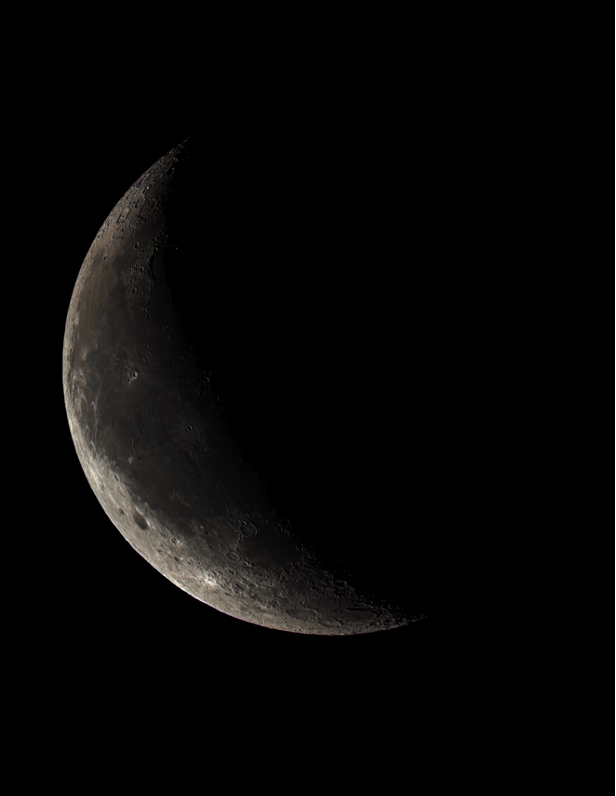
Daniel Mints – Crescent Moon
A May 3rd crescent Moon imaged using a Meade 10” SCT at f/6.3, a ZWO ASI533MC Pro camera and a UV/IR cut filter created from a 3-panel mosaic.
Solar Storm Crashes GPS Systems Used by Some Farmers, Stalling Planting The powerful geomagnetic storm that cast the northern lights’ vivid colors across the Northern Hemisphere over the weekend also caused some navigational systems in tractors and other farming equipment to break down at the height of planting season, suppliers and farmers said…more
-NBC
Astronomers finally detect a rocky planet with an atmosphere Astronomers have searched for years for rocky planets beyond our solar system with an atmosphere — a trait considered essential for any possibility of harboring life. Well, they finally seem to have located one. Researchers said on Wednesday the planet is a “super-Earth” — a rocky world significantly larger than our planet…more
-NYT
Alarmed by Climate Change, Astronomers Train Their Sights on Earth On the morning of Jan. 18, 2003, Penny Sackett, then director of the Australian National University’s Mount Stromlo Observatory outside Canberra, received a concerning email from a student at the facility. Bush fires that had been on the horizon the day before were now rapidly approaching. The astronomers on site were considering evacuating, the student wrote….more
-SciTechDaily
Astronomers Uncover a Baffling “Cosmic Mystery” – A Giant Planet As Fluffy as Cotton Candy An international team led by researchers from the EXOTIC Laboratory of the University of Liège, in collaboration with MIT and the Astrophysics Institute in Andalusia, has just discovered WASP-193b, an extraordinarily low-density giant planet orbiting a distant Sun-like star…more
-NYT
Overlooked No More: Henrietta Leavitt, Who Unraveled Mysteries of the Stars In the early 20th century, when Henrietta Leavitt began studying photographs of distant stars at the Harvard College Observatory, astronomers had no idea how big the universe was. Debate raged over whether all of the objects visible through the telescopes of the day were within our own Milky…more
-phys.org
Webb Telescope offers first glimpse of an exoplanet’s interior A surprisingly low amount of methane and a super-sized core hide within the cotton candy–like planet WASP-107 b. The revelations, based on data obtained by the James Webb Space Telescope, mark the first measurements of an exoplanet’s core mass and will likely underpin future studies of planetary atmospheres…more
-NYT
Scanning the Dark Universe, Euclid Finds Scenes of Cosmic Light Euclid, a European Space Agency telescope launched into space last summer, finally showed off what it’s capable of with a batch of breathtaking images and early science results released Thursday. The telescope will help astronomers make sense of two of the universe’s greatest mysteries…more
-NYT
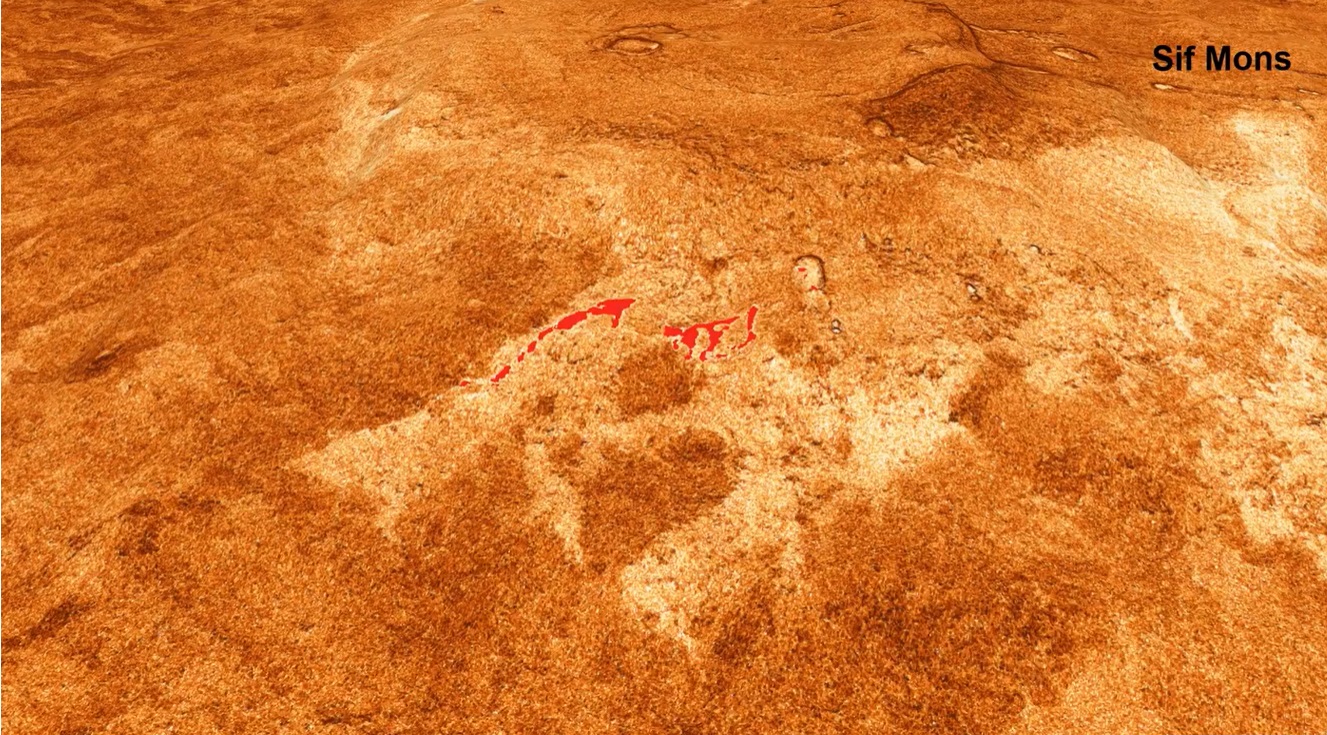
Rivers of Lava on Venus Reveal a More Volcanically Active Planet Witnessing the blood-red fires of a volcanic eruption on Earth is memorable. But to see molten rock bleed out of a volcano on a different planet would be extraordinary. That is close to what scientists have spotted on Venus: two vast, sinuous lava flows oozing from two different corners of Earth’s planetary neighbor…more
-NASA
Unveiling the Sun: NASA’s Open Data Approach to Solar Eclipse Research As the world eagerly anticipates the upcoming total solar eclipse on April 8, 2024, NASA is preparing for an extraordinary opportunity for scientific discovery, open collaboration, and public engagement. At the heart of the agency’s approach to this unusual event lies a commitment to open science, ensuring that the data…more
-NASA
Meet the Two Women Leading Space Station Science The International Space Station provides researchers access to the unique features of low Earth orbit: long-duration microgravity, exposure to space, and a one-of-a-kind perspective of our planet. These special attributes enable scientists to conduct innovative experiments that can’t be done anywhere else…more
by Rex Parker, PhD director@princetonastronomers.org
May 14 Meeting of AAAP. Our meeting in Peyton Hall, Princeton University will be the last regular meeting on campus until Sept. For the June 11 meeting we’ll convene at the State Planetarium in Trenton, then break till Sept. These meetings in person + Zoom are opportunities not only to learn about the science and practice of astronomy, but also to figure out what the AAAP is all about, and meet fellow amateur astronomers. Our meetings are also open to the public and we urge you to invite friends and family, young or adult. Starting last week we began the seasonal Friday night observing sessions at our observatory in Washington Crossing State Park, which are held whenever it’s ~halfway clear from April-October. The Observatory features some very fine telescopes on precise computer-controlled Paramounts. We do a lot of astro-video with special cameras on the scopes as well as direct eyepiece observing to show others the celestial wonders.
Election of Officers May 14. It is important that members attend the May 14 meeting to help achieve a quorum for the annual election of officers. I would like to thank Mike DiMario (chair) and Debbie Mayes for agreeing to serve as the nominating committee. If you are interested in holding a Board position, please contact nominations@princetonastronomy.org. According to the Constitution and By-laws, the Nominating Committee will identify a slate of candidates for the 7 Board positions of director, assistant director, secretary, treasurer, program chair, observatory chair, and outreach chair. “Officers shall be elected at the Annual Meeting of AAAP in May. Subject to the quorum requirement of Section 5, Subsection C, a simple majority of votes cast shall be sufficient for election. Newly elected officers shall assume office at the end of the Annual Meeting.”
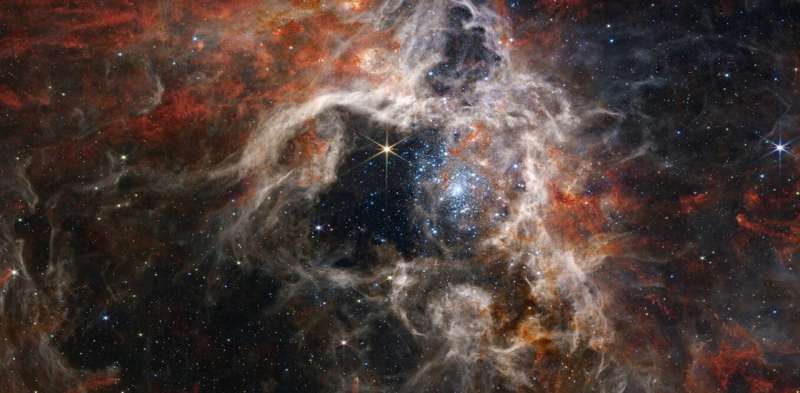
A Transformation Right in Front of Our Eyes. We’re living in remarkable times, with both the cosmically vast and the earthly infinitesimal within sight of human eyes. Today’s technical advances may elicit similar musings as felt by the intelligentsia of the late 1600’s, witnessing Galileo’s newly invented telescope and Leeuwenhoek and Hooke’s first microscopes. By our standards today those optical devices were simple and limited in performance, but the degree of effort and study on the part of their inventors and practitioners were immense. The excitement and sense of achievement they felt was likely in direct proportion to the degree of overcoming difficult challenges. The annals of the Royal Society, the world’s oldest continually existing scientific institution dating back to 1660, describe members gathering for days on end to examine the secret natural world revealed by Hooke’s microscope. Galileo’s refractor telescope and later Newton’s reflector, a century after Copernicus shook astronomy loose from theology, excited observers but also elicited unwelcome musings about the triviality of humans in the cosmic order. There was plenty of opposition to the idea of using a telescope to observe the heavens, probably more so than using a microscope to understand biology. In an oddly similar way, the latest “smart” technology can leave us floating adrift, with achievements once held in esteem now merely ordinary, or less. New technology can make the hard-earned results of previous intellectual endeavor and discipline seem insignificant. This may be happening to some amateur astronomers who formerly applied themselves to learn, navigate, and observe the celestial sphere. The sinking feeling is only amplified by images from the amazing orbiting James Webb telescope, which even more than Hubble before, blow away the images we amateurs produce with our surface-bound little scopes. Further disconnecting effort and skill is the recent rise of the Smart Telescope, fully automated and portable, exemplified by the ZWO Seestar, the Dwarflab Dwarf II, or the Vaonis Vespera. These small devices, for example with 50mm aperture and focal length 250mm, are able to take astrophotographs with the push of a button even in our light polluted skies (and they don’t even look like telescopes). The Smart Telescope asks for almost no user skill, little actual human input, and indeed no prior knowledge of astronomy. There are limitations at present, chiefly wide field/low magnification optics, but nonetheless there is an impact of these new smart instruments on the field of astrophotography and on the minds of amateur astronomers.
What would Robert Hooke, Christopher Wren, Isaac Newton, and their Royal Society colleagues have said about the direction this is heading? Is the loss of physical and mental exertion, of minimizing depth of study and scientific understanding, in order to achieve easy fast results really in our best interests? Is it the destination or the path that matters more to us? Yes, this is a philosophy question, and for amateur astronomers, pertinent to the future development and market for instruments that enable our hobby and passion. Certainly, many people are favorably impressed with the emergence of Smart Telescopes. It is apparent that this approach can appeal to young people and could have a place in schools and in outreach. Should we acquire one for the AAAP’s telescope collection? No doubt there are differing opinions about this among members. I would be keen to hear yours, in a future issue of Sidereal Times or in discussions at AAAP meetings.












 Amateur Astronomers Association of Princeton