Some of the Best of 20 Years in the AAAP

The bounds of space and time are not what they once seemed, thanks to more than 150 AAAP-sponsored lectures over the past two decades. We’ve had the privilege to meet, marvel, and question some of the leading scientists in the field. The brief summaries below show the evolution of the science and the club’s interests over this period. The full synopses will be published in Sidereal Times issues later this year.    – Rex Parker

Sept 13, 1994. “The Big Bang and the Beginning of Time” – Dr. Edward Whitten, Inst for Advanced Study. (also addressed AAAP 10 yrs later, Sept 14, 2004.) Resolved the oldest paradox in astronomy, Olber’s Paradox, which describes how the sky is dark at night, but if our position in the universe is not “special” then the sky would be filled with stars and equally bright in all directions…

Sept 12, 1995. “An Ultraviolet Window to the Galaxy” – Dr. Edward Jenkins, Princeton Univ Astrophysics. If stars were the size of sand grains, each would be ~30 miles apart distributed randomly in a vacuum. Take half as much mass as the sand, vaporize it, and distribute it evenly: this is the interstellar gas…

Dec 12, 1995. “Earth Impacting Comets and Asteroids” – Freeman Dyson, Inst for Advanced Study. (Freeman also spoke at the Nov 11, 2002 and the Oct 11, 2001 AAAP meetings.) Strategies to detect and deflect asteroids and comets approaching earth with potential doom are not science fiction…

Sept 9, 1997. “A Planetarium for the Next Millennium” – Dr. Neil DeGrasse Tyson, Director, Hay-den Planetarium, AMNH, NYC. This was one of the last public talks by Dr. Tyson before the advent of the new Hayden/ Rose Center at AMNH, which itself is 130 years old and has housed some incredible Zeiss projectors…

Oct 14, 1997. “COBE and the Big Questions in Cosmology” – Dr. Max Tegmark, Inst for Advanced Study. His studies were predecessors to the Microwave Anisotropy Probe, MAP, championed by David Wilkinson and David Spergel (later called WMAP in honor of Dr Wilkinson) launched in Aug 2000. He convinced the audience that we are in the golden age of cosmology.

Jan 13, 1998. “Red-Shifted Galaxies (before SDSS)” – Dr. Michael Strauss, Princeton Astrophysics. There are ~34,000 galaxies of mag ≥15.5. But galaxies do not contain enough matter to account for their observed motion over billions of years, leading to the idea of dark matter. This was a driving question for SDSS…

Mar 3, 1998. “The Enigmatic Neutrino” – Dr. John Bahcall, Inst. for Advanced Study. He did more for neutrino research than perhaps anyone. In a breakthrough experiment, Davis and Bahcall used a 400,000 gal tank of tetrachloroethylene 1km underground in an old gold mine in the Dakota Badlands to capture solar neutrinos…

May 11, 1999. “The Hubble Deep Field” – Dr. David Hogg, Inst. for Advanced Study. The original Deep Field image covers ~1 arc-min X 1 arc-min and goes to 29th mag., with ~700 galaxies visible. This calculates to ~100B galaxies in the universe (at 100B stars/galaxy, this means ~1e22 stars in universe). May 2013 Sidereal Times Amateur Astronomers Association of Princeton

Oct. 12, 1999. “Refractor Design: the 4th Condition” – Dr. John Church, AAAP. Snell’s law defines index of refraction and leads to the lens-makers formula, the basis of centuries of attempts to perfect celestial images. John described the AAAP’s 1880 Hastings 6.25″ refractor; for more, see John’s articles in Sky & Telescope and…

Dec. 14, 1999. “Is the Solar System Stable” – Dr. Scott Tremaine, Princeton Univ. Astrophysics. (Dr. Tremaine spoke again to AAAP on Sep 11, 2007 om “Galactic Dynamics”.) Why are there 9 (8) planets in our system? Why are the gaps between them so clean? Dr. Tremaine described Lyapunov time – the time for small changes in a dynamical system to become chaotic – using the famous double pendu-lum demonstration…

Mar. 14, 2000. “Sloan Digital Sky Survey” – Dr. Michael Strauss, Princeton Univ. Astrophysics. The innovative SDSS studies rely on the innovative Sloan telescope located at Apache Point Observatory at 9000 ft elevation in southern New Mexico. The 2.5-meter telescope uses the drift scan technique and employs 30 (2048X2048) CCDs giving a wide 2.5 field with 5 band-pass filters…

May 11, 2000. “Pulsars: Testing Ground for Einstein’s Theory of Relativity” – Dr. David Nice, Princeton Univ. Physics Dept. (Dr. Nice was a former student of Nobel Laureate Joseph Taylor. He also spoke at the Oct 8, 2002 AAAP meeting.) Dr. Nice described his work on pulsars with radio tele-scopes using the Green Bank…

Oct. 10, 2000. “The Search for New Variable Stars” – Bodhan Paczynski, Inst. for Advanced Study. (Dr. Paczynski also spoke at the Oct 14, 2003 AAAP meeting.) The distribution of variable stars is being studied in the all-sky automated survey (ASAS) using arrays of 4″ lenses to observe optical counterparts to γ-ray bursts…

Jan. 9, 2001. “Optical SETI Project” – Dr. Ed Groth, Princeton Univ. Physics Dept. Working with Drs. David Wilkinson of Princeton and Paul Horowitz of Harvard, Dr. Groth has been developing the ideas and techniques for OSETI, the optical counterpart to radio SETI. The latter searches for narrow band emissions at the 21 cm neutral hydrogen line, which led Frank Drake in the 1960’s to develop…

Apr. 9, 2002. “Large Synoptic Survey Telescope” – Tony Tyson, Bell Labs. Leading the science and technical development of this unique telescope is Dr. Tyson, who discussed the early phase plans of the LSST. It will have the widest field of any large telescope (>7 sq deg) with very high speed data…

Jan. 13, 2004. “Brown Dwarves” – Dr. Gillian Knapp, Princeton Univ. Physics Dept. The sequence OBAFGKM describes star color (blue-white to red); L& T have now been added to represent brown dwarf classes, on the lower right corner of the H-T diagram. What to make of large objects cooler than M type stars…

Dec 12, 2004. “The CCD Astronomy Revolution” – Michael Carr, Princeton Univ. Astrophysics. The creator of “4-shooter”, Michael Carr has been James Gunn’s “right hand” through the years. The original “4-shooter, the first CCD camera on the Palomar Hale 200 inch telescope, now sits in the Smith-sonian…

Jan. 11, 2005. “The Search for Earth-Like Planets” – Robert Vanderbei, Princeton Univ. Over 120 extrasolar planets have been detected, most by spectral Doppler. Bob described the Terrestrial Planet Finder, whose ultimate goal is very challenging: to directly image exoplanets, preferably earth-like plan-ets, by their reflected light which is ~10-10 as bright as the star, 25 magnitudes difference! Moreover, the separation… May 2013 Sidereal Times Amateur Astronomers Association of Princeton

Jan 9, 2007. “Cosmology over the Past 50 Years” – Dr. James Gunn, Princeton Univ Astrophysics. A chief problem in this field of science is that the basic tenet of the scientific method – repeatability of observation – is not possible. 50 yrs ago we thought it was only matter (atoms), that it was expanding…

Apr 10, 2007. “The Atacama Cosmology Telescope” – Dr. David Spergel, Princeton Univ Astrophys-ics (chair). Dr Spergel talked about how telescopes drive advances in cosmology. The Atacama site is at 5200 m elevation in northern Chile. It uses an unusual, 6 meter off-axis Gregorian design segmented mirror and camera, built in the Princeton Physics Dept, using superconducting transition-edge sensors, a new approach…

Sep 11, 2007. “Galactic Dynamics and Massive Black Holes” – Dr. Scott Tremaine, Princeton Univ Astrophysics (former chair). About 1% of galaxies contain active nuclei, emitting non-stellar radiation. These include Seyfert galaxies, radio galaxies, Quasars and quasi-stellar objects (QSOs). QSOs and quasars are the most luminous with 100-100X typical galaxy luminosity, found at Z =2-3. Their power source is matter falling…

Jan 8, 2008. Voyage to the Int’l. Space Station” – Dr. Greg Olsen, GHO Ventures, Princeton. As 3rd ever civilian passenger aboard the Russian Soyuz craft to the ISS, launched from Kazakhstan with cosmonaut Sergei Krikolov, Dr Olsen’s description of this amazing adventure made each of us want to put up a cool $20M…

May 102, 2010. “Terrestrial Planet Finder” – Dr. Jeremy Kasdin, Princeton Univ Astrophysics. Direct imaging has been the “holy grail” of methods for extrasolar planets and only recently has been successful, where photons reflected directly from the planet are imaged. This has driven attempts to identify the “habitable zone”…
Posted in May 2013, Sidereal Times | Tagged , | Leave a comment

Antares 1st Blast off from Virginia on April 21

by Dr. Ken Kremer

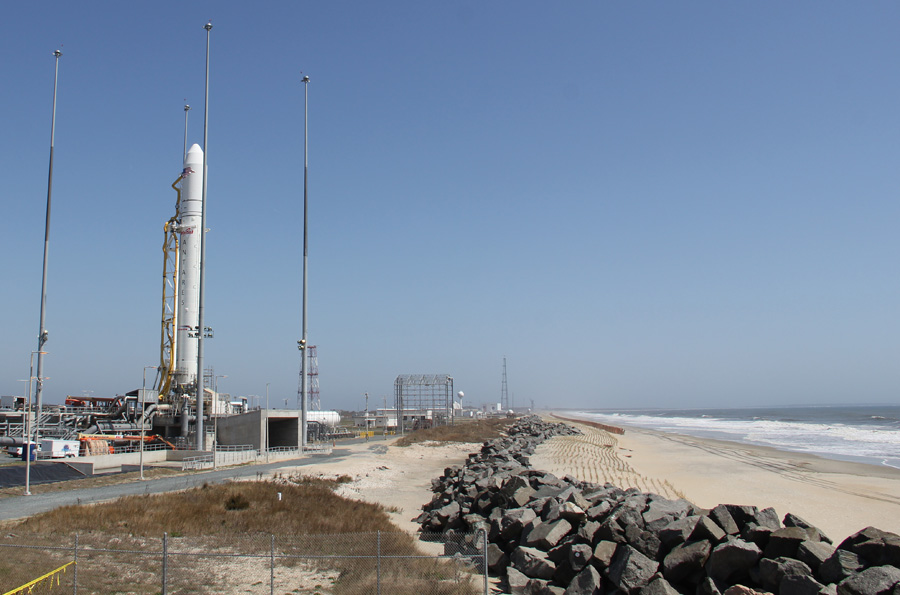
Antares rocket erected at Virginia’s Eastern shore for maiden April 21 liftoff a few hundred feet from the Atlantic Ocean. Credit: Ken Kremer

Antares rocket erected at Virginia’s Eastern shore for maiden April 21 liftoff a few hundred feet from the Atlantic Ocean. Credit: Ken Kremer

The privately developed Antares rocket built by Orbital Sciences Corp. successfully blasted off on its maiden test flight from the shores of Virginia on April 21 at 5 p.m. EDT from Mid-Atlantic Regional Spaceport (MARS) Pad-0A at NASA Wallops – inaugurating the new commercial space race and delivered a pioneering trio of low cost NASA Smartphone nanosatellites to orbit.

The Antares rocket pierced the cloudless clear blue Virginia skies as the biggest, loudest and brightest rocket ever to launch from NASA’s Wallops Flight Facility. Antares picture perfect liftoff marked the first step in a public/private collaboration between NASA and Orbital Sciences to restart cargo delivery services to the International Space Station (ISS) that were lost following the forced retirement of NASA’s space shuttle orbiters in 2011.

The test flight also signified the first launch from Americas newest space port at Pad-0A. Antares is a medium class rocket similar to the Delta II and SpaceX Falcon 9. The primary goal was to test the Antares rocket and boost a simulated version of the Cygnus cargo carrier – known as a mass simulator – into Earth orbit. A real Cygnus spacecraft will dock at the ISS on the next flight due this summer and deliver cargo and science experiments to the crew of 6 astronauts.

Read more about Antares at my Universe Today articles here: http://www.universetoday.com/101502/antares-maiden-soar-pierces-virginia-sky-and-delivers-nasa-smartphone-pioneer-nanosats-to-orbit/

http://www.universetoday.com/101441/antares-launch-ignites-commercial-space-competition-race/

Antares Rocket Erected at Virginia Pad for Inaugural April 17 Launch – Photo Gallery

Curiosity Discovers Habitable Zone on Mars

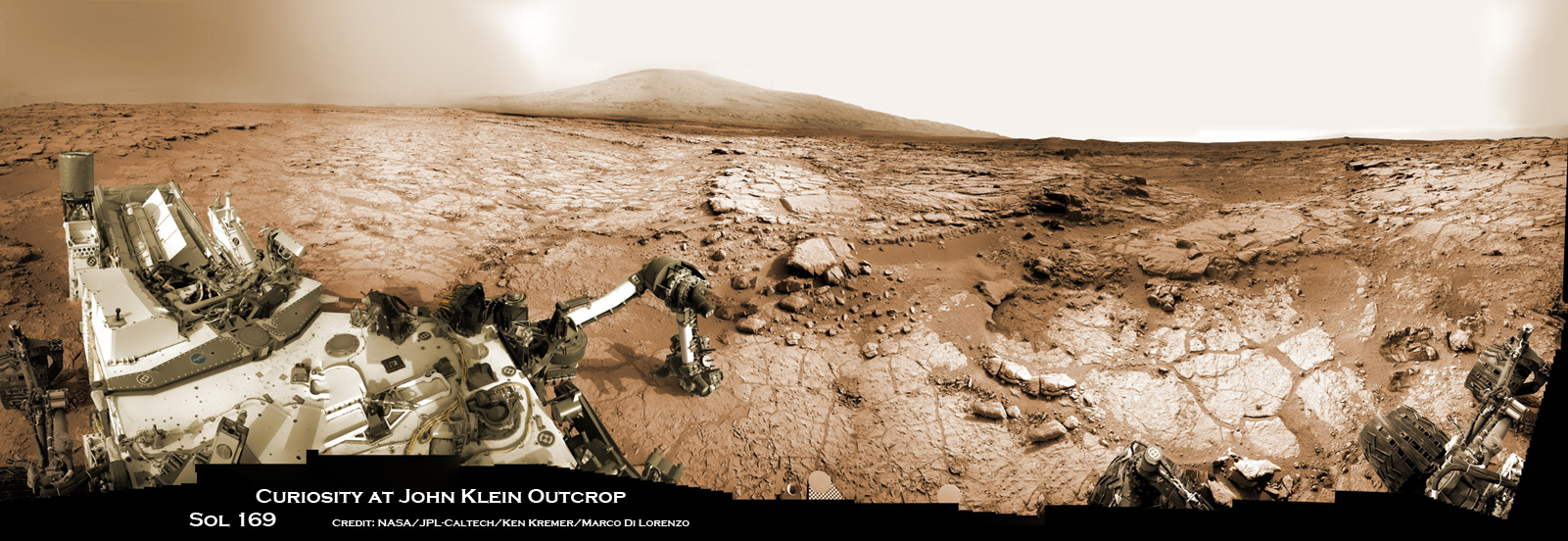
Curiosity accomplished historic 1st drilling into Martian rock on Feb 8, 2013 shown in this panoramic photo mosaic view of Yellowknife Bay where the robot is currently working. Robotic arm is pressing down on outcrop of veined hy-drated minerals – dramatically back dropped with her ultimate destination; Mount Sharp. Credit: NASA/JPL-Caltech/Ken Kremer/Marco Di Lorenzo

Curiosity accomplished historic 1st drilling into Martian rock on Feb 8, 2013 shown in this panoramic photo mosaic view of Yellowknife Bay where the robot is currently working. Robotic arm is pressing down on outcrop of veined hy-drated minerals – dramatically back dropped with her ultimate destination; Mount Sharp. Credit: NASA/JPL-Caltech/Ken Kremer/Marco Di Lorenzo


NASA’s Curiosity has discovered a habitable zone that possesses the key ingredients needed for possible alien microbes to once have thrived in the distant past on the Red Planet. The robot found widespread evidence for repeated episodes of flowing liquid water, hydrated mineral veins and phyllosilicates clay minerals on the floor of her Gale Crater landing site after analyz-ing the first powder ever drilled from a Martian rock.

See my new Mars mosaics and an interview with me at Space.com and NBC
http://www.space.com/20862-stunning-mars-panoramas-curiosity-rover.html

http://photoblog.nbcnews.com/_news/2013/03/23/17431884-mars-curiosity-rover-gets-back-to-sending-snapshots?lite

http://www.universetoday.com/100935/terran-fleet-at-mars-takes-a-break-for-conjunction-enjoy-the-video-and-parting-view/

Curiosity mosaics featured in Yahoo News
http://news.yahoo.com/stunning-mars-panoramas-capture-curiosity-rover-photos-120913425.html

Astronomy Outreach by Dr. Ken Kremer
Chesterfield Elementary School, Burlington, NJ, May 21: “A Trio of NASA Mars Rovers (in 3 D)”
Rittenhouse Astronomical Society: Franklin Institute, Philadelphia, PA: Jun 12, 8 PM, “Antares Rocket Launch from Virginia”

Please contact Ken for more info or science outreach presentations:
Email: kremerken@yahoo.com website: www.kenkremer.com
http://www.universetoday.com/author/ken-kremer/

Posted in May 2013, Sidereal Times | Tagged , | Leave a comment

From the Director

Ludovico D’Angelo, Director

Get excited; get motivated. Spring is back; put some spring in your step. We start our public open houses at Washington Crossing on April 5th. This is a great opportunity to become trained as a keyholder. Come and help out. It’s the first step to attaining that goal. At this time, it looks like the public will still need to park and walk to the observatory. We will get an update soon from the park concerning this situation.

Our 50th anniversary dinner and lecture are coming up on May 11th. This will take the place of our annual meeting, which would have been May 14th. At the dinner, an AAAP meeting will be called to order for the sole purpose of electing the next board of trustees. After that, its all good fun, food, conversation, panel discussion and observing. Please note the Board fully expects every club member to participate in our gala event. If you cannot make the dinner, please come to the panel discussion and observing afterwards. See the AAAP website for more details!

Princeton Communiversity will be Sunday, April 28th and Super Science Day will be Saturday, May 4th, 2013. We hope to have a presence at both these events this year. We will post more info very soon.

Posted in April 2013, Sidereal Times | Tagged , | Leave a comment

50th Anniversary Celebration

50th Anniversary Celebration

50th Anniversary Celebration

Posted in April 2013 | Tagged | Leave a comment

Three Decades On the Front Lines of Astrophysics Lecture and Book Signing with Michael Lemonick

by Michael Wright, Secretary

Our monthly lectures will continue on Tuesday, April 9 at 8:00 pm in Peyton Hall on the Princeton University Campus. Author Michael Lemonick will discuss his three decades on the front lines of astrophysics.

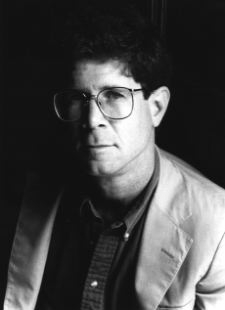
Michael Lemonick

Michael Lemonick

For people who love the universe but don’t have in interest in getting a Ph.D., there are two principal ways to stay involved: become an amateur astronomer; or become a journalist who covers the topic. Mr. Lemonick says “I’m not great with staying up late, enduring the cold or tinkering with delicate equipment, so I’ve gone with the latter.” He will talk about how it’s taken him all over the world, and given him the extraordinary opportunity to meet and talk with some of the world’s leading scientists.

Copies of Mr. Lemonick’s latest book, Mirror Earths, about the race to find Earth-like planets will be available for purchase and signing. Neil deGrasse Tyson said of the book, “Leave it to veteran science journalist Michael Lemonick to not only capture the science behind the search for exoplanets, but to eavesdrop on the occasionally quirky lives of the planet hunters themselves.”

Michael Lemonick is the senior staff writer at Climate Central and a former senior science writer at Time magazine. He has also written for Discover magazine, Yale Environment 360, Scientific American, and others, and has written a number of popular-level books on science and astrophysics, including The Georgian Star, Echo of the Big Bang, and Other Worlds: The Search For Life in the Universe.

A native of Princeton, Mr. Lemonick earned degrees at Harvard University and the Columbia University Graduate School of Journalism. He teaches communications and journalism at Princeton University.

Important Business Meeting Item

AAAP’s monthly business meeting will be conducted on April 9, 2013 following the lecture and book signing. The Board urges all members to attend and vote affirmatively on this recommendation:

The Board of Trustees recommends that $2500 of the AAAP’s general funds be used for the 50th Anniversary Celebration to be held on May 11, 2013.

According to AAAP’s by-laws, this expenditure must be approved by a majority of the votes cast and not less than 30% of the paid membership. Your vote is needed! Please stay after the lecture and book signing to discuss and vote on this recommendation.

Posted in April 2013, Sidereal Times | Tagged , , | Leave a comment

Get Hitched Up to the Cannon

by Michael Wright

Telescope on wheels

Telescope on wheels

AAAP members were elated when the club took possession of its new “Observatory on Wheels”, a 12-inch Meade LX200 ACF mounted on an airdampened Peugeot trailer. Affectionately dubbed “The Cannon” by Saul Moroz who conceived the project, the observatory will allow members to do serious observing anywhere. “We’re ready for the Winter Star Party now!” said Saul.

For the astrophotographers, the trailer mount includes a stainless steel wedge for equatorial alignment and a heavy–duty power supply to run guide scopes, cameras, computers and other accessories. Gene Ramsey was impressed with the observatory’s features. “The manufacturer even supplied a switch to disconnect the backup lights and turn on the red tail lights to preserve our dark adaptation.”

Outreach Chair David Letcher is eager to unveil the scope at the next school event. “The kids are going to be so excited when we pull into the school yard with this scope in tow.” When asked about sponsors, Program Chair Kate Otto said, “No, corporate logos on the scope would look too NASCAR.”

The observatory will be stored in Director Ludy D’Angelo’s garage until a permanent storage building is built. Treasurer Michael Mitrano is chairing an observatory construction committee. He says “We want to build a garage at Washington-Crossing. The park rules prohibit garages, so we are planning a roll-off roof. It will look just like an observatory when the scope is inside.”

The manufacturer assures that the trailer can be towed at highway speeds without losing collimation of the OTA. John Church indicated “We’re skeptical so we’re going to run our own tests at simulated highway loads. We’ll determine the maximum running speed and if necessary place a limiter in the drive train.”

The observatory is available for use by any member after they attend wheelholder training with Gene Ramsey. Anyone wishing to use the Cannon should contact Ludy or email the secretary of the club.

Posted in April 2013, Sidereal Times | Tagged , , , | Leave a comment

From the Outreach Chair

by David Letcher, Outreach Chair

We have two invitations for which we can do our usual star parties. From Elena Nickerson at the Stuart Country Day School:

Once again, I would like to arrange a night of star gazing for my students. We started the astronomy unit a bit later this year. The date is Wednesday, April 10. Since it gets darker at a later hour, I suppose we would start around 7:45 pm. Once you gather volunteers, please let me know if these dates will work.

Thank you,
Elena Nickerson, Fifth Grade Teacher
Stuart Country Day School of the Sacred Heart
1200 Stuart Road
Princeton, New Jersey 08540
609.921.2330 x348
f: 609.497.0784
enickerson@stuartschool.org

And on April 11th;
Our school PTA is hosting a family night on Thursday April 11th, in conjunction with our spring book fair and our Eagle Night of Excellence (where our students get to share with their parents what wonderful work they have been doing all year long). The theme is science night and we were wondering if your group may be available for some planet viewings that evening. Would that be possible?

Lana Holder, Millstone River School PTA

Let me know if you can volunteer.

Posted in April 2013, Sidereal Times | Tagged , | Leave a comment

Treasurer’s Report

by Michael Mitrano, Treasurer

Renewals and new memberships have continued to come in, bringing the total count to 89. I am hopeful for 100 by the end of our fiscal year. At this point – with the observatory rails painted but before masonry work is done on the columns, and before any support from AAAP funds for the anniversary dinner, our year-to-date surplus is about $700. On a cumulative basis, our surplus is about $22,600.

Posted in April 2013, Sidereal Times | Tagged , | Leave a comment

March 12, 2013 AAAP Meeting Minutes

by Michael Wright, Secretary

The meeting was called to order by Director Ludy D’Angelo. He welcomed everyone to the meeting.

Michael Wright, Secretary, introduced the speaker, Dr. Rachel Somerville, Professor of Astrophysics at Rutgers. He congratulated her on the 2013 Dannie Heineman Prize for Astrophysics from the American Institute of Physics and the American Astronomical Society “for providing fundamental insights into galaxy formation and evolution using semi-analytic modeling, simulations and observations.” Dr. Somerville presented an informative lecture entitled “The Intertwined Lives of Galaxies and their Super-massive Black Holes” and answered many questions from the audience.

After a brief break, Ludy reconvened the business portion of the meeting.

  1. Keyholders: Ludy presented new keys to David and Jennifer Skitt. Gene Ramsey, Observatory Chair, said that David and Jennifer brought their 8-inch Celestron SCT to most public nights last season, braved many cold nights during their training, and completed extra training hours.
  2. Observatory (part 1): Rex Parker asked for a decision on the $625 quote he obtained to repair the spauled concrete on the columns. A motion to approve by Michael Mitrano, Treasurer, and seconded by Michael Wright, Secretary, was approved unanimously by the Board. John Church and Gene Ramsey offered to be onsite when the work is done. John cautioned that the contractor would probably need to bring his own water because the supply at the observatory may not be adequate for his work.
  3. 50th Anniversary Celebration: Ludy opened a discussion of a proposed budget for the event presented to the Board by Kate Otto, Program Chair, by questioning whether sponsors should be allowed to have advertisements on the club website. He said that the membership had been opposed to the idea in the past. In addition, he questioned whether the needed funds could be collected from sponsors. A poll of the membership present revealed that a majority supported offering ads on the club website to sponsors. The ads will be removed at the end of 2013. Kate explained that the plan is to offset the event costs through sponsorships so members’ costs are reasonable and the club does not have to use reserves. Michael Mitrano explained the expenditure approval process. Kate said that she and the volunteers would do their best to meet the goal. Rex volunteered to contact a potential sponsor. Payment methods were discussed. Michael Mitrano preferred paper forms and checks because he did not have the time to set up other methods. He said that Paypal would be fine provided that the person who sets it up ensures that the funds are directed to AAAP’s bank account. Surabhi Agarwal agreed to work with John Miller, Webmaster, to advertise the event on the website. Ludy suggested that all attendees pay the registration fee. It was decided that invited guests, such as the discussion panel, would not be charged. Michael Wright explained a worst-case-scenario budget if no sponsors are obtained. Kate said that the event could be cancelled if the plan does not work out. Ludy was concerned about the impression this leaves with the sponsors and invited guests. Kate agreed to finalize the budget based upon the feedback received and forward a revised version to the Board within one week.
  4. Program Chair:: Kate said that the speaker for the April meeting is author Michael Lemonick.
  5. Observatory Donation: Michael Mitrano reported that the committee is consulting with masons and obtaining quotes for the foundation and walls. Jim McHenry reported that they are still waiting for approvals from the Park. Michael agreed to contact the donor. John Church cautioned about the existing water line, which is near the proposed location for the new observatory.
  6. Jenny Jump: Ludy announced that UACNJ is holding a work party at Jenny Jump on March 16, 2013. They would like AAAP to paint our observatory and repair the breaker box cover. He asked that members contact him if they are available to help.
  7. Observatory (part 2): Gene reported that Neil Ferrari, Park Administrator, advised that the Church Road/Brick Yard Road gates would be replaced this week. The park’s locks are still on the gates so Gene will coordinate with Neil to get the locks switched. The water at the observatory will be turned on soon. Ludy advised that several keyholders are no longer participating or have not renewed their memberships. Gene will delete these keyholders and revise the team rosters
  8. Outreach Report: David Letcher solicited volunteers for the following events:
    • Screening of “The City Dark” at Pennington Library
    • Orchard Hill School Space Nights
    • Millstone River School
    • D&R Greenway Leonids Observing on Monday, August 12, 2013 at St. Michaels Farm Preserve in Hopewell Township.
  9. Nominations Committee: Jim Poinsett, Nominations Committee Chair, said that he has candidates for
    each position and will present the slate at the April meeting. Ludy reminded that the election will be at the May meeting. Kate said that there will not be a speaker that month because the 50th Anniversary Celebration will be the weekend before the regular meeting.
  10. Sidereal Times: Michael Wright thanked members for their contributions. He said that Sidereal Times is better than most club newsletters because the club has so many talented and knowledgeable members willing to contribute. He appealed to members to keep contributing content to Sidereal Times. The deadline for submitting articles for the April issue is March 28, 2013.
Posted in April 2013, Sidereal Times | Tagged , | Leave a comment