A visit to the National Navy UDT – Seal Museum

by David Kaplan

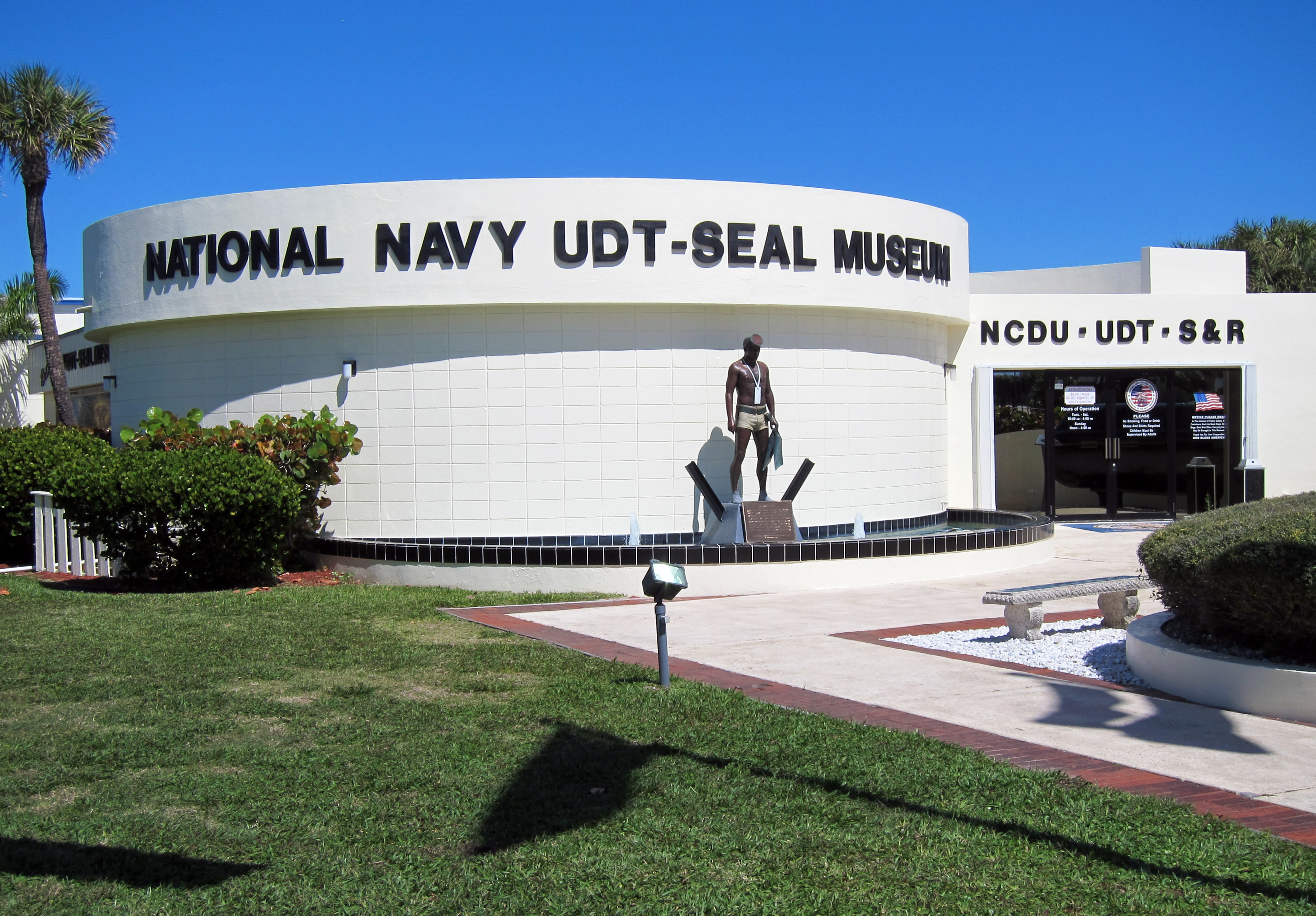
National Navy UDT - Seal Museum, Fort Pierce, Florida. Photo Credit: David Kaplan

National Navy UDT – Seal Museum, Fort Pierce, Florida. Photo Credit: David Kaplan

While in Florida these past few weeks, my wife and I, at the suggestion of a friend, visited The National Navy UDT – Seal Museum in Fort Pierce, Florida. UDT, stands for Underwater Demolition Team. If you’ve forgotten about the heroism of Navy frogmen who recovered our nation’s astronauts in the open oceans of the world, this museum is a wonderful reminder.

Narrative from UDT Museum website –

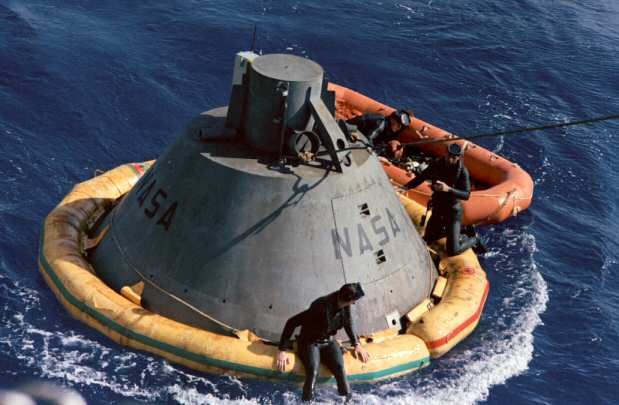
Underwater Demolition Team (UDT) frogmen, precursors to the Navy SEALs, played a key role in the Gemini and Apollo space missions. It was the job of the Navy frogmen to leap into the water from a helicopter to recover space capsules that had just ended a fiery thousand mile an hour drop from space to splashdown in the ocean. The frogmen have reported the capsules were still steaming when they swam up to them.

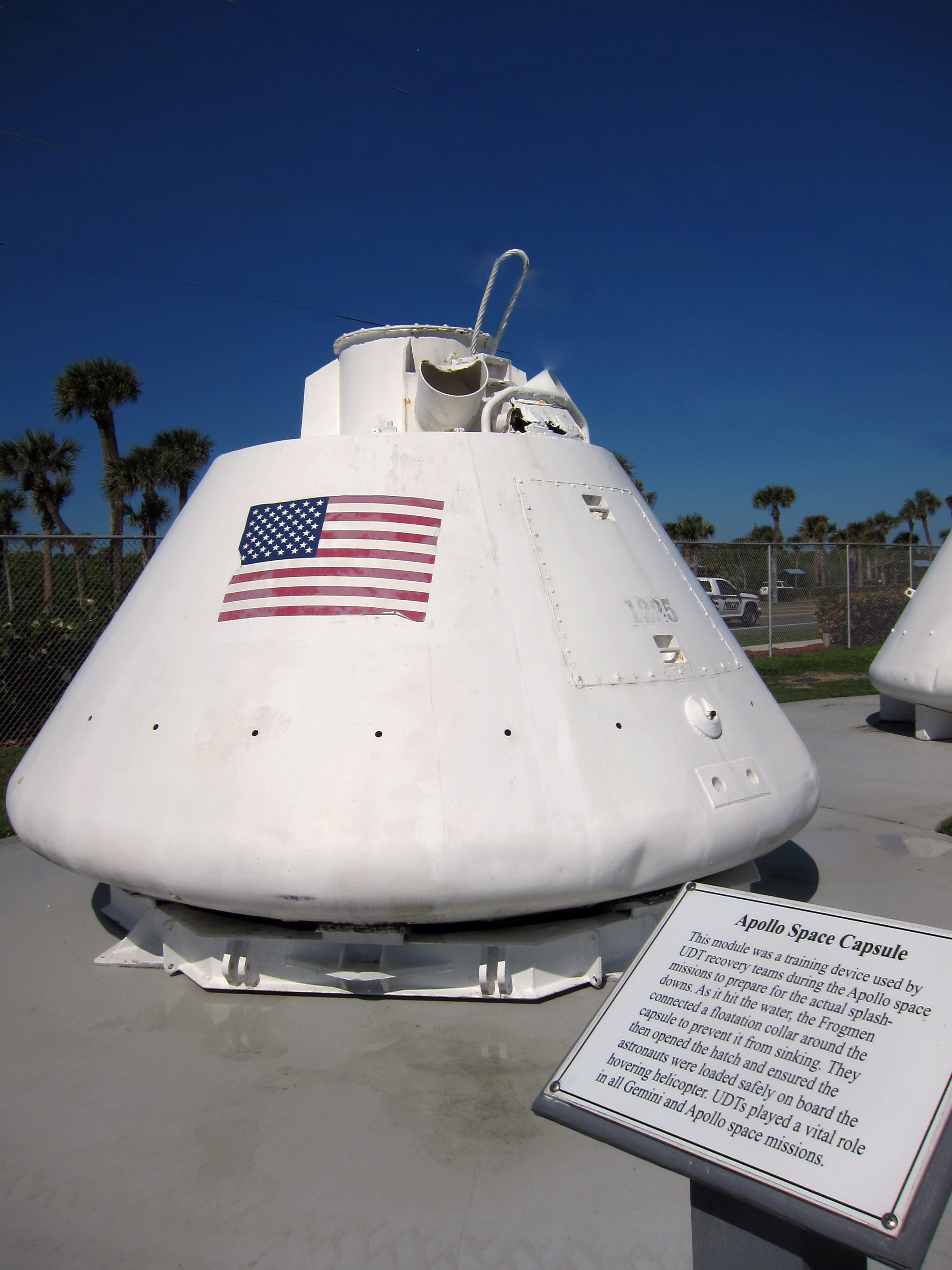
Apollo Capsule Frogmen Trainer.  Photo Credit: David Kaplan

Apollo Capsule Frogmen Trainer. Photo Credit: David Kaplan

After splashdown, frogmen would then wrestle a flotation collar around the capsule to keep it from sinking. It was a physically demanding job. The Navy’s strongest swimmers trained for months using training devices like the one in our collection. After ensuring the flotation device was secure, the frogmen would pop the hatch of the capsule to ensure the astronauts were okay. After decontaminating them, the frogmen made sure the astronauts were safely lifted into the rescue helicopter.

Frogmen. Photo Credit: NASA

Frogmen. Photo Credit: NASA

    In addition to the training modules, the Museum houses the wet suit of frogman LT (jg) David Kohler US Navy SEAL (Ret) worn on the July 24, 1975 Apollo–Soyuz Test Project (ASTP) Recovery Mission in the Pacific. The mission was a symbol of détente and was the first joint U.S.–Soviet space flight, and the last flight of an Apollo spacecraft.

Posted in April 2014, Sidereal Times | Tagged , , | Leave a comment

Astromart

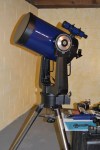
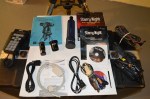
Former club member Palmer Hendricks has sold his home and is ready to travel in his new RV. His 12″ Mead LX200 and all the accessories listed below are looking for a new owner. If interested please call him at 917-378-9797 or send an email at palm4269@gate.net. Shipping is NOT included in the prices. Palmer will accept payment by Paypal or Cash, no personal checks. He is also ready to drive an hour radius of 18977 zip code to deliver.

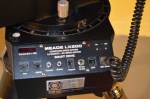
  • Meade 12″ LX200 EMC – Schmidt-Cassegrain D=254mm F=2500mm ser#113287 $1800 included –
         Front Mirror Cover
         Meade 2 Star 1.25″ 90 degree Diagonal
         Meade T-Adapter
         Meade 1.25″ 12.4mm Super Plossl Eyepiece
         Meade 1.25″ 26mm Super Plossl Eyepiece
         Fork Mount Base with Smart Drive
         Hand Controller (V3.21)
         Giant Field Tripod
         Meade Manual
         2 – 8×50 finder scopes
         2 – 18v AC adapters
         Original Meade travel case
  • Kendrick Astro #2081-18 – Dual Output Battery Power Pack. 12V/18V 18 amp hour rating. Built in 18 volt inverter. Includes .750 amp battery charger, LX200 cables and padded carry bag. $350
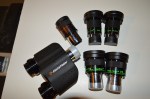
  • Celestron Stereo Binocular Viewer $200
  • Celestron #93506 – 1.25″ 2x Barlow Ultima SV series $75
  • 2 – 12mm TeleVue Radian eye pieces $150 each
  • 2 – 32mm TeleVue Plossl eye pieces $125 each
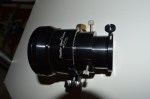
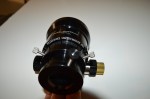
  • Starlight Feather Touch Focuser #FTF2020BCR – Rotatable 2″ Diam. Dual Speed 2″ Draw Tube with a 2″ to 1.25″ reducer $350
  • Meade Deep Sky Imager II CCD Camera w/ Astro Suite Software $225
    (plus a copy of CCD Astrophotography by Adam Stewart)
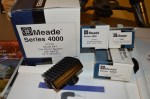
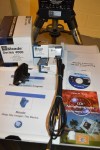
  • Meade Ser. 4000 2″/1.25″ Flip Mirror System #647 (in box, unused) $125
  • Meade Ser. 4000 f/3.3 Focal Reducer/Field Flattener w/Variable T-Adapter #07567 $100
  • Meade Ser. 4000 25mm Plossl Illuminated Retical CCD Framing eyepiece 1.25″(wireless) $100
  • Meade Plossl 9mm Illuminated Reticle Eyepiece 1.25″ w/ cord $50
  • Kendrick Astro #BM-6018 – Bahtinov Focusing mask for Meade 12″ SCT $75
  • Kendrick Astro #2054 – Kwik Focus mask for Meade 12″ SCT $45
  • Kendrick Astro Standard 2″ Laser Collimator $90
  • Sky Scout – model #93970 (open box / never used) $190


  • Posted in April 2014, Sidereal Times | Tagged , | 1 Comment

    Delta IV Rocket Boosters arrive at KSC for Orion’s December 2014 Launch

    by Dr. Ken Kremer, AAAP and Universe Today

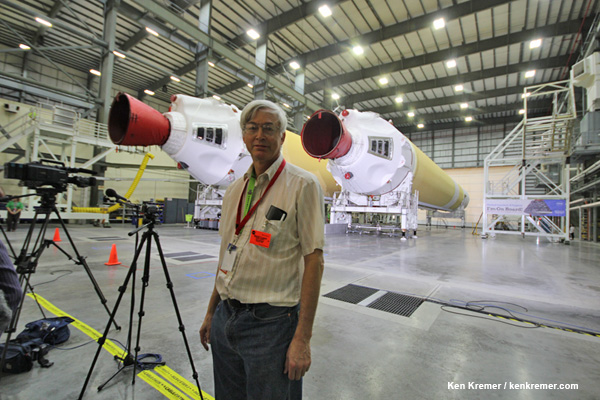
    2 of 3 United Launch Alliance Delta IV heavy boosters powering NASA’s upcoming Orion Exploration Flight Test-1 (EFT-1) inside Horizontal Integration Facility at Launch Complex 37 at Cape Canaveral Air Force Station, FL.  Credit: Ken Kremer

    2 of 3 United Launch Alliance Delta IV heavy boosters powering NASA’s upcoming Orion Exploration Flight Test-1 (EFT-1) inside Horizontal Integration Facility at Launch Complex 37 at Cape Canaveral Air Force Station, FL. Credit: Ken Kremer

    CAPE CANAVERAL AIR FORCE STATION, FL – Production and assembly of virtually all the key hardware elements for NASA’s eagerly anticipated Orion EFT-1 uncrewed test flight later this year are nearing completion at the Kennedy Space Center .

    Two of the three first stage boosters comprising the mammoth Delta IV Heavy rocket that will propel Orion to high Earth orbit have arrived at Cape Canaveral Air Force Station, Florida, and were unveiled in mid March by top NASA managers at a media briefing I attended at the Cape.

    The triple barreled Delta IV Heavy rocket is currently the most powerful American rocket and the only one capable of launching the Orion EFT-1 capsule to its intended orbit of 3600 miles altitude above Earth.

    Delta IV Heavy boosters and Ken Kremer reporting from inside Space Launch Complex 37 at Cape Canaveral on NASA’s upcoming Orion Exploration Flight Test-1 mission. Credit: Ken Kremer

    Delta IV Heavy boosters and Ken Kremer reporting from inside Space Launch Complex 37 at Cape Canaveral on NASA’s upcoming Orion Exploration Flight Test-1 mission. Credit: Ken Kremer

    Due to urgent US national security requirements, the maiden blastoff of the unmanned Orion pathfinder has just been postponed three months from September to December 2014 in order to make way for the accelerated launch of recently declassified US Air Force Space Surveillance satellites.

    The center and starboard side boosters recently arrived at the Cape aboard a barge from Decatur, Alabama where they were manufactured by United Launch Alliance (ULA).   The remaining port side booster and the Centaur upper stage are due to arrive in mid April.

    For more about Orion read my articles here:

    http://www.universetoday.com/109533/nasa-unveils-orions-powerful-delta-iv-heavy-rocket-boosters-for-dec-2014-blastoff/

    http://www.universetoday.com/110450/us-air-force-space-surveillance-satellite-bumps-nasas-long-awaited-orion-launch-to-dec-2014/

    The next Antares/Cygnus rocket launch from nearby Virginia to the ISS is tentatively set for May 6 but may be delayed.

    Contact Ken if interested to attend.

    Astronomy Outreach      by Dr. Ken Kremer

    Washington Crossing State Park, Nature Center:  Titusville, NJ, Apr 6, 1 PM.  “Curiosity, MAVEN and the Search for Life on Mars – (in 3-D)”and “May 1 Antares Launch from Virginia”

    Northeast Astronomy Forum (NEAF): Suffern, NY, Apr 12 & 13. “Curiosity, MAVEN and the Search for Life on Mars – (3-D)” and “Future of NASA Human Spaceflight”

    Antares Rocket Launch to ISS, May 1: NASA Wallops Island, VA. Evening outreach  at Rodeway Inn, Chincoteague, VA. 

    Please contact Ken for more info, science outreach presentations and his space photos. Email: kremerken@yahoo.com   website:  www.kenkremer.com, http://www.universetoday.com/author/ken-kremer/

    Posted in April 2014, Sidereal Times | Tagged , , | Leave a comment

    From the Director

    By Jeff Bernardis, Director

    I’m always intrigued by new discoveries, and many times, it’s the method of discovery that grabs me more than the discovery itself.  An example of this is the detection of exoplanets.  While I like to imagine what the planets themselves are like, it’s the ingenuity behind the discovery that I admire.

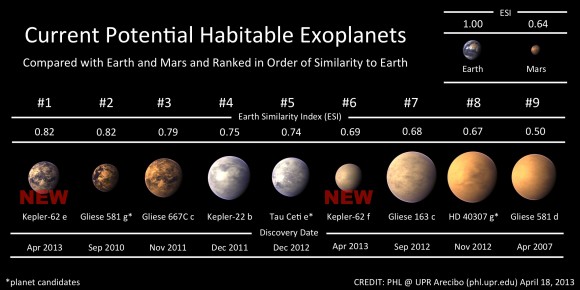
    Imagine my interest when in one single announcement a few days ago, NASA announced that it had confirmed the existence of 715 more exoplanets – all scoured from two year’s worth of the data that the Kepler mission had brought home.  There is still another two years of data to comb through, so who knows how many more they will find? These additional planets nearly double the number of exoplanets we have discovered – all in a single announcement.  Perhaps the most intriguing aspect of this discovery is the conjecture that as many as 20% of these planets could support life.  I’m a firm believer that life is out there somewhere. Knowing that life supporting conditions could exist elsewhere obviously strengthens that belief.

    Current known potentially habitable exoplanets. Credit: Planetary Habitability Laboratory/University of Puerto Rico, Arecibo.

    Current known potentially habitable exoplanets. Credit: Planetary Habitability Lab/Univ.of Puerto Rico, Arecibo.


    Of course, my question is “How did they do it?”  All I have been able to find out to date is that they used a technique called “verification by multiplicity”.  It seems to be based on the fact that orbital perturbations previously observed and attributed to star interaction is now considered too stable to be caused by stars; hence, the conclusion that the perturbations are caused by multiple planets.  I’d sure like to know more about it – maybe a future speaker…

    Believe it or not, we are nearing the end of the current club year.  We need to start thinking about upcoming elections.  Our by-laws call for the appointment of a nominating chairperson at the March meeting.  Nominations would be announced in April, and the election itself would be in May.  I brought this up at the last meeting, and nobody has as yet volunteered for the nominating chair.  If you would be willing to take on this task, please send me an email or let me know at the next meeting.

    Posted in March 2014 | Tagged , , , | Leave a comment

    Chasing Shadows for Planetary Science

    by Michael Wright

    Ted Blank

    Credit: Ted Blank

    On March 20, 2014 at approximately 2:06 a.m. EDT the shadow of 163 Erigone cast by Regulus will race across the New York metropolitan area on its way to Ontario.  If skies are clear, observers within the shadows path will see Regulus disappear for up to 14 seconds.   Never before will so many people have the opportunity to witness an asteroid occultation of a star with their naked eyes.

    Ted Blank of the International Occultation Timing Association will present Chasing Shadows for Planetary Science at AAAP’s next meeting on Tuesday, March 11, 2014.   Ted will not only tell us how and where to observe the occultation; he will tell us how we can contribute to science by timing the event with any camera able to record video.  Princeton is a short drive outside the shadow path so amateur astronomers could discover moons of 163 Erigone by timing the event from New Jersey.  As usual, the lecture will begin at 8:00 p.m. in Peyton Hall, 4 Ivy Lane, Princeton followed by a business meeting.

    Ted Blank is a member of the International Occultation Timing Association (IOTA), a group of professional and amateur astronomers collaborating to promote scientific research by recording and analyzing the occultations of stars by asteroids and the Moon. He is the current President of the New Hampshire Astronomical Society and is in his fourth year as a NASA/JPL Solar System Ambassador. He enjoys Sidewalk Astronomy and public outreach, chasing the shadows of asteroids and observing from dark places with friends.

    mpergo2s_with_text

    Predicted path of the asteroid shadow. Shortly after 2:05 am EDT on March 20, 2014, observers between the red lines have the best chance of seeing the bright star Regulus temporarily disappear as asteroid (163) Erigone passes in front of it. See the IOTA website (http://occultations.org/regulus2014/) for a more detailed plotting. Credit: IOTA

    Posted in March 2014 | Tagged , , , , | Leave a comment

    From the Outreach Chair

    by David Letcher, Outreach Chair

    We are looking at star parties that have been arranged for May and October.  In May, we will participate in “Super Science Saturday” which will occur during the day of May 3rd. As usual, volunteers will set up their telescopes on the concrete apron between the State Museum and the State Library. Maybe there will be a few sunspots! I’ll be sending out reminders and further details to you in the near future.

    In October, we have been invited by the folks at the N. J. Audubon Society’s Plainsboro Preserve to set up telescopes during the evening of Friday, October 24 to allow children and their parents to view the heavens. The rain date is October 25. This date seemed to be good not only for them but for a new moon.

    I have not heard from any school teachers yet this season, but we will probably get some invitations from schools such as Princeton Day School. We’ll see.

    In the meantime I wish you clear skies!

    Posted in March 2014 | Tagged , | Leave a comment

    Treasurer’s Report

    by Michael Mitrano, Treasurer

    A recent mailing to members who had not yet renewed has thus far prompted eleven renewals.  Our member count is now at 80.  In dollar terms, member dues for this fiscal year to date are within 2% of the amount at the same time a year ago.

    Recent expenses have been minimal and our surplus for the year to date is about $1,700.

    On a cumulative basis, the surplus is slightly over $24 thousand.

    Posted in March 2014 | Tagged , | Leave a comment

    Proposed Field Trip to Arizona Sky

    by Rex Parker

    Slide 1
    At the November meeting, I presented “Galaxies, Comets and Pixels from the High Desert”, a glimpse of an astronomy haven, the Mt Lemmon Sky Center.  Located an hour north of Tucson AZ, the site has excellent facilities for astronomy on the top of 9300-ft. high Mt Lemmon.  The highlights of my trip were observing visually and with CCD camera under the tutelage of renowned astrophotographer Adam Bloch.  Adam runs the University of Arizona programs on Mt Lemmon. He has the keys to a fantastic 32-inch RC telescope, which gave the best deep-sky views I’ve ever seen, under clear dark skies (sub 2-arcsec. seeing).

    Here’s a concept to consider:  a 2014 AAAP field trip to Tucson and Mt Lemmon.  On a long weekend or more, we could combine astrophotography and image processing techniques with visual observing, or do strictly visual observing depending on members’ interest.  The club would have to formally arranged the details to get access to the 32-inch RC Schulman telescope with Adam or an assistant in charge.  The costs would include airfare to Phoenix or Tucson, car rental, and lodging and meals at the University’s facilities on the mountain, plus a stay-over in the Tucson area.

    If you’re interested please let me know.  We can discuss at an upcoming meeting.  It would be great to have a AAAP field trip to Mt Lemmon.

    Posted in March 2014 | Tagged , , , | Leave a comment

    Minutes of the February 11, 2014 AAAP Meeting

    by Michael Wright, Secretary

    Director Jeff Bernardis opened the meeting.  He congratulated and awarded an observatory key to new keyholder Kevin Mooney and requested a volunteer to form the nominating committee for next year’s officers.

    Program Chair Kate Otto introduced Princeton Astrophysics post-doc Renee Hlozek who introduced the speaker for the evening, Prof. Craig Wheeler of the University of Texas at Austin.  Prof. Wheeler specializes in the astrophysics of violent events: supernovae, neutron stars, black holes, gamma-ray bursts and the relation of these events to astrobiology.

    Before beginning, Prof. Wheeler recognized member Insu Yi, who was a graduate student at U of T during Prof. Wheeler’s tenure as Department Chair.  Prof. Wheeler spoke about the current supernova in M82 and latest theories to explain type IA supernovae including historical supernovae records and new evidence from space-based telescopes like the Chandra X-ray Observatory.  Following the talk, the audience went outside to see the current supernova in M82 (the Cigar Galaxy) through John Giles 11-inch Dobsonian.  Unfortunately, the supernova and galaxy were lost in the background glow.

    Following 30 minutes of observing, Jeff convened the business meeting.  Rex Parker observed that about 95 people attended the lecture, which almost filled the lecture hall.

    Friends of AAAP Mail List – Secretary Michael Wright proposed creating a mailing list for non-members to receive notices of AAAP public events.  The idea was received favorably so he will create the list.

    StarQuest – Mike explained that he called a meeting to begin planning for StarQuest, which was poorly attended.  Currently, volunteers are limited Ludy D’Angelo, Jim Poinsett, Kate Otto and Mike.  He suggested that the lack of additional volunteers indicates that there is no interested in organizing a public star party and recommended that the event planned for Sept. 26-28, 2014 be an observing event for members and guests.  Rex suggested that the club promote StarQuest to new members and beginners as an opportunity to try out different scopes and learn more about observing.  Based on his experience working on StarQuest, Bill Murray indicated that attendance would drop dramatically after a year or two of bad weather ruining public star parties.  Gene Ramsey suggested having a picnic in the summer combined with a star party at the observatory.  Mike pointed out that an observing-only event is easier to cancel for bad weather.  Jeff suggested that we consider the options and make a final decision at the next meeting.

    Mount Lemon Trip – Rex proposed that the club organize a trip to the Mount Lemon Observatory near Tuscon, Arizona.  He envisioned six to twelve members staying on the mountain for three-days to use the telescope for observing or astrophotography.  His recent astrophotography workshop cost about $800 excluding travel expenses so he anticipated that the stay would less than that.  Accommodations in the dormitories and meals by the observatory’s cook would be included.  He volunteered to contact Andy Block so find out what could be arranged.  The idea was well received by those present.  The preference seemed to be for observing.  Rex suggested that additional days could be added if some members wanted to stay on to do astrophotography.  In response to Bill’s question, Rex thought that members could bring their own scopes.  Mike suggested that the club organize the stay, and members make their own travel arrangements to give them the most flexibility to visit other attractions in the area.  Mary Hayes asked about the best time weather-wise to visit.  Rex said he would research it, but thought the fall would probably be best.

    New Observatory Donation – Bill reported that he learned from UACNJ about an NJIT professor who may be interested in purchasing the dome for an observatory that he wants to build at Jenny Jump.  Bill volunteered to contact him.  Jeff reminded that the club cannot make any representations about the completeness or suitability of the dome because we have not seen it assembled.

    Nominating Committee – Jeff reiterated his call before the lecture for a volunteer to lead the nominating committee.  No one stepped up.

    Program Chair’s Report – Kate announced that a speaker has not been found for the March meeting, but member Bob Vanderbei will speak at the April 8 meeting and Neta Bahcall of Princeton Astrophysics will speak in May.

    Simpson Observatory – Gene reported that reported that the Park Administration has not cleared the roads to our observatory at Washington-Crossing Park so access is treacherous.  Dave and Jen Skitt have tried to keep the roof clear of snow and ice, but are losing the battle.  Also, locks are freezing up due to the cold.  The observatory is now closed for all use until further notice.  Lee Sandburg is training to be a keyholder.

    Website – Jeff said that Prof. Wheeler will forward his photographs of the supernova in M82 to the club.  Mike volunteered to coordinate with John Miller to post them on the web.

    Outreach Report – Jeff reported for Dave Letcher that there are no outreach events on the schedule.

    Jeff adjourned the meeting at 10:00 p.m.

    Posted in March 2014 | Tagged , | Leave a comment