Treasurer’s Report

by Michael Mitrano, Treasurer

The membership renewal count is up to 39, which is 25 % fewer than had renewed at the same time a year ago.

Observatory and speaker expenses have thus far been minimal, but our annual insurance bill has come in. With this, we are at about break-even for the fiscal year to date.

On a cumulative basis, the AAAP’s surplus is about $25 thousand.

Dues Reminder: If you have not paid your 2014-14 dues, please hand your $40 check to one of the officers at the next meeting or send a check to:

Amateur Astronomers Association of Princeton
P.O. Box 2017, Princeton, NJ 08543

Posted in December 2014, Sidereal Times | Tagged , | Leave a comment

Landing on a Comet

by Prasad Ganti

Rosetta Mission Timeline Credit: ESA

Rosetta Mission Timeline.
Credit: ESA. Click to enlarge.

For the first time a manmade probe landed on a comet. Riding on a spaceship called Rosetta, the probe Philae was launched by ESA (European Space Agency) about a decade ago. Rosetta and Philae traveled four billion miles to chase down the comet. The last two years were spent in hibernation by powering down all the systems to conserve power. Rosetta woke up as it neared the comet, went into on an orbit around the comet and finally released Philae to land on the comet 67P. Earlier probes landed on planets and asteroids, but this was the first landing on a comet.

On Oct. 7, 2014, Comet 67P/C-G is framed by one of Rosetta’s solar wings, which is 46 feet long. A stream of gas and dust extends from an active area of the comet’s neck, about 10 miles away. Credit: ESA

On Oct. 7, 2014, Comet 67P/C-G is framed by one of Rosetta’s solar wings, which is 46 feet long. A stream of gas and dust extends from an active area of the comet’s neck, about 10 miles away.
Credit: ESA. Click to enlarge.

ESA named Rosetta for the Rosetta stone that the French found while conquering Egypt. It had three versions of a decree in ancient Egyptian hieroglyphs, Demotic script, and Ancient Greek. French scholar Jean Champollion studied and deciphered hieroglyphics from the Rosetta stone. He also got help from an obelisk found on an island called Philae. Philae was later submerged when a dam was built. Now experts can read all the writings on the walls of Egyptian temples and monuments, like we read English. The naming of the spacecraft and the probe after these ancient Egyptian artifacts was in the hope of studying the comet like we now understand the hieroglyphics.

Comets are the remnants from the creation of our solar system. Consisting of ice, rock and dust, these objects are very interesting to study. Periodic comets originate in the outer fringes of the solar system marked by the Kuiper belt and the Oort cloud and have a highly elongated orbit around the sun. The time to orbit around the Sun can take anywhere from a decade to a few hundred years. In fact, scientists speculate that a comet brought water and organic material to earth before life took shape here.

In addition to comets having elongated orbits, space travel is not so straightforward. It is not as simple as taking I-80 to drive from New York to San Francisco. Both the home and destination are moving platforms in the vacuüm of the space. Fuel being a very scarce commodity, it requires extra orbits around planets and Sun to get a slingshot-like gravity assist to reach the destination.

Comet 67P/Churyumov-Gerasimenko   Credit: ESA

Comet 67P/Churyumov-Gerasimenko Credit: ESA

Comet 67P has more complexities. It is just a few miles in size with a highly irregular shape. Its gravity is very weak almost to the point of nonexistence. Landing a probe on Mars is like throwing a basketball from Los Angeles to a basket in New York. Landing Philae is like throwing a basketball from Los Angeles to a basket located halfway around the world in Shanghai. And this million pointer long shot did work!

Philae was supposed to use a harpoon to land and get firmly entrenched into the surface. Because of the weak gravity, it was expected to bounce on the surface. To arrest the bounce, designers built a thruster on the top. The thruster was not functioning, but controllers released Philae anyway. It dropped on the surface of the comet, and landed at a place that was partly in shade. As a result the solar panels did not get adequate light to recharge the battery. Low power and an unstable perch did not prevent Philae from making observations and sending back the data.

In this risky space game, we should view the glass as half full, not as half empty. Congratulations to ESA on the wonderful achievement benefiting humanity!

Space missions usually have a fly-by as a first step; then orbiting, then landing and then returning with some samples. Will a returning spacecraft from a comet be the next step?

Posted in December 2014, Sidereal Times | Tagged , , , | Leave a comment

Snippets

Mystery Over Monster Cosmic Cloud (contributed by David Kaplan)

Observations of a cosmic confrontation between a huge gas cloud and the black hole at the centre of our galaxy spark a debate.  BBC

The ‘Most Complicated’ Watch in the World (contributed by David Kaplan)

supercomplication_cutWhat made the Henry Graves Supercomplication, well, so complicated? BBC


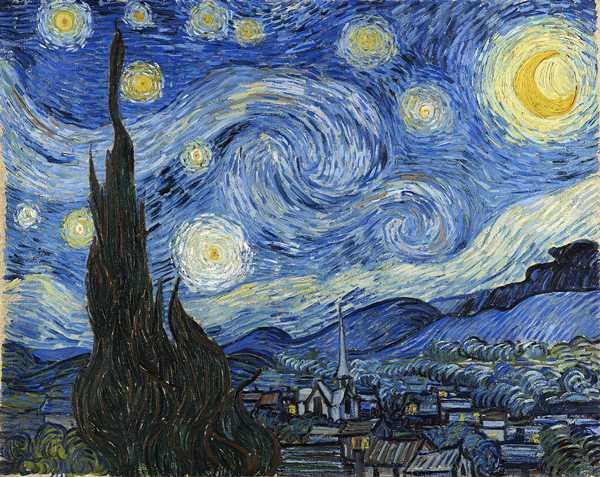
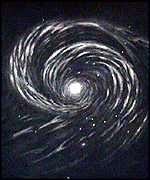
The Starry Night and Fluid Dynamics (contributed by Michael Wright)

vangogh_starrynight M51

In 1889, inspired by a famous astronomical drawing that had been circulating in Europe for four decades,Vincent van Gogh painted his iconic masterpiece “The Starry Night,” one of the most recognized and reproduced images in the history of art. Brainpickings & Cosmigraphics

More Van Gogh (contributed by Michael Wright)

Bringing together sustainable energy concerns, modern art, and an impressionist classic, the Van Gogh Bicycle Path in Eindhoven, Netherlands comes to life each night when the stones in the trail light up in an homage to Van Gogh’s famous work, The Starry Night. Atlas Obscura

Ripples of the Big Bang Are Seen Through ‘The Times’ (contributed by David Kaplan)

In 1927, Georges Lemaître, an astronomer from Belgium, first proposed the theory that the universe was born in a giant primeval explosion. Four years later, The New York Times mentioned his new idea.  NY Times

A Graphic Guide to Space Animals (contributed by Michael Wright)

Humans have employed a whole menagerie of animals in experiments in survival. None of them chose to go on space voyages, and while there is something somber in that lack of consent, these brave creatures are also representative of the expansion of possibility in space exploration. Check out this graphic guide to some of these incredible astro-beasts. Atlas Obscura

Posted in December 2014, Sidereal Times | Tagged | Leave a comment

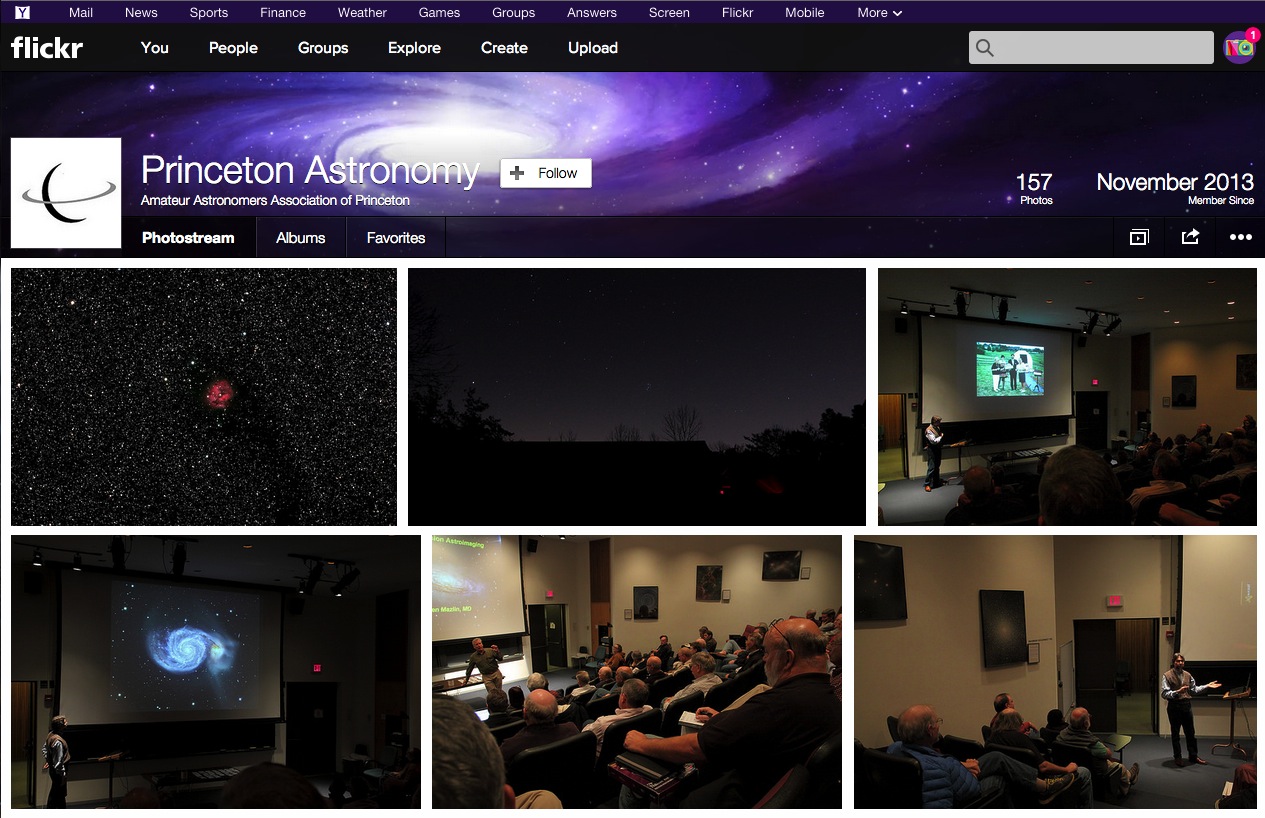
AAAP Flickr Gallery

Check out the new AAAP Flickr gallery created by member John Miller.

Screen Shot 2014-11-28 at 8.00.36 AM

https://www.flickr.com/photos/princetonastro/

The only thing it needs is more pictures and video so please submit your favorites to John. The higher the resolution the better. No copyrighted images, please.

Posted in December 2014, Sidereal Times | Tagged , , | Leave a comment

From the Director

Rex


by Rex Parker, PhD, Director

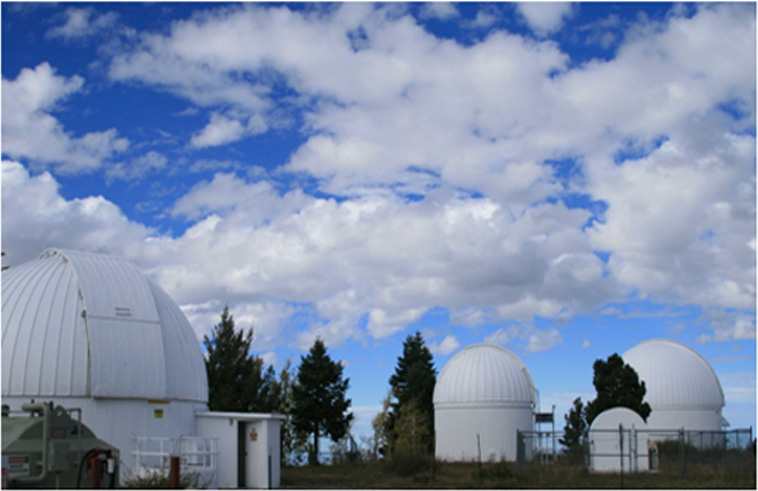
Mt Lemmon Adventures.  I’ve been reflecting on my recent trip to Tucson for the astronomy imaging workshop “Making Every Pixel Count”, run by Adam Block at the Univ. of Arizona’s Steward Observatory atop 9200-ft Mt. Lemmon.  Events have nearly persuaded me to believe that things happen to us mortal beings for a reason.  Some of you may recall my attempts to organize a field trip event for AAAP members to Tucson and Mt. Lemmon this November.

Some of the domes of Mt Lemmon (the 32-inch RCOS is in the dome on the left).

Some of the domes of Mt Lemmon (the 32-inch RCOS is in the dome on the left). Credit: Rex Parker

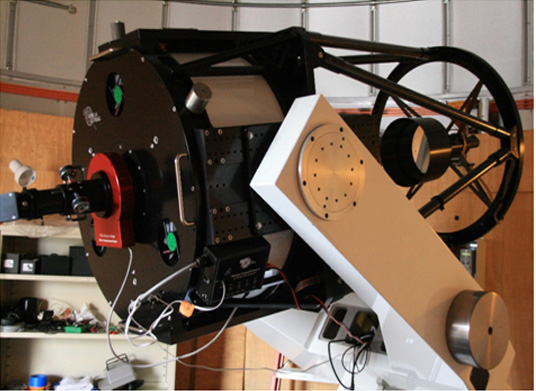
That effort ran into a scheduling snag, disappointing seven club members who were up for the adventure. This was going to be an opportunity for us to use the amazing 24-inch and 32 inch-RCOS telescopes on Mt. Lemmon visually with eyepieces — all night long under pristine desert mountain skies.  Well, the skies were indeed very good during the four nights of the workshop, with incredible sub-1-arc-sec seeing recorded by the CCD camera on the 32-inch!

The 24-inch RCOS used for visual observing and CCD imaging on Mt Lemmon.

The 24-inch RCOS used for visual observing and CCD imaging on Mt Lemmon. Credit: Rex Parker

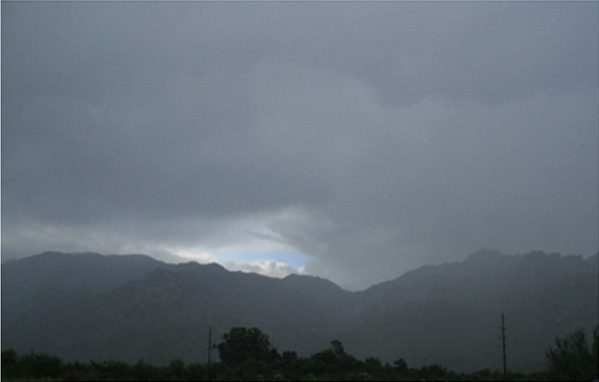
However, after the workshop ended on Sunday, October 19, a big rainstorm blew through the desert. The 19th was the night we had nearly decided to book the AAAP observing trip, which would have been a total washout!  The moral of the story is that for future AAAP field trips to faraway places, let’s plan for more than one night of observing to improve our odds.

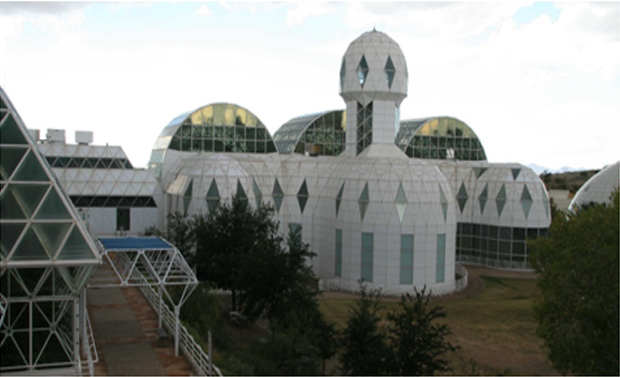
Biosphere-2.  So on my last afternoon, since the Saguaro’s were getting their much-needed rain, I decided to visit the once famous Biosphere-2 located north of Tucson.  The science and technology of the human two-year isolation project in the early 1990’s provided insights into some of the serious issues for manned spaceflight to Mars, the moon-base, and beyond that we discussed last month at Ken Kremer’s talk.  The human experiments at Biosphere-2 are over now, but the Landscape Evolution Laboratory and several other biogeochemical research projects are continuing, and the public science outreach at the complex is big time.

Rain over Mt Lemmon and the Catalina Mountains on Oct 19.

Rain over Mt Lemmon and the Catalina Mountains on Oct 19.

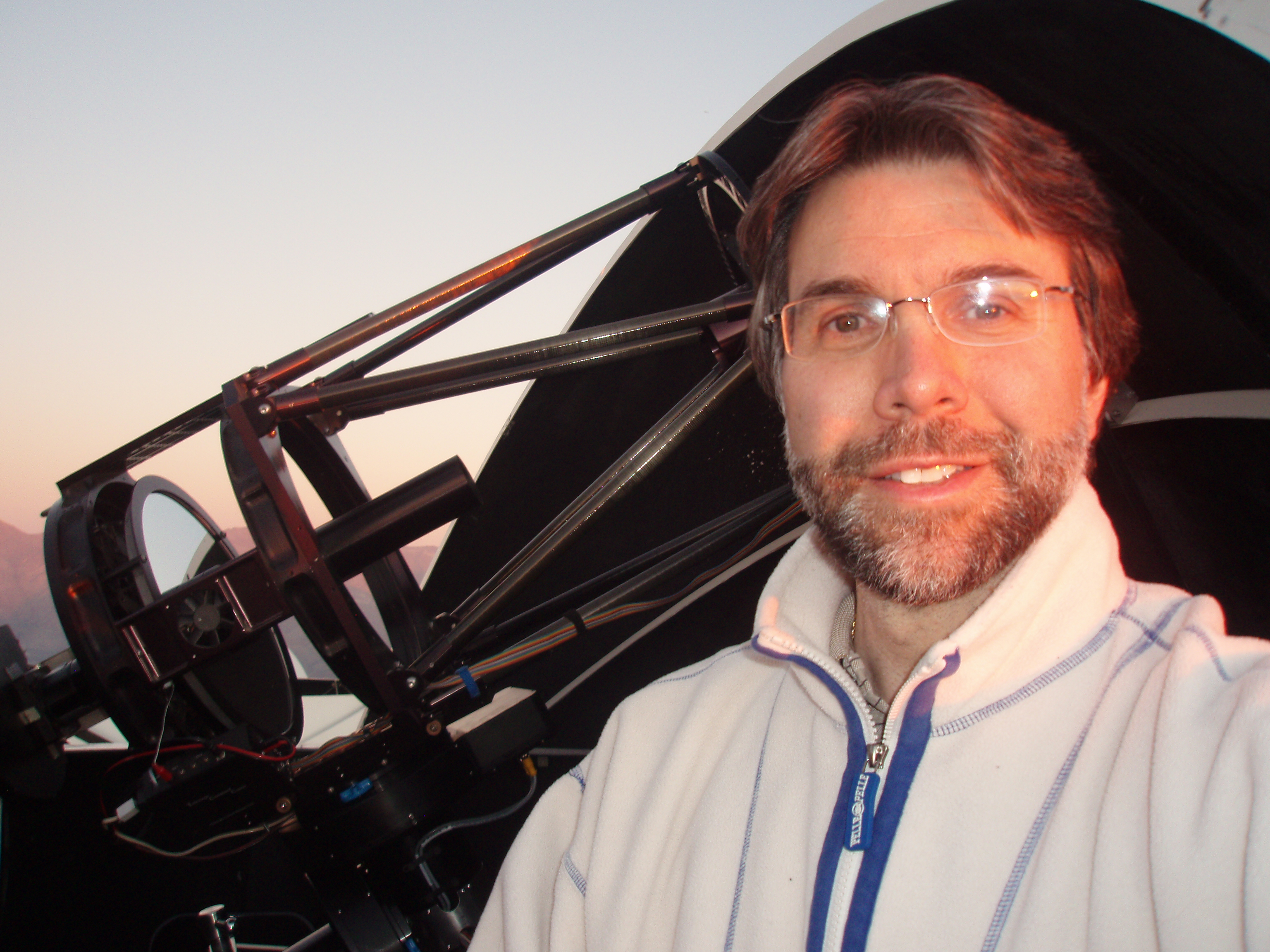
Amazing Presentation on Nov. 11 at AAAP.  Our tradition of great speaker presentations continues this month (7:30 p.m., Nov. 11 at Peyton Hall) with a talk about the ultimate approach to astronomy imaging — remote CCD astronomy with equipment thousands of miles away at an observatory on another continent!  From his home roll-off roof observatory to an isolated dome in Chile, South America, Dr Steve Mazlin has produced some of the most amazing deep sky images ever published, and is a frequent contributor to APOD.  Check out the meeting announcement in this issue and find further info on the AAAP website. (http://www.princetonastronomy.org/).

Form and function make Biosphere-2 beautiful and fascinating.

Form and function make Biosphere-2 beautiful and fascinating.  Credit: Rex Parker

Important Vote Nov. 11.  At the meeting, a members vote is planned for approval of a capital expenditure proposal for the video equipment to upgrade the WC observatory (as discussed at recent meetings).  Members are urged to attend the meeting to support this proposal for a significant expenditure.  Further details are in the article by Larry Kane in this issue.

Hope to see you at the meeting and the pre-meeting dinner.

Posted in November 2014, Sidereal Times | Tagged , | Leave a comment

Fourth Dimension Astroimaging…My Personal Journey Through the Cosmos

Steve Mazlin, MD
Tuesday, November 11, 2014 at 7:30 p.m in Peyton Hall

Astrophotography was revolutionized by digital techniques over the past 20 years. Steve Mazlin will explain some of the basics of data acquisition and processing while giving a glimpse into the world of remote imaging and showing some of his favorite images.

Steve Mazlin

Steve Mazlin

His colorful images have appeared in numerous magazines and on NASA’s Astronomy Picture of the Day (APOD) website. In 2009, he had a one man show at the Monmouth Museum in Lincroft, NJ. Some of his images are part of the traveling exhibit, “Starstruck: The Fine Art of Astrophotography”, coming to the Michener Museum in Doylestown, PA this November.

Steve Mazlin lives in eastern Pennsylvania with his wife, Violet, and his 2 sons. When not actually acquiring or processing astronomical images, he’s usually thinking about acquiring or processing images. Somehow he finds time for his other familial responsibilities (though Violet may argue this point), and time to be a neurologist in a busy private practice. His personal website is www.fourthdimensionastroimaging.com. His alter ego, Mazlini The Great, can be found at www.youtube.com/watch?v=eShOLJJnlLs.

Upcoming speakers:

December 9 – Dr. Vera Gluscevic on the cosmic microwave background, dark energy and inflation.

January 13 – Dr. Alan Hirshfeld, From Backyard to Mountaintop: The Adventure of History’s Best Worst Telescope

Posted in November 2014, Sidereal Times | Tagged , , | Leave a comment

From the Assistant Director

by Larry Kane, Assistant Director

After a report was made by the committee that investigated the purchase and installation of a video system for the observatory, a motion was made to the Board of Directors to approve the expenditure of up to $6,000 for the system. This motion was approved unanimously by the Board. The system will include a video camera, a monitor, a telescope and the appropriate hardware needed to install and operate the video system.

Because of the size of the expense of the video system, the approval of the AAAP membership is required  for this purchase. This motion will be made at the November, 11, 2014 membership meeting. I am recommending that if you are able, please attend the meeting on November 11 so you may be part of the discussion of this important improvement to our observatory.

Posted in November 2014, Sidereal Times | Tagged , , | Leave a comment

History of the Hastings-Byrne 6-1/4 Inch Refractor

by John Church

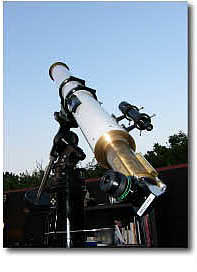
Hastings-Byrne Refractor

Hastings-Byrne Refractor

As many current AAAP members may not be fully acquainted with the story of our fine 6-1/4 inch refractor, this history is presented so that the club may make an informed decision about its future use. Also please click the link to see page images of a 1979 article in Sky & Telescope magazine by this writer, giving more details on how its history was traced and the design of the objective lens.

1879 – Physicist and teacher Dr. Charles S. Hastings grinds and polishes the elements of the future Hastings-Byrne refractor, using glasses for which he had accurately measured the refractive indexes in 1878 and his own design methods.  This was the second of three objectives made personally by him. The third one, a flint-in-front design with an aperture of 9.4 inches, was installed at an observatory at Johns Hopkins and used successfully for many years.  See J. Church, “Optical Designs of Some Famous Refractors,” Sky &Telescope for March 1982, p. 302-8.
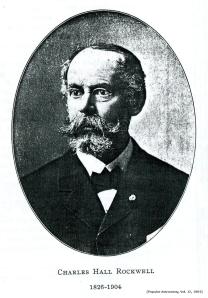
Rockwell 1880 – The Smithsonian Report for 1880 (issued in 1881) mentions that Charles Rockwell of Tarrytown, NJ had had a 6-1/3 inch Hastings lens mounted by telescope maker John Byrne of New York City. The instrument is installed in Rockwell’s private observatory in Tarrytown, NY in a 12 1/2 foot diameter dome.

Nov. 7, 1881 –  Rockwell observes a transit of Mercury from Honolulu in the “Sandwich Islands” (as they were then called) with this refractor. Written up in Sidereal Messenger, Vol. 1, 1882,  p. 29-30.  Location:  W. Long. 10 hr 31 min 27.3 sec, N. Lat. 21 deg. 17 min. 56.3 sec. (equivalent to 157.8638 deg. W. Long. and 21.2990 deg. N. Lat.). This would have been near the present intersection of Route 92 and Forrest Avenue/South Street, at the entrance to Pier 1.
Hastings

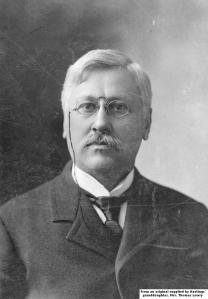
March, 1882 – In the American Journal of Science, Hastings mentions the 6-1/4 inch doublet lens of 91-inch focal length that he had ground and polished in 1879.  He is very pleased with its performance. He states that the original aperture of 6-1/3 inches was reduced to 6-1/4 inches by Byrne’s mounting.

November, 1882 – Hastings describes this objective in more detail in the Johns Hopkins University Circulars for this month, p. 8.  He says that it is in Rockwell’s possession, was used for the Honolulu transit of Mercury, and was able to resolve the double star Zeta Boötis in 1879 when the separation was 0.55 arcseconds. This article also includes data for the 9.4-inch Johns Hopkins objective.

December 7, 1882 – Rockwell observes the transit of Venus with his telescope, the entire transit being visible from the eastern United States. He publishes a report, with timings, in Vol. 1 of the Sidereal Messenger. In 2004 we observed the next transit of Venus with this same telescope at Washington Crossing (see below).

1883 –  An article in Sidereal Messenger, Vol. 2 , p. 39 by Hastings states that he either gave or sold the doublet to Rockwell, an avid amateur astronomer and friend/patron of Hastings, not long after making the lens.

May 6, 1883 – Hastings and Rockwell use Rockwell’s telescope to observe a total solar eclipse on Caroline Island in the mid-Pacific Ocean as part of a substantial expedition mounted by the U.S. Naval Observatory.  The expedition was written up in Volume 2 of the Memoirs of the National Academy of Sciences, published later in 1883.  It was also described by Joseph Ashbrook on p. 211 of the March, 1978 issue of Sky & Telescope in one of his “Astronomical Scrapbook” articles, which also mentions Rockwell’s telescope.

January 1, 1904 – Rockwell dies at 77. He wills all of his property to his sister Anna Rockwell,   who sells the refractor to Rutgers University later that year for $500.00, paid in two installments.  Rutgers uses it off and on in astronomy coursework for many years.  Rockwell’s obituary is on p. 262 of the June 1904 issue of Popular Astronomy.

January 31, 1932 –  Hastings dies at age 83.  A remembrance is in the June 1932 issue of the American Journal of Science.   A much longer article about him is published in 1938 in the Biographical Memoirs of the National Academy of Sciences.

1937 – The Galileo Club of Trenton is given permanent custody of the refractor by Rutgers.  It is used occasionally and stored in a club member’s garage.

November 1, 1968 – AAAP purchases the refractor from the defunct Galileo Club for $200 with member contributions.  It is placed outside on George Parker’s farm in Plainsboro, covered with a tarp, and is rarely used.

September 1972 – As the only member of AAAP willing to take custody of the refractor stored on Parker’s farm, which George needed to have removed from his property, John Church accepts this responsibility.  Other members help him move the entire assembly to his garage in Princeton Junction for storage, evaluation, and refurbishment.  Church cleans the objective lens and mounts the 500-lb assembly on a rolling dolly for ease of moving it in and out of his garage. Club members visit and use the telescope.

Nov. 10, 1973 – Church, Freeman Dyson, and Tullio Regge (Institute of Advanced Study) observe and time the transit of Mercury from Church’s driveway.  Their results for Contacts III and IV (Contacts I and II occurred before sunrise) are a few seconds earlier than predicted but were near the peaks of histograms constructed from 124 other sets of observations as reported in the January 1974 issue of Sky & Telescope magazine.

Mid-1970’s – Church measures the curvatures and thicknesses of the two elements and    finds by ray-tracing that the glasses described by Hastings (out of many other candidates) are the only ones that give the known properties of the lens in terms of focal length and optical corrections (spherical aberration, chromatic aberration, and coma).  Hasting’s notebooks at Yale University listed the surface radii and thickness of the crown element (only), with figures closely matching those determined by Church.  Hastings also drew a 1/6 scale sketch of what he called “Rockwell’s column” that matches the current pier.  The 1978 Ashbrook article on the Caroline Island eclipse expedition serves as one of the motivations for preparing the Sky & Telescope article mentioned below.

Mar. 17, 1975 – Church observes Sirius B with the refractor.

August 1978 –  The refractor is installed in the new AAAP observatory at Washington  Crossing State Park and immediately put to frequent use. Several long feature articles about the observatory appear in the local media.

March 1979 – Church publishes the results of his technical and historical research on the  refractor in this issue of Sky & Telescope, p. 294, identifying the objective lens as having been made by Hastings and the entire mount by John Byrne.  There is a photo of the telescope (with its original mounting) in the observatory in this article, which also includes a photo of Mars taken with this telescope at the favorable opposition of early October, 1973.  Click to read Hastings-Byrne Article.

November 1999 – The original Byrne equatorial mount for the refractor is replaced with a Losmandy G-11 mount, adding greatly to the usability of the equipment.

Summer 2002 – Gene Ramsey and John Church install a new custom-made Burg tailpiece and focuser on the refractor. (The original focuser was worn out and not repairable.)  The remaining original parts of the instrument are the Hastings objective (still in good condition after 135 years as of 2014), its solid brass cell, the steel tube which was refinished in white powder-coat epoxy several  years  ago, and the heavy cast-iron pier, all the latter having been made or  supplied by John Byrne’s shop.

June 8, 2004 – AAAP-ers observe the third and fourth contacts of the transit of Venus at Washington Crossing.  The sun barely clears the tree line in time for a group, including Congressman Rush Holt, to see the sun’s image projected on a screen by the refractor and get a good view of the contacts.

Mid-2014 – The mount is replaced with a donated Losmandy Gemini 1 GoTo mount.

October 2014 –  Discussion begins on future plans for the refractor.

Posted in November 2014, Sidereal Times | Tagged , , , , | Leave a comment

Treasurer’s Report

by Michael Mitrano, Treasurer

Thus far in our fiscal year, 25 members have renewed by paying their dues.  This is about 40% fewer than had renewed at the same time a year ago.  Please get those checks in!

All expenses for StarQuest 2014 are in.  Even with the modest attendance, the event had a small surplus of $108.  Thanks to everyone who helped make it a success.

Observatory and speaker expenses have thus far been minimal.  Therefore, for the year to date, we have a $600 surplus.

On a cumulative basis, the AAAP’s surplus is over $25 thousand.

Posted in November 2014, Sidereal Times | Tagged , | Leave a comment