A Massive, Glow-in-the-Dark Cloud Lurking in Our Cosmic Backyard Stars and planets are born inside swirling clouds of cosmic gas and dust that are brimming with hydrogen and other molecular ingredients. On Monday, astronomers revealed the discovery of the closest known cloud to Earth, a colossal, crescent-shaped blob of star-forming potential…more
-farmingdale-observer
Measuring 1.3 billion light-years across, scientists have discovered the largest structure in the universe while scanning space. We thought we had identified the great structures of the universe with superclusters of galaxies such as Shapley or Laniakea, but Quipu has just stolen the show. Imagine a sort of giant web, a titanic network of interconnected galaxies stretching over…more
-dailygalaxy.com
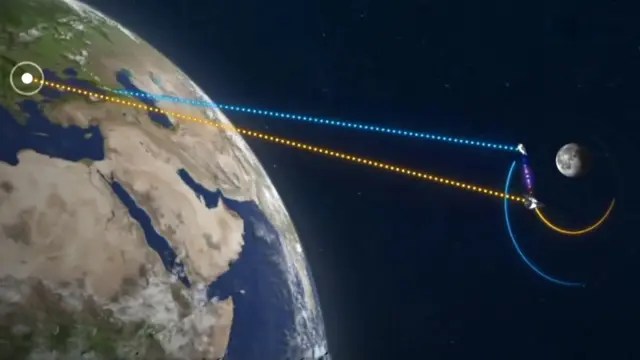
China Fires Laser at the Moon in Broad Daylight In a major leap for lunar navigation, China has successfully bounced a laser off a Moon-orbiting satellite in full daylight—a feat previously thought impossible due to intense solar interference. The breakthrough, carried out by the Deep Space Exploration Laboratory (DSEL) using the Tiandu-1 satellite, marks the world’s first Earth-Moon laser-ranging success under strong sunlight, according to a report…more
-NYT
Soviet Spacecraft Crash Lands on Earth After a Journey of Half a Century After looping through space for 53 years, a wayward Soviet spacecraft called Kosmos-482 returned to Earth, entering the planet’s atmosphere at 9:24 a.m. Moscow time on Saturday, according to Roscosmos, the state corporation that runs the Russian space program….more
-skyatnightmagazine
Yes, astronomers have captured real photos of alien worlds in deep space. The field of exoplanet study is one of the most rapidly advancing fields in astronomy, going from first confirmed discovery to the first direct images of exoplanets within less than 10 years. Up until the mid 1990s, astronomers could only hypothesize that, if there are planets around our own star, the Sun, then surely there must be planets around other stars…more
-NASA.com
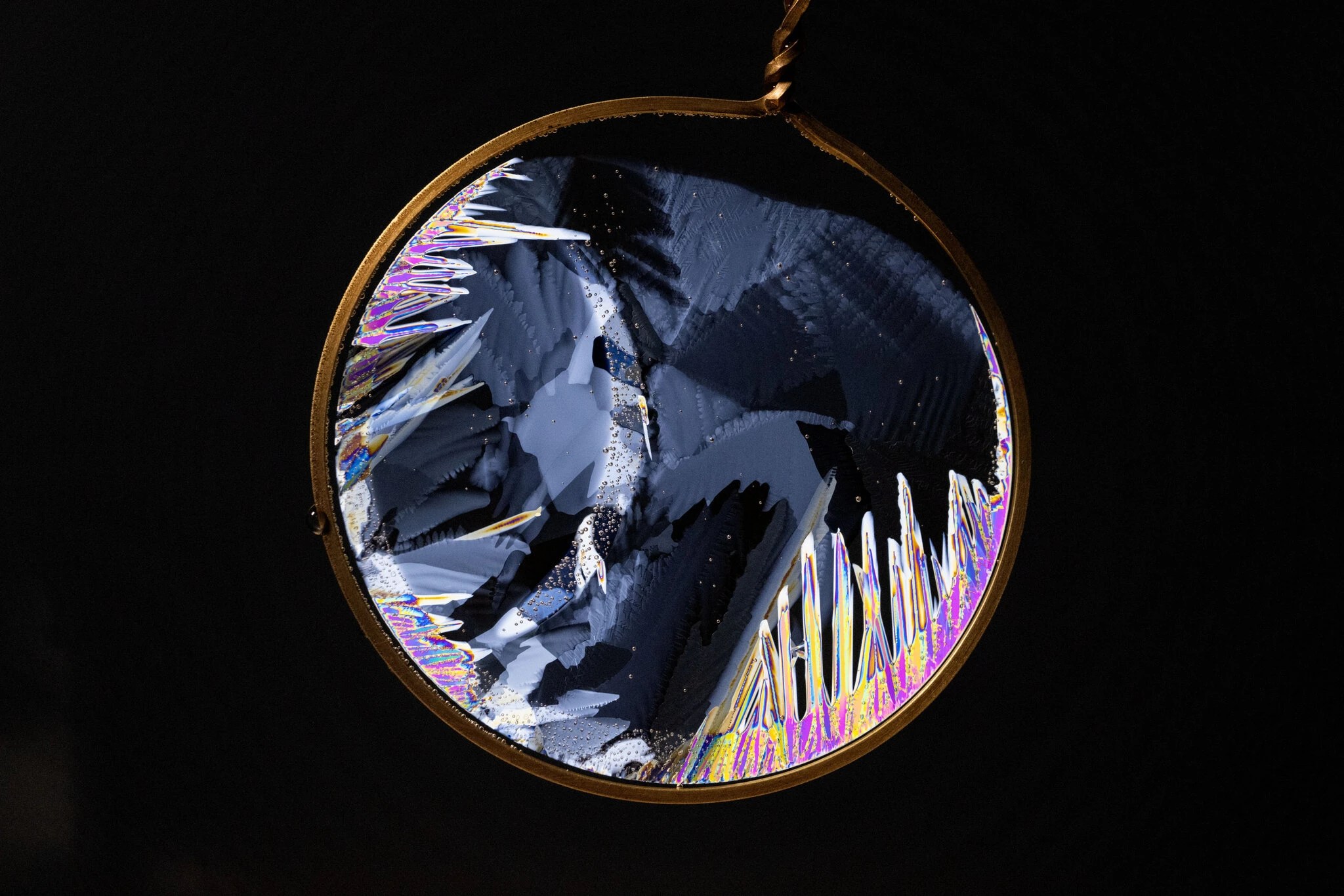
1 Astronaut, Many Cameras and 220 Days of Amazing Images From Space Don Pettit, NASA’s oldest active astronaut, returned to Earth on April 20, the day he turned 70 years old. That concluded his fourth trip to space — a busy 220 days at the International Space Station. Like other crew members on the space station, Mr. Pettit conducted experiments, talked with students and exercised for hours…more
-NYT
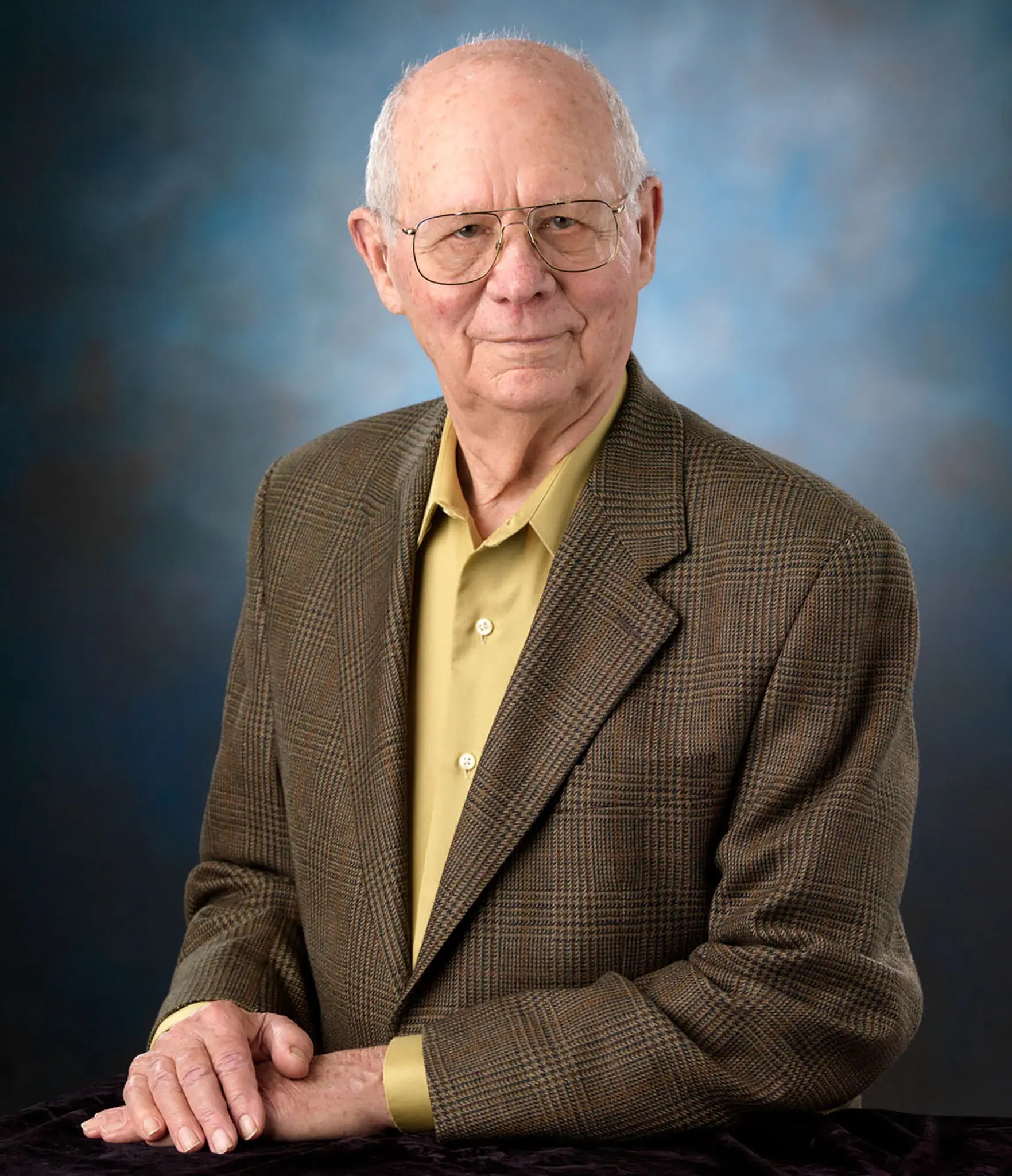
Ed Smylie, Who Saved the Apollo 13 Crew With Duct Tape, Dies at 95 Ed Smylie, the NASA official who led a team of engineers that cobbled together an apparatus made of cardboard, plastic bags and duct tape that saved the Apollo 13 crew in 1970 after an explosion crippled the spacecraft as it sped toward the moon, died on April 21 in Crossville, Tenn. He was 95…more
-NYT
New Studies Dismiss Signs of Life on Distant Planet In April, a team of astronomers announced that they might — just might — have found signs of life on a planet over 120 light-years from Earth. The mere possibility of extraterrestrial life was enough to attract attentionworldwide. It also attracted intense scrutiny from other astronomers,..more
-NASA
Eccentric ‘Star’ Defies Easy Explanation, NASA’s Chandra Finds Scientists have discovered a star behaving like no other seen before, giving fresh clues about the origin of a new class of mysterious objects. As described in our press release, a team of astronomers combined data from NASA’s Chandra X-ray Observatory and the SKA [Square Kilometer Array] Pathfinder (ASKAP) radio telescope on Wajarri Country in Australia to study the antics of the discovered object, known as ASKAP J1832−0911 (ASKAP J1832 for short)…more
by Rex Parker, PhD director@princetonastronomy.org
May 13 2025 Meeting of AAAP. Our meeting in Peyton Hall on May 13 will be the final monthly session on campus until September. The June 10 meeting will convene at the State Planetarium in Trenton, then our schedule takes a summer hiatus until September. The guest speaker on May 13 will be James Stone, renowned Professor of Astrophysical Sciences at Princeton. He’ll illuminate the deep mysteries of the physics of black holes. For more on the speaker please see program chair Victor’s article below. I hope to see you in person at Peyton Hall May 13, though Zoom will also be available (thanks to Dave and Ira).
Observatory Status. This summer should offer many opportunities to gather for hands-on astronomy at the AAAP Observatory in Washington Crossing State Park. The electrical problem discussed at the meeting last month is being rectified, although state permitting can be slow. An electric repair company has been selected and a quote for the job has been accepted by the Board. Until the wiring repair is completed, for Friday night public observing sessions (when weather permits) a portable AC generator will be on site to power the observatory and enable the FiOS wifi system.
Election of Officers May 13. It is important that you, as a member of AAAP, attend the May 13 meeting to help us get the quorum needed for the annual election of officers. I would like to thank Daniel Opdyke for agreeing to serve as the nominations chair. According to the Constitution and By-laws, the Nominating Committee will identify a slate of candidates for the 7 Board positions of director, assistant director, secretary, treasurer, program chair, observatory chair, and outreach chair. “Officers shall be elected at the Annual Meeting of AAAP in May. Subject to the quorum requirement of Section 5, Subsection C, a simple majority of votes cast shall be sufficient for election. Newly elected officers shall assume office at the end of the Annual Meeting.” So this year we are pleased that 6 of the 7 incumbents indicated willingness to serve again. Michael Mitrano has decided to step down as Treasurer, and we are indebted to him for a decade and a half of excellent service to the club. And I am happy to inform you that Ira Polans has put his name up as Treasurer candidate.
Board of Trustees candidates for May 13 election: Director, Rex Parker Assistant Director, Bob Vanderbei Secretary, Gene Allen Treasurer, Ira Polans Program Chair, Victor Davis Observatory Chair, David Skitt and Jennifer Skitt assistant chair Outreach Chair, Bill Murray
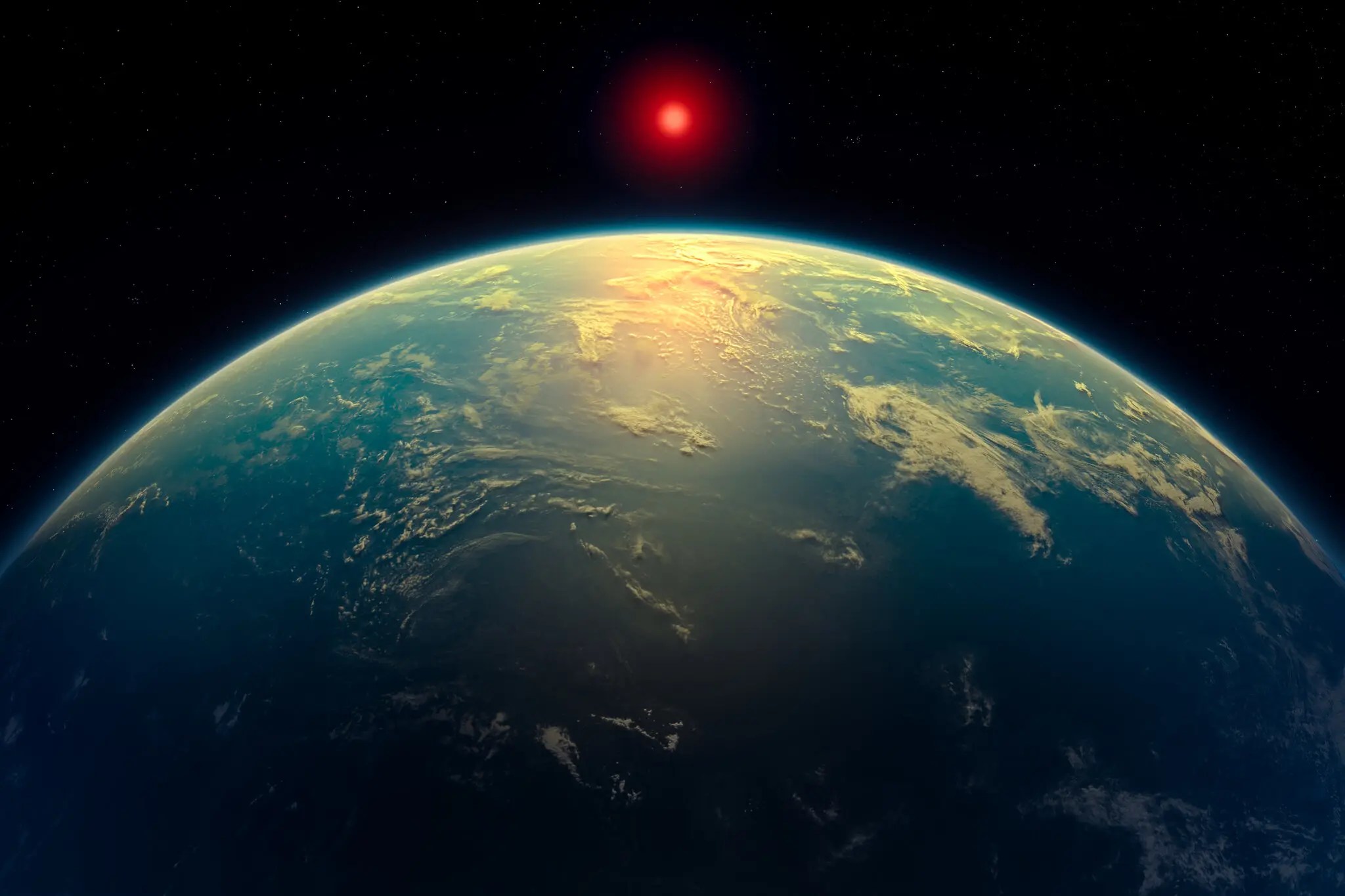
Biosignature on an Exoplanet! In mid-April a major announcement splashed across the news media – an astronomy research group at Cambridge Univ. in England had detected a sign of life on an exoplanet. The big news centered on planet candidate K2-18, orbiting a red dwarf star in Leo. It was first discovered by the Kepler space telescope about 10 years ago. In the 10 years since, much attention has been drawn to sub-Neptune type planets, which can have environments potentially harboring life outside our solar system. The sub-Neptune “hycean worlds” (hydrogen ocean worlds) feature vast water oceans, but very unlike earth have atmospheres that are rich in molecular hydrogen (H2). This recognition has markedly increased the number of planet candidates which might have life-habitable environments. It’s important to recognize that the large size of Hycean worlds makes them much more accessible to atmospheric spectroscopy study with JWST compared to rocky earth-like planets. Here is the publication that created the current news media stir: Madhusudhan et al., ApJ Lett, Vol 983, No. 2, April 17 2025.
K2-18b is a hycean world situated in the habitable zone of its star. The new findings build on previous JWST near-IR (0.8 to 5 μm ) observations which showed CH4 and CO2 in its atmosphere consistent with predictions for hycean conditions. Those observations also provided a tentative hint of dimethyl sulfide (DMS), a possible biosignature gas, but the previous data reached only low statistical significance. The new report analyzed the mid-infrared transmission spectrum (6 to 12 μm) of K2-18 b using the JWST MIRI LRS instrument. They found that among the molecules predicted for K2-18b’s atmosphere, the data best fit the biosignature gases DMS and dimethyl disulfide (DMDS) with high statistical significance.
The excitement about dimethyl sulfide (DMS) in the atmosphere of an exoplanet comes from understanding it’s biological origin on earth. It is unstable and doesn’t persist for long, although its half-life depends on conditions as for most chemical substances. Its detection on K2-18b therefore implies continual formation, which on earth is essentially 100% biological. On earth DMS is the product of bacterial breakdown of an important organo-sulfur biochemical (dimethylsulfoniopropionate) produced in marine algae and phytoplankton. This precursor has an important role in regulating internal pressure and ability of plankton to float in the ocean. The DMS product is volatile and diffuses from seawater into the atmosphere on earth, where it further oxidizes to form sulfate aerosols. These aerosols are a main source of cloud-condensation nuclei over the oceans, which ultimately control the earth’s radiation budget through cloud reflectance. The DMS levels on K2-18b based on the newer JWST data (>10 ppm) are higher than in the bulk atmosphere on earth. If the data can be further verified, this represents the strongest biosignature on an exoplanet ever detected to date.
Life beyond Earth, a Continuing Discussion in AAAP. NASA first developed a major program to search for life on other planets and moons in the mid-1990’s. In 1996, NASA chief Dan Goldin expanded on the intense public interest stirred by the report of putative fossil microbes in a Martian meteorite and the recent discovery of exoplanets. The subsequent advances made by NASA planetary probes defined the most likely places in the solar system to harbor life. Today, with hundreds of exoplanet candidates discovered by the Kepler and TESS orbiting telescopes and Mars rovers continuing to explore, extraterrestrial life seems less sci-fi and more like impending reality.
A few years ago, it was proposed that the science community establish a framework for how to present evidence for life beyond Earth (Green et al., Nature vol 598, p 575, Oct 28 2021). At the time of that paper, the interstellar visitor Oumuamua had recently sailed through the solar system and provoked a lot of interest, including the Amazon best-selling book, Extraterrestrial by Avi Loeb (who was a AAAP guest speaker the next year). In the Nature article, former NASA chief of Planetary Sciences James Green stated, “Our generation could realistically be the one to discover evidence of life beyond Earth.” Responsibility comes with this privilege because of the deep implications and impact that such a discovery would have on humanity. Findings presented in the public media may take on more weight than the data actually support or the principals intend. There are challenges of perception and communication, as evidence likely would be revealed in stages, for example from one set of JWST spectroscopy data to the next. Our society has a tendency to turn scientific findings into binary, all-or-nothing propositions, placing unrealistic expectations on initial stages. The paper lays out a conceptual framework for how to proceed with a dialogue among scientists, technologists, and the media, to agree on objective standards of evidence for life and best practices for communicating it. If indeed we are on the verge of making the most significant scientific and philosophical discovery ever in human history, this is an essential step to prepare society for acceptance.
An Owl in the Deep Sky. Messier 97 (NGC 3587) in Ursa Major is known as the Owl Nebula, one of the most colorful planetary nebulae in the northern sky in spring. The image below was taken over the last few nights in April by Rex Parker in New Jersey. Final image is the mean of 81 x 6 min subframes, with Antlia RGB Tri-Band filter, ASI2400MC camera at gain 140 (unity), and 12.5” Cassegrain reflector on a Paramount MX mount.
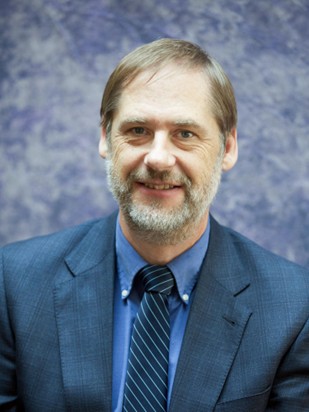
Understanding the Plasma Dynamics of Black Holes The May, 2025 meeting of the AAAP will take place in Peyton Hall on the campus of Princeton University on Tuesday, May 13th at 7:30 PM. As usual, the meeting is open to AAAP members and the public. Participants can join the meeting in-person at Peyton Hall or log in to the Zoom session as early as 7:00 pm to chat informally before the meeting begins. The evening’s guest speaker is James Stone, Emeritus Professor of Astrophysical Sciences and the Lyman Spitzer, Jr. Emeritus Professor of Theoretical Astrophysics at Princeton University. His talk is entitled “Black Hole Accretion.”
Options for Attending the Meeting You may choose to attend the meeting in person or participate via Zoom or YouTube as we’ve been doing for the past few years. (See How to Participate below for details). Due to security concerns, if you log in before the host has set up internet connectivity in Peyton Hall, you may need to wait in the Waiting Room for a few minutes until the host is prepared to admit you into the meeting. You’ll need to unmute yourself to make comments or ask questions. It’s polite, though not required, for you to enable your camera so other participants can see you. The meeting will be recorded and edited for posting to our club’s YouTube channel.
Meet the Speaker Dinner Prof. Stone will join us for the traditional “meet the speaker” dinner at Winberie’s Bar and Restaurant prior to the meeting. Our reservation is for 5:45 pm. Please contact the Program Chair at program@princetonastronomers.org if you plan to attend.
Here’s the anticipated agenda for May 2025’s monthly meeting of the AAAP:
(Times are approximate)
Getting to Peyton Hall The parking lots across the street (Ivy Lane) from Peyton Hall are now construction sites, unavailable for parking. We’ve been advised by the administration of the astrophysics department that we should park in the new enclosed parking garage off Fitzrandolph street and walk around the stadium and athletic fields. Here’s a map of the campus and walking routes from the parking garage to Peyton Hall. The map shows the recently completed East Garage. Not shown is an access road Sweet Gum that connects from Faculty Road to an entrance at the lower left corner of the garage. Stadium Road connects from Fitzrandolph Road to another entrance at the opposite corner (and higher level) of the garage. It’s about a 10-15 minute walk from the parking garage to Peyton Hall.
Featured Speaker:
James Stone Emeritus Professor of Astrophysical Sciences
Emeritus Lyman Spitzer, Jr. Professor of Theoretical Astrophysics
Black Hole Accretion Accreting black holes power the most luminous objects in the Universe, including active galactic nuclei, quasars, and gamma ray bursts. Recent advances in computational methods allow calculations of the structure and dynamics of such flows from first principles. Moreover, observations from the Event Horizon Telescope and JWST are providing new insights into black hole accretion in a wide range of environments, and on scales down to the event horizon. Prof. Stone will summarize some of the recent progress that has been made in trying to understand the remarkable plasma dynamics of accreting black holes.
James Stone Prof. Stone’s research program centers on the use of large-scale direct numerical simulations to study the gas dynamics of a wide range of astrophysical systems, from protostars to clusters of galaxies. Almost all of this work requires development of advanced numerical algorithms for astrophysical gas dynamics on modern parallel computer systems. Prof. Stone is one of the primary developers of the ZEUS code for astrophysical MHD, and more recently he and his collaborators have developed Athena, a high-order Godunov scheme for astrophysical MHD that uses adaptive mesh refinement (AMR).
Some of the research problems on which he works include: (1) hydrodynamic and MHD processes that can lead to outward angular momentum transport in accretion disks, (2) the production and propagation of highly supersonic, collimated jets from accretion disks around protostars and active galactic nuclei, (3) the properties of compressible MHD turbulence in cold molecular gas in the galaxy, (4) the time-dependent evolution of strong shocks in the interstellar medium, (5) the structure of radiatively driven winds and outflows from disks around hot stars and AGN, and (6) the effect of mergers and AGN feedback on the hot x-ray emitting gas in clusters of galaxies.
Prof. Stone is deeply involved in PICSciE, which provides access to high-performance computing systems on campus, and training and education in scientific computation and numerical analysis, and he has a joint appointment in the Program in Applied and Computation Mathematics (PACM).
How to Participate (Links) Zoom& YouTube Live Amateur Astronomers Association of Princeton is inviting you to a scheduled Zoom meeting.
Topic: May 2025 AAAP Meeting-James Stone, Professor, Princeton University Time: May 13, 2025 07:00 PM Eastern Time (US and Canada)
Dr. Hamer has expressed his intention to continue AAAP’s tradition to host the June meeting at the planetarium of the NJ State Museum in Trenton. The meeting will feature a presentation of the planetarium’s current sky show, a live planetarium tour of the night sky, and a guest speaker presentation.
July-August
No monthly meetings
Sept. 9, 2025
Edwin L. Turner Emeritus Professor of Astrophysical Sciences Princeton University elt@astro.princeton.edu
TBA Thanks to Bill Thomas for suggesting this speaker.
Nov. 11, 2025
Romain Teyssier Professor of Astrophysical Sciences and Applied and Computational Mathematics Princeton University teyssier@princeton.edu
TBA
As always, members’ comments and suggestions are gratefully accepted and much appreciated. Thanks to Ira Polans and Dave Skitt for setting up the online links and connecting the meeting to the world outside Peyton Hall.
In attendance: Director – Rex Parker Assistant Director – Bob Vanderbei Treasurer – Michael Mitrano Program Chair – Victor Davis Observatory Chair – Dave Skitt Outreach Chair – Bill Murray Secretary – Gene Allen Member – Ira Polans Member – John Church
Rex, Dave, and Michael briefly reviewed the two quotes for replacing the failed underground power line between the pole and the observatory panel. The quotes were sent to everyone in advance and have been made part of this document. Discussion followed which fairly quickly revealed a preference for the Holcombe Electric estimate. It seems perfectly adequate and complete, supports a smaller, more local business, and comes in at $4,000 less. They had done good work for Michael in the past, and we may be able to get on their schedule more promptly. The motion to have Holcombe do the job was seconded and approved unanimously.
John did a lot of hand waving and did not show as being muted but despite his best efforts, no one could hear him.
Rex also presented his idea of proposing a project to master the donated UniStellar eVscope 2 to high school age members. His email inquiry yielded 11 enthusiastic responses, and he wants to move on it. He hopes to offer the scope at his May 2 observatory night and have part of the project be organizing their participation, as teams or whatever. There was agreement that keeping the scope at the observatory would not be good. It needs to be out in homes. As an educator, Bob was asked to take on the role of advisor, and he consented.
Enthusiasm outweighed hope as the AAAP volunteers arrived for the May 3rd, “Night of Stars, 2025” outreach event in honor of Princeton University’s “Star” undergraduates facing finals week and the semester end. Thickening haze and storm clouds crept in from the northwest as the cheery organizers greeted us, profusely apologizing for the poor forecast. They promised to pick a better night next year. I kindly suggested to “have the Princeton climate-change researchers begin working on that right away”.
Tom Swords (SeeStar50), Tim Donney (C-8/Evolution), Hongkun Zhao (C-6/Vixen Porta II), Jason Mak (Meade refractor) and I (Orion Mak-Sutov on Celestron StarSense mount) all lamented paring down our rigs to ease breakdown in the event of a downpour. I handed out Hefty bags, should we get caught off guard.
I scrounged up a table to proudly display our club banner and brochures. Once set, we waited for something to appear where could point our scopes. The crescent Moon popped out. But not long enough for us to slew over and achieve final focus. And, certainly far too briefly to align the go-to scopes. Tom’s SeeStar exclaimed “Moon not Found”. “Whaddaya mean ‘Moon not Found’, it was there just a second ago”, Tom replied.
Our position on the Frist student center lawn placed us in the midst of the popcorn/cotton candy vendor and the marshmallow/S’more barbecue pit lines. This gave ample opportunity to chat with the “Star” (high-achieving) students. Many were intrigued with our organization and our assorted telescopes. We talked about our smart (and dumb) technology and showed them what we would have seen, were it not for the clouds, on our tablets and phones. And of course, we invited them out to our club meetings and observatory. We also took the opportunity for a group pose by an event photographer.
The flicker and booming audio from a blow-up movie screen projecting the 2008 movie, “WALL-E”, competed with our visual non-show and the distant effects of an approaching storm cell. A phone call from my wife, Jennifer, alerted me to the danger and we began to cover or dismantle our gear. Tom and I barely mange to scavenge some popcorn and marshmallows before the raindrops arrived just after 9 pm.
Upon securing our gear, we reconvened in the nearby Frist center. There, we chatted some more and showed curious students the storm’s progression on various weather apps. I had big hopes that clear skies might follow. But that was not to be and the organizers decided to call it a night. For our efforts, we each received a hearty “thank you for coming out” and a complimentary “Night of Stars, 2025” emblem blanket adorned with black and orange university colors. And so it was, the only stars visible throughout the night were the AAAP “Star” volunteers and the Princeton University “Star” students.
Spring is finally here and so is our warm-weather merchandise at the AAAP store!
This year, we have added men’s and women’s baseball-style shirts and some tank tops to complement our existing array of t-shirts, polos, and hats. Due to the limitations of the hosting website, we can only list a certain number of items on the store, but there are many more colors available for every apparel item you see. So if you want a different color (or you still want a winter item that you forgot to buy), just email me at merchandise@princetonastronomy.org, and I will do my best to get you what you want.
We also offer a wide range of non-apparel items at our Next Gen Store—from bags and magnets, to towels and cups, and lots of stuff in between. The password for both is: SiderealTimes.
You can also reach our stores by clicking here: AAAP Shopping
Title: Challenger: A True Story of Heroism and Disaster on the Edge of Space
Authors: Adam Higginbotham
Publisher: Avid Reader Press, New York, NY
Publication Date: 2024
Total Pages: 576
The space shuttle Challenger, on January 28, 1986, broke apart seventy-three seconds after liftoff killing all seven astronauts on board including the New Hampshire school teacher Christa McAuliffe. The author, Adam Higginbotham, narrates the complete story behind this tragedy through thorough archival research and interviews. There are many books on the Challenger tragedy but this author takes this tragic story to a whole new level of detailed depth and examination. The read is very dynamic and fast paced revealing new facts and details not examined holistically before of Challenger leading up to its fateful flight, the investigation, and recovery operations. Details of the Challenger’s two minutes and forty-five second free fall into the Atlantic Ocean are discussed as well as the assumed attempt by astronaut pilot Michael Smith to continue to fly the shuttle.
The author discusses the NASA and contractor cultures of the early space program through Apollo and the space shuttle and its contribution to saving astronaut lives and assets as well as the contribution to its tragedies. There are NASA and contractor heroes. An example of a NASA hero is systems engineer Jenny Howard, one of the very few female flight controllers, is credited with saving the Challenger from total destruction during a launch sequence in 1985.
The author begins by narrating the tragedy of the Apollo 1 fire killing Gus Grissom, Ed White, and Roger Chaffee on January 27, 1967 due to a spark in an oxygen rich capsule. The author discusses how the early Apollo astronauts lobbied NASA to redesign Apollo’s environmental control system and its gas mixtures and the reasoning to maintain the early Apollo environment design as well as its hatch that prevented first responders from saving the doomed astronauts. The book ends discussing the tragedy of the space shuttle Columbia February 1, 2003 killing all seven astronauts on board. Were lessons learned from previous NASA tragedies and loss of life?
Our Sun holds our solar system together, including all the planets, the asteroid belt between Mars and Jupiter, and the Kuiper belt objects beyond all the known planets. The Sun’s influence is felt in terms of the radiation emitted, the solar wind, and its gravitational force. How far does its influence extend ?
As we go further away from the Sun, the planets are spaced further and further. The furthest planet Neptune is about 30 AU (Astronomical Units) from the Sun. 1 AU is the distance between the Sun and the Earth, about 93 million miles. AUs make us deal with small numbers to represent such astronomical distances. Beyond the known planets is the Kuiper belt, where Pluto and other objects live, is about 30-50 AU from the Sun.
The visible radiation emitted by the Sun becomes very pale in the Kuiper belt. Most of the Sun’s radiation is in the visible region of the electromagnetic spectrum. The Sun just looks like a bright star from such distances. It may not even be visible to the naked eye from elsewhere in our Milky way galaxy.
The Sun also emits charged particles called the solar wind. This wind is what disrupts the communication satellites and power grids on the Earth. Fortunately, the Earth’s magnetic field shields us from such wind. The solar wind travels further beyond the Kuiper belt. However it diminishes and slows down.
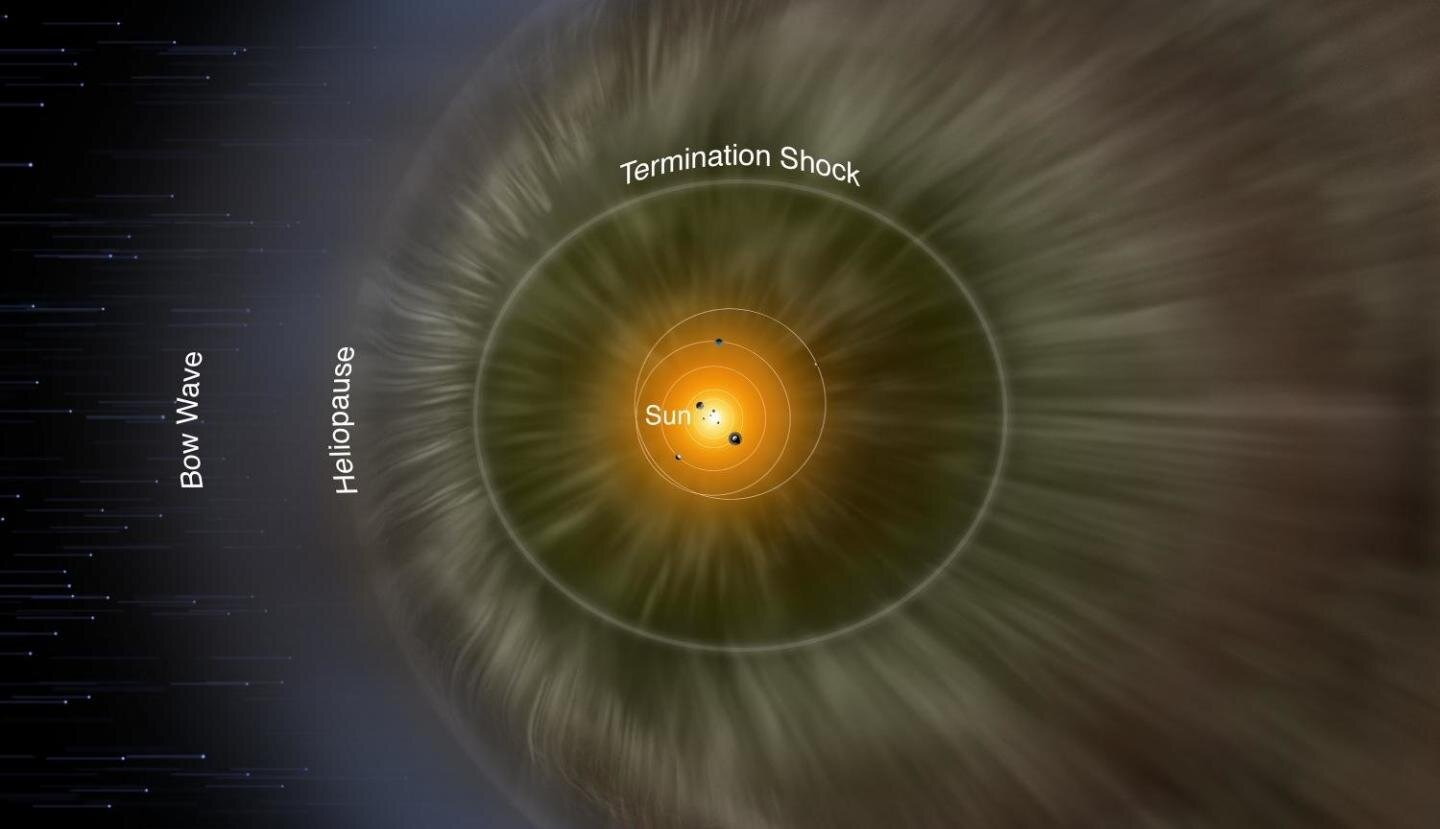
The place where the solar wind slows down considerably and begins to interact with the interstellar medium, or the space between the stars, is called the heliosheath. The first part of the heliosheath is called the termination shock, which is about 75-90 AU from the Sun. On the other side of Heliosheath is the Heliopause where the solar winds end and the interstellar winds take over. Heliopause is about 123 AU from the Sun. This is considered as the furthest point in our solar system.
Given below is the picture, courtesy Physics.org. The shape of the heliopause fluctuates and is influenced by a wind of interstellar gas which is caused by the Sun’s motion through space, as it orbits the center of our galaxy the Milky way. Hence the bow shape of Heliopause.
The NASA spacecraft Voyager 1 launched in 1977, crossed the termination shock in 2004. Its twin Voyager 2 did the same in 2007. Voyager 1 crossed the heliopause and entered interstellar space in 2012. Voyager did it in 2018. Another NASA spacecraft, New Horizons, which was launched earlier this century to explore the Kuiper belt object Pluto, is expected to cross the termination shock around 2030.
Beyond the Heliopause is the Oort cloud about 5000-100,000 AU from the Sun. It consists of icy objects. The Sun does exert some gravitation influence over these objects. But so do other nearby stars like Proxima Centauri. Our galaxy Milky way has some gravitational influence as well. Thus the Oort cloud can be considered to be outside of the Sun’s influence. Not within the City limits of the Sun, but a suburb!
The Jelly Fish Nebula, located in the Gemini Constellation 5000 light years from Earth, is a result of possibly several supernova remnants of spinning neutron stars. The nebula is 70 light years in diameter and is composed of two shells that may the result of multiple events. The inner shell remnant is between 5000 to 35000 years old while the outer shell maybe 100,000 years old interacting with molecular clouds.
The structure of IC 443 is influenced by its surroundings. In the southeast part of the nebula, the supernova’s blast wave is interacting with a dense molecular cloud. The cloud has slowed down the wave so it is moving between 67,000 to 89,000 mph. Toward the northeast part of the nebula the blast wave is hitting a cloud of hydrogen that is less dense and thus moving at between 180,000 and 220,000 mph.
Image was taken over the course of two nights April 1-2 at Big Cypress National Preserve, Florida in competition with a seven-foot alligator that occupied my imaging location. IC 443 image was captured with 300 light frames of 60 sec or 5 hours total integration. First set of 150 light frames used an Optolong Ultimate Ha-OIII filter and second set of 150 light frames used an Askar D2 OIII-SII filter. Telescope: Takahashi Baby-Q 85mm, f5.3; Camera: ASI2600MC Pro; other aids ASIAIR, OAG ASI174 mini, filter wheel; mount ZWO AM5N. PixInsight was used for image processing.
Astronomers Detect a Possible Signature of Life on a Distant Planet The search for life beyond Earth has led scientists to explore many suggestive mysteries, from plumes of methane on Mars to clouds of phosphine gas on Venus. But as far as we can tell, Earth’s inhabitants remain alone in the cosmos. Now a team of researchers is offering what it contends is the strongest indication yet of extraterrestrial life, not in our solar system but on a massive planet, known as K2-18b…more
-scitechdaily
A Century-Old Cosmic Mystery Solved – Four Hidden Planets Found Near Earth Astronomers have discovered four rocky planets, all significantly smaller than Earth, orbiting Barnard’s Star — the closest single star to our Sun and second closest overall, after the Alpha Centauri system. Barnard’s Star is located just six light-years away and has a long history of false alarms when it comes to planet detection…more
-NYT.com
DOGE Cuts Hobble Office That Would Aid NASA and SpaceX Mars Landings An office in an obscure corner of the federal government that NASA has relied on to safely land astronauts on the moon and robotic probes on Mars is facing pressure to cut its tight-knit team of experts by at least 20 percent, according to two people familiar with the mandate…more
-NYT
There’s a Lot of History to Unpack for This Space Expert Jonathan McDowell is a go-to expert for all things spaceflight. Thousands of subscribers read his monthly Space Report, and far more people have seen him on cable news and other media platforms explaining unexpected events in orbit…more
-NYT
A Flag on Mars? Maybe Not So Soon. The distance between Earth and Mars constantly shifts as they move around the sun, ranging from about 35 million miles to 250 million miles. To conserve fuel, spacecraft don’t launch toward the current position of Mars. Instead, they wait until the planet is properly aligned and then cruise to where Mars will be — seven or more months in the future…more
-sciencealaert
It’s Springtime on Polaris-9b, and the Exoflowers Are Blooming Imagine setting out for a springtime stroll. Not here on Earth but on some distant planet — call it Novathis-458b — orbiting a distant star. Even light-years from home, you recognize some familiar pleasures: The sun (albeit a different sun) is shining. The roses are in bloom. A breeze is blowing….more
-accuweather.com
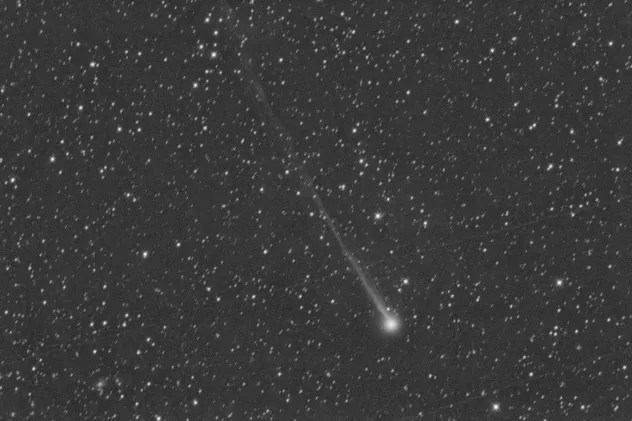
A new comet appeared in the sky, then likely disintegrated. But it can still be seen When a new comet appears in the sky, there is often excitement. But things don’t always end well for the ancient celestial objects, made of ice, frozen gases and rock, as they near the sun — and an untimely demise appears to hold true for Comet C/2025 F2 (SWAN). All signs suggest that the celestial object…more
-NYT
A Fireball Near Mexico City Lit Up the Sky and the Internet For a few brief moments on Wednesday, a bright fireball lit up the predawn skies near Mexico City. The display awed residents and online viewers alike as videos of the object quickly spread. The glowing object was a bolide, according to The Associated Press…more
-NYT
He Was a Prophet of Space Travel. His Ashes Were Found in a Basement. The basement of the prewar co-op on the Upper West Side was so cluttered and dark in one area that the staff called it “the Dungeon,” and last year, the building’s new superintendent resolved to clear it out. For weeks, he hauled the junk left behind by former tenants — old air-conditioners,..more
-labrujulaverde.com
Scientists Propose We Live in a Slowly Rotating Universe That Completes One Rotation Every 500 Billion Years A team of scientists has proposed a revolutionary idea to explain one of the greatest contradictions in our understanding of the universe: the discrepancy in measuring its rate of expansion, known as the Hubble Tension. According to a study published in the journal Monthly Notices of the Royal Astronomical Society, the answer might lie in the fact that the universe rotates slowly, like a gigantic cosmic whirlpool…more


















 Amateur Astronomers Association of Princeton