Note from a Member

by Robert Caivano Jr.

I am a returning member to the AAAP. My interest in astronomy really never waned but life, as they say, got in the way. And yes the weather has not cooperated, I barely find an opportunity to mow the lawn; so the night skies suffer too.

About a month ago on a visit to the local library on their used books for sale rack, I saw and bought the three volume set of Robert Burnham Jr.’s “Celestial Handbook”. What a pleasure it is to read Robert’s work. From there on, I read a 1997 article by Tony Ortega on Robert Burnham Jr. life. Inspiring but in the end tragic. Then on Burnham’s advice I purchased “Norton’s Star Atlas and Reference Handbook”, the 20th edition of course. And to round out my book purchases I ordered Kepple & Sanner’s “The Night Sky Observer’s Guide” volumes 1, 2 & 3.

I guess I can’t claim to be much of an amateur astronomer having only now read Burnham or Norton!
Oh and for further inspiration I am halfway through Emily Lebesque’s “The Last Stargazers”. A great book. In addition to reading I have been making trips to the New Jersey Planetarium in Trenton for lectures. That’s it for now.

Posted in Mid-summer 2025, Sidereal Times | Tagged , | Leave a comment

The Vera Rubin Telescope

by S. Prasad Ganti

In the Andes mountains in Chile, a new telescope has captured the first light and produced the first pictures. It is exciting new technology. The pictures are equally exciting as well. Whenever a new telescope comes up, either on the earth and in space, a question comes to my mind as to how is this telescope different from others ? Is it just technology to make pictures sharper or does it represent a whole different paradigm shift ? Rubin Telescope is clearly defining a new paradigm in observation and data capture.

The Rubin Telescope is named for astronomer Vera Rubin who contributed significantly to the area of dark matter. The primary mirror itself is not larger than any of the existing telescopes. At 8.4 meters wide, the captured light is focused on to the most powerful camera ever built. The camera is the size of a small car and its CCD (Charge Couple Device) based sensors can capture 3.2 giga pixels (or 3.2 billion pixels or picture elements) in one shot.

Rubin is very maneuverable to swing around the sky to take shots of different locations every 40 seconds. To reduce the weight, a small portion of the primary mirror acts as a tertiary mirror. The picture given below, courtesy NSF-DOE, shows the optical design of the telescope. Light is coming from top to the primary mirror at the bottom. The reflected light goes to the secondary mirror at the top. The light then bounces back to a small area of the primary mirror called the tertiary mirror. Next it bounces to the middle of the picture to be caught by the CCD sensors.

The location in the Andes mountains is very remote and away from the main electric grid. The energy required to start and stop the telescope is stored in electrical capacitors and then quickly released again, a similar principle to storing solar and wind energy in batteries and then using it later. 

Rubin scans the whole sky every three days. It comes back to the same location in the next cycle. The stars do not change, but the planets and asteroids do move. For the objects which do not move, the second picture reinforces the first picture taken three days earlier. A cumulative image of the distant objects gets built in each cycle in a process called “coadding”. By the end of Rubin’s ten year lifespan, the coadding process will generate images with as much detail as a typical Hubble image, but over the entire southern sky. And in frequencies including near infrared, visible and ultraviolet ranges. 

The path the telescope takes to scan the sky each night is fixed each night over its expected ten year lifespan. There is no catering to individual astronomical studies like it is done for other telescopes where astronomers request for time to point the telescope to a specific object. Instead all the astronomers the world over will have the opportunity to study the huge amounts of data already collected by the Telescope. 

The extraordinary amount of data collected (20 tera bytes each night) poses an information technology challenge. A 600-gigabit fiber connection has been laid from the mountain to La Serena, the closest town. From there, a dedicated 100-gigabit line and a backup 40-gigabit line connect to the Department of Energy’s network in the US. The computers at SLAC (Stanford Linear Accelerator Center) will process this data by filtering out all the streaks produced by passing satellites and smudges generated by cosmic rays hitting the camera sensors. Then the software will compare the scene with a template that combines at least three earlier observations of the same part of the sky. The processed data is made available to nine outside organizations known as data brokers. These automated software systems will perform additional analysis, pull out data of interest to astronomers all over the world. It will also identify interesting events that require follow-up observations by other telescopes. 

Earlier, Vera Rubin discovered that the outer parts of galaxies are rotating too fast to be accounted for by the visible matter. It is suspected that “dark matter” exists as outer halos around the galaxies. The Rubin Telescope will study dark matter using a technique called “gravitational lensing”. As light from distant galaxies travels to earth, the light bends (as per Einstein’s General theory of relativity) due to the dark matter on the way. By measuring how much the light is bent, astronomers can create a map of dark matter’s distribution. 

Another “dark” twin is the dark energy which indicates how fast our universe is expanding. Rubin will study dark energy with high-resolution glimpses of Type Ia supernovas. These are standard candles which show how far a galaxy is from us. By determining the red shift (shifting of the light towards lower frequencies as the source receedes away from us) of each standard candle, we get a measure of the dark energy which is driving our universe apart. 

One of the  first pictures, courtesy NSF-DOE,  is shown below. It contains the Virgo cluster of galaxies, including two spiral galaxies (lower right) and three merging galaxies (upper right). 

We are capturing so much light to study the “dark” secrets of our universe. The extra-ordinary camera and the unprecedented computer and communications network make Rubin very valuable for astronomers all over the world. As one astronomer mentioned, we are entering the era of “astro-cinematography”. The telescope was funded by the National Science Foundation (NSF) and Department of Energy (DOE). Will the name of the Telescope and the funding for day to day operations survive the current political climate ?

Posted in Mid-summer 2025, Sidereal Times | Tagged , , , | Leave a comment

When the Moon Pulls the Earth: Encounters with the Tides

by Jim Peck

I’ve had two recent encounters with the moon but not the usual visual ones where you can notice the phases but the gravitational ones where you can notice the tidal cycles.

I used to work at the American Littoral Society, which is a coastal conservation organization on Sandy Hook, where I was the Education Director. I taught kids about the coast and two of the topics were the tides and the Red Knot bird migration and how it is intimately tied to the mating cycle of horseshoe crabs.

The world’s tidal cycles are very complicated and it has been on my bucket list to go the Bay of Fundy in Canada to see the world’s largest tidal shift (up to about 50 feet). I took my little travel trailer and spent 3 days on the coast of New Brunswick to see the highs and lows of the tide and to wander out on the coastal mud flats to see the shrimp that burrow down at low tide. Two of the best places I found to compare the tides were the St. Martins Sea Caves and Hopewell Rocks, also called Flowerpot Rocks because of the shape created by the erosion of the base of the sea stacks, as they are called. Most areas I visited didn’t allow walking on the mud flats as hoards of humans disturb the shrimp and the birds that feed on them.

The largest tides in the world are caused by two major factors, the first of which is the funnel effect. The bay is wider and deeper at the base than at the tip so as the 160 billion tons of water move into the bay it is forced into a tighter and shallower area and has no place to go but up. The other factor is the length of the bay. It is the perfect length to allow the tide to enter the bay, travel to the tip and back in about 12 hours and 26 minutes. This matches the time before the tidal cycle restarts so as one tide is just moving out the next one is moving in and they collide and amplify each other. This phenomenon is known as the seiche effect and acts like sloshing water in a bathtub.

The Delaware Bay is a prime spot for the spring mating of horseshoe crabs. Egg laying is at a peak at the highest of the high tides so at that time in May I traveled to Cape May to look around. This period matches exactly to when the Red Knot birds reach the bay during their annual migration. They fly non-stop from South America and land in New Jersey just as the horseshoe crabs are laying their eggs along the high tide line. They fill up on the protein rich eggs and gain enough weight and strength to continue northward to their breeding grounds.

I’d taught about this and worked for years on protecting the horseshoe crabs but had never actually gone to Cape May to see the crabs and birds. Well with some driving from beach to beach and with a little luck I did find a group of many hundreds of red knots feasting along the water’s edge. The beaches are roped off during this time of the year but most have a viewing area and I had the good fortune to be at one of them at the right time.

The moon’s tidal effects play a major role in the history of the earth’s development and life’s evolution and I feel good to have seen two of these up close.

Hopewell Rocks
St Martins Sea Caves at high tide
St Martins Sea Caves at low tide

Posted in Mid-summer 2025, Sidereal Times | Tagged , , , , , | Leave a comment

Snippets

compiled by Arlene & David Kaplan

-NYT

Possible Planet Is Spotted Around Neighboring Alpha Centauri Star Alpha Centauri has gripped the imaginations of sci-fi aficionados for decades. Only four light-years from Earth, the three-star system inspires fictional alien worlds and journeys through interstellar space….more

-NYT
-NYT

Hints of Life on Exoplanet Recede Even Further In April, a team of scientists based at the University of Cambridge claimed that a planet orbiting a distant star bore a possible signature of life. The announcement kicked up a fierce debate among astronomers, with many skeptics arguing that the evidence was too ambiguous….more

-NYT

Why This Pennsylvania City Put Its Streetlights on a Dimmer One recent night in July, Denny Robinson, a project manager for the City of Pittsburgh, stood on a street corner in the North Side, lit up by newly installed streetlights, fiddling with his phone. “Let’s dim it down to 24 percent,” Mr. Robinson said, sliding his thumb across the phone’s screen….more

-NYT

When Betelgeuse Explodes, It’s Going to Take Out Another Star Betelgeuse, a colossal tangerine-red star, is barreling toward annihilation. The stellar body is pronounced “Beetlejuice,” like the guy in the afterlife whose name you’re not supposed to say thrice. And at some point soon, in galactic terms, it is expected to explode as a supernova, setting the night sky ablaze…..more

-scientificamerica

Mysterious Antimatter Physics Discovered at the Large Hadron Collider Matter and antimatter are like mirror opposites: they are the same in every respect except for their electric charge. Well, almost the same—very occasionally, matter and antimatter behave differently from each other, and when they do, physicists get very excited…more

-NYT

New Clue to How Matter Outlasted Antimatter at the Big Bang Is Found Understanding why matter and antimatter behave differently is key to understanding why there is a universe at all. Now physicists have discovered the latest example of a subtle difference between the stuff that makes up galaxies, stars, planets and us, and its evil-twin opposite….more

-NASA

Roman Named after NASA’s first chief astronomer, the ‘mother of the Hubble Space Telescope,’ the Nancy Grace Roman Space Telescope will have a field of view at least 100 times larger than Hubble’s, potentially measuring light from a billion galaxies in its lifetime. This observatory will also be able to block starlight to directly see exoplanets and planet-forming disks…more

-NASA

One Survey by NASA’s Roman Could Unveil 100,000 Cosmic Explosions Scientists predict one of the major surveys by NASA’s upcoming Nancy Grace Roman Space Telescope may reveal around 100,000 celestial blasts, ranging from exploding stars to feeding black holes. Roman may even find evidence of some of the universe’s first stars, which are thought to completely self-destruct without leaving any remnant behind.,..more

-NYT

Earth Is Spinning Faster and Days Are Getting Shorter, for Now It wouldn’t be summer without the stretched out days. The dawns break early and the dusks come late, affording more time for lazy beach trips and long barbecues under the slow curve of the sun. But when it comes to the full astronomical day — a single rotation of planet Earth in which the hour hand moves twice around a standard clock — some of this year’s shortest are happening in July and August….more

Posted in Mid-summer 2025, Sidereal Times | Tagged , | Leave a comment

From The Director

by Rex Parker, PhD
director@princetonastronomy.org

Next Meeting at the Planetarium – in Person Only – Bring Friends and Family!  We want to see you (and your family and friends) in person at the next monthly meeting of AAAP on Tuesday June 10 (7:30pm) at the NJ State Museum Planetarium in Trenton https://www.nj.gov/state/museum/explore-planetarium.shtml.  This is the last meeting of the academic season and will be held in-person-only, as the planetarium dome show does not suit Zoom presentation.  The planetarium completed an extensive upgrade recently, and the 52-foot dome is equipped with a state-of-the-art ultra-high resolution 8K projection system.  AAAP has a long history with the planetarium and interactions with the museum are an important part of our outreach efforts.  For more info on the presentation and speaker please see Victor’s article below.

The Diameter of a Star.  What do you find compelling as you learn more about astronomy?  Perhaps a long-standing question still unanswered is in your mind.  Our club can be a forum for addressing these discussions, for example each month there is an opportunity for you to give the Unjournal Club presentation at the meeting (the 10-min member talk following intermission).

I have long been curious about how a star’s diameter can be determined directly.  All who have used a telescope have noticed how a planet shows a disc but a star only shows as a spot, no matter how great the telescope.  In fact, the larger the telescope the smaller the image is, though brighter.  Closer examination shows one or more dark rings around the star, diffraction rings caused by interference of the light waves by the optics.  This is the key to the method Michelson used in the very first determination of a star’s diameter (Figure below, left panel).

Ever since the amazing on-site presentation to AAAP from the LIGO Observatory, I have been totally fascinated with interferometry.  If you missed that, here’s the YouTube recording,  https://www.youtube.com/watch?v=lR6pcV0KoBc.  Long before LIGO’s gravity wave breakthrough, Albert Michelson developed light interferometry and used it for many discoveries.  The one that gets most attention is the 1887 Michelson-Morley experiment at Case Western University that disproved “luminiferous aether” as the medium for propagation of light waves.  This was the major breakthrough in physics that enabled Albert Einstein to set forward his theory of special relativity in 1905.

Closer to what we ourselves see through telescopes is Michelson’s innovative measurement of the diameter of a star using interferometry in 1920.  He had conceived the idea as early as 1890 and succeeded in getting the diameter of Jupiter’s moons.  Decades later he experimented with the 40-in refractor at Yerkes, and was invited by George Ellery Hale of Mt Wilson in California to set up his stellar interferometer on the 100-inch Hooker Telescope (Figure below). This led to successful measurement of the angular diameter of the red giant star Betelgeuse (150 light years distant) to be 0.047 arc-sec. The geometric solution to the calculation is described in the paper reproduced in the figure below and we should note that an accurate distance to the star is necessary for this method to work. The interferometric measurement led to a calculated Betelgeuse diameter of 240 million miles, which in our solar system would extend to the orbit of Mars.  Below is a picture of the first pages of a contemporary journal article describing the feat. This measurement of a star’s diameter brought the highest precision ever to astronomy, and proved to be a key breakthrough as the understanding of the galaxy unfolded at Mt Wilson with Hale, Edwin Hubble, and colleagues.

Figure.  An image of the first 3 pages of the article, Betelgeuse: How its Diameter Was Measured, by Chant, C. A., Journal of the Royal Astronomical Society of Canada, Vol. 15, p.133, April 1921.  Archive from the NASA Astrophysics Data System.

Posted in June 2025, May 2025, Sidereal Times | Tagged , , | Leave a comment

In case you are dying from suspense…..

by David A. Ackerman

Here’s the fourth page of the Chant article on measuring the diameter of Betelguese.  I needed to know how it worked out and the end of the story just increased the suspense.  Answer, of course, they nailed it.  Gotta love optics! 

Posted in Sidereal Times | Leave a comment

From The Program Chair

by Victor Davis, Program Chair

A Change of Venue
The June, 2025 meeting of the AAAP will take place in the planetarium at the NJ State Museum in Trenton. Traditionally, the club’s last meeting of the academic year takes place in the state planetarium, and includes the planetarium’s prerecorded sky show and the guest speaker’s live presentation. This month’s guest speaker is Dr. Jacob Hamer, Assistant Curator of Planetarium Education at the New Jersey State Museum. He’ll present the planetarium’s sky show and the film “Spark: The Universe in Us” and his live presentation “Tides in the Solar System and Beyond.”

As usual, the meeting will be the second Tuesday of the month, this month June 10, 2025. Doors of the planetarium will open at 7:00 pm and the meeting will begin promptly at 7:30 pm. Members and the public are invited.

Attending Live is Your Only Option
Due to copyright constraints on the prerecorded portions of the program and complications with streaming visuals that are projected onto the planetarium’s dome, the June meeting will not be available on Zoom or streamed on YouTube. There is ample parking outside the planetarium; 205 West State Street, Trenton, NJ.

Also, due to the change in venue, there will be no “meet the speaker” dinner this month.

Here’s the anticipated agenda for June, 2025’s monthly meeting of the AAAP:

Featured Speaker:

Jacob Hamer, PhD

Assistant Curator, Planetarium Education

New Jersey State Museum

Jacob.Hamer@sos.nj.gov

“Tides in the Solar System and Beyond”

Tides in the Solar System and Beyond
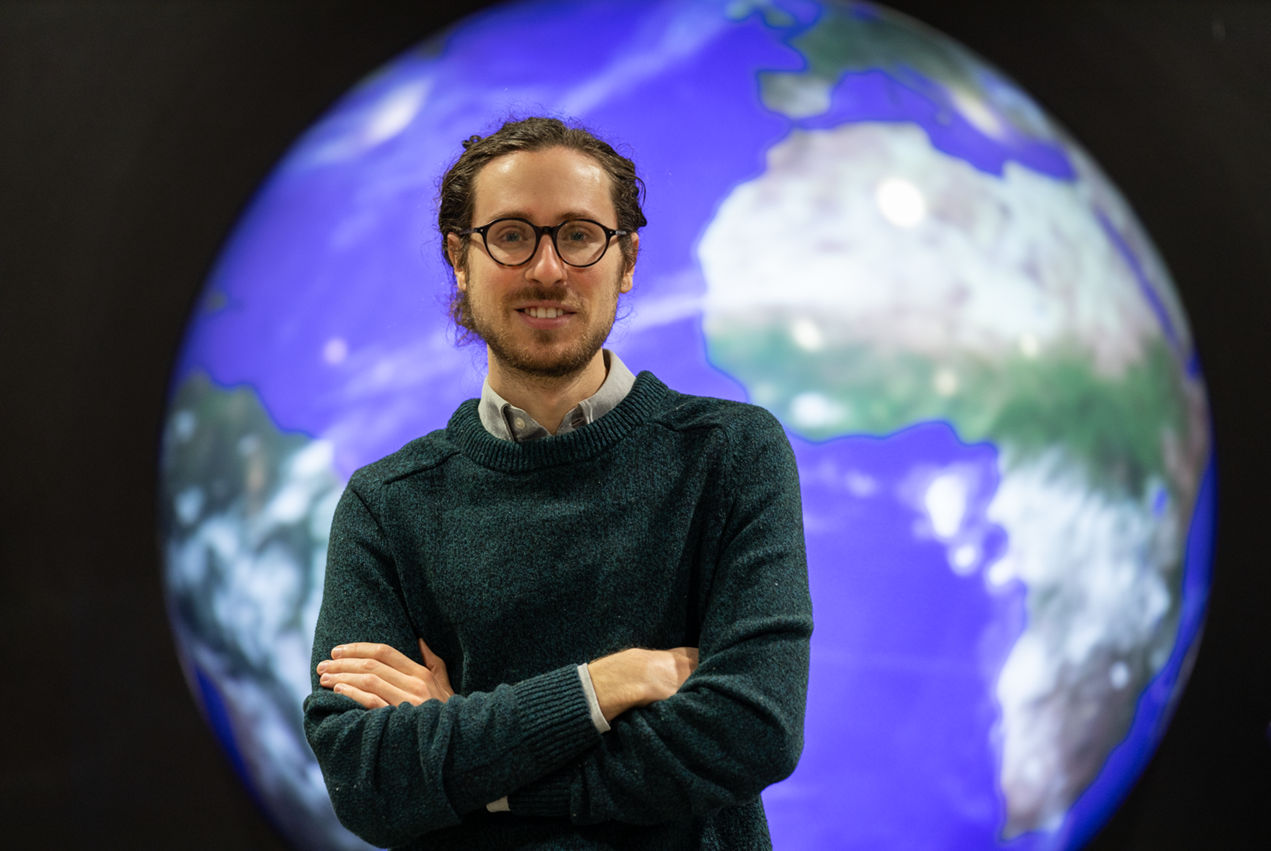
To those of us living near a coastline, the tides are a familiar celestial cycle. We directly experience ocean tides resulting from the cosmic ballet of Earth and Moon, but much more extreme tidal interactions happen elsewhere in our Solar System. Dr. Hamer will discuss why tides happen, and show examples of tides in the universe. Beyond our Solar System, tides may actually spell destruction for giant planets orbiting very close to their stars.

Jacob Hamer
Dr. Hamer is Assistant Curator of Planetarium Education at the NJ State Museum. He received his BA in Physics and Mathematics from CUNY Macaulay Honors College at Hunter College. During his undergraduate studies he conducted research on galaxies at the American Museum of Natural History. He received his PhD in Astronomy and Astrophysics at Johns Hopkins University, where he carried out research on the interactions between close-in exoplanets and their host stars.

A look ahead at future guest speakers:

DateFeatured SpeakerTopic
July-AugustNo Monthly Meetings
September 9, 2025Edwin L. Turner
Emeritus Professor of Astrophysical Sciences
Princeton University
elt@astro.princeton.edu
“Why a Universe Devoid of Extraterrestrial Life is Quite Plausible”
 
A discussion of why there’s little foundation for the popular expectation that life in the universe may be common.
October 14, 2025Becka Phillipson
Assistant Professor in Physics
Villanova University
rebecca.phillipson@villanova.edu
Prof. Phillipson is an astrophysicist who leverages statistics, nonlinear dynamics, and machine learning to study the explosive and highly variable characteristics of exotic astrophysical objects such as black holes and neutron stars.

Thanks to Bill Thomas for suggesting this speaker.
November 11, 2025Romain Teyssier
Professor of Astrophysical Sciences and Applied and Computational Mathematics
Princeton University
teyssier@princeton.edu
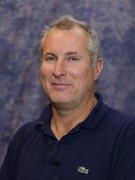
Prof. Teyssier’s main research activity is to perform simulations of cosmic structure using supercomputers in order to understand the origins of stars and galaxies.

The YouTube recording of May’s AAAP meeting featuring Princeton Professor James Stone has been edited and uploaded for public viewing. Visit AAAP’s YouTube channel for recordings of monthly meetings going back several years.

As always, members’ comments and suggestions are gratefully accepted and much appreciated. Thanks to Ira Polans and Dave Skitt for setting up the online links and connecting the meeting to the world outside Peyton Hall.

victor.davis@verizon.net
program@princetonastronomers.com
(908) 581-1780 cell

Posted in June 2025, Sidereal Times | Tagged , , , , , , | Leave a comment