

Rex Parker, weight lifting!

Bill Murray, dome trotting
the cosmos doesn’t care
by Larry Kane
The cosmos doesn’t care that
in our striving to understand
the two extremes of relativity,
we take comfort
being nestled between
the very large and very small.
The cosmos doesn’t care that
we don’t understand the nature of the darkness
that comprises most of its existence
or why the seekers of answers that best describe it
are too often displaced in favor of
knowledge spoon fed to the unquestioning
and the incurious so they may be
satisfied and placated and controlled.
The cosmos doesn’t care that we seek
a way to go to a home
we are yet to visit
or yet to discover as we try to survive
an event anticipated, if not feared.
The cosmos doesn’t care that
our source of life and nourishment,
in its maturity, will end our planet
or that our galaxy that spins around
a super massive knot of gravity
is on a collision course with our
equally beautiful spiral neighbor.
Yet there is a dream that provides and sustains
the few who can see
that we must evolve to protect the many
and create for them a pathway to
an understanding of the laws and demands
of a nature that is filled
with the promise of dreams.
The trek to go toward this fulfillment
may be infinite and the rewards
may be endless, but the cosmos doesn’t care.
And it doesn’t matter
as long as we do.
A galaxy good night
By Theodore R. Frimet
Lay the precipice
and virus wonder.
Is it science fact In hospice
that a soul would not ponder?
However careful fact dissect
words remain in deep sleep.
Stand back and yield to truths respect
seize the moment with sword and weep.
Stand the gate
and draw the sword.
Yield not the truth
Not today or Ever more.
With no symptom
that Death compare.
A sneeze a cough
the fever pitched, beware.
It roils and makes toil
The bed aches beyond mercy.
Starling stare seeks to foil
leaves the ward to be a jury.
Chests rising, chests falling
the rhythm stirs not one.
For five drugs to coma
Gives us Silence all stolen.
A Galaxy good night
To see if not trouble.
See how they gamble?
Yet members yield double.
The pitter patter hear
Small animals do dwell.
How so frightening be death
At whose door will befell?
Pleasant be the time repose
By Theodore R. Frimet
Pleasant be the time repose
To stain a finger black.
To vouch and vote
with vigor, depose.
Mindful masses and their will
Crest on havoc
and joined hands
For be the night not still.
Restless warriors carry the sign
Worries about all apogee
Feet stomp the storm
And wait, wait the long line.
With sheer admission I wonder
Will the skies above go asunder?
When ousted a pundit and outed a truth
Grant us peace and serenity and equity to ‘Boote.
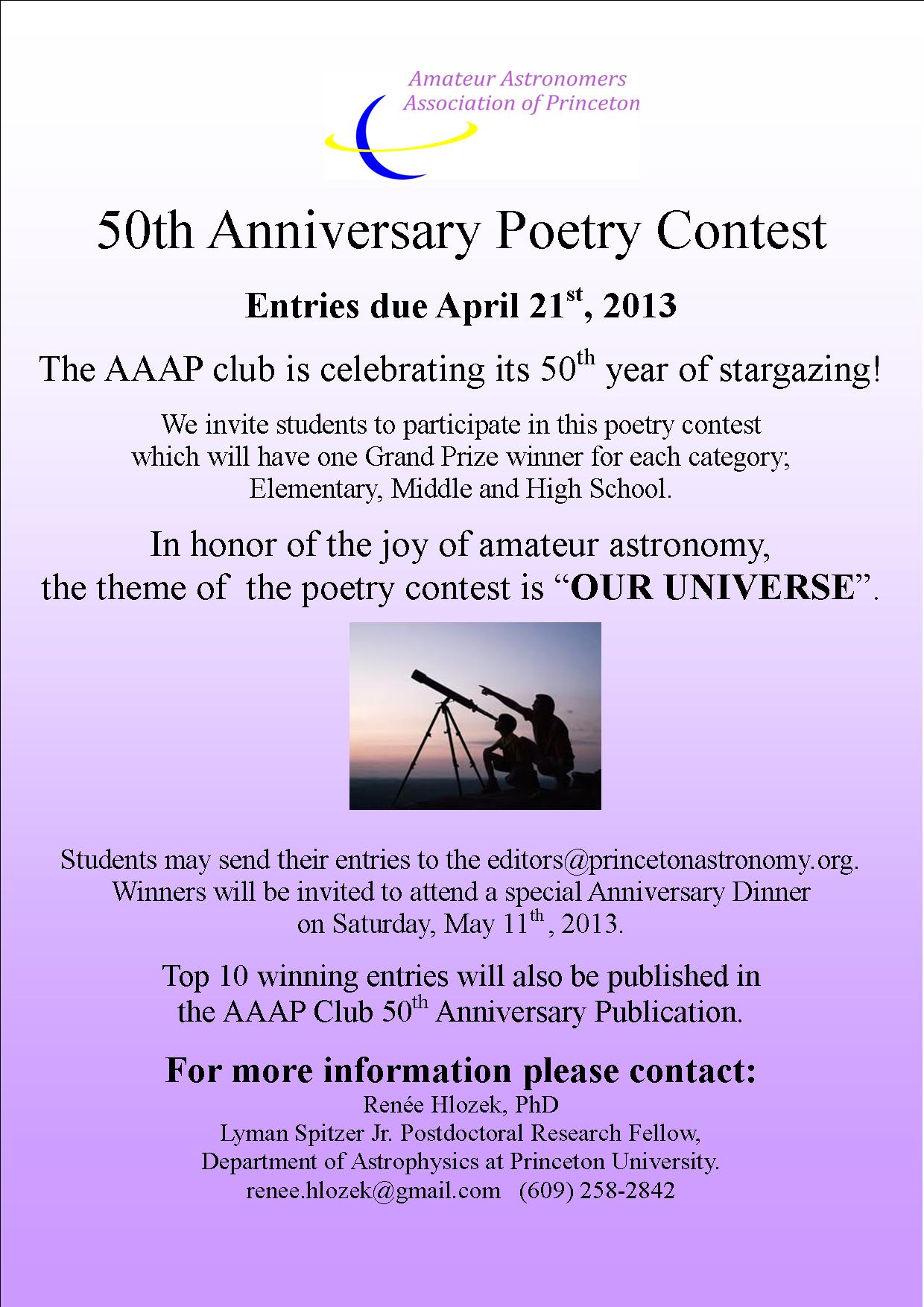
50th Anniversary Year – Children’s Poetry Contest
Click to enlarge

Click to view entries

Click to view entries
Click to view entries

Click to view entries
NASA’s Hubble Space Telescope captured this image of Saturn on July 4, 2020. Two of Saturn’s icy moons are clearly visible in this exposure: Mimas at right, and Enceladus at bottom. This image is taken as part of the Outer Planets Atmospheres Legacy (OPAL) project. OPAL is helping scientists understand the atmospheric dynamics and evolution of our solar system’s gas giant planets. In Saturn’s case, astronomers continue tracking shifting weather patterns and storms.
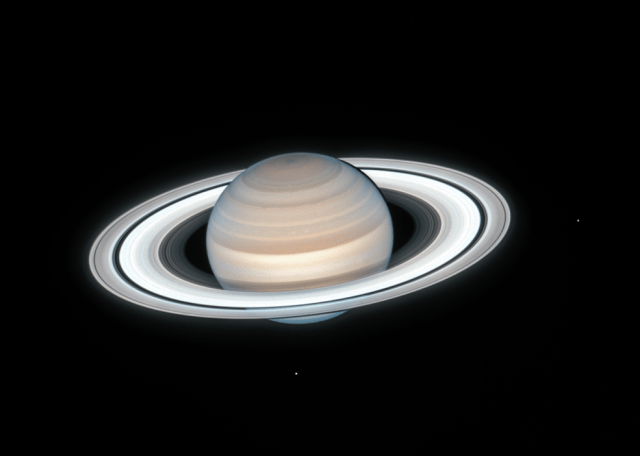 Credits: NASA, ESA, A. Simon (Goddard Space Flight Center), M.H. Wong (University of California, Berkeley), and the OPAL Team
compiled by Arlene & David Kaplan
-NYT
Beyond the Milky Way, a Galactic Wall
Astronomers have discovered a vast assemblage of galaxies hidden behind our own, in the “zone of avoidance.” The South Pole Wall, as it is known, consists of thousands of galaxies — beehives of trillions of stars and dark worlds, as well as dust and gas — aligned in a curtain arcing across at least 700 million light-years of space. …more
-BBC
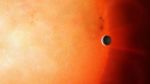
Core of a gas planet seen for the first time
Astronomers have found a previously unseen type of object circling a distant star. It could be the core of a gas world like Jupiter, offering an unprecedented glimpse inside one of these giant planets. Giant planets like Jupiter and Saturn have a solid planetary core beneath a thick envelope of hydrogen and helium gas…more
-BBC
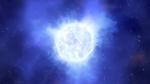
Mystery over monster star’s vanishing act
Astronomers have been baffled by the disappearance of a massive star they had been observing. They now wonder whether the distant object collapsed to form a black hole without exploding in a supernova. If correct, it would be the first example of such a huge stellar object coming to the end of its life in this manner…more
-NASA
How did scientists determine our location within the Milky Way galaxy
–in other words, how do we know that our solar system is in the arm of a spiral galaxy, far from the galaxy’s center? Laurence A. Marschall in the department of physics at Gettysburg College in Gettysburg, Pa., answers:
“There is no short answer to this question…more
-BBC
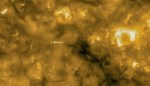
Solar Orbiter: Closest ever pictures taken of the Sun
New pictures of the Sun taken just 77 million km (48 million miles) from its surface are the closest ever acquired by cameras. They come from the European Space Agency’s Solar Orbiter (SolO) probe, which was launched earlier this year. Among the UK-assembled craft’s novel insights are views of mini-flares dubbed “camp fires”…more
-BBC
Nuclear blast sends star hurtling across galaxy
A star has been sent hurtling across the galaxy after undergoing a partial supernova, astronomers say. A supernova is a powerful explosion that occurs when some stars reach the ends of their lives; in this case, the blast was not sufficient to destroy it. Instead, it sent the star hurtling through space at 900,000 km/hr…more
-BBC
Desert telescope takes aim at ageing our Universe
Another telescope has entered the debate about the age and expansion rate of the Universe. This topic has recently become the subject of an energetic to and fro among scientists using different astronomical facilities and techniques. The new entrant is the Atacama Cosmology Telescope in Chile. It’s been studying the “oldest light” on the sky…more

-BBC
‘Hope’ and ambition drive UAE’s Mars mission
The United Arab Emirates will send a satellite to Mars in the coming days to study its weather and climate. Hope, as the 1.3-tonne probe is called, is launching on an H-2A rocket from Japan’s remote Tanegashima spaceport. The 500-million-km journey should see the robotic craft arrive in…more
by Rex Parker, Phd director@princetonastronomy.org
Virtually Like the Professionals.
While COVID has wiped out a lot of ground-based astronomy around the world, astronomers are ahead of the curve in virtual and robotic technologies. Astronomy and all the sciences are community-driven activities even though they sometimes must be solo. Innovation helps uncover ways to share under isolating social conditions and is advancing the field in ways we only imagined yesterday. For example, AAAP Observatory Chair Dave Skitt has been exploring ways to stream video astronomy from the club’s telescopes and cameras to make it accessible to members and public. Not only telescopes, but remote meetings and conferences are the way forward for the near future. For example the professional American Astronomical Society (AAS) shifted its 236th annual meeting in June to virtual. I will remind AAAP members here that AAS recently established an amateur membership category, and that you are eligible to join (as I have) using AAAP as your local organization. And so, as AAAP member meeting via Zoom and participating in remote streaming video astronomy, you can be in the front wave of the evolving astronomy community. You can play your part by participating and helping us move forward faster than the social shock wave expanding behind us.
Important AAAP Meeting June 09 via Zoom.
We will hold the last meeting of the academic season June 09 using the Zoom platform. The May meeting had 59 members via Zoom and the feedback was generally positive. I urge you to join the meeting June 09 because we have several important things to accomplish. The June meeting has historically been held at the NJ State Planetarium, hosted by member and planetarium staffer Bill Murray. So we thought it appropriate to invite Bill to give a presentation for the June 09 Zoom meeting as the guest speaker — see Ira’s Program Chair section below.
Key agenda items for June 09 “business” meeting on Zoom:
(1) Resolution: Capital Expenditure Authorization, vote by members.
(2) Plan for re-opening the Observatory
(3) Future meetings if Princeton University doesn’t open
Vote June 09 – Capital Expenditure for Observatory Columns Repair.
A resolution will be presented at the June 09 meeting for vote by members, which would authorize the expenditure of up to $9500 for observatory columns (pedestals) repair. The member authorization vote is stipulated by the By-Laws (paragraph below). The Treasury balance is approximately $15,000. We recognize concern about the scale of this expenditure, yet balance this with the need to accomplish the repair. There is no doubt that it is necessary for the continued operation of the Observatory.
Regarding when to execute, there are a few points to consider. We currently await State Park administration approval, based on a construction plan and cost estimate we obtained from a licensed masonry contractor who inspected the site. Once the state allows us to proceed, we’ll need to schedule the work with the contractor. In the interim the Board will continue to monitor the situation and determine the best time to execute the work and incur the expense, whether it goes as soon as possible or is deferred until later this year.
The Bylaws stipulate: … expenditure in excess of $1000 must be recommended by the Board of Trustees and the recommendation must be published in AAAP’s monthly newsletter together with the meeting date on which the expenditure will be voted. The expenditure must then be approved by a majority of the votes cast and not less than 30% of the paid membership. Members not attending the meeting may vote by mailed or e-mailed ballot provided that their ballot is received by the Secretary within 40 days of the meeting.
Reopening the Observatory – a Draft Plan for Operating in the Time of COVID.
We’re all hopeful about reopening the Observatory at Washington Crossing State Park. The NJ DEP (which oversees state parks) requires that we provide an operating plan for reopening in the time of COVID. The state has several restrictions in place, including 25 person limit and social distancing. The Board is developing a draft Plan in reply to the state, but not all of the Plan is established yet. Please feel free to offer your input by e-mail to me or the Observatory Chair.
DRAFT PLAN
Seek the Stars!
Meanwhile, to get away from all these concerns, seek out the stars! I hope you’re getting outside at home and observing using your own personal telescope. In many ways this is the essential domain of the amateur astronomer. Below, I offer a few images taken in the past couple weeks with my own amateur equipment.
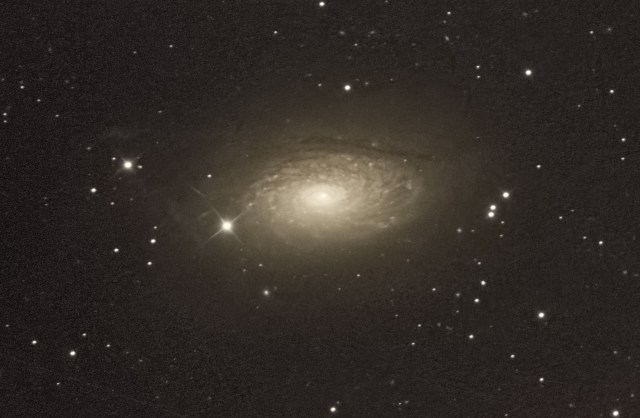
Messier 63, sometimes called the “Sunflower Galaxy”, in the constellation Canes Venatici. Astrophoto by Rex Parker from home observatory in NJ; 12.5 inch telescope with ZWO CMOS color camera.

Supernova in Messier 61 in Virgo. Astrophoto by Rex Parker from home observatory in NJ; 12.5 inch telescope with SBIG ST10-XME CCD camera.

The Crescent Moon on May 26. Astrophoto by Rex Parker from home observatory in NJ; 12.5 inch telescope with ZWO CMOS color camera
by Ira Polans, Program Chair
Monthly Meetings Resume–Virtually
The June meeting will be held on 9th at 7:30 PM using Zoom (See Using Zoom below for details). We will follow the same procedures that we did for May. This meeting is open to AAAP members and their friends and family.
We are planning to make use of chat for the Q&A session and are planning on ways to reduce the background noise. To address background noise, we are going to follow the rules in the table below regarding the audio. If the background noise gets to loud during Q&A or the Business Meeting we will Mute All.
| Meeting Event | Participant Can Speak? | Participant Can Self-Unmute? |
| Rex’ General Remarks | Yes | Yes |
| Ira Speaker Introduction | Yes | Yes |
| Speaker Presentation | No | No |
| Q&A Session | Start All on Mute | Yes |
| Business Meeting | Start All on Mute | Yes |
Only the Business part of the meeting will be locked.
 Featured Speaker: Since we normally meet at the NJ State Planetarium in June, I thought it would be appropriate for club member and planetarium host William Murray to be the June speaker. Bill will give a talk on How the Stars Got Their Names. “Betelgeuse? How does a star get a name like Betelgeuse!” If you’ve ever wondered how stars have the really strange looking names that they do, what they mean and what those strange looking designations next to stars on your star charts are this talk is for you. A light mix of stellar nomenclature and astronomical history will help you appreciate the hobby of astronomy a bit more.
Using Zoom: While we are, social distancing the Board has chosen to use Zoom (at least for May and June) based our belief that many members have already used Zoom and its ease of learning. One of its great features is you can choose whether you want to install the software on your computer or use it within your browser.
How to Join the June Meeting: For the meeting, we are going to follow a simple two-step process:
NOTE: We plan to open the meeting site 15-20 minutes before the 7:30 start time. This way you won’t have to rush to join the meeting. If you haven’t updated to Zoom 5 prior to the meeting, please remember that Zoom will automatically install the update when you join the meeting.
More Information: The Zoom site has many training videos most are for people who are hosting a meeting. If you’re unsure how Zoom works you might want to view the videos on how to join a meeting or how to check your computer’s audio and video before the meeting.
by John Miller, Secretary
Click to enlarge picture




by Gene Allen, Outreach Chair
This may really be the summer of our discontent. Since Baldpate Mountain in late February, all scheduled outreach events at schools and other venues, and the hosting of groups at Simpson Observatory, have been cancelled. For the foreseeable future, no “normal” events will be scheduled.
We had decent success using Zoom to broadcast our May monthly meeting and we are considering ways we might elaborate on that to offer some sort of virtual observing experience as an outreach option. A session would obviously need to utilize an astronomical camera, so it could not satisfy any of those folks who “want those photons that have travelled for millions of years falling right on my eyeball!” Such a session could be promoted by any school, scout, or other group, with no need to assemble and effectively no limit on the number of attendees. There may be a better platform than Zoom. The best situation would be to once again have access to Simpson Observatory for an extremely limited group of keyholders.
Last year we were developing formal presentations, and this year it looks like we will be developing virtual observing sessions. If we are successful, we have the potential to also free ourselves from geographical restrictions and greatly extend our reach. Many questions arise:
If you have helpful thoughts or skills that you can contribute to this effort, please do reach out to any of the Executive Board.
by Gene Allen
As a kid I had messed about spying on a nearby GSA depot at night with a poor department store refractor. I never saw anything move, let alone anything of interest, but out of hope I kept something of a vigil going. I remember the cold air pouring in from having my second floor window open just enough. I do not remember ever trying to point that scope at anything in the night sky, but that could be because I never had any success at it.
I first became interested in actual astronomy when I first looked through a “real” telescope. My first duty assignment after Undergraduate Pilot Training in the Air Force was a C130 squadron at Dyess AFB in Abilene, Texas.
We moved into a little ranch house in base housing, and across the street lived a couple of native Texans. Phil was a radar nav on the B52s also stationed at Dyess, and Melanie was always “a fixin ta do my warsh.” My wife Seraphine was always wondering if she ever actually did it.
One winter night at almost midnight came a gentle knocking at our door. I have no memory of what we were doing up that late, but we were in our early twenties, so that was less rare those days. It was Phil who said, “Sorry to disturb you so late, but I saw your lights were still on and I thought you might like to see the rings of Saturn.”
We bundled up and walked into the open field behind his house where his little refractor was set up. He re-centered his manual alt-az mount and there it was, in all its glory. It was tiny in the eyepiece, but the rings were readily discernible and truly unforgettable. That image has persisted in my mind for nearly fifty years so far. Phil has no idea what a monster he created!
Within a few years I made an attempt to learn about telescopes. It was much more difficult in those days, before the internet, the all-knowing Google, and the ultimate mentoring of Cloudy Nights. It amounted to brochures in snail mail and visits to rare and usually distant brick and mortar retail stores. Probably from an ad in an astronomy magazine, I learned that Roger Tuthill lived in Springfield, New Jersey, only about an hour away from my parents’ home. He would collimate and otherwise tune up Celestron SCTs, re-package them for safer shipping, and sell them for incrementally more.
I called and spent several hours in his home one afternoon, mostly listening to the conversation he and several friends or workmates were having. I didn’t know what to ask or how to ask it, so my fumbling was undoubtedly inane and annoying. We had zero disposable income at that point in our lives, so despite my desires, I was not a qualified buyer.
I guess I decided it had to be that Celestron or nothing, because I just tabled my interest. My childhood experiences must have dissuaded me from repeating the department store scope folly with my own money. I never looked for a more economical way to get into astronomy.
I enjoyed science and math in late elementary and high school, finding it accessible and satisfying. From re-promotion to the accelerated math track and physics mentoring in the algebra of units from Mr. Blumert, I ended up with a Bachelor of Engineering from Stevens. Throughout life I maintained an interest in “popular” physics, picking up a Scientific American magazine now and then, plus books such as Hawking’s “History.” It wasn’t until after my second retirement that I started to attend meetings of the AAAP.
The monthly speakers were so fascinating and the folks so congenial and welcoming that I soon joined to support the organization. A few years in I decided to train as a Keyholder and had the honor of one-on-one training by the incomparable and so sadly late Gene Ramsey.
My interest validated and confirmed, and my budget ample, I dove into research to choose my own hardware. After nearly a year on the Cloudy Nights Forums, I selected a Tele Vue 85 as my first and forever scope. Building on that foundation, I have continued to learn and grow, but I will never hold a candle to the mental acuity and dexterity – the utter brilliance – of some of our Members. It is truly an honor to belong.

 Amateur Astronomers Association of Princeton