The AAAP Merchandise shop is nearly ready to launch
Members (and public) will be able to securely purchase AAAP-emblazoned shirts and other wearables on-line. In the future other items may be added as well. Member Rich Sherman has been developing the on-line merchandise project, which may be launched at the upcoming Dec 14 meeting. The link will be featured on the AAAP website for easy access.
I wanted to share my compilation of images from the Partial Lunar Eclipse of Nov 19, 2021. I began photographing the moon through the clouds at around 2AM EST and took my last photo just prior to 6 AM EST.
Equipment used – Canon SX70 HS – taken from Marlboro Twp, NJ.
I’m teaching a Freshman Seminar this fall called Sizing Up The Universe. There are 12 students in the class. A few weeks before the eclipse, I told my students that the eclipse was an upcoming event and I asked them if they would like to do an eclipse observing event at Poe Field here on the campus of Princeton University.
Of course, right at the start of the conversation I told them that the time of near totality would be at about 4am and therefore that I’d arrive at Poe Field at about 3am and probably leave at about 4:20am. I also told them that I’d be taking astro-photographs with my 3.5″ Questar telescope and a DSLR camera and that therefore it wouldn’t be practical to show them the eclipse visually through my telescope. But, they would be able to see the photos in real time as they downloaded from my camera to my laptop computer. I also told them that I’d bring binoculars that they could use to see the eclipse up close.
Virtually all of the students enthusiastically expressed that they would like to attend such an event and that they would set their alarm clocks and show up about 30 minutes before 4am. So, that was the plan. But, over the course of a few days leading up to the event it looked like the weather was not going to be good. Rain was forecast starting about midnight and ending sometime close to morning. So, we were all expecting that the event would be cancelled. But, as we got closer to the night of the event, the forecast seemed to slowly look better and better. It was still forecast to rain but the rain was forecasted to stop by about 1am. So, we didn’t cancel the event.
It did rain and the rain did stop some hours before the event. As planned, I showed up to Poe Field at about 3am. The sky was perfectly clear. The first few students to show up arrived only minutes after I did. At 4am there were about 10 students from my class and some of them brought some friends making the total number up around 15. They had a lot of fun looking at the eclipse through the binoculars. They also were very excited to see that the eclipse wasn’t very far from the Pleiades star cluster. And, they liked seeing the pics that I was taking through my Questar.
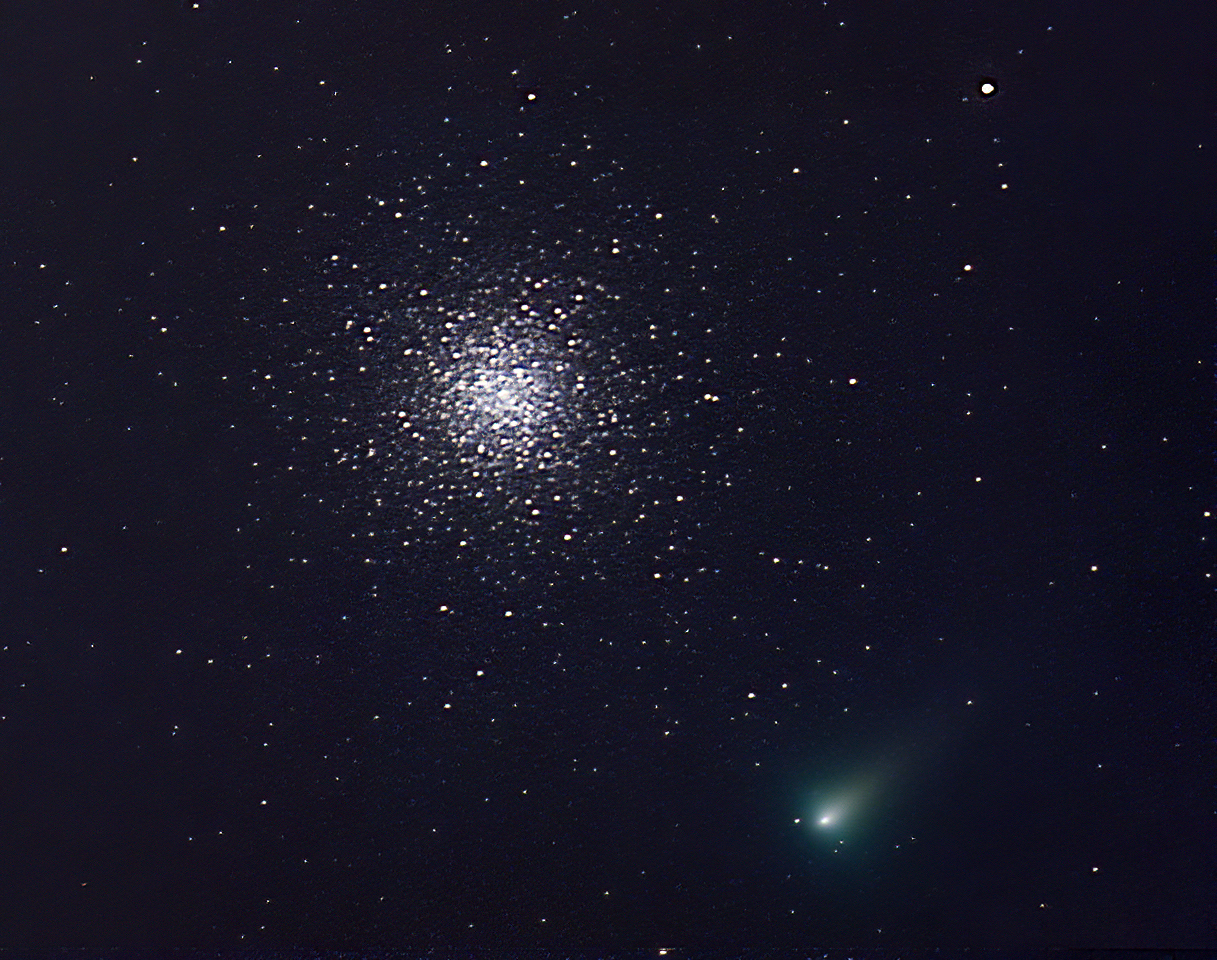
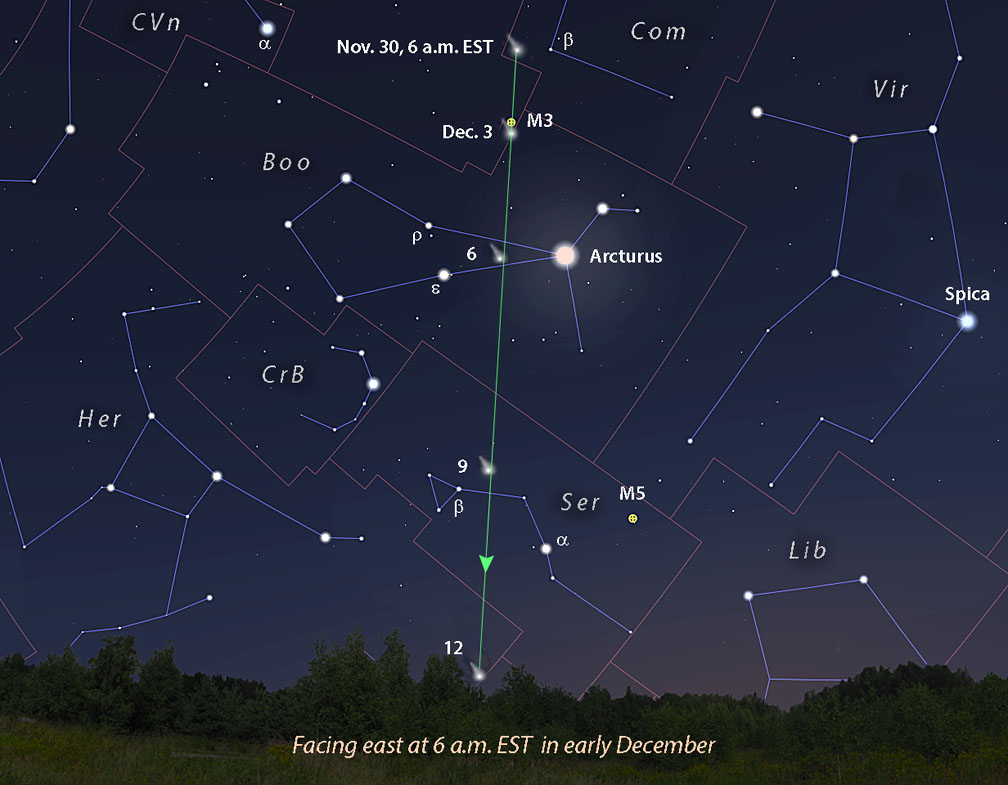
Discovered on January 3, 2021 by Astronomer Gregory J. Leonard, comet C/2021 A1 (Leonard) is heading inward toward its January 3, 2022, perihelion. It has the potential to become the brightest comet of 2021! It is currently in Ursa Major and is predicted to brighten until December 13, at which time it may be visible with binoculars.
An ultrafast comet, Leonard is traveling at 158,084 miles per hour (254,412 km/h or 70.67 km/second) relative to Earth. But despite its incredible speed, don’t expect to see it zip across the sky. To us it will appear as a very slow moving object because of its great distance from the earth.
“Orbital calculations revealed that the object had spent the last 35,000 years wending its way sunward after reaching aphelion at the chilling distance of around 3,500 AU (3,500 times the distance between our Earth and sun].”
In other words, it is a once-in-a-lifetime event. This comet takes tens of thousands of years to complete an orbit around the sun and after this current close sweep, we will not see it again.
Check out its shifting positions on the Earthsky website. Space.com also has a very informative article on this comet.
Every decade, a survey is conducted in the US to check for the trends in astronomy so that recommendations can be made for projects like building new telescopes. It is called the decadal survey. For this decade, the survey was delayed by about a year due to the pandemic. This decadal survey is titled “Astro 2020”.
The first trend is to look for habitable worlds. Basically, looking for exoplanets outside of our solar system, with the grand goal of finding potentially habitable worlds. As a part of this trend, the first recommendation is to launch a space telescope which can observe in the infrared/optical/ultraviolet ranges. With a mirror size of 6m, compared to 2.5m for the Hubble space telescope Such a telescope will be very sophisticated and time consuming to design and build. It is not expected to launch till the 2040s. Another recommendation is to study to build two strategic missions- one a Far-Infrared space telescope and second a high-resolution X-ray space telescope.
Second trend is to provide new windows on the dynamic universe – to understand the black holes and the neutron stars better. This can lead to understanding the violent events which create them and also to know more about the earliest moments after the Big Bang. Towards this end, the recommendation is to build a Cosmic Microwave Background Stage 4 Observatory. It will study the polarization of gravity waves from the early universe.
The third trend is to study the drivers of galaxy growth. As to how galaxies evolve from the webs of gases leading to star formation. Studies of gas are usually done in the radio range. The recommendation is to replace the current radio telescopes – Karl Jansky Very Large Array and the Very Long Baseline Array. The replacement should be the Next-Generation Very Large array – an array with ten times the sensitivity to be constructed by the end of the decade.
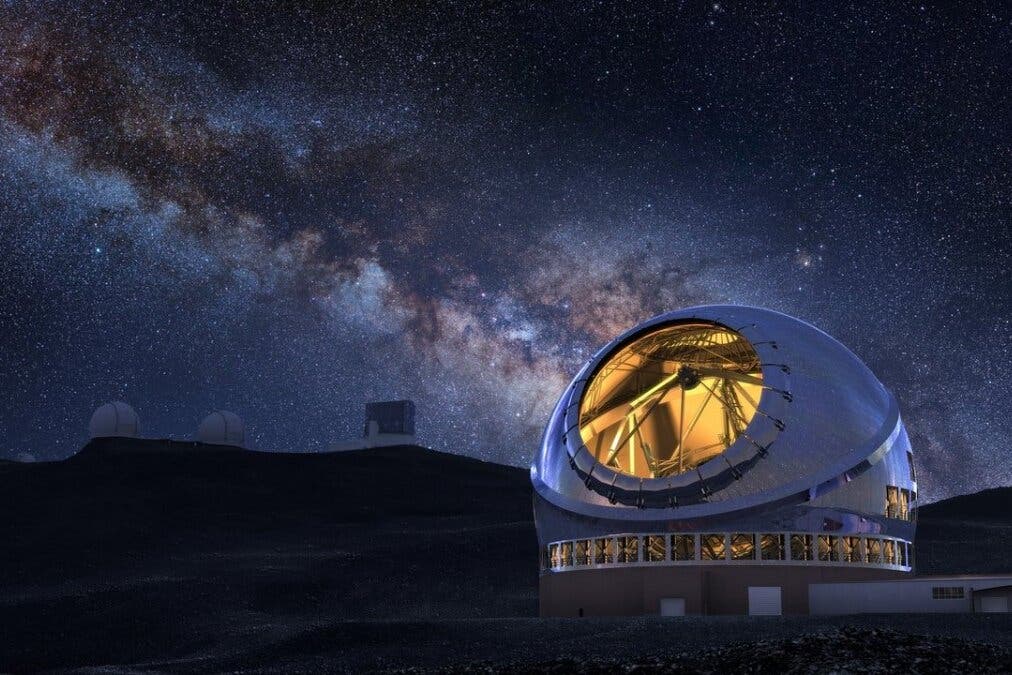
The current telescopes under construction have been mentioned in the survey. Recommendation is made for the US to invest in the GMT (Giant Magellan Telescope) and the TMT (Thirty Meter Telescope). GMT is under construction in Chile. While the TMT ran into trouble in Hawaii with the local population, it is being relocated to an alternate site.
The long awaited James Webb Space Telescope (JWST) will hopefully be launched in December 2021 and will directly examine the youngest observable galaxies, The Vera Rubin observatory under construction in Chile and the launch of Nancy Grace Roman observatory is expected in 2025. They will transform the views of dwarf galaxies at the extremes of galaxy formation and the record of ancient stars they left behind. Laser Interferometer Space Antenna (LISA) (launch expected in mid2030s) should identify mergers of black holes all the way back to their earliest form. LISA is an advanced interferometer with a million and a half miles on each triangular side, to detect gravity waves.
Gravity waves, along with neutrinos are the new messengers. It all started with the naked eye astronomy by looking at dark skies and tracing star patterns. Then came the telescope to see dimmer or distant stars. Next, Telescopes were built to detect the other invisible parts of the spectrum – radio, infrared, ultraviolet, X-rays, Gamma rays etc. And now the Gravity wave detectors and neutrino detectors. Often, incidents are followed up via multiple paths for confirmation. Getting information via all these paths paints a composite picture of the Universe.
The recommendation is to build the next generation neutrino detector – IceCube-Gen 2. IceCube is a neutrino detector at the South pole. But this committee lacks the charter to press upon such a recommendation. Nevertheless, hopefully, the next generation neutrino detector will be built.
We are living in exciting times. And more excitement is in the air.
I recently learned about a company that builds custom astrophotography adapters, including replacement focusers and custom focuser extension tubes. The company is based in Miami, FL, and is named PreciseParts. Their tagline is: “Your online astro machine shop.” PreciseParts claims to have shipped to more than 3,000 customers in 54 countries. You can learn more at:
James Webb: Hubble telescope successor faces ‘two weeks of terror’ Engineers like to describe the process of landing a rover on Mars as the “seven minutes of terror”. But when it comes to the James Webb Space Telescope (JWST), it’s more like “two weeks of terror”. The successor observatory to the mighty Hubble telescope has been built to…more
-NYT
A New 10-Year Plan for the Cosmos On astronomers’ wish list for the next decade: two giant telescopes and a space telescope to search for life and habitable worlds beyond Earth. American astronomers on Thursday called for the nation to invest in a new generation of “extremely large” multibillion-dollar telescopes that would be bigger than any now on Earth or orbiting in space…more
-NYT
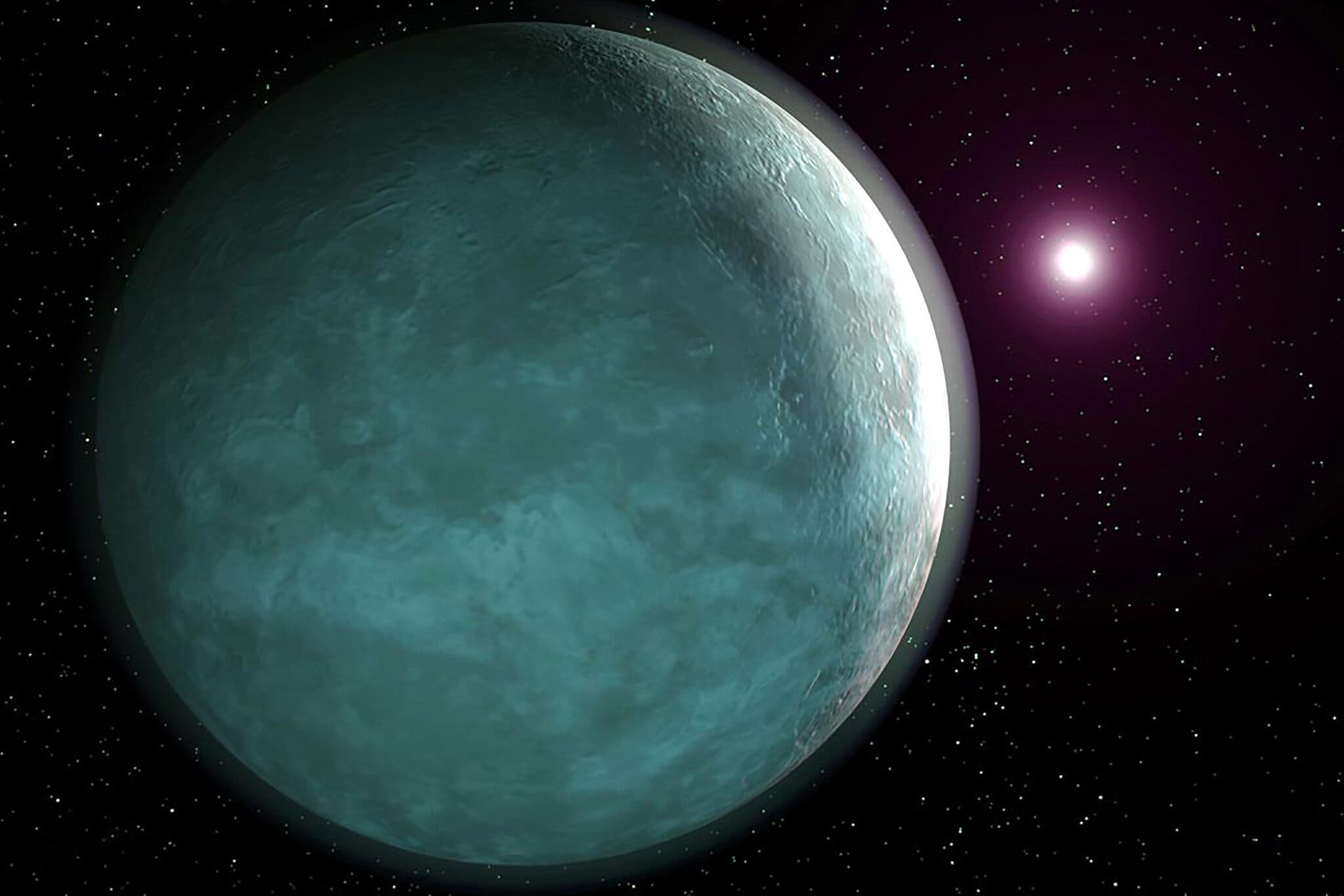
Star System With Right-Angled Planets Surprises Astronomers Star systems come in all shapes and sizes. Some have lots of planets, some have larger planets and others have no planets at all. But a particularly unusual system about 150 light-years from our own has scientists scratching their heads. In 2016, astronomers discovered two planets orbiting the star HD 3167….more
-BBC
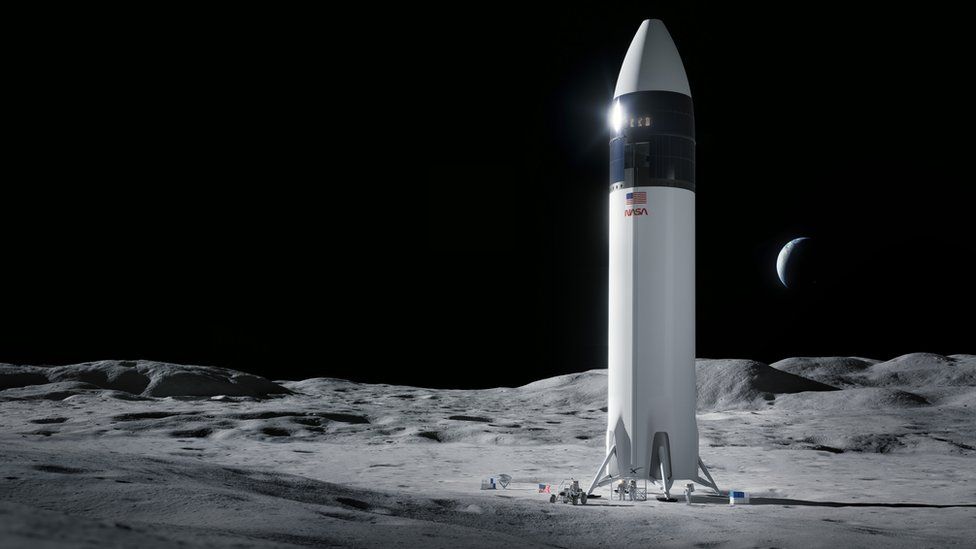
Nasa’s Moon return pushed back to 2025 The first Nasa mission since 1972 to put humans on the Moon’s surface has been pushed back by one year to 2025. Few observers expected Nasa to make the previous 2024 date, because of a funding shortfall and a lawsuit over the landing vehicle. But the space agency’s chief Bill Nelson confirmed the delay in a press conference on Tuesday…more
-NYT
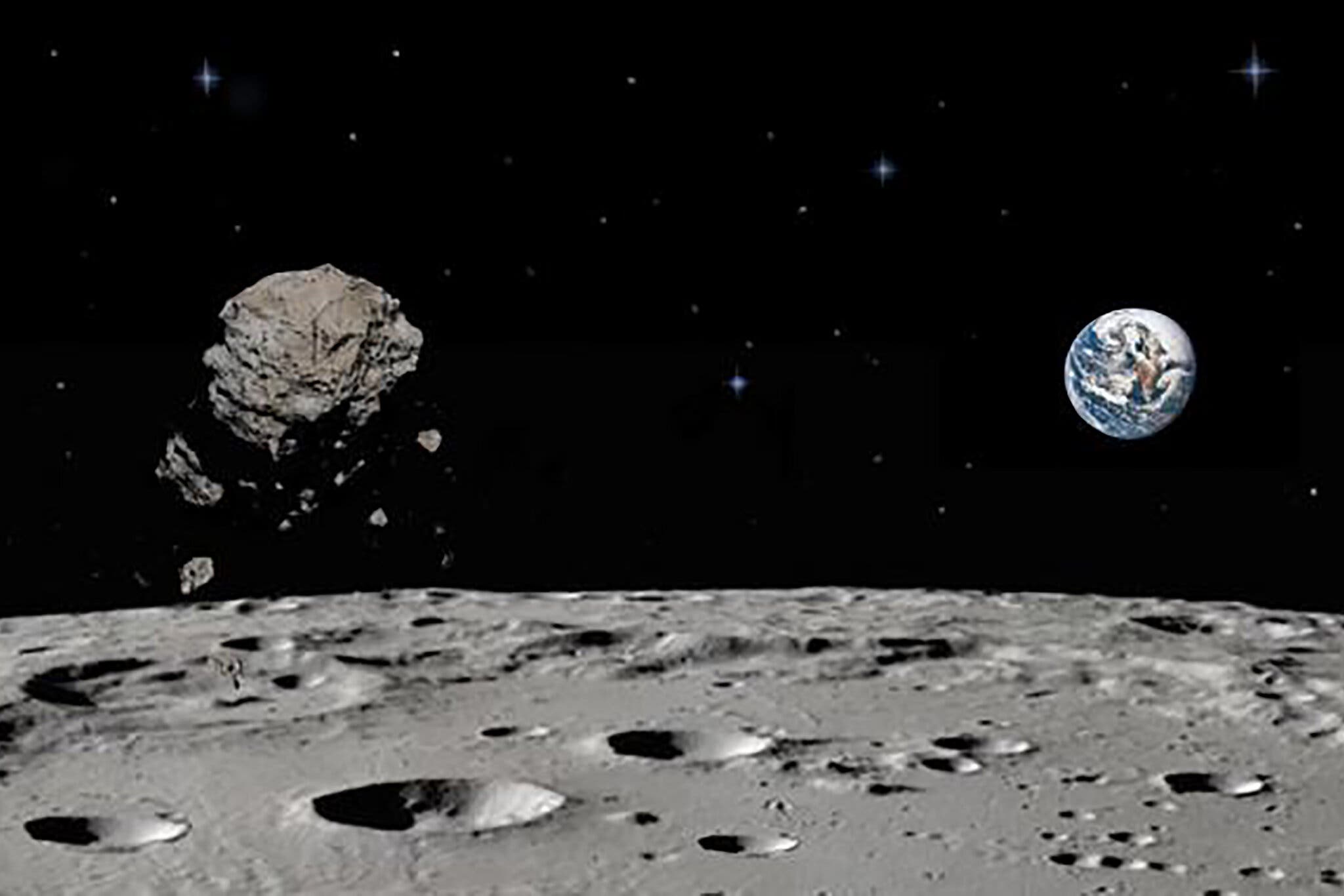
A Missing Piece of the Moon May Be Following Earth Around the Sun Space is vast and lonely. It is perfectly understandable, then, that a little rock would decide to tag along with Earth and the moon on their yearly circumnavigation of the sun. Said rock, 165 feet long, was discovered in 2016 by Hawaii’s Pan-STARRS 1 asteroid-hunting telescope. This eccentric entity’s Hawaiian name, (469219) Kamoʻoalewa, means “wobbling celestial object.” As it repeatedly loops around Earth…more
-BBC
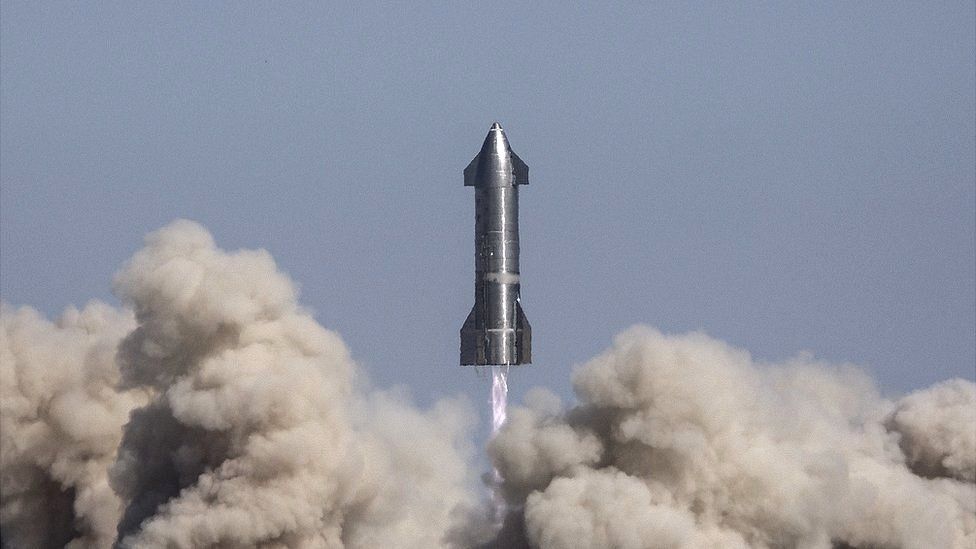
What is Elon Musk’s Starship? Elon Musk is developing a vehicle that could be a game-changer for space travel. Starship, as it’s known, will be a fully reusable transport system capable of carrying up to 100 people to the Red Planet. The founding ethos of Elon Musk’s private spaceflight company SpaceX was to make life multi-planetary. He says that settling humans on other worlds…more
-NYT
The Hubble Telescope Checks In With the Most Distant Planets You don’t need a weatherman to know which way the wind blows on Jupiter. All you need is the keen eyesight of the Hubble Space Telescope for a close-up look at the candy-colored ribbons of clouds and storms on the face of the solar system’s largest planet. Every year the Hubble is deployed to make a visual “grand tour”…more
-NYT
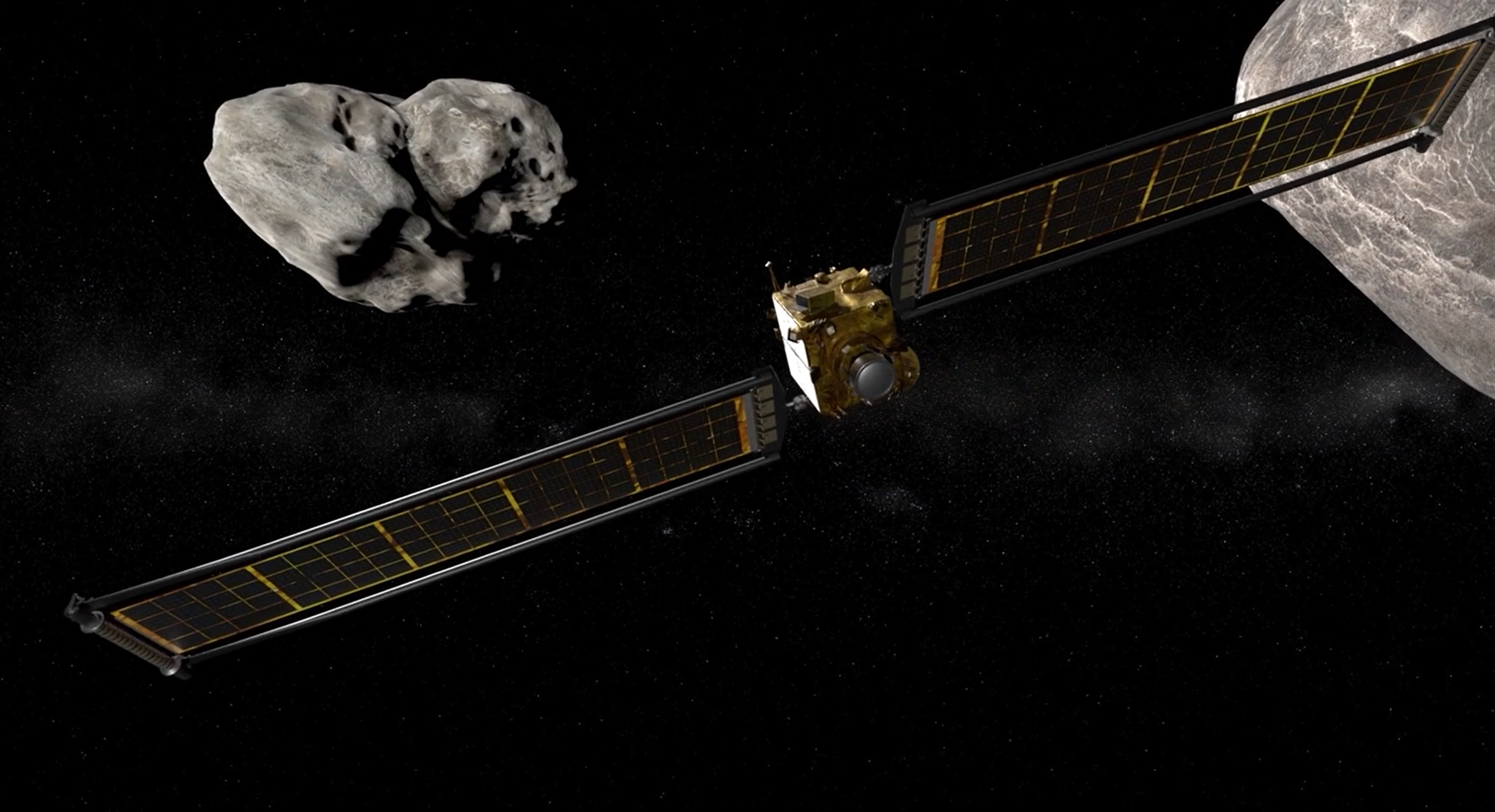
NASA Launches New Mission: Crash Into Asteroid, Defend Planet Earth It was 2017, and astronomers projected an asteroid the size of a cruise ship would strike Japan sometime in the next decade. Scientists and government officials from NASA and other space agencies, gathered at an annual planetary defense conference in Tokyo, hastily devised a plan to knock the asteroid off its path toward Earth…more
Finding Evidence of Life beyond Earth, Part 2 of AAAP Discussion. NASA first developed a major program to search for life on other planets and moons in the mid-1990’s. In 1996, NASA chief Dan Goldin expanded on the intense public interest stirred by the report of putative fossil microbes in a Martian meteorite and the recent discovery of exoplanets. The subsequent advances made by NASA planetary probes defined the most likely places in the solar system to harbor life. Today, with mounting exoplanet discoveries from the Kepler and TESS orbiting telescopes and advances in Mars rover exploration, it’s beginning to seem less like sci-fi and more like impending reality for the prospects of finding evidence of extraterrestrial life. For a case in point see the astro-image of NGC 6559 at the end of this section.
Key scientific leaders are now calling for a framework for reporting evidence for life beyond Earth. An article in the current issue of Nature takes on this difficult challenge (Green et al., Nature vol 598, p 575, Oct 28 2021). It’s reasonable to think that this paper was spurred on by the wake of the interstellar “asteroid” Oumuamua which recently sailed through our solar system and generated provocative publications, including the Amazon best-selling book, Extraterrestrial by Harvard professor and Astronomy Department Chair Avi Loeb. Members will recall our recent discussions on this topic at recent AAAP meetings. The lead author of the new Nature paper is James Green, NASA Chief Scientist and former Director of the Planetary Sciences Division. Here we have another AAAP connection, as some members will remember his amazing presentation to our club at a standing room-only Peyton Hall a few years ago (one of Ira’s best leads as Program Chair!).
In the Nature article, Dr Green describes how “Our generation could realistically be the one to discover evidence of life beyond Earth.” He cautions that with this privilege comes responsibility, because of the deep significance of the question and the impact that such a discovery would have on the world of humanity. Results may be taken to imply more than observations support or observers intend. There are challenges of perception and communication, and evidence likely would be revealed in stages, for example from one NASA mission to the next. Our society has a tendency to turn these efforts into binary, all-or-nothing propositions, placing unrealistic expectations on initial stages. The paper lays out a conceptual framework for how to proceed with a dialogue among scientists, technologists, and the media to agree on objective standards of evidence for life and best practices for communicating it. If indeed we are on the verge of making the most significant scientific and philosophical discovery in human history, the framework they propose is an essential step to prepare society to accept a profound fundamental discovery.
Be Part of the Unjournal Club. Doing astronomy as a club is a little different when we cannot meet in person for regular meetings. So for now, the best way to keep the communication channels active is to use our monthly Zoom meetings to highlight club activities and facilitate member conversations. This takes place during the second hour after the main speaker has finished. This is why we have evolved the informal “Journal Club” presentation by a member each month to help break the boundaries set by Zooming. Here I am asking you to step up to volunteer to give an “unjournal” club session! “Unjournal” because these typically short 10 minute talks do not need to be about scholarly, journal-like topics at all, just need to engage other members with what you care about in astronomy. It works great with Zoom screen sharing where you can use PowerPoint slides, JPEG pictures, etc. from your home computer or mobile device. To get on the schedule for an upcoming meeting, please contact me at director@princetonastronomy.org or program chair Victor Davis at program@princetonastronomy.org.
Vacancy – Secretary, AAAP. Due to unforeseen circumstances, our secretary John Miller is stepping down from the post. On behalf of all members and the Board, we thank John with deep gratitude for his commitment, service, and leadership in the club for many years. We are now seeking a member to become the new secretary. Along with the post comes a voting seat on the Board of Trustees with the responsibility of helping guide the future direction of the club. One key role of the secretary is to actively maintain the membership roster and work with the treasurer to ensure accuracy. The bylaws define the role as: “The Secretary shall maintain minutes of all meetings of the Board of Trustees and of the general membership, shall keep a record of the membership, and shall notify members of meeting dates. The Secretary may delegate such of these duties as may be appropriate, in consultation with the Director.”
Fall Observatory Season Extended. In view of the generally warmer trends in fall weather and the desire to meet as club members, we are extending the observing season at the AAAP Washington Crossing Observatory.
Public Friday Nights this fall are extended through the end of November.
Member nights will be held on the Fridays throughout December.
Keyholder participation for the above is optional; sessions will be coordinated by the Observatory Chair.
As usual, all the above is weather permitting.
NGC 6559, Emission Nebula in the Constellation Sagittarius. The immensity of the vast region of star formation and interstellar gas and dust in NGC 6559, located about 5000 light years away, is a case in point for thinking about the possibility of extraterrestrial life. The vast number of stars forming in regions of high element diversity in the clouds of gas and particles suggest the potential for abundant rocky planet formation around some of the stars in the nebula. There are hundreds or more nebulae of this type visible from earth-based telescopes. Image by Rex Parker from Planewave-24” telescope at El Sauce Observatory in the Chilean Atacama high plateau. Total CCD camera exposure time (LRGB) ~20 hours.







 Amateur Astronomers Association of Princeton