Snippets

compiled by Arlene & David Kaplan
-NYT

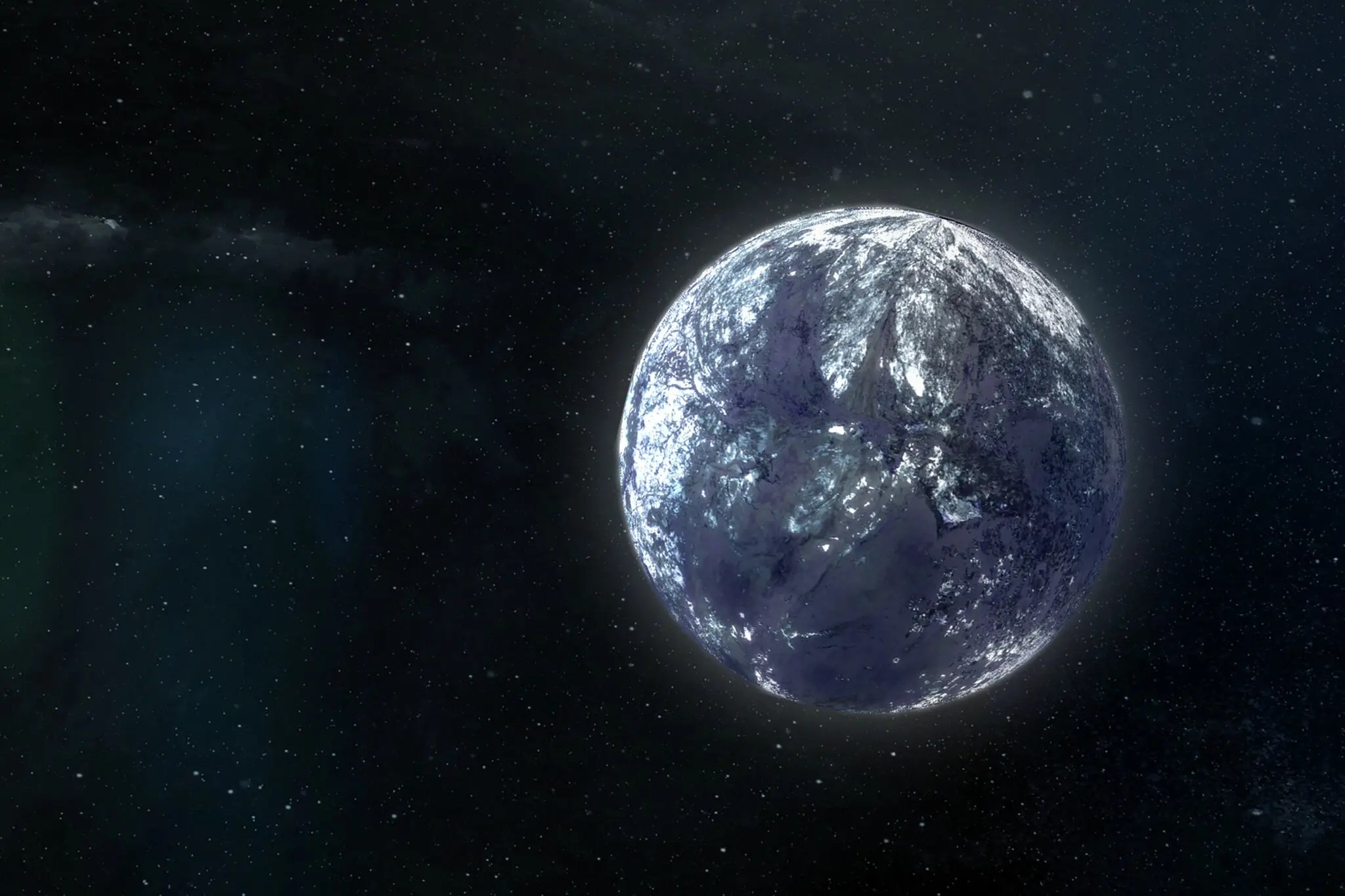
Our Galaxy Is Home to Trillions of Worlds Gone Rogue Free-floating planets — dark, isolated orbs roaming the universe unfettered by any host star — don’t just pop into existence in the middle of cosmic nowhere. They probably form the same way other planets do: within the swirling disk of gas and dust surrounding an infant star…more
-NYT
-NYT

What It Looked Like When India Landed on the Moon India’s Chandrayaan-3 mission landed on the moon on Aug. 23. There was no guarantee that the lander would make it in one piece. A previous Indian vehicle crashed in 2019 as it headed to the lunar surface, as did spacecraft from Russia and a Japanese company this year…more
-NYT

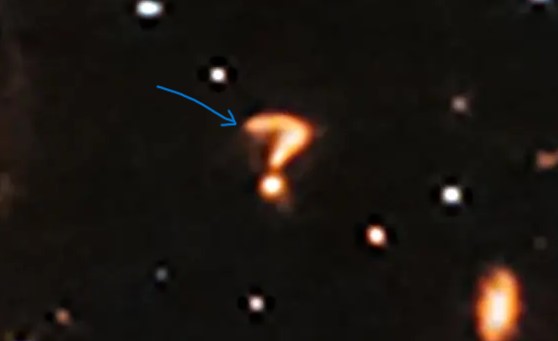
The Biggest Question Mark in Astronomy? You’re Looking at It. The astronomers will tell you it is just an optical illusion, a pair of galaxies caught in the act of mating as seen from the wrong angle. Happens all the time. In the 1960 and 70s, Halton Arp, an astronomer at Hale Observatories in Southern California, caused a ruckus by asserting that galaxies…more
-space.com

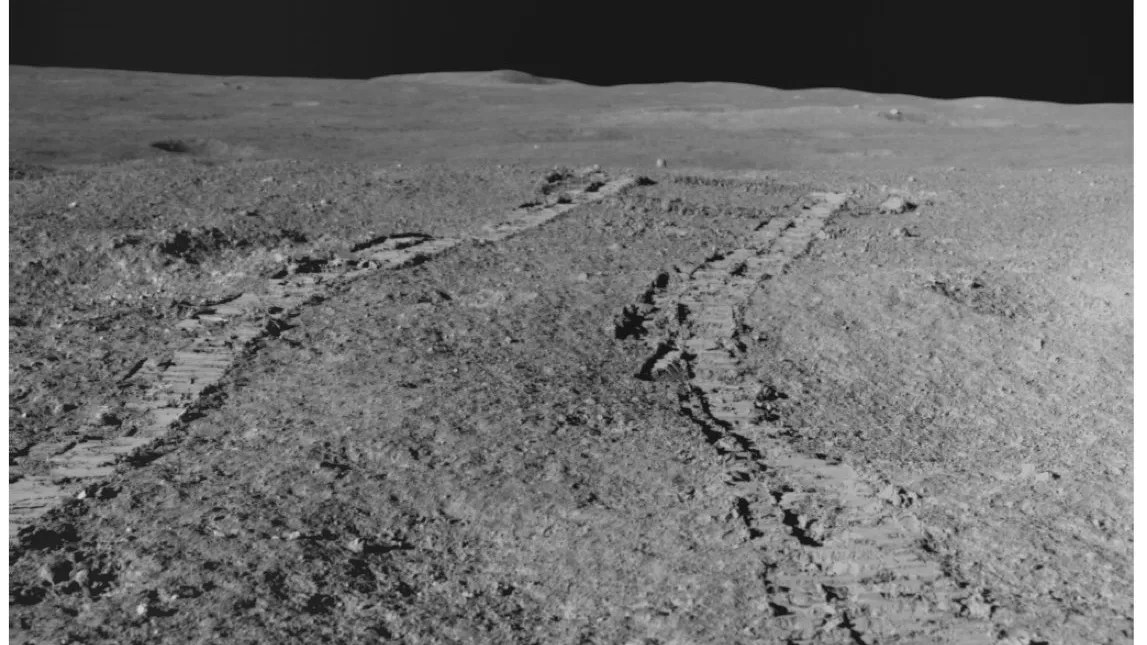
India’s Chandrayaan-3 takes the moon’s temperature On Aug. 23, thanks to the success of Chandrayaan-3, India made a strong mark in space history. Not only did it become the first nation to land a spacecraft near the south pole of the moon, but also the fourth to create imprints on Earth’s gleaming companion at all. However, the lunar lander’s touchdown was only step one of its ultimate story…more
-BBC

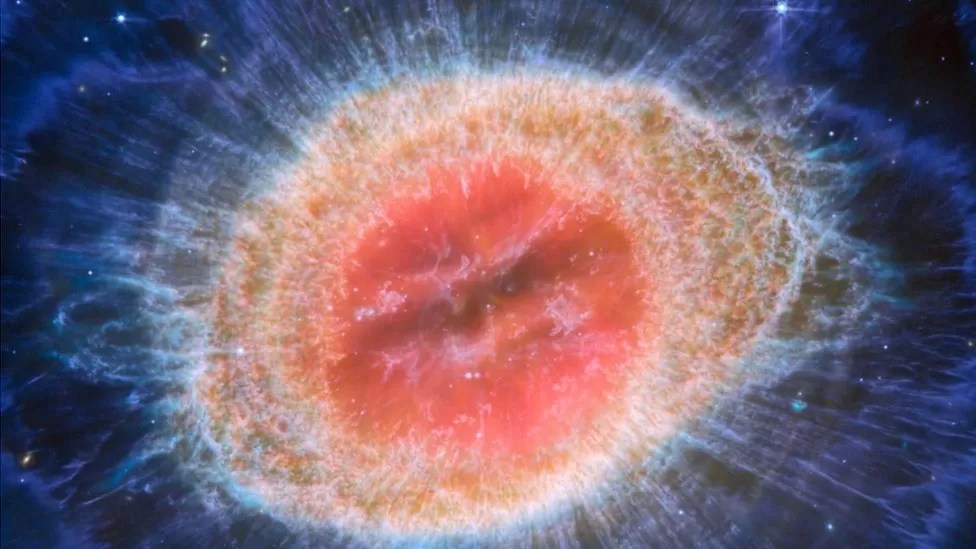
Dying star analysed by Cardiff scientists Astronomers New images of a dying star have revealed structures that no previous telescope could detect, according to astronomers. The pictures are of a dying star at the centre of the Ring Nebula, 2,600 light years from earth…more
-NYT

NASA Seeks a Nuclear-Powered Rocket to Get to Mars in Half the Time Avi Loeb, a theoretical astrophysicist at Harvard University, followed the news about Oumuamua for months. Then one morning in the fall of 2018, he had an idea. For Oumuamua to accelerate as it did, something had to have given it a push…more

-Cosmos Magazine

Mars rover Perseverance sees huge sunspot rotating toward Earth NASA’s Perseverance Mars rover has caught a glimpse of a huge sunspot, indicating a region of high solar activity, on the far side of the Sun which will turn to face Earth in the coming days. The rover, whose mission is to analyse the surface of the Red Planet and look for potential ancient signs of life on Mars, took a moment from its usual tasks to take a look up….more
-NYT

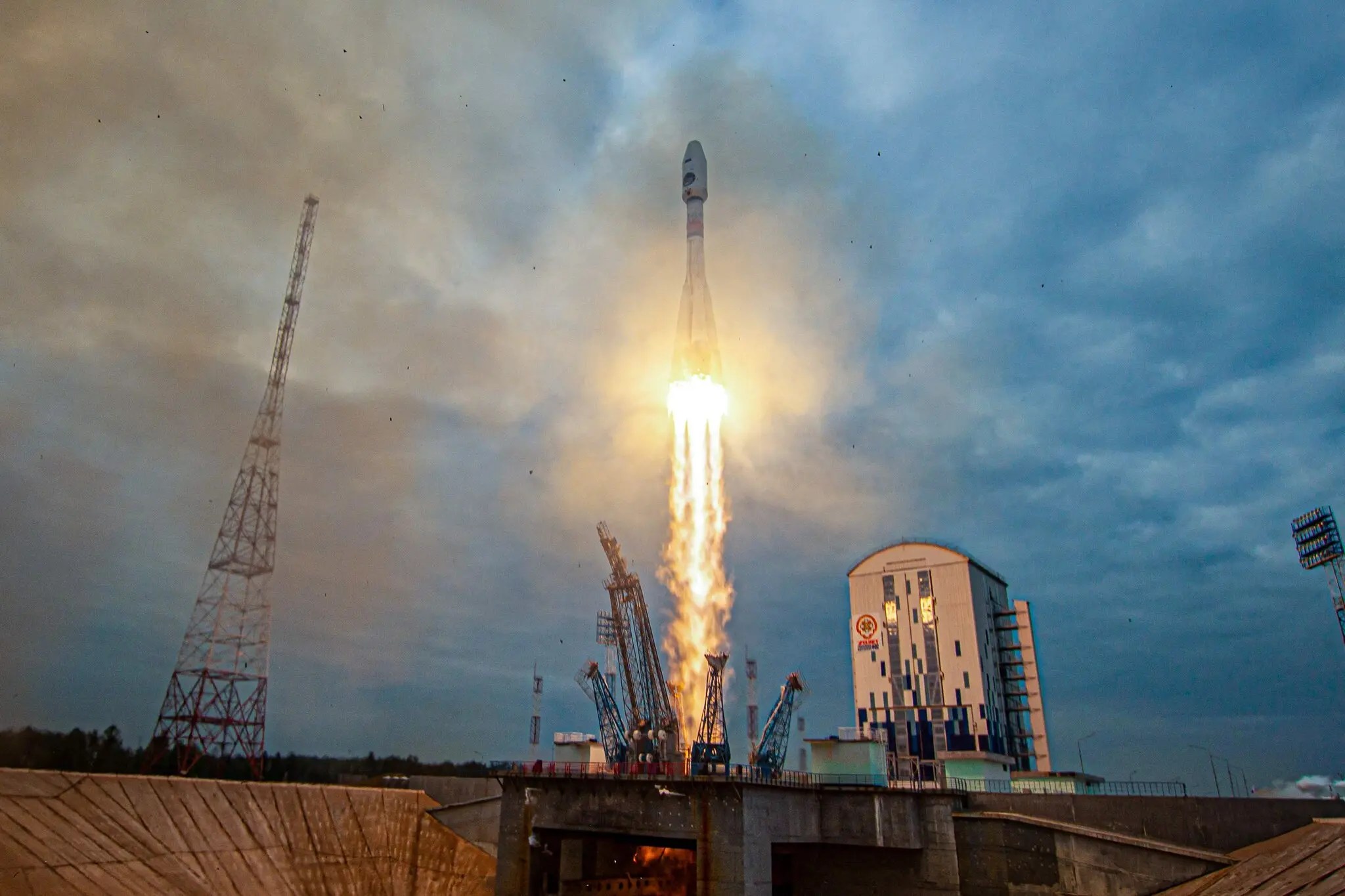
Russia’s Lunar Lander Crashes Into the Moon A Russian robotic spacecraft that was headed to the lunar surface has crashed into the moon, Russia’s space agency said on Sunday, citing the results of a preliminary investigation a day after it lost contact with the vehicle. It is the latest setback in spaceflight for a country that…more
-NYT

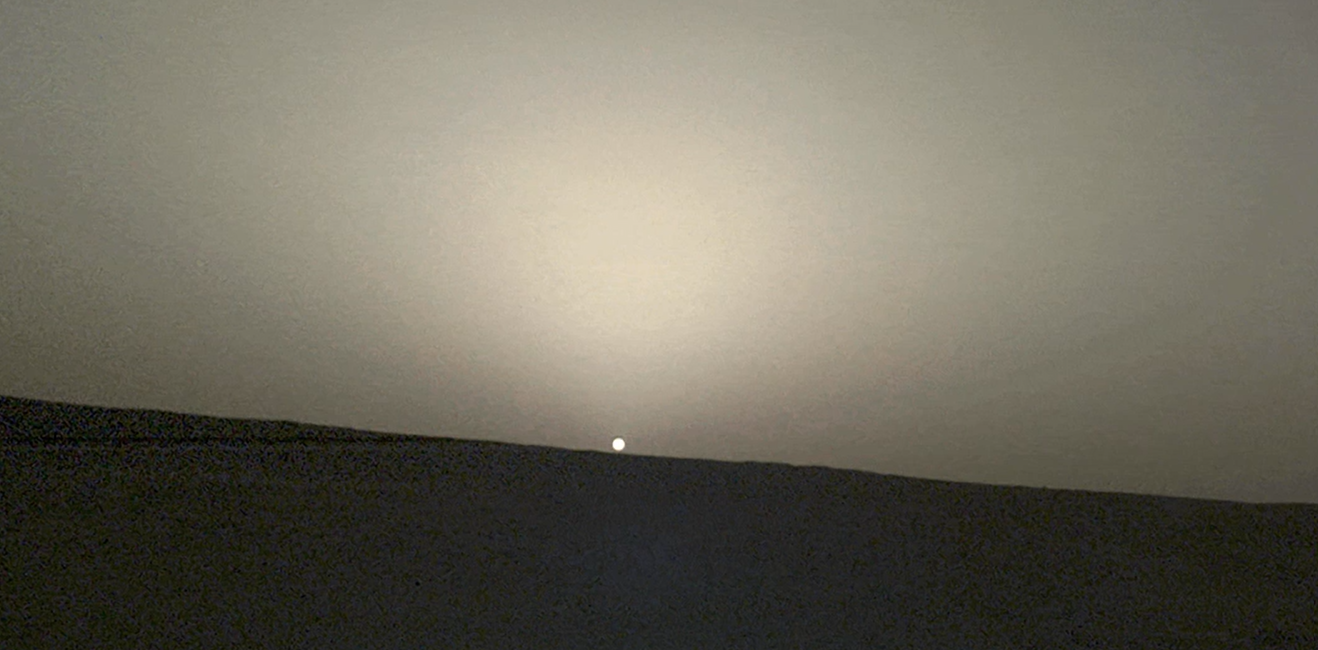
Why Is the Red Planet Spinning Faster? NASA’s InSight lander fell silent in December after dust accumulated on its solar panels. But scientists continue to sift through the four years’ worth of data it gathered, learning more about what is deep inside the red planet…more

Posted in September 2023, Sidereal Times | Tagged , | Leave a comment

From The Director

by Rex Parker, PhD director@princetonastronomers.org

Sublime Joys of Summer Stargazing.  Here in the Princeton area we’ve been spared much of the extreme heat and stalled weather patterns that have been baking parts of the US this summer.  But our telescopes have spent more nights indoors than out with the cloudy, rainy, and smokey skies we’ve tolerated.  So when a clear night sky eventually does coms around, don’t miss out!  The AAAP Observatory in Washington Crossing will be ready for action.  Our rules of operation enable member access to the observatory any time a trained Keyholder is present.  You can email me or the observatory chair or call the Observatory phone (609-737-2575) to see if it is open on any given clear night (beyond regular Friday night open house events.  Hopefully the huge forest fires in Canada will be quenched by rains as summer goes on.  Meanwhile I’m keeping an eye on forecasts to try to get some observing and imaging time whenever the skies do clear out.

Another AAAP Observing Challenge! — Perseid Meteor Shower Could Be Unusually Good.  The earth in its solar orbit has already transected the orbit of the comet responsible for the Perseid meteor shower, comet 109P/Swift-Tuttle.  Meteors from the “shower” radiating from the constellation Perseus may be visible under good observing conditions in central NJ from now through around August 24, with peak around August 13.  Moon brightness is probably the biggest factor in being able to see meteors, and this time around the moon will be in a favorable waning crescent phase in the nights leading up to August 13.  Let’s call this another AAAP observer challenge:  see how many Perseid meteors you can see and count, and report your count at the first AAAP meeting of the season on Sept 12 at Peyton Hall. 

Amateur Astronomer Discovered the Supernova in M101.  The impressive supernova in the spiral galaxy Messier 101 is among the closest core-collapse supernovae (Type II) discovered in the past several decades.  Japanese amateur and famed supernova hunter Koichi Itagaki has been credited with its the discovery on May 19 2023.  Named SN2023ixf, the M101 supernova was confirmed by professionals at Palomar the next day.  A recent article in Science describes the amazing lifestyle of Mr. Itagaki, who operates a private observatory in the hills above his home in Yamagata, Japan, about -180 miles north of Tokyo.  A colorful description of his telescope setup and discoveries that he made through the years was published recently in Science:  https://www.science.org/content/article/amateur-astronomer-may-worlds-top-supernova-hunter

M101 is a giant spiral galaxy 21 million light years distant, sometimes called the Pinwheel Galaxy.  It’s located a few degrees from the double star Alcor & Mizar in the Big Dipper’s handle.  This type of supernova usually flares quickly to a maximum brightness in a few days then declines in brightness gradually over months to years.

Measuring a Supernova’s Magnitude.  During the June meeting at the Planetarium I suggested that it would be a cool AAAP observer challenge to attempt to measure the light curve of the M101 supernova in the months following its explosion on May 19.  Even without special photometric filters our equipment can accurately determine stellar magnitudes and changes in star magnitude over time.

Here is how I measured the supernova’s magnitude and its change over time.  I acquired new images of M101 on 4 occasions from May 22 to July 21, and had previously imaged the galaxy in April 2022.  Camera exposure times (using ZWO cameras with my telescope) were selected so that pixels in the region of the supernova were not saturated, which is important for quantitation.  Color images were converted to monochrome before magnitude measurement.  I then used the astro software Maxim DL to measure the supernova’s magnitude.  Maxim DL has very good stellar photometry capabilities.  It lets the user control the star diameter measured and accurately subtract the background brightness, and provides a routine for calibration of magnitude using a known star in the image with data from professional stellar databases such as those provided in TheSkyX. 

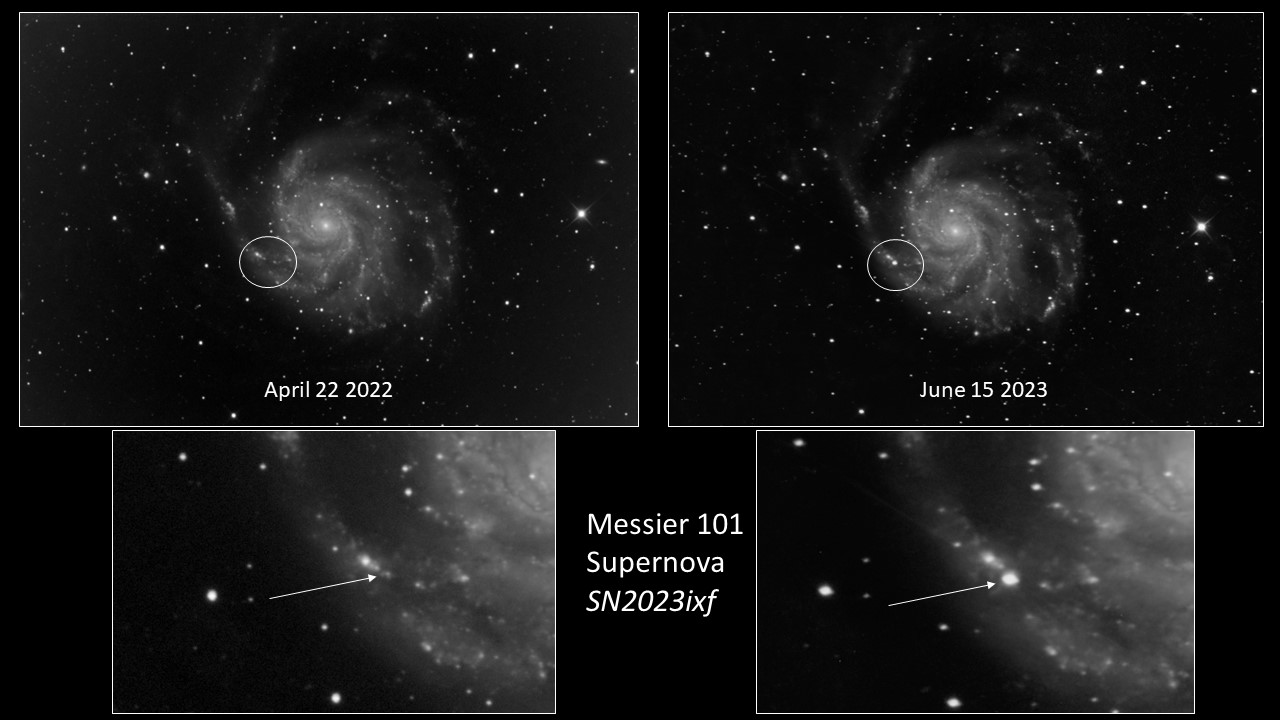
In the images and data (below), the progenitor star region in the image from 2022 was very faint, about magnitude 20.5.  Right after the supernova explosion May 19, the magnitude jumped to  around 11 by day 3 and 4, and then steadily declined over the next 2 months to magnitude 12.3 by day 63 (see graph).  It will be interesting to see how far the supernova light curve will decline in the future, and to contemplate the radical changes its atomic fusion processes, diameter, and radiation spectrum will undergo during this period. 

The spiral galaxy Messier 101 before (left) and after (right) the supernova event which first appeared on May19 2023.  The supernova SN2023ixf is circled in the upper images and indicated by arrows in the lower zoomed images. AGO 12.5” f/6.7 scope with ASI2400MC camera at gain 0.  The magnitudes were measured as discussed in the text above.  Images and data by RA Parker.

M101 supernova change over time white annotation. Rex A Parker, July 2023
Light curve of SN2023ixf in M101
Posted in Mid-summer 2023, Sidereal Times | Tagged , | Leave a comment

Minutes of the June 13, 2023, AAAP Members General Meeting

by Gene Allen, Secretary

The meeting was convened in the Planetarium of the NJ State Museum by Director Rex Parker at 1935. Following a brief introduction Program Chair Victor Davis introduced Speaker Dr. Jacob Hamer, the new Assistant Curator of the Planetarium. His topic was 60 Years of Discoveries with the Arecibo Observatory. Questions followed and then they presented a video program about the aurora which will be offered to the public in the fall.

The business meeting convened at 2116 with an update from Observatory Co-Chair Dave Skitt.

               Two benches have been obtained for free and are intended to offer seating along the west wall.

               Memorial Weekend Solar Observing was attended by 50-60 people a half dozen Ha and white-filter scopes were provided by members highlight was “sun on a stick” by Member Tom Swords.,

               Recently donated scopes include a non-Bird-Jones 114 and a Meade LX200.

We were reminded that AAAP Merchandise includes apparel from the first vendor and non-apparel from the second. Contact Member Rich Sherman at < merchandise@princetonastronomy.org > with any questions or requests.

Assistant Director Larry Kane is coordinating research and participation in the 2024 Eclipse Travel Group. Their first meeting on April 24 will be followed by another on June 19 at 1930. Contact Larry if you would like to participate or just learn what they are finding.

Delores Ramsey, widow of beloved former Observatory Chair Gene Ramsey, has expressed interest in selling some of Gene’s astronomy gear. We have also had requests from non-members looking to sell equipment to or through our club. In order to clarify and formalize our policy a motion was made, seconded, and approved by the six Board members in attendance.

The use of any form of AAAP communication will be limited to sales and donations by our members. Non-members will be directed to alternative marketplaces such as AstroMart.

Delores will be considered an honorary member out of respect for the long and selfless service of her late husband.

Since we had been unable to assemble even the tiny 15% quorum at the May meeting, that confirming vote was invalid. An email vote was conducted on May 21 and the response was terrific. In less than 24 hours we received 70 “yes” votes and voting was concluded. That is more than twice the required number based on our quorum of 30. The first 30 were individually verified as active members, and all 70 email replies have been placed in a folder on the secretary webmail account. They will be retained until next spring as confirmation of the process, should any challenge be issued. The slate which this voting confirmed is:

Director:                                 Rex Parker
Assistant Director:               Larry Kane
Treasurer:                              Michael Mitrano
Secretary:                               Gene Allen
Program Chair:                     Victor Davis
Observatory Co-Chairs:      Jen & Dave Skitt
Outreach Chair:                    Bill Murray

The meeting was adjourned at 2130.

Membership currently numbers 205, with 33 having joined in 2023. There have been 44 renewals and 21 have allowed their membership to expire, giving us a 68% retention rate.

Posted in Mid-summer 2023, Sidereal Times | Tagged , , | Leave a comment

Treasurer’s Report

by Michael Mitrano, Treasurer

The income statement and balance sheet below show the AAAP’s financial results for the fiscal year that ended on June 30, 2023, and our financial position at the beginning and end of the year.

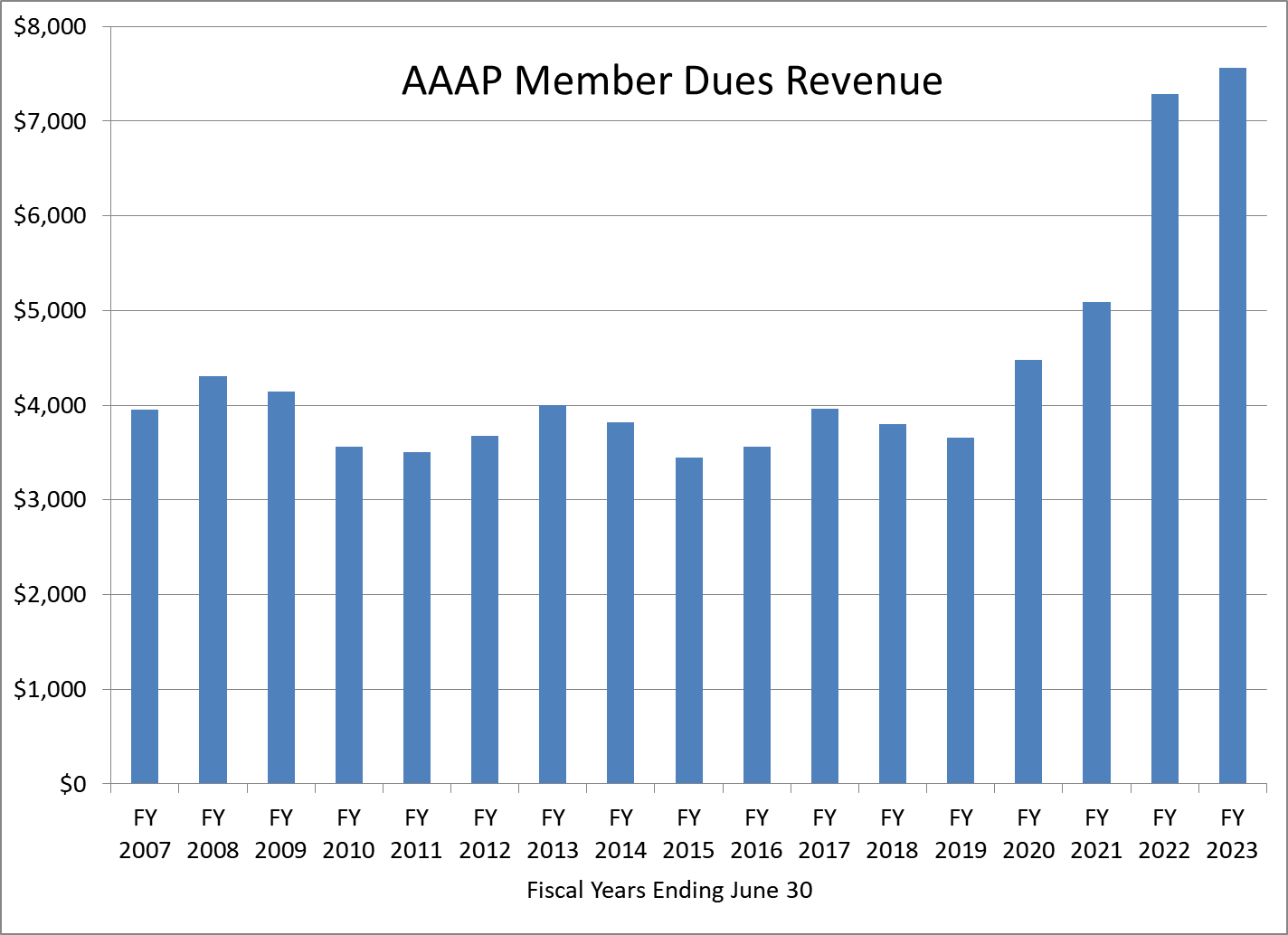
The AAAP had a $2,481 surplus for the fiscal year, similar to last year’s.  The chart below shows member dues for the past 16 years:

Dues were paid by 189 members during the fiscal year – five more than the year before.

Replacement of the observatory columns was completed last fall; the donations from members and others who supported that work were taken into income during the fiscal year (which may not be when the donations were made).  The $9,700 in donations fully covered the cost of the work itself.  Thank you to those who supported the project!  The AAAP absorbed the related PayPal fees.

Our cumulative reserves are close to $21 thousand, equaling about 3 1/2 years of the association’s expenses (excluding the columns replacement) at last year’s level.  We are in a very strong financial position.

Kindly let me know if you have any questions about the report.

Posted in Sidereal Times | Tagged , | Leave a comment

Witness the Marvel of a Total Solar Eclipse as a Group!

by Surabhi Agarwal, Editor

As avid stargazers and astronomy enthusiasts, we are always in search of extraordinary astronomical events to witness together. Well, buckle up your seat belts, because we have an astronomical adventure that promises to be nothing short of unforgettable – a once-in-a-lifetime opportunity to witness a Total Solar Eclipse!

On April 8, 2024, this awe-inspiring celestial spectacle will grace our skies, as the Moon aligns perfectly between the Earth and the Sun, casting a shadow upon our planet and plunging us into temporary darkness. The experience of witnessing a total solar eclipse is beyond words – the sky turns into an ethereal canvas, stars become visible in the daytime, and the whole atmosphere fills with an otherworldly aura.

I am proposing that we should travel as a group.

Why should we travel as a group?

While watching a total solar eclipse is an astounding experience for anyone, doing it as a group holds even more magic. Here are a few reasons why I think traveling together will make this event even more special:

1. Shared Enthusiasm: We all share a common love for the cosmos. Experiencing this incredible event as a group will allows us to share our enthusiasm and excitement with like-minded individuals.

2. Enhanced Learning: A total solar eclipse is a fantastic learning opportunity. By being together, we can collectively gather insights, learn from one another, and exchange observations. This experience will undoubtedly deepen our understanding of celestial mechanics and eclipse phenomena.

3. Community Bonding: Watching together will strengthen our bond as a club and allow us to build lasting memories that we can cherish for years to come. We can pool resources and knowledge to make the trip smooth and enjoyable for everyone.

6. Celebrate Nature’s Wonders: Witnessing a total solar eclipse is a humbling reminder of our place in the universe and the majestic dance of celestial bodies. By being together, we can celebrate and appreciate the grandeur of nature’s wonders as one cohesive group.

How can we make this happen?

To embark on this astronomical journey together, we need your input and cooperation. Here are the steps to make this dream a reality:

1. Express Your Interest: Let us know if you are excited about joining the group to watch the total solar eclipse. Your enthusiasm matters, and the more members interested, the more memorable the experience will be!

2. Destination and Planning: We will collectively decide on the best destination for our eclipse expedition based on factors such as accessibility, weather conditions, and visibility. Once decided, which should be very soon, we’ll collaborate on the logistics, including travel arrangements, accommodations, and safety measures.

Personally, I was looking at Dallas area with the town of Ennis in particular. The line of totality passes through the middle of the town and the duration of totality is almost 4.5 minutes. You can use this link to follow the line of totality from north of the country to the south. A click anywhere on or around the line will allow a small informational screen to popup.

Please don’t hesitate to suggest any other place on or around the line towards the south of the country that you may think is easy to get to.

3. Educational Sessions: To prepare for this exceptional event, we can hold educational sessions within the club. These sessions will cover the science behind solar eclipses, observing tips, and eclipse photography, enhancing our overall eclipse experience. I am sure our seasoned astronomers will be delighted to share their knowledge and expertise.

4. Share the Excitement: Don’t hesitate to invite friends and family who might be interested in witnessing this celestial marvel with us.

The next total solar eclipse that can be seen from the contiguous United States will be on Aug. 23, 2044. In conclusion, this is an opportunity most of us cannot afford to miss. If you’re eager to be a part of this extraordinary journey, drop an email to Larry Kane at assist.director@princetonastronomy.org or to me at editors@princetonastronomy.org and let us know your thoughts and suggestions. Together, we’ll make this astronomical adventure one for the ages!

Posted in Mid-summer 2023, Sidereal Times | Tagged , , | Leave a comment

Gamma Ray Bursts

by S. Prasad Ganti

The cold war between the US and the Soviet Union gave some insights into some of the violent cosmic explosions in our Universe. In the 1960s, US launched the Vela satellite to detect any nuclear tests performed by other countries, notably the Soviet Union. Typically it involved looking for Gamma rays, which  is the radiation at the highest end of the spectrum of electromagnetic waves. 

Gamma rays are the most energetic of all the electromagnetic radiation. The energy of the radiation is proportional to the frequency. Gamma rays having the highest frequencies, have the most energy. 

In 1967, the Vela satellite detected an intense burst of Gamma rays lasting for a few seconds. Chaos prevailed in the Pentagon for a few days, not knowing where the radiation was coming from.Was there any indication that it came from any nuclear test on the earth or from some source in outer space. Whether to react or take a risk of letting go of a nuclear test by any country. 

Further investigations revealed that the burst came from outer space. Its terrestrial origins were ruled out. Several such bursts have been detected since then. All of them coming from outside of our galaxy Milky Way. Now it is known that Gamma Ray Burst indicates the birth of a black hole, either from a hyper nova resulting from the collapse of a rapidly spinning massive star,  or a binary pair of neutron stars collapsing into a black hole, or a highly magnetized neutron star called a Magnetar “falling” into a black hole. Something similar to conditions which lead to the generation of gravity waves. 

Gamma ray bursts are short lived. From a few seconds to a few days. But very intense, outshining the entire output of solar systems or even galaxies during these brief time intervals. Why were they not detected earlier than the cold war period ? Mainly because gamma rays cannot penetrate earth’s atmosphere. Of the electromagnetic radiation, earth’s atmosphere lets only radio waves and visible light reach the surface. Absent such a protective blanket, no life would have been possible on earth. Gamma rays being very energetic are very harmful for life on earth. Gamma rays can be detected in space easily. That is why we had to wait till the launch of a gamma ray detector to space against the backdrop of the cold war.

All the Gamma ray bursts detected so far have come from distant galaxies. None from the  Milky way. Such violent conditions are very rare for a given location. But since the Universe is so vast with billions of galaxies each with billions of stars, the probability of some event happening somewhere is high. It is theorized that a Gamma ray burst in our own Milky way, about 6000 light years away in one of its arms, was responsible for the first mass extinction of life experienced on earth. Around 430 million years ago, before plants and animals  moved to the land, much before the dinosaurs ruled, this extinction took place. Called Ordovician extinction, the unconfirmed cause depleted the ozone layer due to the Gamma ray burst and exposed the Ocean life to the deadly gamma rays. But no evidence exists to support this theory. Alternate theory is the glaciation and cooling down of oceans could have led to this event. It is just too much in the past to leave any direct concrete traces which last till the current times.

In the 1990s, there was the Compton Gamma ray observatory and now the Fermi Gamma ray telescope in space studying the gamma rays. On the ground, techniques have been developed to detect gamma rays. Whenever gamma rays strike the earth’s atmosphere, they produce electron-positron pairs from the air molecules. As these pairs streak through the earth’s atmosphere, they produce something known as Cherenkov radiation. This radiation can be studied to determine the direction and the source of  gamma rays.    

This is another example of astronomy branching out beyond the visible light.

Posted in Mid-summer 2023, Sidereal Times | Tagged , | Leave a comment

Snippets

compiled by Arlene & David Kaplan

-Charles Emerson/BBC

Leeds 2023: Mobile observatory bus begins city-wide tour A mobile observatory promising to take visitors “to the stars and back” is going on tour around Leeds. Moon Palace, a former school bus, is on the move until late November as part of Leeds 2023 – a year-long celebration of the city and its culture…more

-NYT
-NYT

NASA Reaches Voyager 2 With a Last-Ditch ‘Shout’ Across the Void It took an interstellar “shout” across the solar system. But NASA’s Jet Propulsion Laboratory said on Friday that it re-established full communications with Voyager 2, an aging probe exploring the outer edges of the solar system. “After two weeks of not hearing anything…more

-BBC

James Webb telescope captures end stages of dying star’s life Mesmerising images of the end stages of a distant star’s life have been captured by the James Webb space telescope (JWST).They show an unprecedented level of detail of a doughnut-like structure of glowing gas known as the Ring Nebula…more

-BBC

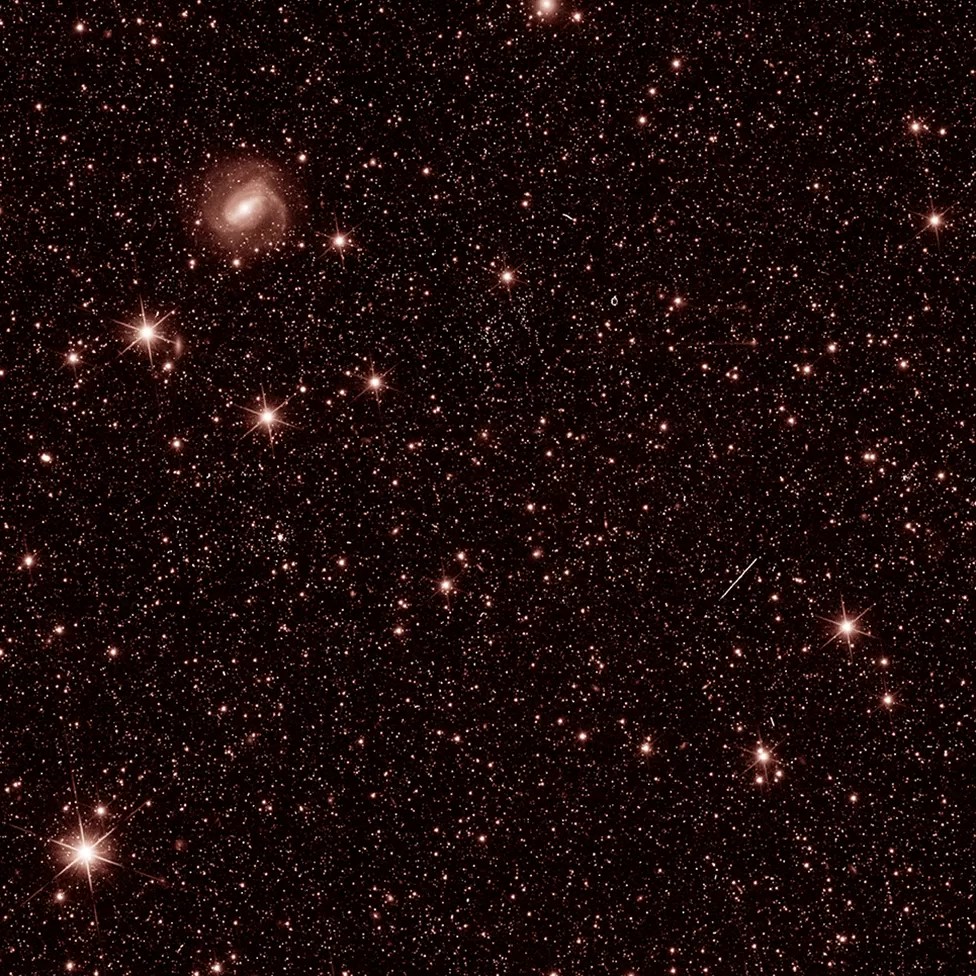
Euclid: ‘Dark explorer’ opens its eyes on the cosmos Europe’s new space telescope, Euclid, has returned its first images. Engineers switched on the cameras of the €1.4bn (£1.2bn) observatory to begin a phase of testing and captured a wide vista of stars and galaxies. Once properly set up, Euclid will start building a 3D map of the cosmos in an effort to tie down the nature of so-called dark matter and dark energy…more

-NYT

Titanium Clouds Engulf This Ultrahot Neptune-like Planet Astronomers have come across the shiniest planet ever found, a mere 265 light years from our solar system. But that’s hardly its only standout trait. Shrouded by thick metallic clouds, this world’s temperature reaches a blistering 3,000 degrees Fahrenheit, and it quite likely rains scorching-hot drops of titanium…more

-NYT

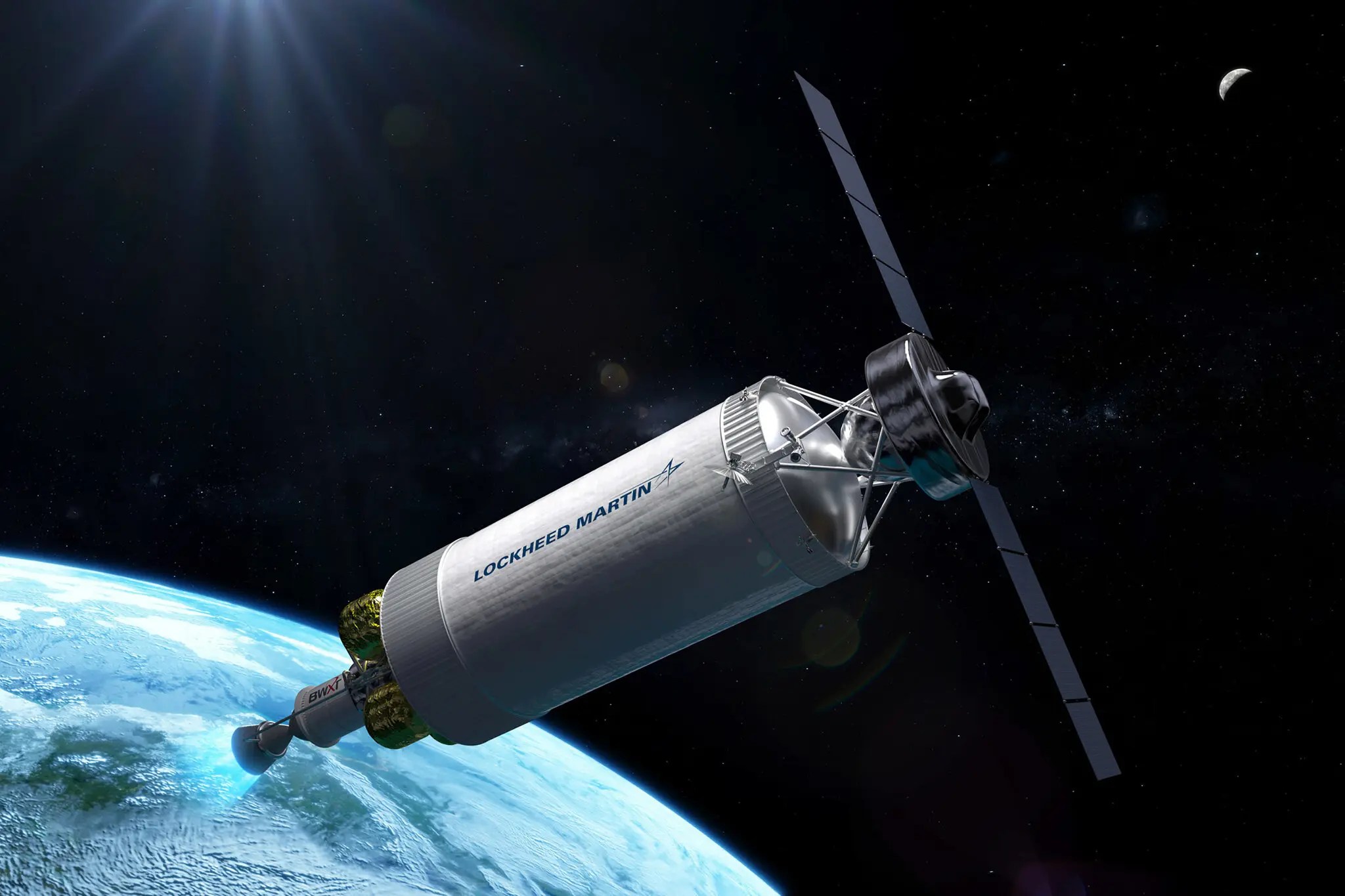
NASA Seeks a Nuclear-Powered Rocket to Get to Mars in Half the Time In less than four years, NASA could be testing a nuclear rocket in space. The space agency and the Defense Advanced Research Projects Agency, or DARPA, announced on Wednesday that Lockheed Martin had been selected to design, build and test a propulsion system that could one day speed astronauts on a trip to Mars…more

-NYT

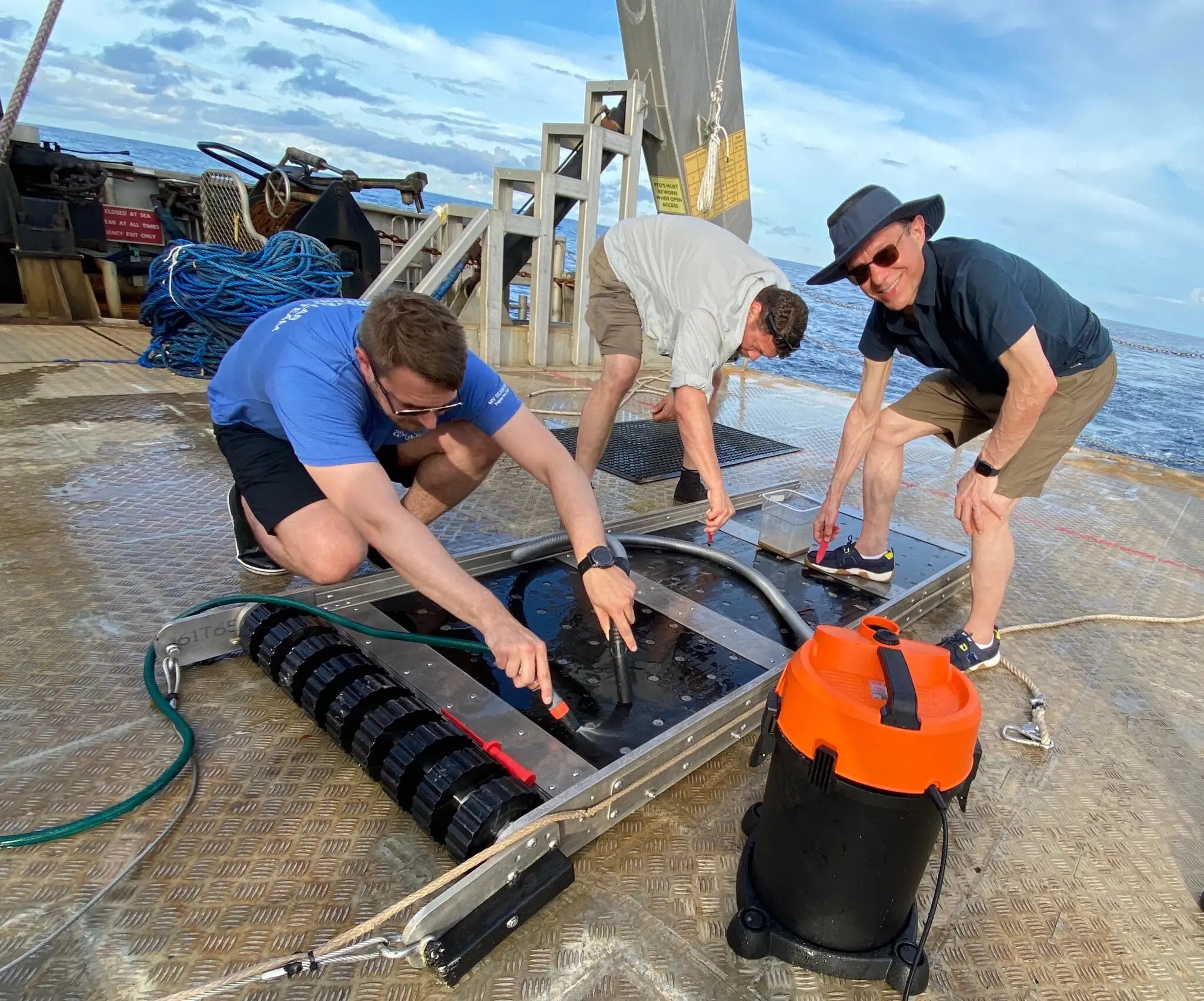
Scientist’s Deep Dive for Alien Life Leaves His Peers Dubious On Jan. 8, 2014, a fireball from space blazed through Earth’s atmosphere and crashed into the sea, north of Manus Island off the northeastern coast of Papua New Guinea. Its location, velocity and brightness were recorded by U.S. government sensors and quietly tucked away in a database of similar events…more

-NYT

Break Out the S’mores: This Star Is Cooler Than a Campfire When you sit at a campfire and look up at the stars, even the tiniest pinpricks of light that you see are massive furnaces, producing intense heat. But hidden among these infernal embers are celestial bodies so dim that they’re invisible to the naked eye…more

Posted in Mid-summer 2023, Sidereal Times | Tagged , | Leave a comment

From The Director

by Rex Parker, PhD director@princetonastronomers.org

Next meeting at the Planetarium – in Person Only.  We want to see you in person at the next monthly meeting of AAAP on June 13 meeting (7:30pm) at the Planetarium in Trenton.  This is the last meeting of the academic season and will be held in-person-only because of technical barriers to broadcasting the dome show.  For more info see Victor’s article below.

Profound Events.  Having spent a few days last week reflecting on the philosophical aspects of  life turning 70, there’s no experience more ineffable than the astronomical.  There may seem to be great portent in recent events here, which may resonate with AAAP members.  From a 4 billion year old meteorite landing close to the AAAP Observatory, with a black bear roaming around nearby (see photo below), to the sudden flare of a supernova in the great spiral galaxy Messier 101.  The M101 supernova SN 2023ixf first appeared on May 19 (my date of great reflection) and is well positioned for observing, transiting around 11pm locally now.  The credit for discovery of the supernova has gone to amateur astronomer Koichi Itagaki from Japan, confirmed the next day (May 20) by the Zwicky Transient Facility (ZTF) at Palomar CA.

Infrared photo of a bear in the Washington Crossing Park area near the Observatory taken on May 25 at night using a wildlife camera.

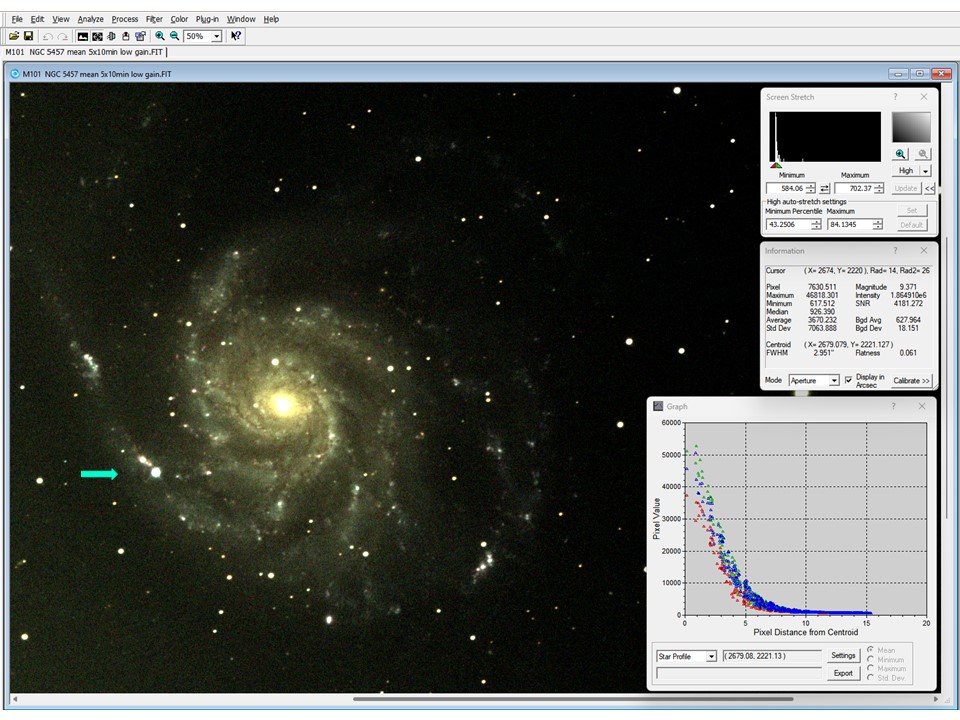
Several members of the AAAP astroimaging sub-group obtained interesting images of the supernova.  I offer mine here with some interpretation of the color. The galaxy M101 has a magnitude about 7.9, but low apparent surface brightness being a face-on spiral. Although it is 21 million light years away it is relatively close as galaxies go, and easy to find in a scope near the naked-eye double star Alcor and Mizar in the handle of the big dipper.  I used Maxim-DL’s Pinpoint Astrometry with the data in this image to obtain a calibrated magnitude = 9.37 for SN 2023ixf (see image below). Its color appears bluish-white. This is a type 2 supernova, formed from the rapid collapse and violent explosion of a massive star, and is typically low in red H-alpha emissions.  This is because the spectrum of type 2 SN’s have strong Balmer hydrogen absorption lines (remember my Unjournal talk a couple months ago!), including absorption in the well-known H-alpha band at 656nm (red).  This is one feature distinguishing Type 2 from type 1 SN. Absorption is the inverse of emission, and this aspect of the physics would appear to explain my observation that the SN starlight profile is deficient in red.  Shown in the graph on the right of the image, the RGB filters of the CMOS sensor array provide a form of rough spectroscopy.  It can be seen in the profile graph that the blue and green intensities are higher than the red in the profile, consistent with the physics of a type 2 supernova.   

The spiral galaxy Messier 101 with the supernova SN 2023ixf indicated by the cyan arrow on the left.  The graph shows the light profile of the SN recorded by the CMOS sensor R,G,B Bayer matrix filters. Image is the mean of 5x10min exp. with a ZWO ASI2400MC camera and 12.5” f/6.7 reflector.  Software is Diffraction Limited’s Maxim DL v6, image by RA Parker.

Posted in June 2023, Sidereal Times | Tagged , | Leave a comment

From the Program Chair

By Victor Davis

The June, 2023 meeting of the AAAP will take place on Tuesday, June 13th at 7:30 PM. The location, as has been the club’s tradition for many years excepting the recent pandemic years, is the planetarium of the NJ State Museum in Trenton. This special academic year-end meeting is traditionally hosted AAAP’s longtime member, current Outreach Chair, and planetarium staffer Bill Murray. This year’s presentation will be given by Bill’s new boss at the planetarium, Dr. Jacob Hamer.

The museum’s address is 205 West State Street, Trenton, NJ. There is plenty of free parking behind the museum, near the planetarium entrance.

Dr. Hamer will talk of the legacy of the Arecibo radio telescope and present a preview of the planetarium’s new sky show projected onto the dome by its recently refurbished projection equipment. This is an IN-PERSON ONLY event; you must be present in the planetarium to experience the program and participate in the meeting’s agenda. There will be no option to zoom at this meeting, nor will there be a recorded version to play back later.

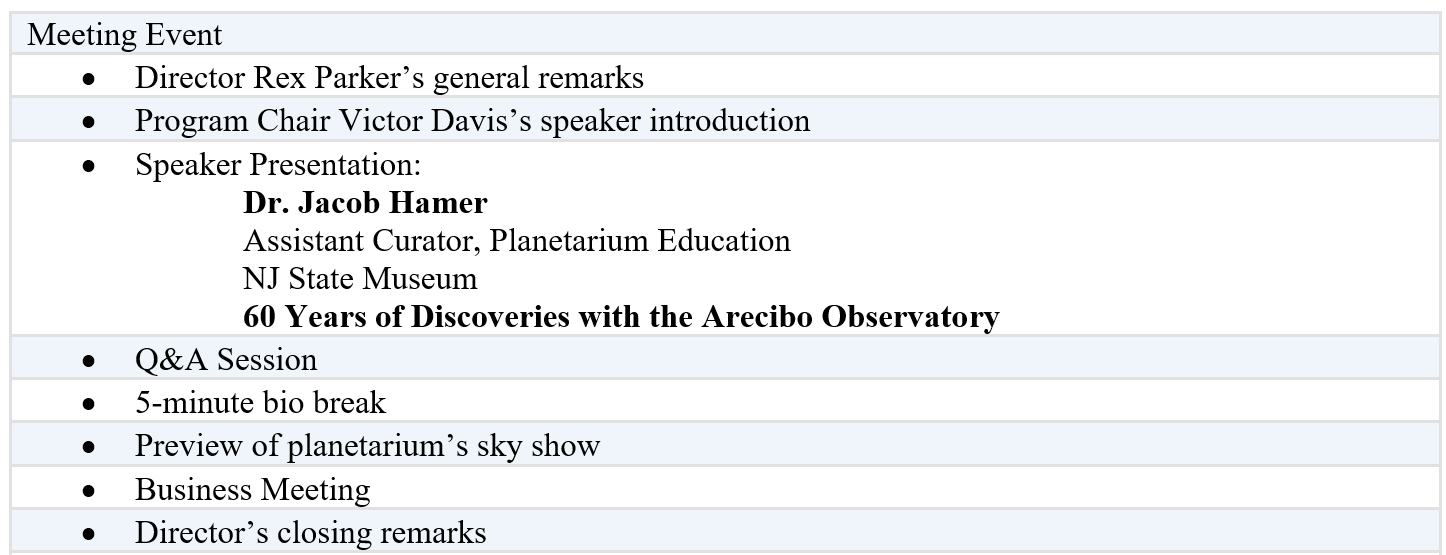
Here’s the anticipated agenda for June’s monthly meeting of the AAAP:

(Times are approximate)

Dr. Jacob Hamer

Dr. Hamer received a B.A. in Physics and in Mathematics from the CUNY Macaulay Honors College at Hunter College in New York City, New York in 2017. While he was at Hunter College, he carried out research on galaxy evolution at the American Museum of Natural History. Jacob then completed his Ph.D. in Astronomy and Astrophysics at Johns Hopkins University in 2022. Jacob’s doctoral research focused on exoplanets, planets orbiting stars other than our Sun, the first of which orbiting a Sun-like star was discovered the day Jacob was born. He investigated how short-period exoplanets and their stars interact, and how those systems evolve over time. In February 2023, Jacob joined the NJ State Museum as Assistant Curator of Planetarium Education.

60 Years of Discoveries with the Arecibo Observatory

The Arecibo Observatory was founded in 1963 to study the ionosphere; its ability to carry out radio astronomy was merely a secondary benefit. But over the next 60 years Arecibo would become an astronomical powerhouse. It made important discoveries in planetary science as well as in the study of small solar system bodies. It also allowed astronomers to observe the raw material that will form the next generations of stars. Perhaps its most famous contributions to the field concerned the extreme fate of some high mass stars; its observations of pulsars would lead to not one but two Nobel Prizes. Finally, Arecibo allowed astronomers to consider the question “Are we alone?”.

As always, your comments and suggestions are gratefully accepted.

Posted in June 2023, Sidereal Times | Tagged , , | Leave a comment